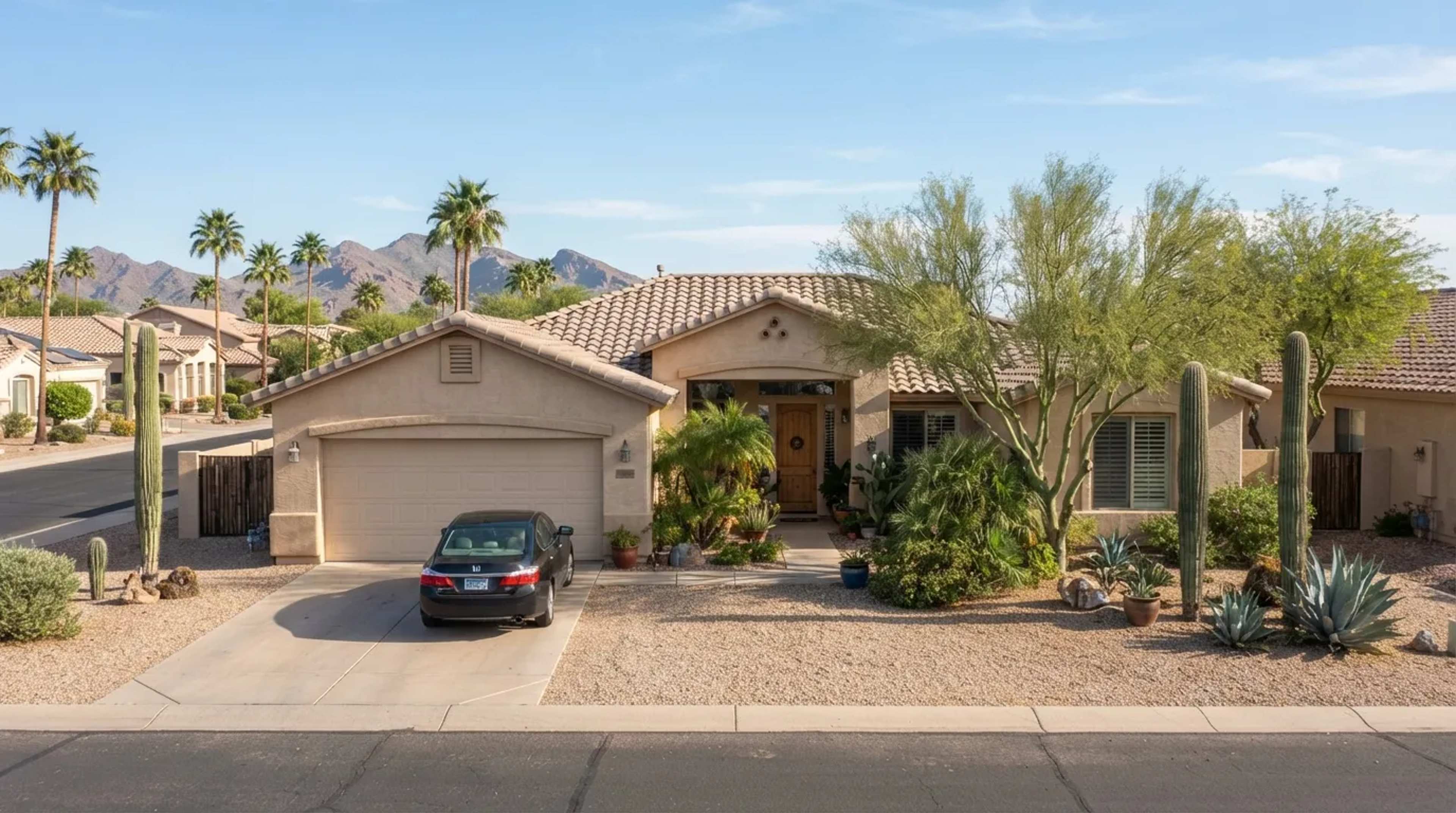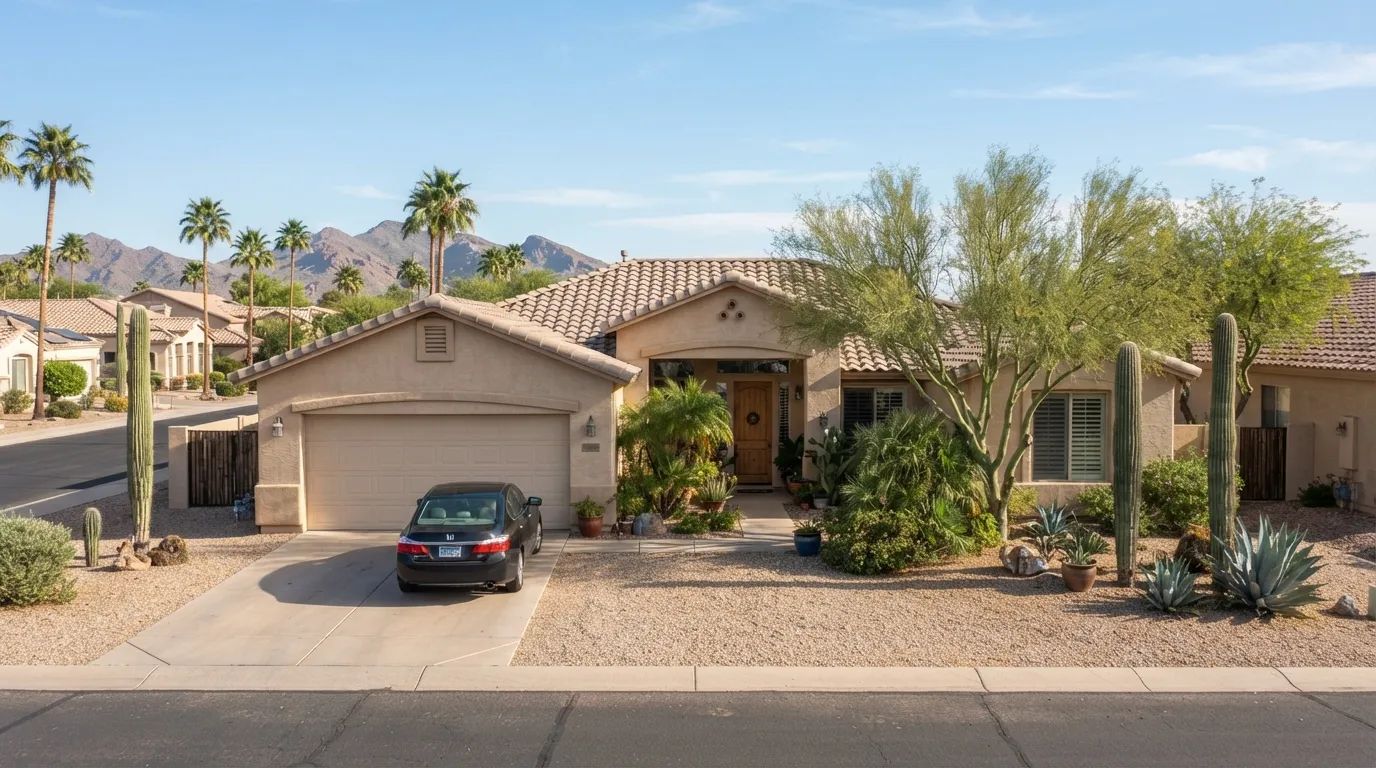
Most snowbirds believe the hardest part of an Arizona winter is landing a Saturday tee time. The real surprises are written into state law, tax rules and local air-quality orders.
Some can cost you a ticket. A few can cost you thousands. Many seasonal residents don’t hear about them until a letter arrives or a deputy walks up to the window, and the one waiting at #1 is the quietest of all.
#13 – The State That Refuses to Change Its Clocks
Arizona runs on its own schedule, and it can wreck your calls home.
The state stays on Mountain Standard Time all year and skips daylight saving time. That puts it on Mountain Time in winter and in line with Pacific Time in summer.
Stay into March or April and the gap with the East Coast grows by an hour. Your weekly video call with the grandkids can suddenly land at the wrong time.
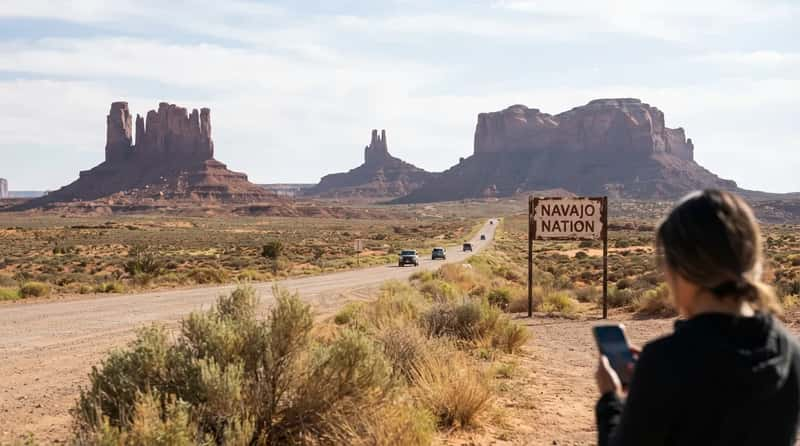
The Navajo Nation, which covers a huge part of northeastern Arizona, does observe daylight saving time. A day trip to Monument Valley can mean your phone changes clocks without warning.
- Phoenix, Tucson and Scottsdale: no clock change.
- Navajo Nation: clocks change with the rest of the country.
A clock quirk is harmless next to what the state requires in your own backyard, which is #12.
#12 – The Pool Barrier Rule Buyers Overlook
A pool you barely use can still put you on the wrong side of state law.
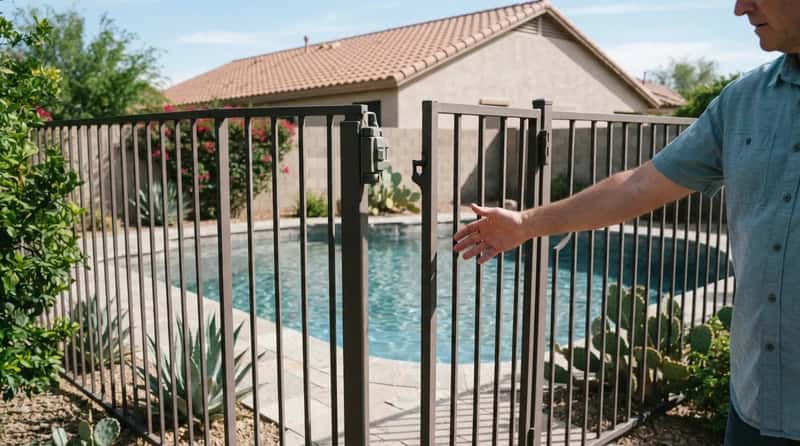
Arizona requires residential swimming pools to be enclosed by a barrier at least five feet high (A.R.S. § 36-1681). Gates are expected to close and latch on their own.
The rule is about the barrier, not how often anyone swims. If you’re buying a winter home with an older pool, check the fence before you check the water temperature.
The minimum barrier height is five feet, and the gate has to shut and latch without help. Cities and HOAs can add requirements of their own.
- Measure the barrier height yourself.
- Test the gate: it should swing shut and catch on its own.
Ask for the pool details in writing before you close. Then confirm them with the local building department.
The next rule protects something far older than any backyard fence, and it’s #11.
#11 – The Cactus You’re Not Allowed to Move

In Arizona, some desert plants are treated like protected property, and the saguaro tops the list.
The Arizona Native Plant Law protects saguaros and many other native species. Even on private land, you generally need to notify the state or get a permit before removing or transplanting them.
That cactus in the way of your new patio isn’t automatically yours to dig up. The mistake usually happens when a landscaper does the work without the paperwork.
A saguaro can take decades just to grow its first arm, and the plant can live well over a century. Destroying one can bring real legal trouble for the property owner.
- Ask any landscaper if they handle protected-plant permits.
- Get it in writing before the equipment arrives.
A protected cactus is mild compared to the cozy winter ritual Maricopa County may ban on certain nights, and that’s #10.
#10 – The Night Your Fireplace Becomes Illegal
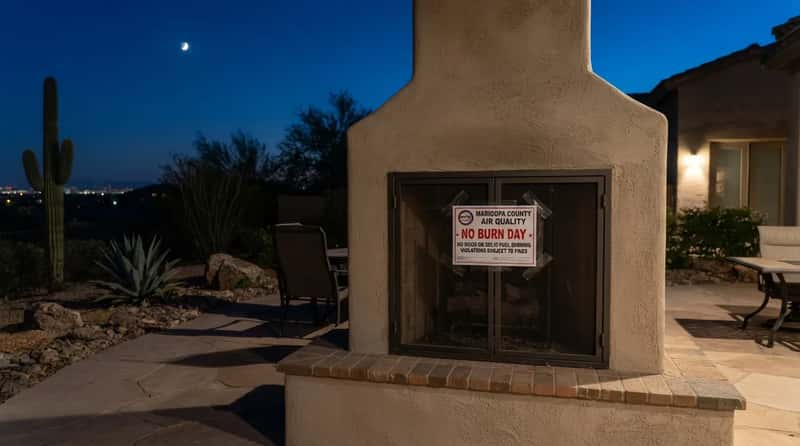
A crackling fire is a winter tradition. In the Phoenix area, it can also be a violation.
Maricopa County air-quality officials declare “No Burn” days during the cooler months. On those days, wood-burning fireplaces, wood stoves and outdoor fire pits are restricted.
Gas appliances are generally treated differently, so check the county rules before lighting anything. Violations can bring fines.
Fast Facts
- A No Burn Day lasts 24 hours, starting at midnight.1
- Gas logs are allowed. Burning anything else in a fireplace, wood stove or chimenea is not.2
- Residential fines under the county’s Ordinance P-26 range from $50 to $250, depending on how many violations you’ve had.2
- Off-road vehicles are also barred on these days, and residents are asked to skip leaf blowers.
Restrictions can apply to outdoor fire pits, not just indoor fireplaces. Cool, still nights are exactly when smoke settles near the ground.
Here’s our take, and some visitors won’t like it. The rule is more annoyance than burden, because checking the county’s daily status takes seconds.
Your fireplace is the least of it. The next rule attaches to your car, and it’s #9.
#9 – The Emissions Test Nobody Warned You About
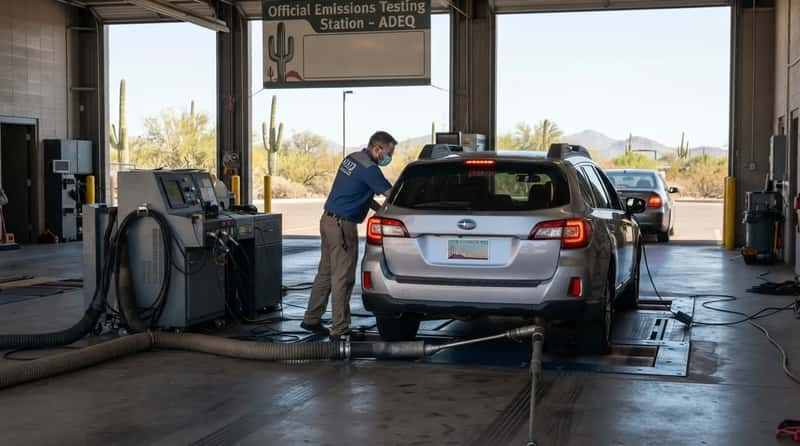
Registering a car in Arizona can come with an inspection requirement.
Arizona runs a vehicle emissions program through the Department of Environmental Quality. It covers many vehicles registered in parts of the Phoenix and Tucson metro areas.
The catch is that it only matters when you register in Arizona. Snowbirds who keep their home-state plates generally aren’t subject to it, but the picture changes the moment you register a car locally.
The test is tied to registration, so skipping it can hold up your renewal. Newer vehicles are typically exempt for their first few model years.
- Plated at home: the Arizona emissions program generally doesn’t apply.
- Registered in the covered metro areas: expect testing, with exceptions for newer vehicles.
Confirm your vehicle’s status with the Arizona Department of Transportation’s Motor Vehicle Division before assuming anything. Exemptions and testing areas can change.
The bigger money trap isn’t the tailpipe. It’s the income your property can generate, and it’s #8.
#8 – The Rental Income You Think Nobody Sees

Renting out your Arizona house for a few weeks can create state tax obligations.
Nonresidents are taxed on income sourced to Arizona, and that includes rental income from Arizona property. A rental that feels like a casual side arrangement can still show up on a state return.3
Arizona also taxes short-term lodging through its Transaction Privilege Tax, and owners generally need a license from the Department of Revenue. Cities may add their own requirements.
Arizona treats rental income from Arizona property as Arizona-source income, even if you live in another state all year.3 Check with a tax professional before your first guest.
Here’s a take that will annoy some owners. If you take payment for a stay, the state is likely to see a business, not a favor for a friend.
A tax slip is easier to fix than a mistake involving something legal that can still land you in trouble, and that’s #7.
#7 – Legal Doesn’t Mean Legal Everywhere
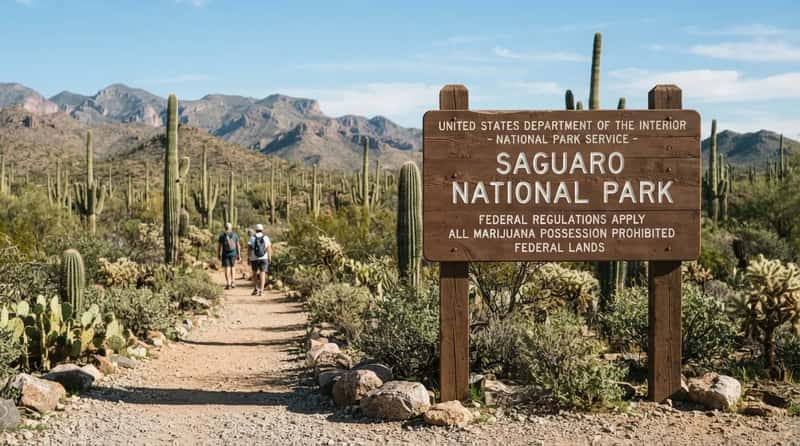
Marijuana is legal for adults in Arizona, but the rules are tighter than most visitors expect.
Arizona voters approved adult use in 2020. Adults 21 and older can possess a limited amount, and public smoking is off the table.
Then there’s the map. National parks, national forests and Bureau of Land Management land follow federal law, and tribal lands follow tribal rules.
Possession can still be a federal offense in places like national parks. Carrying it across state lines is also a problem.
- Private property: fine only where the owner allows it.
- Public places and federal land: stay away.
- Behind the wheel: impairment can still get you arrested.
Impairment is the one area where Arizona doesn’t leave much room for debate, and that’s #6.
#6 – The DUI Laws Among the Toughest in the Country
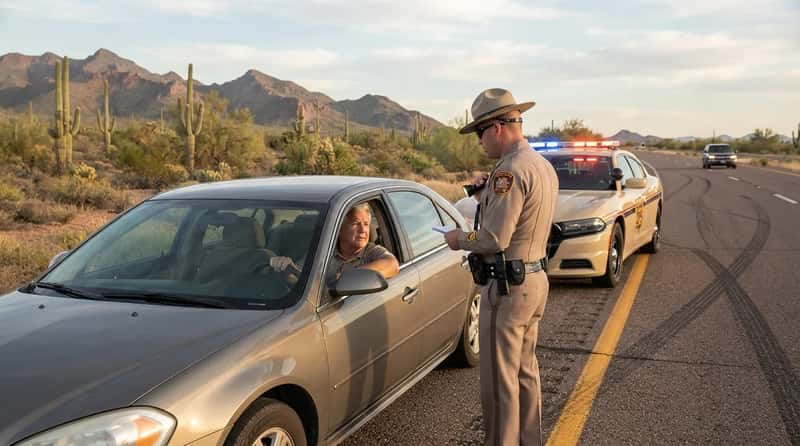
Arizona is known for some of the strictest drunk-driving laws in the nation, and visitors don’t get a pass.
A first offense can carry mandatory jail time. You can also be charged below the standard 0.08 limit, because the statute covers driving while impaired to the slightest degree.
Arizona has a separate “extreme DUI” offense that starts at a blood alcohol level of 0.15. Ignition interlock requirements can follow a conviction.
Quick Compare
- Standard DUI: 0.08 or impaired to the slightest degree. First-offense minimum is 10 days in jail, with part of it suspended if you complete alcohol screening.
- Extreme DUI: 0.15 to under 0.20. First-offense minimum is 30 consecutive days, and a 12-month interlock can reduce the time actually served.4
- Super extreme DUI: 0.20 or higher. First-offense minimum is 45 consecutive days, and an interlock can reduce it here too.4
The open-container rule catches people too. Opened alcohol shouldn’t be riding in the passenger area of your car.
Next comes a surprise that can hit you even when you’re driving sober and legally, and it’s #5.
#5 – The Insurance Floor That May Not Match Home
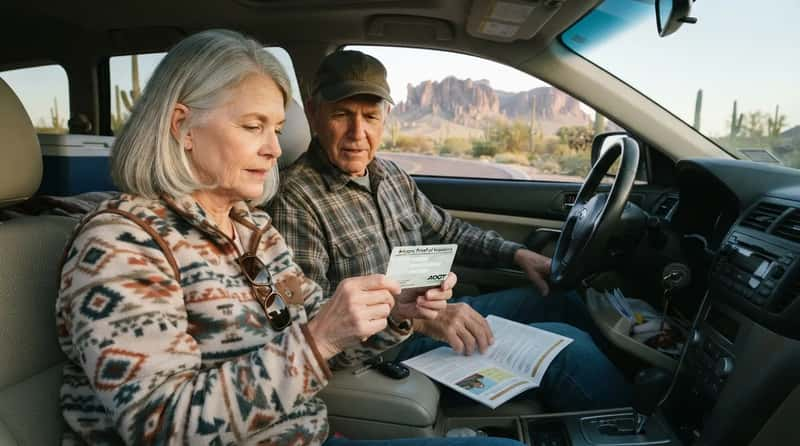
Your home-state auto policy may not look like Arizona’s minimums.
Arizona requires every driver to carry liability coverage. Minimum limits differ from state to state, so a policy that satisfies your home state may be thinner than what Arizona expects.
Those minimums are floors, not recommendations. A serious crash can blow past them quickly.
Driving without proof of insurance in Arizona can trigger fines and license or registration problems. Carry your card or have it ready on your phone.
- Call your insurer before you leave home.
- Ask whether your coverage meets Arizona’s requirements.
- Keep proof of coverage in the car.
A policy only matters if your car is legally on the road, and that raises a question about plates. It’s #4.
#4 – The Plate Question Snowbirds Get Wrong

Many snowbirds worry about re-registering their car in Arizona. The real trap is different.
Arizona’s registration law for nonresident vehicles lists specific triggers, and they involve things like transporting passengers or property for compensation. Ordinary seasonal driving isn’t the focus of that statute.
The surprise comes when you buy a vehicle in Arizona. You can purchase a 90-Day Nonresident Registration for $15 from the MVD or an Authorized Third Party office.5
That $15 permit exists so out-of-state buyers can drive a new purchase home for registration there. You’ll need to bring your out-of-state ID and the dealer invoice or assigned title.5
- Short hop to a dealer lot: a $1 3-day trip permit may apply to an unregistered vehicle.
- Buying a car to take home: ask about the 90-day nonresident permit.
One behind-the-wheel rule trips up even careful drivers, and it’s #3.
#3 – The Phone Rule That’s Stricter Than You Think

Arizona’s hands-free law is a primary offense, and it’s broader than many drivers assume.
Enforcement began January 1, 2021, making it illegal to text or talk on a phone unless it’s hands-free. Officers can pull you over for it even if you’ve committed no other violation.
A first violation brings a fine between $75 and $149, and later violations can reach $250, plus surcharges.6
You can be cited for pinning a phone between your ear and shoulder. The law bans holding or supporting a device with any part of your body.7
Here’s our view. The law is stricter than most drivers’ instincts, so mount the phone and set your route before you move.
- Hands-free navigation is allowed.
- A single tap or swipe to take or end a call is allowed.7
A ticket is cheap compared to what one rainy-day decision can cost, and that’s #2.
#2 – The “Stupid Motorist” Law Is Real
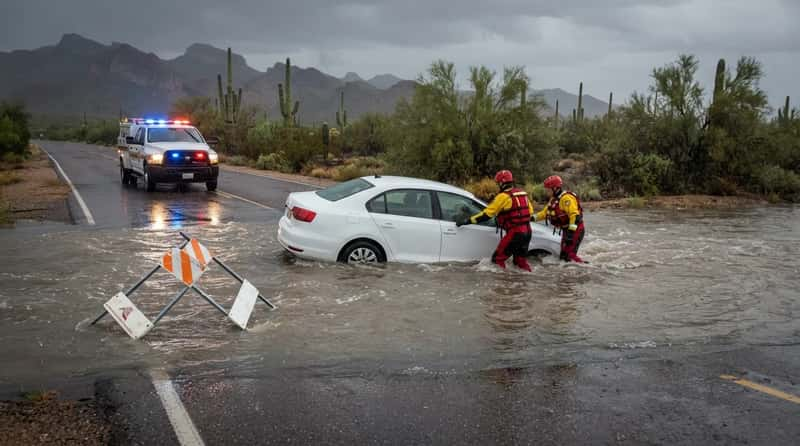
Arizona can bill you for your own rescue if you drive into certain flooded roads.
In 1995, Arizona passed what’s nicknamed the “Stupid Motorist Law,” found in Section 28-910 of the Arizona Revised Statutes.8 It applies when a driver enters a barricaded flooded road and needs rescuing.
That driver can be liable for the cost of the emergency response. Some summaries mention a $2,000 cap, so read the statute itself for the exact terms.
Worth Knowing
- About 6 inches of fast-moving water can knock an adult off their feet, according to National Weather Service guidance.
- About 12 inches can carry away a small car.
- About 2 feet can sweep away SUVs and trucks.
- A dry wash can fill from rain that fell miles upstream, even under a clear sky.
The law is rarely enforced, which is exactly why many people shrug it off. A barricade is a legal line, not a suggestion.
Flash floods aren’t limited to summer monsoon storms. Heavy rain in any season can turn a dry wash into a hazard.
The most expensive rule on this list has nothing to do with driving, and it’s #1.
#1 – The Residency Trap That Can Cost Thousands

Spending winters in Arizona doesn’t automatically make you a resident, but you can end up treated like one if your paper trail says so.
Owning property or spending time in Arizona does not by itself make you a resident. The Arizona Department of Revenue looks at “domicile” and physical presence.
The stakes are high. A resident is subject to Arizona tax on all income no matter where it’s earned, while nonresidents are taxed only on Arizona-source income. The state’s individual income tax rate is a flat 2.5%.
Day-counting alone isn’t a safe test. Different sources cite different thresholds, so don’t build your plans around one magic number.
Here’s the truth most snowbirds miss. Scrutiny tends to fall on people who keep an Arizona home, driver’s license or voter registration active while claiming another state as home.
Arizona’s rules rarely announce themselves. They show up in a fence height, a no-burn notice, a plate permit or a tax return.
The costliest surprises are the quiet ones: the residency question, rental income from your Arizona home, and an insurance policy that may not match the state’s minimums. The strictest ones come with real consequences, like the DUI laws and the flooded-road liability.
None of this means Arizona is hostile to winter visitors. It just expects you to know the rules before you unpack.
Which of these 13 rules would have changed your plans, and which one are you checking first?
Bonus: The Insider Move That Protects You From the Costliest Rule
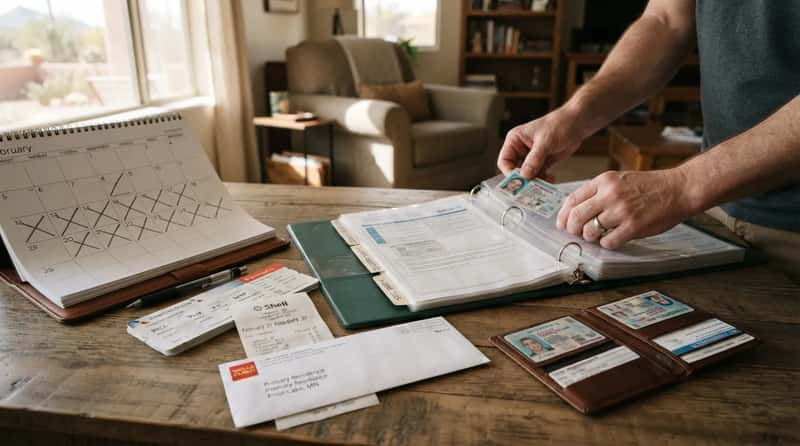
Build a “residency evidence file” before anyone ever asks for one. The strongest defense against a residency dispute is proof you can hand over in minutes, not memories you have to reconstruct years later.
Set it up once at the start of each season, then add to it as you go:
- Keep a day-by-day calendar. Mark every day in Arizona and every day in your home state. Back it up with records that already exist, such as flight confirmations, toll and fuel receipts, and credit card statements.
- Make your addresses agree. Your driver’s license, voter registration, vehicle registration, tax filings and primary doctor should all point to the state you call home.
- Save proof of your home ties. Keep copies of your home-state property tax bill, utility bills and any club or religious memberships.
- File correctly if you earn Arizona income. If you rent out your Arizona property, ask a tax professional about filing as a nonresident and about the Transaction Privilege Tax license.
Why it matters: Residency is decided by your overall pattern of ties, not a single number. Some home states audit residency claims closely, so a clean record can settle the question early.
Do this once a year and keep the file for several years. It takes about an hour, and it’s the cheapest insurance on this entire list.
- No Burn Day FAQ: https://www.daisymountainfire.org/files/cbeb59a19/Unlawful+Burn+Notice.pdf
- Maricopa County Burning Activities: https://www.maricopa.gov/1830/Burning-Activities
- ADOR Nonresident Form 140NR: https://azdor.gov/sites/default/files/document/FORMS_INDIVIDUAL_2024_140NRi.pdf
- Arizona DUI Penalty Levels: https://www.thomaslawaz.com/blog-post/the-different-levels-of-dui-charges-in-arizona
- ADOT Vehicle Permits: https://azdot.gov/mvd/services/vehicle-services/vehicle-registration/vehicle-permits
- ADOT Hands-Free Law: https://azdot.gov/news/adot-distracted-driving-campaign-raises-awareness
- Maricopa Distracted Driving Law: https://maricopacountyattorney.org/397/Distracted-Driving
- Stupid Motorist Law Explained: https://www.azfamily.com/2023/03/22/arizona-flood-rescues-stupid-motorist-law/