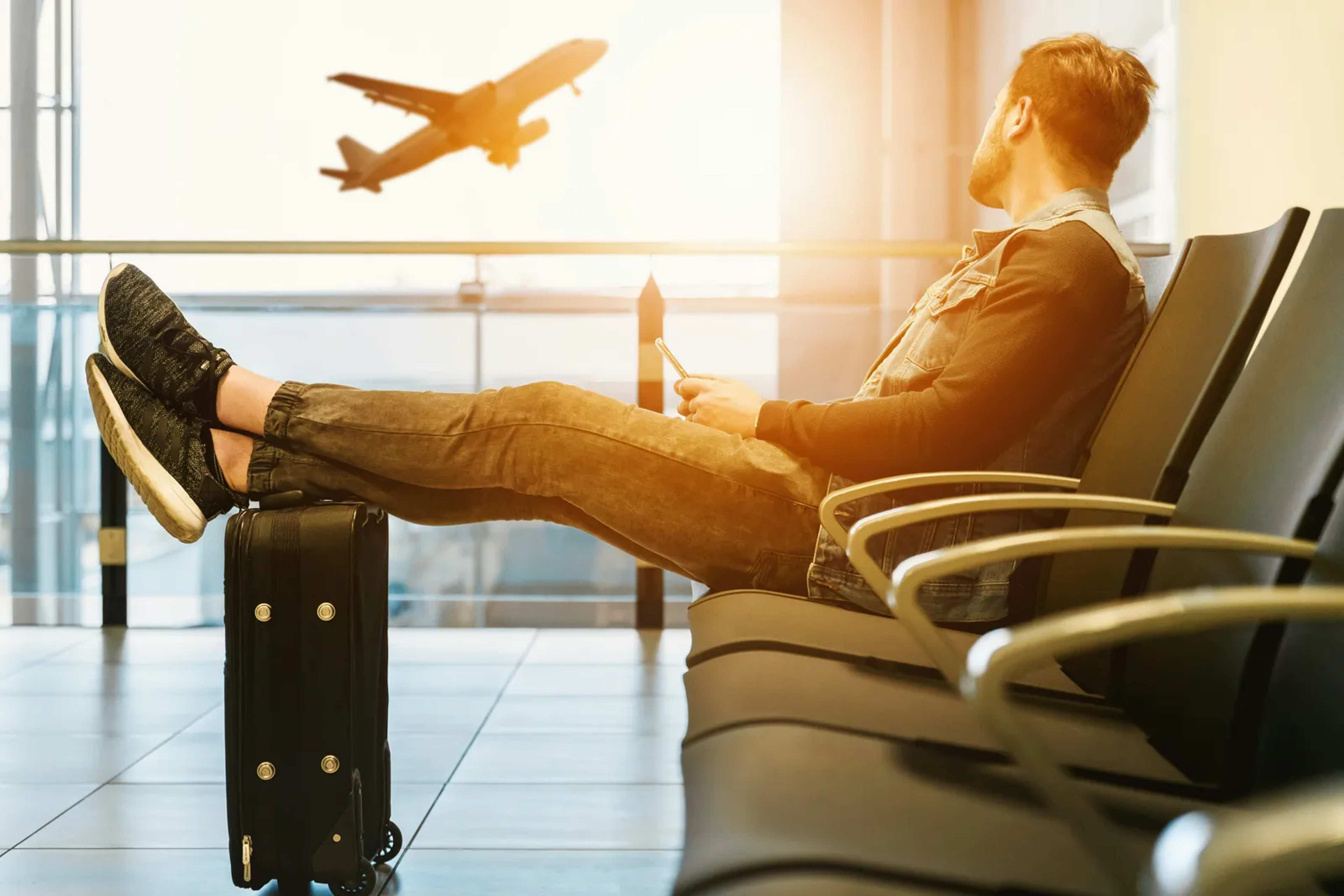
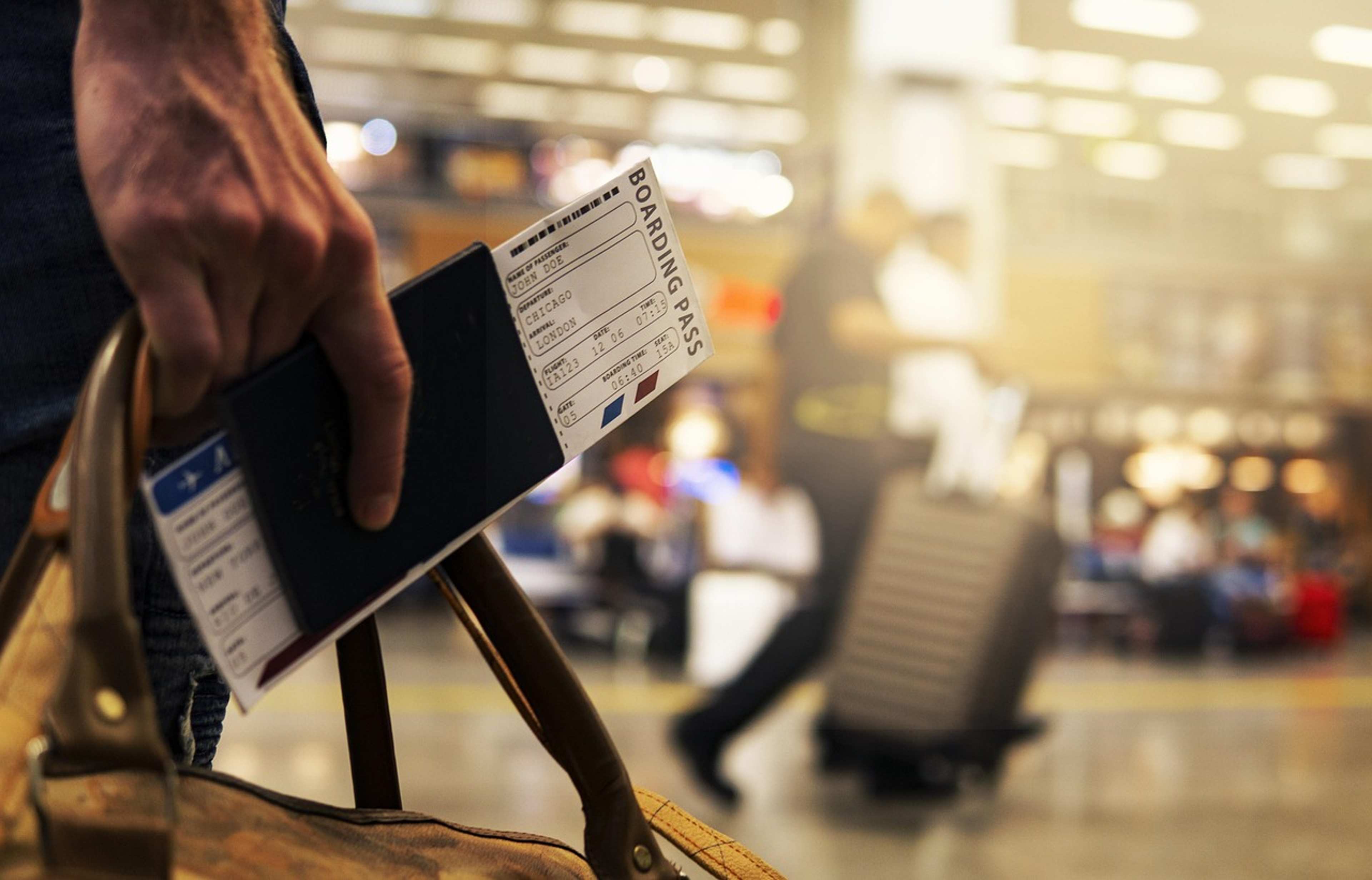
On American, Delta and United, a full-size carry-on is capped at 22 by 14 by 9 inches, and a bag that misses by one inch can lose its place in the cabin. Beyond size, a handful of packing habits cost older travelers money, time and toiletries, sometimes including a gate fee of up to $75 on some fares.
Every mistake below comes from federal guidance or published airline rules. The costliest one happens at the booking screen, weeks before you pack.
We start at the bottom of the list, with the weight of the bag.
#15 – A Carry-On Too Heavy to Lift Overhead
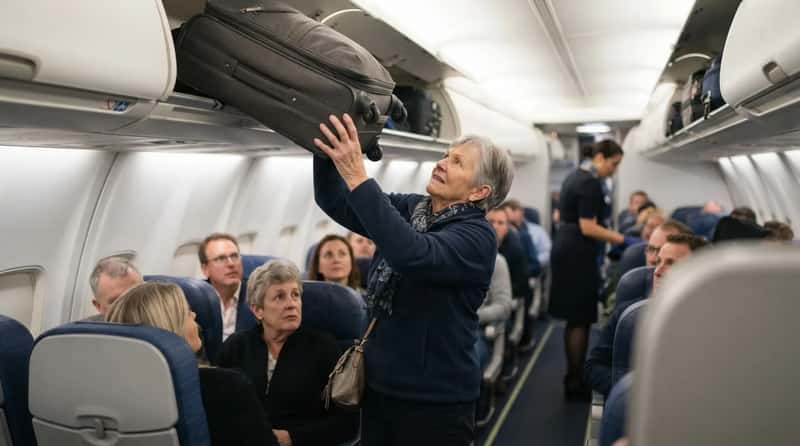
The big U.S. carriers list no weight limit for domestic carry-ons, so a bag packed to the zipper can look perfectly legal. International flights are another story, and a bag that passed on the outbound leg can be turned away on the way home.
Whatever the airline allows, you still have to lift the bag to shoulder height and slide it into the bin. Hawaiian, for one, says the bag must be liftable into the overhead bin.
If you can’t do that alone, a lighter bag or a checked suitcase beats waiting for a stranger to help.
Even a bag you can lift still has to clear the checkpoint, where your age counts for less than you might expect.
#14 – Expecting a Senior Screening Line at 65
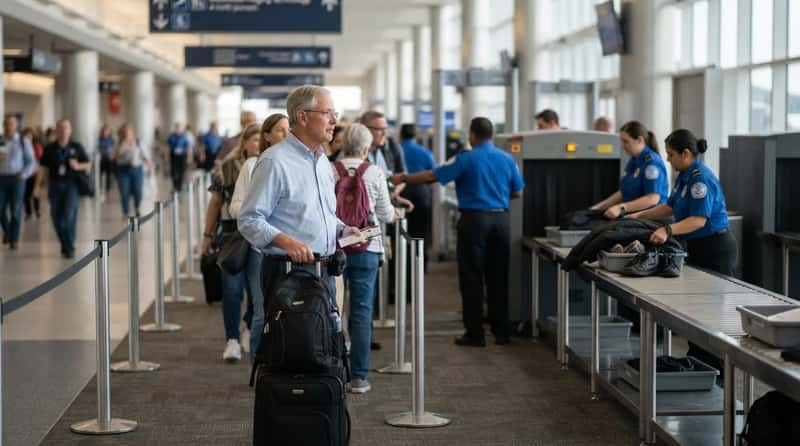
TSA’s special screening for older travelers begins at 75, not 65. In your early seventies, you are in the same line, under the same rules, as everyone else.
Even at 75 and older, light jackets must come off for Advanced Imaging Technology screening. If an alarm goes off, you may be required to remove your shoes or have a pat-down.
Build the extra minutes into your morning as if no perk applies.
Speaking of the checkpoint, there is one old habit that no longer applies to anyone.
#13 – Unlacing Your Shoes Out of Habit
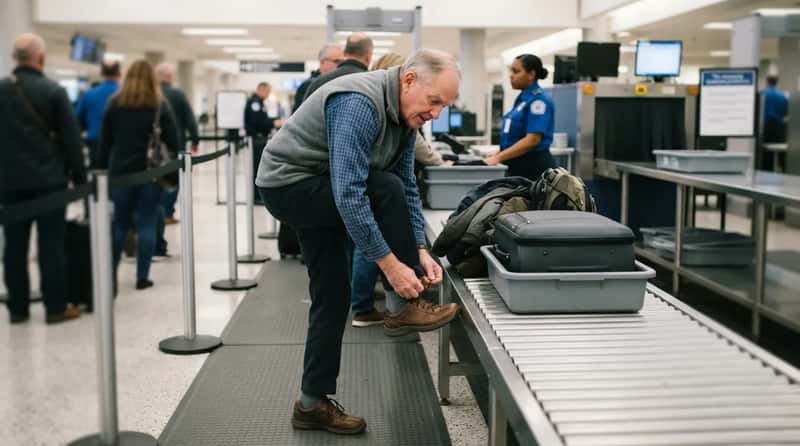
TSA ended its shoe-removal mandate at U.S. checkpoints on July 8, 2025.1 Taking yours off in line now only slows you down.
Fast Facts
- Before July 8, 2025: only children 12 and under and passengers 75 and older were exempt.1
- Now: everyone keeps shoes on by default.
- Still possible: officers can ask anyone to remove shoes after an alarm.
- Also possible: shoes can come off if you’re picked for additional screening.
That makes it a default and not a promise. For that reason, I would still wear a pair you can get out of and back into while standing.
Laces you can’t comfortably reach are the real problem on the day you get pulled aside.
#12 – A Half-Empty Bottle Over 3.4 Ounces
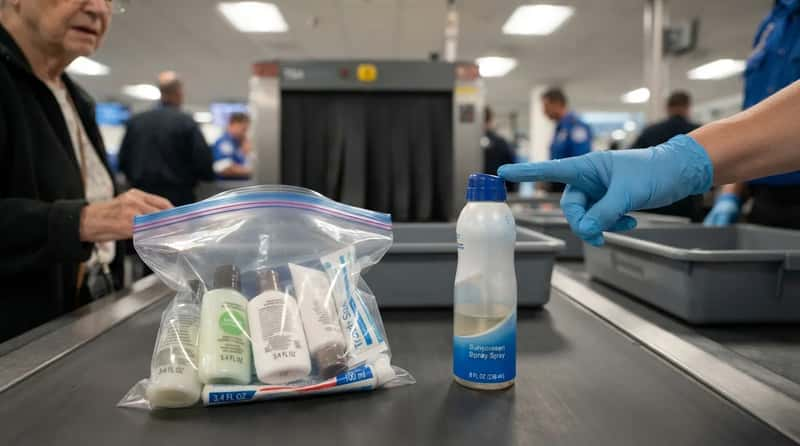
TSA allows a quart-sized bag of liquids, aerosols, gels, creams and pastes, limited to 3.4 ounces or less per item. The limit is about the container, not what’s left in it.
A big bottle with only 3.4 ounces remaining still can’t go through security.2 Toothpaste counts, and so do spray sunscreen and liquid or gel deodorant.
Buy travel-size containers or switch to solid versions. The alternative at the belt is usually giving the item up.
The same container rule reaches food, and the foods it covers are not obvious from the label.
#11 – Jam, Honey and Other Spreads
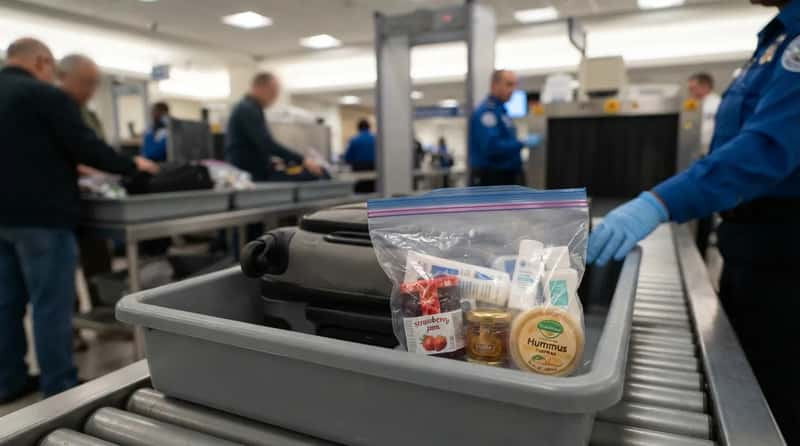
The rule covers consumables like salsa, honey and peanut butter.3 Yogurt, pâté and jams count too, unless they are under 3.4 ounces or packed in your checked bag.
If a food spreads, pours or squeezes, treat it as a liquid. That matters most on the trip home.
A jar of preserves from a farm stand, or a gift from a relative, belongs in the suitcase you check, wrapped well. A jar you can’t bear to lose is also a good reason to check a bag at all, and that is a cheaper decision when you make it at home.
Some liquids, though, are allowed to break the rule, and many travelers never find out.
#10 – Liquid Medicine Packed in the Quart Bag
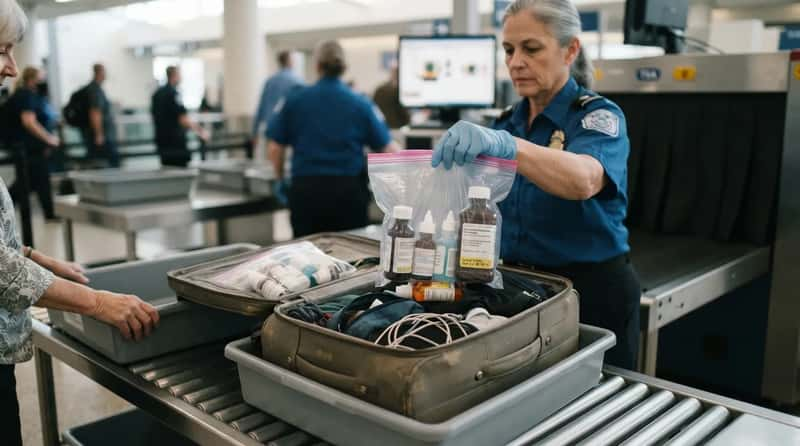
The liquids limit doesn’t apply to your medication, since medically necessary liquids can be over 3.4 ounces each. They must be separated from your other carry-on items and declared to the officer as medically necessary.4
Expect some extra screening, because officers may test liquids, gels or aerosols for explosives or concealed items. You can ask for manual inspection instead of X-ray, but TSA says Advanced Imaging Technology, a pat-down and further bag inspection will then apply.
Unless a doctor has told you to keep a medication out of the scanner, the machine is the quicker route.
Pills raise a different question than liquids do, which is less how much you can carry and more which bag they ride in.
#9 – Daily Pills in a Bag That Might Be Checked
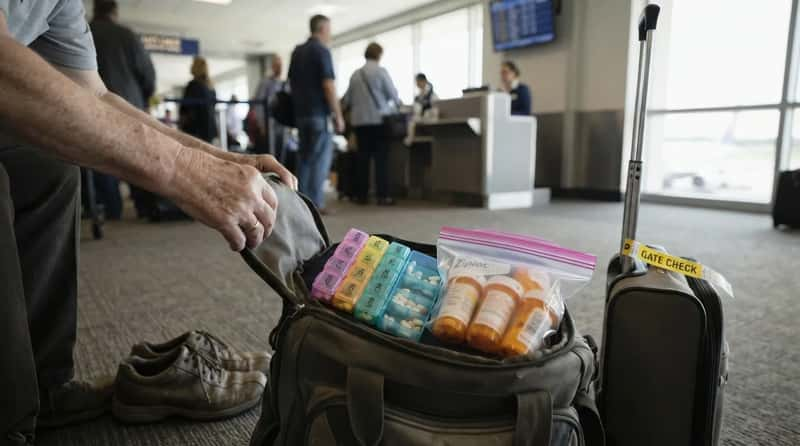
TSA strongly recommends carrying pills on so your medicine is with you if a delay hits. Here is what the rules allow:
Worth Knowing
- Pills have no quantity limit in a carry-on, as long as they’re screened.4
- Original bottles aren’t required, though they help.
- Officers may transfer pills to another container to test them.
The roller bag is the one that can be tagged at the gate and taken from you at the jet bridge. Keep the medicine in the bag that stays under your seat.
A weekly pill organizer is fine for the flight, but I would bring the labeled bottles or a printed list too. Loose pills are harder for anyone to identify if you’re asked.
That under-seat bag has a size limit of its own, and it is smaller than many totes and backpacks.
#8 – A Backpack That Becomes a Second Carry-On
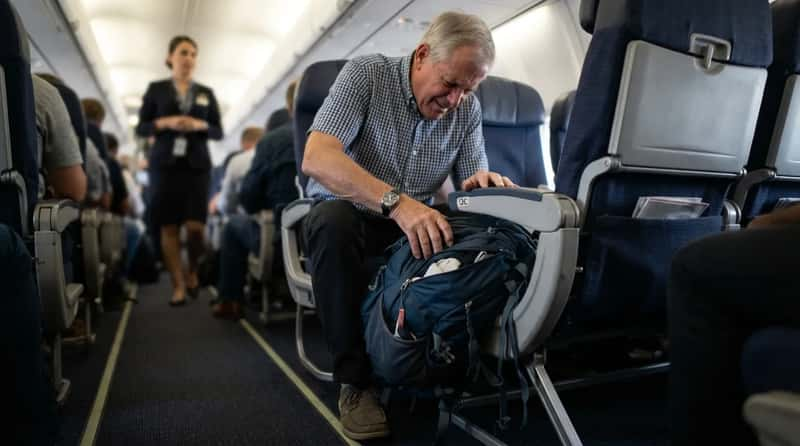
Overstuffed backpacks that can’t slide under the seat get reclassified as carry-ons. On a fare that doesn’t include a carry-on, that reclassification turns into a fee.
Personal-item limits vary by airline:
- American: 18 x 14 x 8 inches
- United: 17 x 10 x 9 inches
The two differ by four inches in width, so a bag that fits on one carrier may not fit on the other.
Even a bag that passes at home can fail at the gate if the airline’s limit differs from the one you measured against.
#7 – Measuring for One Airline and Flying Another
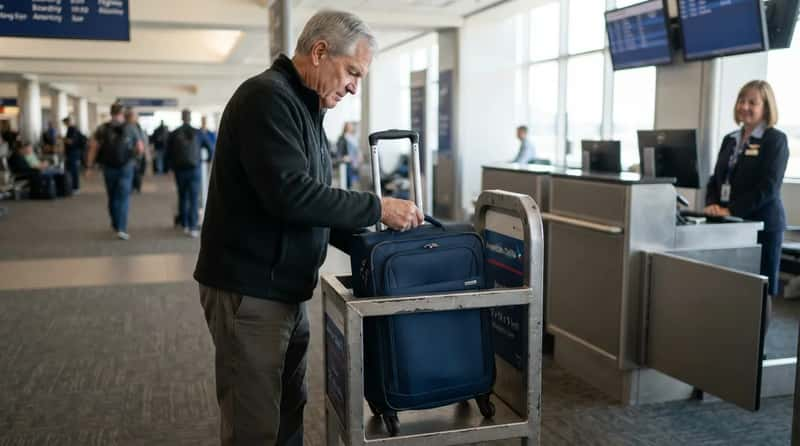
American, Delta and United all use 22 x 14 x 9 inches for a carry-on. Southwest’s carry-on size is 24 x 16 x 10.
A bag bought for one airline’s limit can be too big for another’s. Measure the bag you own, including wheels and handles, against the airline on your ticket.
If you fly several carriers, buy for the smallest limit. A bag sized for Southwest is a poor purchase if United is also on your travel list.
Those limits apply to the bags you choose to bring, while one category of item is not supposed to count against your allowance at all.
#6 – Counting a Cane or Medical Device Against Your Allowance
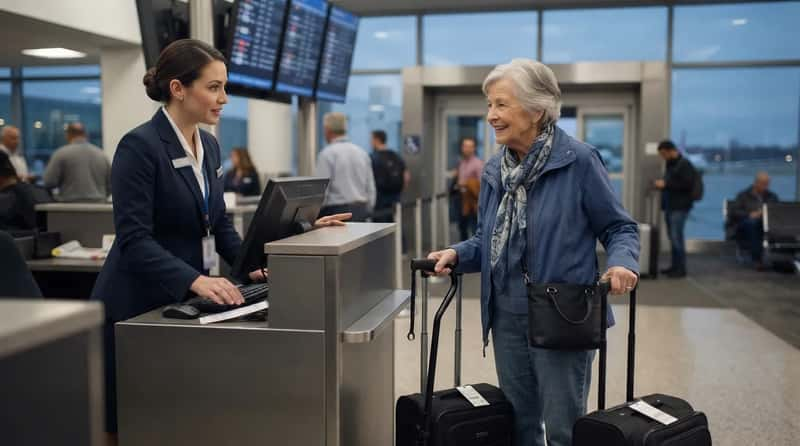
Airlines must allow assistive devices as carry-ons in the cabin free of charge, and they may not count against a passenger’s carry-on limit.5 So you don’t need to leave a bag at home to make room for equipment.
Walkers, canes and crutches are X-rayed or hand-inspected at the checkpoint. If you carry medical supplies, tell the officer up front, including freezer packs, IV bags, pumps and syringes.
Mobility equipment with a battery follows the FAA’s battery rules. A spare wheelchair or mobility battery is carry-on only, with a maximum of one spare up to 300 watt-hours or two spares up to 160 watt-hours each.
Not every battery gets that kind of protection, and a small one in your tote can cause the biggest scene.
#5 – A Swollen or Recalled Power Bank
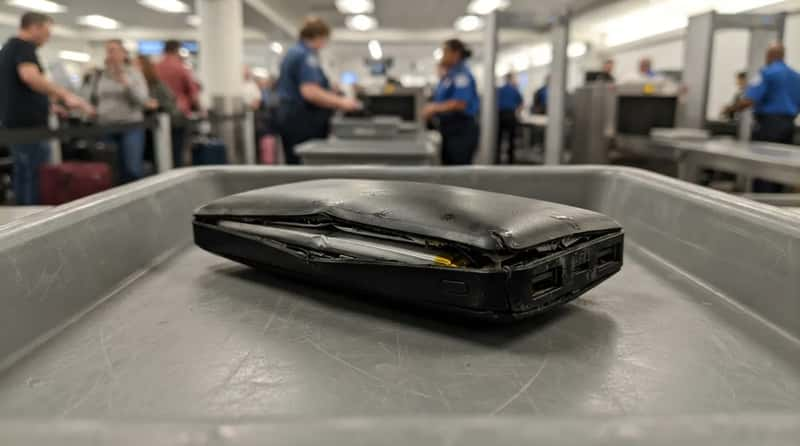
The FAA states that damaged or recalled batteries must not be carried aboard in carry-on or checked baggage. Damaged, swollen or cracked power banks should not be brought on board at all.
A bulging case or a crack in the shell is reason enough to replace the unit before the trip. A new bank costs far less than a confiscated one at the checkpoint or a problem in the cabin.
A healthy bank can still be over the limit, and the number printed on the case is rarely the one that matters.
#4 – Reading Milliamp-Hours Instead of Watt-Hours
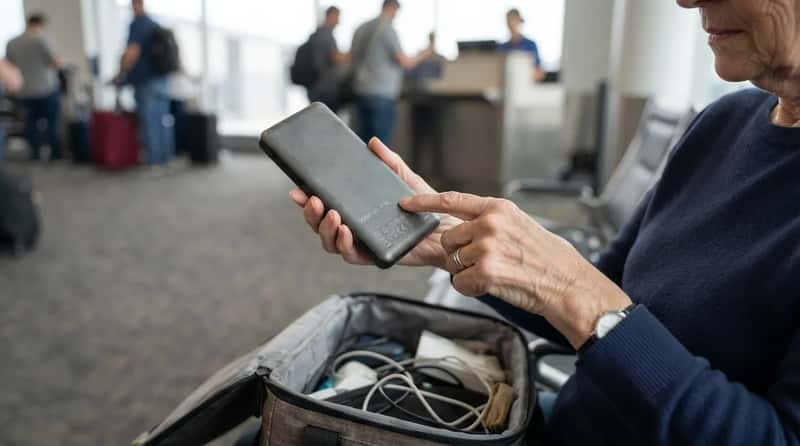
The FAA limits lithium-ion batteries to 100 watt-hours per battery.6 Here is how the tiers break down:
Quick Compare
- Up to 100 Wh: the standard limit per battery.
- 101 to 160 Wh: up to two spares, with airline approval.
- Over 160 Wh: cannot travel in passenger baggage.
Most phone power banks fall well under that line, and a standard 20,000 mAh bank almost always sits under 100 watt-hours. You don’t need to buy a smaller one, but check your airline’s own page for limits on how many you can carry or use in flight.
Even a compliant bank can end up in the wrong place once a gate agent tags your roller bag.
#3 – A Power Bank Left in the Gate-Checked Bag
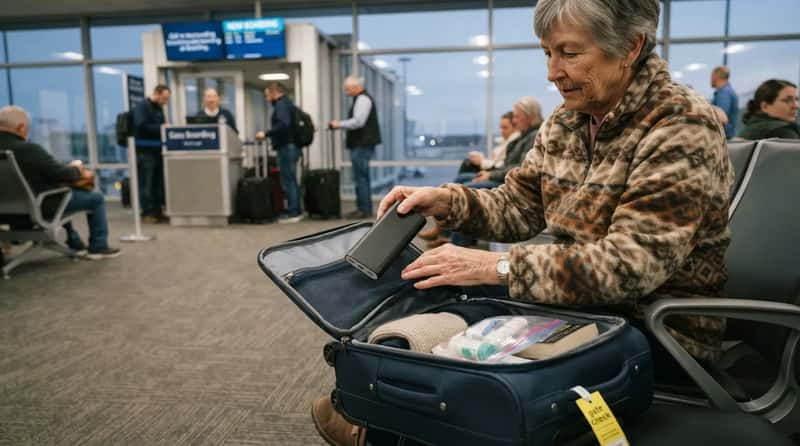
Spare lithium batteries, including power banks and portable chargers, must be carried on and cannot be checked.6 If your carry-on is checked at the gate, you must take the power bank out and keep it with you in the cabin.
United, Alaska and the FAA all spell that step out. Smart luggage works the same way, since bags with lithium batteries must travel as carry-on unless the battery can be removed.7
Do the sweep before you reach the front of the line. Power banks, chargers and the medicine from #9 all move from the roller to the bag under your seat.
Which bags get tagged at the gate depends partly on when you board.
#2 – Boarding Late and Counting on the Overhead Bin
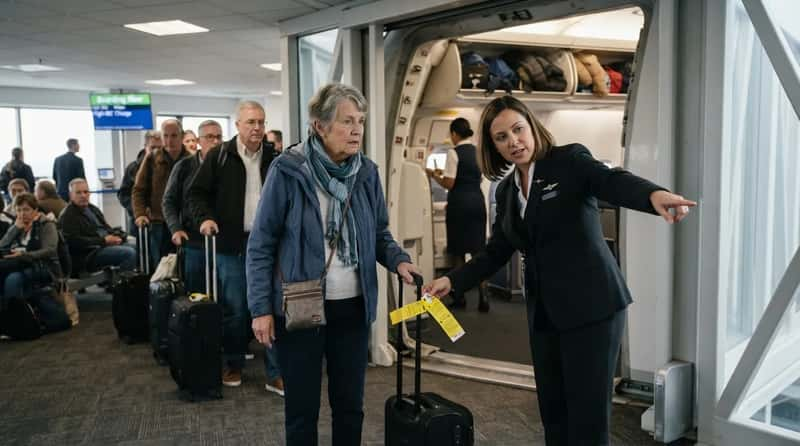
Basic Economy passengers board last, so by then the overhead bins are often full. On legacy carriers, an oversized or surplus bag is typically gate-checked for free.
Free is not harmless, though, because everything inside is out of reach for the whole flight. If you’re in a late boarding group, treat the roller as a bag that may leave you at the jet bridge door.
A free gate check is a courtesy from some airlines, and on a few fares the same moment carries a price.
#1 – The Cheapest Fare That Leaves Out the Carry-On
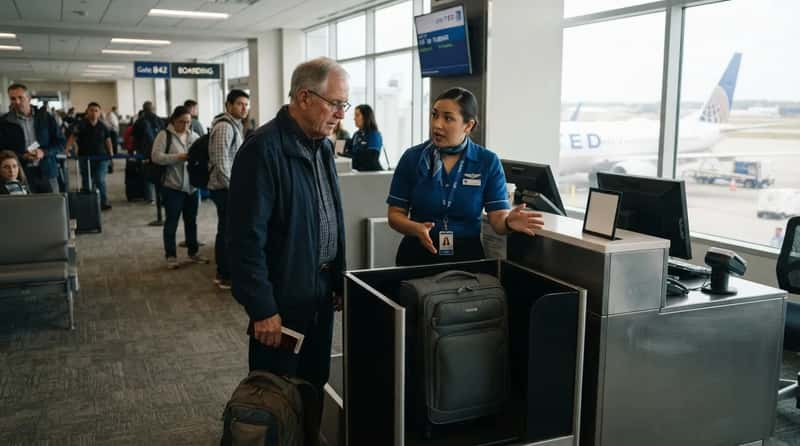
United’s domestic Basic Economy does not include a carry-on, only a personal item that fits under the seat. A non-included carry-on taken to the gate costs $75 for tickets bought on or after April 3, 2026, and $65 for older tickets.8
Checking the bag costs $45 prepaid or $50 at the airport counter. Gate fees apply each way, so a round trip comes to $150.
If the Basic fare saves you less than that, it is the more expensive ticket. Other big carriers handle the lowest fare differently:
At a Glance
- United Basic Economy: personal item only, carry-on costs extra.
- Delta: a free carry-on on all fares, including Basic Economy.
- Southwest: a carry-on and personal item free on all fares.
Fees and policies change, so read the fare rules for your exact ticket before you pay. For a trip with only a rolling bag, the next fare up or a prepaid bag usually beats the cheap fare.
The under-seat bag from #8 matters most here, because that is all this fare covers.
The airport is where the bill arrives, but most of these costs were set earlier. The fare was chosen at the booking screen, the bottle size at the bathroom shelf, and the battery rating when you bought the power bank.
Treat the bag as part of the ticket and settle it at home, where you can measure, read the fare rules and sort what rides under the seat. A gate is a poor place to learn something a tape measure could have told you.
Which item do you always move into your under-seat bag before boarding, and why?
Bonus: The Boarding Request Nobody Tells You About
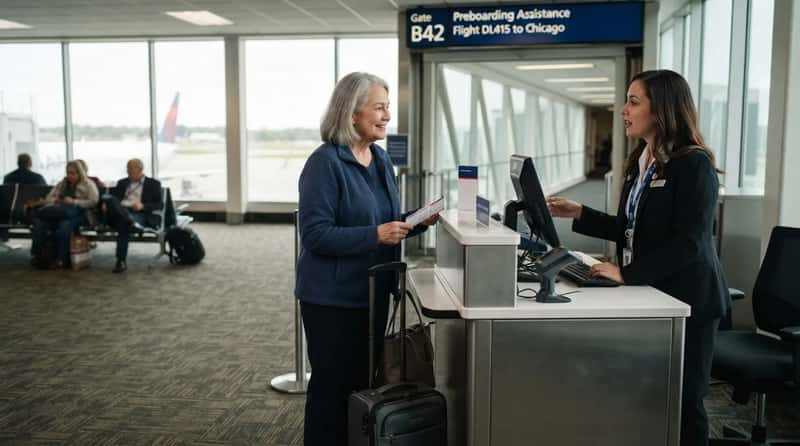
Many of the problems above start when you board after the bins fill. If walking the jet bridge or lifting a bag takes you extra time, you can ask to preboard.
Under U.S. Department of Transportation rules, airlines must offer preboarding to passengers with disabilities who ask for it at the gate. Age alone doesn’t qualify, but a mobility limit does.
- At least 72 hours before: Call TSA Cares at 855-787-2227 so the checkpoint is ready for you. Also tell your airline about any boarding help you need.
- At the gate: Speak to the agent at the desk before boarding begins, not once the line forms. Say plainly that you need extra time to board and stow your bag.
- On the plane: Put the roller in the bin nearest your seat. Keep medicine, chargers and power banks in the bag under your seat.
Early boarding means a better chance at bin space, and you avoid the surprise gate check. It costs nothing to ask.
- AARP TSA Shoes Policy: https://www.aarp.org/travel/travel-tips/tsa-shoe-policy/
- Afar 3-1-1 Rule: https://www.afar.com/magazine/the-tsas-3-1-1-rule-for-liquids-in-carry-on-luggage
- NerdWallet 3-1-1 Liquids Guide: https://www.nerdwallet.com/article/travel/3-1-1-liquids
- TSA Medication Guidance: https://www.tsa.gov/travel/frequently-asked-questions/i-am-traveling-medication-are-there-any-requirements-i-should-be
- DOT Disability Bill of Rights: https://www.transportation.gov/airconsumer/disabilitybillofrights
- FAA PackSafe Batteries: https://www.faa.gov/hazmat/packsafe/airline-passengers-and-batteries
- FAA Smart Luggage Rules: https://www.faa.gov/hazmat/packsafe/baggage-with-lithium-batteries
- United Baggage Fees Guide: https://deeparrival.com/airlines/united-airlines/baggage-fees/