Your suitcase can pass the scale, look completely normal, and still get waved into the oversize pile because of a few inches nobody measured. That is the gap this list is about. The trouble usually starts long before the counter, and most flyers never see it coming.
The size of the bag is only part of it. Wheels, a sneaky zipper, a security scanner tunnel less than an inch smaller than the old one, and a fee chart that changed several times in 2026 are all waiting too. A couple of these rules can double a bill in a single moment, and one of them has nothing to do with the airline at all.
#26 – The 62-Inch Rule Is Math, Not a Guess
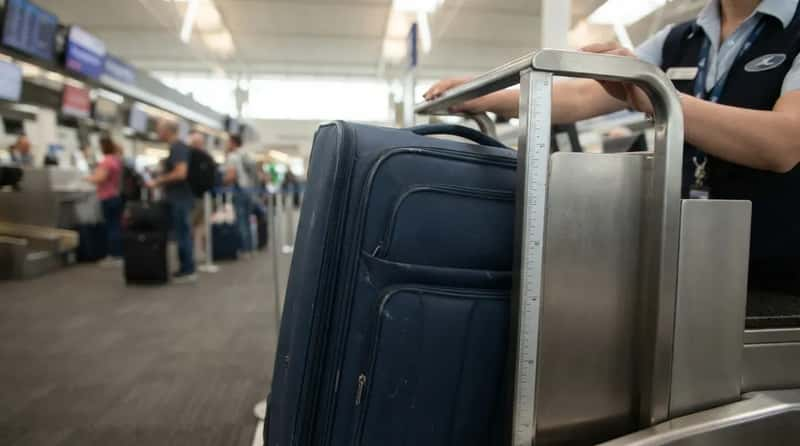
Most flyers eyeball a suitcase and call it fine. Airlines don’t. The real test is linear inches: length plus width plus height added together, and most airlines set the maximum at 62.
Take a suitcase that measures 28 by 20 by 12 inches. That adds up to 60 linear inches, which is inside the limit. Add two inches anywhere and you’re in oversize territory, and nobody at the counter rounds down for you. But the measurement most people skip is even sneakier, and it’s waiting at #25.
#25 – Wheels, Handles and Straps Count Too
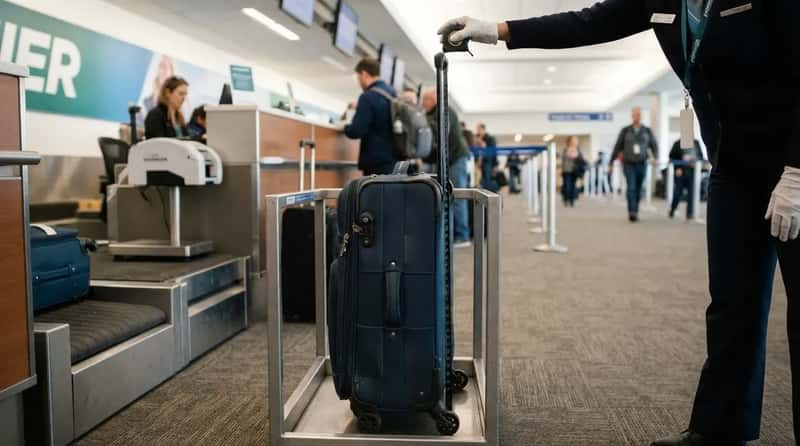
That “perfect-fit” suitcase may be bigger than its product listing says. Frontier’s published policy states that the 62-inch maximum includes handles, wheels and straps. Many listings show only the shell.
Even with carry-ons, flyers often forget to count the wheels or the handle. A bag sold as “within limits” can cross the line once the wheels are included. Measure from the very bottom of the wheels to the very top of the handle.
And the next surprise isn’t about size at all. It’s about how many bills one bag can trigger at #24.
#24 – Overweight and Oversize Are Two Separate Bills
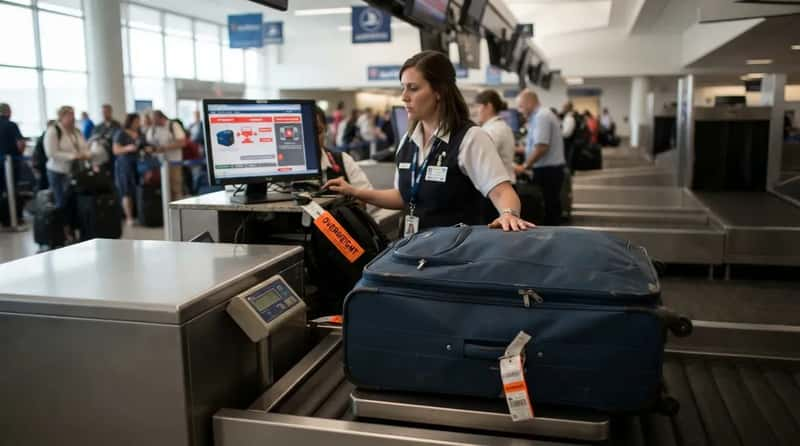
Most people don’t realize one bag can be charged twice. According to one 2026 fee guide, any bag that exceeds either limit triggers a per-bag, per-direction surcharge on top of the standard checked-bag fee. Both limits matter.
Quartz notes that a bag past the limit draws an overweight or oversize charge stacked on top of the base bag fee, not in place of it. A fee guide adds that at major carriers such as Delta, United, American, JetBlue, Alaska, Allegiant and Breeze, both fees apply independently. A heavy, bulky bag can mean two surcharges.
Then there’s the airline where the weight line sits lower than you’d expect, at #23.
#23 – Some Airlines Draw the Weight Line at 40, Not 50
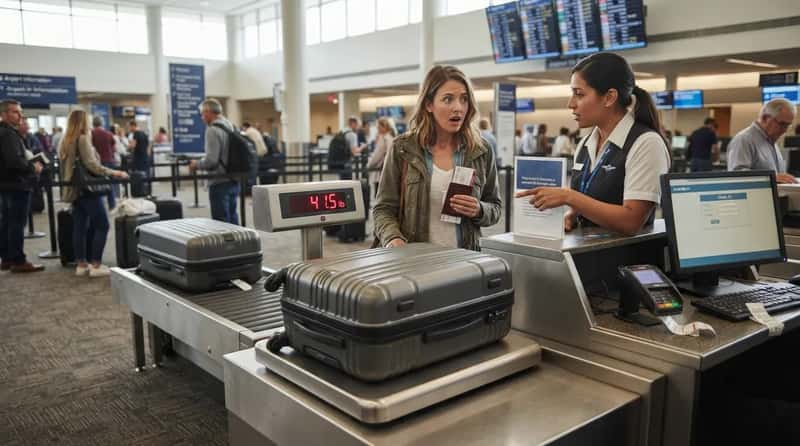
Most flyers carry “50 pounds” in their heads. On certain budget carriers, that’s a costly mistake. Frontier’s own page lists a checked-bag maximum weight of 40 lbs (18.1 kilograms).
Quick Compare
- Common legacy cutoff: 50 lb (23 kg)
- Frontier checked-bag maximum: 40 lb (18.1 kg)
- Frontier at 41 to 50 lb: an extra $75, per one 2026 comparison
Quartz confirms that some budget carriers set the overweight cutoff at 40 pounds rather than the 50 pounds common at legacy airlines. One 2026 comparison says a bag at 41 to 50 pounds draws an extra $75 on Frontier. A suitcase that sails through on a legacy airline can draw a fee at just 41 pounds. Think that’s harsh? Wait until you see what a single extra pound costs at #22.
#22 – One Pound Over Can Cost More Than the Bag Itself
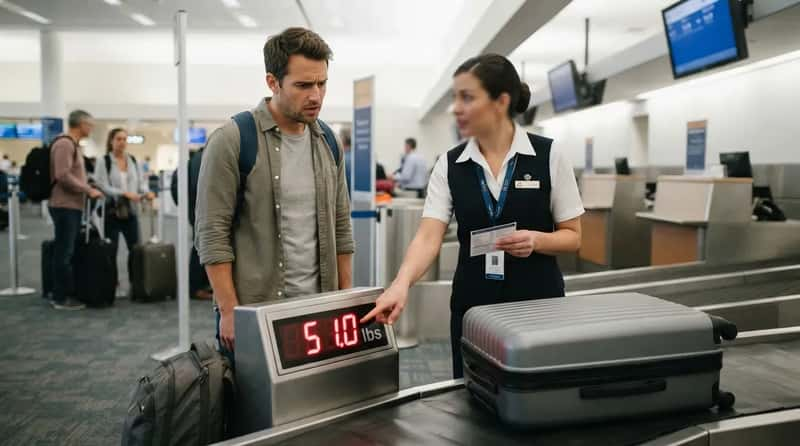
This is the cruelest cliff in air travel. One 2026 comparison says a bag even one pound over 50 lbs can cost $100 to $200 extra. AAA’s travel desk puts typical overweight fees at the same $100 to $200, depending on the airline and bag weight.
Compare that to the base price. AAA says most major airlines charge about $45 for the first checked bag. That makes one extra pound potentially worth more than double the bag fee itself.
Some flyers call that punitive, while others say the limit protects the people lifting bags all day. Either way, the next rule surprises even frequent flyers at #21.
#21 – The Limit Applies to Each Bag, Not the Pair
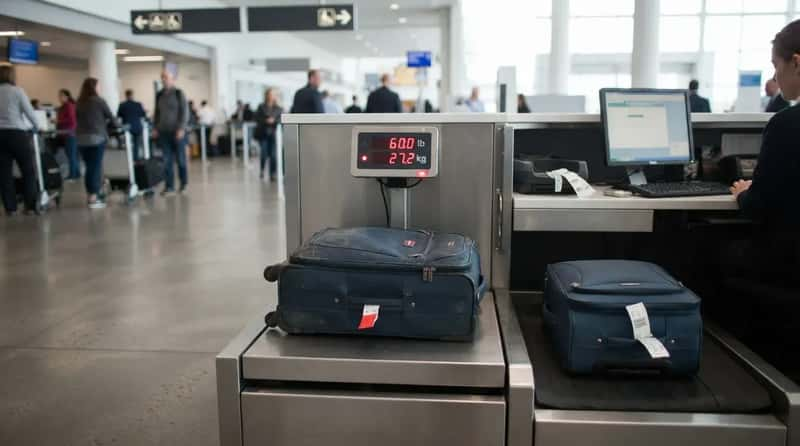
Packing two suitcases doesn’t let you average them out. Quartz explains that economy passengers on a piece-based ticket are generally held to 50 pounds, or 23 kilograms, per bag. Each one is judged alone.
Here’s the example it gives: one suitcase at 60 pounds draws an overweight charge even if the second weighs 30, because the ceiling applies to each item rather than the pair. Those two bags average 45 pounds, and one still gets charged. The fix is moving a few items across before you leave home.
Meanwhile, the oversize zone has a quirk that makes little sense at #20.
#20 – The 63-to-80-Inch Zone Is Where Fees Get Flat
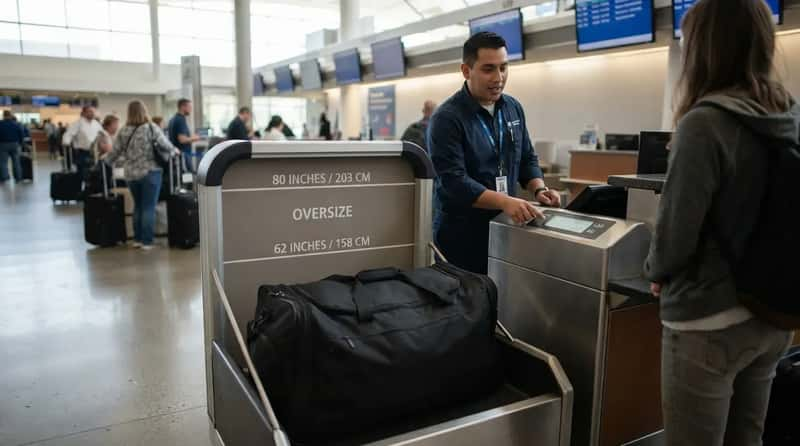
Oversize doesn’t scale smoothly at many airlines. At Southwest, oversize bags over 62 inches and up to 80 inches cost $200. JetBlue lists oversized bags at 63 to 80 inches for $150.
That means a bag one inch over the limit lands in the same price band as a bag 18 inches over it. At Southwest, 63 inches and 80 inches both sit in that single $200 range. If you’re going to be over anyway, it helps to know how much room you have.
But the fee isn’t always charged just once, as #19 reveals.
#19 – You Pay Each Direction, and Sometimes Each Segment
A fee that looks like one charge is often two. One guide explains that a round-trip ticket with one checked bag incurs the bag fee twice, once on each leg. Frontier describes its oversize charge as $75 per bag, per direction.
Some airlines go further. U.S. News notes that under one carrier’s policy, “per segment” means that if you have a connection, you’ll pay the fee twice. A $200 oversize fee each way is $400 on a round trip, before the base bag fees. Always check whether the fee says “per direction” or “per segment.”
Worth Knowing
- Round trip, one bag: the base bag fee is charged twice
- Frontier oversize: $75 per bag, per direction
- $200 oversize each way: $400 round trip, before base fees
- Connections: “per segment” wording can mean paying twice on one trip
And the numbers themselves have been moving, as #18 shows.
#18 – The Fee Chart Changed Under Everyone’s Feet in 2026
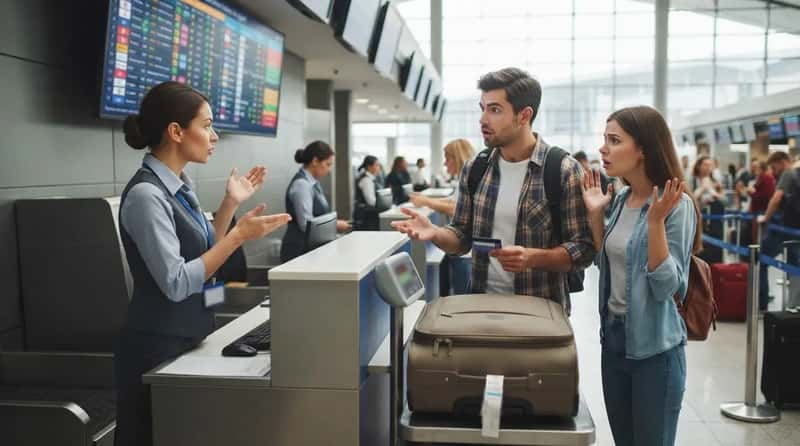
Last year’s screenshot may already be wrong. Southwest raised its fees effective April 9, 2026, moving to $100 for bags 51 to 70 pounds and $200 for 71 to 100 pounds, with oversize bags now also at $200. Frontier raised its overweight fee from $100 to $129 for bookings on or after April 4, 2026.
Booking date matters too. Frontier’s page says that for bookings made prior to April 4, 2026, bags weighing 51 to 99.99 pounds are charged $100. Two passengers on the same flight can face different fees depending on when they booked.
Still, some bags don’t get a price at all, as #17 explains.
#17 – Some Bags Aren’t Accepted at Any Price
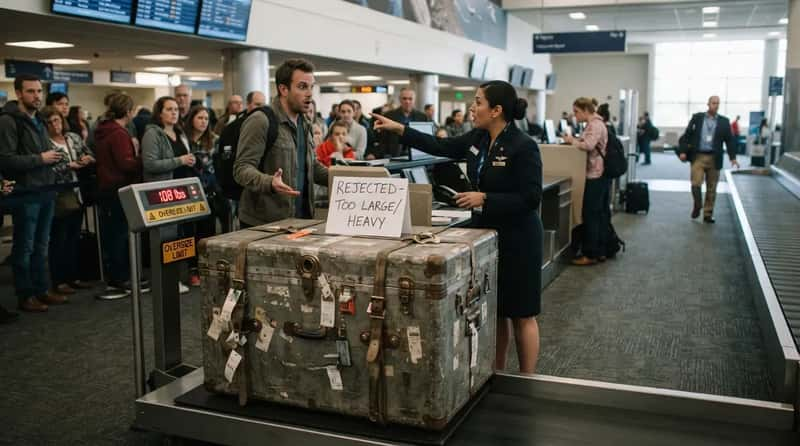
There’s a ceiling above the fee zone. Frontier says baggage weighing 100 or more pounds, or exceeding 110 linear inches, will not be accepted, with the exception of assistive devices. Alaska’s oversize band runs from 63 to 115 inches.
Another guide says that above 80 inches, bags may need cargo or special handling. At some point, a suitcase stops being baggage and becomes freight. That’s a very different conversation, and a very different price, than the one at the counter.
Next, we look at the airlines that charge in a different style entirely at #16.
#16 – Budget Airlines Play a Completely Different Game
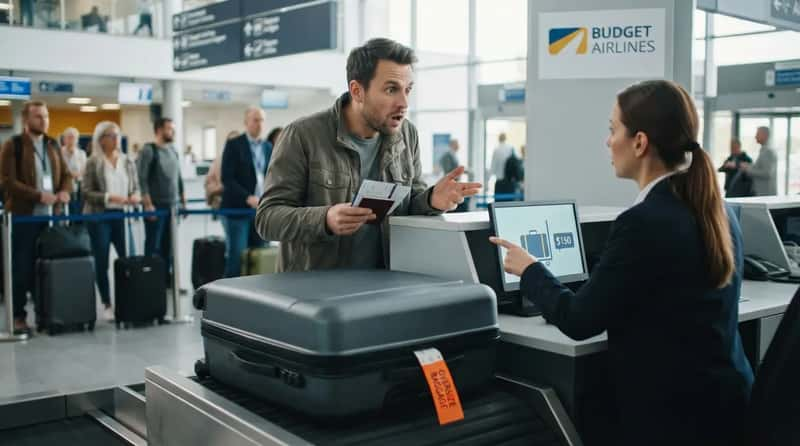
A cheap fare doesn’t mean cheap travel. Spirit lists oversize bags at 63 to 80 linear inches at $150 or more. U.S. News says Frontier’s fees vary across flights and, unusually, can also change depending on the date and time you’re flying.
Some flyers call this a bait-and-switch. Others say they’re simply paying for what they use. Either way, the sticker price of the ticket tells you almost nothing about the final bill.
Now for something that has nothing to do with the airline at all, at #15.
#15 – The TSA Scanner Opening Is Smaller Than You Think
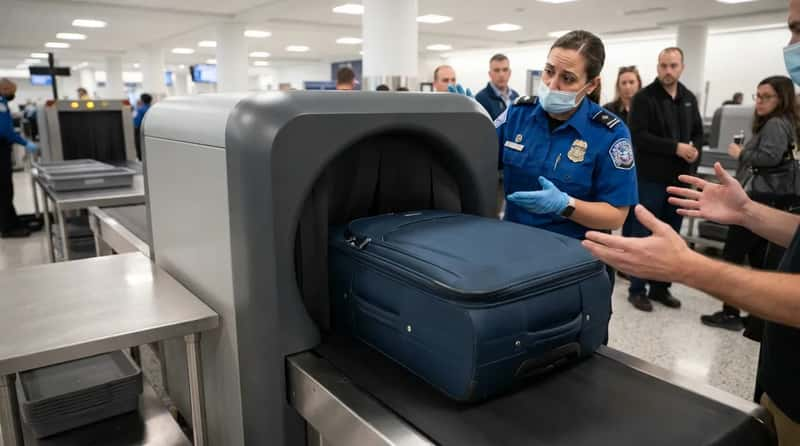
A bag can pass airline rules and still not fit through security. Many older airport scanners have openings around 25.2 by 16.9 inches, while the new CT scanners measure only 24.5 by 16.5 inches. TSA acknowledged that not all larger carry-on bags will fit into the units.
Bags that meet the typical airline limit of 22 by 14 by 9 inches will still fit. For others, officers can hand-inspect the bag, redirect it to an older lane, or advise the traveler to check it. That walk back to the ticket counter can mean an extra fee.
And the most common culprit is hiding in plain sight at #14.
#14 – The Expandable Zipper Is the Usual Suspect
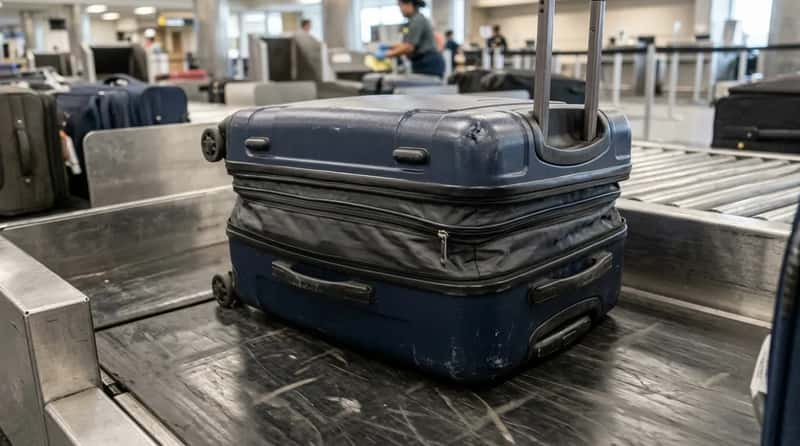
That extra zipper feels like free space. It isn’t. The most likely problems are expandable suitcases with the extra zipper open, stuffed front pockets and bulky wheels or handles.
Simple Flying names frequent flyers with hard-shell expandable cases as one of the groups most likely affected. A typical soft-sided 22-inch roller will rarely notice. Opening the expansion zipper can add inches the label never mentions. Keep it closed at security and you avoid the problem.
But even a closed bag can surprise you, as #13 shows.
#13 – A Bag Can Be Legal Empty and Oversize Full
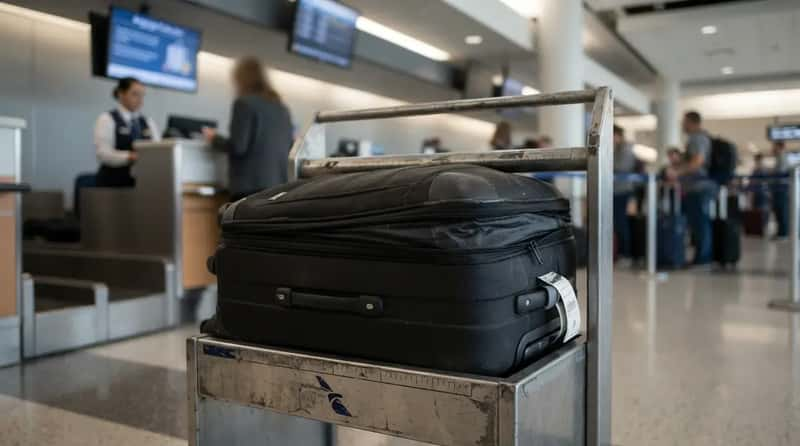
Packing changes the shape of a suitcase. Simple Flying points out that the greatest risk is not necessarily a formally oversized suitcase, but one that meets its published dimensions when empty or compressed and changes shape once packed.
There are really two separate measurements here. The airline’s baggage allowance and the scanner’s physical opening aren’t the same thing. A bulge you can barely see can use up most of the clearance.
So why are more people running into this now? That’s #12.
#12 – The New Scanners Are Spreading Fast
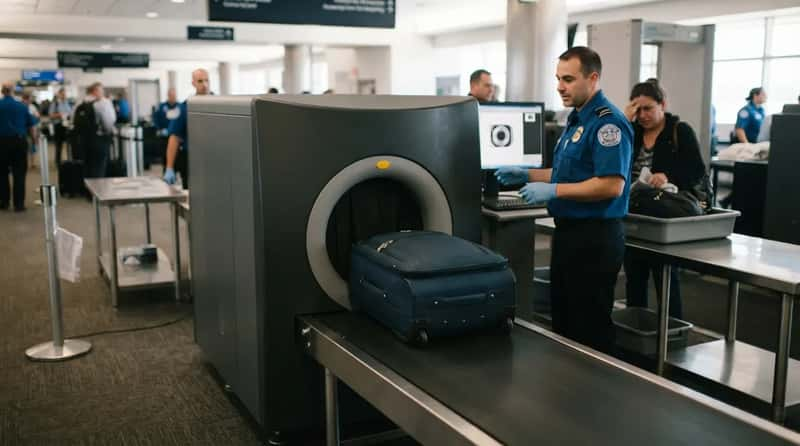
More flyers are hitting this wall because the machines keep multiplying. Every new lane that replaces an older one is another place a borderline carry-on can get stopped.
Fast Facts
- Rollout: 1,162 checkpoint CT scanners at 296 airports as of July
- Funding: more than $781 million in federal money in 2022
- Size gap: the tunnel is less than an inch smaller than older units
- Still fits: a carry-on at the typical 22 by 14 by 9 inch airline limit
Some travelers see the change as a stealth bag-fee generator, but a TSA spokesperson said the tunnel is only slightly smaller and the design is needed for the imaging to work. Under an inch is all that stands between a carry-on and a checked-bag fee.
Next, what happens after the bag flies, at #11.
#11 – Oversize Bags Often Come Out Somewhere Else
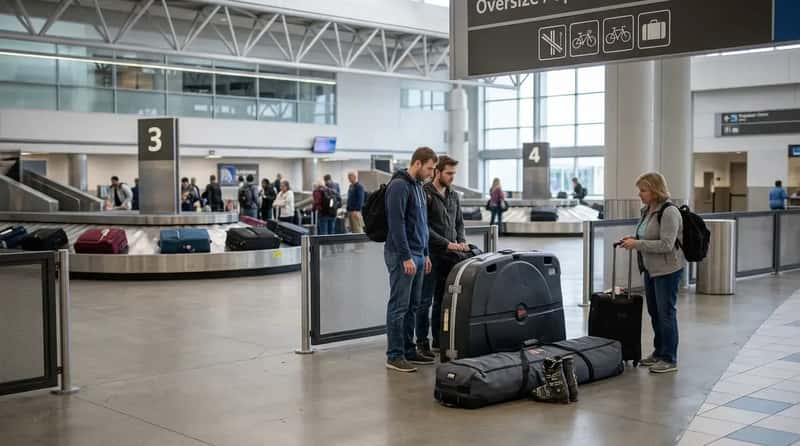
Big items usually skip the regular carousel. Detroit’s airport says oversized or special baggage waits in your terminal’s baggage claim area. At the McNamara Terminal, the oversized area is behind Carousel 3.
At Detroit’s other terminal, oversized baggage is in the center of the baggage claim area, next to the elevators. Two terminals in the same airport put oversize bags in two different places. Standing at the wrong carousel is a rookie move that’s easy to make.
And if the bag never shows, there’s one counter that matters at #10.
#10 – One Counter Handles the Odd Stuff
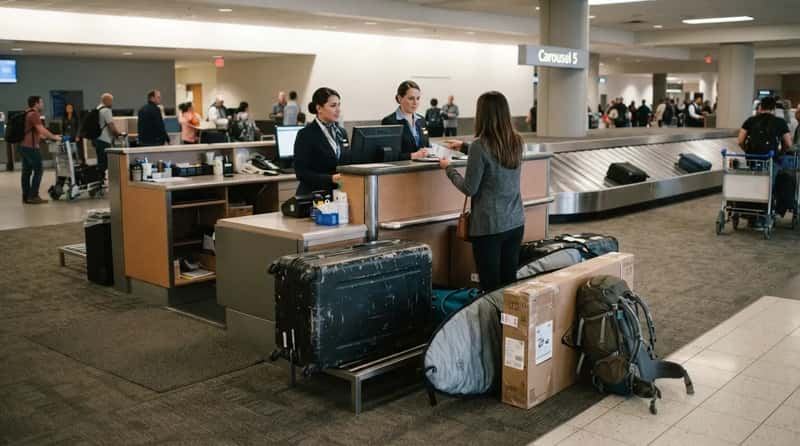
Almost nobody notices it until something goes wrong. A typical baggage claim area contains the airline’s customer service counter for claiming oversized baggage or reporting missing or damaged baggage.
That makes it the right stop for an oversize item that isn’t where it should be. The same desk handles claiming, missing and damage reports. Sorting problems out before you leave the claim area is the usual advice.
Of course, you also need to prove the bag is yours, and that’s #9.
#9 – The Bag Tag Is Your Only Proof
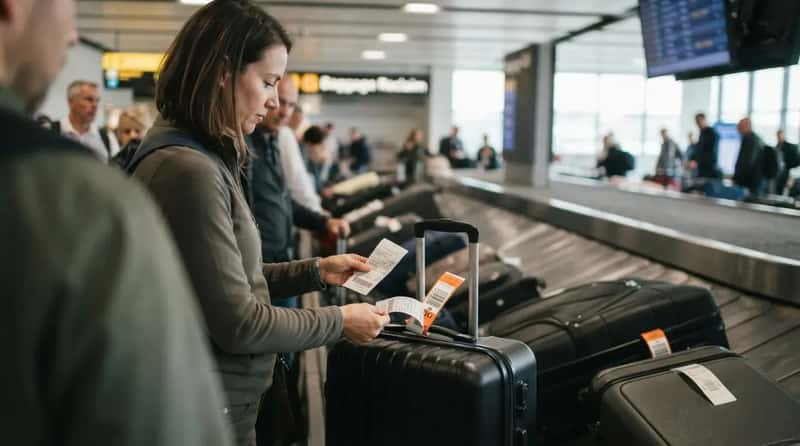
Look-alike suitcases are a real problem. Many airports still recommend checking the baggage receipt against the tag on the bag you reclaim. The receipt you get at check-in isn’t just paperwork.
The matching step reduces baggage theft and helps keep passengers from accidentally leaving with someone else’s similar-looking bag. Black spinner suitcases are famously easy to mix up. Keep the receipt until you’re out the door.
And speaking of check-in, here’s what happens at the scale at #8.
#8 – Every Checked Bag Gets Weighed
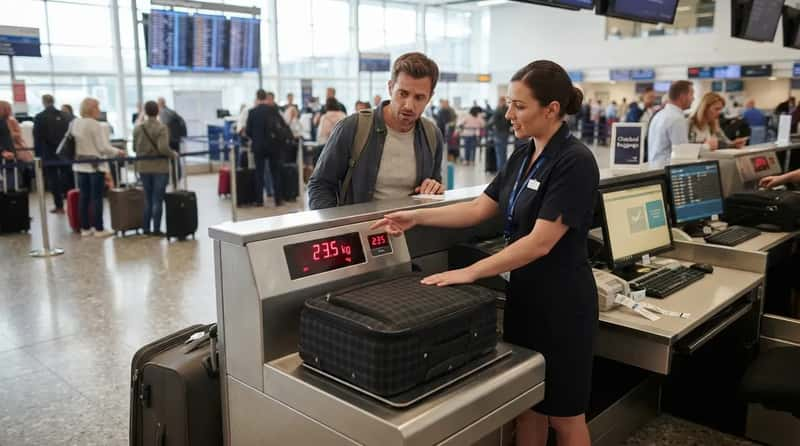
Don’t count on slipping through. All checked items are generally weighed by the airline during check-in, and passengers are told if they exceed the limit. The scale is the first stop.
A common result is that you’ll pay an overweight fee of about $100 to $200 per bag or be asked to repack your belongings. Repacking at the counter, in front of a line, is the most public way to save money. Planning at home avoids the scene.
The industry has its own idea of limits, though, and it’s #7.
#7 – The Industry’s Own Guideline Explains the Fee Bands
There’s a recommended standard behind all this. Per a baggage allowance reference, it advises a maximum weight of 23 kg (50.7 lbs), a limit of 32 kg (70.6 lbs), an advised maximum size of 158 cm (62.2 in) and a limit of 203 cm (nearly 80 in).
At a Glance
- Advised weight: 23 kg (50.7 lbs)
- Weight limit: 32 kg (70.6 lbs)
- Advised size: 158 cm (62.2 in)
- Size limit: 203 cm (nearly 80 in)
That reads like a blueprint for the fee bands in this article. The common 51-to-70-pound and 63-to-80-inch bands line up with those numbers. Airlines still set their own rules, which is why the prices attached to each band vary so much.
Next, a small saving most people skip, at #6.
#6 – Paying Early Can Beat the Counter Price
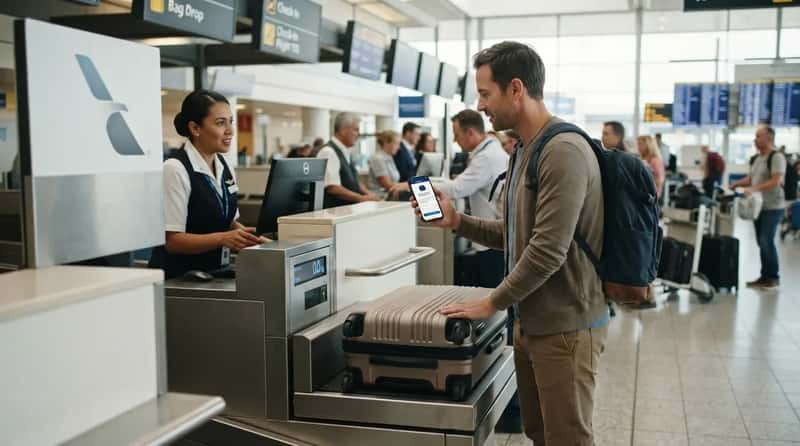
Timing changes the bill. United’s base fee is $45 for the first bag prepaid online and $50 at the airport. American is described as $50 to $60, with a $5 online discount.
It’s small, but it’s per direction. That’s $5 each way, or $10 on a round trip, for the same suitcase. It won’t erase an oversize fee. Still, free money is free money.
Next, a perk that doesn’t cover as much as people think, at #5.
#5 – A “Free Bag” Perk May Not Cover the Extras
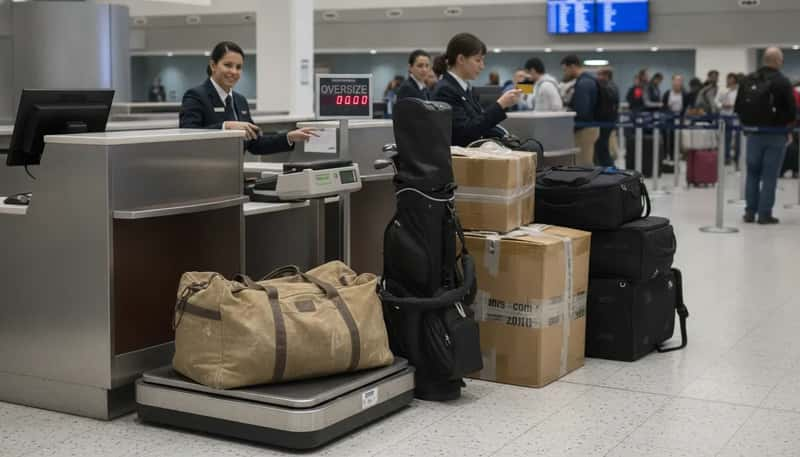
Most people don’t realize what the perk usually covers. Free checked bags typically come only with status, a co-brand card or a premium fare. Southwest’s version covers two standard checked bags on certain fares.
The key word is “standard.” A standard bag may weigh up to 50 lb and measure up to 62 linear inches. Since surcharges are stacked on top of the base bag fee, it’s worth checking whether your perk waives them. Some flyers call the cards the best travel perk going, while others say they create false confidence.
And overseas, the whole system works differently, as #4 shows.
#4 – Overseas, Weight Can Be Charged by the Kilo
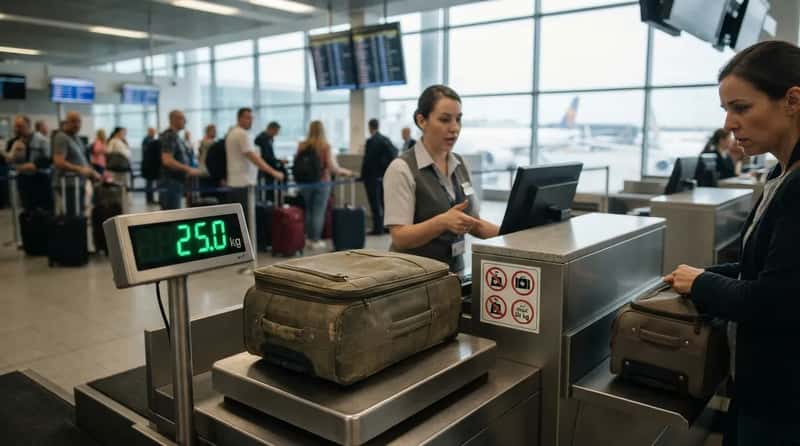
Some airlines don’t use fixed bands at all. A baggage calculator says Emirates, Qatar Airways, Turkish Airlines and Singapore Airlines typically charge around $15 to $40 per kg. It adds that European and American carriers use fixed brackets.
The ticket type matters too. Quartz explains that there are weight-based and piece-based systems, and the difference decides what counts as overweight. The same suitcase can cost very different amounts on two airlines.
Now for a rule that exists for a very different reason, at #3.
#3 – Assistive Devices Follow Different Rules
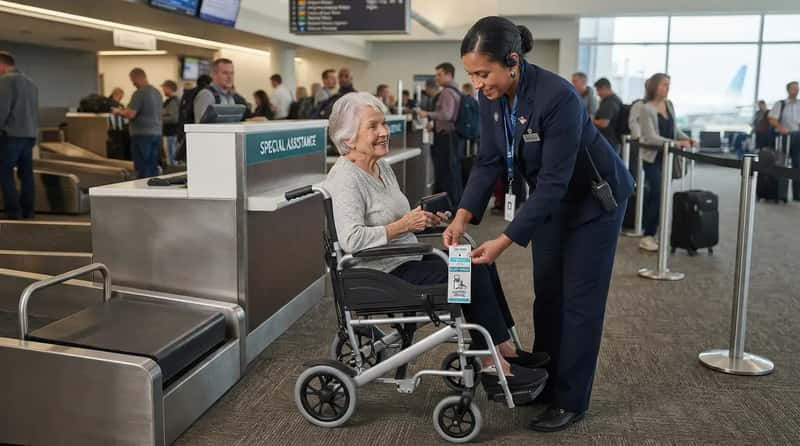
Not every large item is “oversize baggage.” Frontier’s policy makes an exception for assistive devices when it comes to its size and weight refusal limits. Mobility aids are treated separately from ordinary luggage.
U.S. federal rules also set wheelchairs and other mobility aids apart from standard bags. The same limit that turns away a giant suitcase doesn’t apply the same way to a wheelchair. If you travel with one, check the airline’s disability pages and let them know ahead of time.
Meanwhile, there’s a money trick most people never try at #2.
#2 – Splitting One Heavy Bag Can Beat the Overweight Fee
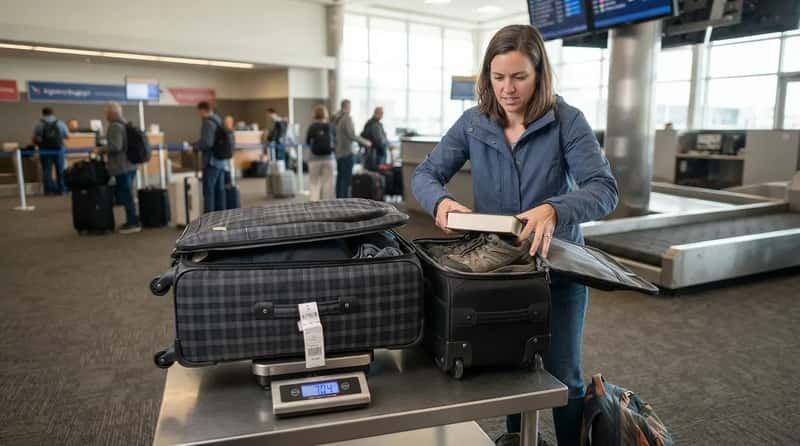
The cheapest fix is often a second bag. Take a carrier charging $45 for the first bag, $55 for the second, and $100 extra for bags of 51 to 70 pounds. A single 70-pound bag costs $145 each way.
Two 35-pound bags would cost $100. That saves $45 each way, or $90 on a round trip. Don’t go too far, though, because a third checked bag often costs around $200.
One last truth changes how you see the whole counter, at #1.
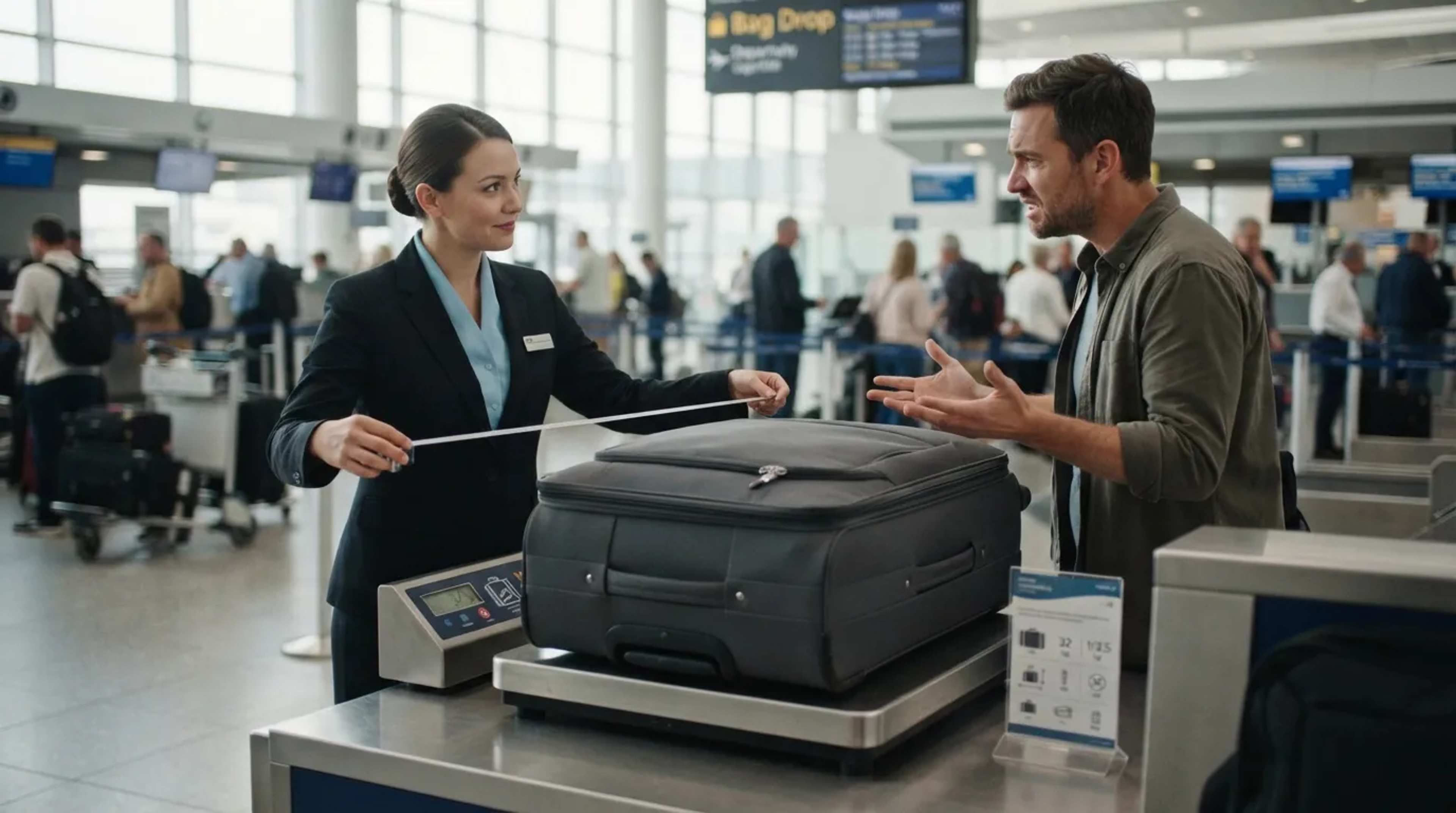
#1 – The Person at the Counter Didn’t Write the Fee Chart
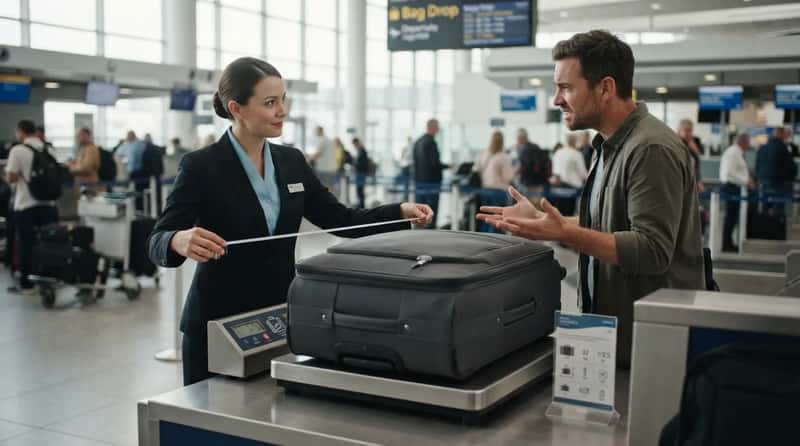
The fee was set long before you arrived. Airline websites normally spell out their baggage fee policy and limits in plain view. The agent and the scale only enforce it.
That’s why the tension at oversize counters is so one-sided. Fee ranges change, so confirm the exact number on the airline’s site before booking. The only real decision left at the counter is the one you made in your garage. Whether the fees are fair is a debate worth having, just not with the person holding the tape measure.
The shocking part isn’t one giant fee. It’s how many small things quietly pile up: a 62-inch limit that’s simple addition, wheels and handles that count, overweight and oversize charges that can stack, and new scanners turning borderline carry-ons into checked bags. Fees changed several times in 2026, so even a screenshot from last spring can steer you wrong.
Which of these surprised you most, and have you ever paid for an inch you never saw coming?