The brochure promises golden-hour photos, zero parking stress, and someone else doing the driving. What it leaves out is the fine print: 40 strangers, one sealed cabin, and a long list of small habits that everyone notices and almost no one mentions.
Some of these are just petty. A couple are genuinely risky. And one, according to the guides and drivers who deal with it daily, outranks all the rest, and it isn’t the smell, the snoring, or the seat war.
#23 – The Speakerphone Video Watcher Who Shares Without Asking

Somebody always watches a video with the volume up and no headphones. Within seconds, five rows are hearing a stranger’s reality show, cooking tutorial, or grandkid FaceTime. A coach cabin is an enclosed, hard-surfaced space where sound bounces, so one phone can fill the room.
The viewer usually has no clue. They’re locked on the screen and assume the engine hum is covering it. It rarely is, especially on smooth highway stretches. One tiny speaker can set the mood for an entire afternoon, and it’s only the first sound problem on this list.
#22 – The Full Recline That Arrives Before the Coach Leaves the Lot
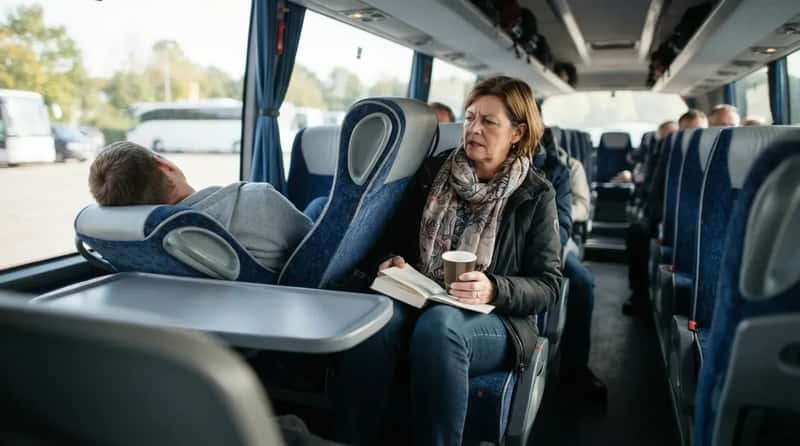
The seat goes all the way back before the first mile is done. The person behind suddenly has a headrest in their lap and nowhere to put a book or a coffee. Coach seats are built to recline, so it isn’t against any rule. Here’s what stings: the person behind often gets no warning at all.
Some travelers insist reclining is part of what they paid for. Plenty of veteran tour guests say a slow, partial recline is the unwritten etiquette. Either way, it’s a negotiation nobody wants to have out loud, so the person behind just sits there and takes it.
But nothing prepares you for what happens at the first rest stop.
#21 – The Exit Rush Before the Door Even Opens
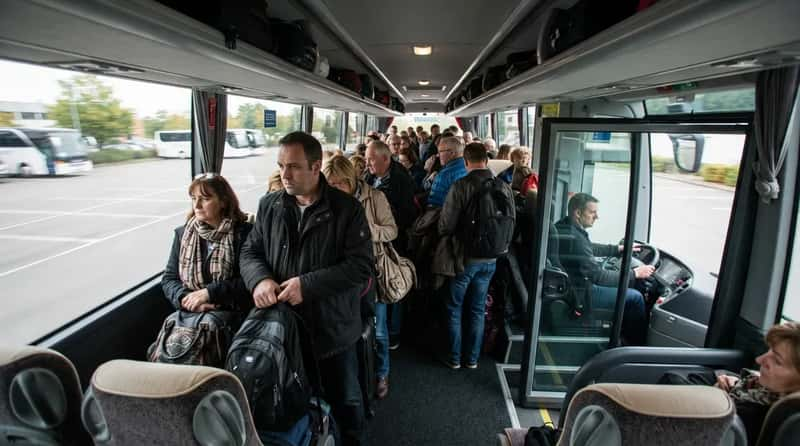
The coach is still rolling into the parking lot when someone stands up and grabs their bag. Others follow, and soon the aisle is jammed with people swaying as the driver brakes. Nobody gets off any faster, because the door doesn’t open until the vehicle stops. The rush only boxes in the people who were waiting calmly.
Drivers dislike it because a sudden stop can send a standing passenger sideways. Guides repeat the same request on nearly every tour: stay seated until the coach has fully stopped. The aisle is rarely wide enough for two people carrying day bags, so the traffic jam is guaranteed.
#20 – Shoes Off, Socks Out, Feet Up on the Seat Ahead
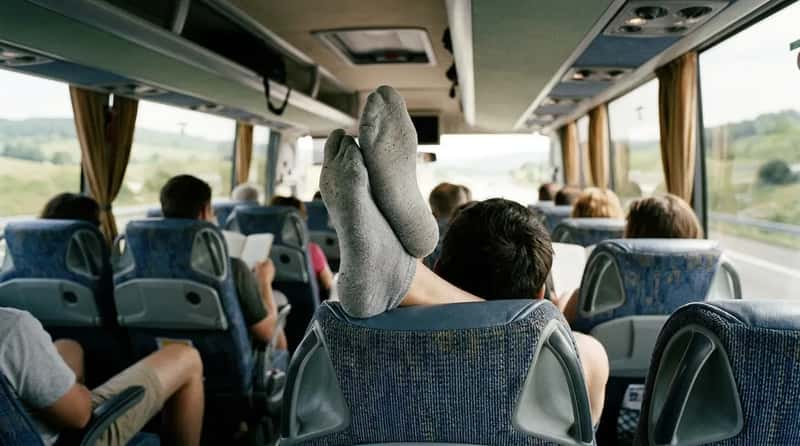
Long rides make feet swell, so some travelers slip their shoes off. That’s understandable, but a sealed cabin turns it into a group experience. Then the bare feet climb onto the armrest, the wall, or the seat in front. The seat back ahead belongs to someone’s head and shoulders.
The person in front often feels a toe poking through the gap and can’t un-feel it. The unwritten rule is simple: anything that touches the seat is shared property. Few people speak up, so the whole row quietly deals with it.
Wait until you see what people unwrap at the next stop.
#19 – The Strong-Smelling Lunch Eaten at Seat 14B
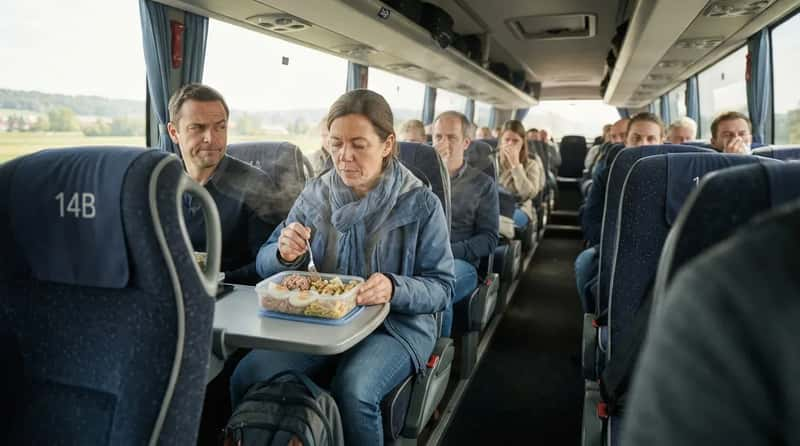
Tuna, boiled eggs, reheated leftovers, and fried takeout all smell stronger in a closed cabin. The aroma hangs in the air long after the last bite. Hungry passengers rarely think about the people downwind. Some coach companies ban hot food onboard for exactly this reason.
Smell travels farther than the eater expects. Cold, low-odor snacks like nuts, fruit, or crackers cause far fewer sideways glances. Seasoned tour guests save the hot meal for the stop itself. Everyone else sits through the other version politely, with a few windows cracked open.
Quick Compare
- Low-odor snacks: nuts, fruit, crackers
- High-odor risks: tuna, boiled eggs, reheated leftovers, fried takeout
- Smartest move: save the hot meal for the rest stop
#18 – The Air-Conditioning War Fought Without a Word
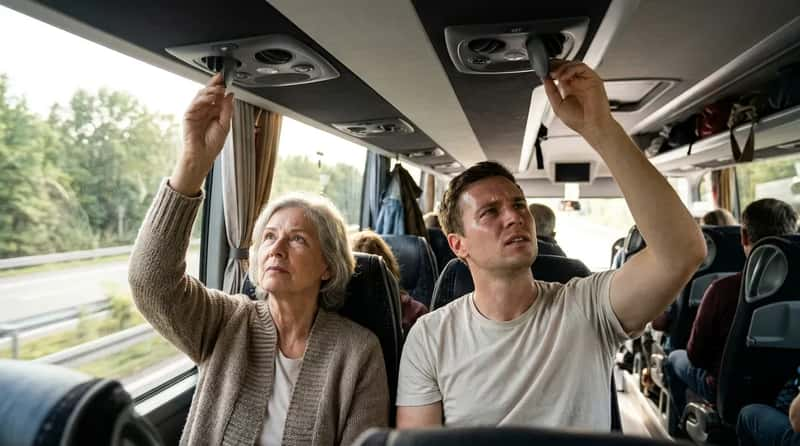
One passenger is freezing and another is sweating, and the only controls are the little vents overhead. The fiddling starts early. Vents get twisted shut, then twisted open again. Two people in adjacent seats can feel totally different temperatures from the same cabin.
Hardly anyone raises it with the driver, who usually controls the main thermostat. Instead, the silent adjustments go on for hours. Groups with mixed ages are the worst case, since comfort levels vary so much. And most people never realize their own vent is blasting the row beside them.
The next fight is over something even simpler.
#17 – The Window Shade Standoff
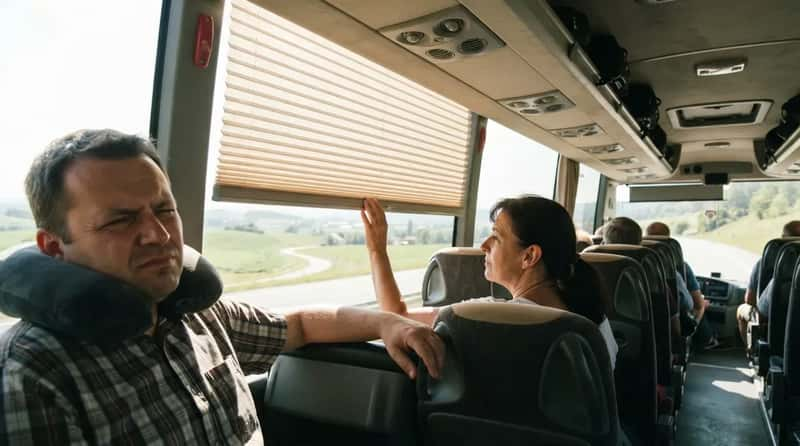
The sun hits one side of the coach for hours, and the window seat holder controls the shade. Pull it down and the aisle seat loses the view. Leave it up and the glare hits the person trying to nap. It’s the smallest object on the coach and the source of some of the loudest silent resentment.
It’s one of those disputes nobody mentions out loud. The shade ends up half down as an uneasy compromise. Some travelers say the window seat holder should always ask first. Others insist the window seat is paid for with the sunlight.
#16 – The Permanent Front-Row Claim
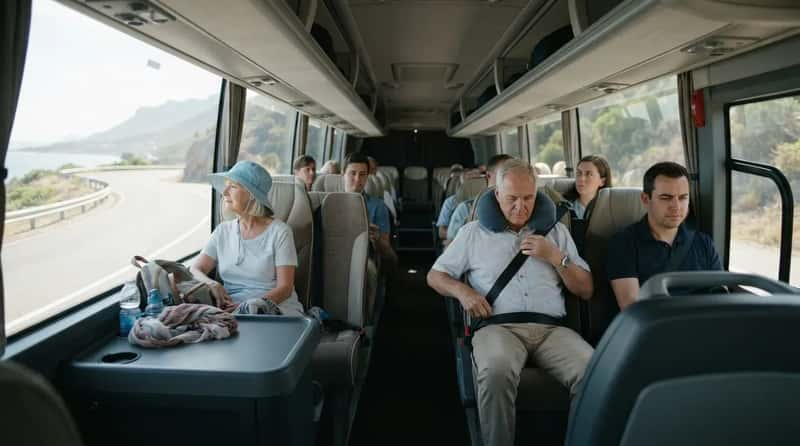
Front seats often have the best view and the smoothest ride. Some passengers grab them on day one and treat them as theirs for the whole tour. Everyone else watches with quiet envy. Plenty of operators run a seat rotation policy to prevent exactly this.
Many travelers rank the front row as the best seat on the coach. Others find it overrated because of the windshield glare and the constant braking ahead. Whichever side you’re on, a seat that never changes hands can sour a group’s mood fast. And the group usually just watches it happen.
But the front row isn’t the only place people take over.
#15 – The Microphone Hog Who Turns Every Stop Into a Q&A
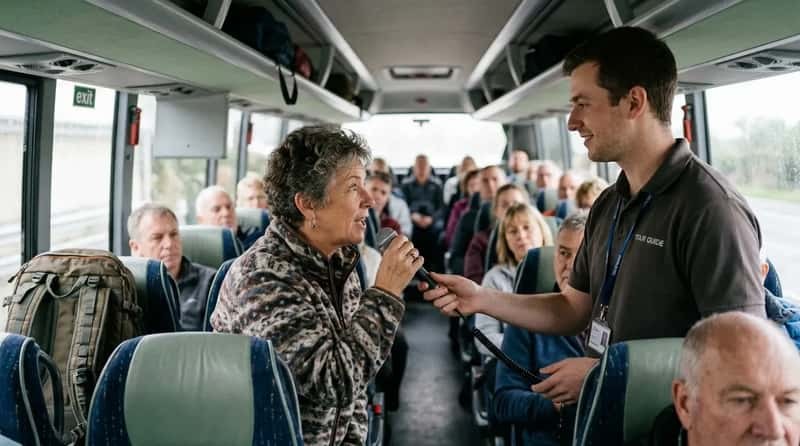
Every group has one: the person with a question about everything. The guide’s commentary becomes a back-and-forth with one passenger while 38 others wait. Questions drift into personal stories that have nothing to do with the landmark. A guide’s talking time is limited, and every detour eats into it.
Guides rarely cut anyone off, since staying polite is part of the job. Instead they smile and keep the schedule moving. The real cost shows up later, in minutes shaved off the actual stops. The best questions, as many veteran guests know, can wait until the coach is parked.
#14 – The Aisle Wanderer While the Coach Is Moving
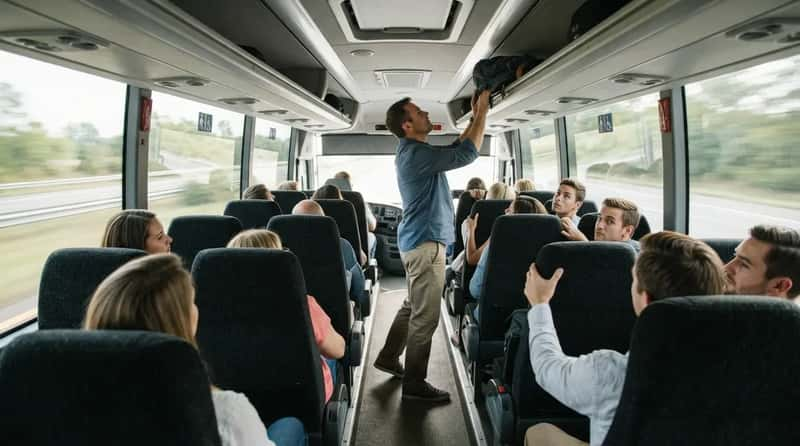
Someone stands up to stretch, chat, or fetch a bag while the coach is at highway speed. Every bend sends them swaying into seats. A sudden brake can send them to the floor. Federal rules have required lap-shoulder belts on new motorcoaches since late 2016.
Drivers know a standing passenger is a risk to the whole cabin. Guides repeat the same message at the start of every trip: stay seated while the wheels are turning. Yet someone always forgets. Fellow passengers end up bracing for a stumble they can see coming.
The next habit takes up space that isn’t theirs.
#13 – The Bag Parked on the Empty Seat Next to Them
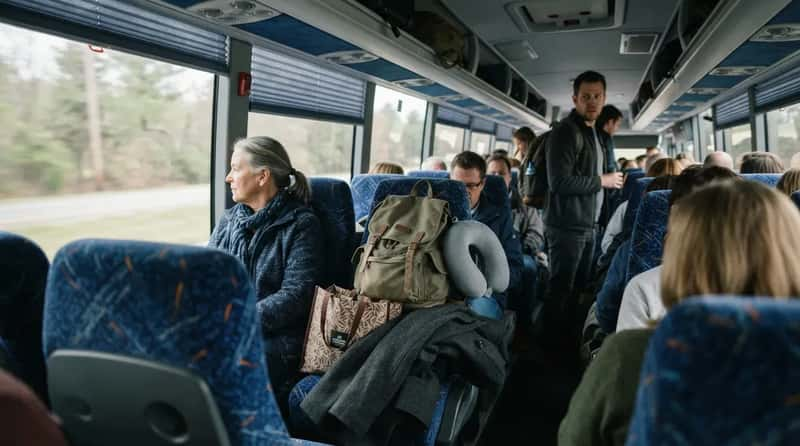
A backpack, a coat, a shopping bag, and a neck pillow end up spread across two seats. On a full coach, that means someone else is standing in the aisle or squeezing in elsewhere. The owner pretends not to notice. On a fully booked tour, every seat is spoken for.
Overhead racks exist for a reason, and they often sit half empty. The unwritten rule is simple: your stuff goes up or under, not beside you. Many passengers silently accept the clutter rather than start an argument. So the group works around it, row by row.
#12 – The Onboard Toilet Mistake Everyone Smells
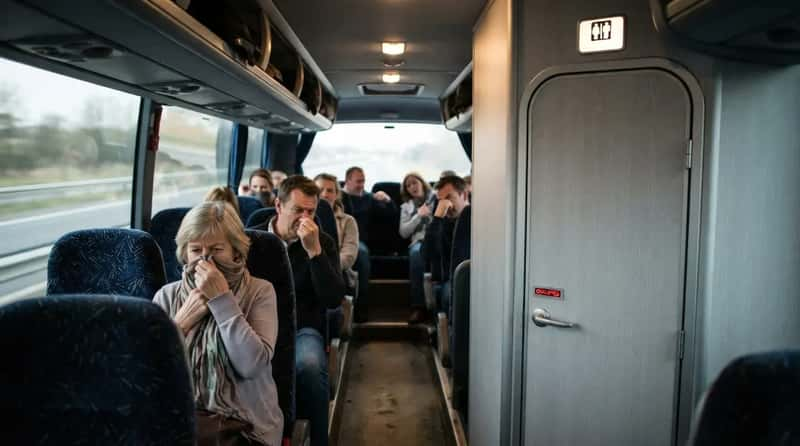
Many coach toilets are tiny, and some operators ask passengers to use them for liquids only. Not everyone follows that request. A closed door doesn’t contain the smell for long, especially in a cabin where the air is recirculated. One misuse can affect the back third of the coach for the rest of the leg.
Guides say it’s one of the most awkward subjects to bring up. They usually mention it at the start and hope for the best. The smell from the back reaches the middle rows faster than most people expect. The group, naturally, says nothing and breathes through their sleeves.
And the scents don’t stop at the back of the bus.
#11 – The Perfume Cloud That Fills Rows 1 Through 6

A strong fragrance applied at the hotel can feel like nothing to the wearer. In a closed cabin, it lingers for hours. Anyone with allergies, migraines, or asthma has nowhere to go. Fragrance is a well-known trigger for headaches and breathing trouble in sensitive people.
The wearer rarely realizes they’ve overdone it, since smell fatigue dulls their own nose. A light touch goes a long way when dozens of people share the same air for hours. Some travelers argue scent-free coaches should be standard. Others call it a personal choice. The people sitting nearby just endure it.
Worth Knowing
- Smell fatigue means the wearer’s nose stops registering their own scent.
- Sensitive riders can’t step outside for fresh air while the coach is moving.
- Fragrance that seems faint in a hotel lobby feels much stronger in a sealed cabin.
- A light application well before boarding is usually plenty.
#10 – The Loud Phone Call That Becomes Everyone’s Business

It starts as a quick check-in with family and turns into a 25-minute debate about a mortgage. Everyone nearby learns names, dates, and details they never asked about. There’s no door to close and no way to leave. On a coach, a private call is a public broadcast.
Cabin acoustics make it worse, since voices have to carry over the engine hum. The caller often speaks louder to compensate for road noise. Texting or waiting for the next stop would fix it. Most of the group would agree, but few will say so out loud.
Then comes the quiet that someone else has to pay for.
#9 – The Snorer Who Drifts Onto a Stranger’s Shoulder

Long coach rides make people sleepy, and not everyone sleeps quietly. A steady snore can cut right through the guide’s commentary. A sleeping head can slide sideways onto the nearest shoulder, belonging to a stranger or a tired spouse. The unlucky neighbor often stays frozen rather than wake them.
It’s a very human moment, and it’s rarely the sleeper’s fault. Still, the people around them lose their own rest. A good neck pillow keeps heads upright and shoulders free. Without one, the neighbor quietly stays put for miles.
#8 – The Knee, the Kid, or the Kick That Never Stops
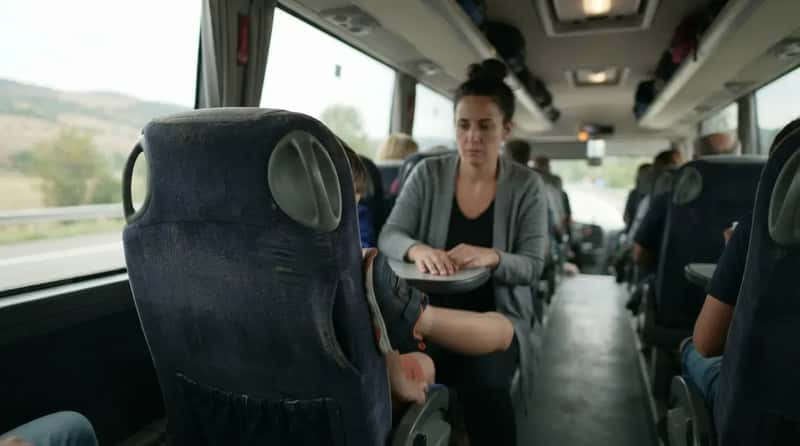
A rhythmic tap on the seat back can go on for an hour. It might be a child, a restless adult, or someone using the seat as a footrest. The person in front feels every bump. On coaches, seat backs are close enough that every movement transfers straight through.
Parents often don’t realize it’s happening, especially if their child is absorbed in a game. Most people in front choose silence over confrontation. A polite word, early on, solves it faster than any complaint later. Yet the group often sits and suffers anyway.
The next habit doesn’t need a seat at all.
#7 – The Loud Complainer Who Reviews the Itinerary Out Loud
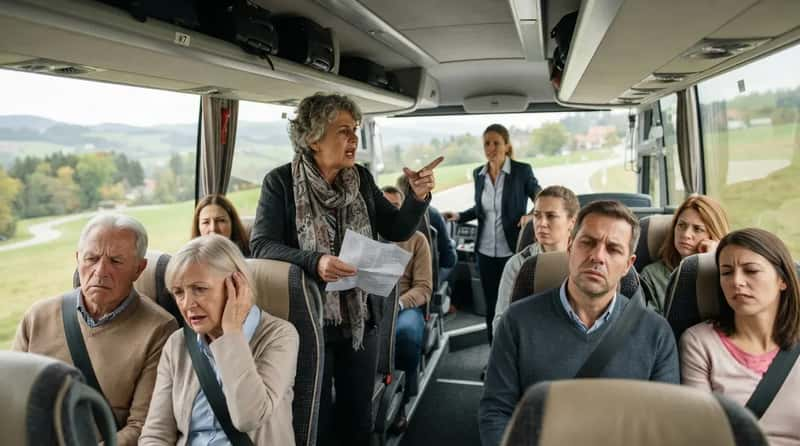
The hotel is too far, the lunch was too cold, and the stop was too short. Every grievance gets announced, in full, to anyone in earshot. Passengers who were perfectly happy start counting problems too. Complaints spread through a coach faster than any rumor.
The itinerary was planned months ahead and can’t be rewritten on the fly. Feedback forms exist for a reason. Negativity tends to snowball in a shared space where nobody can walk away. The rest of the group is left with a mood they never chose.
#6 – The Passenger Who Vanishes When the Tip Envelope Comes Around

In the U.S., tipping the driver and guide is a standard part of coach touring. Many tours even suggest an amount up front. Yet some passengers conveniently disappear to the restroom when the envelope is passed. Drivers and guides often rely on tips as a meaningful part of their pay.
It’s an awkward moment, because the group can see who contributed. Operators usually spell out their tipping expectations in the booking materials. Many who skip it later say they simply forgot. Meanwhile, the rest of the group often quietly covers the gap.
But the tipping drama is minor next to the next one.
#5 – The Wanderer Who Ignores the Meeting Point
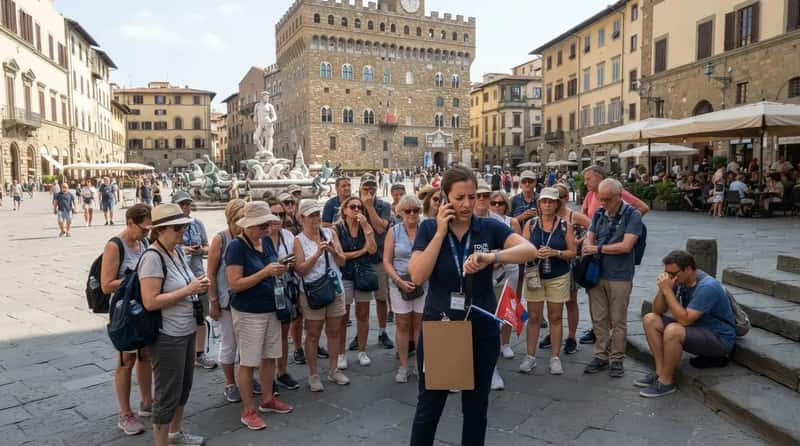
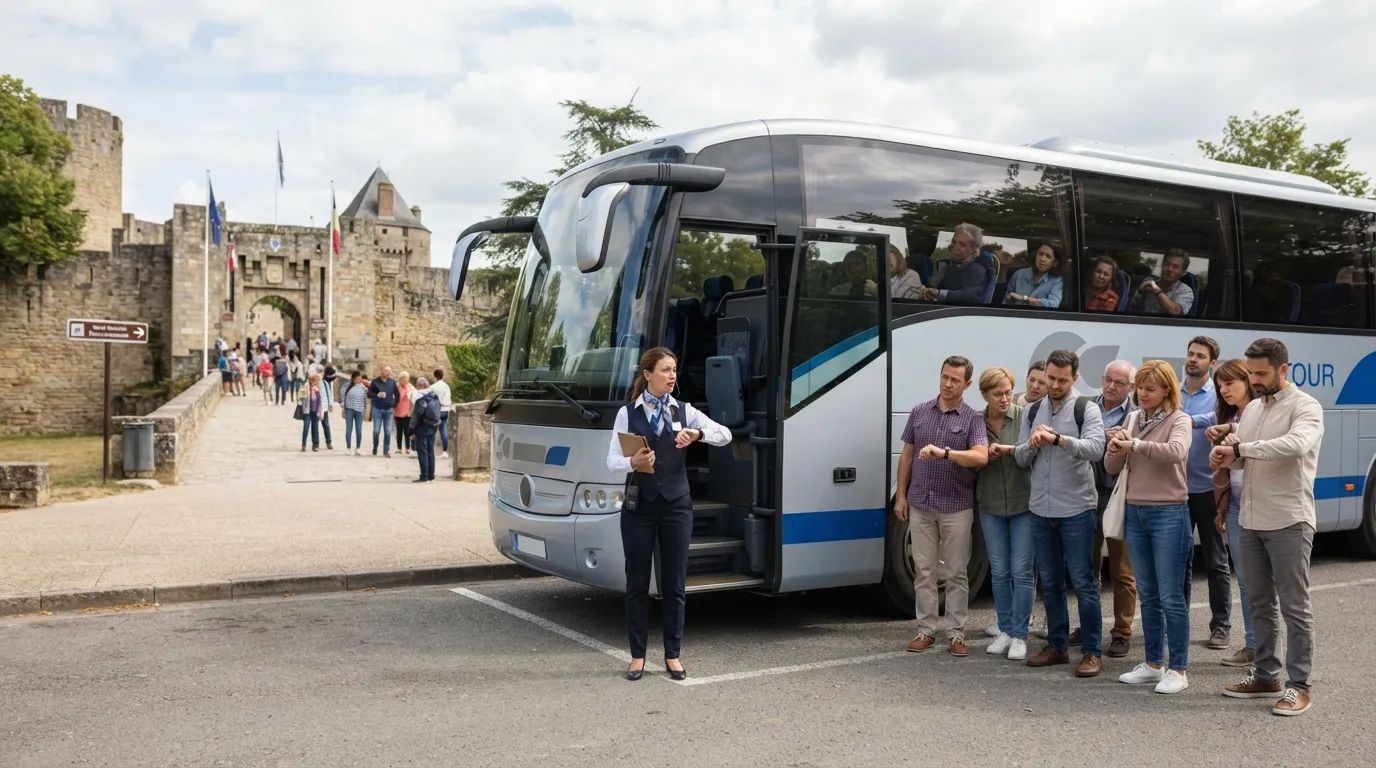
The guide says “back at the coach in 30 minutes” and points to a landmark. One person wanders off to a shop three streets away. The rest of the group stands waiting in the heat. A single missing passenger can freeze 40 people in place.
Guides often count heads three or four times and still manage to lose someone. Phones help, but not everyone answers. The stress lands squarely on the person in charge. Everyone else just stands there while the search drags on.
At a Glance
- The setup: a 30-minute window and a landmark as the meeting point
- The math: one person 10 minutes late means 400 minutes of combined waiting for a group of 40
- The guide’s routine: head counts three or four times, then phone calls
- The result: a later departure and a squeezed schedule for everyone
#4 – The Sniffly Passenger Who Boarded Sick Anyway
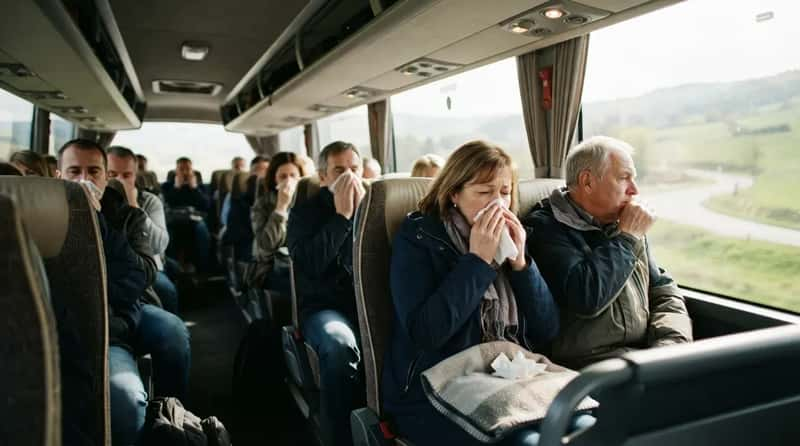
Nobody wants to miss a paid-for trip, so some travelers board with a cough and hope for the best. In a shared cabin, there’s nowhere to move. The sneezes and coughs reach the whole row. An illness caught on day two can follow the group for the rest of the tour.
Operators often have their own illness policies, and cancellation terms differ. Travel insurance can sometimes soften the loss, but it depends on the policy. Staying home is hard, but the group pays when people don’t. Fellow passengers usually keep their distance and say nothing.
The seat plan can cause its own kind of trouble.
#3 – The Rotation Rebel Who Refuses to Move Seats

Many tours rotate seats daily so everyone gets a turn at the front. Then someone decides the rule doesn’t apply to them. They stay put, citing a bad back, a better view, or plain habit. One refusal can unravel a system the whole group agreed to.
Real medical needs are different, and guides will usually accommodate those quietly. The problem is the passenger who simply doesn’t want to move. Others notice, and resentment builds without a word being said. Most of the group puts up with it just to keep the peace.
Why It Stands Out
- It breaks a rule the whole group agreed to at the start.
- Real medical needs get quiet exceptions, which makes the casual refusals more noticeable.
- Nobody complains, but everyone keeps count of who sits where.
- The guide is usually the only one who can reset the rotation.
#2 – The Chatterbox Who Distracts the Driver
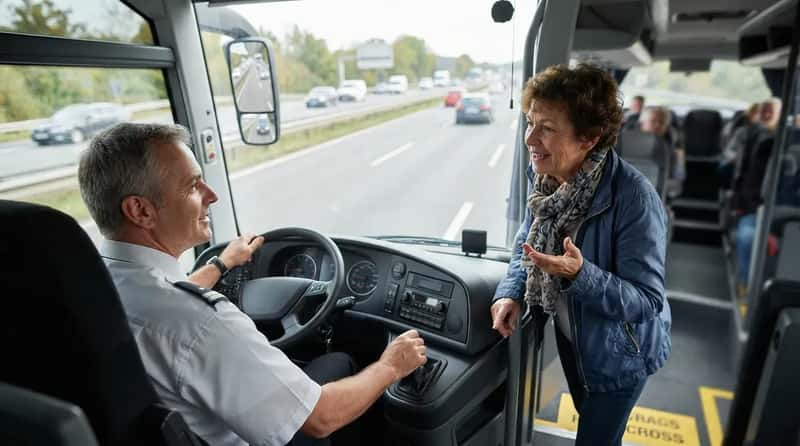
Some passengers drift to the front to chat with the driver mid-route. The conversation seems friendly, but the driver is watching traffic, mirrors, and a vehicle that weighs many tons. Many coaches have a marked line passengers shouldn’t cross while moving. Driver distraction is one of the quietest safety problems on a tour.
Drivers rarely say anything, since they want to stay polite. Guides will often step in with a gentle redirect. The chatty passenger usually has no idea they’re adding to the driver’s workload. Everyone else on board is relying on that concentration.
And that clock is exactly why the final habit matters most.
#1 – The Late Return That Costs the Entire Group Its Next Stop
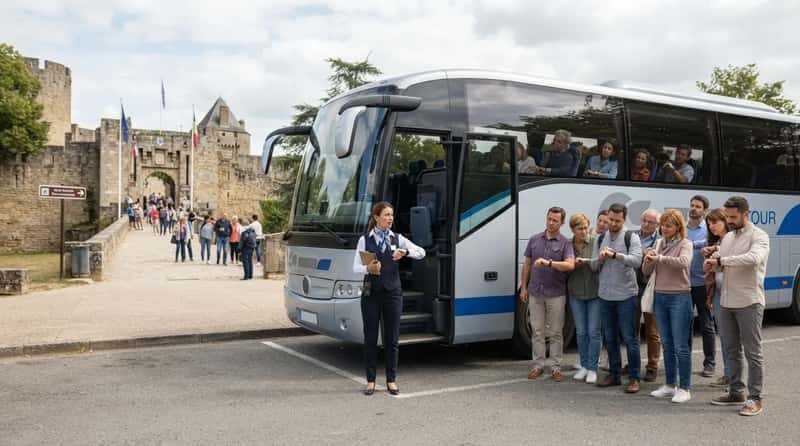
Five minutes late sounds harmless. On a coach tour, it’s the habit guides and drivers name first. Every delay pushes the schedule back, and the people who were on time pay for it. Lost minutes can quietly erase an entire stop later in the day.
Tours run on tight timing, from museum slots to restaurant reservations. Driver hour limits mean the schedule can’t just stretch to fit. The late passenger often strolls back smiling, unaware of the glares. Meanwhile, the whole group has already done the math.
Nobody on a coach tour is perfect, and most of these habits come from distraction rather than bad intent. A shared cabin simply magnifies small choices until they become group experiences.
The worst coach habits aren’t dramatic. They’re small, repeated, and felt by dozens of people at once. So which one makes you want to hide behind your window shade? Did we miss yours? Drop it in the comments.