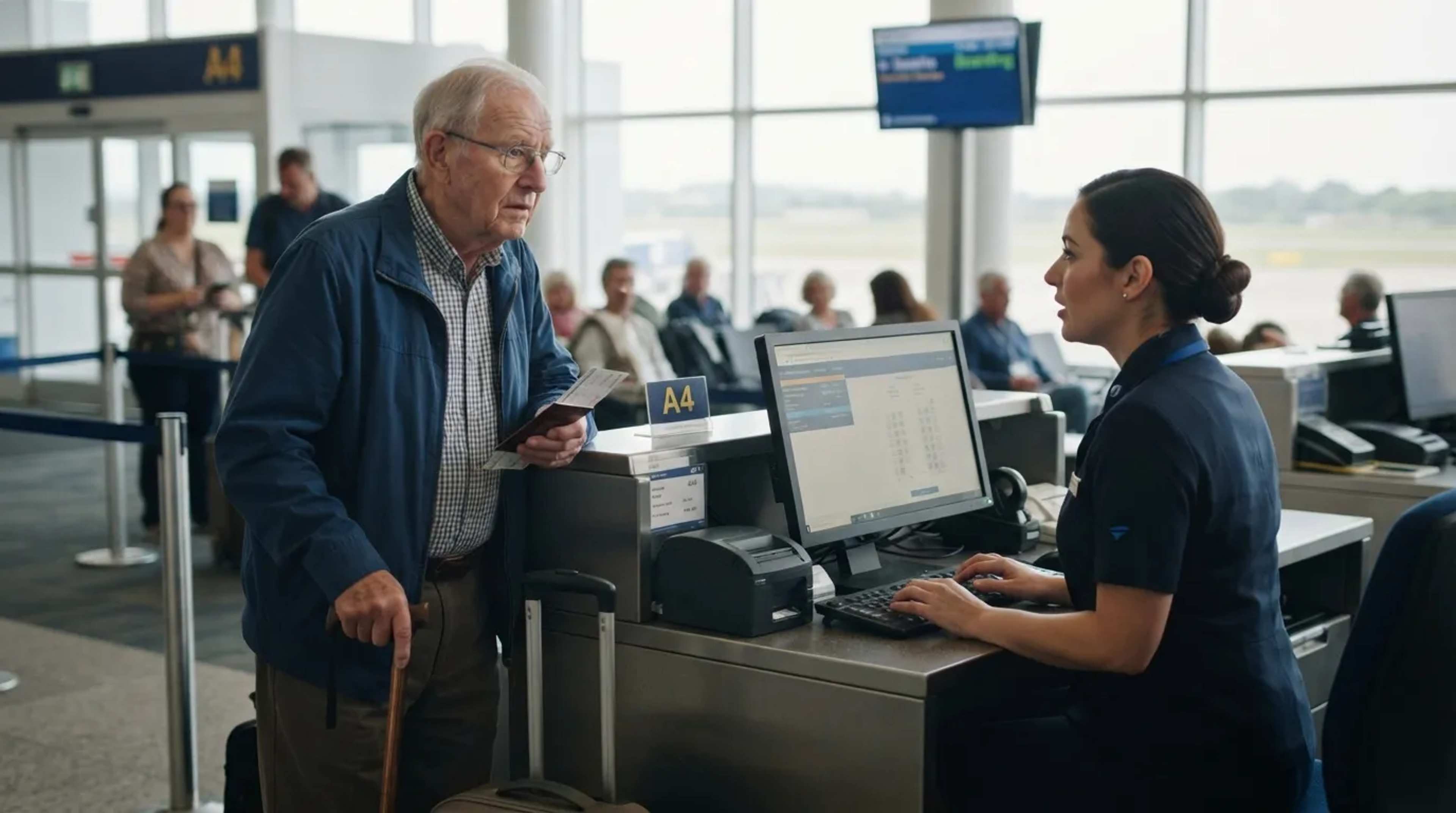
You’d think the hardest part of a guided tour is keeping up with the group. It usually isn’t. The trouble tends to start weeks earlier, in an insurance policy, a passport drawer, or a brand-new pair of shoes.
A guide can’t fix any of that once the coach pulls away. Some of these 14 items are tiny, a couple are expensive, and one starts a countdown the day you pay your first deposit.
#14 – The Shoes You Haven’t Worn Yet

Your suitcase’s smallest item can wreck your biggest day.
Trafalgar’s senior travel advice is to choose cushioned, supportive shoes you’ve already broken in.1 If you use orthotics, bring them along.
Guided days often mean cobblestones, stairs and long stretches on your feet. A blister on day two follows you through the rest of the itinerary.
Trafalgar also suggests packing an extra pair or two for wet weather or dinners out.1
- Wear the exact pair on several long walks before you fly
- Pack a backup pair for rain
But the next mistake costs more than comfort, and it happens before the walk even starts. Keep going to #13…
#13 – Your Pace, Said Out Loud

A guide can’t adjust to a limit nobody mentioned.
One travel roundup suggests asking the guide to let you walk at the back, with a plan for where to regroup. Say it before the walk begins. A steep old-town street is a poor place to discover you want to slow down.
Worldpackers’ guide for senior solo travelers says to tell guides and fellow travelers about dietary restrictions or mobility concerns, before and during the trip. It also says not to hesitate to speak up about pacing.
Fast Facts
- Speak up before the walk starts, not halfway up the hill
- If you walk at the back, agree on where the group will regroup
- Mention dietary restrictions and mobility concerns early
- Repeat the message during the trip if your needs change
A guide who hears early can plan around you. One who finds out halfway up the hill can’t.
There’s a related request that feels even more awkward, and it’s the one most travelers leave too late. Here’s #12…
#12 – The Restroom Question

The most awkward request on tour is also one of the easiest to fix.
If you need stops sooner, tell the guide at the morning briefing instead of calling out mid-highway. A guide who knows in advance can ask the driver to pick the next suitable stop.
Ask how long until the first stop and whether it has full facilities. That lets you plan your morning coffee instead of regretting it.
It’s an ordinary logistics question. Guides can only answer it if someone asks.
The seat you pick can make this problem better or worse, and the good ones go fast. See #11…
#11 – The Seat Behind the Driver

Where you sit on the coach is a decision, not an accident.
Seats closer to the front tend to ease motion sickness on winding roads. They also shorten the walk down the aisle if you have stiff knees or use a cane.
Many travelers assume seating is first-come, first-served and can’t be negotiated. A polite request at check-in on the first morning, before the coach fills in order of arrival, costs you nothing.
The same logic applies to planes. Rick Steves suggests booking early to reserve aisle seats, or paying for roomier economy plus or first class.
Seats are the easy part. What’s in your carry-on is where things get serious. Next up, #10…
#10 – Medications in the Wrong Bag

Your pills are the one item you can’t easily replace mid-trip.
Trafalgar advises packing all prescriptions in your carry-on, in original labelled containers, with a printed list of what you take and why.1 It also suggests bringing extra doses in case of delays or changes to your return plans.
Get a doctor’s note, especially for injectable medications or anything that might need explaining at airport security.
One senior-travel roundup lists medication import rules among the tips most commonly missed before departure. Rules differ by country, so check your destination’s official guidance.
And there’s a medication fact that surprises plenty of Medicare users. It’s waiting in #9…
#9 – Part D Stops at the Border

Your drug plan may not follow you overseas.
Medicare Part D plans do not cover prescriptions you fill outside the United States.2 3 They don’t cover medications you purchase abroad, full stop.
That means a lost, spoiled or stolen supply can turn into a full out-of-pocket purchase. It’s also why the extra-doses advice from #10 matters.
Plan details vary, so read your own documents before you travel. A phone call to your plan costs far less than a pharmacy bill abroad.
The next item is the kind of money-saver that hides in plain sight. Here’s #8…
#8 – The Discount Nobody Mentions

Some savings exist only if you ask for them.
Rick Steves notes that at some sights, senior discounts are reserved for European citizens. At others, showing your ID, or even your gray hair, can snag a discount.4
In non-English-speaking countries, he suggests memorizing the phrase for a senior discount or writing it on a card.4
Another roundup says ticket offices that grant senior rates commonly ask for proof of age, and a passport settles it quickly.
The next mistake isn’t about money at all. It’s about how much you try to cram in. See #7…
#7 – The Packed-Itinerary Mistake

The schedule that looks efficient on paper is often the one that backfires.
One roundup calls overestimating stamina at the planning stage the biggest mistake older travelers make. It can create several problems at once.
Brochures sell “see it all” as value. Several senior-travel guides argue the opposite: space activities with spare time and don’t plan too many events on any one day.
Free time also lets you wander and stumble on something nobody put in the brochure.
If you want to save your legs, one tour format often beats walking. It might surprise you in #6…
#6 – The Tour Format That Beats Walking

The “lazy” option is sometimes the smartest one.
Rick Steves recommends bus tours, usually two hours long, for a painless overview of a city’s highlights. He calls boat tours of a harbor, river, lake or fjord a pleasure.
Plenty of travelers insist you only really see a city on foot. His advice points the other way for a first look: save your legs for what you most want to see.
He also suggests hiring an English-speaking cabbie for a tour of a city or region, and paying for air-conditioning if it’s hot.
Quick Compare
- Bus tour: usually about two hours, a painless overview of the highlights
- Boat tour: harbor, river, lake or fjord views without the walking
- English-speaking cabbie: a private tour of a city or region, ideally with air-conditioning in summer
Whatever format you pick, long stretches of sitting carry their own risk. That’s next, in #5…
#5 – Sitting Is Not Resting

Long coach days carry a quiet physical cost.
Sunrise Senior Living says long flights and car rides can take a toll on circulation, and that older travelers face a higher risk of dehydration. On flights, it suggests drinking plenty of water and walking the aisle every hour or two.
On coaches, another roundup says long stretches of sitting can leave older travelers stiff and swollen. Its tip: stand up whenever the coach does, even if you don’t need the restroom.
If you have circulation concerns, consult a doctor before flying.
Now for the paperwork trap that can end a trip before it starts. Here’s #4…
#4 – The Passport Clock

A valid passport can still get you turned away.
The State Department says some destinations require your passport to be valid at least six months beyond your trip dates. Some airlines won’t let you board if that requirement isn’t met.5
A passport can be valid every day you’re away and still fall short. The rule isn’t universal, and some countries require only three months.
Look up your destination’s “Entry, Exit and Visa Requirements” section on the State Department’s country pages. A common rule of thumb: renew before you go if your passport expires less than six months after you get home.
Even a perfect passport can vanish. What you do about that is #3…
#3 – Copies in a Separate Place

Documents get lost. Your backups shouldn’t go down with them.
Related Stories From Travelbinger



Trafalgar advises making copies of all important documents and keeping them in a separate place from the originals.1 That one habit turns a crisis into an errand.
AAA’s senior tips add that you should keep your emergency contacts on hand and share your itinerary with a trusted family member or friend back home.
Worth copying:
- Your passport photo page
- Your insurance policy details
- Your printed medication list from #10
- Emergency contacts
Now the big two. The first is about coverage you probably think you have. It’s #2…
#2 – Medicare Mostly Stays Home

Many travelers assume their health coverage travels with them.
Medicare generally doesn’t pay for medical services outside the United States or its territories, apart from very limited circumstances. If you travel abroad, you will likely pay medical expenses out of your own pocket.2
Medigap’s foreign travel emergency coverage has a lifetime limit of $50,000.2
At a Glance
- Original Medicare: generally no coverage outside the U.S. or its territories
- Medigap foreign travel emergency: $50,000 lifetime limit
- Medigap timing: the emergency must begin within the first 60 days of travel2
- Medicare Advantage: varies by plan, so check your Evidence of Coverage
A good travel insurance policy can cover medical evacuation, trip cancellation and major emergencies that Medicare misses.
But buying a policy isn’t enough. A ticking clock decides what it actually covers. Here’s #1…
#1 – The Clock That Starts at Your First Deposit

Travel insurance can be bought late, but its most valuable feature can’t.
You can buy most plans up to the day before you leave. The pre-existing condition waiver is different: you usually need to buy the policy within 14 to 21 days after your first trip deposit.6 7
Miss the window and you typically lose the waiver on that policy, with no way to add it back. The exact window varies by company and plan.
The clock starts from your initial deposit on a flight, tour or hotel, not the date you finalize your itinerary. Also watch the fine print: you’ll generally need to insure the full nonrefundable trip cost.6
Without a waiver, most policies exclude pre-existing conditions. Even a prescription adjusted within the look-back period can count as pre-existing.
Put it all together, and a pattern shows up. Shoes, seats, medications and pace are small fixes, while passport validity, Medicare gaps and the insurance waiver deadline are the expensive ones.
The most surprising fact of all: the best part of travel insurance can expire 14 to 21 days after your first deposit, long before you leave. And Medicare usually won’t step in abroad.
Which of these 14 would you have missed?
- Trafalgar Senior Travel Tips: https://www.trafalgar.com/real-word/travel-tips-for-seniors/
- AARP Medicare Outside US: https://www.aarp.org/medicare/does-medicare-cover-me-outside-the-us/
- Medicare Foreign Travel Guide: https://www.gofouroaks.com/post/does-medicare-cover-you-when-you-travel-outside-the-u-s
- Rick Steves Savvy Seniors: https://www.ricksteves.com/travel-tips/trip-planning/savvy-senior-travelers
- State Department Passport Validity: https://travel.state.gov/content/travel/en/passports/passport-help/after-getting-passport.html
- Forbes Pre-Existing Conditions Waiver: https://www.forbes.com/advisor/travel-insurance/pre-existing-conditions/
- Squaremouth Pre-Existing Conditions: https://www.squaremouth.com/travel-insurance-benefits/pre-existing-condition