Cruise lines don’t hand out their best help on your 60th birthday. They list shower stools, sharps containers and wheelchair escorts on their own accessibility pages, and Princess, for one, offers shower stools, bed boards and toilet seat raisers on request.
The help follows need rather than birthdays, and the senior fare starts at 55, not 60. Much of it also has to be requested before you sail, sometimes weeks before.
Stay to the final item, because it covers the one form, and the deadlines that go with it, that decides whether the other fourteen are ready in your cabin or still being sorted out at the pier. The first one is about money.
#15 – The Senior Fare That Starts at 55
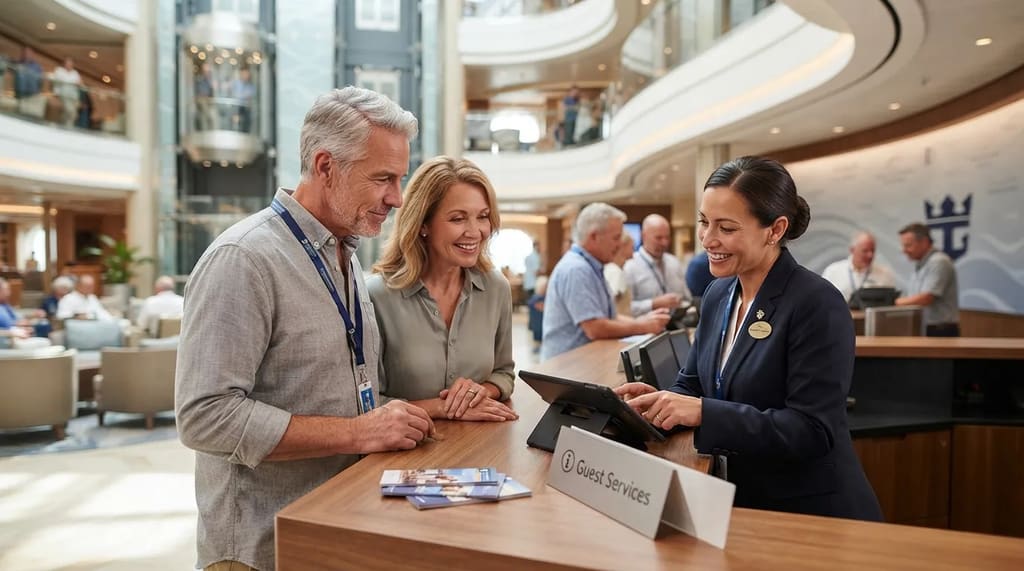
Senior fares on the big lines start at 55, not 60. Royal Caribbean and Celebrity publish them on selected sailings, and Carnival offers them too.
At least one guest in the cabin has to qualify. On Royal Caribbean you tick “Seniors (Age 55+)” when you search, and Carnival shows its 55+ fares under the Deals filter.
Treat the senior label with some suspicion. Compare it with the public promotion, because the ordinary sale fare is often as good or better.
These rates usually can’t be combined with other promotions, so the lower final price wins, whatever it’s called.
Saving money is the easy part. Boarding day is where a long line can wear you out before the ship leaves the dock, and one line built a separate lane for exactly that.
#14 – A Separate Check-In Lane at the Terminal
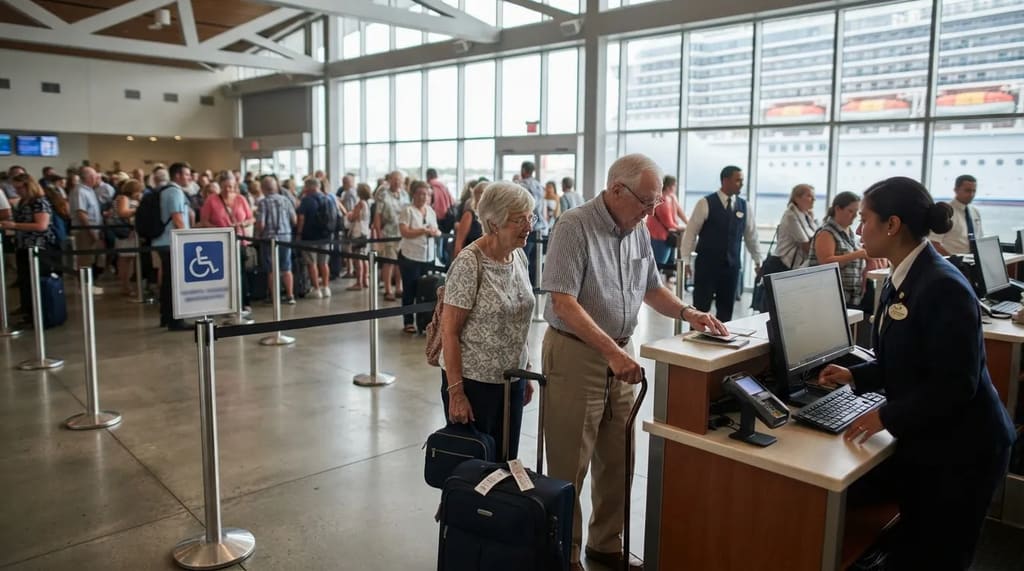
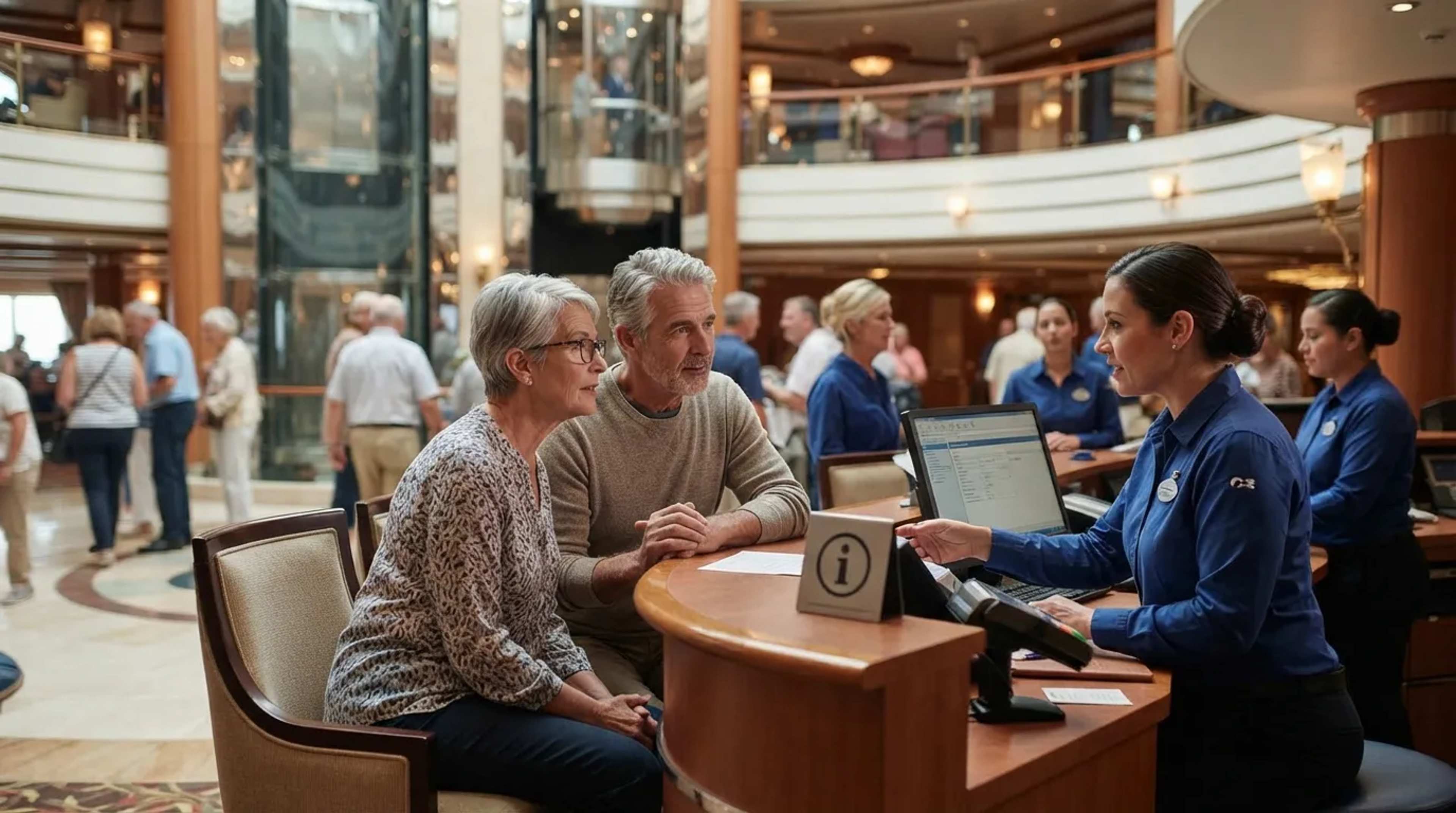
Embarkation day often starts with a line, and some lines run a second one. Princess offers an Accessibility Lane for guests with mobility or other accessibility needs, for a more streamlined check-in.
Celebrity says it will offer priority boarding if boarding hasn’t begun yet. On Crystal, guests with disabilities can request priority check-in, boarding and disembarkation in advance through Onboard Guest Services.
The names and rules differ by line, so ask at the pier which lane fits your situation. Tell the first uniformed staff member you meet what you need, and let them point you to the right line.
The lane gets you to the desk. A separate service covers the walk itself, and you can qualify for it even if you can manage a short stroll.
#13 – Wheelchair Help for the Long Pier Walk
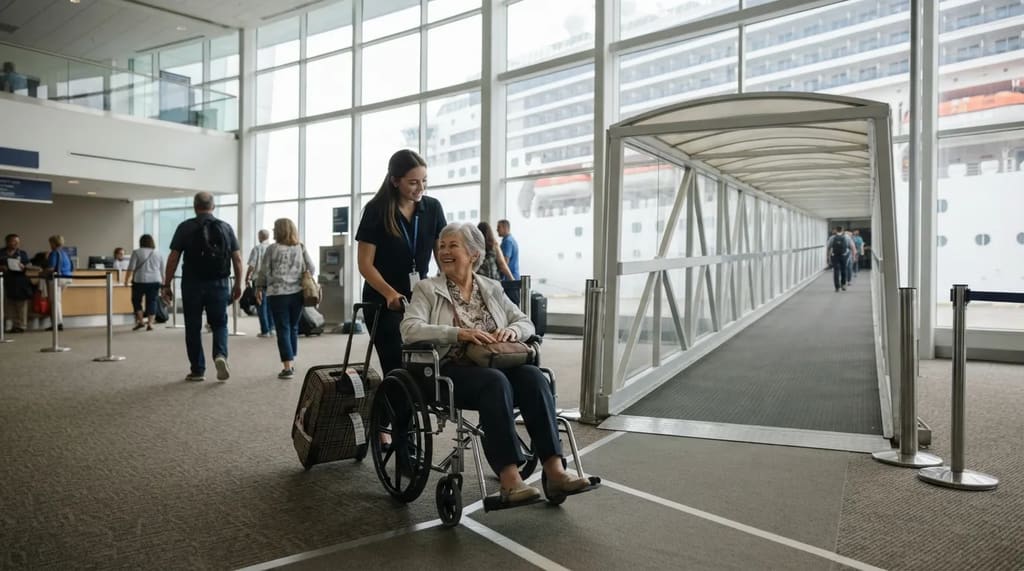
Cruise terminals are bigger than they look from the car. Even if you can walk short distances, guides advise requesting wheelchair assistance for boarding, because it gets you through security and check-in faster and saves your energy for the ship.
My verdict: take the ride. Request wheelchair assistance for boarding even if you can walk short distances. The energy you save is worth more than the pride you spend.
There are limits. Norwegian requires guests to enter the terminal on their own, because its crew can’t leave the terminal to pick anyone up at the curb.1
Guests are taken to check-in and up the ramp, but not all the way to the stateroom.1
Once you reach the cabin, the bathroom is the next test. The gear that makes it safer usually isn’t in the room until you ask.
#12 – Shower Stools, Bed Boards and Raised Seats
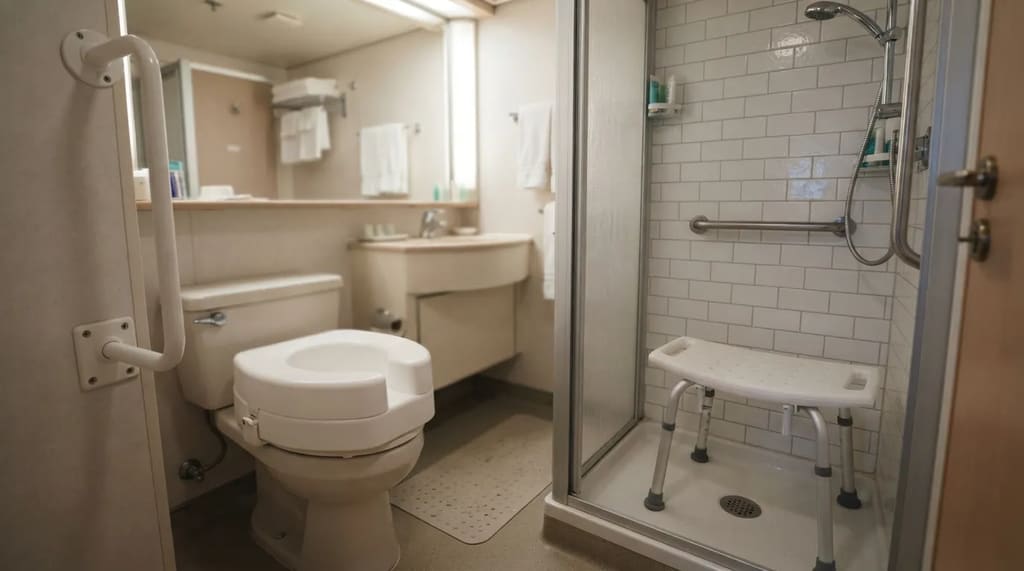
A wet bathroom floor on a moving ship is a risk worth planning for. Shower stools, bed boards and toilet seat raisers are available on request from Princess.
The same short list shows up elsewhere. Disney offers bedrails, shower stools and raised toilet seats on request, and Celebrity’s special needs form has boxes for a raised toilet seat, shower stool and commode chair.
You may not even need to queue. Princess lets you request these items in its app for any stateroom.
A stool helps in a standard bathroom. Some travelers need the room itself built differently, and the details are worth checking before you unpack.
#11 – What Your Accessible Stateroom Should Include
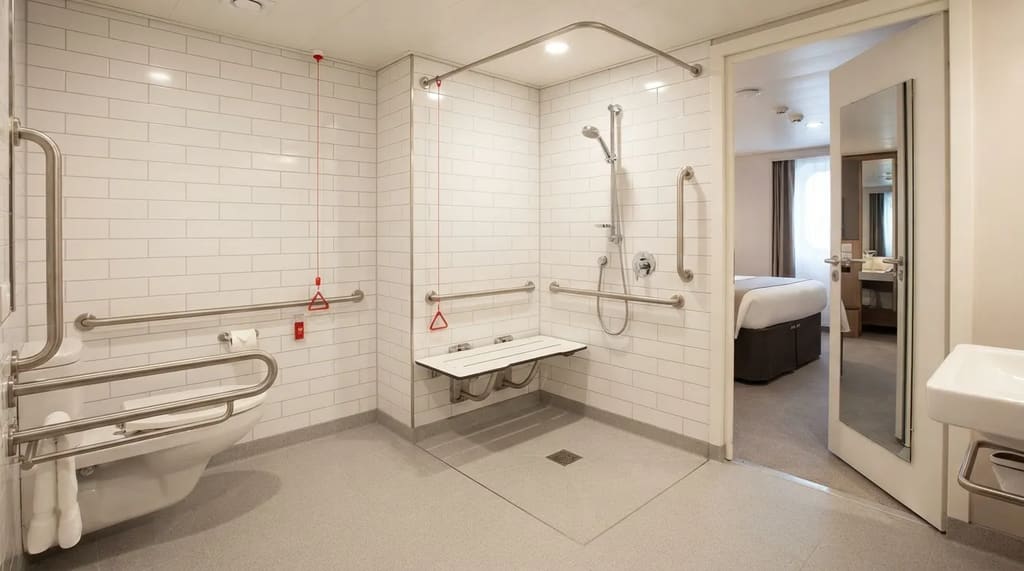
Accessible rooms are built differently, and the lines publish surprisingly specific feature lists. Here is what two of them describe.
At a Glance
- Princess: a roll-in or transfer shower with a fold-down bench seat
- Princess: a handheld showerhead and grab bars
- Princess: a distress alarm in the bathroom
- Crystal: wider doorways and a second, lower peephole
- Crystal: lowered towel racks and wardrobe bars
Features like these only help if they fit you. Celebrity’s form asks for the full dimensions of a mobility device so it can confirm the device fits in the stateroom.2
Check the bathroom, bed access and power outlets when you first walk in. If something differs from what was confirmed, tell Guest Services immediately.
Rooms are only part of the planning. The galley has to hear about you too.
#10 – Dietary Needs Flagged Before the First Dinner
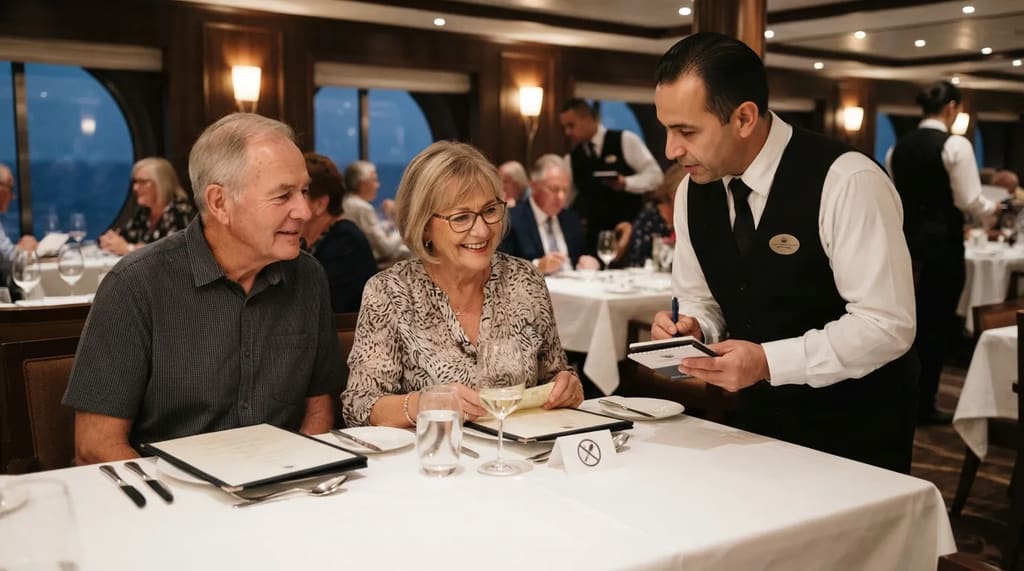
Food allergies and medical diets travel on the same paperwork as shower stools. Disney’s special services page covers requests for food allergies, accessibility assistance and medical needs, including dietary requirements.
Carnival’s pre-cruise forms include one for allergies, alongside forms for sharps, refrigeration, oxygen and CPAP, mobility devices and service animals. Report allergies and medical diets on the pre-cruise form.
Once aboard, mention your need to the dining staff on the first night, so the note you filed reaches the table where you actually sit.
Preferences are easy to mention in person. Anything with consequences, such as an allergy or a diabetic diet, belongs in writing.
Dinner is covered by a form. Hearing and vision needs come down to specific devices, and you have to name them.
#9 – Hearing and Vision Devices on Request
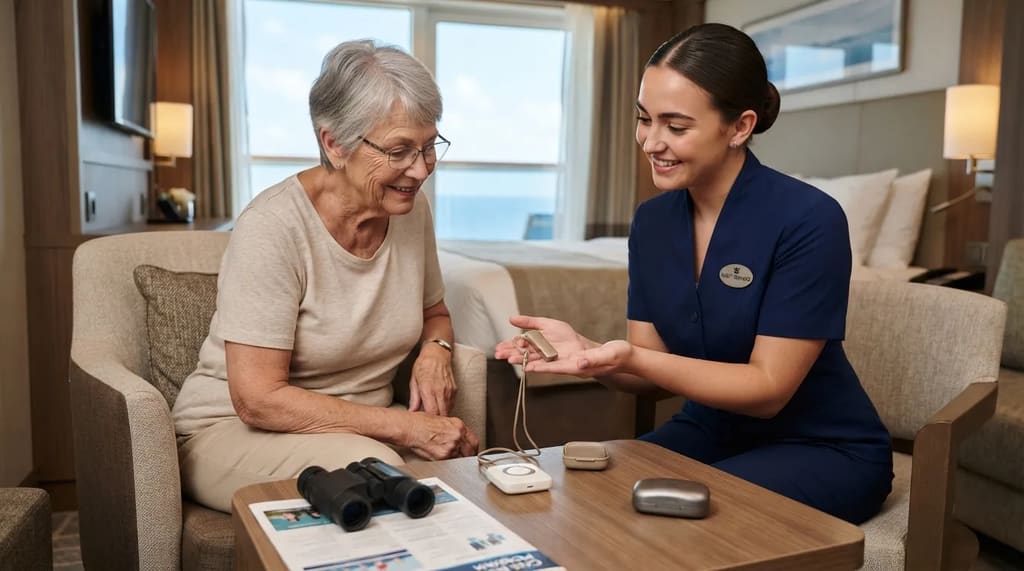
Hearing and vision help is real, but it’s handed out by name. Here is how a few lines word it.
Quick Compare
- Crystal: assistive listening devices for shows and announcements, plus TTY text phones, on request
- Disney: its special services form covers hearing and visual services alongside mobility and oxygen
- Royal Caribbean and Norwegian: forms set longer lead times for interpreters than for other needs
If you rely on hearing aids or low-vision aids at home, list what you use so the staff can say what the ship can match.
Interpreting services need more advance notice than most other requests.
A listening device helps once you’re in the theater. Getting a good seat there is its own small battle.
#8 – Theater Seating and the Pool Lift
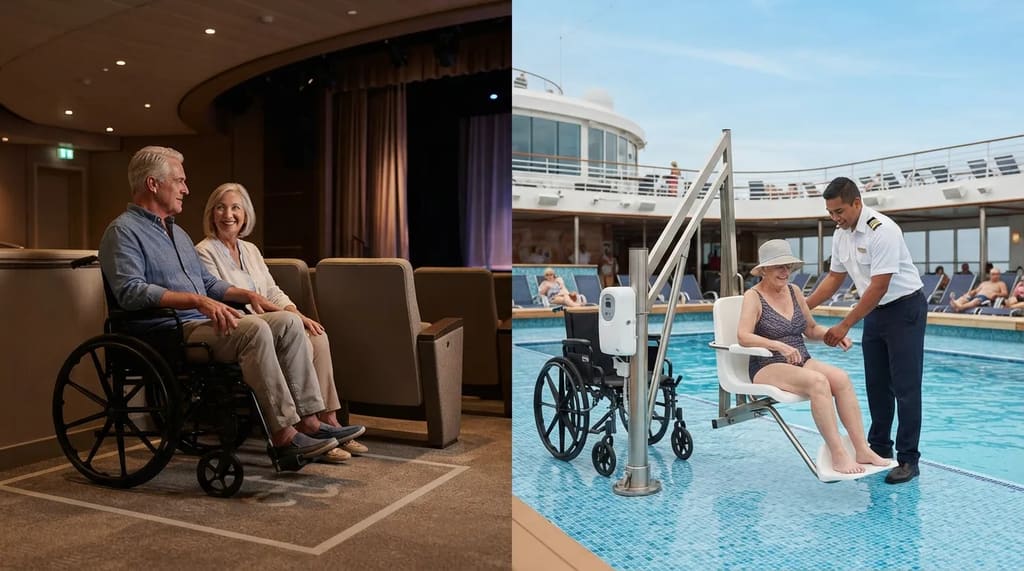
Showtime is where a wheelchair user can get stuck at the back. Theaters have a limited number of wheelchair spaces, plus chairs for companions.
Arrive about 30 minutes early to secure wheelchair spaces and companion seating. That’s the timing one cruise-accessibility guide recommends, and with spaces limited, the early seat is the only way to keep your party together.
Pools need planning too. On Disney ships, you visit Guest Services to have a crew member set up the lift in the pool you want.3
Other lines’ pools may differ, so ask at the desk on day one.
Needles, lancets and blades don’t belong in a cabin trash can. The right container comes from a crew member you’ll see every day.
#7 – A Sharps Container From Your Steward
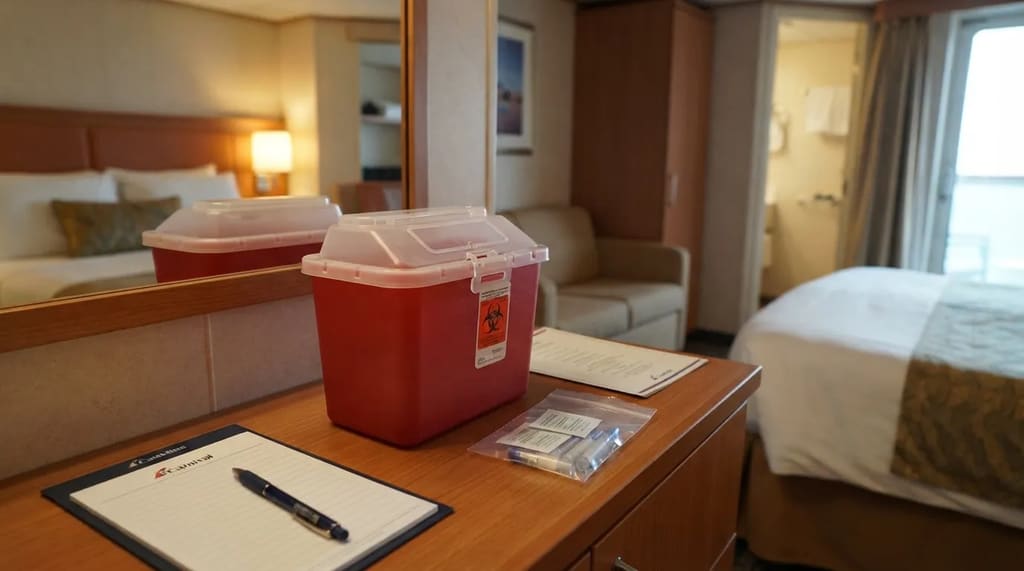
Used needles can’t go in the trash. Carnival says any medical sharp, meaning needles, lancets or blades, must go into a sharps container.
Sharps containers may be requested from your housekeeping steward once on board. Guests can also contact the Medical Center.4
That makes it a day-one request, before the first injection of the trip.
Injectable medications raise a second question that a steward can’t answer alone: where the vials stay cold for the whole sailing.
#6 – Keeping Medication Cold at Sea
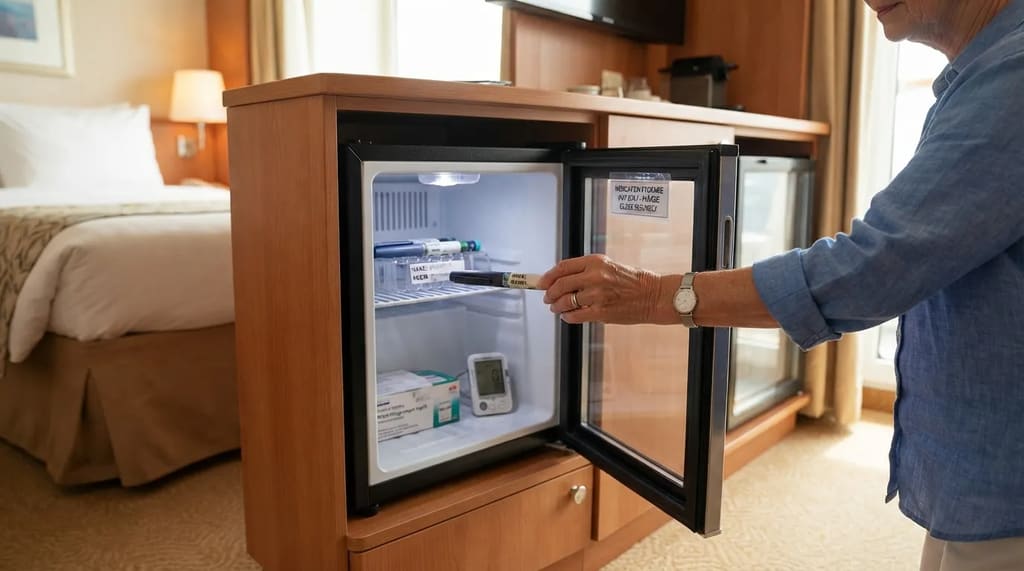
Insulin and other refrigerated medicines need a cold spot, and the cabin fridge isn’t always the answer. Your options depend on the line.
Worth Knowing
- Carnival: cabins include a small refrigerator, and if yours won’t stay cold enough, you notify the ship before boarding through the pre-cruise medical forms
- Princess: guests without a stateroom refrigerator contact the accessibility team
- Medical center: the backup, not the plan
- Any option: label every medication with your full name and stateroom number
My verdict: treat the medical center as the last choice. Medication stored there is reachable only during open hours, and guests assume all risk.
Sort out the fridge early, on the same pre-cruise paperwork that would carry your sharps request.
Cold storage is one overnight worry. Another one plugs into the wall and keeps you breathing while you sleep.
#5 – Distilled Water and Power for Your CPAP
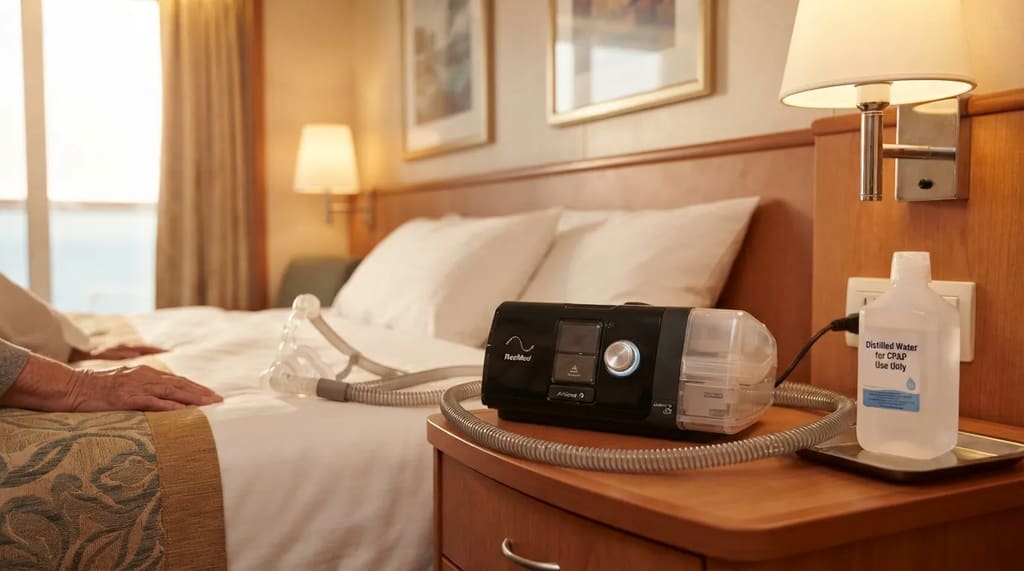
Sleep apnea doesn’t take a vacation. Princess and Carnival both permit CPAP, BiPAP, APAP, nebulizer, oxygen concentrator and ventilator machines on board.4
Princess lets you request distilled water for a CPAP when you make your reservation. Because that request attaches to the booking, it belongs on the form rather than at the desk after you’ve sailed.
The ship won’t have your supplies, so pack spare filters, tubing and masks. Princess also recommends telling the line in advance so your stateroom has the power access you need.
A CPAP plugs into the cabin wall. Oxygen follows stricter rules, and where you pack it matters before you reach the ship.
#4 – Oxygen That Never Goes in Checked Luggage
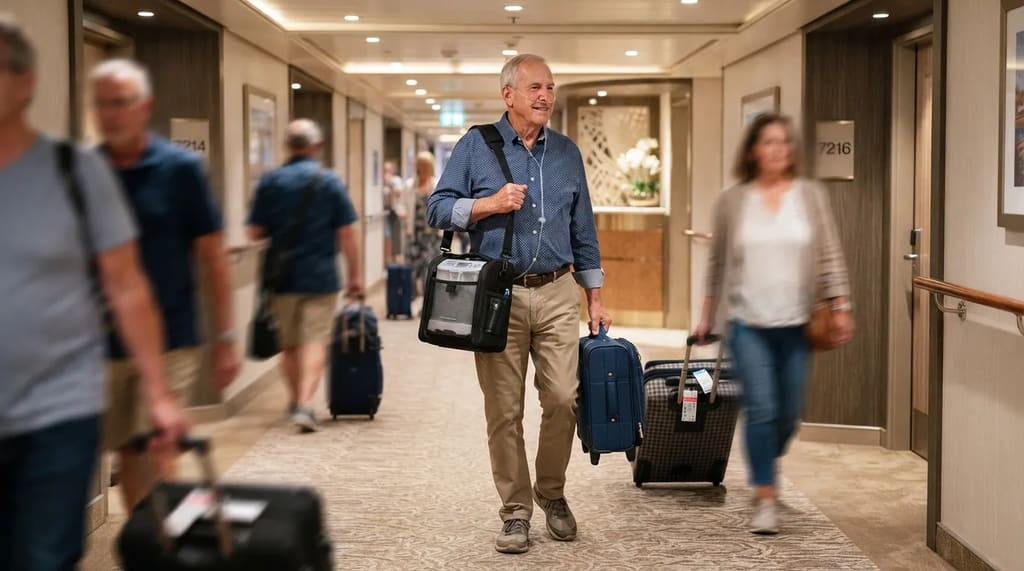
Oxygen is the medical item where one packing mistake can leave you without it for the first night. Carry personal oxygen equipment in your hand luggage at embarkation.
Carnival says staff and crew aren’t permitted to handle it, so it must never go in a checked bag. Carnival also asks guests to contact its access team before sailing if they need oxygen.
The medical center’s oxygen is for emergency use only, so you must arrange your own supply.5 If hauling equipment doesn’t appeal, there’s another route.
Carnival lists partner companies that rent oxygen concentrators and other medical equipment and deliver directly to the ship.
A rental company that delivers a concentrator can sometimes deliver wheels too, but the gangway at some ports has its own say.
#3 – A Scooter or Wheelchair Delivered to Your Cabin
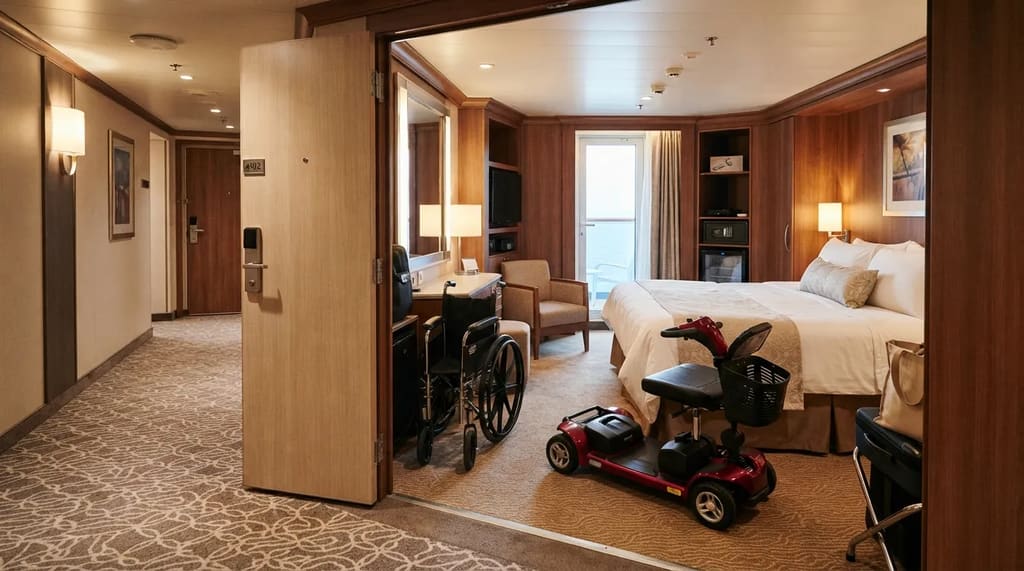
Lines differ sharply on who supplies the wheels. Princess doesn’t provide mobility devices but shares information on companies that do, and Disney requires guests to bring their own.
Norwegian lets you rent through its authorized vendor. Celebrity says any wheelchair or scooter must be stored inside the stateroom.
Related Stories From Travelbinger

Ports add a wrinkle. Celebrity warns that power wheelchairs and scooters may not go on tenders unless roll-on capability is available.2
If your itinerary includes anchored ports, ask which ones before you pay for a rental.
Arriving with the right wheels is half the trip. Getting off on the last morning runs on its own timetable, and you have to ask for your place on it.
#2 – Priority Departure on the Last Morning
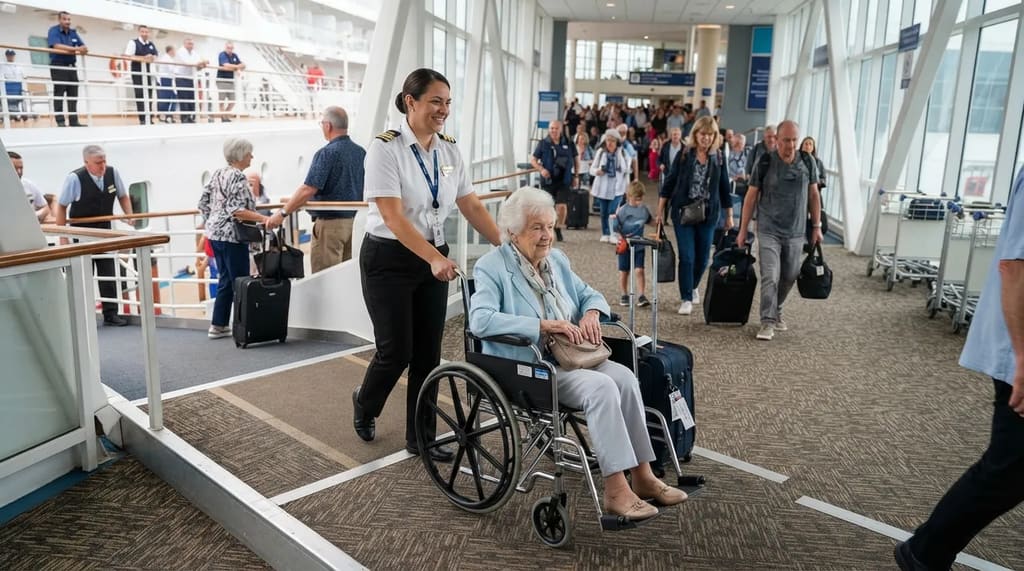
The escort you used on boarding day doesn’t automatically repeat. You must request wheelchair assistance for disembarkation specifically, even if you used it to board.
Passengers needing wheelchair assistance typically receive priority disembarkation, which can include help to the gangway and through the terminal, elevator priority and luggage assistance.
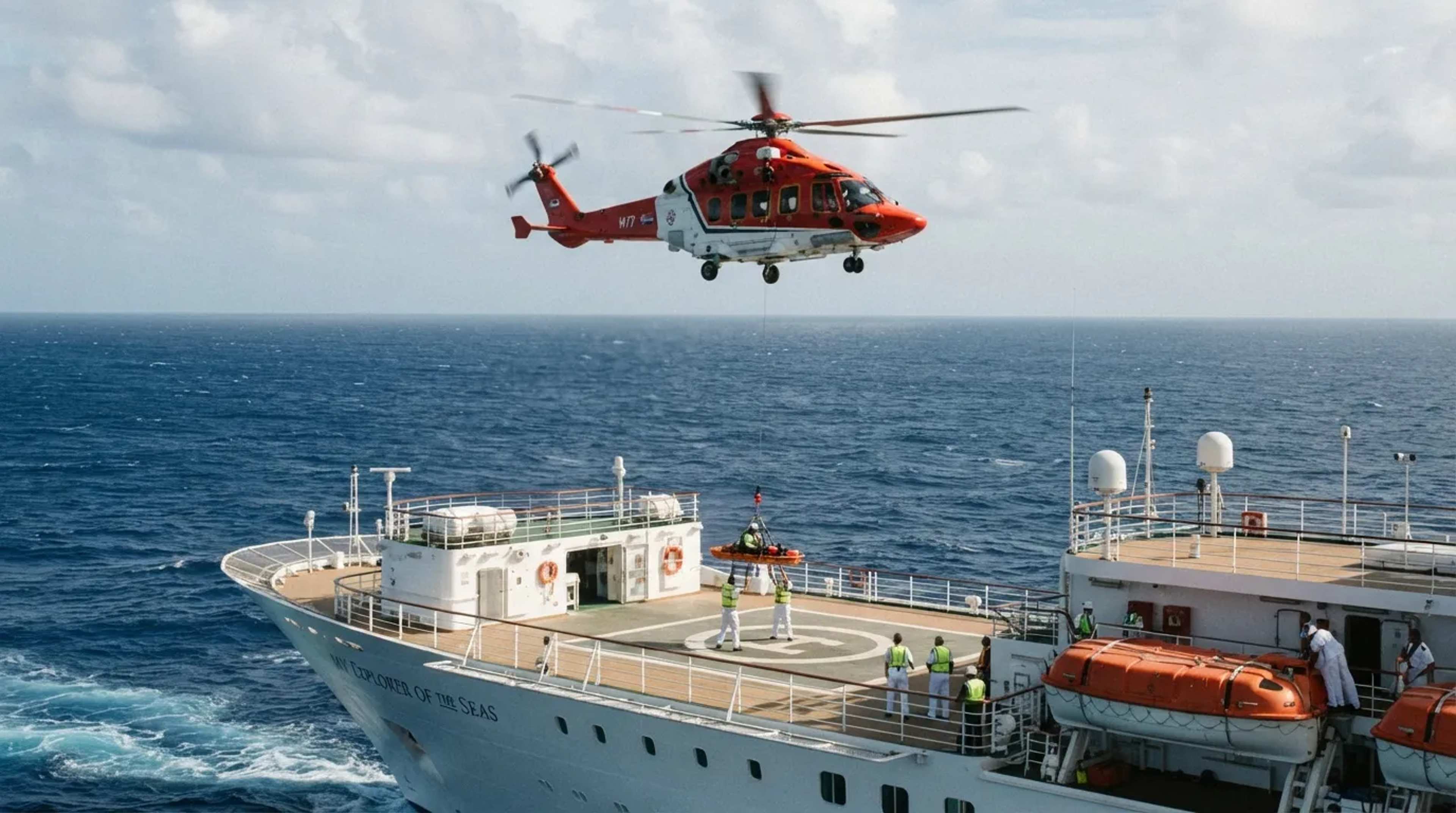
For a medical need, speak to the medical center and Guest Services at least a day before. The ship can then arrange ambulance transfers, wheelchair escorts and priority departure.
One last verdict: with a walker or scooter, skip the self-assist walk-off. It’s the faster exit, but you carry everything yourself, and express walk-off is difficult with mobility aids.
Every item so far depended on someone knowing about you in advance. The biggest item on this list is the document that makes that happen, and it comes with deadlines.
#1 – The Special Needs Form Filed Weeks Early

Almost every request above travels on one piece of paperwork, and each line sets its own deadline. Princess says a Mobility Questionnaire completed before you cruise ensures its team can properly assist you.
Carnival’s forms cover sharps, refrigeration, oxygen and CPAP, mobility devices, service animals and allergies.6
The timing is where people get caught. A roundup from Enabling Devices, an assistive-technology company, lists these lead times.
Fast Facts
- Holland America: 45 days before sailing
- Princess mobility questionnaire: 60 days
- Royal Caribbean, Mariner of the Seas: 60 days for interpreting, 30 days for other needs7
Several lines want your form 45 to 60 days before sailing.
That’s why this ranks first. The ship’s team can only be prepared when you board for what you’ve told them.
Deadlines vary by line and change, so confirm yours on the line’s own accessibility page, and talk to your doctor about anything medical.
The services on this list aren’t hidden so much as unannounced. They sit on forms, in apps and behind a desk, and they reward the traveler who treats them as a booking task rather than a boarding-day surprise.
Once you’re aboard, the Guest Services Director is your point of contact for accessibility and mobility questions. But the best conversation happens weeks earlier, at your kitchen table, with the form in front of you.
If you’ve cruised with a medical device or a mobility aid, what did you end up sorting out at the pier that you’d now handle weeks ahead?
- Norwegian Mobility Support: https://www.ncl.com/cruise-preparation/accessibility/mobility-challenges
- Celebrity Guest Special Needs Form: https://www.celebritycruises.com/content/dam/celebrity/pdf/Celebrity-Guest-Special-Needs-Form.pdf
- Disney Cruise Guest Information: https://media.disneywebcontent.com/StaticFiles/DTA-Domestic/pdf/DCL/dcl_Info_guests_disabilities_or_medicalconditions.pdf
- Carnival Medical Services FAQ: https://carnival–tst.custhelp.com/app/answers/detail/a_id/11347/~/shipboard-medical-services-faqs
- Carnival Oxygen Guidance: https://www.cruise.com/cruise-information/special-needs/carnival-cruises/
- Carnival Pre-Cruise Forms: https://www.carnival.com/about-carnival/special-needs/pre-cruise-forms
- Royal Caribbean Equipment List: https://www.royalcaribbean.com/experience/accessible-cruising/equipment