You might picture a solo cruiser over 70 getting a key card and a polite “good luck.” Cruise lines have actually lined up a lot more than the brochures let on. On a handful of luxury ships, gentleman hosts are on board to dance with women who need partners or to share a meal, and some are paid while others cruise free.1
That’s one of 15 arrangements the lines document for solo guests. Some are free, some come with a deadline, and one carries a price tag that dwarfs the rest. Stay for #1 and you’ll see the bill that can reach six figures, plus the part of it you can settle before you board. First, the dancers.
#15 – Gentleman Hosts Hired to Waltz With Women Sailing Alone
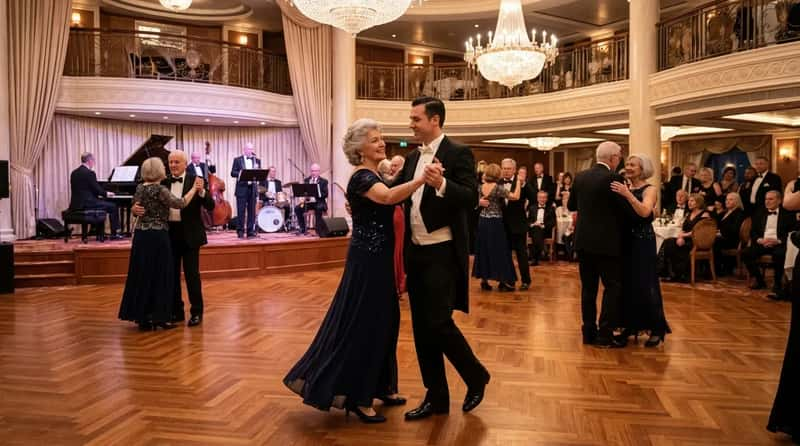
Gentleman hosts stay off the mega-ships and turn up on high-end lines, with Cunard, Regent Seven Seas and Silversea on one list.1 On Cunard they work the Queens Room ballroom, where they’re expected to dance with any solo woman who wants to. Crystal has a version too, with Ambassador Hosts.
The hosts’ job reaches beyond the dance floor. You might spot them at trivia, bridge games, ship-sponsored shore excursions or a cocktail party for single travelers.1 2
The etiquette is strict, since hosts are discouraged from dancing twice with the same partner and from romance with guests. Still, not every ship has them, so don’t pick a sailing around this unless you love ballroom.
Plenty of ships have no ballroom and no hosts, and there the introductions happen at a set hour printed in the daily newsletter.
#14 – Coffee Mornings and Meetups Printed in the Daily Newsletter
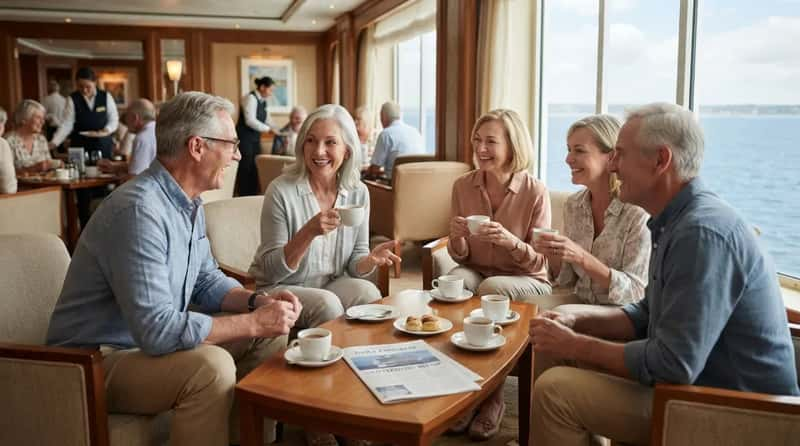
Many lines handle loneliness with a plain, low-pressure tool: a gathering listed in the day’s schedule. Norwegian posts daily solo meetups in its “Freestyle Daily” newsletter. Cunard is known for coffee mornings for solo travelers.
Holland America and Princess run their own versions, and here is how they stack up at a glance.
At a Glance
- Norwegian: daily solo meetups listed in the “Freestyle Daily” newsletter
- Cunard: coffee mornings for solo travelers
- Holland America: onboard meetups for solo and single guests
- Princess: regular meetups in ship bars and lounges
Here’s a verdict you can argue with: go to the first one and judge the rest later. The advice for solo travelers is to attend mixers early in the cruise, while the faces are still new to each other. Attend the first solo meetup early in the voyage. If you’re nervous, starting with a shorter cruise is a sensible way to test the waters.
One line goes further and gives solo-cabin guests a lounge nobody else can enter.
#13 – A Lounge Only Solo-Cabin Guests Can Enter
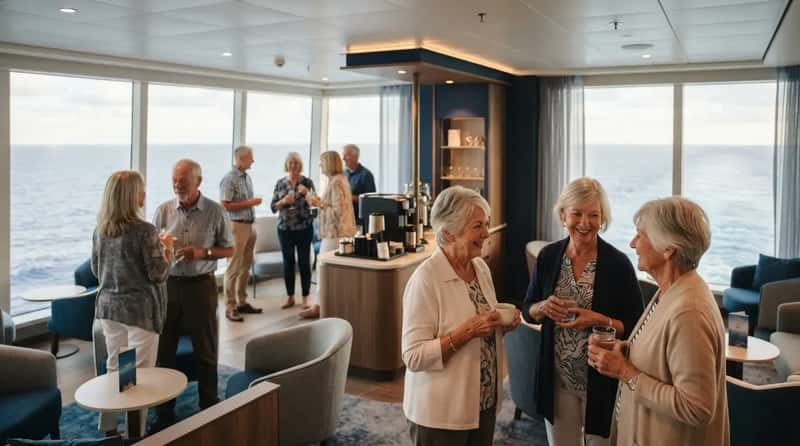
Norwegian built the Studio Lounge specifically as a social hub for solo travelers booked in Studio cabins. It’s exclusive to solo cabin guests, so the room itself is the membership card. The purpose is practical: staff organize daily meetups to help solo cruisers find dining companions and plan evening activities.
The timing is predictable, which helps. The daily meetup usually runs from 5 to 5:30 PM.3 That’s early enough to line up a dinner table before the dining rooms fill.
Because access follows the cabin you book, a solo guest in a regular cabin on the same ship doesn’t get in.
A lounge gets conversations started, but dinner is where the table for one stings, and two luxury lines have a person assigned to it.
#12 – Dinner Companions Assigned on Two Luxury Lines
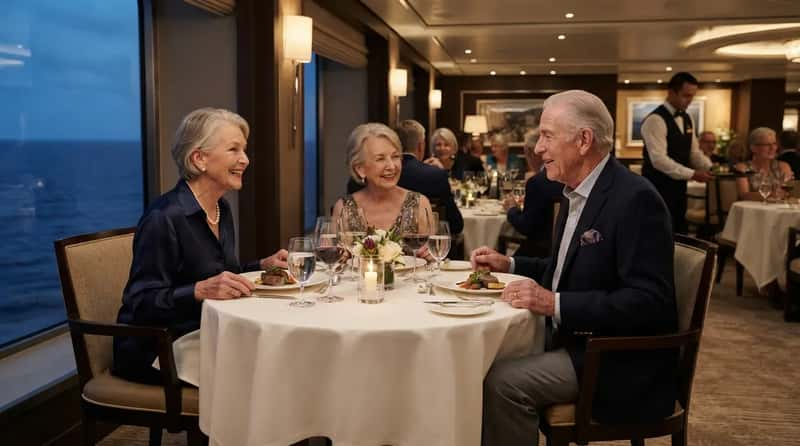
Silversea offers gentleman hosts on some voyages who greet guests traveling alone and keep them company at dinner and evening activities. Crystal’s Ambassador Hosts give solo travelers company for dinner, dancing and other evening events. If you want a built-in dinner partner, those two names are where to look.
On other lines, the usual route is the dining room itself. Open-seating dining is one of the ways solo guests meet people, and it works best when you ask for it. Ask for a shared table at the host stand on the first night. You’ll have said yes to company before anyone has to guess.
#11 – Tastings, Classes and Adult Corners Where Solos Land
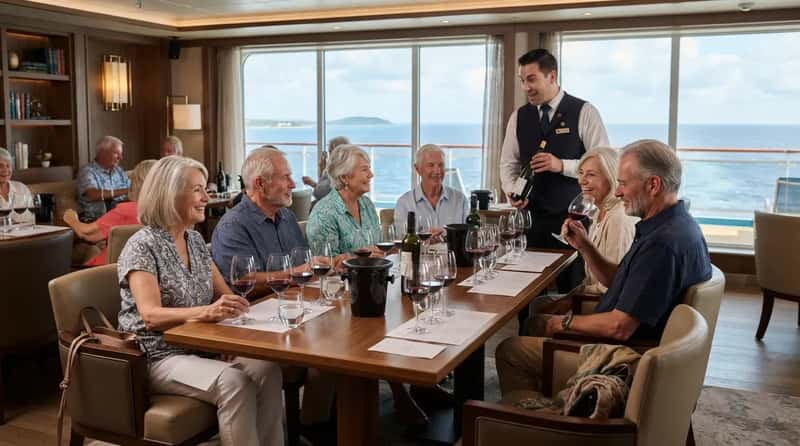
Shared activities do the introducing for you. According to U.S. News & World Report, Norwegian’s solo seniors meet others at wine or whiskey tastings, fitness classes, adult-oriented spaces like Vibe Beach Club and Infinity Beach, and on excursions. Each gives you something to talk about besides yourself.
Small ships add another angle. Azamara’s four small ships have a convivial atmosphere, and their itineraries include more late-night and overnight stays than other lines. That means evenings ashore with fellow passengers. Sign up for one class or tasting on day one.
Getting to that first activity means getting aboard, and for some guests the hardest stretch is the walk from the check-in counter to the gangway.
#10 – Free Wheelchair Help From Terminal to Ship
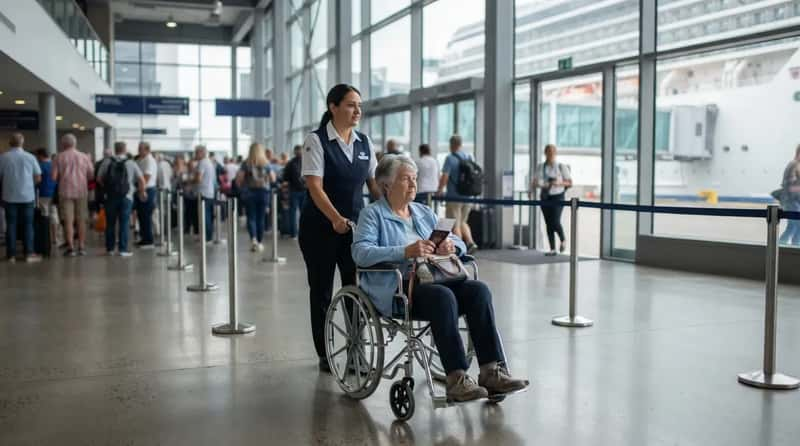
Royal Caribbean says it provides complimentary wheelchair assistance for embarkation and disembarkation only, and its list of services also includes early boarding.4 The major lines don’t charge for wheelchair assistance getting on and off the ship, or more for an accessible stateroom. You don’t have to use a wheelchair daily to ask.
MSC’s form has an option for guests who don’t use a mobility device but need wheelchair assistance on embarkation day. It also has a box for guests who need priority at embarkation and disembarkation because of a medical condition.
Wheelchair help covers embarkation and disembarkation only. Once you’re aboard, you’re on your own feet or your own wheels.
That help is free, but on some lines it’s only reliable if a form reaches the ship’s office weeks ahead.
#9 – The Special Needs Form With a Deadline
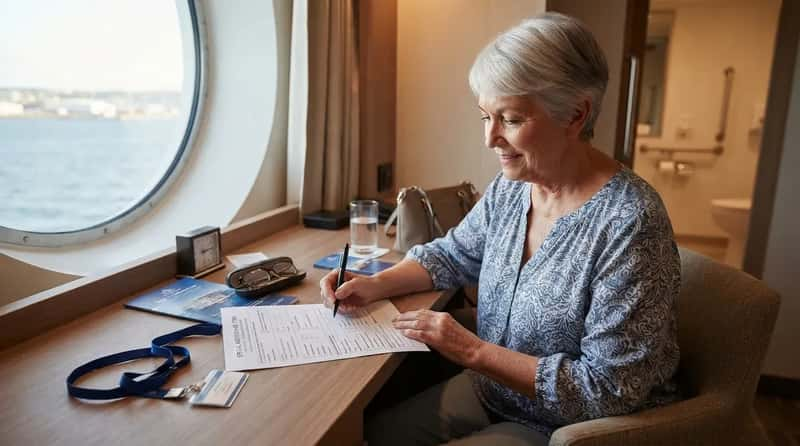
The form is where arrangements get written down, and the deadlines differ from line to line. Azamara wants its Special Accommodations Form no later than 40 days before US sailings, and 80 days before all other sailings. Viking asks for its Accessibility Form no later than 30 days before departure. Norwegian asks for 45 days’ notice for most accessibility needs.
The safest habit is to file when you book. Royal Caribbean encourages guests to tell the line at booking to guarantee specific equipment or services.
Some lines go further: Margaritaville at Sea offers an embarkation-day meet and greet with staff to discuss your accessibility needs, on request. Deadlines run from 30 to 80 days before sailing, depending on the line.
The same paperwork matters again on port days, when the sights have steps and the motorcoaches have more of them.
#8 – Shore Excursions Without the Motorcoach Steps
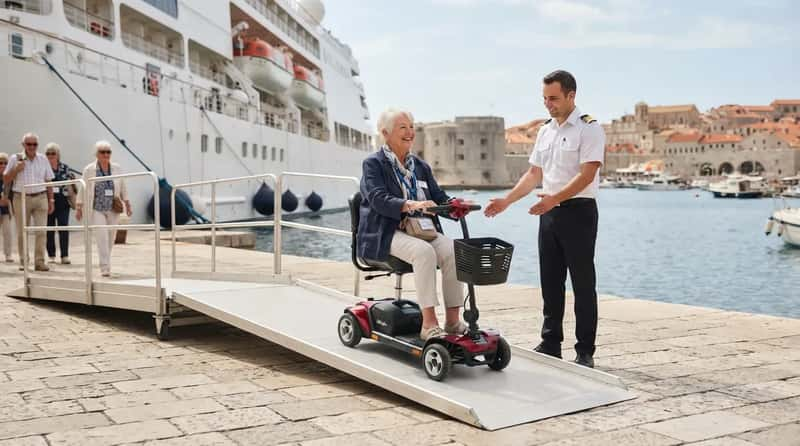
Silversea offers Accessible Shore Excursions on select voyages for guests unable to negotiate motorcoach steps or for full-time wheelchair and scooter users. Azamara has its own form for them. It must be submitted no later than 60 days before the start of your cruise, and guests with a scooter or other wheelchair must check with Accessible Shore Excursions first.5
Azamara also differs from the terminal-only help in #10. AAA’s accessibility guide says the line provides complimentary wheelchair assistance from boarding to disembarking and in destinations.
Azamara’s accessible excursion form is due 60 days before sailing.5 That’s a longer lead time than most ship forms, so set a reminder at booking.
Quick Compare: How Much Notice Each Line Wants
- Viking Accessibility Form: 30 days before departure
- Azamara Special Accommodations Form: 40 days for US sailings, 80 for all others
- Norwegian: 45 days’ notice for most accessibility needs
- Azamara accessible excursions: 60 days before the cruise starts
Excursion access is one thing, but a wheelchair or scooter you ride all week is another, and some ships won’t supply one.
#7 – Rented Scooters Delivered Straight to Your Stateroom
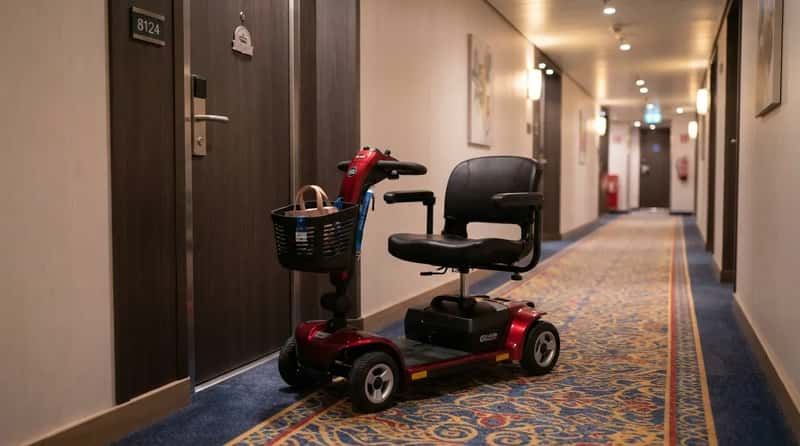
Royal Caribbean says you can bring your own wheelchair or scooter, or rent one from Scootaround or Special Needs at Sea, delivered to your stateroom on the ship. Segways are banned for safety reasons.4 Celebrity’s form adds that any wheelchair or scooter must be stored inside the stateroom, which is worth knowing when you pick a cabin.
Ship-owned chairs rarely fill the gap. MSC says its onboard wheelchairs are for embarkation, disembarkation or emergencies only, and guests who need constant use must bring their own.
For a solo guest, one more line matters: MSC may ask guests who need assistance to travel with a caretaker, depending on the route. That request is made for safety reasons.
Equipment is an extra bill, but the larger charge for a solo guest arrives at booking, and on certain rivers it simply disappears.
#6 – River Cruises Where the Single Fare Is Waived

Cabin prices assume two people sharing, and river lines are where that rule bends most. U.S. News points to European river cruises as a way to sail the waterways of France, Germany, Austria, Italy, Croatia and Portugal with other seniors and retirees. The fare logic is the draw: Avalon Waterways waives its single supplement for most sailings in Europe and on select voyages in Southeast Asia.6
AmaWaterways offers reduced single supplements on select sailings. Because “most” and “select” aren’t “all,” the departure date matters more than the brand.
Avalon waives the supplement on most Europe sailings. Ask the agent to confirm that on your exact date, in writing, before you pay.
#5 – Luxury Lines That Charge Only 25% Extra
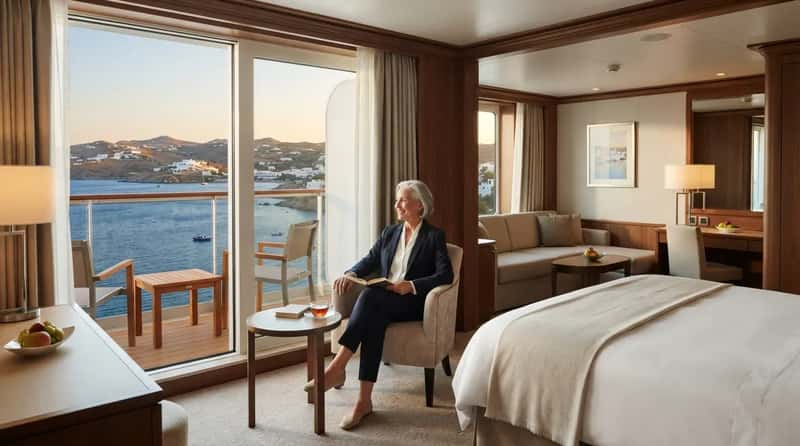
Luxury isn’t always the pricier way to sail alone. Crystal offers a 25% single supplement on select cruises, including some voyages where solo guests can reserve a spacious Aquamarine or Sapphire Veranda Suite. Silversea charges only a 25% single supplement on select voyages.7
Run the math on a hypothetical $6,000 fare. A 25% supplement adds $1,500, while the standard solo rate on many lines charges 200% of the fare and would add $6,000.
A 25% supplement adds $1,500 to a $6,000 fare. The catch is the word “select,” so the percentage depends on the sailing, not the line.
Fast Facts: Who Softens the Solo Fare
- Avalon Waterways: waives the supplement on most Europe sailings and select Southeast Asia voyages
- AmaWaterways: reduced supplements on select sailings
- Crystal: 25% supplement on select cruises
- Silversea: 25% supplement on select voyages
- Standard solo rate on many lines: 200% of the fare
That 25% looks gentle next to what a standard cabin on a mainstream ship does to a solo fare.
#4 – The Standard Cabin That Doubles Your Fare
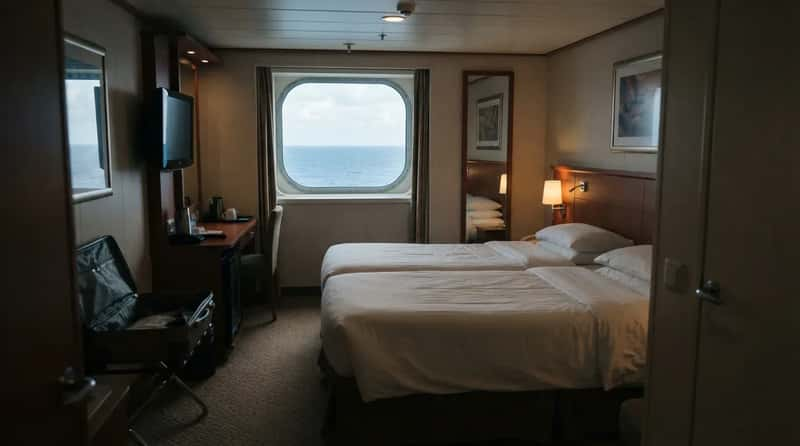
Cruise cabins are priced for two. Alone in a standard double, you’re typically charged 200% of the fare, and the extra 100% is the single supplement. Say the cabin is $2,000 per person: you pay $4,000 for the same room. This is the line item that makes solo sailing feel like a penalty.
There are ways down. Single-supplement waivers, off-peak sailings in September to November and January to March, and AARP discounts all help.
My verdict: a standard cabin at double fare is the most expensive way to sail alone, so book it only after you’ve checked everything above. Alone in a standard cabin, you typically pay 200% of the fare.
Mainstream lines built a way around that rate, and it fits in about 100 square feet.
#3 – Studio Cabins Built for One, No Doubling
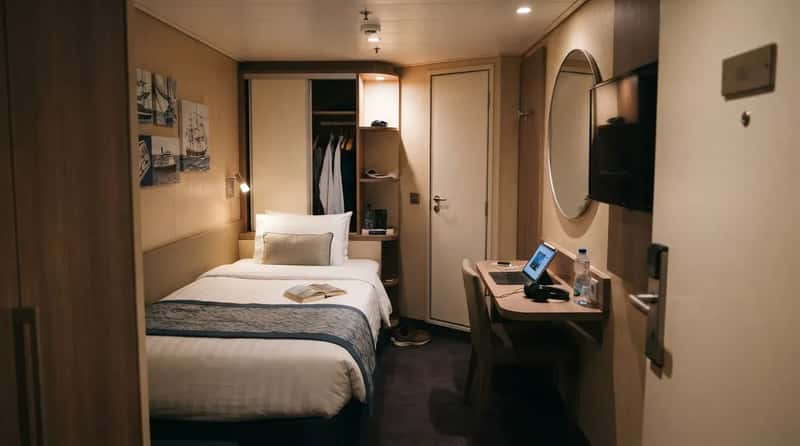
Norwegian’s Studios are compact interior rooms of roughly 100 square feet designed for one person, and they typically cost 110 to 140 percent of the per-person double rate. Celebrity’s Edge-class ships offer Edge Single Infinite Veranda cabins, and its solo cabins often match or come close to per-person pricing. Holland America has Single Ocean View cabins on Rotterdam, Nieuw Statendam and Koningsdam.
Supply is limited, which is why one comparison advises you to book solo-cabin categories first.
Here’s my take: a 100-square-foot interior room is a good buy if you’ll spend your days out of it, but if you like resting in your cabin, price the Single Ocean View first. Norwegian Studios typically cost 110 to 140 percent of the per-person double rate.
The cabin is settled, but the bill that no cabin category can lower arrives at the ship’s medical center.
#2 – The Clinic Bill Your Insurance May Not Take
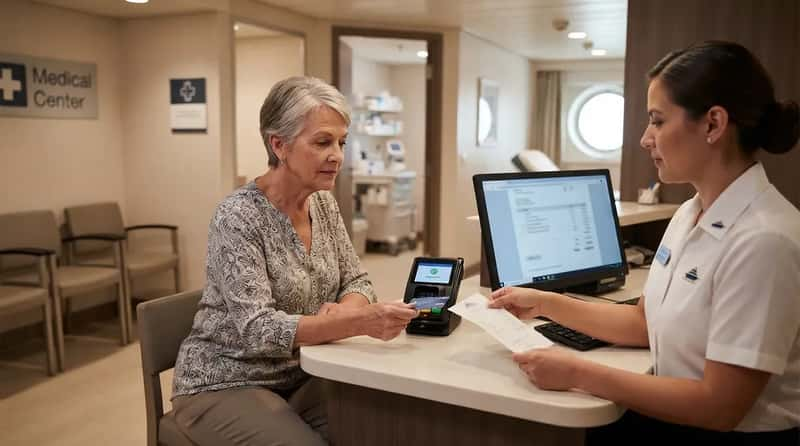
A ship’s medical center works like a private urgent-care clinic, and charges appear directly on your onboard account. Basic doctor visits usually run $100 to $200 during regular hours, while overnight stays in the infirmary often cost $1,000 to $3,000 per day. Those figures arrive before any evacuation cost.
The payment rules are the surprise. According to the CDC and Department of State, most cruise lines don’t accept U.S. health insurance or Medicare, so passengers pay out of pocket and seek reimbursement later.8
Without travel insurance, passengers often pay the full amount before leaving the ship. Most lines don’t accept Medicare, so you pay on board and claim later.
That clinic bill is small next to the one for getting off the ship, which is the largest on this list.
#1 – The Evacuation Bill Cruise Line Plans Don’t Cover
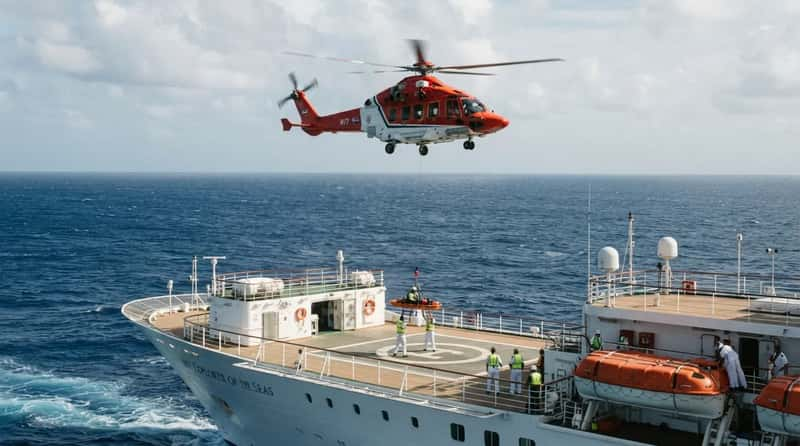
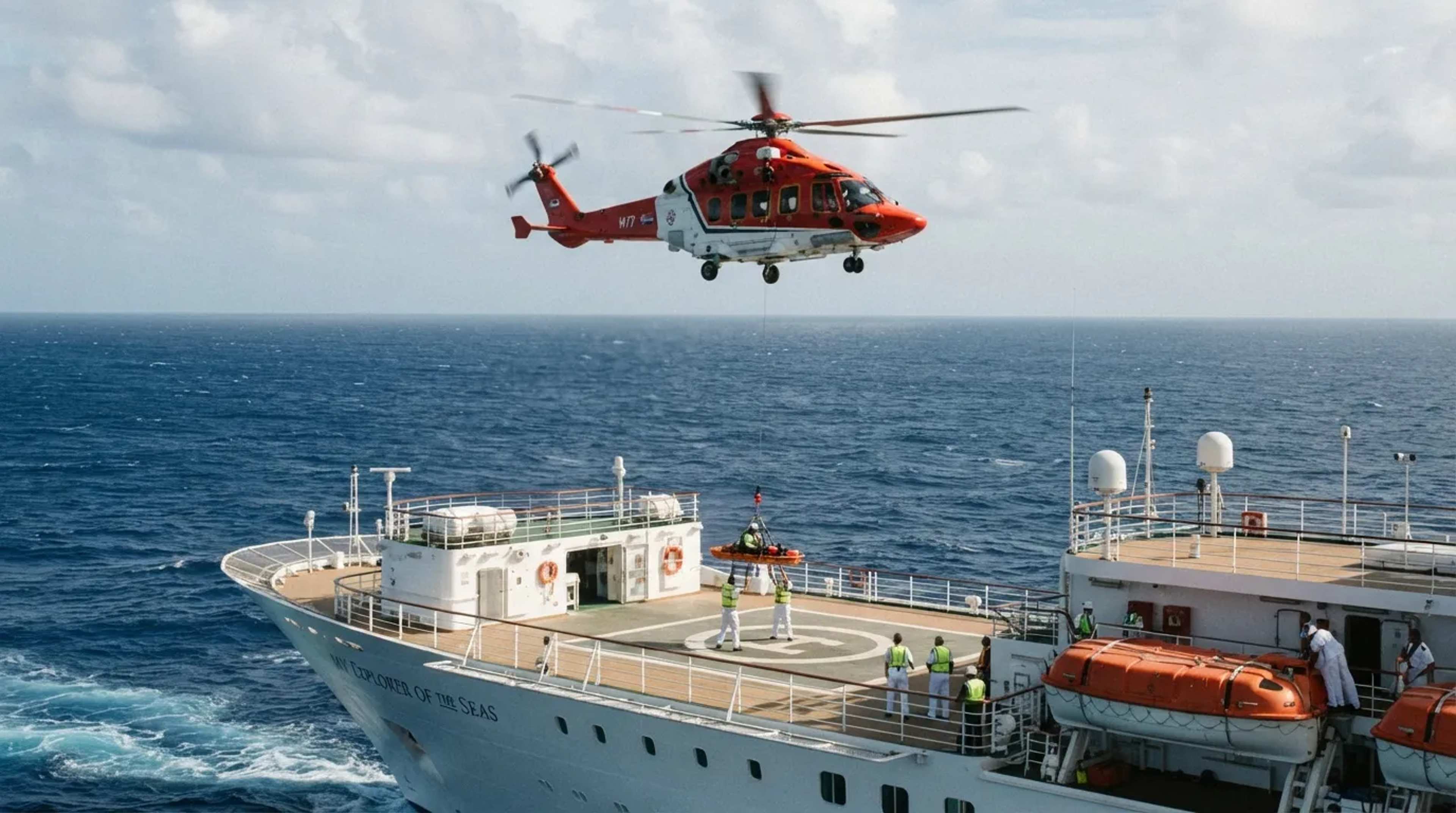
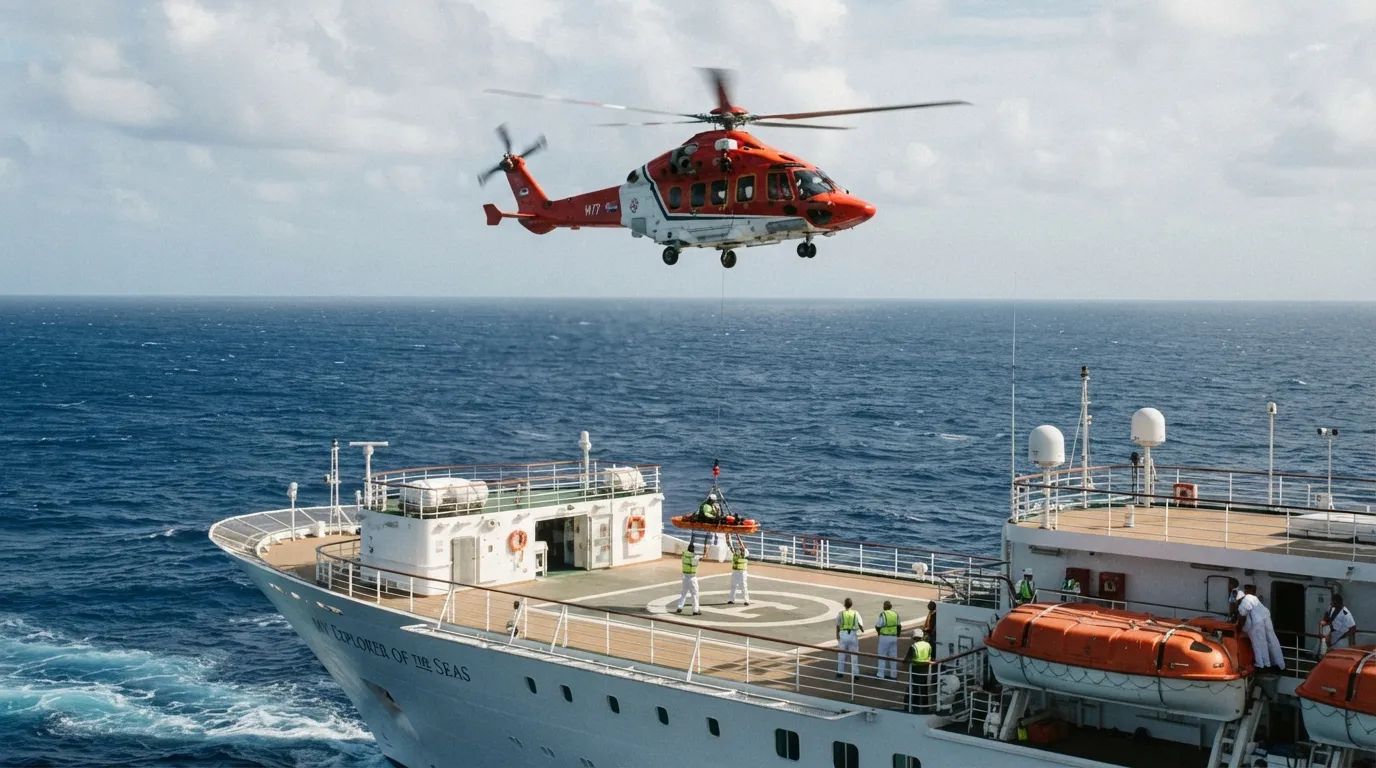
Getting from ship to hospital is the part that can dwarf everything else. One 2026 guide puts it at about $15,000 for short-range helicopter lifts to well over $200,000, depending on distance and method.
Cruise line plans can fall short, and the gaps are specific. The numbers below show how far apart the limits sit.
Worth Knowing: The Coverage Numbers
- Carnival’s plan: up to $20,000 of medical expenses and $50,000 for medical evacuation, per Squaremouth
- Princess’s plan: up to $100,000 for evacuation, excluding pre-existing conditions
- Squaremouth’s suggestion for cruises: $100,000 emergency medical and $250,000 medical evacuation
- Medjet-style evacuation membership: $99 to $295, meant to sit alongside standard trip insurance
Read where the policy sends you, because trip insurance medical coverage typically pays the nearest adequate facility, not your home hospital. Check age limits too, since some policies cap eligibility by age and can rule out many senior cruisers.
My verdict: the cruise line’s plan shouldn’t be your only protection when your evacuation limit may be $50,000 and the bill can pass $200,000. Cruise line plans can cap evacuation at $50,000, but bills can pass $200,000.
Ask a licensed insurance agent to match the limits to your health and itinerary before you pay your final balance.
The solo-cabin deals, hosts and lounges all make the voyage friendlier. This last item is the one that protects your savings if the voyage goes wrong.
Every item here follows the same pattern: the welcome is real, but the best help is the kind you arrange before you reach the gangway. Hosts, meetups and Studio Lounges are there when you walk in. Wheelchair assistance, forms, scooters and insurance reward the person who made the calls at booking.
The people who sail alone and feel looked after usually aren’t luckier. They just asked early.
Which of these would you set up first before sailing alone: the dance partner, the shared table, or the evacuation coverage?
- Points Guy Gentleman Hosts: https://thepointsguy.com/cruise/gentleman-host-cruise
- Cruise Critic Dance Hosts: https://www.cruisecritic.com/articles.cfm?ID=2774
- Life Well Cruised Solo Cabin: https://lifewellcruised.com/cruise-solo-cabin-review/
- Royal Caribbean Mobility Disabilities: https://www.royalcaribbean.com/experience/accessible-cruising/mobility-disabilities
- Azamara Accessible Cruising: https://www.azamara.com/our-ships/accessible-cruising
- Avalon Waterways Solo Traveling: https://www.avalonwaterways.com/why-avalon/solo-traveling/
- Cruise Critic Senior Cruises: https://www.cruisecritic.com/articles/best-cruises-for-seniors
- Generali Cruise Medical Coverage: https://www.generalitravelinsurance.com/travel-resources/cruise-medical.html