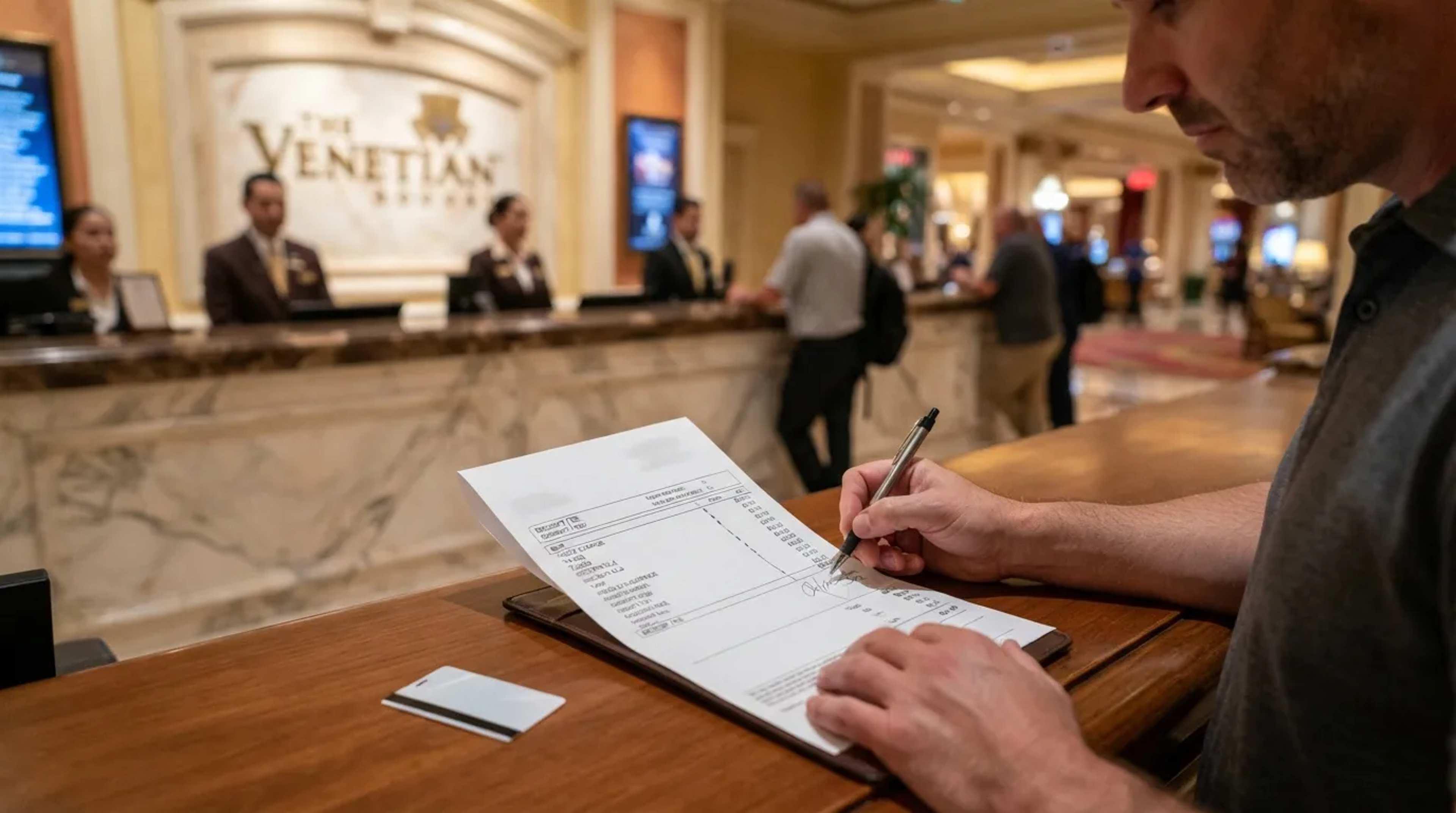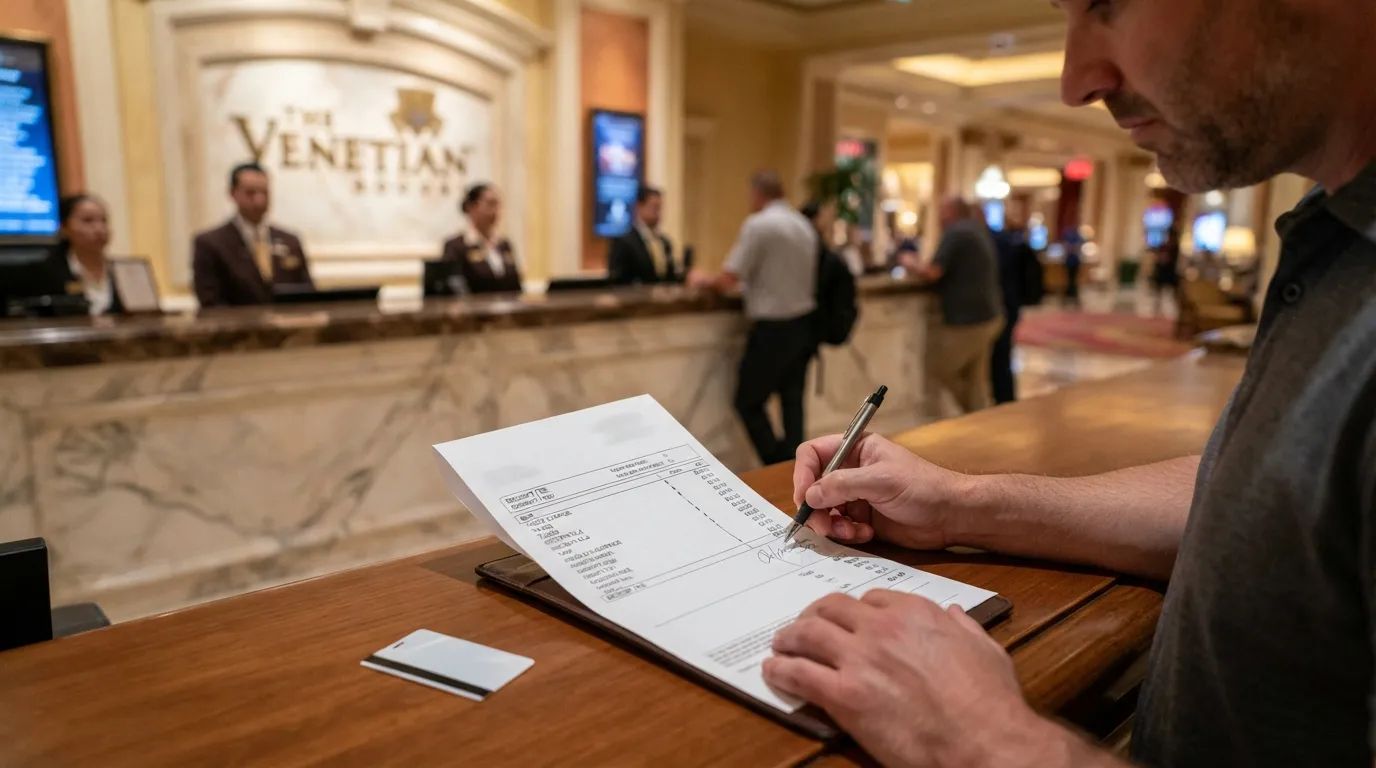
The folio slipped under your door can list a dozen or more lines, and they don’t all carry the same weight. Some are legal and fixed. A few are plain mistakes. Several are optional extras that nobody ever described as optional.
Since May 12, 2025, companies offering hotel rooms or other short-term lodging have had to display the total price up front. But that rule covers the advertised price, not what gets added during your stay. So the 17 lines below are yours to sort out, and the sorting gets harder the longer you wait. The smallest-looking charge comes first, and it sits on your nightstand. The biggest one, and the hardest to escape, is saved for last.
#17 – The Room Phone Charge for a Call You Never Made
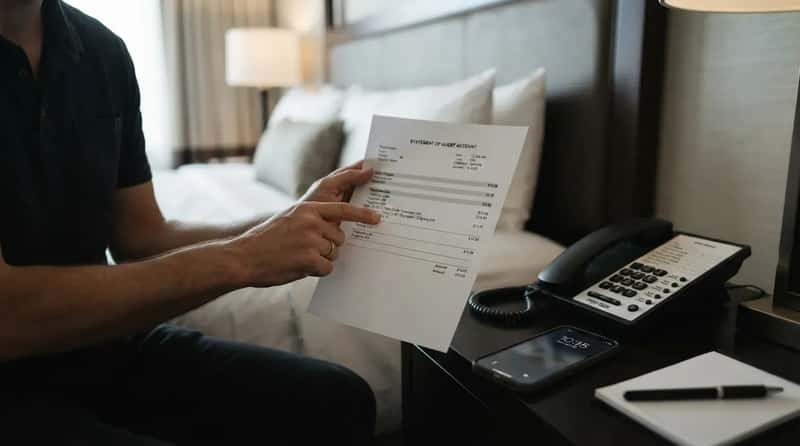
Hotel telephone charges can be confusing and pricey, which is why NBC News’s rundown of hidden hotel fees suggests using your own cell phone instead. The logic is simple. The phone in your pocket does everything the one on the nightstand does, and it bills through a plan you already understand.
If a calls line shows up on a stay where you never touched the handset, ask the desk for the date, time and number behind it before you pay. Resort fees are described as covering things like the pool, gym, Wi-Fi and local calls, so check that the two charges haven’t been stacked on top of each other.
#16 – The Fee to Babysit Your Suitcase

Some hotels now charge to hold luggage before check-in or after checkout, a service many properties used to offer as a standard courtesy. Kiplinger’s list of annoying hotel fees points the other way. It says most hotels will store your bags for free until you check in.1
So ask before you hand over a card. If a fee does come up, frequent travelers with status often get it waived, and others use third-party luggage storage near train stations or airports. For a few hours of bag-watching, I wouldn’t pay the hotel you’re about to sleep in. That’s even more true when the real problem is that your room isn’t ready yet.
Quick Compare
- Ask the hotel first: Kiplinger says most hotels store bags free until check-in.
- Use your status: frequent travelers with loyalty status often get the fee waived.
- Go third-party: luggage storage near train stations and airports is the backup if the hotel charges.
#15 – Paying for a Room That Was Already Clean

Early check-in and late checkout fees are optional, unlike some other hotel charges. A hotel may treat early room access as a paid extra even when a clean room is sitting empty. The practical move is to ask whether a fee applies and approve the amount before you accept the key.
Whether it’s worth paying depends on your day. If your flight lands in the morning and you’re running on no sleep, paid early check-in can matter. If you’re only trying to start sightseeing, bag storage costs nothing at most hotels, as the luggage entry above explains.
The same clock sells extra hours on departure day.
#14 – The Late Checkout Fee Nobody Asked You About

Late checkout, like early check-in, is an optional fee. If one appears on your folio and you never said yes, ask the desk to match it to the policy on your confirmation. Penalty-type charges can sometimes be adjusted with proof or manager approval. Loyalty status helps.
Don’t confuse this with a charge that simply posts after you leave. A hotel charge appearing late is not the same as a late-checkout fee. If you’re turned down for extra hours, go back to the front-desk bag hold and use it. Your afternoon stays free and the folio stays the same.
#13 – The Housekeeping Tip You Paid Before You Even Unpacked
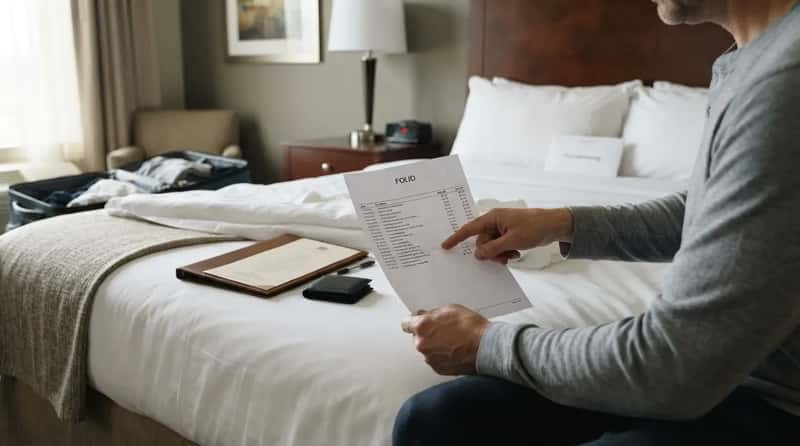
Before you leave a tip for your housekeeper, make sure the hotel isn’t already charging a housekeeping gratuity fee. If it is, you can skip the extra tip, or ask for the fee to be removed so you can tip at your own discretion.1
This is the entry where the real risk is paying twice. A fee on the folio is set before you’ve seen the room serviced, while cash left on the pillow is your call. If you like to tip daily, ask at check-in whether a gratuity fee is already on the account.
#12 – The “Premium” Wi-Fi Tier You Barely Needed

Wi-Fi is the line where a hotel can charge you and still claim to be generous. Kiplinger has put the going rate at $10 to $20 per night at hotels that charge for it. The first thing to try is the hotel’s free rewards program. Some programs, including IHG’s and Marriott’s, have waived charges for services like Wi-Fi.
Then look for overlap. If you see both a resort fee and a Wi-Fi charge, ask whether you’re being billed twice for the same thing. Resort fees usually list Wi-Fi among what they cover. My view is that unless you’re on long video calls from the room, a paid premium tier isn’t worth it. Email and a boarding pass don’t need one.
A Wi-Fi charge at least buys a connection, which is more than a sustainability line does.
#11 – The “Optional” Sustainability Charge Nobody Offered
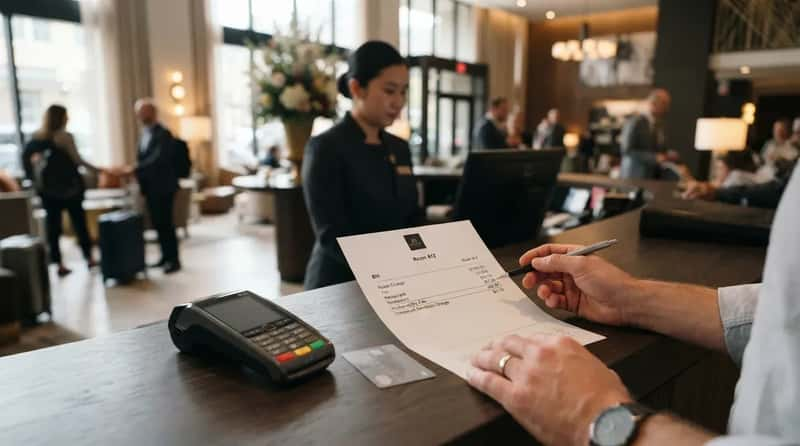
Some hotels add a sustainability charge at check-in. Ask whether any optional sustainability charges have been added, and request removal if you didn’t authorize them. A related leftover is the enhanced sanitation fee, which grew out of COVID-era protocols and stuck around at some properties.
Anything labeled optional shouldn’t be on your bill unless you said yes to it. Reviewing the bill line by line before checkout is the habit that catches these.
#10 – The Breakfast That Was Only “Available”

Breakfast can still be optional. The trouble is in the wording. Listings use terms like included, available, buffet, continental and package, and only the first one means it’s in your rate. A room advertised with “breakfast available” is an offer, and the charge arrives with your first plate.
If a breakfast line surprises you, compare your confirmation with the final bill, as the wrong-rate entry later in this list explains. Ask the hotel to explain why the amount wasn’t in the original price. If you want breakfast, it’s better to settle the terms before the buffet line than at the cashier.
Breakfast is something you choose to order, but the minibar can bill you without that choice.
#9 – The Minibar Item You Only Moved

Newer rooms often use sensors instead of an honor system. Picking up an item and putting it back can trigger the sensors, adding the price to your bill. On sensitive machines, even jostling items while you add your own food to the fridge can incur a charge.2
If a minibar charge you don’t recognize appears, dispute it at checkout, because front desk staff can review and remove it. Timing matters. A manager can reverse almost anything without a fight if you catch it early. If you keep your own snacks in the room, leave the hotel’s items alone, or ask the desk to switch off the sensor.
A sensor at least has a mechanism, while a food tab can show up with none.
#8 – The 3 A.M. Room Service Tab You Never Ordered

The Points Guy has reported on its own staff running into this. One writer twice found fraudulent minibar charges, and a colleague had to confront a Charlotte hotel about $100 of food she allegedly charged at 3 a.m.3 The lesson isn’t that hotels invent charges. It’s that an error on a busy folio is easy to make and easy to miss.
When a food or drink line looks wrong, request receipts and supporting records rather than arguing from memory. A room-service ticket should carry a room number, a time and a signature, so ask to see it.
Worth Knowing
- A real room-service ticket carries a room number, a time and a signature.
- Asking for the paperwork keeps the conversation about records, not about who remembers what.
- A 3 a.m. timestamp is easy to check against your own night.
#7 – Parking for a Car You Never Brought
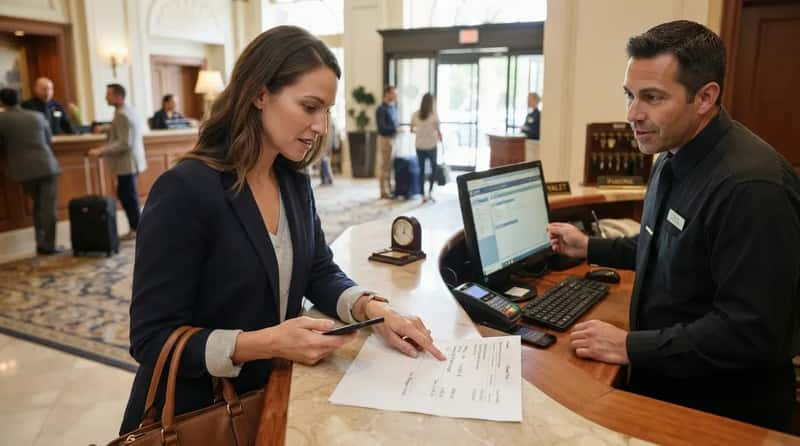
Parking fees can post automatically when your reservation included a spot, whether you used it or not. The same source cautions you to check before disputing, and I agree. Pull your confirmation first. If it lists parking, the line is probably correct. If you came by taxi and never booked a space, challenge it.
Persistence can pay. One Points Guy copy editor got over $140 in parking fees removed from her bill.3 NBC News’s fee roundup also flagged mandatory valet parking at downtown hotels as a daily add-on, with the tip on top.
A parking line can be checked against your own car keys, but a damage charge rests on what someone says they found in the room.
#6 – The Smoking or Damage Fee for a Room You Left Spotless

Some hotels add cleaning charges when guests smoke in nonsmoking rooms, bring unauthorized pets, or leave damage that needs unusual cleanup. Those are real fees for real problems. If you left the room fine, though, a damage or smoking charge is on the list of common ones worth challenging.
Don’t pay on the spot. Request photographs, inspection records, an explanation of the amount, and a copy of the policy the property believes authorizes the fee. A few phone photos on your way out take thirty seconds and cost nothing.
At a Glance
- Usually legitimate: smoking in a nonsmoking room, unauthorized pets, damage needing unusual cleanup.
- Worth challenging: a damage or smoking charge on a room you left fine.
- Ask for: photos, inspection records, an explanation of the amount and the policy behind it.
- Your best proof: a few phone photos taken on the way out.
A damage claim disputes the room, while a wrong rate disputes the price, and the paper that settles it is your confirmation.
#5 – A Rate Higher Than the One You Booked

Double charges for the same night, a rate higher than the one you booked, and a charge for a stay you canceled inside the cancellation window are all worth challenging. The fastest place to fix a billing error is the hotel itself, ideally before you check out.
Not every difference is an error, so compare before you complain. A higher total can come from incidental holds, resort or destination fees, local taxes, parking, deposits, pet fees, extras during the stay, or a payment split between a booking site and the hotel. That last case matters if you used a travel site. The platform may be the merchant for the room price, while the hotel collects taxes, resort fees or an incidentals authorization.
A rate that matches your confirmation can still sit beside an amount on your card that isn’t a charge at all.
#4 – The Hold That Looks Like a Second Charge
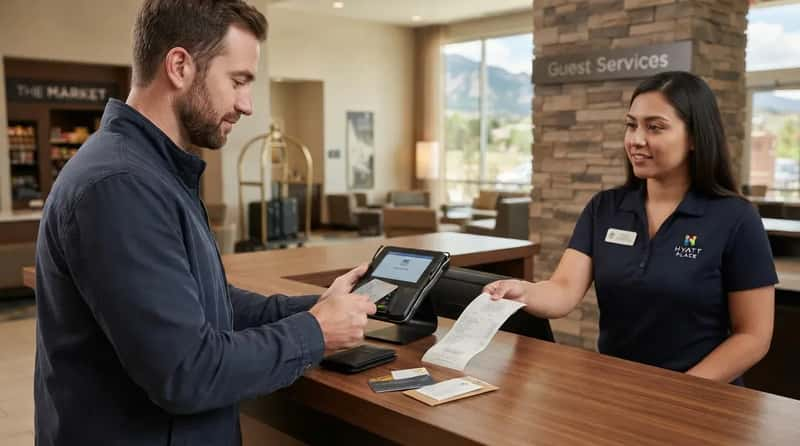
An incidental hold is usually a temporary authorization on your card, not a final charge. Amounts vary. One card guide says the hold can be up to $100, and one Hyatt Place in Colorado Springs lists $40 per night. This is the rare line you can’t decline, so don’t spend energy on it. Choose the card instead.
The card matters because with a debit card the money disappears from your account until the hold is released, so a credit card is the better choice. A plain way to keep the two straight: a fee raises what you spend, while a hold lowers the money you can reach for a while.
The hold is temporary, but some amounts posted after you’ve left are not.
#3 – The Second Charge That Posted a Week Later

The Points Guy’s travel team describes a stay where the printed bill looked fine at checkout. A week later, the writer’s card statement showed two charges from the hotel. One matched the folio, and the other had to be checked.3
Late charges aren’t always wrong. A hotel may post a final balance, parking, a minibar charge or a documented damage or cleaning fee after checkout if it has a valid basis. Parking, minibar, restaurant, room-service and spa purchases sometimes reach the billing system after the first folio is prepared. So the card statement is the real last word, not the paper under the door. It’s easier to contest charges right after a stay than much later.
The same statement also shows how the biggest nightly line was labeled, and the labels vary.
#2 – The Resort Fee Wearing a Different Name

Destination fees, amenity access fees and facility charges describe the same thing as a resort fee: a mandatory add-on that raises the price beyond what was advertised. A resort fee is not a tax, though the names can make it look like one. One New York hotel lists its fee as an “NYC mandatory City Hotel Fee.” Resorts with big grounds have another version. If your resort has acres of lawns, gardens or golf courses, you could be paying a groundskeeping surcharge.
The rule changed where these appear. Mandatory resort, destination, urban and amenity fees now belong in the total price, while optional extras like parking and avoidable pet fees may still be added afterward. If a “destination” line wasn’t in the total you saw at booking, that’s the one to question. An undisclosed resort fee is a stronger dispute than it used to be.
The standard version of this fee decides how big your bill gets.
#1 – The Resort Fee That Decides the Whole Bill
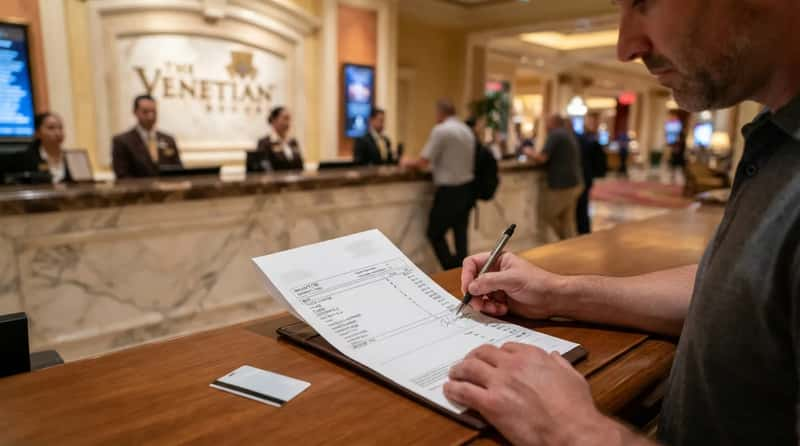
This is the largest line on many folios, and the hardest to refuse at the desk. NerdWallet’s 2026 analysis of 160 hotels found an average resort fee of $33 per day, with typical U.S. ranges of $15 to $50 per night.4 On the Las Vegas Strip, a Review-Journal survey puts fees at roughly $44 to $57 a night, with Nevada’s 13.38% lodging tax on top. They’re charged per room, per night, not per person.
Fast Facts
Average resort fee by chain, when one is charged:5
| Chain | Average per night |
|---|---|
| Marriott | $50 |
| Hyatt | $33.80 |
| Hilton | $33 |
| IHG | $32.57 |
| Wyndham | $25 |
Here’s the hard truth. A clearly disclosed resort fee is hard to reverse, and the federal rule doesn’t ban resort fees. But there are real exceptions. Hilton Honors and World of Hyatt waive the fee on bookings made with points, and top-tier elite status can eliminate it entirely.5 If it wasn’t in the price you were shown, ask which rate rule or booking disclosure included it.
The better lever is the booking itself. A $120 room with a $30 fee costs more over three nights than a $140 room with no extra fees. That’s $450 against $420. Stop arguing at checkout and compare totals when you book.
Most of the lines above get easier to remove the earlier you speak up: at booking, at check-in, at the desk before you sign. A bill read on the plane home is a bill you’ve already mostly agreed to.
The next stay may not need any special trick, just thirty seconds with the folio before you hand back the key. Which line on a hotel bill have you ever had removed by asking, and what did you say to the desk?
- Kiplinger Annoying Hotel Fees: https://www.kiplinger.com/article/spending/t059-c011-s001-10-annoying-hotel-fees-and-how-to-avoid-them.html
- Points Guy Check Hotel Bill: https://thepointsguy.com/news/always-check-hotel-bill
- Points Guy Post-Checkout Charges: https://thepointsguy.com/news/always-do-this-thing-after-hotel-checkout/
- NerdWallet Resort Fees Study: https://www.nerdwallet.com/travel/learn/hotel-resort-fees
- Resort Fee Study Coverage: https://www.wfmd.com/2026/03/26/hotel-fees-are-draining-americans-wallets-as-expert-reveals-how-to-avoid-paying-hundreds-extra/