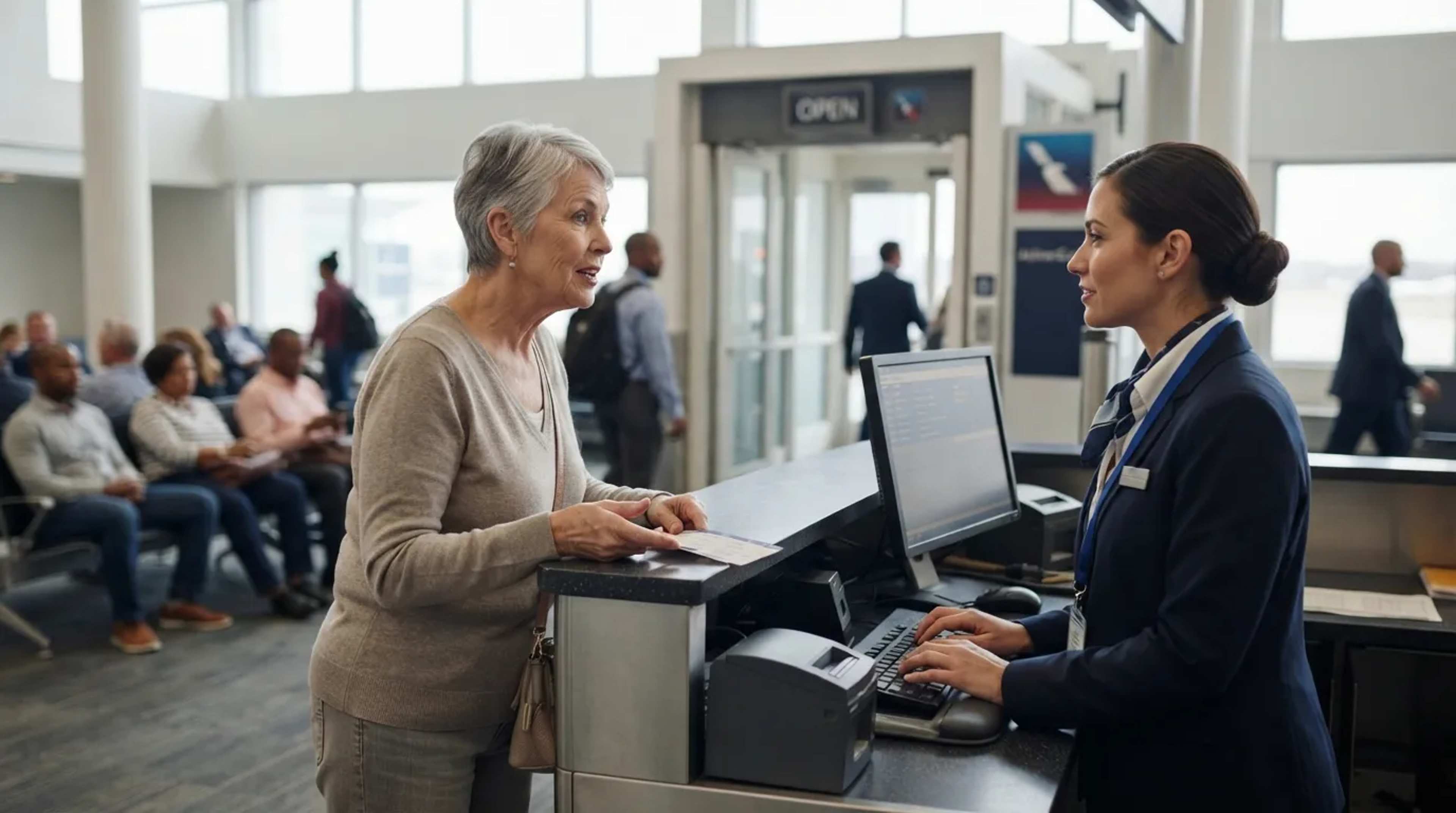
Here’s what nobody tells you at 65: there’s no secret senior perk waiting at the airport. No birthday trigger, no magic card. Yet there really are 15 free services that can turn a dreaded travel day into a calm one, and almost none of them are handed out unless you ask first.
The twist is that these services are tied to need, not age, and several have deadlines as short as 48 hours. Miss the window and the help may simply not be there. One of them lets a loved one walk you all the way to your gate. Here’s what the rules actually say.
#15 – The Free Sunflower Lanyard That Tells Staff You May Need More Time

A small green-and-yellow lanyard can quietly change how airport staff treat you. DFW says its Sunflower lanyards are free, with delivery or pickup. The program is meant for hidden disabilities, and Bradley Airport lists examples such as dementia, chronic pain, anxiety, and vision or hearing impairment. You never have to explain your condition to anyone.1
More than 300 airports around the world now take part, and the program launched in 2016. Some let you request a lanyard before you travel. Here’s the part that gets lost online: Bradley says wearing a lanyard does not guarantee fast-tracking through security or any priority access.1 It’s a signal for patience, not a VIP pass.
But the next freebie is one most travelers get wrong at the gate…
#14 – Preboarding: The Head Start Most Passengers Wait Too Long to Ask For
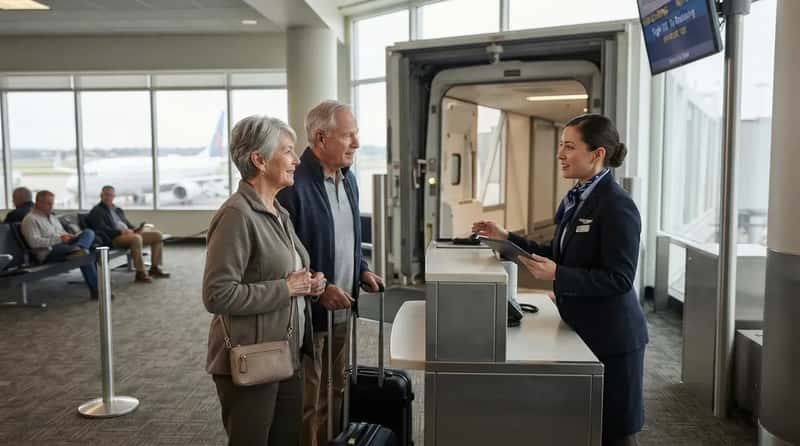
Many travelers sit through the entire boarding scrum without realizing they could have skipped it. If you need help from gate staff, such as a wheelchair, ask before boarding begins. Timing matters here. Once the lines form, the agent has far less room to help you.
Here’s a detail that surprises families. Most airlines let one travel companion preboard with you. That means a spouse or adult child can help you settle in, stow a bag, and find your seat without a crowd breathing down your neck. Policies differ by airline, so mention it when you call or check in.
And if you travel with your own mobility device, the rules get even more interesting…
#13 – Free Gate-Checking of Your Own Wheelchair, Walker, or Scooter
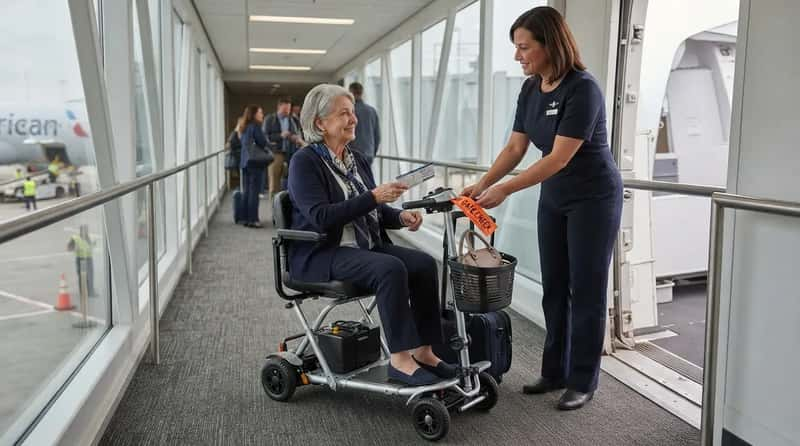
Your own mobility device can stay with you almost until the jet bridge. Airlines must let passengers with disabilities check wheelchairs, scooters, walkers, and other medical devices at the gate for free. That means you use your own equipment from drop-off to boarding, instead of surrendering it at the ticket counter. Plenty of people don’t know that.
Giving notice helps. DOT suggests telling the airline in advance, whenever possible, that you’re traveling with a personal wheelchair, along with the device’s size, weight, and battery type. If a checked device comes back in a different condition, there’s a rebuttable presumption that the airline mishandled it. In plain English, the burden is on them to show otherwise.
Wait until you see what airlines can arrange inside the cabin…
#12 – An Onboard Wheelchair to Reach the Restroom

Long flights raise a question few people ask out loud. How do you reach the lavatory if you can’t walk the aisle? There’s a rule for that. On aircraft with more than 60 seats and no accessible lavatory, airlines must place an on-board wheelchair on the flight if you give 48 hours’ notice.2
It applies if you can use an inaccessible lavatory but need the chair to get there. Without that notice, the chair may simply not be aboard. Some families only discover that at 35,000 feet. One phone call to the airline’s accessibility line takes care of it.
Some medical gear needs even more planning, as the next entry shows…
#11 – Advance Notice for Onboard Medical Equipment

Medical gear can be where travel plans quietly fall apart. Airlines may require up to 48 hours’ notice for accommodations that need preparation time, such as a respirator hook-up.2 3 That’s a hard deadline, not a suggestion. Wait until the airport counter and you can end up stuck.
CPAP users should know the rule too. DOT lists 48 hours’ notice for onboard CPAP use3, and a medical certificate if the airline has reasonable doubt you can fly safely without extraordinary medical help. Most travelers never get asked for one. Still, ask your airline what it requires so a missing document doesn’t ambush you at check-in.
Fast Facts
- Respirator hook-up: airlines may ask for up to 48 hours’ notice.
- Onboard CPAP use: DOT lists 48 hours’ notice.
- A medical certificate can be requested if the airline has reasonable doubt about flying safely.
- Simply having a disability does not require advance notice.
Next up is a service that surprises people with four-legged companions…
#10 – A Staff Escort to the Service Animal Relief Area

Airports are huge, and finding the right door with a service animal isn’t simple. DOT says airline personnel must escort you and your service animal to the relief area on request. You don’t have to wander the terminal hunting for it while your flight clock ticks.
This one is easy to overlook because it’s buried in federal disability guidance. It’s free, and it’s your right. Mention it when you reserve special assistance so the airline knows to plan for it.
But the next trap catches people on connecting flights…
#9 – Escorts on Every Leg of a Connecting Trip
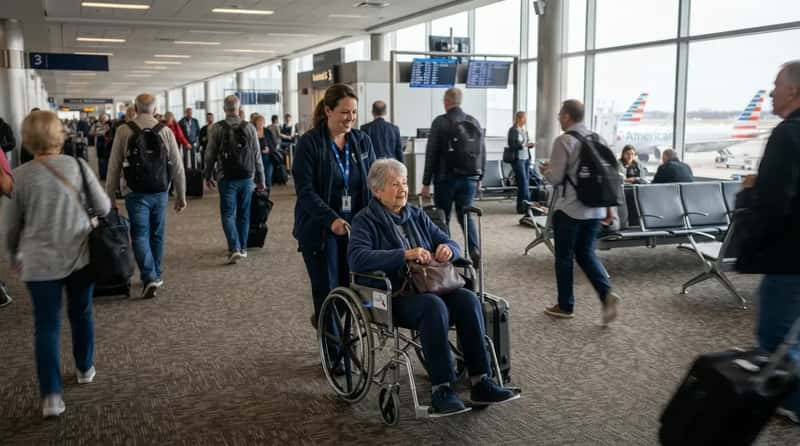
The scariest part of a trip for many older travelers is the 40-minute connection. Help can vanish between flights if it wasn’t booked correctly. Ask for assistance codes on each segment, because a request may not transmit on connecting flights. That small step prevents a lot of panic in a strange terminal.
Different airlines complicate things further. American Airlines, for one, provides wheelchair help for interline connections, with staff escorting the customer to the other carrier’s gate. Confirm the request with every airline on your itinerary. Don’t assume one booking covers every leg.
Some airports go further than the airlines do, though…
#8 – A Volunteer Who Walks You From Arrival to Departure

Some airports have volunteers or staff who will accompany you through the building. One accessibility guide says some services must be requested in advance, such as curbside wheelchair assistance or an airport volunteer who accompanies you from arrival to departure. That’s a real person beside you for the whole walk.
Availability varies by airport, so don’t assume every terminal has it. Check the airport’s accessibility page weeks ahead, not days. If you find a program, book it as early as the airport allows. These volunteer services tend to be the least advertised.
Here’s a way your family can get closer to the gate than you’d expect…
#7 – Visitor Passes That Let a Relative Past Security
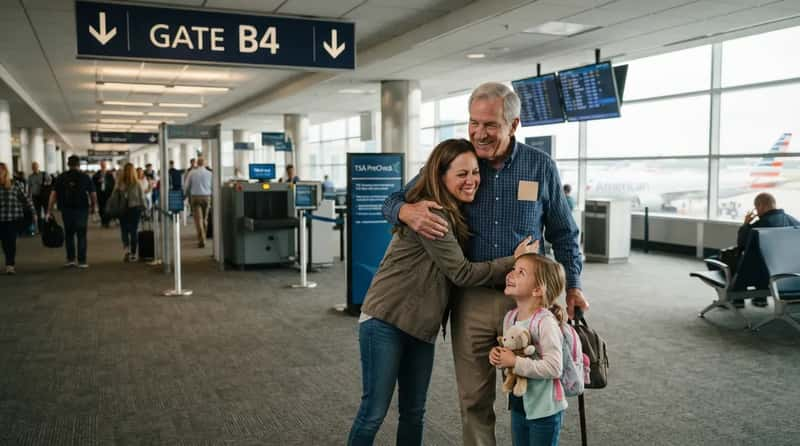
A few airports let non-flyers apply for access to the gate area online. Philadelphia’s Wingmate Pass can be reserved online one to seven days before your visit.4 That’s the kind of lead time most families never think to use. It turns a curbside goodbye into a walk to the gate.
The catch is security. Non-ticketed visitors still go through screening, but they can drop off or pick up a senior at the gate at no additional cost. Non-ticketed visitors can use airport guest passes or airline companion escort passes. Check your airport’s website, because not every airport runs one.
Quick Compare
- Airport guest pass: reserved online, as with Philadelphia’s Wingmate Pass, one to seven days ahead.
- Airline gate pass: issued by the airline, usually at the ticket counter and at its discretion.
- Either way: your helper still goes through security screening.
If your airport doesn’t, there’s another route that’s even more personal…
#6 – Your Son or Daughter Can Make the Calls for You

You don’t have to handle the phone tree yourself. TSA Cares isn’t only for the traveler. Family members and travel companions can call, so a son or daughter can do the legwork. That can save a parent a lot of hold music.
Airline requests work similarly. One checklist advises requesting wheelchair or escort help when you book and confirming it at check-in. A relative with a laptop can often set it all up in under an hour. Have your name, flight details, and the type of help needed ready.
But what actually happens at the checkpoint is where it gets interesting…
#5 – Seated and Modified Screening at the Checkpoint
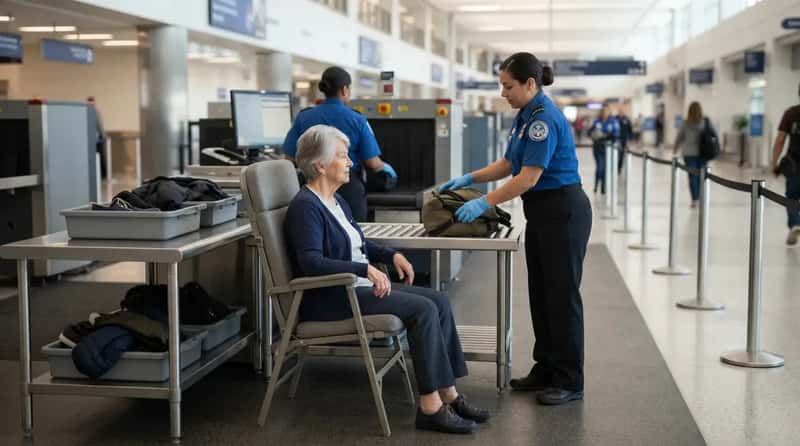
Standing in a long security line is hard on many people. Checkpoints have procedures for that. TSA Cares can arrange support in advance, and screening can often be adjusted so you aren’t forced to stand, walk, or remove what you need. You only have to ask.
Age still counts at one line: 75. TSA says travelers 75 and older may receive some form of expedited screening, and they can request to sit during parts of it. The old shoes-off exemption for that group is gone, though, because TSA ended the shoe-removal requirement for everyone on July 8, 2025.5 Officers still make the call on the spot.
Worth Knowing
- Turning 65 does not unlock a TSA screening perk by itself.
- At 75 and older, expedited screening may be available.
- Shoes have been optional for every traveler since July 8, 2025.
- An alarm or extra screening can still mean shoes off.
But the way to line all of this up starts with one phone number…
#4 – The TSA Cares Helpline, Open Seven Days a Week
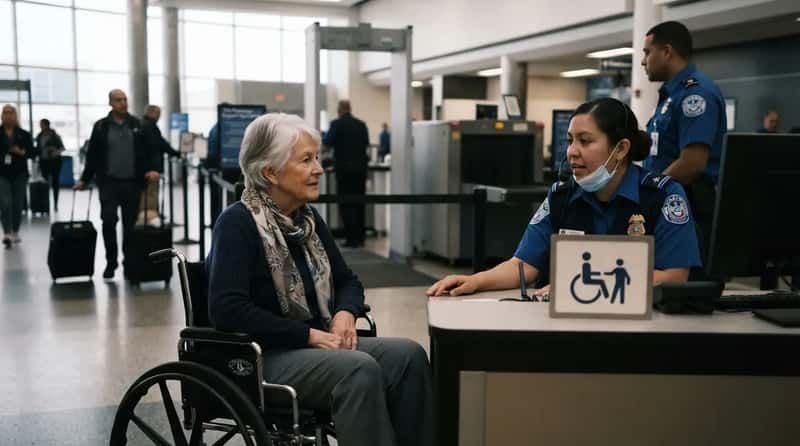
TSA Cares may be the best-kept free service in the airport world. You call 72 hours before travel at (855) 787-2227. Weekday hours are 8 a.m. to 11 p.m. ET, and weekend and holiday hours are 9 a.m. to 8 p.m. ET.6 You can also fill out an online request form.
It’s busy, too. One report says the helpline assisted 69,000 travelers with disabilities, medical conditions, and special needs in 2024. There’s one thing it won’t do. TSA Cares doesn’t cover the ride to your gate or provide wheelchair help from curb to aircraft.7 That’s the airline’s job.
Now for the person who actually meets you at security…
#3 – A Passenger Support Specialist Who Walks You Through
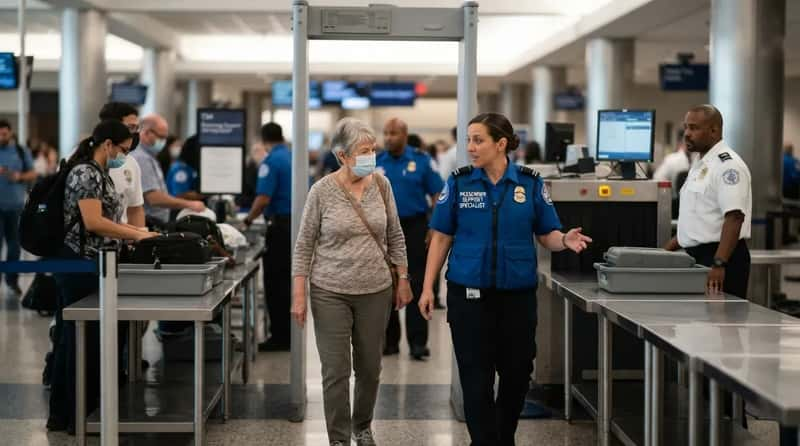
A trained TSA officer can guide you through screening. That help can come from the TSA Cares coordination. At the checkpoint, you can ask for a Passenger Support Specialist if one hasn’t been arranged.6 They know the procedures, so you don’t have to explain from scratch.
Specialists aren’t always free to help. If none is available, a Supervisory TSA Officer is the next person to ask for. Call ahead anyway. TSA’s own guidance recommends the 72-hour window, partly so the agency can coordinate with your specific airport.
Still, the most important free service of all happens before you reach security…
#2 – Curb-to-Gate Wheelchair or Guided Assistance, Free by Law
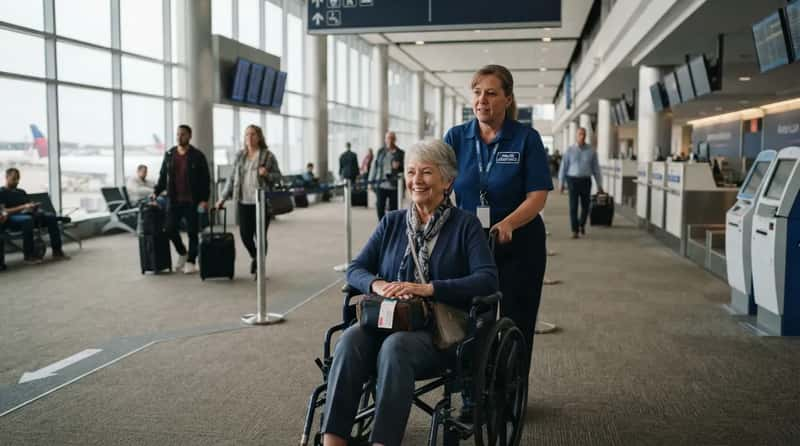
This is the big one, and it’s free. Wheelchair assistance must be free of charge regardless of ticket class. Airline assistance under DOT rules covers curb or check-in through the gate. It also covers guided help if you have vision loss.
Advance notice isn’t always legally required, but DOT still recommends contacting the airline ahead to arrange wheelchair or guided assistance.8 The rulebook shifted in 2025. The 2024 Wheelchair Rule took effect on January 16, 2025. But DOT has paused enforcement of four requirements while it considers changes, so check its website before you fly.
And the final entry is the one people remember longest…
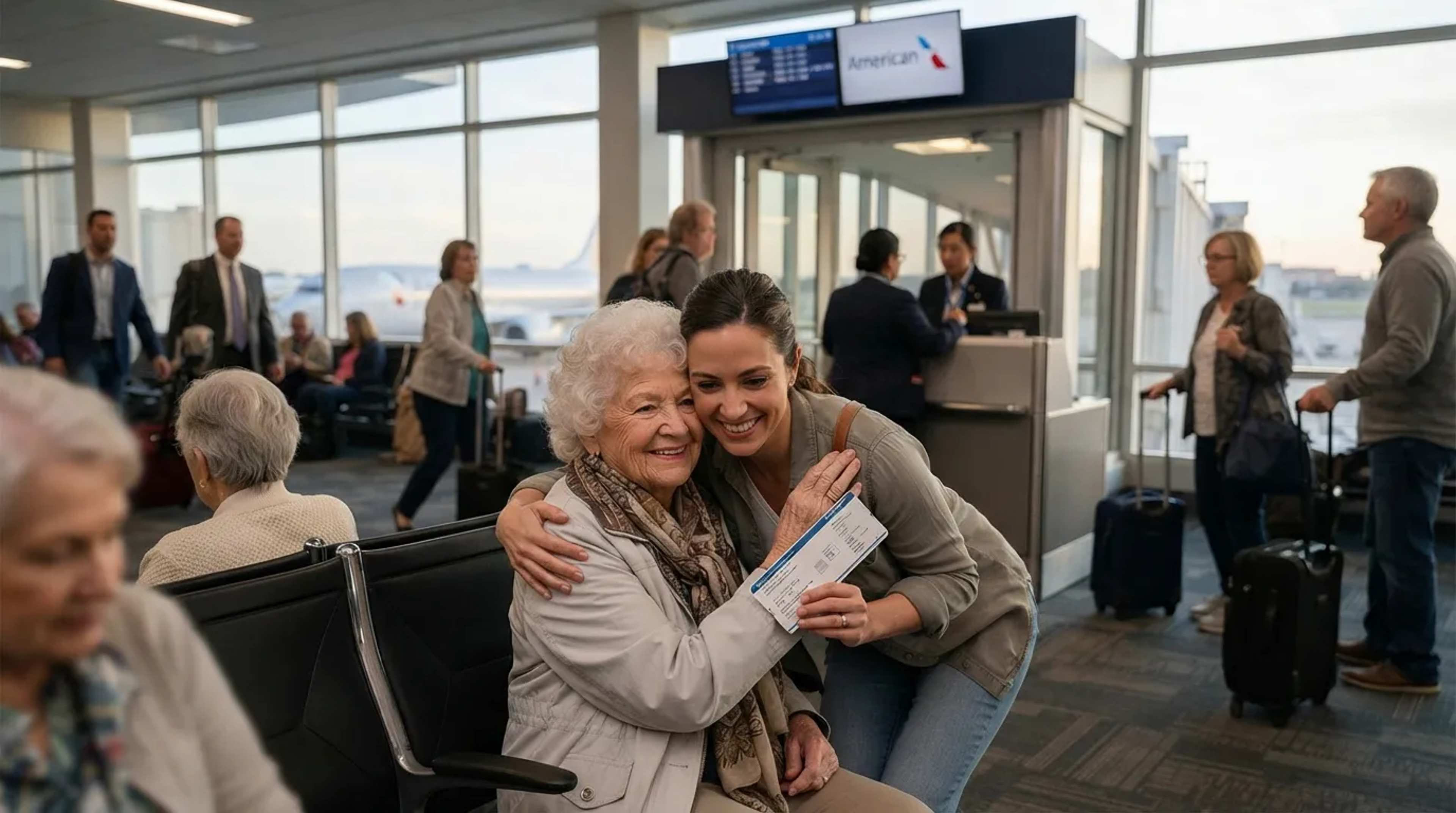
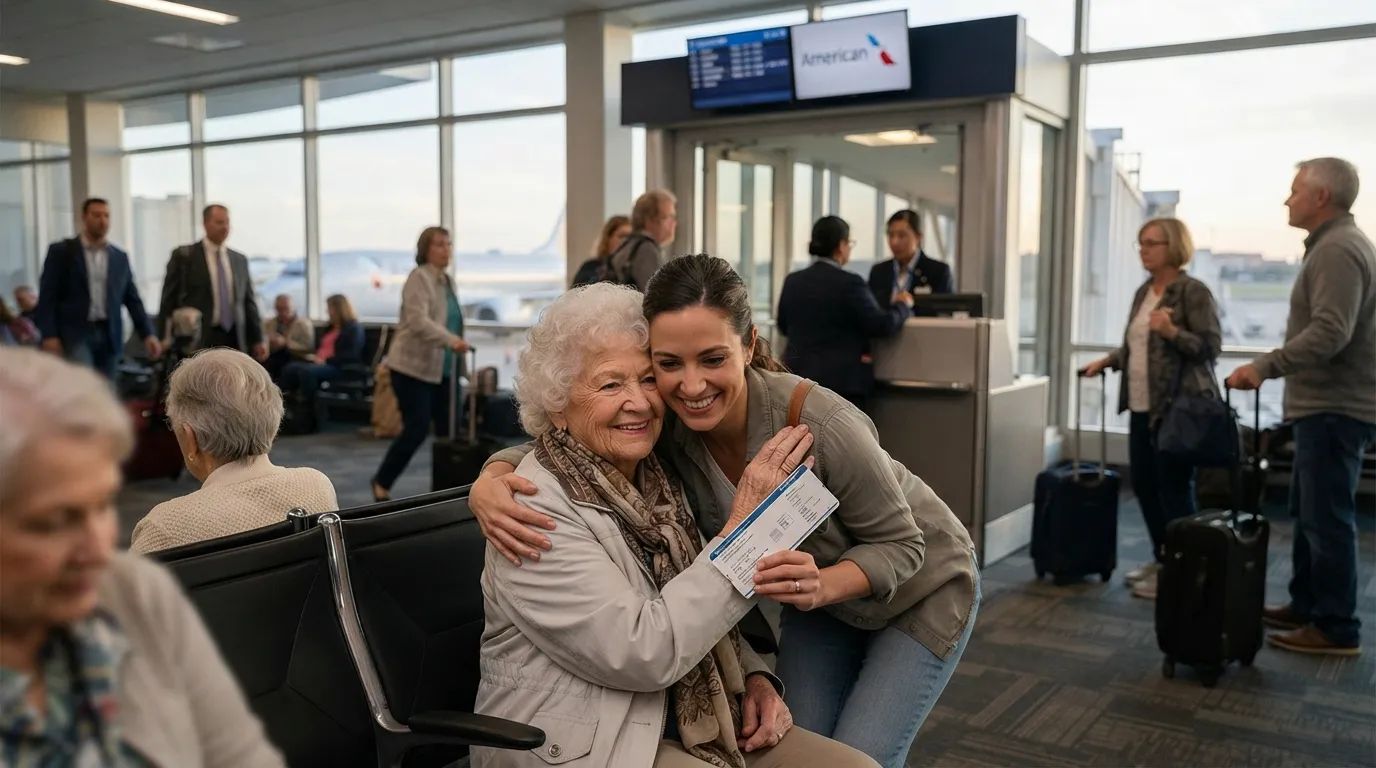
#1 – A Gate Pass So Family Can Walk You to the Plane
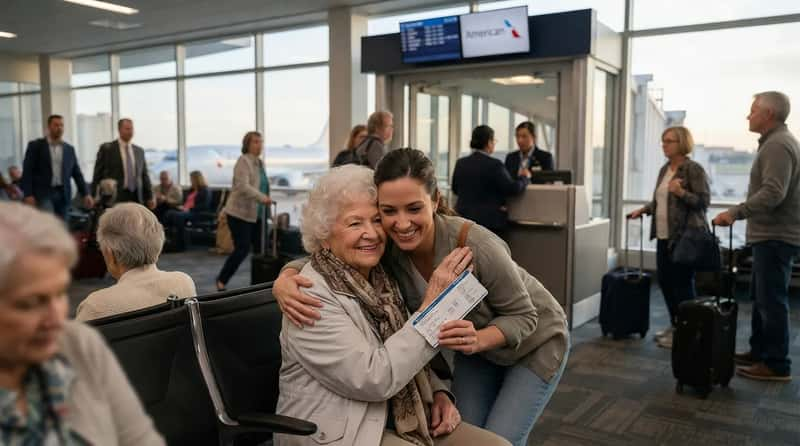
A hug at the curb is one thing. A hug at the gate is another. Airlines can issue a gate pass to a non-flying companion who needs to accompany a traveler who needs help. Policies vary by airline and airport. The pass is at the airline’s discretion, and your helper still goes through screening.
The details matter. United, for example, allows up to two people to obtain a security pass at the ticket counter. The pass holder must stay near the gate until the aircraft departs, then leave the secure area directly. If you expect someone to meet you on arrival, tell the airline accessibility line or booking agent in advance. That one call can be the difference between a lonely arrival and a familiar face at the gate.
At a Glance
- TSA Cares: call (855) 787-2227 about 72 hours before you fly.
- Onboard wheelchair or CPAP: plan on 48 hours’ notice.
- Visitor gate pass: Philadelphia’s Wingmate Pass opens one to seven days ahead.
- Airline wheelchair help: DOT recommends contacting the airline before you travel.
The biggest surprise in all of this is that none of it is based on age. Airports answer to need, planning, and a phone call made early. The 72-hour TSA Cares window, the 48-hour airline notice, and a single gate pass can change the whole feel of a travel day.
Most of this help is free, and most of it goes unclaimed. The travelers who get the smoothest trips usually aren’t luckier. They just asked first.
- Bradley Hidden Disabilities Program: https://bradleyairport.com/about/hidden-disabilities-sunflower-program/
- DOT Passengers with Disabilities: https://www.transportation.gov/airconsumer/passengers-disabilities
- 14 CFR 382.27 Advance Notice: https://www.ecfr.gov/current/title-14/chapter-II/subchapter-D/part-382/subpart-B/section-382.27
- PHL Wingmate Pass: https://www.phl.org/wingmate
- AARP TSA Shoe Policy: https://www.aarp.org/travel/travel-tips/tsa-shoe-policy/
- TSA Media Room: https://www.tsa.gov/news/press
- TSA Cares Request Page: https://www.tsa.gov/contact-center/form/cares
- DOT ABCs of Accessible Travel: https://www.transportation.gov/sites/dot.gov/files/docs/ABCs_of_Accessible_Travel-Digital_Brochure_0.pdf