
A first checked bag can run $35 to $40 each way on many airlines, and the average preferred seat costs $33. Yet seasoned flyers walk past both without opening a wallet. The same goes for the smaller extras that quietly pile up, from bottled water to a bag that arrived a day late.
These travelers aren’t exploiting loopholes. Each of the 13 fees below has a plain, legal way around it, and a few of those ways are federal rules that took effect in 2024. Stay for the last one, because it’s charged as a percentage of your bill and it’s the biggest on the list.
#13 – The Terminal Water You Never Have to Buy
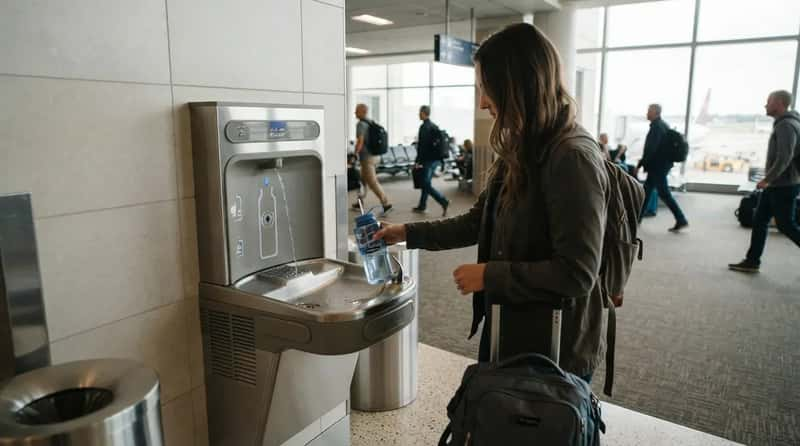
Carry a full bottle to the checkpoint and an officer will make you toss it. That’s how plenty of travelers end up buying a $5 replacement at the gate. Liquids in carry-on bags are capped at 3.4 ounces per container, so a full bottle fails the rule while an empty one sails through.1
Carry an empty bottle through security and fill it on the other side.
Many airports now have bottle-filling stations past security, and the airport’s website or terminal map usually shows where they are. A reusable bottle pays for itself fast, and it’s just as handy on the plane. Your phone has its own version of this trap: a login page that asks for a card number when a free network is sitting right there.
#12 – The Airport Wi-Fi Login That Asks for Your Credit Card
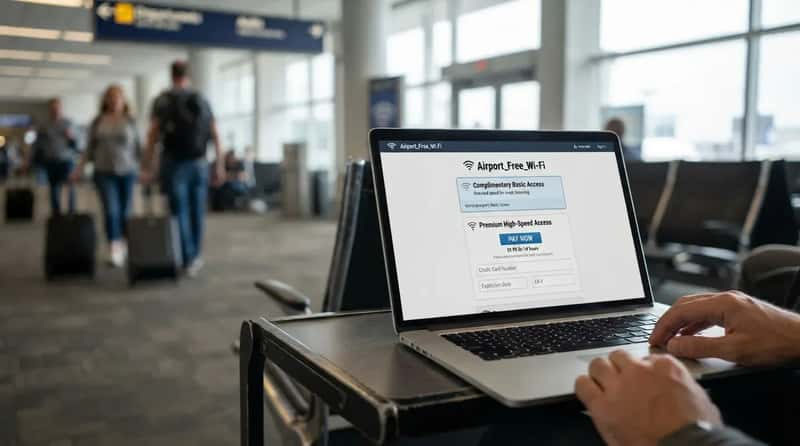
Plenty of major U.S. airports offer free Wi-Fi, so a screen demanding payment for basic access should make you stop and look around. Some airports list a faster paid tier right beside the free one, and the network names can look nearly identical.
If a network wants a card number for basic access, find the airport’s free network first. Signs near the gates or the airport’s website normally spell out the name.
A free connection is plenty for email, a boarding pass or confirming a ride. Download the boarding pass to your phone’s wallet or the airline app before you leave the house, and you won’t depend on the terminal’s signal at all. Save the paid speed for the rare day you need to send something large. Travelers who can’t stand crowded gates sometimes buy a quiet lounge pass instead, and that purchase has a cheaper door.
#11 – The Lounge Day Pass Your Card May Already Cover

Lounge day passes and booking-page add-ons put a price on a quiet chair and a snack, usually for a wait of an hour or two. Premium travel cards often include lounge access in the package. Capital One’s Venture X, for instance, is listed with Priority Pass lounge access alongside its travel credit.
Check your card’s benefits page before buying any lounge pass. If one of these cards is already in your wallet, a day pass is a duplicate purchase.
A paid pass rarely makes sense for a short wait, because you’d spend part of it walking over and settling in. It starts to earn its keep on a long layover, when the alternative is four hours in a gate seat. Run that math against any card’s annual fee too. Once the trip goes international, the money question shifts to a counter that offers to swap your dollars on the spot.
#10 – Why Airport Currency Counters Rarely Get Your Business
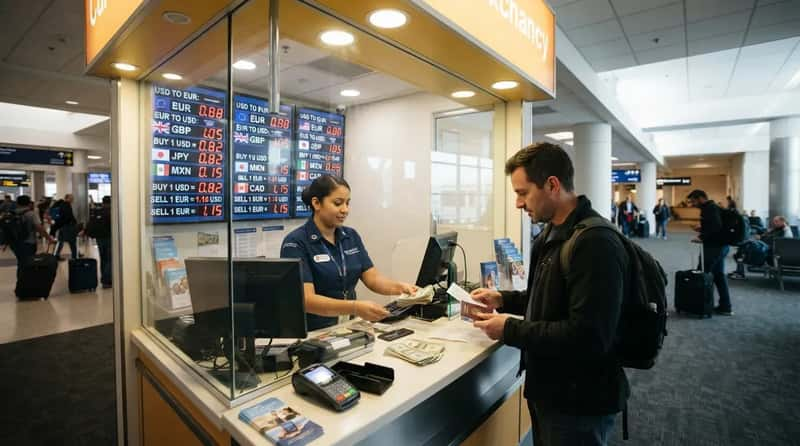
Exchange counters in terminals sell foreign cash at rates worse than you’d find elsewhere, because they charge for convenience through the rate itself. A debit card at a bank ATM after you arrive abroad, or a credit card with no foreign transaction fee, is usually the cheaper route.2
If a machine abroad offers to bill you in dollars, choose the local currency. That offer is called dynamic currency conversion, and the markup is built into the exchange rate rather than printed as a line item.2
Ordinary cards often add a foreign transaction fee of 1 to 3 percent. On a $2,000 trip, a 3 percent fee is $60 you could have kept. A two-minute call to your card issuer before you leave will tell you what your fee is, and whether a better card is worth carrying.
Quick Compare
- Terminal exchange counter: easy and immediate, but the rate carries the markup.
- Bank ATM abroad: usually the cheaper way to get local cash once you land.
- No-foreign-fee credit card: skips the 1 to 3 percent charge on everyday purchases.
- “Pay in dollars” prompt: feels familiar, but the cost hides inside the exchange rate.
#9 – The Seat Fee You Can Dodge at the 24-Hour Mark
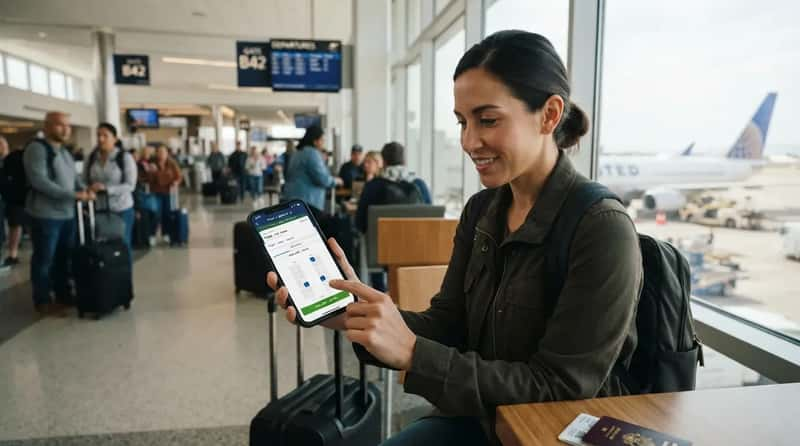
On many airlines, a preferred seat averages $33 and exit rows run $48, according to SmarterTravel’s 2025 roundup. You can often take a remaining seat for free once check-in opens, usually 24 hours before departure.
Skip the fee and check in the minute the window opens. On standard main-cabin fares, United, Delta, Alaska and JetBlue generally include free advance seat selection, though the best seats may already be gone.
Basic fares are where it bites. On many airlines, the cheapest fares assign your seat only at check-in unless you pay to choose. On a short hop, the fee isn’t worth it. On a six-hour flight where you need the aisle, pay it and move on.
Add a grandchild to the booking, though, and the question changes from which seat to whether you’ll sit together at all.
#8 – The Fee to Sit Beside Your Grandchild
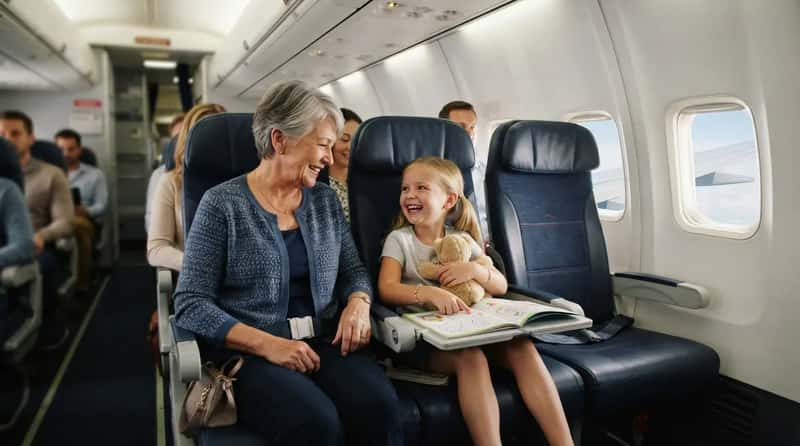
A fare that charges per seat can scatter a family across the cabin, so the worry is real. Picture a seven-year-old three rows behind you, and a stranger asked to trade. Fortunately, most airlines try to seat children next to a parent without charging extra.
Pay for the adult seats only, then check your airline’s family seating policy. Kayak advises paying only for adult seats when flying with kids, since most airlines will sit children with a parent.
Act early for the best odds. After booking, use the airline’s app or phone line to ask for seats together, and ask again at check-in. If the seat map shows your party scattered, request a fix before you pay, because that $33 average adds up quickly across three travelers. Seats are priced where you can see them. A bag you didn’t add online gets priced at the counter, and the number is steeper.
#7 – The Gate Bag Charge That Nearly Doubles
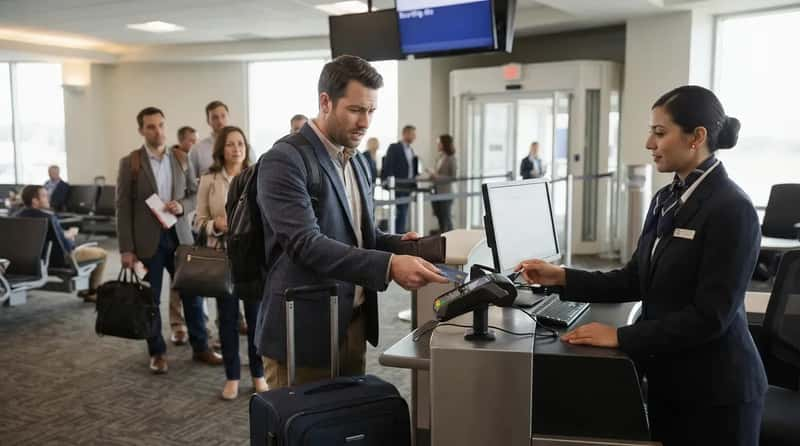
Frontier, for one, charges almost double at the gate for bags you could’ve added online. The same pattern shows up in carry-on rules, because basic fares on some airlines leave out the overhead bin. The bin you assumed was included becomes a surprise charge, paid in front of everyone in the boarding line.
Add every bag when you buy the ticket, because the gate price can be nearly double. Read the fare’s bag rules on the booking page before you pay.
Rules vary by carrier, so check yours. Southwest ended its free checked-bag policy in 2025, though carry-ons remain free. If you travel often, those differences matter more than any single trip’s fare. Even a bag paid for in advance can draw a second charge, this time at the scale.
#6 – The Overweight Bag Penalty Waiting at the Scale
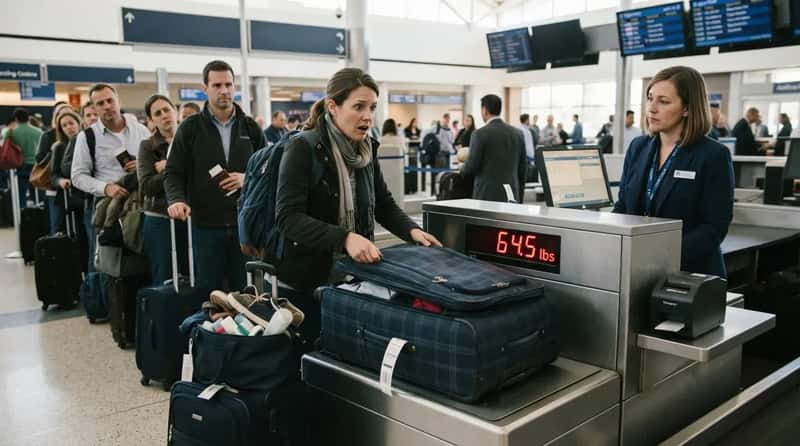
Economy checked bags are commonly limited to 50 pounds, and going over can cost $100 or more at many major carriers, on top of the charge for the bag itself. The counter scale is the first place you learn the number, and by then there’s a line behind you.
Weigh your bag at home, because going over the limit can add $100 or more. A bag you prepaid online, as in the last item, still gets weighed.
Fast Facts
- Common economy checked-bag limit: 50 pounds.
- Typical overweight charge at many major carriers: $100 or more.
- Prepaying the bag online doesn’t excuse it from the scale.
- Easy fix: shift shoes, books and toiletries into your carry-on or personal item.
A handheld luggage scale does the job. A bathroom scale works too if you weigh yourself holding the bag, then without it, and subtract. If you’re over, move the heavy items such as shoes, books and toiletries into your carry-on or personal item. Some fees come with a refund clock that starts when the airline fails to deliver, like Wi-Fi that never connected or a seat you paid for and lost.
#5 – The Wi-Fi or Seat Charge You Can Get Back
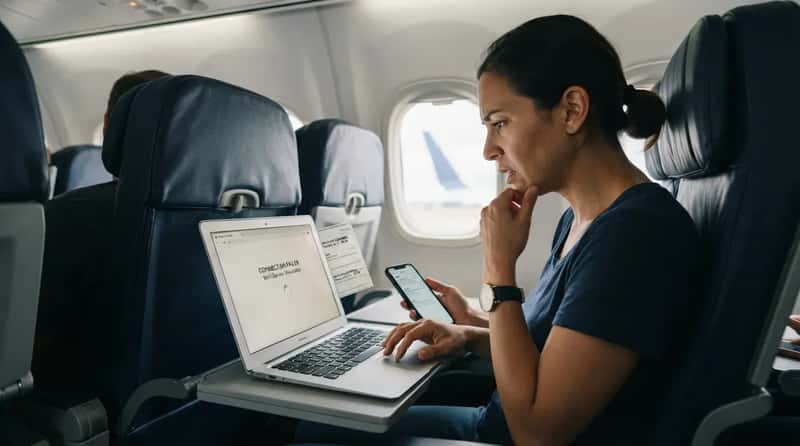
If you paid for a service the airline then didn’t provide, the Department of Transportation’s rule entitles you to a refund of that fee, with Wi-Fi, seat selection and inflight entertainment as examples.3 The rule has been in force since October 28, 2024.
Extras the airline fails to deliver are refundable in cash. Think of Wi-Fi that never connects, or an aircraft swap that undoes the seat you bought.
The refund is supposed to be automatic, with a clock of 7 business days or 20 calendar days depending on how you paid. Keep your receipt and a screenshot of the failure anyway. If you’re offered a voucher instead, state clearly that you’re owed a cash refund and decline the credit. A credit locks you into flying that airline again, and cash doesn’t.
#4 – The Global Entry Fee Your Card Can Erase
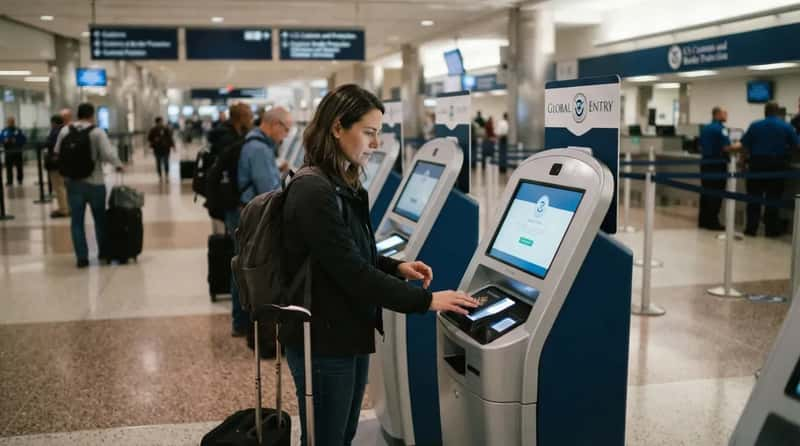
Global Entry costs $120 for five years and bundles in TSA PreCheck, which costs $78 on its own.4 5 Many travel cards reimburse the application fee, often with a credit of up to $120 every four years.
If your card credits the fee, apply for Global Entry rather than PreCheck. You get the same fast security line plus a faster customs line when you return from abroad.
Pay the application fee with the card that carries the credit, since the credit posts automatically when you do. A card that exists only for a $78 PreCheck credit won’t pay for itself, though one you already carry might. A card can also pay for a different fee that returns with every trip, and it reaches past the cardholder to the people booked alongside you.
#3 – The First Checked Bag Your Airline Card Waives
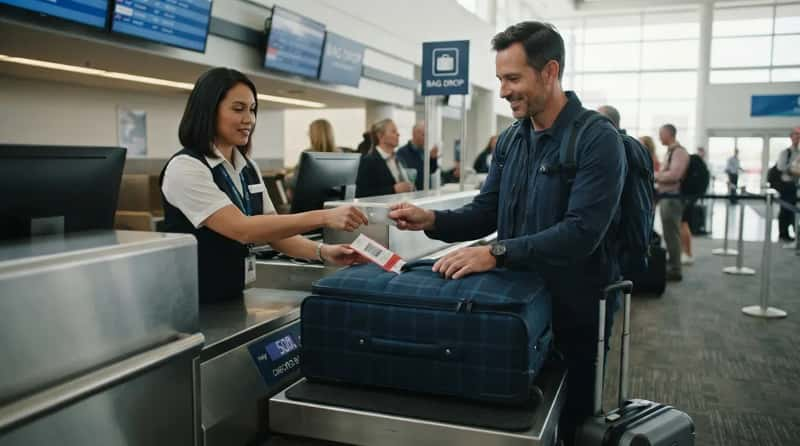
Delta’s SkyMiles Amex, the United Explorer and American’s cards waive the first bag fee for you and up to eight companions on the same reservation. That matters because a first bag can cost $35 to $40 each way, so a round trip runs $70 to $80.
Three round trips with one checked bag add up to at least $210 in avoided fees. A card with a $150 annual fee is ahead after about three trips.
The catch is loyalty. If you shop for the cheapest fare across three airlines a year, no single card gets there, and airline cards work only if you’re not paying interest. The card makes sense for one-airline households, and it’s a poor fit for fare hunters.
It covers the standard first-bag charge, so the overweight penalty at the scale still applies. It also doesn’t help when the bag itself goes missing.
#2 – The Delayed Bag Fee the Airline Has to Refund
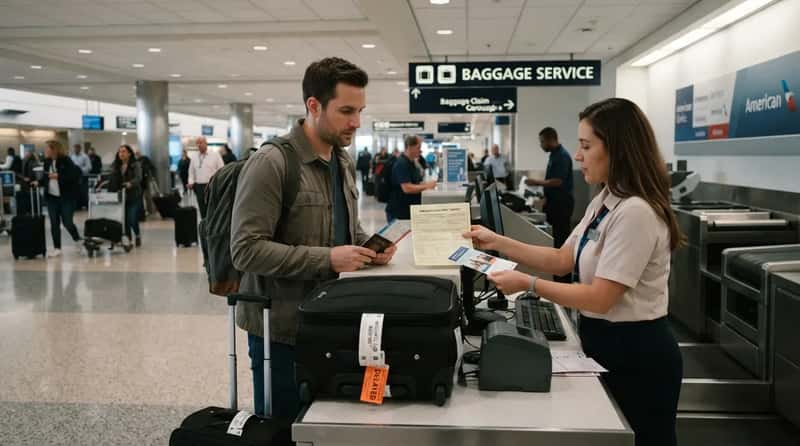
Your bag may land on a later flight, but under a rule in force since October 28, 2024, the fee you paid to check it comes back.3 A bag delayed 12 hours or more on a domestic flight qualifies, as does one delayed 15 hours or more on an international flight of 12 hours or less. Longer international flights have a 30-hour threshold.
At 12 hours late on a domestic trip, your bag fee is owed back.
The condition is paperwork. You must file a mishandled baggage report once the bag fails to arrive with you.3 After that, the refund is meant to be automatic.
At a Glance
- Domestic flights: 12 hours late or more.
- International, flights up to 12 hours: 15 hours late or more.
- Longer international flights: 30 hours late or more.
- Your part: file the mishandled baggage report before you leave the airport.
If a card waived your fee, as in the last item, you had nothing to refund, so this rule matters most to anyone who paid at the counter. The largest charge on this list isn’t at the ticket counter at all. It’s added when you pick up the keys, and it’s built from percentages.
#1 – The Airport Rental Car Fee Riding on Your Bill
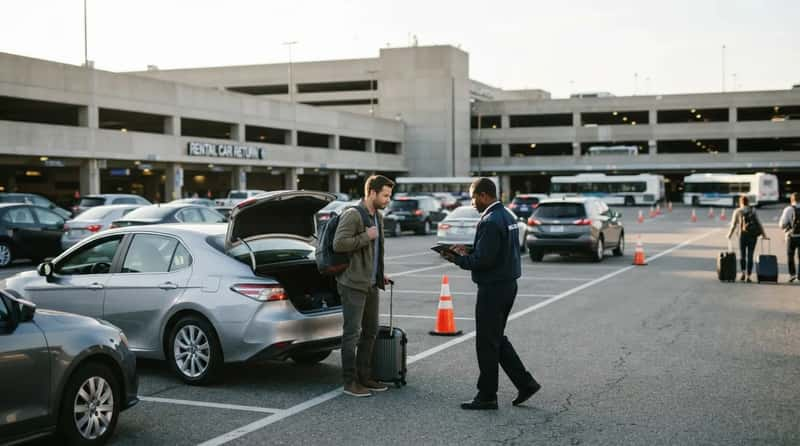
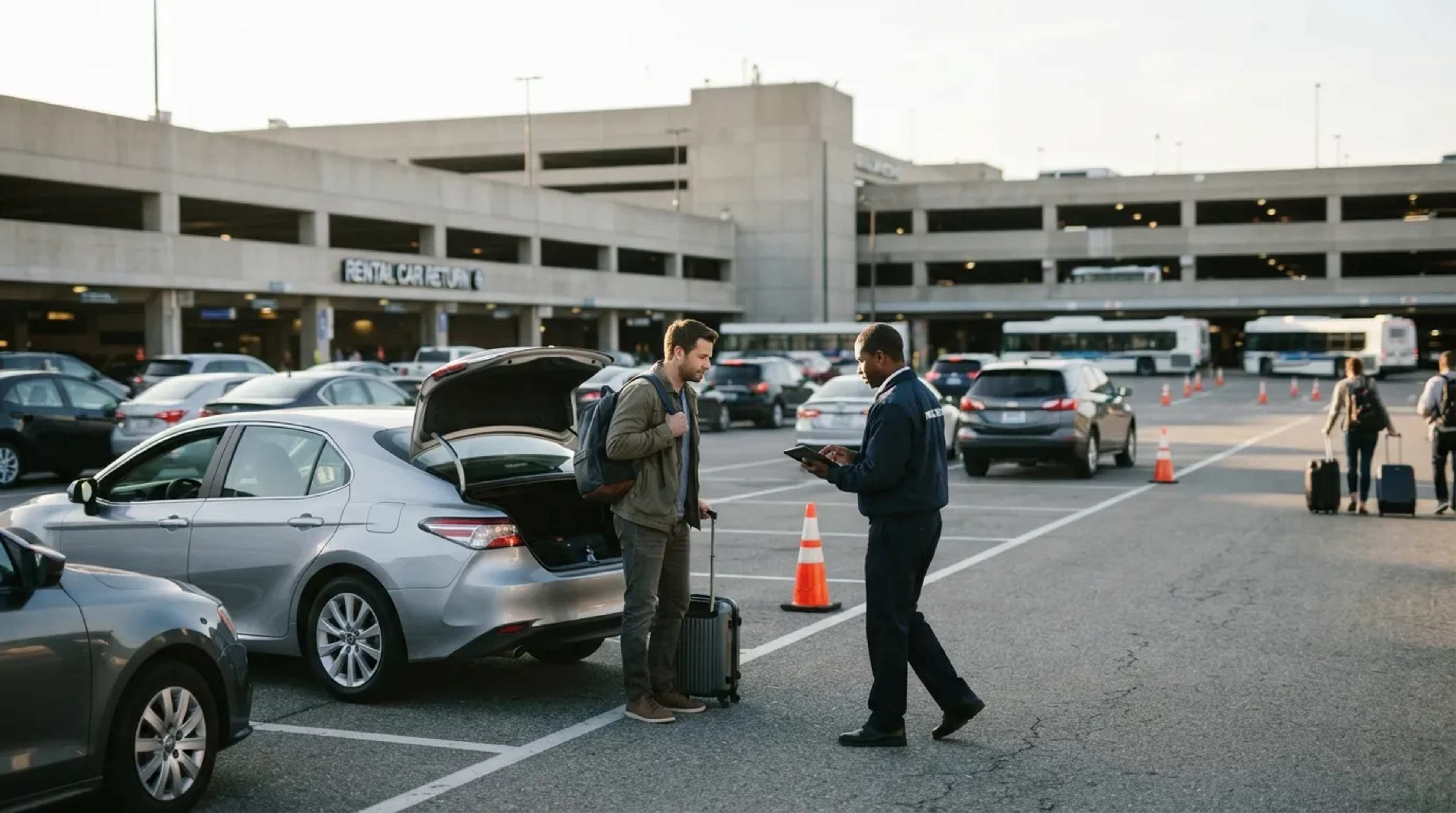
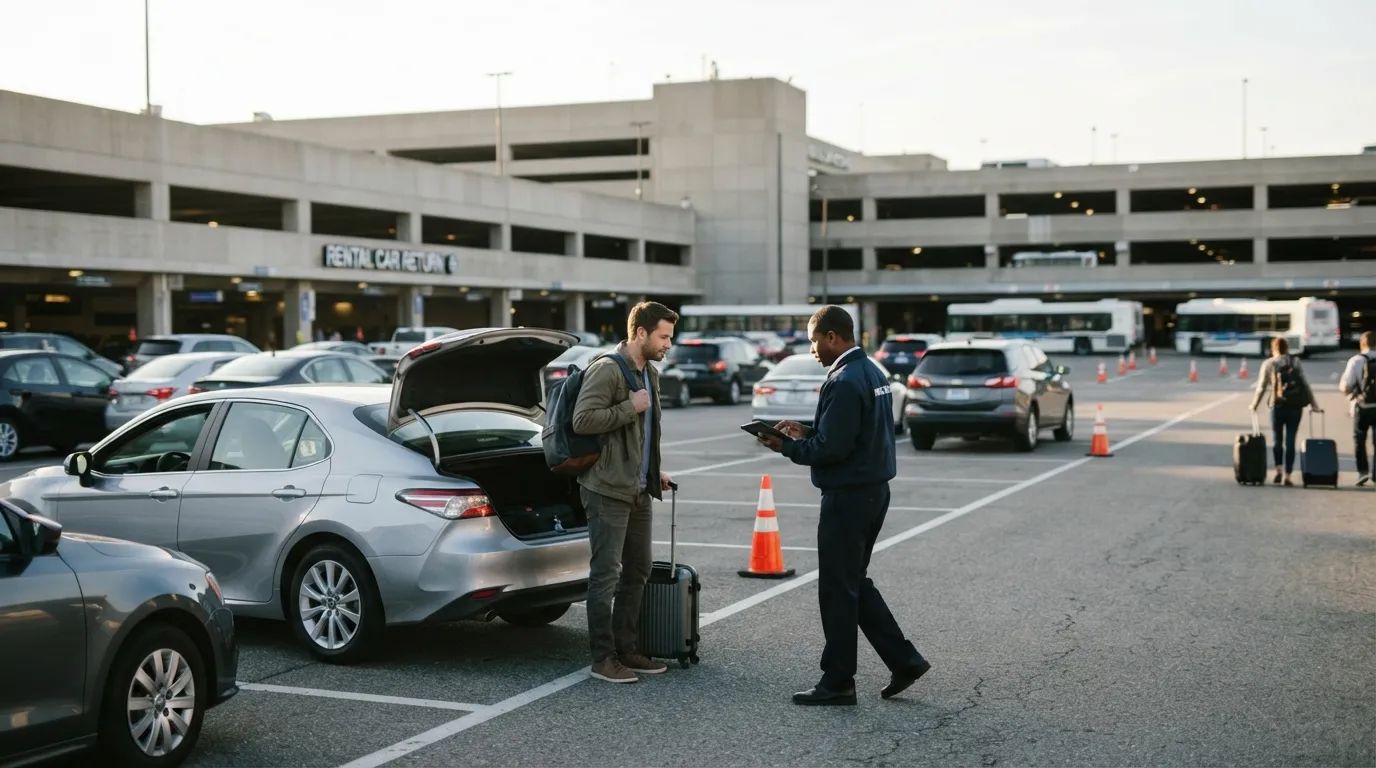
Airports charge rental companies for the right to operate on site, and companies pass that along as a concession recovery fee. Kiplinger puts airport pickup fees anywhere from a few bucks to $10 or more a day.6 The fee is often percentage-based, so higher base rates, longer rentals and pricier vehicle classes can increase it.
A flat customer facility charge usually sits on top. Renting from a facility a few miles from the airport can avoid the fee.6
Off-airport isn’t automatically cheaper, since base rates can be higher and you may need extra transport time or cost. So do the break-even math: total the all-in price at the airport, total the off-airport price, then add the round-trip rideshare. The price depends on where and when you buy, the same rule as the gate bag in #7.
If you’re staying downtown first, collecting from a city branch later avoids airport surcharges for the days the car sits parked. For a one-day rental, the shuttle likely erases the saving. For a week, the math flips.
The price on the screen is an opening bid, and the exit is usually listed on the same booking page, the same airline app or your card’s benefits page. Fees tend to land on travelers who didn’t know a refund, a waiver or a free check-in window existed.
Spend ten minutes before your next flight checking the fare rules and the benefits you already hold. Which of these 13 fees did you pay most recently, and what did it cost you?
- Afar TSA 3-1-1 Rule: https://www.afar.com/magazine/the-tsas-3-1-1-rule-for-liquids-in-carry-on-luggage
- Airport Currency Exchange Costs: https://travel.yahoo.com/advice/travel-tips/articles/never-exchange-currency-airport-booths-104100677.html
- DOT Automatic Refunds Rule: https://www.transportation.gov/briefing-room/biden-harris-administration-announces-final-rule-requiring-automatic-refunds-airline
- CBP Global Entry: https://www.cbp.gov/travel/trusted-traveler-programs/global-entry
- TSA Global Entry Fee: https://www.tsa.gov/travel/frequently-asked-questions/how-can-i-switch-tsa-precheck-global-entry
- Kiplinger Rental Car Fees: https://www.kiplinger.com/personal-finance/spending/rental-car-fees-to-avoid