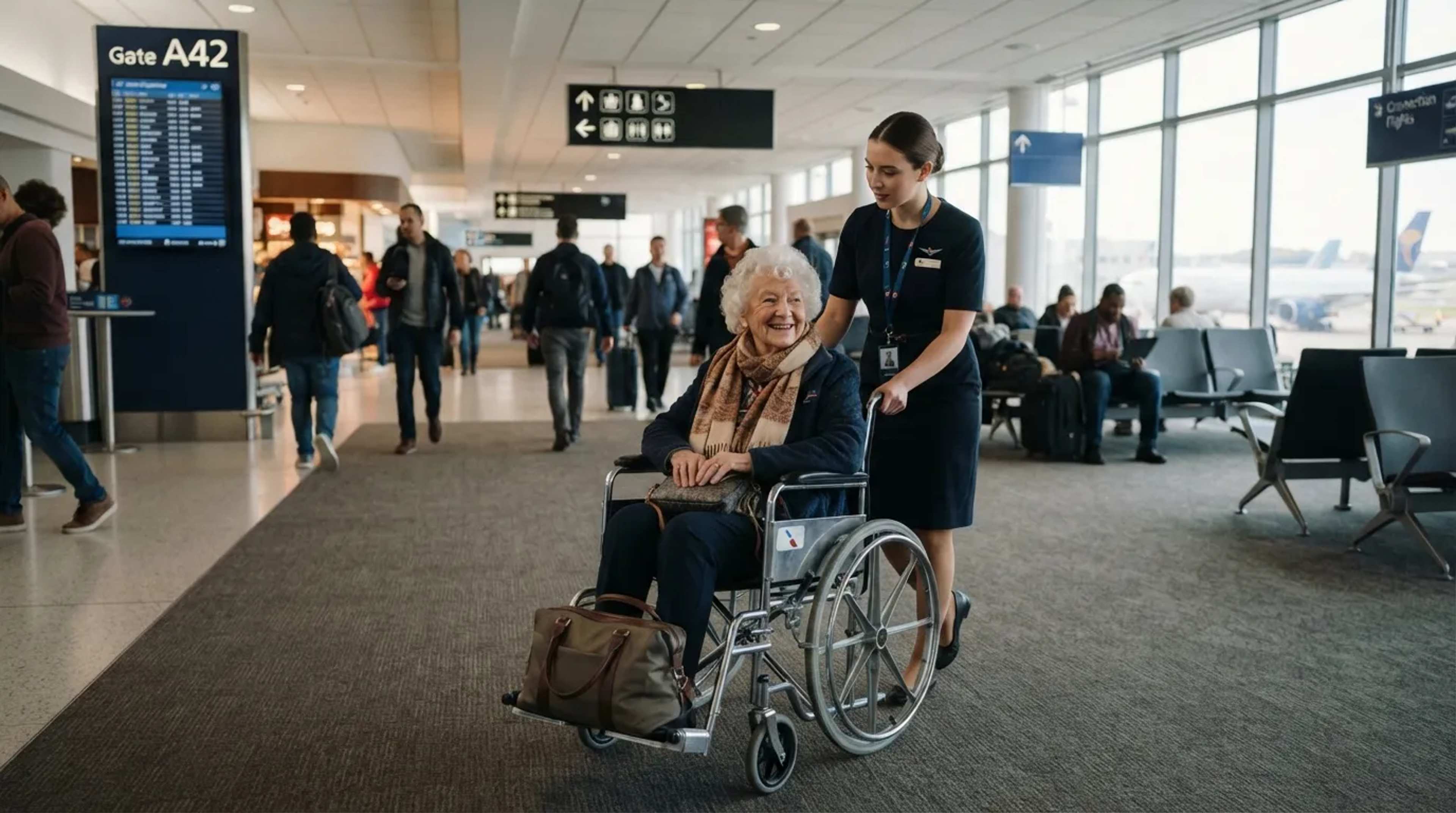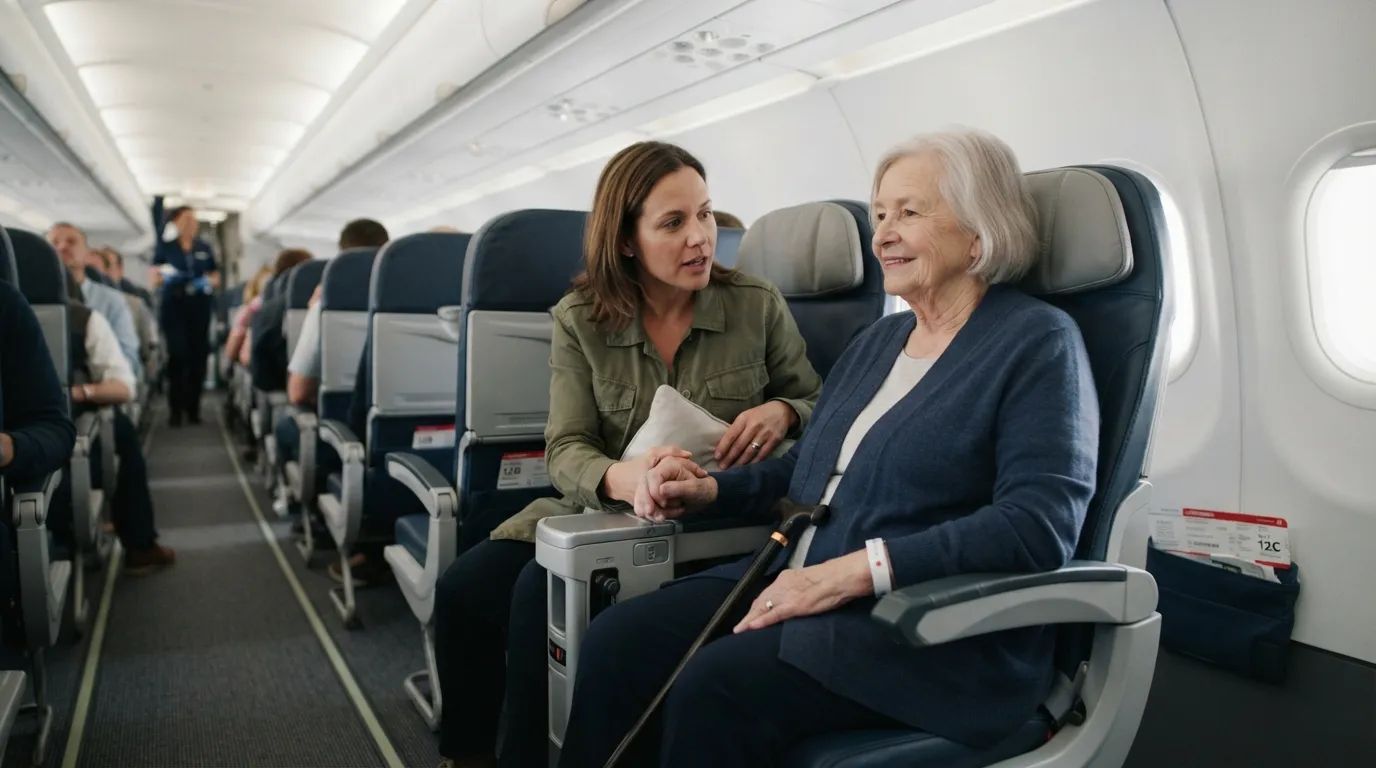
Seat selection fees now commonly run from $15 to well over $100 on a single flight, and airlines are counting on you to treat every one of them as non-negotiable.1 Yet a surprising number of them melt away when a traveller over 60 steps up to the counter and asks the right question.
Here’s the twist: age alone isn’t the magic word, but a few well-chosen sentences are. The last item on this list is grounded in federal law that most travellers have never heard of.
#15 – The Basic Fare Middle Seat That Disappears at Check-In
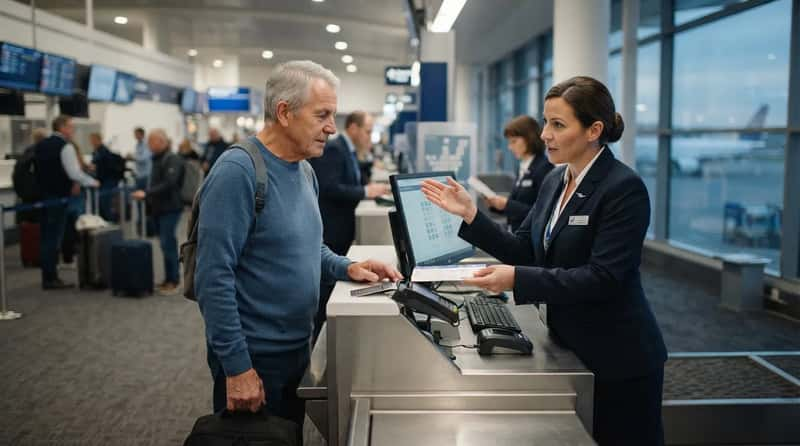
The cheapest tickets from most major carriers come with no seat assignment at all. Instead of paying to choose, you’re handed a seat once check-in opens, typically 24 hours before departure.2
Airlines frame that as a gamble, since you might land in the middle. But for a traveller who isn’t fussy about where they sit, it’s a free exit from the fee.
Check in the minute the window opens, because the earlier you go, the more seats are still unclaimed.
The catch is that you’re choosing from leftovers. If a specific seat matters to you, the next item is about a flight where the leftovers are plentiful.
#14 – The Preferred Seat Fee on a Flight That’s Half Empty

A flight that’s far from full is a very different negotiation than a packed one. If the seat map shows a scattered cabin and you politely ask for an aisle two rows up, there’s little reason for an agent to push the fee.
Ask at the counter, not in the chaos of the gate. Agents have more time and more room to help before boarding gets busy.
The key phrase is “I’d prefer an aisle if anything is available,” not “can I have a free upgrade?”
That works when the cabin is thin. When the flight is full, you need something stronger than good timing, and the next item delivers it.
#13 – The Aisle Seat Fee When Your Hip Makes the Middle Seat Painful
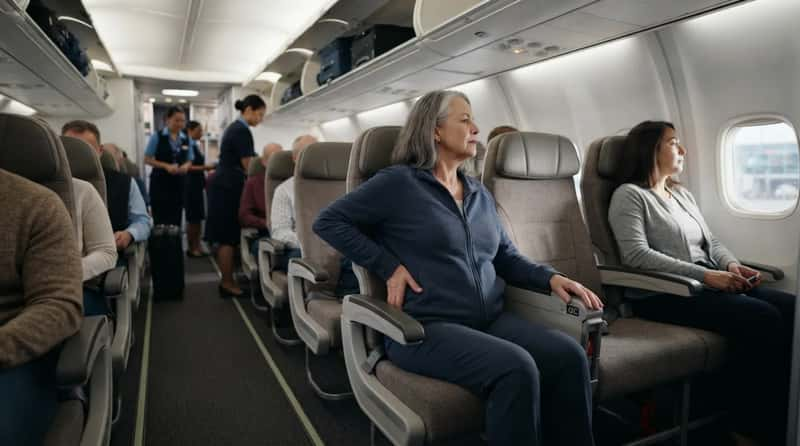
Airlines routinely charge $30 to $50 for the exact seats older travellers need most: an aisle for easier access, a bulkhead for stretching a bad knee. Those fees feel especially galling when the need isn’t about comfort but function.
The Department of Transportation confirms that seating accommodations required under the Air Carrier Access Act, including movable aisle armrests, bulkhead seats, and other seats, must be provided free of charge to qualified passengers with disabilities.3
Age alone is not the trigger here. A stated, specific need is.
The obligation covers a seat that meets the need, so don’t expect a free extra-legroom upgrade, which airlines sell separately. Name the need plainly, like an aisle for a hip or a seat near the front for a knee, instead of asking for a “senior seat.”
The aisle is the most commonly requested accommodation. The bulkhead, with its extra legroom, has its own specific rule worth knowing before you reach the counter.
#12 – The Bulkhead Seat Fee When You Have a Fused or Immobilized Leg
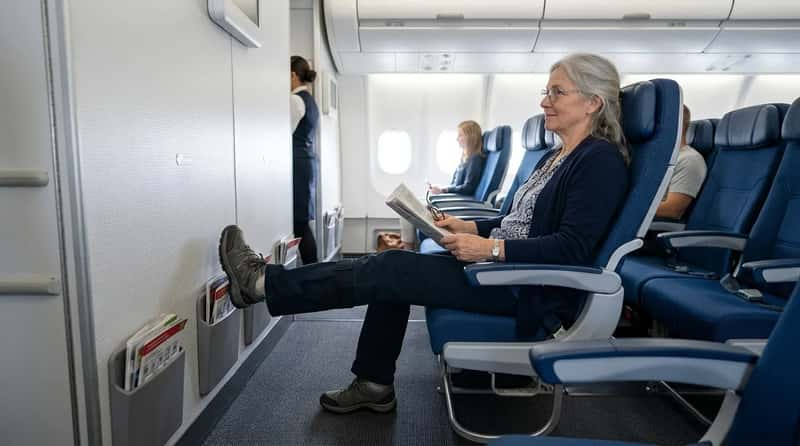
The bulkhead row is the one place in economy where a passenger with a fused leg can extend it fully. Airlines sell it as a premium, but federal regulation says otherwise under specific conditions.
For a passenger with a fused or immobilized leg, the carrier must provide a bulkhead seat or another seat with greater legroom, on the side of the aisle that better accommodates the disability. If the only suitable bulkhead seat is normally sold with a fee, the airline is required to assign it free of charge.4 5
Before you pay that bulkhead fee online, call the airline and state the medical reason. The fee should not apply.
That covers your own seat. What about the person traveling with you?
#11 – The Companion Seat Fee When You Travel With a Helper
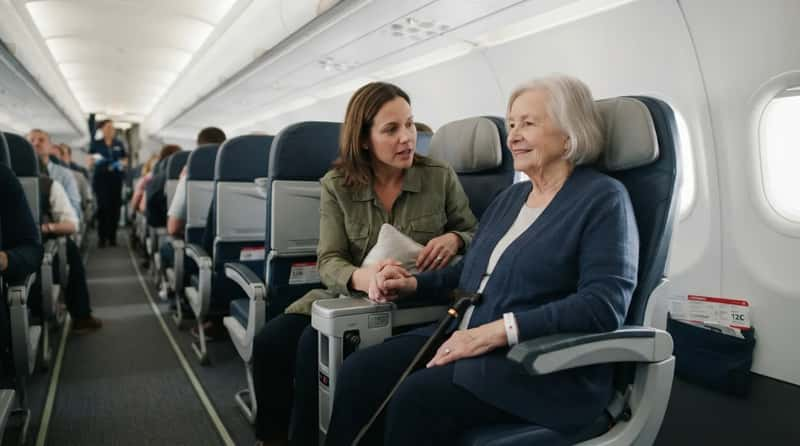
If someone travels with you to genuinely assist you, such as an attendant or a family member who helps you through the airport, you may be able to sit them beside you without paying the usual seat-selection premium. The rule has a ceiling, though.6
The accommodation covers the passenger with the disability and one assisting companion. A group of four will not get four free adjacent seats just because one traveller is 70.
Ask the agent to note in your reservation that the companion seat is a disability-related accommodation. That note travels with your booking.
Worth Knowing
- The accommodation covers one assisting companion, not the whole travelling party.
- It fits a real helper, such as an attendant or a family member who assists you.
- Asking for a reservation note keeps the request on file for later legs.
- Raise it before boarding gets busy, when agents have the most room to help.
#10 – The Extra-Legroom Row Fee on a Flight Where You Qualify
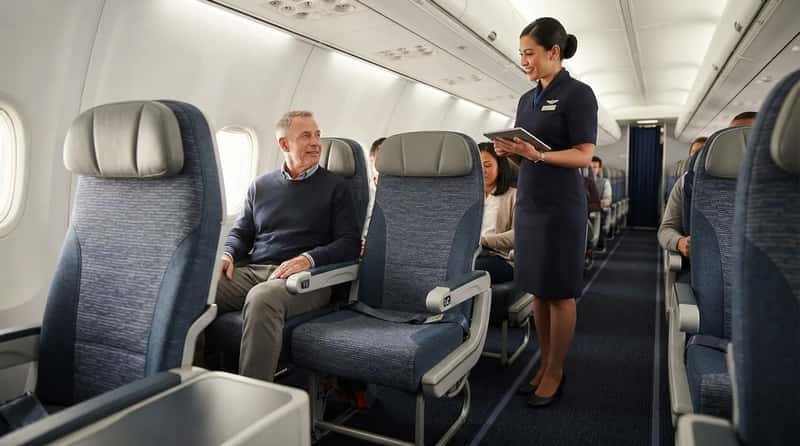
This one is different from the bulkhead item because the qualifying condition is different. Under the Air Carrier Access Act, qualified passengers who self-identify as needing a particular seat to accommodate a disability-related need are entitled to the accommodation.4
An extra-legroom row in the main cabin, not an exit row, can fall under that protection when the need is specific. Wanting extra legroom for comfort is a perk request, so the usual fee applies. Simply turning 65 is not the trigger.
The exit row is a different matter entirely, and it trips up travellers who assume it works the same way.
#9 – The Exit Row Fee You Should Never Try to Waive
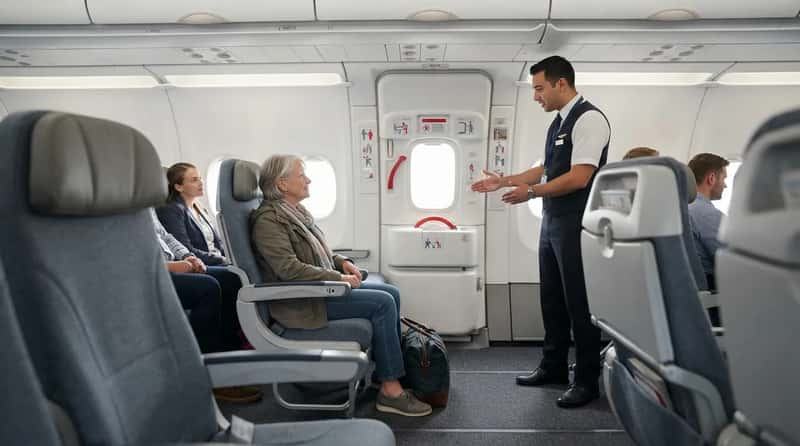
This one runs against the trend of the list. Exit rows are off-limits to anyone who cannot physically operate the emergency exit, which includes passengers with certain mobility limitations.
Framing an exit row request as a disability accommodation won’t work, and it can undermine the conversation about seats you do qualify for. The exit row is a no; the aisle, the bulkhead, or a standard extra-legroom row is a legitimate ask.
Quick Compare
- Aisle: A fair ask when you can name a specific need, like a hip that makes sliding across hard.
- Bulkhead: Can be free when a condition such as a fused or immobilized leg requires it.
- Standard extra-legroom row: Can qualify when the need is specific; comfort alone means the usual fee.
- Exit row: Not a seat to request as an accommodation, however you phrase it.
Don’t confuse an exit row with the extra-legroom rows nearby. Those are the seats worth asking about.
#8 – The Seat Fee That Vanishes When You Step Up From Basic
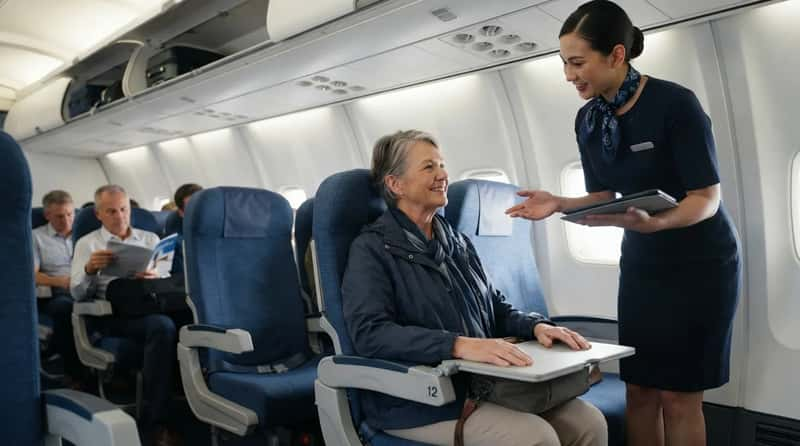
Some airlines have offered senior fares for travellers 65 and older on select routes, but those programs change, and many carriers don’t publish what the discount is worth. What many travellers miss is that a standard fare often includes seat selection, while Basic Economy charges for it.2
A regular fare can look slightly pricier up front, yet it may come with free seat selection, standard boarding, and easier changes. Ask about senior pricing, then run the numbers both ways before assuming the cheapest advertised price is actually cheaper.
If you fly often, the next item shows how a status tier you may already hold can erase seat fees before you ever reach the counter.
#7 – The Seat Fee That Elite Status Erases Without You Asking

Many airlines extend free seat selection or access to preferred seats even at entry-level elite tiers. Plenty of travellers over 60 who fly a few times a year hold low-level status without realizing it touches seat fees.
Log into your frequent-flyer account and check your tier before the next booking. On carriers like JetBlue, the Mosaic program includes perks such as priority boarding, free checked bags, and preferred seating.
Check your status tier before every booking. Even low-level status can erase the seat fee line entirely.
#6 – The Seat Fee Charged on a Route Where a Competitor Charges Nothing
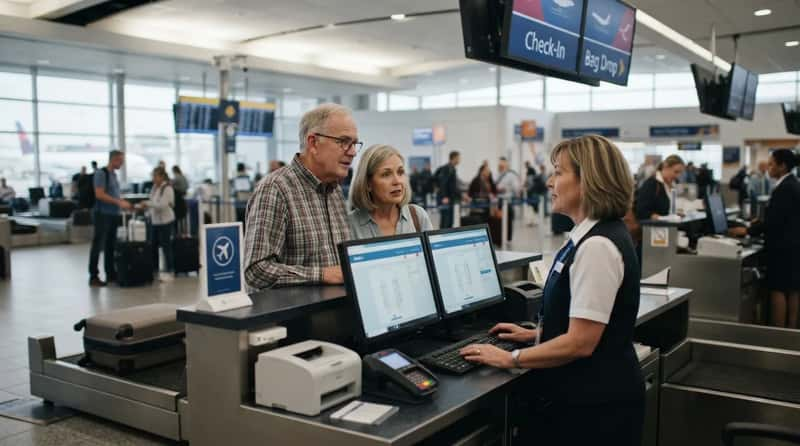
On standard fares, some major carriers let you choose seats for free at booking, so you can sit together. On the same route, a competing carrier may charge $30 to $50 for identical seats.
That makes this verdict worth stating plainly. If a seat fee is what sends you to the counter to negotiate, check whether another airline on the same route charges nothing at all.
Knowing the landscape is useful before the trip. At the airport, the next item is about the conversation most travellers never have.
#5 – The Fee That Drops When You Frame the Request as a Real Need

Travellers who ask politely and specifically during off-peak check-in often end up in seats that cost other passengers real money. The framing matters.
“I’d like a better seat” is a consumer request. “I have a hip issue, and a middle seat for three hours is painful” is a need an agent can respond to, as long as it’s true.
Ask once, ask politely, and ask before boarding gets busy. Agents have the most time and discretion when the counter isn’t backed up.
Arrive 15 minutes earlier than you normally would. That 15 minutes is worth more than any app or hack.
Timing and tone carry most of the weight. The next item is about a situation where the agent has no discretion at all.
#4 – The Seat Fee That Cannot Be Charged When a Service Animal Is Present
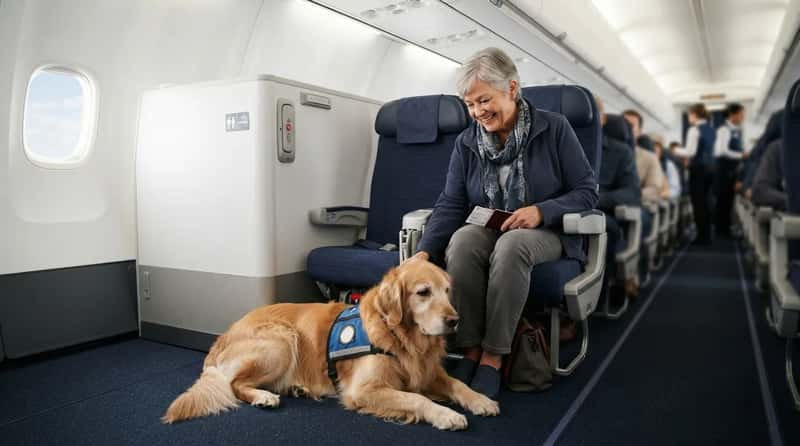
For a passenger with a disability traveling with a service animal, the carrier must provide either a bulkhead seat or a seat other than a bulkhead, depending on the passenger’s request. That’s not agent discretion; it comes from 14 CFR Part 382, the rule that implements the Air Carrier Access Act.5
The seat that best accommodates both the passenger and the animal must be provided, without a seat selection fee. If you travel with a service animal and have been paying for seats, you may have been paying fees that shouldn’t have been charged.
You can raise it at booking, by phone, or at check-in. Next up is the moment when an agent can go further than the system ever would on its own.
#3 – The Seat Fee Waived When Your Originally Booked Seat Is Moved
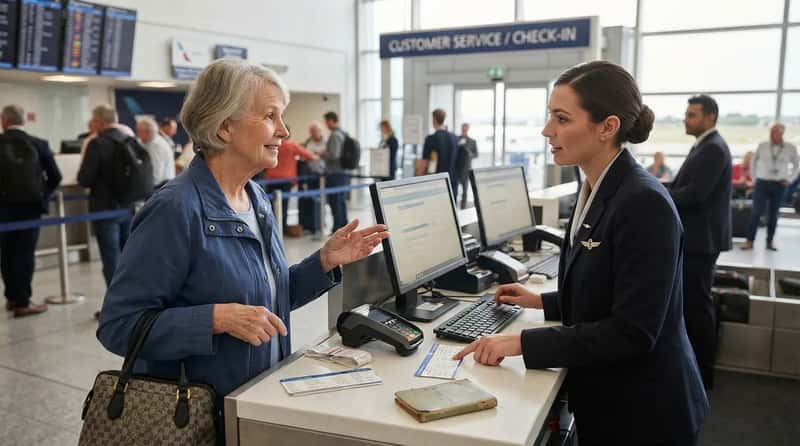
Airlines regularly reassign seats when equipment changes, flights are consolidated, or operations get shuffled. You’re entitled to ask why your seat changed, and a polite “What changed?” gets a far better answer than demanding the old seat back.
When the airline moves you, the agent can often reassign you to a comparable seat at no charge, because the disruption was the airline’s doing, not yours. Most travellers accept the new seat and walk away.
A single question costs nothing: “My seat was changed. Can you find me something comparable?”
Get the new seat assignment confirmed on your boarding pass before you leave the counter.
Fast Facts
- Common triggers include equipment changes, flight consolidations, and operational shuffles.
- The move was the airline’s decision, which is why a comparable seat is a reasonable ask.
- Start with “What changed?” rather than demanding the old seat back.
- Confirm the final assignment on your boarding pass before you step away.
#2 – The Seat Fee on the Second Leg of a Connecting Itinerary

When an agent processes your boarding pass for a connecting trip, they can often see and adjust seat assignments on every leg at once. That means one conversation at the counter can cover the whole itinerary.
A paid seat fee on the second leg frequently goes unnoticed because the booking flow handles each flight separately. Ask about every flight before the agent finishes the transaction.
The question: “Can you check my seat assignments on all legs while we’re here?”
That’s the second-biggest lever on this list. The biggest one is next, and it’s backed by a federal rule the airline cannot override.
#1 – The Seat Fee That Federal Law Says Cannot Be Charged
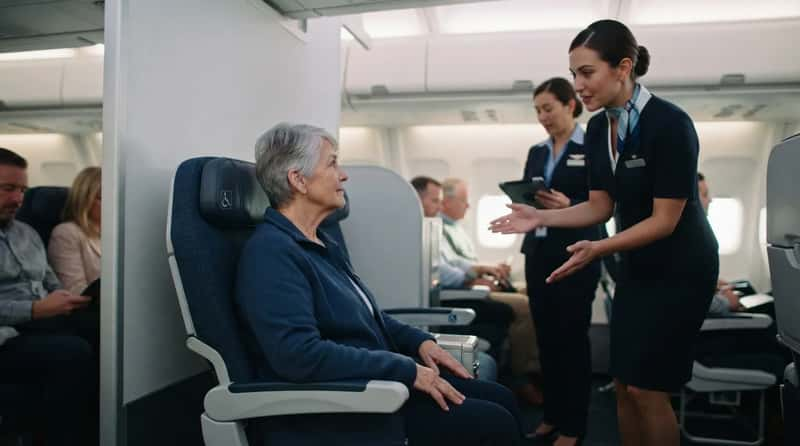
This is the one worth staying for. Under the Air Carrier Access Act, seating accommodations required for qualified passengers with disabilities, including movable aisle armrests, bulkhead seats, and other seats, must be provided free of charge.3
The protection sits in the Code of Federal Regulations (14 CFR Part 382). It applies to every U.S. carrier and to foreign carriers flying into or out of the United States.
The rule is built around self-identification. Passengers who say they need a certain seat to accommodate a disability-related need qualify for the accommodation.4 5
At a Glance
- The law: Air Carrier Access Act, signed in 1986.
- The rule: 14 CFR Part 382.
- Who must follow it: U.S. carriers, plus foreign carriers flying into or out of the United States.
- The trigger: A self-identified, disability-related need, not age alone.
- Not covered: Exit rows, and extra legroom wanted purely for comfort.
The phrase that opens the door: “I have a disability-related need for [an aisle seat / a bulkhead seat], and I’m requesting it under the Air Carrier Access Act.”
Name the need plainly, like an aisle for a hip or a seat near the front for a knee, rather than asking for a “senior seat.” If the agent isn’t sure, you can file a complaint through the Department of Transportation’s air travel consumer complaint page.
This isn’t a trick or a workaround. It’s the law, and it’s the clearest proof that some seat fees were never meant for everyone.
Every seat fee you’ve ever paid was optional for someone. The traveller in the row ahead of you may have held the right status, asked the right question, or known a rule the booking flow was never going to volunteer.
Seat fees are priced for passengers who don’t ask, and the check-in counter is the last place on the journey where the full range of options is still open. What’s the seat situation you’ve run into most on recent flights: a fee that felt unavoidable, or a request that actually worked?
- Seat Selection Fees Guide: https://travel.yahoo.com/flights/articles/seat-selection-fees-5-us-103336118.html
- Seat Selection Fees 2026: https://withautopilot.com/blog/seat-selection-fees
- DOT Seating Accommodation Guide: https://www.transportation.gov/taxonomy/term/13266?page=25
- DOT Seating Accommodations: https://www.transportation.gov/individuals/aviation-consumer-protection/seating-accommodations
- eCFR 14 CFR Part 382: https://www.ecfr.gov/current/title-14/chapter-II/subchapter-D/part-382
- eCFR 14 CFR 382.81: https://www.ecfr.gov/current/title-14/chapter-II/subchapter-D/part-382/subpart-F/section-382.81