A first checked bag now costs about $35 to $45 each way on most major U.S. carriers. That is before seat fees, phone-booking fees, and priority boarding start stacking up. The title is real, with one catch: most of these fees don’t vanish because of your birthday. They vanish because of federal rules the counter staff know and nobody tells you about.
Some of these charges are waived by law, some are refunded by law, and exactly one is tied to age itself. Keep reading, because the item that makes every other waiver stick is waiting near the end.
#15 – The Phone Booking Fee When the Website Won’t Cooperate

Booking by phone can add a surcharge of $25 or more per ticket, depending on the carrier. United’s fee is listed at $25 per ticket, with exemptions for Premier elite members and for website errors.
Here is the twist: if a disability or an inaccessible website kept you from booking online, the airline must waive that fee. Tell the agent exactly what went wrong and ask for the charge to be removed before you hang up.
If the waiver wasn’t applied when you booked, mention it at check-in too. An agent can flag it after the fact.
#14 – The Seat-Selection Fee Near the Restroom or Bulkhead
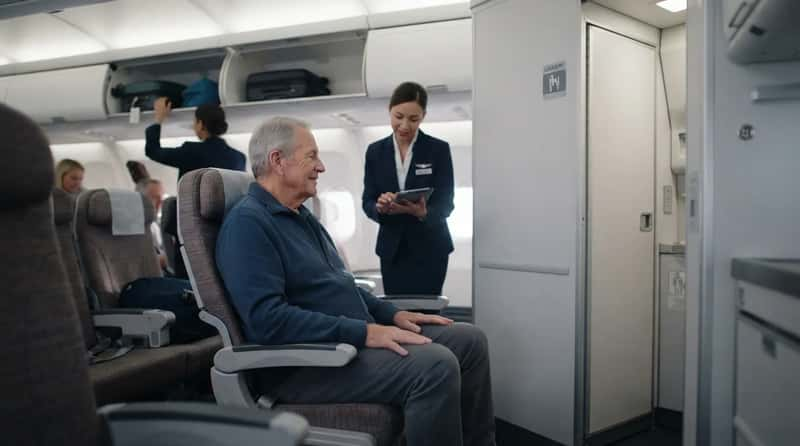
Seat-selection fees run from a few dollars to well over $50 for preferred spots. Agents rarely mention alternatives unless you ask.
Some carriers will waive or reduce the fee at an agent’s discretion, especially for seats near restrooms or in bulkhead rows. The wording matters: “I need a seat near the restroom” or “I need extra legroom for mobility” lands better than “senior seat,” because the agent is looking for a comfort or mobility reason, not just an age.
This one isn’t guaranteed. It costs nothing to ask, though, and the worst answer is no.
#13 – The Senior Fare American Doesn’t Advertise
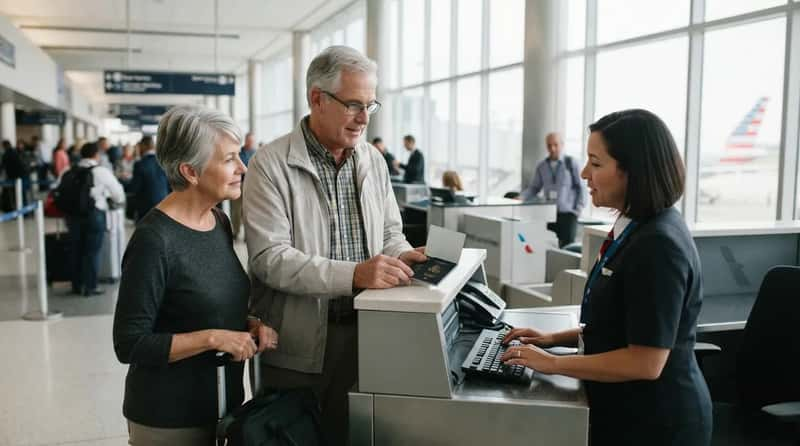
American’s booking engine can offer a “Senior (65+)” passenger type on some routes, but the airline doesn’t promote it on its site. If you use it, bring government ID showing your age at check-in.
The fare applies only to the senior traveler, not everyone on the reservation. Availability varies by route and changes over time, so treat it as something to check rather than count on.
If you already paid the standard fare, ask an agent whether the difference can be adjusted. If not, save the tip for your next booking.
#12 – United’s Senior Fare and the Basic Economy Trap
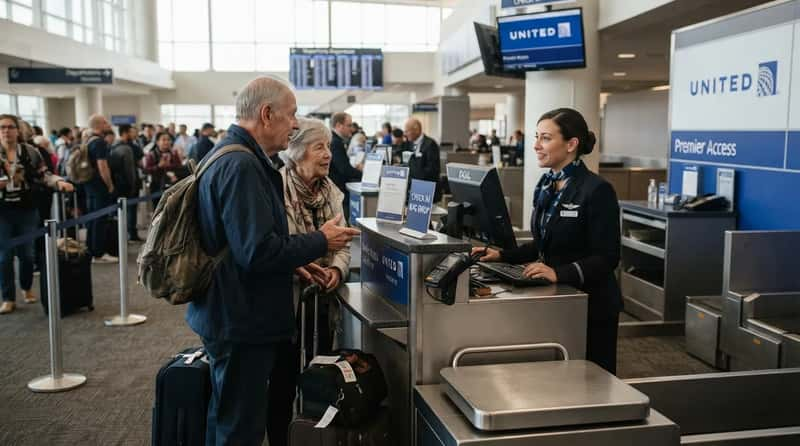
United has offered a senior discount on select routes for passengers 65 and older, but it comes with a condition that catches a lot of travelers. Basic Economy fares are excluded.
If you bought the cheapest ticket, no amount of asking at the counter will change that. On other fare classes, you can select “Senior” in the passenger type field or ask a phone agent whether your route qualifies.
The senior fare and the seat-selection waiver are separate items. Getting one doesn’t automatically get you the other.
Quick Compare
- American: “Senior (65+)” passenger type on some routes, with ID at check-in.
- United: 65+ discount on select routes, but Basic Economy is excluded.
- Air France: Senior Pass for 65+, €49 a year, up to 30 percent off within Europe.1
#11 – The Air France Senior Pass That Drops the Ticket Price
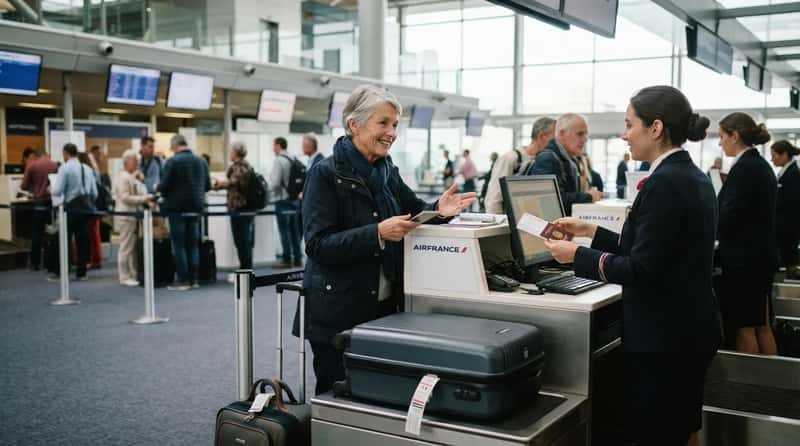
Air France’s Senior Pass is aimed at travelers 65 and older. It costs €49 a year and advertises up to 30 percent off, but only within Europe.1
If you are connecting through Paris or hopping between European cities, the savings add up quickly. The pass also lists flexible tickets and free checked baggage, so confirm current terms before you buy.1
If you hold the pass and the agent hasn’t applied the baggage benefit, say so at check-in. It is one of the cleaner published senior programs among major carriers.
#10 – The Delayed Baggage Fee the Airline Owes You Back
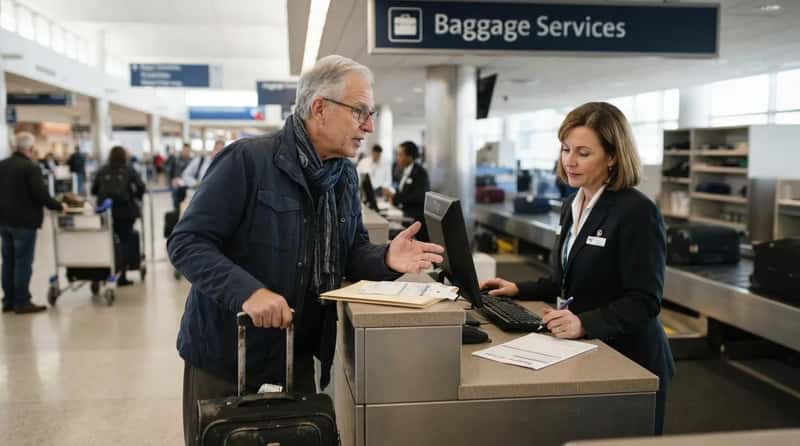
This one isn’t about asking nicely. It is a formal right under a 2024 Department of Transportation rule.
Airlines must refund the checked-bag fee when a bag is significantly delayed.2 3 The refund doesn’t always happen automatically, so raise it at the baggage office or airline desk before you leave the airport.
If the agent says the airline doesn’t do that, name the rule: “the 2024 DOT baggage refund rule.” A specific reference changes the tone of the conversation.
#9 – The Seat or Service Fee You Paid For and Never Got
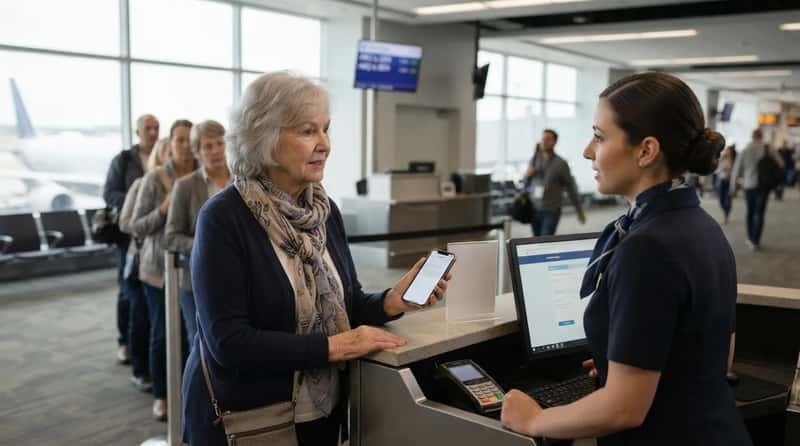
The same 2024 DOT refund rule reaches past bags. Airlines must refund fees for add-on services you paid for but didn’t receive because of the airline’s action, such as a paid seat assignment that fell through or Wi-Fi that never worked.2 3
Many travelers shrug and move on after being reseated, and the fee quietly stays with the airline. Ask at the gate or at the airline desk, and have your receipt ready.
Worth Knowing
- Paid seat assignments that fell through can qualify for a refund.
- Wi-Fi you bought that never worked is covered by the same logic.
- The cause has to be the airline’s action, not a change of heart.
- Keep the receipt or confirmation email within reach before you ask.
#8 – The CPAP Machine That Doesn’t Count as Your Carry-On

A CPAP often gets lumped in with ordinary luggage, and travelers end up paying for it. Under the Air Carrier Access Act and DOT rules in 14 CFR Part 382, airlines must let you bring a CPAP into the cabin, and it doesn’t count toward your carry-on limit.
The exemption holds when the bag contains only the device and its necessary accessories. Pack it in its own dedicated case with nothing else inside.
If an agent tries to count it as your carry-on or charge a fee, cite the Air Carrier Access Act by name. If the pushback continues, ask for the Complaint Resolution Official.
BiPAP and APAP machines fall under the same logic, since the rule covers the category of sleep therapy equipment rather than any single brand.
#7 – The Medical Equipment Bag That Skips the Fee Entirely
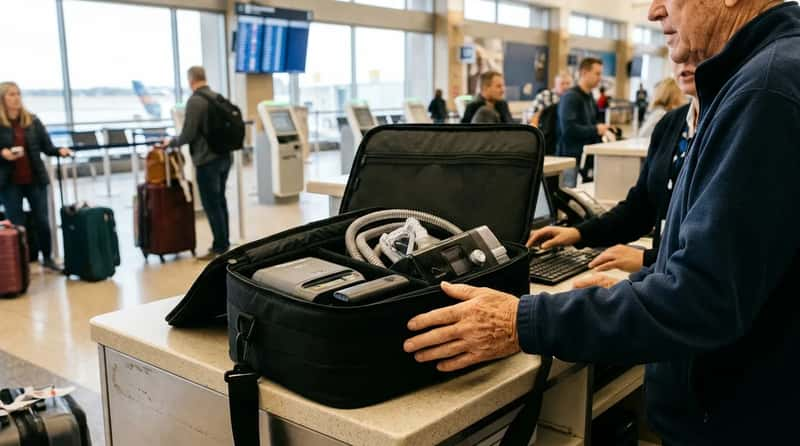
The CPAP exemption is part of a broader rule covering life-sustaining and mobility-related medical equipment. Under the Air Carrier Access Act and 14 CFR Part 382, airlines can’t charge baggage fees for medically necessary devices.
Portable oxygen concentrators, nebulizers, and similar equipment fall into this category. Tell airline staff before check-in and request the waiver.
The words that tend to work are plain: “This bag contains only medically necessary equipment, and I’m requesting the fee waiver under the Air Carrier Access Act.” It isn’t a loophole for oversized gear, and if you’re unsure, the DOT says to contact your airline’s disability or special assistance desk.
#6 – The Walker and Wheelchair That Check at the Gate for Free
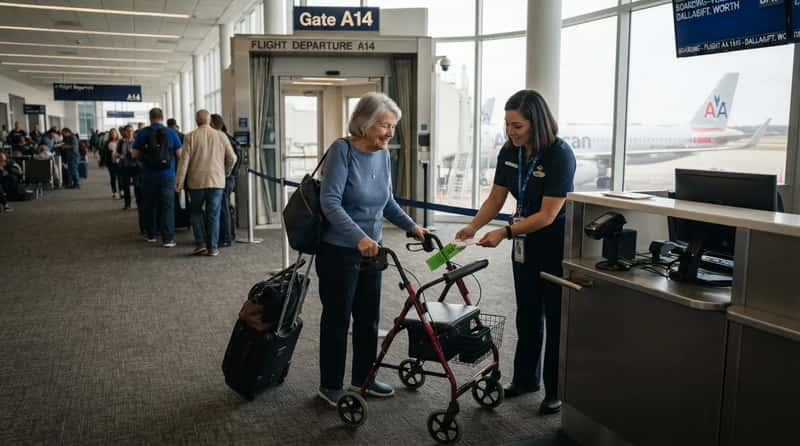
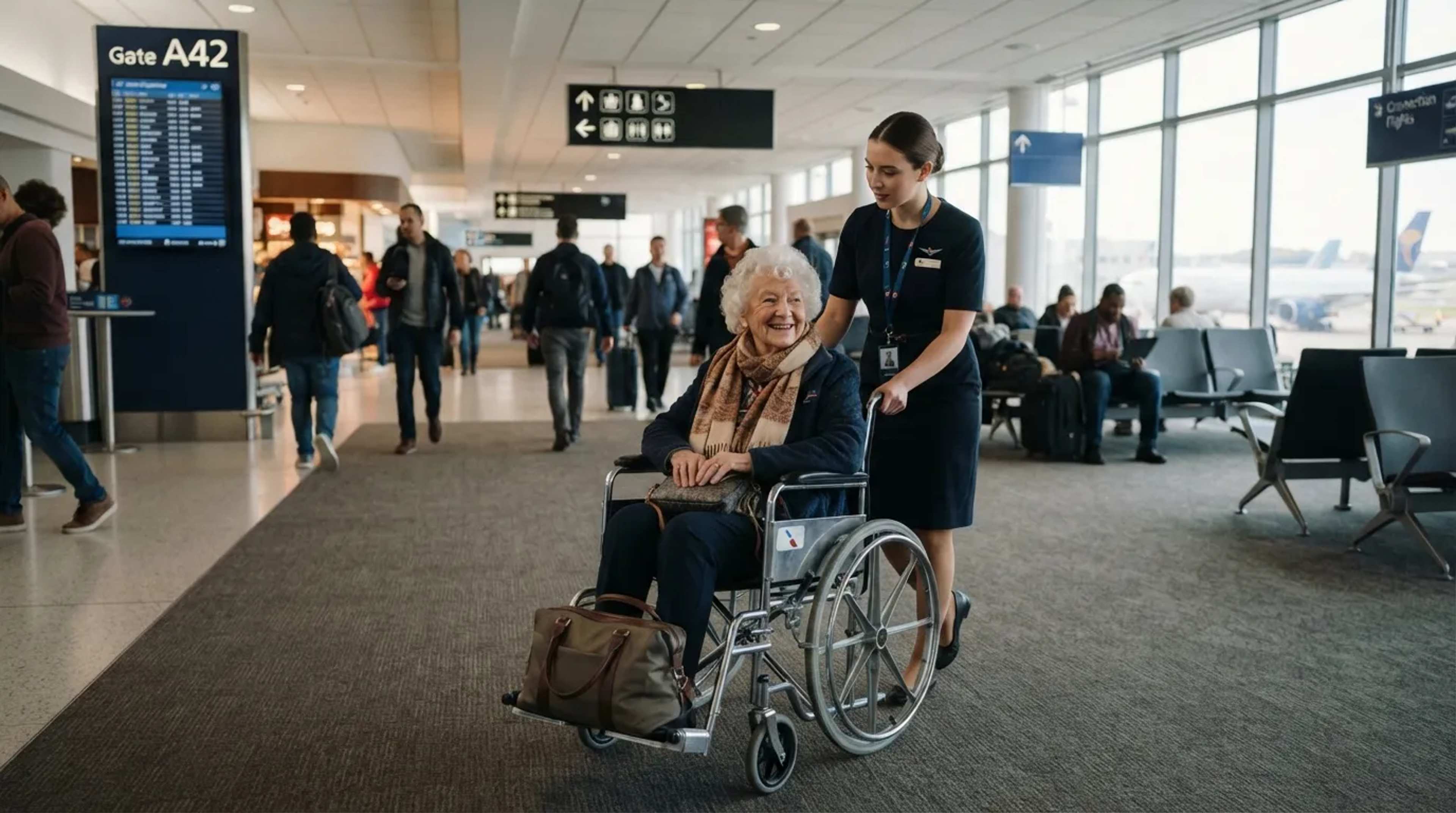
U.S. airlines must let passengers with disabilities check wheelchairs, scooters, walkers, and other mobility devices at the gate for free. That means you can use your device through the whole terminal and hand it over right at boarding.
Airlines also can’t charge extra for wheelchair assistance, mobility device stowage, or use of an on-board wheelchair. If an agent tries, ask for the Complaint Resolution Official immediately, because every airline must have one on duty or reachable by phone.4
The same gate check covers a manual wheelchair at no cost, even if you only use it occasionally.
#5 – The Curb-to-Gate Escort With No Fee and No Paperwork
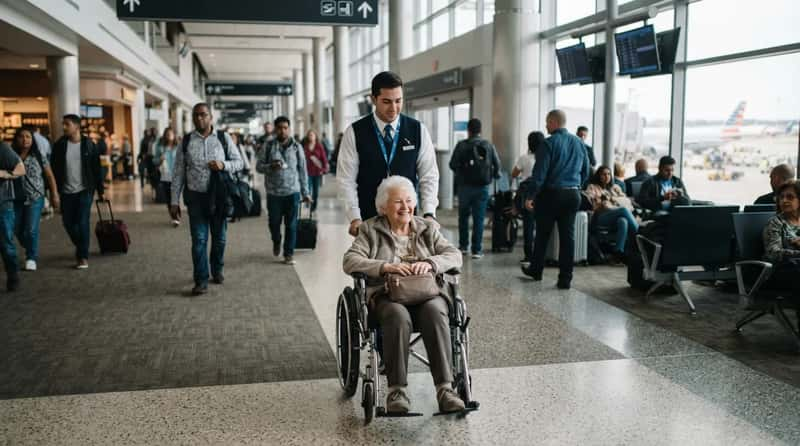
Wheelchair and mobility assistance is free at U.S. airports and airlines under the Air Carrier Access Act. You don’t need a doctor’s note or a disability certification just to ask for it.
If long walks wear you out or crowded terminals overwhelm you, try this sentence at check-in: “I need guided assistance due to a mobility impairment.” That one line triggers the airline’s obligation to arrange it.
Ask at the check-in counter rather than the gate. It gives the airline time to have staff ready when you need them.
#4 – The Priority Boarding That Costs Nothing to Request
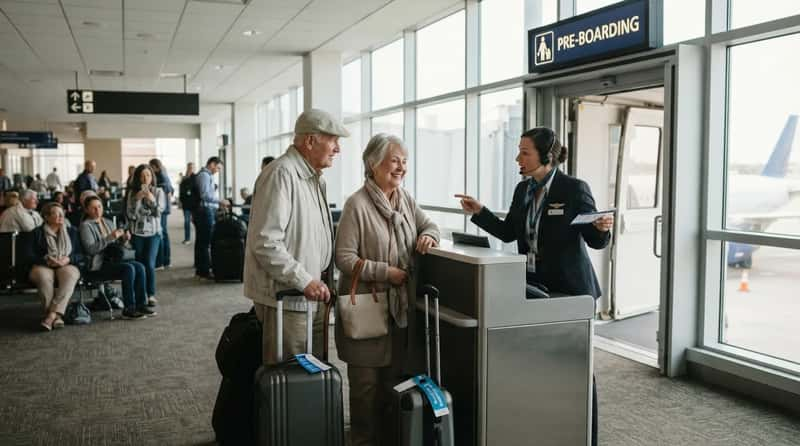
A passenger with a disability who self-identifies at the gate as needing extra time or assistance must be offered the chance to board before everyone else. This isn’t a perk reserved for first class or elite status. It is a legal requirement under the Air Carrier Access Act.
Many airlines let seniors request pre-boarding for mobility needs without visible disability or paperwork. Asking for “pre-boarding assistance due to mobility needs” typically gets you on ahead of first-class passengers.
Self-identify at the gate before general boarding begins, not after the zones are called. Flag it at check-in so it’s on your record, then confirm it again at the gate.
Fast Facts
- Cost: Nothing.
- Who qualifies: Passengers who self-identify as needing extra time or assistance.
- When to speak up: At the gate, before general boarding starts.
- Smart backup: Flag it at check-in so it’s on your record.
#3 – The Connection Escort That Covers the Whole Layover
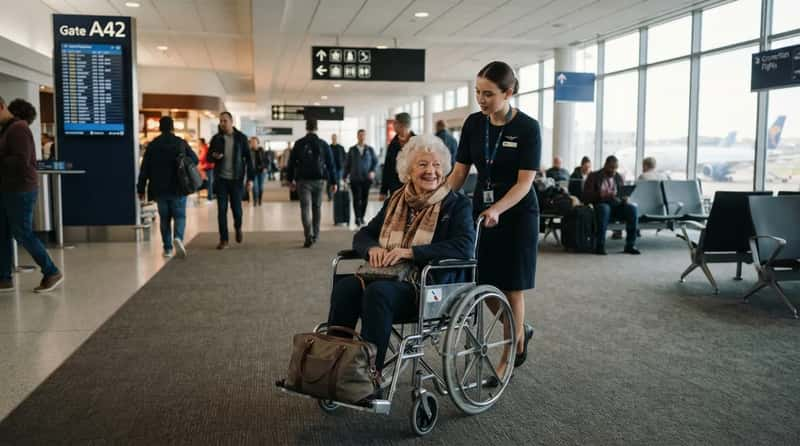
The curb-to-gate escort doesn’t stop when you land for your connection. It’s part of the same free service, and asking at check-in lets the airline plan staff for your arrival gate.
When an airline is assisting a passenger who isn’t independently mobile because of a disability, it must not leave that passenger unattended for more than 30 minutes.5 So if a delay squeezes your connection, staff can’t simply wish you luck and walk away.
The DOT warns that even when an airline has noted your request, staff won’t know you’re that passenger unless you self-identify. Say it again at every check-in and gate interaction.
#2 – The Complaint Resolution Official Airlines Never Mention
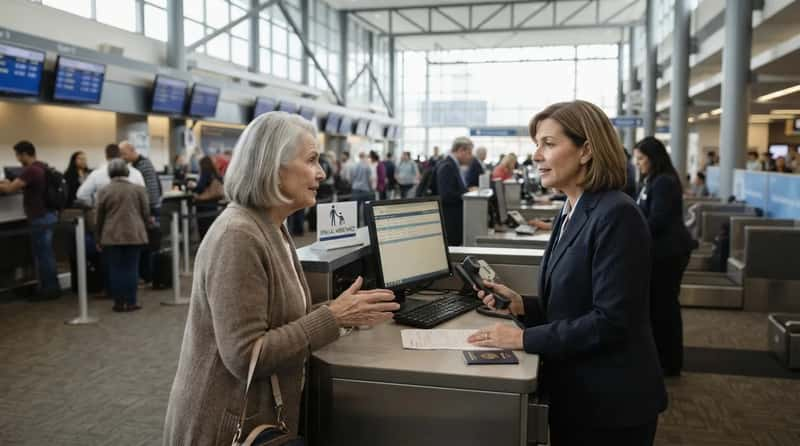
Every U.S. airline must have a Complaint Resolution Official, known as a CRO, on duty or reachable by phone whenever it operates. The CRO is the airline’s expert on disability accommodation issues.4
This is the person who can override a check-in agent refusing a legally required waiver. A CRO can also approve accommodations a gate agent says are unavailable, and document a complaint in real time.
Most travelers over 70 never learn this title, which is why the waiver requests above sometimes get refused at the counter. Asking for the CRO by that exact name changes the conversation.
In October 2024, the DOT issued a $50 million penalty against American Airlines for violations that included unsafe physical assistance and undignified treatment of wheelchair users.6 Federal enforcement is real, and airlines know it.
#1 – The TSA Screening Benefit Tied Specifically to Age 75
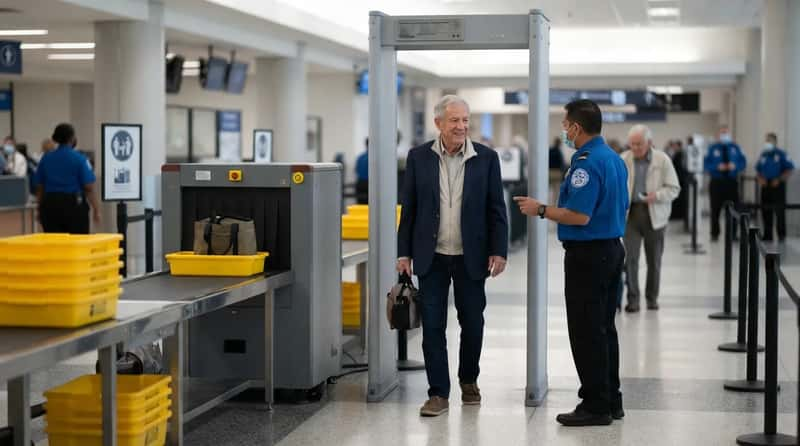
Nearly everything above follows from a disability or mobility need you identify yourself. This is the one benefit that hinges on age alone.
TSA says passengers 75 and older can receive expedited screening, including keeping their shoes and light jackets on. For many older travelers, that removes the hardest part of the security line.
TSA Cares is a free program for travelers with disabilities, medical conditions, or other special circumstances. Because a federal agency runs it, no airline can attach a fee.
Call 1-855-787-2227 at least 72 hours before your flight, and TSA will arrange a Passenger Support Specialist to walk through security with you at no charge.7 For travelers over 75, expedited screening and TSA Cares can work together, and no check-in agent will volunteer either one.
At a Glance
- Age trigger: 75 and older for expedited screening.
- Perk: Keep your shoes and light jacket on.
- TSA Cares line: 1-855-787-2227.
- Lead time: Call at least 72 hours before your flight.7
- Cost: Free.
The airline website is built to collect fees. The check-in counter is staffed by people who know which ones are waivable, which are required by law, and how to reach the CRO when the answer is no.
Age alone doesn’t erase most of these charges. Age plus a need you can describe plainly, or a federal rule you can name, often does.
What is one thing you learned to ask for at an airport counter that the agent never brought up on their own?
Bonus: The Paper-Trail Trick That Makes Every Waiver Stick

A verbal “yes” at the counter is the weakest form of a waiver. The agent changes shifts, the gate agent sees no note, and the fee reappears. A short paper trail fixes that.
- Before you leave the counter: Ask the agent to add a note about the waiver or accommodation to your reservation, and write down the agent’s name or ID number plus the time.
- If the answer is no: Ask for the Complaint Resolution Official by name, in person or by phone. Name the rule you are relying on, such as the Air Carrier Access Act.
- If it is still no: Pay only if you must to make your flight, keep every receipt, and call the DOT’s aviation consumer disability hotline at 1-800-778-4838 from the airport.
- Afterward: File a written complaint with the airline and with the DOT, attaching your receipts and notes. Airlines are required to respond to written disability complaints within 30 days.
A fee you paid under protest, with a dated record, is far easier to recover than one you simply swallowed. Take a photo of the receipt before you walk away.
- Air France Senior Pass: https://wwws.airfrance.fr/en/information/offres/cartes-de-reduction/carte-senior
- DOT Automatic Refunds Rule: https://www.transportation.gov/briefing-room/biden-harris-administration-announces-final-rule-requiring-automatic-refunds-airline
- Federal Register Refunds Rule: https://www.federalregister.gov/documents/2024/04/26/2024-07177/refunds-and-other-consumer-protections
- DOT Wheelchair and Guided Assistance: https://www.transportation.gov/individuals/aviation-consumer-protection/wheelchair-and-guided-assistance
- DOT Passengers with Disabilities Bill of Rights: https://www.transportation.gov/sites/dot.gov/files/2022-07/508_Airline_Passengers_with_Disabilities_Bill_of_Rights_07132022_ADA.pdf
- DOT American Airlines Penalty: https://www.transportation.gov/briefing-room/dot-issues-landmark-50-million-penalty-against-american-airlines-its-treatment
- TSA Cares Passenger Support: https://www.tsa.gov/travel/tsa-cares/passenger-support