Roughly half of the passengers who visit a cruise ship’s medical center are over 65, according to the CDC.1 2 That’s why the first day aboard matters more than any sea day that follows.
The things that decide how a bad moment goes are small and easy to miss: a bottle in the wrong bag, a cabin category, a refrigerator request. Every item below shows up in a cabin, a corridor or at the gangway.
Stay for #1, the biggest bill on the list, with a dollar range and a phone call you can make from home. First, the pills.
#13 – Pill Bottles Packed in the Wrong Bag
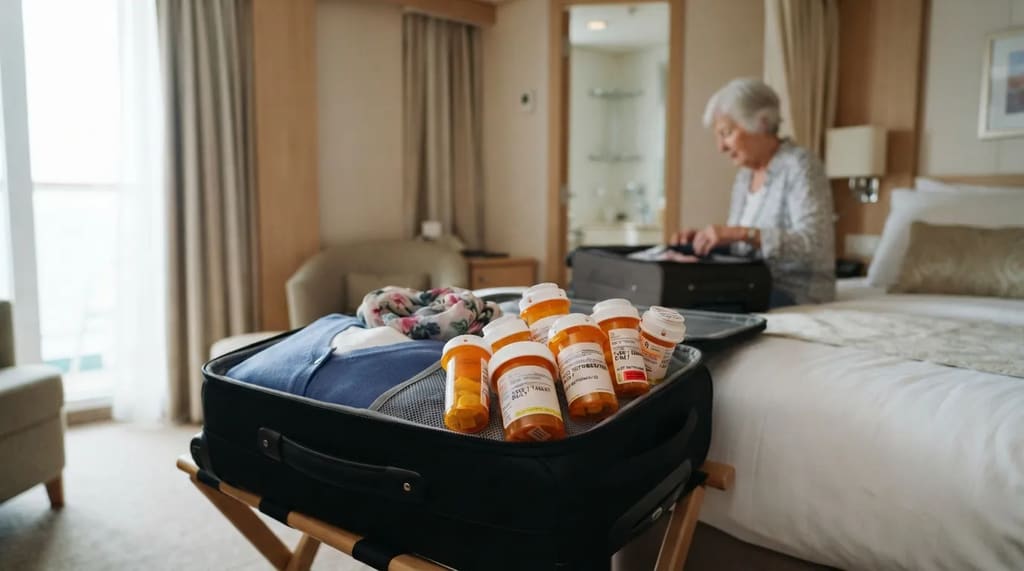
Medicare drug plans don’t pay for drugs bought outside the U.S. So a bottle that goes missing on a foreign port day is a replacement bill you cover yourself.
A suitcase that reaches the cabin hours after you board is a poor place for a morning dose to be waiting.
Keep every prescription in your carry-on, in the original bottles. If any of them need to stay cold, Consumer Reports advises reserving a small in-room refrigerator, and requests are more likely to be fulfilled when you make them early.
The form that handles that refrigerator also covers several other requests, including some for anyone who sleeps with a CPAP machine.
#12 – The Medical Request Form’s Short Checklist
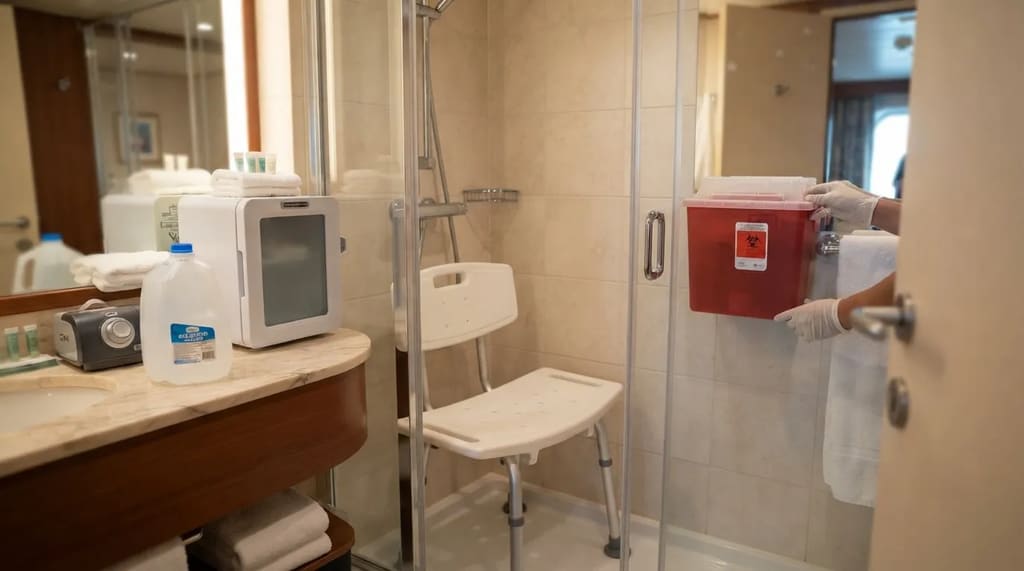
When you book, the cruise line provides a medical request form, and that form is where the small arrangements get made. It’s where you can request a shower chair, a sharps container, distilled water or refrigeration for medication.
Ask for the shower chair, sharps container or distilled water on the form. Distilled water is what a CPAP humidifier calls for, and a request made early is more likely to be filled.
Bigger needs shouldn’t wait for final payment either. Oxygen, dialysis and CPAP machines are worth raising with the line’s accessibility department while you’re still comparing sailings.
At a Glance
- On the request form: shower chair, sharps container, distilled water, medication refrigeration
- With the accessibility department: oxygen, dialysis, CPAP machines
- When to ask: at booking, not at the pier
The first meal aboard brings a CDC rule about hands that a pocket bottle of sanitizer doesn’t satisfy.
#11 – Hand Sanitizer Used Instead of Soap
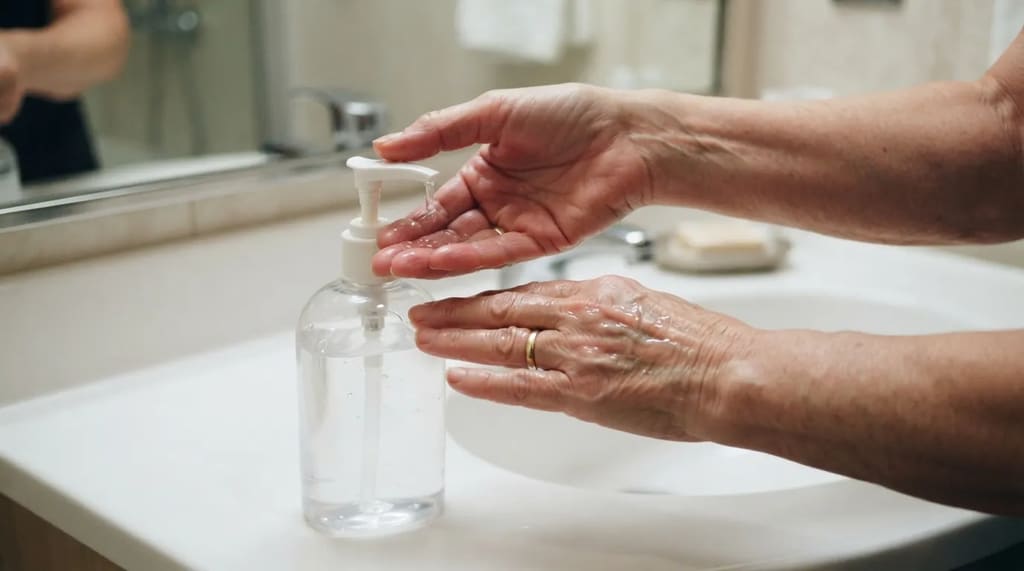
Hand sanitizer is overrated as a cruise habit. The CDC calls soap and water for at least 20 seconds the most effective way to reduce norovirus contamination, and says sanitizer can fill gaps between washes but isn’t a substitute.3
The strictness has a reason. The CDC notes that people sick with norovirus can shed billions of virus particles in stool and vomit, so a small lapse in cleanup or washing leaves plenty behind.
Wash with soap and water for 20 seconds before you eat. Do it after the restroom too, the other moment the CDC singles out.
Washing is a habit you can pick up in a day. The next item is a booking decision, and getting it wrong can leave a scooter with nowhere to go.
#10 – A Scooter That Won’t Fit the Cabin
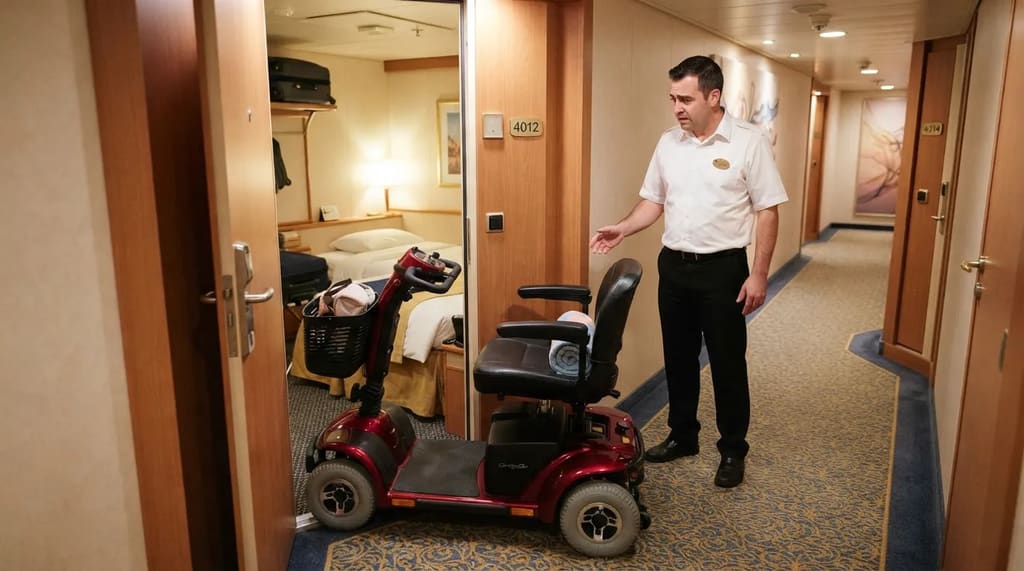
Book a standard cabin and bring a scooter, and the cruise line may not allow it. MSC says standard cabins aren’t suitable for guests who rely on a wheelchair as their primary means of mobility.4
The cheaper cabin is the wrong place to save. On that line, reduced-mobility cabins are limited and assigned first come, first served, so the request has to go in as soon as you book.4
Devices must be stored inside the cabin, not in hallways. When you contact the line, send:
- the device’s type and measured width
- the battery type: gel, dry or lithium
- a request for the cabin confirmation in writing
Walker and cane users have a different cabin type to ask for, and it doesn’t need a wide doorway.
#9 – Grab Bars for Canes and Walkers
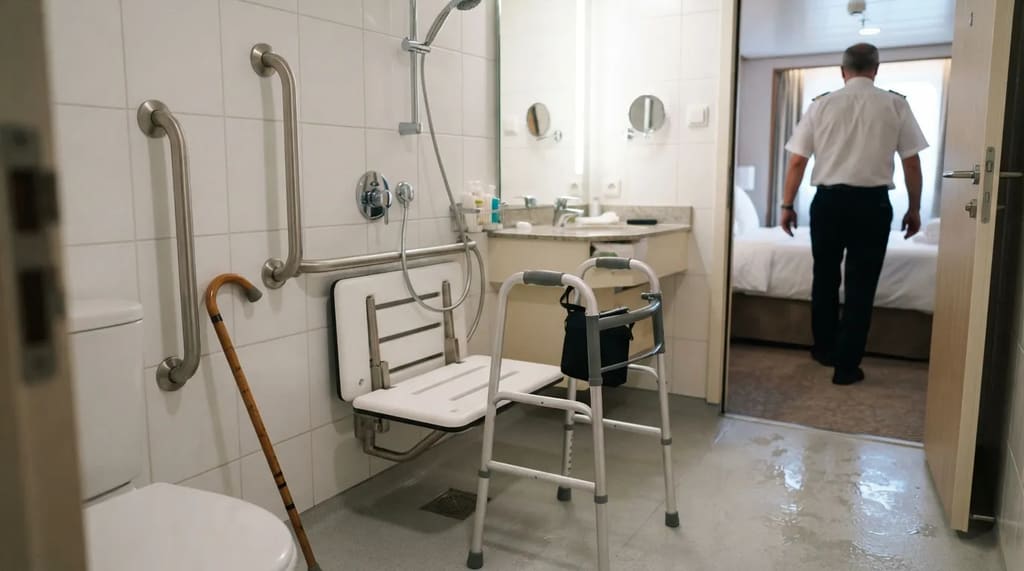
Accessible doesn’t have to mean wheelchair. Consumer Reports describes an “ambulatory accessible cabin” with grab bars and other features meant to help passengers who use walkers or canes keep their balance.
If you use a cane or walker, ask for an ambulatory accessible cabin. It’s another box on the same request form as the shower chair.
The bathroom is the reason to ask. Elderly passengers fall on wet decks, in bathrooms and on gangways, and a standard cabin may have no bar within reach when a wet floor turns a wobble into a fall.
Outside the cabin, the CDC puts a number on how many medical center visits come from slips and falls.
#8 – Wet Decks and Gangways
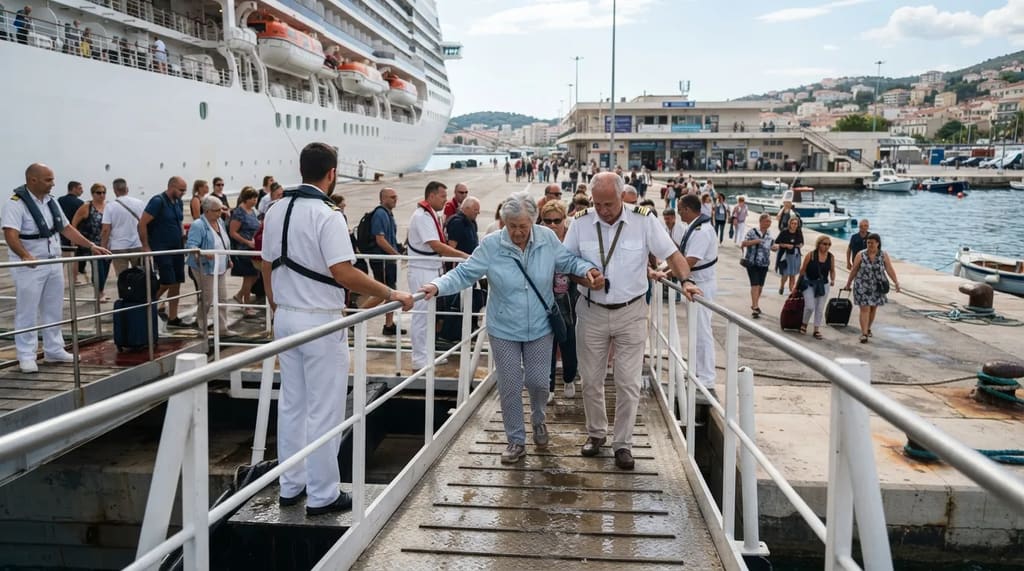
Slips, trips and falls account for 12 to 18 percent of cruise ship medical center visits, according to the CDC.5 That’s roughly one visit in six or eight.
Wet pool decks and rough seas generate a steady stream of sprains, fractures and lacerations. Pack shoes with real grip, and use the rail on sea days with any swell.
Falls happen on gangways, and some ports have no gangway at all. There, passengers go ashore by small boat.
#7 – Tender Ports and the Transfer Question
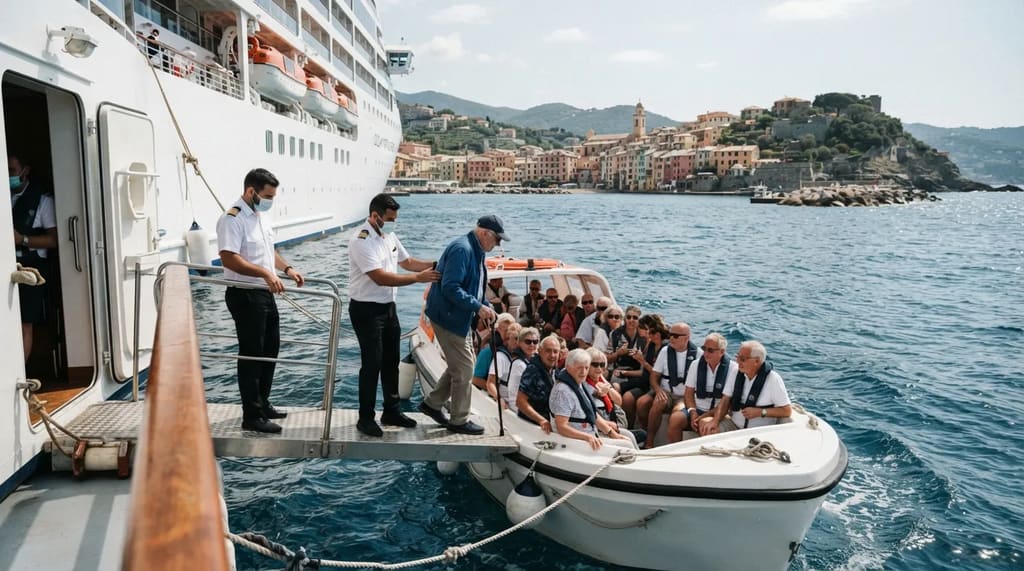
At a tender port, the ship anchors offshore and small boats carry passengers to land. That adds a transfer, and it’s the kind of step where an unsteady passenger has the least room for error.
Before booking, ask the cruise line about every tender port on your itinerary, and whether a manual wheelchair, power chair or scooter can be transferred safely. Ask about every tender port before you book.
A cabin that fits your device doesn’t help if the device can’t make it ashore. Get that answer in writing, just as you did for the cabin.
Worth Knowing
- A tender day means the ship stays offshore, so there is no walk-off gangway.
- Small boats add one more transfer between ship and land.
- Manual chairs, power chairs and scooters may each get a different answer.
- The itinerary tells you which ports are tender stops before you pay.
Port days bring a second hazard that has nothing to do with boats: the sun.
#6 – Hours in the Sun on Port Day

Severe sunburn, heat exhaustion and occasional heat stroke are regular visitors to ship medical centers. On Caribbean and Mediterranean sailings, port days and pool time put passengers in intense sun for hours.
Plan shade and water breaks before the first port day. Ask your pharmacist whether any of your medicines raise sun sensitivity or dehydration risk, which is a one-minute question before you sail.
Sun is predictable. A cough in the corridor on the first night is not, and the CDC wants it reported quickly.
#5 – A Cough on the First Night
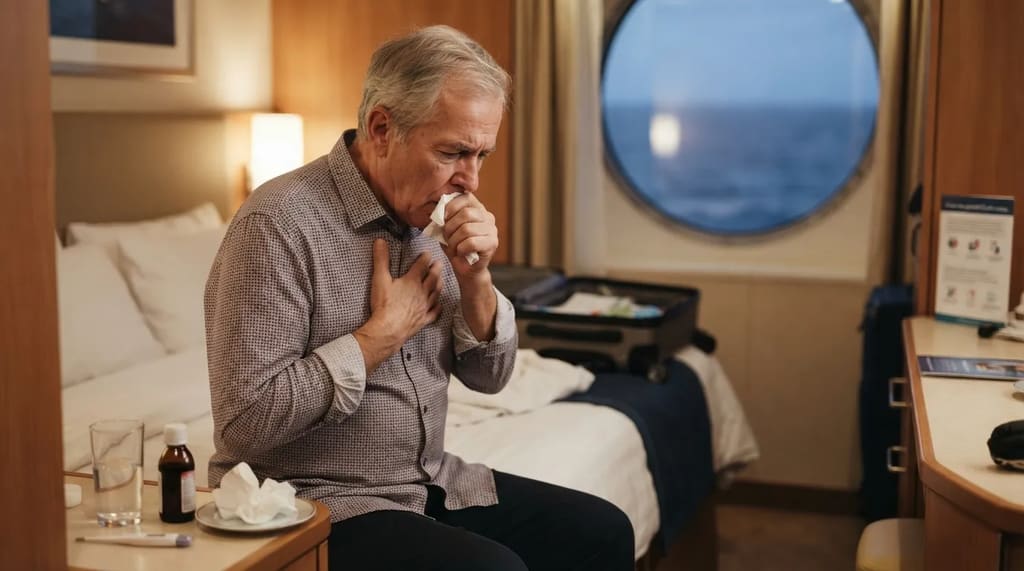
Respiratory illnesses are the most common medical complaint on cruise ships. Older travelers are at increased risk for severe COVID-19 and for flu complications, including pneumonia.2
Report a cough or sore throat to the medical center promptly, and follow isolation recommendations. Don’t wait to see how you feel after dinner.
Vaccines are a conversation for before the next sailing. Travel guidance highly recommends flu shots for travelers 6 months and older, and pneumococcal vaccination for anyone 65 or older.2
Stomach illness adds a rule of its own: stay in the cabin until the outbreak is under control.
#4 – A Stomach Bug and the Cabin Quarantine
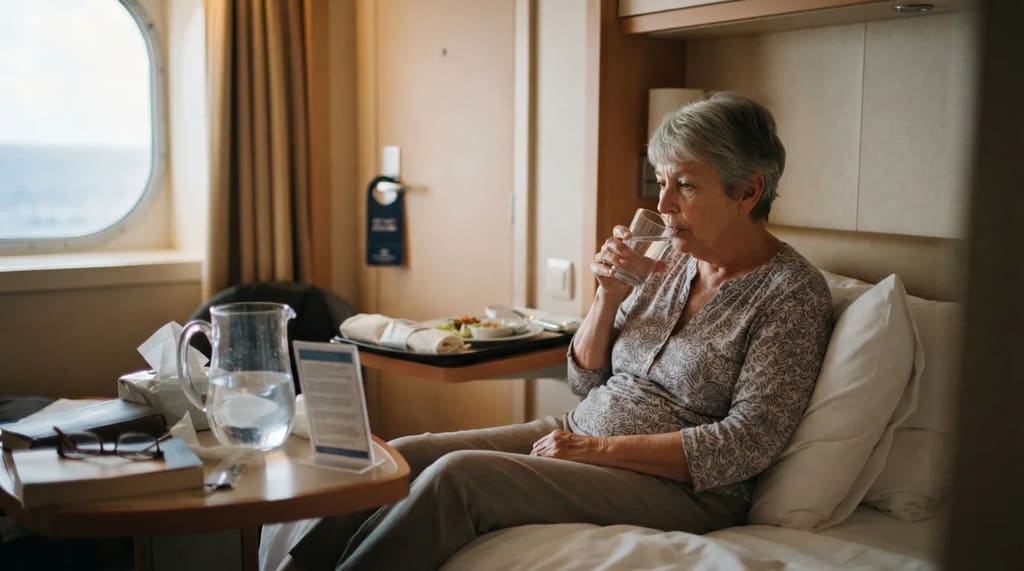
Waiting to see whether a queasy stomach passes is the wrong call on a ship. The CDC advises travelers to call the medical center promptly, even for mild GI symptoms, and to follow isolation guidance strictly.6
The reason is norovirus, the most common cause of these outbreaks. When one happens, affected and exposed passengers are asked to quarantine in their rooms until it’s under control.
Call the medical center at the first mild stomach symptom. Vomiting and diarrhea dehydrate quickly, and older adults are more vulnerable to that, so keep sipping fluids while you wait for the staff.
Quick Compare
- Cough or sore throat: report promptly and follow isolation recommendations.
- Mild stomach symptoms: call promptly and follow isolation guidance strictly.
- Same rule for both: don’t wait to see if it passes.
Those are the common illnesses. The serious cases come from heart disease, stroke and diabetes, and how well the ship handles them depends partly on what you’ve told it.
#3 – Heart and Diabetes Histories Left Unsaid
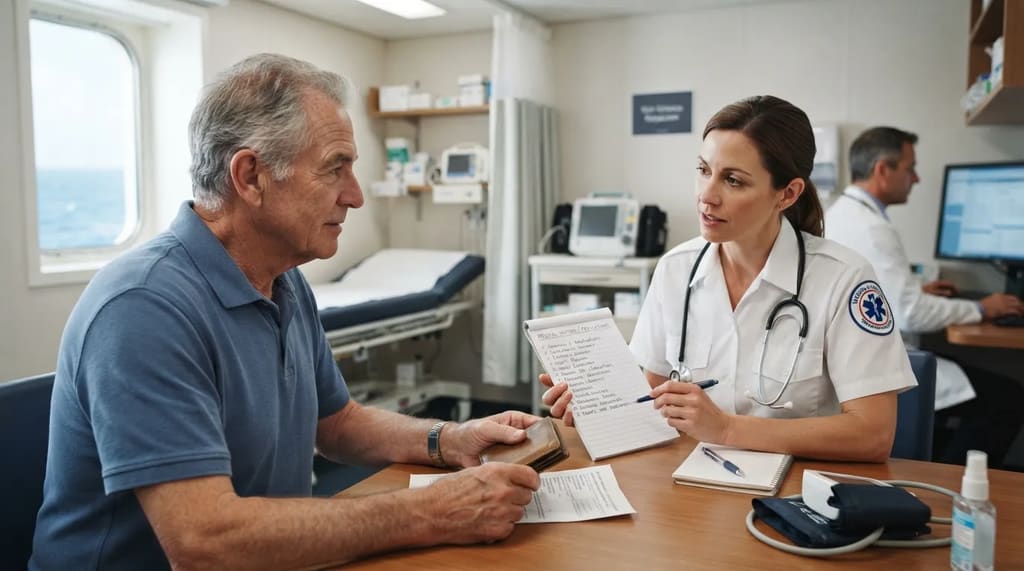
Heart attacks, strokes and complications from diabetes or other chronic conditions account for the most serious medical center cases. The center is akin to an urgent care clinic, with at least one licensed physician and a registered nurse.
That’s a capable setup for diagnosing and stabilizing a patient, and a written list of your conditions, medications and doses speeds it up. Keep a copy in your wallet and another with your travel companion, so the information is there when you can’t give it.
Patients who need more than the ship can give are sent ashore, and the Medigap plan you carry may pay less of that trip than its name suggests.
#2 – A Medigap Benefit With a $50,000 Ceiling
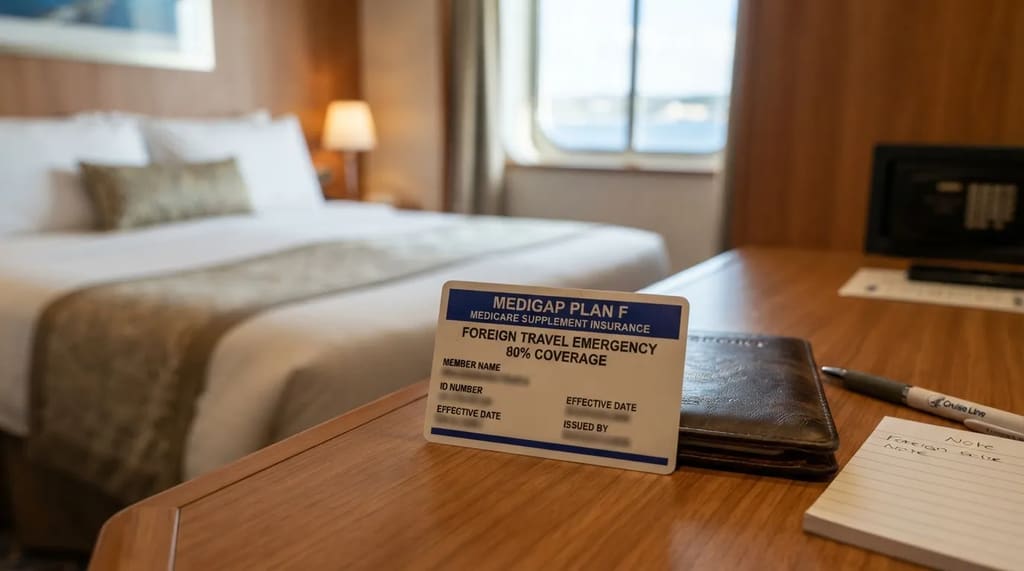
Several lettered Medigap plans include a foreign travel emergency benefit that covers 80% of medically necessary emergency care outside the U.S. The catch is a $50,000 lifetime cap, which is often insufficient for full evacuation costs.7
A lifetime cap means every foreign trip you take draws on the same $50,000. If you’re on Medicare Advantage instead, many plans include worldwide emergency medical coverage, though whether yours does is a question for the plan.
Call your plan before you sail and ask what it pays at sea.
Fast Facts
- Medigap (select plans): 80% of medically necessary emergency care abroad, up to a $50,000 lifetime cap.
- Medicare Advantage: many plans include worldwide emergency coverage, so check yours.
- Original Medicare: rarely covers care outside the U.S.
Even a full $50,000 benefit falls short of the largest item on a cruise medical bill, and the person who decides whether you incur it is the ship’s doctor.
#1 – The Evacuation Flight and Medicare’s Six-Hour Line
Medicare may cover medically necessary care on a ship only when it’s docked in a U.S. port or within six hours of one, and coverage stops once you sail beyond that window. Original Medicare rarely covers care outside the U.S. at all, so on an international itinerary both the ship’s doctor and a hospital ashore can land on you.1 8
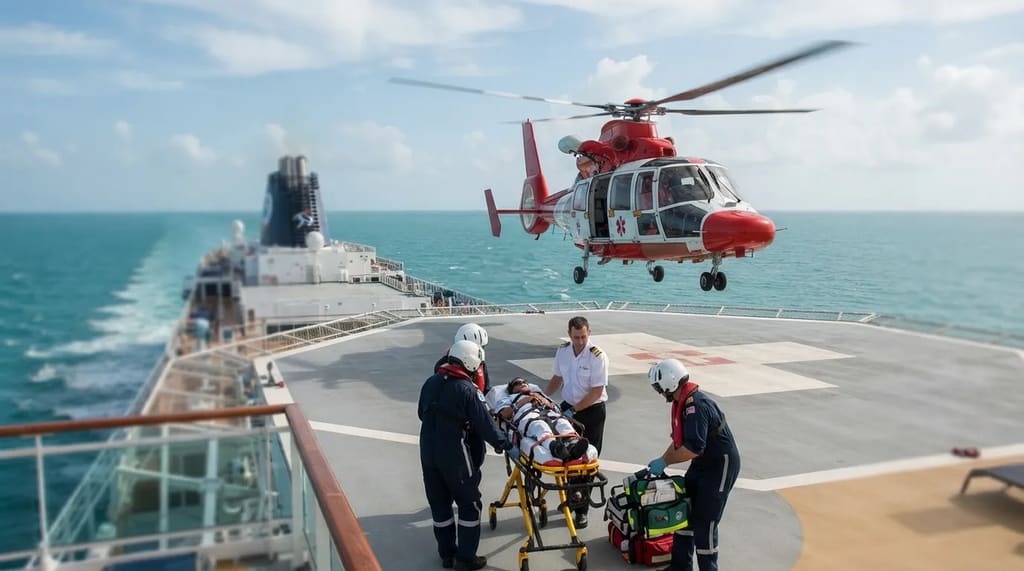
The largest item is the evacuation. The ship’s medical team orders one when a situation exceeds the ship’s capabilities, such as a need for ICU-level care.
The CDC puts medical evacuation at about $25,000 within North America and over $250,000 from remote locations. The State Department says an air-ambulance evacuation to the U.S. can cost $20,000 to $200,000, which dwarfs the Medigap cap from the previous item.
The cruise line’s own protection plan, offered at checkout, is the easy click. Some of those plans carry lower evacuation limits than standalone travel medical policies, so read the evacuation limit before you accept one.
Then confirm your choice with your insurer or a licensed agent.
A ship is a small, closed world, and the costly trouble in it usually starts with something that looked minor on the first day. A bottle in the wrong bag, a cabin category or a coverage limit nobody read can each decide how a bad moment goes.
Treat day one as setup time rather than vacation time. An hour spent on forms, calls and a written medical list is cheap next to what it heads off, and most of it can be done before you board.
Before your last cruise, did you ask your insurer what it would pay once the ship left U.S. waters, and what answer did you get?
- Medicare Travel Outside U.S.: https://www.medicare.gov/coverage/travel-outside-the-u.s.
- Cruise Ship Travel Traveler Summary: https://tripprep.com/library/cruise-ship-travel/traveler-summary
- CDC Yellow Book Norovirus: https://www.cdc.gov/yellow-book/hcp/travel-associated-infections-diseases/norovirus.html
- MSC Accessibility and Medical: https://www.msccruisesusa.com/accessibility-medical
- CDC Cruise Yellow Book 2020: https://wwwnc.cdc.gov/travel/yellowbook/2020/travel-by-air-land-sea/cruise-ship-travel
- CDC Yellow Book Cruise Travel: https://cdc.gov/yellow-book/hcp/travel-air-sea/cruise-ship-travel.html
- Medigap Foreign Travel Benefits: https://www.medicarefaq.com/blog/understanding-medigaps-foreign-travel-benefits-whats-really-covered/
- Kiplinger Medicare Six-Hour Rule: https://www.kiplinger.com/retirement/medicare/medicare-and-cruises-the-6-hour-rule