Your cabin steward sees your room at its most honest. They come through at least once a day, and on many mainstream ships twice, so every habit from home shows up on their route.
Some of those habits cost only a little courtesy. Others cost real money, and the last one involves a balcony cigarette that allegedly set off a fire that scorched up to 150 cabins.1 Stay for it, because it explains why so many of the other rules exist. Start with the door.
#14 – Heavy Cabin Doors Left to Slam
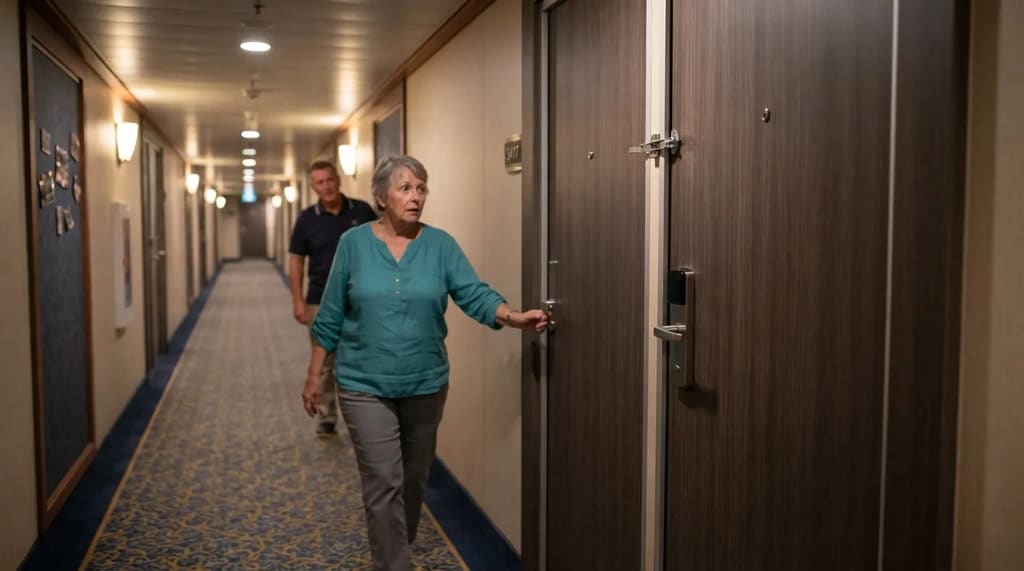
Cabin doors are heavy, and both the hallway door and the balcony door can slam before you realize it. Cruise Critic members list slammed doors among their pet peeves.
The fix is a habit, not a purchase: hold the handle until the latch clicks. Hallway conversations outside someone’s cabin after 11 p.m. land on the same complaint list.
On a ship, a small noise carries much farther than it would at home. Your steward walks those same corridors on every visit.
The bang fades once the door shuts. The next habit leaves something behind that a steward has to fix by hand.
#13 – Furniture Moved to Suit Yourself
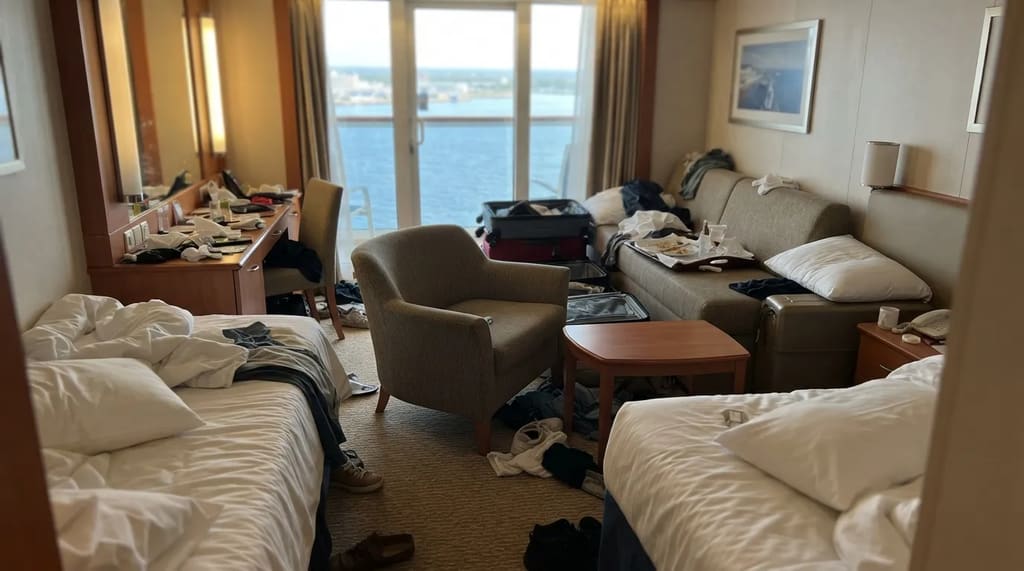
Move one chair and you’ve created a job. Your steward has to put each piece back exactly where it was.
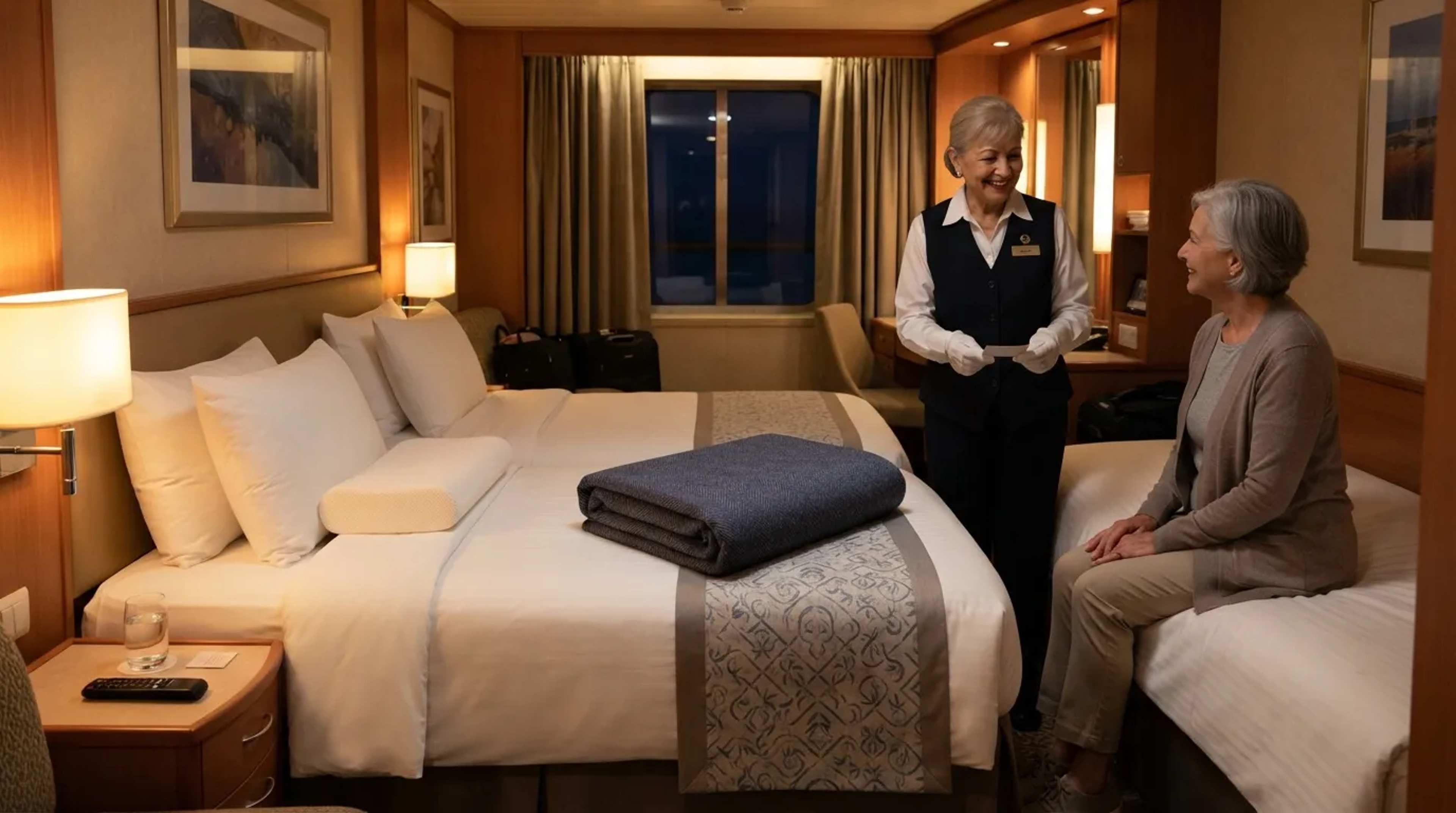
There’s a better route. On embarkation day your steward will ask about preferences such as bed configuration, fresh ice, wine glasses and extra hangers.
If the layout doesn’t suit you, ask for the change on day one. Bed layout is the clearest case, so say how you want the beds set up before you start dragging anything.
If you use a cane or a walker and need a clear path through the room, that’s a request for your steward too, not a furniture project for you.
Even kind tidying can cost your steward time. Nothing shows that better than what people do with their towels before breakfast.
#12 – Towels Folded Into Neat Little Bundles
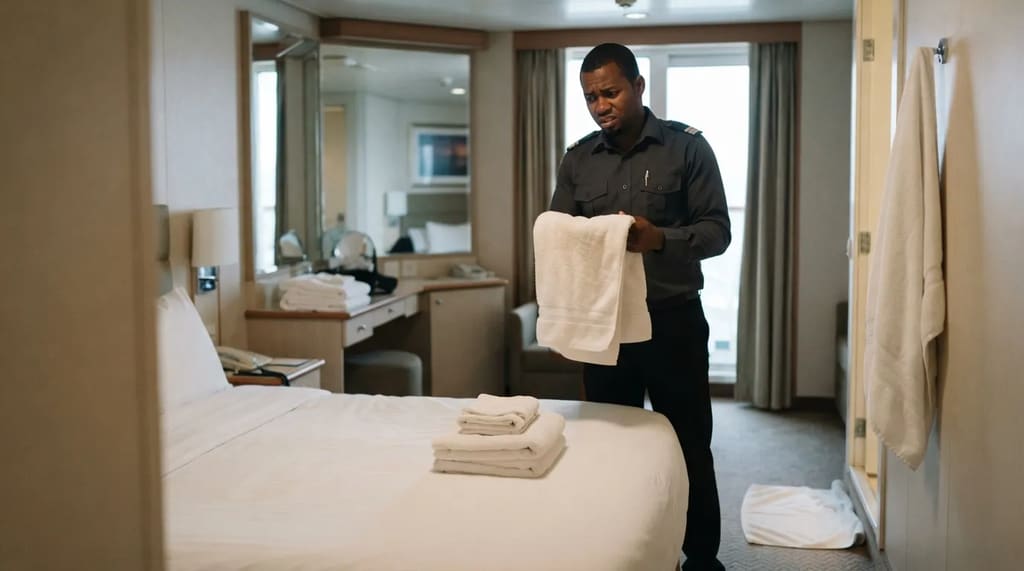
Folding used towels looks considerate and does the opposite. Your steward now has to unfold each one and guess whether it’s clean or damp.
The signal cruisers use is simple: a towel on the hook means keep it, and a towel on the floor means replace it. That one gesture saves more time than any amount of pre-cleaning.
Towels have a signal system. Laundry has one too, and a heap of clothes on the bed isn’t part of it.
#11 – A Laundry Heap Left on the Bed
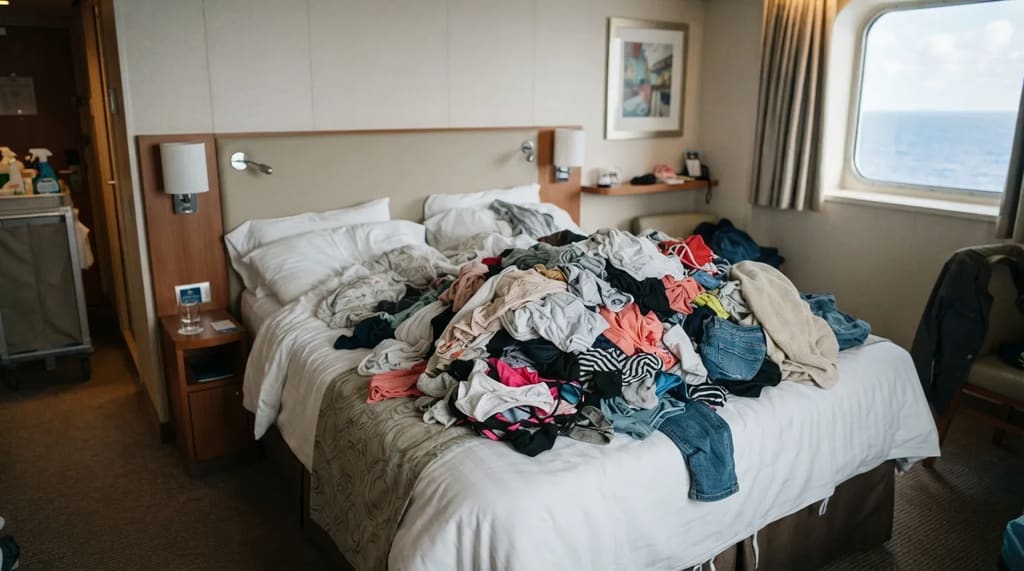
A pile of clothes on the bed won’t turn into clean laundry. Cruise lines require you to bag your items, complete the laundry form, and specify the service you want.
Bag it, fill in the form, and mark the service you want. Check the price on that form before you hand anything over, because laundry can carry a separate fee.
For a few shirts there are cheaper routes. Many ships have public laundry rooms with irons and ironing boards, often free, plus a pressing service for clothes you’d rather send out.
Quick Compare
- Cabin laundry bag: most convenient, but it needs the form and may carry a fee.
- Public laundry room: costs you time, though irons and boards are often free.
- Pressing service: best for clothes that only need the wrinkles gone.
Bagged laundry at least gets collected. Dirty dishes meet a stranger fate, because passengers pick some odd places to put them.
#10 – Room Service Plates Hidden Under the Bed
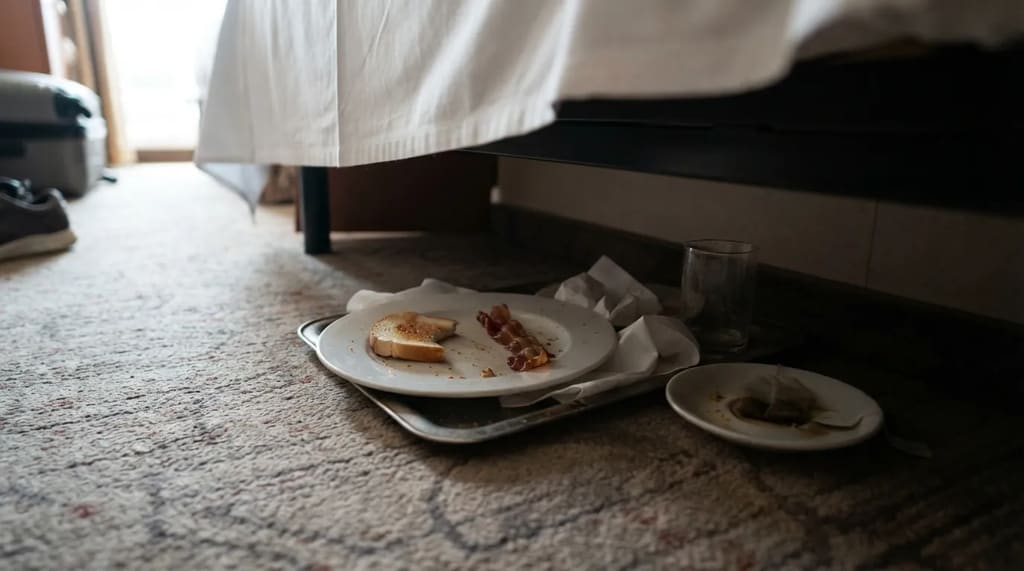
Some passengers tuck room service plates behind the curtain, under the bed or in the wardrobe so they won’t leave a tray in the hall. Your steward isn’t deep-cleaning the room on every visit, so hidden plates can get missed.
The result is odors, and a growing collection that gets harder to deal with the more you order. The standard advice is plain: the tray goes outside the door, not under the bed.
Hiding a plate is a small secret. The next mistake comes from assuming a whole personal servant came with the room.
#9 – The Butler You Assumed Came Included

A cabin steward is not a butler. The job resembles a hotel housekeeper’s, with one big difference: you’re likely to meet your steward and even get to know them.
Use that. On day one, tell your steward what you need:
- Hangers, towels, ice, blankets and pillows (the day-one list)
- Bed layout and the hours you’d like service
- Anything you’d rather not have, like a morning ice bucket
Say what you need on day one, and ask the price of anything extra. A five-minute chat beats any envelope on the last night, because it lets your steward build a routine around your cabin.
Towels in the cabin are free for the asking. The ones you carry to the pool come with a price tag if they never return, and that’s where the charges begin.
#8 – Pool Towels That Never Came Back
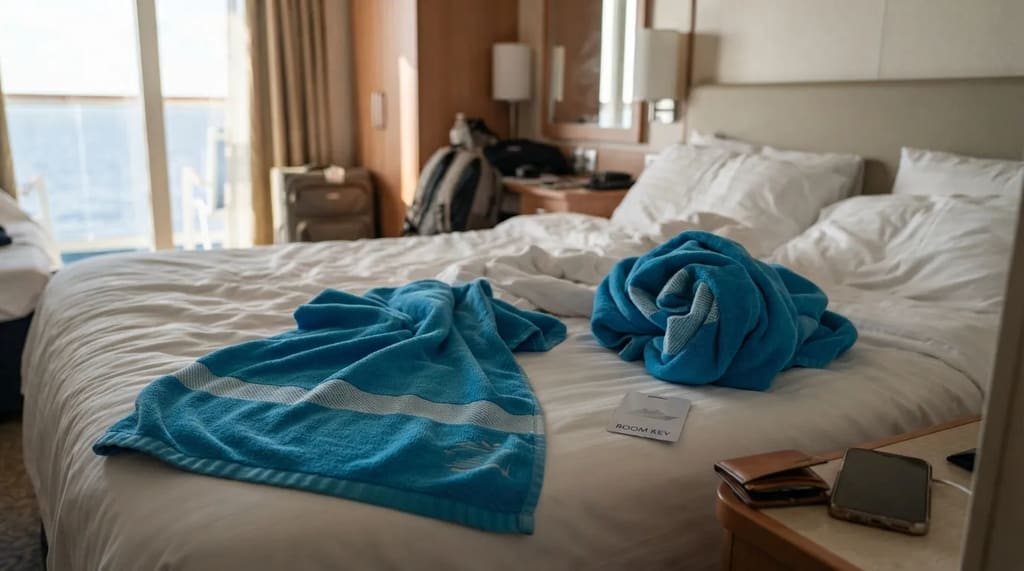
An unreturned pool towel costs $22 on Carnival and $25 on Royal Caribbean.2 That’s the rate for a towel you check out and don’t bring back.
Pool and beach towels are checked out with your cabin number and room key, so the line knows whose towel is missing. The charge is meant to deter theft and abandoned wet towels.2
Return towels at the pool station, then check your final bill for towel charges. Some passengers report being billed more than once, so if a charge looks wrong, take it to Guest Services before you disembark.
A towel bill stings for a day. The next habit quietly shortchanges the very people who fold those towels.
#7 – Daily Gratuities Quietly Erased
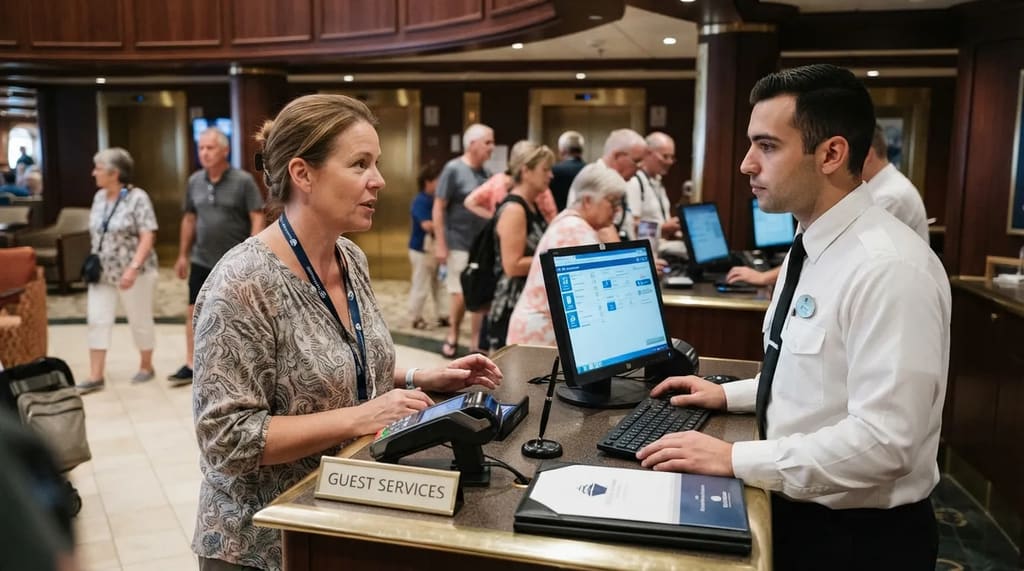
Most big lines add daily service charges to your account, per person, per day, meant for crew like your steward and the dining staff. Some passengers walk up to Guest Services, have them stripped off the bill, and then tip nothing.3
Crew base pay is famously modest, and gratuities fill much of the gap. For a steward, that line item can be a large part of what the contract actually pays.3
If service genuinely let you down, say so at Guest Services rather than zeroing out everyone’s pay. A complaint can fix a problem, while a deleted charge just lands on the person who was working.
Removing a charge takes a minute at a desk. The next habit starts in a suitcase, weeks before anyone steps aboard.
#6 – Liquor Smuggled Into the Cabin
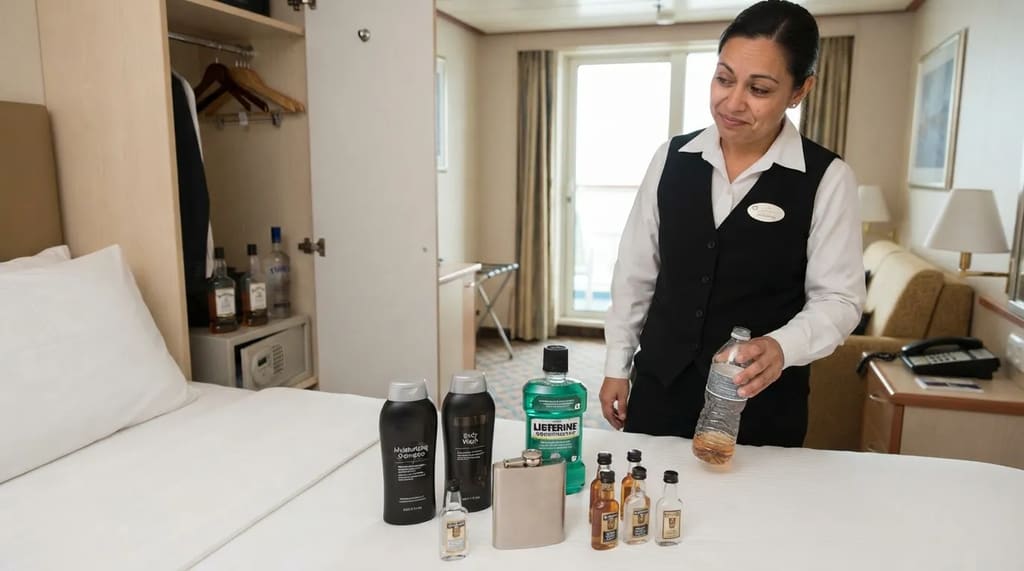
Passengers hide rum in shampoo bottles, mouthwash containers and flasks, convinced nobody will ever find it. On many lines, hard liquor found at security is confiscated and held until the end of the cruise.4
A cabin is the one place you can’t keep secrets from the person who cleans it. Empties lined up on a balcony or stuffed in a closet tell their own story.
Worth Knowing
- Hard liquor found at security is often held until the cruise ends.
- Limited wine or champagne at embarkation is commonly allowed, but the rules vary by line.
- Hidden bottles and empties are easy for a steward to spot during a normal clean.
- Your cruise line‘s alcohol policy page is the final word, so read it before you pack.
Check your line’s alcohol policy before you pack, because most allow limited wine or champagne at embarkation and not much else. The onboard prices are high, but a confiscated bottle is a worse deal.
Smuggled drinks are at least harmless to the ship. The next habit is not, and it’s the first one that starts to look like a safety problem.
#5 – Irons and Candles Packed Against the Rules
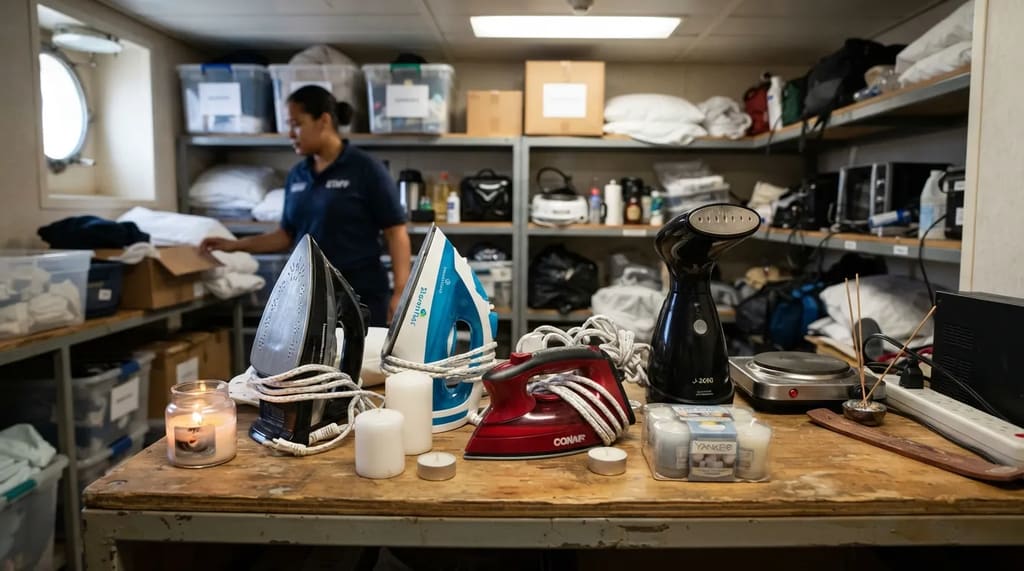
Cruise lines typically ban irons, clothes steamers, hot plates, candles and incense in cabins. The reason is fire, and a ship at sea has no fire department to call.5
These items are usually confiscated at security or when they’re found in a cabin. On many lines they’re returned at the end of the cruise, which means you spend the week with wrinkled shirts.
Use the ship’s laundry room or pressing service instead of packing your own heat. It’s the same fix as the laundry advice, and it keeps a small spark out of a tight space.
Banned items cause trouble all week. One habit causes it on the very last morning, when the whole ship is racing the clock.
#4 – Still in the Cabin on Departure Morning
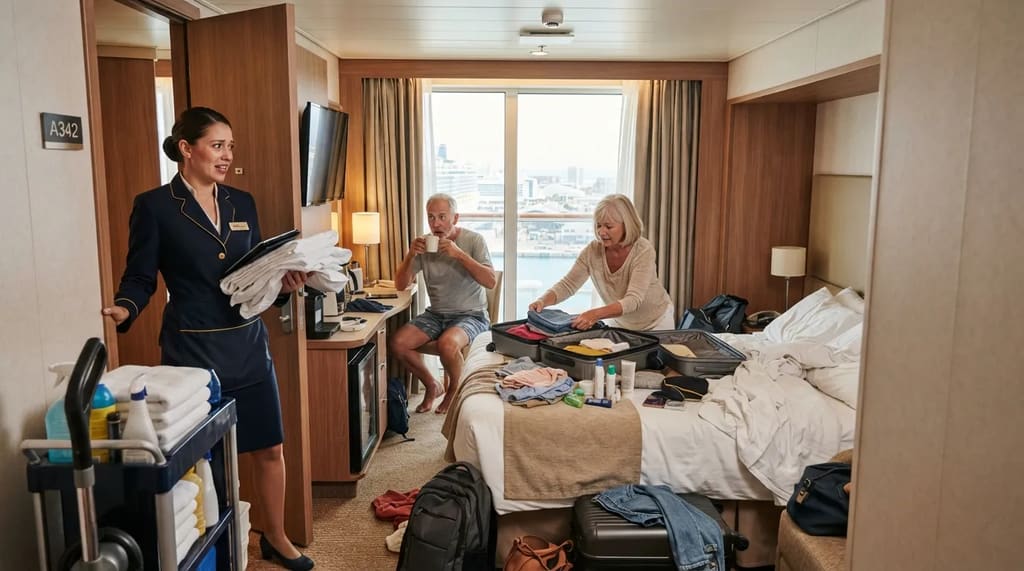
On the final morning, lines ask you to leave your cabin early, often earlier than most people expect. New guests are about to board, and your steward has only a few hours to flip every cabin on the hall.
Passengers who linger over one more shower, one more coffee or a suitcase that won’t close turn that tight window into a scramble. The steward still has to strip the beds, reset the room and make it look brand new.
Pack the night before and be out by your disembarkation time. That small courtesy lets the crew finish before the next wave arrives.
That scramble happens indoors. The next habit happens out on the balcony, where everything ends up in the wind.
Related Stories From Travelbinger
#3 – Things Hung or Thrown Over the Balcony Rail
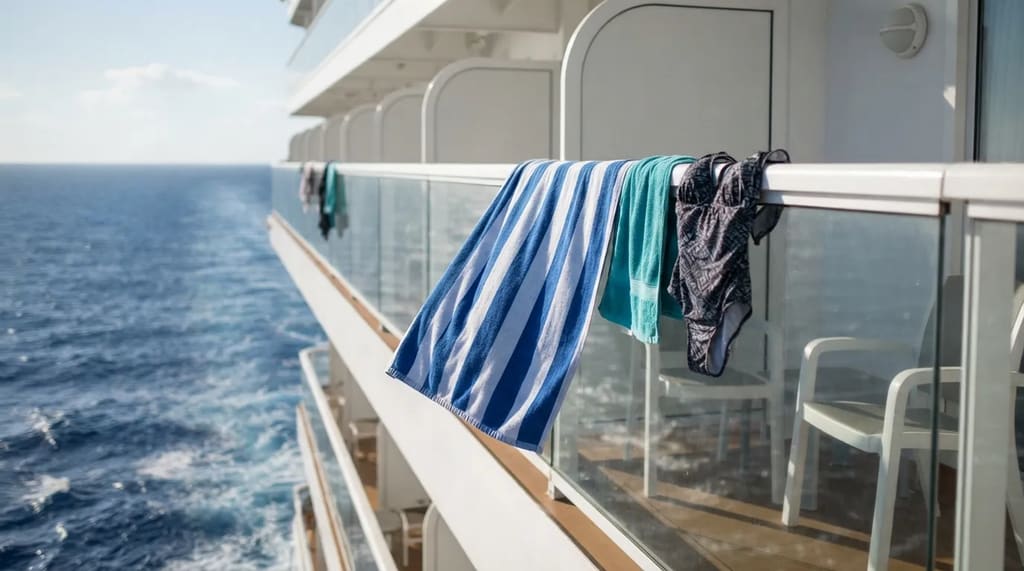
Wet swimsuits and towels draped over the balcony rail look like a clever way to dry them. Cruise lines generally prohibit it, because wind can carry them away and they can land on decks below.
Throwing anything overboard is worse, and ships treat it seriously. It’s pollution, and it’s also a danger to anyone below.
Dry things inside the cabin, and keep everything off the rail. Your steward doesn’t want to explain a missing towel, and security doesn’t want to explain a falling object.
One small thing goes over those rails far more dangerously than any swimsuit. But first, a habit that stays inside the cabin and still sets off alarms.
#2 – Smoking Inside the Cabin
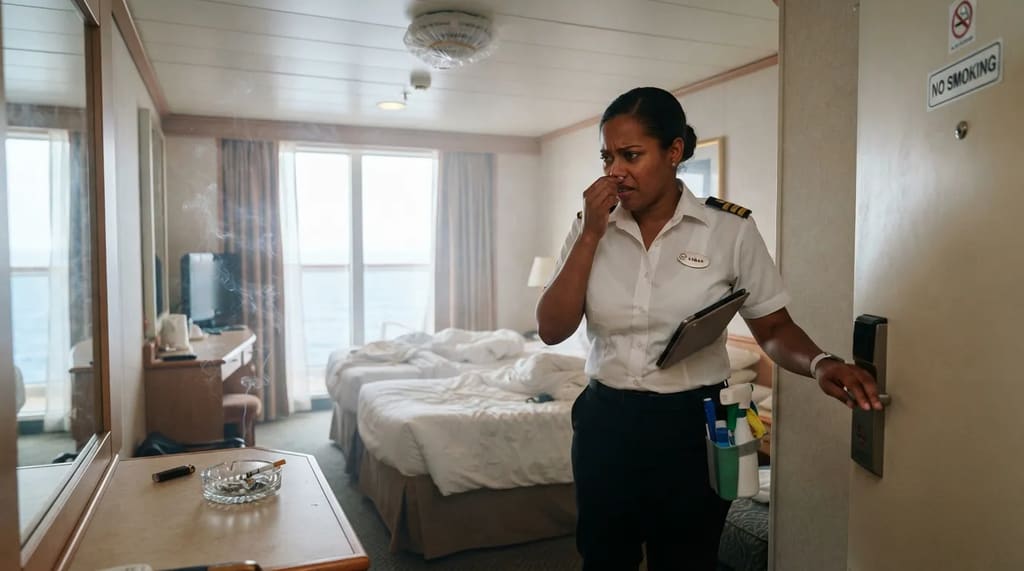
Most cruise lines ban smoking in cabins, and many extend the ban to vaping. Stale smoke clings to curtains, bedding and carpet, and your steward notices the second the door opens.
Cabins have smoke detectors, and some passengers cover them or tamper with them to smoke in secret. Lines treat that as a safety violation, not a prank.
Cleaning fees for smoking in a cabin can run to several hundred dollars on some lines. If you smoke, use the designated areas the ship provides.
Those rules aren’t about perfume or fussiness. They trace back to one night in 2006, and to a single balcony.
#1 – The Balcony Cigarette Behind a 150-Cabin Fire
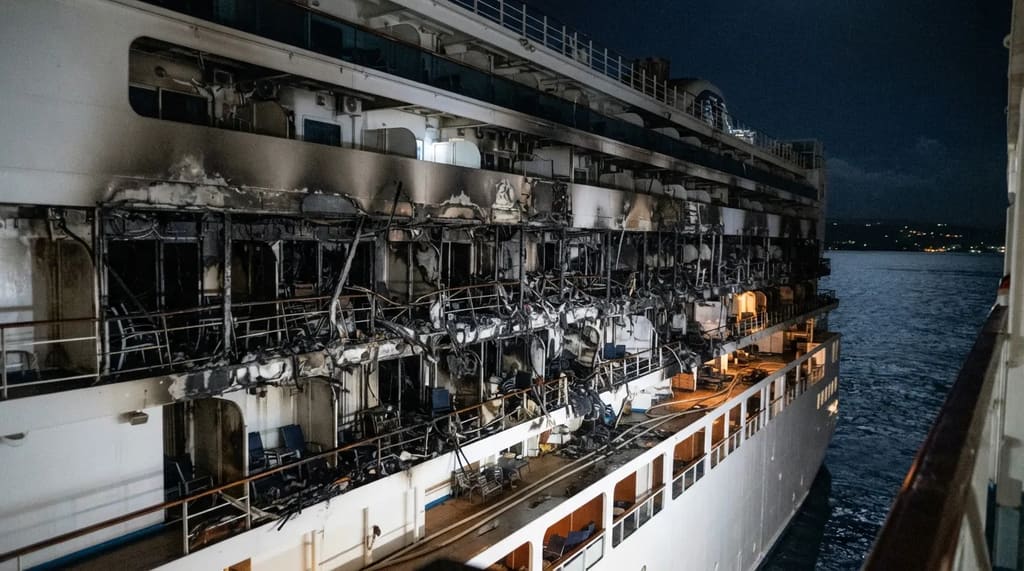
In March 2006, a fire broke out on the Star Princess while she was sailing off Jamaica. It started on a cabin balcony in the middle of the night.
Investigators concluded the most likely cause was a discarded cigarette.6 Flames raced from balcony to balcony, and early reports put the damage at around 150 cabins.1
One passenger died, and others were treated for injuries. The ship was able to continue to port.7
Fast Facts
- The fire began around 3 a.m. on March 23, 2006.
- The ship carried 2,690 passengers and 1,123 crew members.
- One passenger was killed and 11 other people were injured.
- The fire was out about 1.5 hours after it started.
- A later official survey counted 79 cabins condemned and 204 more damaged by water or smoke.8
That is why cruise lines police balcony smoking, ban candles and tampering with detectors, and care about what lands on a railing. It’s also why your steward notices a cigarette butt on a balcony.
Stewards forget plenty of small annoyances. Few forget what a lit cigarette can do to a balcony in the middle of the night.
- Carnival Encounter Star Princess History: https://en.wikipedia.org/wiki/Carnival_Encounter
- Cruise Towel Fees: https://travelhost.com/cruises/carnival-cruise-line-passengers-speak-out-on-controversial-fee
- Cruise Gratuities Guide: https://cruisekick.com/guides/cruise-line-gratuities-tipping-compared/
- Royal Caribbean Guest Conduct: https://www.royalcaribbean.com/faq/topics/general-policies
- Royal Caribbean Prohibited Items: https://www.royalcaribbean.com/faq/questions/prohibited-items-onboard-policy
- MAIB Cigarette Cause Report: https://www.travelweekly.com/Travel-News/Government/U-K-MAIB-Cigarette-probably-caused-fire-on-Star-Princess
- NTSB Star Princess Investigation: https://www.marinelink.com/news/investigation-princess311685
- Star Princess Safety Bulletin: https://assets.publishing.service.gov.uk/media/547c706ced915d4c1000008f/Star_Princess_-_Safety_Bulletin.pdf