A guide notices a lot about your group before the first stop. Rick Steves considers €2 to €5 per person fair for a two-hour European city walking tour, which is small money next to what a guide notices for free: whether you arrive on time, whether your phone stays in your pocket and whether you stand close enough to hear.1
Strangers on a group trip tend to be on their best behavior early, so the first day is when the tone gets set. The 25 courtesies below run from the first hour to the money questions at the end, and one of them costs nothing and keeps working after you are home.
It starts with the clock at the meeting point.
#25 – Five Minutes Early at the Meeting Point
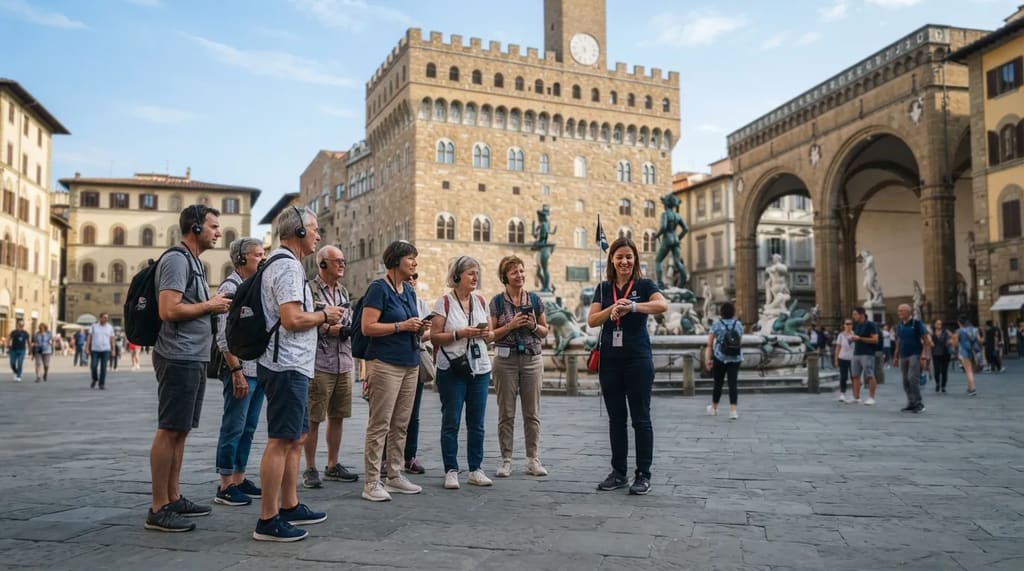
Travel companies that publish group etiquette advice suggest arriving at least five minutes early, and one suggests 10 to 15 minutes ahead.2 3 A guide cannot leave until the group is complete, so one late traveler holds up everyone.
Lateness can cut the group’s time at the attractions and force the guide to rearrange the itinerary.3 That is a lot of trouble from a few minutes.
But arriving early only helps if your clock matches the guide’s.
#24 – A Wristwatch Set to Your Guide’s Time
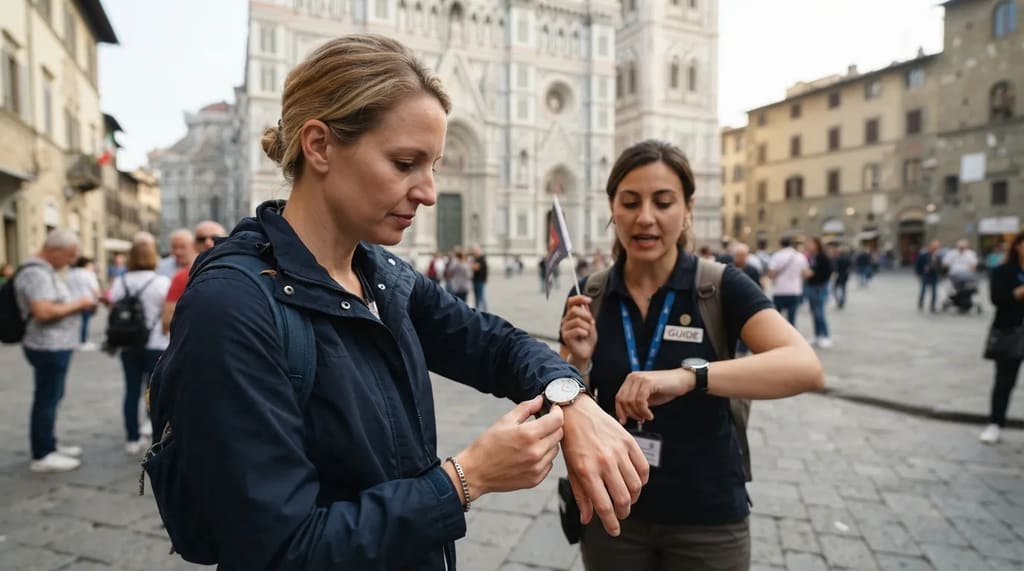
Set your watch or phone to match your guide’s, and give yourself an extra cushion for deadlines.2 Guides give specific times for photos, shopping and departures, and those are the times you will need to check fast.
A wristwatch has one edge over a phone: phone batteries can die at the worst moment.3 If your phone is your only clock, a basic wristwatch is the cheapest fix on this list.
Some of the most helpful courtesies happen before you even meet the guide.
#23 – Telling the Company How You Will Arrive
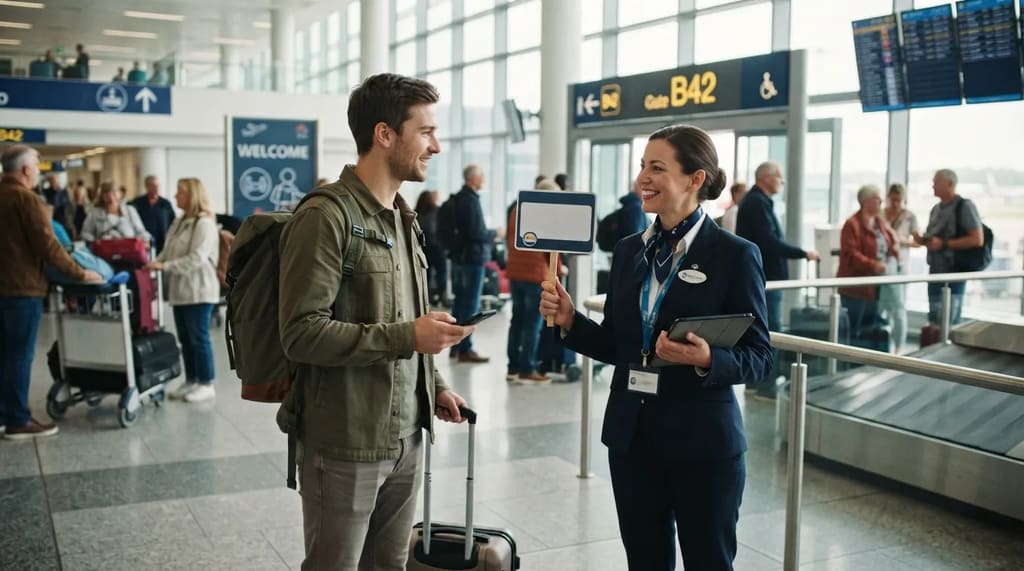
If you are joining the group separately, because of a flight, a train or a day spent elsewhere, tell the travel company how and when you plan to arrive.2 That way the guides on the ground can plan ahead and adjust the itinerary to fit everyone, as far as they can.
It is a courtesy to a guide you have not met yet. A late arrival nobody mentioned becomes the group’s problem on day one.
Getting to the group is the easy part. The weather you meet once you are there is a separate matter.
#22 – Asking What to Wear Before the Day
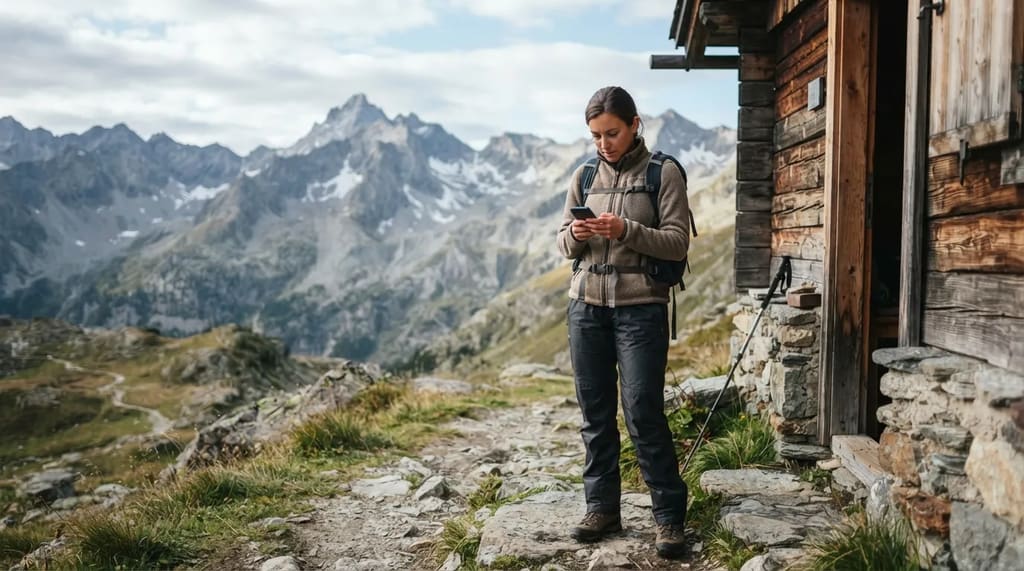
On some tours there is truly nowhere to buy water, a sweater or gloves once the tour has begun. Your guide cannot produce supplies out of thin air, so what you carry is what you have.
If you do not know what to wear or bring, ask before the day of the tour. A short message the day before is enough, and it tells the guide you plan to look after yourself.
Worth Knowing
- Ask whether water can be bought once the tour starts.
- Ask how much of the day is outdoors, and in what weather.
- Ask if a sweater or gloves are worth the space in your bag.
- Send it the day before, not at the meeting point.
If you still end up underprepared, bear it graciously rather than turning the guide into a lost-and-found.
Even the right clothes help little if the bag carrying them is too heavy to lift.
#21 – A Suitcase You Can Lift Yourself
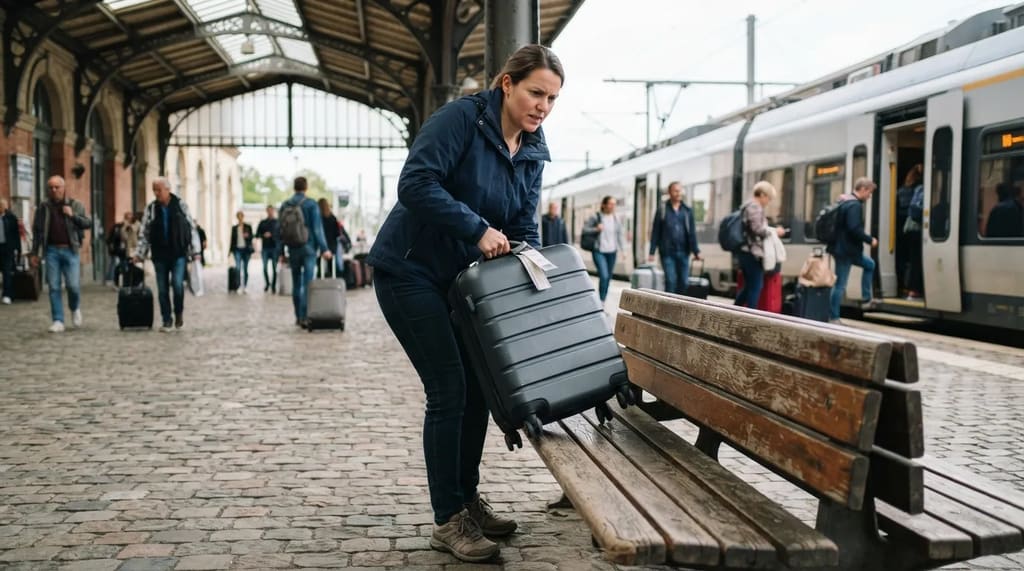
On a moving tour you will be on trains, on buses and on cobblestone streets. Pack only what you need and leave room for souvenirs.
An oversized suitcase can slow the group and cause tension. It is also unwise to assume a kind stranger will help with a bag you cannot handle.
Here is a simple test: if you cannot lift the bag onto a bench by yourself, it is too heavy for a trip with a schedule.
Some needs cannot be packed away, though, and they are best spoken early.
#20 – Saying Your Needs Before Day One
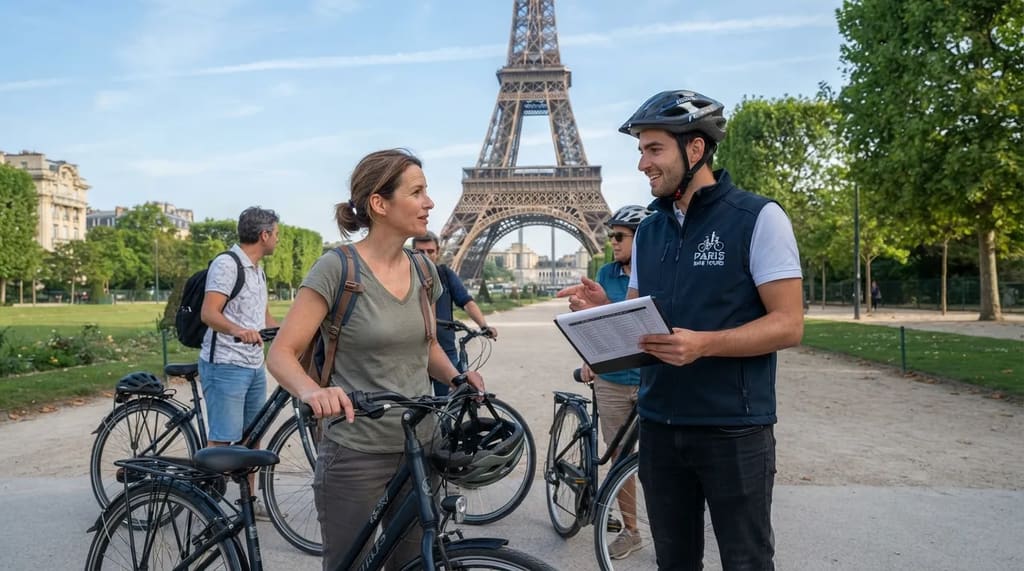
A group tour is built around the group, so one traveler’s pace or diet can only bend it so far. A Paris bicycle-tour guide writes that people with legitimate special restrictions or needs should book a private tour, where the guide can change the tour to suit them.
For smaller needs, tell the company before you go and mention them to the guide at the start.
With a food allergy, work with the restaurant, which can probably find something that suits you. Avoid being pushy, because some cultures may not know how to deal with allergies, and keep something in your bag as a last resort.
With those needs on file, the next step is knowing what to call the person handling them.
#19 – Learning Your Guide’s Name on Day One
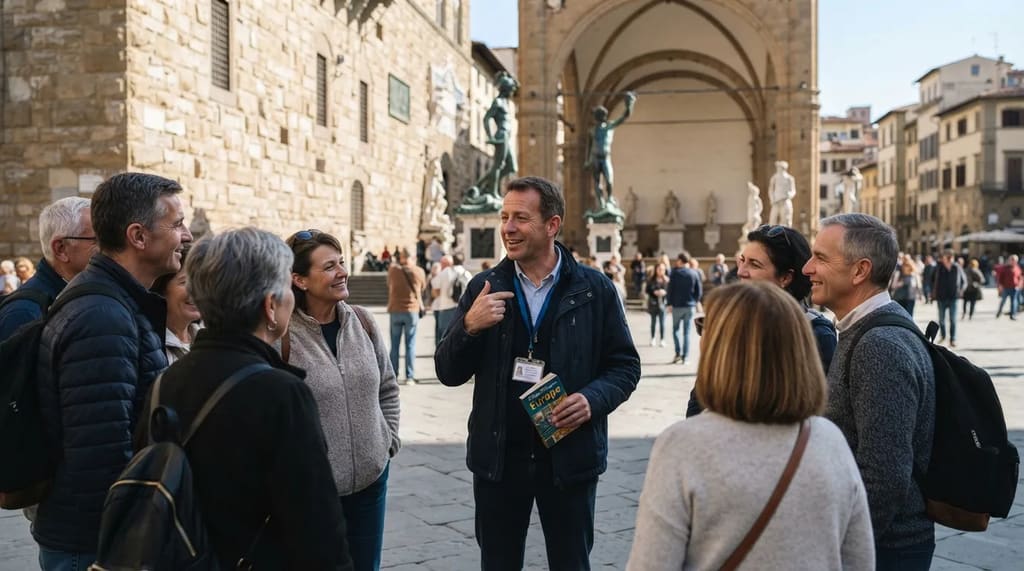
Rick Steves’ tours have the group play a name game within the first couple of days, and the habit is worth copying on any trip. Learn the guide’s name first, then use it when you ask for something to be repeated.
Names are easiest to learn early, before anyone has time to forget them or feel embarrassed about asking.
A name gets you a hearing, but you still have to be within earshot.
#18 – Standing Close Enough to Hear
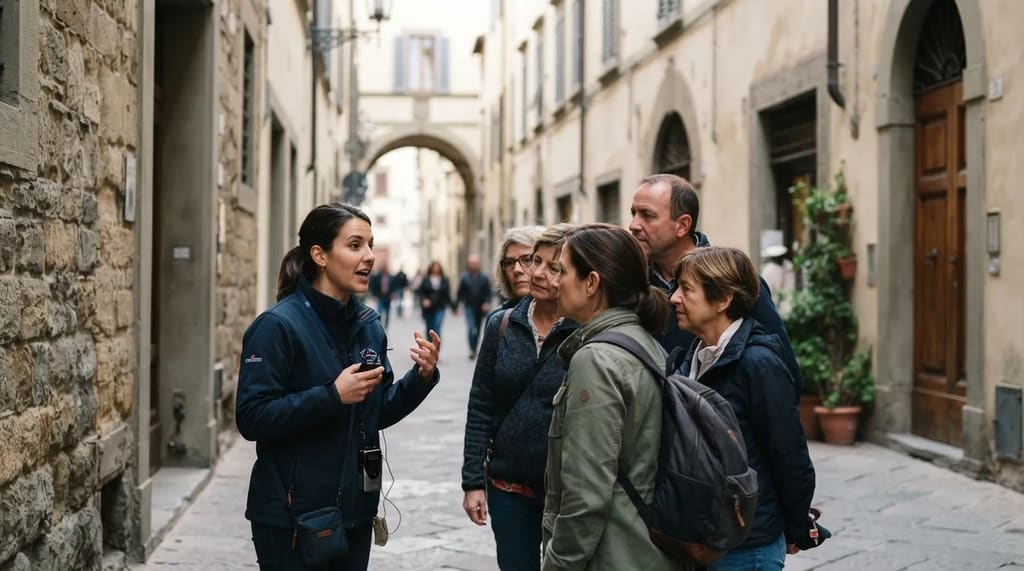
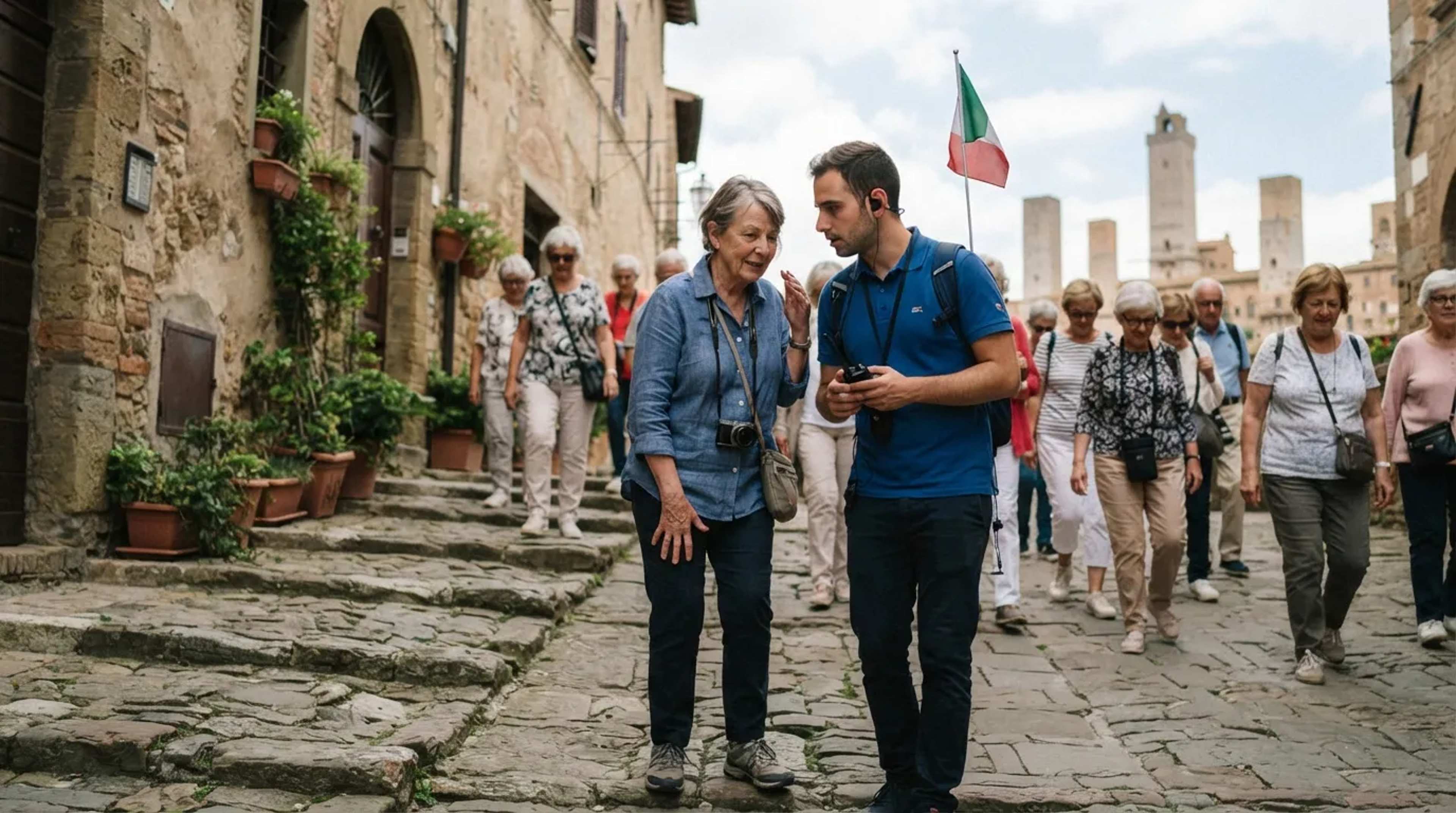
Stand close enough that the guide does not have to strain their voice. It is a small kindness, and it is more useful than it sounds.
Staying in hearing range also matters for safety, because guides give instructions you are expected to follow. At the back of a group, those are the ones you miss.
At a Glance
- Aim to be where the guide can speak at a normal volume.
- Stay within earshot of safety instructions.
- Wear hearing aids or find crowds hard to follow? Tell the guide at the start.
- Then take a spot near them.
But standing close has a side effect for the travelers behind you, who may not see past your shoulders.
#17 – Letting Shorter Travelers Stand in Front
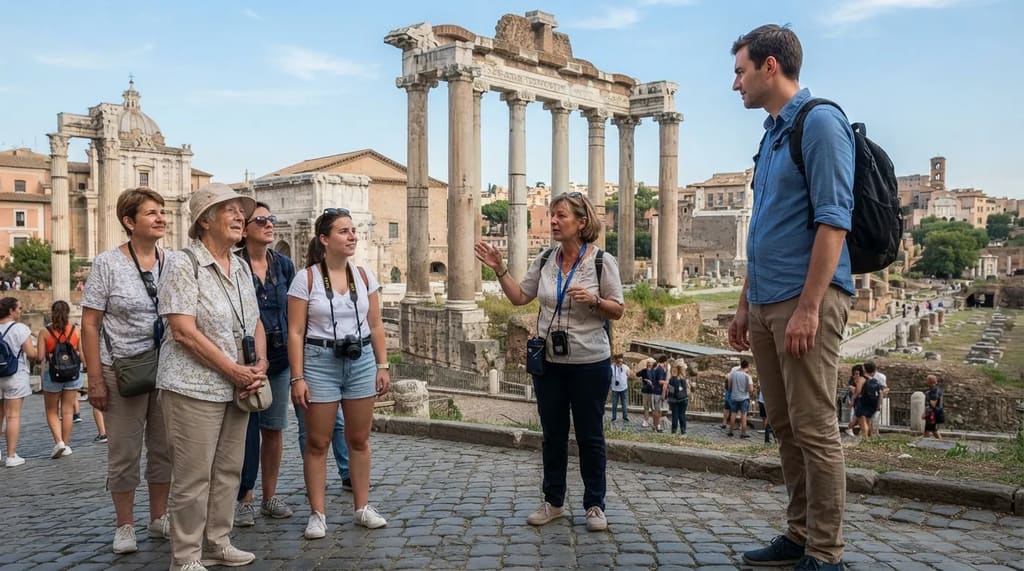
If you are tall, let smaller people stand in front of you during the guide’s commentary. The talk is usually about something the group is looking at, and a traveler who cannot see it tends to stop listening.
Step to the side or the back as soon as the group gathers, before anyone has to ask.
Fairness about views carries over to the coach, where the best seats never rearrange themselves.
#16 – Rotating the Good Seats on the Coach
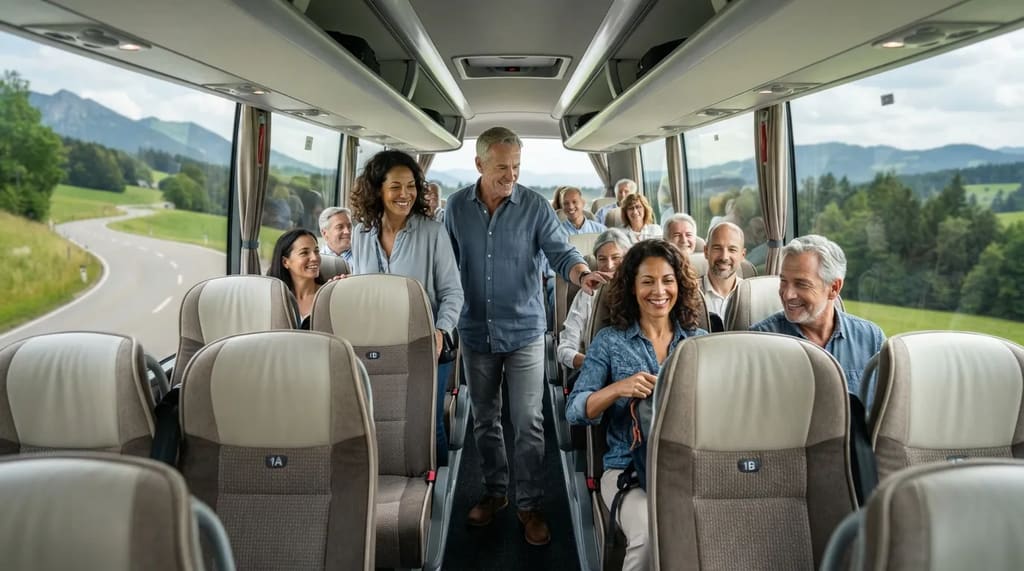
Let everyone have a turn in the prime seats: if you sit in front one day, sit in back the next. On a multi-day coach tour the front gives the best view of the road and of the guide, so rotating is the polite way to share it.
Start on the first day, before seat habits set. If a knee or a back needs the legroom, say so plainly and the rotation can work around you.
Once everyone is seated, the next test is what you do with the device in your hand.
#15 – Phones Silenced and Put Away
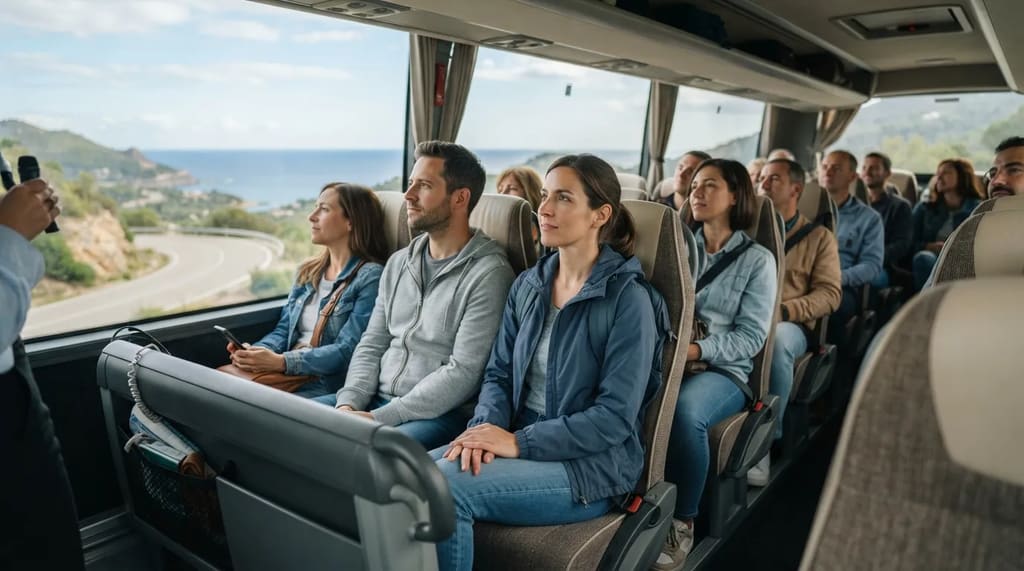
Guides watch the group as closely as the group watches them, because there is no fourth wall in tour guiding. A guide who senses the group is uninterested may go on autopilot, which downgrades the experience for everybody.
A phone pulled out during the commentary costs the whole group. So does a call taken aloud on a coach, since it reaches every seat.
Silence from a group is its own signal, because guides read the faces in front of them.
#14 – Laughing at the Corny Joke
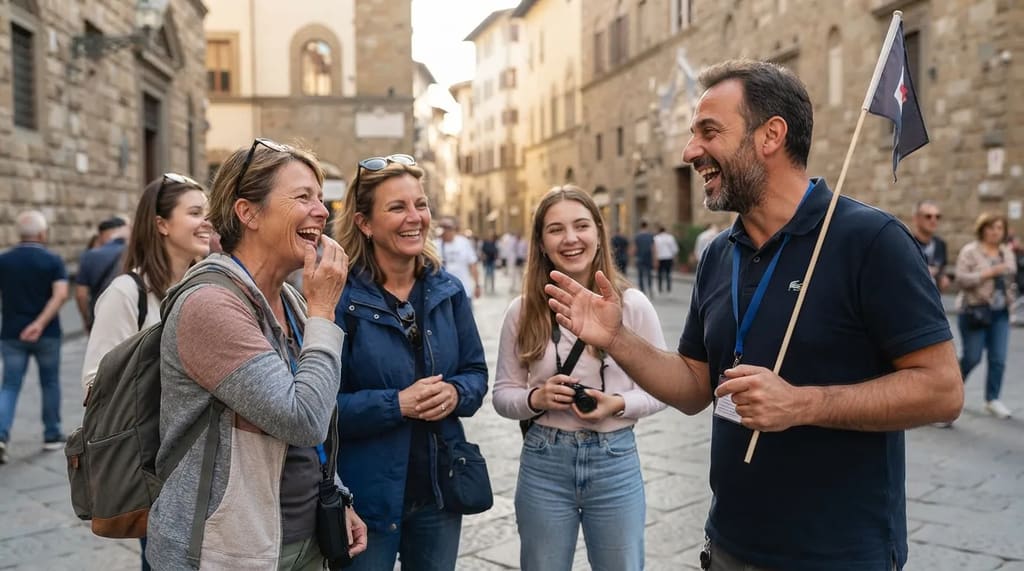
Guides ask questions on purpose, and answering them and laughing at their corny jokes helps keep a group from drifting. A tour works as a dialogue, and the interactive ones are the fun ones.
You do not have to fake a big laugh. A smile and an answer tell the guide the commentary is landing.
The flip side of joining in is knowing when to stay quiet.
#13 – Waiting Until the Guide Finishes Speaking
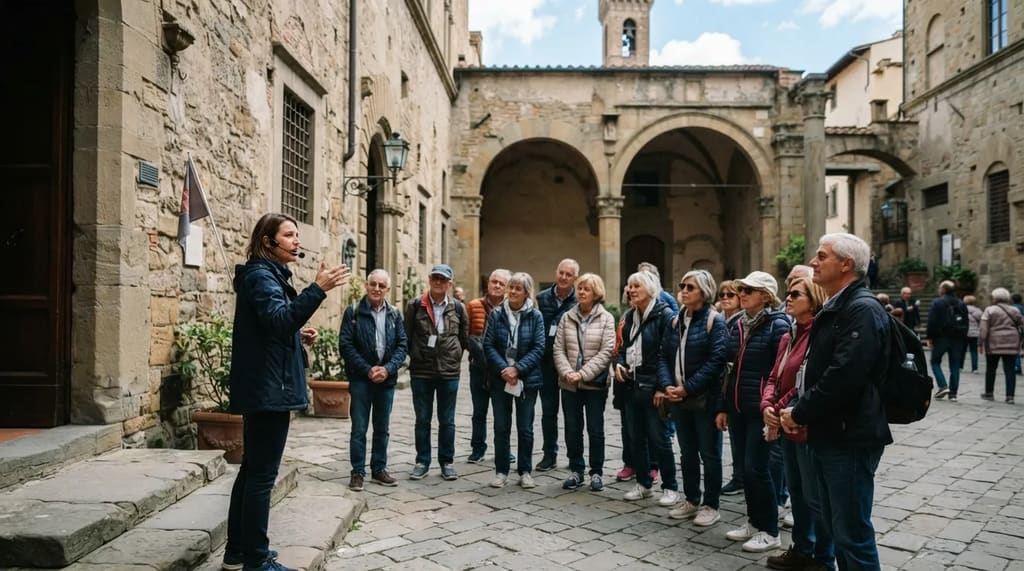
Do not speak while the guide is speaking. Side conversations distract others, show a lack of consideration for the guide and fellow tourists, and make it likelier that you miss an instruction that matters.4
Rick Steves asks his tour members to pay attention when the guide is speaking and help create an atmosphere that tunes in respectfully.
Waiting for the pause raises a bigger question: what do you do with the questions you actually have?
#12 – Saving a Grandchild’s Questions for the Pause
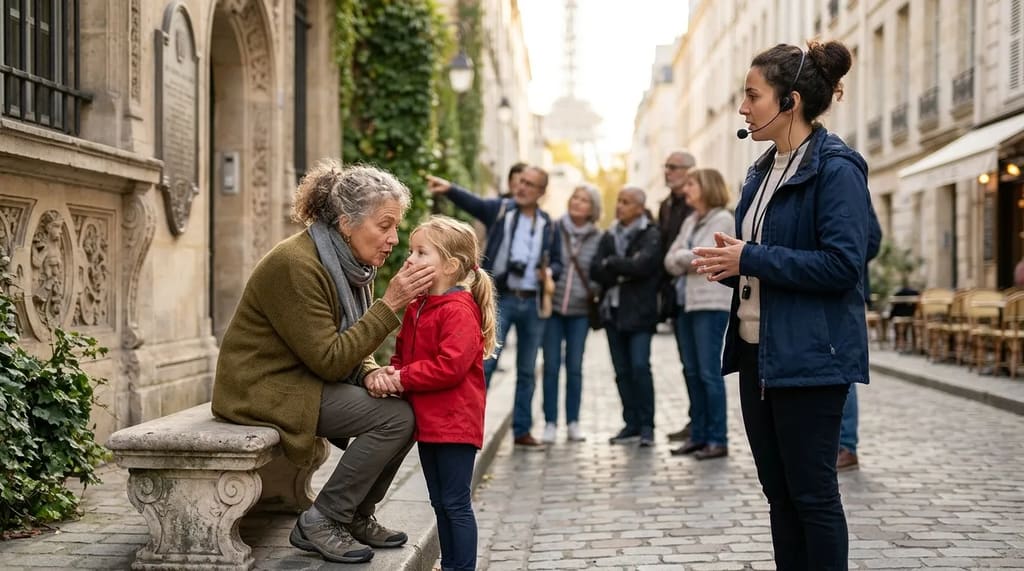
A Paris walking-tour guide asks parents to step in when children monopolize the guide with nonstop questions, and to tell them to save questions until the end. The guide loves engaged kids. The issue is only the effect on the rest of the group.
If you are the grandparent holding a small hand, the same applies to you. Keep the curious child’s questions for a natural pause.
Questions have off-hours too, and the clearest case is the meal break.
#11 – Leaving the Guide Alone at the Meal Break
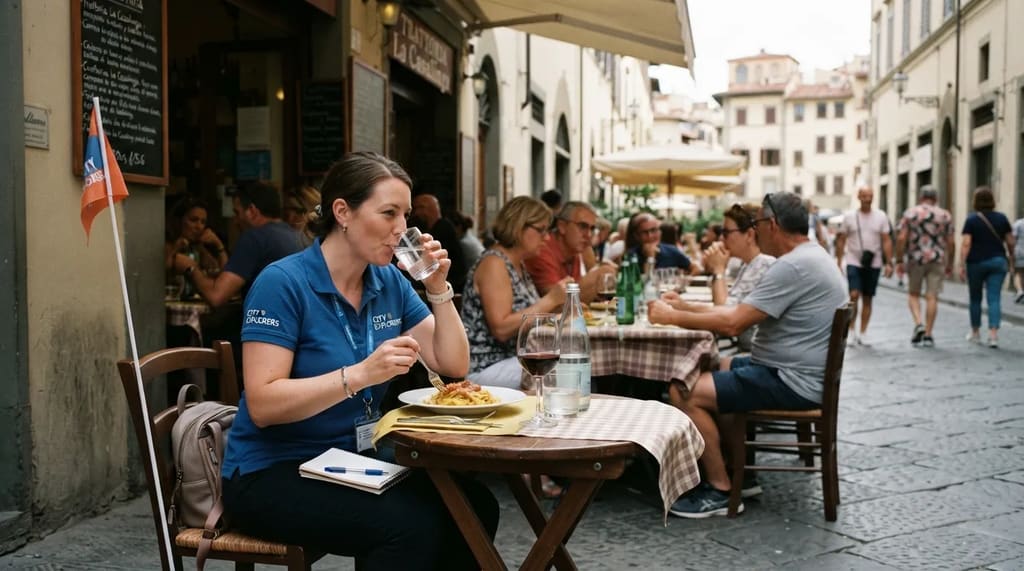
If the tour includes a meal break, try not to pepper the guide with questions. A meal stop is usually the guide’s only chance to eat and rest between sights.
If the guide sits with the group and starts a conversation, follow their lead. Keep the question about the old church for the walk afterward.
Fast Facts
- The meal stop is often the guide’s only real rest between sights.
- A guide who starts the conversation is inviting one. Follow their lead.
- Sightseeing questions keep until the walking resumes.
When the walking resumes, the questions worth asking are the specific ones.
#10 – One Specific Question for Your Guide
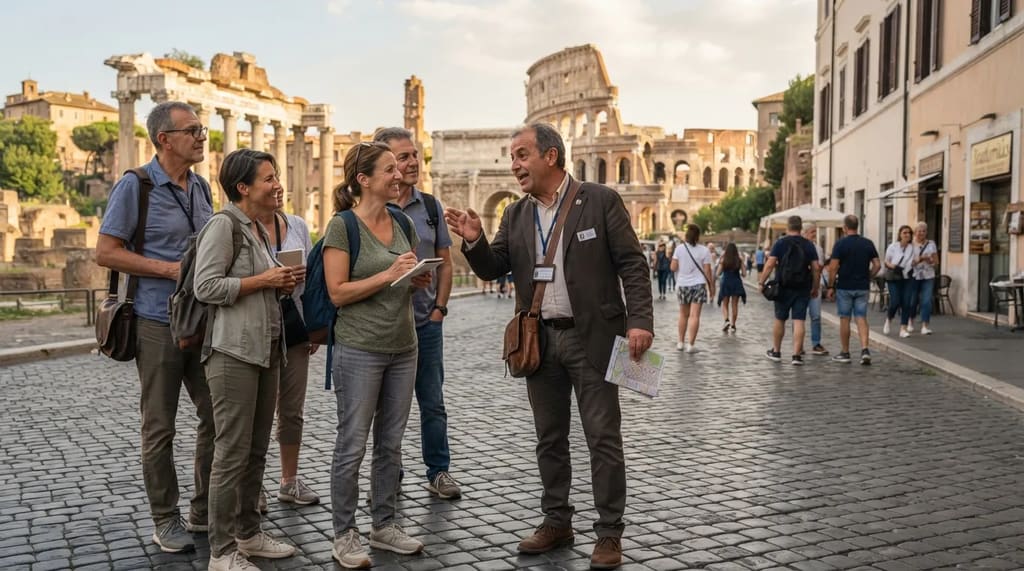
Guides tend to carry far more knowledge than a scripted tour can hold, and groups often leave it unused because nobody asks follow-ups. A group that asks lots of questions is one guides love.
General questions tend to get general answers, so aim narrower. Ask where the guide would eat lunch with forty minutes to spare, rather than what is good to eat.
Good questions earn goodwill. A good photo can burn it fast.
#9 – Asking Before You Photograph
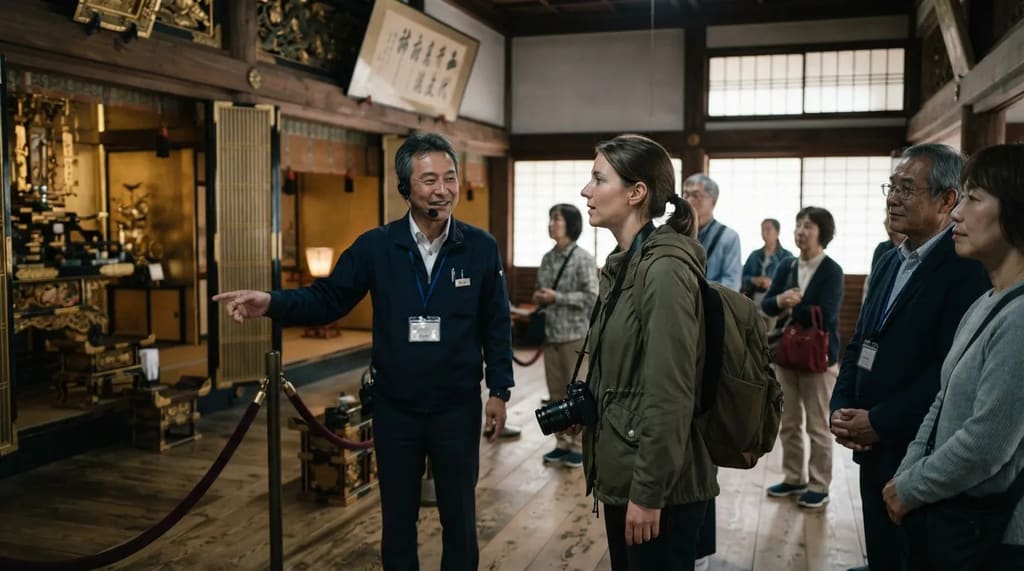
Check with your guide before taking photos in sensitive, restricted or heritage areas. The guide knows which sites have rules, and a rule broken by one traveler is a problem for the whole group’s visit.
Elsewhere, do not hold up the group while you chase the perfect shot. Take two quick frames and keep walking.
Falling behind at a photo stop is one thing, and leaving the group on purpose is another.
#8 – A Word Before You Wander Off
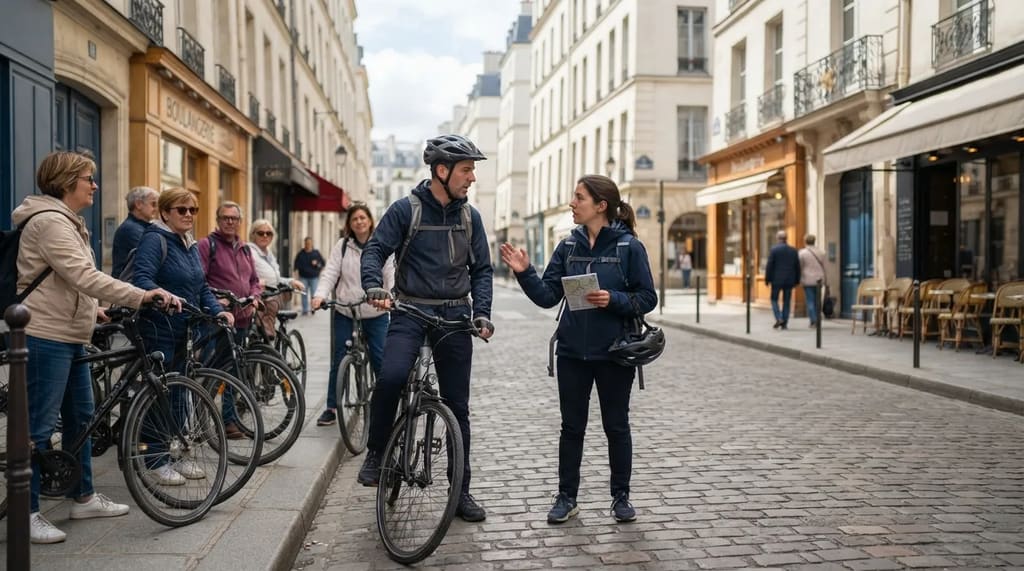
It can be tempting to wander off, but staying with the group is safer and more respectful, and if you must leave, tell the guide beforehand.4 One Paris bicycle guide recalls a rider who took off on her own and immediately got lost.
During free time, check your location and estimated return time now and then.3 A quick glance saves a lot of calling around.
Some departures from the plan are spoken rather than walked, and guides hear those too.
#7 – Keeping Your Opinions to Yourself Unless Asked
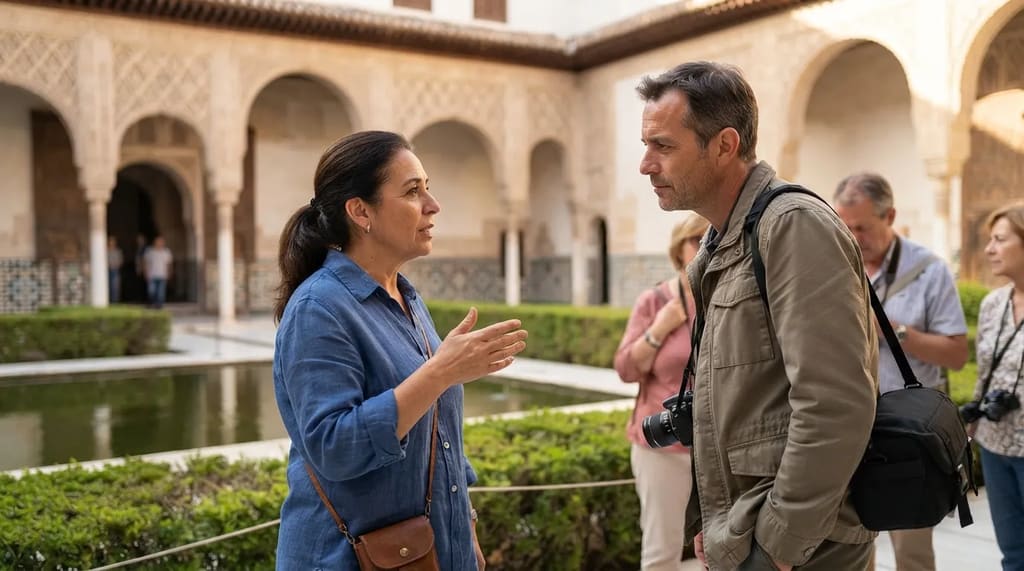
Unless you are asked, do not try to persuade the guide to conform to your beliefs and opinions. Guides have heard it before, and a tour is not a debate stage.
There is one exception worth knowing. Rick Steves says he encourages his guides to grapple with complicated and political issues as part of the experience, so when a guide opens a topic, a respectful exchange is welcome.
The difference is who started it. Answer, ask and listen, but leave the campaigning at home.
#6 – Never Asking What the Guide’s Real Job Is
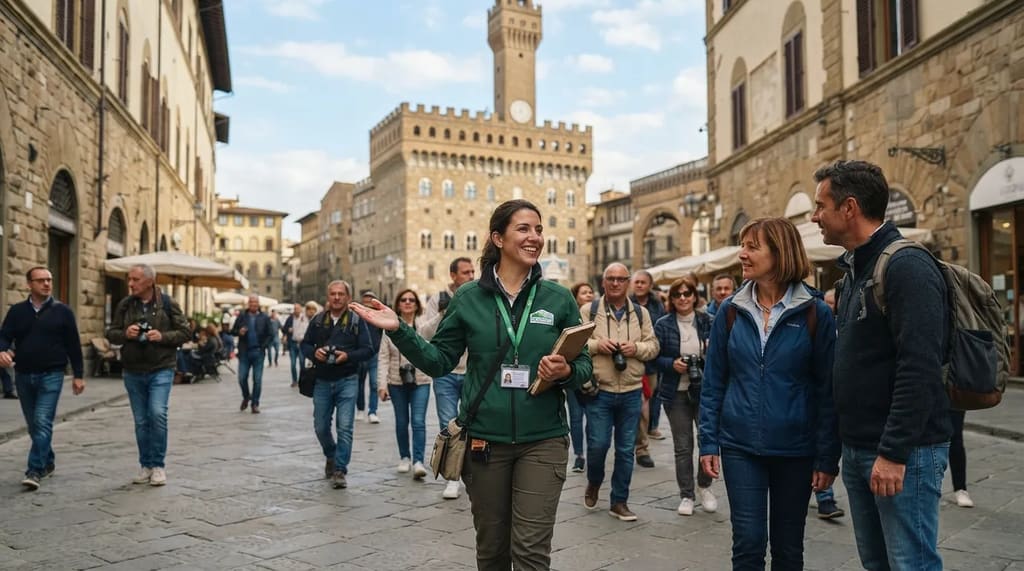
Being a guide is difficult, and if your day went smoothly, it is because your guide worked hard. The NZ Herald’s etiquette piece includes a guide who is tired of being asked whether they are a student, when this is their job.
Above all, do not ask a guide what their real job is. If you are having a great time, the better move is the one the same piece recommends: let your guide know.
Respecting a guide’s work extends to paying for it, which is where the money questions start.
Related Stories From Travelbinger
#5 – Checking Whether the Tip Is Included
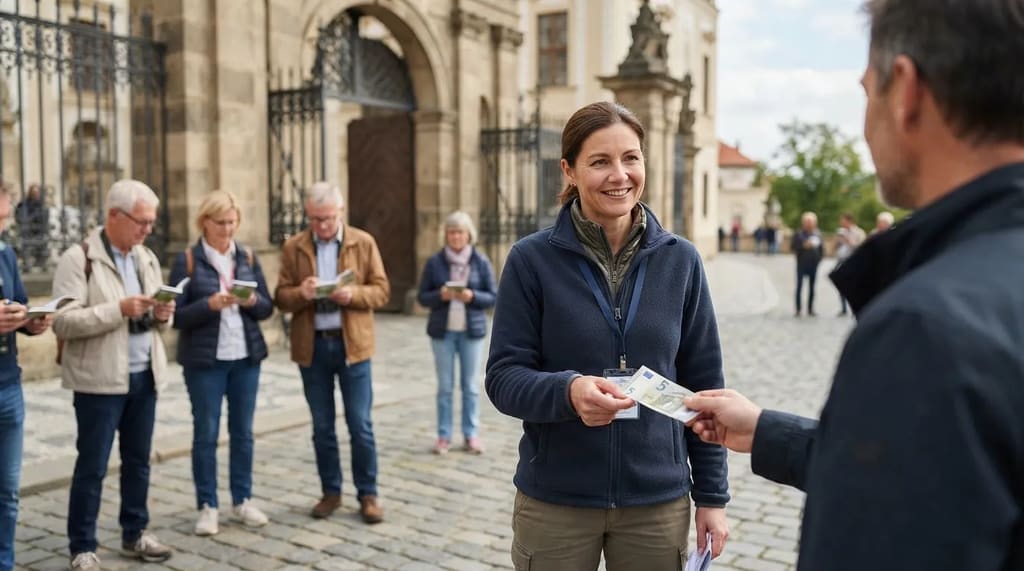
Clarify the tipping policy before the tour begins. Double-check that the tip has not already been included, because paying twice helps no one.
At public sights in Europe, Rick Steves does not tip extra if he has already paid for the tour or the admission, though a euro or two is fine if you want to.1 Where tipping is not customary, a guide should not hold it against a traveler who leaves without a monetary thank-you.
Once you know a tip is welcome, the practical question is what to hand over.
#4 – Cash in Small Bills
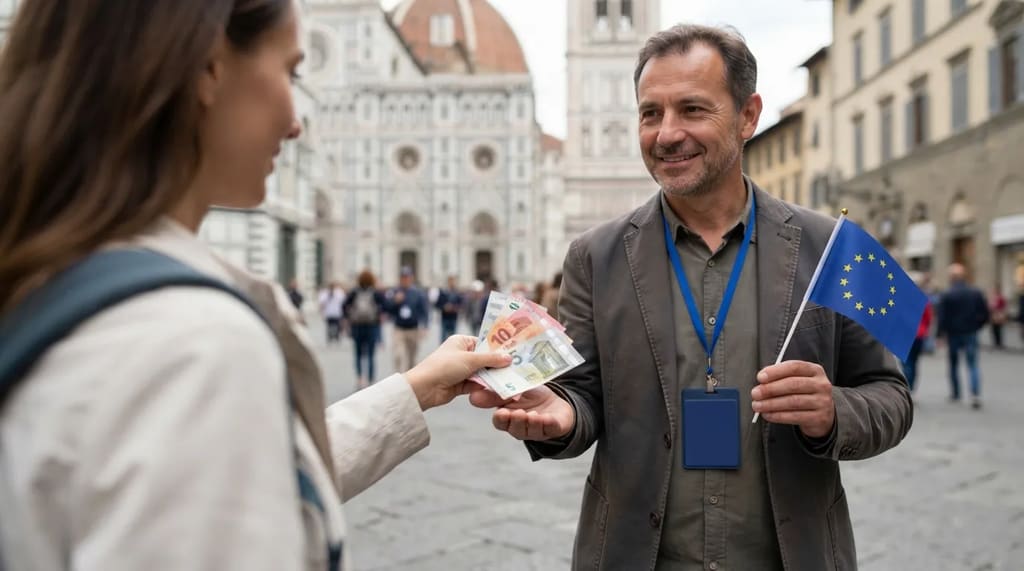
In Europe, most credit-card slips have no line for a tip, so plan on tipping in cash. Tip in local currency when possible, and bring small bills so you are not asking the guide for change.
Check local custom before you reach for your wallet. In Japan, if you have to tip, do not give outright cash.
Cash covers a guide paid by a tour company. A guide who works only for the crowd’s tips is a different case.
#3 – The Free Walking Tour’s Only Paycheck
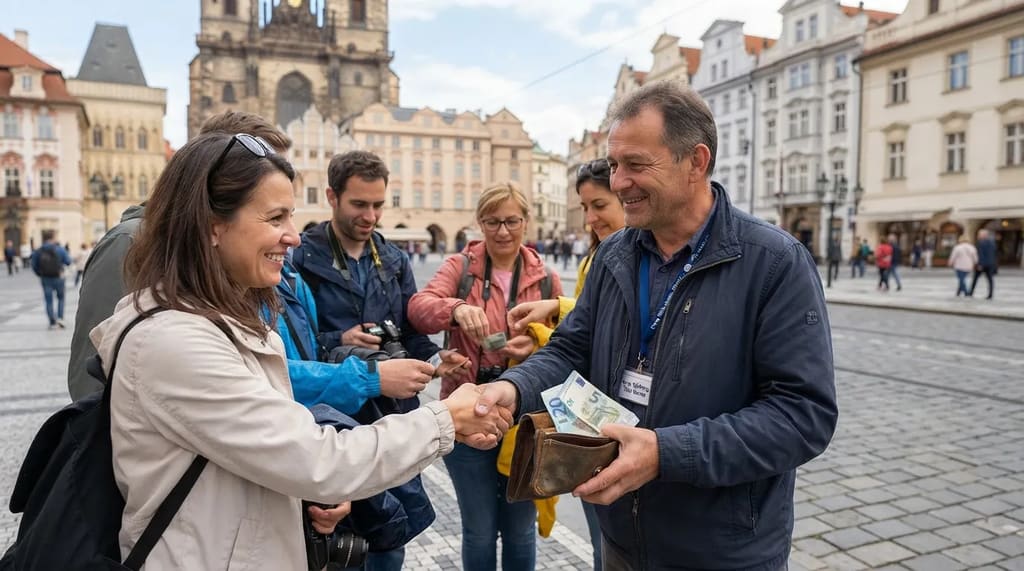
On a free walking tour, the tip is the guide’s only pay.5 Free means you set the price afterward, so treat the end of the tour as the moment the bill comes due.
Tipping guides written for American travelers commonly list $10 to $20 per person for such tours. That is a reasonable range for a tour that ran the full two or three hours.
Quick Compare
- Free walking tour: the tip is the guide’s only pay.
- Public sight already paid for (Europe): an extra tip is optional, and a euro or two is fine.
- Package with tips included: confirm first so you do not pay twice.
If you left early or the guide rushed, give less, and say a warm word so the smaller tip is not mistaken for an insult.
How much to put in the hat or envelope is where published advice starts to disagree.
#2 – A Tip Sized to the Tour, Not a Formula
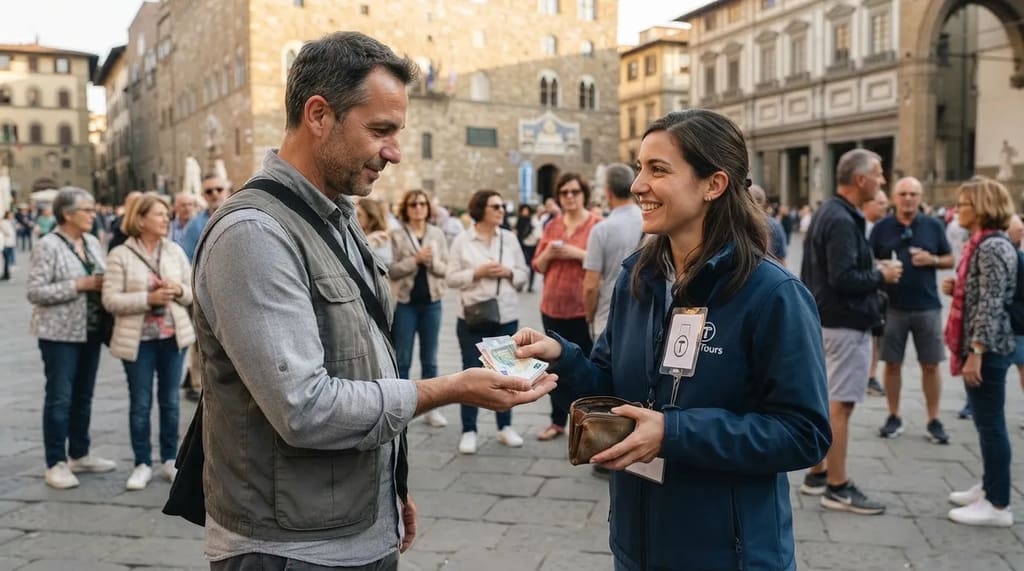
The published numbers do not match. Rick Steves says €2 to €5 per person is appropriate for a two-hour European city walking tour, with the higher figure for small groups,1 while American tipping guides often cite 10 to 20 percent of the tour cost, or $5 to $20 per person per day.
No single formula survives crossing a border. Ask your tour director, who can advise on local tipping customs.
Skip the souvenir. Money is the customary tip, and a gift does not sit well with every guide.
Tips are spent within days, but one courtesy on this list stays in writing long after the trip ends.
#1 – Your Guide’s Name at the Top of the Review
If you had a great tour, remember the guide’s name and put it at the beginning of your online review. This is why learning the name on the first day matters, because you cannot write down a name you never learned.
Guides love seeing feedback and knowing what people liked or didn’t. But skip the blow-by-blow recap and the transcribed jokes, since a few specific lines about what made the day work will do more.
A tip is gone by the following week, while a review stays where the next traveler and the guide’s employer can read it. It costs nothing but a few minutes at home.
Look back over the list and a pattern shows up. Almost every item protects shared minutes, shared sight lines or shared attention, because the guide’s day belongs to the whole group at once.
Before one more photo or one more call, ask what the next minute costs the person standing beside you. On the last group tour you took, what did you do on the first morning that you would do again?
- Rick Steves Tipping Europe: https://www.ricksteves.com/travel-tips/money/tipping-in-europe
- Group Travel Etiquette Guide: https://www.tourissimo.travel/hubfs/Offers/tourissimo_Group_Travel_Etiquette_Guide.pdf
- Tribbles Group Tour Etiquette: https://tribblestravel.com/blog/group-tour-travel-etiquette-the-dos-and-don-ts-for-a-stress-free-trip
- Walking Tour Etiquette Ireland: https://walkinghikingireland.com/walking-tour-etiquette-and-how-to-be-respectful-in-group-tours/
- Free Walking Tour Tipping: https://freewalking.tours/blog/free-walking-tour-tipping-guide/