


Most security-line trouble for older travelers isn’t dramatic. It’s a jacket, a pill bottle or a card in a wallet that quietly stopped being good enough. These are 15 mistakes that cost travelers over 65 time, money and patience, and nearly all of them can be fixed at home.
One of them now carries a $45 fee starting February 1, for flying without a REAL ID-compliant card (enforcement began May 7, 2025). Another is solved by a free phone call, but its deadline starts three days before you fly.
We’ll get to both. The first mistake, though, is about a birthday.
#15 – The Birthday That Changes Your Screening Is the 75th
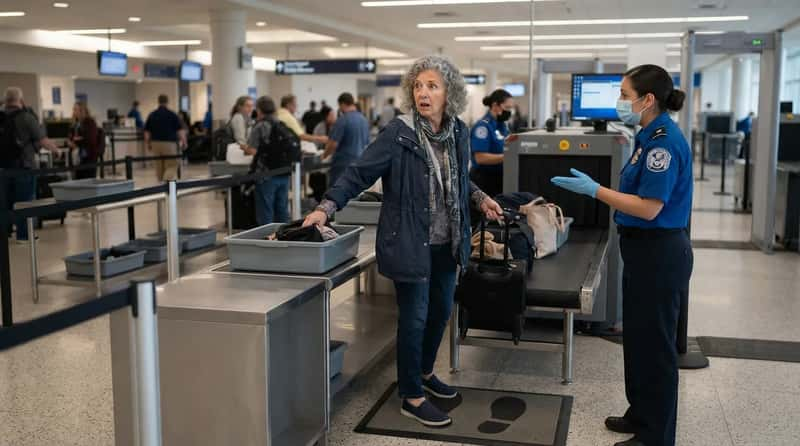
TSA’s page for travelers 75 and older says you may leave your shoes on, but light jackets must come off for Advanced Imaging Technology screening.1 That is a narrower break than some online advice suggests.
It also starts at 75. Between 65 and 74, standard procedures still apply in full.
A 68-year-old who expects the 75-and-over treatment will be surprised at the belt. Plan on standard screening until that birthday, and treat anything extra as a bonus.
Shoes are the part of the old routine that changed most recently, and they changed for every age.
#14 – Shoes Have Stayed On Since July 2025
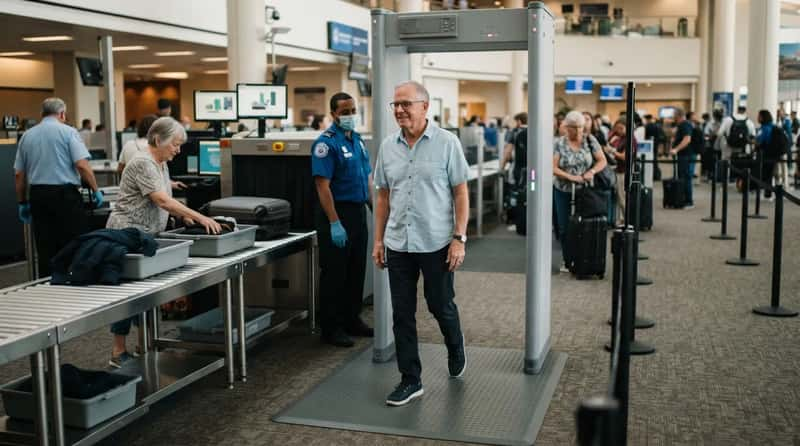
TSA ended its shoe-removal requirement nationwide on July 8, 2025. A traveler who still stops to unlace at the belt is doing work the checkpoint no longer asks for, and doing it on one foot in a crowd.
If an alarm goes off, TSA says you may be required to remove your shoes for further screening or undergo a pat-down.1 So walk up with your shoes on and take them off only if you are asked.
A jacket is a different matter, because the scanner still wants that one off.
#13 – A Light Jacket Still Has to Come Off
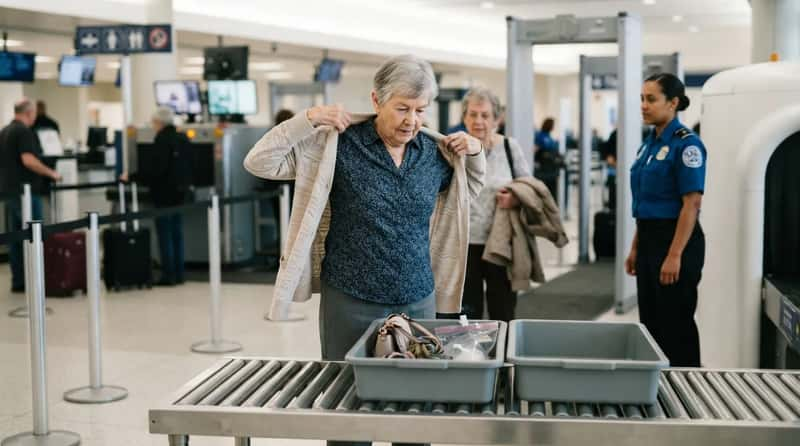
TSA’s page for travelers 75 and older states it plainly: light jackets must come off for Advanced Imaging Technology screening. Advice claiming older travelers can keep a jacket on runs against the way TSA draws the line.
Heavy layers slow things down too, since seniors in multiple heavy layers are still asked to remove jackets. That adds time for everyone behind you, and the stares come with it.
Wear a thin cardigan you can shed in one motion. Empty the pockets into your carry-on before you reach the front of the line.
Quick Compare
- Ages 65 to 74: standard screening applies in full.
- Age 75 and older: shoes may stay on, but light jackets still come off for Advanced Imaging Technology.
- PreCheck lane: shoes, laptops, 3-1-1 liquids, light jackets and belts stay in place.
- Every age: shoes stay on unless an alarm calls for further screening.
#12 – A Full-Size Lotion or Mouthwash in the Carry-On
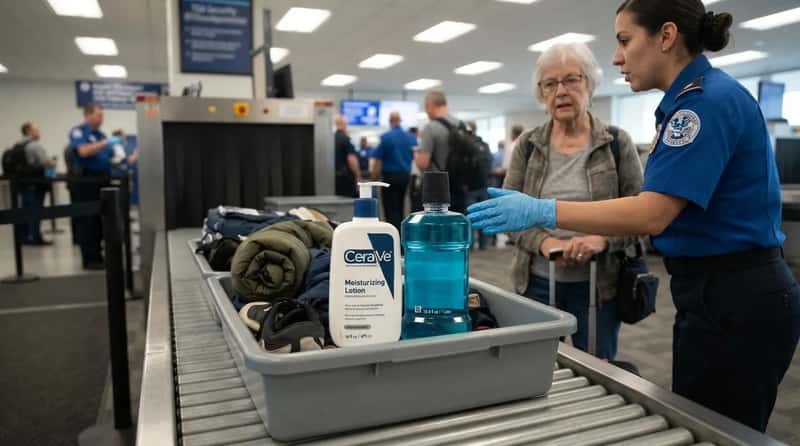
On its travel tips page, TSA says all liquids, aerosols and gels in carry-on bags must be 3.4 ounces (100 mL) or less.2 A full-size bottle of lotion, mouthwash or hair spray is over that limit, and that usually means handing it over at the checkpoint.
The limit applies to carry-on bags, so if you check a bag, full-size bottles belong in it. If you travel carry-on only, buying a small bottle at your destination costs less than losing a large one at the belt.
Medicine is the exception to that limit, though the exception comes with a condition.
#11 – Liquid Medicine Over 3.4 Ounces, Left Undeclared
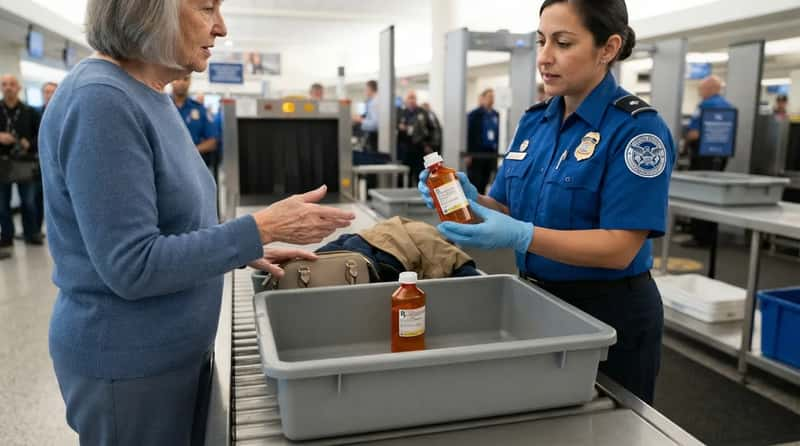
Medication in liquid form over 3.4 ounces is allowed in carry-on bags in reasonable quantities for a flight. It does not need a zip-top bag, but you must tell the officer you have medically necessary liquids at the start of screening.2
So the mistake runs two ways. Some travelers leave a needed bottle at home out of caution, and others bury it in the bag and say nothing.
Take the bottle and declare it. If your condition requires it, you may even travel with a juice box or other liquid over 3.4 ounces, but expect extra screening.
Declaring is for liquids only, since pills need no announcement. Where you pack them matters more.
#10 – Prescriptions Packed in the Checked Bag
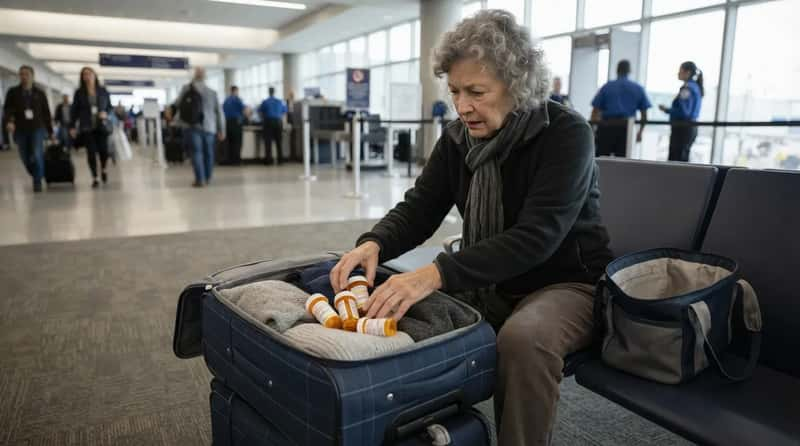
You can bring medication in pill or solid form in unlimited amounts if it is screened. It can go in carry-on or checked baggage, but TSA strongly recommends the carry-on in case you need immediate access.2
A checked bag can be delayed or lost, and a missed dose will not wait for it to turn up. Pack a few extra days’ supply too, because a cancelled flight can stretch a three-day trip into five.
At a Glance
- Pills and solids: unlimited amounts, as long as they are screened.
- Best place to pack them: your carry-on, so they are within reach.
- Liquid medicine over 3.4 ounces: allowed in reasonable quantities, but declare it at the start.
- Cushion: a few extra days’ supply for delays.
The bottle itself is a separate question, since TSA’s position and state law do not line up exactly.
#9 – A Pill Organizer With Nothing Behind It
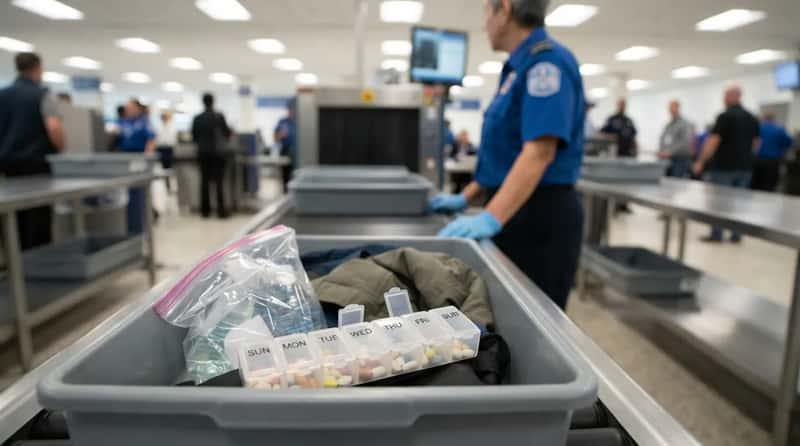
TSA does not require passengers to pack medicine in prescription bottles. However, certain state laws on labeling prescription medicine may still apply to you.
A pill box is fine under TSA medication rules. The question is what you can show if someone asks what is in it.
Keep the original bottles for anything controlled, and carry a doctor’s letter, especially for large quantities. A weekly organizer plus the labeled bottles covers both needs, so skip the month of mixed pills in one plastic bag.
Pills are the part of your health you can pack. A joint replacement or pacemaker goes through the scanner with you.
#8 – The Implant You Forget to Mention
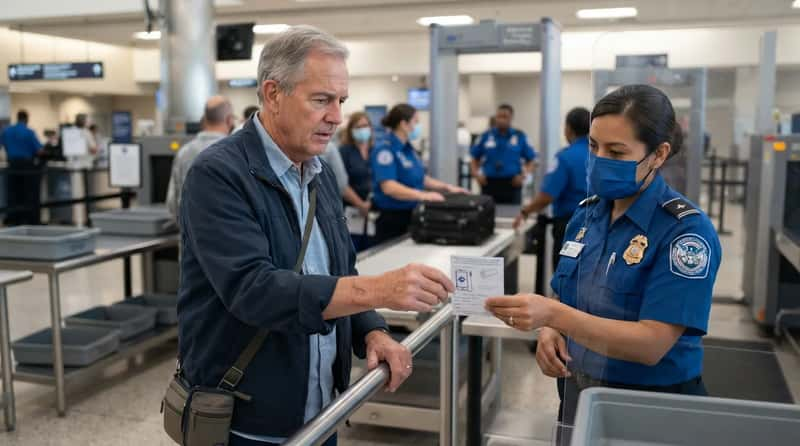
TSA Cares, the agency’s helpline, covers implants and internal medical devices among the situations it handles. A metal joint replacement can set off an alarm.
Telling the officer before you step into the scanner makes the alarm something expected rather than a surprise.
TSA also publishes a notification card for travelers with disabilities and medical conditions. It has a line for the condition or device that may affect your screening, so print one, fill it in and hand it over instead of explaining over the noise of a busy checkpoint.
Alarm or no alarm, some travelers cannot simply stand still in the scanner, and there is a provision for that.
#7 – Standing Through Screening When You Could Sit
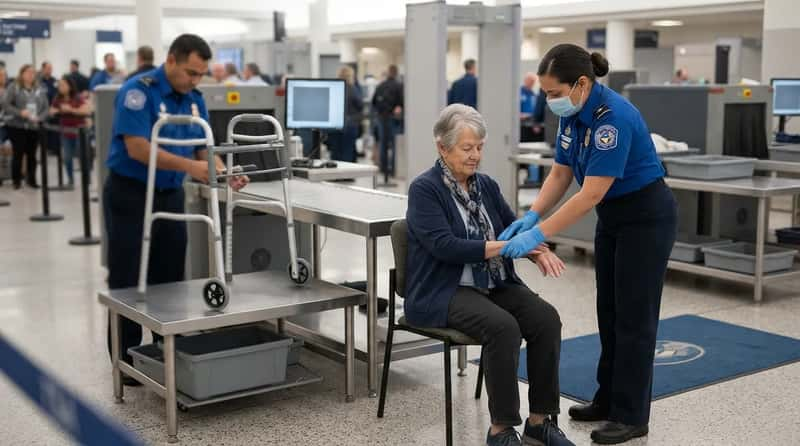
If you need to sit, don’t be afraid to ask during additional screening. TSA says passengers 75 and older who are unable to stand for screening will be screened through other security methods.1
Younger travelers whose medical conditions prevent standing or walking aren’t required to remove shoes, though their shoes are inspected manually.
Walkers, canes, crutches and other mobility aids will be X-rayed or hand-inspected. Ask for somewhere to steady yourself while yours is checked, because an unsteady stand through a long pat-down is the worse choice.
Once you are seated, the officer may swab your hands or your cane. That step is easy to misread.
#6 – Reading the Hand Swab as an Accusation
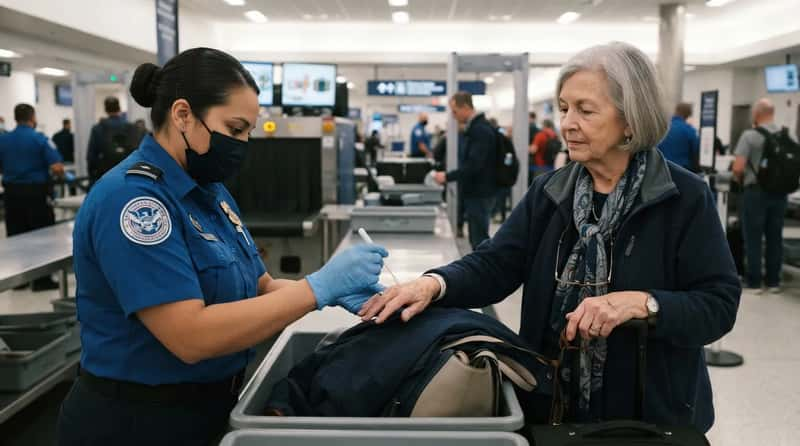
Your hands, mobility aids, medical devices and shoes may be swabbed for trace amounts of explosives. The swab is a screening step and does not mean the officer suspects you.
If an alarm does sound, expect further screening or a pat-down, as TSA describes. Stay calm, answer briefly, and ask for a seat or a private area if you want one.
Arguing at the checkpoint adds minutes and removes nothing.
There is a lane built to skip most of this shuffle, and it has no age limit for applying.
#5 – Writing Off PreCheck as a Frequent Flyer Perk
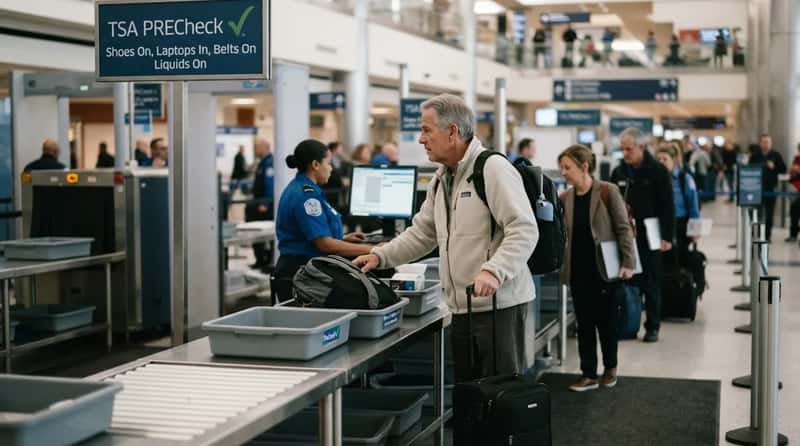
At PreCheck lanes you don’t remove shoes, laptops, 3-1-1 liquids, light jackets or belts, and there’s no age limit for applying.3 Now that shoes stay on everywhere, the real difference is the jacket, belt, laptop and liquids steps.
Turning 75 doesn’t unlock a fast lane. It changes the rules in the regular line, and it does not enroll you in PreCheck.
If you fly a few times a year and the belt-and-jacket routine wears on you, look into PreCheck. For one trip a year, probably not.
Worth Knowing
- Length: membership lasts five years.
- Cost: TSA advertises $85 or less, and the exact fee depends on the enrollment provider.3
- Enrollment: it includes an in-person appointment, so plan a short trip to a nearby center.
- Possible savings: some travel credit cards reimburse the application fee.
PreCheck members face the same ID rules as everyone else, which brings us to the card in your wallet.
#4 – A Driver’s License That Is Not REAL ID Compliant
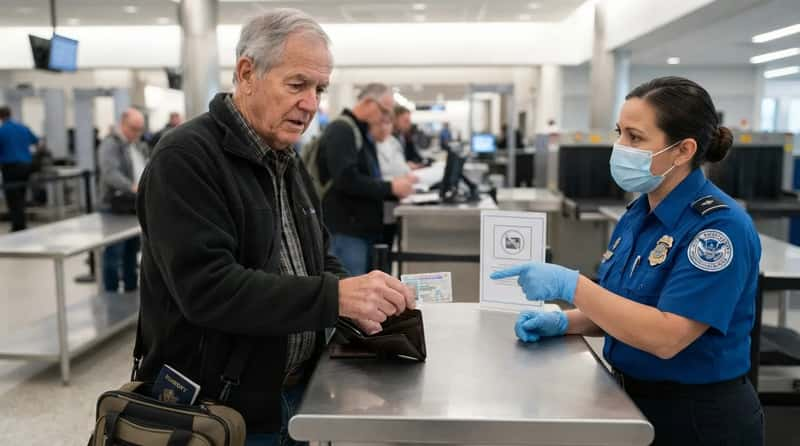
Starting May 2025, U.S. travelers must be REAL ID compliant to board domestic flights. TSA’s advice is to bring an acceptable alternative, like a passport, or enroll for a REAL ID through your state DMV.
A temporary driver’s license is not an acceptable form of identification. Travelers without acceptable ID can expect delays, additional screening and the possibility of not being allowed into the checkpoint.
If you cannot recall whether your card qualifies, settle it before you book, not at the airport.
Arriving without any accepted ID is no longer a flat refusal, but the workaround has a price.
#3 – The $45 Fee for Showing Up Without REAL ID
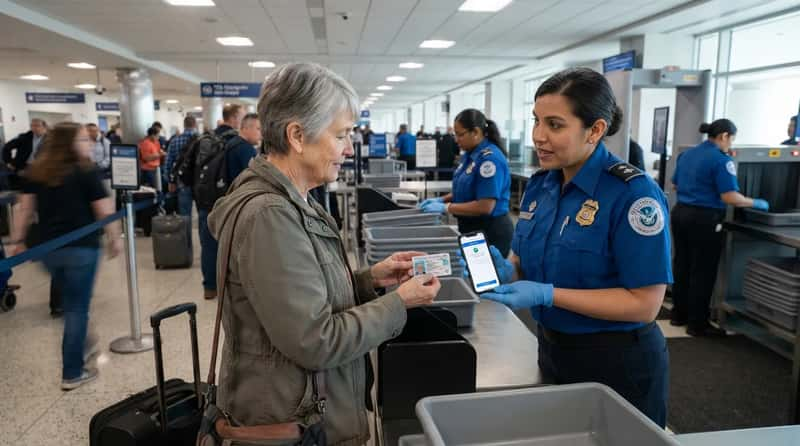
AARP reported that TSA announced a $45 fee for those traveling without a REAL ID-compliant license or photo ID card.4 The process is called ConfirmID.
You enter your name and travel start date online and pay, then bring the receipt and a government ID to the checkpoint. The fee is good for 10 days from the date of travel.5
Paying does not guarantee a result. TSA officials said paying the fee does not guarantee verification, and travelers whose identities cannot be verified may be turned away.6
Officials also said the process may take up to 30 minutes. Treat it as a last resort, because a REAL ID or a passport costs less in worry.
A traveler with perfect ID can still find that the help they counted on ends at a boundary they didn’t know about.
#2 – Assuming TSA Help Reaches the Gate
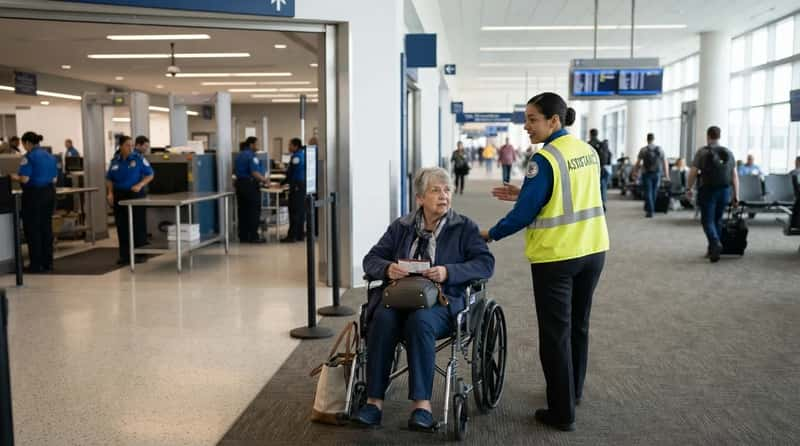
TSA Cares assistance is only available through the screening checkpoint. If you need in-flight assistance or wheelchair assistance from the curb to the aircraft, contact your airline.7
That makes two separate requests to two different organizations. TSA covers the stretch through the checkpoint, while your airline covers the curb, the gate and the seat.
The checkpoint half of that arrangement runs on a clock that starts well before you leave for the airport.
#1 – Waiting Until the Airport to Ask for Help
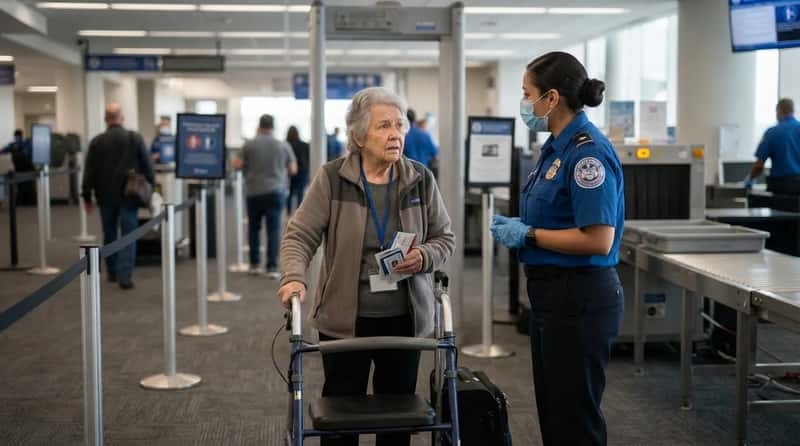
TSA’s guidance is to contact the TSA Cares helpline 72 hours before traveling. The number is (855) 787-2227.8
The line covers many of the situations in this list. They include traveling with medications, dementia, external and internal medical devices, mobility aids, prostheses, respiratory equipment and service animals.
The call can bring a Passenger Support Specialist to meet you at the checkpoint. The implant, the liquid medicine and the need to sit are all things one call can line up.
The helpline costs nothing, but the window for using it comfortably closes three days before departure. If your flight is within 72 hours, call anyway, because a late call beats no call.
Notice what nearly every mistake here had in common: none of them was about the checkpoint itself. They were about what happened, or didn’t, in the days before it.
Ten minutes the week before a flight is enough to lay out your ID, your medicines and any paperwork. Do that, and the checkpoint becomes a short walk instead of a place where problems turn up.
What is the one item you always double-check before leaving for the airport?
Bonus: The Free Insider Shortcut Most Travelers Never Use

When you are unsure about one specific item, do not guess at the belt. Text TSA the question and get an answer in writing before you leave home.
- Step 1: Text the word TRAVEL to 275-872 (it spells AskTSA). You can also message @AskTSA on Facebook Messenger or X.
- Step 2: Pick a topic such as What’s Allowed, Identification or Medical Questions, then name the exact item. Say “2-ounce tube of prescription eye ointment,” not just “medicine.”
- Step 3: An automated assistant answers around the clock. TSA says live staff are available from 8 a.m. to 6 p.m. Eastern Time for harder questions.
- Step 4: Screenshot the reply and keep it with your boarding pass.
If you would rather talk to a person, the TSA Contact Center is at 866-289-9673. Check TSA’s site for current hours before you call.
Do this the week before you fly, while there is still time to repack or swap an item.
- TSA Screening Age 75+: https://www.tsa.gov/travel/tsa-cares/screening-passengers-75-and-older
- TSA Travel Tips: https://www.tsa.gov/travel/travel-tips
- TSA PreCheck: https://www.tsa.gov/precheck
- AARP REAL ID Fee: https://www.aarp.org/travel/travel-tips/real-id-questions/
- TSA ConfirmID: https://www.tsa.gov/tsaconfirm-id
- TSA ConfirmID FAQs: https://www.tsa.gov/tsaconfirm-id/confirmid-faqs
- TSA Cares Assistance Request: https://www.tsa.gov/contact-center/form/cares
- TSA Customer Service: https://www.tsa.gov/news/press/factsheets/customer-service
