


Everyone at the carousel looks the same: eyes on the belt, arms crossed, waiting. The people who rarely walk away with a problem are doing 17 small things that nobody beside them ever sees.
In 2025, U.S. airlines mishandled 2,279,592 bags, a rate of 0.51 per 100 checked. That’s roughly one bag in every 200, and if yours is the one, the first minutes at the carousel decide how smoothly it gets fixed.
Stay for #1. It unlocks a bag fee refund and sets the clock for every claim, and it has to happen before you walk out of the terminal. First, the smallest habit.
#17 – Rechecking the Carousel Screen Before You Settle In

Carousel assignments can shift after you’ve already walked to a belt. In a crowded hall, it’s easy to end up at the wrong one.
Look at the screen again before the belt starts moving. It takes five seconds, and it spares you from watching the wrong belt while your own bag circles somewhere else.
If your flight has dropped off the display, ask an airline agent in the hall instead of guessing. It may simply have been moved to another belt.
Once you’re at the right belt, the best spot to stand isn’t the one closest to the chute.
#16 – Standing Back From Where Bags Emerge
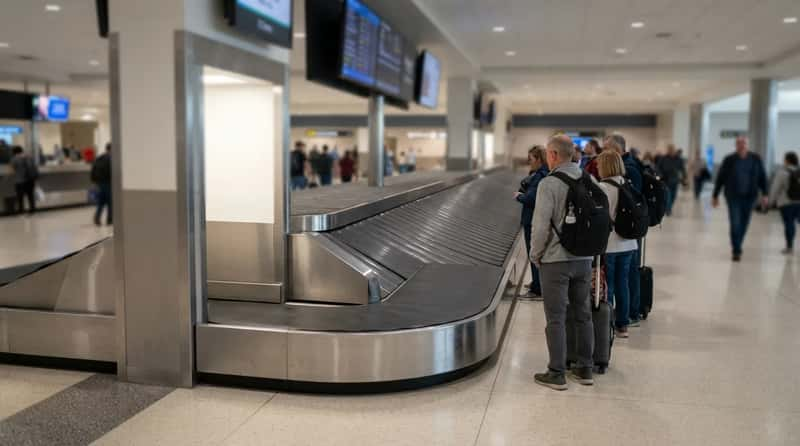
The spot nearest the opening where bags appear feels smart and is actually the worst place to stand. Standing clear keeps traffic moving.
From a few steps back you can see more of the belt, so you spot your bag sooner.
Experienced flyers also walk straight to the carousel, because the advice is to reach baggage claim before your bags do. Be at the belt before the first bag drops.
Bags usually take a while to come off the aircraft, so a brisk walk costs you nothing. A slow one risks missing your bag’s first pass.
At a Glance
- Stand a few steps back from the chute, not beside it
- Walk straight to the carousel instead of detouring
- Arrive before the first bag drops
- A wider view of the belt means you spot your bag sooner
Spotting a suitcase that looks like yours is the easy part, and that’s exactly where the trouble starts.
#15 – Reading the Tag Before Trusting the Suitcase

Many suitcases look identical, and it is very common for passengers to accidentally take the wrong bag. Color and shape are the least reliable evidence on that belt.
Experienced flyers read the tag first, matching the destination code and flight number on the white adhesive tag to their claim ticket. Match the tag number to your claim ticket before you walk away.
Sometimes your hands will warn you before your eyes do.
#14 – Noticing When the Handle Feels Wrong
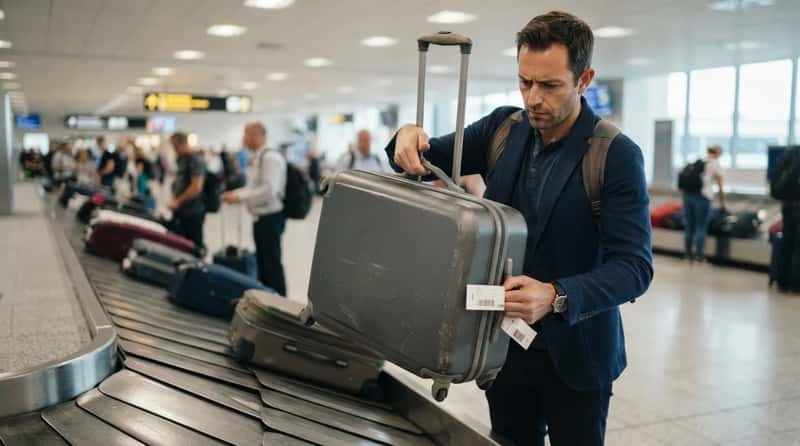
If a bag feels lighter or heavier than you expect when you lift it, double-check the tag. Experienced flyers register the weight on the first lift and go straight back to the tag.
An unexpected weight is reason enough to recheck the tag. A bag that feels light also deserves a look at the zippers and seams, since it’s worth checking for damage or signs of tampering before you leave.
Lift your suitcase once at home, before you pack for the return trip. That gives you a baseline feel to compare against at the carousel.
Weight tells you about one bag. The next habit is about how many you’re supposed to have.
#13 – Counting Bags Against Your Claim Stickers

Two bags checked, one on the belt, and the family is already heading for the exit. If you have several bags, count them and match the number to your claim tickets before leaving the carousel.
Count first, then leave the belt. A missing bag is far easier to report while you’re still in the airline’s baggage hall than from the parking lot.
A complete set still has to be told apart from everyone else’s, and one cheap accessory does that from across the hall.
#12 – Marking the Bag So It Stands Out
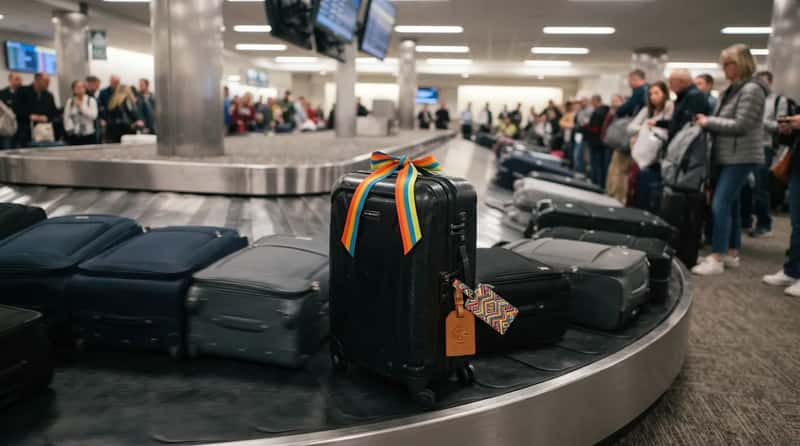
A plain black suitcase is a gamble, and a ribbon is a cheap way out of it. A colorful ribbon, a unique tag or another unusual accessory makes your bag easier to spot and harder for someone else to confuse with theirs.
Tags can rip off in transit, so experienced flyers don’t rely on just one. Put your name and phone number on the bag in at least two places.
Even a perfectly marked bag can be questioned at the exit, because some airports have agents who check claim tags against bags.
#11 – Keeping the Claim Sticker Until You’re Outside
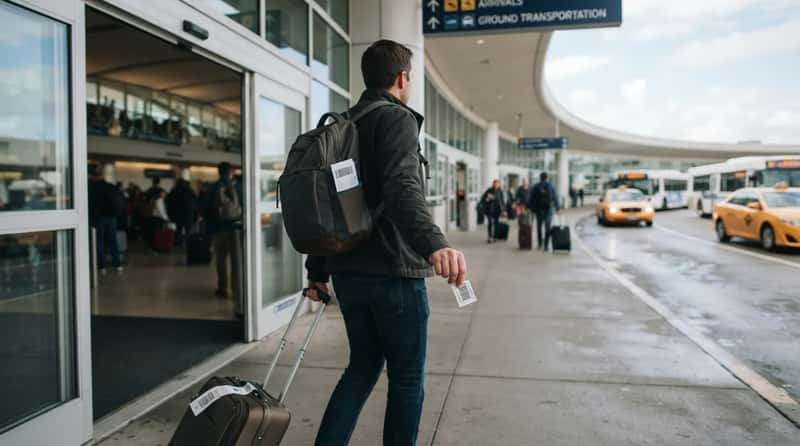
Walking out of the baggage hall doesn’t always end the process. Experienced flyers keep the baggage tag until they’ve collected all their belongings.
Keep the claim ticket in hand until you’re out of the terminal. It carries your flight details and the unique identification number for your luggage, which you’ll need if you have to file a report.
A report is filed with your bag claim tag, boarding pass and a description of the bag. Keep the sticker in the same pocket as your boarding pass so you can produce both together.
Worth Knowing
- The claim ticket carries your flight details and your bag’s unique ID number
- A report needs the tag, your boarding pass and a bag description
- Keeping the ticket and boarding pass together saves time at the desk
- Hold on to the ticket until you’ve collected everything and left the terminal
If you tucked a tracker into the suitcase, you may know where the bag is before the belt does.
#10 – Opening the Tracker App as You Land
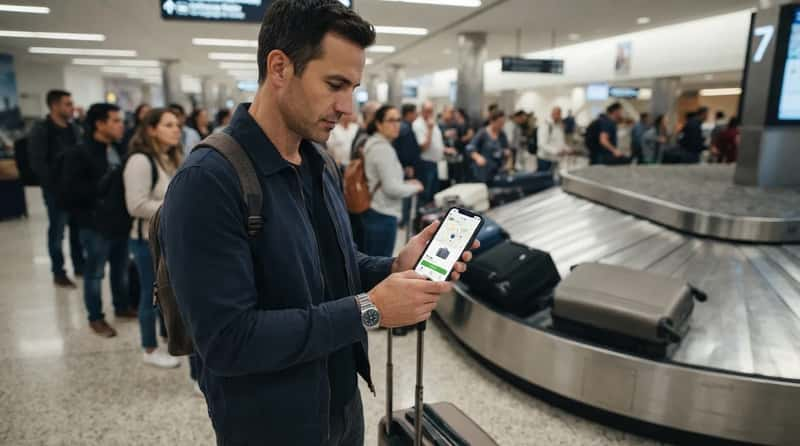
A tracker can answer a question the carousel can’t: did the bag land in your city at all? Placing an AirTag in a suitcase helps you determine whether it arrived at the right destination, and may help you track it down within baggage claim.
If the tracker shows the bag inside the terminal, keep looking. The last known location is the clue, and one in the baggage claim area means the search continues there.
A tracker is a useful clue and a poor substitute for a report, because the airline’s own record is what a refund depends on. If the tracker shows the bag still at the departure airport, head to the airline desk right away instead of waiting out the whole belt.
A bag that shows up on time can still carry a problem, and the clock on that starts at the belt.
#9 – Inspecting Every Side of the Bag
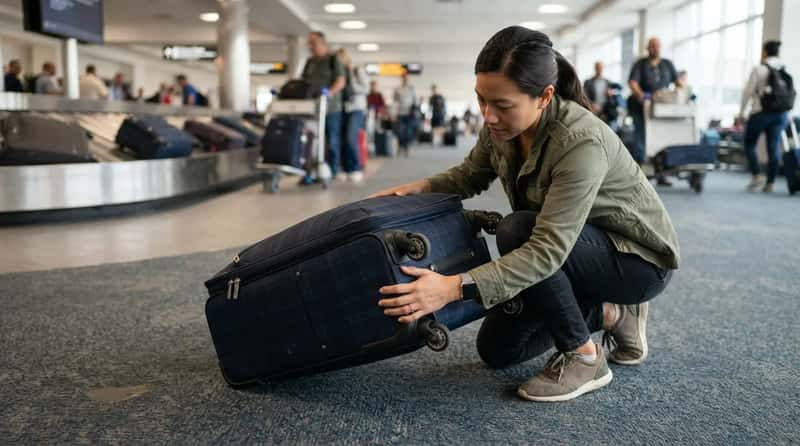
Check the bag for damage or signs of tampering before you leave the baggage claim area. Turn it over and look at all of these:
- Wheels, handles and the telescoping pole
- Zippers, locks and seams
- Corners and the underside
Inspect the bag before you leave the baggage claim area. Reporting damage before leaving also avoids any claim that it happened after the bag was back in your possession.
Doing this beside the carousel takes a minute. Doing it at home turns a simple report into an argument.
Next comes the habit that keeps all this inspecting from turning into panic.
#8 – Knowing How Rare a Mishandled Bag Is
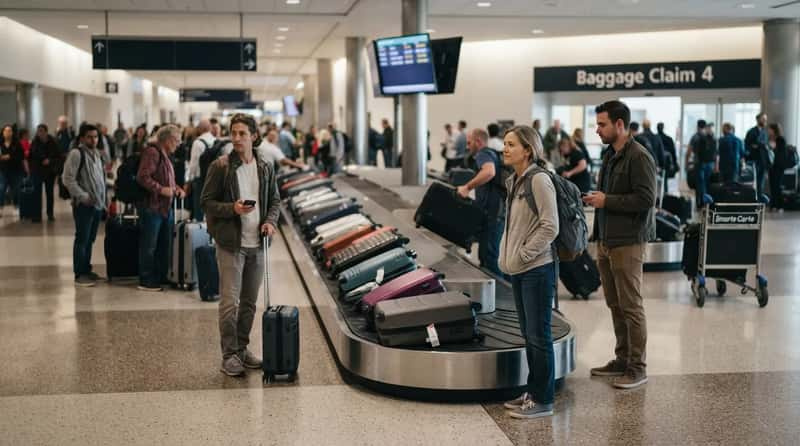
Across reporting U.S. airlines, the mishandling rate fell from 0.52 per 100 bags in the first half of 2025 to 0.49 in the first half of 2026.1 Experienced flyers keep that in proportion, since most mishandled baggage is delayed rather than permanently lost.2
Airlines do differ. In the first half of 2026, American mishandled 0.73 bags per 100, United 0.66 and Southwest 0.32.1
Even the worst major carrier mishandled under one bag in a hundred. That makes a baggage ranking a weak reason to switch airlines on its own.
Those averages flatten a bigger difference, because the odds climb once a trip has a connection or crosses a border.
#7 – Treating a Connection as the Riskier Leg
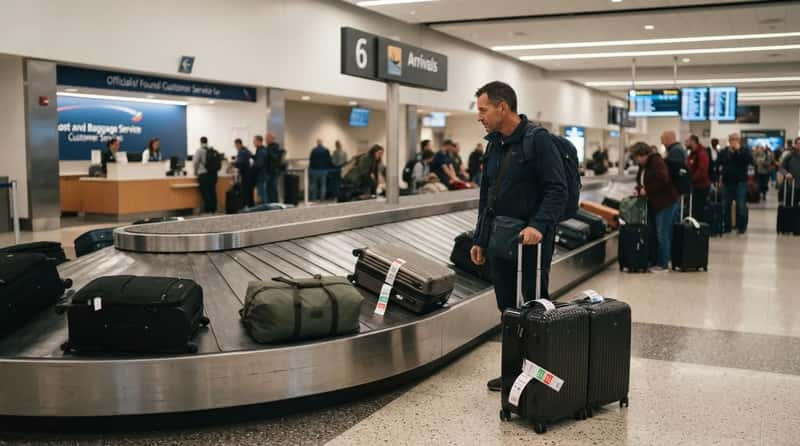
Transfers caused 39% of mishandled bags in 2025, according to SITA data.3 That means trips with a plane change deserve extra attention at the belt.
Borders matter too. In North America, airlines mishandled two bags per 1,000 domestic flyers and 11.6 per 1,000 international flyers.
International: 11.6 mishandled bags per 1,000 passengers, against 2 domestic. If your trip has a connection or crosses a border, find the airline’s baggage office before the belt stops.
Once the bag is in your hands with a crushed wheel or a split seam, the phone in your pocket becomes your best tool.
#6 – Photographing Damage Before You Leave the Belt
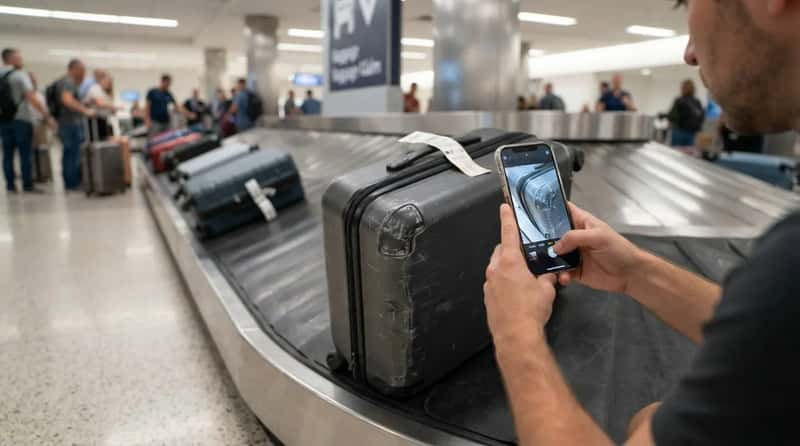
A scuffed corner is hard to prove an hour later. Take these shots while you’re still at the carousel:
- A close-up of the damage
- A wide shot of the whole bag with the tag visible
- The contents, if the bag has come open
Photograph the damage, and keep the bag until the claim is settled.
The inspection finds the problem, and the photos record it. Receipts and pictures of the bag or its contents are what back up a claim.
Photos help when the bag is yours, and they matter even more when someone else’s suitcase ends up in your hands.
#5 – Reporting a Mix-Up the Moment You Spot It
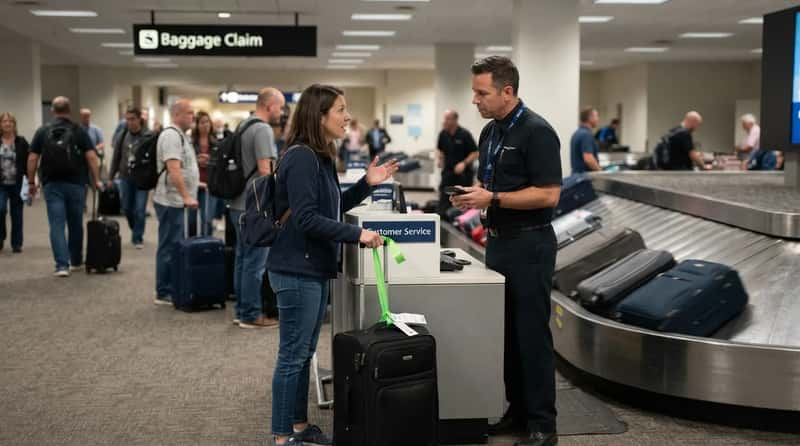
If you take someone else’s bag away from the baggage claim area, you’re responsible for returning it to the airline or the owner. A tag that doesn’t match your claim ticket is the signal.
Take the wrong bag to airline staff right away. If the wrong item is taken, report it to the nearest staff member immediately.
If your own bag has vanished from the belt, someone may have picked it up by mistake. Go to the airline’s customer service desk in the baggage claim area.
Bring your claim ticket and flight details. The ribbon and the photos you took earlier now double as your description.
Quick Compare
- You took the wrong bag: hand it to airline staff right away.
- Your bag is missing from the belt: go to the airline’s customer service desk in the baggage claim area.
- Either way: have your claim ticket and flight details ready.
Whichever bag it turns out to be, a delay can mean days without your own things, and one question at the desk can cover the basics.
#4 – Asking What the Airline Covers While You Wait
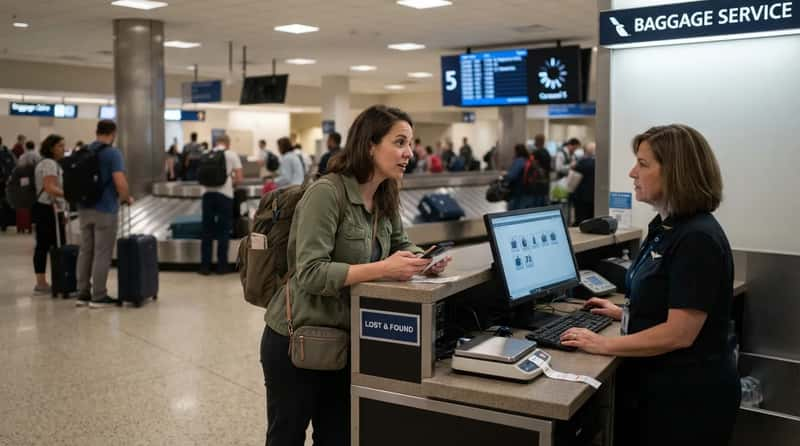
Before you leave the airport, ask the airline agent whether it will reimburse you for essentials until you’re reunited with your luggage.4 Policies differ by airline, so the answer has to come from the agent.
Ask about essentials before you leave, and keep every receipt. Those receipts also support any contents claim later.
The money the airline owes automatically runs on a clock of its own, counted in hours after you land.
#3 – Counting the Hours Toward a Bag Fee Refund
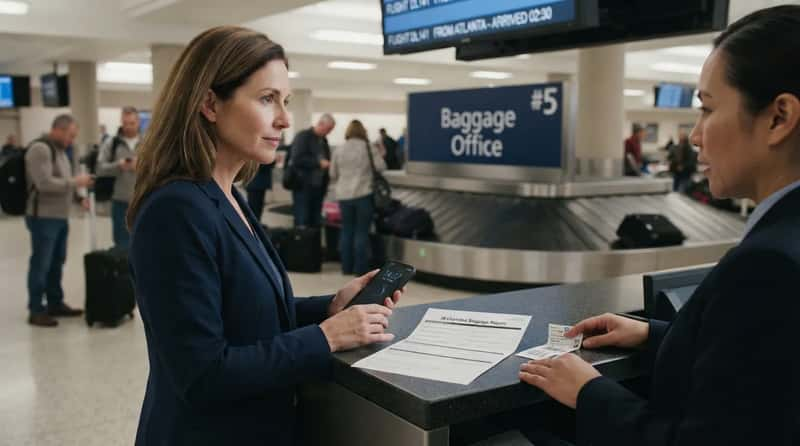
If you file a mishandled baggage report, you’re entitled to a refund of your checked bag fee when the bag isn’t delivered within 12 hours of a domestic flight reaching the gate. International flights get a longer clock: 15 hours for flights of 12 hours or less, and 30 hours for longer ones.5
Domestic: 12 hours. International: 15 or 30 hours, depending on flight length. Take the cash. If you’re offered a voucher, state clearly that you’re owed a cash refund and decline the credit.
Those hours are generous next to the deadlines for reporting damage, which run on a much shorter clock.
#2 – Learning the Deadline for Damage and Missing Items
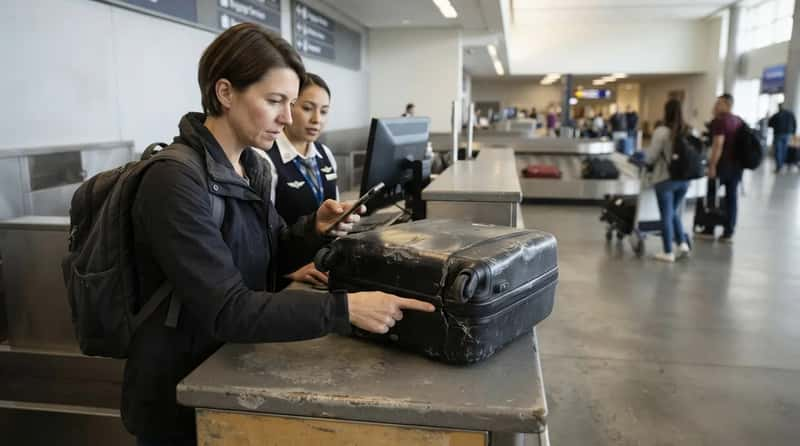
Six hours is all American gives you to report damage on a U.S. flight once you’ve left the airport, counted from when you receive the bag.4 6 Here are that airline’s windows:
- U.S. damage: before leaving the airport, or within 6 hours of receiving the bag
- International damage: before leaving, or within 7 days
- Missing items from a delayed or damaged bag: 24 hours on U.S. flights, 7 days on international
Other airlines differ, and some contracts set tight deadlines, sometimes as short as 4 hours for damage. Report damage before you leave the airport, since some deadlines are as short as four hours.
On international flights, written complaints are due within seven days for damaged baggage and 21 days after delivery for delayed baggage.2 The photos you took at the belt are what make a late written claim believable.
Every one of those clocks, and the refund before them, starts from the same document, and that’s the biggest item on this list.
#1 – Filing the Report Before You Leave the Airport
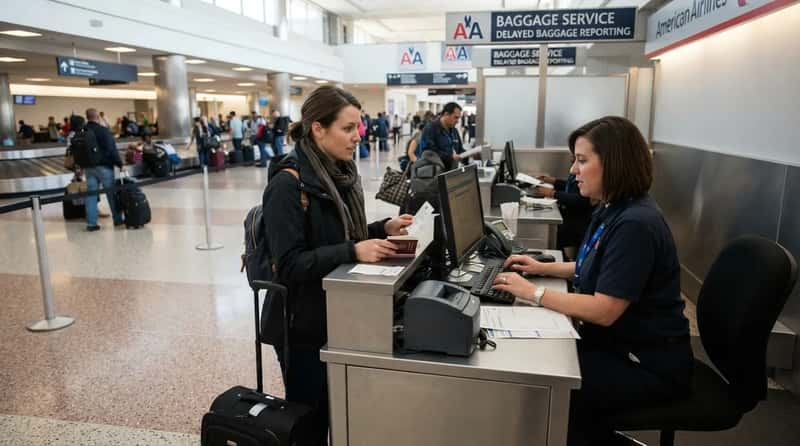
The refund, the reimbursements and the deadlines all hang on one document, and the airport is where it’s easiest to get. To receive an automatic refund, you must file a Mishandled Baggage Report after your checked bag fails to arrive with you.
File the report at the airport before you leave, and get a written reference number. Walking out because the line looked long is the costliest mistake on this list, since it puts every refund and reimbursement in doubt.
At American, the agent gives you a 13-character file ID you can use to submit a claim and check on your bag.4 The airline’s own window for reporting a delayed bag on a U.S. flight is four hours after arriving at your destination, so the line is worth the wait.4 6
A late bag feels like the airline’s problem, and the paperwork feels like something for later. But the carousel is where a problem is easiest to document, and the deadlines run from the moment you arrive.
Those first minutes are the part of the trip you control, so spend them on the tag, the bag and the desk before you spend them on the exit. What do you put on your suitcase so you can pick it out from across the baggage hall?
- Travel Market Report DOT Data: https://www.travelmarketreport.com/air/articles/department-of-transportation-data-reveals-which-airlines-are-worst-for-baggage-mishandling
- Lost Luggage Overview: https://en.wikipedia.org/wiki/Lost_luggage
- SITA Baggage IT Insights: https://www.sita.aero/resources/surveys-reports/sita-baggage-it-insights/
- American Airlines Delayed or Damaged Bags: https://www.aa.com/web/i18n/travel-info/baggage/delayed-or-damaged-baggage.html
- DOT Automatic Refunds Rule: https://www.transportation.gov/briefing-room/biden-harris-administration-announces-final-rule-requiring-automatic-refunds-airline
- American Conditions of Carriage: https://www.aa.com/i18n/customer-service/support/conditions-of-carriage.html
