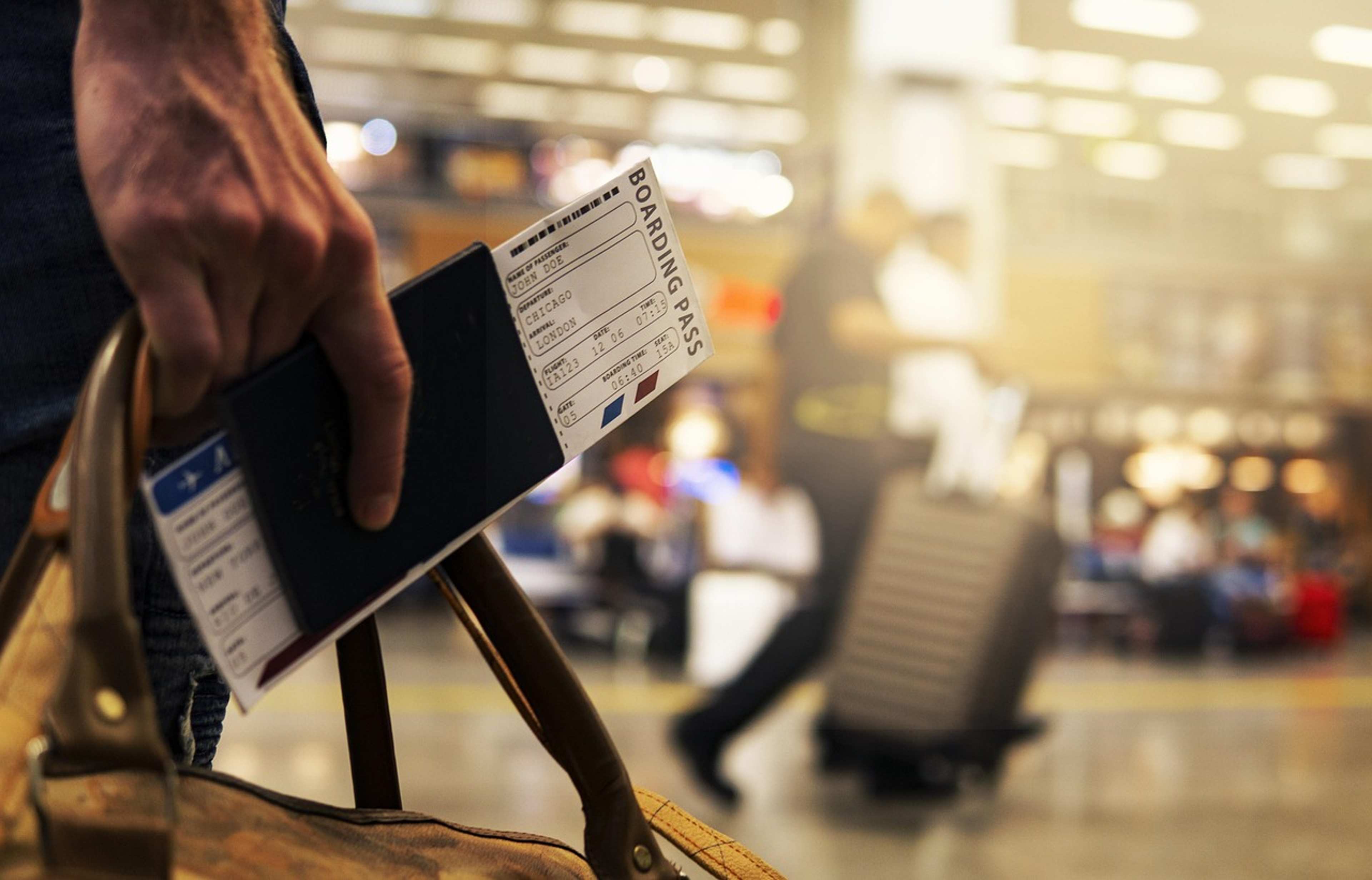
The gate area looks like the dullest part of any trip: rows of seats, a dim monitor, a line forming for no reason. But it’s where the quiet money decisions get made, from bag fees to what you’re owed when a seat disappears.
Experienced flyers have a short list of habits here that never show up in the boarding line. #1 is the one that decides whether federal rules owe you up to $2,150 or only whatever the airline chooses to offer, and the list starts with the smallest habit of all.
#19 – Check the Gate Screen, Not Just Your App
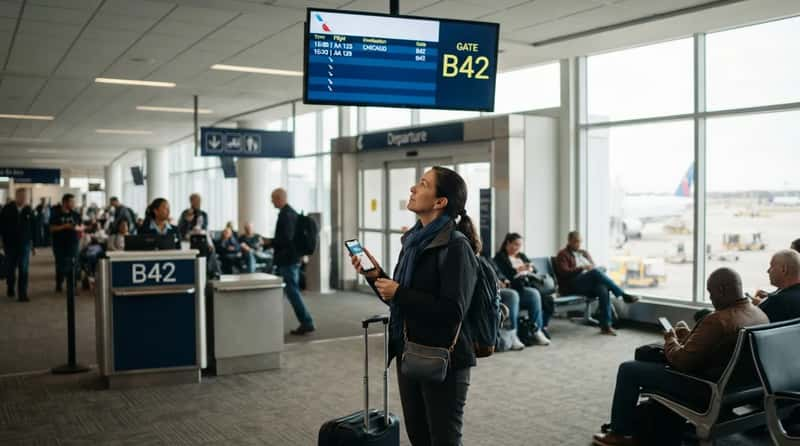
Your app says one gate and the monitor says another. You’ll only find out if you look up.
Gates get reassigned, and the first people to hear are the ones near the screen or the desk. Experienced flyers glance at the monitor on arrival and again before settling in.
Check the monitor when you arrive, then once more before you sit. It takes four seconds, and it saves the sprint with a bag in each hand.
Your phone is the next thing to check, because a dead screen at the gate can mean a dead boarding pass.
#18 – Charge Your Phone Before the Boarding Call
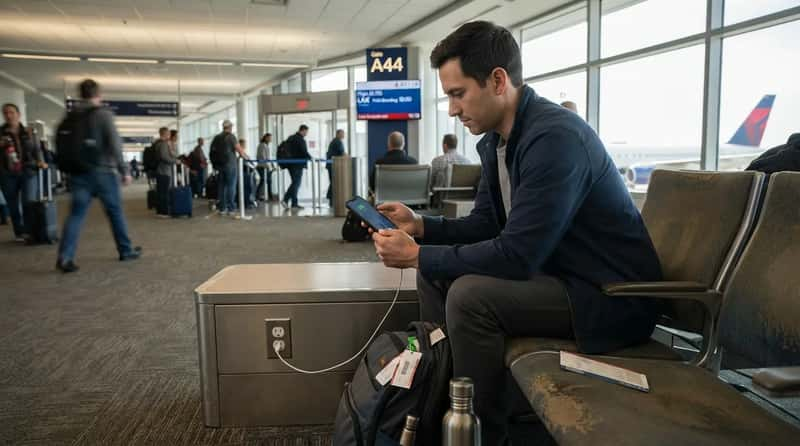
If your boarding pass, rebooking app and airline texts all live on one phone, its battery is part of your itinerary. Experienced flyers top it up while they wait, because seat power isn’t something every aircraft offers.
Charge to full at the gate, not in the air. Ten minutes at an outlet now covers the whole trip, including the part where you’re rebooking in a hurry.
Do the same with the water bottle: empty it before the checkpoint and refill it at a fountain on the far side. The TSA’s liquid limit applies to what you carry through security.
Once you’re plugged in, pick where you sit with care, because it matters more than you’d think.
#17 – Sit Where You Can Hear the Gate Agent
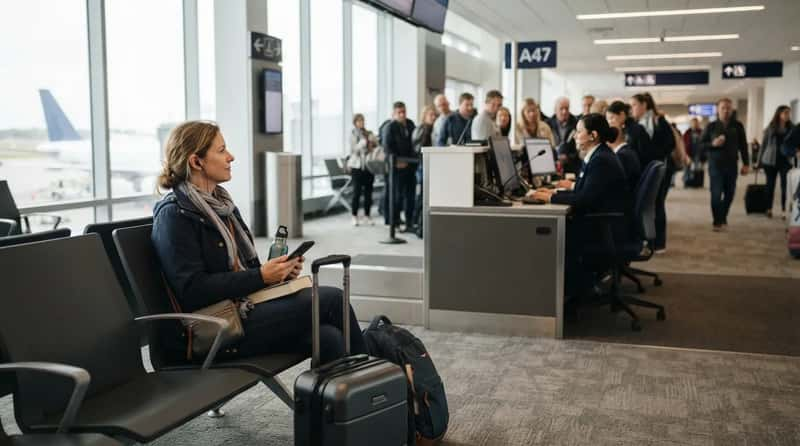
Standing at the door before your group is called gains you nothing, and it blocks the people who are boarding. On assigned-seat flights, boarding runs by group, so the early line mostly buys a longer stand.
Sit within earshot of the desk instead of joining the line. Gate changes, delay updates and requests for volunteers reach the room through the agent’s microphone first.
Hear that first announcement and you reach the desk ahead of everyone who heard it second-hand. Your own name can be called there too, for a seat issue or a document check.
Before the boarding call comes, take the pills and glasses out of the roller, because a gate tag may be waiting for that bag at the jet bridge.
#16 – Move Medications Into Your Personal Item
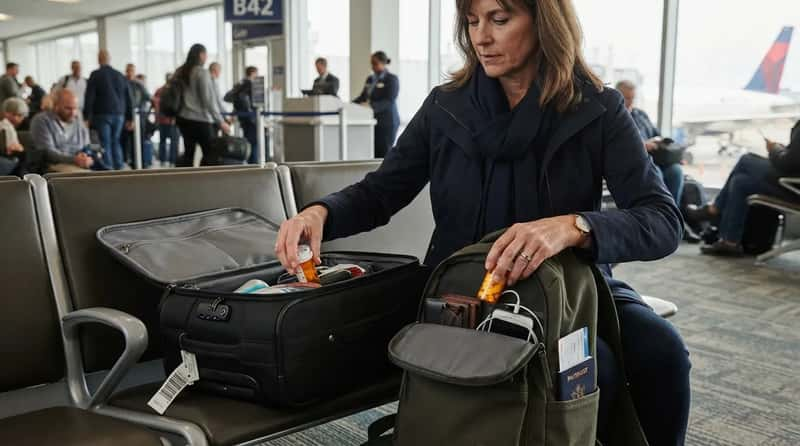
Once a bag is gate-checked, you can’t get into it until after the flight. That’s fine for a sweater and a problem for blood pressure pills.
Experienced flyers move medications, glasses, a phone cable, a wallet and a snack into the under-seat bag before boarding, since the tag can arrive at the last moment. Keep medications in the bag that stays under your seat.
A laptop, jewelry and anything fragile belong there too, because valuables and batteries shouldn’t be gate-checked.
Whether the roller has to go below at all can come down to a metal frame near the desk.
#15 – Test Your Bag in the Sizer
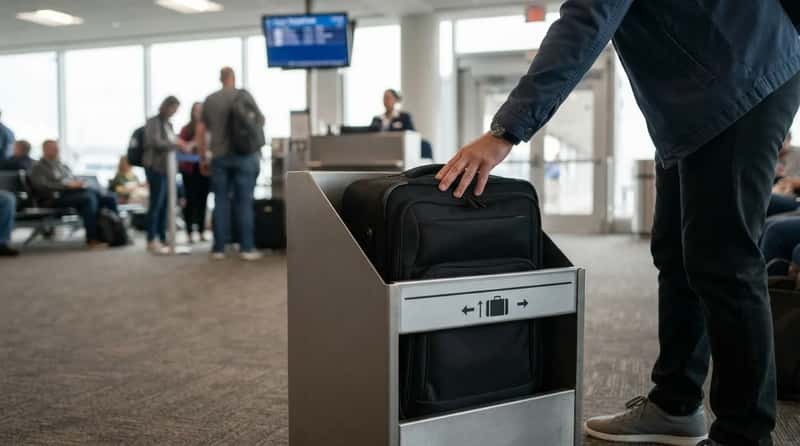
A carry-on that sailed through last month can still be turned back this month. On some airlines, especially budget carriers on full flights, agents measure carry-ons at the gate.
Experienced flyers drop the roller into the sizer as they pass it, while there’s still time to rearrange. A bag that doesn’t qualify as a carry-on draws the standard checked-bag fee, and on some fares a handling fee.
A bag that fails the sizer is charged as checked luggage. Soft-sided bags give a little when you compress them, while a stuffed hard-shell case doesn’t.
A bag that passes the sizer can still end up below on a full flight, and how you answer that request decides whether it costs you anything.
#14 – Offer Your Bag for Gate-Check Before They Ask
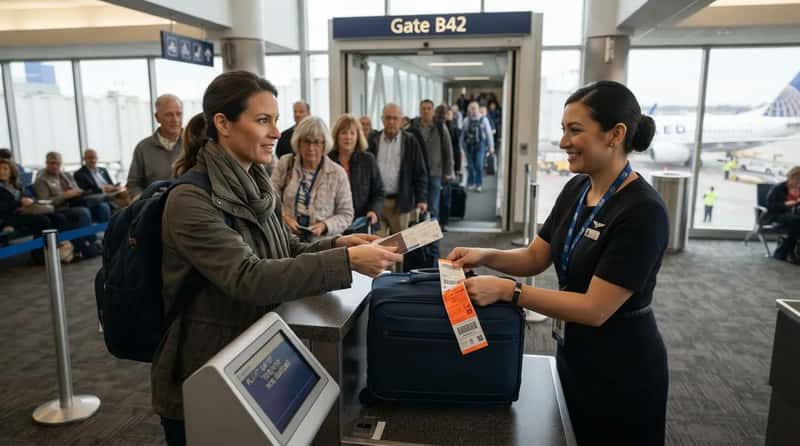
Most airlines will check a carry-on at the gate for no extra charge when a plane runs out of overhead bin space. Experienced flyers in a late boarding group often offer the roller before anyone asks.
The payoff is a hands-free walk down the jet bridge and no hunt for bin space. Because the pills and glasses are already in your personal item, handing the bag over costs you nothing.
On a full flight, ask for a free gate tag if you board late. A forced gate-check gives you less warning and the same result.
The exception is fare type, and the gap can be real.
Quick Compare
- Most fares, full flight: a free gate tag when bin space runs out.
- United basic economy, full-size carry-on: the checked-bag fee plus a $25 gate handling charge, as the airline told The Points Guy.1
- Forced gate-check: less warning, same result.
Once the tag is on, two questions take ten seconds and decide where you’ll be standing when you land.
#13 – Ask Where the Bag Will Come Back
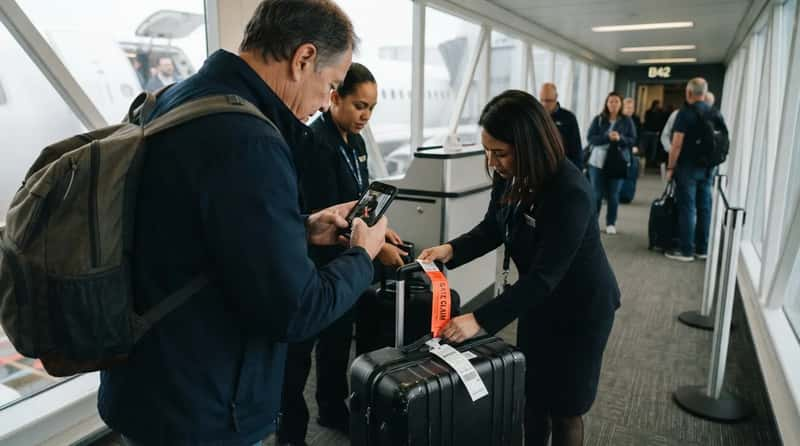
Gate-checked bags return in one of two places, and it matters which. On many flights the bag is stored in the cargo hold and returned to the jet bridge on landing, while on others it goes to baggage claim.
That changes how long you wait, and how tight a connection gets. Ask whether the bag returns at the jet bridge or at baggage claim.
If you have a short layover, say so, and ask whether the bag will be checked through to your final stop. Then check that the tag shows the right destination, keep the receipt and photograph the bag’s condition.
Nothing with a spare lithium battery can ride in that hold, and the number printed on your power bank decides whether it can fly at all.2
#12 – Read the Watt-Hour Number on Your Power Bank
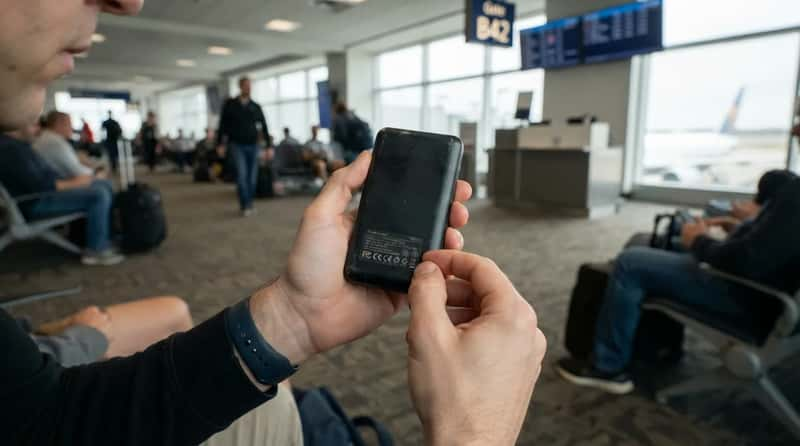
Your power bank probably advertises milliamp-hours, but the FAA’s limits are written in watt-hours. Here’s how they break down:
Up to 100 Wh flies freely; 101 to 160 Wh needs approval. If the label shows only mAh, multiply by the voltage (about 3.7) and divide by 1,000.
A 20,000 mAh bank works out to about 74 Wh.
Even a legal battery has to behave in the cabin, and several airlines now police how you use it, not just how big it is.
#11 – Know Your Airline’s Rules for Using the Charger
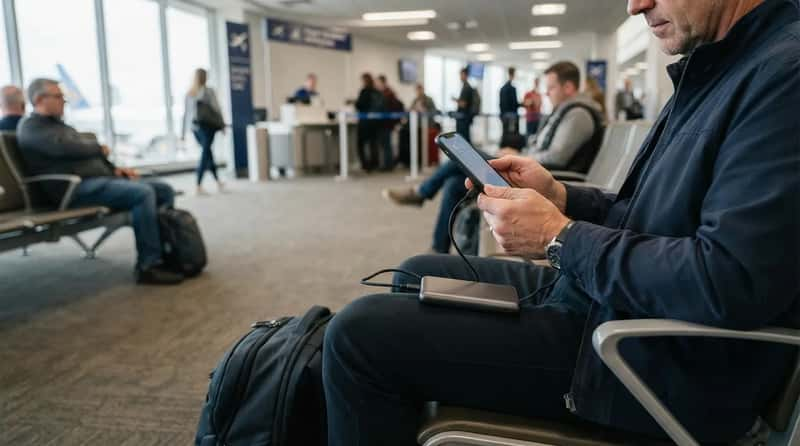
A power bank can clear the TSA checkpoint and still run into airline rules. The FAA’s limits are the floor, and airlines may set stricter quantity and Wh limits.
Worth Knowing
- American: two battery chargers per passenger, kept in plain view while in use.
- Southwest: a charging power bank must be visible, not in a bag or overhead bin.
- Damaged or recalled batteries: barred from carry-on and checked bags unless the battery has been removed or made safe.
Keep a charging power bank in plain sight, never in the bin. Check your airline’s page before you fly, since these policies have shifted in 2026.
A swollen bank stays home.
Not every gate habit is about gear, though. Some are about asking for help without flinching.
#10 – Ask for Preboarding Without Apologizing

If you need extra time on the jet bridge, ask for it. Airlines let passengers who need more time or help board ahead of the general lines, and the request goes to the agent at the desk.
Preboarding isn’t a favor you’re begging for. It’s a service, and skipping the crush is worth more than a moment’s awkwardness.
Ask the desk before boarding starts, not during the rush. An early request gives the agent room to plan around it.
If you travel with an electric wheelchair or scooter, you must advise the airline of the battery’s location on the device. A spare or removed battery is limited to one up to 300 Wh or two up to 160 Wh each, carry-on only.3
Asking at the desk works for boarding help, and sometimes for something smaller that changes your whole flight: the seat itself.
#9 – Ask About a Better Seat While the Desk Is Quiet
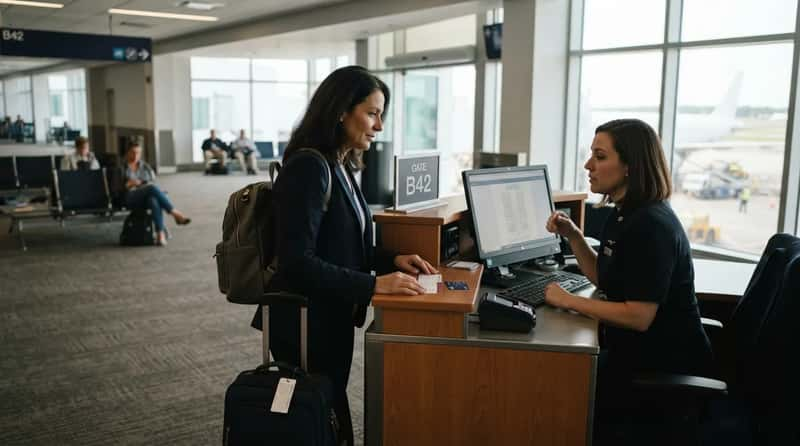
The agent can see the seat map, and you can’t. That’s reason enough to ask in the lull before boarding rather than during it.
Make one specific request: an aisle, a seat beside your spouse, or a row nearer the front for a tight connection. Ask before boarding opens.
Whether a change is possible depends on your fare and what’s open. Ask once, accept the answer and step aside, because the line behind you is also waiting on the agent.
The next check involves a card in your wallet, and it costs $45 to get wrong.
#8 – Keep the Right ID in Your Hand
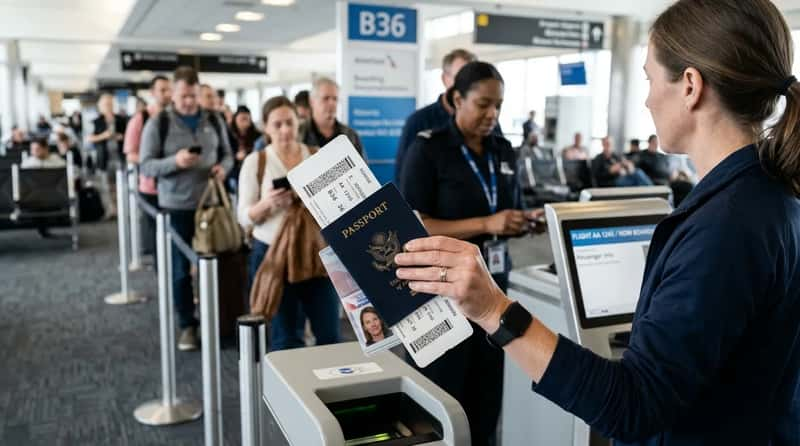
Travelers 18 and older without an acceptable travel document now pay $45 to use TSA’s ConfirmID verification. The fee began February 1, 2026, and REAL ID or another accepted document has been required for domestic flights since May 7, 2025.4 5
The payment buys an attempt, not a guarantee. Verification of identity isn’t guaranteed, and the fee is nonrefundable even if the attempt fails.4
A passport or Global Entry card works in place of a REAL ID. A passport card, military ID and permanent resident card also qualify.
Experienced flyers check for the star on the license before leaving home. They keep the ID with the boarding pass so it never gets buried in a bag.
Your ID gets you to the gate. What you keep from the gate matters more when the plan falls apart.
#7 – Keep Your Boarding Pass and Receipts
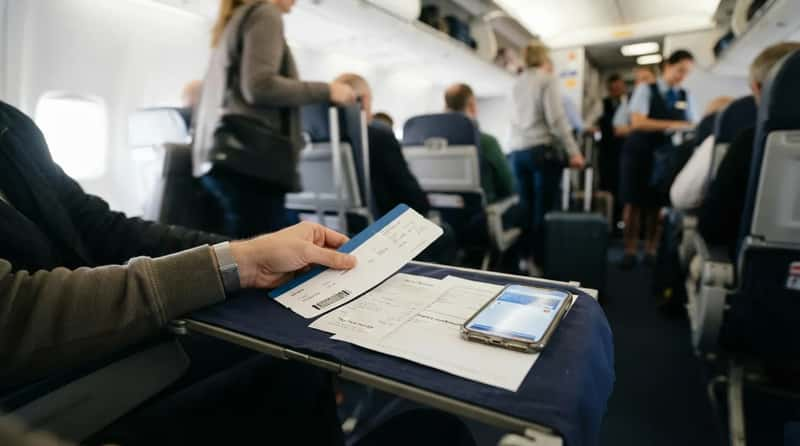
If an airline lowballs you, your paperwork is the only leverage you carry. Experienced flyers keep the boarding pass and every receipt for meals, hotels or replacement tickets until the trip is fully settled.
Keep every boarding pass and receipt until the trip is settled. If the airline refuses or offers too little, you can file a complaint with the DOT, and it’s stronger with documents attached.
Screenshots help too. App alerts can update or vanish, so capture a delay or cancellation notice while it still shows the original times.
At a Glance
- Boarding pass, digital or paper
- Receipts for meals, hotels and replacement tickets
- Screenshots of delay or cancellation alerts
- Gate-check receipt and a photo of the bag
- Any written statement of rights the airline hands you
Delete nothing until the money is back in your account. And when a cancellation hits, the clock starts before you ever reach the desk.
#6 – Start Rebooking Before You Reach the Desk
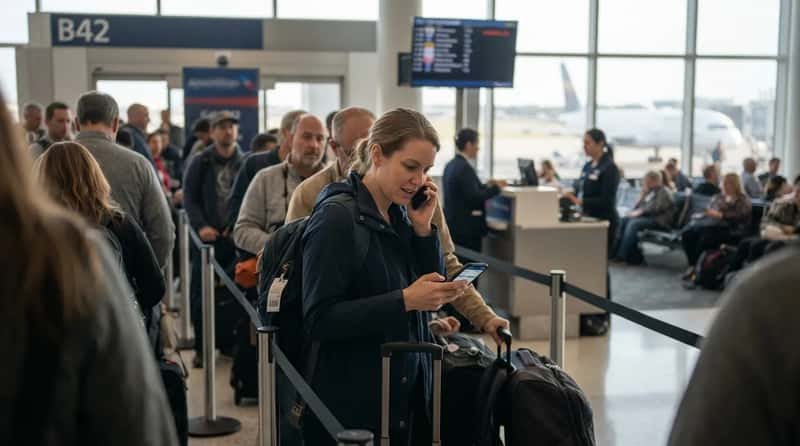
When a cancellation hits, the gate line is only one of three ways to get rebooked. The airline’s app and its phone line are the other two.
Experienced flyers work all three at once, because whichever answers first wins the seat. Work the line, the app and the phone at once.
This is where the full battery from earlier pays off. Seats on later flights are limited, so a few minutes can decide whether you leave tonight or tomorrow.
A new flight isn’t the only thing the airline may owe you after a cancellation, and the other option comes with real money attached.
#5 – Ask for the Refund, Not the Voucher
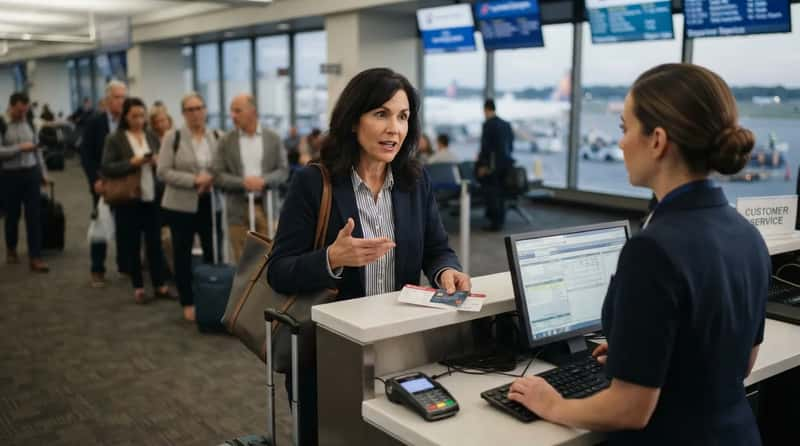
A voucher is the airline’s offer. It isn’t your only right.
Under DOT’s refund rules, if an airline cancels your flight or changes it significantly and you decline the alternative, you’re owed a refund to your original form of payment. Say the word refund out loud, and say it early.
DOT defines what counts as a significant change, including a domestic delay of three hours or more.6 Check its current definition on DOT’s website before you go to the desk.
My verdict: unless you know you’ll fly that airline again soon, take the money.
A refund covers the flight that never leaves, but the harder case is the flight that does leave without you, and the airline has a written order for who stays behind.
#4 – Find Out How the Airline Picks Who Gets Bumped
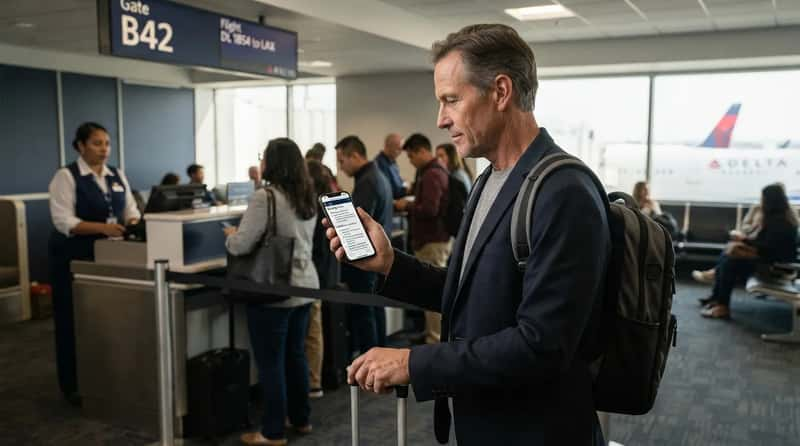
Overselling is legal, so airlines need a rule for who gets left behind. They choose who doesn’t fly using boarding priority rules they must publish.
Experienced flyers check the airline’s boarding priority before a full flight, usually in the contract of carriage. They also check in early, because passengers who check in last are more likely to be bumped.
Check in the moment it opens, typically 24 hours before departure.
If you do get bumped, what you’re owed depends on how late the replacement flight gets you in, and the first hour is worth exactly nothing.
#3 – Watch the Clock on the Replacement Flight
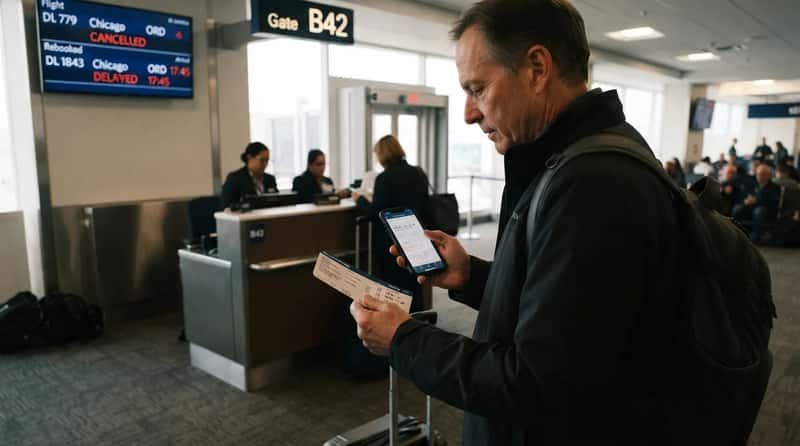
If you’re bumped involuntarily, the pay depends on how late the substitute flight gets you in. On a domestic trip, the tiers are:
- 0 to 1 hour late: no compensation.
- 1 to 2 hours late: 200% of your one-way fare.
- More than 2 hours late: 400% of your one-way fare.7
Under an hour late pays nothing; over two hours pays 400% of the fare. On a $250 one-way fare, a replacement arriving 90 minutes late means $500, and one arriving three hours late means $1,000.
On a round-trip ticket, ask the agent how the one-way fare was calculated. International flights use longer windows, 1 to 4 hours for the 200% tier and more than 4 for 400%.
Experienced flyers compare the arrival time on the rebooking offer with the original before they say yes.
The percentages are only half the story, because the dollar caps and the form of payment are where airlines nudge flyers toward less.
#2 – Know the Caps and Insist on a Check
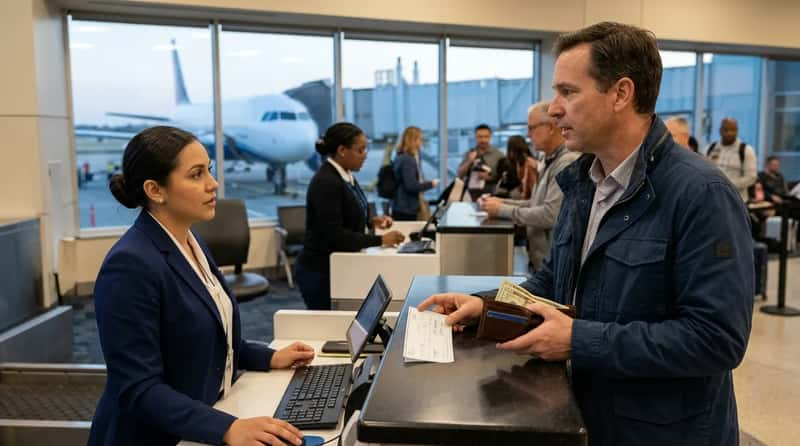
The payout has ceilings. The 200% tier tops out at $1,075 and the 400% tier at $2,150, so a $1,500 one-way fare still pays $2,150 rather than $6,000.7
DOT adjusts those caps periodically, so check the current figures before you argue a number. Then comes the form of payment.
The airline owes you cash or a check, handed over on the spot or within 24 hours if your replacement flight leaves before payment can be processed. It may offer a voucher or free travel instead, but it has to tell you the cash amount and any restrictions, and you can still insist on the money.
Insist on cash or a check; the voucher is optional. Say it calmly, and say it before you sign anything.
Fast Facts
- 200% tier cap: $1,075
- 400% tier cap: $2,150
- Payment form: cash or check, on the spot
- If your flight leaves first: payment within 24 hours
- Voucher: optional, and the airline must state the cash amount and restrictions
One question at the desk decides whether any of this applies to you, and most people answer it before they’ve heard it.
#1 – Know Whether You’re Volunteering or Being Bumped
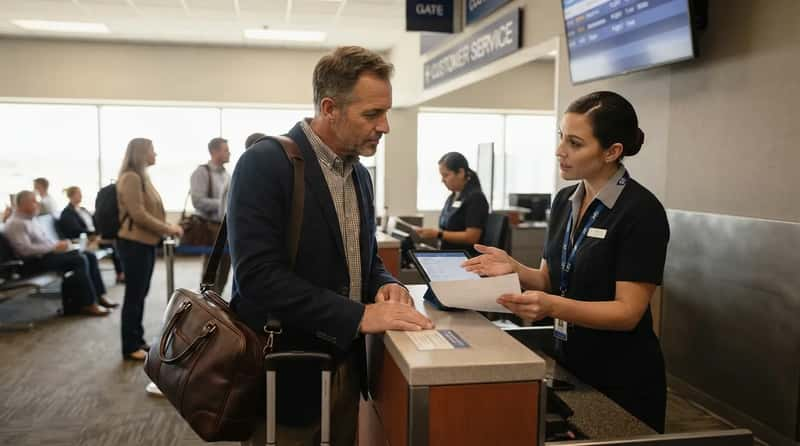
Here’s the distinction. If you give up your seat voluntarily, the airline’s offer is whatever you agree to. If you’re denied boarding against your will, federal rules set the pay.
That’s the gap between whatever the airline puts on the table and as much as $2,150. Airlines have to ask for volunteers first, and an opening offer is only an opening offer.
Before you say yes, ask: is this a volunteer request, or am I being denied boarding? If it’s a volunteer request, ask about the amount, the next flight and any restrictions before you agree.
If you’re bumped involuntarily, the airline must give you a written statement of your rights and how it chose who stayed behind. The compensation generally applies to confirmed passengers who checked in and reached the gate on time.
Everyone behind you in line is just waiting to board. The calm flyer is quietly deciding what the trip will cost.
- Points Guy United Baggage Fees: https://thepointsguy.com/airline/united-airlines-baggage-fees
- FAA PackSafe Lithium Batteries: https://www.faa.gov/hazmat/packsafe/lithium-batteries
- FAA Airline Passengers and Batteries: https://www.faa.gov/hazmat/packsafe/airline-passengers-and-batteries
- TSA ConfirmID: https://www.tsa.gov/tsaconfirm-id
- TSA ConfirmID Rollout: https://www.tsa.gov/news/press/releases/2026/02/05/tsa-successfully-rolls-out-tsa-confirmid-0
- DOT Refund Rule Summary: https://travel.yahoo.com/advice/safety/articles/cancelled-flight-refunds-dot-requires-103557031.html
- Denied Boarding Compensation Tiers: https://thetravel.com/american-airlines-uses-dot-rule-to-cancel-650-usd-compensation-after-passenger-denied-boarding