The age that changes how you’re screened at a U.S. checkpoint is 75, not 65 and not 70. TSA says passengers 75 and older can receive some form of expedited screening,1 so in your early seventies you’re in the same line, under the same rules, as everyone else.
What does change at any age is how smoothly a carry-on slides through. That depends on things you probably pack without a second thought: pills, liquid medicine, a juice box, a replaced knee. Stay for the final item, because it’s one habit that quietly fixes most of the others, and it costs nothing.
#14 – Why 75, Not 70, Is the Birthday That Counts
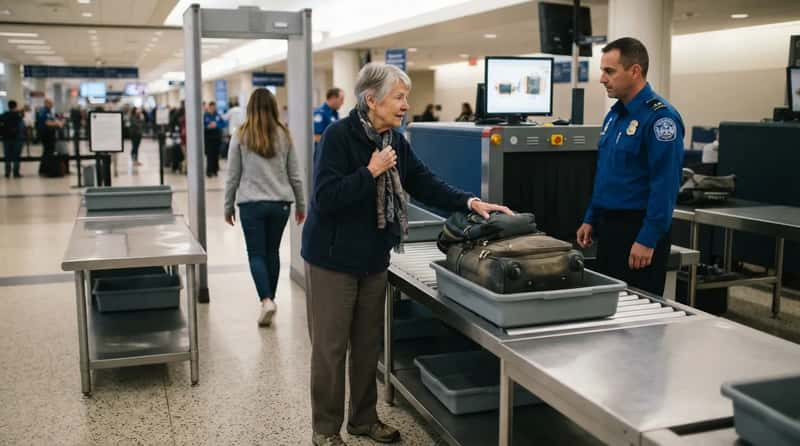
Turning 70 earns you nothing extra at security. TSA’s guidance points to 75 and older for expedited screening, and nothing in it describes a special lane that starts at 65.
Expedited screening starts at 75. Between 70 and 74, standard rules apply. That matters if a neighbor swore seniors get a break at 65 and you planned your morning around it.
If you’re traveling with a parent who has turned 75, state their age and ask for modified screening. The request costs nothing, and it’s easier to make before the bins come out than after.
At a Glance
- Ages 75 and older: may receive expedited screening.
- Ages 70 to 74: standard screening rules apply.
- Shoes: TSA has let travelers keep them on since July 2025.
- Cost of asking for modified screening: nothing.
The best-known part of that perk, the shoes, changed in 2025. The jacket is a different story.
#13 – The Shoes and Jacket Exemption, Updated
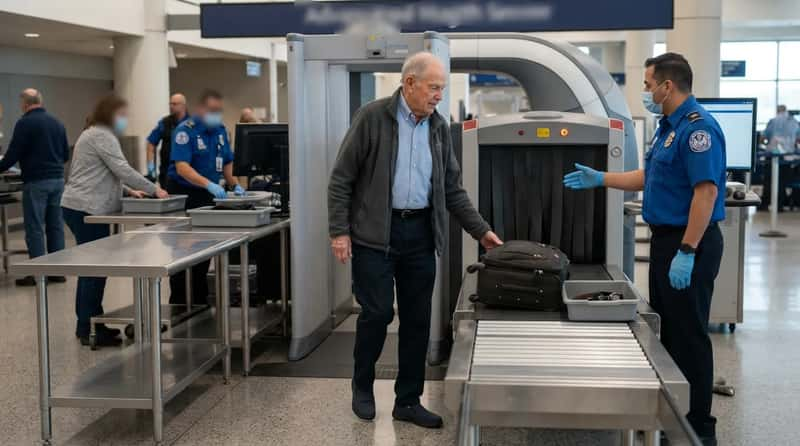
Shoes used to be the whole point of the 75-and-over perk. Starting in July 2025, TSA allowed travelers to keep their shoes on at checkpoints, which means the age-75 advantage is now mostly about the jacket.
Even there, the advice online conflicts. At 75 and older, travelers may get expedited screening, such as keeping a light jacket on, but TSA’s page can be read to say light jackets still come off for Advanced Imaging Technology screening.1
Shoes can stay on, but an alarm can bring them back off. An officer can still ask you to remove them if a scan flags something.
My verdict: don’t build your outfit around the exemption. A light layer that comes off in two seconds beats debating policy with a line behind you.
Whatever you wear, what’s in your bag matters more, and the rule for pills is far looser than the one for jackets.
#12 – A Weekly Pill Organizer and No Quantity Limit
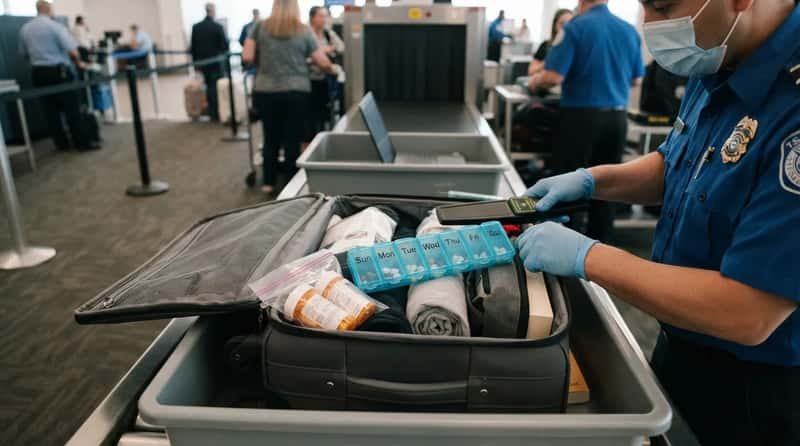
There’s no cap on the number of pills in your carry-on. You can bring medication in pill or solid form in unlimited amounts if it is screened.2
That includes the weekly organizer. A pill box for your trip is permissible under TSA medication rules.
Pills have no quantity limit in a carry-on, as long as they’re screened. Keep them with you, because TSA strongly recommends placing medication in your carry-on in case you need immediate access.2
Fast Facts
- Pills and solid medication: unlimited amounts if screened.
- Weekly pill organizer: allowed.
- Best place for medication: your carry-on, not your checked bag.
- Smart extra: a few spare days of supply.
A checked bag can be delayed or lost, which strands your medication in the wrong city. Pack a few days of extra supply, since a delayed return flight doesn’t pause your prescription.3
The organizer is fine. Whether the pharmacy bottle needs to come along is a separate question.
#11 – Original Bottles and the State Labeling Catch
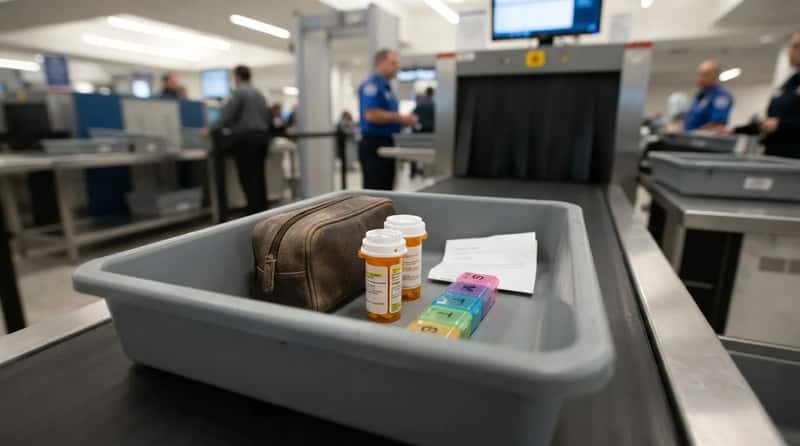
TSA doesn’t ask to see a prescription bottle. It does not require medicine to be packed in prescription bottles, but certain state laws on labeling prescription medicine still apply.
Those state laws are the catch. The federal checkpoint is only one place your medication might be examined.
For anything controlled, keep it in the original prescription bottle, carry a doctor’s letter, especially for large quantities, and alert the officers. For controlled medication, keep the original bottle and carry a doctor’s letter.
My verdict is a split decision. Blood pressure pills and vitamins can live in the weekly organizer, but a controlled drug should stay in its labeled bottle.
Liquid medicine follows a different rulebook, and it starts before the bag touches the belt.
#10 – Liquid Medicine You Have to Announce
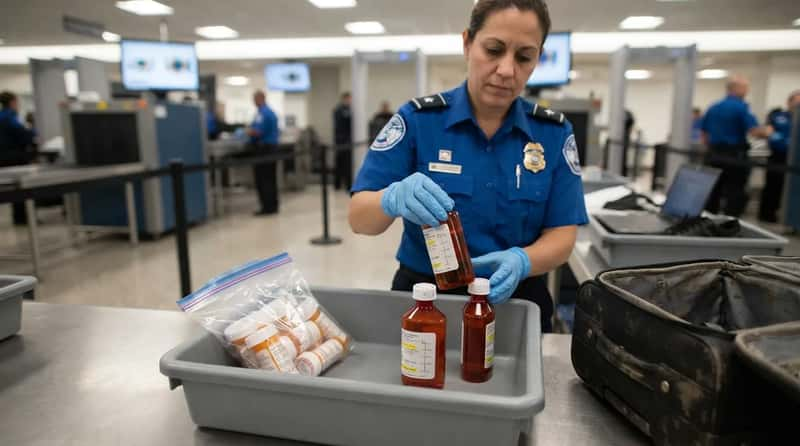
Pills can ride in silence, but liquids can’t. You don’t need to notify a TSA officer about medicine unless it is in liquid form.
If it is, medication in liquid form over 3.4 ounces is allowed in carry-on bags in reasonable quantities for a flight, but you must tell the officer at the start of screening. Tell the officer about medically necessary liquids at the very start of screening.
You also get a break on packaging. Medically required liquids don’t have to go in a zip-top bag.
Pack them apart from your other liquids. That lets the officers identify and screen them easily.3
A juice box for low blood sugar is a liquid too, and it gets its own treatment.
#9 – The Juice Box That Needs a Medical Reason
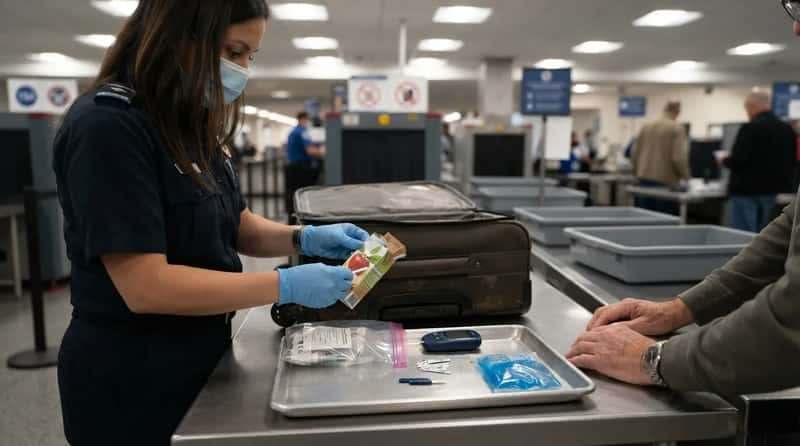
Diabetes supplies change what a carry-on can hold. If your medical condition requires it, you may travel with a juice box or other liquid over 3.4 ounces, but expect additional screening.2
The same announce-first habit from the liquid medicine applies here. The officer will check the supplies and conduct any necessary testing.
A medically needed juice box is allowed, but it gets additional screening. The key words are “medically needed.” A juice box packed for taste doesn’t qualify.
Medicines that need to stay cold are covered as well. Ice packs and gel packs for refrigerated medication are generally permitted, even if partially melted.
Quick Compare
- Medically needed juice box: allowed over 3.4 ounces, with additional screening.
- Everyday drinks and toiletries: 3.4 ounces (100 mL) or less.
- Ice or gel packs for medication: generally permitted, even partly melted.
Everything else in your toiletry bag is held to the stricter limit, and that’s where bags get caught.
#8 – The 3.4-Ounce Rule for Everything Else
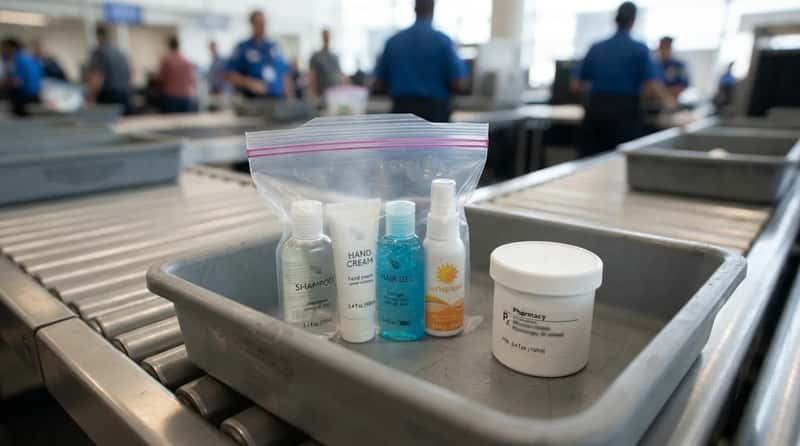
Your shampoo isn’t medicine. All liquids, aerosols and gels in carry-on bags must be 3.4 ounces (100 mL) or less.
Every non-medical liquid, gel or aerosol must be 3.4 ounces or less. That covers hand cream, hair gel and the sunscreen you grabbed on the way out.
Prescription creams are the exception. Medically necessary liquids, medications and creams over 3.4 ounces are allowed if you take them out and declare them for separate screening.
The ointment for your knee qualifies, so declare it. The drugstore lotion beside it doesn’t.
Now to what you lean on while you stand there: the cane or walker.
#7 – A Cane or Walker on the Belt
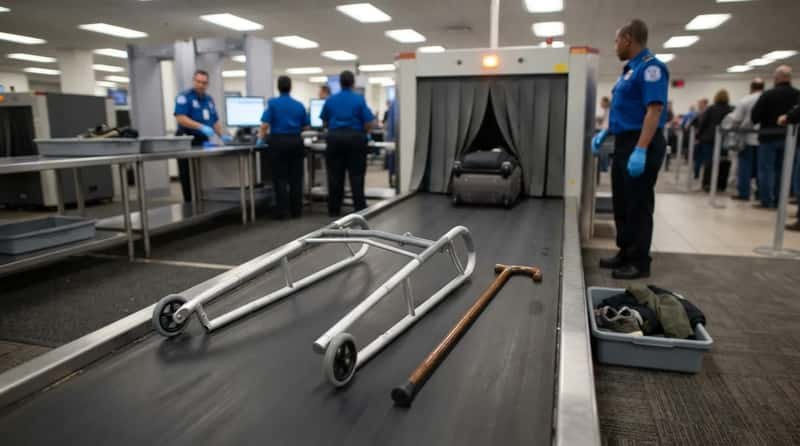
A cane doesn’t get left behind. Walkers, canes, crutches and other mobility aids will be X-rayed or hand-inspected.
That raises a practical problem if you need the cane to stay upright. Say so before you let go of it.
If a medical condition prevents you from standing or walking at the checkpoint, you won’t have to remove your shoes, though you will be manually inspected. Canes, walkers and crutches are X-rayed or hand-inspected.
Some travelers fear that using a mobility aid will make the process longer. The procedures exist so that it doesn’t have to.
A free card from TSA’s own website can do the explaining while you steady yourself.
#6 – The Notification Card in Your Wallet
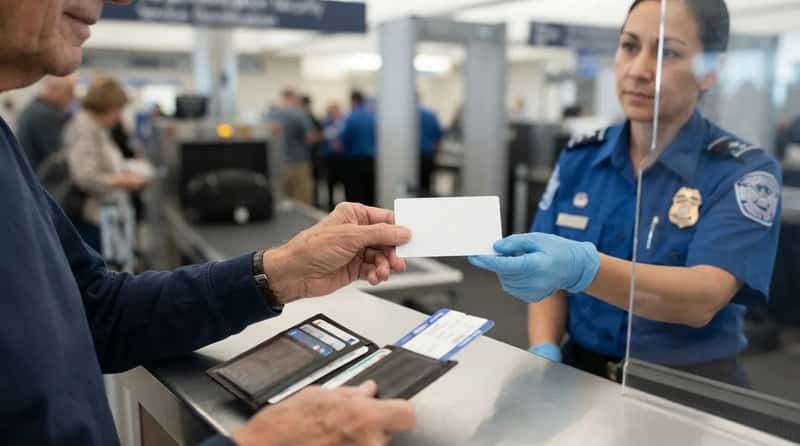
You shouldn’t have to give a speech at the belt. TSA’s Notification Card specifies health conditions, disabilities or medical devices that may affect your screening.4
You hand it over at the checkpoint. The officer can then make special considerations for your screening.
The Notification Card is free and can be downloaded from TSA.gov. Print it at home and keep it in the same wallet pocket as your boarding pass.
If you’re traveling with a spouse or friend, a companion can also inform the officers. That often goes more smoothly than explaining while you manage your own bags.
My verdict: a printed card beats memory. It never forgets the knee replacement or the liquid medicine.
The conditions on that card include the one that most often sets off an alarm: metal inside the body.
#5 – An Artificial Knee or Hip
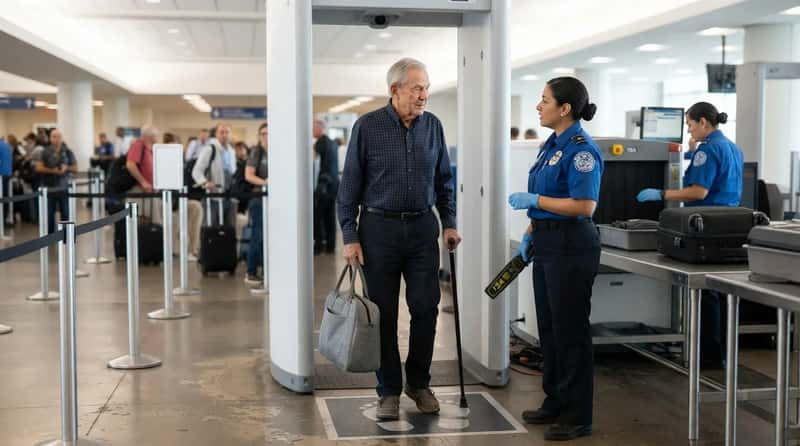
A replaced joint can beep, and the officer can’t see why. Surgically implanted devices such as artificial joints and pacemakers may set off metal detectors.
The fix is to disclose first. Tell the officer you have an artificial knee, hip or other metal implant.5
Advanced Imaging Technology can facilitate your screening and reduces the likelihood of a pat-down.5 Tell the officer about your implant before you step into the scanner.
Disclosure doesn’t guarantee a clean pass. A pat-down or device inspection may still be required if the device alarms.6
A heart device is handled more strictly than a knee, and one machine is off-limits to it.
#4 – A Pacemaker and the Walk-Through Detector
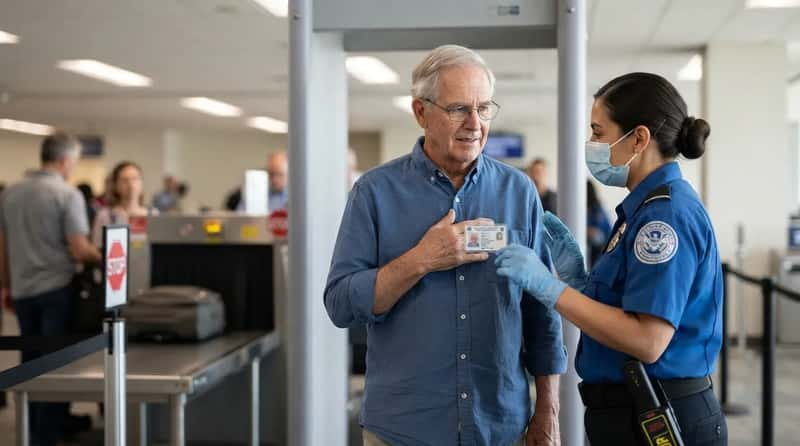
This is the strictest rule on the list. You should not be screened by a walk-through metal detector if you have an internal medical device such as a pacemaker.6
A pacemaker means no walk-through metal detector. Say so before you reach the machine, not after it alarms.
Carry the device ID card from your doctor or the manufacturer. Be able to say what kind of device you have, such as a pacemaker or ICD, and where it’s implanted.
If a hand wand comes out, ask the officer not to hold it over your device for extended periods. Check with your cardiologist before you fly, since the guidance itself says to consult your physician.
Worth Knowing
- Internal devices like pacemakers should not go through the walk-through detector.
- Bring the device ID card from your doctor or manufacturer.
- Know your device type and where it’s implanted.
- Ask that a wand not linger over the device.
Disclosing early still doesn’t rule out a pat-down, and you have a say in how that happens.
#3 – The Pat-Down You’re Allowed to Make Private
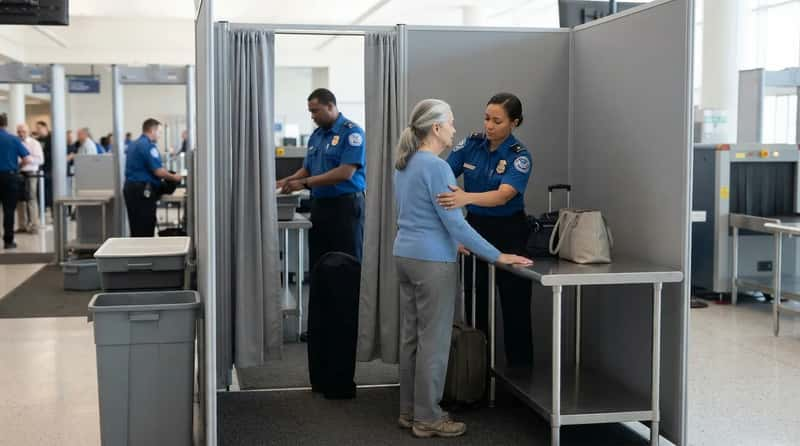
Alarms happen even when you’ve done everything right. If one goes off, you may be asked to remove your shoes for further screening or to have a pat-down.1
That’s why disclosure in #5 and #4 matters. An officer who already knows about your hip expects the beep.
You can raise any concerns and ask for a private screening with an officer of the same gender. You can ask for a private screening, and the request costs nothing.
Ask for it if the open checkpoint makes you uncomfortable. The line behind you is waiting on the process, not judging you.
A traveler who has arranged help in advance rarely has to ask on the spot. That means one phone call, days before the flight.
#2 – A Phone Call Three Days Before You Fly

The number is 72 hours. TSA asks you to contact it 72 hours before traveling with questions about screening policies, procedures and what to expect.
The helpline is TSA Cares, and it’s for travelers or companions with a disability, medical condition or other specific circumstance. Call TSA Cares at (855) 787-2227 at least 72 hours before you fly.4
Lines are open weekdays from 8 a.m. to 11 p.m. ET, and weekends and holidays from 9 a.m. to 8 p.m. ET. You can also submit an online form.
A call can do more than answer questions. A representative can arrange for a Passenger Support Specialist, a TSA officer with extra training, to meet you at the checkpoint.
That call helps whatever your age or baggage. What helps most comes down to a single sentence and when you say it.
#1 – What You Say Before the Bag Hits the Belt
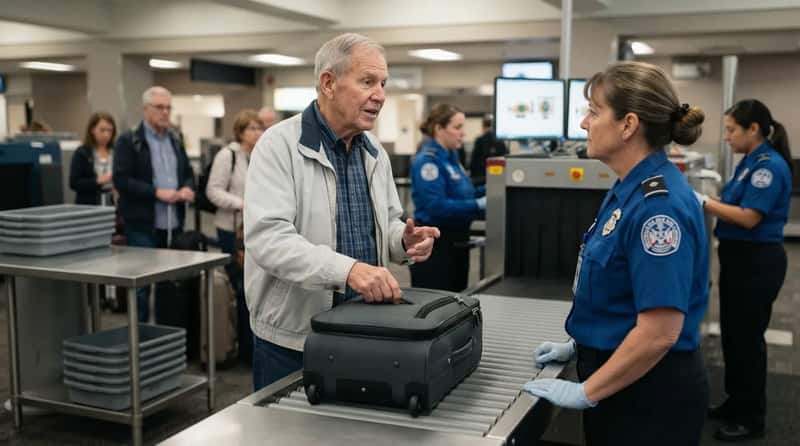
Look back across the list. The liquid medicine in #10, the knee in #5 and the pacemaker in #4 are all allowed, and none of them is the problem.
The risk is the surprise. TSA says you must tell the officer about medically necessary liquids at the start of screening, and a cardiac device should be disclosed before you reach the screening machine, not after it alarms.
Say what you’re carrying before your bag reaches the belt. A sentence works: “I’m 78, I have a hip replacement, and there’s liquid medicine in this bag.”
That single line covers your age from #14, the implant from #5 and the declaration from #10. It turns an unexpected item into a routine one, because the officer can pick the right screening method before anything alarms.
It’s the cheapest fix on the list, and the only one that applies to every bag you’ll ever carry. Practice the sentence at home, and keep the Notification Card from #6 right behind it.
A carry-on at a checkpoint is a set of facts about you, and the person screening it only learns them if you share them. Pills, creams, a cane or a pacemaker are routine once the officer has been told.
So think of security as a short conversation that starts before you reach the belt, not an inspection you endure. Which item in your own carry-on, whether a pill organizer, a juice box, a cane or a joint replacement, have you never been sure how to handle?
#15 – The Bonus Tip Nobody Shares: The One-Pouch Checkpoint Kit
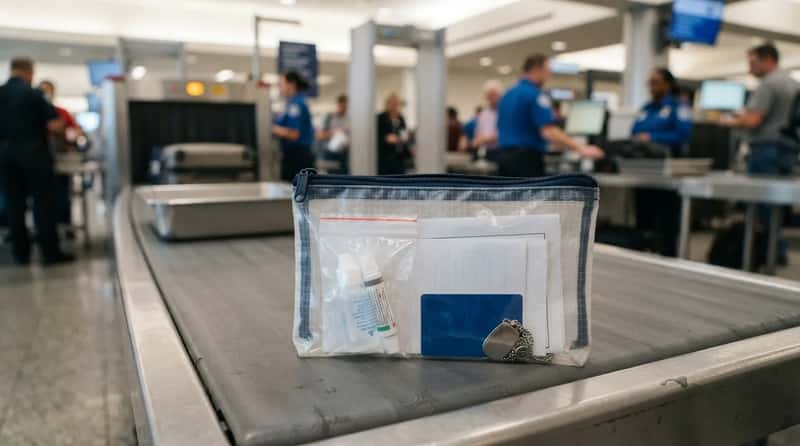
Most checkpoint stress comes from digging through a bag while people wait behind you. The fix is to build one pouch that holds everything an officer might ask about, and to keep it on top of your carry-on.
What goes in the pouch:
- Your printed TSA Notification Card, if you have a condition, implant or device to explain.
- Your printed medication list, plus the device ID card and any doctor’s letter.
- Any medically necessary liquids, kept apart from your other liquids so they can be pulled out and declared fast.
How to use it at the checkpoint:
- Before you reach the belt, take the pouch out and say your one-sentence summary to the first officer.
- Hand over the card and put the liquids in a separate bin for screening.
- If you’d like extra help and none has been arranged, ask an officer or supervisor whether a Passenger Support Specialist is available at that checkpoint.
One more option to look into: TSA PreCheck. If you fly more than a couple of times a year, a PreCheck membership can mean you don’t have to take off your shoes, belt or light jacket, and your liquids can stay in the bag. Check TSA.gov for the current fee and enrollment steps.
Pack the pouch the night before, not in the car. You’ll feel the difference the first time you walk up to the belt with everything in one hand.
- TSA Screening Passengers 75+: https://www.tsa.gov/travel/tsa-cares/screening-passengers-75-and-older
- TSA Travel Tips Medication: https://www.tsa.gov/travel/travel-tips
- Upgraded Points TSA Medication: https://upgradedpoints.com/travel/airports/tsa-medication-rules/
- CDC Travelers with Disabilities: https://www.cdc.gov/yellow-book/hcp/travelers-with-additional-considerations/travelers-with-disabilities.html
- NAP Millimeter Wave Screening: https://www.nationalacademies.org/read/24936/chapter/7
- TSA Disabilities and Medical Conditions: https://www.tsa.gov/travel/tsa-cares/disabilities-and-medical-conditions