Most of Europe’s railways were built to move people and freight, not to impress anyone. A handful of them ended up crossing terrain so dramatic that the timetable became almost secondary.
This ranking weighs scenery, engineering and how easy each line is to ride. The details come from operators and recent travel reporting, with notes on 2026 conditions where they matter.
1. Bernina Express, Switzerland to Italy
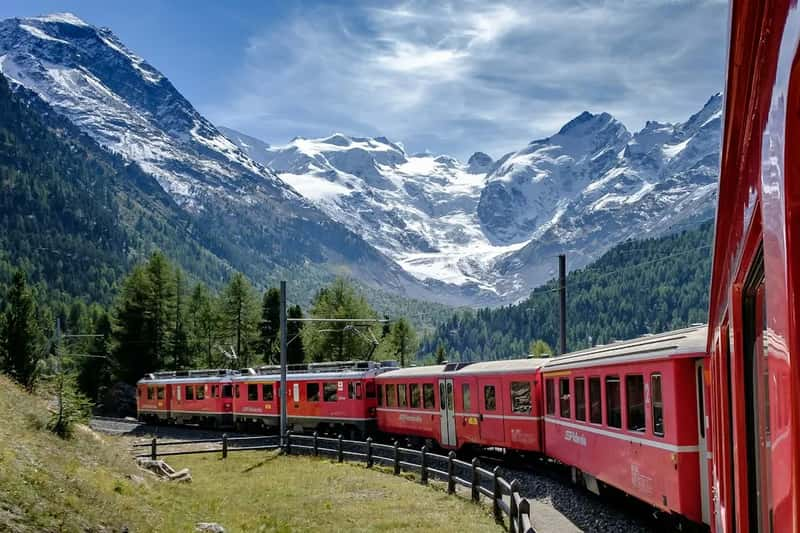
The full route is 144 km long, crosses 196 bridges and 55 tunnels, and takes about four hours end to end.[1] It takes first place because the landscape changes so completely. The train starts in Chur, passes the Landwasser Viaduct, climbs to the Bernina Pass and glaciers, then drops to the palm trees of Tirano in Italy.[2]
The highest point is Ospizio Bernina, at 2,253 metres.[3] The Albula and Bernina Lines of the Rhaetian Railway have been a UNESCO World Heritage site since July 2008.[2] Engineers planned a largely tunnel free route so travellers could take in the scenery.[4]
Panoramic coaches carry an extra cost. They charge a small reservation fee, but regular trains run the same route if you’d rather skip it.[5]
2. Glacier Express, Switzerland
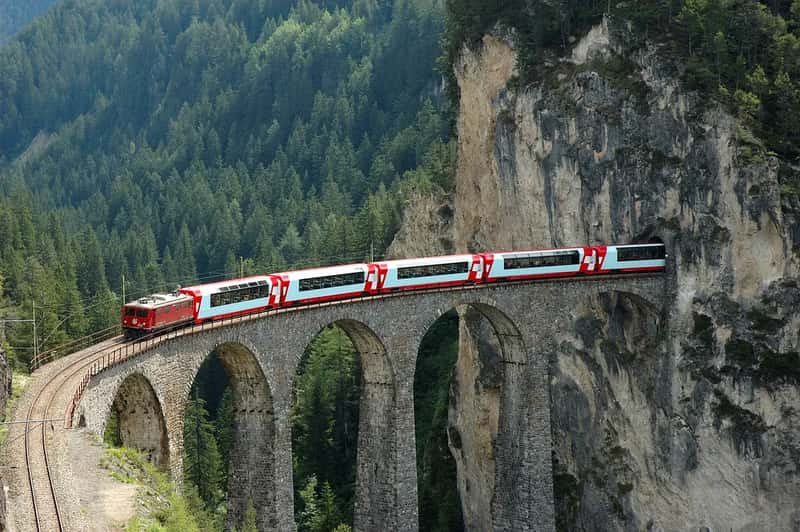
The Glacier Express links the Alpine resorts of St. Moritz and Zermatt in about eight hours.[6] Along the way it crosses 291 bridges and passes through 91 tunnels. It also crosses the Landwasser Viaduct, runs through the Rhine Gorge and climbs over the Oberalp Pass.[6]
The Oberalp Pass, the highest point, sits at 2,033 metres.[7] Travellers also get a view of the Matterhorn.[6] The line misses the top spot partly because it overlaps with the Bernina route. From Chur it follows the same track as the Bernina Express.[8]
Plan ahead before you go. Seat reservations are mandatory on the Glacier Express.[9] Service also pauses for a few weeks in autumn, so check dates before booking.[7]
3. Flåm Railway, Norway
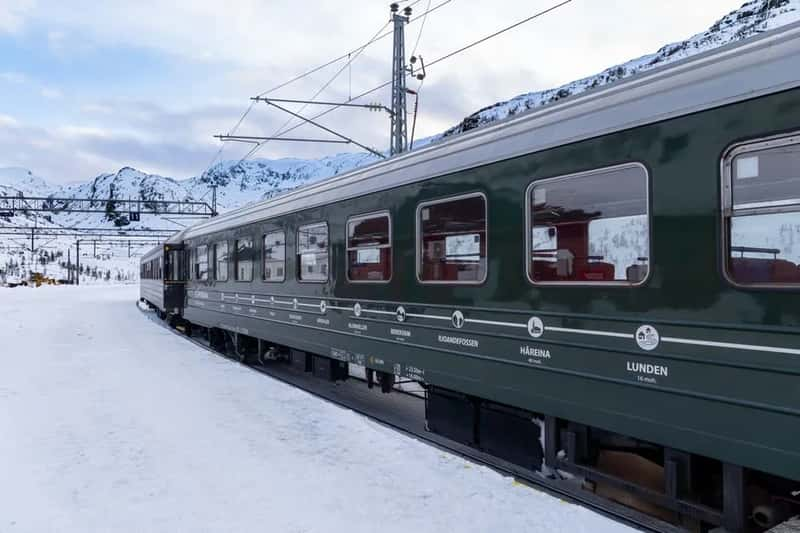
The Flåm Railway covers 20.2 kilometres between Myrdal and Flåm in about an hour.[10] Myrdal station sits 867 metres above sea level, while Flåm lies at the edge of the Aurlandsfjord.[11] That drop is the reason this short ride ranks so high.
Engineers had to overcome nearly 900 metres of elevation across just 20 kilometres.[12] Passengers pass snow capped mountains, forests, rivers and waterfalls pouring off steep cliffs.[11] The line opened to passengers in 1941.[13]
Its brevity is the only real limit. It’s one of Norway’s shortest but steepest train rides, and an easy detour on a longer fjord trip.[10]
4. West Highland Line, Scotland
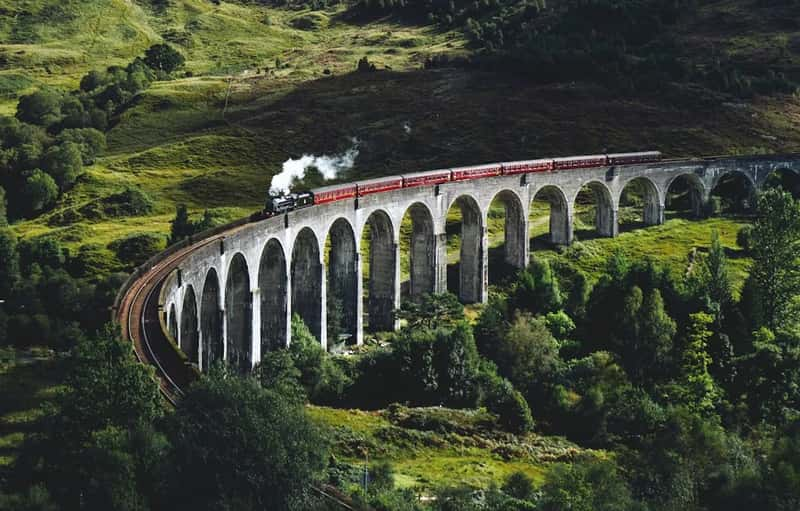
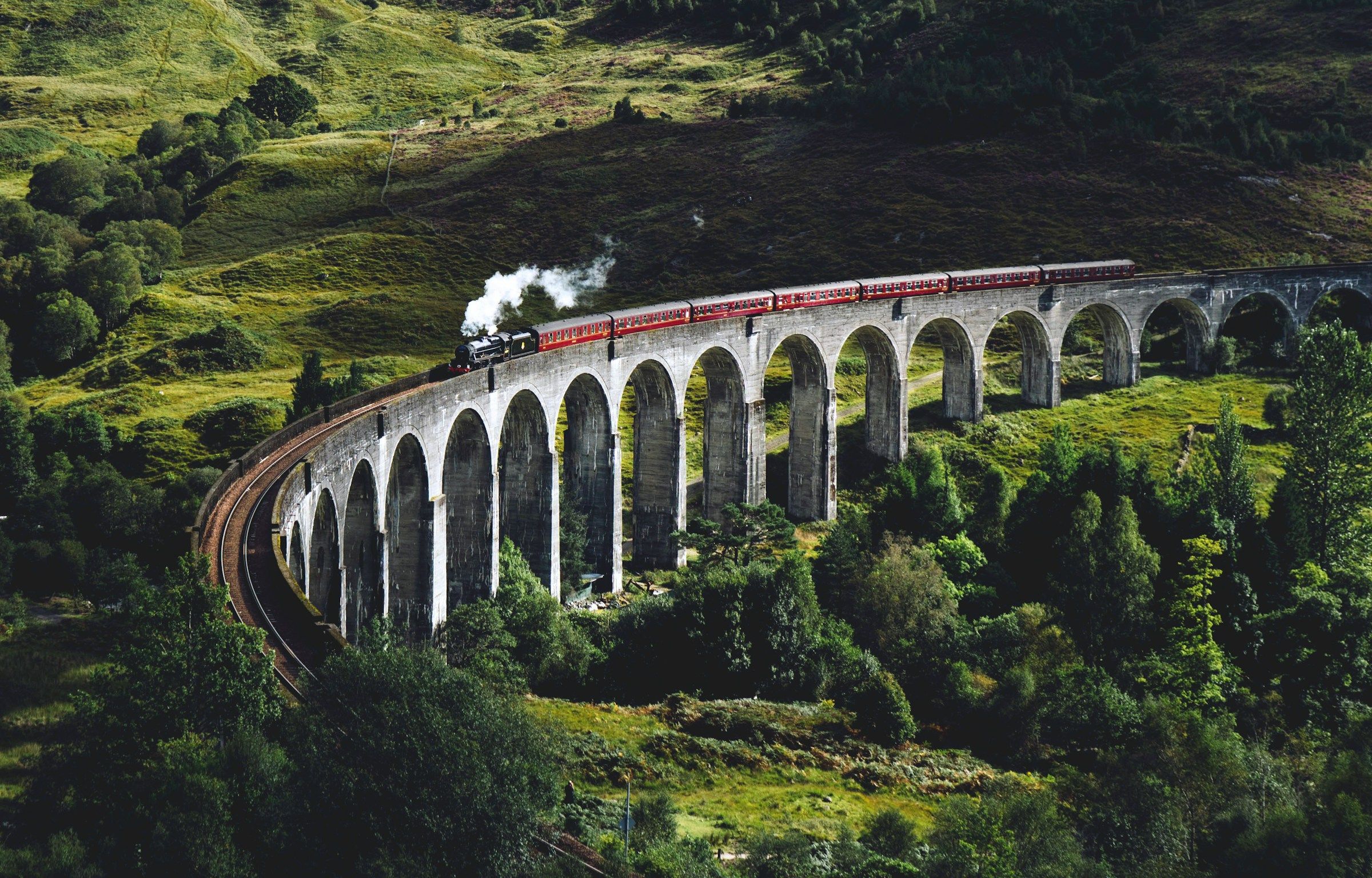
The line runs 164 miles from Glasgow to Mallaig, and Corrour is the highest mainline station in the UK.[14] The original railway to Fort William opened on 11 August 1894.[14] Moorland, lochs and mountains fill the windows for most of the journey.
The star moment is the Glenfinnan Viaduct. It has 21 arches and appeared in the Harry Potter films.[15] It also features on the Bank of Scotland £10 note.[16]
The Jacobite steam train adds drama, though it’s seasonal. Its 2026 services resumed on 1 June, about two months late, after a safety dispute over carriage door locking.[17] Regular trains between Fort William and Mallaig run all year and cross the same viaduct.[15] Replacement buses run between Crianlarich and Fort William and Mallaig from 9 to 17 November 2026 while Network Rail upgrades the line.[15]
5. Bergen Railway, Norway
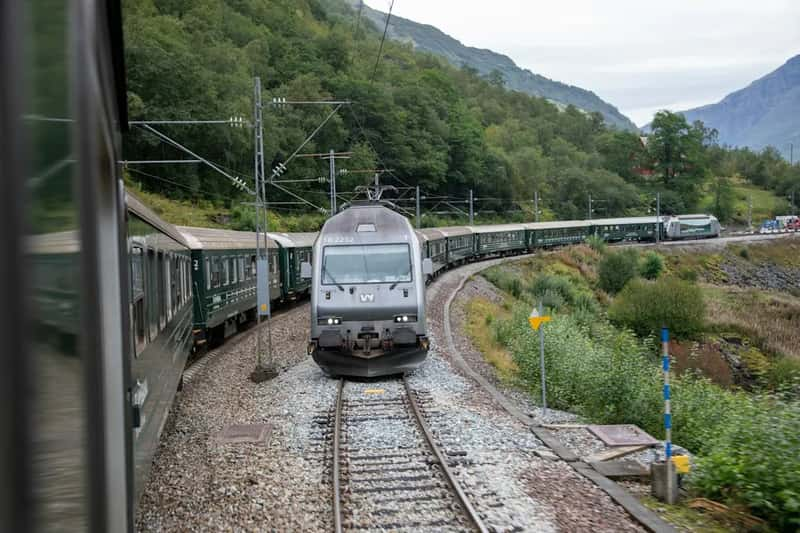
The Bergen Railway links Norway’s two largest cities.[10] In about seven hours the train goes from forests around Oslo to the Hardangervidda mountain plateau, then down to the west coast and Bergen.[10] It’s the long, patient cousin of the Flåm Railway.
The Flåm Railway branches off at Myrdal, and many travellers ride both on the same trip.[18] In winter the Hardangervidda crossing turns snow covered and almost arctic, though also cold and dark.[18]
Myrdal is also the start of a famous hiking and cycling trail. The Rallarvegen follows the old construction road used to build the railway and runs about 80 kilometres.[19]
6. Settle to Carlisle Railway, England
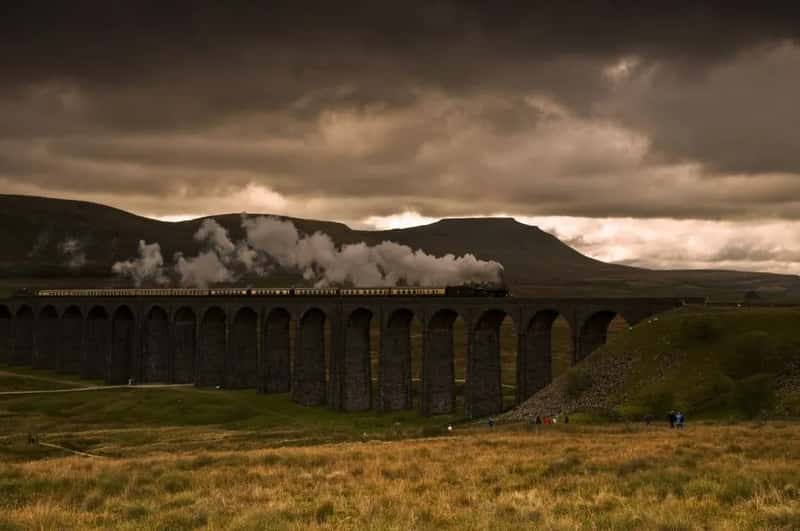
The route covers 117 kilometres from Settle in North Yorkshire to Carlisle in Cumbria. It passes through the Yorkshire Dales National Park and the North Pennines.[20] There are no glaciers here. What you get instead is open, quiet English upland, seen from a Victorian railway.
The line is busy for such a modest route. It saw around 995,000 passengers in 2025 and is expected to pass one million this year.[20] To mark its 150th year in 2026, the railway announced it would offer £1.50 tickets.[20]
7. Cinque Terre Train, Italy
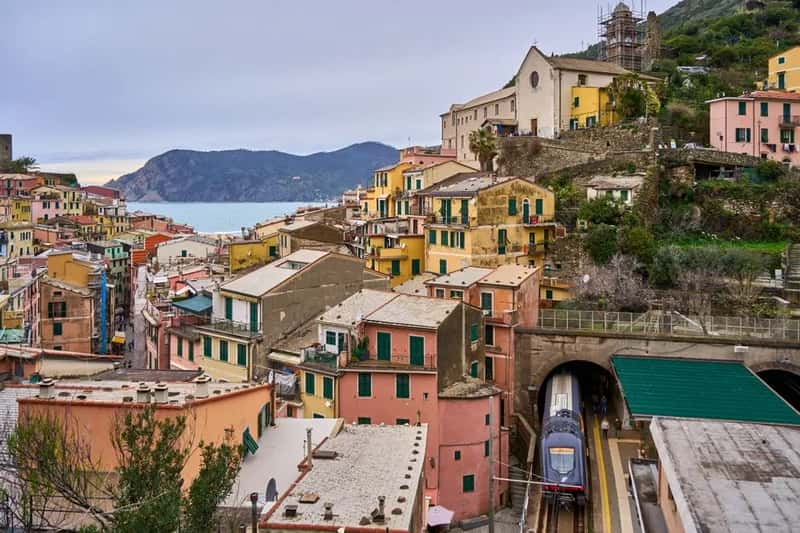
The train runs from La Spezia in the south to Levanto in the north, stopping at all five Cinque Terre villages.[20] The trip takes about twenty to thirty minutes.[21] It’s the shortest ride on this list, so it lands in the middle.
Passengers glimpse clear Mediterranean water, terraced vineyards and pastel houses clinging to steep cliffs.[21] The train is an ordinary Italian regional service, and the destinations are what earn it a place here.[21]
Trains run every 15 to 30 minutes in season.[9] A Cinque Terre Card is needed for unlimited rides.[9]
8. Semmering Railway, Austria
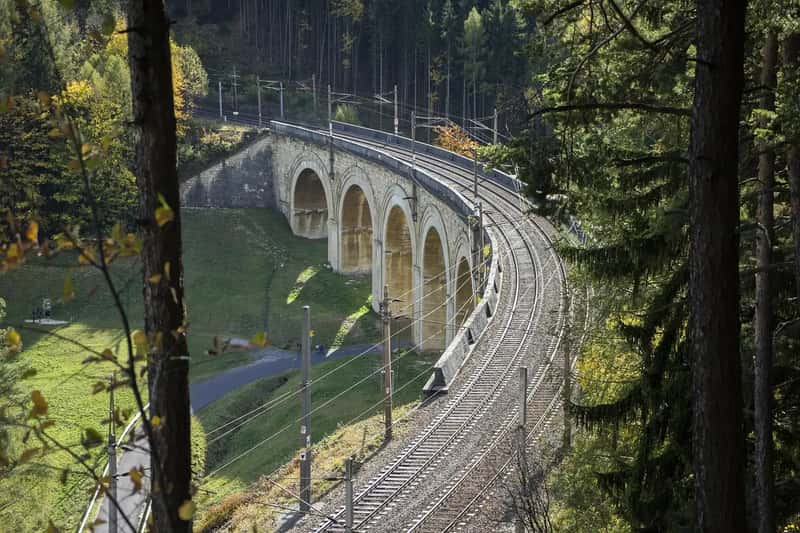
The excitement starts as the train climbs the Semmering Pass, which is 895 metres above sea level.[22] The line opened in 1854 and is a UNESCO World Heritage site. Its stone viaducts and tunnels were an early answer to crossing an Alpine barrier.
This line is gentler than the Swiss giants and easier to fit into a trip. It’s included in standard Austrian rail tickets.[23] Hiking trails around the town of Semmering have viewpoints overlooking the historic bridges and tunnels, which makes a good break from the train.[22]
9. Little Yellow Train, France
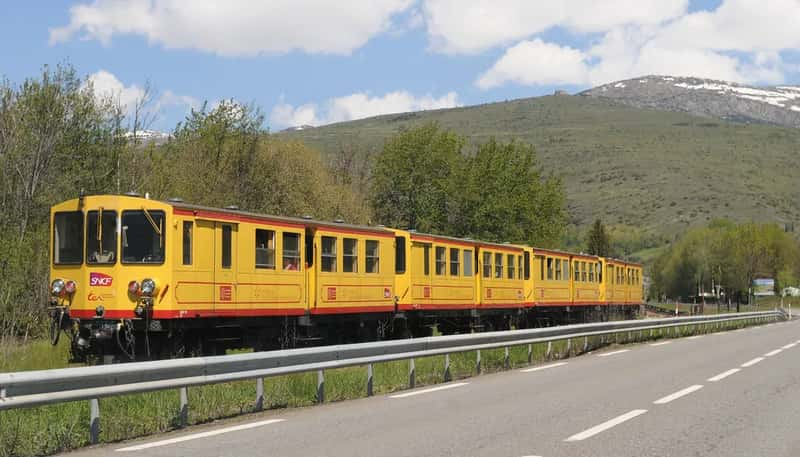
The Little Yellow Train winds through the Pyrenees in southern France. In summer it runs with an open top carriage.[5] Wind and mountain air are part of the experience, which you won’t get behind glass.
It ranks ninth because its charm is slower and more rustic than headline grabbing. The line is fully included in the Interrail Pass, though works sometimes affect it, so it’s worth checking train times in advance.[5]
Planning Your Ride
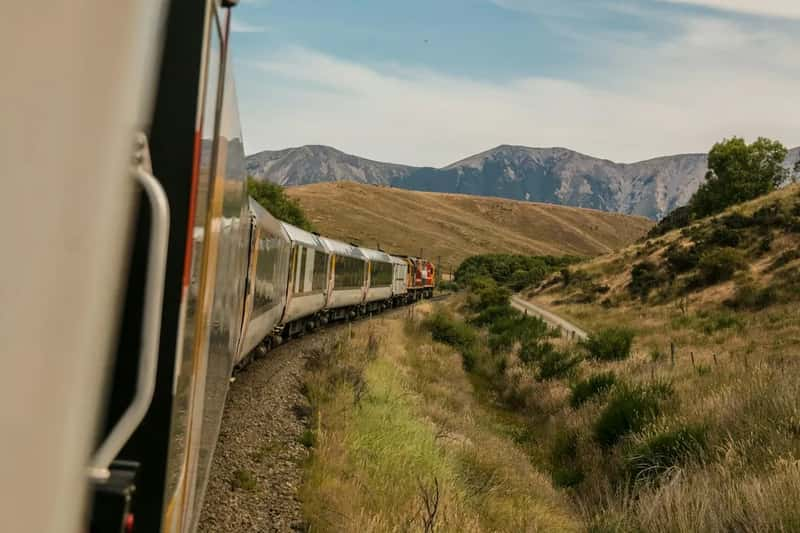
The Swiss routes need reservations on panoramic services, so book early for peak months. The Jacobite’s 2026 season ended on 23 October, so look for 2027 timetables before planning a steam trip. The regular West Highland Line, the Flåm Railway and the Bergen Railway remain the simplest ways to ride this list outside the summer rush.