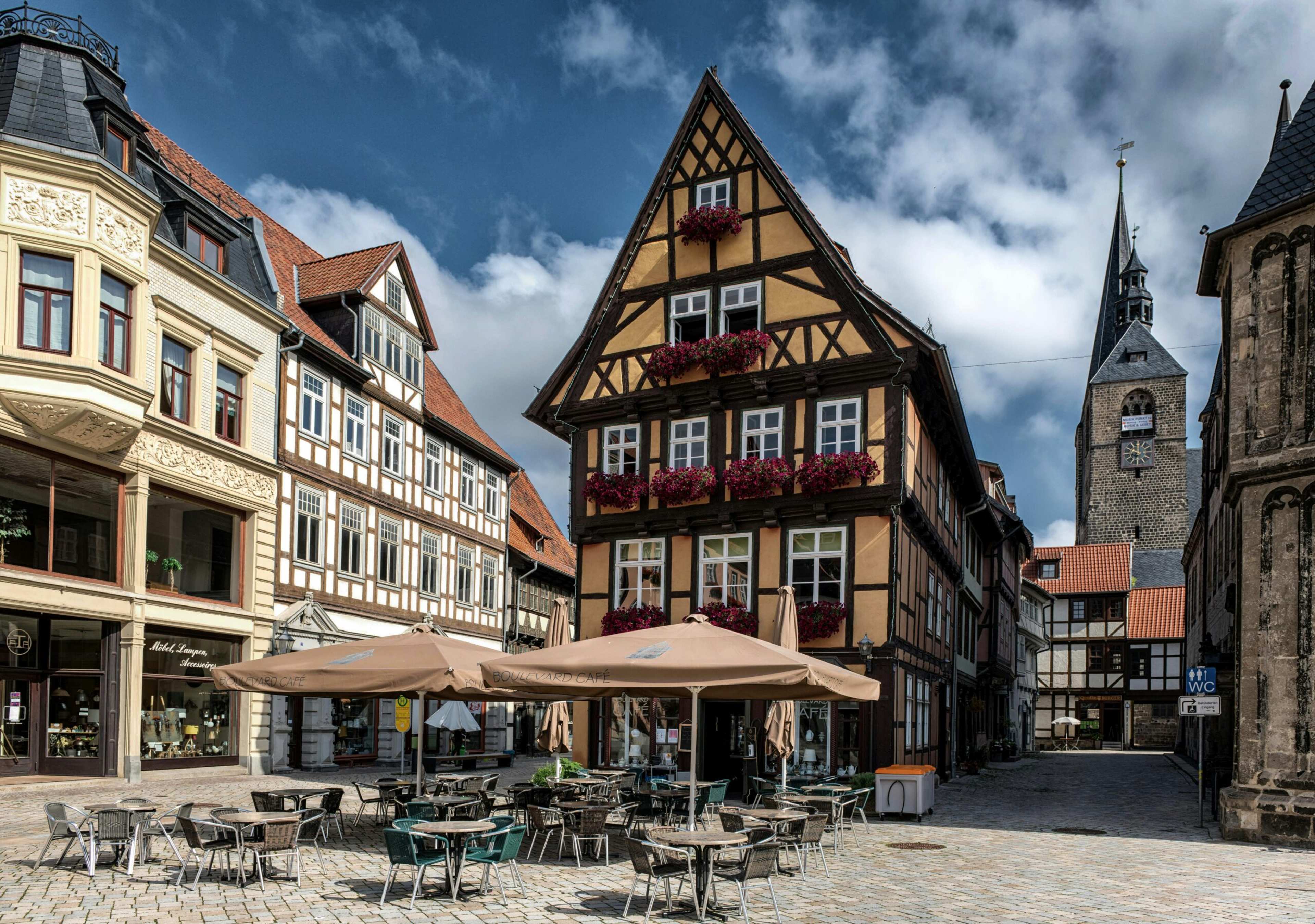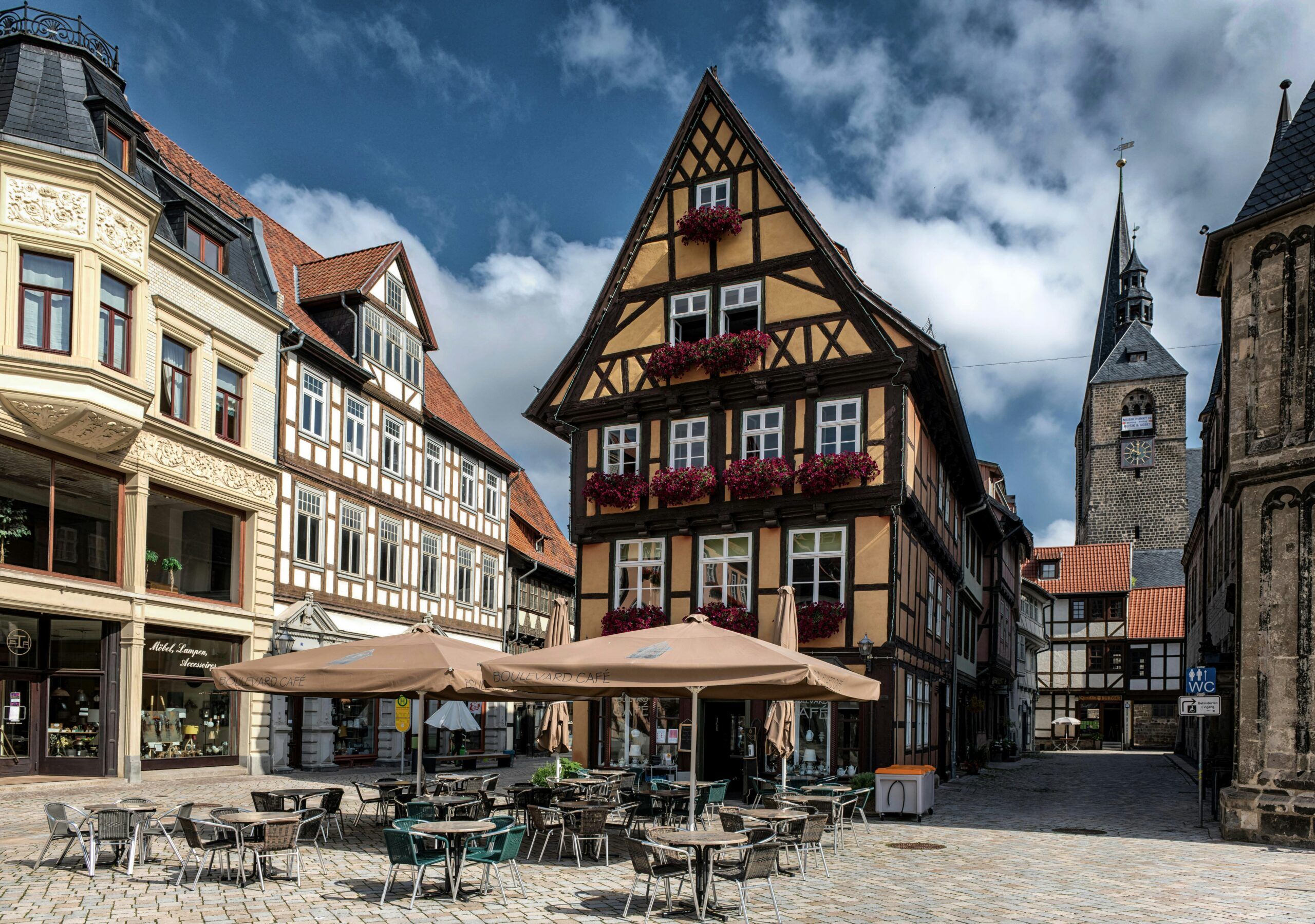
Germany’s best known postcard scenes tend to come from places that are small, old and a little awkwardly shaped. Steep valleys, river bends and lake shores forced these settlements into tight layouts, and that is a big part of why they photograph so well today. Some of them are technically small towns, though in everyday travel talk they all get lumped in as villages.
The ranking below is an editorial judgment, not a scientific score. It weighs how much historic fabric survives, how dramatic the setting is, how easy the place is to explore on foot, and how widely it’s recognized by travel writers and heritage bodies. Other travelers would shuffle the order, and that’s fine.
1. Monschau, North Rhine-Westphalia
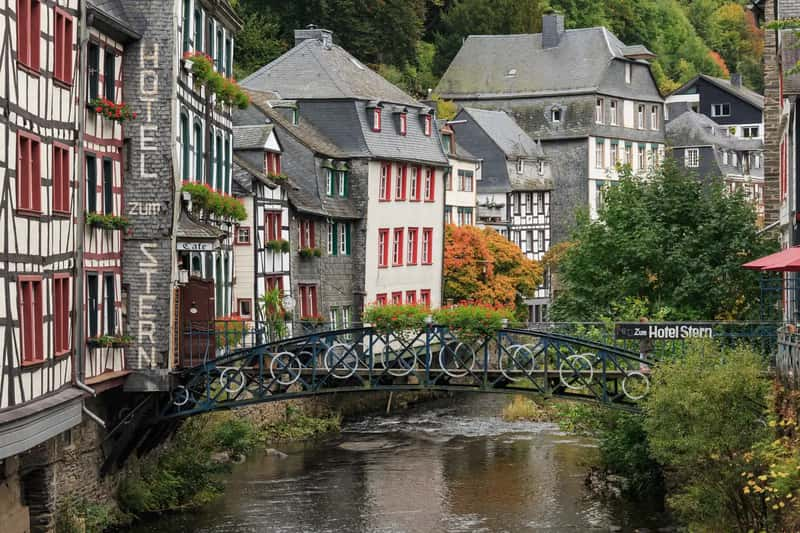
Monschau earns the top spot for sheer consistency. The historic center has many preserved timber framed houses, and its narrow streets have stayed nearly unchanged for 300 years.[1] It sits in the narrow valley of the Rur river in the Eifel, close to the Belgian border.
The setting is backed by real numbers. More than 300 buildings are listed as monuments.[2] One travel site reports that in October 2024 the town was officially named Germany’s Most Beautiful Small Town[3], though I’d treat that as a secondary report. The grand Red House, a patrician home, tells of the cloth making boom of the 18th century.[4]
2. Bacharach, Rhineland-Palatinate
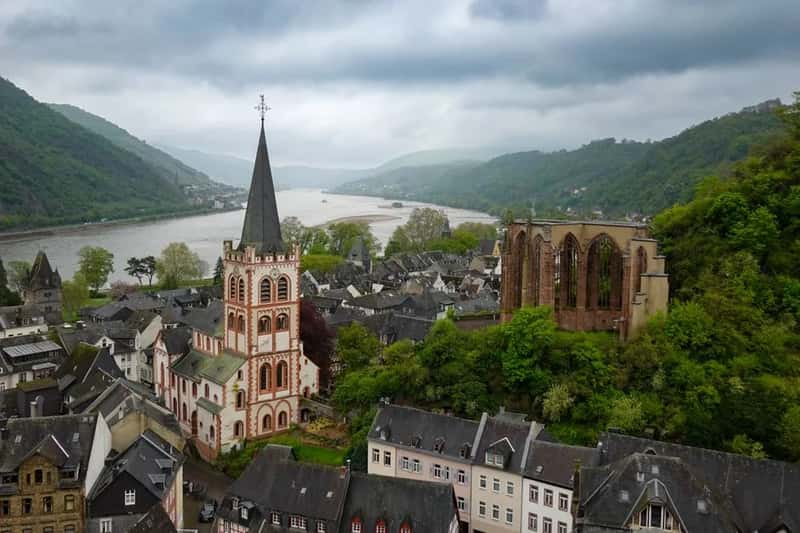
Bacharach sits inside the Upper Middle Rhine Valley, a 65 kilometer stretch between Bingen and Koblenz that UNESCO inscribed as a World Heritage Site in 2002.[5] The village is compact. It’s small enough to walk in an afternoon.[5]
Look for the Altes Haus, a timber framed house from 1368 and the oldest surviving building in the village.[5] Riesling vineyards climb so steeply that they rise straight from the last row of houses.[5] Above it all, a 12th century castle now operates as an official youth hostel.[5]
3. Rothenburg ob der Tauber, Bavaria
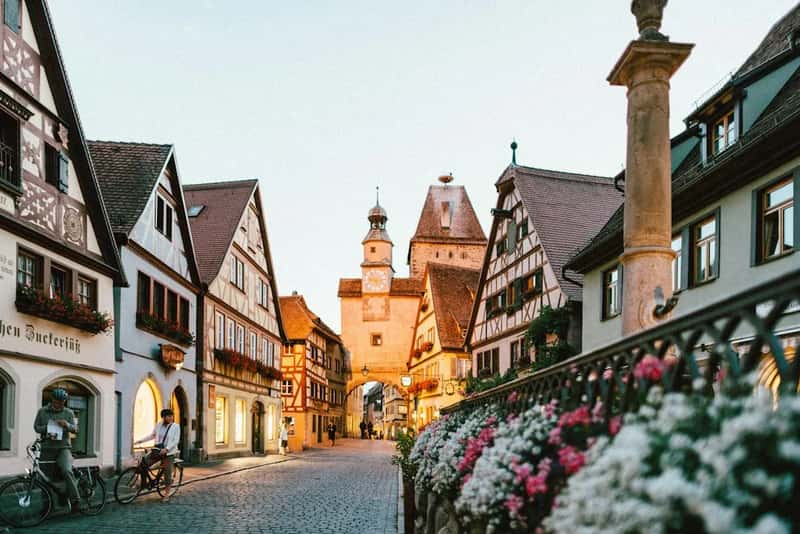
Rothenburg is the name most people think of first, and it’s easy to see why. It lies along Bavaria’s Romantic Road, with cobblestone streets, colorful timber framed houses, ancient towers and one of Germany’s best preserved town walls.[6] That fame is also its main drawback, since the center gets crowded in peak season.
You can walk along the old city walls and explore the Christmas Museum.[7] It’s an easy day trip from Nuremberg or Würzburg.[7] I’ve placed it third because the polish that draws crowds can make it feel a bit staged compared with quieter places.
4. Mittenwald, Bavaria
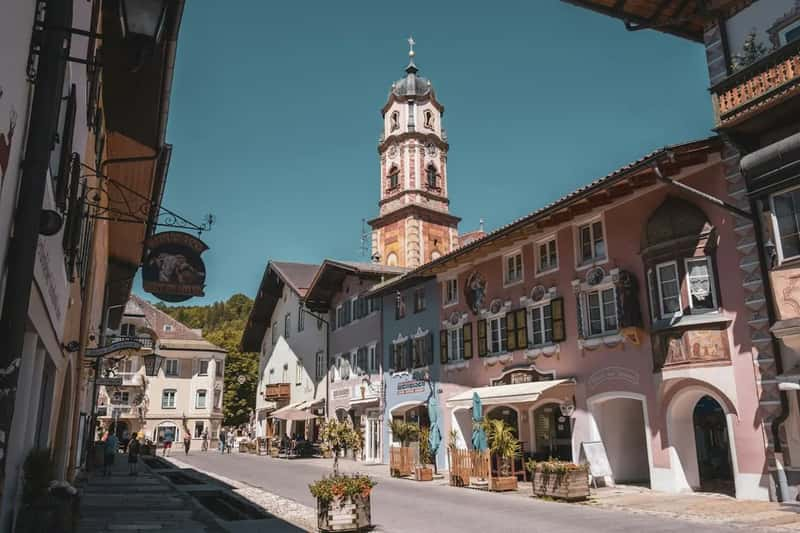
Mittenwald is the Alpine entry on this list. It nestles beneath the Alps in southern Germany.[8] The mountains rise right behind the rooftops, so almost every street ends in a view.
The village is also known for craft. Travel guides point to its violin making tradition[8], which dates back several centuries. Painted facades on many of the houses add color against the rock faces.
5. Quedlinburg, Saxony-Anhalt
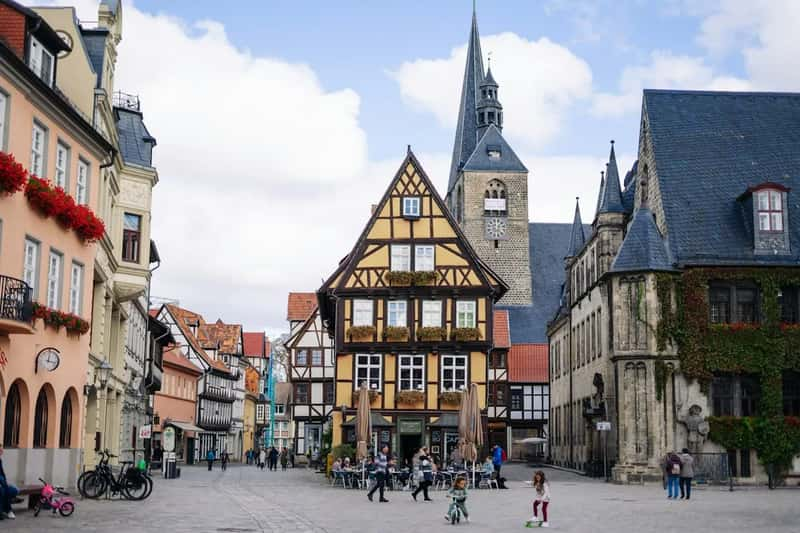
Quedlinburg is more of a small town, but its historic core is hard to ignore. The center holds more than 1,300 timber framed townhouses, more than anywhere else in the world.[9] It’s set in the Harz Mountains, in the middle of Germany.
The place is recognized as a UNESCO World Heritage Site and was once an important political center, one of Germany’s first capitals.[8] The houses are scattered around atmospheric squares and winding cobbled streets.[9] It ranks mid table only because it feels more like a town than a village.
6. Cochem, Rhineland-Palatinate
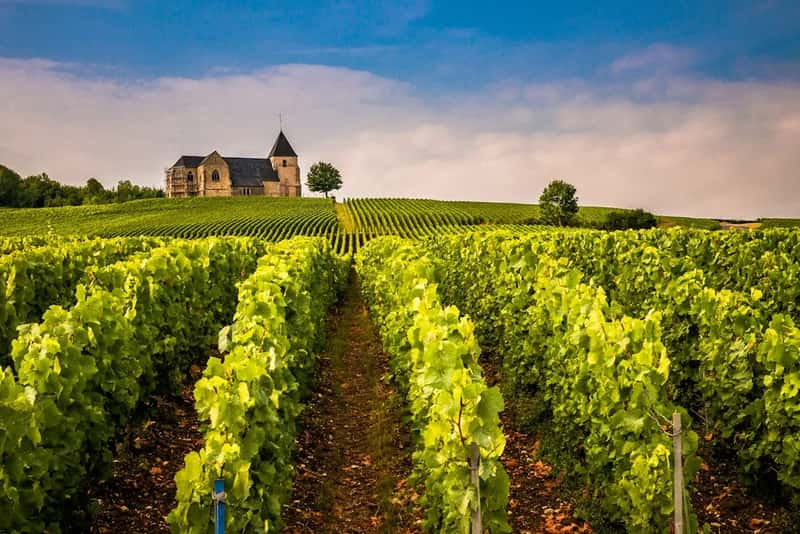
Cochem stretches along the Moselle, and the river is half the appeal. The town is famous for its wine culture and for Reichsburg Castle, which overlooks it.[7] Vineyards fill the slopes behind.
The calendar matters here. Summer suits vineyard tours, while winter brings cozy Christmas markets.[7] One travel blog also notes a historic mustard mill in Cochem, one of the last in Germany.[10]
7. Meersburg, Baden-Württemberg
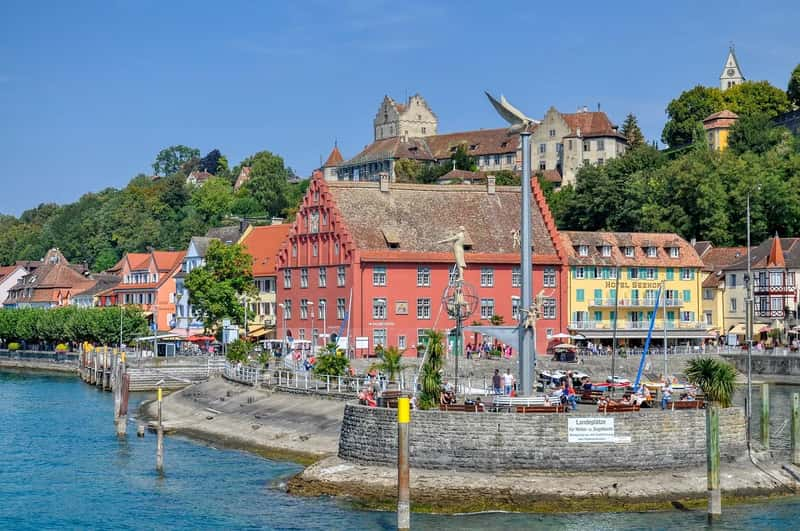
Meersburg looks out over Lake Constance, and its waterfront is the draw. The harbor is one of the town’s most famous sights.[11] Watching the sunset over the lake is one of the most memorable experiences in southern Germany.[11]
Above the harbor sits the Altes Schloss. The old castle is described as one of the oldest inhabited castles in Germany.[7] Steep lanes link the upper town with the lakeside below.
8. Schiltach, Baden-Württemberg
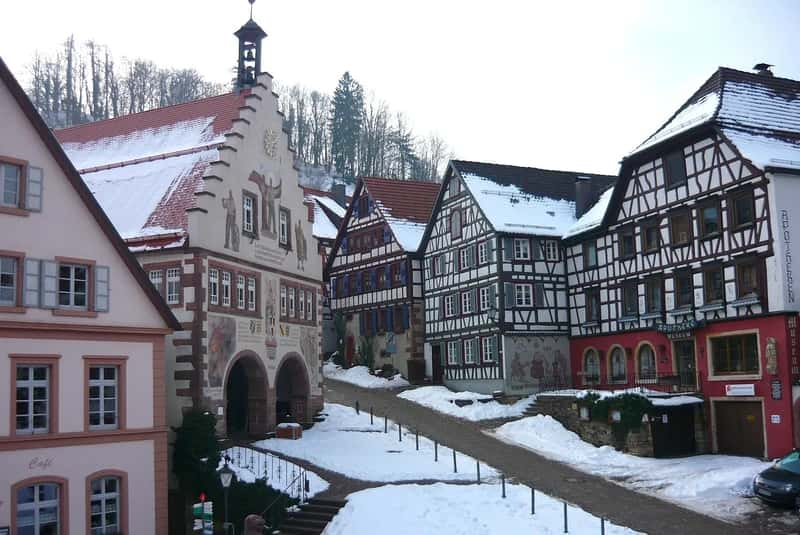
Schiltach is a quieter pick in the Black Forest. It sits at the confluence of the Schiltach and Kinzig rivers and is considered one of the best preserved timber framed ensembles in southern Germany.[12] Around 4,000 people live there.[13]
Its history was built on logs. For centuries, floating timber down the Kinzig to the Rhine was the town’s main source of income.[14] Visitors can see small museums about timber rafting and tanning.[15] The old town is a protected monument, with restored houses from the 16th to 19th centuries.[12]
9. Triberg, Baden-Württemberg
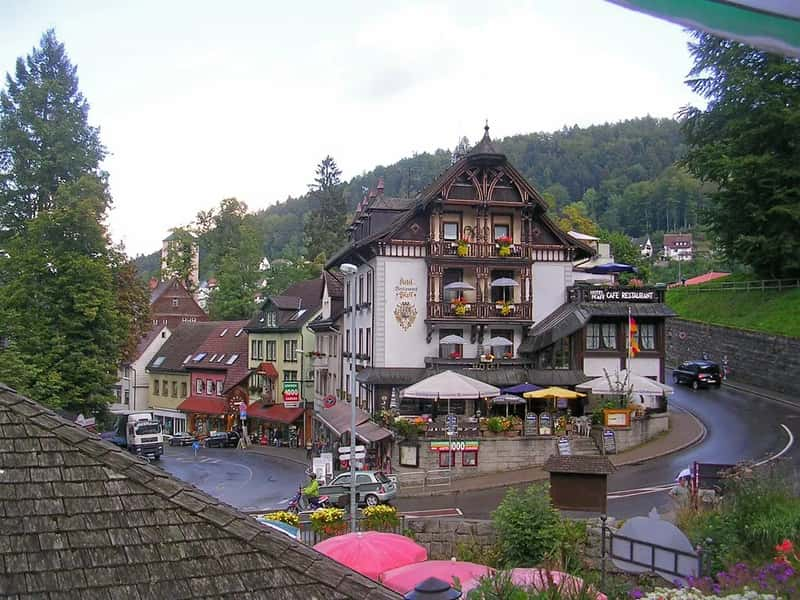
Triberg rounds out the list with a mix of nature and tradition. In a country known for cuckoo clocks, it has one of the biggest in Germany.[16] The town also has the Black Forest Museum and sits close to Triberg Falls, one of the highest waterfalls in Germany.[16]
It’s less of a pure architecture stop than the others above. The hiking trails nearby are a large part of why people stay overnight. As a village, it scores on setting more than on streetscape.
10. Planning a Visit to These Villages
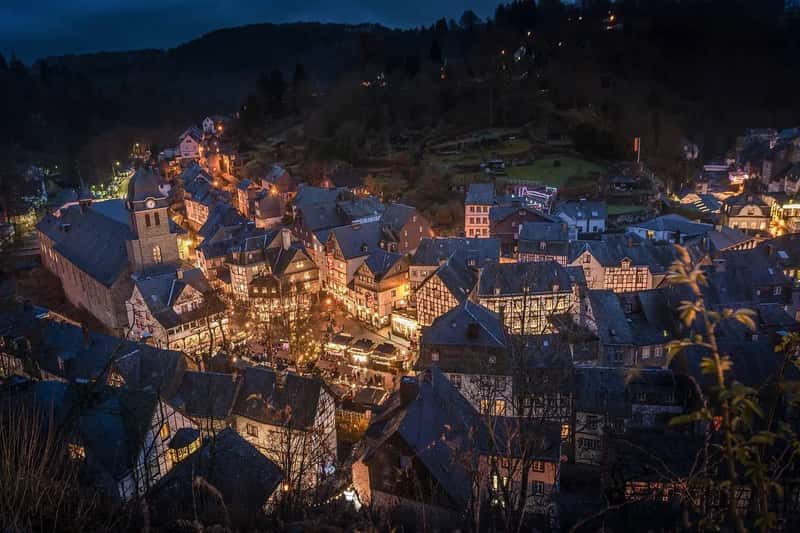
Timing changes the experience a lot. Monschau is popular in summer but becomes truly overrun during its famous winter Christmas market.[2] Bacharach and the Rhine Valley are most likely to be packed in summer and during the harvest season.[17]
Several of these places work well as day trips by train or car from larger cities. Bacharach, for example, sits on routes with excellent train connections from anywhere in Germany.[18] Staying overnight tends to give you the streets after the day visitors have left.