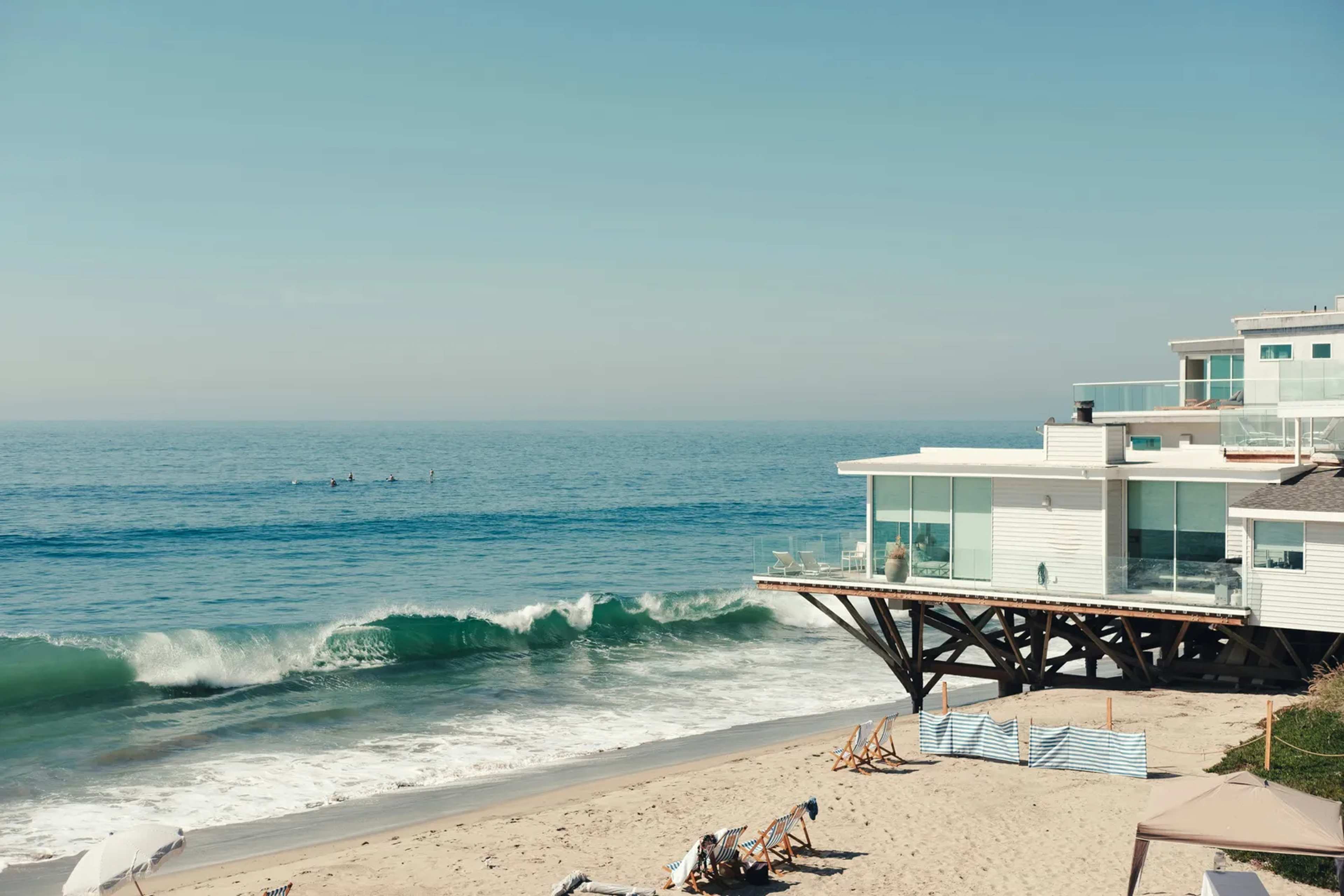
One of the first things you notice when traveling through Costa Rica is the almost disorienting diversity of its national parks. There is no such thing as a “standard park experience” here. Each protected area corresponds to a specific ecosystem, with its own climate, wildlife, vegetation, rhythm, and level of effort required. Every visit feels different: some parks demand physical endurance, others invite slow observation or pure relaxation. In just a few days, you can move from tropical beaches to cloud forests, from active volcanoes to marine reserves, without ever feeling repetition.
There is, however, one element that ties all these places together—and it matters more than you might expect: the entrance signs. Black, graphic, minimal, each one featuring the silhouette of the park’s emblematic animal. They are striking and immediately recognizable. They work as real thresholds. Crossing them feels like stepping out of the human world and into a nationally orchestrated system where environmental protection is taken seriously. Entering a national park in Costa Rica consistently conveys a sense of order, intention, and respect for nature.
Manuel Antonio: Animals and Crowds
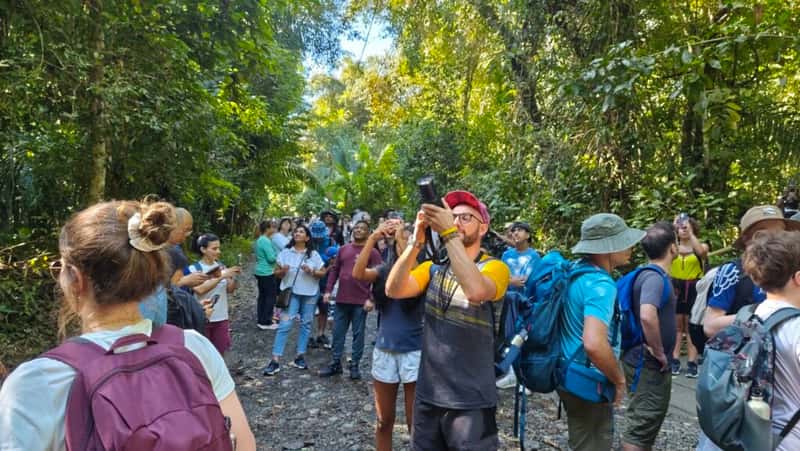
Manuel Antonio is often the first national park people visit, and it’s easy to understand why. Extremely compact—covering just under 2 square miles—highly accessible, and visually spectacular, it combines dense tropical rainforest with some of the most beautiful beaches in the country. Wildlife here is unusually visible: capuchin monkeys, howler monkeys, sloths, iguanas, and birds often appear just steps from the trails.
That said, the park requires patience. It is almost always crowded, and the small size amplifies the feeling of congestion. The insistence on guided tours—useful, yes, but not always desired—can feel overwhelming if, like me, you simply want to walk and observe quietly. Access is limited and tickets sell out quickly, so planning ahead is essential. To escape the densest crowds, head toward the more remote peninsula beyond the two main beaches, shaped like a whale’s tail. There, Manuel Antonio becomes a park for observation and relaxation, and it’s easy to spend an entire day moving slowly between forest and sea.
Marino Ballena: Whales and Water
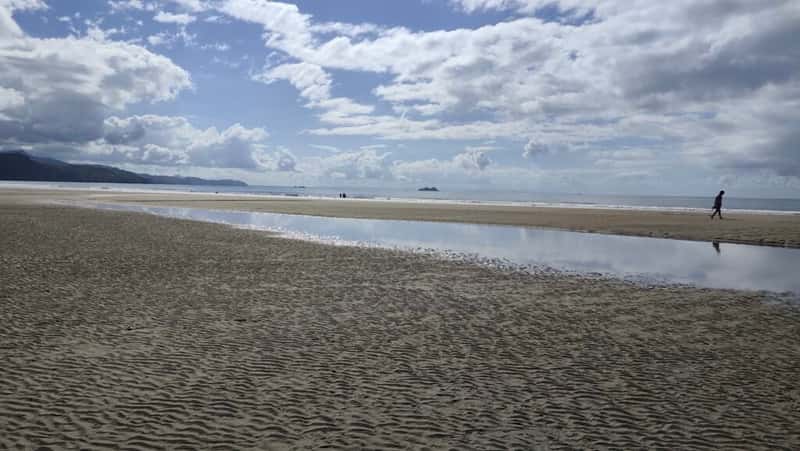
Marino Ballena is unlike any other park because most of it lies underwater. Famous for the whale-tail-shaped sandbar that emerges at low tide, its real significance is marine. Humpback whales migrate through these waters seasonally, making this one of Costa Rica’s best locations for whale watching.
The ideal way to experience the park is from the water, on a whale-watching boat excursion. It’s easy to understand that this is not a hiking park in the traditional sense. The experience is looser and less structured than in forest parks, with tides dictating access. Walking along the exposed seabed at low tide feels surreal. Even when whales aren’t visible, the awareness of what moves beneath the surface reshapes your perception of the landscape. The beaches are vast, with multiple access points and swimming areas, making it easy to spend an entire day here combining exploration and beach life.
Tenorio Volcano: Deep Blue and Steep Trails
Tenorio is the park of color. The Río Celeste, with its unreal turquoise hue, is one of Costa Rica’s most surprising natural phenomena. The color is real, caused by a chemical reaction between volcanic minerals. The main attraction is the Río Celeste waterfall, reached by descending roughly 150 steep steps.
During high season, crowds are unavoidable. Waiting in line for a photo—sometimes over half an hour—can detract significantly from the experience, especially if you’re drawn to quieter natural settings. The park itself is lush, humid, and immersive, but physically demanding. Trails are slippery, often steep, and require proper footwear and caution. Expect hanging bridges, dense forest, and sustained effort. This is a park for exploration rather than wildlife spotting; aside from birds, animal sightings are rare. A typical visit lasts about three hours.
Rincón de la Vieja: Geothermal Activity, no Effort
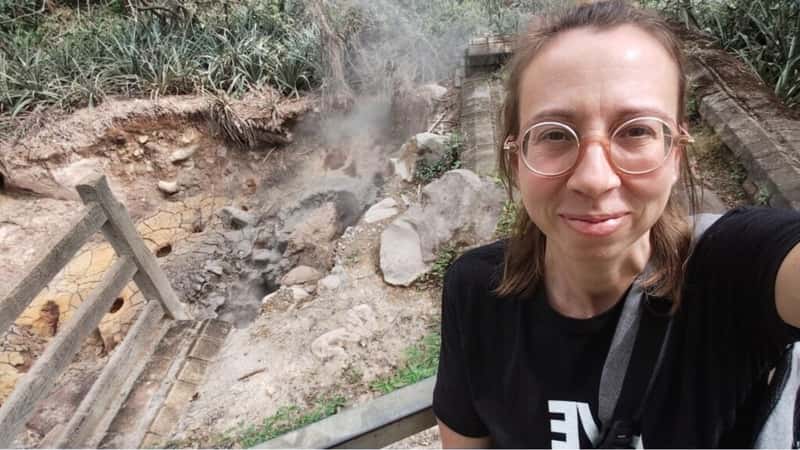
Rincón de la Vieja is the most physically expressive park in a very different way. Here, the earth announces itself through bubbling mud pots, fumaroles, and sulfurous steam vents. Volcanic activity is visible, audible, and often smellable.
Despite its intensity, the park is easy to walk. Trails are mostly flat, the terrain is dry and dusty, and physical effort is minimal. Compared to nearby Tenorio, it couldn’t feel more different. Wildlife sightings are limited—mostly birds—but the landscape itself is the main actor. This is another exploration-focused park, typically visited in about three hours.
Santa Elena Cloud Forest Reserve: Mist and Effort
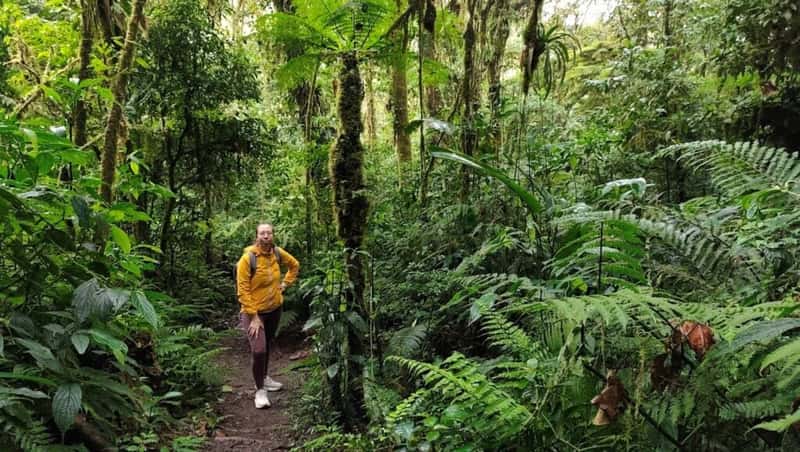
Santa Elena, part of the Monteverde cloud forest system, sits at around 5,300 feet above sea level and offers an entirely different atmosphere. You walk inside a cloud. Humidity is constant, light is filtered, wind is strong, and fog is almost guaranteed—even from elevated viewpoints.
This is a more demanding park. Trails are long, numerous, and can be confusing, with a real risk of getting lost if you’re not attentive. Walking here means mud, moss-covered trees, and a quiet that feels deliberate. Wildlife is present but rarely visible; the forest is too dense and the mist too persistent. Santa Elena rewards patience, orientation skills, and a willingness to accept limited visibility.
Cabo Blanco and Curú: Pristine Nature, Two Approaches
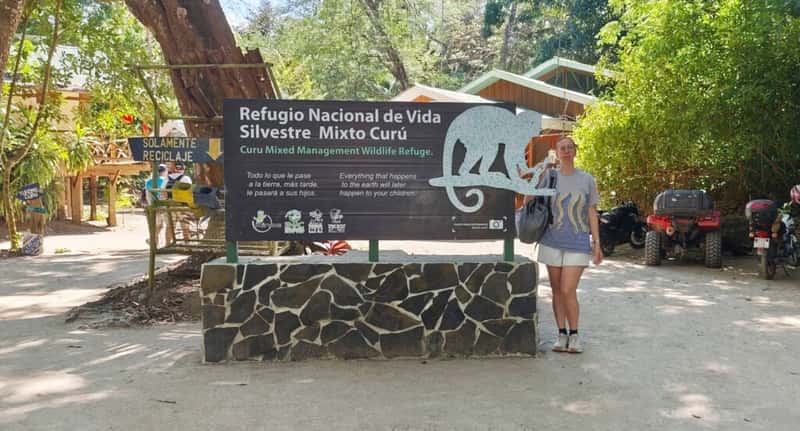
Cabo Blanco and Curú share a similar geography—a lush promontory with spectacular beaches—but offer very different experiences.
Cabo Blanco, one of Costa Rica’s first protected areas, is deliberately raw. There are no structured experiences, only demanding trails through dense vegetation. The heat is intense, the effort substantial. The reward is a stunning white-sand beach with turquoise water, reached only after about two hours of strenuous walking. Wildlife exists—coatis in particular—but this is a park that asks a lot in return for beauty.
Curú, by contrast, is far more accessible and wildlife-rich. Numerous short, easy trails allow visitors to see capuchin monkeys, coatis, crocodiles, and birds with relatively little effort. It also features a pristine white-sand beach that can be reached by boat in minutes. Add bioluminescence tours, a restaurant, and a shop, and Curú becomes a more varied and organized experience.
Poás Volcano: Access and Wonder
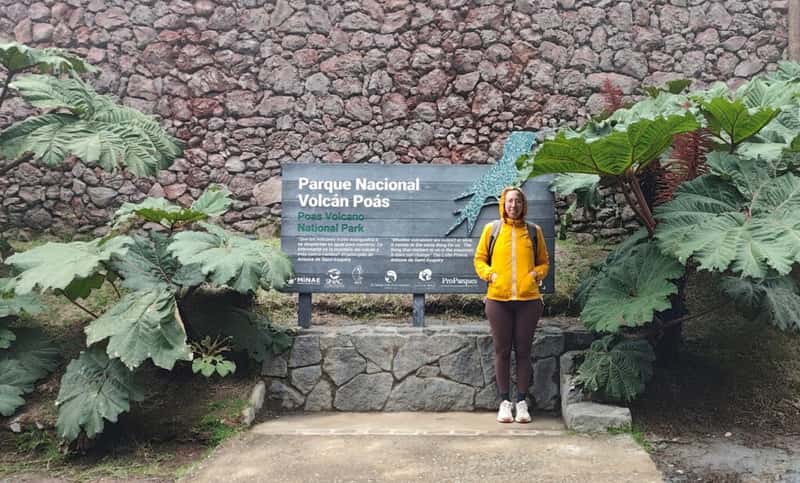
Poás Volcano National Park sits at around 8,800 feet above sea level and is deceptively close to San José, though the drive is long and winding. Its main crater—one of the largest in the world—is visible from a platform just a few hundred feet from the entrance.
Physical effort is nearly zero. There’s a café and small museum at the entrance, with a few secondary trails leading into high-altitude forest. The challenge here is timing. Poás is often covered in clouds, so checking weather forecasts and arriving early in the morning is essential to see the crater’s colors. When visible, the impact is immediate and powerful.
No Risk of Getting Bored
Exploring Costa Rica’s national parks means embracing variety and there is zero risk of getting bored. There is no ideal order and no single narrative. Each park demands a different pace, a different kind of attention, a different way of looking. Together, they form a system that is complex, intentional, and surprisingly readable.