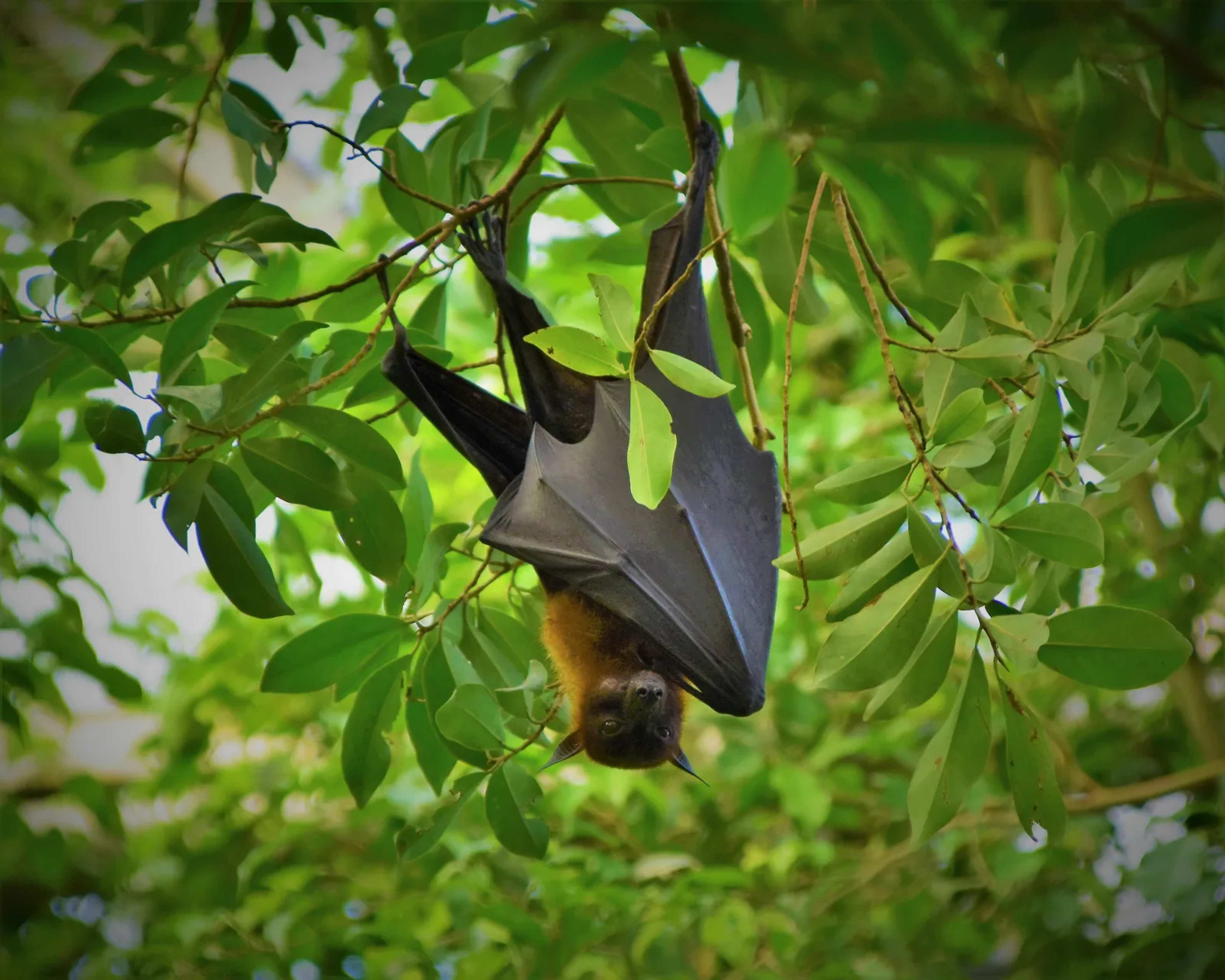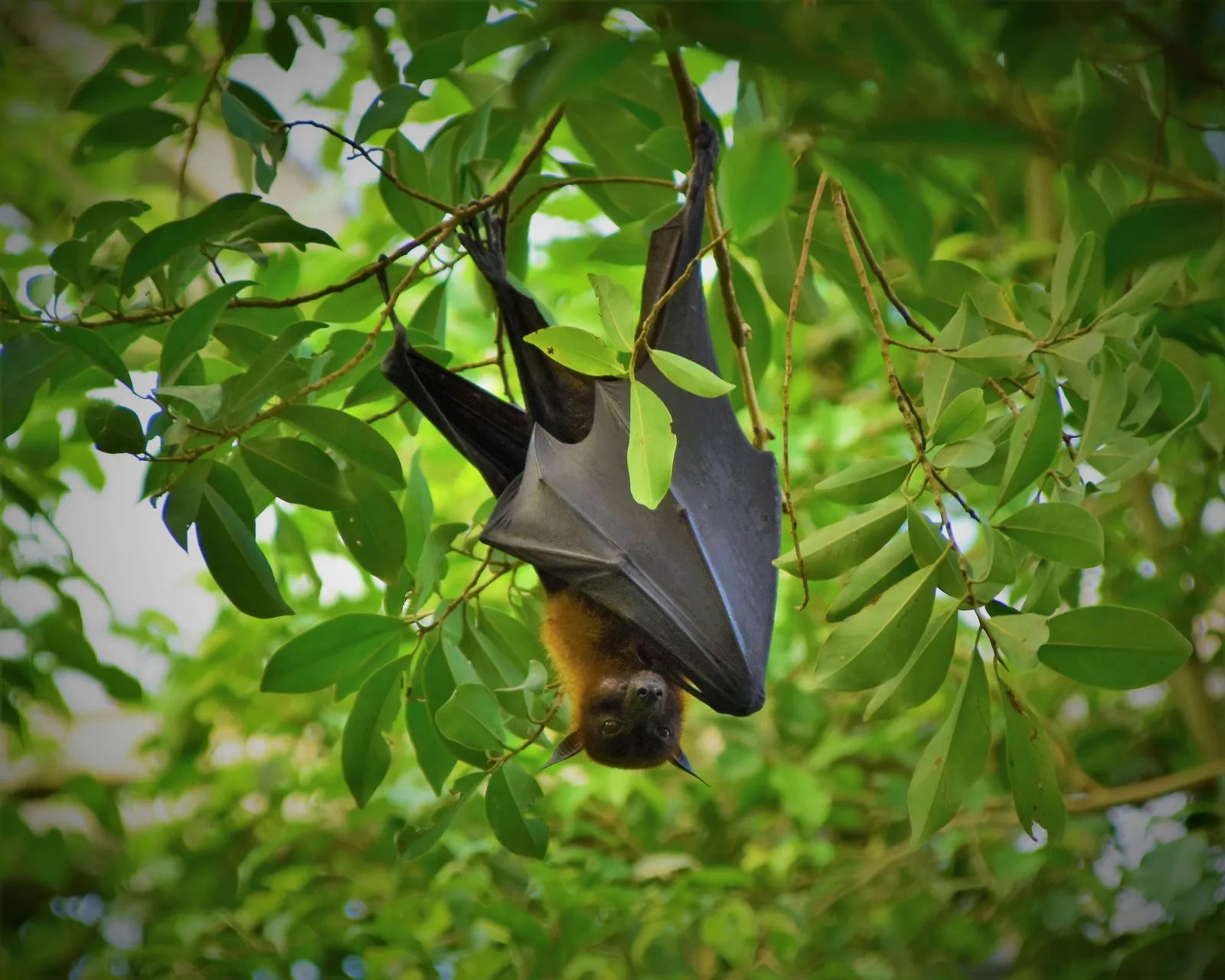
Amazon rainforest researchers have uncovered a quiet but potentially significant connection between small bats and the future of the forest. Certain species bite and fold large leaves into concealed shelters, creating tent-like structures that hang in the understory. Their droppings, it turns out, contain seeds from wild fruit species that local communities value for food and planting. This discovery adds a new layer to understanding how bats interact with their environment beyond simple shelter building.
Leaf Tents as Hidden Homes
These bats select broad leaves from specific plants and carefully modify them through repeated bites along the midrib. The result is a folded canopy that provides protection from rain and predators while remaining suspended above the forest floor. The structures are compact enough to go unnoticed by most observers yet functional for roosting during the day. ([1])
Only a handful of bat species in the Amazon exhibit this behavior, and the tents appear in areas with dense vegetation. The construction process is precise, allowing the bats to create multiple shelters as needed. Such adaptations highlight how even small mammals shape their immediate surroundings in ways that support their survival.
Seeds Carried in Droppings
Analysis of the bats’ waste has revealed intact seeds from several wild fruit species. These seeds pass through the digestive system without losing viability, a common trait among fruit-eating bats. When the droppings fall to the ground, the seeds can germinate in new locations, potentially aiding natural forest regrowth.
Indigenous and local groups in the region already collect and plant some of these same fruit species for food and traditional uses. The bats therefore act as an unintentional link between wild plant populations and human-managed areas. Scientists note that this connection remains under study and depends on factors such as seed type, soil conditions, and bat foraging range.
Research Focus and Open Questions
Biologist Bernal Rodríguez Herrera and colleagues are examining how these bats might contribute to broader forest regeneration efforts. Their work explores whether the bats’ seed dispersal could complement community-led planting initiatives in Amazonian settlements. Early observations suggest the bats frequent areas near human activity, which could increase the chance that dispersed seeds reach useful locations.
Key uncertainties persist. Researchers do not yet know the full range of fruit species involved or the scale at which bat activity influences forest composition. Long-term monitoring will be needed to determine whether the effect is consistent across seasons and forest types. The team continues to gather data through field observations and community collaboration.
What matters now
Understanding the bats’ dual role in shelter creation and seed movement could inform more integrated approaches to forest management. Further study may clarify how protecting these species supports both biodiversity and local food systems.
Looking Ahead
The findings underscore the value of examining overlooked species in tropical ecosystems. Bats that build leaf tents represent one small part of a complex web of interactions that sustain the Amazon. Continued research may reveal additional ways these animals influence plant distribution and forest resilience over time.
Documentary footage of the work is available for those interested in seeing the bats and their leaf structures firsthand. The project reflects growing interest in combining scientific observation with local knowledge to address forest conservation challenges.