Two airline tickets can look identical on your phone, yet only one of them protects you when a flight runs late. That gap is where an ordinary connection turns into a missed flight, a hotel bill, or a second fare.
Most of these mistakes are quiet ones, made at booking or in the gate line, and one looks like the cheapest way to fly while carrying the biggest bill of all. It waits at #1, but the walk no schedule counts comes first.
#15 – Ignoring the Walk Between Terminals
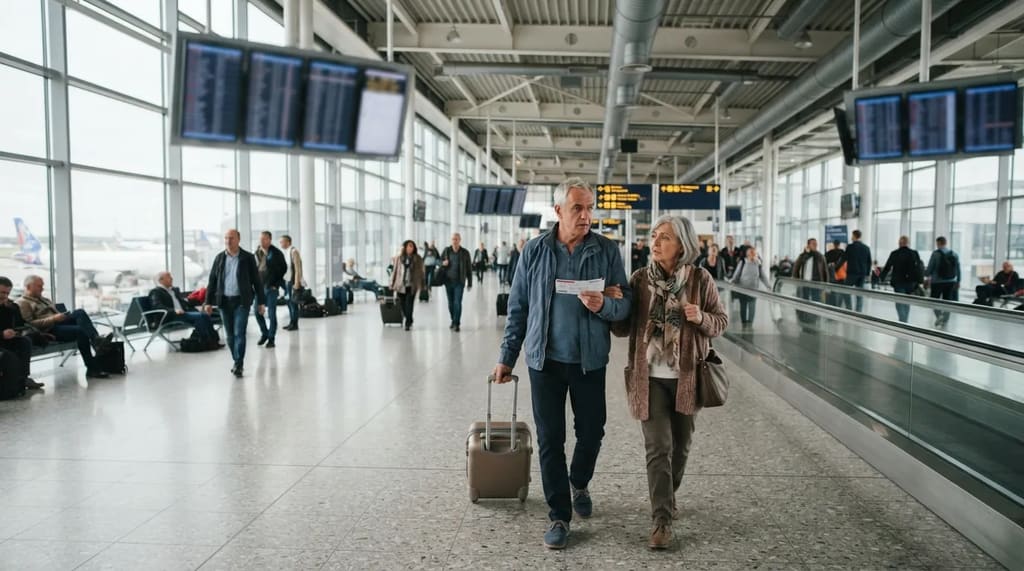
The layover time on your ticket measures the gap between landing and takeoff. It says nothing about how far apart the two gates are.
Before you accept a connection, check the airport map and see whether you will change terminals. Kiwi.com’s guide for self-connecting travelers suggests 3 hours or more when terminals change.1
That advice is written for separate tickets. Still, a long walk with a carry-on is slow on any ticket.
If the walk goes wrong and the gate closes, the papers and screenshots in your hand become the evidence for everything that follows.
#14 – Tossing Boarding Passes After a Missed Leg
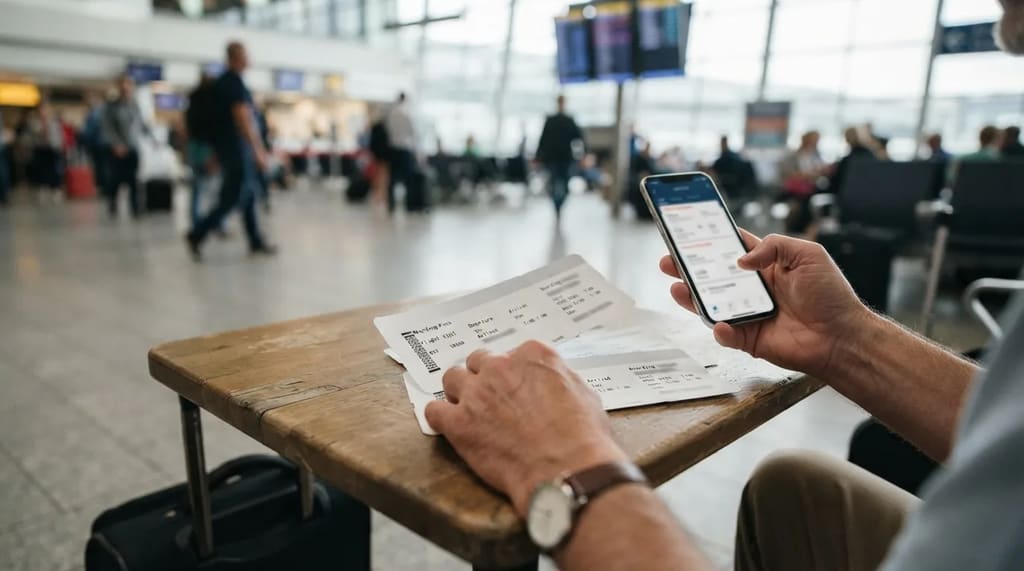
Keep the original boarding passes for both the flight you took and the one you missed. One consumer travel guide advises holding on to them.
They show what happened if you later ask for a refund or reimbursement.
Worth Knowing
- Keep the boarding passes for both the flight you flew and the one you missed.
- Screenshot the airline app while the original flights still show.
- Save every email or text about the delay.
- Ask for any rebooking offer in writing, or screenshot it in the app.
Your claim stays with the airline that caused the miss, even if a different airline carries you onward. But a claim only helps if you ask the right question at the counter.
#13 – Asking the Wrong Question at the Rebooking Desk
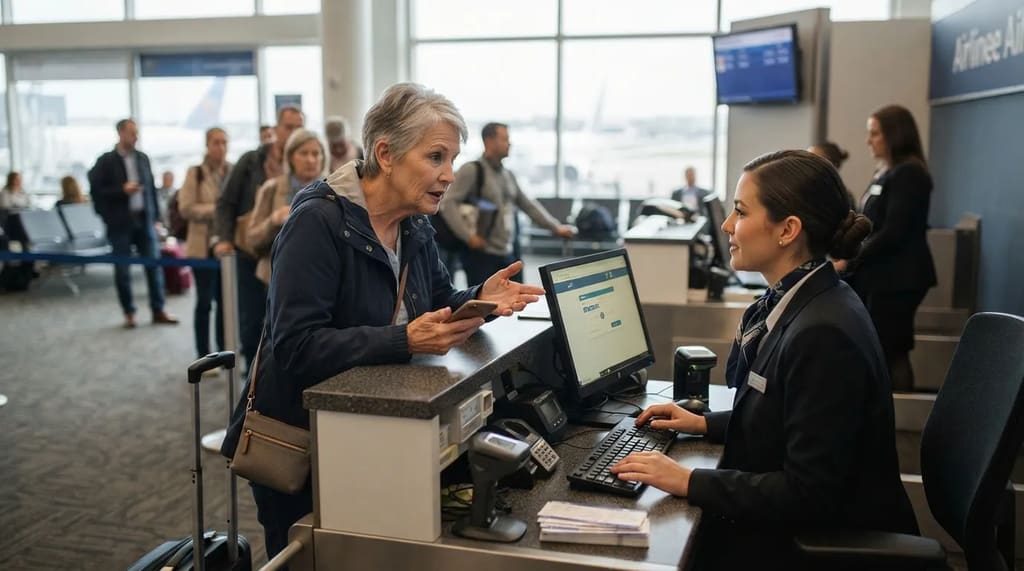
When the line at the gate counter is long, it is tempting to ask only for the next flight out. The U.S. Department of Transportation’s guidance is more specific.
Ask what flights are available, whether there are additional charges, and whether the airline can place you on another carrier. The charge question matters because DOT says its refund rules do not universally require airlines to rebook passengers.2
What you get can depend on what you ask for. A polite, specific question at the counter costs nothing.
An agent may also slide a voucher across the counter while sorting out your options, and that offer deserves a closer look.
#12 – Accepting a Voucher You May Not Have To
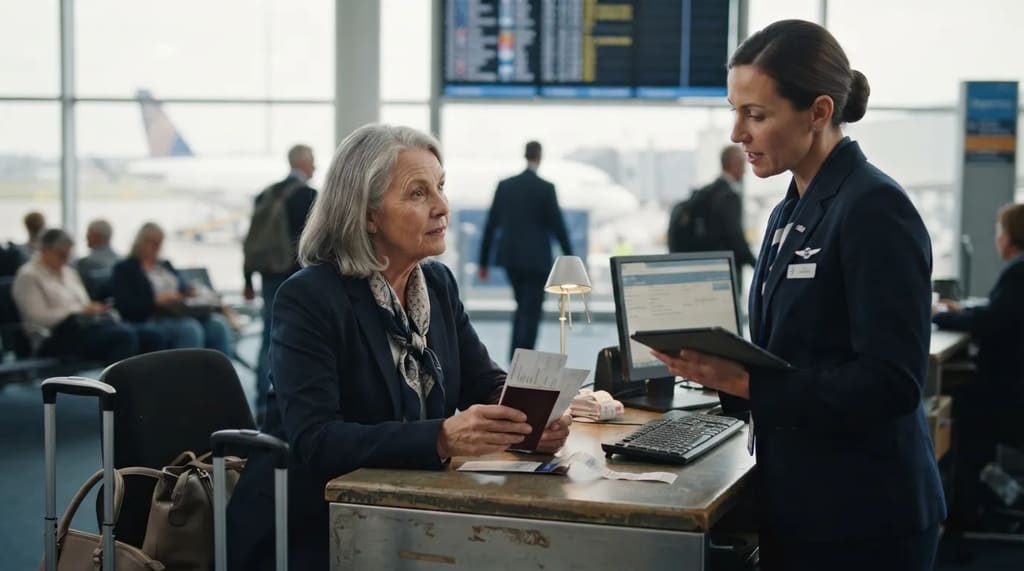
You do not have to accept a voucher instead of a refund you are owed. Generally, if the airline cancels your flight and you decide not to travel or accept an alternative, DOT says you may get a refund.
That can apply even on a nonrefundable ticket. A voucher is worth taking only if you expect to fly that airline again soon, and you should choose it on purpose, not because it was offered first.
Whether you are owed a refund at all depends on what changed, and a missed connection by itself does not settle that.
#11 – Assuming a Missed Connection Means an Automatic Refund
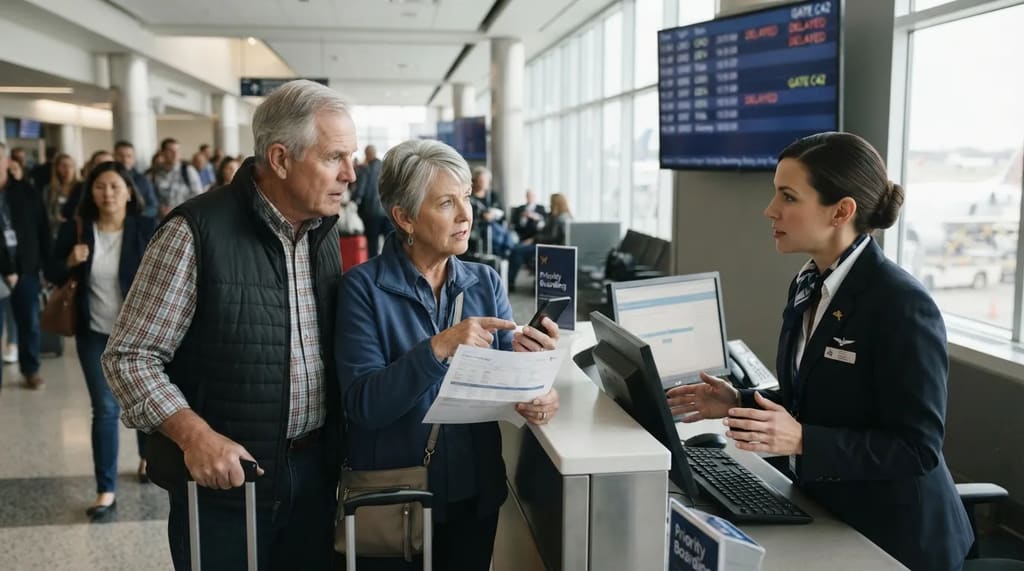
Missing a connection alone does not automatically mean a passenger gets a refund. It could, however, meet the threshold for a significant change.
The deciding fact is when your new itinerary gets you to your final destination. Compare the arrival time of each rebooking offer against your original arrival before you agree to any of them.
DOT has also been looking at stronger rules. A December 2024 notice said the department was considering free rebooking when a delay causes a missed connection.
That was a proposal, so check DOT’s site for what applies on your travel date.
A rebooking that fixes the arrival time can still land you on the last flight out that evening, which carries its own risk.
#10 – Settling for the Last Flight of the Day
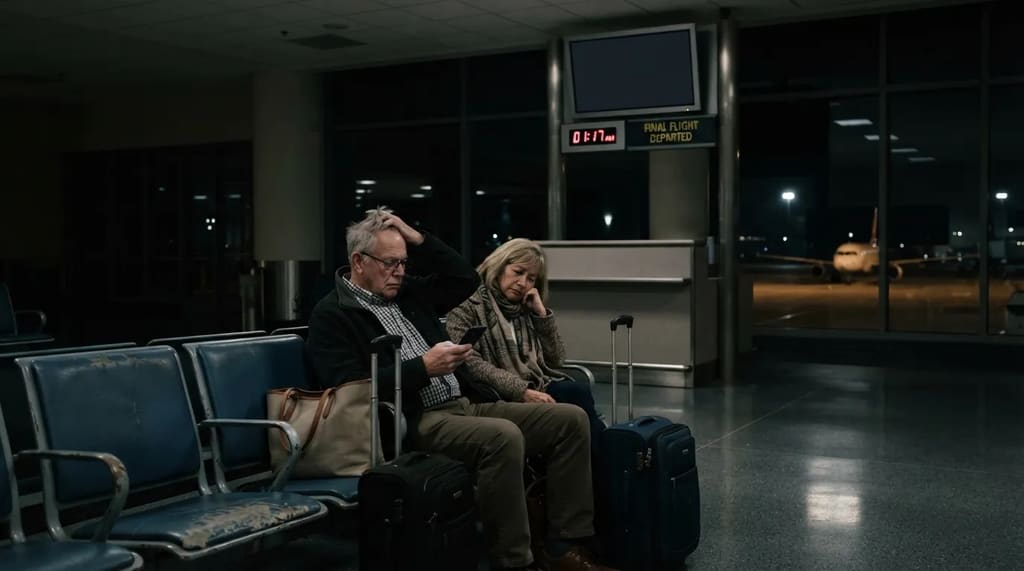
When your second leg is the day’s final departure, a delay leaves you nowhere to go but a hotel. Federal rules provide refunds for canceled flights and certain significant changes, but hotels, meals and rebooking depend on the circumstances.
A night in an airport city can be on your own dime. If your plans have any give, take the earlier connection even if it means an earlier alarm.
An evening flight looks relaxed on the booking page because the day seems wide open. It also leaves no backup.
Early or late, a connection also depends on someone meeting you with a wheelchair, and that begins with a request covering every flight on the ticket.
#9 – Requesting Wheelchair Help for Only the First Flight
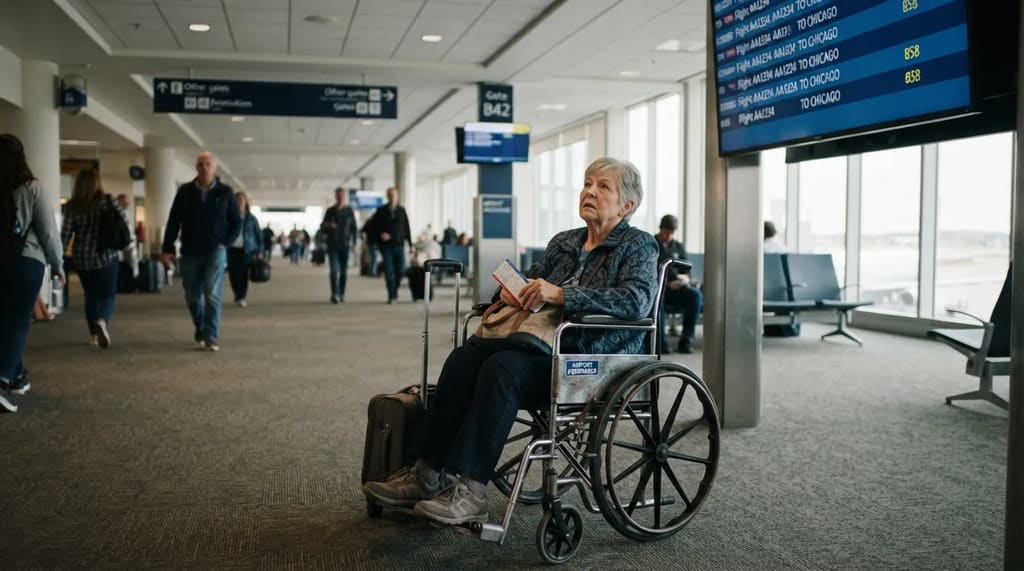
Make sure wheelchair assistance is noted for every segment of your trip, not just the first flight. The airline’s duty covers the connection as well.
Federal regulation lists assistance between gates for connecting flights among the services airlines must provide. The service is free.3 4
Fast Facts
- Gate-to-gate help on connecting flights is a required airline service, at no charge.
- Ask at booking, or later by website, app, or reservations line.
- Aim to request it at least 48 hours before your flight.
- You can qualify if you walk short distances but cannot manage prolonged walking or standing.
Confirm the request with every airline on your itinerary. If long distances tire you, ask for the chair.
A request on file still needs one more step, because the airline does not know which passenger made it.
#8 – Forgetting to Say “I’m the One Who Asked”
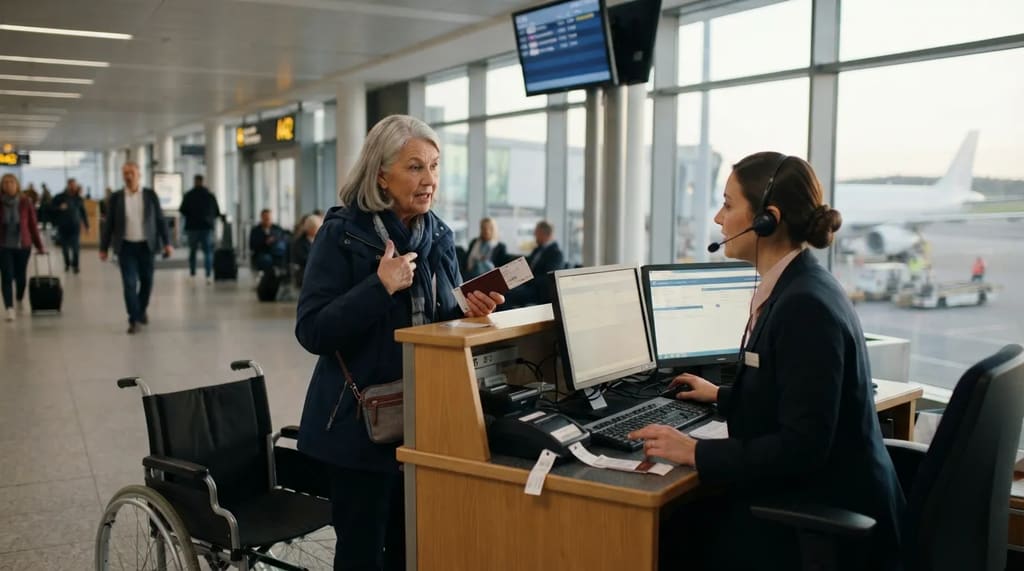
The airline may have noted your request, but it will not know you are the person who made it unless you self-identify. DOT says the passenger must identify themselves to airline staff at the airport.3
So tell the counter agent when you check in, and tell the gate agent when you arrive at the gate. Use the same words each time: your name, and that you requested wheelchair assistance for your connection.
Getting to the gate is the easy part, because getting off the plane follows its own order.
#7 – Not Counting the Time It Takes to Get Off the Plane
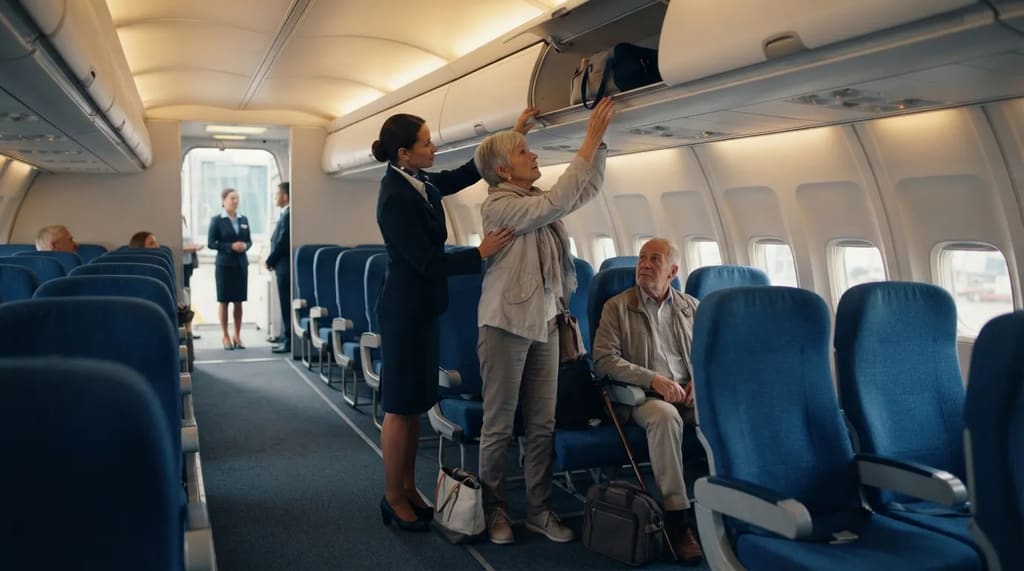
DOT defines prompt help getting off the aircraft in a specific way. It means when the last passenger who did not request deplaning assistance has deplaned.5
That means you leave after everyone else, and the clock on your connection has been running the whole time. Take that into account when you choose between a short layover and a longer one.
If you never requested any of this before the trip, the flight crew can still start the process from the air.
#6 – Staying Quiet on the Plane
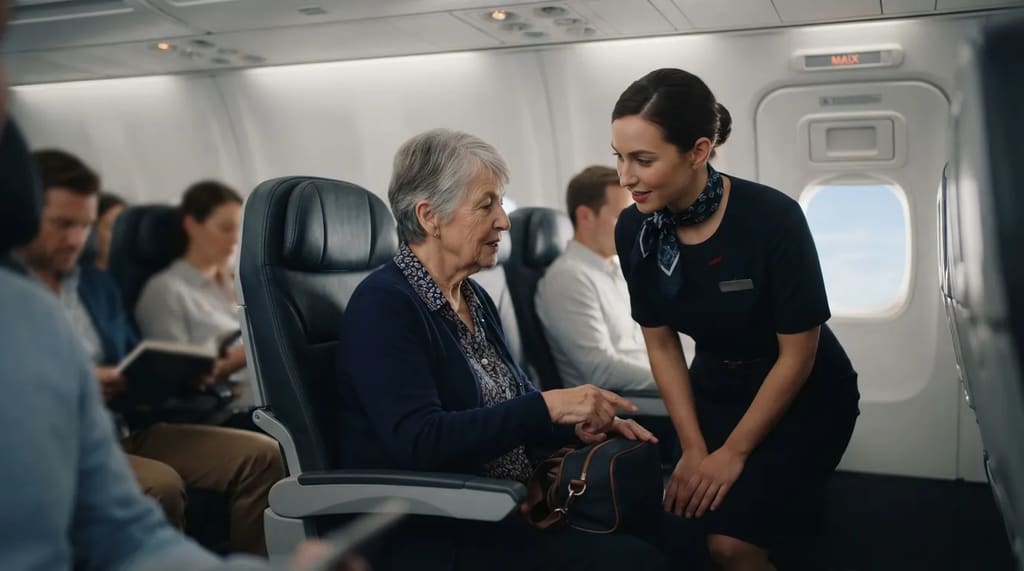
If you did not request assistance before your flight, tell the flight crew that you will need assistance when the flight lands. This works for your destination or a connecting city.
Say it early in the flight, not as the seat belt sign goes off. A crew that knows ahead of time has more chance to pass your message along before the plane reaches the gate.
Even with help lined up, an arrival from abroad adds federal steps that apply to every passenger.
#5 – Squeezing an International Arrival Into a Short Layover
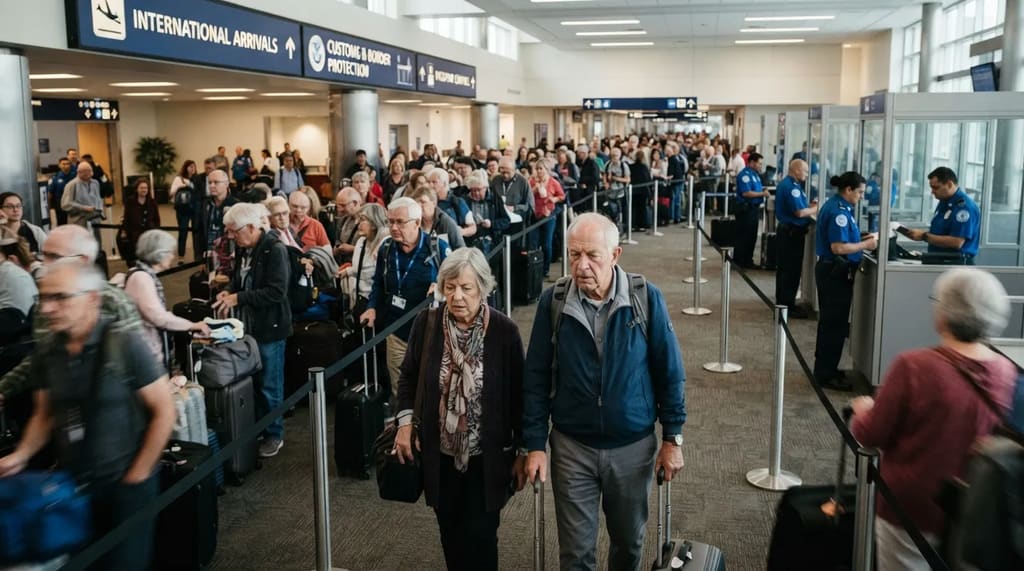
Connecting from an international flight to a domestic one at a U.S. hub requires clearing Customs and Border Protection, collecting and re-checking your bags, and passing through TSA security. Each of those steps has its own line.
Guides commonly suggest roughly two and a half to three hours at major hubs, and two sources land in that range. The extra time is for lines at passport control and security, not for walking.
Some routes are changing. By mid-August 2025, Delta said customers connecting at Atlanta from London Heathrow and Seoul Incheon no longer needed to reclaim and re-check bags.6 7
Ask your airline whether your own route qualifies before you shorten your layover.
When a trip crosses a border, the printed minimum connection time promises even less than it does at home.
#4 – Treating the Minimum Connection Time as Advice

A minimum connection time is the shortest layover an airline will sell you, not a promise you will make the flight. It assumes your first flight lands on time, your bags are checked through, and your transfer stays inside the secure area.
At big hubs, those minimums for domestic flights can be as short as 30 to 45 minutes. Choose the longer layover when the fares are close, because a connection sold at the minimum has no cushion.
If the minimum is met and a delay still breaks the connection, the question becomes who owes you help, and that depends on whose delay it was.
#3 – Assuming the Second Airline Owes You Help
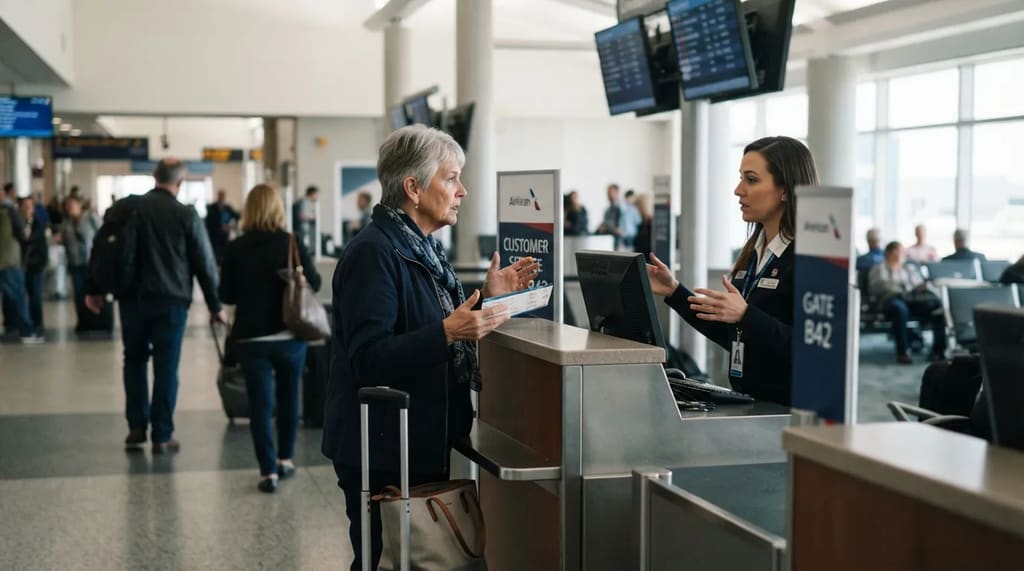
Do not assume the second airline must rebook you or refund that ticket if you miss its flight because another carrier was delayed. Its fare rules and contract may apply, which is a common problem when two airlines are involved.2
On a single ticket, the airline that sold you the whole trip owns the problem. That carrier rebooks you on the next available flight at no extra charge.
Ultra-low-cost airlines tend to have few agreements with other carriers, so rebooking onto another airline is less likely. If you want protection on a budget airline, a single ticket on that carrier is safer than stitching two together.
Where the airline owes you nothing for the night, travel insurance is the usual backup, though only if the policy covers the way you booked.
#2 – Buying Insurance Without Reading the Missed-Connection Section
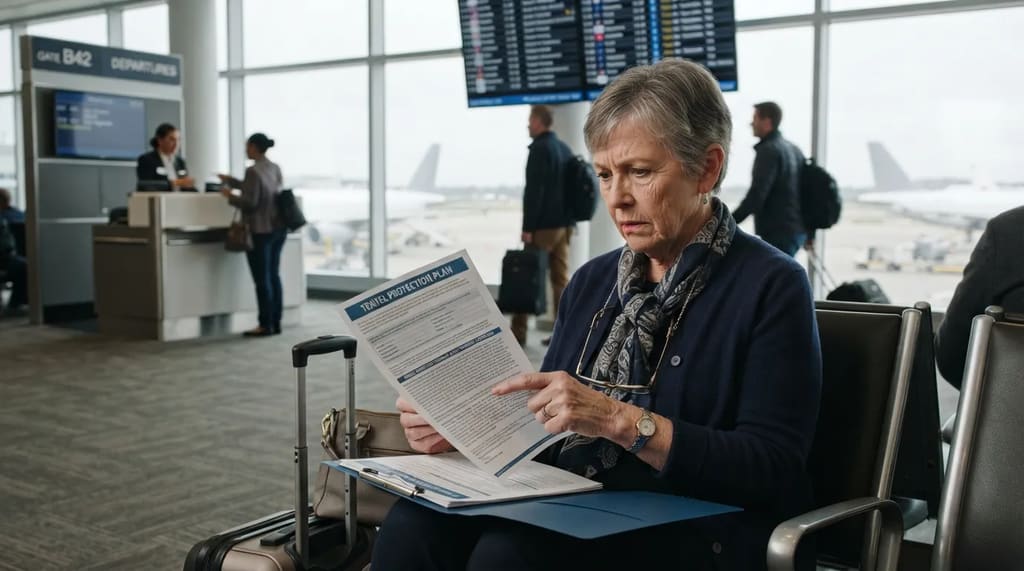
Policies differ in what a missed connection means and what caused it. If you build a trip around separate tickets, verify that your policy names self-transfers as covered before you rely on it.
Ask the insurer by email whether a missed flight on a second ticket is covered, and keep the reply. Insurance makes a bad outcome cheaper, and that is a poor reason to choose a riskier itinerary.
All of this points back to the booking itself, because the cheaper fare behind the biggest exposure is sold in plain sight.
#1 – Booking Two Separate Tickets to Save a Few Dollars
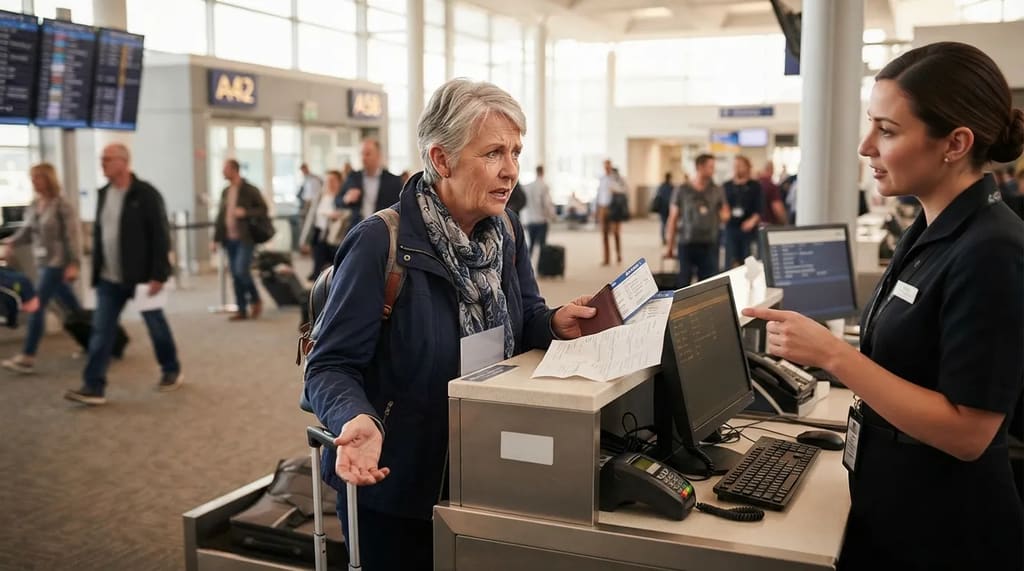
On separate tickets, the second airline usually does not owe you anything, because each ticket is a separate contract. The first airline generally has no liability for the missed second flight, and the second airline treats you as a no-show.
The savings on the fare can be wiped out by one late arrival. You then pay for a new ticket on short notice.
The ground work falls to you as well: you claim your bags, check in again with the second airline, and re-clear TSA. Heathrow says its minimum connection times do not apply to separately booked flights.8
Quick Compare
- One ticket: the selling airline owns the problem and rebooks you on the next available flight at no extra charge.
- Two tickets: each is its own contract, and a late arrival can make you a no-show on the second.
- Ground work: on two tickets, you claim bags, check in again, and re-clear TSA yourself.
Guides for self-transfers commonly suggest at least 2 to 3 hours on domestic trips and more for international ones. Going.com’s guide puts it at 2 to 3 hours domestic and 4 to 5 hours, or overnight, for international travel.1
If the saving is only modest, buy one ticket and let the airline carry the risk. That one choice sits underneath most of the mistakes above.
Before you look at layover minutes, look at who owns the connection. A single ticket puts the problem on the airline.
Separate tickets, a wheelchair request that covers only one leg, or a voucher accepted too quickly can put it back on you. Check those while you are still booking, when changing them costs nothing.
After the gate closes, you will be negotiating. Which airport has given you the longest walk between gates, and what would you change about how you booked that trip?
#16 – The Bonus Tip Nobody Shares: Start Fixing It Before You Land
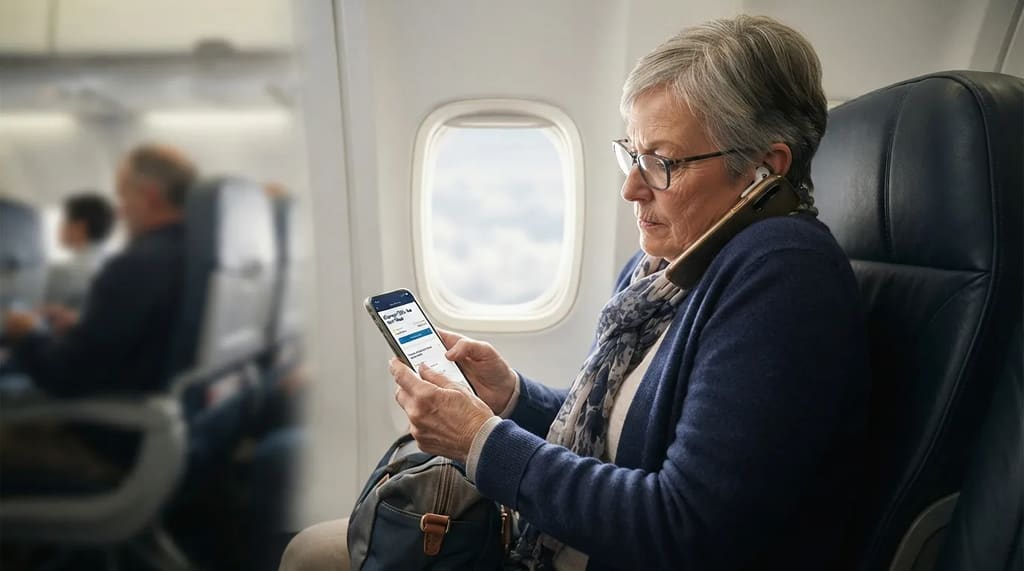
The moment you learn your first flight will be late, stop waiting for the gate agent and start rebooking. Passengers at the back of the counter line are usually the ones left with the leftover seats.
Work three channels at the same time and take whichever answers first:
- The airline app: Open your trip and look for a rebook option or a newly offered flight. If you have Wi-Fi in the air, you can do this before landing.
- The phone: Call the airline’s reservations number while you are still walking up the jet bridge or standing in the counter line. Save that number in your phone before you leave home.
- The gate or service counter: Join the line anyway, but only as your backup.
Whichever channel works, finish with two checks before you walk away. Ask for the new boarding pass in your hand or in the app, and ask the agent to confirm that your checked bag is re-tagged to the new flight.
If your bag was sent through to the old flight, you can land in the right city while your suitcase sits somewhere else.
- Kiwi.com Self-Connecting Guide: https://www.kiwi.com/stories/self-connecting-flights-a-fast-no-nonsense-survival-guide/
- Atlanta News First Missed Connection: https://www.atlantanewsfirst.com/2026/11/13/flight-canceled-or-connection-missed-what-passengers-should-know-after-nationwide-ground-stop/
- DOT Disability Bill of Rights: https://www.transportation.gov/airconsumer/disabilitybillofrights
- DOT Traveling With Disability: https://www.transportation.gov/individuals/aviation-consumer-protection/traveling-disability
- Mobility Management DOT Final Rule: https://mobilitymgmt.com/dot-final-rule-airlines-required-to-meet-more-rigorous-standards-for-passengers-with-disabilities/
- CBP/TSA Pilot Program Overview: https://www.gtlaw-insidebusinessimmigration.com/travel/new-cbp-tsa-pilot-program-streamlines-international-connections-at-us-airports/
- Delta Faster Connections: https://news.delta.com/fly-smarter-faster-bag-drop-security-and-connections
- Eskimo Connection Time Guide: https://www.eskimo.travel/en/blog/connection-time-major-airports