


Most people think a group tour lives or dies on the hotels and the food. Guides see it differently: the friction comes from small, specific habits around money, health and timing.
Some are so common that guides have stopped being surprised, and a couple can cost real money before the bus leaves the curb. Let’s count down from #17, because the mistake waiting at #1 is the one almost nobody sees coming.
#17 – Judging the Whole Tour by the First Hotel

Plenty of tours get written off before the first dinner is served.
Guides say judging an entire tour company by one disappointing arrival-night hotel is a common, and often unfair, first reaction. Everyone is tired that first evening, and nothing has settled yet.
The fairer test is day three, once you know the guide, the pace and your fellow travelers. Guides will tell you the arrival night is rarely the trip.
- Unsafe or broken? Tell the tour director right away.
- Just not your taste? Hold your verdict.
But the next mistake happens before you even pay your deposit…
#16 – Never Asking How Big the Group Really Is

Group size changes everything, and almost nobody checks it.
A group of 15 moves, eats and boards a coach very differently from a group of 45. The same itinerary can feel like two different trips depending on headcount.
Bigger groups mean longer restaurant waits, slower bus loading and less time with the guide. Ask for the maximum group size in writing before you book, then ask how many travelers each guide handles.
The next mistake starts a quiet bus war, and it usually breaks out on day three…
#15 – Claiming the Best Bus Seat and Keeping It

Seat politics sink more tour moods than bad weather does.
Many coach tours rotate seats on purpose so everyone gets a turn near the front. Travelers who plant themselves in the front row on day one often learn this the hard way.
Guides say the smoother travelers ask about the rotation policy first. They don’t wait until someone politely asks them to move on day three.
If you need the front for motion sickness or mobility, say so at the start. A medical need is respected, but a habit is not.
Quick Compare
- A habit: “I like the front.” Expect to rotate with everyone else.
- A medical need: Motion sickness or limited mobility. Tell the tour director on day one.
- The smart middle: Ask how rotation works before you pick a seat.
Next up: a mistake that costs the whole bus time, and it fits in your pocket…
#14 – Letting the Phone Die by Lunch

A dead phone is one of the most avoidable frustrations guides hear about.
Group tours depend on people being reachable. If you wander off during free time and can’t be called, the guide may spend the departure window searching for you.
One missing person can hold up the entire coach. Save the tour director’s number on paper, not only in your phone, and tell a travel companion where you’re headed.
The next mistake involves cash, and guides say it makes them wince…
#13 – Tipping the Wrong Person
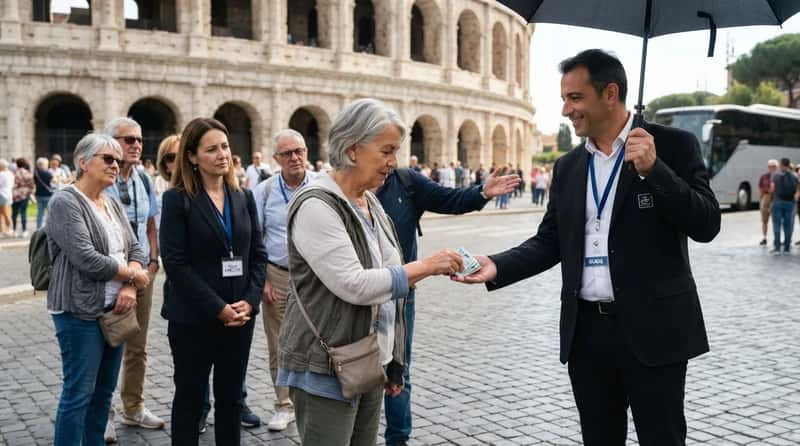
Tipping sounds simple until two guides are standing in front of you.
Some travelers tip a local step-on guide and skip the tour director who has been with the group since departure. The person who worked every single day can end up with nothing.
A tour can have more than one guide role. There may be a tour director, a local guide in each city and a coach driver.
Ask the tour director on day one how tipping works. Many companies explain it, and some include gratuities in the price.
The next mistake sounds harmless, but it may land in the wrong hands…
#12 – Trusting a Booking Form to Carry Your Allergy

A note on a form is not the same as a note the chef has read.
Most tour directors juggle rosters of 30 to 50 travelers, so an allergy note on a booking form can easily get lost. That’s a real risk when a restaurant is cooking for dozens of people at once.
Group-tour restaurants often prep set menus in advance, so early notice gives the kitchen time to adjust. Speaking up at the table is often too late.
Repeat any serious dietary need to the tour director before the first group dinner. Do it again in each new city.
The next mistake comes from picturing the wrong kind of trip…
#11 – Expecting a Private Car

A coach tour is not a taxi, and guides say the confusion shows up fast.
Some travelers arrive expecting something flexible and built around personal whims. In reality, group tours run on tight, pre-negotiated schedules with hotels, restaurants and attractions.
One person’s special request can delay forty other people. The restaurant table, the museum slot and the next hotel check-in are all timed.
That doesn’t mean you can’t ask for things. Requests work best early and in private, not on the bus in the moment.
Now to a two-word phrase that confuses first-time group travelers constantly…
#10 – Mixing Up “Be There” and “Be Ready to Leave”

This one idles entire buses.
The gap between “be there” and “be ready to leave” seems obvious to guides, but first-timers trip over it again and again. A 9:00 departure means you’re on the coach at 9:00, not walking toward it.
It’s one of the most common reasons a full bus sits idle. The lost minutes usually aren’t a few latecomers. They’re a pattern.
Build in buffer time for bathrooms, medications and slow elevators. Aim to be early, not on time.
Worth Knowing
- “Ready to leave” means seated, bag stowed and seat belt within reach.
- Ask at dinner for tomorrow’s exact departure time and meeting spot.
- Elevators are the hidden delay. Allow extra time on mornings when luggage goes out.
- Take medications with breakfast, not on the walk to the coach.
Here’s a mistake experienced guides say ruins day one, and plenty of people defend it…
#9 – Forcing a Full Sightseeing Day After a Long Flight

“I didn’t fly all this way to sit in a hotel room” is the most common excuse.
Some travelers grumble that day one is “free” and push for a full day of sights. Experienced guides know better.
Rest first, guides say. An exhausted traveler on day one is a slower, shakier, grumpier traveler on days two through five.
Take a short walk, eat a light dinner and get to bed at local time. Save the big sights for when your body is awake.
The next mistake is on your feet, and the numbers behind it are serious…
#8 – Wearing the Wrong Shoes

Footwear is the mistake guides bring up again and again.
Cobblestones, wet marble steps and uneven trails can turn a stylish pair into a hazard. Shoes also tend to feel tighter after long flights, because feet can swell.
The CDC lists falls as a leading cause of injury among adults 65 and older, and guides see every slick surface as a risk. Choose supportive, well-worn shoes with good grip, and never wear brand-new ones on day one.1
But the next mistake isn’t about shoes. It’s about the schedule itself, and some guides will disagree with their own industry on it…
#7 – Demanding a “See Everything” Itinerary
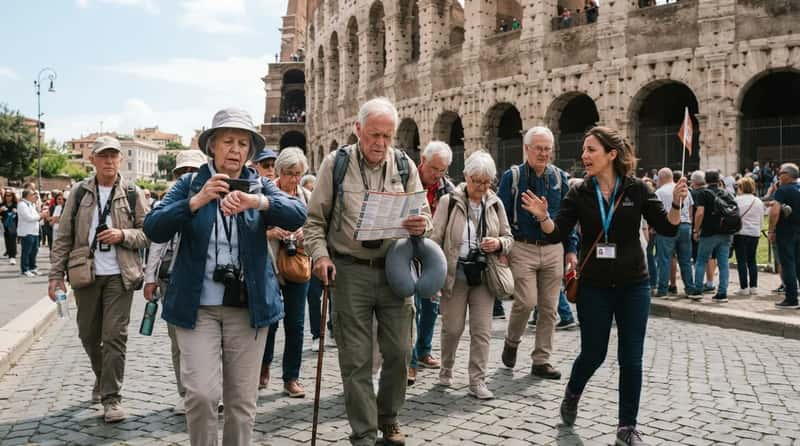
Here’s the controversial one: some guides say the packed itinerary is the problem.
Some experienced guides argue that a “see everything” itinerary is the biggest mistake in senior travel. Fewer stops with more time, they say, make better memories than a schedule that leaves half the group exhausted.
Many travelers rank the 12-cities-in-10-days tour as the best value, yet some experts now call it the biggest waste of money. You pay for places you barely remember.
Compare how many hotel changes a tour has, not only how many stops. Fewer bag-packing days usually means more energy.
The next mistake is quieter, and it often starts with staying silent…
#6 – Staying Quiet About the Pace

Nobody wants to be “the slow one,” so nobody says anything.
Guides say walking pace is one of the most underestimated variables in tour planning. In a mixed-age group, the same route can take twice as long.
Some tour guides list not speaking up early when the pace feels uncomfortable as a classic mistake. Hiding fatigue until it becomes pain is how a minor ache turns into a missed excursion.
Tell the guide at the start of the day. Good guides plan around realistic group speed, not their own.
- Ask about the walking distance before each outing.
- Skip one optional stop rather than push through all of them.
The next mistake is invisible, and about half of those affected don’t notice symptoms…
#5 – Sitting Still for Hours on Long Transfers

Long coach rides and flights carry a risk most travelers never think about.
Mayo Clinic lists being older than 60 as a factor that increases the risk of DVT, a blood clot in a deep vein. It also notes that sitting for a long time, such as when driving or flying, raises the risk.2
About half of people with DVT have no symptoms at all. The CDC’s guidance supports frequent walking and calf exercises, and suggests compression stockings for travelers at increased risk.3
Here’s a twist. The CDC’s Yellow Book says there is no evidence of an association between dehydration and travel-related blood clots, so staying hydrated is still sensible, but movement matters more.3
Now to a mistake that begins before your plane even leaves the ground…
#4 – Skipping Airport Assistance
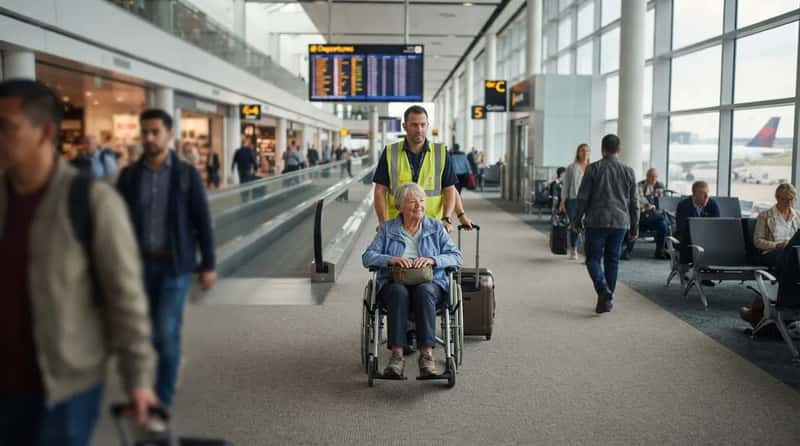
Airports are where group trips often start badly.
Tour managers can arrange wheelchair or mobility assistance in advance for anyone facing long terminal distances. The key words are “in advance.”
Many proud travelers refuse help, then arrive at the gate exhausted before the tour has begun. Accepting a ride through a huge terminal isn’t giving in. It’s saving your legs for the trip.
One old tip is out of date. TSA ended its shoes-off rule for every traveler on July 8, 2025, so the former age-75 shoe perk no longer matters.4
Request assistance when you book, not at the curb. Then confirm it with the tour company a week before departure.
Fast Facts
- Ask for airport assistance when you book, and confirm it a week before departure.
- TSA’s shoes-off requirement ended for all ages on July 8, 2025.4
- Travelers 75 and older may still receive some expedited screening, but it isn’t guaranteed.
- Officers can still ask anyone to remove shoes after an alarm.
The next mistake is the one tour managers call the most avoidable disaster in group travel…
#3 – Ignoring Passport Dates
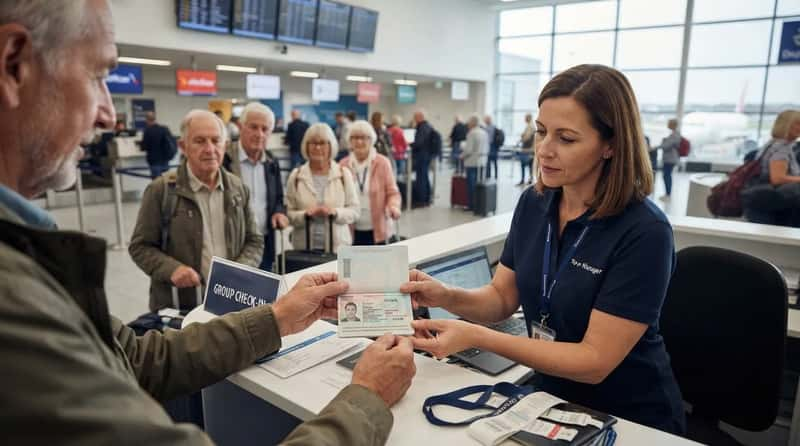
A single date on a single page can end a trip before it starts.
Tour managers say the most avoidable disaster in group travel is a document problem. That’s why they check passport dates early.
Some countries require a passport to be valid well beyond your return date. Rules vary by destination, so never assume that “not expired” means “good enough.”
Check your destination’s entry rules the day you book. If renewal is needed, don’t wait.
The final two mistakes are the ones guides dread most, and both involve money…
#2 – Assuming Medicare Will Follow You Abroad

This is the assumption that can cost the most.
Original Medicare usually does not cover health care you receive outside the United States and its territories, except in very specific situations. Part D won’t cover prescriptions you get outside the United States either.5
Some help exists. Medigap plans C, D, F, G, M and N cover 80% of emergency care abroad, but with a strict lifetime limit of $50,000.5 6
Medicare Advantage rules vary by plan, so get details in writing. Before any international tour, call your plan and ask exactly what’s covered.
And the very last mistake can quietly cancel the protection you thought you bought…
#1 – Missing the Pre-Existing Condition Window

Buying travel insurance isn’t enough. The timing decides what it covers.
Pre-existing condition waivers typically require you to buy insurance within 14 to 21 days of your first trip payment.7 8 The clock starts at your first deposit, not at departure.
Miss it, and you typically lose eligibility for the waiver on that policy, with no way to add it back later. Without a waiver, most plans exclude pre-existing conditions entirely.
A 120-day look-back period does not give you 120 days to buy insurance. Those are two different clocks.
Mark the date on your calendar the day you pay your first deposit.
The biggest group-tour mistakes aren’t dramatic. They’re small habits repeated by many people, and guides see the same ones on nearly every trip.
The costliest are the quiet ones: Medicare mostly stops at the border, and the pre-existing condition waiver window can close within weeks of your first deposit. The rest are free to fix: be ready to leave, speak up about pace, repeat your allergy, rest after the flight and check your passport.
Which of these would you have missed? Tell us in the comments.
Bonus: The One-Page Card Guides Wish Every Traveler Carried

Most of the 17 mistakes above come down to one problem: the right information isn’t in the right hands at the right moment. A single folded page in your pocket fixes nearly all of it.
Build your Tour Card before you leave:
- Who to call: The tour director’s mobile number, the tour company’s emergency line and one family contact, all handwritten.
- Where you are: The hotel name and address for each night. Add a hotel business card to your pocket every time you check in, so a taxi driver can read it even if your phone is dead.
- Your health in 10 seconds: Allergies, conditions, and every medication listed by its generic name and dose, since brand names often differ abroad.
- Your insurance: Your travel policy number and its 24-hour assistance phone number, plus the claims details for any other coverage you hold.
Then give the tour director a quick look at it on day one, and keep a photo of it on your phone and a copy with a travel companion.
Pack medications in your carry-on, in original labeled containers, with a few extra days’ supply in case of delays. If anything goes wrong on a tour, this one page lets a stranger help you in under a minute.
- CDC Older Adult Falls: https://www.cdc.gov/falls/data-research/index.html
- Mayo Clinic DVT Overview: https://www.mayoclinic.org/diseases-conditions/deep-vein-thrombosis/symptoms-causes/syc-20352557
- CDC Yellow Book DVT: https://www.cdc.gov/yellow-book/hcp/travel-air-sea/deep-vein-thrombosis-and-pulmonary-embolism.html
- CBS News TSA Shoes: https://www.cbsnews.com/news/tsa-shoes-rule-expires/
- NCOA Medicare Travel Coverage: https://www.ncoa.org/article/does-medicare-cover-you-anywhere/
- AARP Medicare Abroad: https://www.aarp.org/medicare/coverage-on-vacation/
- Forbes Pre-Existing Conditions Insurance: https://www.forbes.com/advisor/travel-insurance/pre-existing-conditions/
- MoneyGeek Pre-Existing Waivers: https://www.moneygeek.com/insurance/travel/coverage/medical-conditions/
