Most people think the check-in counter is a two-minute formality. The passengers who never get stuck there are doing small things you’d never spot from three places back.
Some of these habits trace back to deadlines that tightened as recently as 2025. One ties to a rule that can force an airline to pay you cash, and it’s waiting further down the list.
#17 – They Weigh the Bag at Home and Aim Low
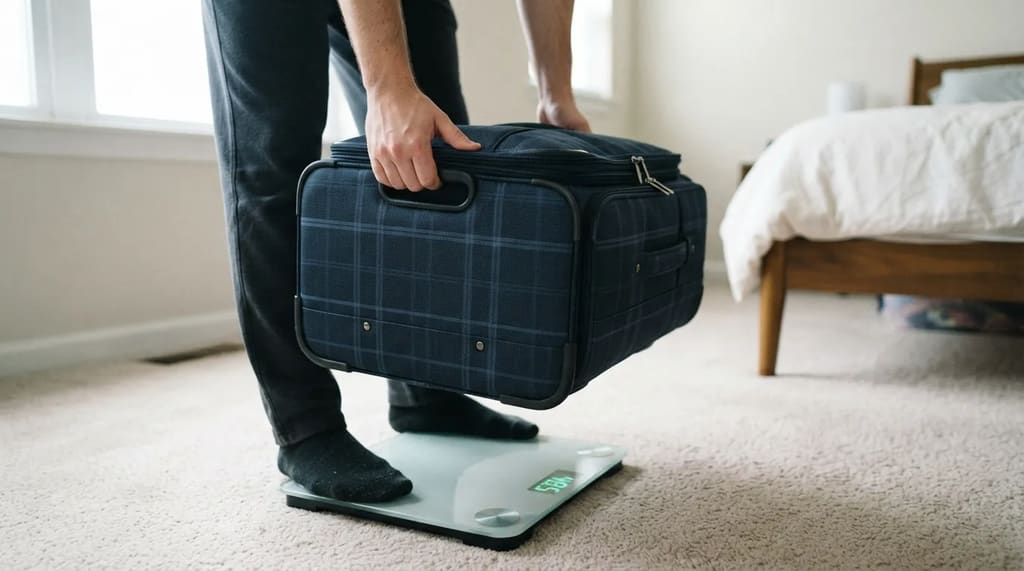
Experienced flyers treat the weight limit as a line they never go near.
The most common checked-bag limit is 50 pounds per bag. Many seasoned travelers pack to 48 or 49 to stay safely under it.
Why the cushion? On many major US carriers, a bag at 50.5 pounds can draw the same $100 fee as one at 69, according to one fee roundup.
On some airlines, there is no grace zone.
But the “standard” limit isn’t standard everywhere, and the next habit catches thousands of people off guard at #16…
#16 – They Never Assume Their Airline Uses the 50-Pound Rule
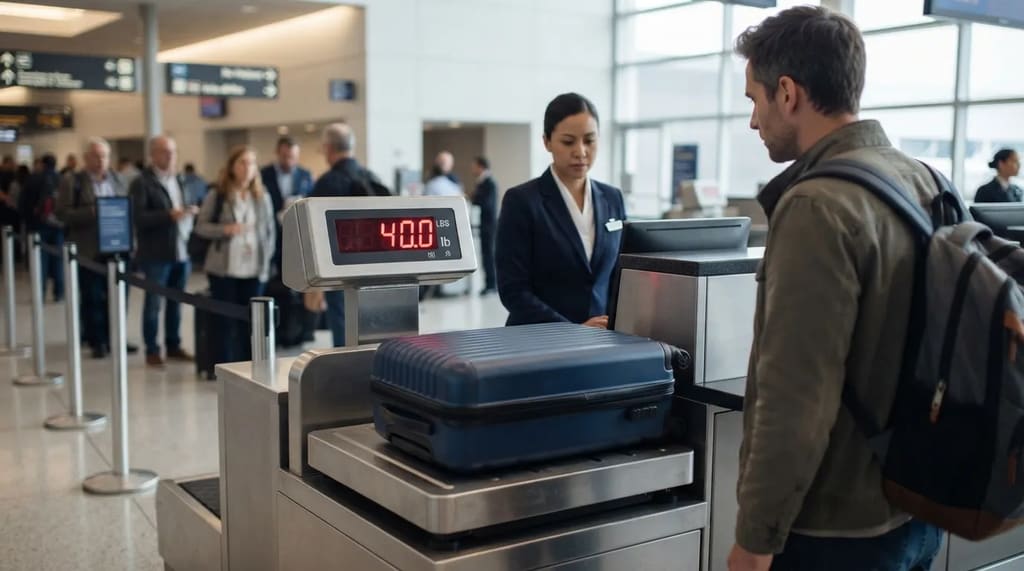
Budget fares come with a limit that surprises people right at the counter.
One roundup lists Spirit and Frontier with a 40-pound standard limit instead of 50. Many travelers assume 50 and find out the hard way.1
Some international carriers cap checked bags at 44 pounds (20 kg). Fees can also vary by airline, destination and length of flight.
Seasoned flyers read the rules for their exact ticket before they pack. They never go by what the last airline allowed.
Packing right is only half the battle. The next habit is about a deadline most people misjudge at #15…
#15 – They Check In Online, Then Still Show Up for the Bag Drop
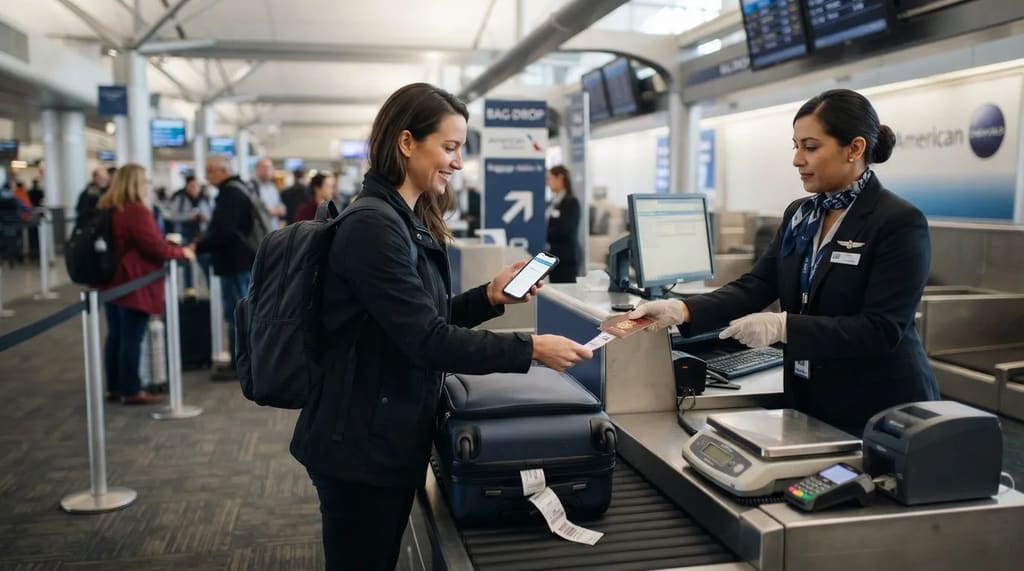
Online check-in does not mean you can skip the counter.
It saves time, but you still have to physically check your bags by the airline’s deadline. The two clocks are separate.
One travel-rules roundup says American’s online check-in closes 45 minutes before a domestic flight and 90 minutes before an international one. That is not the same clock as the bag drop.
For airport check-in or bag drop, the general minimum is 45 minutes domestic and 60 minutes international. Some airports require more.
Quick Compare
- Online check-in (American, per one roundup): closes 45 minutes before domestic, 90 before international
- Bag drop (general minimum): 45 minutes domestic, 60 minutes international
- Your move: confirm both clocks for your exact flight
And that 45-minute figure matters more than ever, as #14 reveals…
#14 – They Plan Around the Bag Cutoff, Not Boarding Time
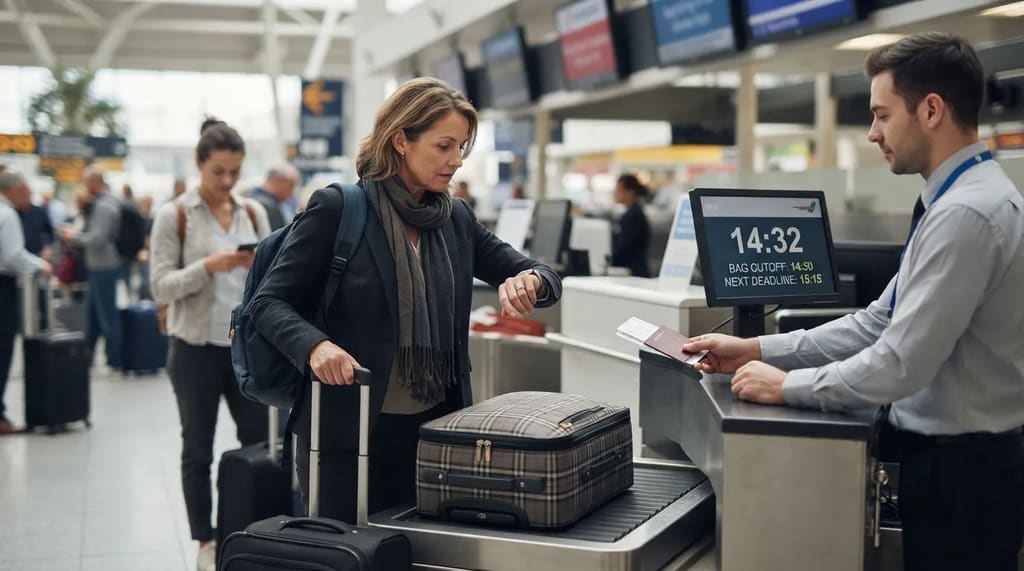
Boarding time is the wrong deadline to watch.
Checked-bag cutoffs are strictly enforced. In 2025, Delta moved to a 45-minute domestic bag cutoff, and United moved its domestic check-in cutoff from 30 to 45 minutes.2 3
TSA still advises arriving two hours before a domestic flight and three before an international one. Some frequent flyers call that overkill at small airports, but the cutoff itself is not negotiable.
But even the 45-minute rule has exceptions, and #13 is where travelers get burned…
#13 – They Look Up the Cutoff for Their Specific Airport
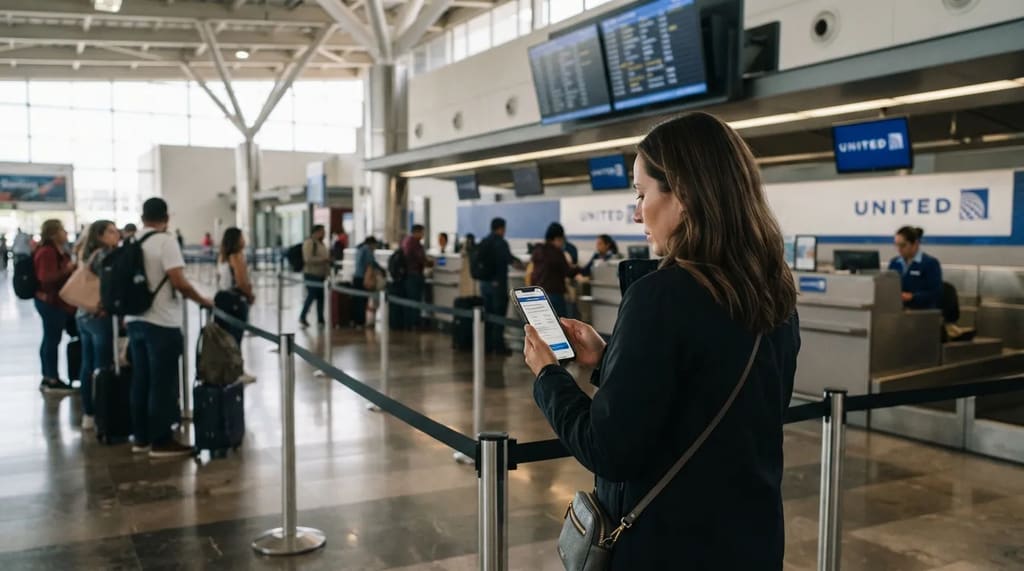
One airline can have several different deadlines.
Cutoffs vary by location and route. United’s published rules, for example, ask passengers leaving Guadalajara, Mexico, to check bags 90 minutes ahead.3
One 2026 guide says some low-cost carriers close their counters a full hour before takeoff, no exceptions. Treat that as a reason to verify, not a universal rule.
Experienced flyers check the departure airport’s rule on the airline’s own site. They never lean on a general number.
Speaking of rules that changed quietly, the next one has already tripped up real passengers at #12…
#12 – They Have the Right ID in Hand Before Anyone Asks
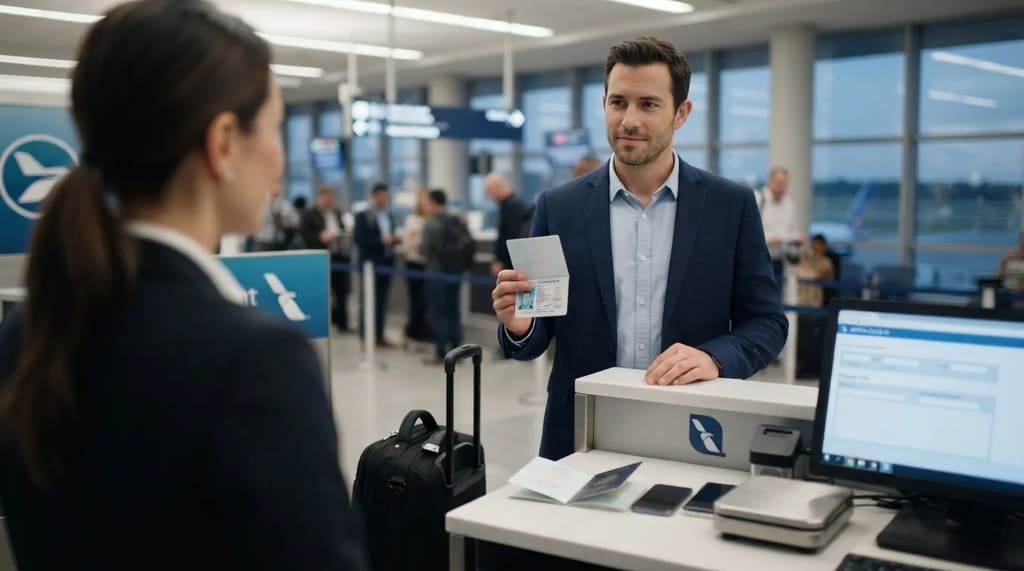
Fumbling for ID is the quickest way to spot a rookie.
Since May 7, 2025, anyone 18 or older flying within the US needs a REAL ID or another acceptable ID. Since February 1, 2026, travelers without one can pay a $45 fee to attempt TSA ConfirmID verification.4
There is no guarantee it works. TSA can still deny entry if it cannot verify you.
Here’s the part of the ID rule that even enrolled “trusted” travelers get wrong, at #11…
#11 – They Know PreCheck Is Not an ID
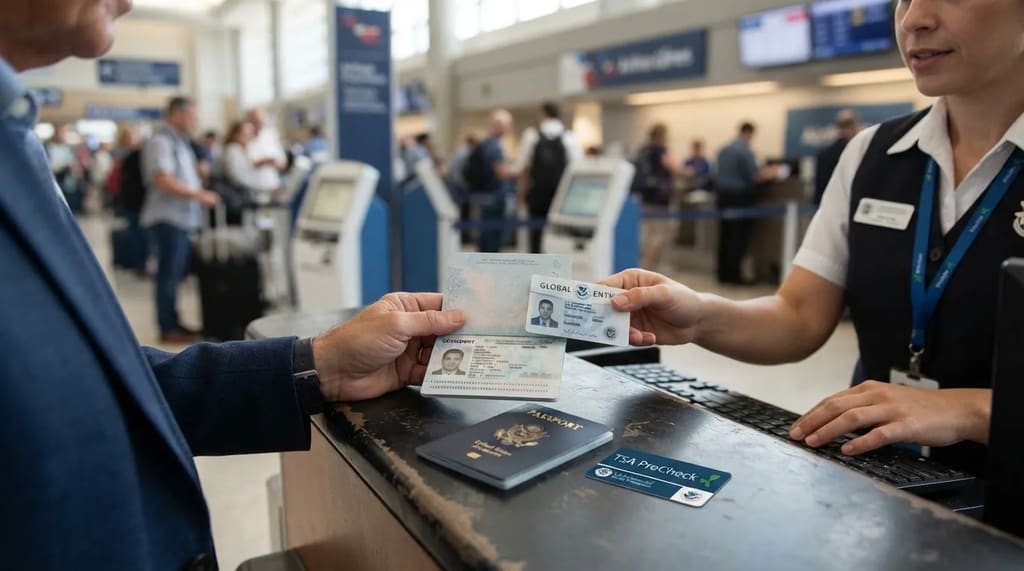
A trusted-traveler card does not replace the requirement.
Having TSA PreCheck does not exempt you from the REAL ID requirement, and many enrolled travelers don’t realize it. The membership speeds up screening and nothing more.
Accepted alternatives include:
- A passport book or card, a Global Entry card, a current military ID, or an enhanced license from certain states
Smart flyers keep one of these on them every time.
But one document beats them all, and it’s waiting at #10…
#10 – They Carry a Passport Even When They Don’t Have To
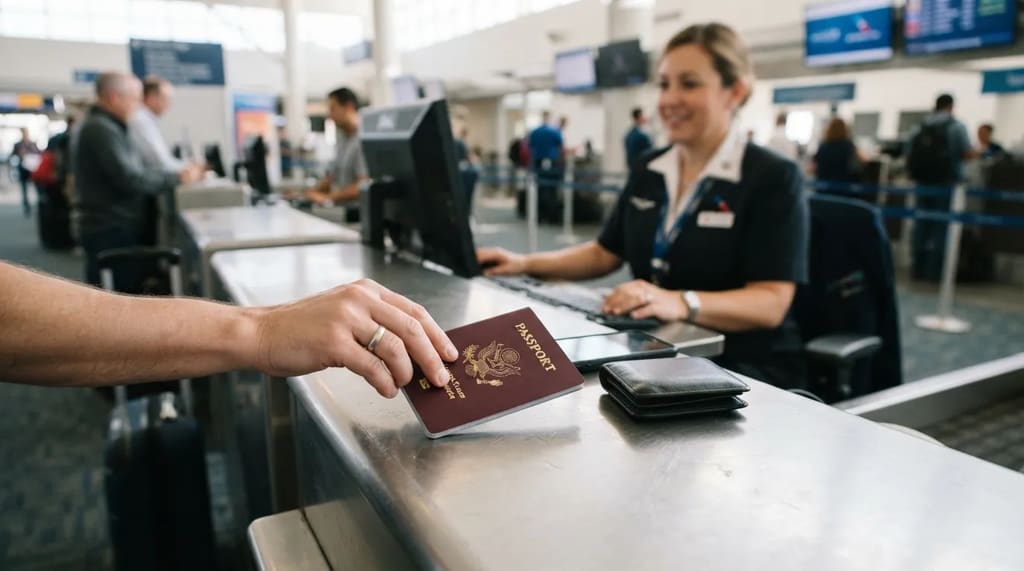
It is the one ID that never causes drama.
A passport book or card is accepted at every TSA checkpoint, REAL ID or not. That makes it the safest fallback.
On international trips, check-in can include passport verification before you get your boarding pass. That is part of why international cutoffs run earlier than domestic ones.
Now to the bag itself, because what the agent does next decides where it ends up at #9…
#9 – They Ask Where the Bag Is Tagged To
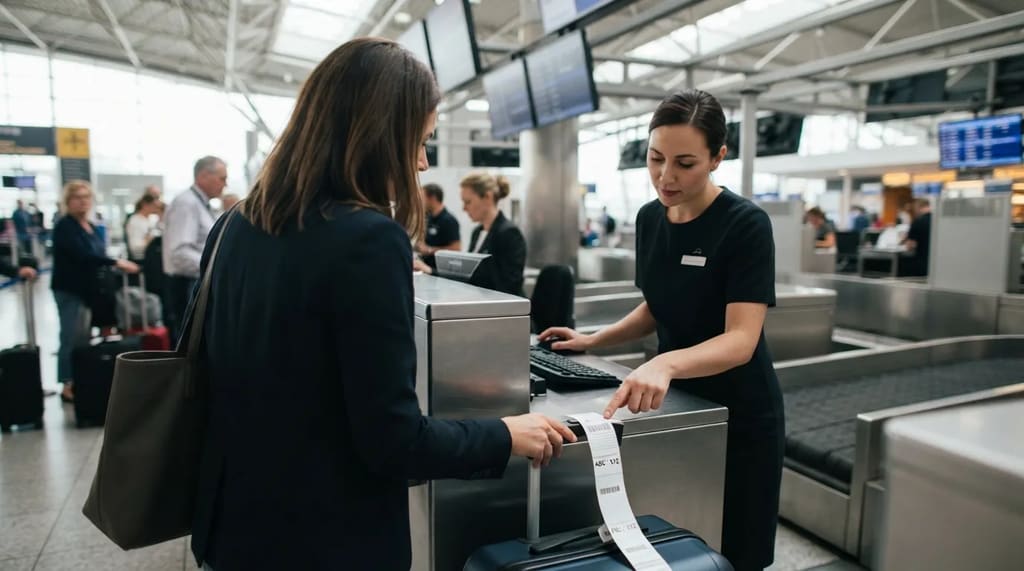
One short question can prevent a very long headache.
On a single ticket with connections, bags are normally tagged to your final stop. On separate tickets, that often isn’t the case.
Flights with multiple airlines add another layer. Under DOT’s bag-fee refund rule, the carrier operating the final segment is the one held responsible.5
At a Glance
- One ticket, connections: bag is normally tagged to your final stop
- Separate tickets: often not checked through
- Multiple airlines: the carrier on the final segment is held responsible for bag-fee refunds
You can’t assume the first airline handles everything. So veterans simply ask: “Is this checked through to my final destination?”
Then comes a five-second check that most people skip entirely at #8…
#8 – They Read the Bag Tag Before Walking Away
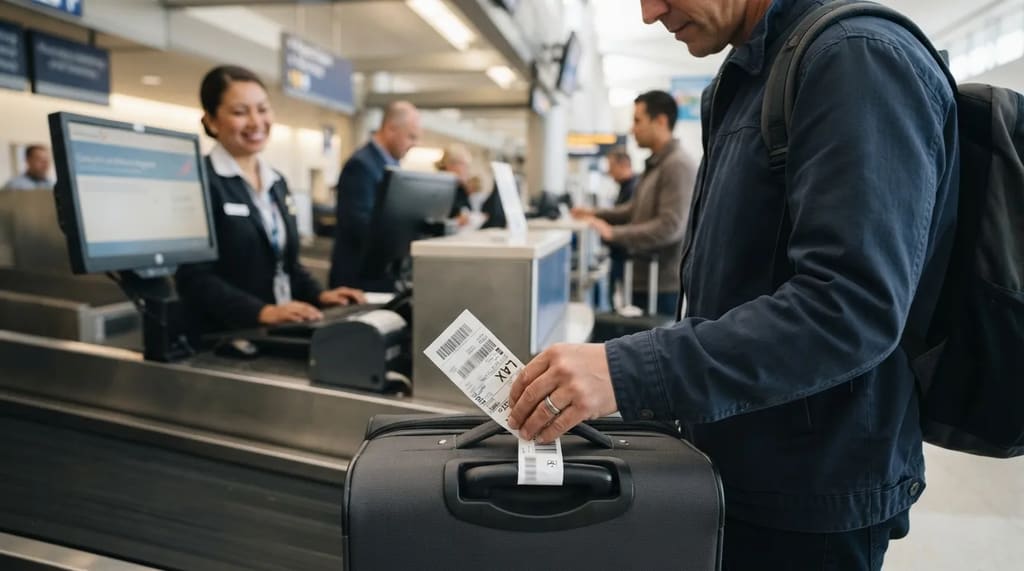
The tag is a tiny printout with huge consequences.
It carries a three-letter airport code, your flight number and a date. A wrong code is cheapest to fix while the agent is still standing in front of you.
Once the bag disappears behind the counter, fixing a mistake gets harder.
Keep that paper tag receipt safe, because it’s about to be worth real money at #7…
#7 – They Know the Refund Clock Starts at the Gate
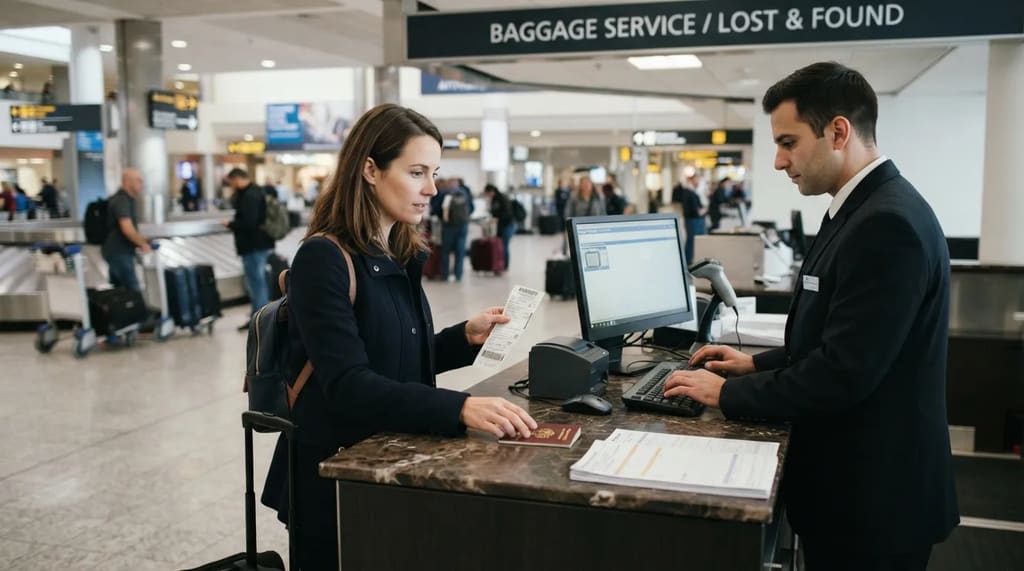
Your bag fee can come back to you, but only if you act.
Under DOT’s rule, a delayed bag can trigger a refund of your checked-bag fee. But you must first file a mishandled-baggage report.5 6
The refund depends on the airline knowing your bag is late. Experienced flyers file right away, at the airport or online.6
Bags aren’t the only thing that rule touches, and #6 is where people leave real money on the table…
#6 – They Say “Cash” When Offered a Voucher

A canceled flight comes with a polite pitch, and it’s often not what you’re owed.
If the airline cancels and you decline the alternative, you’re owed a full refund to your original form of payment. Vouchers are acceptable only if you agree to them.7
Airlines have 7 days to refund credit card purchases and 20 days for other payment methods, per one summary of the rule.
The next habit isn’t about money at all. It’s about safety, and it’s #5…
#5 – They Pull the Power Banks Out Before the Agent Asks
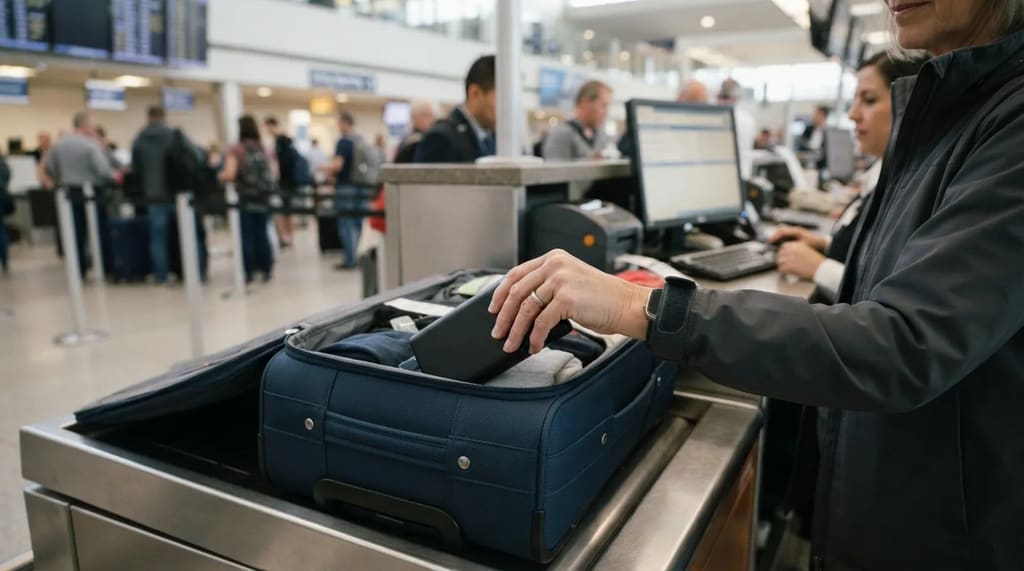
This one can get a bag pulled from the line.
FAA guidance and most airlines say spare lithium batteries and power banks belong in your carry-on, not your checked bag. A power bank counts as a spare battery.8
Experienced flyers take them out of the suitcase before they reach the counter. Check your airline’s page for exact limits.
Batteries aren’t the only thing that stays close, and #4 may change how you pack…
#4 – They Keep the Irreplaceable Stuff on Their Body
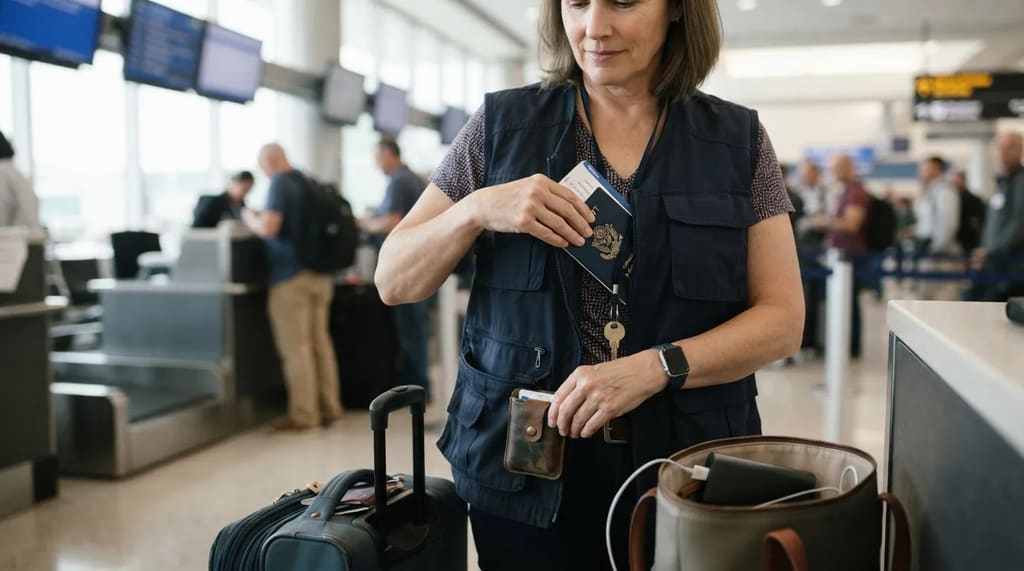
Veterans pack as if the checked bag might not arrive.
Medication, documents, chargers and valuables stay in the carry-on or on their person. If the bag arrives late, that is the difference between an inconvenience and a crisis.
Carry-on-only purists argue any checked bag is a mistake, though plenty of travelers happily use the allowance.
Worth Knowing
- Stays with you: medication, documents, chargers and valuables
- US carriers: carry-on weight is rarely checked, per one comparison
- Elsewhere: European and Middle Eastern airlines actively enforce carry-on weight
The next move separates the calm from the stressed at the scale, and it’s #3…
#3 – They Move Weight Instead of Paying the Fee
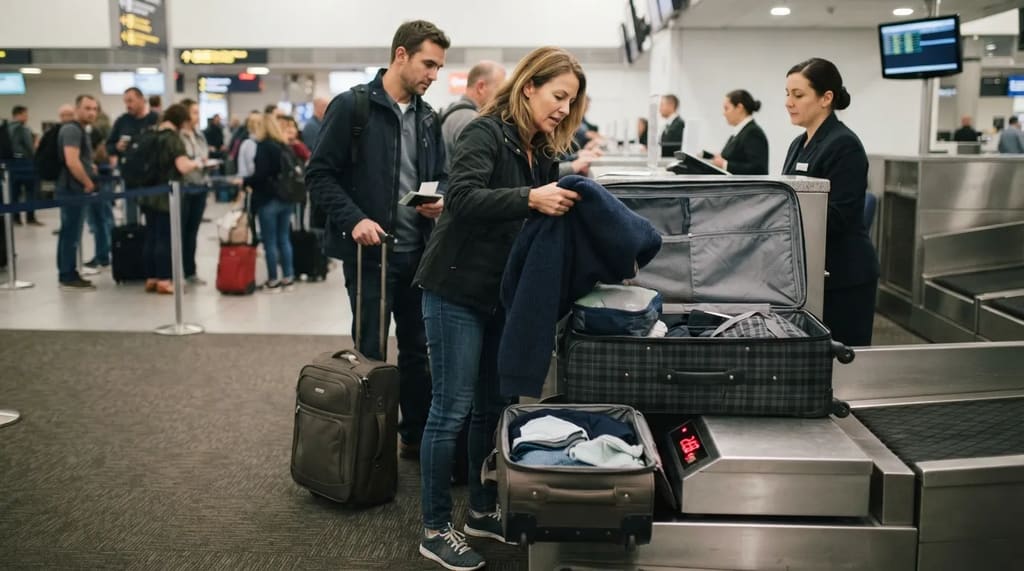
When the scale flashes red, they don’t reach for a card.
At the counter you have two practical options: repack items into your carry-on or another bag, or pay the overweight fee. One guide says going over can cost more than a second suitcase would.
Common moves include:
- Shifting weight into a travel companion’s bag if they’re under the limit
- Wearing the heaviest jacket or shoes onto the plane
Many frequent flyers call paying a flat overweight fee the worst deal at the airport.
But the smartest flyers do something even before the scale, and it’s #2…
#2 – They Stay Calm and Ask for Options First

Arguing is what novices do.
Veterans ask the agent about fees and options right away, before committing to anything. Agents can require you to pay, repack or ship the bag as cargo in order to meet safety and weight-and-balance rules.
If something goes wrong, they ask for paperwork. Here’s the short list.
Fast Facts
- A copy of the weight ticket
- Any incident report
- The agent’s name
Calm gets better answers than anger, and it leaves a record. The last habit takes five seconds, and it’s #1…
#1 – They Photograph the Bag and the Tag Before It Rolls Away
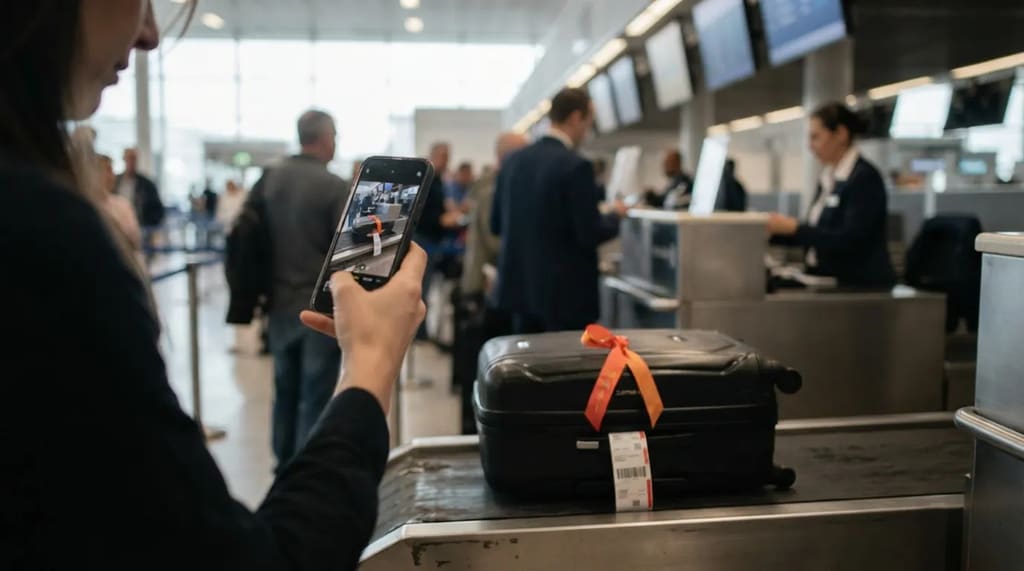
Nobody behind them notices a quick phone snap, and it may be the smartest move on this list.
One photo of the bag and one of the tag receipt capture what a claim form asks for: color, brand and tag number. If your bag goes missing, you won’t be reconstructing details from memory in a stressful moment.
Since refunds depend on filing a report fast, having those details on your phone speeds everything up. Some flyers also slip a Bluetooth tracker inside the bag.
Once you know all this, the person ahead of you in line starts to look very different.
The biggest surprises are small. A bag that reads 50 pounds at home can tip over at the airport, and some budget carriers set the limit at 40.
The cutoff that matters is the bag drop, not boarding. PreCheck doesn’t replace REAL ID, and a missing ID can cost $45 with no guarantee.4
Your delayed-bag refund depends on a report you file yourself, and a canceled flight means cash, not a voucher. Which of these habits do you already follow, and which one would have saved you at the counter?
Bonus: The Insider Trick Nobody Tells You
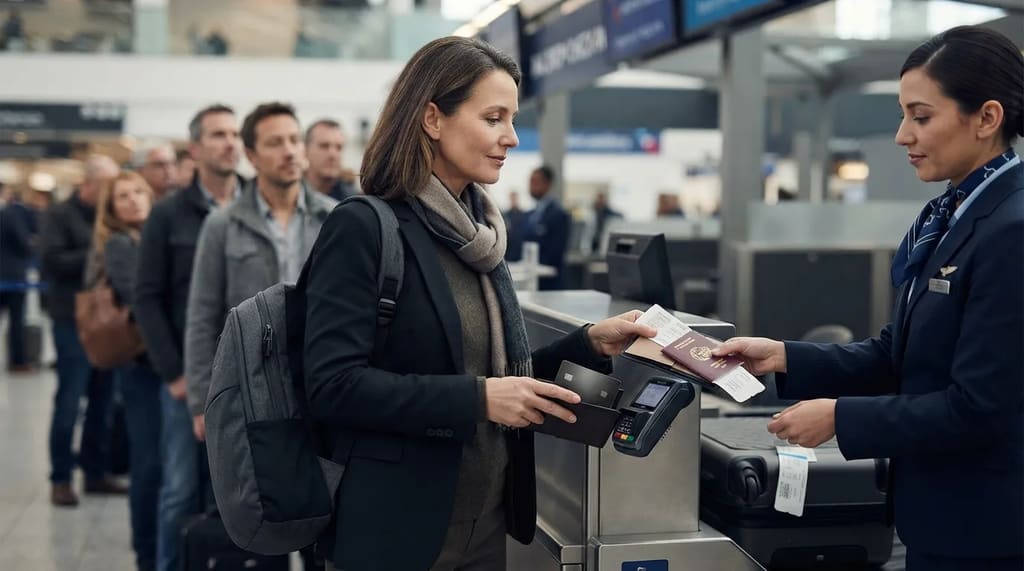
Stack your protections before you ever reach the counter. The airline’s refund of your bag fee is only one layer, and it does not pay for the clothes and toiletries you buy while you wait.
Many travel credit cards include baggage-delay coverage, but only when you paid for the ticket with that card. Trigger times and daily limits vary by card, so check your own benefits guide.
- Before you leave home: look up the baggage-delay terms for the card you used to buy the ticket. Note the delay threshold and the daily cap.
- If the bag doesn’t show: file the airline’s mishandled-baggage report before you leave the airport. Write down the file reference number.
- While you wait: keep every receipt for essentials, and save the tag photo from #1 as proof.
- Afterward: claim the airline’s bag-fee refund and the card benefit separately.
One report, one set of receipts and two possible payouts. Most people only find out about the second one after the trip is over.
- NerdWallet Frontier Baggage Fees: https://www.nerdwallet.com/travel/learn/the-guide-to-frontier-baggage-and-other-fees
- Delta Bag Cutoff Change: https://www.worldtravel.com/04/deltas-new-checked-bag-cutoff-time-effective-april-8-2025/
- Fortune United Cutoff: https://fortune.com/2025/05/28/united-airlines-moving-up-check-in-cutoff-time-travelers-only-carry-on-bags
- TSA ConfirmID Rollout: https://www.tsa.gov/news/press/releases/2026/02/05/tsa-successfully-rolls-out-tsa-confirmid-0
- Federal Register Refund Rule: https://www.federalregister.gov/documents/2024/04/26/2024-07177/refunds-and-other-consumer-protections
- DOT Lost, Delayed Baggage: https://www.transportation.gov/lost-delayed-or-damaged-baggage
- DOT Automatic Refund Rule: https://www.transportation.gov/briefing-room/biden-harris-administration-announces-final-rule-requiring-automatic-refunds-airline
- FAA PackSafe Lithium Batteries: https://www.faa.gov/hazmat/packsafe/lithium-batteries