You booked a car at what looked like a fair price. Across 100 U.S. airports, the average daily rental rate was $62.25 in a December 2025 report from Cheap Car Rental.1 Then the counter screen starts adding lines, and Kiplinger’s rental-fee roundup warns you could end up paying double the daily rate unless you just say no.
That gap between the price you booked and the total you’re handed is what this list is about. Fifteen add-ons come up often enough to be worth rehearsing a polite refusal for, and a few vanish with a membership card or a closed plastic box. One is the biggest charge on the screen, and it is one of only two you shouldn’t wave away by reflex. First, though, comes the weakest case on the menu: a navigation screen you already carry in your pocket.
#15 – The Navigation Screen Already in Your Pocket
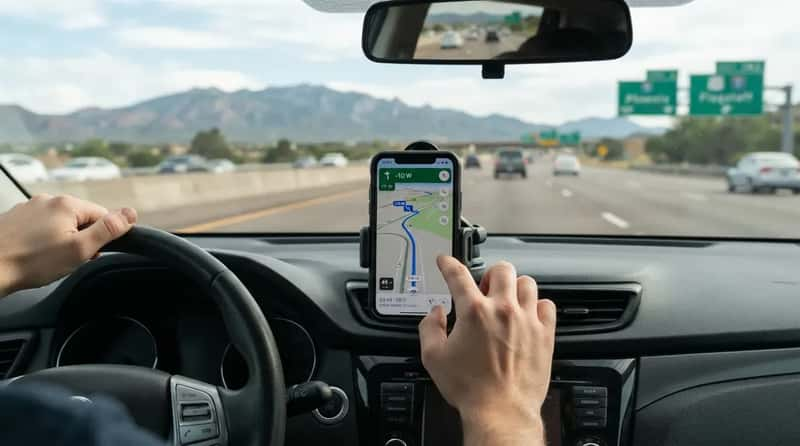
The rental GPS unit is the easiest charge to refuse, because your phone does the same job. The counter script often mentions areas without cell service, which is a fair worry with a free answer. Download the offline map for your destination before you leave home.
That way, a daily fee never gets to stack on top of everything else on the agreement. Your phone also has an edge over the rented unit: Google Maps lets you choose to avoid toll roads along your route, and that setting matters once you see what toll programs charge. A phone doesn’t tow a car, though, and that is where the roadside add-on makes its pitch.
#14 – The Roadside Plan You May Already Own

If you belong to AAA, or your auto insurer or credit card includes roadside help, the rental company’s daily roadside add-on pays for the same tow twice. Look at the cards in your wallet before the trip. You’ll usually know within a couple of minutes whether the counter is selling you something you already have.
Rental agreements normally list a number to call if the car breaks down, so declining does not leave you stranded on a dark highway shoulder. Read yours before you drive off the lot. The same AAA card also waives an extra-driver fee at Hertz, which comes up further down.
Worth Knowing
- Check three places first: your AAA card, your auto insurer and your credit card.
- Your rental agreement normally lists a breakdown number to call.
- Read that number before you leave the lot, not on the shoulder.
- A AAA card can do double duty at Hertz by waiving the extra-driver fee.2
#13 – The Bigger Car Offered as a Favor
An upgrade offer arrives sounding like a gift, and it is a sale. You can usually say no and keep the car you reserved. The online reservation is the price you agreed to, and the counter is the most expensive place to renegotiate it.
Some upgrades are fair deals, such as a long drive with four suitcases and two grandchildren. But decide that at home, with the rates in front of you, rather than at 11 p.m. in a slow line. A larger engine also changes what a tank of gas costs, and electric cars have their own version of that bill.
#12 – The EV Charging Package for a Car You Can Just Plug In
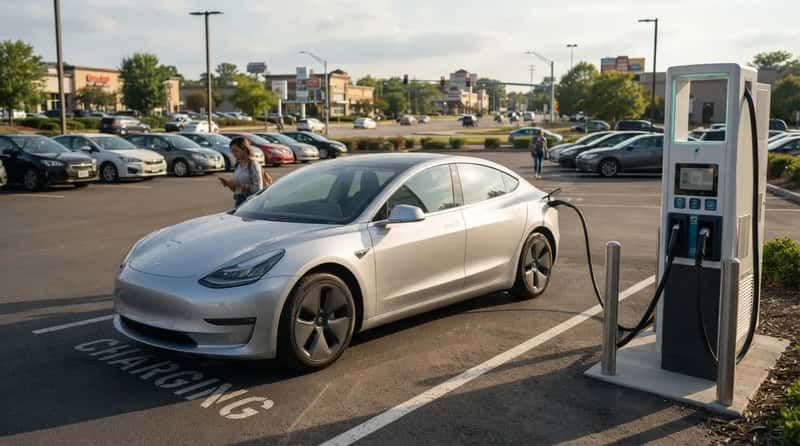
As rental fleets add electric cars, some counters now sell a charging-management add-on. One guide puts these fees at $5 to $20 a day, nominally covering charging network access or return-charging services. That is a daily price for something you may need once or twice.
In most cases you can decline the package and charge the car yourself at a standard public charging station. Charging costs follow what you use, while a package follows the calendar. A short trip with a single charge is where the package looks worst.
#11 – The $4.69 Accident Coverage That Hides in Plain Sight
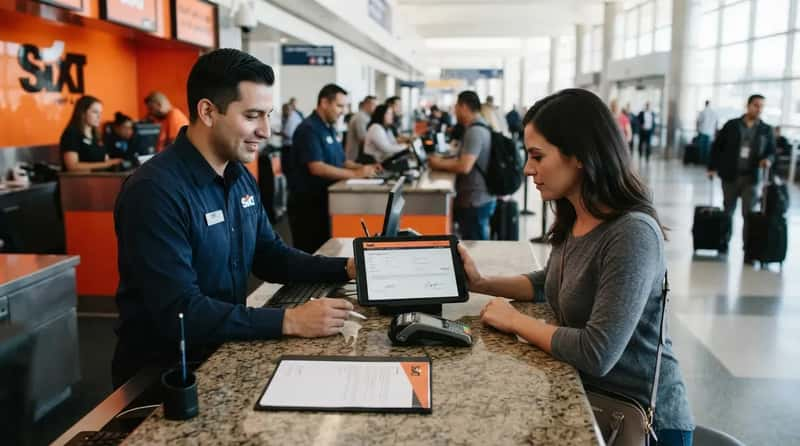
This line looks harmless because it is small. Sixt lists personal accident coverage at $4.69 a day in a booking simulation at LAX in August 2026, covering personal injury to you and your passengers during the rental. Small daily charges are the easiest to accept without a second look.
If you carry health insurance, you probably already have a way to pay for treatment after a car accident, and a daily fee buys a second layer on top of it. This one looks skippable once you’ve confirmed what your own health policy and any travel coverage pay for. Passengers are also the reason for the next charge, since a grandchild needs a seat the counter will gladly rent.
#10 – The Child Seat Rented by the Day
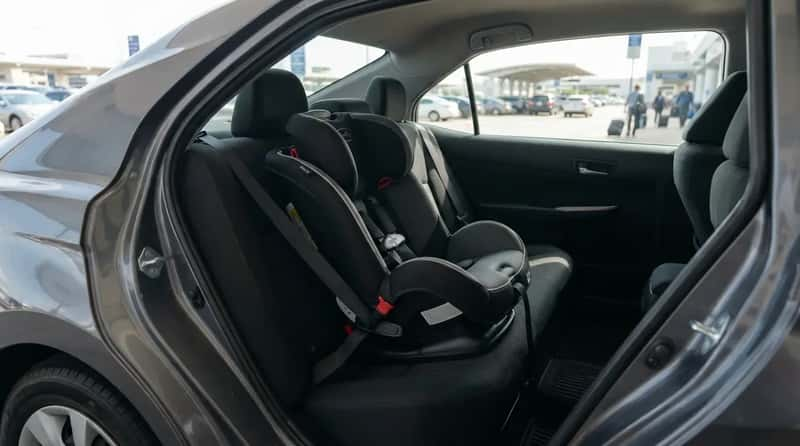
Bringing your own child seat is the usual advice when you can, and for grandparents flying in to see family it is worth planning for. Most major U.S. airlines let you check a car seat without a fee, though your airline’s website will confirm its own rule. You also know where your own seat has been, which you can’t say about one pulled from a rental company shelf.
State laws require young children to ride in an approved restraint, so the savings come from bringing the seat and never from leaving it out. If the flight makes that impractical, ask the counter for the seat’s price in writing before you agree. It will be charged for every day of the rental.
At a Glance
- Bring your own: most major U.S. airlines let you check a car seat without a fee.
- Know the rule: state laws require young children to ride in an approved restraint.
- If you rent: get the price in writing before you agree.
- Remember: the seat is charged for every day of the rental.
#9 – Prepaid Fuel That Rewards an Empty Tank
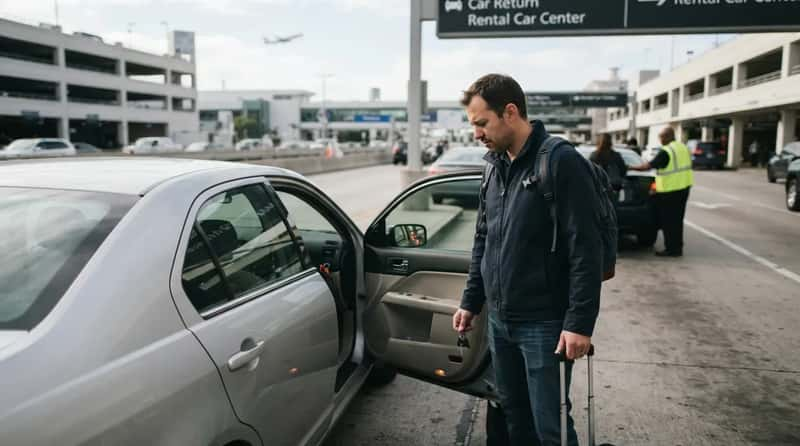
Prepaid fuel is sold as convenience. You pay for a full tank at the counter and are encouraged to return the car as empty as possible. Since the price covers a whole tank, any fuel left when you return the car is typically paid for and not credited.
The option makes financial sense only if you’re confident you’ll return the car nearly empty and in a hurry. For an ordinary trip, filling up a few miles from the drop-off and keeping the receipt wins. Fuel is a charge you can settle with a receipt, while the next one depends on who is sitting in the passenger seat.
#8 – The Extra-Driver Fee That Spouses Often Skip

Adding a second driver can cost real money, yet Enterprise, Alamo, National, Avis, Budget and Fox all waive the fee automatically for a spouse. Hertz waives it for a spouse or domestic partner if you’re a Gold+ Rewards member, and that program is free to join before you book. Without the waiver, Hertz’s published rate as of October 2026 is $13.50 per day per additional driver, capped at $216 per rental per driver.3
Sixt is the exception. It has no spouse waiver at any loyalty tier, though some states require one by law. A waived fee also does not waive the young-driver surcharge, which still applies if the additional driver is under 25. The waiver covers a spouse, but a friend or adult child pays full price unless a membership steps in.
#7 – The Extra-Driver Fee a Membership Card Erases

For a second driver who isn’t a spouse, memberships do the work. Hertz waives the fee for drivers who are AAA members, and for the spouse or domestic partner of a AAA member.2 3 At Avis and Budget, AARP rates include an additional driver at no cost.
Costco members get the fee waived on Avis and Budget rentals in the U.S. Booking through Costco Travel typically waives one additional driver fee with Alamo, Enterprise, Avis and Budget in the U.S. and Canada.
If you already hold an AARP or AAA card, checking the perk takes a minute. At Hertz, where the fee runs up to a $216 cap, the AAA waiver saves the most on long trips. A membership bought only to cover a three-day rental is hard to justify.
#6 – The Unlimited Toll Plan That Bills You Every Single Day
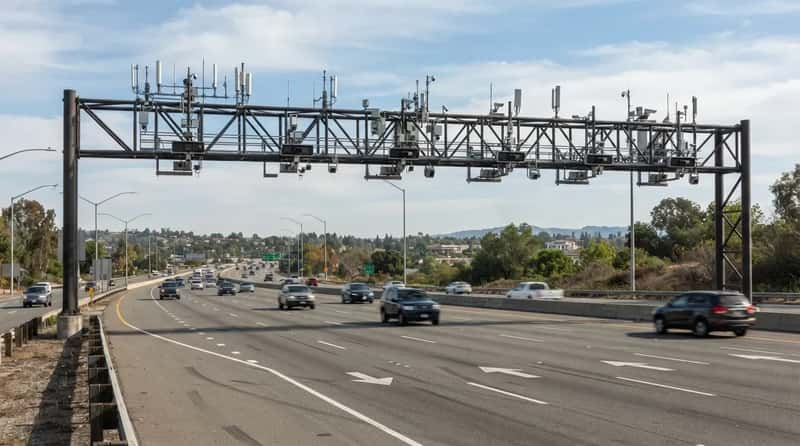
The flat toll plan is the expensive end of the toll menu. Avis e-Toll Unlimited charges $10.99 to $25.99 per day, depending on checkout location, for each day of the rental whether or not you incur any tolls. Weekly it tops out at $54.95 to $181.93, and Budget posts the same structure.4
Fox’s version carries a second trap. Its PlatePass runs $13.99 per day, and a toll admin fee of $15 per event applies if you pass a toll without a pass. Unless every day of your trip is built around toll roads, the unlimited plan costs more than the tolls ever will.
Declining it doesn’t make a toll disappear, though. A cashless gantry still bills the car, and the rental company adds its own fee.5 6
Quick Compare
- Avis e-Toll Unlimited: $10.99 to $25.99 per day, every day, tolls or not.
- Fox PlatePass: $13.99 per day, plus a $15 admin fee per event if you pass a toll without a pass.
- Avis standard e-Toll: $6.95 only on days you incur a toll, up to $34.95 per rental period, plus the toll itself.
#5 – The Convenience Fee That Turns a $2 Toll Into $8.95
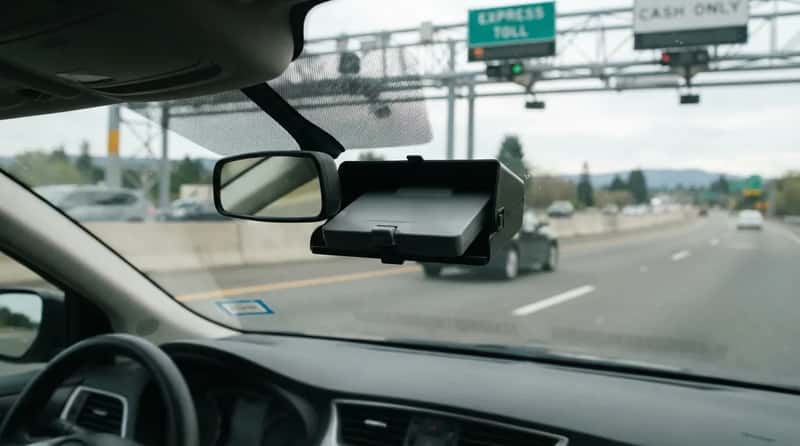
Avis’s standard e-Toll charges a $6.95 convenience fee for each day you incur a toll, up to $34.95 per rental period.5 The toll itself comes on top. The toll is charged to the car, then Avis works out who the renter was and bills them for the toll plus the fee.4 On that schedule, a $2 toll becomes $8.95.
You have options. You can use your own toll tag if you register the rental’s license plate with it, and remove that plate when you’re done. Budget lists the other routes: pay cash, pay the toll authority directly online, or avoid electronic toll roads.
Cash is not always accepted, since many states are modernizing their systems. Tolls are the part of the bill you steer from the driver’s seat, but the airport’s own charges are set before you reach the counter.
#4 – The Airport Charges You Can Only Dodge by Skipping the Terminal

This is the odd entry, because you can’t decline it at the counter. Airport concession recovery fees, customer facility charges, local taxes and vehicle license fees are commonly built into airport rentals. Airport taxes and fees apply to every rental at every airport location, regardless of supplier. The only way out is to pick the car up somewhere else.
Renting from an off-airport location can sometimes reduce the airport-specific fees, though you will need a way to get there. That trade is overrated for a short trip with heavy luggage, where a rideshare to the lot can eat the savings and the patience. It works better on longer rentals, and the comparison that matters is the all-in total, since the quoted daily rate is only the start.1
Why It Stands Out
- It’s the one entry on this list with no way to say no at the counter.
- The charges are commonly built in: concession recovery, facility charges, local taxes and license fees.
- They apply at every airport location, whichever supplier you pick.
- Off-airport pickup is the only escape, and only the all-in total tells you if it pays.
#3 – The Protection Package With the Reassuring Name
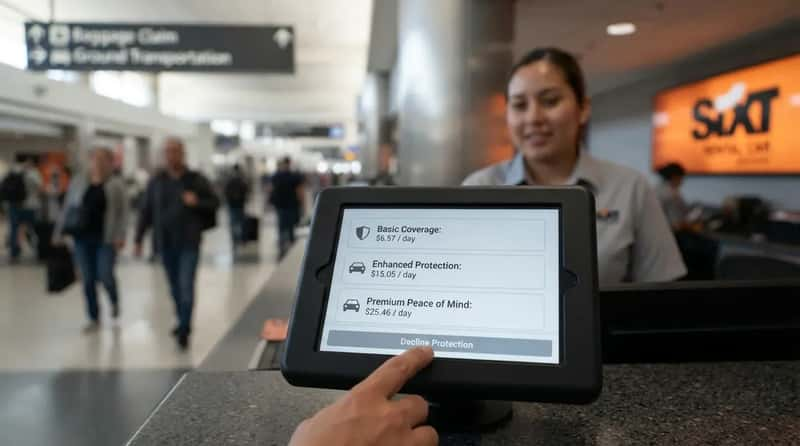
Rental menus now bundle coverage under comforting names. Sixt’s online prices at LAX in August 2026 started at $6.57 a day for Cover The Car, $15.05 for Cover The Car & Liability, and $25.46 for Peace of Mind. The jump from the first to the last is the price of adding layers you may already own elsewhere.
A Kiplinger writer notes that what rental companies sell is usually a waiver, not insurance, which lets you pay to waive responsibility for damage to the car.1 Buy the pieces you need, not the bundle named for how it makes you feel.
A bundle that includes liability deserves a closer look, since liability is the one thing a credit card won’t cover.
#2 – The Liability Add-On Your Card Will Not Replace
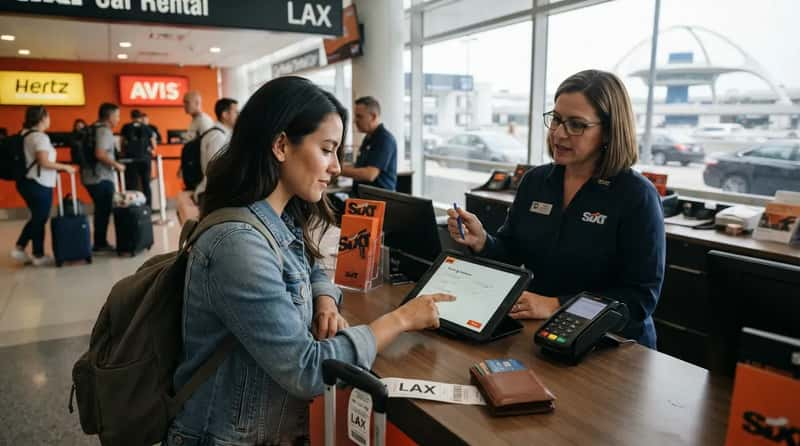
Sixt lists supplemental liability insurance at $13.65 a day at LAX in the same August 2026 simulation. This is where the card advice found everywhere has a limit. Card coverage handles damage or theft of the rental, but won’t cover damage you may cause to other vehicles or the property of others.7 It also does not cover necessary medical treatment for you, your passengers or pedestrians.
If you own a car, ask your insurer whether your liability coverage extends to rentals; many policies do, but yours may differ. If you don’t own a car, this may be the one line worth buying, because nothing else is standing behind you. Damage to the rental car itself is a separate line, and it is the priciest on the screen.
#1 – The Damage Waiver That Can Double Your Bill
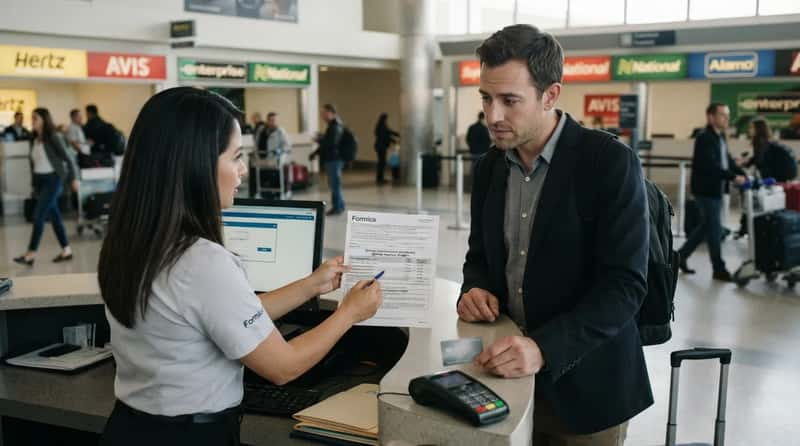
The collision or loss damage waiver is the biggest charge and the one agents push hardest. Insurance at the counter can sometimes double the cost of your rental. Fox lists its loss damage waiver at $11 to $32.99 a day, which adds up fast over a week.
But it isn’t always wasteful. A waiver can be worth the cost if you have neither your own auto policy nor credit card benefits to pay for damage to a rental.
The card route has rules. Coverage usually applies when you use your card to pay for the rental and decline the rental company’s waiver. The Chase Sapphire Preferred offers primary coverage, while the Platinum Card from American Express offers secondary.
Upgrading Amex to primary costs up to $25 per rental and requires enrolling in Premium Car Rental Protection. With no personal auto insurance, secondary card coverage generally becomes primary for collision. Coverage also has a day limit, with primary card coverage commonly capped at around 31 days, so a long rental needs a check before you decline.
Almost every refusal above got easier for one reason: the question was answered at home before anyone asked it. Your auto policy, your credit card, a AAA or AARP card, a toll tag and a phone with offline maps decide more of the final bill than the agent ever will.
The charge worth a real conversation is the damage waiver, and that conversation belongs to your own insurer, not a stranger at a counter. Which card in your wallet, whether AAA, AARP, Costco or a credit card, has actually saved you money on a rental, and how?
- Kiplinger Rental Car Fees: https://www.kiplinger.com/personal-finance/spending/rental-car-fees-to-avoid
- AAA Hertz Member Benefits: https://discounts.aaa.com/hertz
- Additional Driver Fees 2026: https://myrentright.com/tips/additional-driver-fees
- Avis e-Toll Services: https://www.avis.com/en/products-and-services/services/avis-e-toll
- Avis Fees & Taxes FAQ: https://www.avis.com/en/customer-service/faqs/usa/ai-faqs
- AAA Rental Car Tolls: https://cluballiance.aaa.com/the-extra-mile/advice/travel/avoid-costly-mistakes-when-paying-tolls-in-a-rental-car
- State Farm Card Coverage: https://www.statefarm.com/simple-insights/auto-and-vehicles/credit-card-rental-car-insurance-benefits-explained