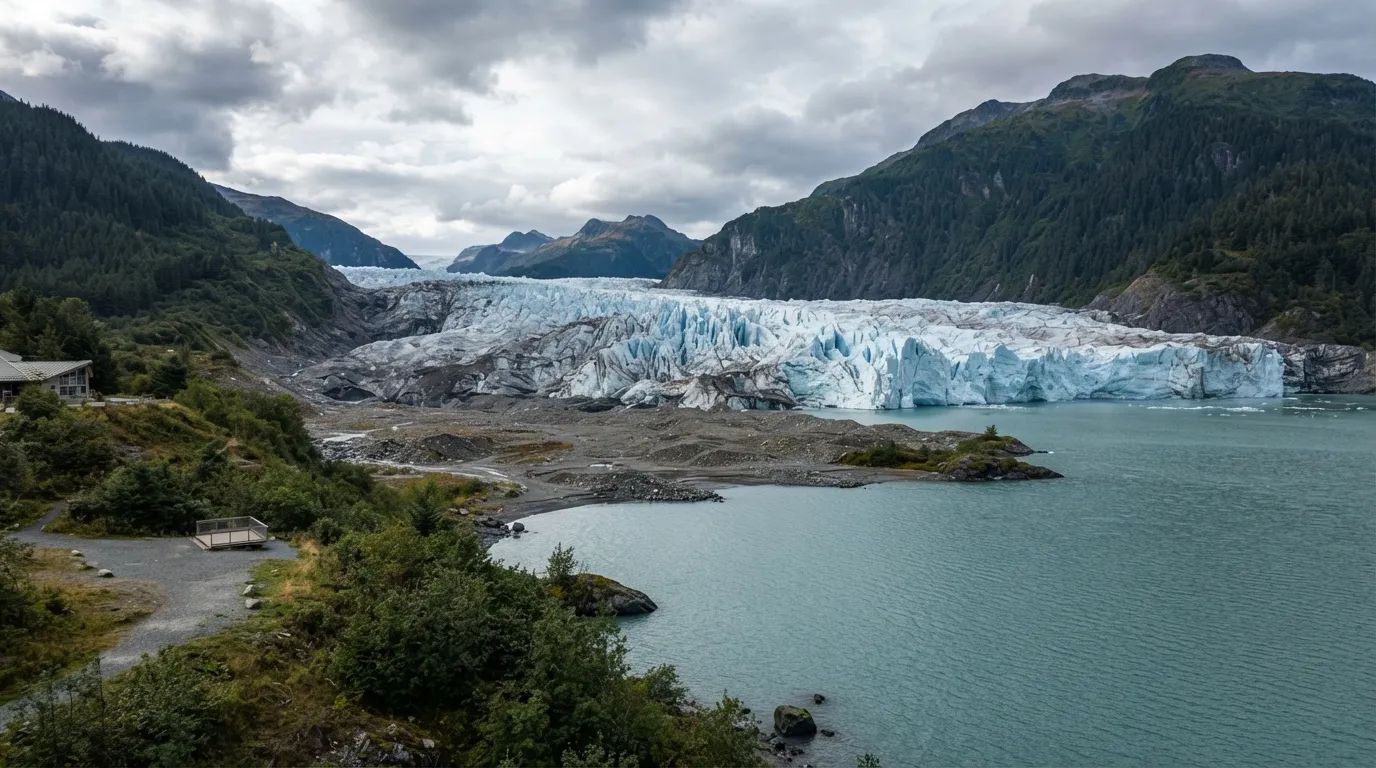
The brochure version of Juneau, Alaska, is easy to picture: a blue glacier, a whale tail, a tidy waterfront with a ship tucked politely in the background. The version people around the shore-day business see is messier. It involves crowd math, promises with no legal teeth, and a famous glacier that isn’t where the postcards left it.
None of this is secret. It’s all public record, from city budgets to scientists’ measurements, and almost none of it makes the glossy pages. Stick around, because one detail near the end changes what the “main attraction” even means.
#16 – The Capital City With No Road Out
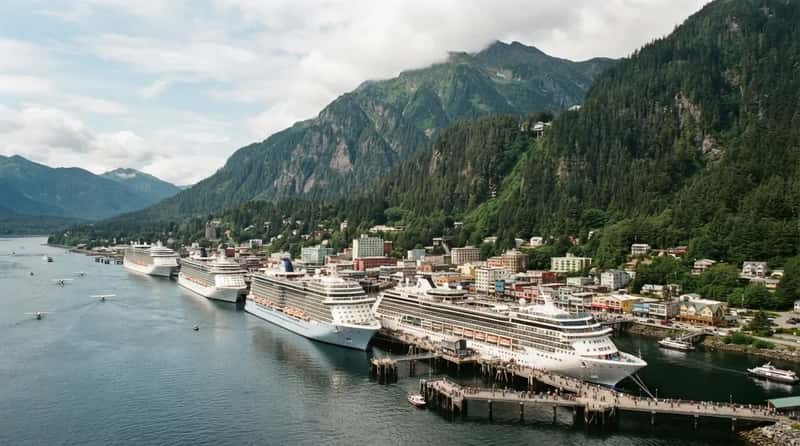
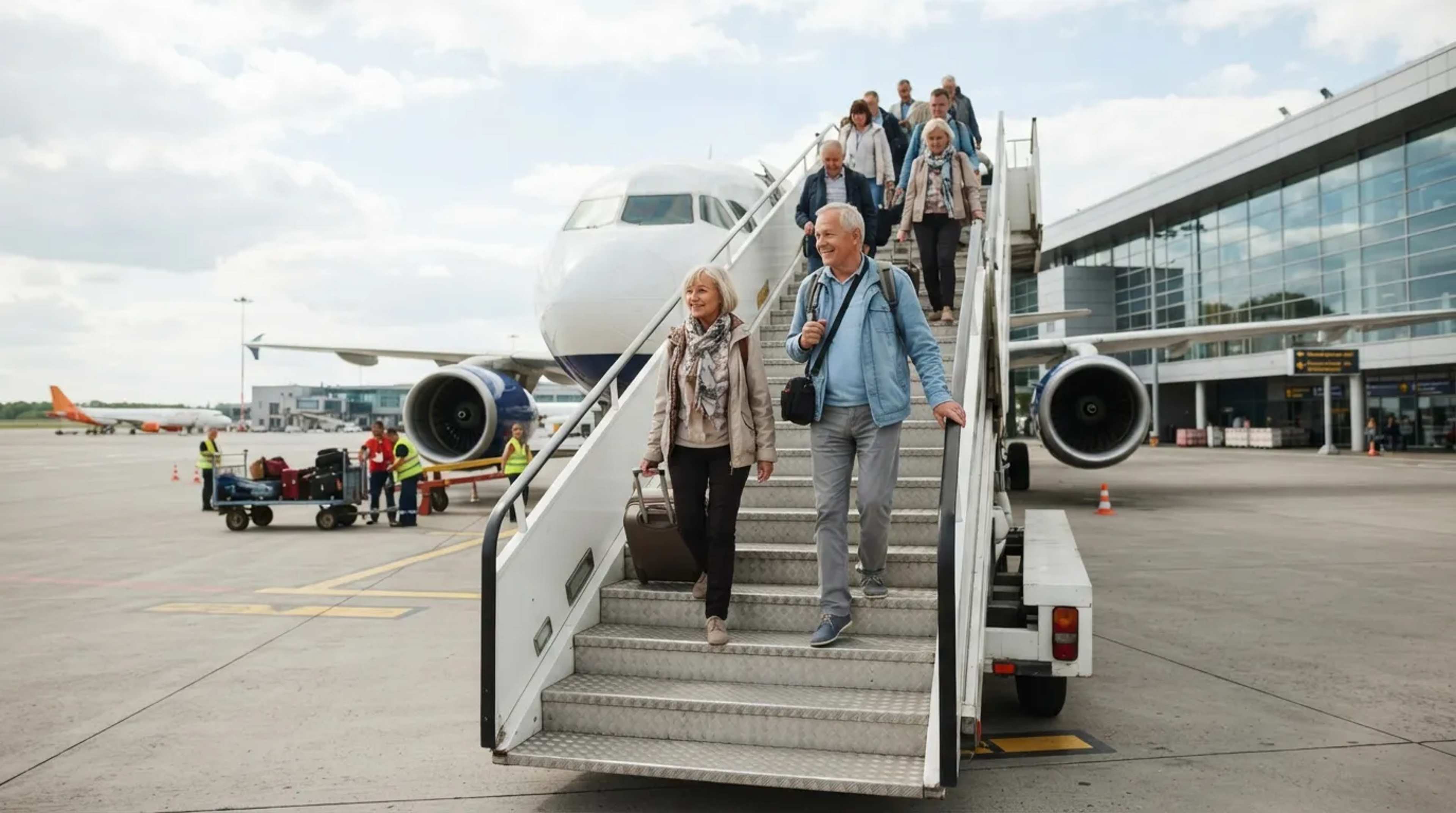
Alaska’s capital can’t be reached by car from the rest of Alaska. Juneau has no road connecting it to the rest of the state, so every visitor arrives by water or by air.1 That single fact shapes every shore day, because there’s nowhere to drive off to when the town fills up.
The scale is lopsided. For a capital of about 32,000 people, that works out to roughly 54 visitors for every year-round resident.1 And that’s just the cruise crowd.
Wait until you see what a single peak day used to look like at #15.
#15 – The 21,000-Person Day Locals Still Bring Up
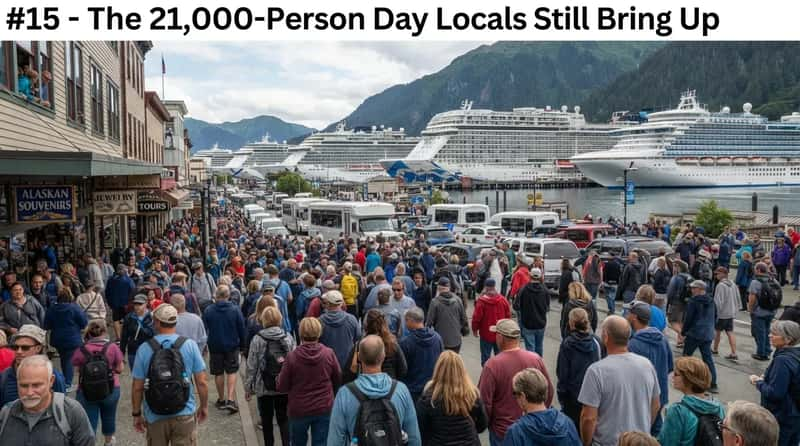
Before 2026, one summer day could swamp the downtown core. In previous seasons, Juneau could see up to 21,000 visitors on its busiest days. The city’s own visitor industry director has said those days weren’t typical, but they happened.
Here’s the part that sticks. On those peak days, passenger numbers have equaled about two-thirds of Juneau’s population of roughly 32,000. Picture two out of every three of your neighbors suddenly appearing on your sidewalk at once.
The rules meant to prevent that turn out to be far less official than most visitors assume.
#14 – The Cap Is a Handshake, Not a Law
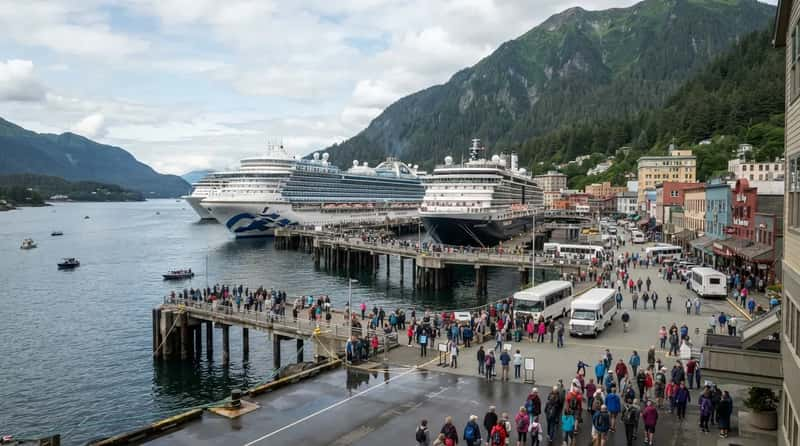
Those daily limits sound ironclad. They aren’t. The City and Borough of Juneau signed voluntary, nonbinding agreements with Cruise Lines International Association to cap ship traffic.
The reason is legal. City officials began exploring a voluntary deal after being told a mandatory daily limit likely was illegal because of people’s constitutional right of interstate travel.2
The five-ship daily limit is still voluntary too. The assembly weighed writing it into law this year but postponed the vote, and bookings for 2027 are already open.1 Some residents wanted tougher rules from the start, and backers of a ballot petition sought to ban large ships on Saturdays and July 4.
The real surprise, though, is what happened to the totals under the cap. That’s #13.
#13 – Caps Arrived. The Crowds Set a Record Anyway.
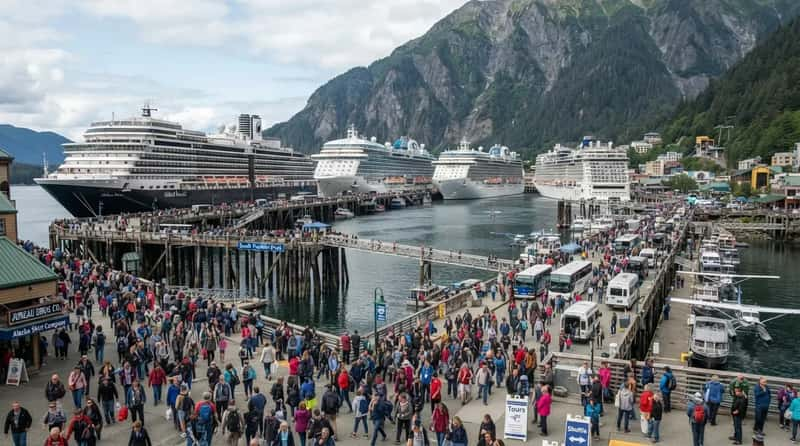
Here’s the twist almost nobody expects. Juneau counted 1,733,016 large-ship cruise passengers in 2026, up from 1,688,738 the year before. That makes it a fourth straight record year, even with the new daily limits in place.3
Officials saw this coming. The city’s visitor industry director said she didn’t expect the new structure to sharply reduce the season’s total count. The cap smooths the spikes, but it doesn’t shrink the guest list.
Fast Facts
- 2026 large-ship passengers: 1,733,016
- 2025 large-ship passengers: 1,688,738
- Year-over-year gain: 44,278 people, about 2.6%
- Record streak: four years in a row
- What the cap targets: the busiest days, not the season total
One of the plainest numbers in this story isn’t the passenger count, though. It’s the money hidden inside each fare, which comes next.
#12 – The Three Fees Tucked Inside Every Ticket
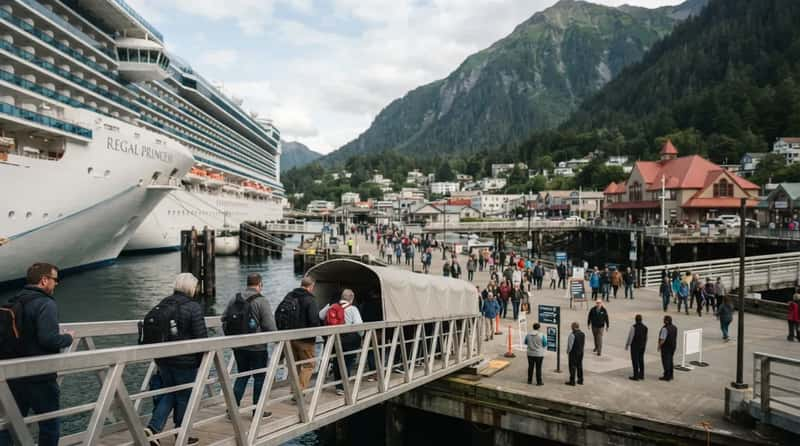
Every cruise passenger who steps off in Juneau comes with a price tag attached. The city collects a $5 Marine Passenger Fee, a $3 Port Development Fee, and a $5 portion of the state’s $34.50 excise tax.4 5 Passengers never see those lines as separate charges.
The totals add up fast. With 1.65 million cruise visitors forecast for 2026, the city anticipated about $21.45 million in passenger-related revenue.4 That’s more than $21 million from one summer’s fees.
Where it gets spent is the next thing worth knowing.
#11 – Your Fee Money Quietly Built Part of the Waterfront
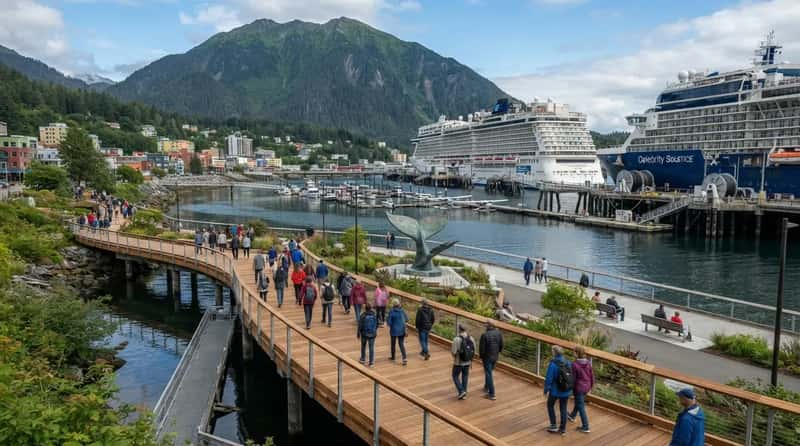
The money isn’t sitting in a drawer. Juneau planned to spend more than $22 million in passenger-related funds in 2026. The project list reads like a tour of places you may have walked without a second thought.
The big-ticket items are specific. They included $3 million for expanding shore power, $2.5 million to complete Marine Park improvements, and $2 million for the next phase of the Seawalk.4 So the waterfront strip many passengers stroll to is partly built from their own fares.
The shore power line comes with an odd catch, and that’s #10.
#10 – Two New Berths That Still Can’t Plug In
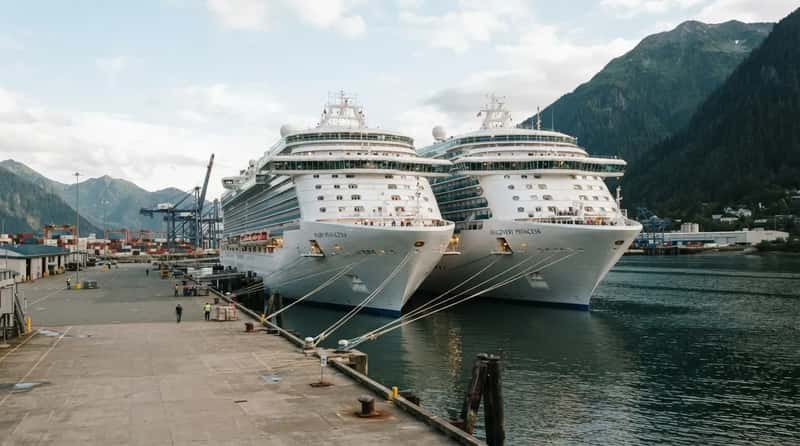
Some of the huge vessels at the dock aren’t running their engines the whole time. Shore-to-ship power lets docked vessels draw electricity from the city’s power grid. It isn’t new either. Princess Cruises marked 25 years of shore power operations in Juneau in 2026.
Not every berth gets that perk. Two of the newest berths can’t plug in yet. The local utility currently can’t supply visiting vessels there, so the newest steel on the waterfront is missing one of the oldest tricks in the port.
Meanwhile, the lineup of ships using those berths is changing.
#09 – A New Name on the Dock, and a Rival Port Closing In
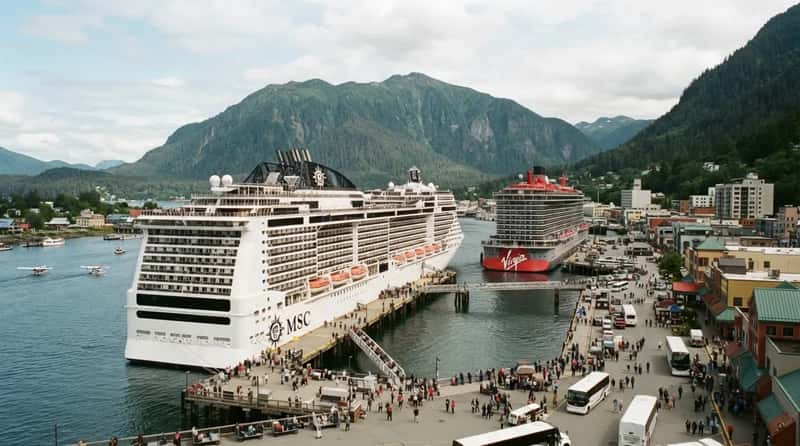
The 2026 season brought fresh logos to the waterfront. MSC Cruises, a European company, was set to be in Alaska for the first time, with a ship in Juneau every week. Virgin Cruise Line was coming too.
Then came the shock about a neighboring port. The city’s visitor industry director said Ketchikan was almost as busy as Juneau that year. There were rumors it would pass Juneau, and it came in slightly lower, but close enough that the rumors told their own story. Juneau’s longtime lead is under real pressure.
Worth Knowing
- MSC Cruises made its first Alaska appearance in 2026
- MSC planned a ship in Juneau every week
- Virgin Cruise Line joined the mix
- Ketchikan finished slightly behind Juneau, but not by much
Even so, the busiest stretch has a very definite end date, as #8 shows.
#08 – The Waterfront Goes Dark Before Winter
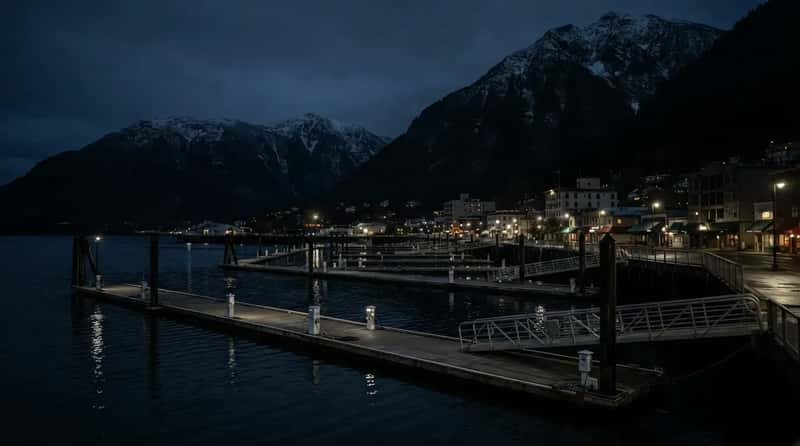
The cruise tide doesn’t taper off gently. It stops. The Norwegian Encore pulled away at 10 p.m. on the season’s last night, leaving the downtown waterfront without another cruise call until spring. One ship leaves, and the whole rhythm of downtown shifts.
The next ship isn’t far off on paper. The next vessel on CLIA Alaska’s Juneau calendar was the Carnival Legend, due at 7 a.m. on April 24, 2027. That leaves roughly half the year with no cruise ships at the downtown docks.
The most-visited spot of the whole summer, meanwhile, isn’t downtown at all.
#07 – Alaska’s Busiest Attraction Was Running Short-Handed
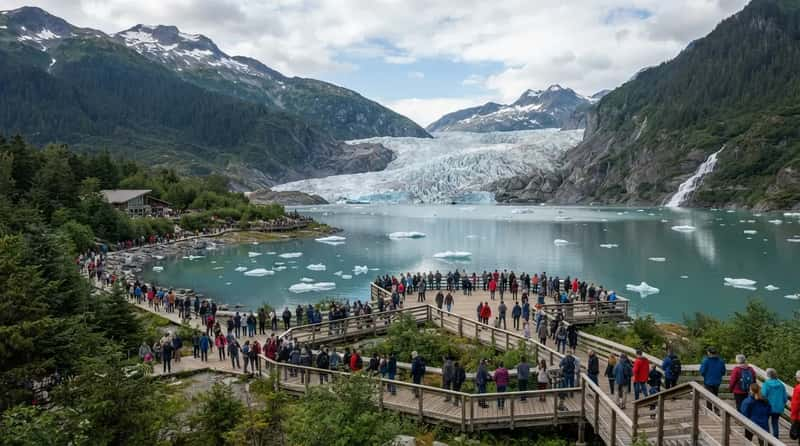
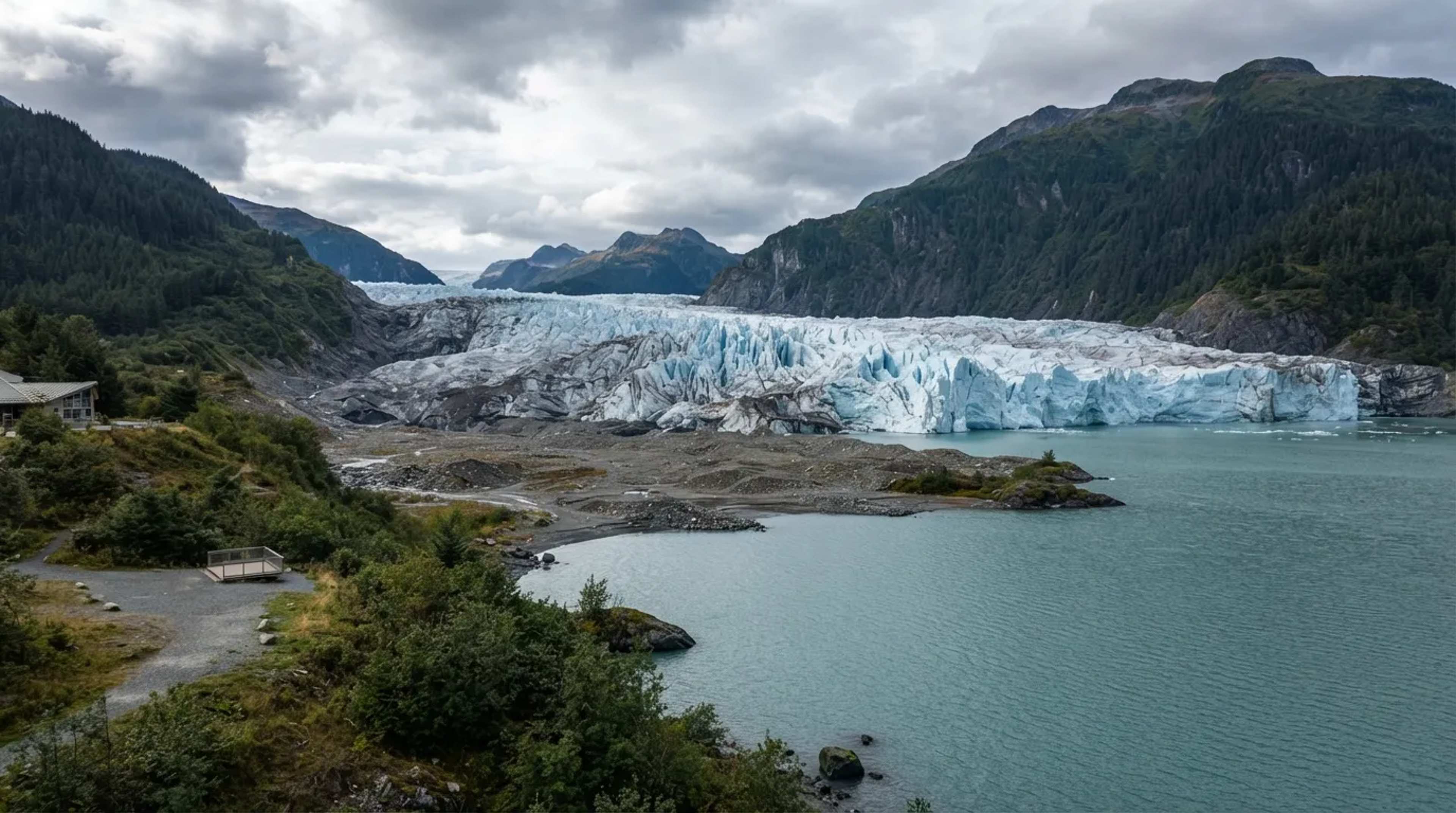
The glacier is the draw. Mendenhall Glacier is a 13-mile-long river of ice flowing into Mendenhall Lake, about 12 miles from downtown Juneau. Most excursions point straight at it.
The surprise is how big the crowd gets. The Mendenhall Glacier Recreation Area is described as Alaska’s most-visited tourist destination. Yet in August 2025, agencies reported that the area was short-staffed. The state’s busiest attraction was running thin during a flood scare.
At a Glance
- Glacier length: 13 miles
- Distance from downtown Juneau: about 12 miles
- Reputation: Alaska’s most-visited tourist destination
- August 2025: agencies reported the area was short-staffed
Before getting to that scare, the place has a backstory the brochures skip.
#06 – Before the Postcards: Miners, Dirt Roads and a Tlingit Name
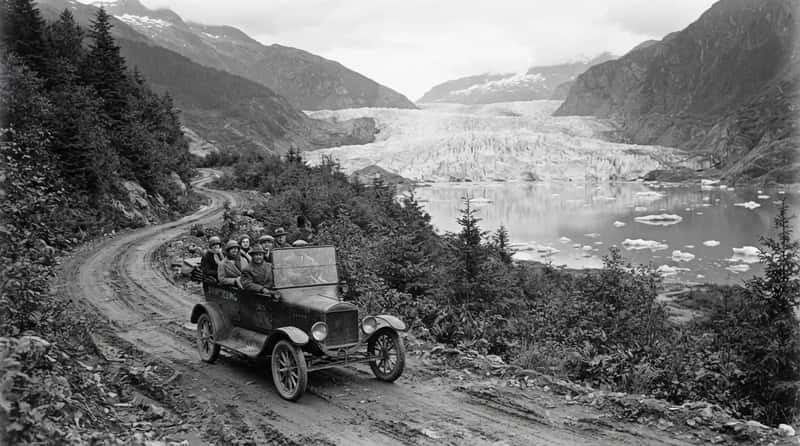
The famous lake wasn’t always called Mendenhall. In 1909 miners called it McCush Lake, after Neil McCush, who had mining property nearby. That’s a long way from today’s tour buses.
Tourism started early. The lake officially formed in 1929, and by then early tourists were already hiring local drivers to take them up dirt roads to view the glacier. The glacier’s Tlingit name, Áakʼw Tʼáak Sítʼ, means “the glacier behind the little lake.” Visitors were paying for rides to see this ice nearly a century ago.
How fast that ice has retreated since is the next jaw-dropper.
#05 – Losing a Football Field of Ice Every Year
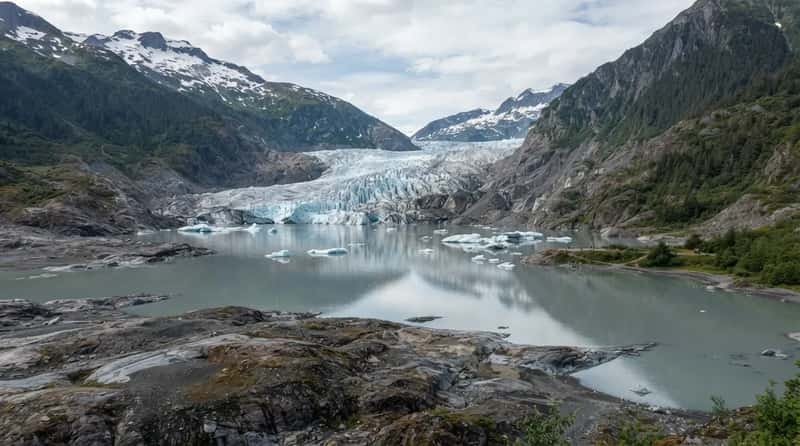
The retreat has been quick, and at one stage it was savage. Between 2007 and 2011 the glacier lost roughly a football field per year, as icebergs calved off while the terminus passed through the deepest part of the lake.6 That’s per year, for years.
The long view is startling. The glacier has retreated 1.75 miles since 1929, when Mendenhall Lake was created. Scientists saw it coming. As early as 2002, they predicted that within two decades the glacier would shift from a lake-calving glacier to a mountain glacier. That forecast turned out to be right on schedule.
And the photos that sold the glacier to millions come from the middle of that retreat.
#04 – The Famous Blue Ice Cave Photos Are From Another Era
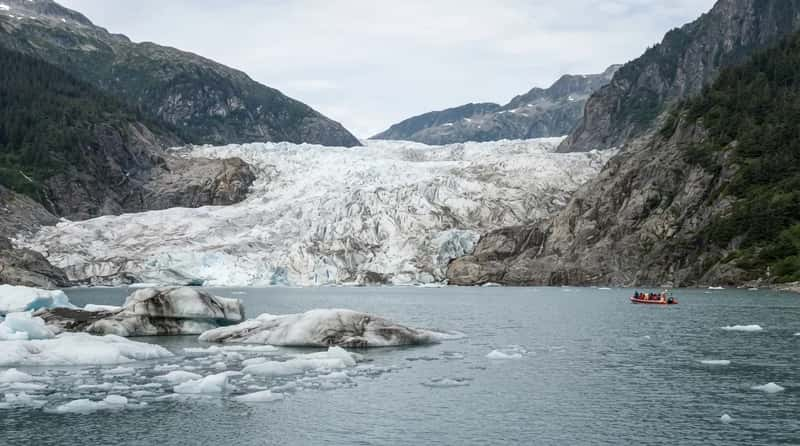
Most people who’ve seen glowing blue ice at Mendenhall saw a photo from a specific window. One local tour operator’s history of the ice notes that the blue-lit chamber in almost every photograph was shot between roughly 2014 and 2019, in a thin band of ice at the terminus that no longer exists. Brochure images don’t age as fast as ice does.
The same source says the best-known cave partially collapsed in July 2014, and later caves were temporary voids in thin terminus ice. The icon of the glacier has been gone for years.
The bigger danger around the glacier isn’t what’s missing, though. It’s what sits beside it.
#03 – The Hidden Basin Beside the Glacier That Floods the Valley
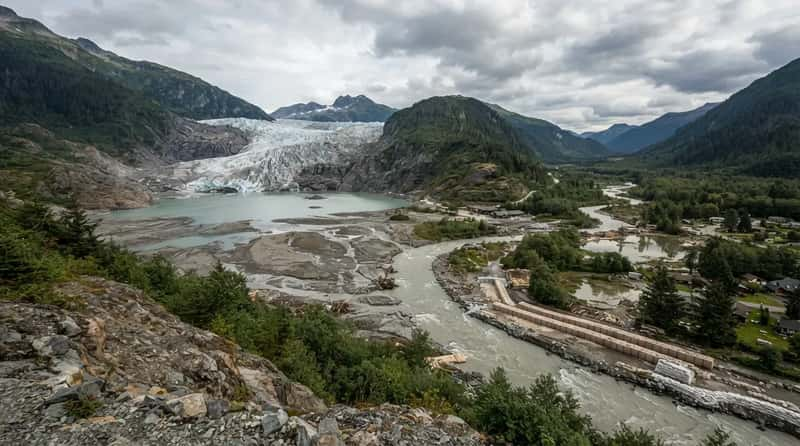
Tucked beside the glacier is a basin most visitors never notice. Since 2011, Suicide Basin has released glacier lake outburst floods that cause flooding along Mendenhall Lake and River annually. It formed because ice melted away. As the glacier retreated, the empty basin was left behind, and it now fills with rain and meltwater each summer.
The damage is real. The 2024 flood damaged more than 290 homes in the Mendenhall Valley. Then in August 2025 the surge reached record levels, though new emergency flood barriers helped limit the damage. A summer sightseeing stop sits next to a repeating flood source.
Quick Compare
- 2024 flood: more than 290 Mendenhall Valley homes damaged
- August 2025 flood: record-level surge, with new barriers limiting the damage
- The pattern: outburst floods have come every year since 2011
That puts a lot of pressure on the people watching the water, which brings us to #2.
#02 – The Alert That Can Close the Trail Mid-Season
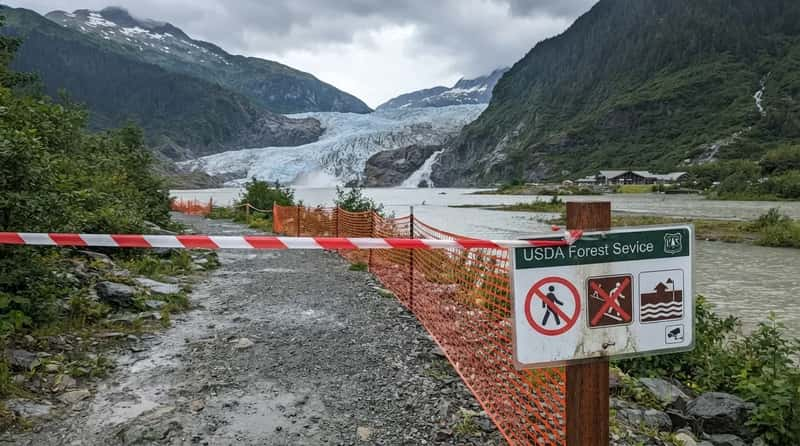
In August 2025, the usual crowd-pleaser went dark. The Nugget Falls Trail, the most-used pathway in the area, was closed to the public. A flood warning that month reached the visitor center too: flooding was expected around the Mendenhall Glacier Visitor Center, the campground, Skaters Cabin Road and View Drive.
Behind the scenes, the monitoring is surprisingly hands-on. The USGS tracks the basin using two cameras and a laser, and the National Weather Service uses that data to forecast flooding and guide evacuation and road-closure decisions.7 A laser and two cameras are what stand between a flood and a surprise.
And the biggest change of all happened in the quiet of late autumn.
#01 – The Glacier Walked Out of Its Own Lake
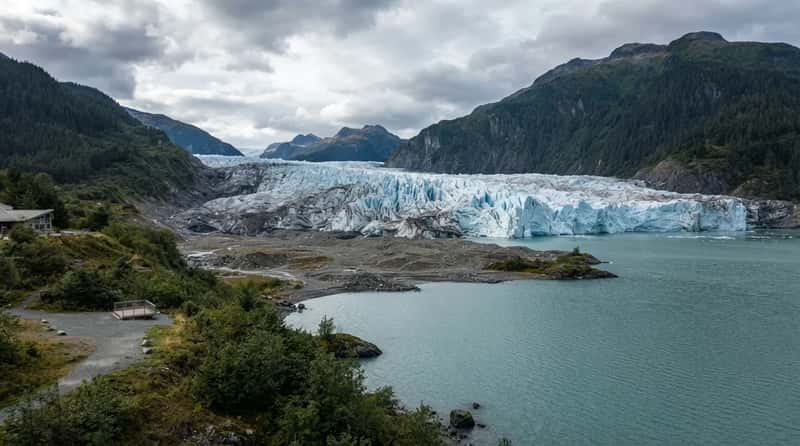
On a November day in 2025, something happened that locals had long expected and few wanted to see. Scientists confirmed that the glacier was no longer touching Mendenhall Lake and was separated from the water completely.6 The glacier that carved the lake has left it behind.
One scientist put it plainly. UAS environmental scientist Eran Hood said the Mendenhall is “functionally” no longer a lake-terminating glacier.8 Local officials have already discussed what that means for the classic view. One idea was boating people across the lake to a satellite visitor center where they could see the glacier for longer.
A glaciologist called the Mendenhall the symbol of Juneau. Now the symbol itself has moved out of easy reach.
That’s the part no brochure can print. Juneau’s cruise story isn’t just crowds and glaciers. It’s voluntary caps with no legal teeth, record passenger totals, fees you never see on the ticket, and a glacier that left its own lake. The postcard shows ice that sits still, but the people who live there know better.
- AP Juneau Cruise Record: https://www.standard.net/top-headlines/2026/nov/09/juneau-set-a-fourth-straight-cruise-record-and-still-hasnt-decided-how-many-ships-are-too-many/
- Juneau Empire Voluntary Limit: https://www.juneauempire.com/2024/06/02/limit-of-16000-cruise-passengers-daily-12000-on-saturdays-agreed-to-by-cbj-and-industry/
- CruiseMapper Fourth Record Year: https://www.cruisemapper.com/news/16846-juneau-records-fourth-consecutive-year-cruise-passenger-growth
- Cruise Hive Juneau Fees: https://www.cruisehive.com/juneau-to-nearly-double-cruise-dockage-fees-in-2026/175451
- CBJ Passenger Fee Memo: https://juneau.org/wp-content/uploads/2026/04/AP-Finance-Committee-Memo-Pax-Fee-3.26.26.pdf
- KTOO Glacier Leaves Lake: https://www.ktoo.org/2025/11/25/mendenhall-glacier-has-officially-receded-from-mendenhall-lake/
- USGS Juneau Flood Monitoring: https://www.usgs.gov/news/state-news-release/usgs-measures-glacial-flooding-juneau-alaska
- Alaska Public Media Mendenhall: https://alaskapublic.org/news/environment/2025-11-26/juneaus-mendenhall-glacier-has-officially-receded-from-mendenhall-lake