The person in the next lounge chair looks like they’re just relaxing, but they’ve probably already done a dozen small things you never saw. They timed their arrival, joined a waitlist and checked which card still works.
Since February 1, 2026, a Capital One Venture X cardholder has paid $35 per guest at Priority Pass lounges, and several major US programs tightened their rules in 2026.1 One habit near the end is tied to the biggest bill in this piece, and it concerns the person traveling with you.
#17 – The Power Bank and Headphones Already in Their Carry-On
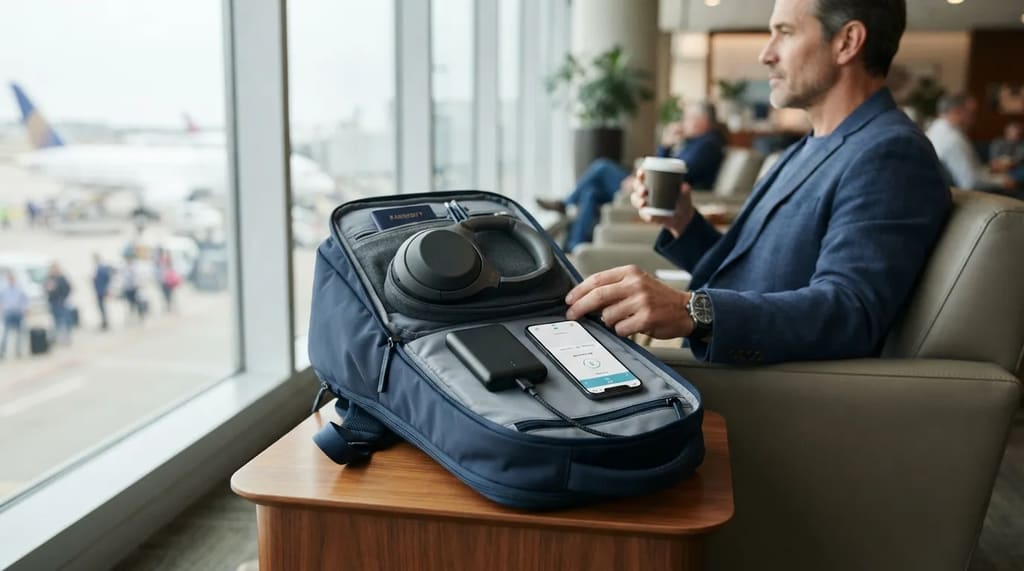
Headphones top many frequent flyers’ packing lists, followed by charging capability and a mobile connection. A travel adapter and a power bank also appear on the list of items recommended for lounge time.
Lounges generally have outlets within reach. A power bank still lets you take the quiet corner instead of whichever seat sits beside the wall.
Check your gear before you head to the airport. A cable or adapter that fails is a poor thing to discover once you’re already seated.
Charging gear covers the battery, but the signal is a separate matter, and lounge Wi-Fi does not always deliver it.
#16 – The Backup Hotspot for When Lounge Wi-Fi Fails
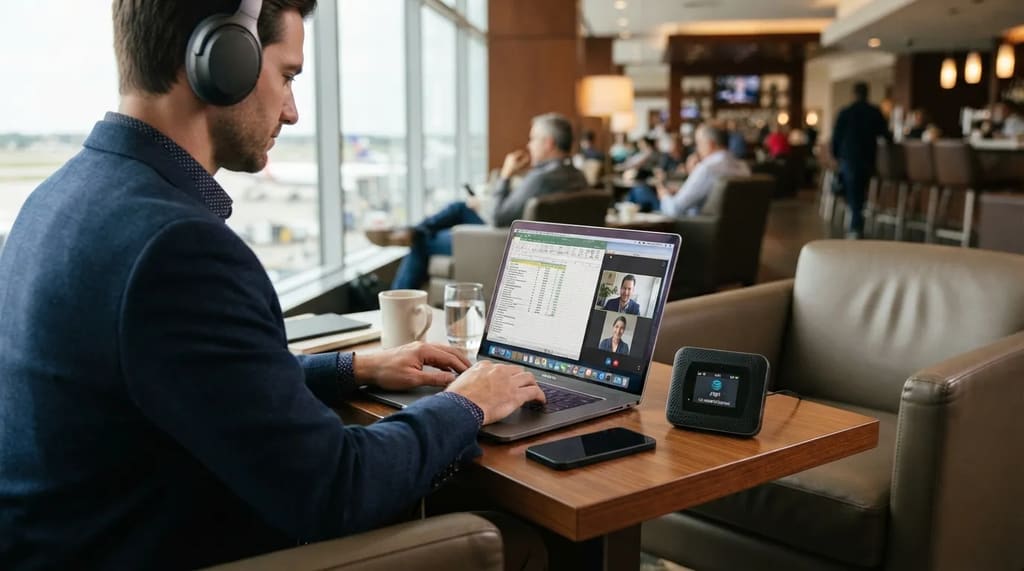
Lounges typically offer good Wi-Fi for remote work, but quality can vary. Busy, small or poorly run lounges are the usual exceptions.
Frequent flyers recommend a backup connection, such as a mobile or SIM-based hot spot, in case the Wi-Fi isn’t good. That matters most before a video call or a banking session, when a dropped connection costs you something.
Worth Knowing
- Wi-Fi quality is least reliable in busy, small or poorly run lounges.
- A mobile or SIM-based hotspot is the standard backup.
- A VPN is also on the recommended list for working in a lounge.
- Confirm that your phone plan allows hotspot use before you travel.
A hotspot is a cheap fix, but only if you set it up before you need it.
#15 – The Phone Call They Take Somewhere Else
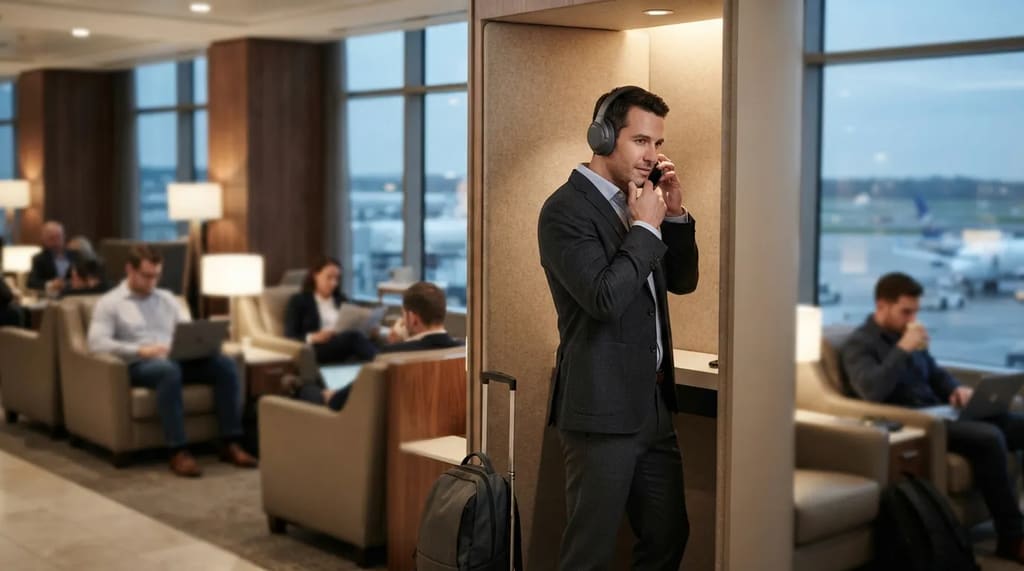
Lounges are designed as calm places to relax or work, and quiet conversation and headphones are basic courtesy. A long speakerphone call is the fastest way to break that.
A lounge is a shared reset zone rather than a private office. If you must call, keep it short and wear headphones, and for anything longer, find another spot.
Noise is the easy part of sharing a room, and the seats themselves are where crowding shows up next.
#14 – Where the Bag and Coat Go
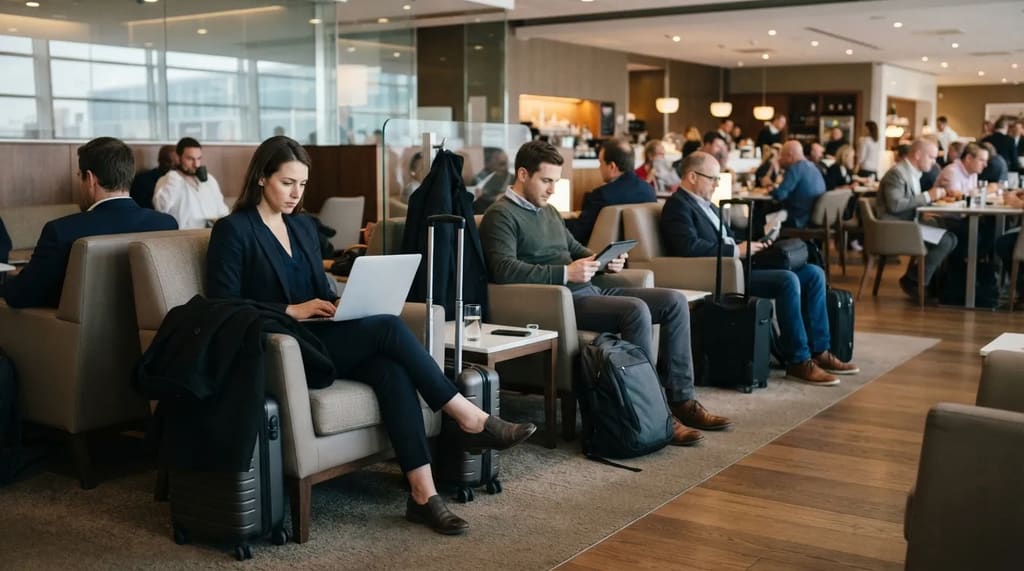
When the lounge is busy, take one seat per person. Keep bags under the chair or beside your legs, and put your coat on your own chair rather than across a sofa.
Feet stay on the floor and off the tables. If the lounge is self-service, clear your area before you leave, which takes less than a minute.
Capacity limits can leave even eligible travelers waiting or turned away. A bag on an empty chair in a full lounge costs another traveler a seat.
The buffet is the other shared resource in the room, and it comes with its own manners.
#13 – Taking Only What They’ll Actually Eat

Lounge food is usually a buffet with hot and cold options, plus beer, wine and basic spirits. Going back for seconds is fine, but building a takeout bag from the buffet is not.
It’s easy to go overboard, and a little restraint is the courtesy.
My view is that the buffet is worth using fully for a meal. Airport meals add up, so a sit-down plate in the lounge is a real saving without carrying anything out.
#12 – Their Own Eye on the Departure Time
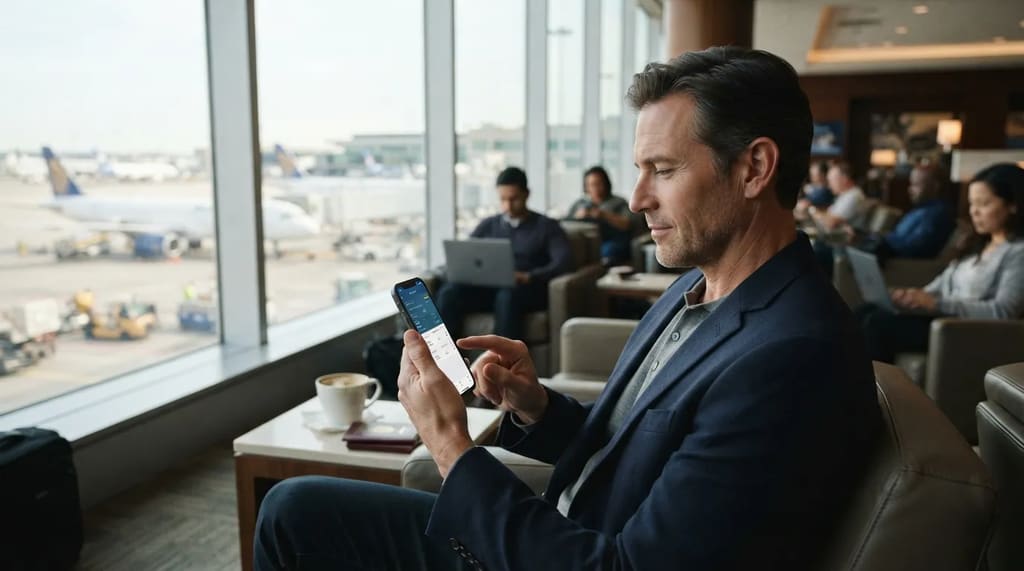
Many lounges don’t call flights, so you can’t count on an announcement. Keep your airline app open and watch for gate changes yourself.
Fast Facts
- Many lounges make no flight announcements at all.
- Your airline app is the dependable source for gate changes.
- The walk from lounge to gate can be long, depending on the terminal.
- Boarding can close while you’re still finishing a coffee.
The best lounge guests are gone before boarding closes. Leave early enough to cover the walk.
Getting out on time is one task. Getting in has its own paperwork at the desk.
#11 – Papers Ready Before They Reach the Desk
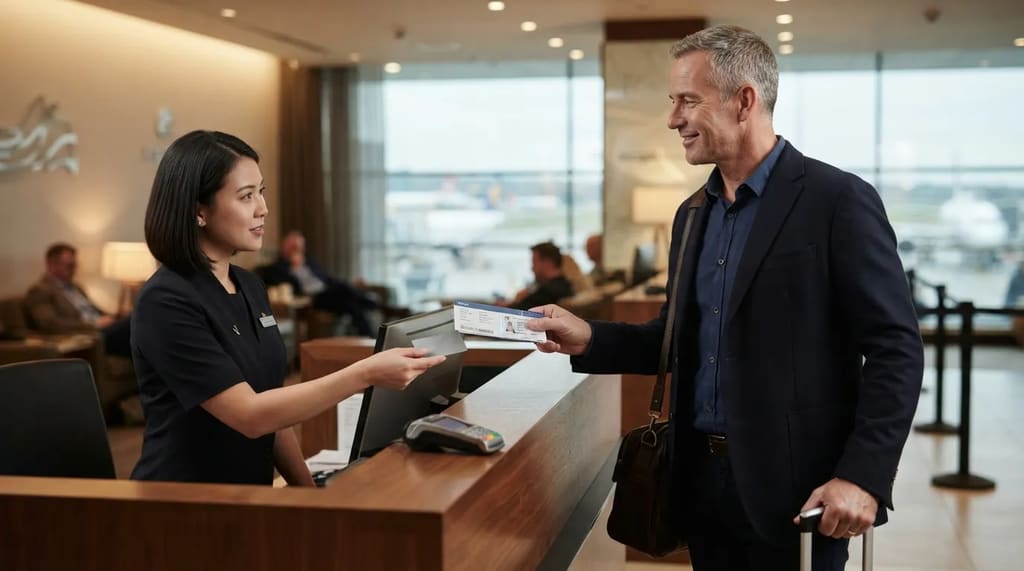
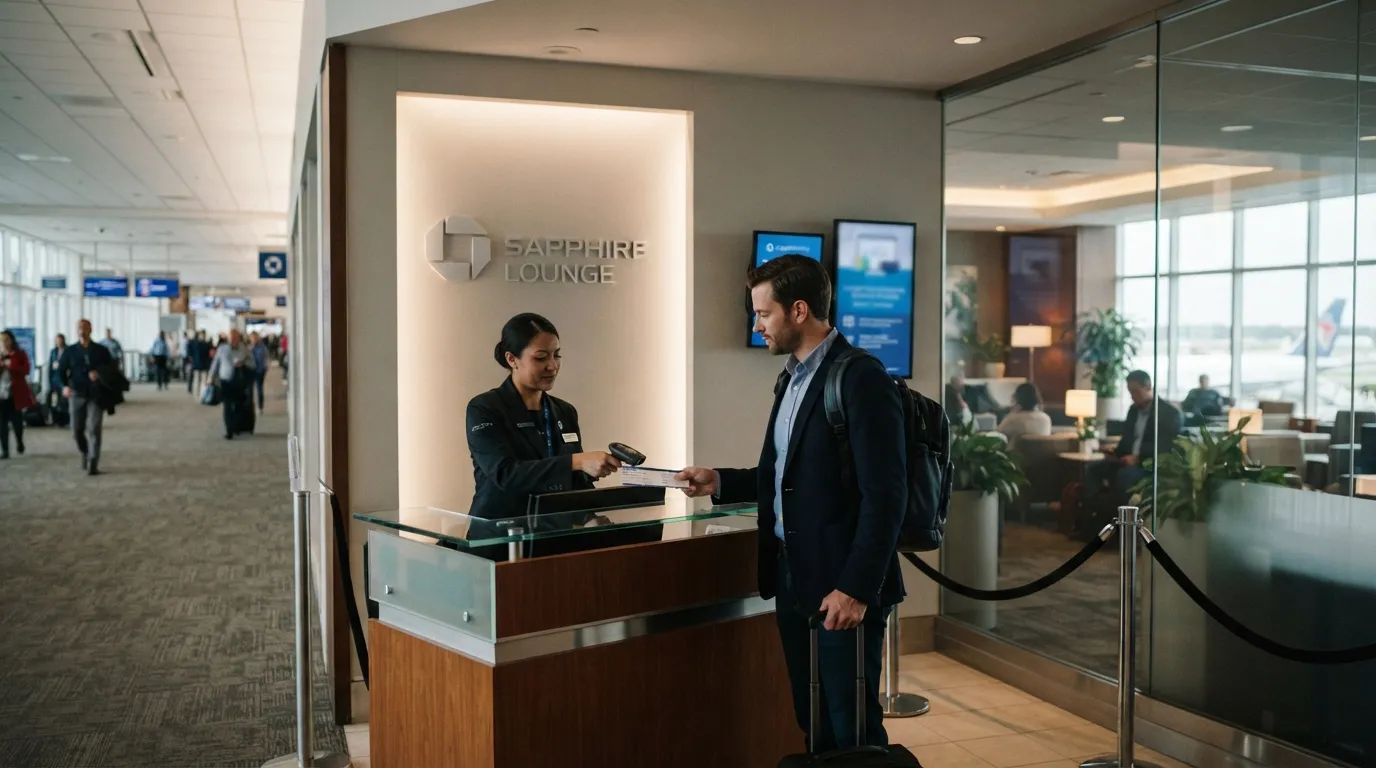
Have your boarding pass, card, membership and guest details ready at the entrance. Lounge agents are often managing waitlists, so digging through apps at the desk holds up the line.
You’ll typically need a valid boarding pass for same-day travel. Escape Lounges, which Amex Platinum cardholders can use, ask for the card, a government-issued ID and a confirmed same-day boarding pass.
#10 – Asking the Desk About Showers and Extras
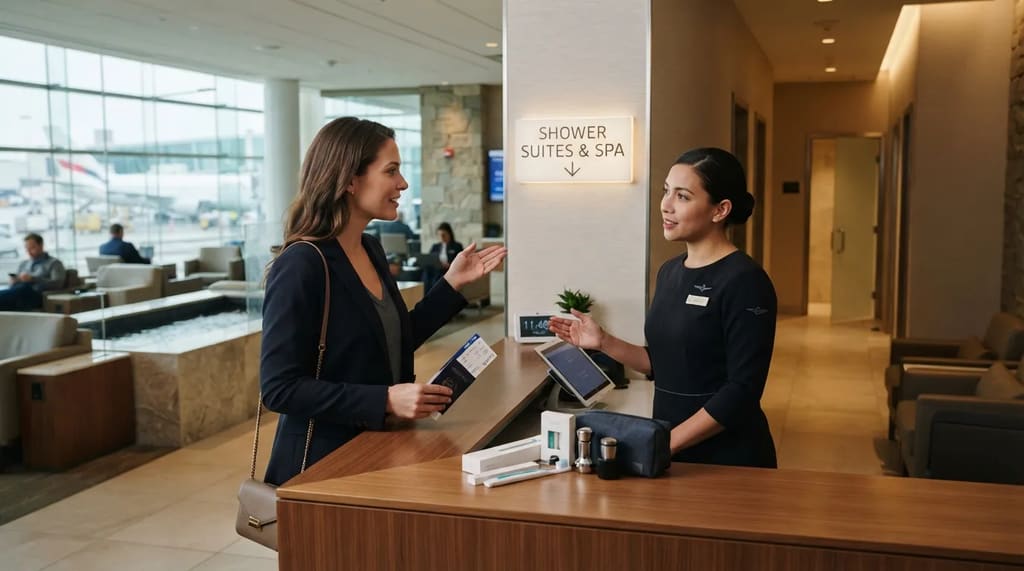
When you enter, ask the lounge agent whether shower suites are available. Some more luxurious lounges also offer spa services or nap rooms.
At the United Polaris Lounge in San Francisco, and at other United locations, you can ask for a dental kit, a shaving set and other amenities. That helps after a long flight, which is when these rooms get the most use.
A shower only counts if you can reach the lounge airside. Also check whether showers are included with the day pass you bought.
Showers and spa slots run on the clock, and so does the whole visit, which has a window at each end.
#9 – Knowing the Three-Hour Door
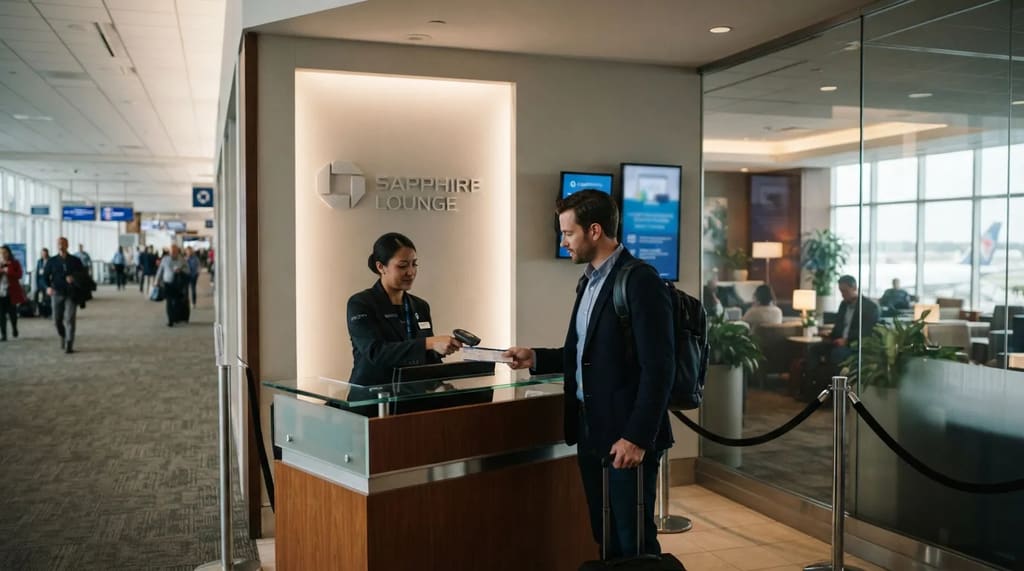
Chase Sapphire Lounges and Amex Centurion Lounges admit cardholders only within three hours of scheduled departure.2 Staff scan your boarding pass at the door, so if you arrive too early you wait outside until the clock crosses the line.
That means an early airport arrival does not turn into extra lounge time. If your flight is delayed, staff typically use discretion to let you stay longer, provided the lounge isn’t at peak capacity.
Arriving inside the window can still land you in a crowded lounge, and that is what a waitlist is for.
#8 – Joining the Digital Waitlist Before They Get There
Even with a qualifying card, capacity limits can leave you waiting or turned away. Restrictions vary by property and can affect access during peak times.
Travel + Leisure quotes a lounge-access expert who suggests joining the waitlist once you arrive at the airport or while you wait to check in. That puts your name in line while you do something you’d have to do anyway.
My advice is to join as soon as you arrive. It costs nothing, and you can cancel if you don’t need it.
#7 – Using the Longer Layover Window
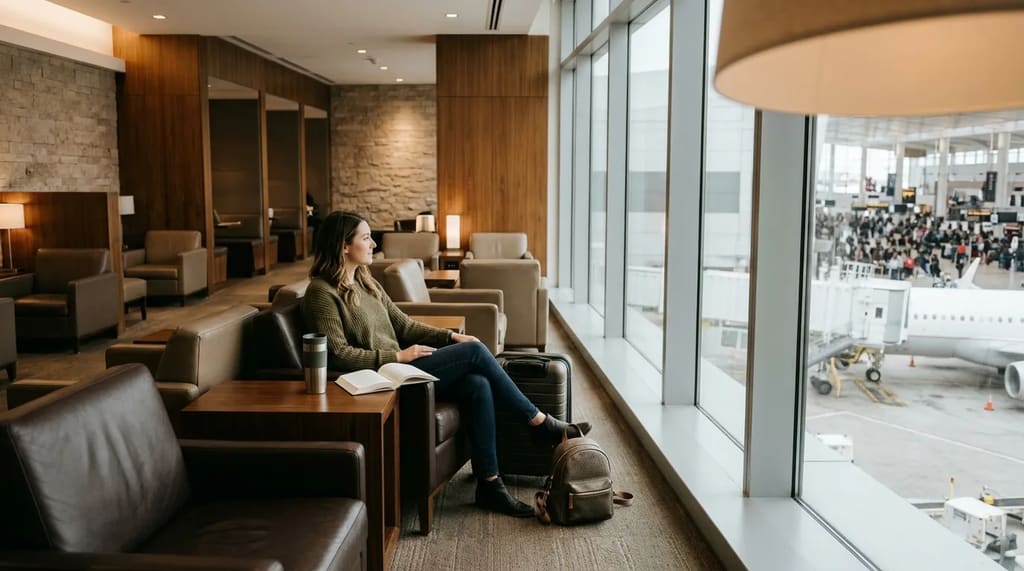
On a connecting itinerary, you can enter a Chase Sapphire Lounge up to five hours before departure at your connecting airport. That five-hour window took effect on August 15, 2026.2 3
On a long layover, that can put lounge time at the start of the wait instead of only the last three hours.
Those windows apply to people who qualify, and a premium ticket alone does not always put you in that group.
#6 – Never Assuming a Premium Seat Opens the Door
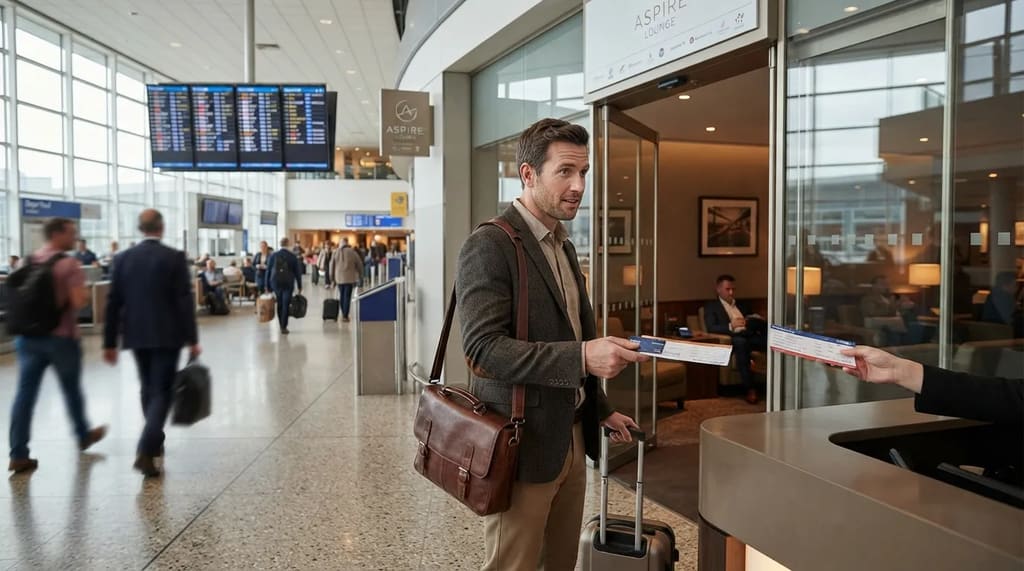
One of the biggest misconceptions is that a premium ticket guarantees lounge access, and it doesn’t always. A first-class seat on a domestic itinerary is the usual example.
Complimentary lounge access with a premium ticket is more common on long-haul international flights than on domestic or short-haul routes. If you booked a domestic first-class seat expecting a lounge, check the airline’s rules before you leave home.
Quick Compare
- Domestic first-class ticket: does not always include lounge access.
- Long-haul international premium ticket: complimentary access is more common.
- Alliance frequent flyer status: access follows your status, not the cabin you’re flying in.
So two passengers on the same flight can have different access.
What the ticket doesn’t give, airline status sometimes does, though usually only at the top tiers.
#5 – Showing Alliance Status at the Door
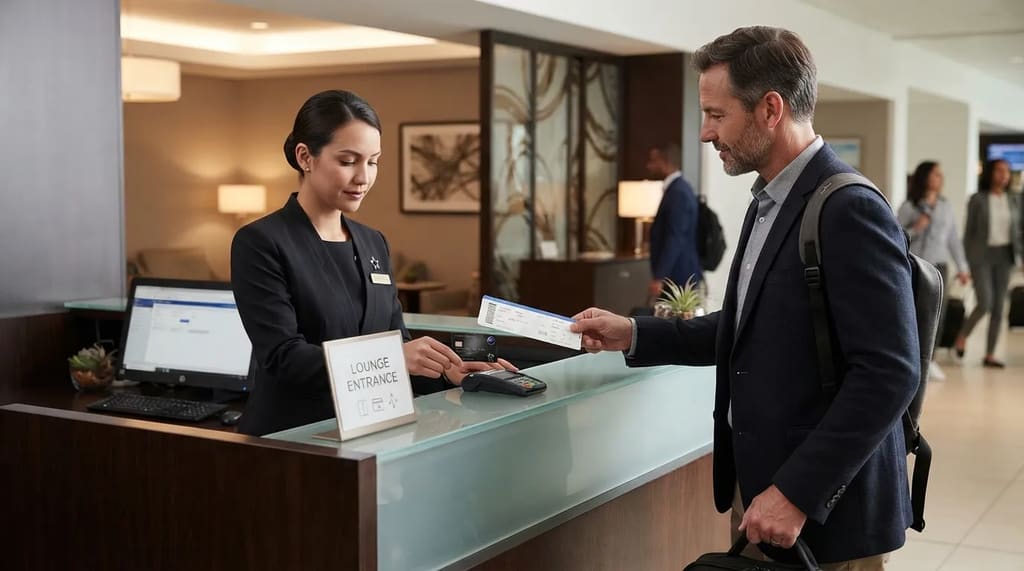
Identify which alliance your frequent flyer program belongs to; your account page will say. At the lounge, present your boarding pass and your frequent flyer card or number.
Make sure that number is attached to your booking, because staff check both.
Complimentary access generally needs the top tier, such as United 1K, Delta Diamond or American Executive Platinum. Mid-tier status sometimes allows paid access at a discount, and the rules differ by alliance and by lounge.
Unless you hold a top tier, don’t plan a trip around status alone.
#4 – Choosing a Day Pass Over a Membership
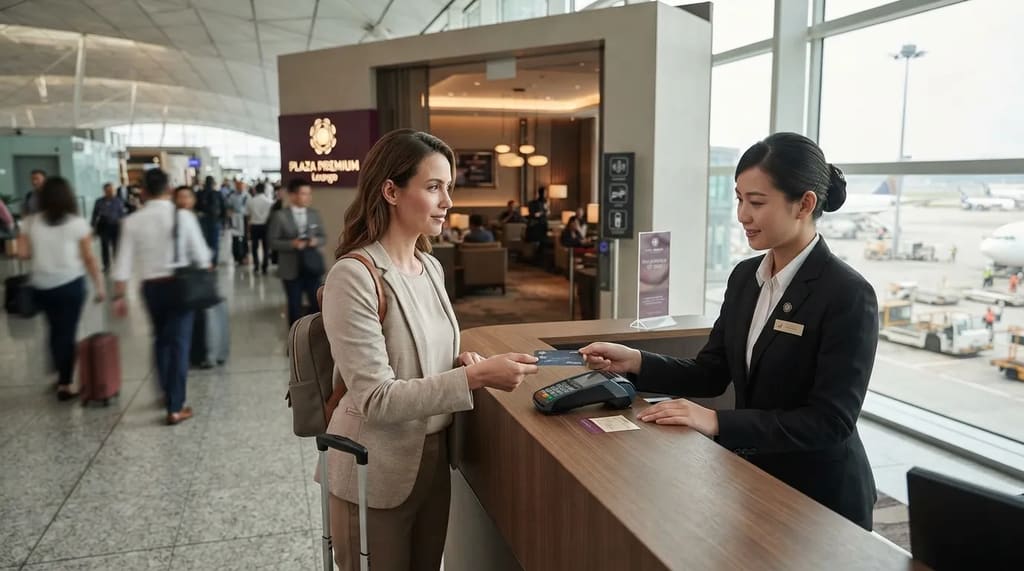
Published day-pass prices generally cluster between $25 and $80 per person. Online purchases are commonly cheaper than walk-up admission.
If you fly twice a year, a $50 Plaza Premium day pass beats a $395 to $895 annual card fee. For two to four economy trips a year, a Priority Pass membership is unlikely to beat paying for day passes selectively.
My view is that an occasional flyer shouldn’t buy a premium card mainly for lounges. The arithmetic only works for someone who flies often.
A day pass is a one-time purchase, while a card needs setup first, and that is where some cardholders stumble.
#3 – Activating the Card Before They Need It
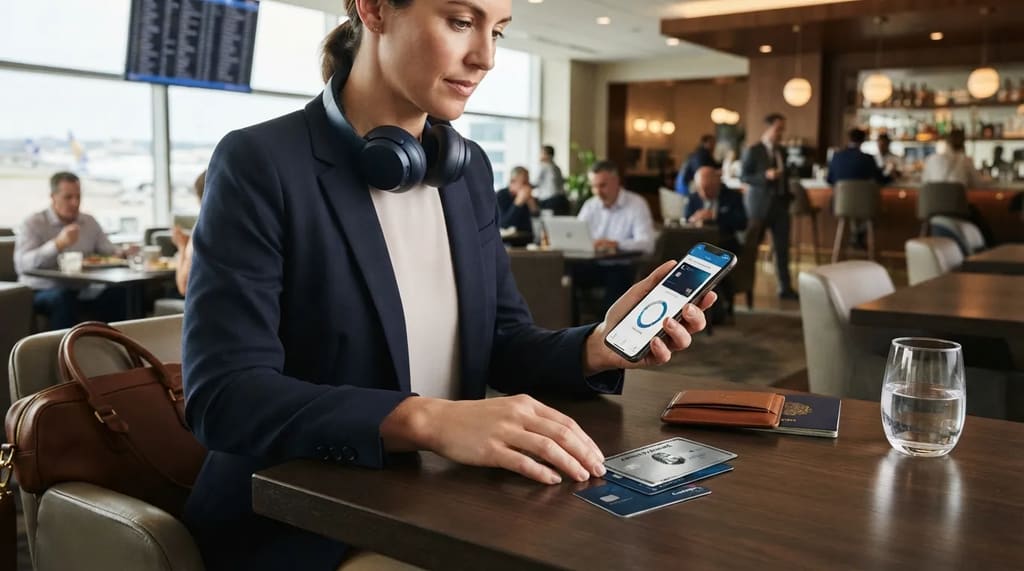
Amex Platinum cardholders must enroll in Priority Pass, and a physical card is sent to them. Chase Sapphire Reserve cardholders receive it automatically and can open a digital card in the Chase app.
Related Stories From Travelbinger

Then check which lounges that membership still opens. As of August 15, 2026, Priority Pass memberships from other cards no longer grant access to Chase Sapphire Lounges, and only eligible Chase cardholders are admitted.2 3
An Amex or Capital One cardholder who planned a trip around a Sapphire Lounge needs a different plan.
Activation settles whether the card works, but what it opens at a specific airline’s lounge is narrower.
#2 – Knowing What the Card Does Not Cover

Amex Platinum gets you into Delta Sky Club lounges when you fly a Delta-operated flight or a Delta-marketed flight operated by WestJet, with up to 10 visits per program year.4 5 After the tenth visit, you’re on your own for the rest of the year.
The Chase Sapphire Reserve includes no single airline’s domestic lounge network, so if you fly United or American, it won’t get you into their clubs. A card’s lounge access is a list of specific lounges, so check yours against the airline you fly most.
Even a card with a $500 or higher annual fee doesn’t guarantee entry, because capacity limits can still turn you away.
Those limits apply to the cardholder, and the companion beside you falls under a separate schedule of fees.
#1 – Counting the Guest Fee for the Person Beside Them

A Priority Pass membership bought directly charges $35 per guest at every tier, including the $469 top tier.1 If you always travel with a partner, that is $70 per round trip on top of the membership.
Card policies differ widely, so here is how the main ones stack up.
At a Glance
| Card | Guest rule |
|---|---|
| Capital One Venture X | Priority Pass guest privileges removed Feb. 1, 2026; own lounges charge $45 per adult guest |
| Chase Sapphire Reserve | Two free guests, then $27 for each additional guest |
| Amex Platinum (Centurion) | $50 per adult guest unless you spend $75,000 a year |
Since July 8, 2026, Centurion guests must also be on the same flight as the cardholder.6 7 If you usually travel with someone, count the guest fees before you count the free food.
A lounge visit is settled at the door, by your timing, your status, your card and your guest list. The free food and the quiet chair come after.
So before you count a lounge as a perk, price it for everyone traveling with you and check it against your actual flight. The same card can mean free entry for you and a fee for your companion, and the same lounge can accept your card in June and refuse it in September.
When you last traveled with someone, did a lounge fee or rule change what the two of you did before the flight?
Bonus: The Insider Trick Nobody Tells You
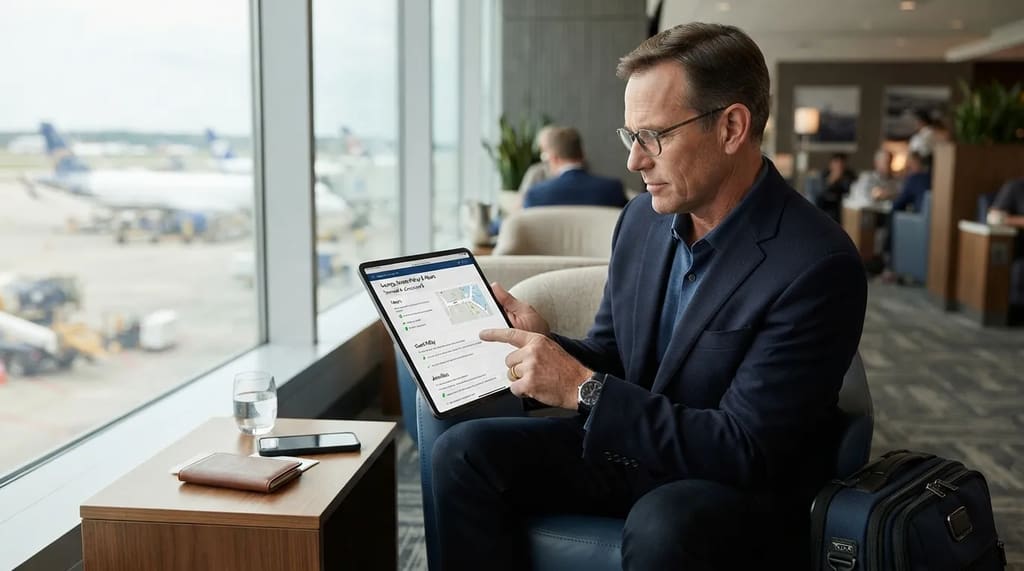
Lounge rules changed several times in 2026, so the guide you read last year may already be wrong. Experienced flyers run a quick Day-Before Door Check instead of trusting memory.
- Open the lounge’s own page for your exact airport and terminal, not a blog post. Confirm the opening hours, the access window before departure, and the current guest fee.
- Match the rules to your itinerary. Check whether your guest must be on the same flight as you, and whether your card or status covers that specific lounge.
- Pick a Plan B. Write down a second lounge or a day-pass option in the same terminal, so a full lounge never leaves you standing in the hallway.
- Screenshot your boarding pass and digital membership card. A weak signal at the door then won’t slow you down.
It takes about two minutes, and it is the difference between walking straight in and arguing at the desk. Do it again if your flight time changes.
- Capital One Venture X Changes: https://onemileatatime.com/news/capital-one-venture-x-lounge-access-changes/
- One Mile at a Time Chase Sapphire: https://onemileatatime.com/news/chase-sapphire-lounges-cut-priority-pass-access/
- Forbes Advisor Sapphire Lounges: https://www.forbes.com/advisor/credit-cards/chase-sapphire-lounges-close-access-to-priority-pass-lmandp5/
- Delta Sky Club Access: https://www.delta.com/us/en/delta-sky-club/access
- Amex Platinum Delta Terms: https://global.americanexpress.com/card-benefits/terms/platinum
- AFAR Centurion Entry Rules: https://www.afar.com/magazine/amex-centurion-to-update-airport-lounge-entry-rules
- One Mile at a Time Centurion: https://onemileatatime.com/news/amex-centurion-lounges-new-access-restrictions/