Shoes-off screening, a ritual since 2006, ended nationwide in July 2025.1 Yet some travelers still glide through while others get stuck repacking, and the difference is a set of small habits no one behind them notices.
A wrong guess costs minutes, a confiscated item or, in one case on this list, $45 and a possible missed flight. Stay for #1, where skipping a ten-second check of a card already in your wallet comes with a price tag.
#17 – They wear slip-ons, even though shoes stay on
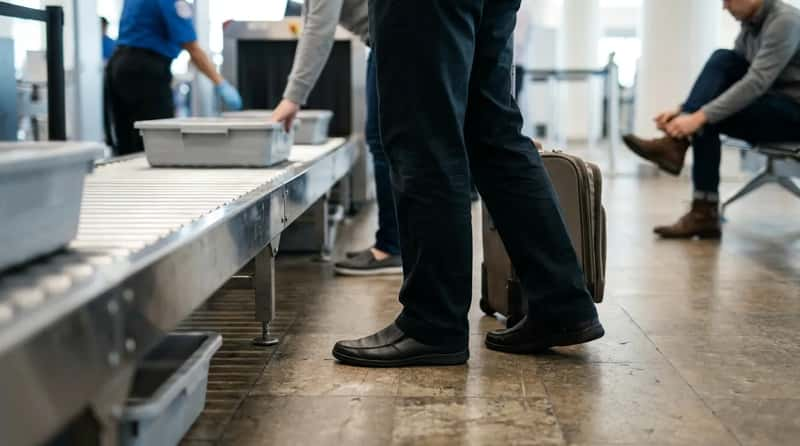
Shoes stay on by default now, but passengers selected for additional screening can still be asked to take them off. It’s a default, not a promise.
That’s why experienced flyers still reach for slip-ons. If an alarm sends you to the extra check, you won’t be perched on a bench lacing up boots.
Shoes stay on by default, not by guarantee.
Before they unload anything, they look up. The sign over the lane can change what stays in the bag.
#16 – They read the sign above the lane before touching their bag
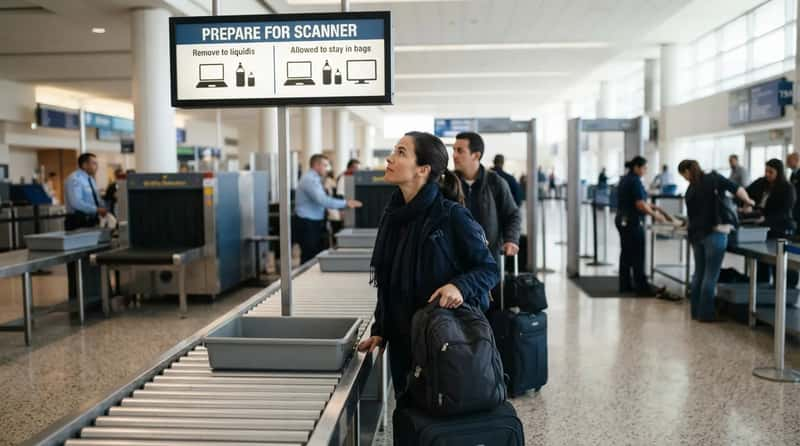
What you take out depends on the scanner in front of you, not on what you did last trip. Newer scanners at many big airports let you leave liquids and laptops inside your bag.
Older lanes still want the quart bag and the laptop out. TSA advises following checkpoint signs and officer instructions rather than relying on a previous trip.
Read the lane signs before you open your bag.
Quick Compare
- Newer scanner lane: liquids and laptops can often stay in the bag.
- Older lane: the quart bag and the laptop come out.
- Either way: the sign and the officer’s instructions win.
One item clears every lane without a fuss, as long as it’s empty. It also saves a purchase on the other side.
#15 – They carry an empty bottle straight through
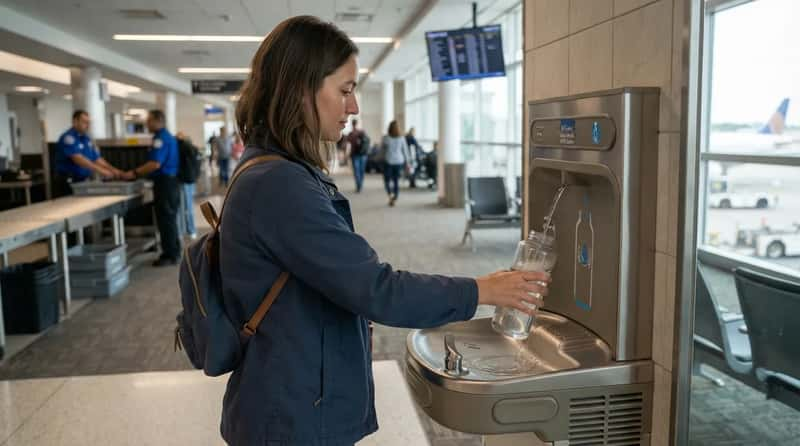
Your own water bottle goes through security, as long as it’s empty. Once you’re past the checkpoint, you fill it at a fountain.
Buying a bottle after security means paying for something already sitting in your tote. Empty it before the belt, fill it after.
Water isn’t the only thing that can stall you. Your clothes can too, and the fix takes one minute of dressing at home.
#14 – They dress for the scanner before they leave home
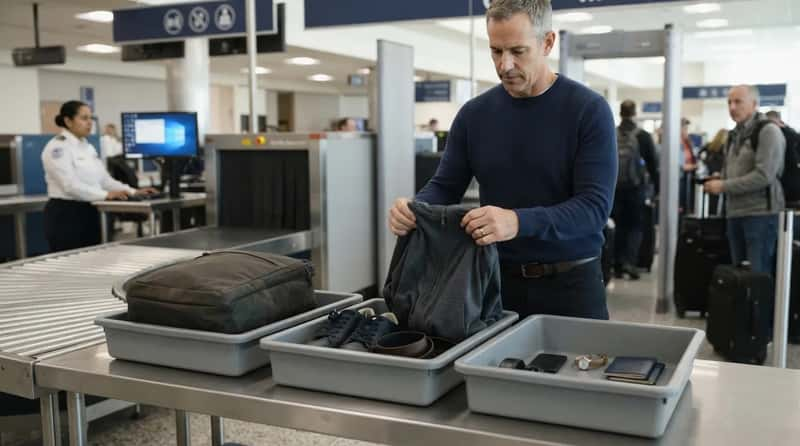
At a standard lane, plan on a few things coming off:
- Belt, jacket, coat or hoodie, and hat.
- Bulky jewelry and metal pieces that can set off scanners.
PreCheck members don’t need to remove shoes, belts or light jackets. If you’re not enrolled, a plain belt and fewer metal accessories shorten your time in front of the machine.
Leave the heavy buckle and bulky jewelry at home.
Once your pockets are clear, the bins need a plan. The order you load them matters more than how fast you move.
#13 – They pack the liquids bag and laptop within one-hand reach
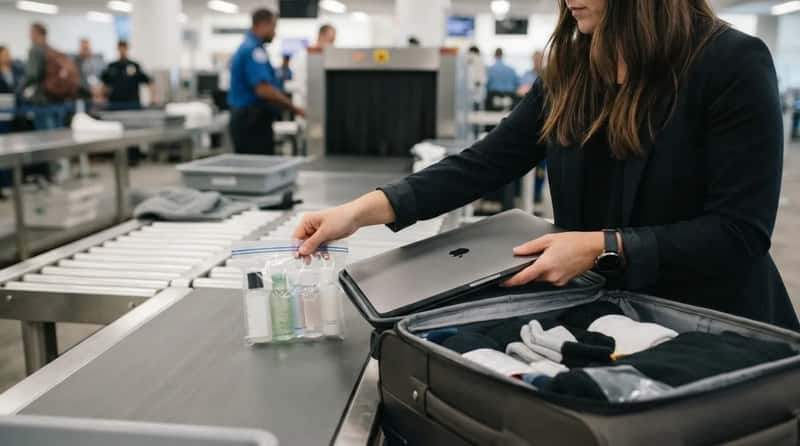
The quart bag lives in an outer pocket, so it comes out in one move. The laptop and power bank ride near the top of the carry-on.
That setup pays off because of #16. If your lane lets liquids stay inside, you’ve lost nothing, and if it doesn’t, you’re not digging through socks.
Keep what the lane might ask for within one hand’s reach.
That quart bag has a rule attached that trips up even tidy packers. It has nothing to do with how full the bottle is.
#12 – They check the container size, not how full it is
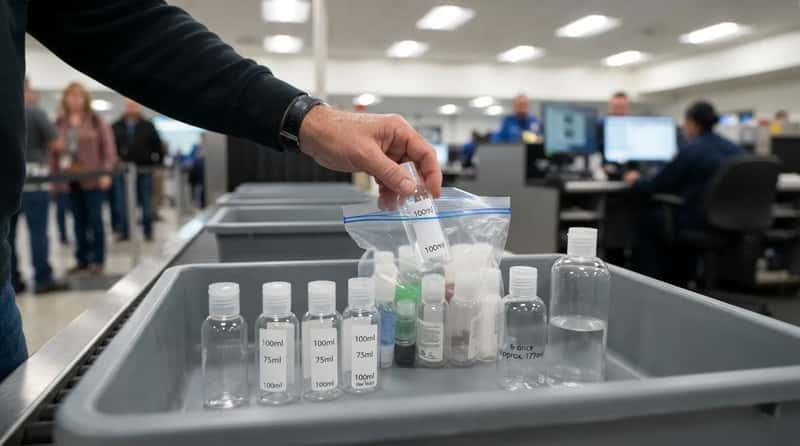
A 6-ounce bottle that is half empty still breaks the rule. The limit applies to the container, not to what’s left inside.2
The 3-1-1 rule still stands: 3.4 ounces (100 ml) per container, one quart-size bag, one bag per passenger. Every container must be 3.4 ounces or smaller.
#11 – They know which foods secretly count as liquids
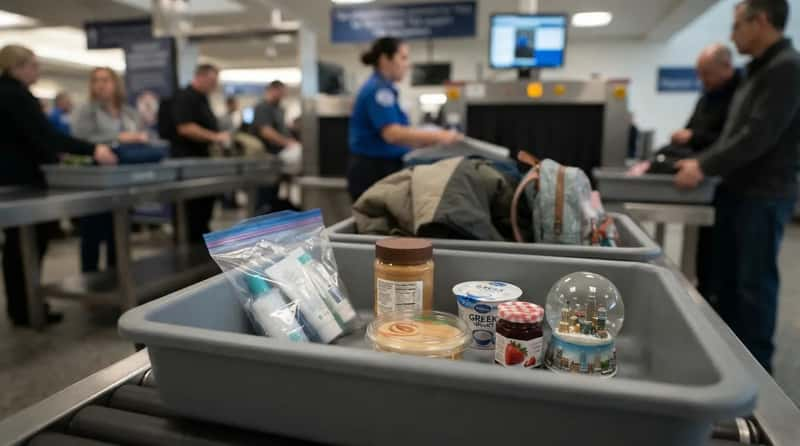
Peanut butter is a liquid as far as the checkpoint is concerned. TSA treats anything spreadable, pourable, pumpable, squeezable or scoopable as a liquid.3
That pulls in hummus, yogurt, jam and creamy cheese. Snow globes land in the same category.
Solid foods pass through without issue. If you can spread, pour or squeeze it, it follows the quart-bag rule.
Worth Knowing
- Spreadable: peanut butter, jam and creamy cheese count as liquids.
- Scoopable: hummus and yogurt follow the same quart-bag rule.
- Solid: sandwiches, granola bars, chips and fruit pass through.
- Surprise entry: snow globes land in the liquid category too.
A different shortcut skips most of this unpacking. It comes with a catch that surprises members.
#10 – They treat PreCheck as a bonus, not a promise
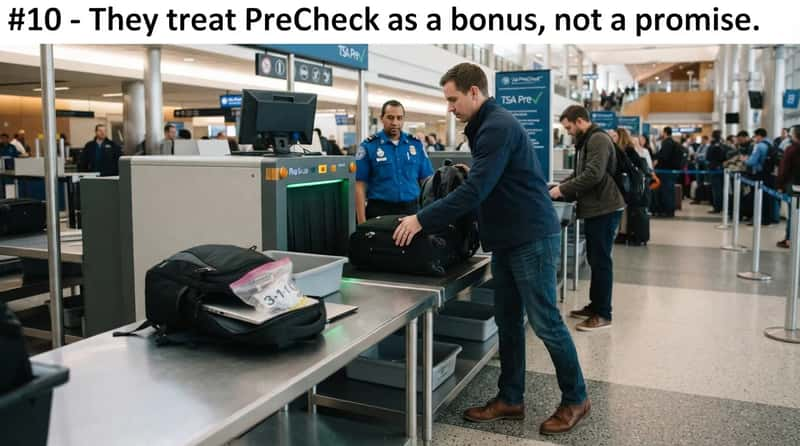
At PreCheck lanes at hundreds of U.S. airports, members keep shoes, belts and light jackets on. Laptops and 3-1-1 liquids stay in their bags, which is a real time saver.
The catch: TSA uses unpredictable security measures, so no traveler is guaranteed the same screening on every trip. Plan your arrival time as if the shortcut might not show up.
PreCheck changes the handling, not the 3.4-ounce limit.
The next item rides in your carry-on by rule. And an airline’s own limit can be stricter than the federal one.
#9 – They keep power banks in the cabin, never the hold
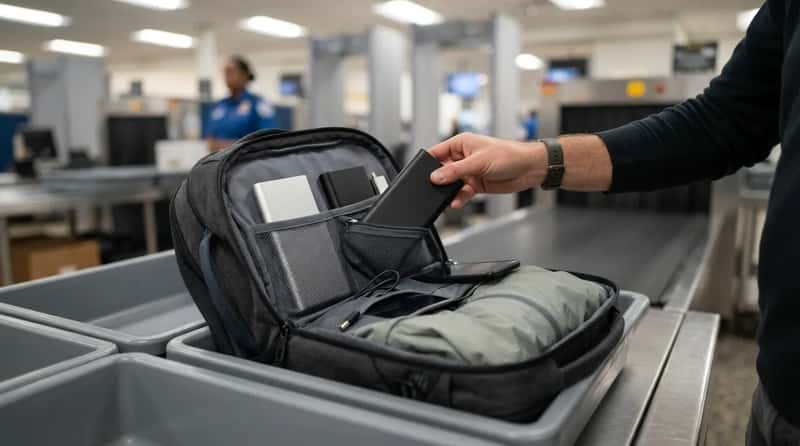
Spare lithium batteries, including power banks and phone chargers, are prohibited in checked luggage. If your carry-on gets checked at the gate, pull them out and keep them with you.
The FAA limits each lithium-ion battery to 100 watt hours, with up to two larger spares of 101 to 160 watt hours allowed with airline approval. Many airlines set stricter limits on how many power banks each passenger can carry.4
Check the watt-hour rating, not the milliamp-hours.
Batteries come with rules. Pills are simpler, though plenty of travelers dig up paperwork nobody asks for.
#8 – They carry pills without a doctor’s note
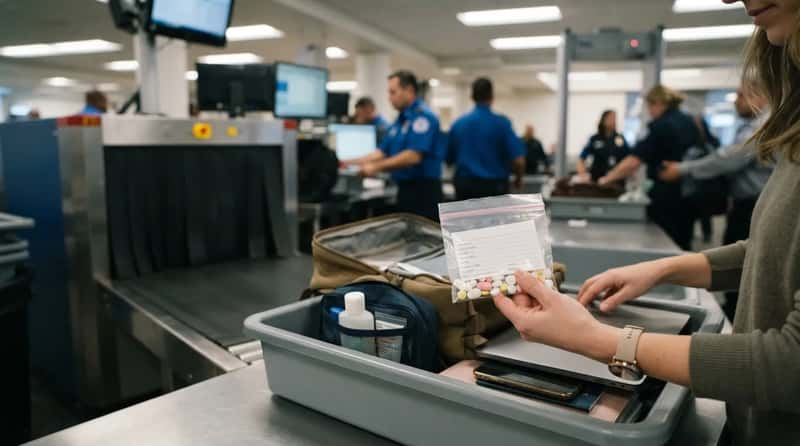
You don’t need a prescription or doctor’s note to carry medication through security. Pills go through screening, and original bottles aren’t required, though clear labeling helps.
Keep all medications in your carry-on so a lost suitcase doesn’t leave you without them. Pills belong in your carry-on, with a few spare days’ supply.
Liquid medicine is where the 3.4-ounce rule bends. It only bends if you say something before your bag moves.
#7 – They declare liquid medicine before the bag moves
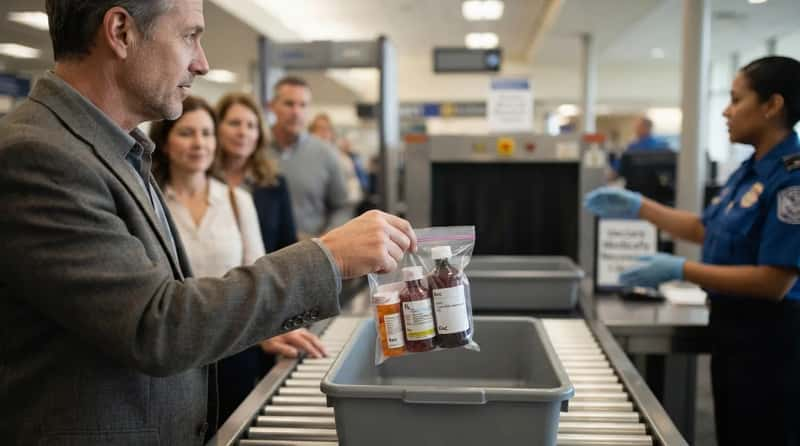
Medically necessary liquids, gels and aerosols can go in your carry-on in amounts over 3.4 ounces. You take them out of the bag and tell the officer for separate screening.5
Say it at the start of the screening process. Officers may test the liquid, open containers, or move pills to another container for testing.
Tossing a needed prescription at the bin to save time is the wrong trade. Take it out and declare it at the start.
A device inside your body changes which conversation you should have first.
#6 – They tell the officer about an internal device first
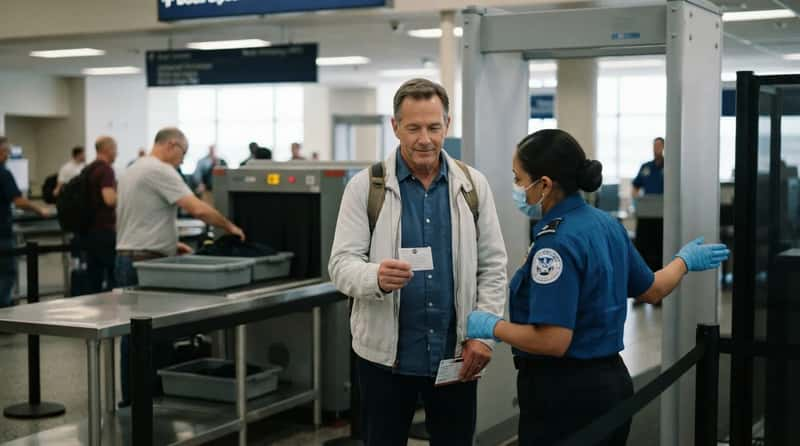
TSA advises travelers with internal devices, such as pacemakers, to talk with their physician before flying. It also advises telling the officer before screening begins.
Disclose the device before you reach the machine, not after it alarms. Speak up before you step toward the equipment.
Devices worn on the outside raise their own questions. The answer includes a request many travelers don’t know they can make.
#5 – They know they can ask for private screening
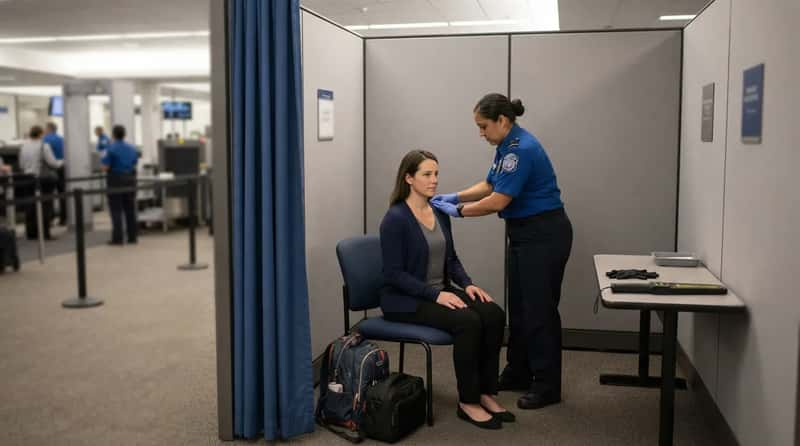
You may request private screening at any time, and pat-downs are done by an officer of the same gender. If you need a pat-down, you can ask to sit down for it.
You won’t be required to remove medical devices attached to your body, though separate medical equipment and supplies get their own screening. Private screening and a chair are yours to request.
At a Glance
- Private screening can be requested at any time.
- Pat-downs are done by an officer of the same gender.
- You can ask to sit down for a pat-down.
- Medical devices attached to your body don’t have to come off.
#4 – They know the senior break doesn’t start at 65
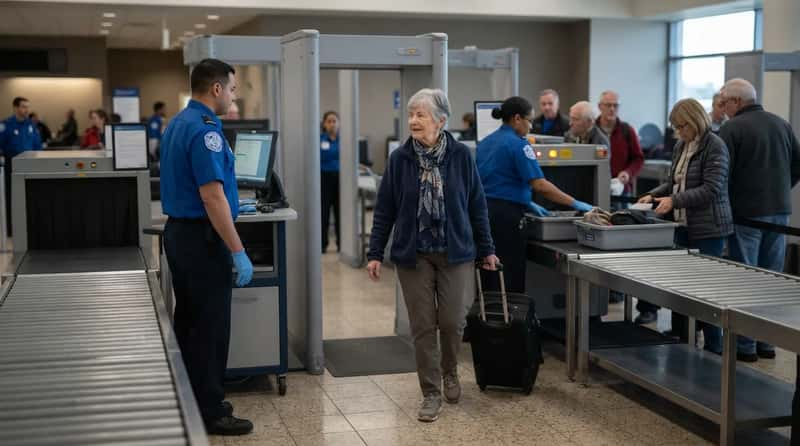
TSA’s guidance says passengers 75 and older can receive some form of expedited screening.6 Not 65. Not 70.
Even then, it isn’t a free pass. TSA’s own page says jacket removal is required for Advanced Imaging Technology screening6, and the word “may” matters because officers keep discretion.
Expedited screening is for travelers 75 and older, and it isn’t guaranteed.
Travelers who can’t stand for the scanner follow a separate path. It covers the equipment they travel with, too.
#3 – They tell the officer up front if they can’t stand for the scanner
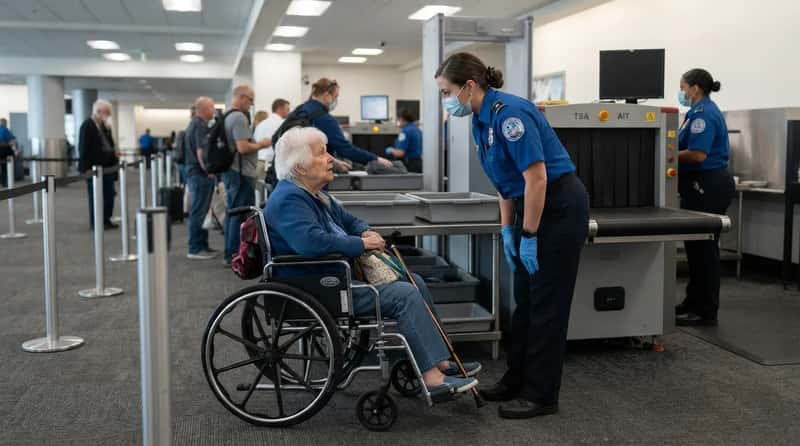
Walkers, canes, crutches and other mobility aids will be X-rayed or hand-inspected. You don’t leave them behind at the belt.
If a medical condition keeps you from standing or walking at the checkpoint, you won’t have to remove your shoes, though you’ll be manually inspected. At 75 or older in a wheelchair or scooter, you may remain seated while the officer tests your hands for traces of explosives.
If you can’t stand for the scanner, tell the officer up front.
Everything so far affects your minutes. The last two affect whether you get to the belt at all, starting with the card in your wallet.
#2 – They look for the star on their license
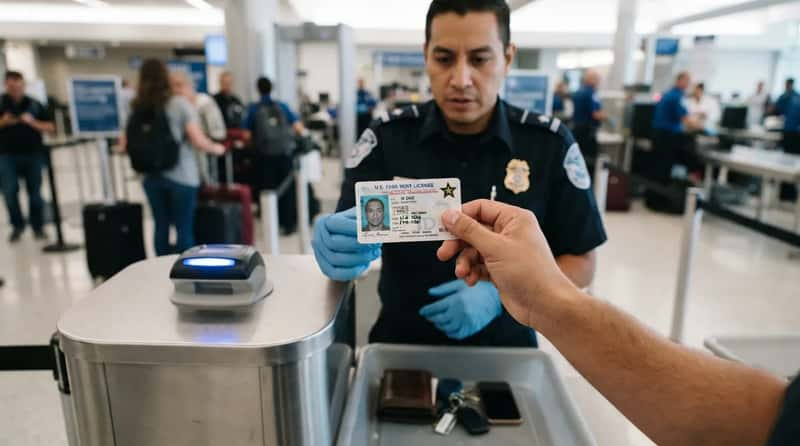
REAL ID-compliant cards carry a star marking on the upper portion of the card. No star, no easy pass through the checkpoint.
A passport works instead. So do a passport card, DHS trusted traveler cards such as Global Entry, NEXUS, SENTRI and FAST, and a state-issued Enhanced Driver’s License.7
If you’re unsure whether your ID is compliant, check with your state’s DMV. Look for the star, or pack a passport.
Skip that check and the checkpoint offers a way through, for a price. The price is the smaller part of the problem.
#1 – The $45 fee they never pay
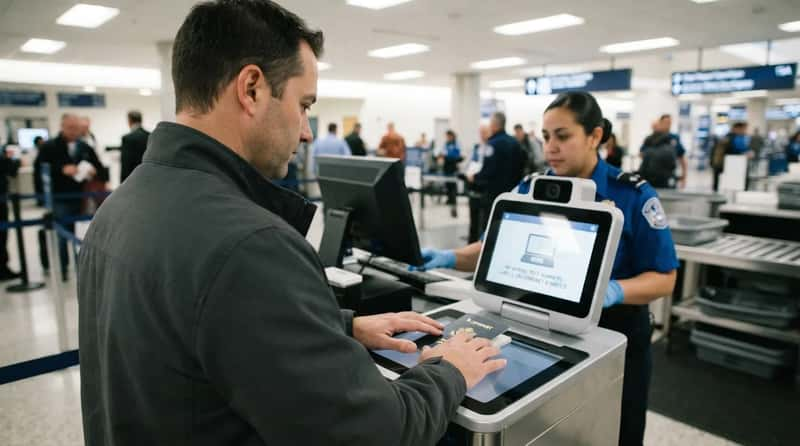
Since February 1, 2026, TSA has referred passengers without an acceptable ID to a $45 identity-verification option called ConfirmID. TSA will attempt to verify your identity, though there is no guarantee it can.7 8
The fee is nonrefundable even if the attempt fails. Every adult in a party without a REAL ID pays individually, while children under 18 remain exempt from domestic ID requirements.
Fast Facts
- Price: $45 per adult, paid individually.
- Refunds: none, even if verification fails.
- Guarantee: none that TSA can confirm your identity.
- Kids: children under 18 are exempt from domestic ID requirements.
For a couple, that’s $90 for a gamble. You must pay before you arrive at the security checkpoint or at the airport, and arriving without paying can mean delays that cost you the flight.
A DMV afternoon costs less than $45 a head and removes the gamble. $45 per adult, nonrefundable, and no promise TSA can verify you.
Nearly everything on this list takes seconds at home and costs far more at the belt. A star check, a quart bag in an outer pocket and a pill list cost nothing, while a missed flight costs plenty.
The people gliding past you aren’t faster. They finished packing before they left the house.
What’s the one thing you now pack, wear or check before leaving for the airport that you didn’t do on your first few trips?
- ABC News Shoes-Off Ends: https://abcnews.com/Politics/homeland-security-ends-mandatory-shoe-removal-airport-screening/story?id=123581156
- 3-1-1 Container Rule: https://suiteandsand.com/guides/carry-on-liquids-rules
- Spreadable Foods Liquid Rule: https://trecklist.com/guides/tsa-travel-liquid-rules/
- FAA PackSafe Lithium Batteries: https://www.faa.gov/hazmat/packsafe/lithium-batteries
- Liquid Medication Declaration Rules: https://pilotpedia.com/bring-medication-on-plane/
- TSA Passengers 75 and Older: https://www.tsa.gov/travel/tsa-cares/screening-passengers-75-and-older
- DTMO ConfirmID Notice: https://www.travel.dod.mil/About/News/Article/Article/4393216/travelers-without-real-id-could-pay-45-fee-for-tsas-confirmid-beginning-februar/
- TSA ConfirmID Rollout: https://www.tsa.gov/news/press/releases/2026/02/05/tsa-successfully-rolls-out-tsa-confirmid-0