The cheapest mistake on this list costs $45. The most expensive one can bring a civil penalty of up to $12,210.
Between those two bills sit 23 other mistakes, from a half-empty shampoo bottle to a power bank in the wrong bag. The smallest bill and the largest trace back to the same habit, and #1 spells it out.
First comes medicine, which many travelers handle in a way the rules never asked for.
#25 – Pouring Medicine Into Tiny Travel Bottles
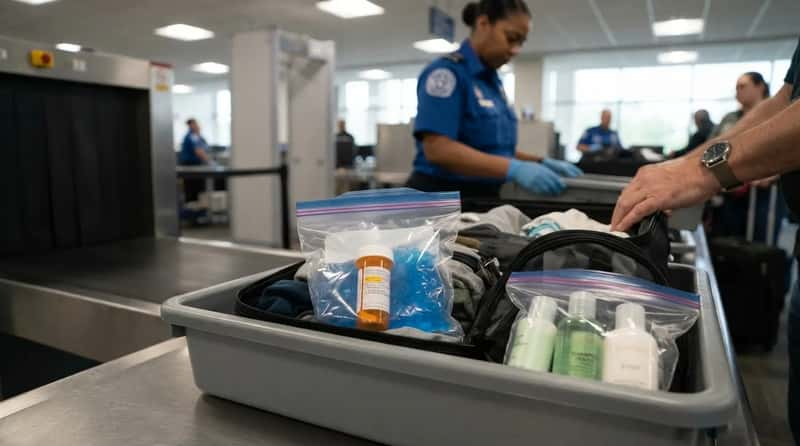
Medically necessary liquids, gels and aerosols are exempt from the 3.4-ounce limit. That includes liquid medications, baby formula, breast milk and the ice packs that keep them cool.
You just tell the officer about them at the start of screening. Leave a prescription liquid in its labeled bottle, because pouring it into a tiny container solves a problem you don’t have.
Ordinary toiletries do follow a size rule, and it is judged by the bottle, not by what is left in it.
#24 – A Half-Empty Bottle of Full-Size Shampoo
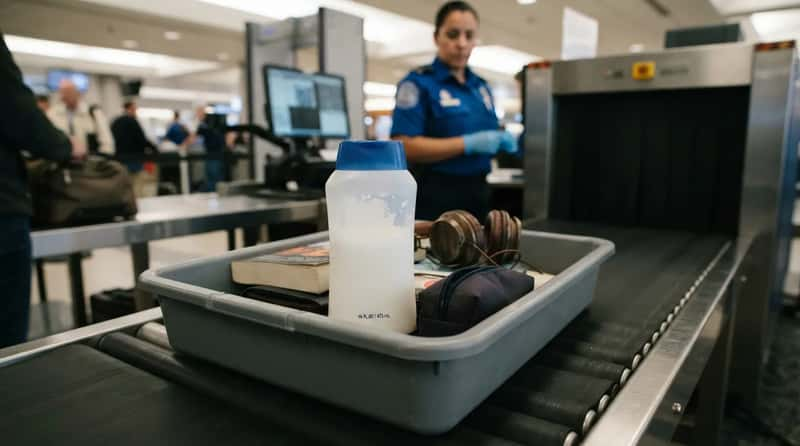
TSA measures the container, not the contents, so a half-empty 6 oz bottle of shampoo still gets confiscated.1 The limit is 3.4 ounces (100 milliliters) per container.
Every container must fit inside one clear quart-sized bag, and each passenger gets one bag. The 3-1-1 rule applies only to carry-ons, so a full-size bottle can ride in checked luggage.
If you travel carry-on only, small refillable bottles beat losing a favorite product at the bin.
Fast Facts
- The 3 in 3-1-1: containers of 3.4 ounces (100 ml) or less
- The first 1: a single clear quart-sized bag
- The second 1: one bag per passenger
- Checked luggage is not subject to the rule
Shampoo is the obvious case. The harder ones are things you would never call a liquid.
#23 – Toothpaste, Peanut Butter and Other “Solids”
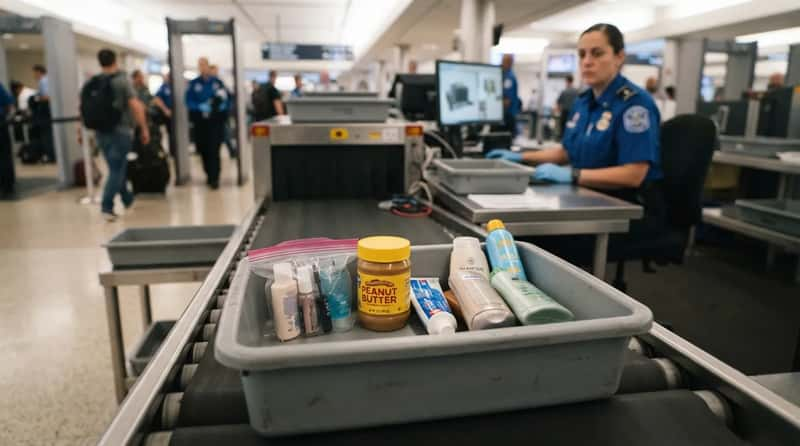
Toothpaste, mascara, gel deodorant, spray sunscreen, peanut butter and hummus all get caught by the liquids rule. They share that one quart bag with your shampoo.
Spreadable or pourable foods like yogurt, soup, jam and salsa must be in 3.4 oz containers at security. A jar of homemade jam for the grandchildren belongs in the checked bag, wrapped well.
#22 – A Full Water Bottle at the Checkpoint
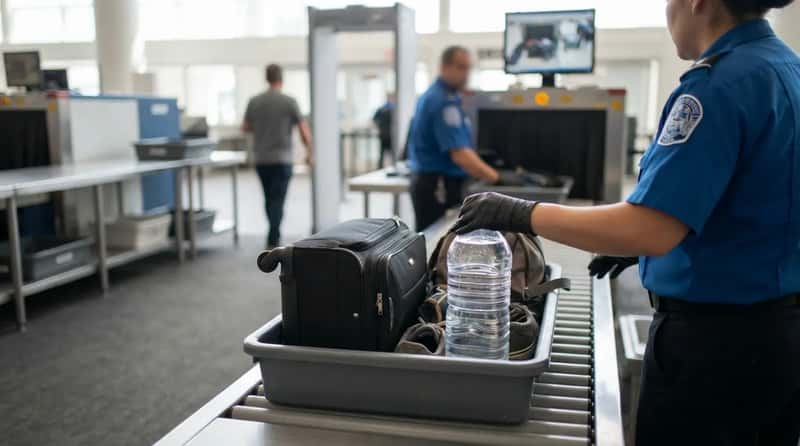
Water is a liquid like any other, so a full bottle over 3.4 ounces gets stopped. Coffee, juice and soda go for the same reason.
Finish the drink or pour it out before the line, and carry the empty bottle through. If your terminal has a fountain or filling station, refill on the other side.
A wrapped box creates a similar problem, because an officer can’t see through the paper.
#21 – Wrapped Gifts in the Carry-On
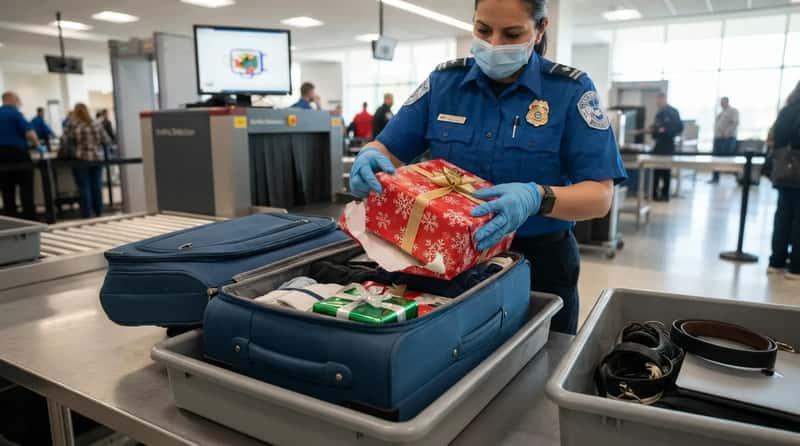
When an X-ray image can’t be identified, an officer may need to open the item. A wrapped present is a classic candidate, and you end up with torn paper at the bin.
Wrap after you land, or ship the gifts ahead. A gift bag with loose tissue costs you nothing if it gets opened.
#20 – Snow Globes and Souvenir Jars
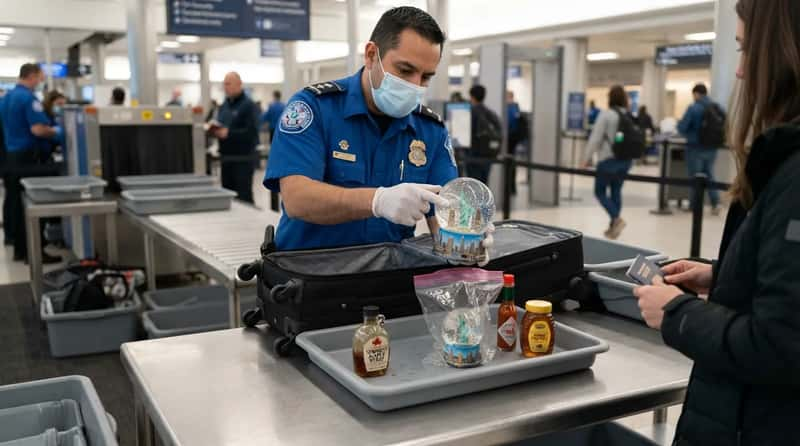
A snow globe is a sealed container of liquid, so the liquids limit applies. A small one may pass if it fits the 3.4-ounce limit and the quart bag.
The same goes for maple syrup, honey and sauces bought on a trip. Anything larger needs padding and a spot in the checked bag, since a cracked jar will wet everything around it.
Duty-free bottles follow a rule of their own, and it changes the moment your trip includes a connection.
#19 – Duty-Free Liquor on a Connecting Flight
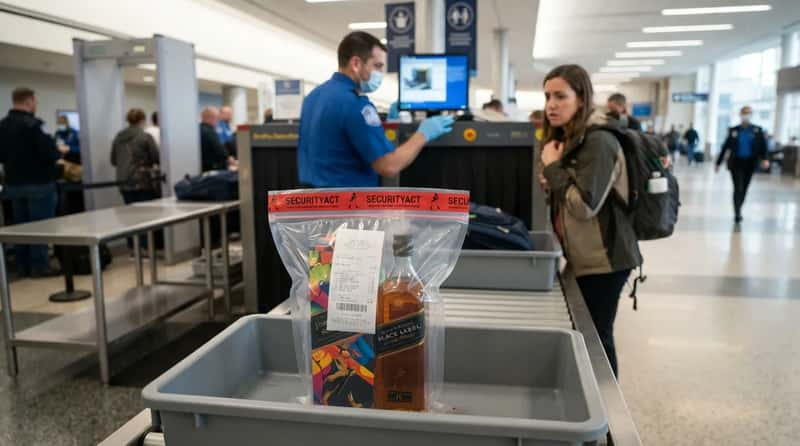
Duty-free purchases in sealed bags are an exception to the liquids limit. The trouble starts with a connection.
If you pass through another security checkpoint, duty-free liquids bought internationally may be confiscated if they exceed 3.4 oz and aren’t in sealed, tamper-evident packaging. Keep the bottle sealed in its bag, with the receipt, until you reach your final stop.
Some bottles get packed on a hopeful rumor that the liquids limit is gone. It is not.
#18 – Betting the Liquids Rule Has Been Lifted
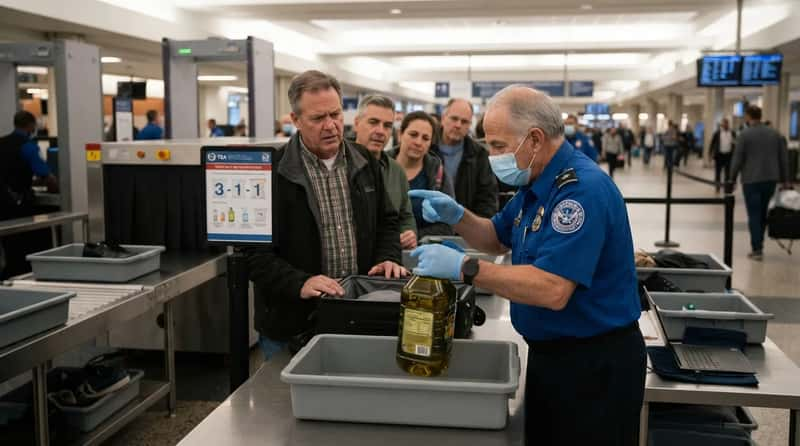
Despite what some Americans assume, the TSA liquids limit remains unchanged. Some airports in the UK and Europe now allow up to two liters, but the US hasn’t lifted the 3-1-1 restriction because advanced scanners haven’t reached nationwide deployment.
TSA doesn’t publish which checkpoints allow larger liquids. Until your own checkpoint tells you otherwise, pack to 3.4 ounces.
The cost of guessing wrong is a lost bottle and a slower line.
Even in a lane with the newer scanners, the size limit is a separate matter from how you load the bin.
#17 – Assuming PreCheck Lifts the Size Limit
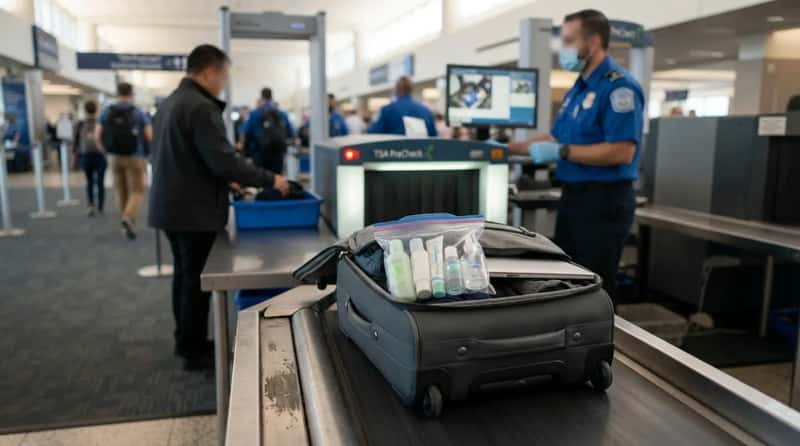
TSA PreCheck does not remove the liquid rule. It just lets you keep the quart bag inside your carry-on.2
Newer CT scanner lanes may let you leave it packed too, but the size limit stays the same. In a standard lane, officers have you pull the quart bag out and send it through in a separate bin, so keep it within easy reach.
Quick Compare
- Standard lane: the quart bag comes out and rides in its own bin
- PreCheck: the quart bag stays inside your carry-on
- CT scanner lane: it may stay packed, so follow the signs and the officer
- Every lane: the 3.4-ounce limit still applies
#16 – A Laptop Buried in a Standard Lane Bag
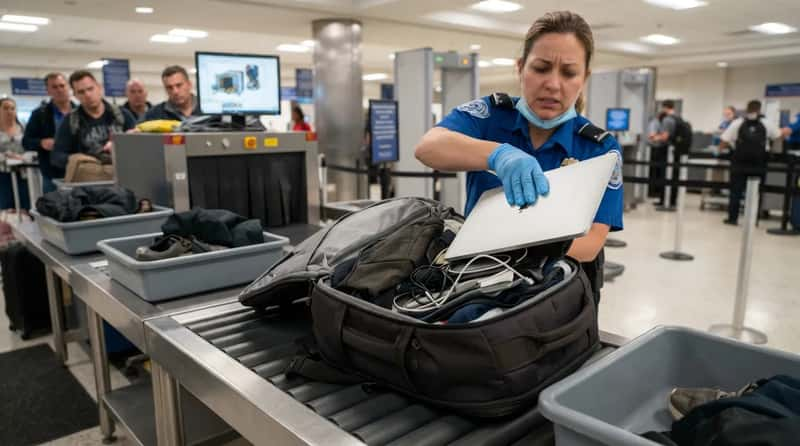
In a standard lane, laptops and large electronics come out of the bag unless you have PreCheck. CT lanes can run differently, so follow the signs and the officer, not what you did last trip.
Pack the laptop in an outer sleeve or on top so it slides out in one motion. That keeps the line moving behind you.
Shoes are the item that changed most, and the change comes with a catch.
#15 – Expecting Shoes On to Mean No Questions
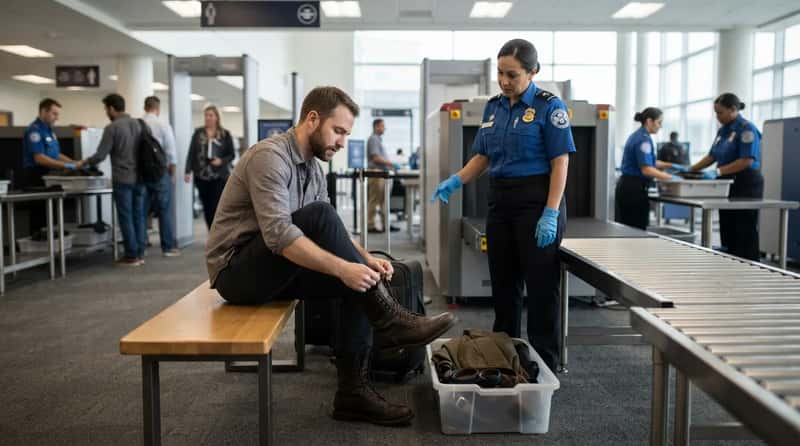
Homeland Security Secretary Kristi Noem announced on July 8, 2025 that travelers would no longer have to remove their shoes at domestic airport screening. That ended a requirement that had lasted nearly two decades.3
But if the scanners flag a potential threat, an agent may still ask for your shoes to come off. Wear pairs you can slip off easily, because tall laced boots are a poor bet on the day you get pulled aside.
#14 – Power Banks in the Checked Bag
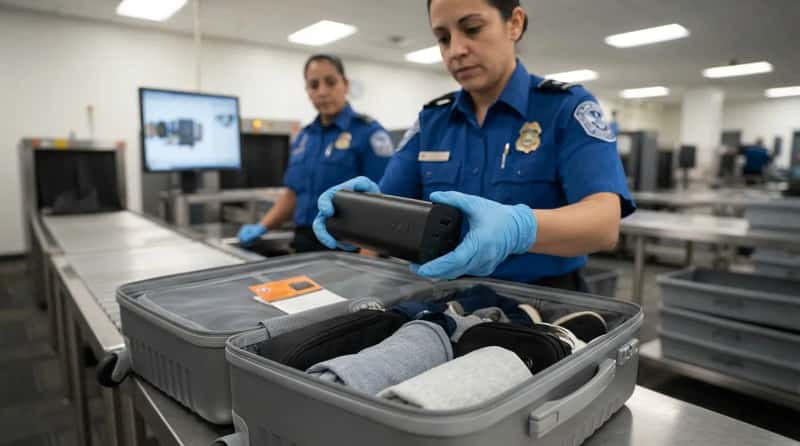
The FAA requires spare lithium batteries, including power banks, to travel in carry-on bags. They do not belong in checked luggage.4
A damaged battery that overheats can be reached and dealt with in the cabin, but not in the cargo hold. Some airlines add limits of their own, so check yours before you fly.
A battery belongs in the cabin, but some things on a packing list belong in neither bag.
#13 – Leftover Fireworks and Lighter Fluid
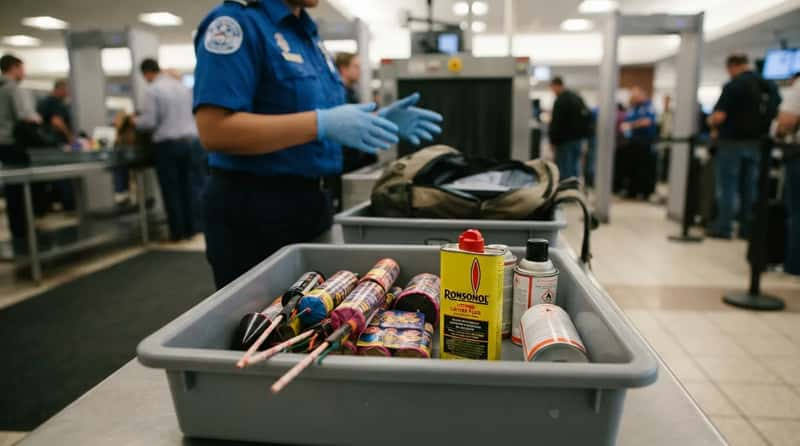
Fireworks are banned from both carry-on and checked bags. Leave them at home or with the host.
Flammables are trickier. Flammable liquids and aerosols with a propellant fall under separate hazardous materials rules, even in checked bags.
If you’re unsure about a spray can or fuel, check TSA’s “What Can I Bring?” tool before packing. Tossing the item costs far less than an argument at the counter.
#12 – A Pocketknife or a Cane With a Blade
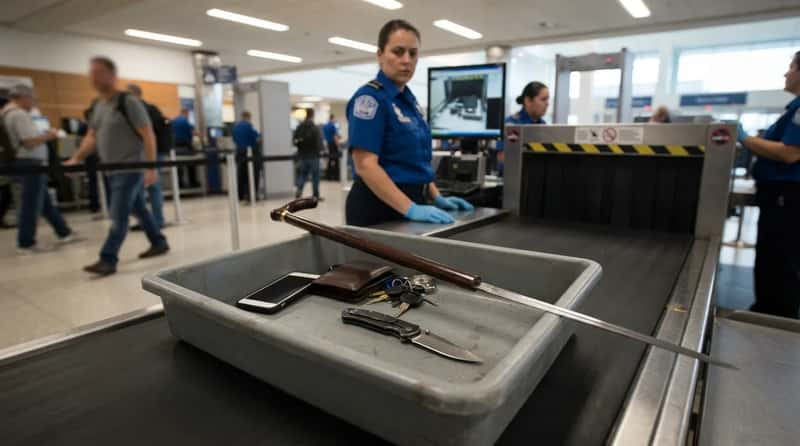
Sharp objects go in the checked bag or stay home. A pocketknife that rides in your coat or purse all year is easy to carry to the airport out of habit.
A cane that hides a blade is still a blade. Check coat pockets, the bottom of your purse, and the bag you took camping last year.
Some items aren’t banned at all, yet still get stopped because of the container.
#11 – Ashes in a Metal Urn
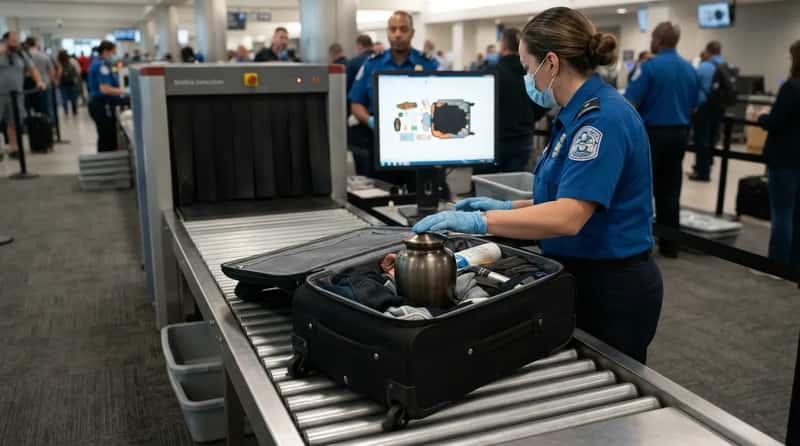
TSA allows cremated remains in carry-on and checked bags. The container, though, has to be something the X-ray can see through.
A dense metal urn can block the image, and officers will not open it. Ask the funeral home for a temporary plastic or cardboard container, and carry the paperwork they give you.
Worth Knowing
- The ashes themselves are allowed in both carry-on and checked bags
- The problem is the container, not the contents
- A dense metal urn can block the X-ray image
- Officers will not open the urn, so a temporary plastic or cardboard container is the safer choice
#10 – Joking About a Bomb or a Gun
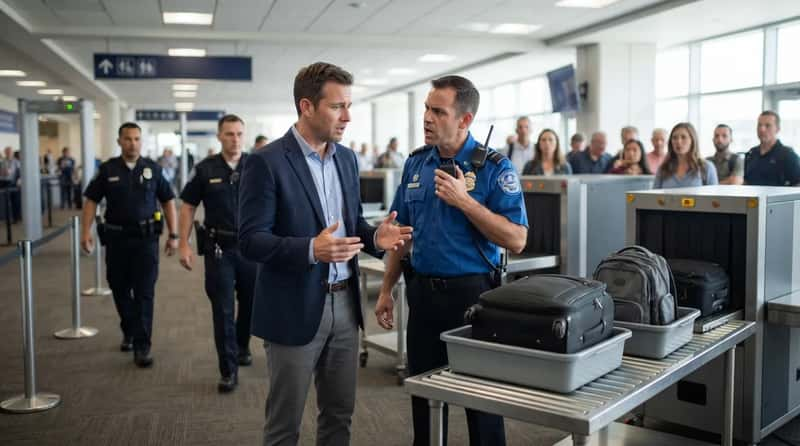
Any remark about a bomb or a weapon is treated as a real report. The officer can’t judge your tone, and the result can be airport police and a missed flight.
Save the humor for the gate. A joke costs nothing to skip, and it can cost the entire trip.
Your wallet holds a smaller risk, one that has carried a fixed price since February 2026.
#9 – A Driver’s License Without the Star
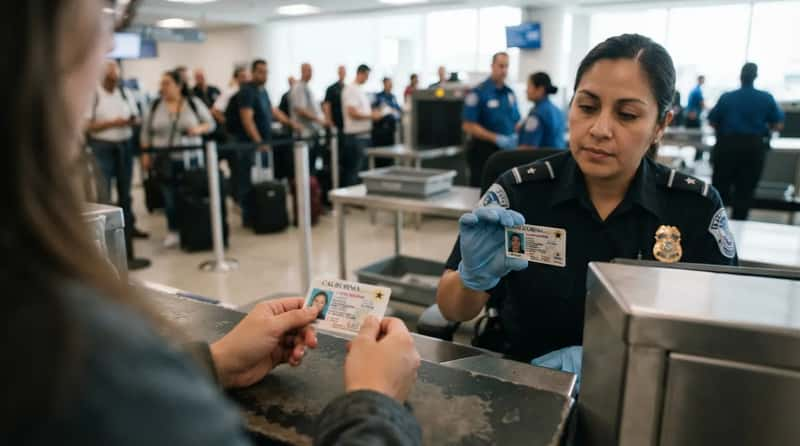
REAL ID enforcement at TSA checkpoints began May 7, 2025. The fee came later, on February 1, 2026, the first time TSA charged one to enforce the rule.5
A valid passport or other accepted ID avoids it. If you don’t have one and you fly more than once, a REAL ID with the star in the corner beats paying $45 every time.
Arriving without one doesn’t end the trip, though the workaround has conditions of its own.
#8 – Paying the ConfirmID Fee at the Checkpoint
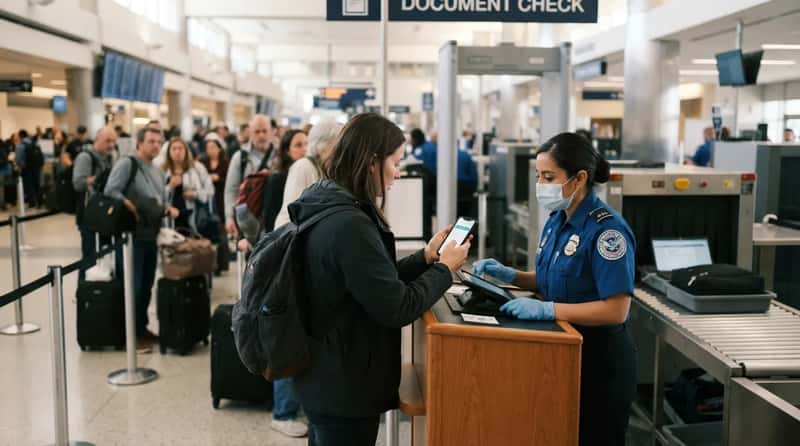
You go to TSA.gov, verify your identity and pay. Then a confirmation email arrives, and you show it to the TSA officer before you can pass.
The process can take 10 to 15 minutes, and sometimes 30 or longer. That’s why TSA urges travelers to pay on the ConfirmID portal before reaching the airport, so do it from your couch, not from a line.
Paying early solves the delay, but the receipt has limits of its own.
#7 – Treating $45 as a Guaranteed Pass
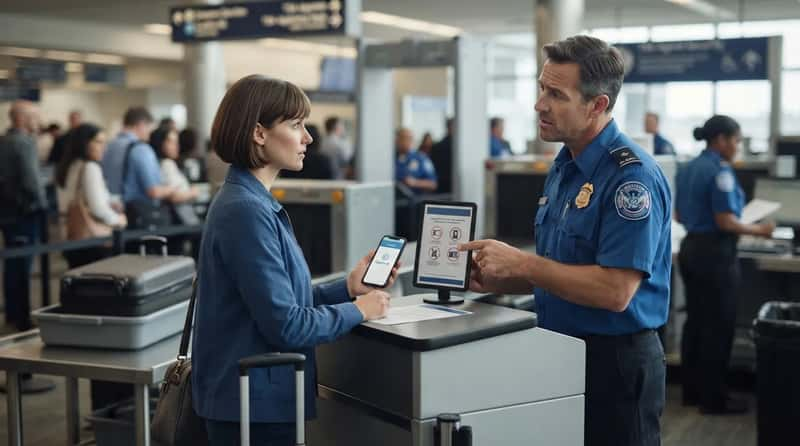
The fee is nonrefundable, and paying doesn’t guarantee TSA will be able to confirm your identity. Passengers who can’t be verified may still be denied access to the secure side of the airport.6
The fee covers ConfirmID for 10 days from the travel date on the receipt. A longer trip needs a second payment, and each traveler 18 or older without acceptable ID must complete the process separately, so a couple pays $90.6
Only one website takes the payment, and lookalike sites are best avoided.
#6 – Third-Party REAL ID Websites

Pay.gov is the only place the $45 fee can be paid. You reach it from TSA’s ConfirmID page, so start at TSA.gov and follow the link from there.6
A site that offers to handle ConfirmID for you puts a middleman between you and a government payment. If you want help, try TSA.gov/ID, TSA.gov/real-id, or text 275-872 (“AskTSA”).
Now the stakes jump, starting with an object that looks dangerous even when it isn’t.
#5 – A Toy or Replica Gun in the Carry-On
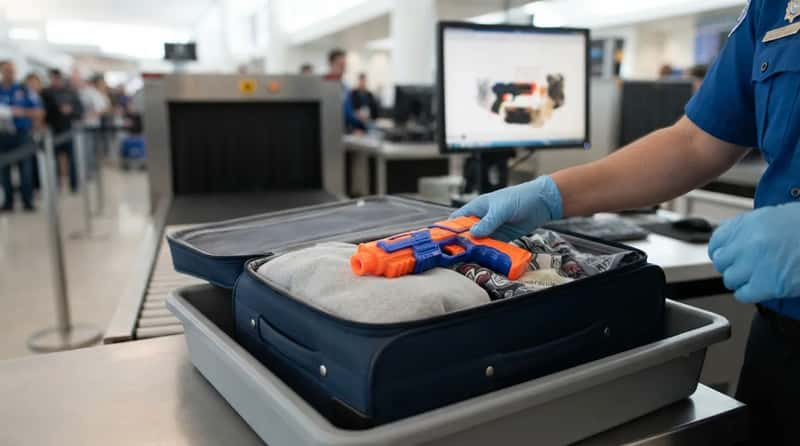
Any replica firearm is prohibited in carry-on baggage and must travel in checked luggage. That covers a costume piece, a movie prop and a child’s toy.
If a grandchild’s toy gun is headed to the family reunion, put it in the suitcase you check. A replica that’s fine at the party can still freeze a checkpoint line.
The real thing has a stricter route, and it begins at the airline counter, not the checkpoint.
#4 – A Handgun Packed Without the Locked Case
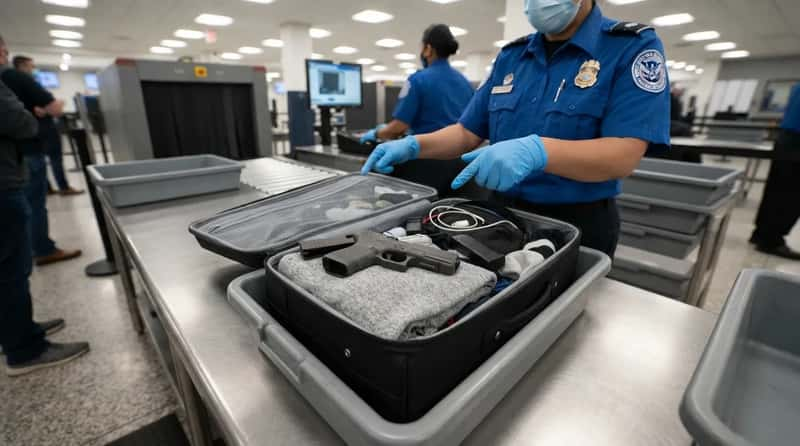
Firearms can fly only if they are unloaded, packed in a locked, hard-sided case and placed in checked baggage. A soft pouch or an unlocked box doesn’t meet that standard.
You also declare the firearm to the airline when you check the bag. Once the case is locked and checked, the rules are met and the trip proceeds.
Doing everything right is one story. What happens when a firearm turns up at the checkpoint is another.
#3 – Handing Over the Gun and Expecting to Walk On
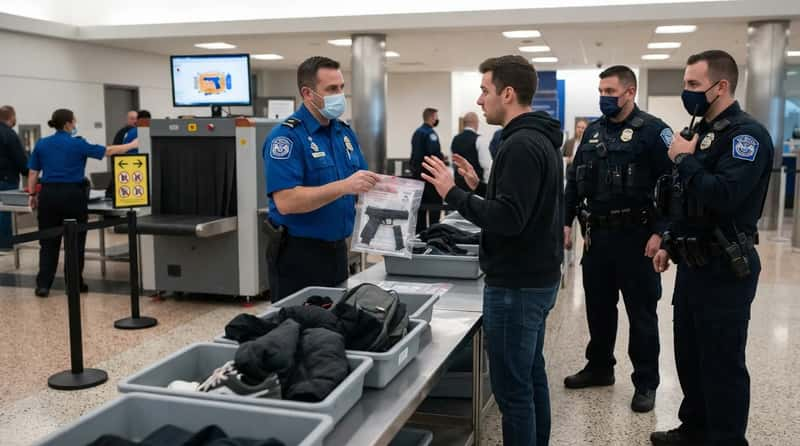
When an officer spots a firearm on the X-ray screen, TSA immediately notifies airport police, who respond to the checkpoint. Handing it over does not end the matter.
On top of potential criminal citations, TSA can levy a civil penalty of up to $12,210. Travelers may also face criminal charges in states and cities with stricter gun laws.
At a Glance
- Airport police are notified right away
- Civil penalty: up to $12,210
- Criminal citations are possible on top of the fine
- Stricter states and cities can add their own charges
The permit that makes many owners feel covered carries no weight at that checkpoint.
#2 – Counting on a Concealed Carry Permit
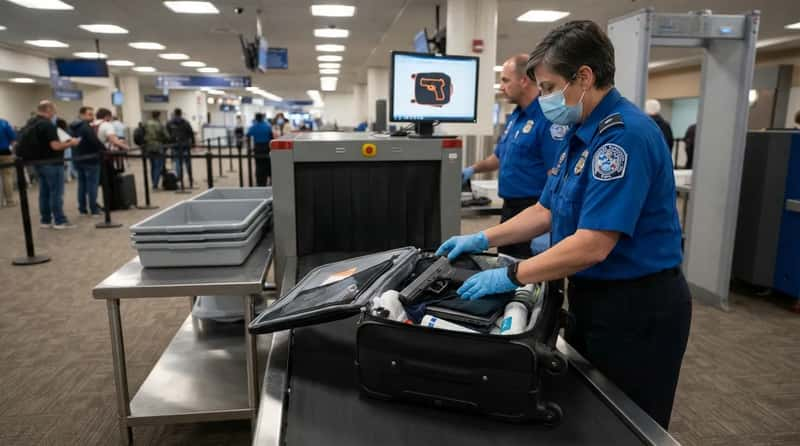
Even with a concealed weapons permit, firearms are not allowed in carry-on luggage. A permit comes from a state, while the checkpoint runs on federal screening rules.
TSA officials have noted a correlation between the number of guns stopped at checkpoints and the rise of permitless carry laws across the country. If you carry daily, the day you fly is the day to empty the holster, the console and the coat pocket.
Both of these mistakes start in the same place: a bag packed on autopilot.
#1 – A Loaded Gun in the Carry-On
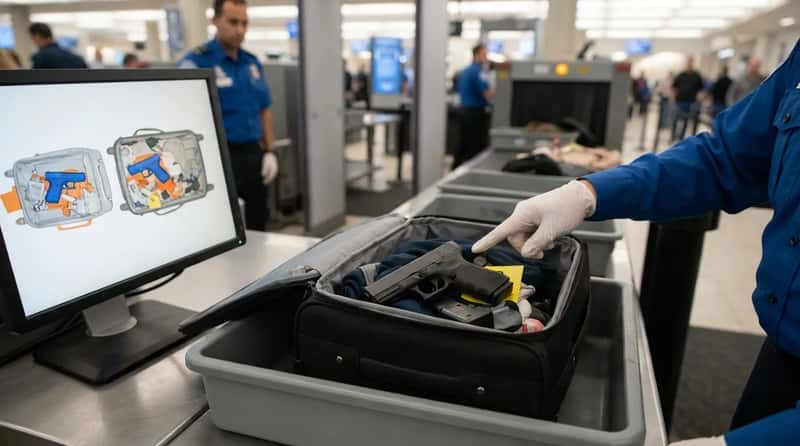
In 2024, TSA officers intercepted 6,678 firearms at airport checkpoints across the country, and 94% were loaded. Hartsfield-Jackson Atlanta International Airport led the nation with 440.7 8
The minimum civil fine is $1,500, according to TSA guidance. TSA’s own advice is simple: know what’s in your carry-on before you reach the checkpoint.
That is the same step that prevents the $45 ID fee, the lost shampoo and the power bank in the wrong bag. You look before you leave home.
Nearly every item here costs little at home and a lot at the checkpoint. A bottle poured out in your kitchen is free, while the same bottle at the bin is a lost bottle and a slower line.
So treat the night before as the real security check. Empty the bag, feel through the pockets, and look for the star on your license.
What is the one thing you check before every flight because you learned it the hard way?
- Afar 3-1-1 Rule Guide: https://www.afar.com/magazine/the-tsas-3-1-1-rule-for-liquids-in-carry-on-luggage
- NerdWallet 3-1-1 Liquids Guide: https://www.nerdwallet.com/article/travel/3-1-1-liquids
- ABC News Shoe Policy: https://abcnews.com/Politics/homeland-security-ends-mandatory-shoe-removal-airport-screening/story?id=123581156
- FAA PackSafe Batteries: https://www.faa.gov/hazmat/packsafe/airline-passengers-and-batteries
- TSA ConfirmID Rollout: https://www.tsa.gov/news/press/releases/2026/02/05/tsa-successfully-rolls-out-tsa-confirmid-0
- TSA ConfirmID: https://www.tsa.gov/tsaconfirm-id
- TSA 2024 Firearms Report: https://www.tsa.gov/news/press/releases/2025/01/15/tsa-intercepts-6678-firearms-airport-security-checkpoints-2024
- 12News Airport Firearms Totals: https://www.12newsnow.com/article/news/nation-world/tsa-airport-guns-2024/285-7567fe03-97c8-426d-8170-472a8434daae