Most passengers assume a cruise ship winds down right after the last nightclub song. It doesn’t. Between midnight and 2 a.m., the ship is steered, scrubbed, stocked, repaired, and guarded by crew most guests never meet.
The officers who stand these watches see a very different ship from the one in the brochure. Some of what they deal with is reassuring, and some of it is stranger than you’d guess. A few items explain things you’ve probably noticed in the morning without knowing why.
#15 – The “Dead Man Alarm” Is Quizzing the Officer All Night Long
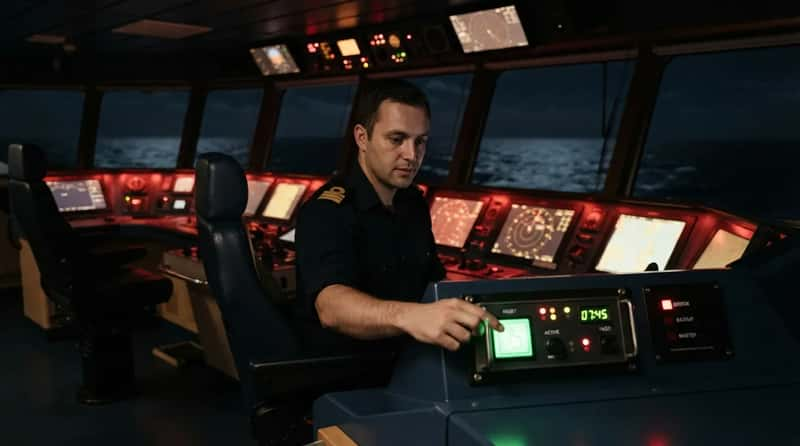
You might picture a lone officer gazing dreamily at black water. The reality is far more demanding, because a machine is checking on that officer all night.
A Bridge Navigational Watch Alarm System is built to sound if the watch officer falls asleep, is incapacitated, or is away too long. When it’s active, the officer has to signal their presence every 3 to 12 minutes in response to a flashing light.1
Many in the industry simply call it the “dead man alarm.” If the prompt is missed, it escalates in stages, from the bridge to the backup officer or captain and then to other crew.2 The system exists because human biology fights the midnight watch harder than any sea condition does.
That’s the machine watching the officer. Now look at what the officer is watching.
#14 – The Night Bridge Is a Working Control Room, Not a Sleepy Cockpit
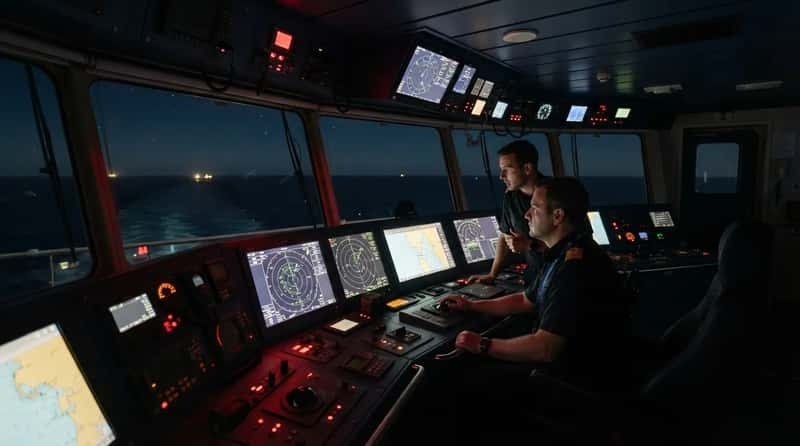
On a daytime tour, the bridge looks calm. At night it’s anything but.
Radar and AIS run all night, tracking other vessels, the ship’s position, and the planned route. Officers constantly compare what the screens show with what they can see through the windows.
The watch team is responsible for avoiding collisions, monitoring traffic and weather, checking alarms, and coordinating with the engine room. At sea, the officer on watch has three basic duties: navigate the ship, avoid traffic safely, and respond to emergencies. Every one of those duties stays live all night, with no pause button.
The bridge never works alone, though. Before going to bed, the captain leaves it something in writing.
#13 – The Captain Leaves a Written Rulebook Every Single Night
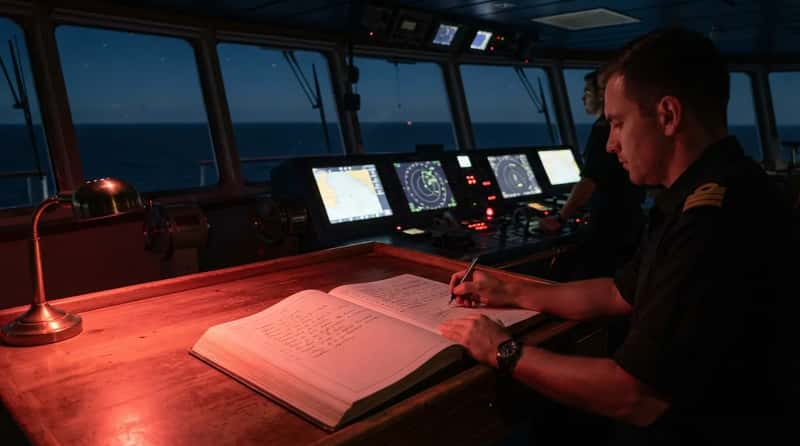
Before turning in, the captain doesn’t just hand over the ship and hope for the best. The captain writes down exactly what’s expected.
These standing night orders are kept on the bridge. They can include the speed to maintain, the arrival time at the pilot station, weather to monitor, and when additional machinery might be needed.3
Most important, they say when the captain wants to be called. Officers are expected to read and understand those orders before they take the watch.4
Once the orders are read, the real handoff begins, and it takes longer than you’d think.
#12 – The Watch Handover Takes Longer Than You’d Expect
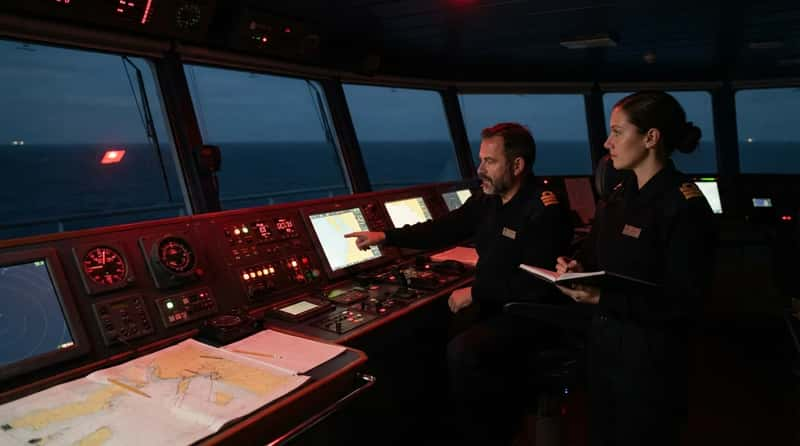
Turning over a bridge watch is not a quick “good luck, see you in four hours.” It’s a structured, step-by-step check.
At night, the relieving officer’s eyes have to adjust to the dark before taking over. Then the officer checks the planned course and reviews the charts for the lights that should be visible and the hazards to expect.3 4
Navigation lights are checked on the panel to confirm the bulbs are working, and the failure buzzer is tested. The quiet minutes around the changeover are some of the least understood moments in ocean travel, and the officers rushing them are the ones who miss things.
At a Glance
- Eyes first: The relieving officer lets their night vision adjust before taking over.
- Course next: The planned route and charts are reviewed for expected lights and hazards.
- Lights verified: The panel confirms the navigation lights are working.
- Alarm tested: The failure buzzer gets a check before the handover is complete.
Now drop below the bridge, where a different kind of night patrol is under way.
#11 – Security Is Patrolling Every Deck, Every Hour
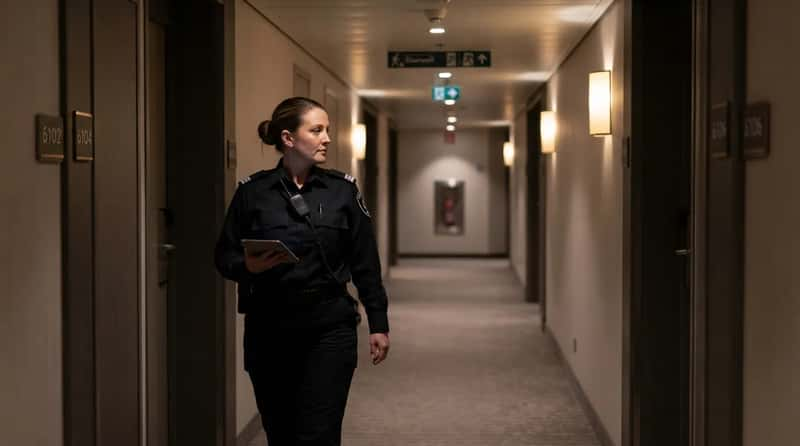
You might picture a couple of guards near the gangway. The overnight security operation actually covers the whole ship.
Officers keep walking stair towers, outer decks, crew corridors, and key access points. Others watch camera feeds and log incidents from earlier in the evening.
The person walking quietly past your cabin door at 1 a.m. is probably not checking on noise. It’s likely a documented patrol that feeds into the night report. Venues that stay busy after midnight tend to be the ones that generate the overnight paperwork.
All that walking leaves a paper trail, and that’s #10.
#10 – A Night Report Nobody Publishes Gets Written Every Single Shift
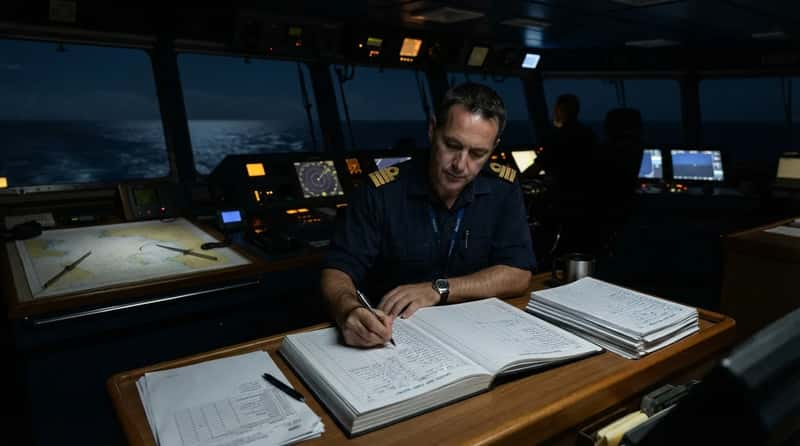
Every night on a cruise ship produces a written record, and passengers almost never know it exists.
Guards prepare activity logs, and the Security Officer compiles the Night Report.5 Meanwhile, the officer of the watch keeps the ship’s log current and confirms that safety precautions are being followed.
Duty hours are logged too, especially for overnight bridge and engine room watches, because fatigue is something regulators care about. These logs aren’t marketing material. In an injury claim, a missing-person case, or a regulatory investigation, they can become evidence.
Worth Knowing
- Guards: They prepare activity logs during their rounds.
- Security Officer: This officer compiles the overnight Night Report.
- Officer of the watch: This officer keeps the ship’s log up to date.
- Duty hours: Overnight bridge and engine room watches are tracked because of fatigue concerns.
The paperwork has a twin below the waterline, where the engineers never stop.
#9 – Engineers Are Running Full Machinery Inspections While You Dream
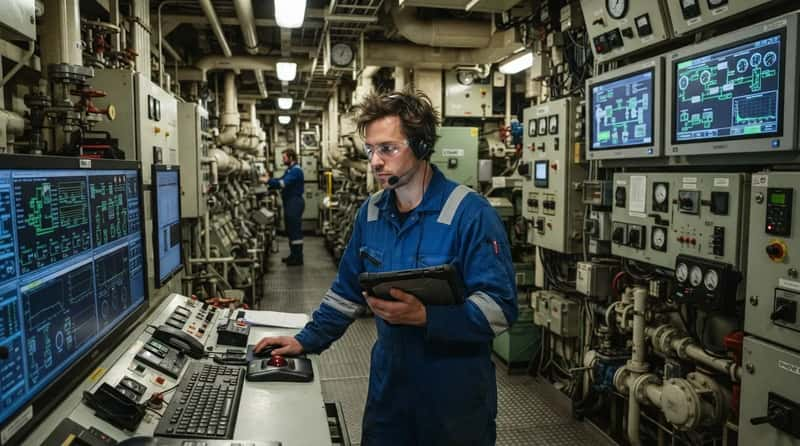
The engine room doesn’t sleep, and the overnight team carries as much responsibility as anyone on the bridge.
Even highly automated ships rely on round-the-clock watchkeeping. Crew check readings, listen for unusual sounds, inspect pumps and valves, and respond fast if equipment shows trouble.
Officers steer above while engineers keep propulsion, power, and life-support systems running below. Some maintenance on fans, elevators, or galley equipment is better done after midnight, when fewer people are moving through the ship. The jobs that would rattle a corridor full of sleeping guests get quietly scheduled for the small hours.
What those engineers keep alive powers a lot of things nobody puts in the brochure, including #8.
#8 – The Waste Systems Work Hardest When the Ship Is Quietest
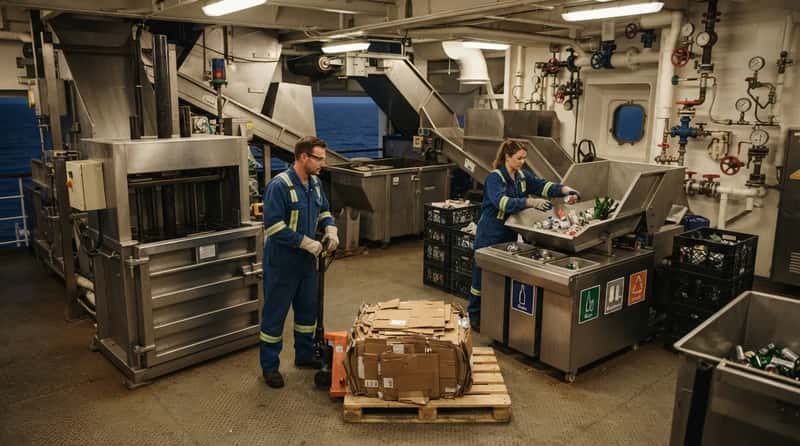
This is one of the most important jobs on the ship, and it never makes it into a cruise ad.
A cruise ship is a floating town, and a town produces a lot of waste. Waste handling, water production, fuel monitoring, and emissions controls run around the clock, and some of the heavier processing is often pushed to quiet hours.
Food scraps, cardboard, glass bottles, and aluminum cans all have to go somewhere. The odor-free ship you enjoy at breakfast owes a lot to what gets handled while you sleep.
And that’s before you get to the laundry room.
#7 – The Laundry Never Stops for the Night
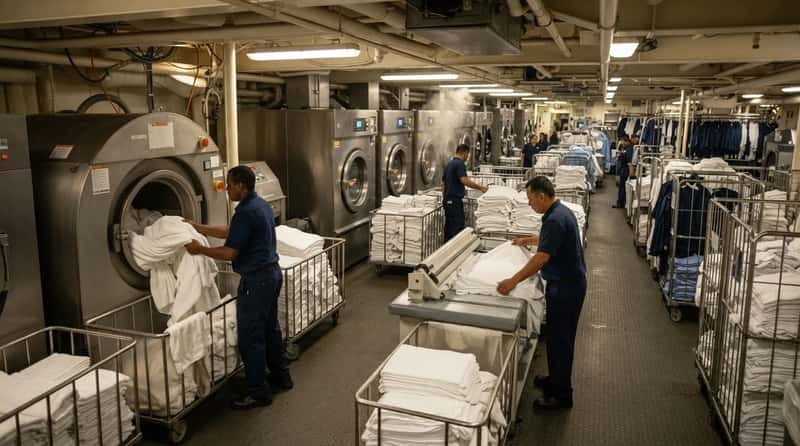
The laundry deck is one of the least glamorous spaces on the ship and one of the most essential.
Thousands of guests and crew generate a staggering pile of linens, towels, and uniforms every day. Overnight teams wash, dry, press, fold, and sort for cabins, spas, restaurants, and crew areas.
Running machines after midnight helps avoid daytime bottlenecks and gets supplies ready before passengers wake up. The fresh towel folded on your bed tomorrow may well be going through a dryer right now.
One deck up, a different crew is racing the clock to feed you.
#6 – The Kitchens Are Being Scrubbed Before Breakfast Even Exists
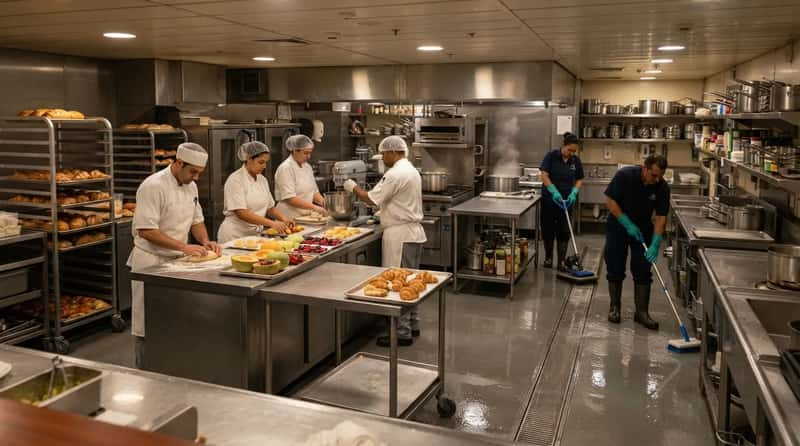
The buffet you wander into at 7 a.m. didn’t appear by magic. It was built, and the space around it was cleaned, while you slept.
After midnight, bakers and prep cooks start on bread, pastries, fruit platters, and breakfast components so dining venues can open on time. On ships with several restaurants, the overnight prep can be huge.
Overnight crews also deep-clean kitchens and restock bars before dawn. The cooking and the scrubbing happen side by side in different corners of the same galley, a choreography most guests never see.
The galley is only one part of the cleanup, because the rest of the ship needs a reset too.
#5 – Public Spaces Get Sanitized While Nobody Is Watching
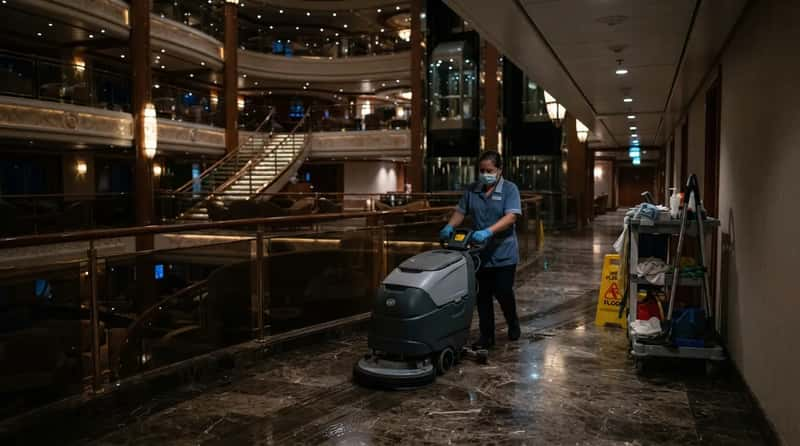
The corridors, lounges, and pool decks that look pristine every morning didn’t clean themselves. A quiet crew made that happen.
While most passengers sleep, the ship shifts into a tightly scheduled routine that keeps it clean, supplied, and ready for the next day. Housekeeping, hotel staff, engineers, and security all handle jobs that rarely get noticed.
Housekeepers work nights too, tending cabins, public areas, and crew accommodations. By the time you’re up, the ship has already been reset behind your back.
Fast Facts
- Housekeeping: Cabins, public areas, and crew accommodations all get night attention.
- Hotel staff: They share the overnight workload that keeps venues guest-ready.
- Engineers and security: Each team handles its own after-hours tasks.
- The goal: A ship that is clean, supplied, and ready before the first guest wakes up.
But one reset you can’t miss is the one that happens to the clock itself.
#4 – The Ship’s Clock Quietly Jumps an Hour While You Sleep
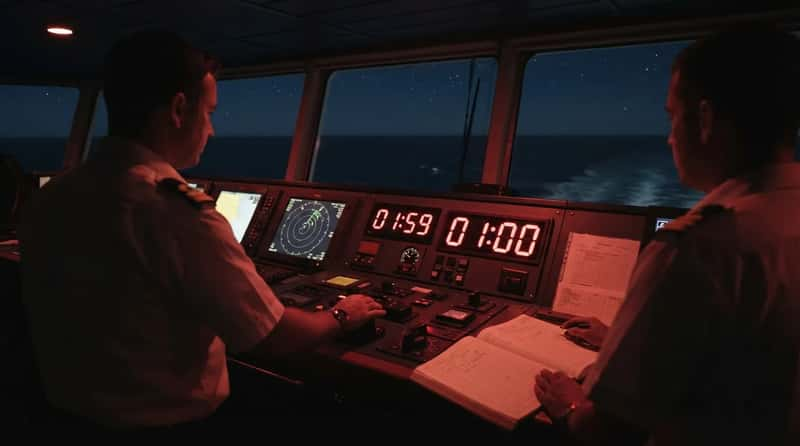
This one catches plenty of passengers off guard, and it matters if you’ve booked an early excursion.
On many itineraries, the ship’s clocks change overnight. Westbound sailings generally gain an hour, and eastbound sailings lose one.6
Changes are timed for the night to keep disruption low, so the ship you wake up on is running on a different time than the one you went to bed on. A passenger who relies on a personal alarm and ignores the daily program can end up an hour early or an hour late.
Clocks are the easy part. The next one takes real coordination.
#3 – An Early Port Arrival Turns the Night Into a Full Sprint
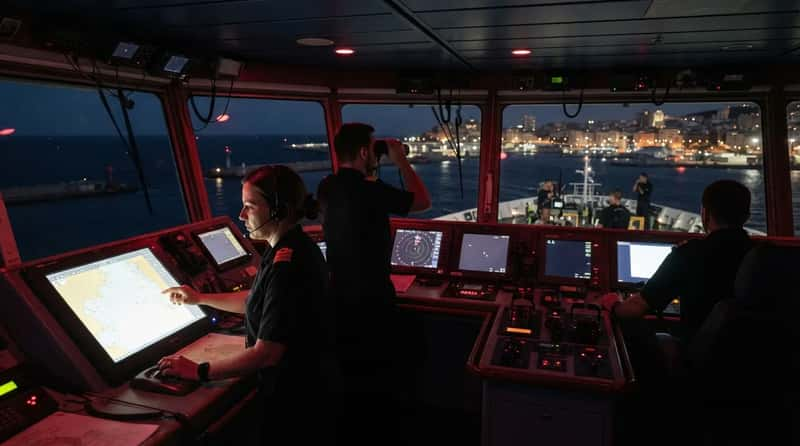
When the ship is due in port at 7 a.m., the work is already well under way long before the sun is up. By 1 a.m., the ship is in a controlled sprint.
Bridge officers update navigation plans, and deck teams prepare mooring equipment. Departments review customs, luggage handling, gangway staffing, and excursion timing.
Anyone who thinks a ship just drifts into port on autopilot is missing a multi-department operation that starts hours before the first coffee is poured. The officer on watch at 1 a.m. is already mentally inside that port.
And if the weather turns, the bridge has to make a call you’ll notice in the morning.
#2 – The Bridge Decides Which Decks Are Too Dangerous to Walk On
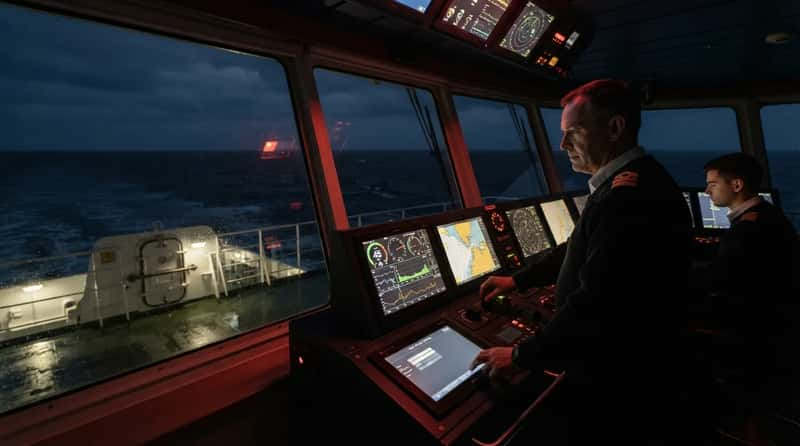
Ever found a locked outer deck on a breezy morning? That decision was probably made overnight, quietly, with no announcement.
The bridge watches wind speed and ship motion to judge when open decks become unsafe. Officers can close doors, pools, and promenade sections as conditions change.
If you wake up to a locked deck, that’s usually why. The call is often made right on the bridge, in real time, with no committee and no waiting for morning.
#1 – When Something Goes Wrong, the Ship Whispers
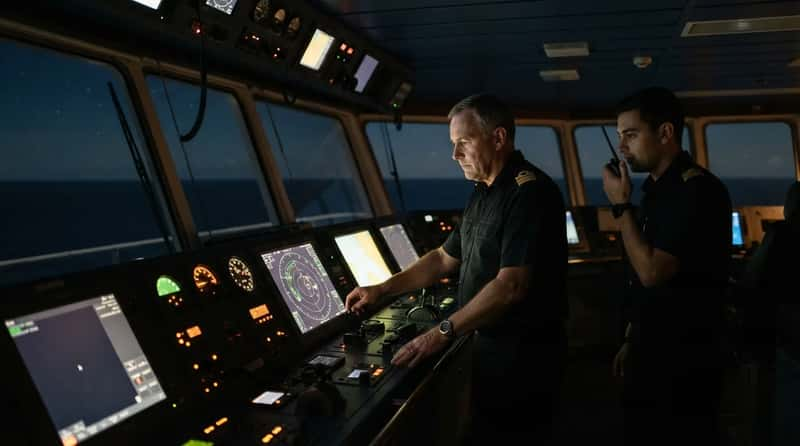
The most important thing a cruise ship does between midnight and 2 a.m. is stay ready for a crisis. The ones that actually happen get handled with almost no visibility.
If a guard finds a problem on rounds, the first move is to tell the bridge. Security staff are expected to inform the Duty Officer on the Bridge and other concerned officers right away.5 7
A ship with thousands of guests is a small floating city, and the overnight crew handles everything from noise complaints to real emergencies. The chain of command that kicks in at 1:30 a.m. is faster, quieter, and more practiced than most passengers would imagine.
There are no flashing lights in the corridor and no announcement. There is a trained officer, a documented procedure, and a ship that keeps moving forward.
So when you wake up to a spotless deck, a warm breakfast, and fresh towels, remember how much happened while you slept. A watch officer was answering an alarm, an engineer was making rounds, and a captain’s written orders were being followed. Most passengers sleep through all of it, which is exactly the point.
- BNWAS Overview: https://en.wikipedia.org/wiki/Bridge_navigational_watch_alarm_system
- BNWAS Operational Requirements: https://www.marineteacher.com/bnwas
- Bridge Watchkeeping Duties: https://www.theseafarer.com/seamanship/bridge-watchkeeping-duties/
- Bridge Standing Orders Guide: https://captainsmode.com/bridge-standing-orders/
- Royal Caribbean Security Guard Role: https://www.allcruisejobs.com/i44493/security-staff/
- Transatlantic Clock Changes: https://oceancruisebook.com/transatlantic-cruises-guide/
- Cruise Security Officer Duties: https://www.allcruisejobs.com/i56838/security-officer/