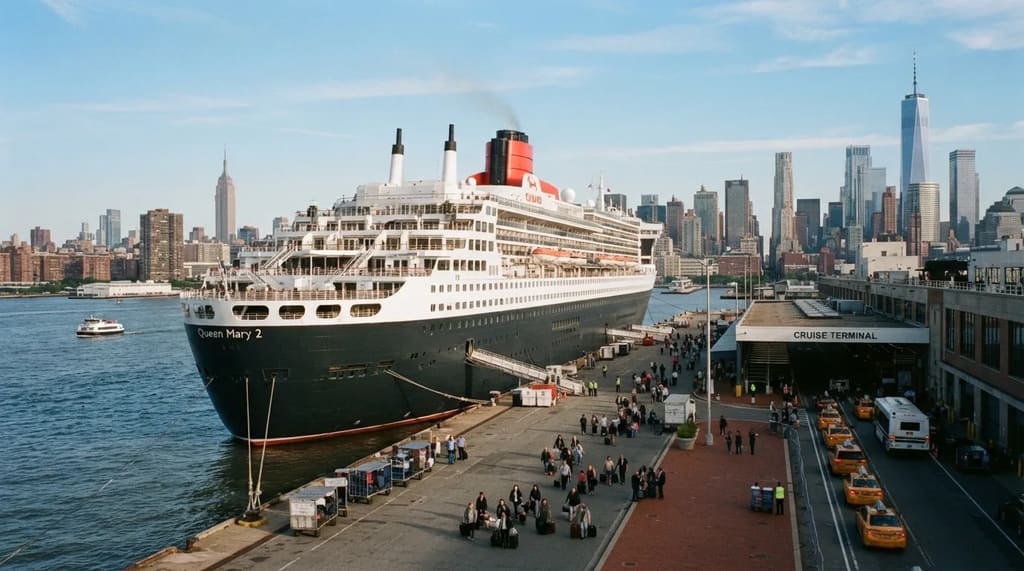
The ship part is the easy part. The Queen Mary 2 typically leaves Southampton at 5 p.m. and reaches New York seven nights later, between 6:30 and 7 a.m.1 Cruise Mapper’s listings for 7-night one-way sailings from late 2026 through 2027 show “from” fares of about $689 to $1,169 per person.
What the fare page doesn’t say is how much the month, the direction and the cabin change that week. None of those fares includes your way home, and that surprise is waiting at the very end. First, the ship that makes this trip at all.
#16 – A Seven-Night Voyage on a Ship Built for It
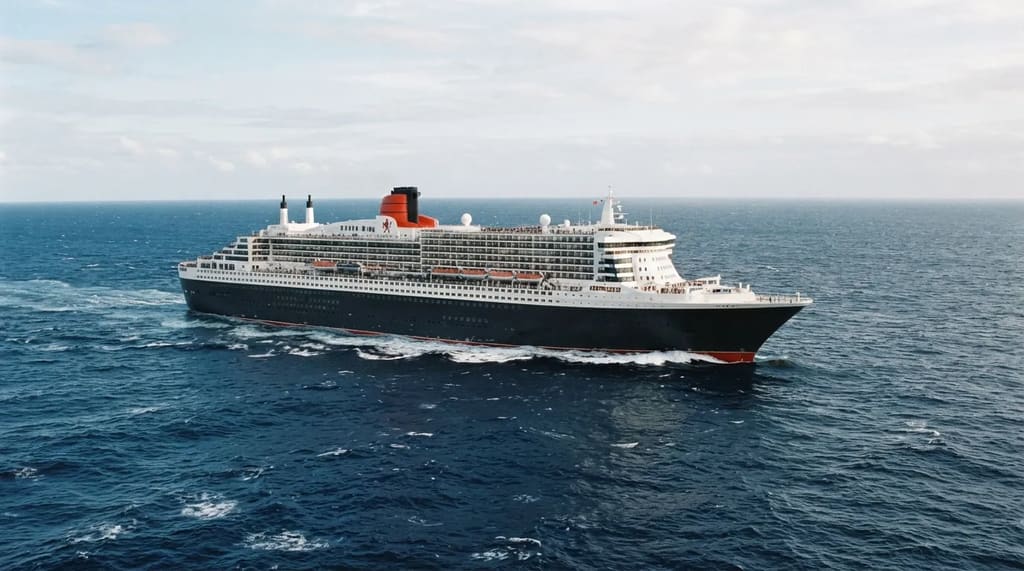
No conventional ferry runs between Europe and New York. The crossing is too long and the conditions too demanding, which is why the Queen Mary 2’s ocean-liner design exists.
Cunard stretched its crossings from 6 nights to 7 beginning in 2011, though an occasional sailing still takes 6 or 8.
The sailing that left Southampton on November 10, 2026 is billed as the ship’s 450th transatlantic crossing, with arrival in New York on November 17.2 Listings also show longer itineraries of 8, 9, 11 and 12 nights. Those are different products from the standard week, so compare like with like when you look at fares.
Seven nights is the fixed part. The weeks when the ship actually sails are far fewer than the weeks in the year.
#15 – Roughly One Sailing a Month in Each Direction
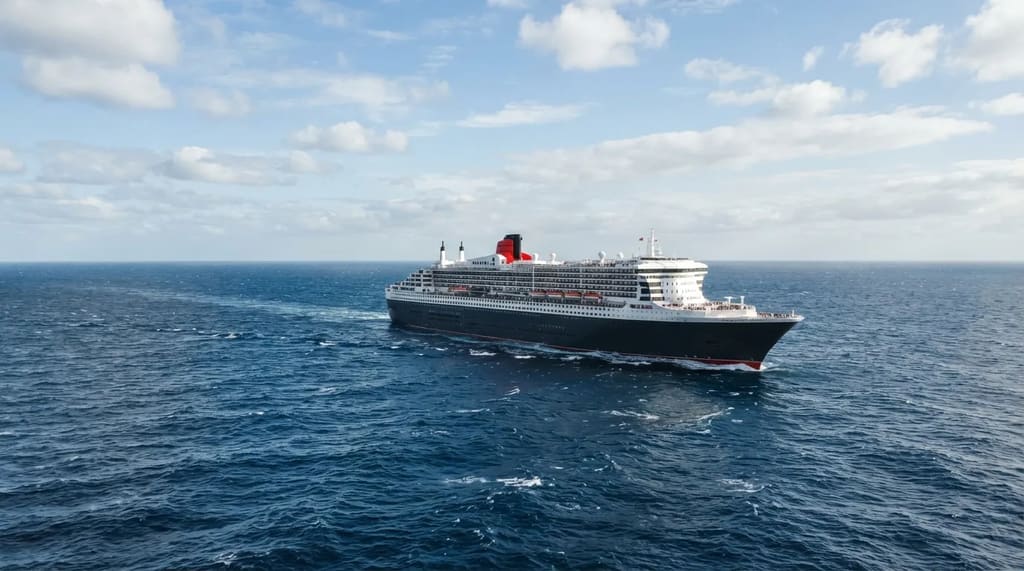
Cunard usually runs one Queen Mary 2 sailing a month in each direction between Southampton and New York, from April to December. A month may offer only a single departure date. If it lands in the wrong week for you, the next chance is a month away.
Outside that window the listings change character. Cruise Mapper shows an 8-night New York departure in January 2027 and a 20-night one in March 2028, so winter crossings are not simply summer ones in colder weather.
The month you choose also chooses your ocean, because the North Atlantic changes its manners with the season.
#14 – The Month You Pick Sets the Ride
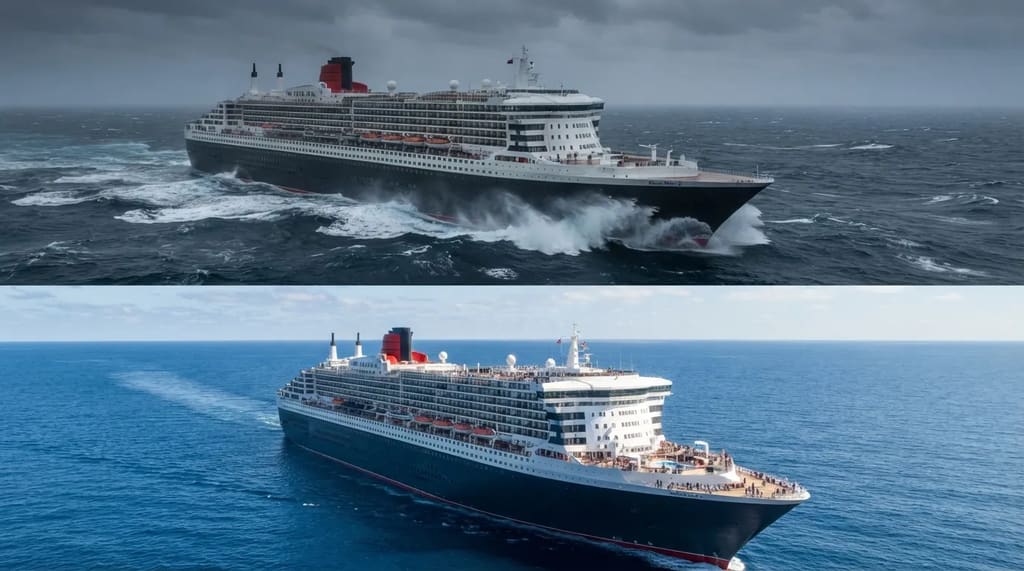
Early-season North Atlantic conditions can be unsettled, so a March crossing and an August crossing are different trips. A purpose-built liner in summer is a very different ride from a tall cruise ship in March.
Keep that in mind if you are weighing a liner fare against a cheaper repositioning fare. The ship and the month change together.
Pack layers and a warm jacket for time on deck.
No month or ship removes the motion entirely, which is where the medicine bag comes in.
#13 – Motion Sickness Pills Belong in the Suitcase
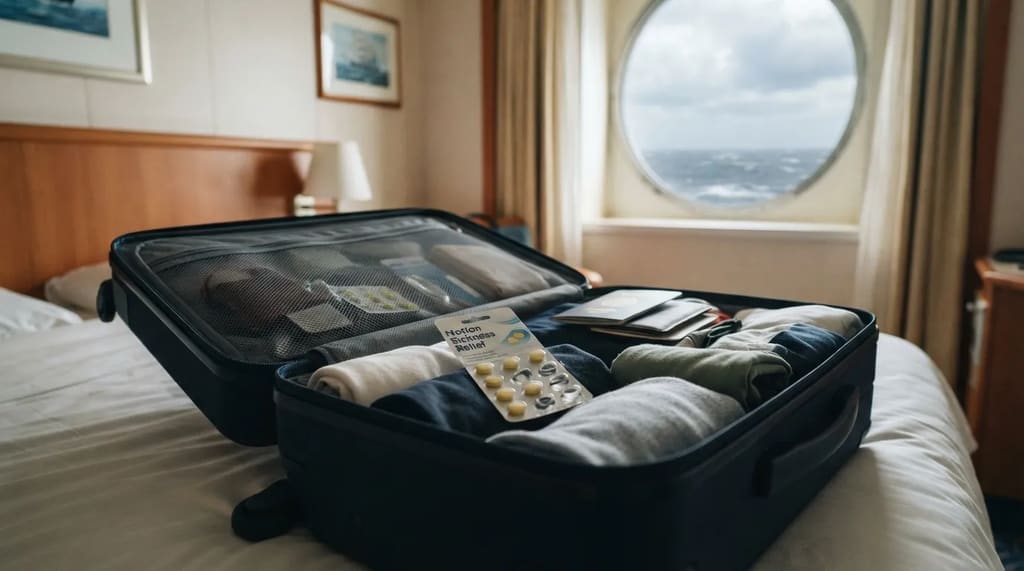
A week of back-to-back sea days gives rough weather plenty of time to find you. One writer had hot weather and very calm water on a crossing, yet noted it could easily have been rocked around for seven days straight.
Matador Network’s writer advises carrying over-the-counter motion sickness medication even if you are not usually seasick. I agree, since the pills cost little and take almost no room.
If you are prone to seasickness, speak to a pharmacist or your doctor about options before you travel.
Medicine treats what you feel. The position of your bed changes how much motion reaches you in the first place.
#12 – A Low, Middle Cabin Moves the Least
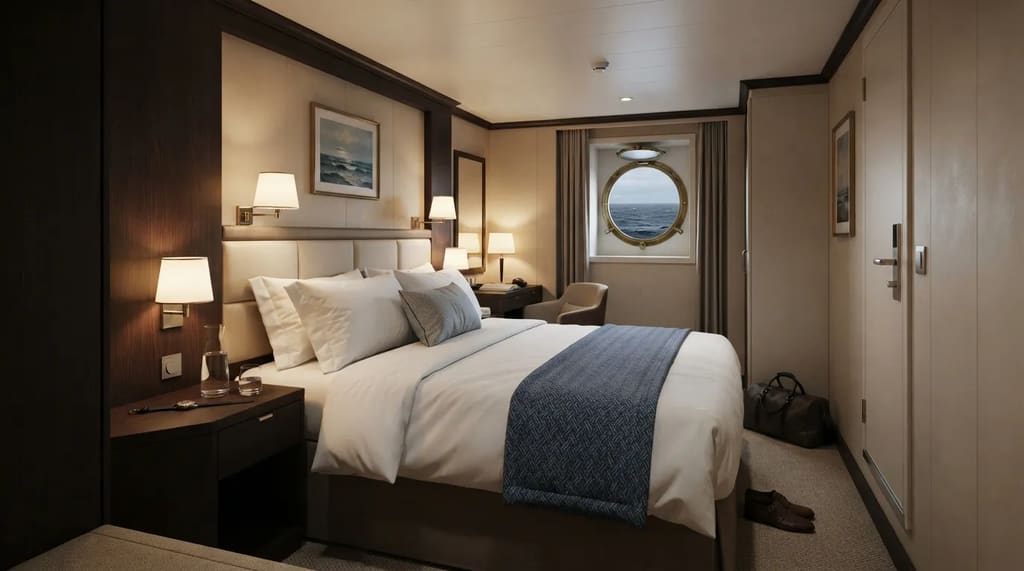
A cabin in the middle of the ship on a lower deck is where movement is usually felt least. Reviewers don’t all agree on the ship’s ride, though.
One Cruise Critic poster felt movement in a very forward Club room on deck 12 during a rough January crossing. Another reviewer in the same thread noticed how steady she was compared with other ships.
If you know you get queasy, that argues for a middle cabin over a high forward balcony, even though the balcony looks better in photographs. It matters most on the unsettled early-season sailings described above.
#11 – Your Cabin Grade Decides Your Dining Room
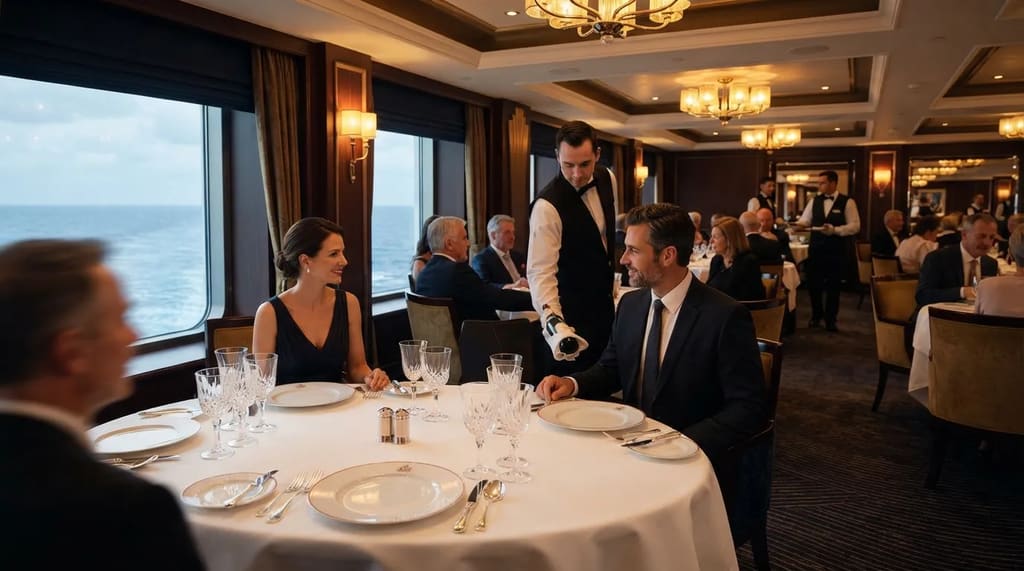
On Queen Mary 2, the cabin you book assigns your restaurant. There are four grades of dining, and each one sits a step above the last.
Quick Compare
- Britannia: two traditional evening sittings, plus a flexible option.
- Britannia Club: for Club Balcony guests, a single-seating restaurant with à la carte flexibility.
- Princess Grill: where mini-suite guests dine.
- Queens Grill: where suite guests dine, at the top of the ladder.
So a cabin choice is also a choice about where you will sit for seven dinners.
What you wear to that table is the next question, and on two or three evenings the answer is formal.
#10 – Two or Three Gala Evenings Per Crossing
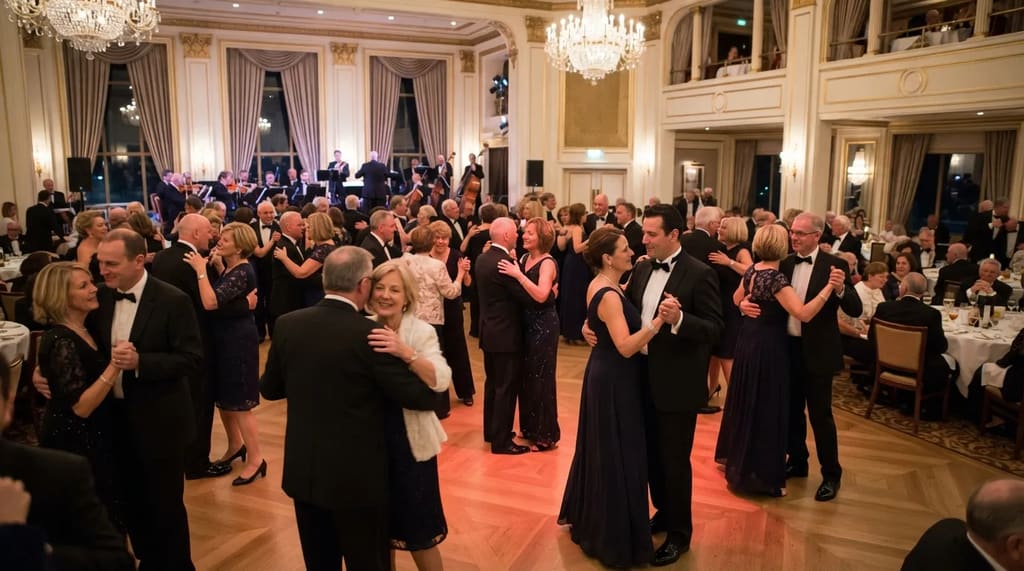
A typical crossing features two or three Gala Evenings, with black tie or formal evening wear. On those nights men are asked to wear dinner jackets, tuxedos or suits with a tie, and women evening gowns, cocktail dresses or a smart trouser suit.3
One reviewer notes that Cunard has relaxed its dress code over the years. The Kings Court buffet keeps a relaxed dress code every evening, so formal wear is optional if you would rather skip it.4
I would not buy a tuxedo for a single crossing when a dark suit with a tie meets the stated standard.3
Formal clothes eat suitcase space, and they are only part of what a long sea trip demands.
#9 – Packing for Eight Days Instead of Fourteen
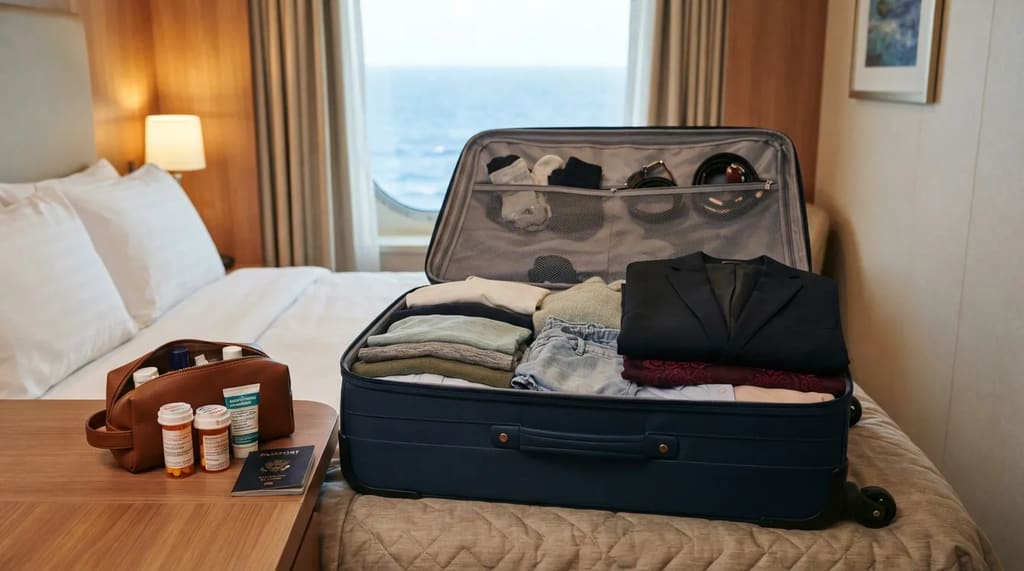
On a 12 to 16 night crossing, pack for about eight days and plan to do laundry once. Add one or two outfits for formal nights, a passport valid well beyond the trip, medications in original containers and seasickness remedies you have already tried.
On a standard 7-night crossing you can simply pack for the week.
Daytime is easy. Shorts, sundresses, T-shirts and jumpers are all fine, but T-shirts, shorts, ripped jeans and sportswear are the no-go items for evenings.
The warm jacket from earlier completes the list.
#8 – A Kennel With Its Own Sun Deck
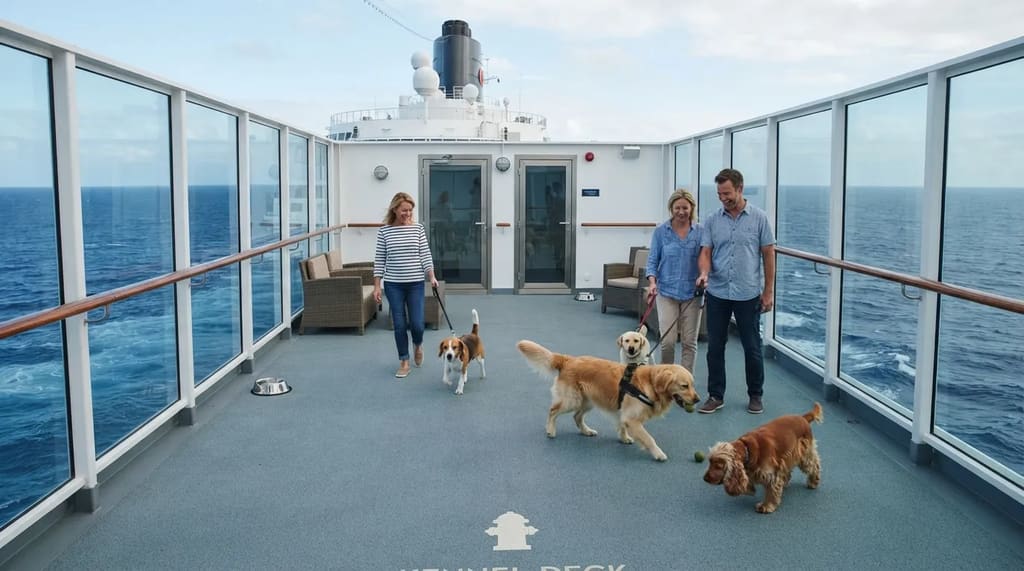
Queen Mary 2 is the only passenger ship with a dedicated onboard kennel, and it is run with more care than you might expect.5
Fast Facts
- Managed by a full-time Kennel Master.
- Holds up to 24 dogs and cats.
- Operates only on the transatlantic crossings.6
- Regular open hours let passengers visit the animals.
- A dedicated sun deck is set aside for walks.
Some regular passengers choose the ship because they don’t want to put pets through the stress of airline travel.
If a dog or cat would otherwise stay home, ask Cunard directly about space and booking terms, because capacity is small.6
#7 – Clocks That Move One Hour at a Time
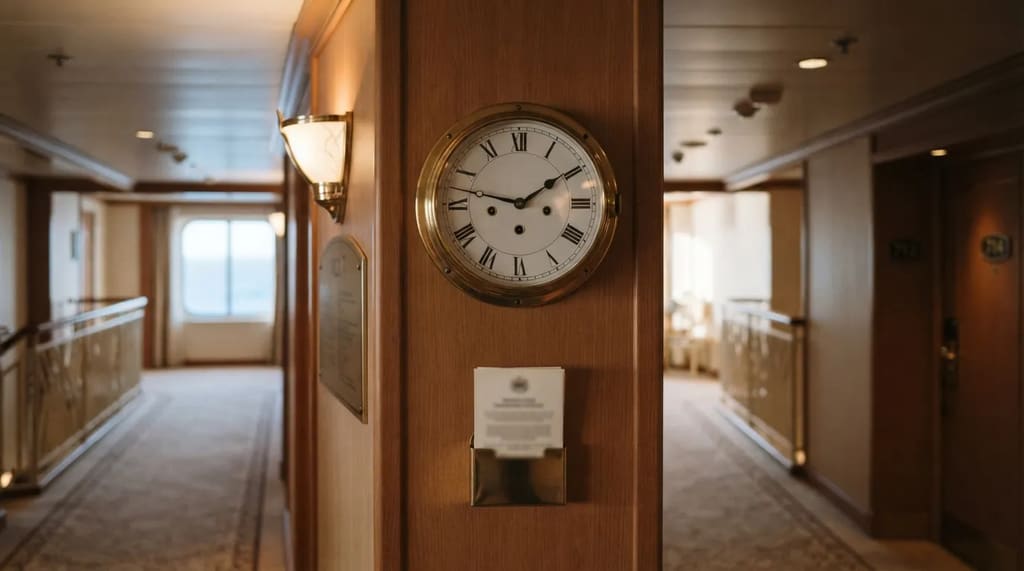
On a crossing, the ship changes its clocks one hour at a time, usually overnight on sea days, until they match the destination. Some lines make the change in the middle of the day on eastbound crossings instead.
Announcements and notes left in cabins remind passengers of each change. That is why a ship can be easier on the body than a flight: the shift arrives an hour at a time, not in one jump.
How gentle it feels depends on direction, because the same ship gives hours back one way and takes them the other.
#6 – Westbound Sailings Hand Hours Back to You
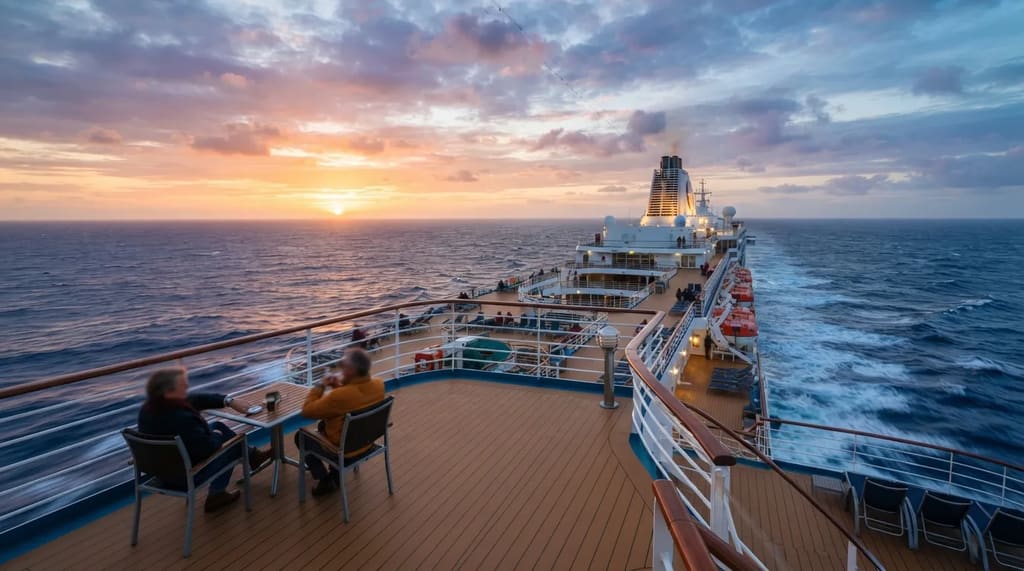
The direction you sail decides whether the ship gives you time or takes it.
At a Glance
- Westbound: clocks go back, giving 25-hour days.
- Eastbound: clocks go forward, giving 23-hour days.
- Arrival: jet lag is much milder after gaining hours than after losing them.
Even westbound has a quirk: after a few extra hours, your body clock may wake you an hour earlier than yesterday.
If your schedule gives you the choice, I would take westbound. It is the one decision in this piece where direction outweighs almost everything else.
Whichever way you sail, those clock changes happen on sea days, and a crossing has plenty of them.
#5 – Fewer Ports and More Days at Sea
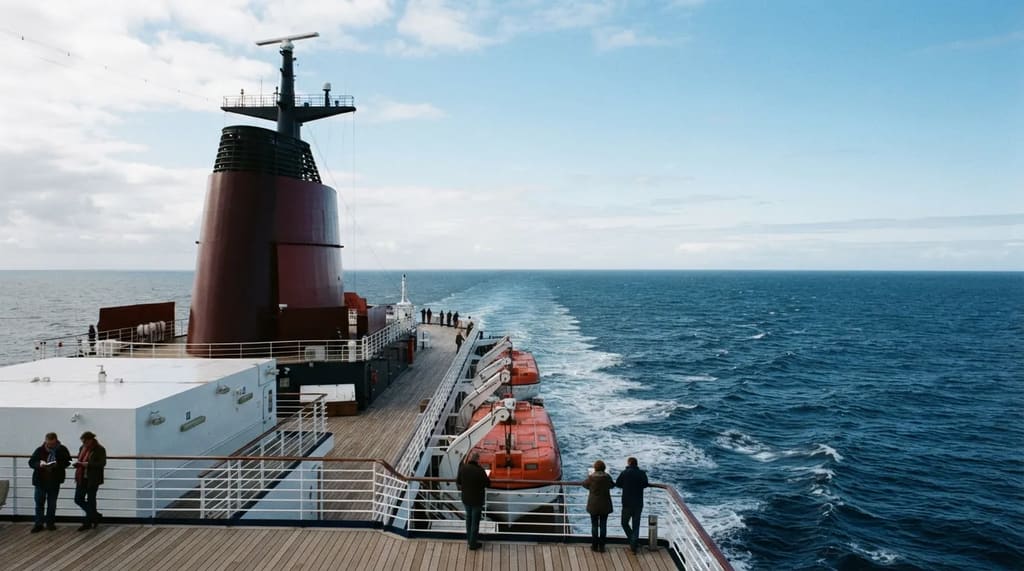
Expect fewer ports of call and more days at sea than on a typical cruise. A run of sea days is a rare chance to properly switch off, and these voyages reward travelers who like being out on the water.
Classes aboard Queen Mary 2 cover a wide selection of skills, so the days can have some structure if you want it. If you need a new port every other day to feel you have traveled, a flight and a hotel will suit you better.
#4 – Repositioning Voyages Are a Different Product
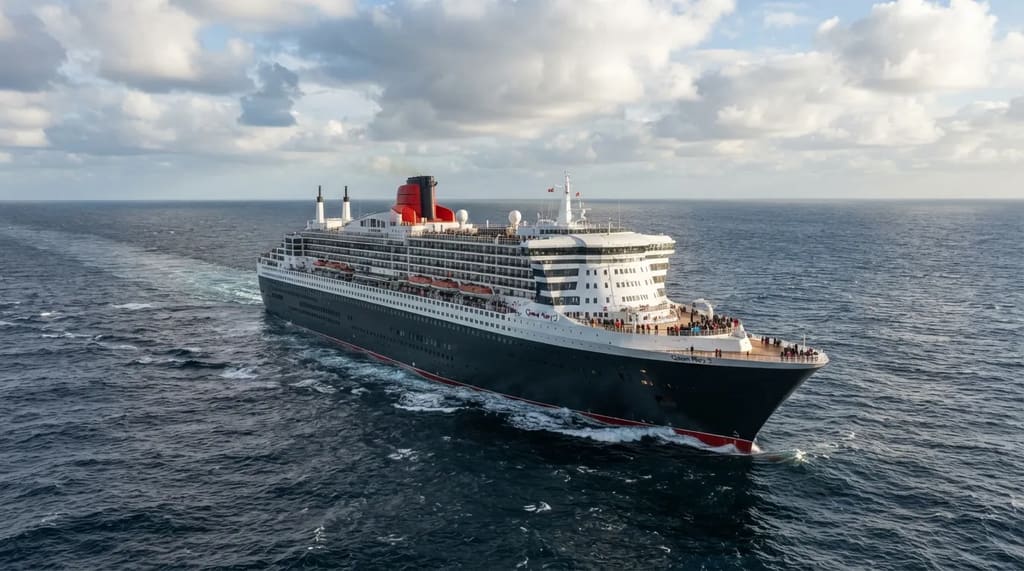
Many lines move ships across the Atlantic twice a year, toward Europe in spring and back toward the Caribbean and Florida in autumn. These one-way sailings often offer good value per night, mainly because of the high ratio of sea days to port days, and because the line moves the ship regardless of how full it is.
The trade-off is the ship and the route. Queen Mary 2 was purpose-built for regular ocean crossings, while cruise ships are designed around different operating patterns.
A Cruise Critic poster on a Viking repositioning voyage reported two missed ports, so a port-heavy itinerary can change.
A one-way voyage that ends in another country also needs paperwork that a round trip from home does not.
Related Stories From Travelbinger



#3 – A Passport Book and Possibly a Second Authorization
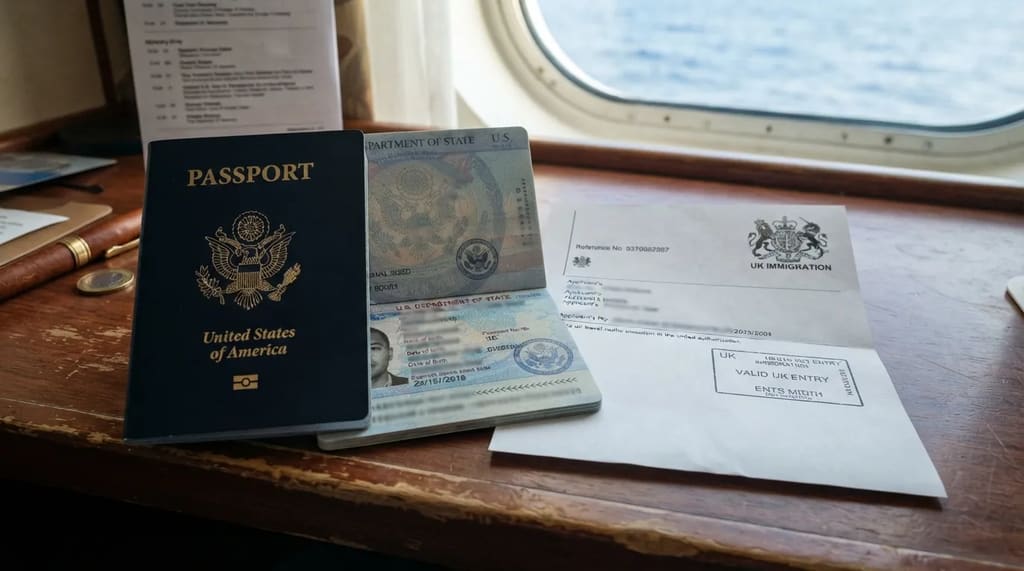
For a U.S. citizen, a cruise that starts and ends in different ports, sails one-way or crosses an ocean calls for a valid passport book. Royal Caribbean requires one on sailings from homeports outside the U.S., and wants it valid at least six months after the cruise ends.7
Check your own line’s terms for the validity period.
The European side is less settled. ETIAS applies to cruise passengers who disembark at European ports, not to those who stay aboard, and its start date has been postponed.8
Some crossings add a Le Havre call, and a single Schengen port can bring the requirement into play. The UK’s travel authorization is also worth checking if you arrive in Southampton.
With the paperwork in order, the next decision is the cabin, and the lowest price in the listing belongs to the inside category.
#2 – The “From” Price Belongs to the Inside Cabin
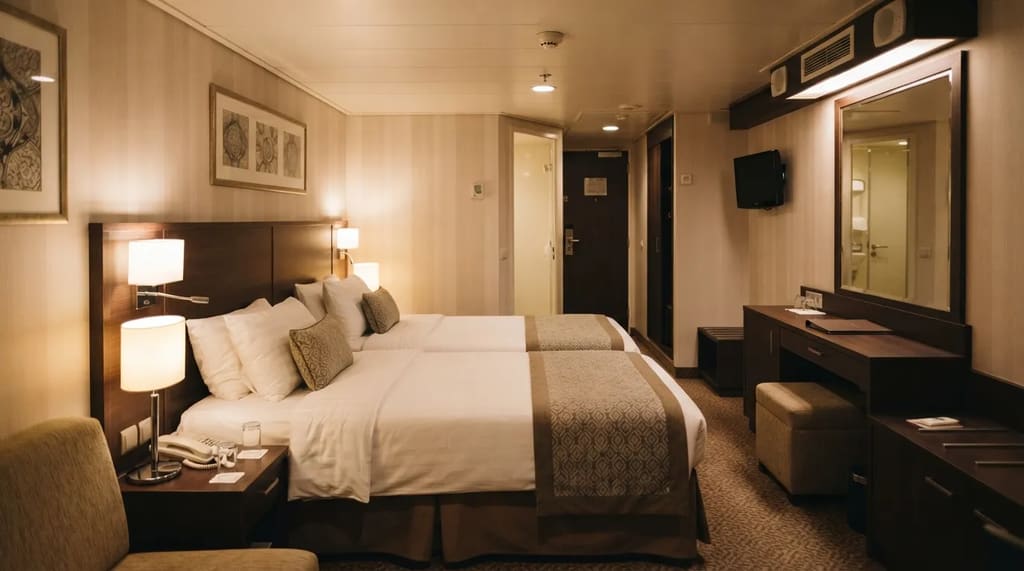
One listing for the November 28, 2026 eastbound sailing shows inside cabins from £1,221 per person and balcony cabins from £1,347, with suites by enquiry. The gap is £126 per person, and the cabin grade also decides your dining room, as the dining section explained.
On a week with most hours spent at sea, I would pay that premium for a balcony unless motion is the worry. In that case the low, middle cabin discussed earlier is the better use of money.
Fares also move a lot by date. A September 19, 2026 westbound sailing listed fares from $879 per person.
The listed fare pays for the ship. It doesn’t pay for the part that catches people last.
#1 – The Ticket Home Is Booked Separately
A crossing is one-way, so you finish on the wrong side of the ocean from your own front door. The fare you’ve been comparing covers the ship, and nothing else.
That means a separate flight home, priced and booked on its own. The bill that decides whether the trip fits your budget is the two tickets combined.
Worth Knowing
- The cruise fare covers the crossing, not your journey back.
- Check one-way flight prices for your dates before you commit to a sailing.
- Queen Mary 2 reaches New York between 6:30 and 7 a.m.
- Leave room for disembarkation and the trip to the airport before you lock in a departure.
The crossing itself is the calm part: seven nights, a changing sky and clocks that nudge you gently toward another continent. The surprises were all in the booking, and now you know where they hide.
Bonus: The Insider Move Nobody Tells You
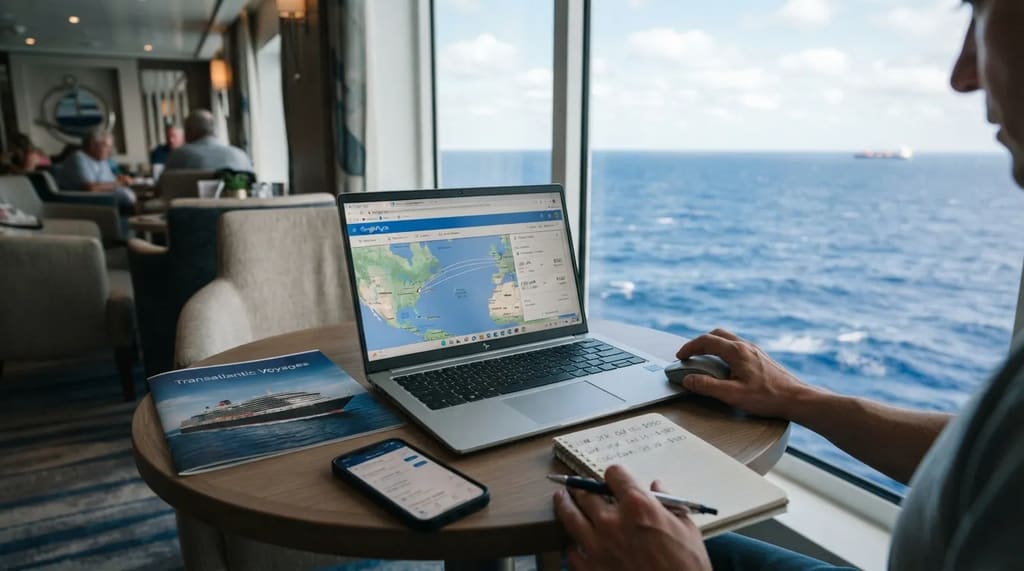
Price the flight first, then book the ship. Because the flight is a separate purchase, it is the one piece you can test for free before you commit to a sailing date.
- Step 1: Pick two or three candidate sailings and set a price alert for the one-way flight on each matching date, using Google Flights or your airline’s own tracker.
- Step 2: Compare both directions. Sailing one way and flying the other gives you two possible trips, and one often costs noticeably less in total than the other.
- Step 3: Book the cruise first, then the flight. For flights booked directly with the airline at least seven days before departure, the U.S. Department of Transportation requires a 24-hour free cancellation window, so you can correct a mistake without penalty.
- Step 4: If you sail west and fly home from New York, choose an afternoon or evening departure. The ship docks early in the morning, and the extra hours absorb disembarkation and the ride to the airport.
Do the sums on the combined total, not the cruise fare alone. That one habit is what separates a planned crossing from a surprise bill.
- Cunard Westbound Crossing 2027: https://www.cunard.com/en-us/find-a-cruise/M733/M733
- Cunard 450th Crossing: https://www.cunard.com/en-us/find-a-cruise/M630/M630
- Cunard Dress Code 2026: https://www.cruiseline.co.uk/cruise-news/cunard-dress-code-2026/
- Cunard Policies Dress Code: https://www.smartcruiser.com/cruise-line-policies/cunard/
- Forbes Cunard Pets: https://www.forbes.com/sites/michaelgoldstein/2026/08/27/cunard-pampers-pets-on-queen-mary-2-transatlantic-sailings/
- Cruise Critic QM2 Kennels: https://www.cruisecritic.com/articles/cunards-queen-mary-2-kennels-and-how-to-book-them-for-your-next-cruise
- Royal Caribbean Passport Guide: https://www.royalcaribbean.com/guides/do-you-need-a-passport-for-a-cruise
- ETIAS Status Update: https://cruiseports.co/etias-schengen-days-visas-cruise/