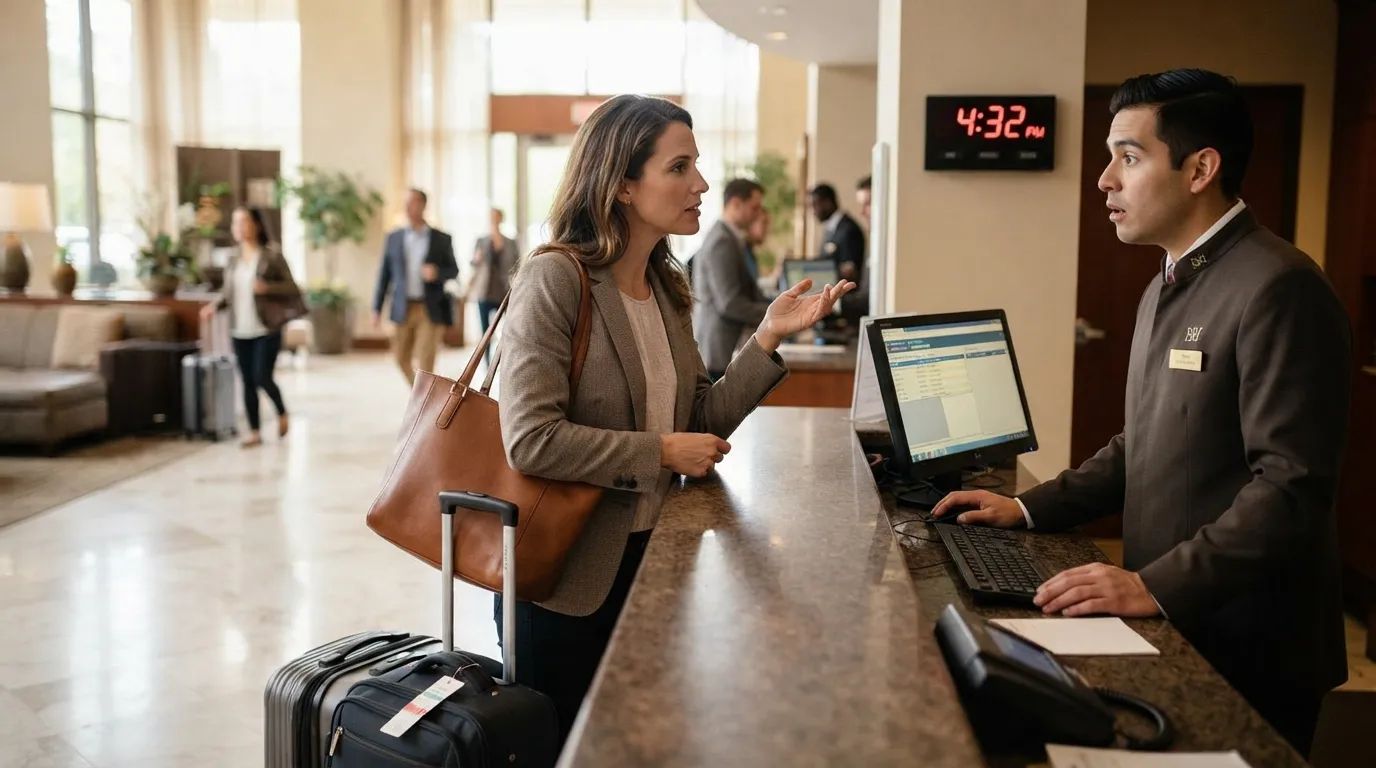
Hotel check-in looks like the dullest two minutes of any trip: hand over an ID, take a key, ride up. But seasoned travelers are quietly doing small things at that counter that the line behind them never catches.
Each move has a reason, drawn from what front desk advice, safety guides and travel writers recommend. The one at #1 happens before the key is even in your hand.
#17 – The One-Word Fix at the Key Encoder
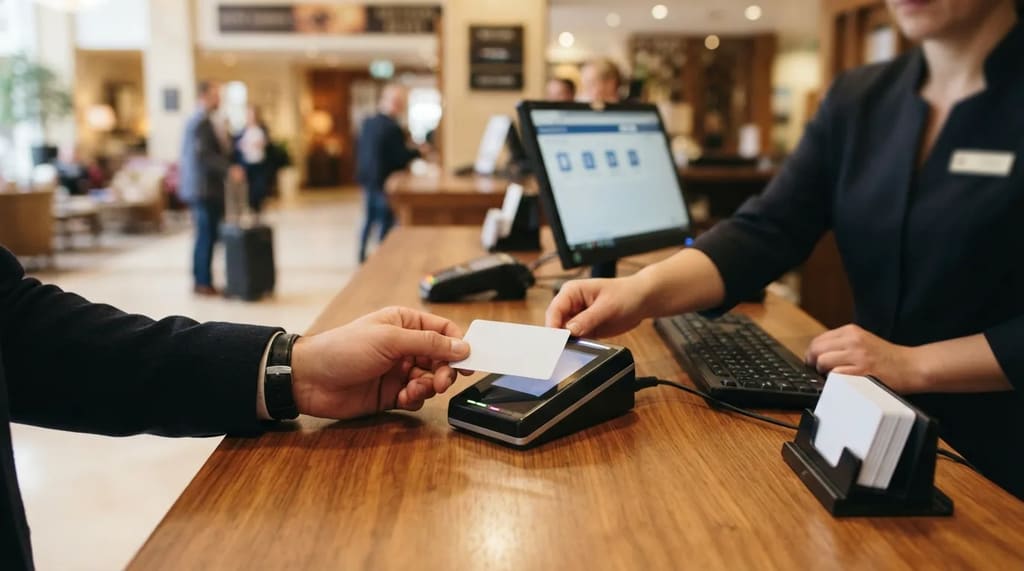
A dead key card is the most common check-in hiccup. Veterans know exactly how to word the fix.
Selecting “new key” by mistake is one of the most common reasons a card stops working. That’s why experienced guests listen to what the agent is doing at the encoder.
Say “duplicate key” rather than “new key” if others in your room still have working cards. That’s the wording one key card guide recommends, and re-encoding takes seconds.
Before heading back downstairs, they try the card two or three times with a slow, steady presentation. That small step can save a trip to the desk.
But the next card myth is one most guests still believe, and it’s #16.
#16 – They Don’t Fear the Key Card
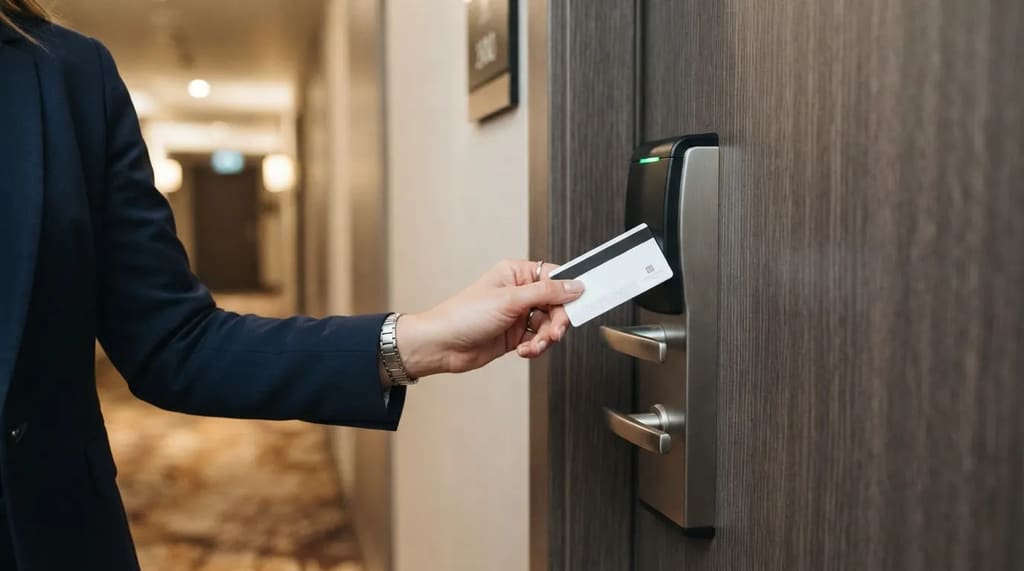
The most repeated key card rumor is also one of the easiest to debunk.
Your key card holds far less than most people assume. Here’s the quick breakdown.
Fast Facts
- Not on the card: your home address, phone number or credit card number1
- On the card: room number, check-in date, check-out date and check-out time2
- If it charges to your room: likely a few letters of your last name and your account number
Demagnetizing is real, but it isn’t the only reason a card fails. Phones, credit cards, wear and excessive heat can all affect the stripe, and so can a dirty encoder or a dead lock battery.2
Next up is a request that costs nothing, and it’s #15.
#15 – They Ask Where the Noise Lives
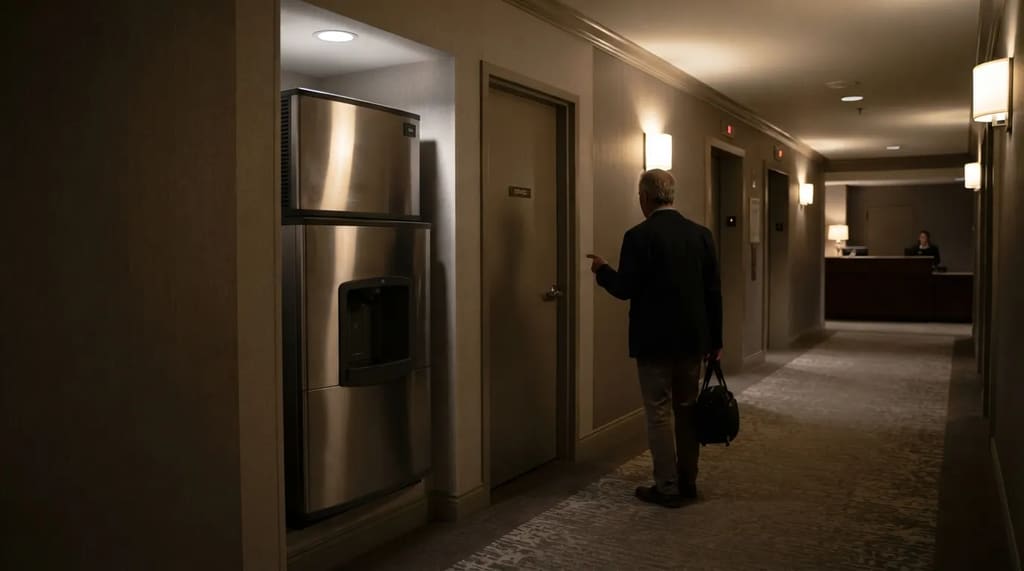
Experienced travelers choose their neighbors before they ever see the room.
Rooms in the same hotel can offer wildly different nights depending on location. Most guests only discover the problem at 2 a.m.
So veterans ask for a room away from these noise magnets:
- Elevators
- Ice machines
- Housekeeping closets
Room assignments aren’t locked in until you actually check in. That makes this a request agents can often honor on the spot.
You can also get specific. Some hotels can accommodate a preference for morning sunlight or shade if you ask.
But there’s a different room request that experts say beats asking for an “upgrade,” and it’s #14.
#14 – They Ask for a Corner Room
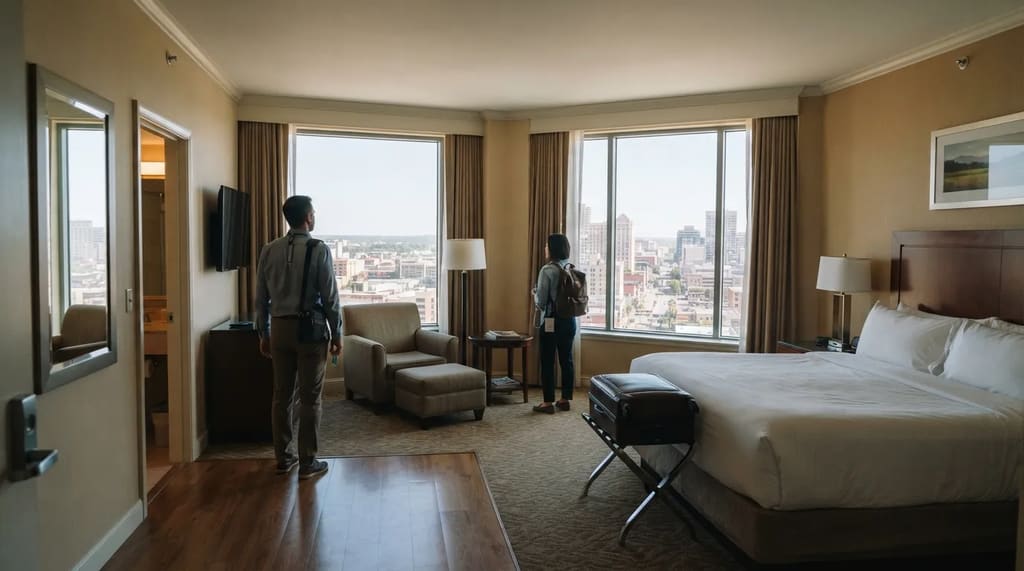
The most underused phrase at the front desk isn’t “upgrade.”
Instead, ask specifically for a corner room. Many times there’s no charge to request one, and many travelers never think to ask.3
One travel writer ties the trick to floor-plan geometry, not marketing. Corners can leave extra square footage that gets folded into the room.3
It’s not a guarantee, though. Upgrades are never certain unless confirmed in advance.4
Still, the next habit works before you even reach the counter, and it’s #13.
#13 – They Say Their Status Out Loud
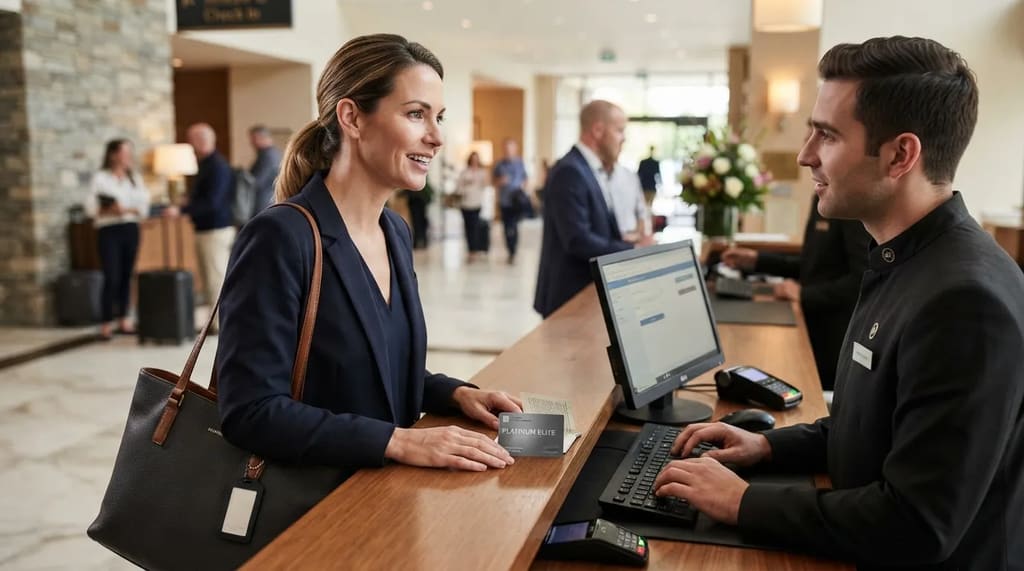
Loyalty membership only works if the person typing knows about it.
Members should always mention their status at check-in, because it can improve upgrade chances. Seasoned guests never assume the system will do it for them.
When a hotel overbooks a room category, loyalty members are often first in line for upgrades. Staying quiet means giving that edge away.
Business travelers have another angle. Mentioning your title or company can help, because hotels value guests who are likely to return or spread the word.
Now for a detail that can change how an agent sees you, and it’s #12.
#12 – They Mention the Occasion (If It’s Real)
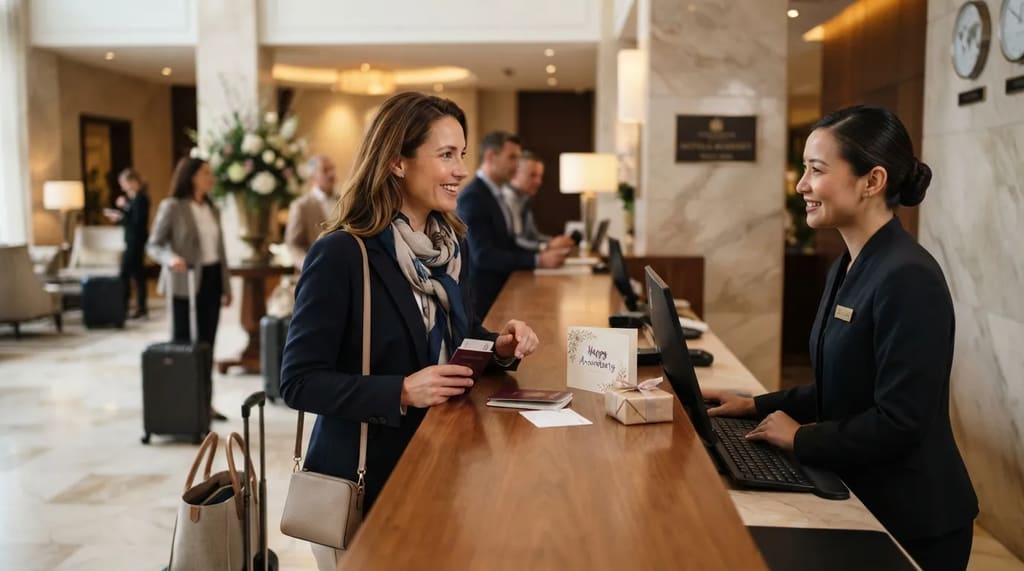
A single honest sentence can change how the agent treats your reservation.
You have a better shot at an upgrade if you’re marking a milestone birthday or anniversary. Saying you’re celebrating something helps.
One travel writer says a real occasion paired with a specific ask gets remembered longer. Notice the word “real,” because invented stories tend to fall apart.
Timing matters too. Put the note in as early as possible, ideally during the original booking.
But the next tip is where travel experts actually disagree, and it’s #11.
#11 – They Time Their Arrival (and Argue About It)
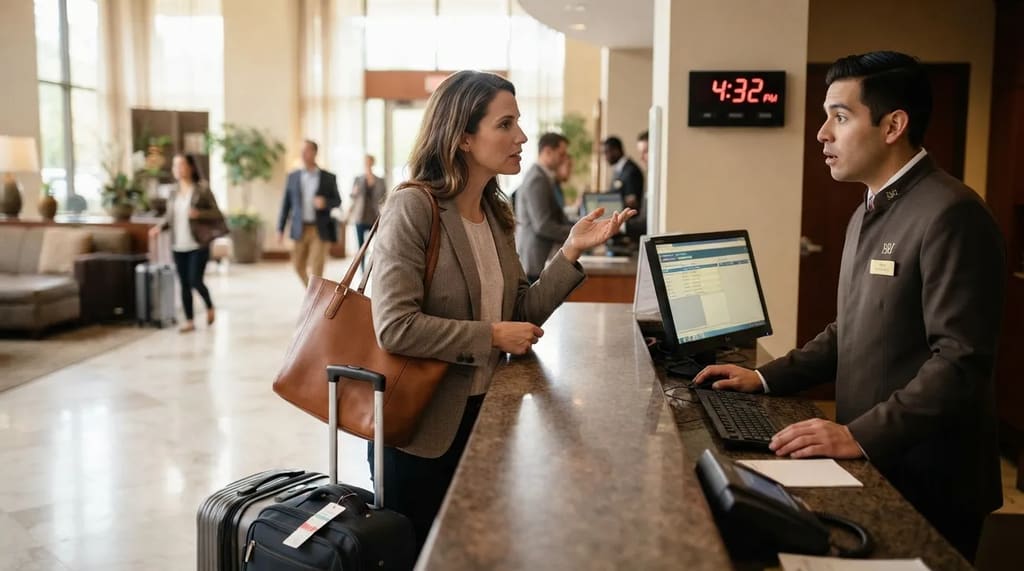
Here’s a tip that sounds like a hack and carries a real catch.
Some writers say mid-to-late afternoon is the best time to ask for an upgrade, once housekeeping has turned over more rooms. Others say 4 PM or later helps, since the hotel can see which rooms are still open after early check-outs and cancellations.
But arriving late can cost you the best room. Other guests could snag a preferred room before you do.
And if the hotel is fully booked, the whole strategy turns into a gamble.
And the next mistake is one almost every traveler makes without noticing, at #10.
#10 – They Never Stack Their Requests
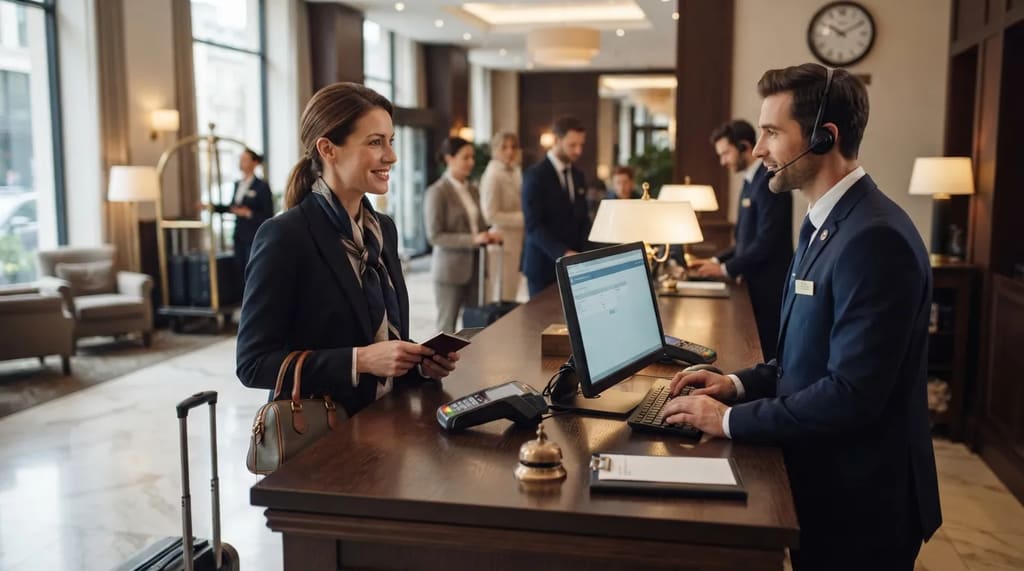
Asking for too much at once is the quietest way to lose an upgrade.
Travel writers who’ve tested this warn against pairing an early arrival with an upgrade ask. Stacking requests piles pressure on a staff member who’s already juggling a busy shift.
The fix is to separate the two. Arrive on time, then ask about a better room once you’re at the counter.
Experienced guests treat each ask as its own small favor. One clear request is easier to say yes to than three.
Next, the setting for your ask matters more than the words, and it’s #9.
#9 – They Let the Line Clear First
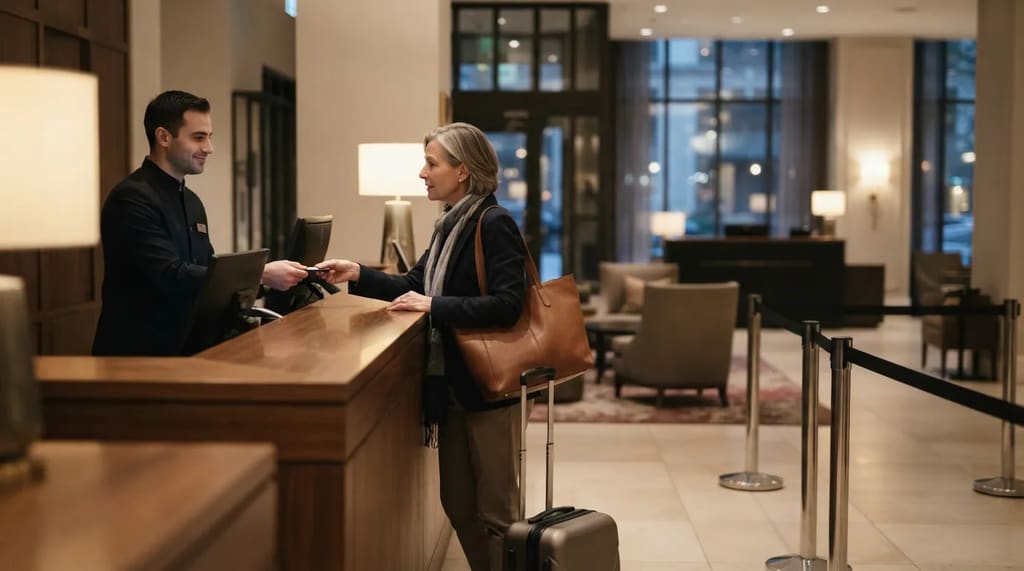
The best upgrade asks often happen when nobody is watching.
The hotel can’t upgrade everyone in line, so granting a public request risks a chain reaction of demands. A quiet ask once the counter clears gives staff room to say yes without an audience.
Pushing harder is the real mistake. One guide says not to keep asking if they’re sure, compare yourself with other guests, or suggest that an empty-looking hotel must have vacant suites.
Many travelers still treat a loud, confident ask as the winning move. The advice from people behind the desk points the other way.
But even the wording of the ask is up for debate, and that’s #8.
#8 – They Skip the Word “Upgrade”
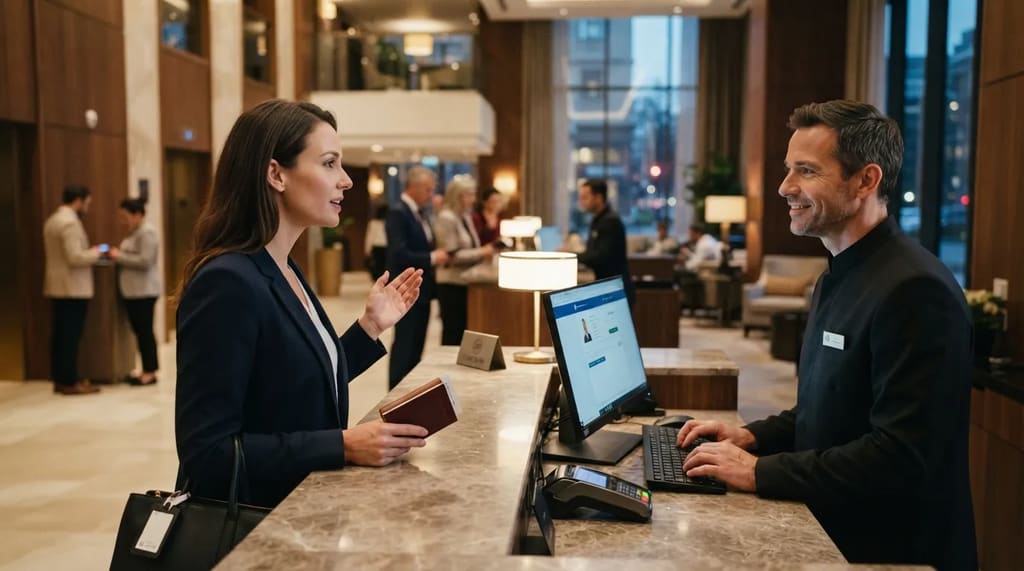
Some experts say the most obvious word at the desk is the wrong one.
One writer advises against saying “upgrade” and suggests simply asking whether a higher floor or a room with a specific view is available. The idea is to give the desk something concrete to say yes to.
Other writers say the opposite: be specific and ask directly. A clear ask is easier to grant than an open-ended one.
Quick Compare
- Camp one: drop the word and ask for a higher floor or a specific view
- Camp two: say it directly, but name exactly what you want
- Where they agree: a named floor, view or side of the building beats a vague hope
Next, the move that looks like giving up but isn’t, at #7.
#7 – They Hand Over the Bags and Walk Away
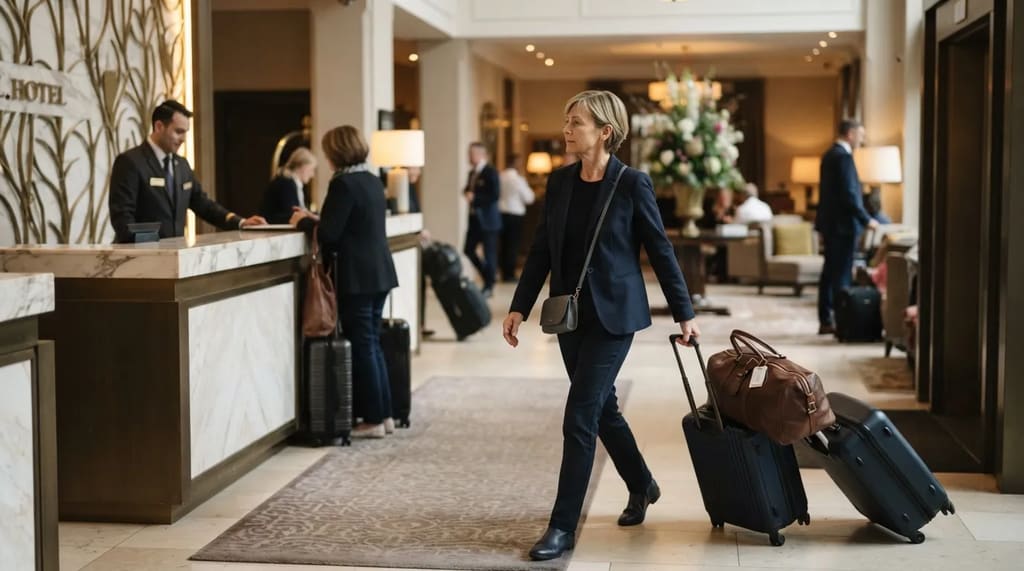
Standing at the counter hoping for a better room is often the weaker play.
If your room isn’t ready and no upgrade is available yet, walking away is often smarter than waiting. Rooms keep turning over while you’re gone.
Hotels usually wait to change your room until you physically check in. The hotel may or may not upgrade you in advance.
So a dropped bag and a short walk can work in your favor. The counter isn’t where the room gets ready.
But the next habit is about what you say, and it’s not about rooms at all. It’s #6.
#6 – They Keep Their Travel Details Vague
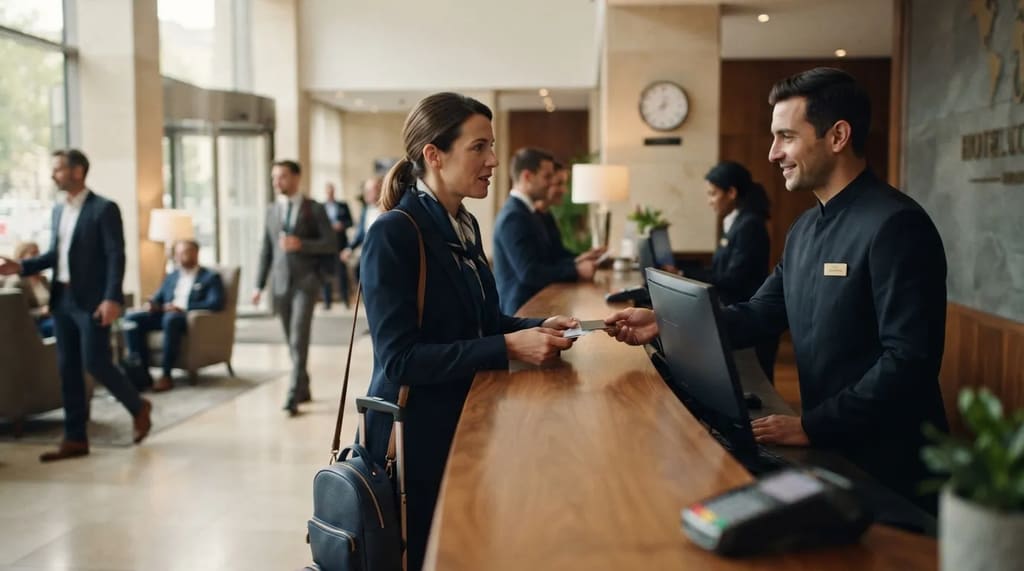
Experienced travelers treat the front desk like a public space, because it is one.
There’s no need to volunteer personal information at check-in. If the desk makes small talk, keep your answers friendly but general.
Instead of “I’m traveling by myself,” one safety guide suggests saying “I’m in town for a few days.” The less strangers know about your plans, the better.
Another guide agrees that solo travelers shouldn’t announce it out loud. Anyone in the lobby can hear.
Coming up is a question most guests forget to ask, at #5.
#5 – They Ask How to Reach Help Before They Need It
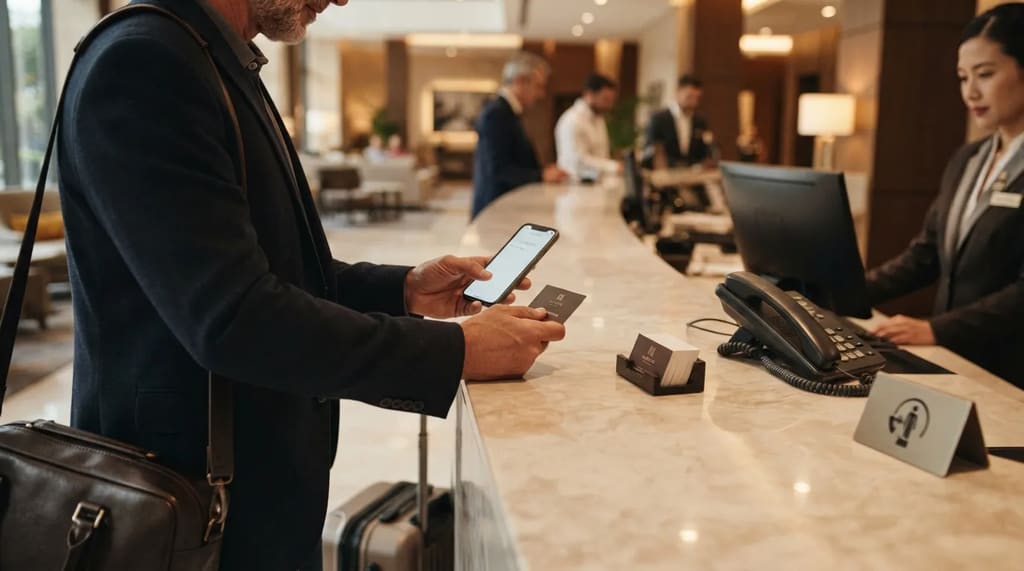
The most useful question at check-in has nothing to do with the room.
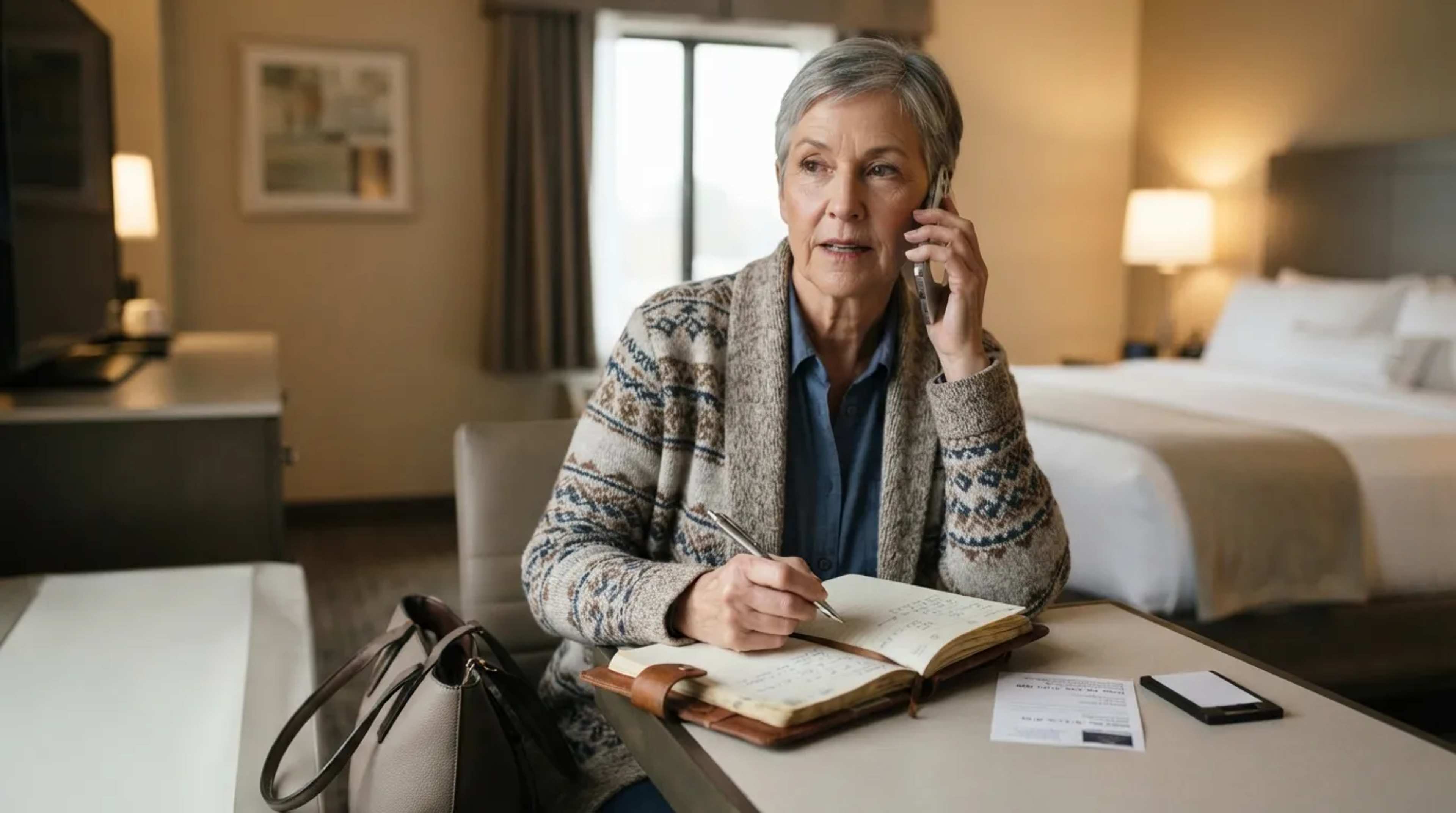
Ask how to call the front desk if you need help. While you’re there, ask what number to dial in an emergency.
One guide suggests saving the front desk’s direct line in your phone before you ever need it. It also recommends programming the local emergency number.5
Some travelers go one step further. They pick up a few of the hotel’s business cards to carry with them.6
But the next choice is one where the advice doesn’t fully agree, and that’s #4.
#4 – They Choose the Floor on Purpose
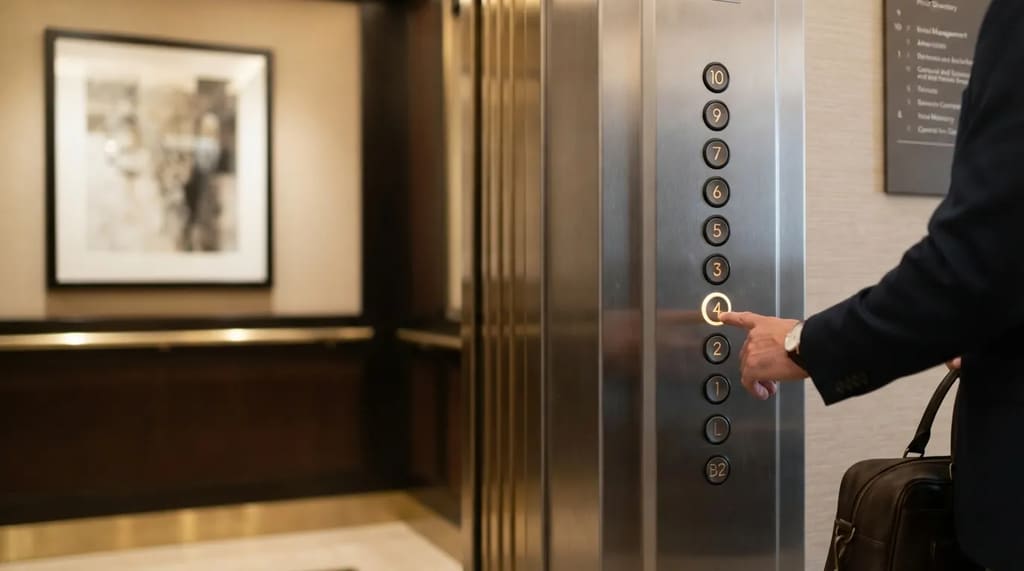
The floor number is a safety decision, not a view preference.
Here’s how the guidance stacks up.
At a Glance
- One guide: second floor or higher, but not so high that evacuation gets difficult, typically the 3rd to 6th floors
- A university travel-safety guide: the 3rd to 5th floor6
- The shared idea: avoid the very bottom and the very top
Even the experts don’t agree on the exact range. What they do agree on is that the middle is safest.
Many travelers still chase the highest floor for the view. Safety writers weigh evacuation more heavily.
Related Stories From Travelbinger


Next, a step that happens in the first thirty seconds inside the room, at #3.
#3 – The Bags Go in the Bathroom First
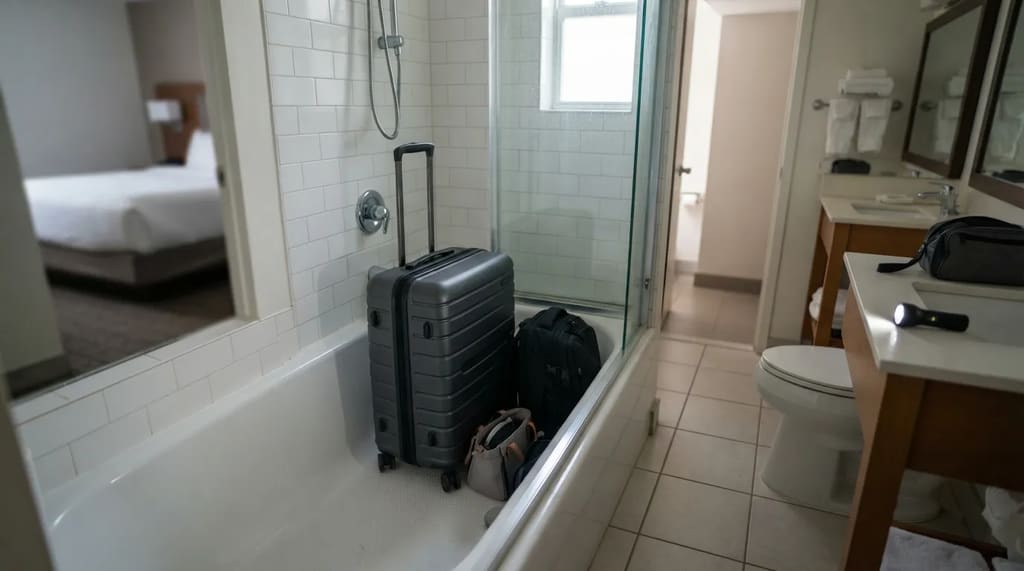
Before anything touches the bed, experienced travelers claim the bathroom.
They leave luggage in the bathroom or bathtub, because bed bugs are less likely to harbor on hard, non-porous surfaces. Then they turn to the bed.7
The most telling spot is the mattress. With a flashlight, they check the seams, box spring, headboard and nearby furniture for reddish-brown bugs, black fecal spots or translucent shed skins.7
If there’s evidence, they request another room that is not adjacent to, directly above or directly below the original.7
But the next checks take even less time, and they’re hiding at #2.
#2 – They Test the Room Before They Trust It
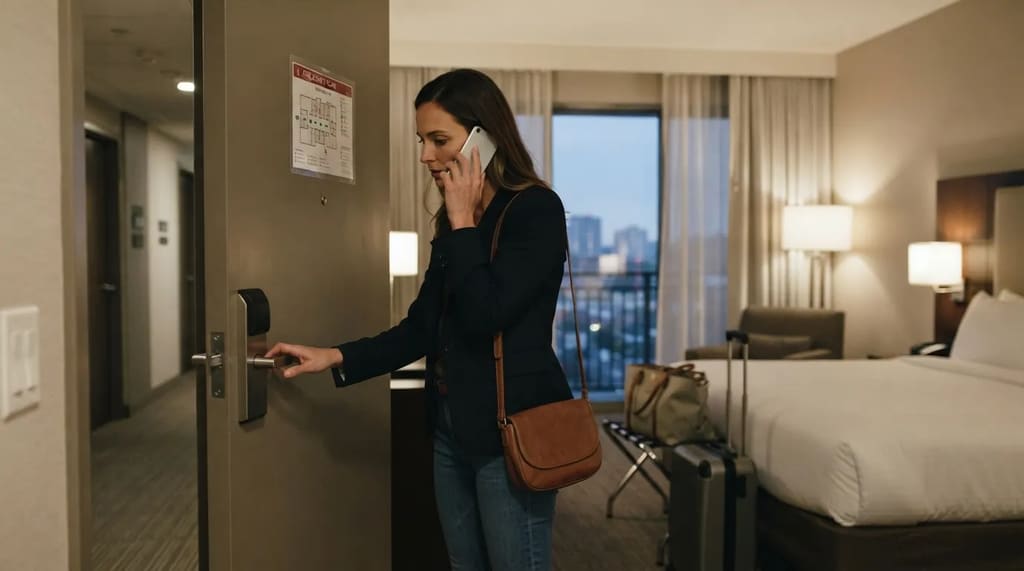
A fast sweep of the room is routine for people who travel often.
They check the locks on the windows and balcony door as soon as they arrive, and tell the front desk if any aren’t working. They check again each time they return, since housekeeping may open them and forget to close them.
One guide also says to make sure the in-room phone can call the front desk. Another suggests looking at the back of the door for the fire safety plan to find the nearest exit.
And if someone knocks claiming to be staff, they call the front desk to confirm the visit was authorized.
But the habit that tops this list happens at the counter, before the key is even in your hand. It’s #1.
#1 – They Never Let the Room Number Be Spoken
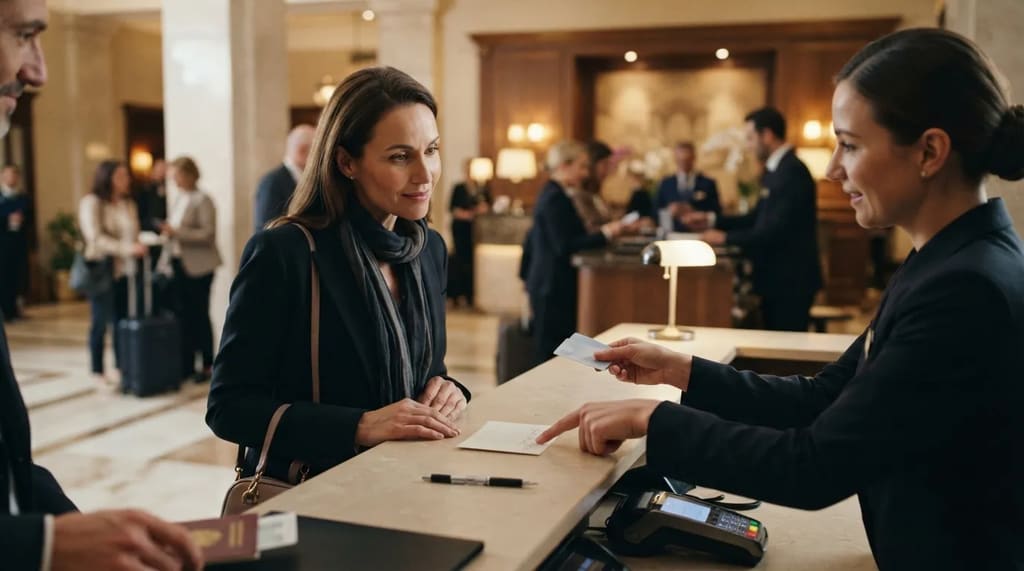
This is the move almost nobody in the line behind you notices.
Hotels train staff not to say guests’ room numbers out loud, for safety. They’re supposed to point to it when handing over the key cards.8
Mistakes still happen, and experienced travelers don’t gamble. If the employee announces your number where others can hear, politely ask for a different room or have it written down.5 8
Many travelers ask for the number in writing from the start. One expert suggests saying that, for personal safety, you’d rather it not be spoken aloud.
So what ties all 17 habits together? None of them is a hack, and none of them is loud.
Experienced travelers ask small, specific questions at the right moment and keep quiet about everything else. Most of it is invisible from the line behind them.
Which of these habits do you already do on autopilot, and which one surprised you most?
Bonus #18 – The Insider Move That Protects Your Wallet
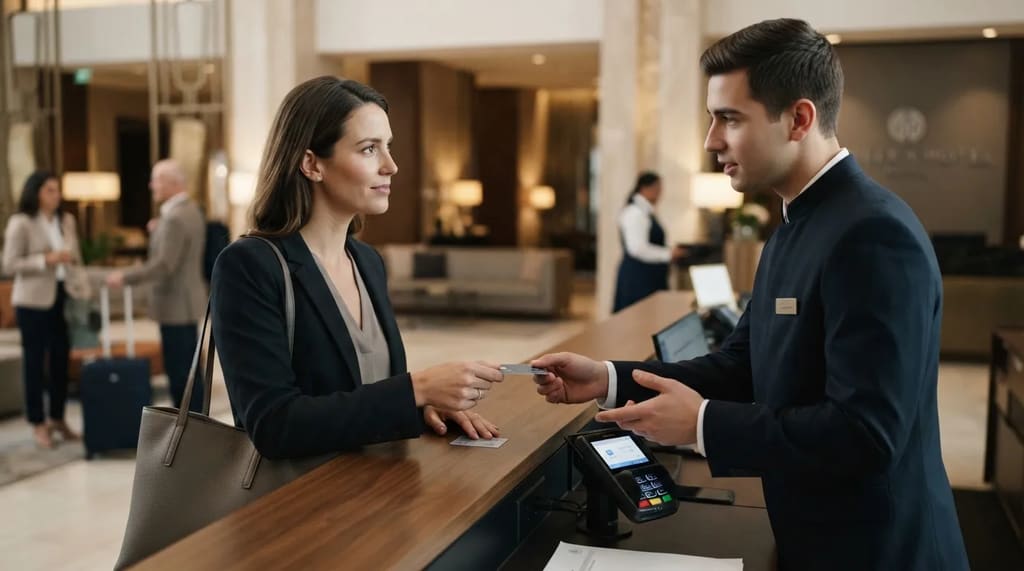
Most guests focus on the room and forget the money. Experienced travelers ask one question at the desk: “How much are you placing on my card as a hold?”
Hotels commonly place an authorization hold for incidentals on the card you give at check-in. On a debit card, that hold can tie up real cash in your checking account, sometimes for days after you leave.
- At check-in: use a credit card for the hold, and ask the agent for the exact hold amount.
- The night before checkout: review your itemized bill on the TV, the hotel app or at the desk, and flag any charge you don’t recognize while you’re still in the building.
- At checkout: ask for a final receipt by email showing a zero balance, and keep it until the hold drops off your statement.
Fixing a wrong charge at the counter is far easier than disputing it from home weeks later.
- KTVB Verify Key Cards: https://www.ktvb.com/article/news/verify/travel-verify/hotel-key-card-store-personal-financial-credit-card-information-fact-check/536-c7b9706e-0f8c-40a2-8976-04dea392c544
- Mews Hotel Key Cards: https://www.mews.com/en/blog/hotel-key-card
- Explore Corner Room Tip: https://www.explore.com/1872963/hotel-request-corner-room-space-upgrade/
- Hotel Upgrade Practical Tips: https://drifttravel.com/amazing-hotel-upgrades-with-upgradus/
- Travel Risk Calculator Hotel Guide: https://www.travelriskcalculator.com/hotel-safety-guide
- UT Dallas Travel Safety: https://ie.utdallas.edu/?p=16
- Purdue Bed Bug Prevention: https://www.extension.entm.purdue.edu/bedbugs/prevention.php
- Yahoo Hotel Safety Tips: https://travel.yahoo.com/advice/safety/article/travel-security-tips-for-staying-safe-at-hotels-153420951.html