


Hotel room assignments are often made by software, but a person at the front desk can override them. That is why one small, specific request can move you closer to the elevator, down to a lower floor, or into a bathroom with a bar to hold.
Many of the 15 requests below cost the hotel nothing to grant, and they work best when you phrase them concretely and make them before you arrive. One of them involves the refrigerator in your room, and the obvious way to use it is not always the safe one.
#15 – The Senior Rate, Asked for by Name
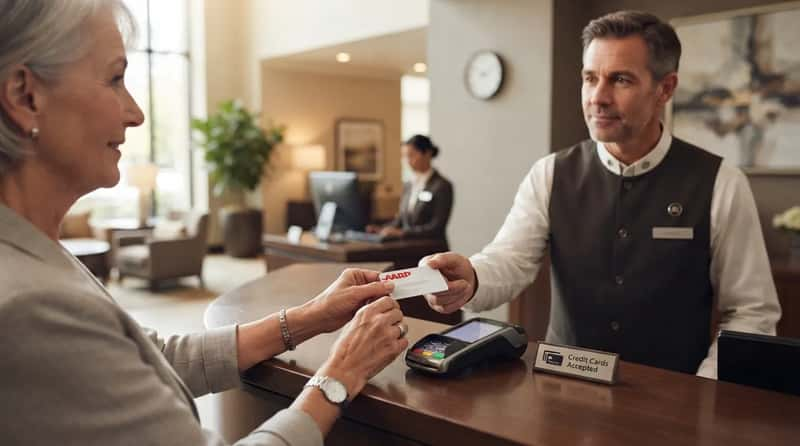
Several chains publish an age-based rate, and the cutoff differs by brand. In Clark.com’s chain-by-chain list, Hilton offers up to 6 percent off at 65 and older, while Choice Hotels offers up to 10 percent at 60 and older or to AARP members.1 2
If you are younger than the stated age, mention an AARP membership when you book, because you may still get the discount or a rate better than the senior one.3 On a $200 room, 10 percent is $20.
That is worth thirty seconds on the phone and not worth rearranging a trip around.
The rate sets what you pay, but it says nothing about what is on the bed when you reach the room.
#14 – Extra Pillows and Bedding, Delivered to the Room
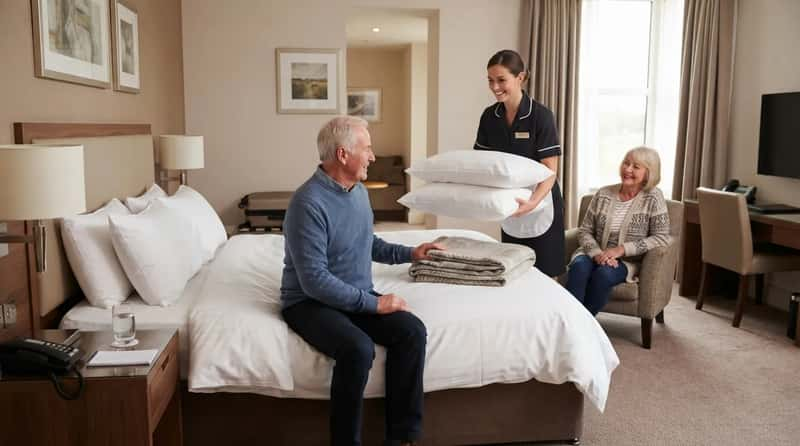
Extra pillows are one of the most routine special requests, and requests like this are often free. The ones that can carry a charge are late checkout, early check-in and rollaway beds.
Name the item and the number when you ask, for example two more pillows and a second blanket. Ask at check-in so they are waiting, or call housekeeping once you have seen how the bed is made up.
If the extra is a bed, ask the price first.
#13 – The Bed Type and Bed Height You Prefer
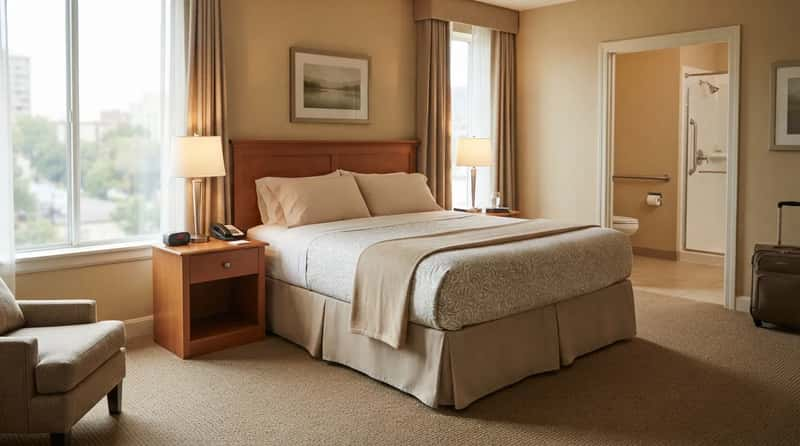
A specific bed is an ordinary thing to ask for, and common requests include one king bed or two queens or doubles. The hotel may not be able to swap you later, since a particular room type may not be free.
So book the type you want instead of hoping to change it at the desk.
Bed height is the detail booking pages rarely show. Travel guidance for older guests suggests calling the hotel to ask about grab bars, shower seats, bed height and distance from the elevator.
If a low bed is hard on your knees or back, I would make that call before paying extra for a view.
At a Glance
- Book the bed type you want, such as one king or two queens, instead of planning to swap at the desk.
- Ask the hotel directly about bed height, since booking pages rarely list it.
- Ask about grab bars and a shower seat on the same call.
- Ask how far the room sits from the elevator.
A bed that suits you still has to be left by a set hour, and that hour can sometimes move.
#12 – Late Checkout, Requested the Evening Before
Late checkout is the request where the cost depends on the day. The fee can be a flat sum or a half-day rate, yet when the hotel is not full, that room is not going to anyone else.
Timing carries the request. Ask the evening before rather than at 11:50 a.m., and expect better odds on quiet nights and midweek stays.
A no on a sold-out Saturday does not mean the desk is being difficult.
Some member rates already include it: AARP members get late checkout at Motel 6 and Studio 6 locations.3 Check that before you pay for it separately.
A generous checkout time does little good if the room is a long walk from the elevator you must use to reach it.
#11 – A Room a Few Doors From the Elevator
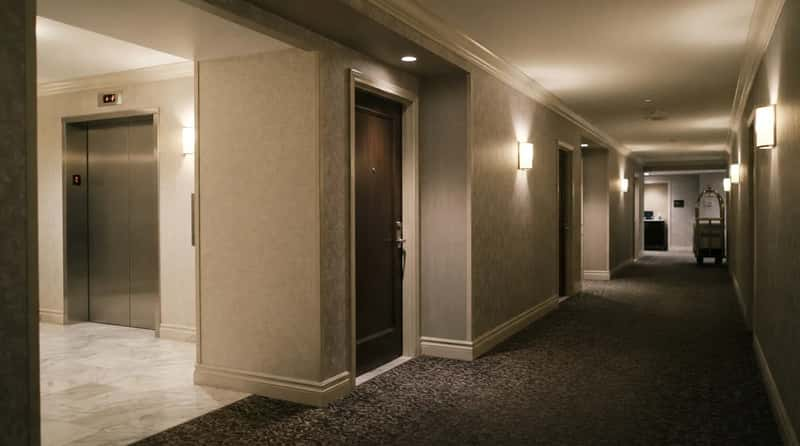
Software often makes the assignment, but a human can override it, so name what you want in plain terms. Use phrases like close to the elevator, lower floor or short walk from the lobby, and ask roughly how far the room is before you accept it.
A hotel can have an elevator and still make you cross a long corridor to reach it.
I would not ask for the room right beside the elevator. It can be the loudest in the building, because ice machines, service doors and late arrivals tend to cluster there, so a room a few doors away keeps most of the convenience.
That settles the distance along the hallway, but it leaves open which floor the hallway is on.
#10 – A Lower Floor, With One Exception
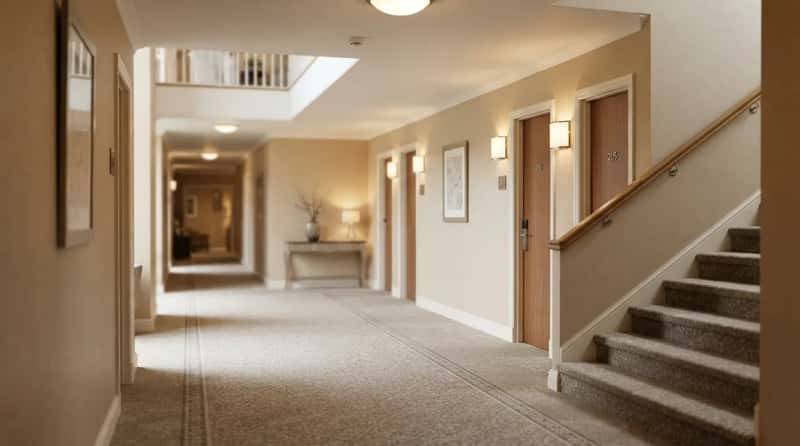
A lower floor makes sense if you would rather not lean on the elevator, and you can ask for a ground-floor or second-floor room when you book. The exception is the ground floor itself, because rooms near parking lots, pools or entrances can be noisier.
Upper floors can be quieter, though that has to be weighed against how much you depend on the elevator. If stairs are not your problem, my pick is the second floor.
It keeps the walk short and puts a level between you and the entrance noise.
Quick Compare
- Ground floor: No elevator needed, but rooms near parking lots, pools or entrances can be noisier.
- Second floor: A short walk, with a level between you and entrance noise.
- Upper floors: Can be quieter, but you lean harder on the elevator.
#9 – A Short Walk From the Lobby and the Parking Garage
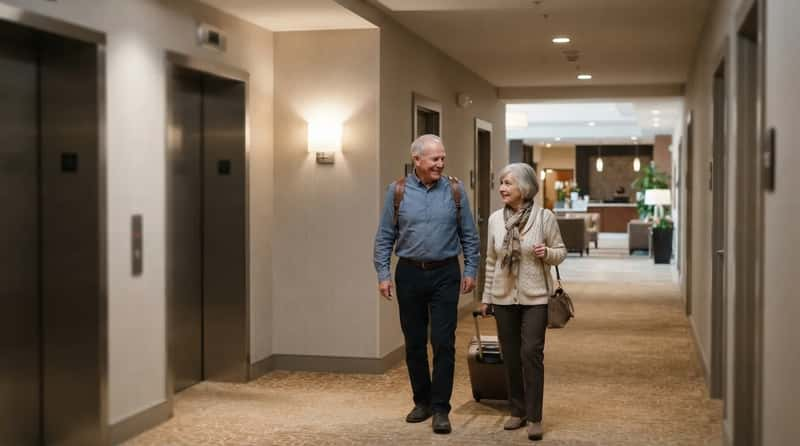
Before you ask for a floor, ask about the route. Is there an elevator from the parking garage, and how far is the elevator from the lobby?
Those two answers tell you more about a long day than the star rating does.
You can also ask for rooms near the lobby or close to hotel dining. You cross that distance several times a day, so a room that saves fifty steps saves hundreds by the end of a three-night stay.
Convenience has a price in noise, because lobbies, entrances and elevators are where the traffic is.
#8 – A Room Away From the Ice Machine and Service Closet
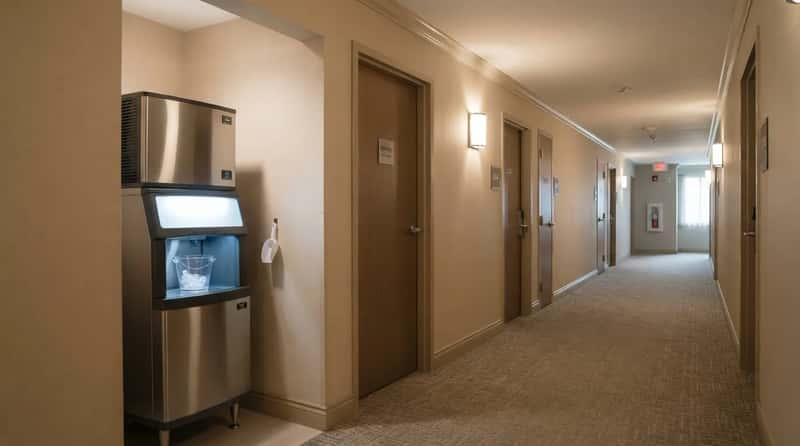
A request for a quiet room works better when it names the sources of noise. Elevators, ice machines, event rooms, loading areas and late-night venues are the ones to ask about, and a housekeeping closet or a busy public area directly below you is worth checking too.
Quiet means different things to different guests. Some are fine beside an elevator but cannot ignore music from a restaurant or rooftop venue, so say which sound bothers you.
This pulls against the elevator advice above. I would ask for both conditions at once, a few doors from the elevator and clear of the ice machine, and accept a different view if that is what it takes.
A note on the reservation is only as good as the next person who reads it, which is why the way you record a request matters.
#7 – A Request in Writing, Confirmed by Phone

Writing the request into the booking’s special-requests box is only the first step. The call is what confirms it, and guidance for older travelers suggests phoning a week before arrival to make sure the request was recorded.
- Put the request in the booking’s comments field, in specific words.
- Confirm by phone or email a few days before arrival.
- Repeat it briefly at check-in, before the key is coded.
If you will only do one of these, make it the phone call, because it is the step that tells you whether the hotel saw the note.
#6 – A Preference Saved to Your Guest Profile
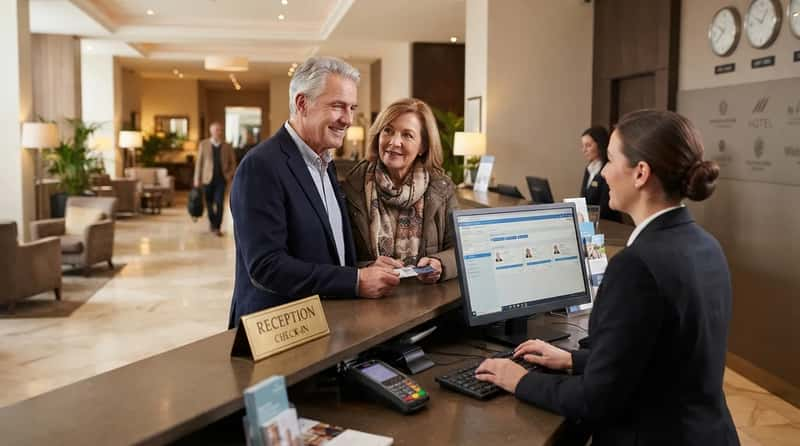
If you return to the same property, say for a yearly visit to family, the first stay can set up the next. On a return visit you can request a different floor or side of the building, and the hotel may note your preference on your profile.
Repeat guests often get better assignments over time.
Chain loyalty programs add a second route. Marriott Bonvoy, Hilton Honors and IHG One Rewards let you earn points toward free nights, room upgrades and late checkout, and points sometimes bring a room on a higher floor.
For a one-night stop on a long drive, I would not bother with any of this. For a hotel you will see again, it is the cheapest way to stop repeating yourself at the desk.
Worth Knowing
- A saved profile note can carry your floor or side-of-building preference to the next stay.
- Marriott Bonvoy, Hilton Honors and IHG One Rewards all let points go toward free nights and upgrades.
- Late checkout is among the perks points can sometimes buy.
- It pays off most at a hotel you will visit again, not on a one-night stop.
The profile can note where you want to sleep, but only a conversation at check-in fixes a room that does not match.
#5 – A Room Change Before You Unpack
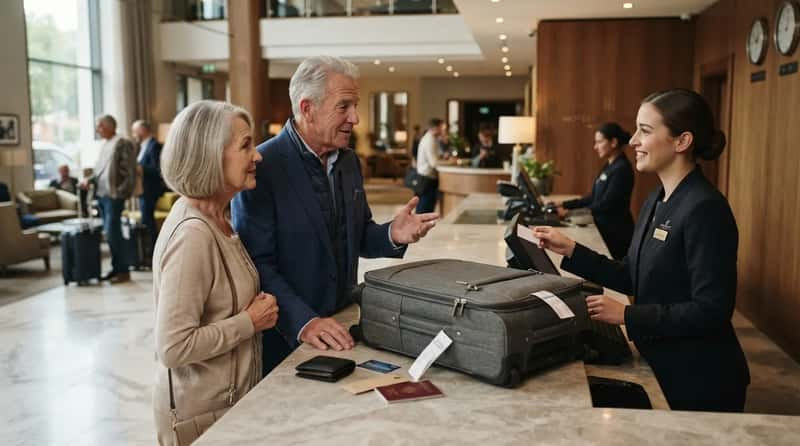
The check-in moment is the best time to say the room is wrong. If the room is near the elevator or on a low floor despite your request, ask right then whether a quieter room is available.
Timing matters here as it did with late checkout. Ask before the key is coded, because once you are in the room, moving is harder.
Stay flexible about views or floor level if quiet is the higher priority. I would take the quieter room over the nicer view nearly every time, since you will sleep in the room far longer than you will look out of it.
A room change can fix noise and distance, but it cannot add a grab bar that the building never installed.
#4 – A Walk-In Shower or a Tub With a Seat, Described First
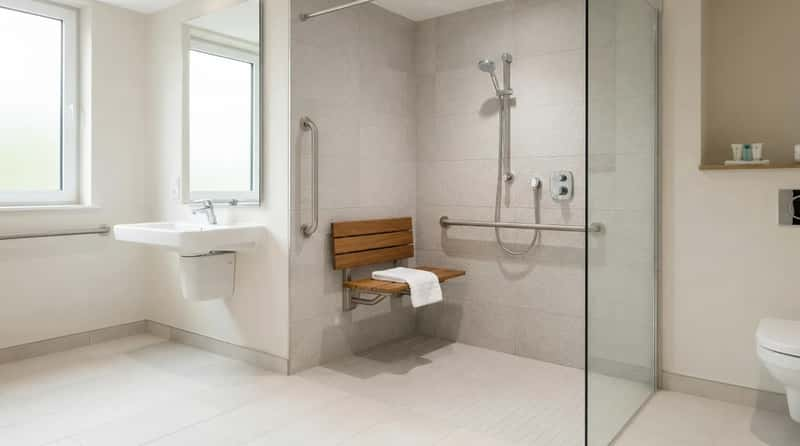
In many bathrooms the shower is a tub you have to climb into. In an accessible room you will find either a transfer shower with a seat or a roll-in shower with no curb at all.4
Grab bars are not a given elsewhere. They are required in accessible guest-room bathrooms, but standard rooms do not need them unless the room is designated or altered as accessible.
So a photo of the bathroom is not enough, and you should ask which kind of shower it is before you book.
Federal rules back the question: hotels must describe accessible features in enough detail for you to judge whether a room meets your needs.5 6 Reviews help too, particularly ones that mention grab bars, a shower seat and a first-floor room.
#3 – An Accessible Room, at the Same Price as a Standard One
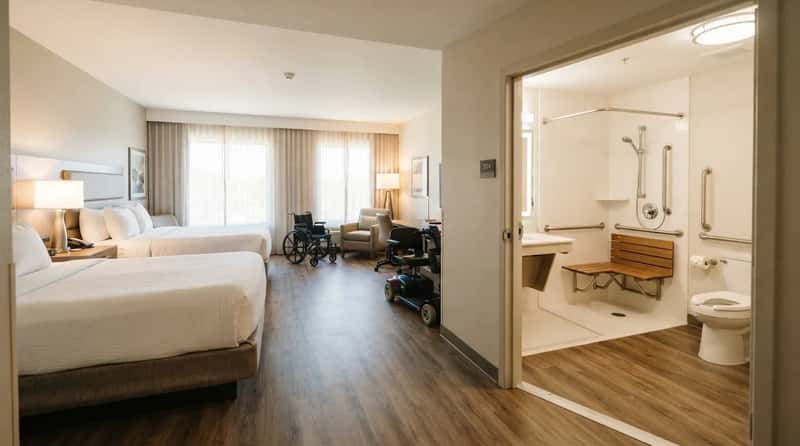
Accessible rooms are built for guests with disabilities, and the need is what counts, not the birthday. If you have trouble with stairs, balance or tight bathrooms, you can ask for one.
This request settles all the bathroom questions above at once. On price, hotels must offer accessible rooms at the same price as standard rooms of the same type, with no upcharge for grab bars or floor space.4 6
Book it in advance. Under the federal reservation rule, hotels must let you book accessible rooms the same way as standard ones, hold them until other rooms of that type sell out, and guarantee the room you booked.5
Waiting until check-in gives those protections nothing to work with.
Mobility features are only half of what an accessible room can mean, since some are built around hearing instead.
#2 – Visual Alarms and Door Signals for Hearing Loss
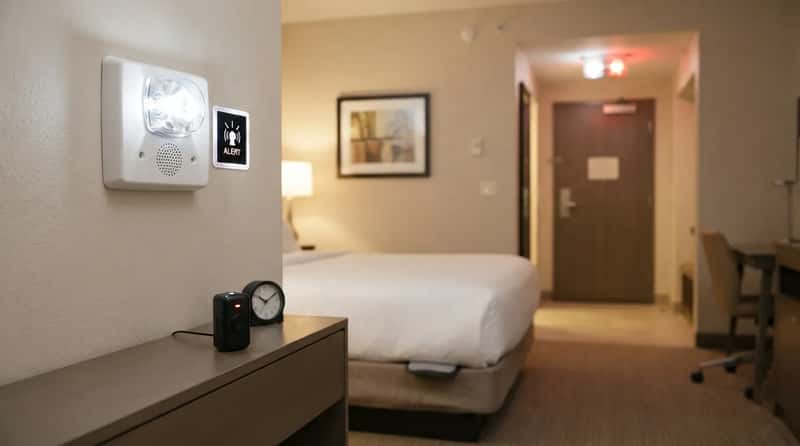
A room with communication features differs from a mobility room in what it signals. It has visual strobe alarms and a visual door-knock indicator, while its door width and bathroom can be standard.
The reason is plain: if the fire alarm goes off, a guest who is deaf needs a visual signal to know there is an emergency.4
If you take your hearing aids out to sleep, this request deserves more weight than a view or a floor. A hotel’s supply of these rooms is limited by its size, so ask when you book and again on the confirming call.
Those devices are built into the room, while the one item that travels with you, medicine that needs cold storage, depends on how the room is equipped and whom you ask.
#1 – Cold Storage for Your Medication, Not the Mini-Fridge
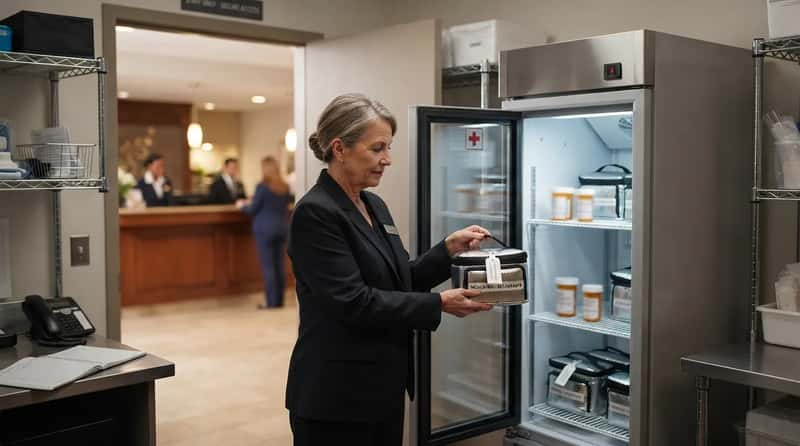
Insulin, blood thinners and hormonal medications are among those that can require refrigeration. The tempting answer is the mini-fridge in the room, but hotel mini-fridges can sometimes make insulin too cold, so check the temperature before storing it.7
Cornell’s community education blog notes that most hotels can place a refrigerator in your room if you request it in advance.8 If there is none, ask the front desk to store it, since most hotels have a secure refrigerator behind the scenes.
This is the one request where I would not rely on the in-room fridge at all unless you can check it. Use the same advance call from request #7, and keep a small insulated bag with freezer packs as a backup.
Ask your pharmacist what temperature range your medicine tolerates.
Most of these requests share a shape: a specific ask, made early, to the person who can act on it. A vague wish at the counter at four in the afternoon gives the clerk little to work with, while a concrete note followed by a call gives the same clerk a task.
So sort your own list by what is at stake. Settle the bathroom, the hearing devices and the medicine first, because those are about safety, and leave the pillows and the floor for the check-in conversation.
Think back to your last check-in: was there one thing about the room, whether the walk to the elevator, the bathroom or the noise, that you only wished you had asked about after the key was already coded?
- Clark.com Hotel Senior Discounts: https://clark.com/travel/hotels-senior-discounts/
- Choice Hotels Senior Rates: https://www.choicehotels.com/deals/senior-rates
- Hotel Discounts Start at 55: https://momswhosave.com/hotels-with-senior-discounts-start-at-age-55/
- ADA Hotel Room Features: https://wcagpros.com/wcag-articles/decoding-the-ada-room-so-you-can-rest-easy/
- ADA Reservation Rule Summary: https://www.justice.gov/usao-co/pr/marriott-international-agrees-address-barriers-making-reservations-accessible-rooms
- ADA Hotels and Lodging Guide: https://adalegallink.com/standards-guide/guide/hotels-lodging
- Hotel Mini Fridge and Insulin: https://4allfamily.com/blogs/diabetes/how-to-store-insulin-in-hotels-mini-fridge
- Cornell Traveling with Diabetes: https://blogs.cornell.edu/communityeducation/2015/08/10/traveling-with-diabetes
