The last hour of a long flight looks like nothing is happening. Trays disappear, the cabin gets stuffy, and most people stare at the seatback map. Meanwhile, the regulars are quietly busy, and what they do decides whether the first day on the ground is smooth or miserable.
Some of these habits protect your ears, some save you a long wait in arrivals, and some keep you from wrecking your first day. One of them costs nothing, takes two seconds, and shows up in federal injury reports. The countdown starts with the clock.
#16 – Setting Your Watch to Destination Time
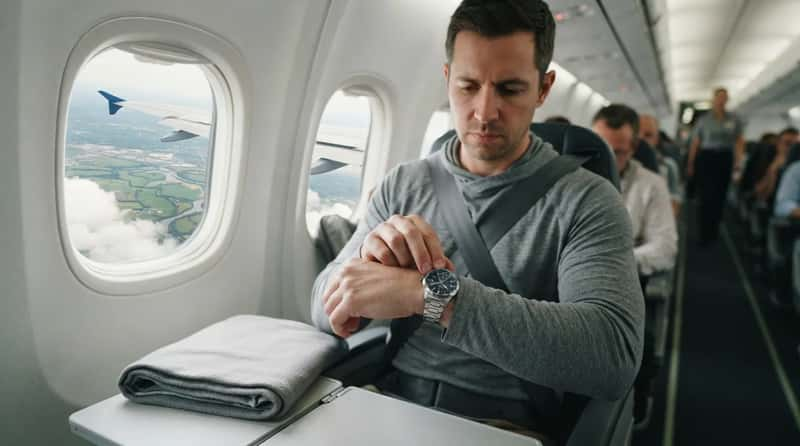
Move your watch or phone to destination time before the descent begins, because the timing advice for your first day depends on it. The CDC’s Yellow Book lists timing meals, sleep and light exposure by the destination time zone among its general tips for managing jet lag.
There is an exception for short stays. For trips under two days, the guidance is to keep sleep, activity and meals on your home time zone rather than trying to adapt.
At a Glance
- Trip under two days: keep sleep, activity and meals on home time.
- Longer stay: time meals, sleep and light exposure to the destination zone.
- Either way: decide before the descent, not after you land.
So before landing you have to decide whether the local clock applies to you at all. If it does, the last hour raises a question of its own: should you be dozing through it?
#15 – Sleeping Only When It’s Night Where You Land
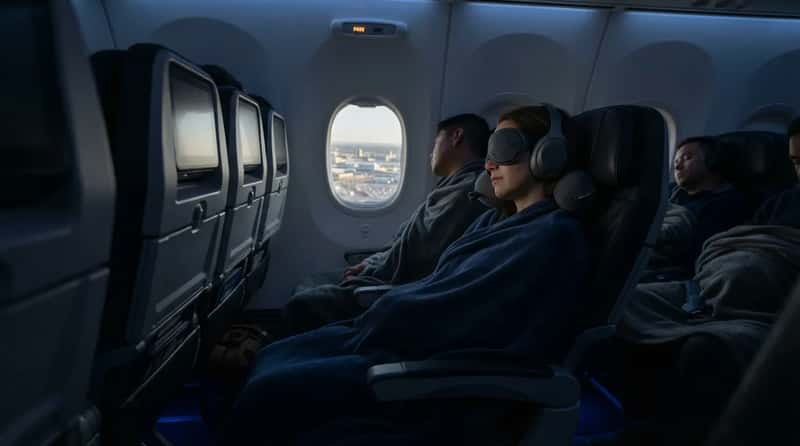
Mayo Clinic’s advice is to try to sleep on the plane if it’s nighttime at your destination, and to resist the urge if it’s daytime there.1 That makes the last hour depend on your route.
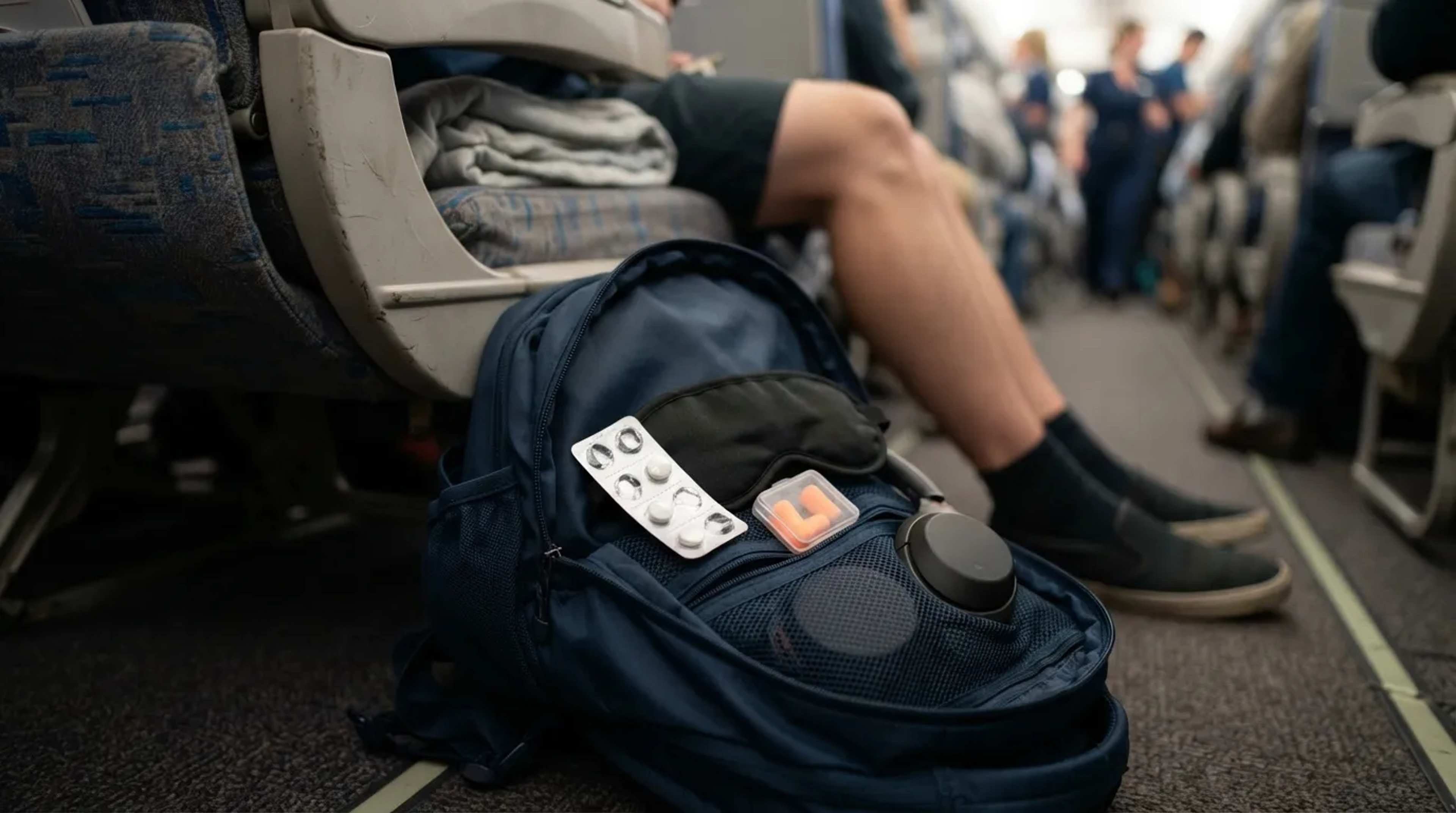
On a morning arrival after an overnight flight, a late doze works against you. Earplugs, headphones and eye masks can help block noise and light for sleep you have planned.
My view is that on a daytime arrival the last hour is better spent awake. Grogginess is no help with forms and lines, and your ears need you conscious on the way down.
#14 – Planning the First Meal and First Walk

The CDC’s Yellow Book advises timing meals, sleep and light exposure to the destination time zone, and maximizing natural light at the destination. The last hour is the cheapest moment to decide where each of those will fall once you land.
Mayo Clinic adds that combining light exposure with exercise such as walking may help you adapt to the new time even faster. A walk outdoors after you check in qualifies, so you do not need a gym or a strict schedule.
Daylight is the strongest of those cues. It can also backfire, which is why the next habit lives in your pocket.
#13 – Keeping Sunglasses Within Reach
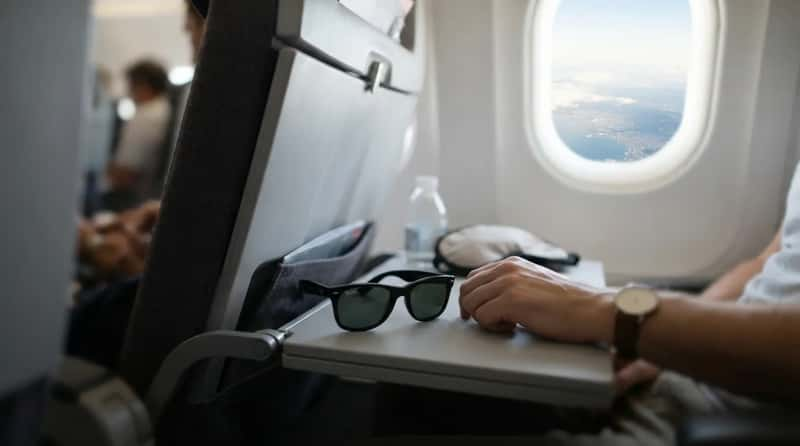
After traveling east, Mayo Clinic says to expose yourself to morning light. After more than eight time zones east, it says to wear sunglasses and avoid bright light in the morning.
The reason is that your body might mistake early-morning light for evening dusk, or the reverse. So the sunglasses belong in a pocket, not in a bag in the overhead bin.
After flying west by more than eight time zones, Mayo’s advice is to avoid sunlight for a few hours before dark during the first few days. For a shorter westward trip, the usual advice is evening light to help you adjust to a later time zone.
#12 – Leaving the Sleep Aid in Your Bag
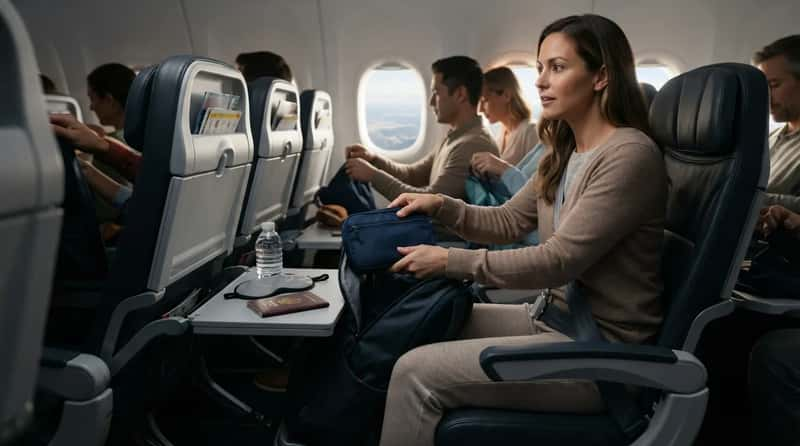
The CDC’s Yellow Book advises caution with prescription sleep medicines in flight, especially when the time you can sleep is shorter than the drug’s effect. An hour before landing is a clear case of that.
The drug would still be working when you need to stand, find a passport and answer an officer. The same guidance says antihistamines and long-acting benzodiazepine-type drugs should be avoided for jet lag because of next-day impairment and fall risk.
That matters on the long walk from the gate to immigration. If you want a sleep aid for a flight, ask your doctor or pharmacist before the trip, not mid-flight.
A clear head is also what the paperwork needs, since the declaration is due the moment you reach an officer.
#11 – Filling Out the Customs Declaration Early
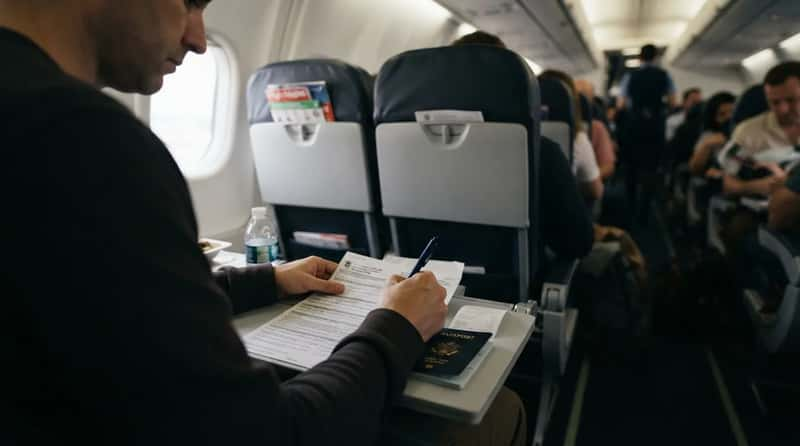
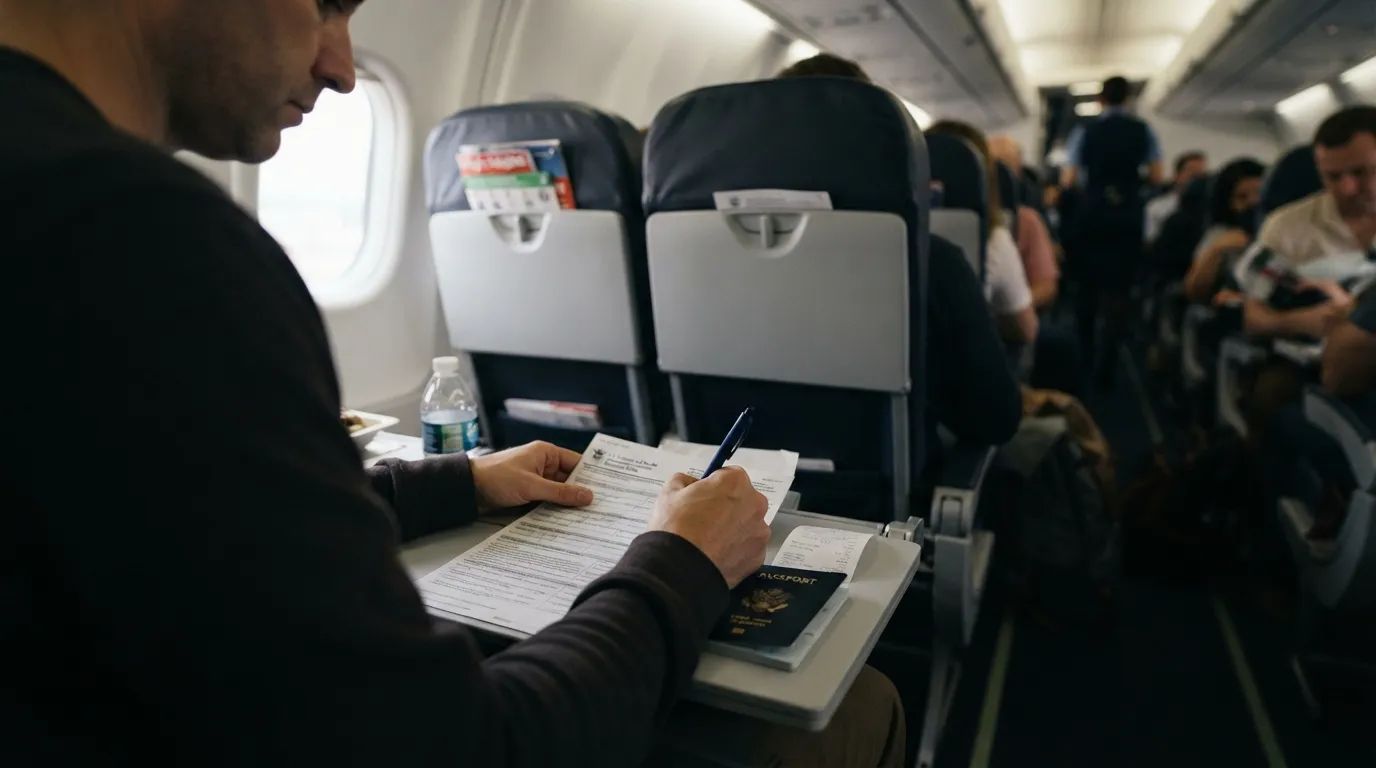
On a flight into the U.S., every arriving traveler completes CBP Declaration Form 6059B, which lists purchases and agricultural products. You can fill out a paper form handed out on the flight or at the port of entry, or file it electronically at a kiosk if you are eligible.
The last hour is the best time for it, because a list of purchases is easier to count out at your seat than to recall in a line. Keep a pen and any receipts within reach.
Other countries have their own arrival cards, so follow the airline’s instructions if you are not landing in the U.S.
The form travels with a document that an officer will ask for first.
#10 – Keeping the Passport Where Your Hand Can Find It
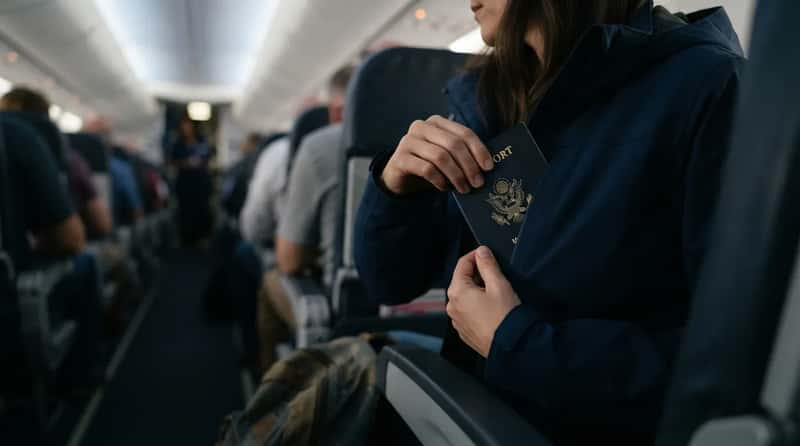
A CBP officer, or a facial-recognition kiosk, verifies your passport and entry status at passport control. U.S. citizens should have a valid passport available, while lawful permanent residents and international visitors must carry the documents required for admission or return.
So the last hour is the time to move the passport from the bag under the seat into a pocket you can reach. The overhead bin is the wrong place for it, since you may not get to it until much of the cabin has emptied.
Check the expiry date while it is in your hand, so you do not discover a problem at the counter.
#9 – Downloading Mobile Passport Control Before Boarding
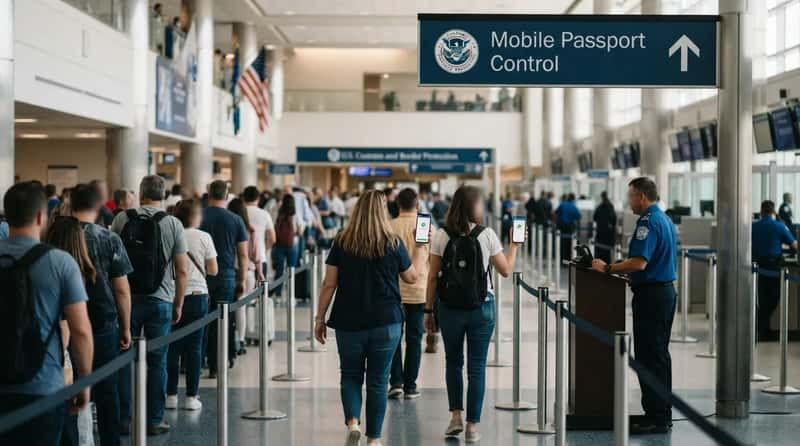
Mobile Passport Control is a free CBP app that lets travelers use a dedicated, and often shorter, customs line at participating airports. It has no application fee and no enrollment interview.2
You enter your arrival airport in the app, then follow the signs in the customs hall to the MPC line once you are off the plane. The line is often but not always shorter than the others, and it can only be used for arrival in the United States.
Set up your passport profile at home, because you should not count on doing it at 35,000 feet. For someone who flies abroad once or twice a year, I think this free app is all the speed-up you need.
Members of the paid program have their own lane, and its arrival process was recently updated at its first airport.
#8 – Knowing What Global Entry Gets You on Arrival
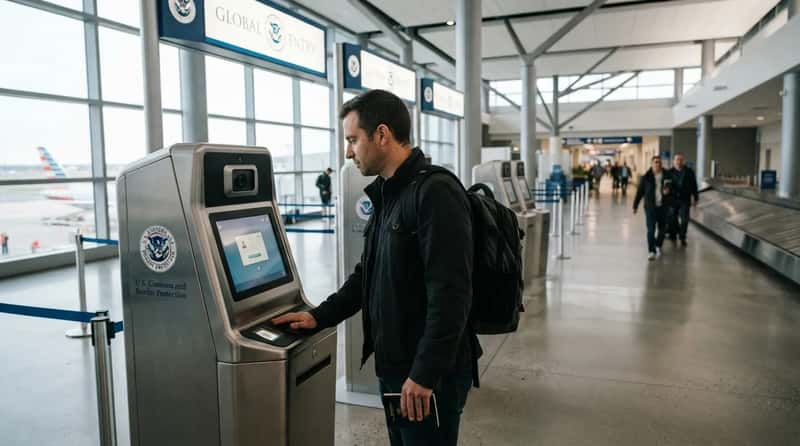
Global Entry is a CBP Trusted Traveler Program for pre-approved, low-risk travelers, with a $120 application fee and a five-year membership. CBP has deployed an updated arrival experience at Philadelphia International Airport, the first to use it, and expects to expand it to as many as 38 terminals at 30 high-volume airports.3
Members can still use the Trusted Traveler mobile app, at participating locations, to report their arrival and submit a customs declaration.3 4 If you used the older Global Entry app, download the new Trusted Traveler app before your next trip.
Quick Compare
- Mobile Passport Control: free, no enrollment interview, U.S. arrivals only, and the line is often but not always shorter.
- Global Entry: $120 for a five-year membership, open to pre-approved, low-risk travelers.
Membership does not guarantee a quick exit, since members may still be selected for further examination. My view is that the $120 pays off only if you cross the border often, and travelers who fly abroad less may find the free Mobile Passport Control app enough.
Neither line starts until you are off the plane, and the minutes before that are shorter than they look.
#7 – Using the Lavatory Before the Cabin Is Secured
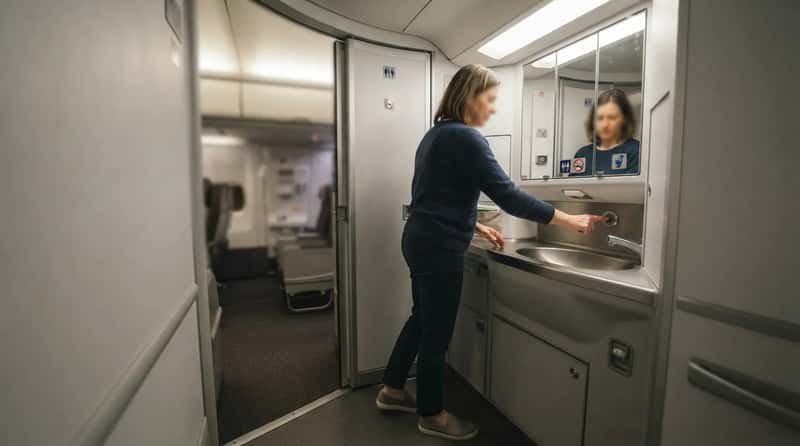
Crew guidance has the seat belt sign come on at approximately 10,000 feet during the descent. After that the crew secures the cabin and galley for landing, and passengers are expected to be seated.
The FAA defines the sterile cockpit period as taxi, takeoff, landing and all flying below 10,000 feet, except cruise. In practice, that is when the cabin goes quiet and the crew stops taking requests.
So the lavatory trip, the shoes, the jacket and the book all belong to the stretch before that point. If you wait for the “prepare for landing” announcement, you will sit through the descent with half your things still stowed.
#6 – Carrying Filtered Earplugs for the Descent
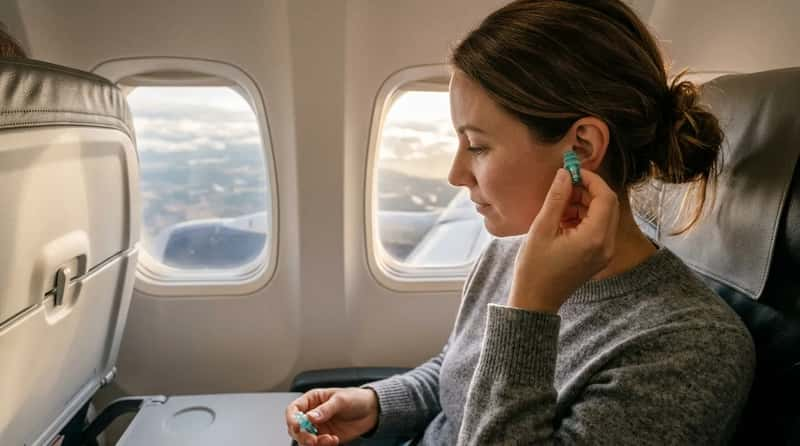
Mayo Clinic lists specially designed filtered earplugs among its tips, because they slowly equalize pressure against the eardrum during ascents and descents. They cost little and weigh nothing, so they suit anyone who has had ear pain on a landing before.
I would treat them as a backup. Yawning and swallowing, which Mayo lists first, are free and need no gear, and the earplugs come with their own directions on when to insert them.
Fast Facts
- Free first: yawning and swallowing top Mayo’s list.
- Cheap backup: filtered earplugs slowly equalize pressure on the way down.
- Best prevention: skip flying with a cold, sinus infection or ear infection if you can.
Neither helps much if your nasal lining is already swollen. Mayo says that, if possible, you should not fly with a cold, a sinus infection, a stuffy nose or an ear infection.
Swollen lining is the problem a decongestant targets, and the timing for taking one is specific.
#5 – Timing a Decongestant for Landing
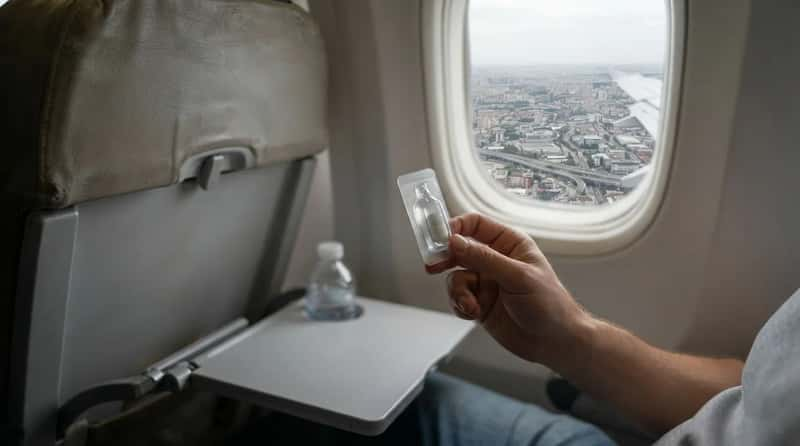
Mayo Clinic’s home-remedy advice is to take a decongestant 30 minutes to an hour before takeoff and again 30 minutes to an hour before landing, which may prevent blockage of the eustachian tube.5 On a long flight, that puts the decision squarely in the last hour.
If you have heart disease, a heart rhythm disorder or high blood pressure, or have had possible medication interactions, Mayo says to avoid an oral decongestant unless your doctor approves.5 An over-the-counter decongestant nasal spray is also on Mayo’s list of prevention options.
I think this is worth the trouble only if you have a cold, allergies or a history of painful landings. Ask a pharmacist before the trip, because the gate is the wrong place to ask.
#4 – Staying Awake Through the Descent
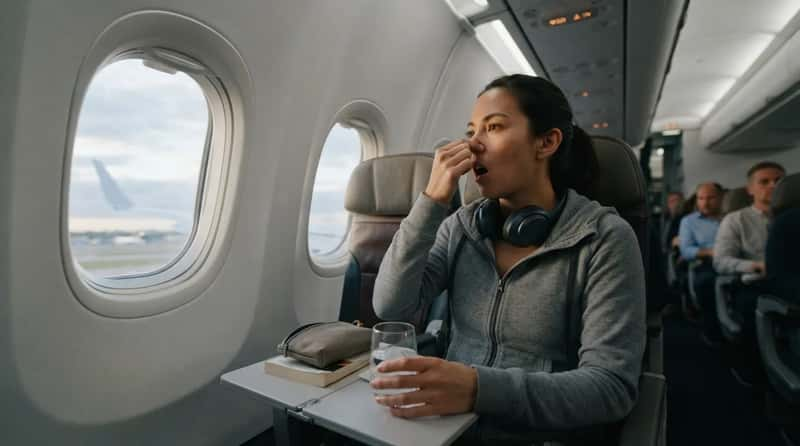
Mayo Clinic’s airplane-ear advice includes not sleeping during takeoffs and landings, so that you can stay awake to do the self-care moves that keep ear pressure equal.5 6 That sets a limit on the night-arrival sleep you planned earlier, because you need to be awake before the plane starts down, not after.
You swallow far less often asleep, which is why a sleeper can wake to a blocked, painful ear.
Being awake only helps if you do something with the time, and the simplest move needs no equipment.
#3 – Swallowing, Yawning and Chewing on Purpose
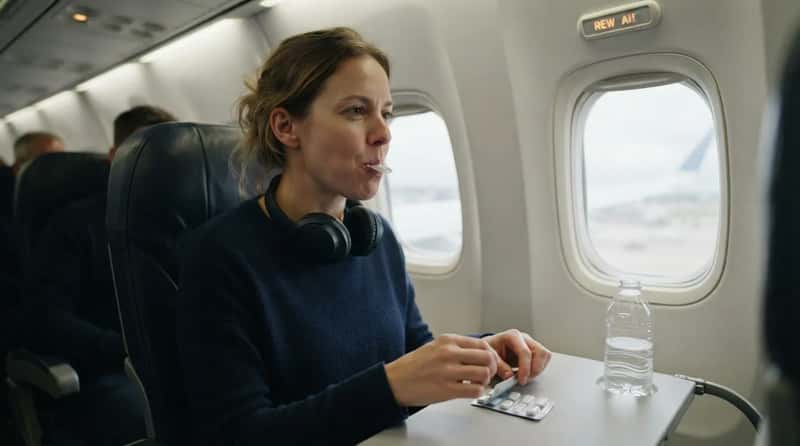
Swallowing or yawning opens the eustachian tube, which lets the middle ear take in air and equalizes the pressure. Mayo Clinic advises doing both during takeoff and landing.
Chewing gum or sucking candy promotes swallowing and eustachian tube function, a trick Mayo suggests for children who are old enough.7 Adults can use the same trick, and a sip of water works too.
I would start when the plane begins its descent and not wait for pain. Keeping the tubes open is simpler than clearing them once they are blocked.
When swallowing leaves one ear blocked, the pinch-and-blow method is the usual follow-up, and it is easy to overdo.
#2 – Using the Gentle Version of the Valsalva Maneuver
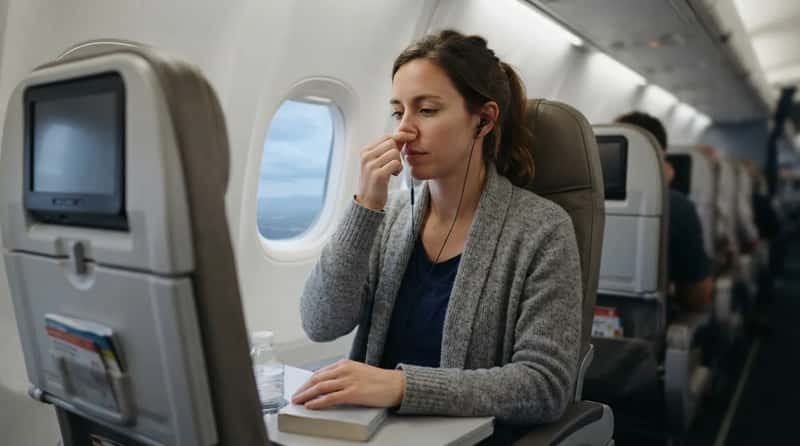
In the Valsalva maneuver, you gently blow as if blowing your nose while pinching your nostrils, keeping your mouth closed. Mayo Clinic says to repeat it several times, especially during descents, to equalize pressure between your ears and the cabin.5
Keep it soft. Forceful blowing can push infected mucus into the middle ear or, rarely, damage the eardrum, and that risk is higher if you are flying with a cold.
Worth Knowing
- The move: pinch your nostrils, close your mouth and blow gently.
- The timing: repeat it several times, especially during the descent.
- The limit: if you have a cold, go extra easy.
Airplane ear usually isn’t serious and responds to self-care, and even severe injuries such as a burst eardrum usually heal on their own.8 But a severe case might need medical help, so see a clinician if pain or muffled hearing lingers after you land.
That covers pressure inside the head, though not the trouble that comes from the cabin itself moving.
#1 – Keeping the Seat Belt Fastened After the Sign Goes Off
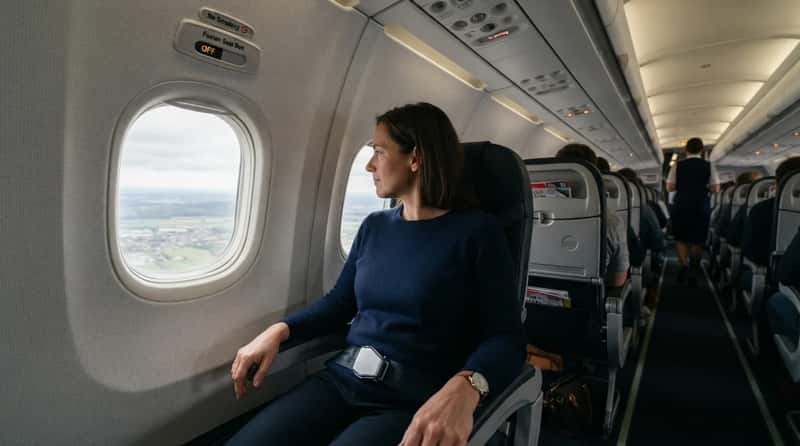
In the Flight Safety Foundation’s cabin-safety guidance, a crew member makes a PA announcement asking passengers to keep their belts fastened while seated when the sign is turned off. Turbulence can be expected or sudden and unexpected.
Federal accident files show what that looks like. One NTSB report describes unanticipated moderate turbulence near 10,000 feet on a climb that seriously injured a flight attendant, and in another, a flight attendant fell and was injured as the aircraft passed through 10,500 feet.
Both injured people were crew on their feet for work. A passenger has no such reason to be standing in the aisle during the descent, which is why the lavatory trip from earlier belongs to the first part of the hour.
That makes a buckled belt the cheapest habit on this list, and the one that appears in federal injury reports.
Each of these habits is a small job that is easy now and hard later, once a rule, a line or a crowded aisle takes the choice away. The ear routine costs nothing before the descent and can cost a bad evening after it, and the form and the passport cost a minute now and several later.
The last hour is the cheapest stretch of the whole trip, and the regulars know it. Which job do you tend to leave until the seat belt sign is already on?
- Mayo Clinic Jet Lag Symptoms: https://www.mayoclinic.org/diseases-conditions/jet-lag/symptoms-causes/syc-20374027
- CBP Mobile Passport Control: https://www.cbp.gov/travel/us-citizens/mobile-passport-control?_ga=2.127721550.2140001576.1648761652-639612210.1648761652
- CBP Global Entry Philadelphia: https://avi-go.com/news/articles/0c8e771801729ca85bf65412c0ec5657
- CBP Trusted Traveler App: https://www.cbp.gov/newsroom/national-media-release/cbp-launches-new-trusted-traveler-mobile-app
- Mayo Home Remedies Airplane Ear: https://newsnetwork.mayoclinic.org/discussion/home-remedies-annoying-airplane-ear/
- Mayo Clinic Airplane Ear: https://www.mayoclinic.org/diseases-conditions/airplane-ear/symptoms-causes/syc-20351701
- Mayo Airplane Ear Prevention News: https://newsnetwork.mayoclinic.org/discussion/traveling-this-holiday-avoid-airplane-ear/
- Mayo Airplane Ear Treatment: https://www.mayoclinic.org/diseases-conditions/airplane-ear/diagnosis-treatment/drc-20351707