Most people think a cruise cabin is just a place to dump the bags before the real vacation starts. Repeat cruisers treat their first hour inside it like a checklist with a deadline, and the ship’s departure is the clock.
Some of these moves take ten seconds and quietly save a whole week. One of them, saved for last, is something most first-timers never even try.
#14 – They Hunt for the Thermostat Before the Bed
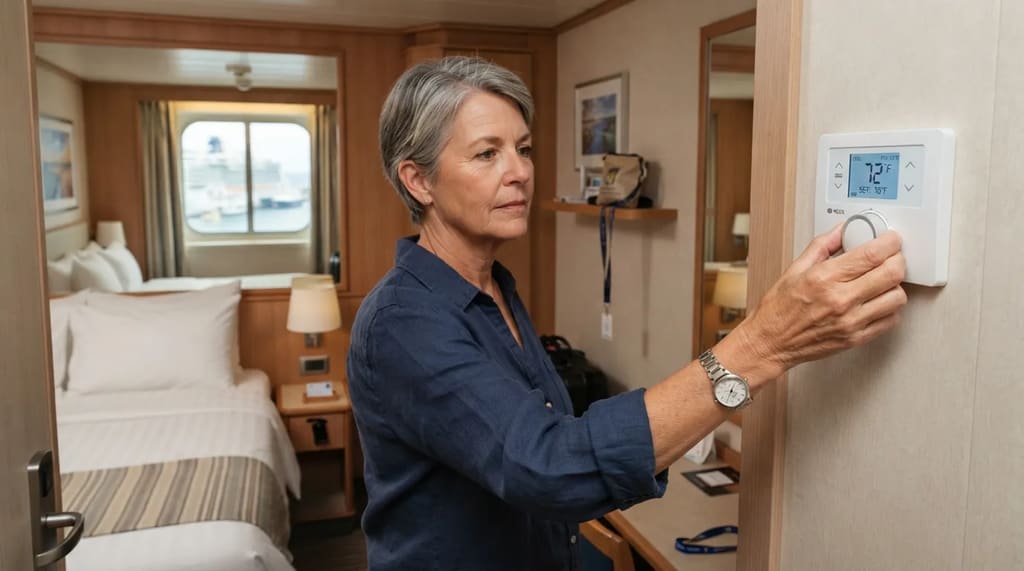
The first thing many repeat cruisers touch in a new cabin isn’t the mattress. It’s a dial.
They find the thermostat, if the cabin has one, and set it to something livable before they do anything else. It takes five seconds, which is exactly why most people skip it.
A cruise cabin is small, so the air in it is the whole atmosphere. A setting that’s too warm or too cold becomes a real problem at midnight, when you’re already in bed and don’t want to get up.
First-timers treat the room like a hotel they’ll only sleep in. Veterans treat it like a home base for the whole week.
But the next move can’t be done from a booking page, and skipping it is how people get stuck with a room they didn’t pay for.
#13 – They Check the Cabin Against the Booking
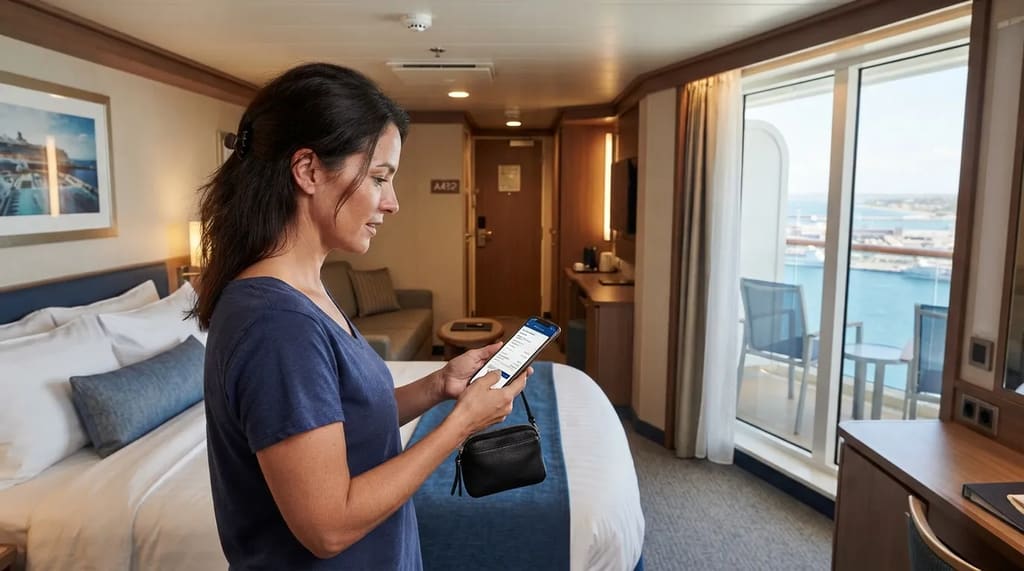
A cabin can look perfect online and still disappoint at the door. Frequent cruisers treat the first look as a checkpoint, confirming the balcony, bed setup and view match what they paid for.
There’s a good reason for the suspicion. One cruise writeup points out that even a careful booker couldn’t have known a room had major issues from the website alone.
A booking page can’t show you what the room is really like. So veterans walk it, look out, check the beds and compare everything to the confirmation.
At a Glance
- Balcony or window: does it match your category?
- Beds: made up the way you requested?
- View: what you booked, or something else?
- Confirmation: keep it handy on your phone to compare.
Timing matters too. One guide says embarkation day is the only low-traffic window on the trip, and that veterans never wait until day two to fix anything.
Some cruisers shrug off a quirky layout. Nearly everyone agrees, though, that a mismatch with your booking is worth raising early.
But the next check is even less glamorous, and the people who skip it are the ones fumbling in the dark on night one.
#12 – They Test Every Switch the Minute the Door Opens
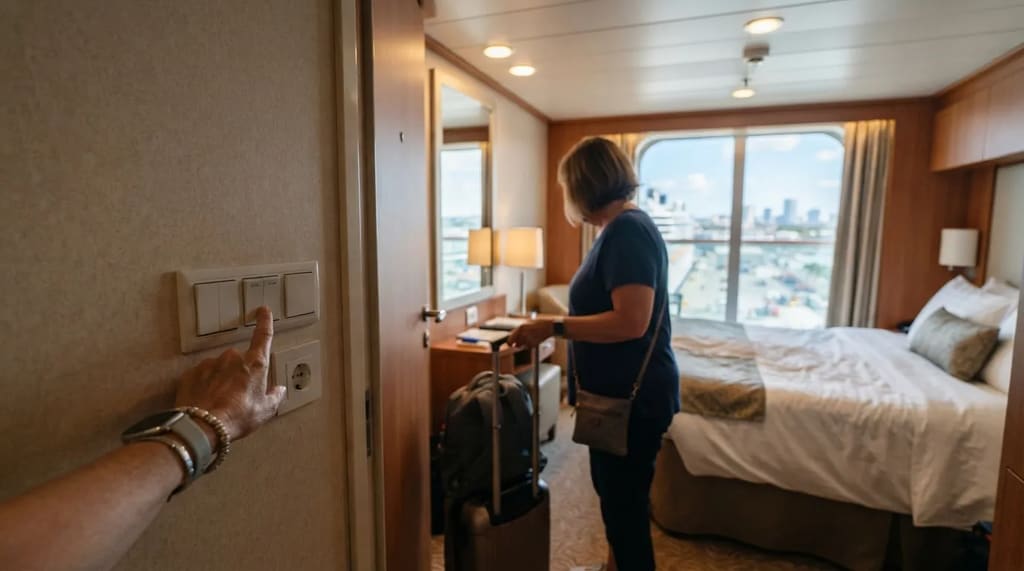
Veterans flip every switch in the cabin before they unpack a single sock. One guide lists testing every switch the minute the door opens as a veteran habit.
It takes about a minute. If a light or outlet is dead, you’ve found out while the ship is still tied to the pier and the crew is still nearby.
Another guide says to run a quick check when the cabin opens, before you unpack. It also says there are three things to check, and one of them is a person.
That person is the cabin steward.
A small fault gets harder to fix once the ship is at sea. For many veterans, though, the cabin check starts before the door is even unlocked.
#11 – They Scout the Hallway Before the Door Opens
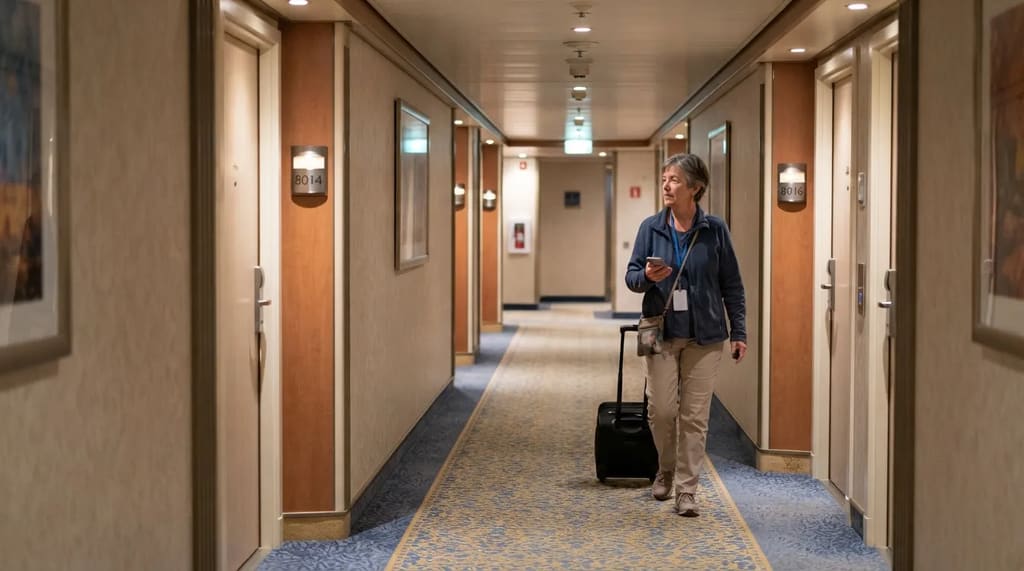
Some of the sharpest cabin moves happen in the corridor. Many seasoned cruisers head to the cabin area right away, not because they expect the room to be open, but to get their bearings.
It helps to know which elevators are closest and what’s nearby. Some cabins sit in much quieter spots than others, and some are next to places that stay busy all day.
Cabins often open somewhere around 1 p.m. to 2 p.m., though it varies by line and port. Veterans like figuring out the layout before the ship gets crowded.
Not everyone agrees. One guide calls wandering the corridors before rooms are ready an easy way to waste time, and says to check announcements or the app for the ready time.
Our take: a quick look beats a long wait. And once that door finally opens, the next move involves power, with a catch that trips people up at the terminal.
#10 – They Plug In Early, and Leave the Surge Protector at Home
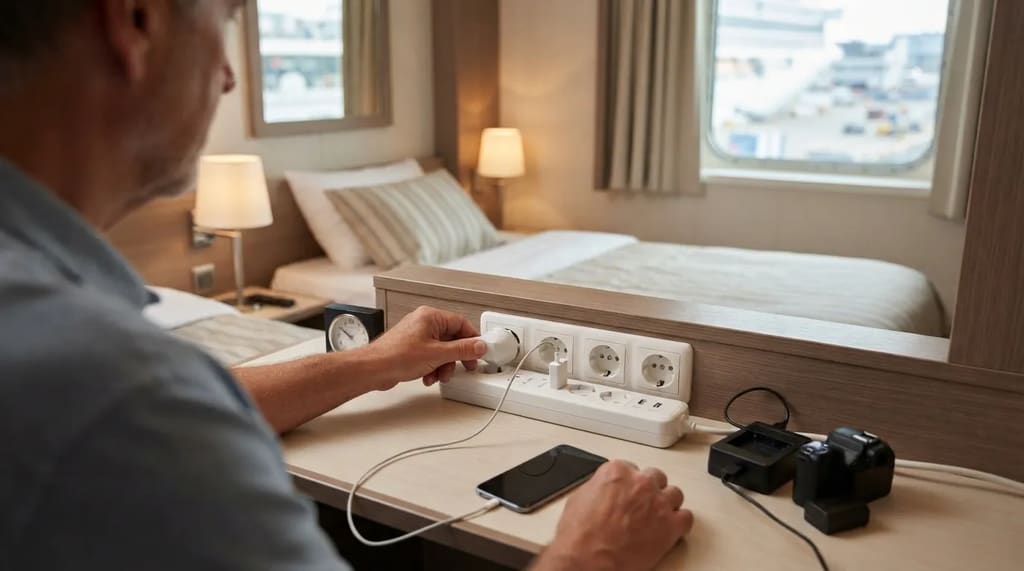
Experienced cruisers hunt for the outlet and plug in right away, because cabins never seem to have enough of them. But the one device many people pack to solve that problem can get taken away at the terminal.
Every major cruise line prohibits surge-protected power strips. Security will confiscate them at embarkation.
Royal Caribbean bans every power strip, extension cord and multi-plug outlet, surge-protected or not.1 Carnival and Princess allow non-surge power strips.2
Not every guide agrees on the details. One retail guide says Royal Caribbean allows non-surge strips with USB ports, but “cruise approved” is a seller’s label, not a cruise line certification.
Trust your line’s own policy page, not the product listing.
But the cheapest cabin upgrade on this list needs no plug at all, because it’s already built into the walls.
#9 – They Turn the Steel Walls Into Storage
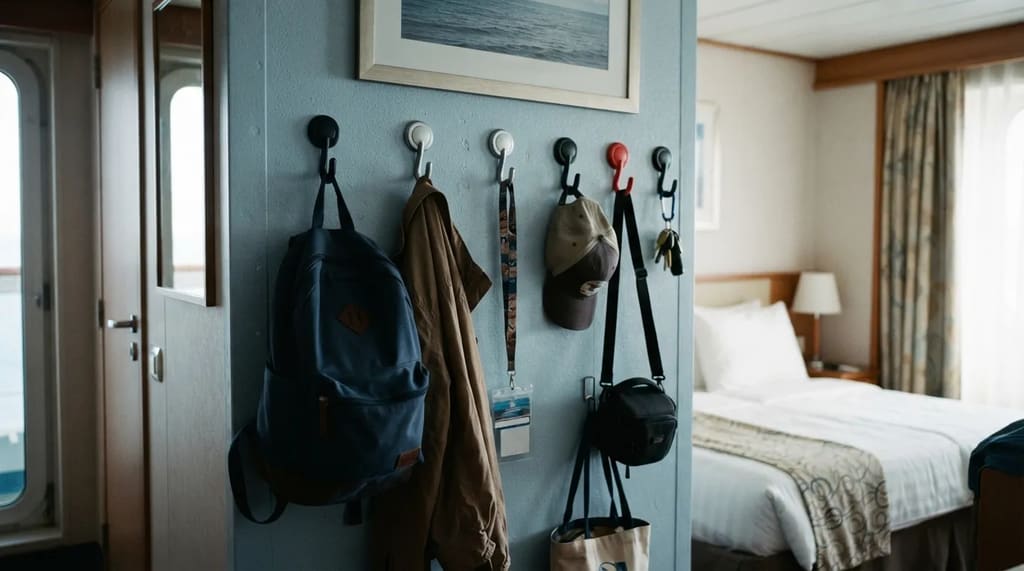
The walls are secretly the biggest storage space in the room. Most cruise cabin walls are magnetic, so magnetic hooks can create storage where there was none.3
Cruise Critic members advise magnets that hold at least 10 pounds for jackets and backpacks.3 Light items like lanyards and hats need far less.
Showers are the exception, because magnets won’t stick there. Suction cup hooks, toothbrush holders or shelves work better in the bathroom.3
Paint and wallpaper weaken the grip. The coating on the steel creates a small gap between the magnet and the metal.
Magnets without a rubber coating can also scratch the walls if dragged across them.
But the next move saves money, and it takes only one polite sentence to pull off.
#8 – They Ask the Steward to Clear the Minibar

One of the cheapest moves on this list costs nothing but a sentence. Experienced cruisers ask their steward to remove the overpriced minibar items right away.
The reason is habit. Once the stocked shelf is gone, nobody in the cabin is tempted to grab a $9 candy bar without thinking.
Veterans use the same conversation for other things. They ask for the small items that make a cabin livable.
The advice is to tell your steward your needs on day one, not day four. Our take: a stocked minibar is a sales display, and clearing it takes the temptation with it.
But there’s a bigger reason the steward matters, and the best cruisers act on it within minutes.
#7 – They Introduce Themselves to the Steward Within Minutes
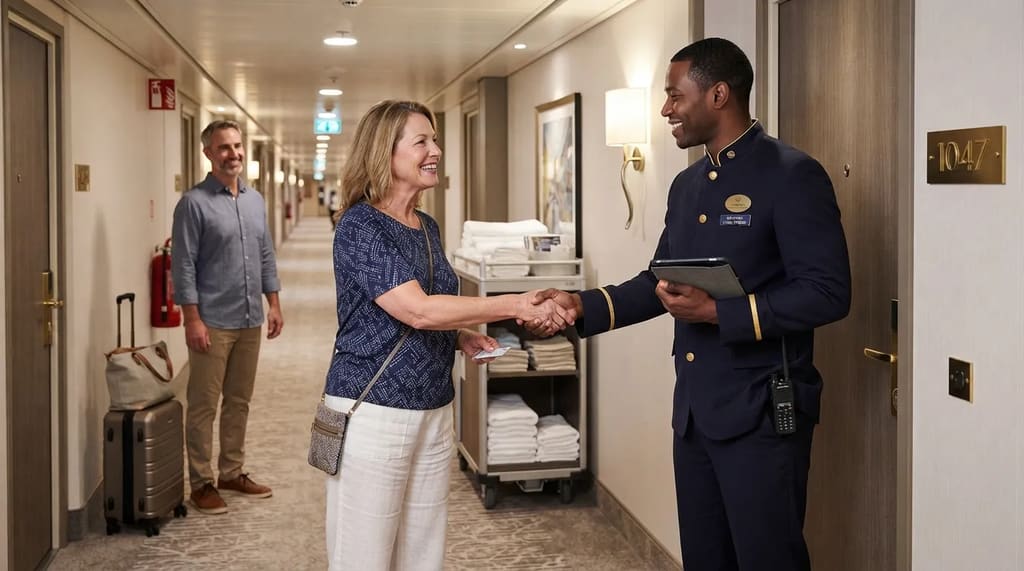
Repeat cruisers say hello before the suitcases even arrive. Many connect with the steward within the first ten or fifteen minutes of finding their room.
Stewards look after a long hallway of rooms and meet an overwhelming number of new faces on embarkation day. Being the early, friendly one makes you easy to remember.
Veterans find the steward in the hallway or leave a polite note on the first afternoon. Introducing yourself builds rapport from day one.
The mistake is waiting for a chance meeting later in the week. Repeat cruisers don’t leave it to a random hallway encounter.
But once the steward knows you, the next move is about your suitcase, and the cruisers who ignore it pay for it later.
#6 – They Unpack Early, Not on Day Two
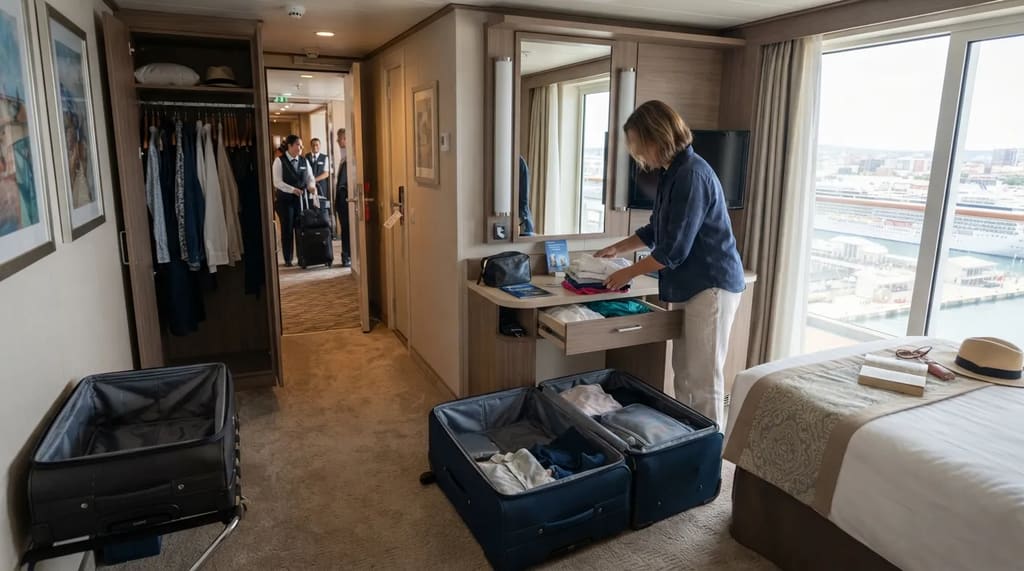
A half-open suitcase on the floor is the clearest sign of a first-timer. First-timers often leave their bags half open for a day or two.
Repeat cruisers do the opposite. They usually unpack sooner rather than later, though it depends on when the luggage arrives.
Quick Compare
- First-timer: Bags sit half open for a day or two.
- Repeat cruiser: Unpacks as soon as the luggage shows up.
- If bags run late: Veterans already have essentials in the carry-on.
Late bags are a real problem. One guide lists tight timing, late bags and a cabin that isn’t ready when you arrive as the main embarkation-day pains.
Embarkation day is busy. Crew members are in and out of rooms setting up, and doors are often propped open for luggage delivery.
A tidy cabin is easier to move through than a scattered one.
But before any big bag is open, veterans reach for one small pack, and the reason is almost silly.
#5 – They Open the Day Pack Before Anything Else
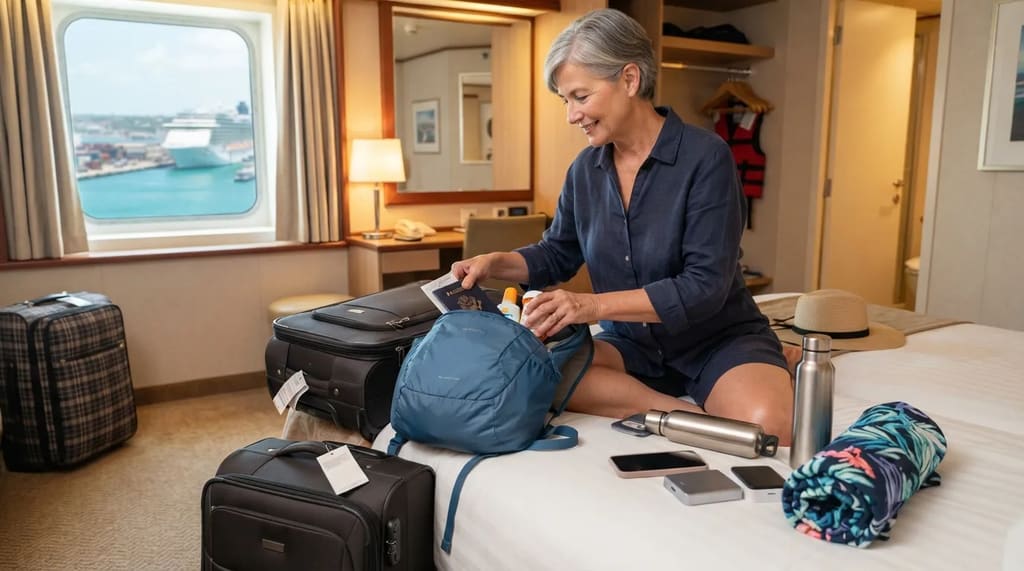
The first thing veterans open isn’t a suitcase of clothes. One guide describes a kit where almost nothing is clothing, and every item exists because of a mistake made on an earlier sailing.
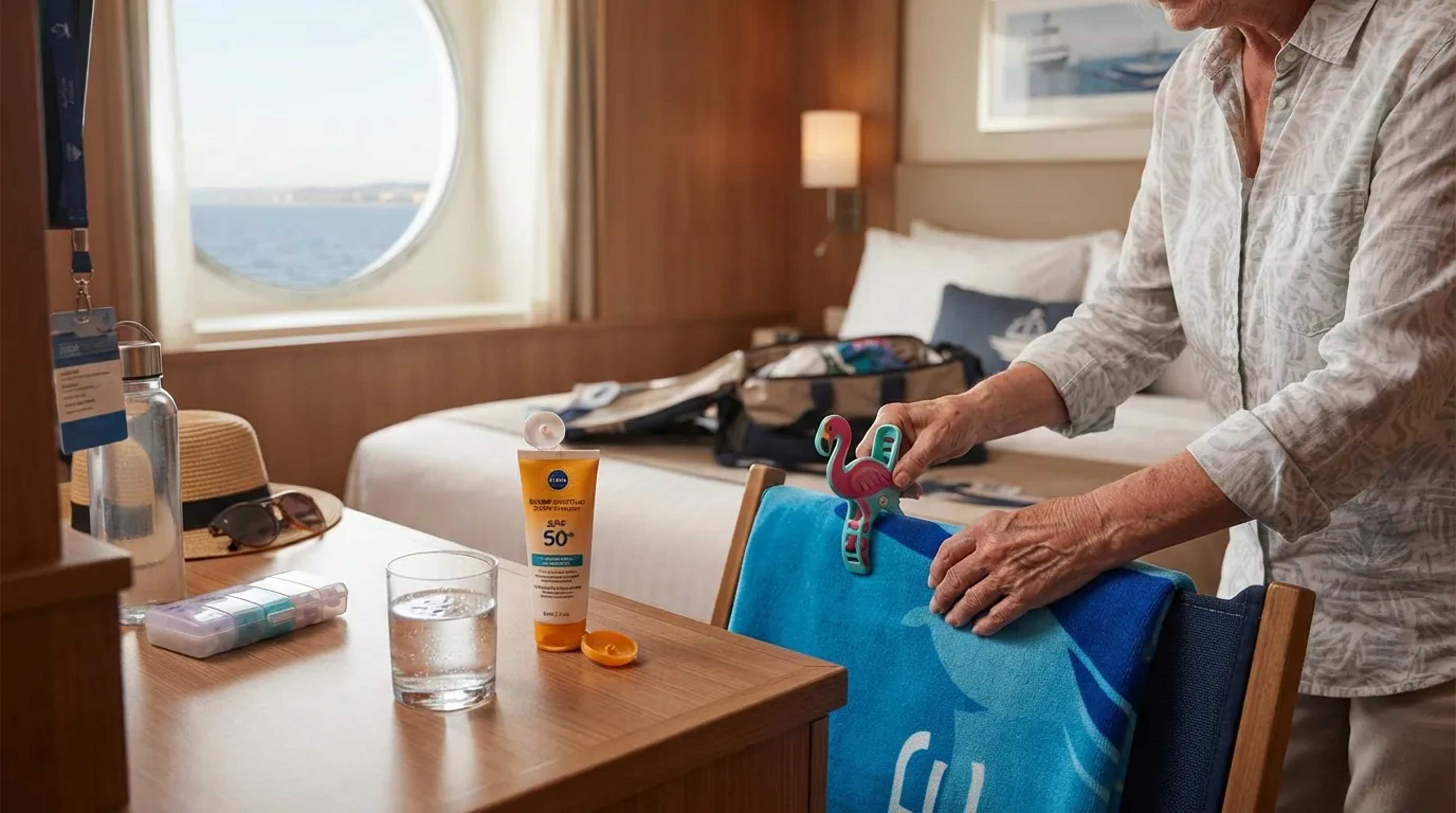
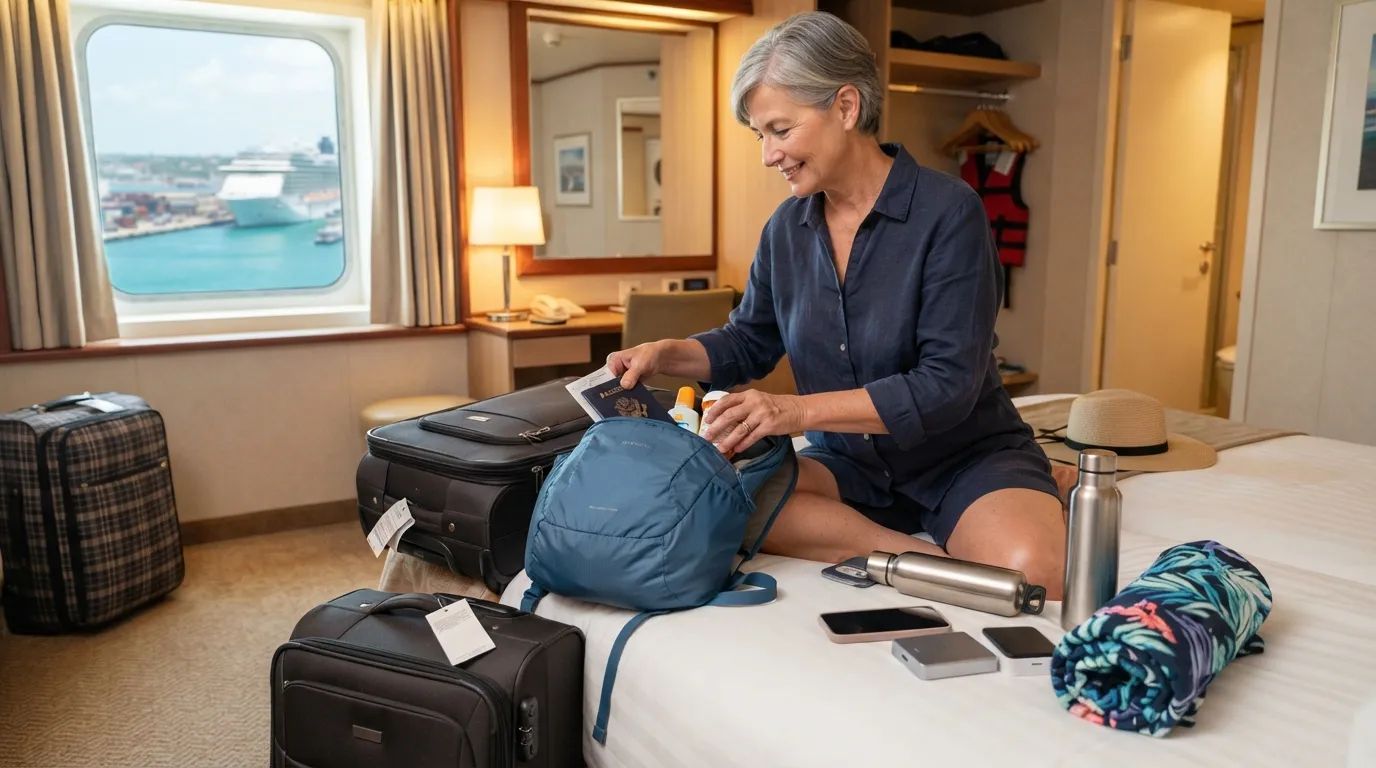
A small collapsible day pack comes out first, holding a bottle, sunscreen, a copy of their ID and a hat.
The swimsuit goes in the carry-on, not the suitcase loaded onto a cart below deck. Medications, travel documents and chargers belong in that carry-on too.
Timing is the payoff. While first-timers stand in the hallway waiting for a suitcase, these cruisers are already in the pool with a drink.
But the next move happens on your phone, and getting it wrong can show up later as a bill.
#4 – They Switch the Phone to Airplane Mode in the Cabin
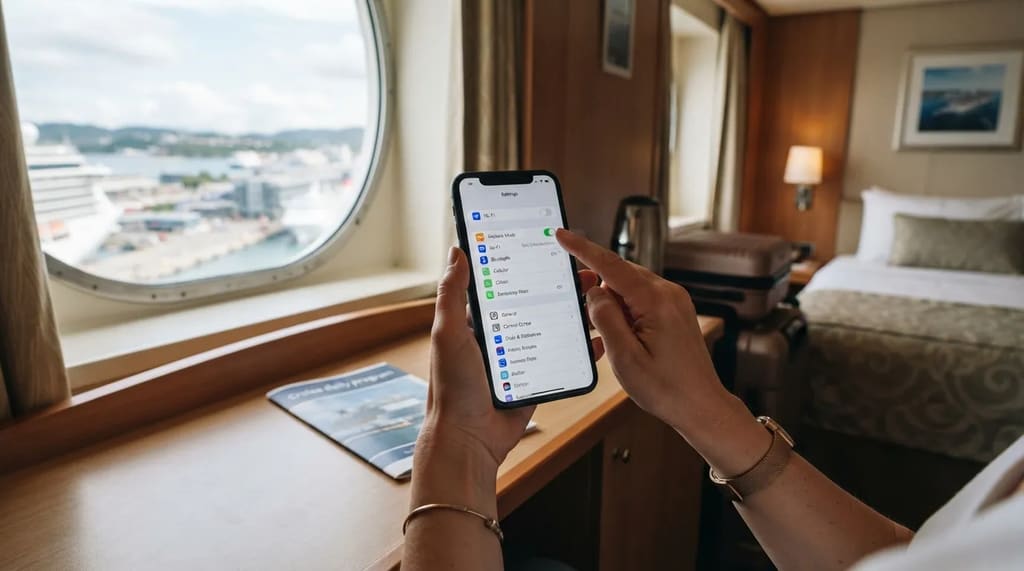
A forgotten phone setting is one of the quietest ways to wreck a budget. The advice is to put it on airplane mode before the ship sails away from the embarkation port.4
Ships carry their own cellular networks, which can bill at roaming rates. A phone left on can find one without you ever touching it.
Worth Knowing
- No signal bars doesn’t always mean no charge.
- Airplane mode is the simplest way to stay off a ship’s network.4
- Wi-Fi can usually still be switched on after airplane mode is enabled.
- Connectivity terms differ by cruise line, so read yours.
Veterans make sure it’s done before the ship leaves port, not sometime later that evening. Experienced cruisers also sort out internet access right away instead of waiting.
The mistake is assuming no signal means no charge. Read your cruise line’s connectivity terms in the quiet of the cabin, where you can actually think.
But the next move is the only one on this list that comes with a legal requirement attached.
Related Stories From Travelbinger



#3 – They Find Their Assembly Station Before Anyone Calls It
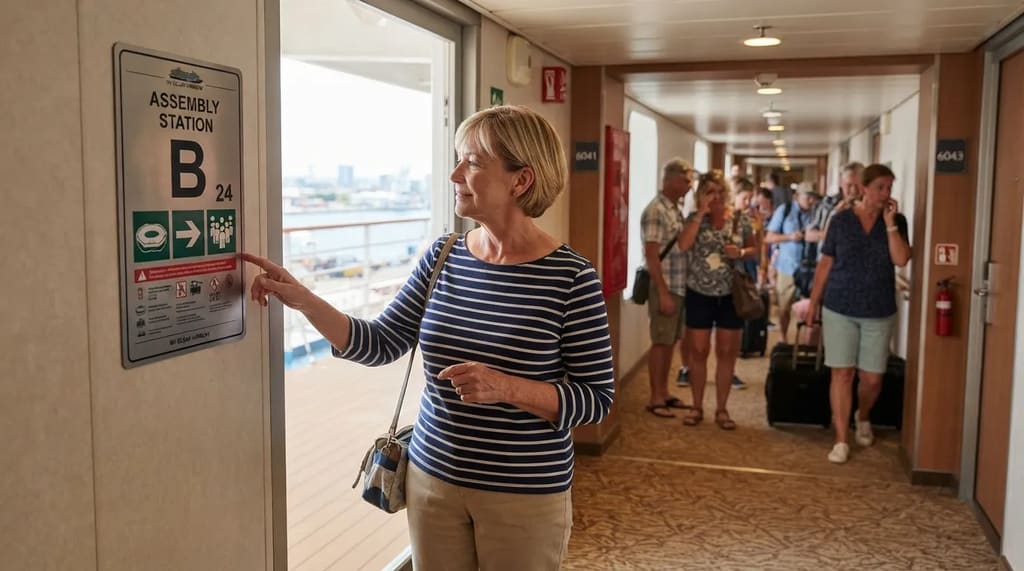
This is the one move that isn’t optional. Everyone must attend the muster drill, even if they’ve sailed the same ship or line before.5 6
Under SOLAS, newly embarked passengers must get a muster drill before the ship departs or immediately upon leaving port.7 Many lines have swapped the crowded lounge for a faster e-muster, but the requirement hasn’t gone away.
Your assembly station is usually posted on the back of your cabin door. People who put the drill off can hear their cabin numbers called over the PA system.
If you miss it, the crew will require you to complete it separately before the ship can depart.5 Veterans, as one guide notes, knock out the video from their cabin before even unpacking.
But once the drill is done, the smartest veterans make a move that pays off all week.
#2 – They Book the Popular Slots Before the Crowd Wakes Up

The popular spa and dining slots don’t last. Slots for shows, spa treatments and specialty dining can disappear within hours on the first day.
Veterans open the day’s planner the moment they’re aboard. Many also head to the spa on embarkation day, when freebies or first-day deals are often on offer.
Before ordering drinks or connecting to the internet, they make sure their prepaid packages appear correctly in the onboard system.
Here’s the friction. Spa tours come with plenty of sales pitches, so interested cruisers compare facilities, prices and appointment times before opening their wallets.
And that leaves one move, the one that most first-timers never make at all.
#1 – They Stop Everything and Watch the Ship Leave

The last move on this list is doing nothing at all. One guide calls sailaway one of the best parts of embarkation day.
The thermostat is set, the drill is done, and the day pack is loaded. Now they step out onto the balcony or climb to an open deck and watch the pier slide away.
Why It Stands Out
- It’s free, with no booking or package required.
- It only happens once per sailing.
- It works from a balcony or any open deck.
- It’s the payoff for every move that came before.
Every earlier move on this list exists to buy you this moment with nothing left to chase. Many first-timers miss it because they’re still hunting for a suitcase or standing in a buffet line.
It’s free, it only happens once per sailing, and no booking is required. The people who make it look effortless are the ones who did the boring work first.
So what does all of it add up to?
The Bottom Line
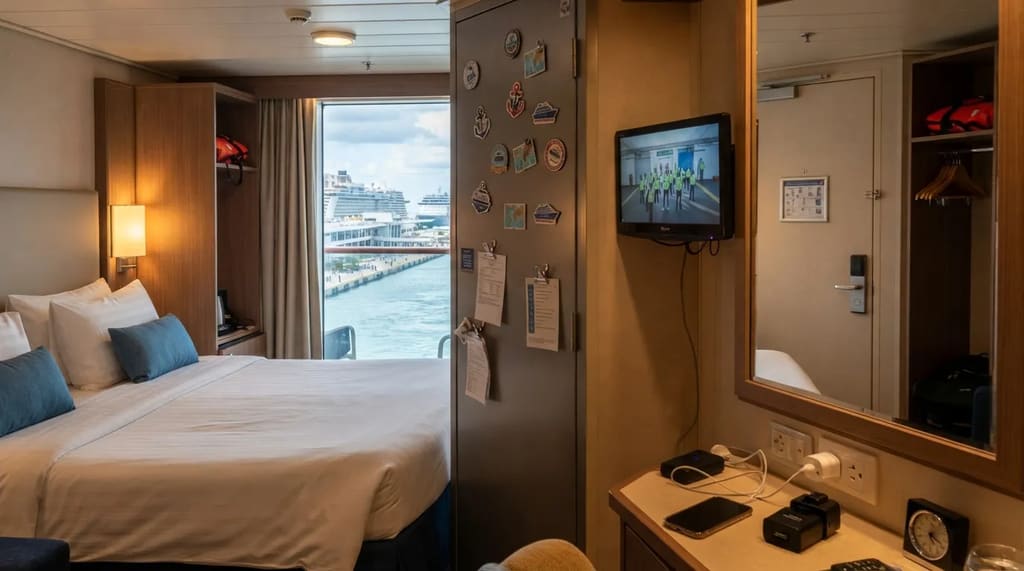
Most of these moves take minutes, and all of them happen before the ship leaves port. Experienced cruisers don’t do more, they just do it earlier.
The sharpest facts: surge protectors are banned across every major cruise line, Royal Caribbean bans all power strips, and the muster drill is required for everyone, even repeat passengers. Magnets work on steel walls, but not in showers.
Which of these 14 moves do you make before sailaway, and which one did you only learn the hard way?
- Royal Caribbean Power Strip Update: https://www.royalcaribbeanblog.com/2026/07/28/royal-caribbean-updated-the-rule-banned-travel-item
- Cruise Power Strip Rules: https://travel-hacker.com/2026/10/16/cruise-power-strip-rules/
- Cruise Critic Cabin Tips: https://www.cruisecritic.com/articles/10-cruise-cabin-tips-you-dont-know-about-your-room
- Celebrity Cruises Cell Phones: https://www.celebritycruises.com/blog/cell-phones-on-a-cruise
- Royal Caribbean Muster Drill FAQ: https://www.royalcaribbean.com/faq/questions/muster-drill-onboard-safety
- Cruise Critic Muster Drill: https://www.cruisecritic.com/articles/cruise-muster-station-and-muster-drill-what-are-they
- IMO SOLAS Passenger Drills: https://www.imo.org/en/MediaCentre/PressBriefings/Pages/45-SOLAS-eif-.aspx