The room is booked and the drive runs long, and by 6 p.m. the reservation may already be gone. When no card is on file, a hotel can release your room at its cutoff, even if you’re an hour down the road.
That’s one of the ways a night goes wrong before you’ve seen the lobby. Others are a tub you have to climb into, a minibar that charges you for moving its contents, and a long hallway between you and the elevator.
Many front desks will approve requests that fix every one of these, and the 14 below start with the cheapest. The last one decides whether any of the others hold.
#14 – A Free Kit for Whatever You Forgot
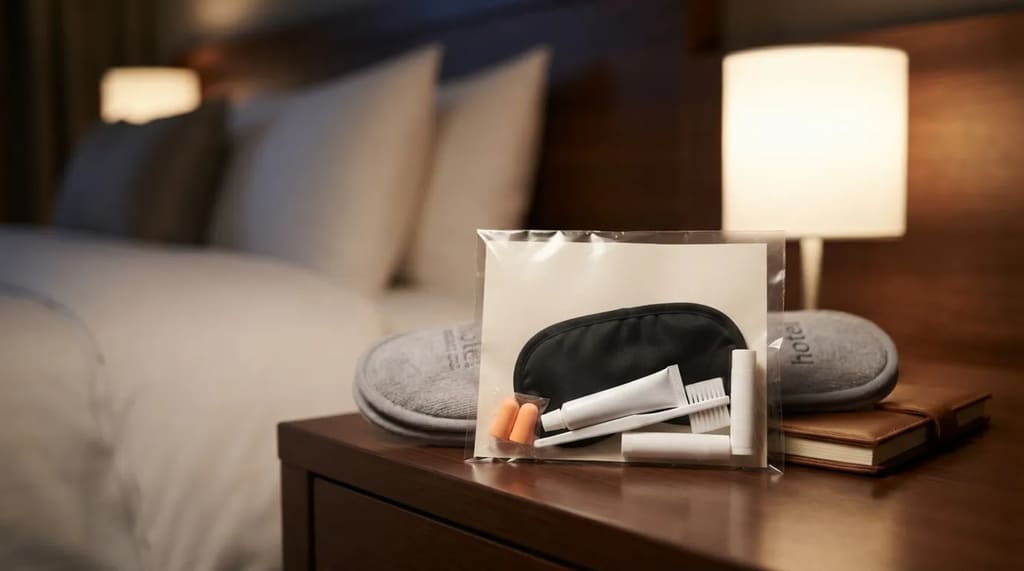
Front desks can often hand over earplugs, sleep masks, toothpaste, lip balm, and even socks, usually free. Most guests never notice they’re on offer.
These items exist because guests forget things, and handing one over takes about thirty seconds. Call the desk before you go looking for an open drugstore.
The way you ask changes the answer. Name one item and you get that item or a no; ask which comfort items guests can request, and you’ll hear the whole list instead of guessing at it.
A single pair of earplugs costs the hotel next to nothing, so there’s no reason to feel you’re imposing. The desk would rather hand it over than hear about a bad night at checkout.
Toiletries are the easy part. The next request affects how you breathe all night, and not every property offers it.
#13 – Extra Pillows and Hypoallergenic Bedding
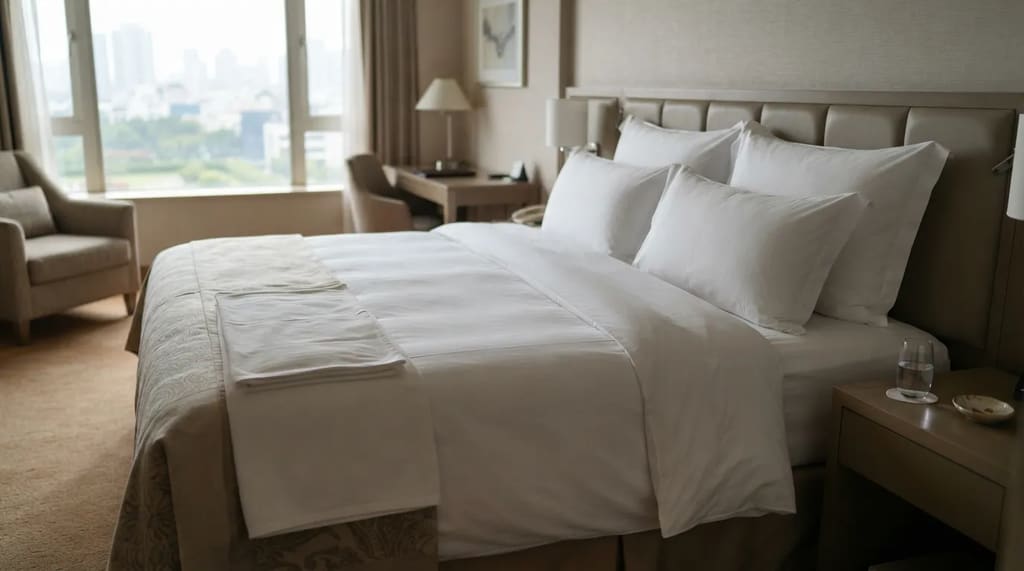
Bedding is among the cheapest requests on this list, and it can change how you feel in the morning. Official Hyatt and Marriott information shows that individual properties may offer hypoallergenic bedding.
Extra pillows, a second blanket or a firmer pillow are routine asks that housekeeping handles. Hypoallergenic bedding is different, because it’s offered at some hotels and not at others.
If you have allergies, ask for hypoallergenic bedding when you book, not at bedtime. At bedtime the desk can only work with what the property has that night, while a request made at booking can be noted before you arrive.
If your hotel doesn’t offer it, you’re better off learning that on the phone than at 10 p.m. in the lobby. You can still call another property while the choice is yours.
Bedding fixes the bed. The next request is about the walls around it, and it only works if you name the noise.
#12 – A Room Away From the Ice Machine
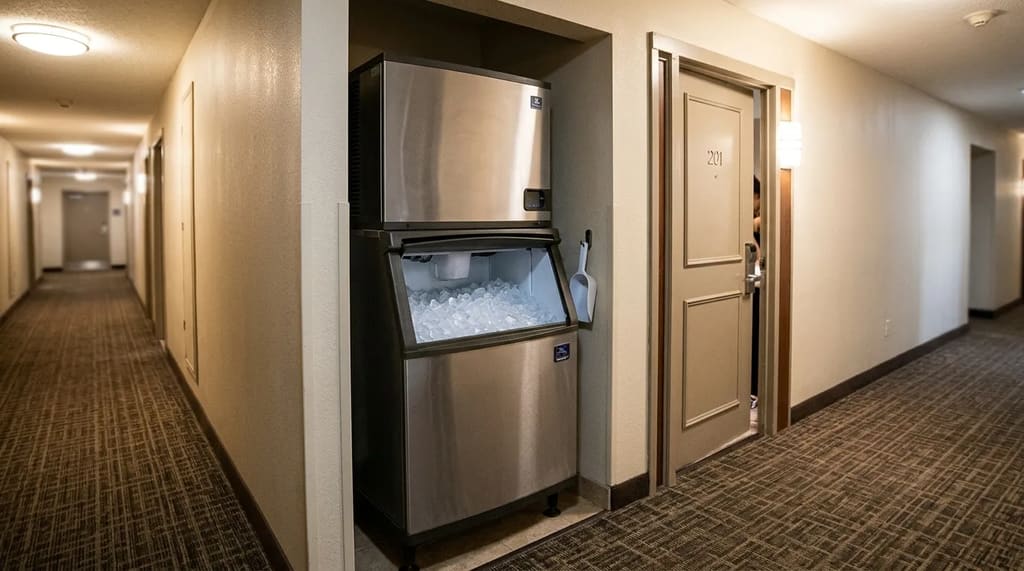
Noise never appears in a room listing. A hotel can’t promise quiet unless you tell it what quiet means to you.
Ice machines, elevators, street-facing windows and rooms beside the lobby are the usual culprits. Ask to be away from the one that bothers you most.
Name the specific noise, not just the word quiet. A clerk can act on “away from the elevator” because the floor plan shows where the elevator is, while “quiet” is a judgment call.
Worth Knowing
- Instead of “a quiet room,” try “not next to the ice machine.”
- Instead of “nothing noisy,” try “not facing the street.”
- Instead of “a peaceful floor,” try “not beside the elevator.”
- Put it in the special requests field, then say it again at check-in.
A front desk can only act on what it knows, so be specific before you arrive.
Quiet has a price, though. The quietest corner of a floor is often the farthest from the elevator, and that’s the problem with the next request.
#11 – A Room Close to the Elevator
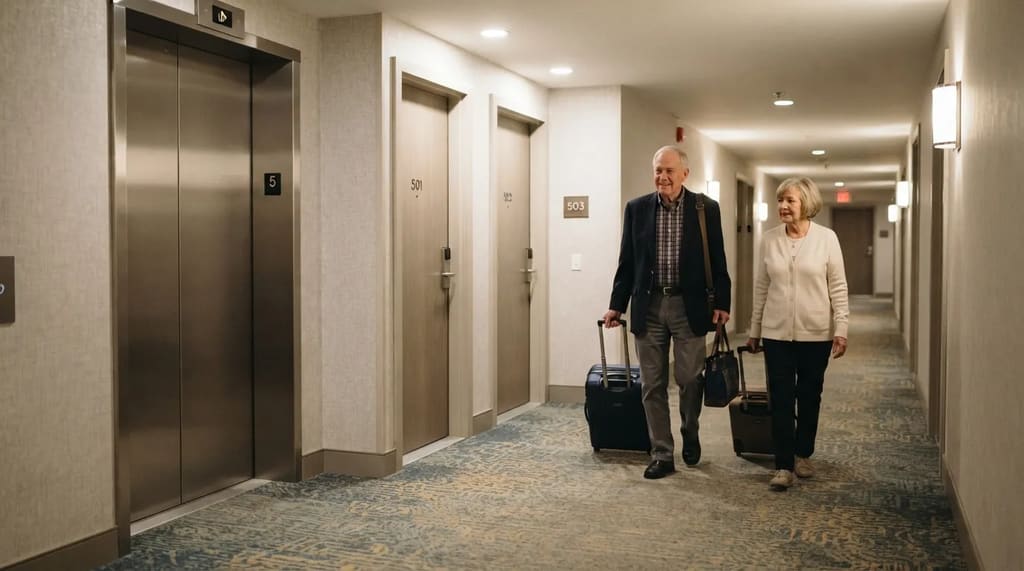
Front desk training material from at least one large chain lists a room near the elevator or on the first floor as an accommodation agents are told to ask about. You don’t have to use a wheelchair to ask for it.
Ask for a room near the elevator or on a lower floor. A long hallway with a suitcase is reason enough.
Picture a walk back from dinner on a sore knee, or a midnight trip down the hall. A hallway that looked harmless on the way in can turn into the longest part of the stay.
If the choice is between a quiet corner and a short walk, I’d take the short walk. Noise can be handled with the earplugs from the free kit, while a hallway can’t be shortened.
Once the room is in the right spot, the question is how long you get to keep it on your last morning.
#10 – A Later Checkout on Your Last Morning
Hyatt and Marriott hotel information shows that properties may offer early or late checkout requests. The word that matters there is “may.”
Some hotels grant a few extra hours at no charge, and others sell them as a share of the room rate. The same request can get three different answers in three different cities.
Ask for late checkout when you check in, not on the morning you leave. At check-in the hotel has a full day to plan around you, while on departure morning the room may already be promised to an arriving guest.
My view is that a paid late checkout is rarely worth it. Some properties offer complimentary luggage storage, and a free bag hold covers most of what a paid extension buys.
Arriving early is the mirror image of this request, and hotels apply one rule to it that even a fee can’t change.
#9 – A Bag Hold Instead of Early Check-In
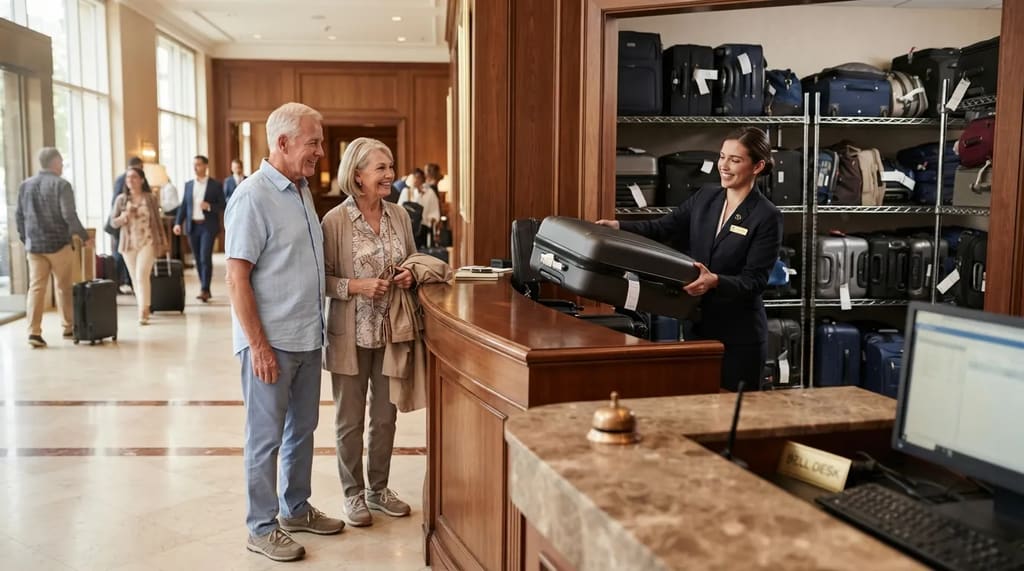
Early check-in is never guaranteed, even when you pay for it. The previous guest has to leave and the room has to be cleaned first, so a 10 a.m. arrival often meets a room that isn’t ready.
If the room isn’t ready, ask the front desk to store your luggage. That request is ordinary, and it frees you to walk around without your bags.
I wouldn’t pay an early check-in fee. At best it buys a better spot in the cleaning queue, so you’d be paying for a hope.
Leave your cell number and ask the desk to call as soon as a room is clean. You can sit in a café nearby instead of in the lobby.
Arriving early costs you only patience. Arriving late can cost you the room itself.
#8 – A Phone Call About Your Late Arrival
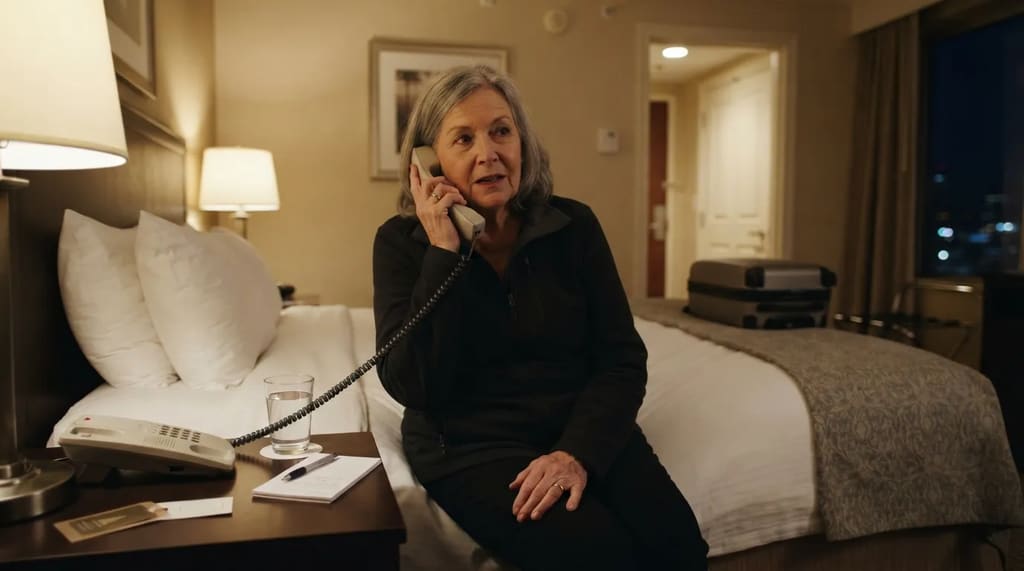
How your booking was secured decides how late is too late.
Quick Compare
- Card guaranteed at booking: the hotel typically holds your room for the full arrival day, however late you arrive.1
- No card on file: the room can be released if you don’t appear by the hotel’s cutoff, often 6 p.m.2
Arriving after the posted check-in time doesn’t automatically mean losing your reservation. It does mean you should tell the hotel beforehand.
Call the hotel itself and give a realistic arrival window. Speak with the front desk or the property directly, rather than relying only on a general reservation center.
If your plans slip past the cutoff on a booking with no card on file, call the front desk and add a card guarantee. That one call turns a room that can be released into a room that’s held for you.
A call settles the reservation. It doesn’t tell you who will be standing at the desk when you walk in at midnight.
#7 – Key Pickup When the Desk Is Dark
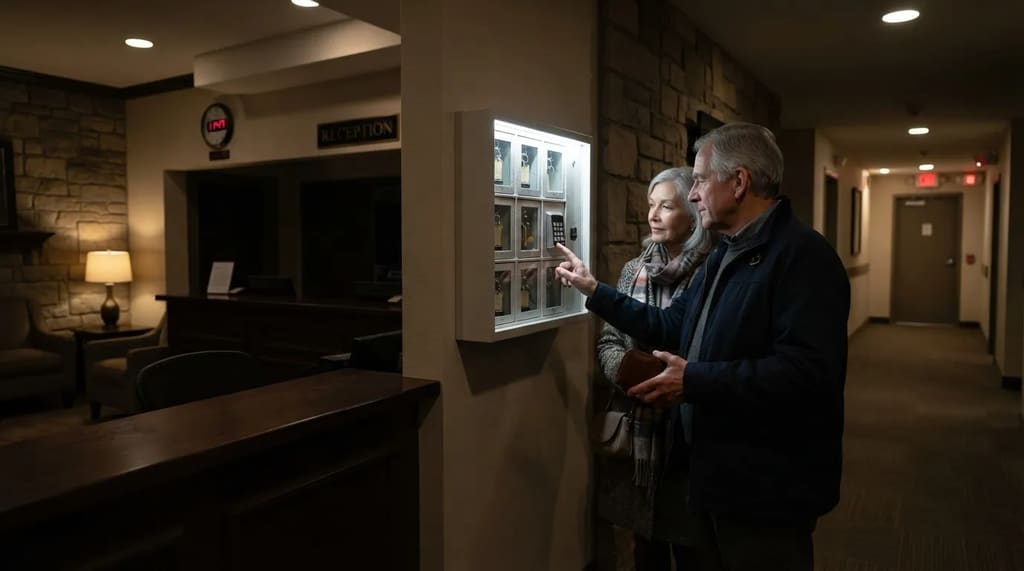
Smaller independent hotels may not staff the desk overnight. Some Holiday Inn Express locations in smaller towns have limited front desk hours, so guests are told to call ahead if arriving after 11 p.m.
In that case the hotel has to arrange how you get in, using keypad codes, lockboxes or digital app keys. Some large chains also let guests check in remotely through a mobile app, which removes the desk from the picture.
If you’ll arrive after 11 p.m., call ahead and ask how you’ll get your key. Hotels also run an overnight audit of the day’s arrivals, and a call to the desk can put a note on your profile so you aren’t marked a no-show.
If a phone app isn’t for you, say so on that call. Ask what the non-app option is, and get the answer before you’re standing outside a locked door.
Most of what we’ve covered so far costs little or nothing. The next request can take real money off the room rate, and the age that unlocks it depends on the brand.
#6 – The Senior Rate, Asked for by Name
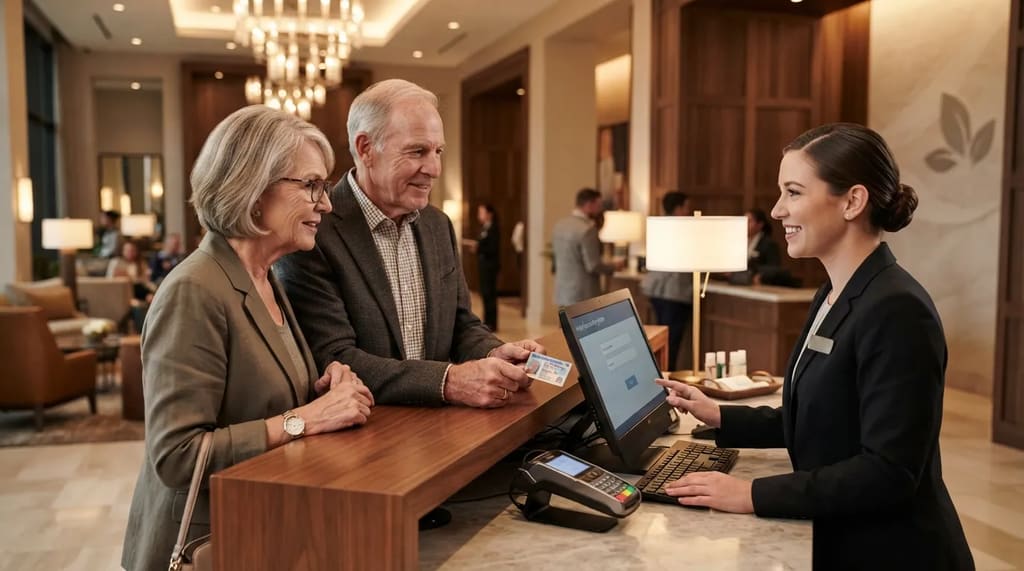
The age that unlocks a senior rate changes from one brand to the next.
At a Glance
- Marriott, IHG and Hyatt: age 62.
- Hilton: age 65.
- Choice: age 60, or AARP members of any age, with advance reservations at participating hotels.3
Hilton’s senior rate is up to 6 percent off the best available rate, for two rooms at most.4 One guide lists it differently, so confirm the age and percentage before you book.
Six percent won’t justify choosing one hotel over another. Compare the senior price against loyalty, AAA, AARP and promotional rates, because one of those may be cheaper.
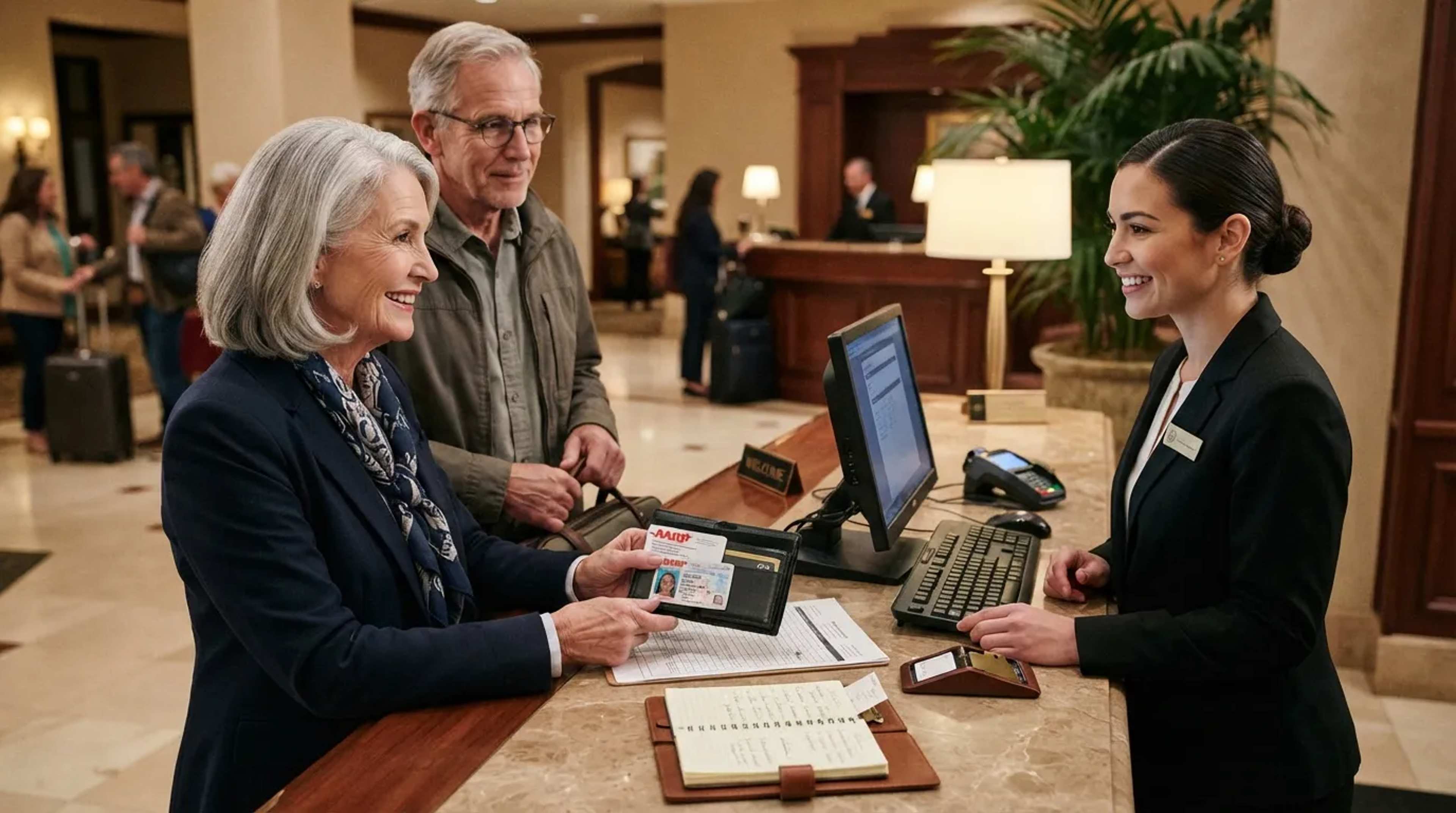
Bring ID, because you need proof of age or an AARP card at check-in. On marriott.com the option sits under Special Rates in the booking widget.
A lower rate saves money. The next request protects something money can’t easily replace if it spoils.
#5 – A Real Fridge for Your Medication
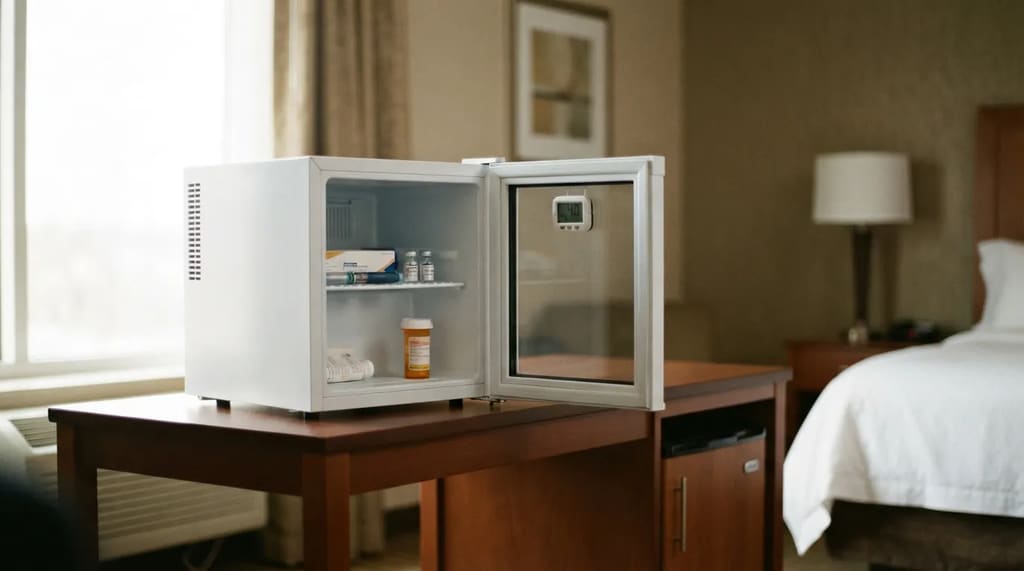
Some medications, including certain insulin products, must be kept cold. Many hotels will bring a small refrigerator to the room on request, sometimes at no charge for medical needs.
Ask for a dedicated fridge, and say it’s for medication. A medical need gives the desk a reason to say yes.
Don’t use the minibar for medicine, even an emptied one. Many minibars use sensors that charge when an item is moved.
If the minibar was cleared for you, ask whether it can be used for medication or whether a dedicated fridge is available instead. Do it when you book, confirm whether there’s a fee, and have the fridge delivered before you arrive.
A fridge comes out of storage. The next piece of equipment sits in a kit, and it matters most at 2 a.m.
#4 – A Hearing Kit With a Visual Alarm
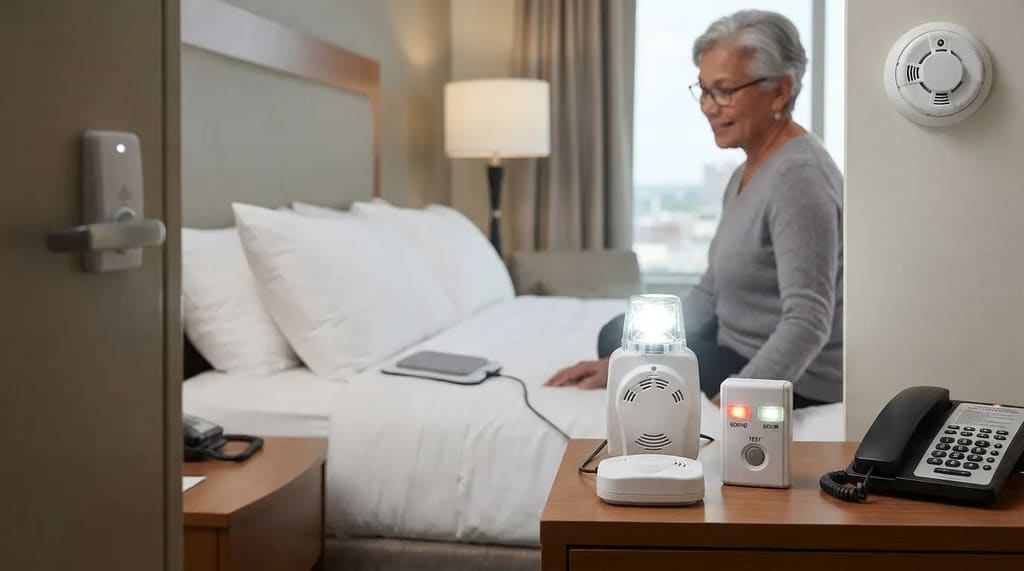
If you take your hearing aids out at night, the smoke alarm may be the one sound in the room you can’t count on hearing. Hearing accessible rooms are built around exactly that gap.5
Fast Facts
- Hearing accessible rooms prioritize visual alarms.6
- They also prioritize door knock indicators.6
- Text-capable phones are part of the setup.
- Availability depends on the individual property.
Some hotels also keep equipment you can ask for. Drury Hotels, for example, lists a hearing impaired kit and a bath tub bench as available upon request.7
Ask for the hearing kit when you book, and test the alarm and door signal when you arrive. Hearing-accessibility equipment is among the services individual properties may offer, so availability depends on the hotel.
You don’t need profound hearing loss to ask. Needing help only at night, once the hearing aids are out, is a good enough reason.
Hearing gear arrives in a box. The bathroom is where the hotel’s help gets bolted to the wall, and a wet floor is a danger of its own.
Related Stories From Travelbinger


#3 – A Tub Bench or Shower Seat
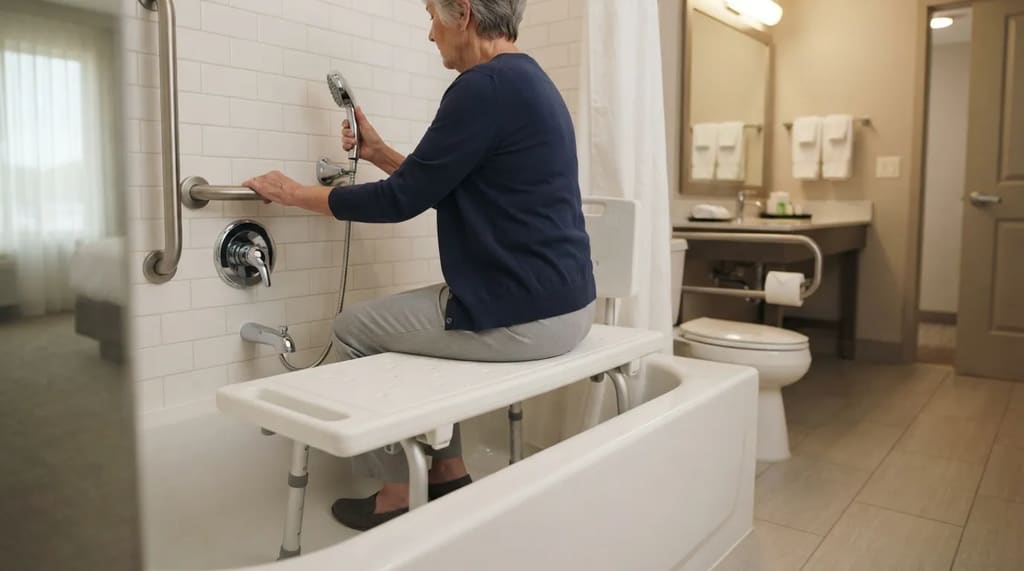
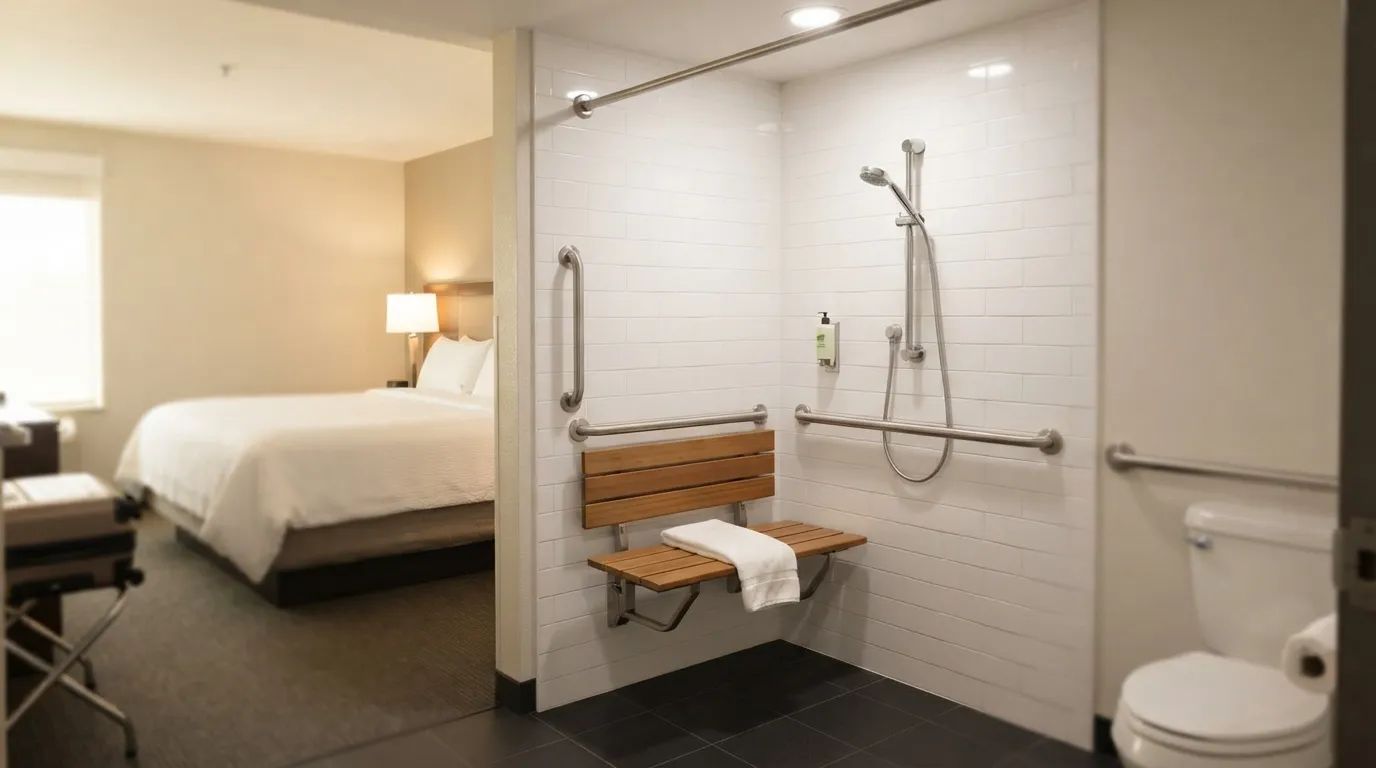
In a standard room the shower may be a tub you have to climb into, while an accessible room has a transfer shower with a seat or a roll-in shower with no curb at all. Those are very different mornings.
Between the two, some hotels will bring equipment on request. One resort lists transfer benches as available upon request, and Drury lists a bath tub bench the same way.7
Ask for a tub bench or transfer bench before you arrive. Accessible transfer showers come with a folding or fixed seat, grab bars and a handheld nozzle, and that’s the standard to measure a regular bathroom against.
A bench fixes one night. If you need grab bars and a step-free shower, the question isn’t what the hotel can bring but which room you’ve actually reserved.
#2 – The Exact Shower Type, Confirmed Before You Book
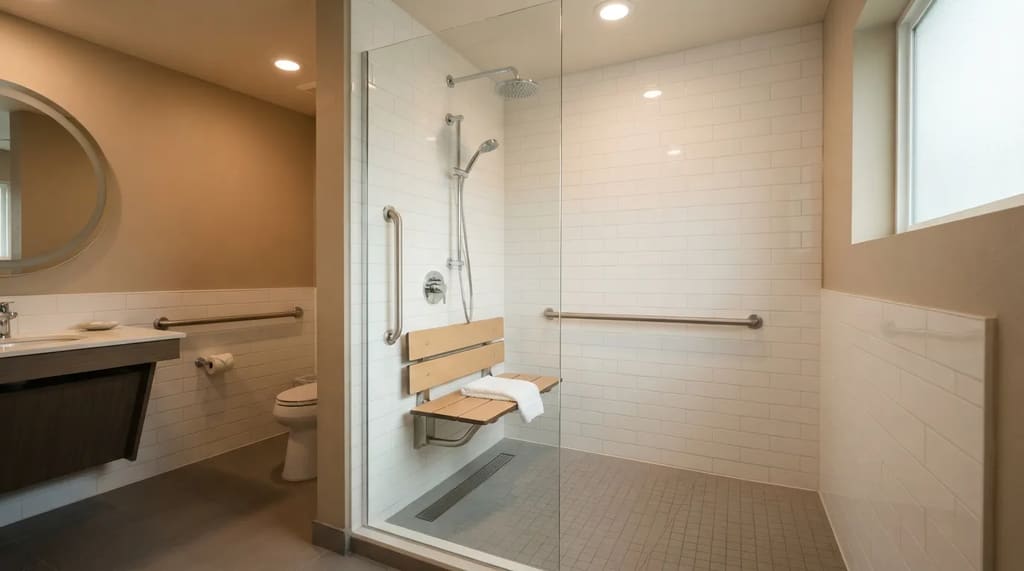
Labels such as partially accessible or easy access can mean the shower still has a step, or the roll-in shower is missing a seat. The wording sounds helpful and promises nothing.
In the United States, confirm whether your category is a mobility accessible room, a hearing accessible room or a combined room, and ask for photos of the roll-in shower or tub. At some chains, you can choose a roll-in shower or a tub when you make the reservation.7
Name the shower type you need, and ask for photos before you commit. That settles the question while the choice is still yours.
If the accessible version of the room you wanted is the only one left, a hotel generally shouldn’t charge extra for the accessibility features alone. Mention that if the price jumps.
Booking the right room is half the job. The last item on this list explains why a clerk’s yes at the desk can still leave you in the wrong one.
#1 – The Room Type, Not a Note in the Comments Box
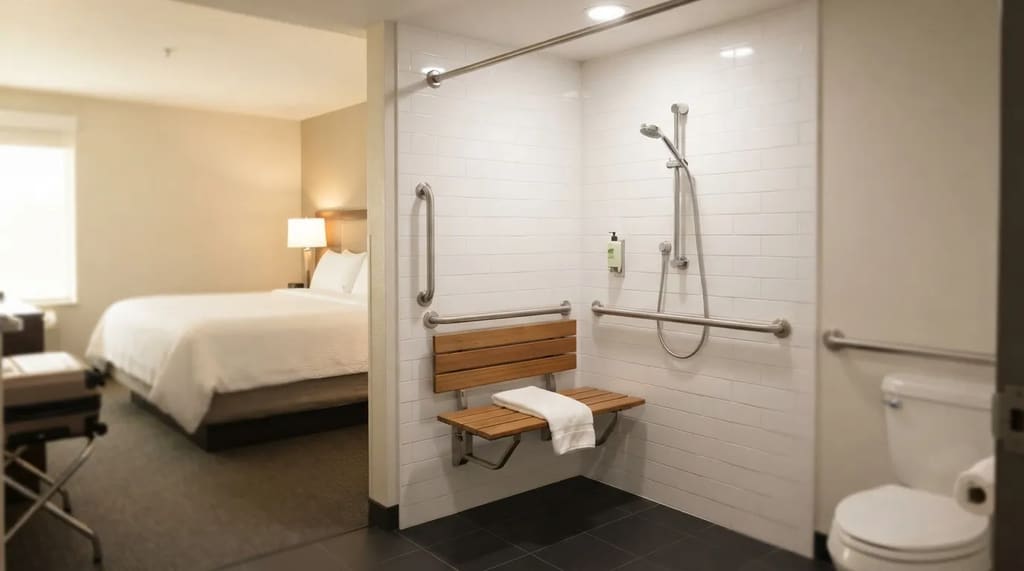
A “request noted” is not a reservation, and some hotels will say they’ve put your request in the notes instead of promising the room. A note is something staff may read, while a room type is something the system holds.
That’s the rule behind every item before this one. A quiet floor, an elevator nearby or hypoallergenic pillows are preferences a hotel tries to honor, but a roll-in shower is a room type, and either it’s reserved for you or it isn’t.
If a feature is essential, book the room type that includes it. Then ask the agent to confirm that exact room type is guaranteed.
Some chains state that reserved accessible guest rooms are held and blocked, which is exactly the protection a note can’t give you. Ask for a confirmation email that names the room type.
For everything else, put one clear priority in the special requests field and repeat it on the phone. Then the desk’s yes at midnight is only the last step, not the first.
Make the Booking Do the Asking
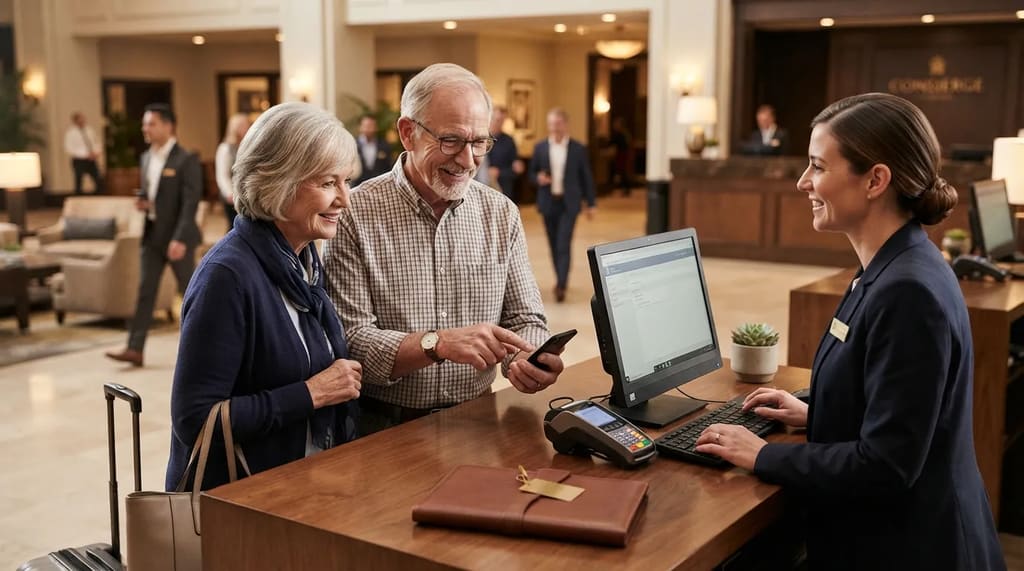
A front desk can only act on what it knows, and it can only promise what the reservation system holds. Put your needs where the system can see them: the room type, the card guarantee and the notes field.
Then the counter becomes a place for small favors instead of big rescues. Before your next trip, write down your one non-negotiable and say it three times: when you book, when you call ahead and when you check in.
What’s one request you made at a hotel desk that you were sure would be refused, and how did the clerk answer?
- Late Check-In Release Policies: https://tripmemos.com/hotel-check-in-window-missed/
- Hotel Late Arrival Guide: https://blog.best.so/booking-hotel-late-night-arrival-2026/
- Choice Hotels Senior Rates: https://www.choicehotels.com/deals/senior-rates
- Hilton Special Offers: https://www.hilton.com/en/offers/
- ADA Lodging Checklist: https://archive.ada.gov/hsurvey.htm
- Accessible Room Features Guide: https://www.accessible-stay.com/what-is-an-accessible-hotel-room-features-that-matter-questions-to-ask-red-flags-to-spot
- Drury Hotel Accessibility: https://www.druryhotels.com/content/hotel-accessibility