Southwest Airlines used to be the carrier that let two bags fly free. On reservations booked or changed on or after April 9, 2026, its first checked bag costs $45 and the second costs $55.1
Turning 65 will not erase a fee like that at a U.S. airline. Yet a handful of bag and seat rules still bend for travelers who ask in the right words at the right time, and these 13 are the ones worth knowing.
Some depend on a stated need, some on a credit card, and one on the date printed on your ticket. The most valuable one protects equipment worth far more than any bag fee, and it waits at #1. First, the box most readers try before anything else.
#13 – The “Senior (65+)” Box on American and United
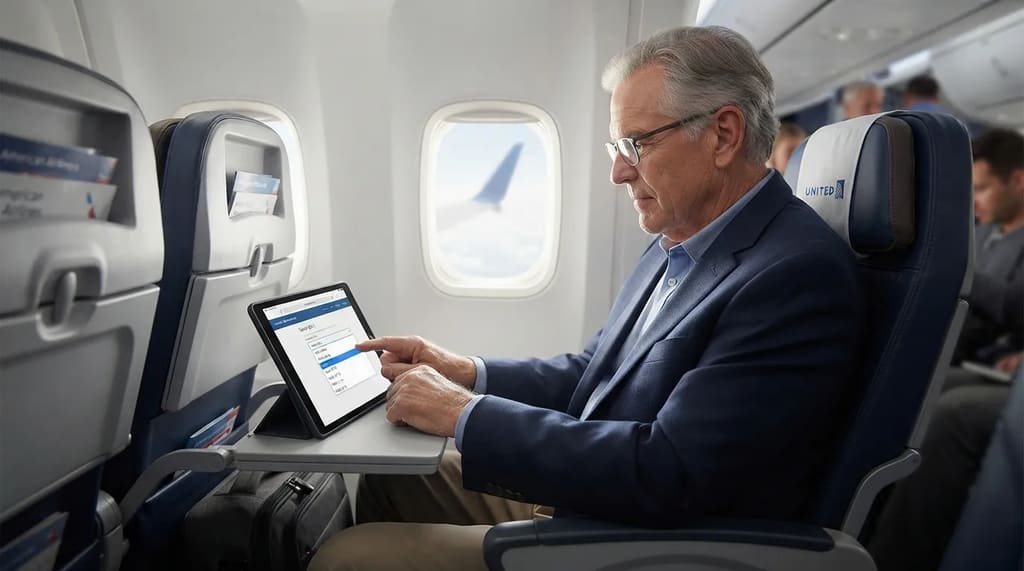
American’s booking engine can offer a “Senior (65+)” passenger type on some routes, though the airline doesn’t promote it on its site. United has offered a senior discount on select routes, and you find it by choosing “Senior (65+)” from a dropdown on united.com.
The United discount applies to a standard fare, so compare it with the cheapest Basic Economy fare on the same flight, which may still be lower. On American, the fare applies only to the senior traveler, not everyone on the reservation, so bring a government-issued photo ID showing your birth date.
Here’s the catch that surprises people: on some searches, the “Senior (65+)” price simply matches the adult price. So run the search both ways and book whichever fare is lower.
It costs you about 30 seconds. Don’t sit on hold chasing this discount, because a senior fare lowers the ticket price and does nothing for the bag fee.
Before you phone anyone about a senior fare, make sure the program still exists, because two well-known ones are already gone.
#12 – Two Senior Programs That Have Already Ended
Southwest retired its senior fares in 2019, and British Airways ended its AARP discount in January 2026. That means there is nothing to ask for at a Southwest counter today, however politely you ask.
Older travel lists still mention both programs, which can send you hunting for a discount that no longer exists. You can burn a whole phone call just to hear the agent say no.
British Airways has not announced a replacement senior discount, though AARP’s travel center posts periodic promotions worth a look. Promotions like those come with their own dates and terms, so read both before you book.
Southwest flyers aren’t left empty-handed. The airline charges no change fee on any fare type, which can matter more than a senior fare if a doctor’s appointment or a family event moves your plans.
At a Glance
- Southwest senior fares: retired in 2019
- British Airways AARP discount: ended January 2026
- Southwest change fees: none on any fare type
- Best habit: check the date on any senior-discount tip
Check the date on any senior-discount tip before you pick up the phone. And with Southwest, the date on your ticket matters even more, because its bag fees have changed twice in under a year.
#11 – The Southwest Bag Fee Your Booking Date Decides
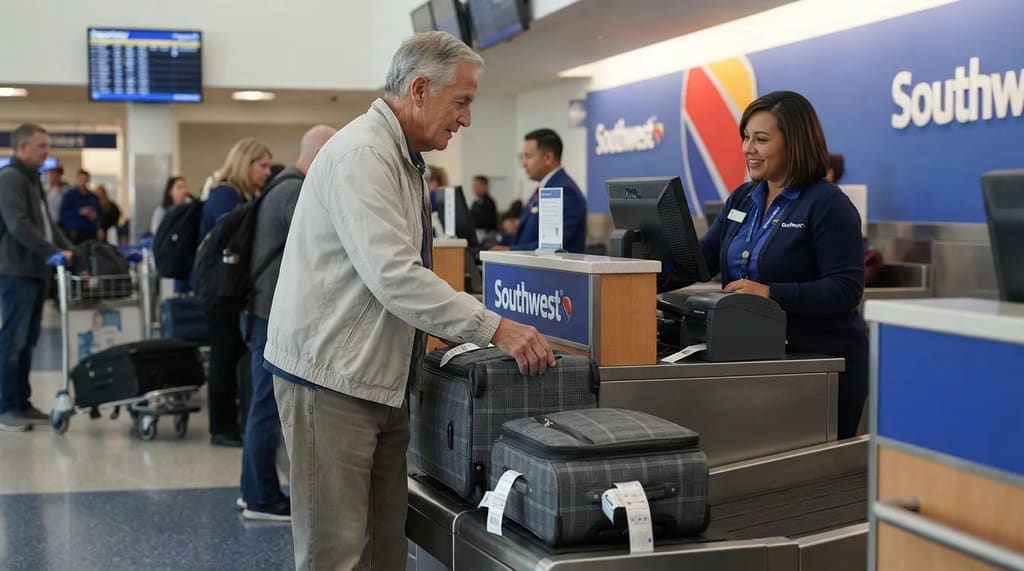
Until tickets bought on May 28, 2025, Southwest let two bags fly free. For flights booked, ticketed or voluntarily changed on or after that date, the first checked bag cost $35 and the second $45.
Reservations booked or voluntarily changed on or after April 9, 2026 pay $45 for the first bag and $55 for the second. A third bag is $150.1
Quick Compare
| Booked or changed | 1st bag | 2nd bag |
|---|---|---|
| Before May 28, 2025 | Free | Free |
| May 28, 2025 or later | $35 | $45 |
| April 9, 2026 or later | $45 | $55 |
When United, Delta and JetBlue raised their fees in April 2026, Southwest followed within days. Because Southwest has no change fees, a flight change costs nothing in itself, but a voluntary change on or after April 9 can move an older reservation onto the higher bag fee.
Four groups still skip the charge:
- Choice Extra fares: two bags
- A-List Preferred members: two bags
- A-List members: one bag
- Rapid Rewards credit card holders: one bag for the cardholder and up to eight companions
If you hold an older booking, price the bag fee before you change a Southwest reservation. A harmless schedule tweak can quietly raise your bill.
Southwest changed more than bags, though. Since January 2026 it also decides where you sit, and the seat map comes with a price list.
#10 – What Southwest’s Extra Legroom Really Buys
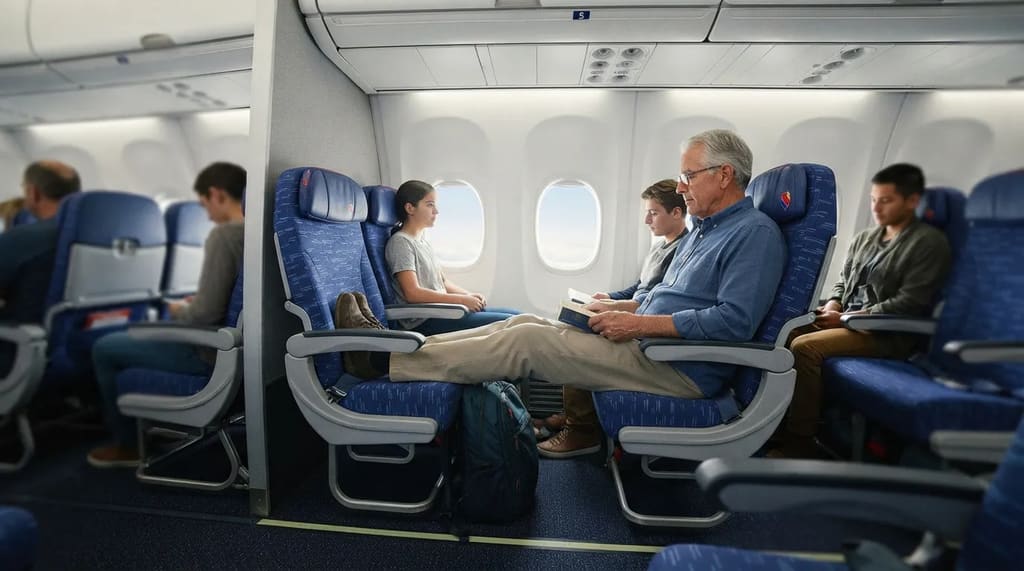
Southwest’s open seating is over. The seating policy that officially ended no-assigned-seats took effect on January 27, 2026.
The new seat map has tiers. Preferred seats have standard legroom but sit closer to the front, while Extra Legroom seats provide three to five additional inches depending on the aircraft.
Basic passengers receive a Standard seat at check-in unless their status or credit-card benefits say otherwise. So if you want the aisle or a front row, you have to choose it, and possibly pay, when you book.
Here’s a verdict some readers will dispute. Paying extra for Preferred buys a shorter walk off the plane and no more room, so only Extra Legroom adds real space, three to five inches. Unless a tight connection is the issue, keep your money.
If a seat is a medical need rather than a preference, hold that thought. The rules in #6 through #4 work very differently, and they don’t depend on what you’re willing to pay.
#9 – The Card or Status That Already Pays Your Bag Fee
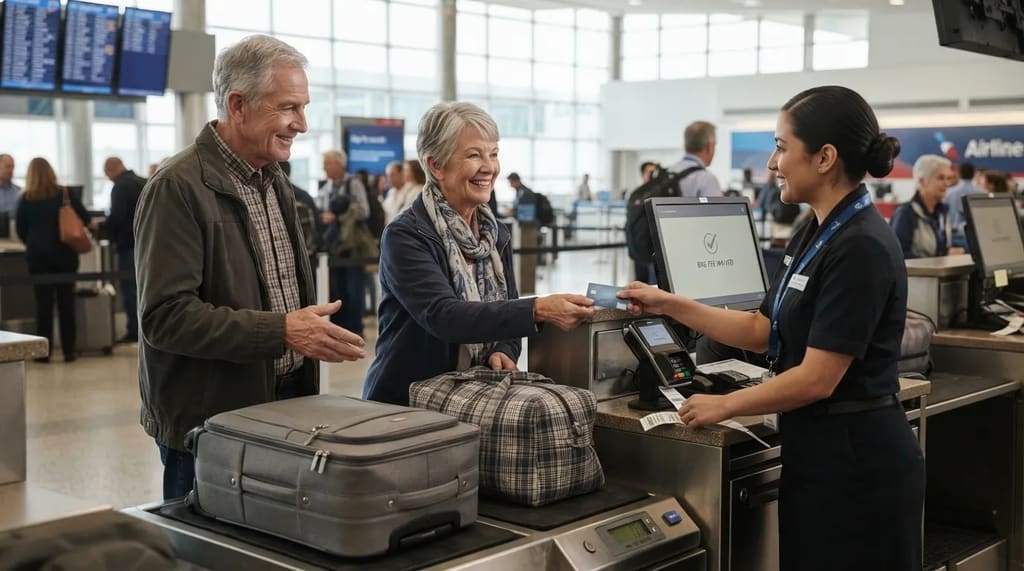
Your age doesn’t enter into the most common standing bag waiver in U.S. travel. Airline-branded credit cards and elite status commonly include a free first checked bag.
The Southwest card from #11 is one example. Rapid Rewards card holders get one bag free, for the cardholder and up to eight companions.
Elite status does the same at some airlines, and even entry-level tiers at certain carriers include at least one free checked bag. The perk often arrives quietly, with no one at the counter mentioning it.
Do the math before you apply. At $45 each way, a couple who each check one bag pay $180 per round trip, or $360 across two trips a year.
Add up a full year of bag fees before you compare it with a card’s annual fee. Then confirm what your specific fare includes before you book, and remember that if you fly once a year with a carry-on, the card isn’t worth the paperwork.
Cards and status help on domestic trips, but one airline sells the only bag perk with an actual age line on it, and it costs 49 euros a year.
#8 – Air France’s Senior Pass and the Free Bag Overseas
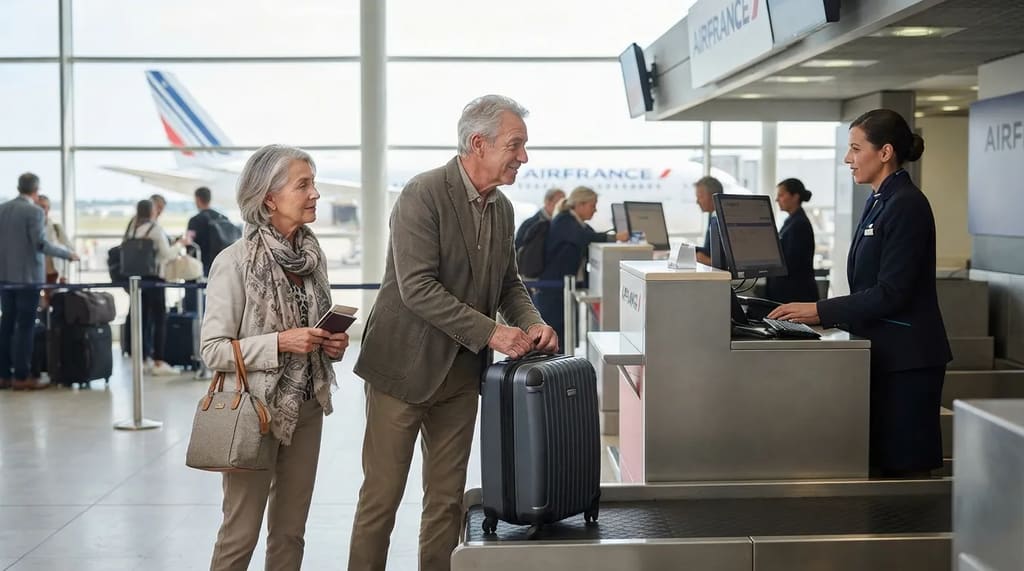
Air France sells a Senior Pass to travelers 65 and older for 49 euros a year. It takes up to 30% off Standard fares on Air France operated flights within France, across Europe and to North Africa.2
The pass also includes a checked bag and comes with more flexible change and refund terms.2 3 The discount applies only to flights operated by Air France or carrying an Air France flight number.
Terms change, so confirm the current details before you count on it. Age isn’t the same everywhere, either: Air India’s senior discount starts at age 60, not 65.
This is the one bag perk on the list with a true age trigger, and it’s a paid membership, not something you get by asking. Unless Air France is already your airline to Europe, I wouldn’t switch carriers for it.
Everything so far is a discount, a perk or a membership. The next item is a fee you’ve already paid, and in one situation the airline owes it back.
#7 – The Bag Fee You Get Back When Your Suitcase Is Late
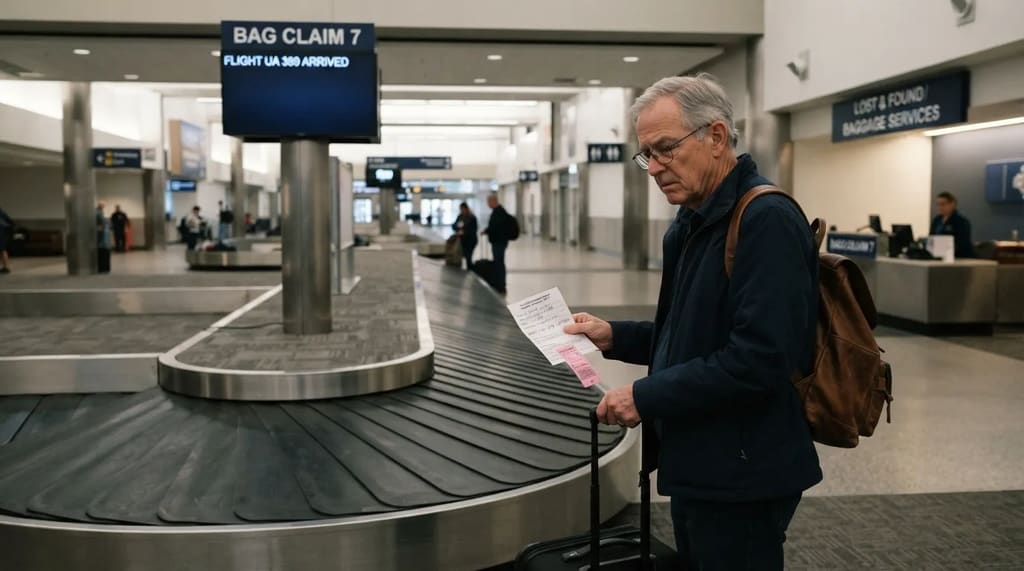
You can get a checked-bag fee back after you’ve paid it, if the bag arrives late enough. Under a 2024 DOT rule, airlines must refund the checked-bag fee when a bag is significantly delayed.4
On domestic flights the refund applies when a bag arrives 12 or more hours late, and the thresholds are longer for international trips.4 5 That timing matters because most late bags turn up within a day, and a refund claim only works if you can show the delay.
So a domestic bag that arrives 12 or more hours late qualifies for a fee refund. File the delayed-bag report before you leave the baggage area, and keep your bag tag and fee receipt.
If you paid $45 for that bag, the refund covers the fee but not your inconvenience. It’s small money, but it’s money many travelers never think to claim.
Worth Knowing
- Source of the rule: a 2024 DOT rule on delayed checked bags
- Domestic trigger: a bag 12 or more hours late
- International trips: longer delay thresholds apply
- Your paper trail: delayed-bag report, bag tag and fee receipt
Seat rules come next, and the first one turns on a piece of hardware you’d never think to request. Airlines can require a full day’s notice for it.
#6 – A Movable Aisle Armrest and the 24-Hour Notice
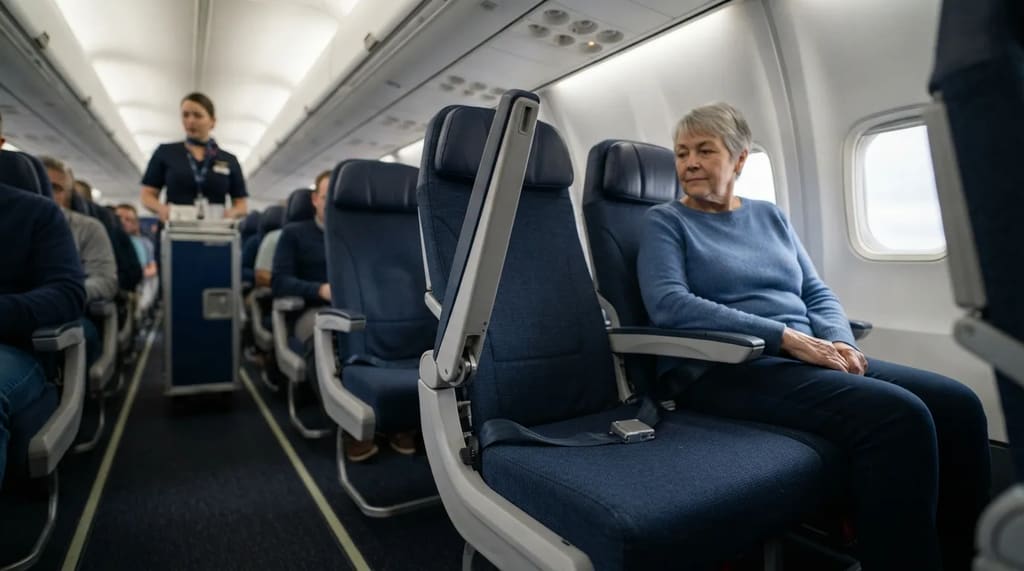
Airlines can require 24 hours’ notice for bulkhead seating or a seat with a movable aisle armrest. That deadline is the detail that trips travelers up.
The armrest rule applies when a passenger uses an aisle chair to board and can’t transfer readily over a fixed aisle armrest. The airline must assign the seat at the time you make the initial request.
Less than 24 hours before departure, airlines must do their best, but they aren’t required to reassign a seat already given to another passenger.6 A late request can leave you with a seat that looks right on the map and fails in person.
These rules attach to a need, not an age. The airline provides them on request if you self-identify as having a disability that the seating rule covers, so ask for the seat when you book, and never later than 24 hours before departure.7
A fixed armrest isn’t the only seat problem. A stiff leg or a service animal changes which row you’re entitled to.
#5 – Bulkhead Rows for a Stiff Leg or a Service Animal
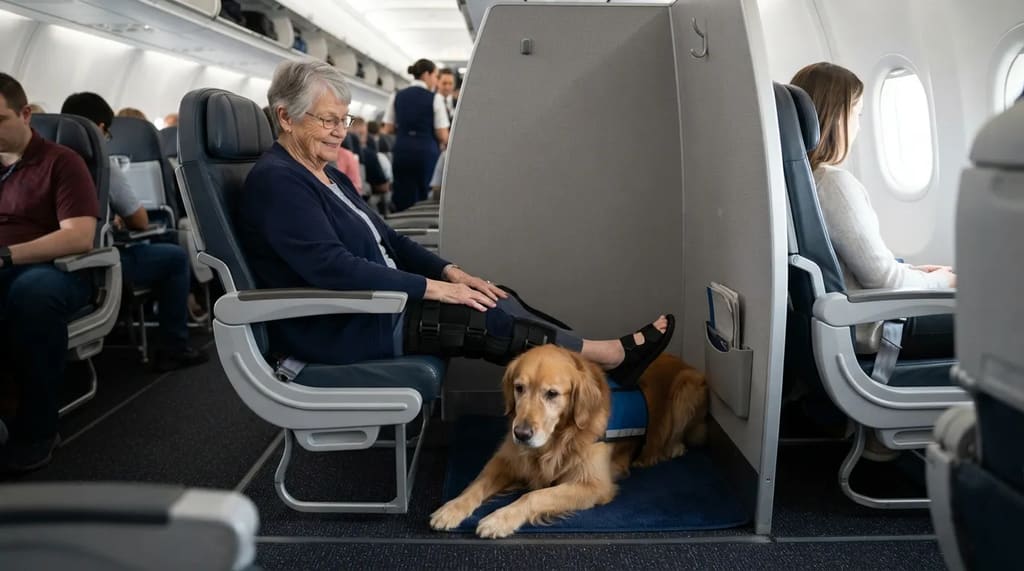
Airlines tend to hand out bulkhead rows to frequent fliers first, which makes a federal rule about them worth knowing. Three seating situations carry firm requirements:
- A fused or immobilized leg: a bulkhead seat or another seat with greater legroom, on the side of the aisle that better fits your condition.
- A service animal: either a bulkhead seat or a non-bulkhead seat, as you request.
- An adjoining seat for a person assisting you, when the airline requires you to travel with a safety assistant.
The service-animal rule is the unusual one. Most airline seat choices belong to the airline, but here the passenger, not the crew, chooses bulkhead or non-bulkhead.
If your animal would block the aisle in one row, you can ask for the other. That’s a rare moment when the traveler holds the pen.
The “side of the aisle” wording matters for a bad leg. A seat that gives your knee room on the left may leave it jammed on the right, so name the side when you ask.
What if your condition isn’t on that short list? The regulations have a catch-all that reaches seats airlines don’t offer anyone else.
#4 – The Catch-All Rule for Conditions Not on the List
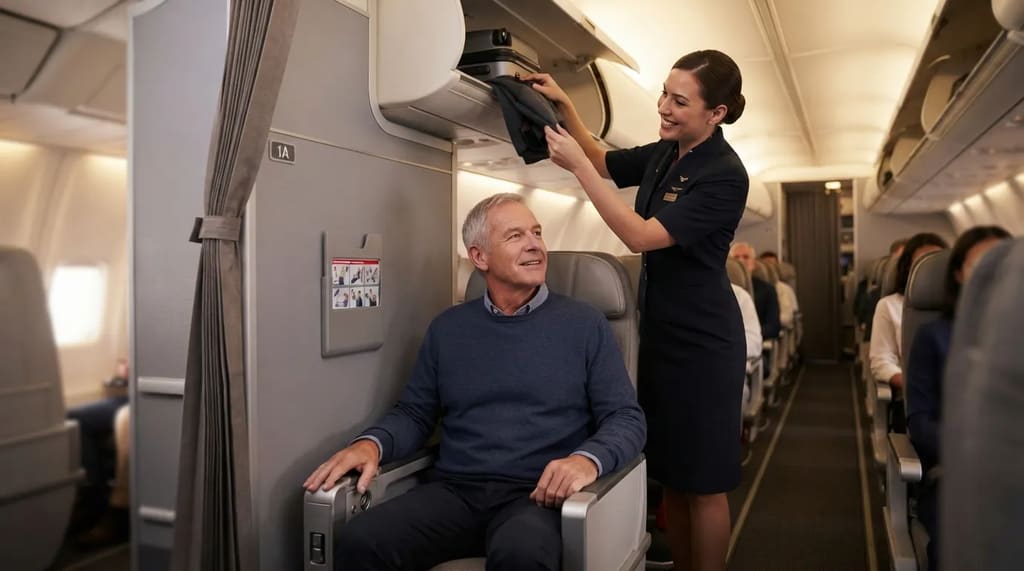
If your disability isn’t one of the named categories, the airline still owes you a seat. A carrier must assign a passenger who self-identifies as needing a seat accommodation any seat not already assigned that fits those needs, even if it isn’t available to the general passenger population at the time.6
A seat the airline is holding back for other customers can still be yours. That is the surprise buried in the fine print.
DOT’s own technical manual makes this concrete. In one example the carrier normally reserves bulkhead seats for frequent fliers, yet it must give the remaining bulkhead seat to a passenger with arthritis in his spine.
DOT’s pamphlet gives an aisle seat or a bulkhead seat as examples of what such an accommodation can be. Timing works the same way as the armrest rule in #6, because the airline must provide the accommodation at the time you make the request, so make the request when you reserve, before the best seats fill.
That covers seats. The next rule covers a bag you’d expect to be charged for, and often shouldn’t be.
#3 – The Medical Bag That Should Never Count as Luggage
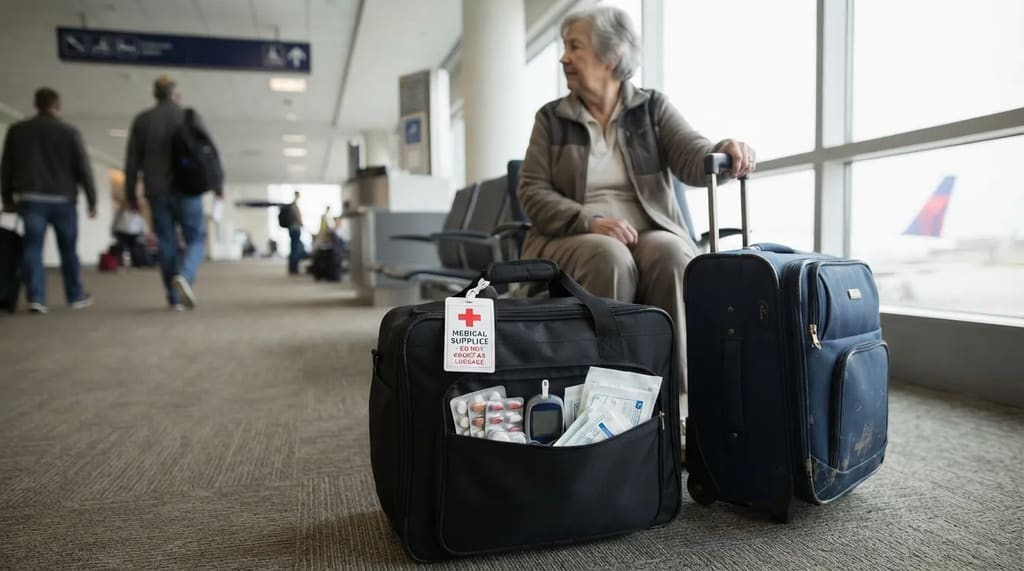
Assistive devices don’t count toward your baggage limit, according to the Department of Transportation. There is one catch worth packing around.
If a bag also contains personal items, the airline can count it toward a baggage limit, and it may be subject to a fee. So put medical devices and supplies in their own bag with nothing else inside.
Frontier says bags holding only medical devices and supplies are exempt from carry-on and checked-bag fees, and Delta allows medical supplies or equipment as additional items at no charge. The policies differ by airline, so read yours.
The waiver has limits. American had to remind its agents that hospital beds, massage tables and wagons don’t qualify.
The standard is equipment that helps you hear, see, communicate, maneuver or perform other functions of daily life. Pack medical gear in a separate bag, with nothing else inside.
Related Stories From Travelbinger

The biggest bag-fee waiver covers the biggest gear, along with services airlines can’t bill for either.
#2 – Walkers, Scooters and Wheelchairs Fly Free
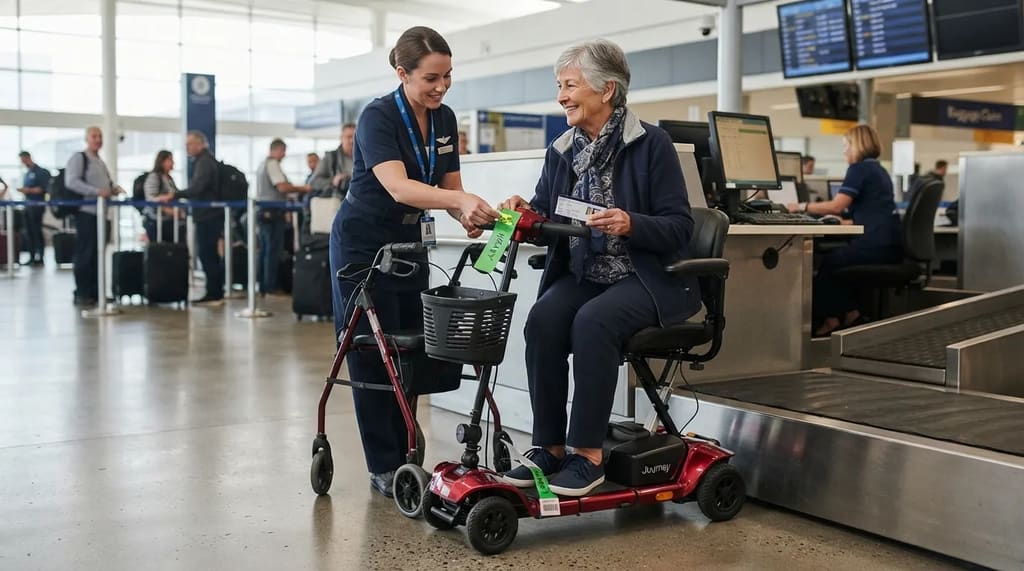
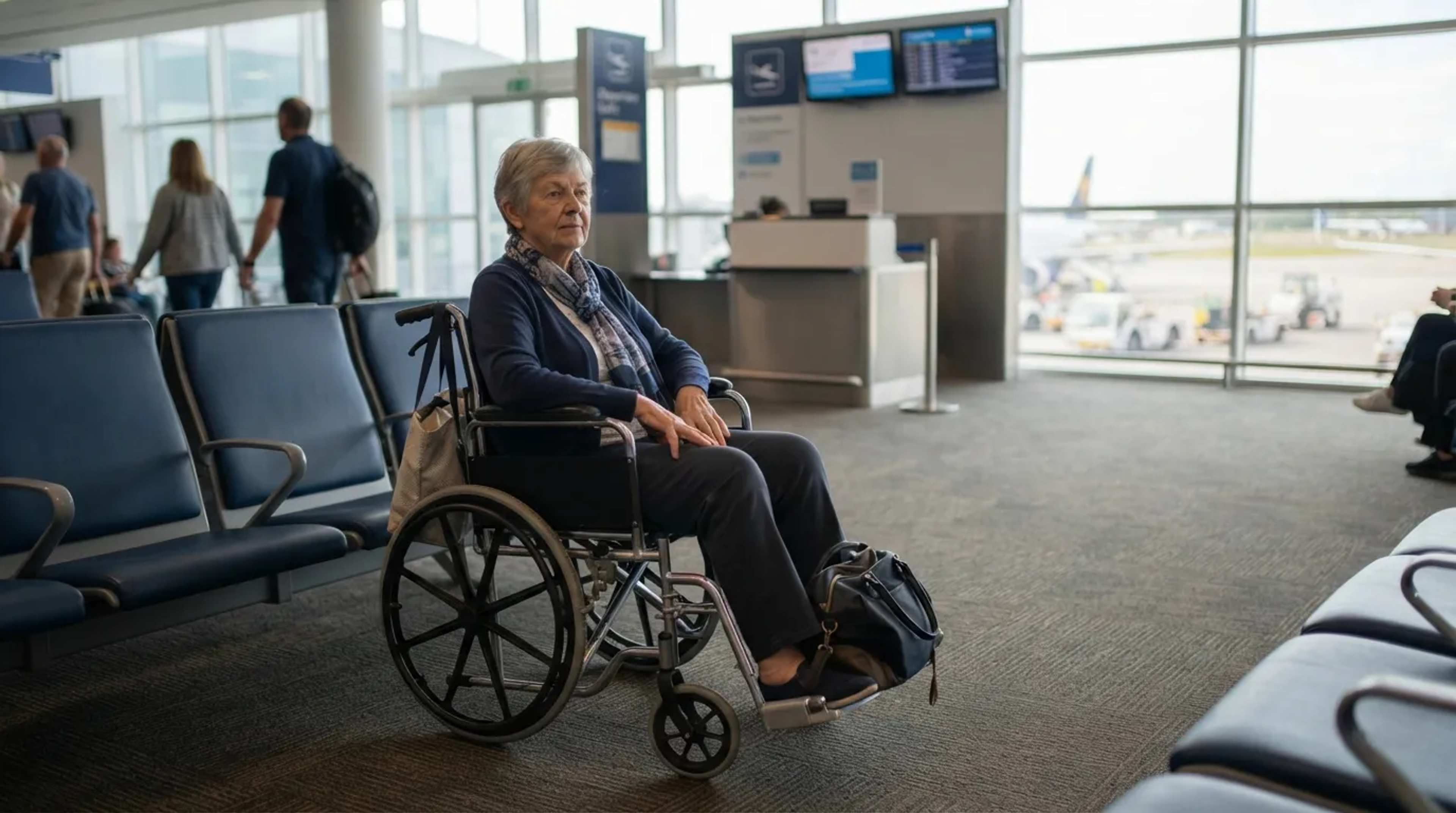
The checked-bag fee for a wheelchair, scooter or similar device is $0. Airlines must stow assistive devices as cargo in the baggage compartment at no extra cost, and if yours can’t go in the cabin you don’t pay a checked-bag fee.
The waiver carries no age ceiling and no income test. It’s one of the few rules here that works the same for everyone who needs it.
The savings are real. A $45 bag fee each way would be $90 a round trip, and a mobility device skips it entirely.
The waiver isn’t the only free service. Airlines also can’t charge extra for wheelchair assistance, mobility-device stowage or use of an on-board wheelchair, and you can ask to board before other passengers.
Fast Facts
- Checked-bag fee for a wheelchair or scooter: $0
- Age limit or income test: none
- Also free: wheelchair assistance, device stowage and on-board wheelchair use
- Boarding: you can ask to go on before other passengers
Tell the agent “this is a mobility aid” before any fee is entered, and the airline can’t charge you to carry it.
The waiver saves you a fee. The last rule on this list covers what happens when an airline damages the equipment, and that’s where the real money sits.
#1 – Full Repayment for a Damaged Mobility Device
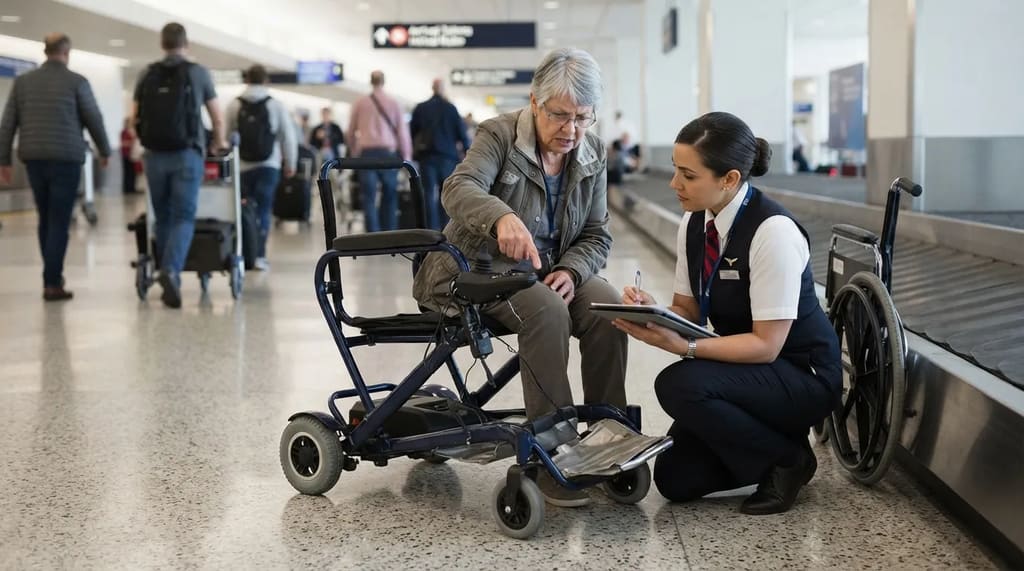
Ordinary lost-luggage claims come with caps, but those caps don’t apply to wheelchairs. Carriers must fully compensate passengers for loss or damage to wheelchairs and other assistive devices, without regard to rules limiting liability for lost or damaged baggage.
Airlines must fully compensate you for a damaged wheelchair, with no baggage cap. That rule dwarfs every fee on this list.
The free carriage in #2 saves you perhaps $90 a round trip, while a damaged power scooter can cost far more to repair or replace. On international flights, the Montreal Convention provisions control payments for items including assistive devices.
If something goes wrong, work in this order. Report the damage before you leave the airport, and ask for the airline’s complaint resolution official.
Airlines must make one available at no cost, in person at the airport or by telephone. If that doesn’t settle it, DOT runs a Disability Hotline, listed on its website.
For large claims, check the current rules with DOT or your airline. Keep your photos, your paperwork and the name of everyone you spoke to.
Ask for the Rule, Not the Discount
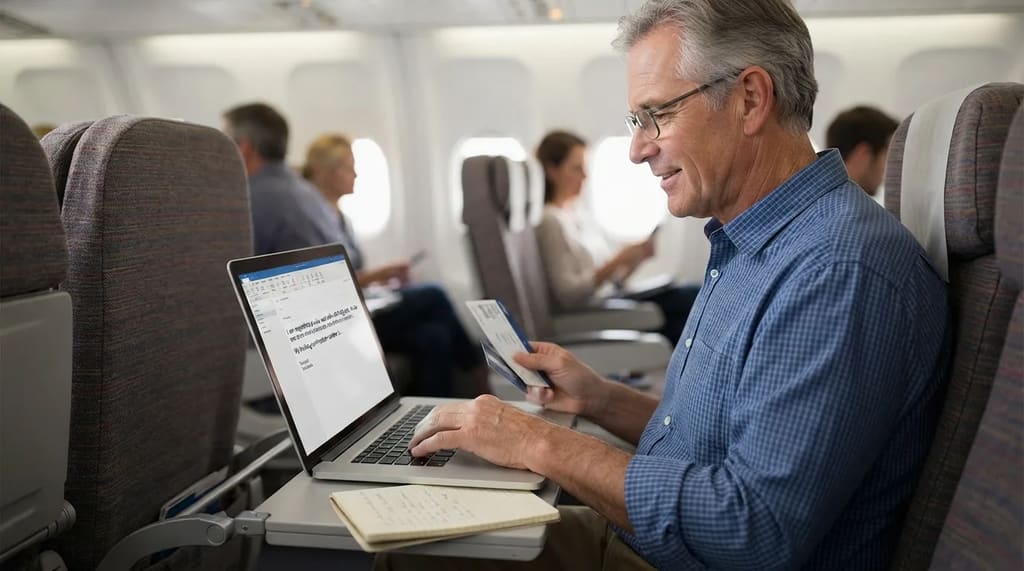
Across these items, birthdays opened few doors. A stated need, a booking date, a card, an early request and the right regulation did the work.
The traveler who gets the saving is usually the one who knows which rule applies and says so plainly, before the fee is entered or the seat map fills. That’s a very different skill from waiting for an airline to notice you’ve turned 65.
So the next time you book, treat the airline’s fare and policy pages as a menu and name what you need, not your age. Put the seat request in writing at the time you reserve.
Have you ever asked an airline for a seat or bag accommodation when you booked, and how did it respond?
- The Points Guy Southwest Fees: https://www.thepointsguy.com/news/southwest-hikes-checked-bag-fees/
- Senior Airline Discounts 2026: https://seniorsite.org/savings/13-best-discount-airline-tickets-for-seniors-verified-deals
- Air France Senior Pass: https://wwws.airfrance.fr/en/information/passagers/senior
- Federal Register Refund Rule: https://www.federalregister.gov/documents/2024/04/26/2024-07177/refunds-and-other-consumer-protections
- DOT Automatic Refund Rule: https://www.transportation.gov/briefing-room/what-airline-passengers-need-know-about-dots-automatic-refund-rule
- DOT Seating Accommodation Methods: https://www.transportation.gov/resources/individuals/aviation-consumer-protection/seating-accommodation-guide/seating-1
- DOT Seating Accommodations: https://www.transportation.gov/individuals/aviation-consumer-protection/seating-accommodations