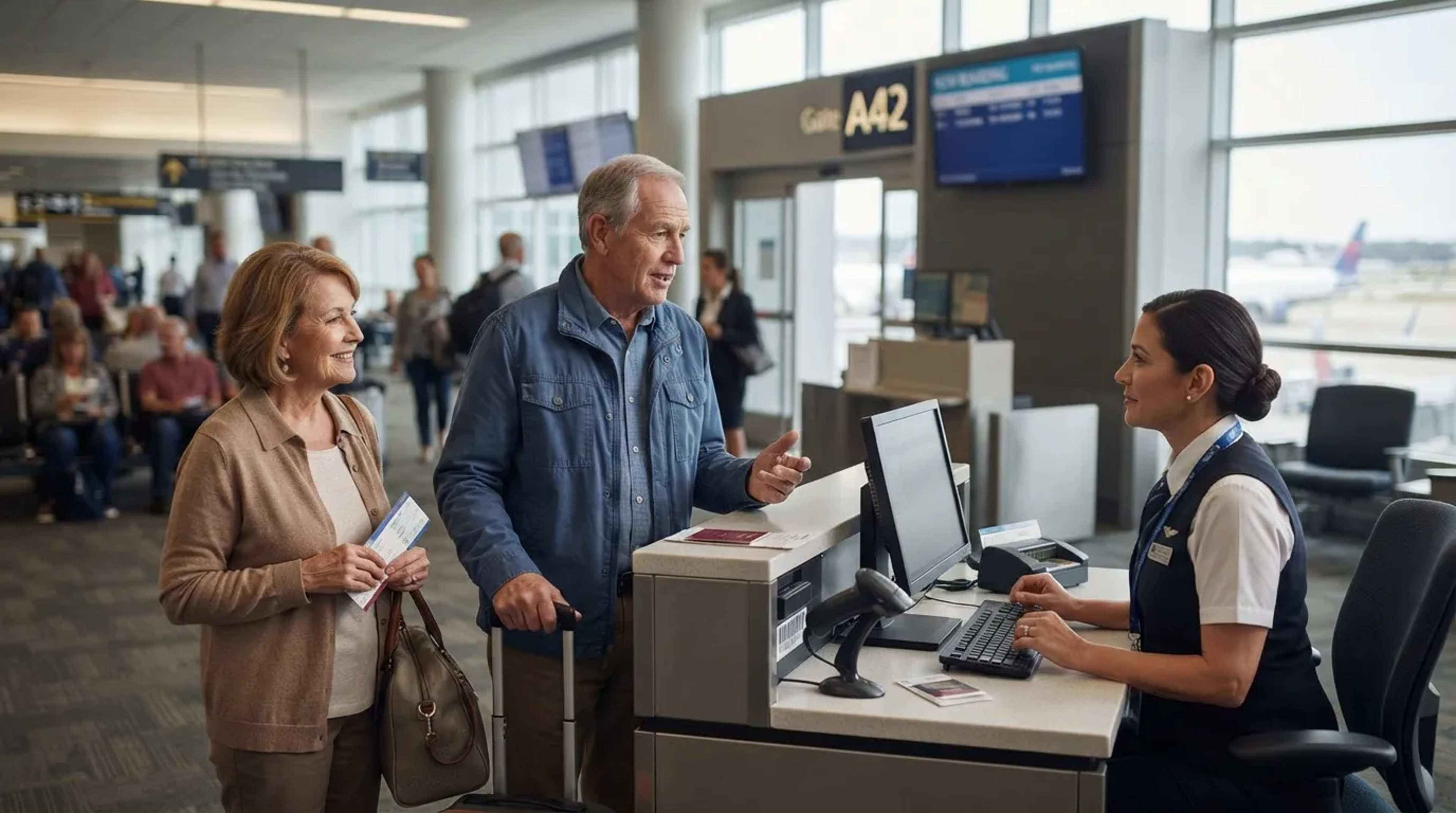
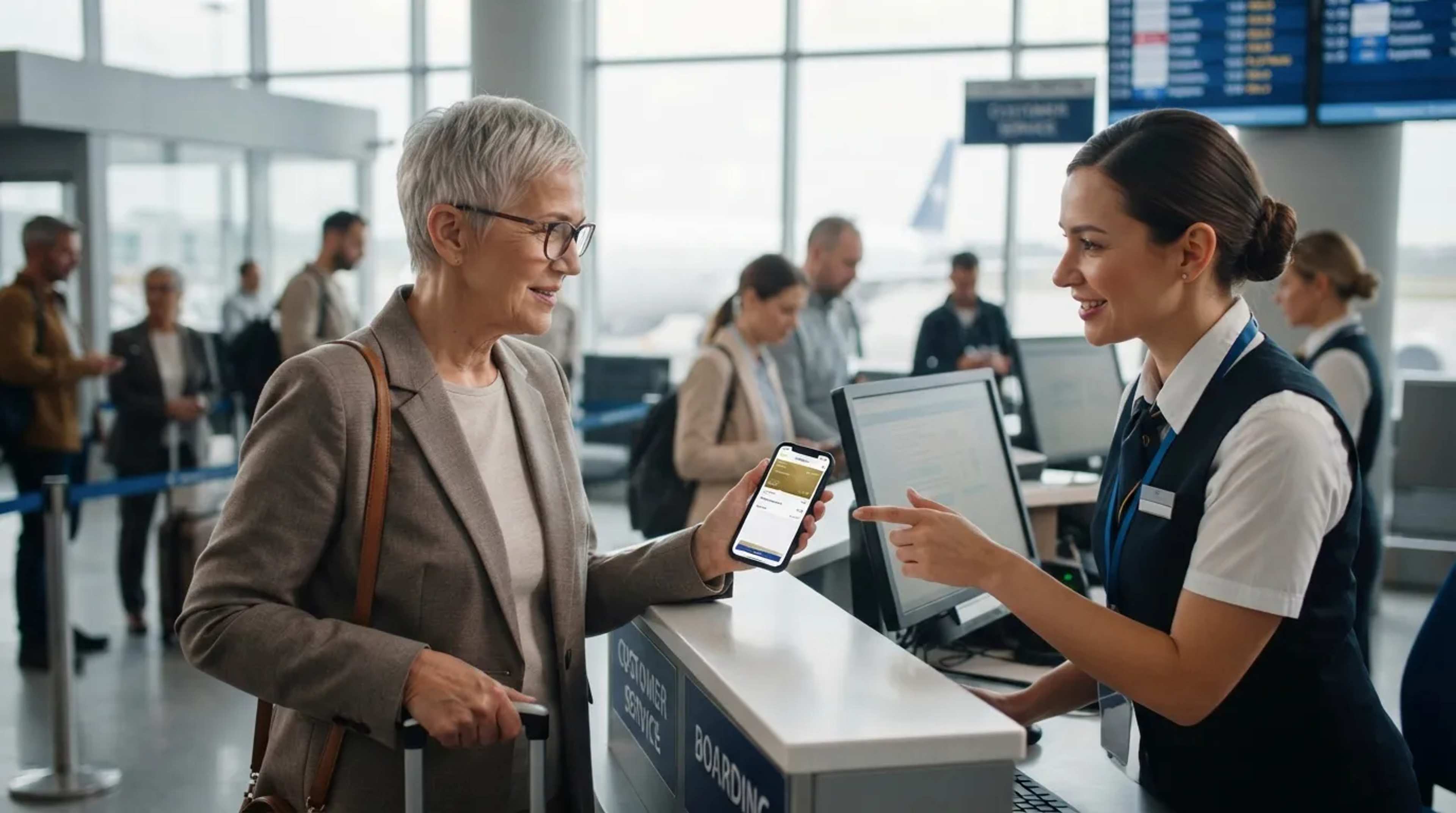
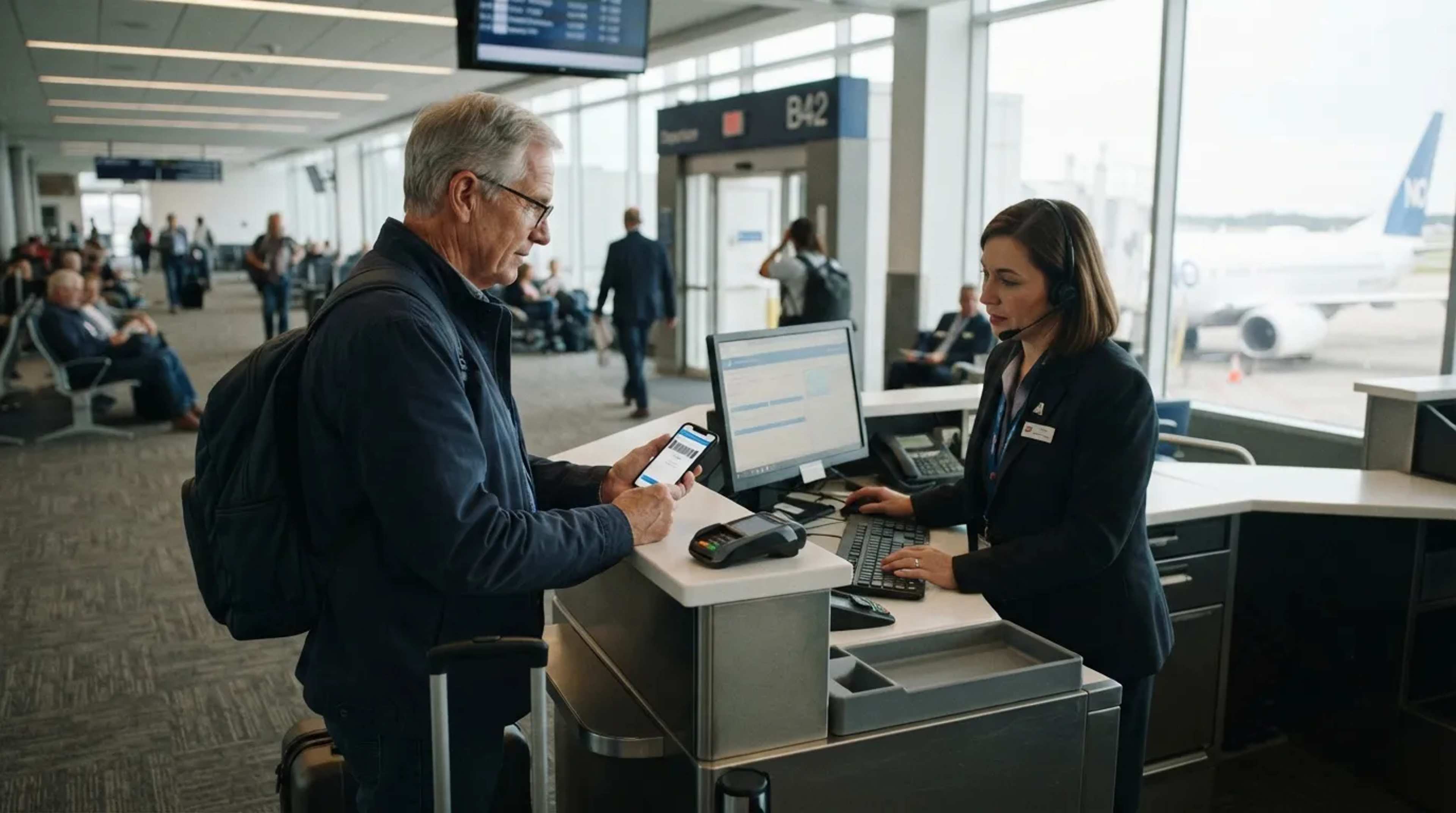
Picture a retired couple who only wanted a human voice to help them book a flight. Since July 2, 2026, Alaska Airlines has charged $30 per person for that call, up from $15, and with a first checked bag at about $45 each way, their round trip can reach $240 in fees before anyone leaves for the airport.
Here is the honest answer the title promises: being over 70 will not, by itself, erase either charge at a U.S. airline. But certain circumstances will, and a few age-based fares reward the travelers who pick up the phone and ask.
The one waiver that needs no card, no status and no birthday comes last. First comes the $45 bag, the yardstick for all the rest.
#15 – The $45 First Bag Every Big Airline Now Charges
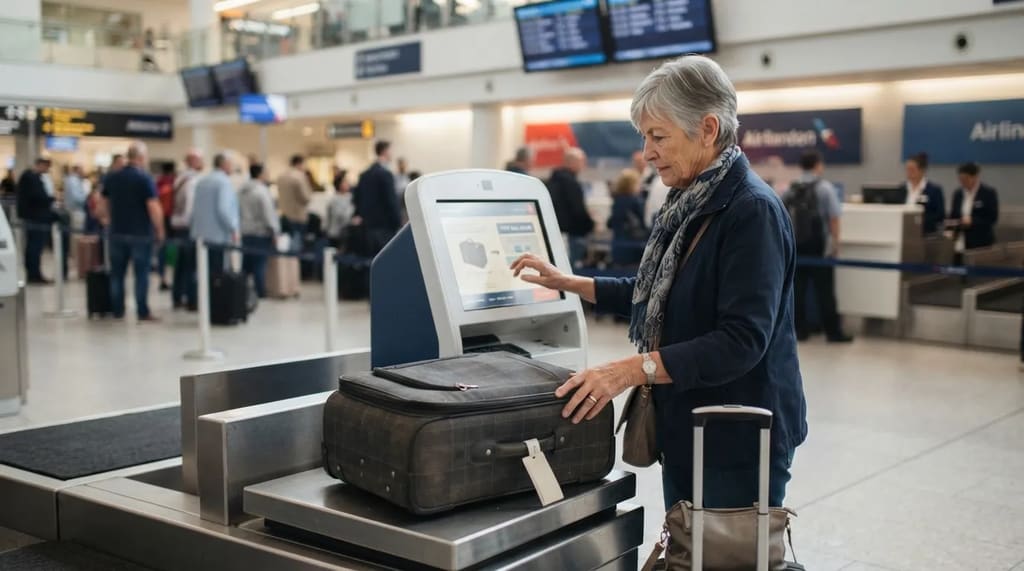
AAA’s 2026 fee snapshot lists $45 for a first checked bag and $55 for a second at American, Delta, Southwest and United, with the American and United figures applying when the bag is prepaid. A third bag costs $200 at American, Delta and United, and $150 at Southwest.1
Southwest’s number stands out because the airline ended free checked bags in May 2025 and then raised its fees again less than a year later. Southwest charges per bag, per one-way flight, so a single bag on a round trip costs $90.
None of these airlines lowers the price of a bag because the traveler is 70 or 80. What changes the price is when you pay, which card you carry and what is in the bag.
Southwest once sold fares aimed at travelers over 65, and the airline no longer does.
#14 – The Senior Fare Southwest Retired in 2019
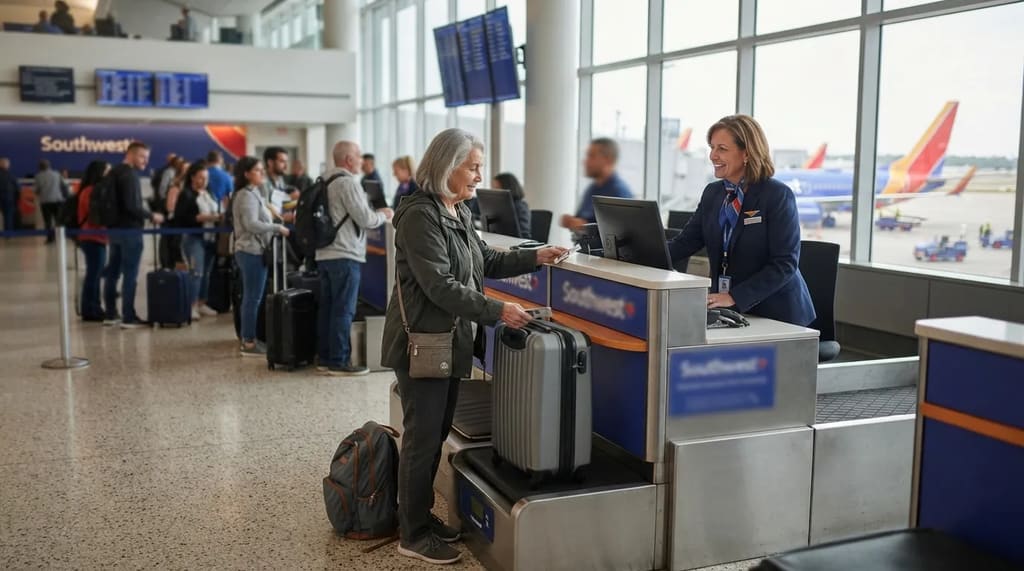
Southwest ended its senior fares on December 11, 2019, and its help center now says plainly that it does not offer them.2 That holds at 65, 70 or 75, at the booking page and at the check-in counter.
What remains is smaller but real. Every Southwest fare, Basic included, still comes with one free carry-on bag and one free personal item, so a traveler who packs light pays no bag fee at all.
Southwest also charges no change fee to any passenger, of any age. Reporting for 2026 shows no general phone-booking fee at Southwest or Delta, so booking either one by voice adds no surcharge.
Skip the trip to the Southwest counter to ask for an age waiver, since the free carry-on and personal item are where your effort pays off.
Delta still sells a fare tied to age, though its website will not show it to you.
#13 – Delta’s Senior Fare Sold Only by Phone

Delta offers senior discounts on certain domestic markets for passengers 65 and older. Its own fares-and-discounts page says certain discounts are not available at delta.com, so to see the fare you have to call Delta reservations and ask.
The discount varies by route, so compare the phone quote with the public sale fare on the website before you agree to anything. Senior fares at Delta are often described as more flexible or refundable than the cheapest tickets, which is worth confirming in the fare rules the agent reads to you.
A senior fare lowers the ticket price and does nothing for the bag fee. That $45 charge from earlier still applies unless a card, status or military service covers it.
United puts its version in a dropdown on its website, and that version leaves out the cheapest tickets.
#12 – United’s Senior Dropdown and American’s Uncertain Box
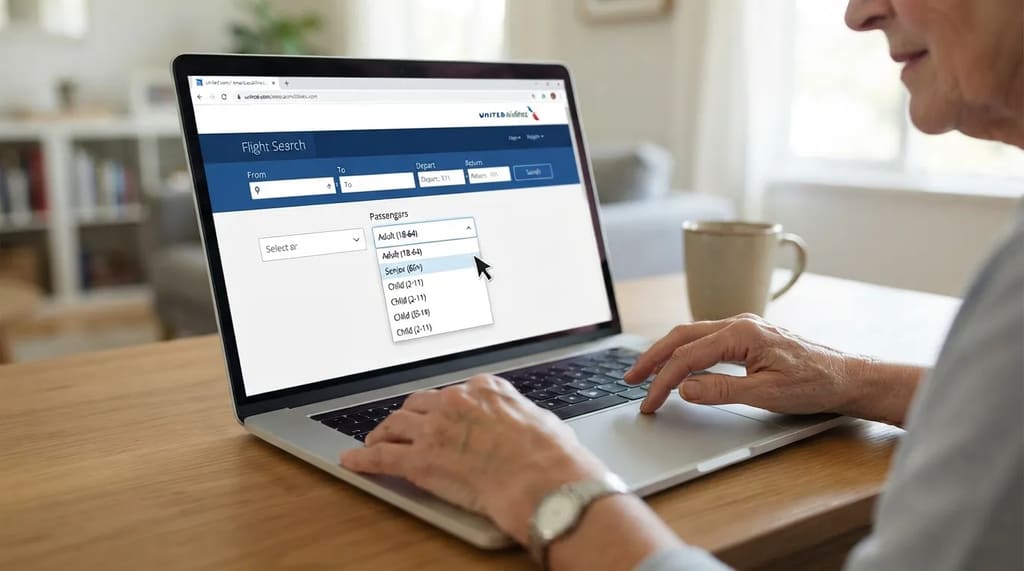
United has offered a senior discount on select routes for passengers 65 and older, and you find it by choosing “Senior (65+)” from a dropdown on united.com. Basic Economy is excluded, so the cheapest ticket on a route cannot be bought at the senior price.
American has let you book a “Senior (65+)” passenger type on some routes, and the fare applies only to the senior traveler, not everyone on the reservation. Reports are split on whether that box still exists, so look for it when you book and do not count on it.
Where these fares appear, American’s has been reported at 10 to 15 percent off, mostly on international routes, while one recent guide puts United’s at 5 to 25 percent. A 10 percent discount is not worth a long wait on hold if the website shows the same trip on sale.
Quick Compare
- Delta: 65+, certain domestic markets, and you have to call because the fare is not on delta.com.
- United: 65+, select routes, found in the “Senior (65+)” dropdown, with Basic Economy excluded.
- American: a “Senior (65+)” passenger type on some routes, though reports are split on whether it still exists.
- Southwest: no senior fare since December 11, 2019.
Bring a government-issued photo ID showing your birth date, since the airline will ask for it at check-in.
Across the Atlantic, one airline turns the age break into a membership with a bag perk attached.
#11 – Air France’s €49 Senior Pass for Europe-Bound Travelers
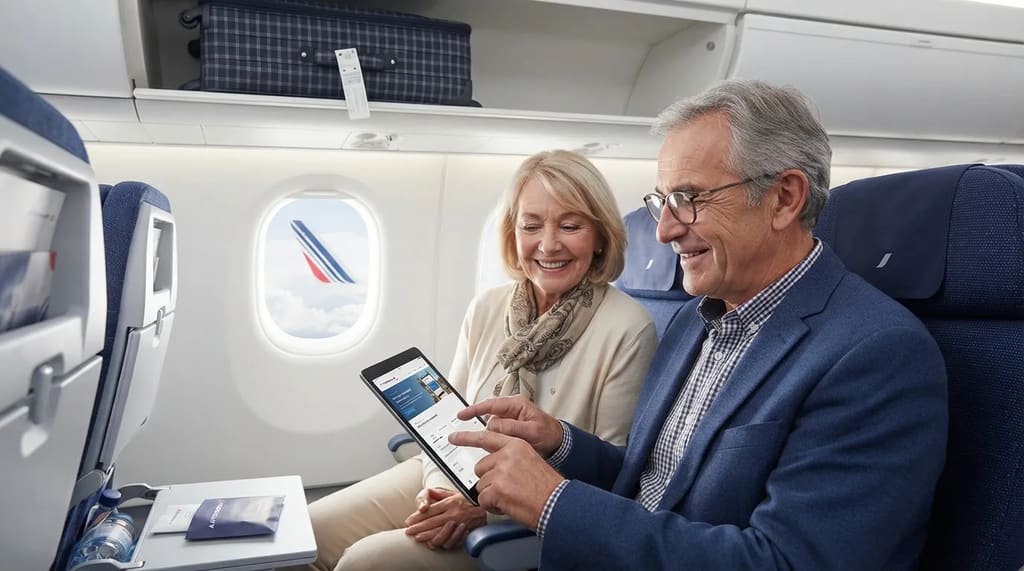
Air France’s Senior Pass is open to travelers 65 and older for €49 a year, and it is the clearest age-based bag perk in the research. It offers up to 30 percent off Standard fares within Europe, flexible tickets and free checked baggage.3
You buy this pass in advance, and asking at the counter will not produce it. Air France changes the terms from time to time, so read the current ones before you pay.
Air India draws its age line lower: its senior fares start at 60, not 65. The discounts of up to 25 percent apply to domestic fares for Indian passport holders, so they help only on trips inside India.
Closer to home, the first bag costs a little less if you pay before you reach the airport.
#10 – The $5 Gap Between Prepaying and the Airport Counter
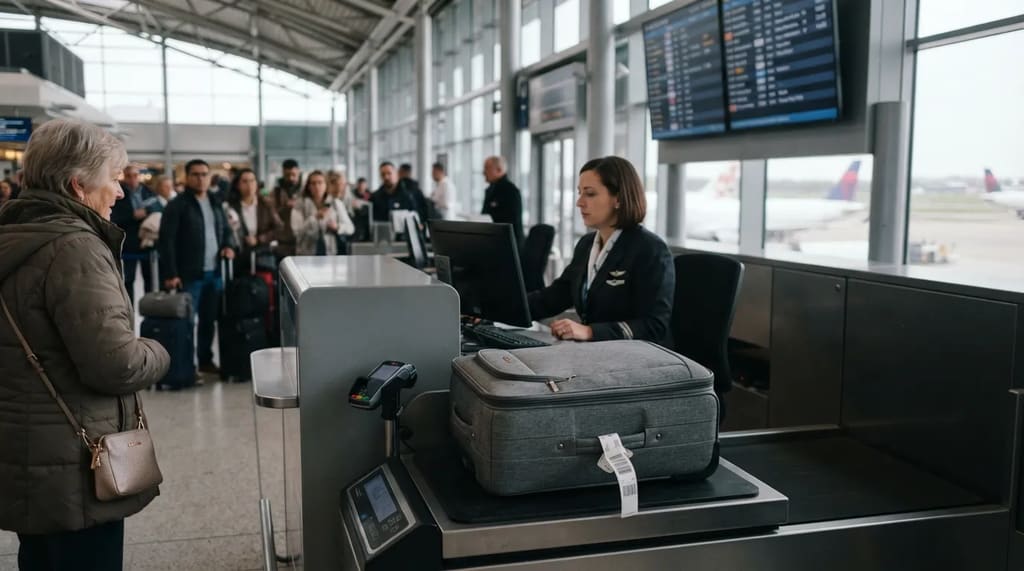
At United, the first bag costs $45 prepaid and $50 at the airport, and American’s prices follow the same pattern. On a round trip with two bags that is $20 you keep by adding the bags when you book, online or in the app.
A larger bill hides in the weight limit. Delta, United and Alaska charge $100 for a bag between 51 and 70 pounds, which is more than twice the $45 base fee.1
Paying early is the one fee reduction on this list that needs no phone call, no ID and no one’s permission. It belongs ahead of any attempt to negotiate at the desk.
Military service can remove the bag fee altogether at some airlines, and plenty of travelers over 65 served in the military.
#9 – Military Bag Waivers Some Retirees Overlook
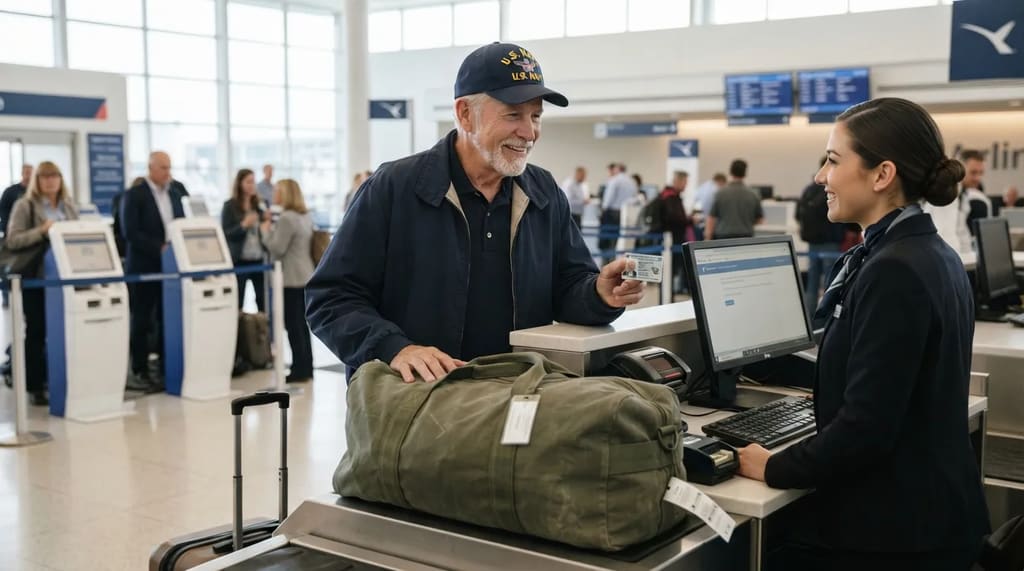
Some large carriers waive checked-bag fees for military members, and one travel blog reports that American, Delta and Alaska do so for active or retired military. Whether retired service counts can differ by airline, so ask before you assume either way.
Have your military ID ready, and ask how many bags the waiver covers and whether family traveling with you are included.
If you served, this is the cheapest waiver on the list to try, since it costs one question and an ID card. At $45 each way, one bag on a round trip is $90, which is what the waiver is worth on every trip you take.
Not every fee comes with a loophole, though, and one of them just got twice as expensive.
#8 – Alaska’s Phone Fee Doubled in July
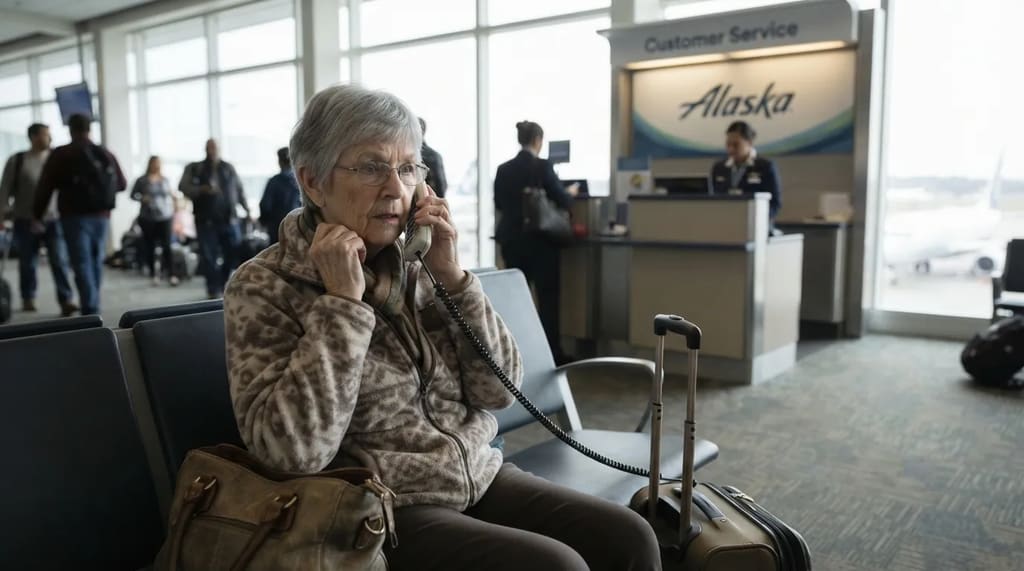
Starting July 2, 2026, anyone who calls Alaska’s reservation line to make a new booking pays $30 per person, up from $15.4 The fee applies to both paid and award tickets issued through the call center.5
Atmos Gold and Platinum elite members keep their waived service charges, and the airline says most travelers can avoid the fee by booking online.4 For a couple the fee adds $60 to a trip, which is more than a first checked bag costs.
The change falls hardest on older travelers who avoid the app, but an app is not required, because the same booking can be made on the airline’s website from a home computer. If a grandchild or a library computer can make the booking, paying $30 to call is poor value.
United’s phone fee is lower than Alaska’s new one, and a particular status tier makes it disappear.
#7 – United’s $25 Phone Fee and the Tier That Erases It

United charges $25 per passenger to book by phone, and the fee is waived automatically for Premier Platinum members and above.
That tier sits well above entry-level status, so a retiree who flies a few times a year should plan on paying the fee or booking online. According to one travel guide, United will not waive the fee just because a booking could not be completed online, though accessibility rules are a different matter.
A call for two travelers costs $50, slightly more than a single checked bag. Use the website for new bookings unless you need an agent for something it cannot do.
At a Glance
- Alaska: $30 per person since July 2, 2026, with Atmos Gold and Platinum members exempt.
- United: $25 per passenger, waived for Premier Platinum and above.
- Air Canada: CA$30 plus tax per passenger, non-refundable, with exemptions for accessibility needs and disruptions.
- Southwest and Delta: no general phone-booking fee reported for 2026.
North of the border, a newer phone fee comes with a surprisingly detailed list of people who do not pay it.
#6 – Air Canada’s New CA$30 Phone Fee

Air Canada began charging a non-refundable CA$30 fee, plus tax, per passenger on October 15 for new flights booked by phone.6 The fee is not refunded even if you later cancel the booking.
Booking online or in the app is free, and several groups of callers are exempt.6 Calls about an existing reservation, such as a change or a question, do not attract the booking fee, although normal change fees under your fare still apply.
The fee is waived for customers with accessibility needs, those affected by flight disruptions, and cases where online booking is not feasible, such as adding an infant. Do not assume an agent will waive it because your own online attempt failed, and the fee still applies to Aeroplan reward bookings made through the Contact Centre.6
Changing the day of a flight you already hold falls under different rules, and part of that is free at several airlines.
#5 – Free Same-Day Standby at American, Delta and United
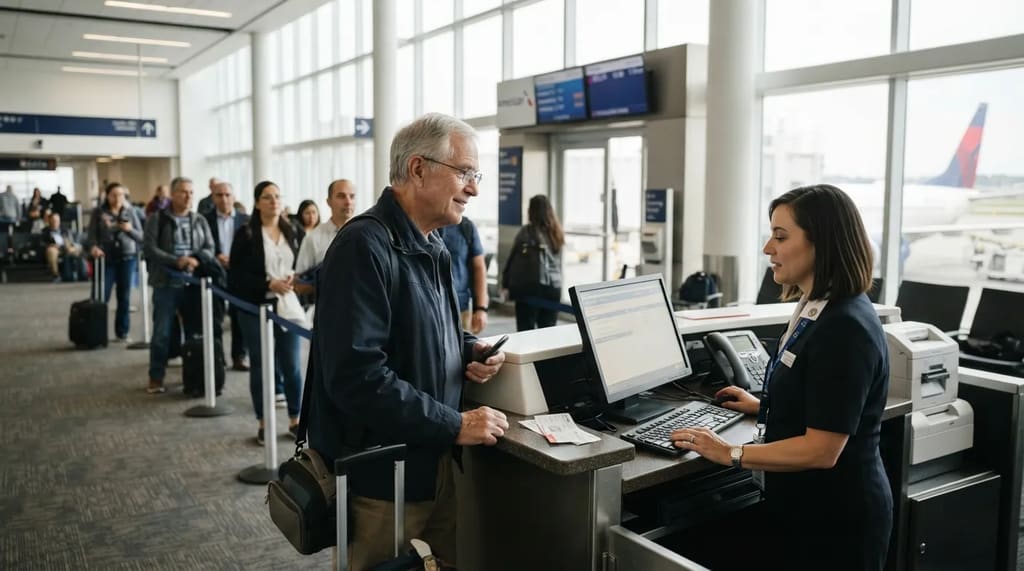
Same-day standby puts you on a waitlist for a different flight on your travel day, and as of October 2026 it is free on most fares at United, Delta and American within the U.S. You cannot buy a standby ticket from a major U.S. airline, so the benefit applies only to a ticket you already hold.
What standby saves is the fee for a confirmed change, $75 on Delta and from $60 on American. Delta waives the $75 for Diamond, Platinum and Gold Medallion members, and American lets you list with an agent up to 45 minutes before a domestic departure.
On Delta, you request standby during online check-in or in the Fly Delta app, within 24 hours of your original departure. Delta passengers without status can stand by for earlier flights only, and only when a confirmed change is not available.
Fast Facts
- Standby is free on most U.S. domestic fares at United, Delta and American.
- A confirmed same-day change costs $75 on Delta and from $60 on American.
- Delta standby requests open within 24 hours of departure, in check-in or the Fly Delta app.
- American agents can list you up to 45 minutes before a domestic departure.
If a short trip ends early and you want to get home sooner, standby is the best free option in this piece. A seat is never guaranteed, so book a flight you can live with.
The free list is not open on every fare, and the cheapest tickets are the ones most often shut out.
#4 – The Fares Where Standby Is Shut Out
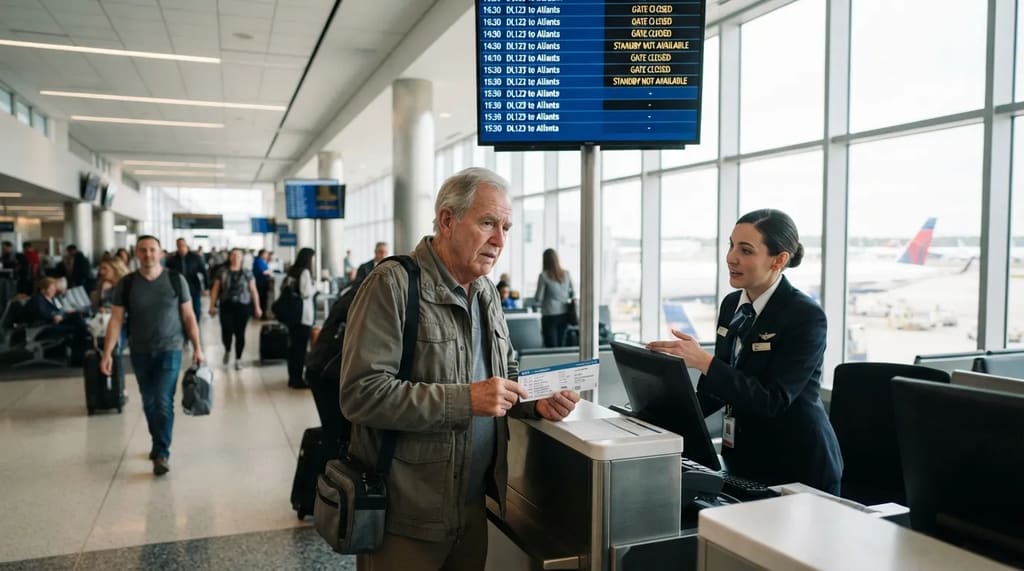
Delta’s fees page says same-day standby is not available for Delta Basic Experiences. JetBlue’s Blue Basic, Frontier’s Economy and Alaska’s Saver fares are excluded too.7
American takes a different line: it says AAdvantage members on Basic Economy can stand by at no charge. Sources disagree on whether United’s Basic Economy standby covers only earlier flights, so confirm that when you book.
Delta’s Flex fares carry no same-day switch or standby fee. That moves the decision to the moment you buy the ticket, and a basic fare saves a little money while giving up that option.
Delta Basic is excluded from confirmed same-day changes as well, so a traveler on that fare has no same-day option at all.8
Related Stories From Travelbinger


One workaround skips the fare rules entirely, and it lives in your wallet.
#3 – The Card or Status That Erases the First Bag
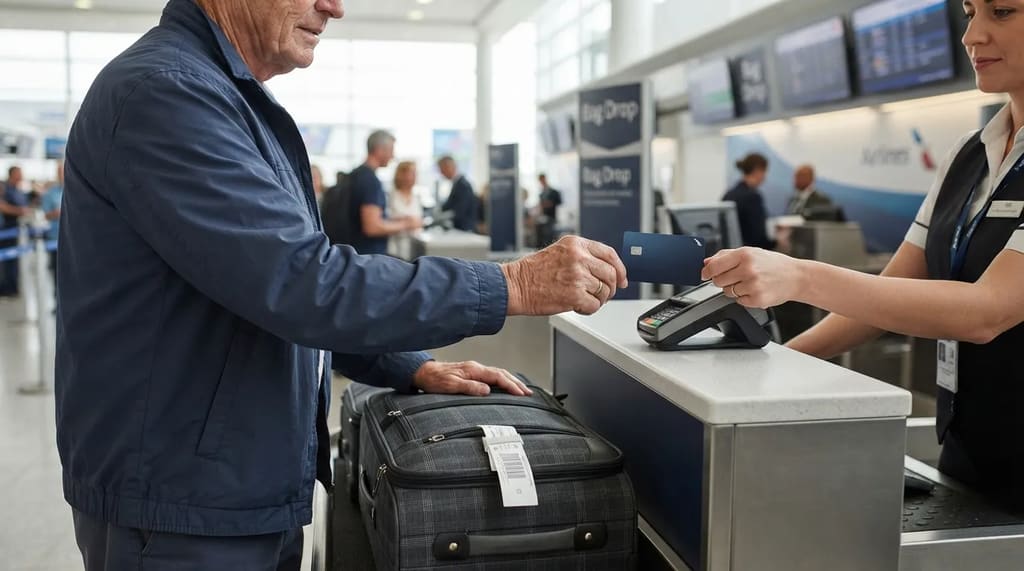
Airline-branded credit cards and elite status commonly include a free first checked bag, the nearest thing to a standing waiver at a U.S. airline. Examples include the Citi AAdvantage card at American, a Chase card at United, Southwest’s Rapid Rewards card and the Atmos Rewards Visa at Alaska.
The American card waiver covers the first checked bag for you and up to four companions on the same domestic reservation. At $45 each way, that is $180 on one round trip for a couple, a figure to set against the card’s annual fee, which varies by card.
Opening a card to dodge bag fees makes sense if you fly the same airline several times a year. It makes none if you fly once a year on whichever carrier is cheapest.
Higher status tiers can also erase the $25 United phone fee and the $75 Delta same-day change from earlier, which is why a frequent flyer with status rarely pays them.
Neither card nor status helps when a trip you already hold falls apart, and that is when a phone call can suddenly cost nothing.
#2 – The Phone Fee That Vanishes When Your Flight Falls Apart
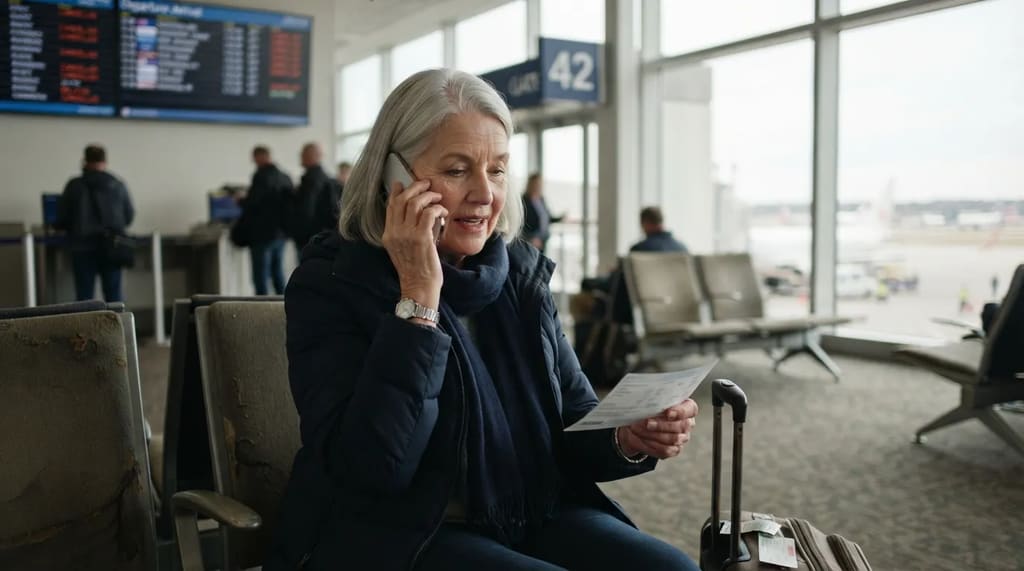
The new phone charges are aimed at fresh bookings, not at conversations about a trip you already hold. Alaska’s fee applies to new bookings, and at Air Canada, calls about an existing reservation do not attract the booking fee.
Air Canada goes a step further and exempts customers affected by flight disruptions. If a cancellation leaves you needing a new flight, you should not be paying a surcharge for the privilege of being rescued.
Say what happened in your first sentence, before the agent starts building the new itinerary. Then ask whether the booking fee applies and have the agent confirm it is waived before you accept the ticket.
One waiver is bigger than any of these, and it asks nothing of your wallet, your loyalty or your age.
#1 – The Accessibility Waiver That Needs No Card, No Status and No Birthday
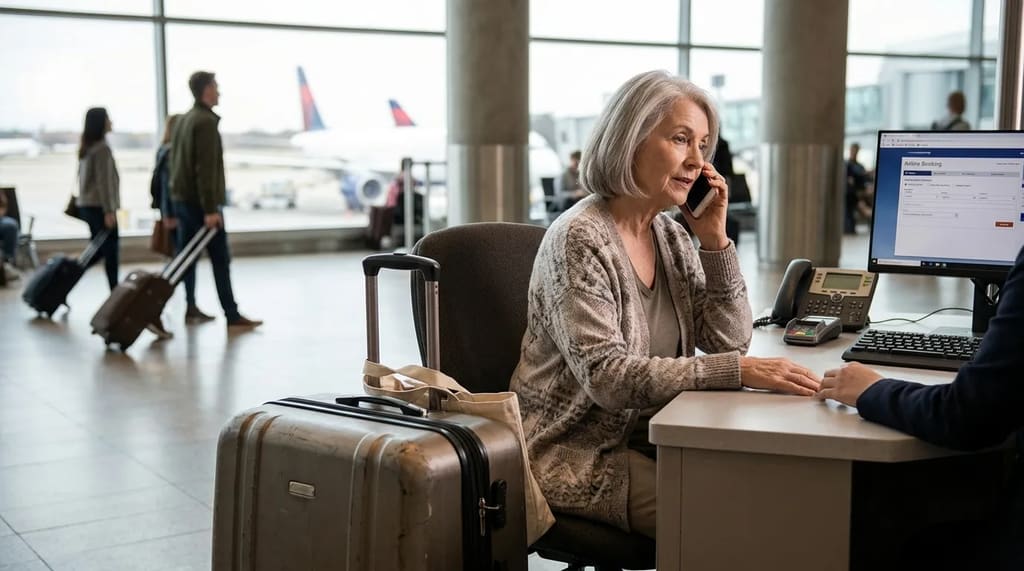
Of every exemption in this piece, the accessibility waiver is the only one that turns on need rather than a credit card, a status tier or a date of birth. Air Canada lists customers with accessibility needs among those who do not pay its phone fee, and United’s own rules treat accessibility differently from an ordinary failed online attempt.
If vision, hearing, mobility or a memory condition makes a booking website impractical, tell the agent that at the start of the call. Ask them to confirm the phone fee is waived and to note it on your reservation.
There is a catch, and it is an honest one: age alone does not unlock this door. A healthy 71-year-old pays the fee, while a traveler of any age who truly needs a human voice to book does not.
That is the quiet truth under all fifteen items. The fees airlines drop are rarely handed to people for being old, but they are often dropped for people who ask the right question at the right moment.
So prepay the bag, check your wallet for a card that covers it, and keep your military ID handy. Then, when you do need to call, start the conversation by saying exactly why.
- AAA Airline Baggage Fees: https://cluballiance.aaa.com/the-extra-mile/advice/travel/airline-baggage-fees
- Southwest Senior Fares Ended: https://passportprotravel.com/southwest-airlines-senior-discount/
- Air France Senior Pass: https://wwws.airfrance.fr/en/information/offres/cartes-de-reduction/carte-senior
- Seattle Red Alaska Phone Fee: https://seattlered.com/transportation/alaska-airlines-phone-booking-fee-doubles-seniors/4118981
- NerdWallet Alaska Fee Changes: https://www.nerdwallet.com/travel/learn/alaska-airlines-higher-award-fees-no-saver-earning
- Air Canada Contact Centre Fee: https://www.aircanada.com/us/en/aco/home/book/travel-news-and-updates/contact-centre-booking-fee.html
- Standby Flights Guide 2026: https://withautopilot.com/blog/standby-flights
- Delta Same-Day Flight Changes: https://www.delta.com/us/en/change-cancel/same-day-flight-change