Here is what most flyers over 65 never hear: the airline help you have been told about is not tied to your age. The federal rule behind it, 14 CFR Part 382, was first outlined by the Department of Transportation in 1990 and is written around need.1
So turning 66 does not move you to the front of anything. Waiting for a birthday to unlock help can mean long waits, late boarding and a seat that does not suit you.
Most of the courtesies below cost nothing, and several are more generous than the gate line suggests. One of them takes a single sentence at the gate and puts you ahead of first class.
That one comes last. The only age line in the whole process belongs to TSA, and it sits at the security checkpoint, so that is where we start.
#15 – The 75th Birthday at the Security Checkpoint
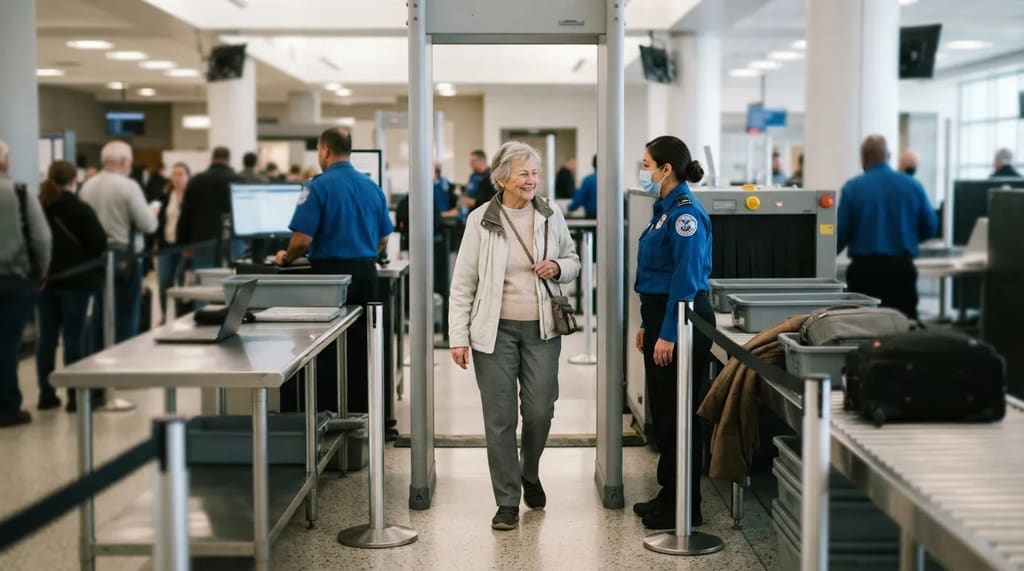
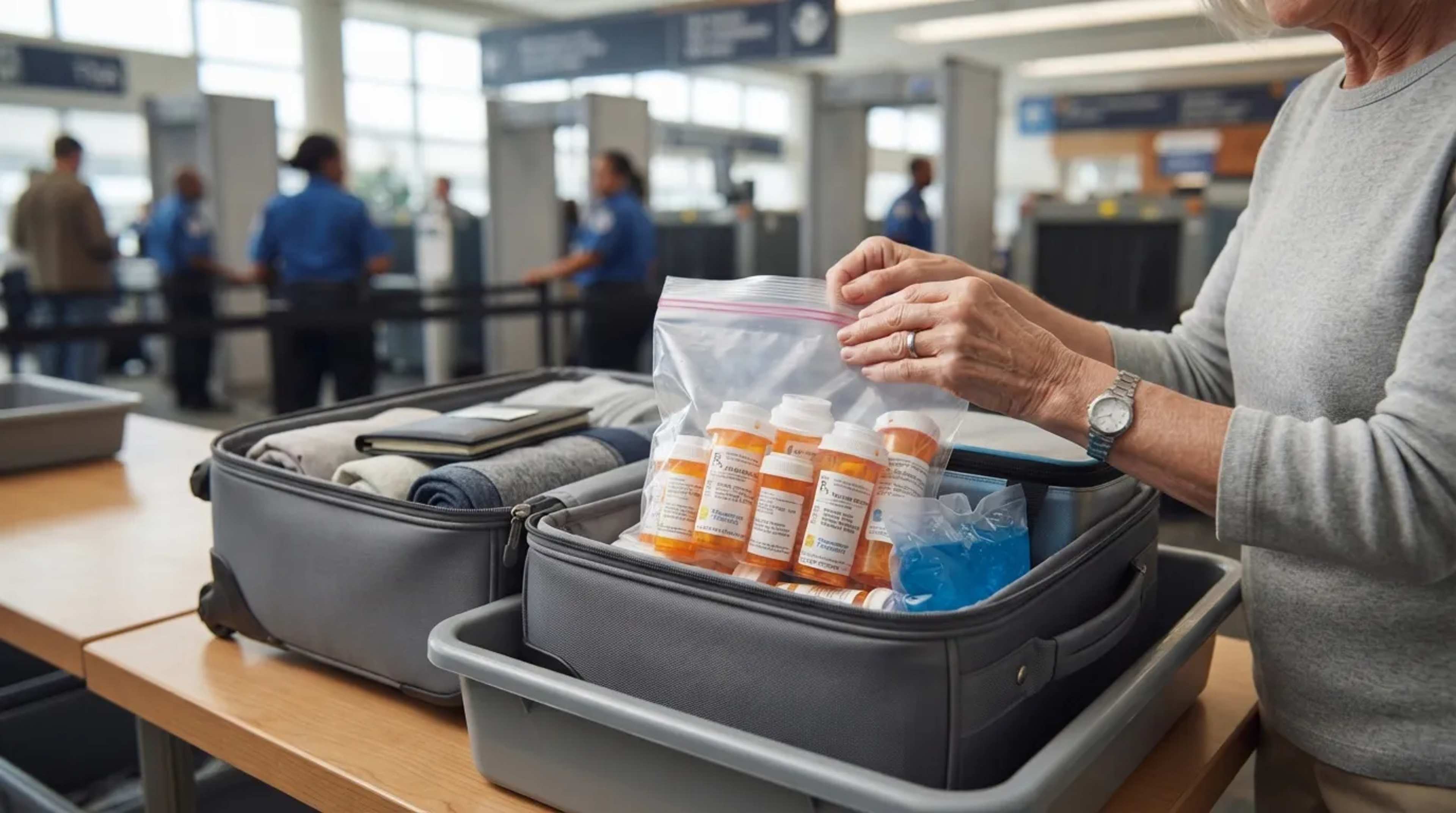
TSA says passengers 75 and older can receive some form of expedited screening.2 The word “can” matters, because the agency does not describe a guaranteed lane.
An alarm can still lead to extra screening, including a pat-down.2 So the break at 75 is real but modest.
The old shoes-on perk has lost its edge too. As of July 8, 2025, TSA no longer requires passengers to remove their shoes at checkpoints nationwide, where before only children 12 and under and adults 75 and older were exempt.
Turning 65 unlocks nothing automatically at the checkpoint, and nothing in TSA’s guidance points to a special lane that starts at 65. Leave the cushion you always leave, and treat any faster screening as a bonus.
Those age rules say little about travelers who cannot stand in a screening line at all, and TSA handles that case separately.
#14 – Screening When You Cannot Stand
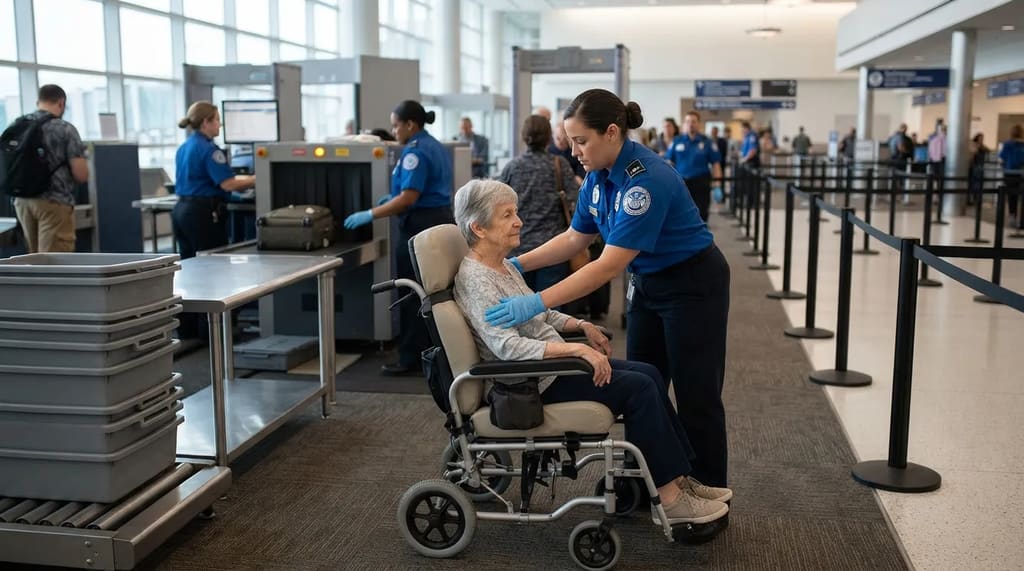
Standing is where the checkpoint gets hard for some older travelers, and TSA has a stated alternative. Passengers 75 and older who are unable to stand for screening are screened through other security methods.2
Younger travelers have options too. TSA has screening procedures for travelers of any age whose medical conditions prevent standing or walking.
A traveler of 68 whose knee will not tolerate standing therefore has something to ask for. The age 75 line is not the only door.
Fast Facts
- Age 75 and older and unable to stand: screened through other security methods.
- Any age with a condition that prevents standing or walking: TSA has screening procedures for you.
- TSA Cares: a free program offering dedicated help through screening.
- What qualifies you is the medical condition, not the birthday.
TSA Cares is built around that same idea. The qualifying fact there is the medical condition, not the birthday.
That is the same logic that governs everything the airline owes you after the checkpoint.
#13 – The Free Wheelchair the Airline Owes You
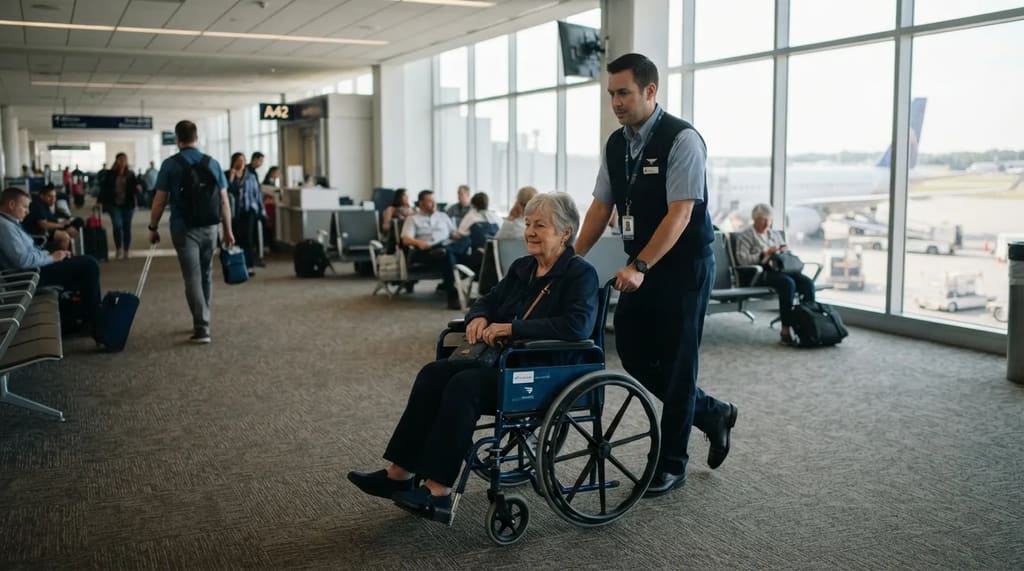
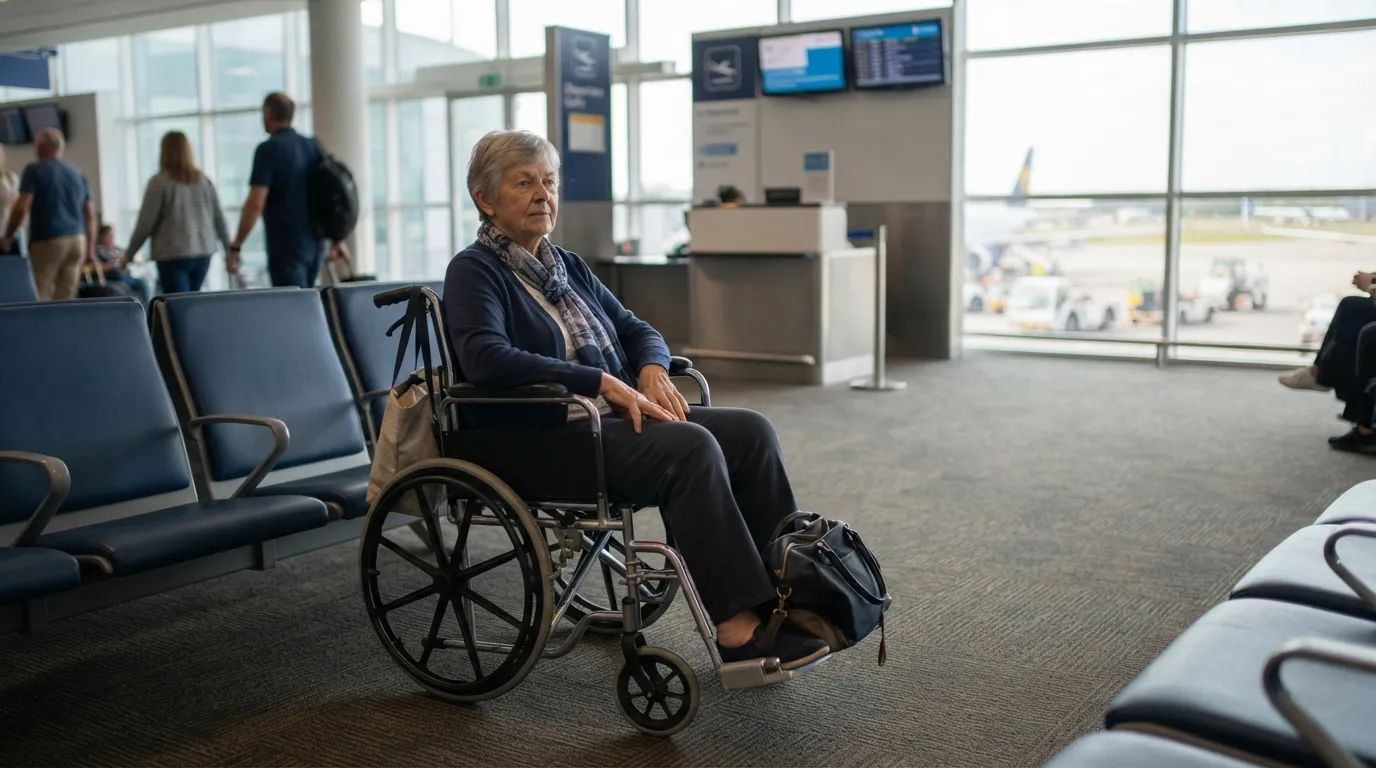
The wheelchair that takes you to the gate comes from the airline, not from TSA. Under DOT rules the airline, not the airport, must provide it promptly on request, so the request goes to the carrier on your ticket.
The service is free, because a carrier must not charge for services the rule requires. It covers the trip from the curb to the departure gate, between gates on connecting flights, and from arrival to curb pickup.
Airline assistance ends at the curb or a designated pickup point, so a ride beyond that is your own arrangement. Tipping the person who helps you is customary, though nothing in the federal rule requires it.
Free help still has to be asked for, and when you ask changes how the day goes.
#12 – The Request You Make at Booking

An airline cannot demand notice just because you have a disability. Airlines may not require advance notice that a person with a disability is traveling, though they may require up to 48 hours for specific accommodations that need preparation.3
Even so, AARP’s guidance is to make the request online or through the airline’s special assistance line, or failing that, call at least 48 hours before the trip. Asking at the airport can still work, but a late request may be slower.
I would treat 48 hours as your own deadline, since the law makes it a condition for only a few services. Put the request in the reservation itself, so it travels with your booking instead of sitting in a separate email.
A few services do carry a real notice requirement, and the airline may hold you to it.
#11 – The Few Services That Need Advance Notice
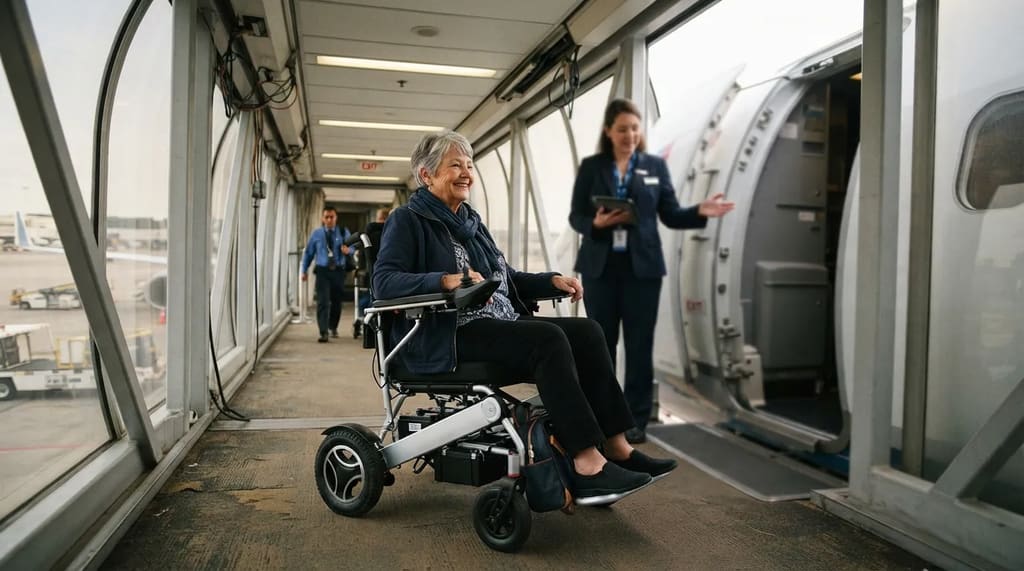
The rule lets an airline require advance notice, and sometimes earlier check-in, for certain equipment and accommodations. The list is short, and it covers things the airline has to prepare rather than help it simply gives.
- Carrying an electric wheelchair on an aircraft with fewer than 60 seats: up to 48 hours’ notice.3
- Using onboard medical oxygen or hooking up a ventilator: up to 48 hours’ notice.
- Carrier-supplied in-flight oxygen on an international flight: up to 72 hours’ notice.
For a portable oxygen concentrator, airlines commonly ask for a doctor’s statement, so ask what yours requires. Anything outside this short list can be requested at the airport, so the 48-hour habit from booking is good advice and not a legal wall.
Knowing which services need notice is half the job, and confirming that the request actually stuck is the other half.
#10 – Reconfirming Twice Before You Leave Home

The advice is to request assistance at booking and again at check-in, then confirm it at the ticket counter and again at the gate. That is more contact than it sounds, but each one catches a different failure.
A short call about 48 hours before departure, with the request read back to you, tells you the note is still on your reservation. If you are changing planes, confirm the request with every airline on the itinerary, so the second airline is not learning about you for the first time at its own gate.
This is worth the trouble. Travelers who skip it can end up waiting at the wrong gate, or missing a flight altogether.
Confirmation protects the request but does nothing about a crowded terminal, where the clock is the other risk.
#9 – Arriving Earlier Than the Airline Suggests
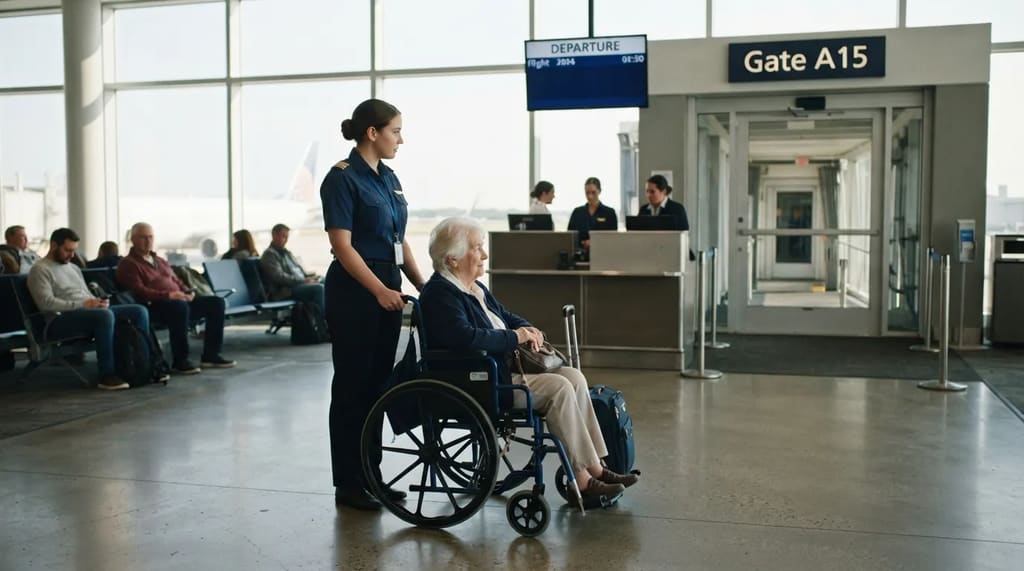
Wheelchair help runs on a line of its own. Assistance is a queue like any other, so plan to arrive earlier than the airline suggests.
If you need a wheelchair or an escort through the airport, arriving early matters most, because the wait for a chair is added to the walk to the gate.
Cutting it close also puts your boarding rights at risk. Once general boarding has begun, the airline may not be able to stop the process and offer separate preboarding.
The booking request from earlier does not cover this. Notifying the airline does not replace checking in and arriving at the gate on time.
Once you are in the chair, the airline has a limit on how long it may leave you there.
#8 – The 30-Minute Limit in a Ground Wheelchair
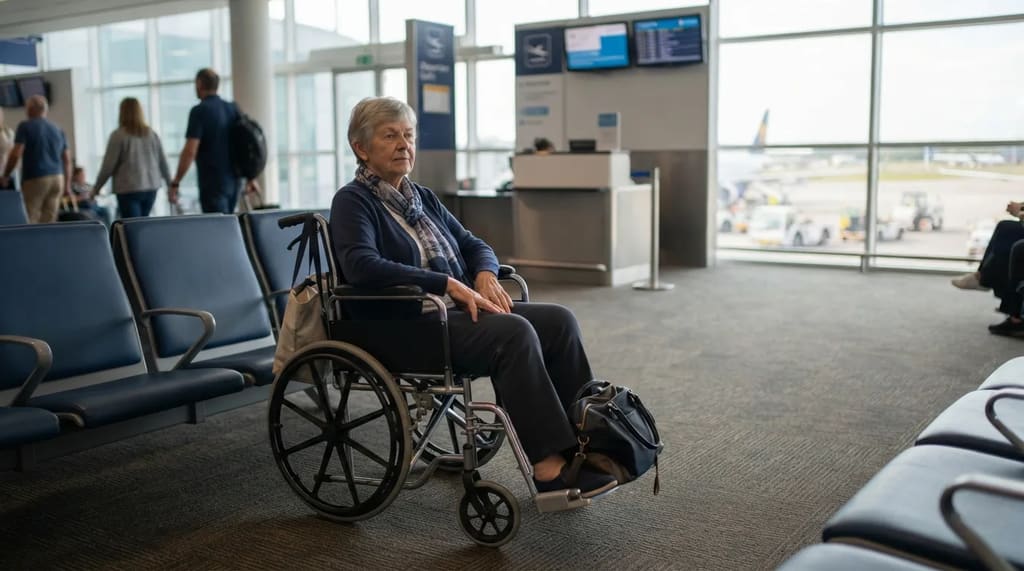
Passengers who are not independently mobile may not be left unattended for more than 30 minutes in a ground wheelchair or boarding wheelchair.4 5 The rule names those two chairs, and it gives you the clearest number the federal rule offers for a wait.
The limit matters because a wait for a chair does not always end when the chair arrives. A passenger can still end up sitting at a gate while staff are elsewhere.
A number gives you something specific to say, such as that you have been there close to half an hour. That is easier to raise at minute 25 than to complain about after the flight.
The limit applies to passengers who cannot move on their own, so if you can walk short distances, ask the airline how it applies to you.
A connection can stretch that kind of wait across two gates, and sometimes two airlines.
#7 – Help Between Gates on a Connection
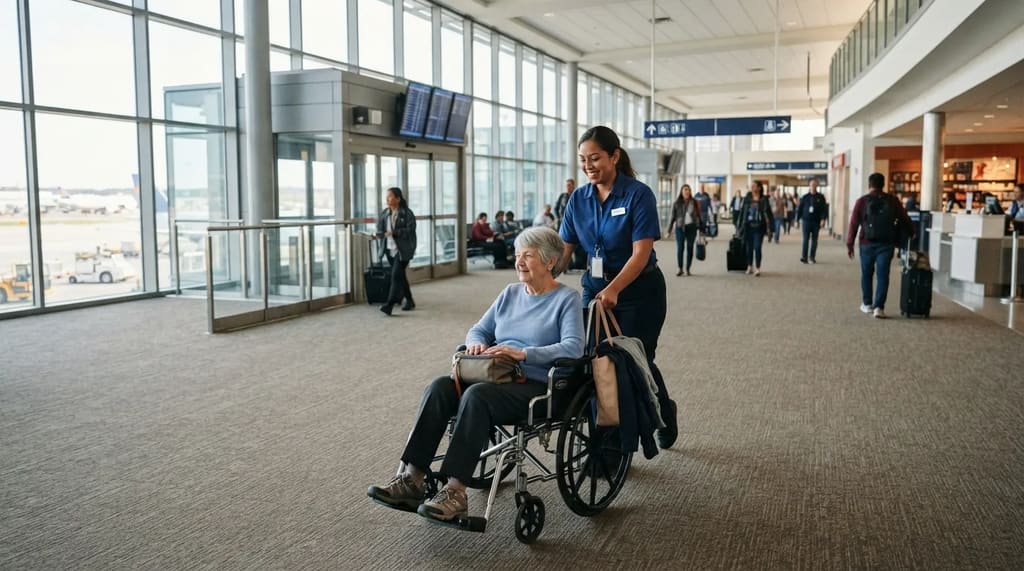
A connection adds a second gate, and often a second airline, to your request.
Airlines must help passengers with disabilities in boarding, deplaning, making flight connections and moving between gates. Upon request, trained personnel must help with deplaning.
Quick Compare
- The airline must: help with boarding, deplaning, connections and moving between gates.
- You should: confirm the request with every carrier on your itinerary.
- The airline must: make a restroom stop only if one is on the route and causes no unreasonable delay.
- You should: say at the start if you will need that stop.
A short layover is a poor bet if you need a chair for the second leg, because that chair waits in the same queue described earlier. I would pay a little more for a longer connection, and I would confirm the request with each carrier.
The restroom stop is easy to forget until you need it. If you will need one, say so at the start, not halfway along.
Your own wheelchair is another matter, since it travels in the hold and can arrive damaged.
#6 – Photos of Your Own Wheelchair Before Check-In
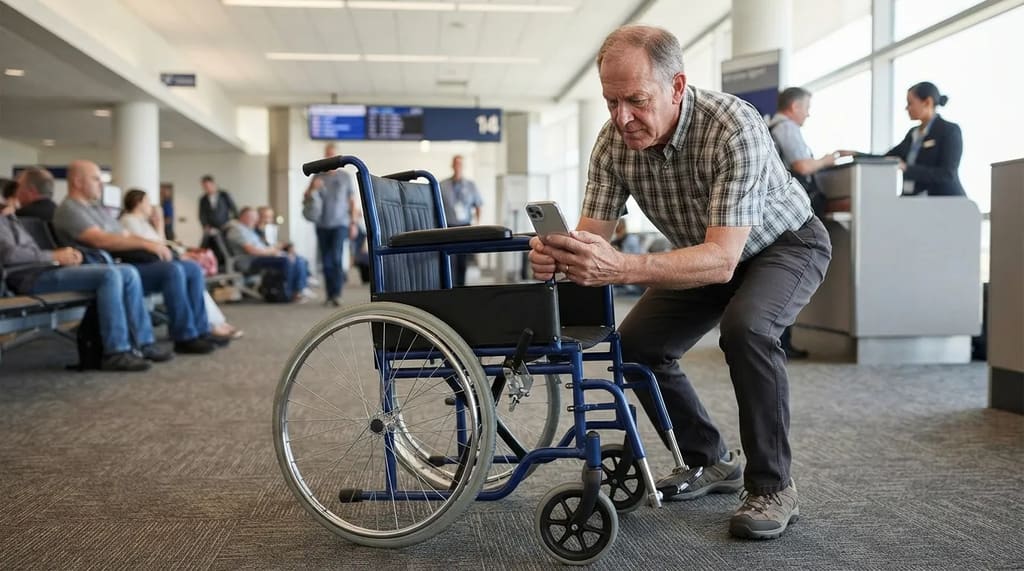
If your chair is damaged, the airline bears responsibility, but you still need proof of the condition it was in. Take photos or video before you hand it over.
If it comes back damaged, report it at the baggage service office before leaving the airport and ask for a written Property Irregularity Report. Then file a claim with the airline right away.
A folding chair has one advantage on the way in. If you preboard and the on-board stowage will hold it, it may be stored ahead of other passengers’ and flight attendants’ carry-ons, and assistive devices have priority over other items in the baggage compartment.3
The photos are worth the ten minutes only if your own chair or scooter is going into the hold. For the airline’s chair at the airport, skip them.
Once you are on board, the next question is where you will sit.
#5 – An Aisle or Bulkhead Seat That Fits Your Condition
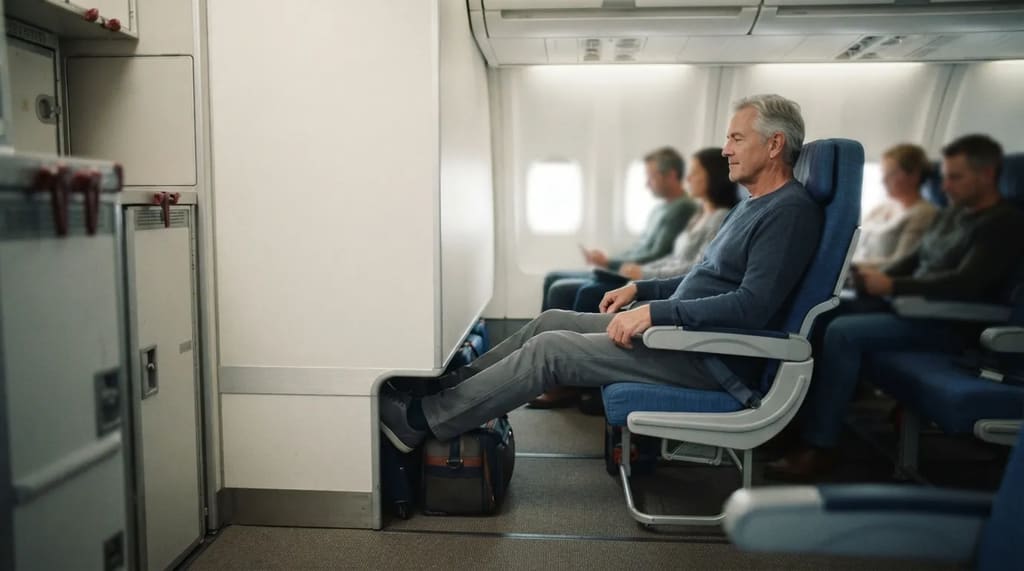
A seat request needs a reason tied to a disability, and age alone does not supply one. Even when no specific category applies, the airline must give you the seat assignment that best accommodates your disability.
The listed accommodations are specific. A fused or immobilized leg qualifies for greater leg room, including an aisle or bulkhead seat, and a passenger with a service animal can be given a bulkhead or other seat that suits the animal.
Airlines meet these duties by one of three methods: the block method, the priority method, or preboarding if the airline does not give advance seat assignments. If you miss the airline’s criteria, such as the check-in time, it provides the accommodation to the extent practicable.
One seat feature is tied to a particular way of boarding and has its own aircraft-size rule.
#4 – The Movable Aisle Armrest
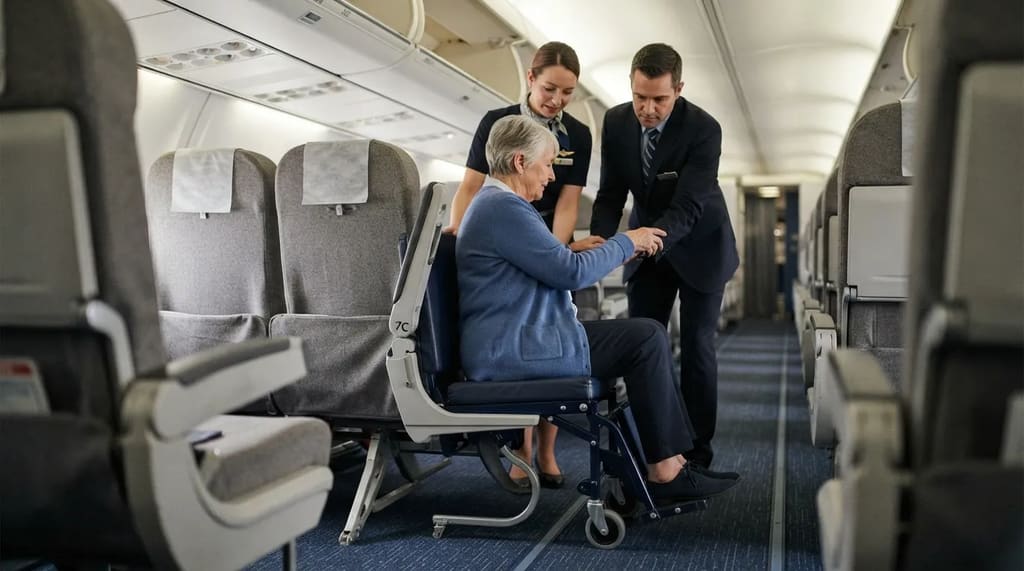
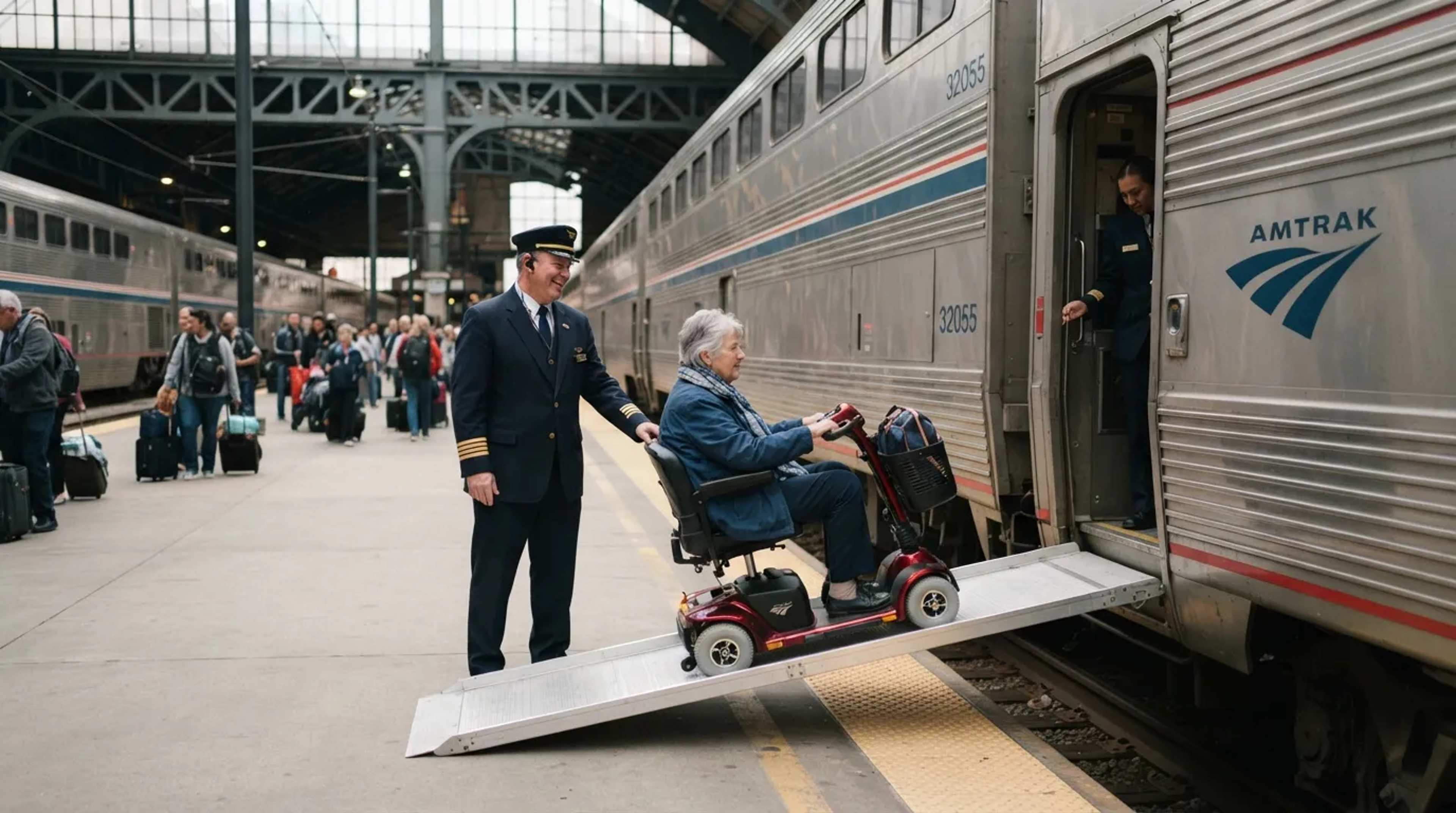
This is for a narrow case: a passenger who uses an aisle chair to board and cannot transfer readily over a fixed aisle armrest.
An aisle chair is the narrow chair used to bring a passenger down the plane’s aisle. For that passenger, an armrest that lifts out of the way decides whether boarding works at all.
The requirement applies to aircraft with 30 or more seats, though DOT has approved some airlines to meet its purpose by other means that give the same or greater accessibility.
Airlines can require 24 hours’ notice for a seat with a movable aisle armrest, so it belongs in the same call as the booking request. It is not a seat for travelers who simply like the aisle.
Even a seat secured this way can change if the airline swaps the aircraft before departure.
#3 – What Happens to Your Seat After an Aircraft Swap
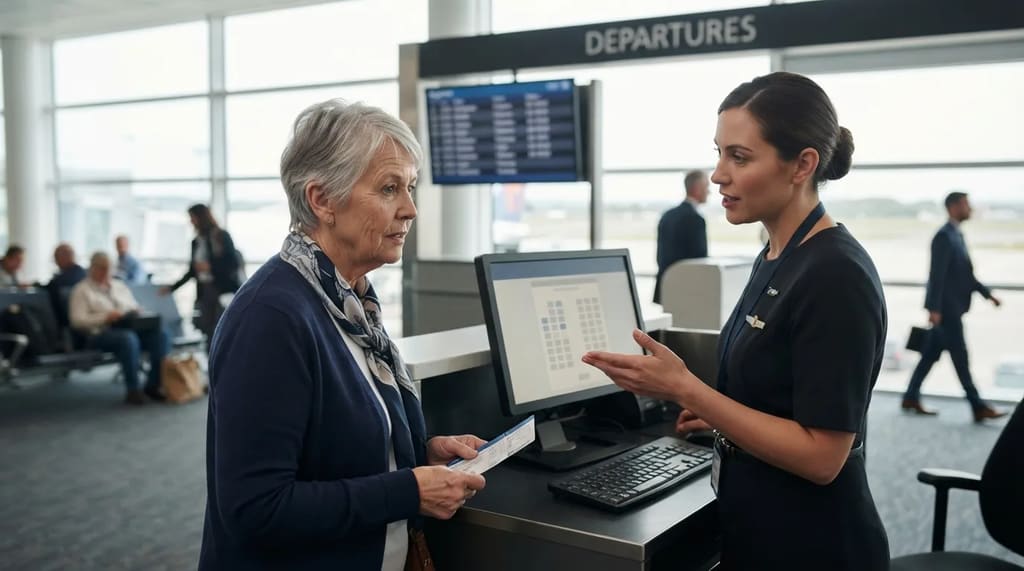
Airlines change aircraft, and the seat map you booked against can disappear.
If you gave advance notice and received a seat assignment, your accommodation request should transfer to the new seating map. That is a good reason to have given notice in the first place.
Related Stories From Travelbinger


The airline may not guarantee the exact same seat, but the new one should provide the same level of accommodation. That promise is narrower than keeping your seat, so check the new assignment at the gate instead of assuming it is right.
A second protection concerns other passengers. An airline cannot reassign a seat given to accommodate a disability because someone else later asks for it, unless you consent.
If an agent asks you to trade, you may say no when that seat is your accommodation. And when a gate agent cannot settle a problem like this, the rules name a person whose job is to.
#2 – The Airline’s Complaint Resolution Official
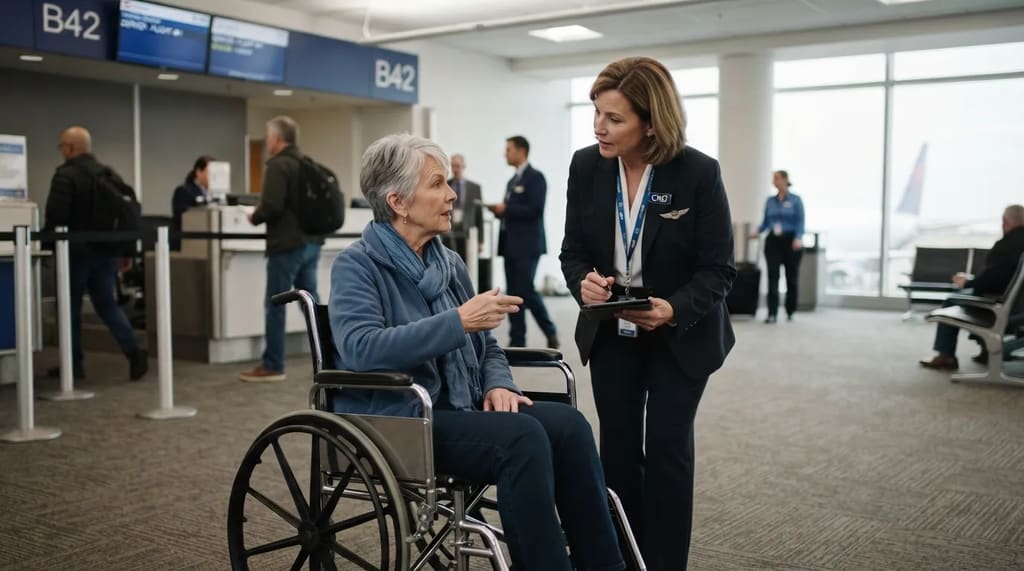
A complaint resolution official, or CRO, is the airline’s expert on disability accommodation issues. Airlines must make one available at the airport or by phone during operating hours, at no cost.6
That makes the CRO the person to ask for when a seat was not held, a chair has not come or a preboarding request was brushed aside. Asking by title sends the problem to someone whose job is to resolve it, instead of repeating it to staff who may not be able to change the outcome.
If the airline does not resolve it, DOT runs a disability hotline at 1-800-778-4838.4 6 The Bill of Rights also includes a right to resolution of a disability-related issue.
Worth Knowing
- Ask for the CRO by title, not just “a manager.”
- A CRO must be available at the airport or by phone during operating hours.
- Using the CRO costs nothing.
- DOT’s disability hotline is 1-800-778-4838 if the airline cannot resolve it.
Raise the problem at the airport first, while the CRO can still fix it before the plane leaves.
Then there is the boarding order itself, which DOT has spelled out for airlines, and it settles who goes first.
#1 – Boarding Ahead of First Class
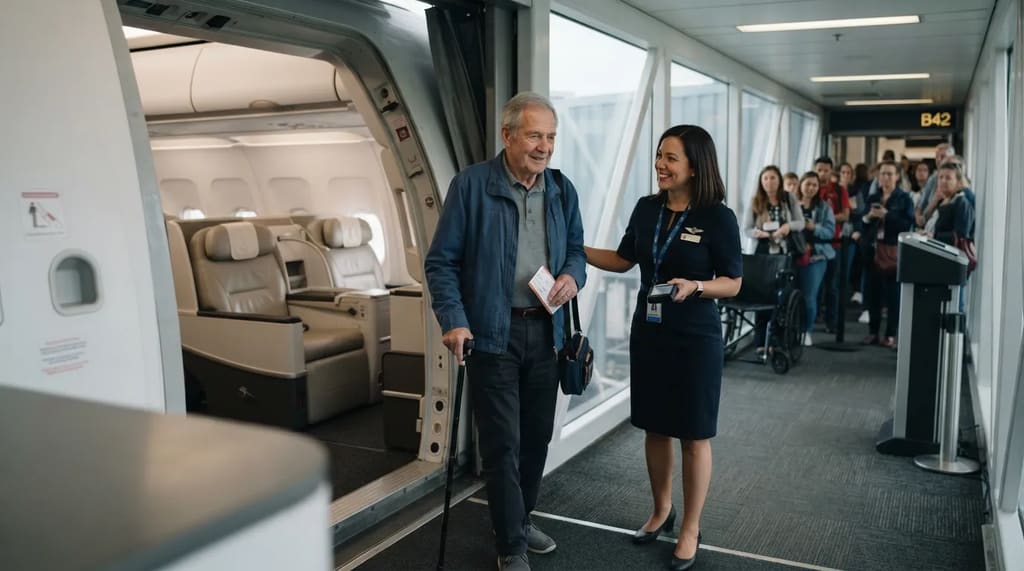
Carriers must offer preboarding to passengers with a disability who self-identify at the gate as needing additional time or assistance to board, stow accessibility equipment, or be seated.7
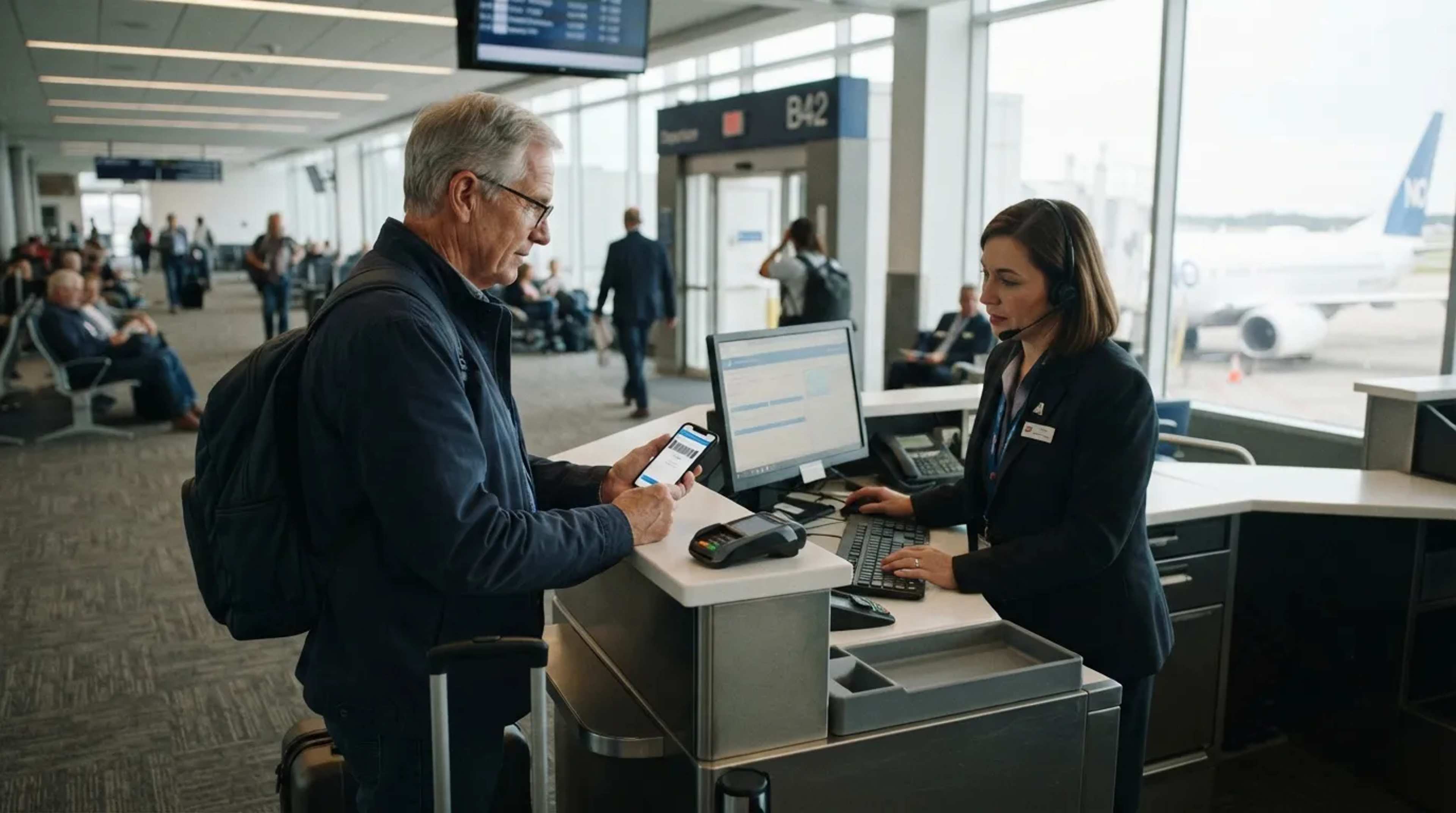
Your part is one sentence to the agent, said before boarding begins, which is why the arrival time discussed earlier matters here too.
Here is the part that surprises people. DOT has told airlines that preboarding means before all other passengers, including first class, elite-level passengers, members of the military and passengers with small children.1 7
In most cases no proof is needed, and you do not have to share your diagnosis in detail. You explain what help you need.
Preboarding is meant for those who need it, not for faster access to bin space. Age alone is not the test.
If the jet bridge, the aisle or stowing a walker takes you longer than the boarding line allows, the need is real.
Decide What You Will Say Before You Reach the Gate

The courtesies in this list work because each one is tied to a specific need, a specific moment and a specific sentence. Before your next trip, write down the one or two things that cost you time or strength last time, such as the walk to the gate, the seat or the steps onto the plane.
Match each to the request that covers it, make that request in the reservation, repeat it two days out and say it plainly at the gate.
Which part of your last airport day took the most out of you, and would any of these requests have shortened it?
- Air Carrier Access Act Summary: https://wheelchairtravel.org/air-travel-air-carrier-access-act-summary/
- TSA Screening 75 and Older: https://www.tsa.gov/travel/tsa-cares/screening-passengers-75-and-older
- DOT Passengers with Disabilities: https://www.transportation.gov/airconsumer/passengers-disabilities
- DOT Disability Bill of Rights: https://www.transportation.gov/airconsumer/disabilitybillofrights
- eCFR 14 CFR 382.103: https://www.ecfr.gov/current/title-14/chapter-II/subchapter-D/part-382/subpart-G/section-382.103
- DOT What To Do Problem: https://www.transportation.gov/individuals/aviation-consumer-protection/what-do-if-you-have-problem
- DOT Wheelchair Final Rule: https://www.transportation.gov/sites/dot.gov/files/2024-12/Final%20Rule%20Ensuring%20Safe%20Accommodations%20for%20Air%20Travelers%20with%20Disabilities%20Using%20Wheelchairs.pdf