TSA ended its shoe-removal requirement nationwide on July 8, 2025, and that one change quietly rewrote the playbook for travelers over 65. Plenty of advice still floating around the gate was written for the old rules.
Following it can cost you a place in line, a missed dose or a flight. The seventeen items below start small and build toward the ones with real money or health attached.
One cheap check, a few seconds with your wallet open, is tied to the largest fee on the list. First, though, the plainest item: the water bottle in your carry-on.
#17 – An Empty Water Bottle in Your Carry-On
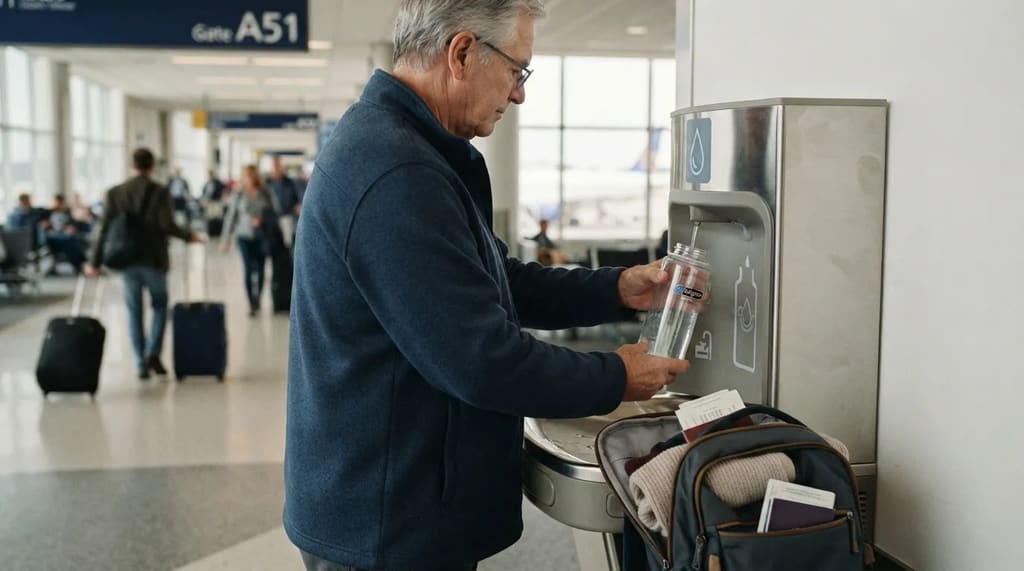
The liquid rule at the checkpoint is simple. All liquids, aerosols and gels in carry-on bags must be 3.4 ounces (100 mL) or less.1
A full water bottle fails that test, so it gets poured out or tossed at the front of the line while everyone behind you waits. Experienced flyers don’t give the line that show.
The easy fix is to carry the bottle empty and fill it at a fountain or filling station once you’re through. That gives you water for the gate and the plane, where cabin air is dry, and it saves the price of a bottle from an airport shop.
If you take a pill at midday, you’ll also have something to swallow it with and won’t need to hunt for a vendor.
Footwear used to be the bigger chore at the same checkpoint, and that rule changed in 2025.
#16 – Shoes That Stay on Since July 2025
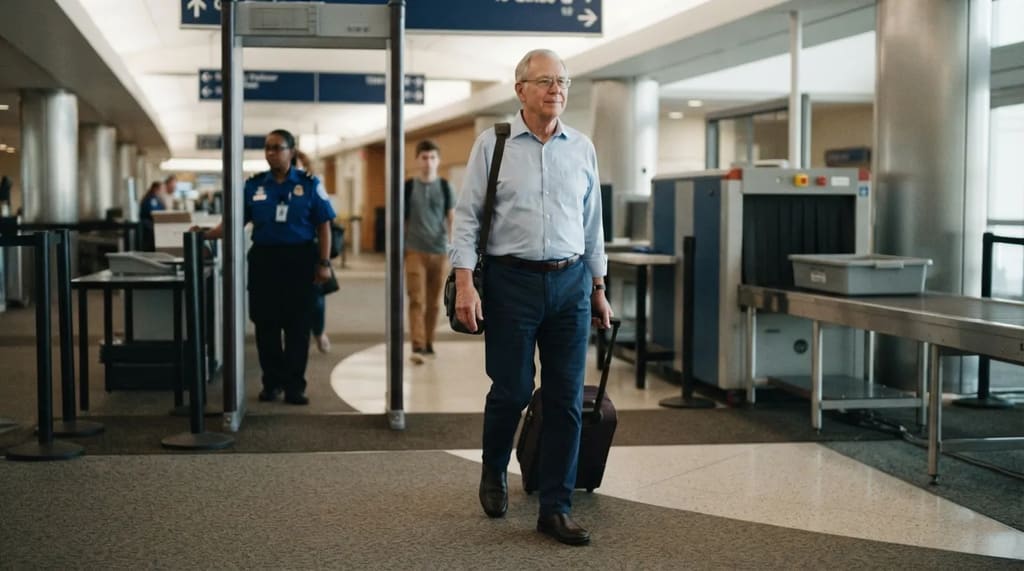
Until the change, children 12 and under and passengers 75 and older were exempt, according to AARP. Now everyone can keep their shoes on, so the best-known age perk at the checkpoint belongs to every traveler.
That makes shoes a poor reason to plan your morning around a birthday. But if an alarm goes off, TSA says you may be required to remove them for further screening or undergo a pat-down.2
Slip-ons are still the sensible choice for that reason. Bending to untie laces beside a conveyor, with no seat nearby, is an easy way to lose your balance.
AARP’s coverage noted that fall risks can be reduced for travelers 50 and older when shoes stay on. That is the quiet win of the new rule.
The jacket is another story, because the rule there is narrower than much of the advice online.
#15 – The Light Jacket Comes Off Anyway
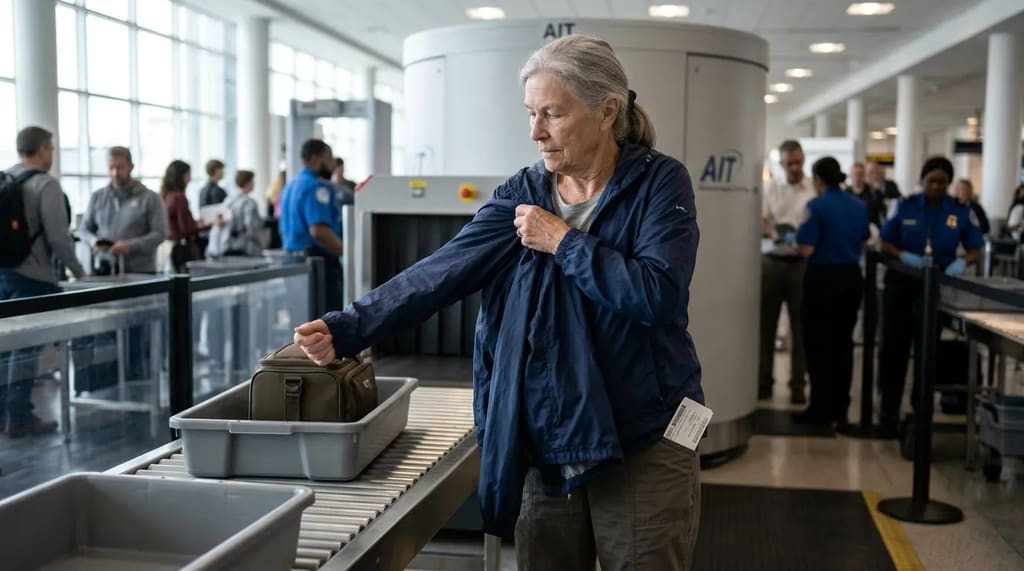
TSA’s page for travelers 75 and older says you may leave your shoes on, but light jackets must come off for Advanced Imaging Technology screening.2 Plenty of advice online says older travelers can keep jackets on.
Where the two disagree, the agency’s wording is the safer guide, since the agency runs your checkpoint. Slip the jacket off as you reach the front and drape it over your arm or a bin.
Quick Compare
- Shoes: Since July 8, 2025, every traveler may keep them on.
- Light jackets: TSA says they come off for Advanced Imaging Technology screening.
- Expedited screening: TSA says passengers 75 and older can receive some form of it.
Arguing over a website’s claim at the belt costs more time than the few seconds it takes to remove a jacket. Treat anything beyond that as a courtesy, not a right.
With shoes no longer a perk, what’s left of the age-75 advantage is small. And it depends on a birthday later than many travelers expect.
#14 – Why the Birthday That Counts Is 75
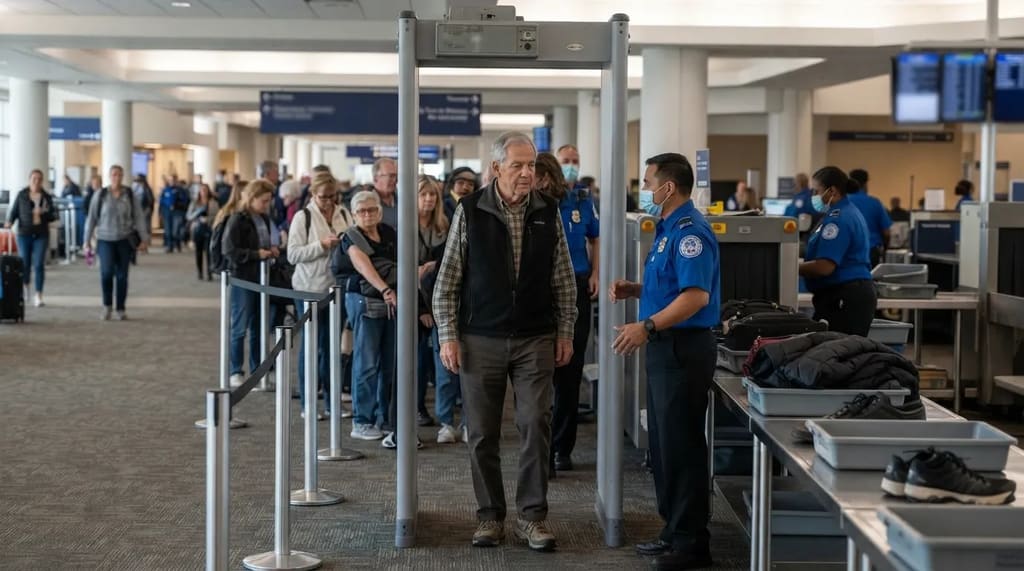
TSA says passengers 75 and older can receive some form of expedited screening.2 That is the one well-documented age-based break at the checkpoint.
Nothing in the guidance describes a special lane that begins at 65 or 70. If you are 68 or 72, you are in the regular line under the regular rules.
For travelers who have turned 75, one detail is worth knowing. If they trigger a metal detector, they are allowed to pass through a second time before a pat-down and extra screening are required.
The wording is “some form of” expedited screening, not a fixed lane. Keep your usual time cushion even at 75.
None of that matters if the boarding pass is stuck on a phone with a dying battery.
#13 – A Boarding Pass That Works Without a Signal
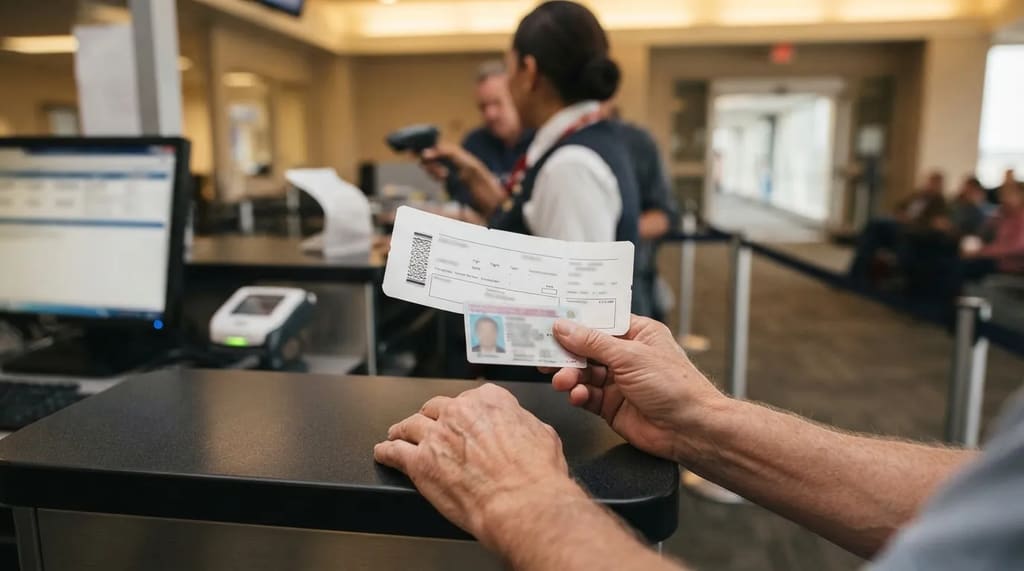
Phones run out of power at the worst moments. A terminal full of travelers can also slow both the mobile signal and the airport Wi-Fi.
A boarding pass that lives only in an airline app can take a long time to open just when an officer is waiting. A screenshot opens instantly and needs no connection, and a paper copy needs no battery at all.
Before you leave home, save a screenshot of the pass and print one copy if you have a printer. Keep the printout in the same pocket as your photo ID so both come out together.
Handing over two documents at once is quicker and calmer than searching a bag with a line behind you. It is the kind of small habit nobody watching ever notices.
#12 – A Companion Who Loads the Bins
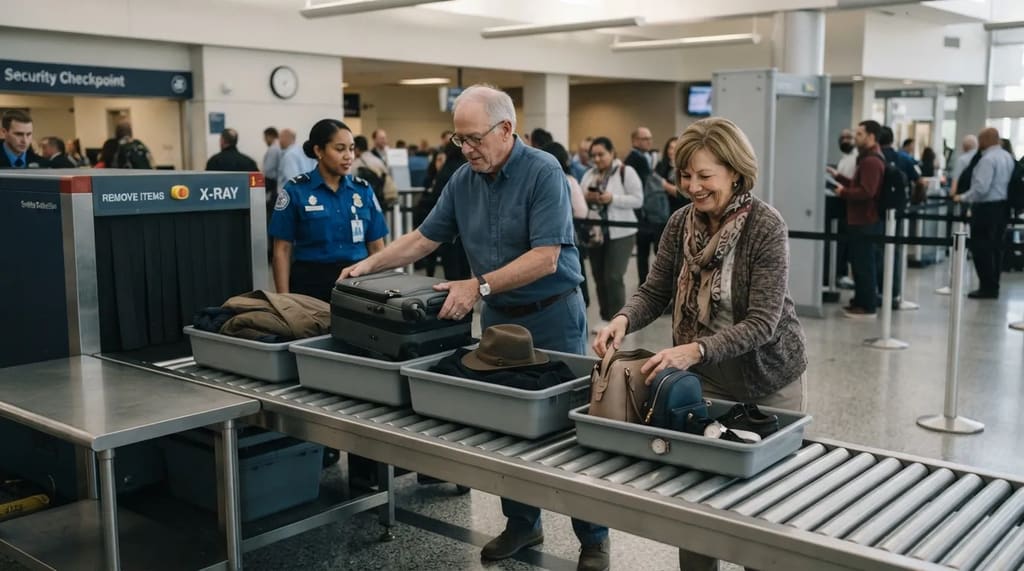
Having someone to help screen your items and provide mobility assistance can greatly relieve the stress of going through security. It also helps with the part of the process that tires people most, the loading and unloading of bags and bins.
If you are flying with a spouse or a friend, split the jobs before you reach the belt. One person can handle the bins and belongings while the other walks through.
A companion can also tell the officers about conditions that may affect screening, such as respiratory equipment, medical devices or medications.
If you can stand and walk, a companion can offer walking support. If you can’t, you may remain seated while the officer tests your hands.
If you need to sit for any part of it, say so before the process starts.
#11 – Asking for a Chair During the Pat-Down
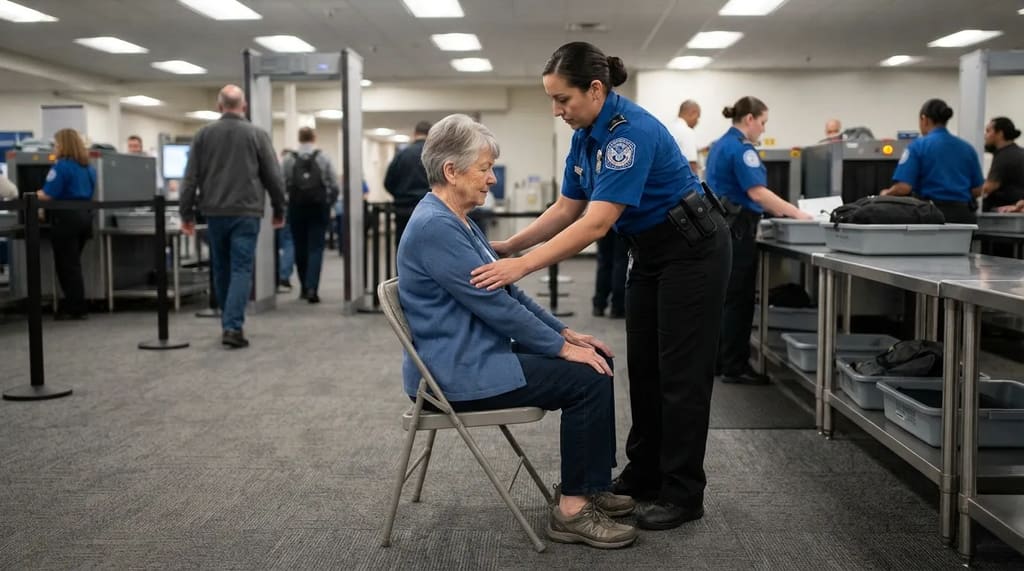
Travelers over 75 who need a pat-down may ask to be seated during that part of the screening. The same goes if an alarm leads to shoe removal.
The request is routine. An officer can arrange it more easily if you make it before screening begins than if you wait until you are unsteady.
For travelers who cannot stand at all, screening is done using other methods.2 That fits the concern AARP’s coverage raised about checkpoints with no seating to remove your shoes safely.
If standing for a few minutes is a problem for you, a chair is worth asking for at any age.
A cane or walker raises the same question of how the item itself gets screened.
#10 – Canes and Walkers Go Through Screening Too
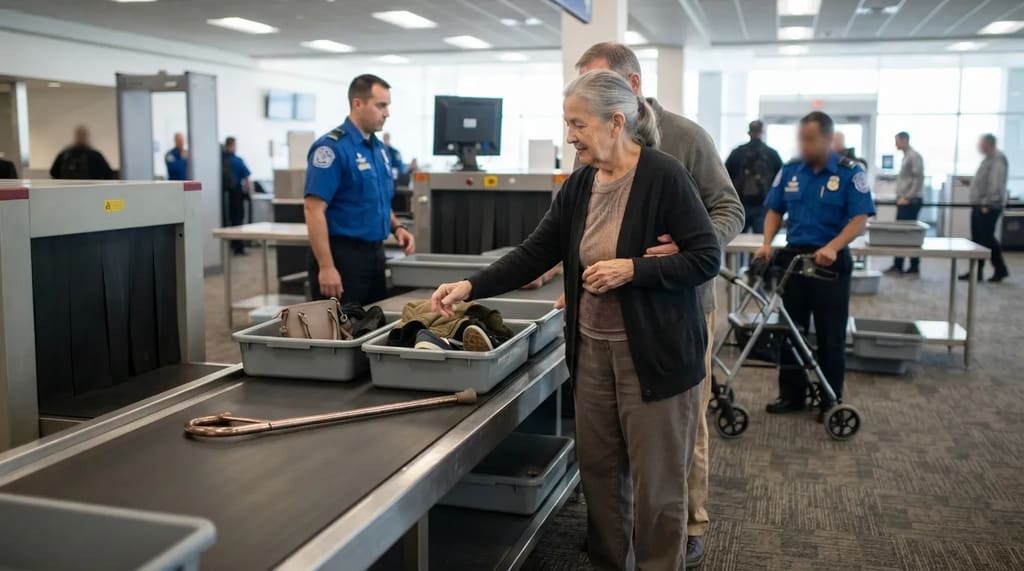
Walkers, canes, crutches and other mobility aids will be X-rayed or hand-inspected. That means the aid you lean on may leave your hand for a few seconds.
Decide before you reach the belt how you will steady yourself in that moment. A companion’s arm works, or you can ask the officer for help or a nearby place to stand before the cane goes onto the belt.
Worth Knowing
- Canes, walkers and crutches are all subject to X-ray or hand inspection.
- If you need the aid for every step, tell the officer first.
- Hand screening can replace the X-ray when you rely on the aid.
- A companion’s arm or a nearby spot to stand covers the gap.
Walking through without your support for a short stretch is not something to attempt on your own.
It is a ten-second conversation. It spares you the worst version of that moment, standing empty-handed in a stream of strangers.
#9 – Telling the Officer About Implants and Devices Early
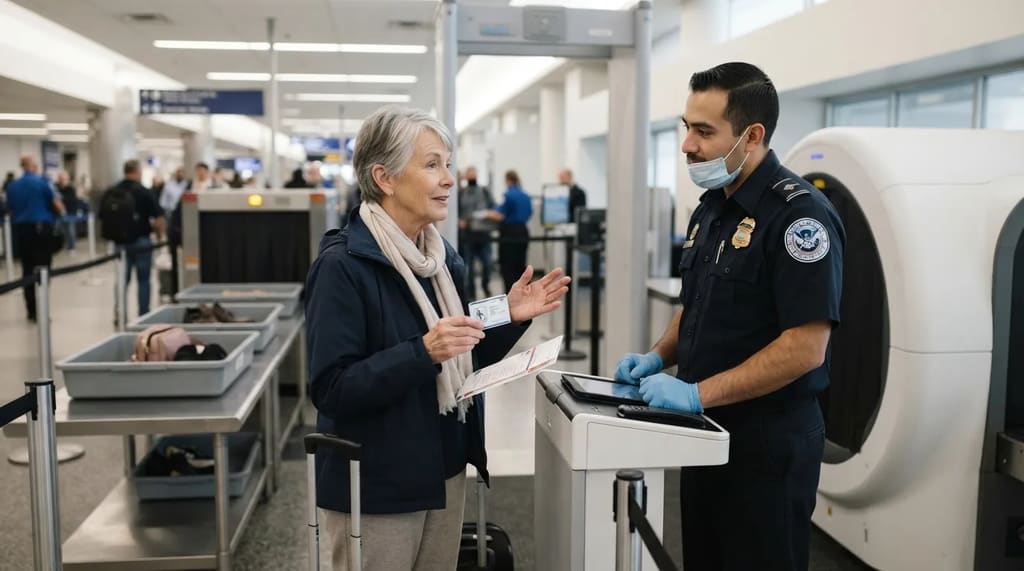
Respiratory equipment, medical devices and medications can all affect how a screening goes. Tell the officer about them before you step into the scanner, not after an alarm sounds.
If you have a pacemaker or another implanted device, ask what screening alternatives are available to you. A joint replacement or a metal pin can set off the detector as well.
The officer cannot know the cause of an alarm until you say. A calm explanation at the start usually saves more time than one given mid-pat-down.
A card from your doctor listing your device is a reasonable thing to keep in your wallet, though TSA does not require one.
Medications deserve the same early mention, though the rule differs depending on the form they take.
#8 – Pills Stay in the Bag, Liquids Get Announced
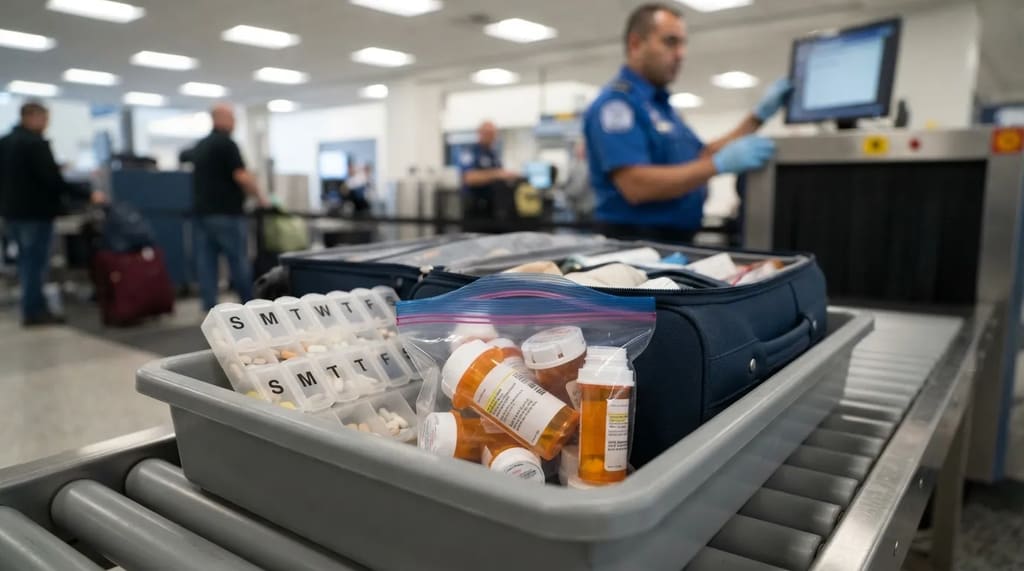
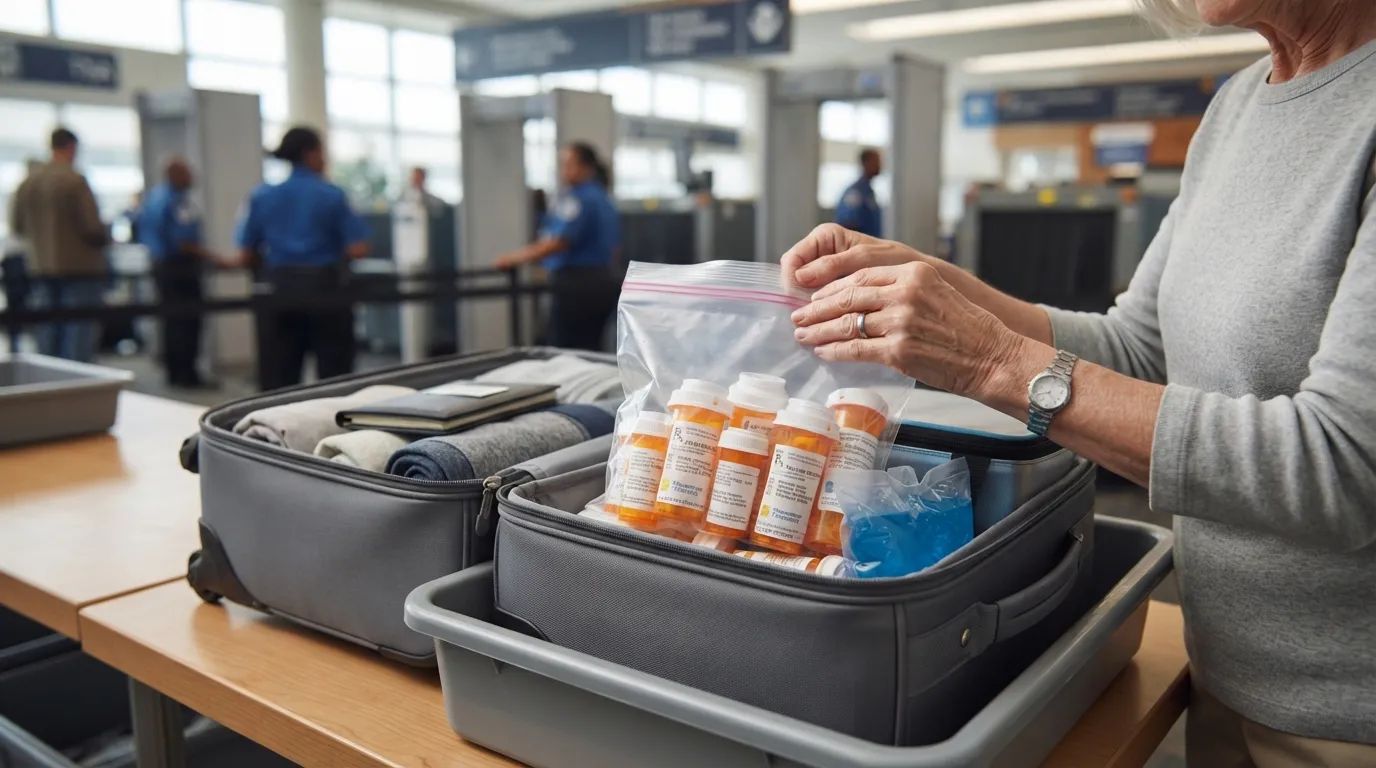
Unlike the water bottle, medicine has its own rules, and they are friendlier than the liquid limit. You do not need to present your medication or notify an officer about it unless it is in liquid form.3
A pill organizer is not a problem either, since TSA allows pill organizers for domestic travel. Here is how the main categories break down:
- Pills and solid medication: unlimited amounts, as long as they are screened.
- Liquid medication over 3.4 ounces: allowed in reasonable quantities for the flight, but tell the officer at the start of screening.
- Medically required liquids: no zip-top bag needed.
If your condition requires it, you can also bring juice or another liquid over 3.4 ounces, but expect it to receive additional screening.
Where those medicines ride on the plane matters as much as how they clear the checkpoint.
#7 – All Medicine in the Carry-On, With Days to Spare
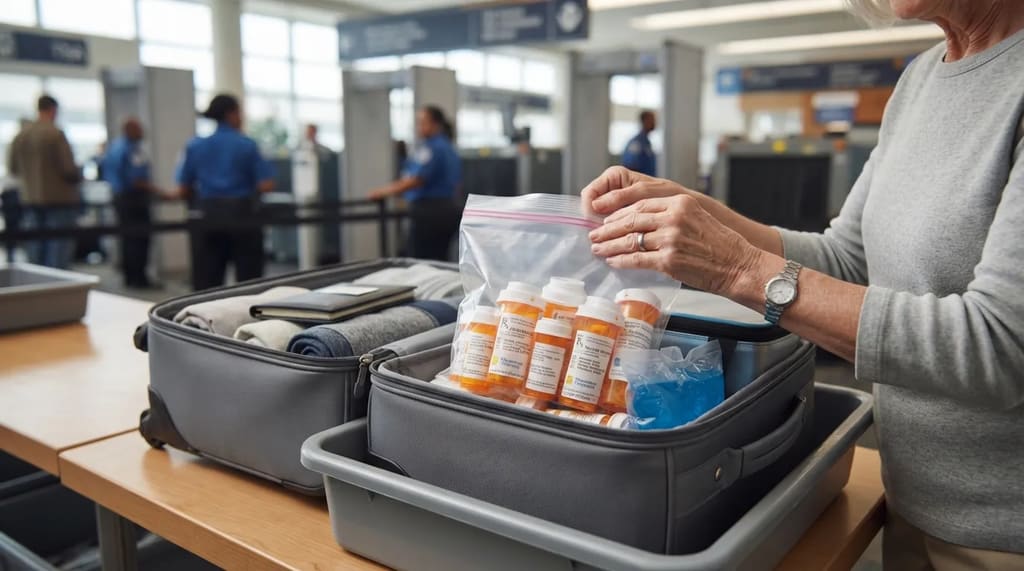
You may travel with your medication in both carry-on and checked baggage, but TSA strongly recommends the carry-on in case you need immediate access.3 A checked bag can be delayed or lost.
A delayed bag with your heart or blood pressure pills in it is a bigger problem than a lost shirt. The same goes for a layover that turns into an overnight stay.
Fast Facts
- Medication is allowed in both carry-on and checked bags.
- TSA strongly recommends the carry-on for quick access.
- Ice packs and gel packs are permitted for medicine that needs refrigeration, even partly melted.
- A few spare days of doses cover a cancelled flight.
Pack enough for the trip plus those spare days, so a cancellation does not leave you short.
Keep the pills you need to reach quickly where you can find them without unpacking the whole bag.
#6 – Labels and a Prescription Copy for Longer Trips
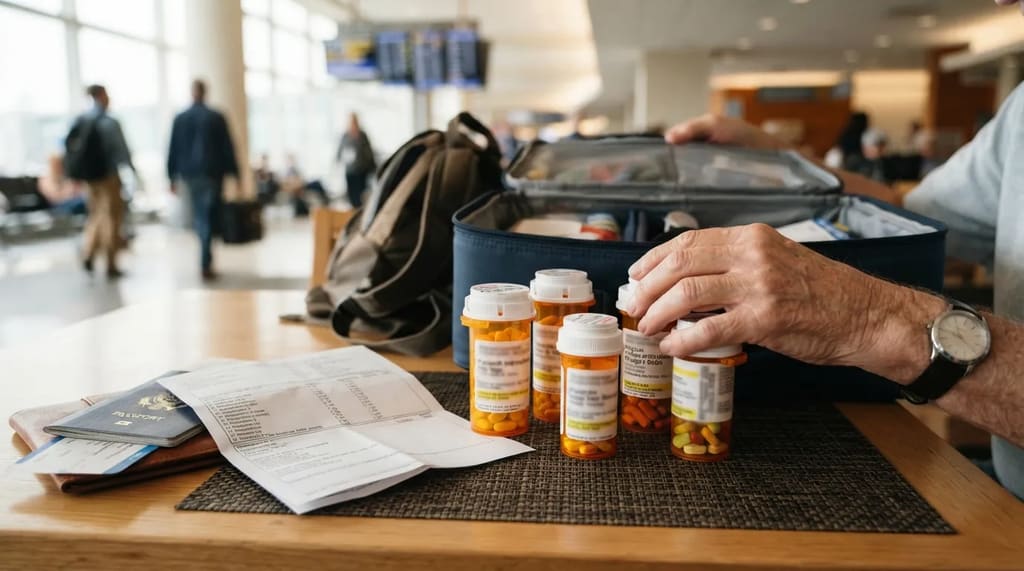
TSA does not require passengers to pack medicine in prescription bottles, but certain state laws on labeling prescription medicine still apply.3 A pill organizer is fine for a domestic weekend.
Original bottles are the safer habit for anything longer. If a question comes up, a labeled container answers it faster than a loose handful of pills.
For international trips the margin for error shrinks. Carry medications in their labeled containers and bring a copy of the prescription.
Some countries set limits on solid medicine, so check your destination’s rules before you pack.
All this unpacking is what a paid enrollment program is meant to trim, though it comes at a price.
#5 – Whether TSA PreCheck Earns Its Price
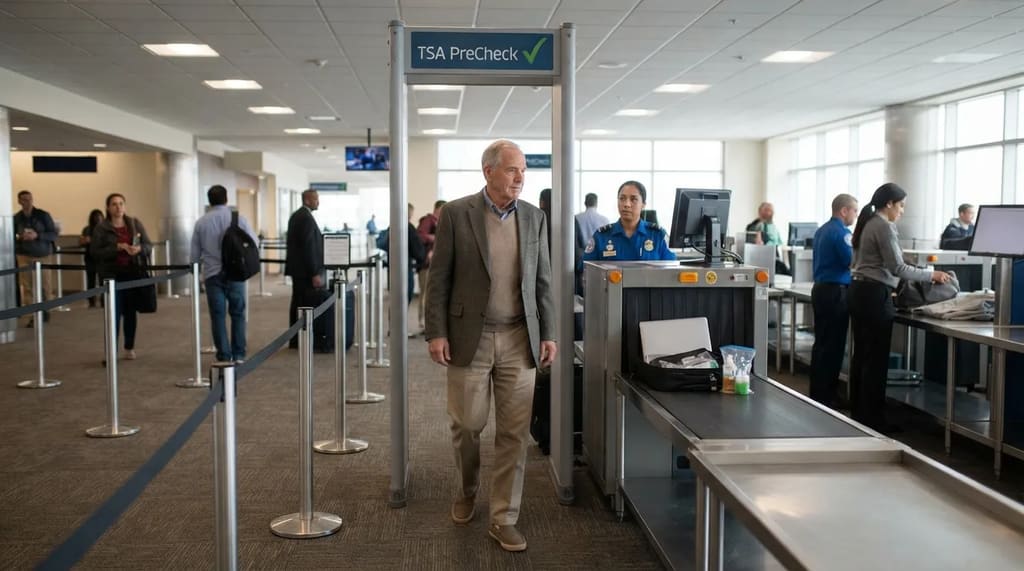
TSA PreCheck costs $78 for five years. AARP’s coverage framed the question after the shoe change.
Travelers who paid for PreCheck to keep their shoes on now need to decide whether the other perks, such as keeping belts and jackets on and electronics and liquids in the bag, are worth the cost. The shoe argument is gone, and what remains is a shorter list of conveniences.
If you fly a few times a year, those conveniences can repay the fee. If you fly once a year to see grandchildren, the case is thinner, and the money may be better spent elsewhere.
Turning 75 does not settle it, because it changes the rules in the regular line and does not enroll you in PreCheck.
Once you are through the checkpoint, the next quiet habit happens at the gate.
#4 – A Word With the Gate Agent on Arrival
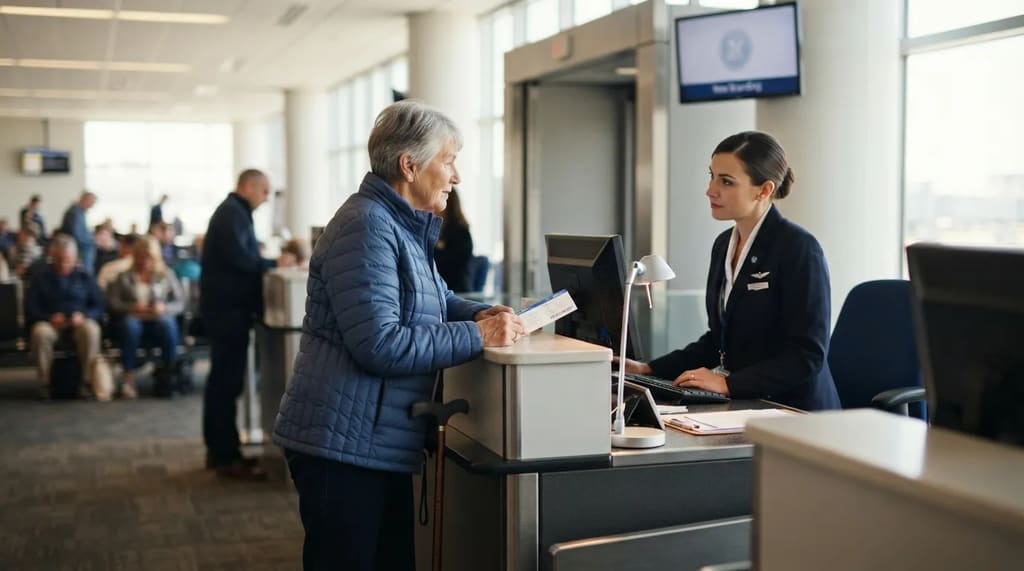
At the gate, tell the agent if you would like extra time to board. Airlines generally let passengers who need more time board before the regular groups, and it is the gate agent who arranges it.
Policies vary by airline, so ask at the desk when you arrive and not when your group is called. The agent can also confirm your gate and seat and note anything you need on the jet bridge or at the aircraft door.
If you are walking with a cane, a few unhurried minutes in an empty jet bridge are worth more than a slow shuffle behind a crowd. Ask before boarding starts, when the desk is calmer and the agent is not juggling announcements.
Related Stories From Travelbinger
That conversation goes more smoothly when the airline already knows what you need, which is where the wheelchair request comes in.
#3 – Wheelchair Help From Curb to Aircraft
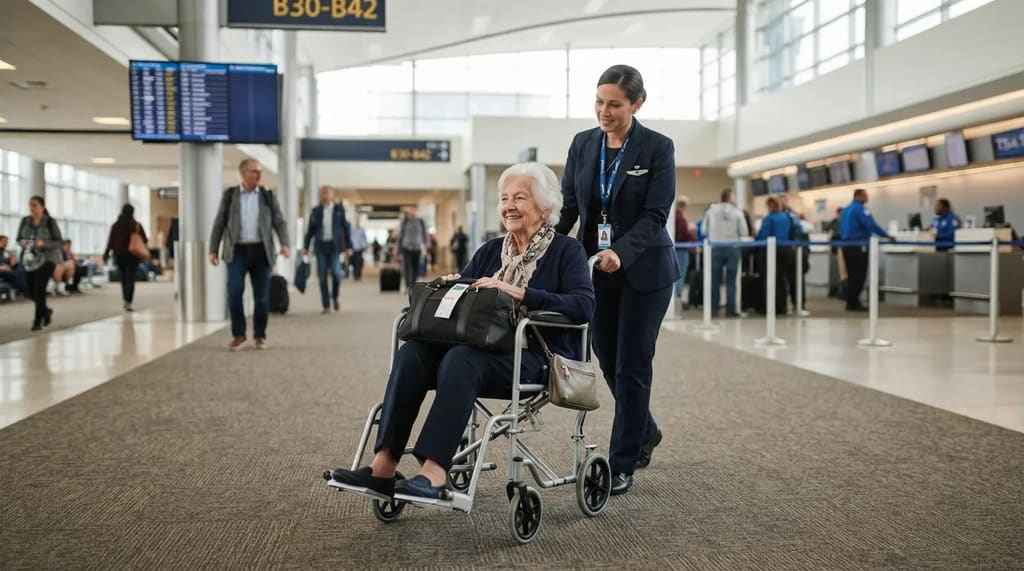
TSA’s help ends at the checkpoint. TSA Cares assistance is only available through the screening checkpoint.
Wheelchair assistance from the curb to the aircraft, and in-flight assistance, comes from your airline. Travelers often assume one request covers the whole airport, and it does not.
At a Glance
- TSA Cares: support through the screening checkpoint only.
- Your airline: wheelchair help from curb to aircraft, plus in-flight assistance.
- Gate agent: extra boarding time and jet bridge notes.
If a long terminal walk would leave you worn out before you board, ask the airline for wheelchair help ahead of time. The best moment is when you book, or by phone before you travel.
Needing a chair for the distance does not mean you cannot walk. It means you arrive at the gate with energy left for the connection, the jet bridge and the aisle.
#2 – A Free Phone Call at Least 72 Hours Ahead

TSA Cares is a free help line for travelers with a disability, medical condition, or device. Call 72 hours prior at (855) 787-2227.4
The line is open weekdays from 8 a.m. to 11 p.m. Eastern and weekends and holidays from 9 a.m. to 8 p.m. Eastern.5 You can also use the federal relay at 711.
If your flight is more than three days away, an online request form is available. If your flight is within 72 hours, TSA asks you to call.
Your flight must also be from a U.S. airport, and traveling companions can use the service to prepare for the screening process too.
If nobody has contacted you by the day of travel, you can ask a TSA security officer or supervisor at the airport for a Passenger Support Specialist. Even with all of this arranged, the checkpoint still begins with one document that no helper can replace.
#1 – The Star on Your Driver’s License
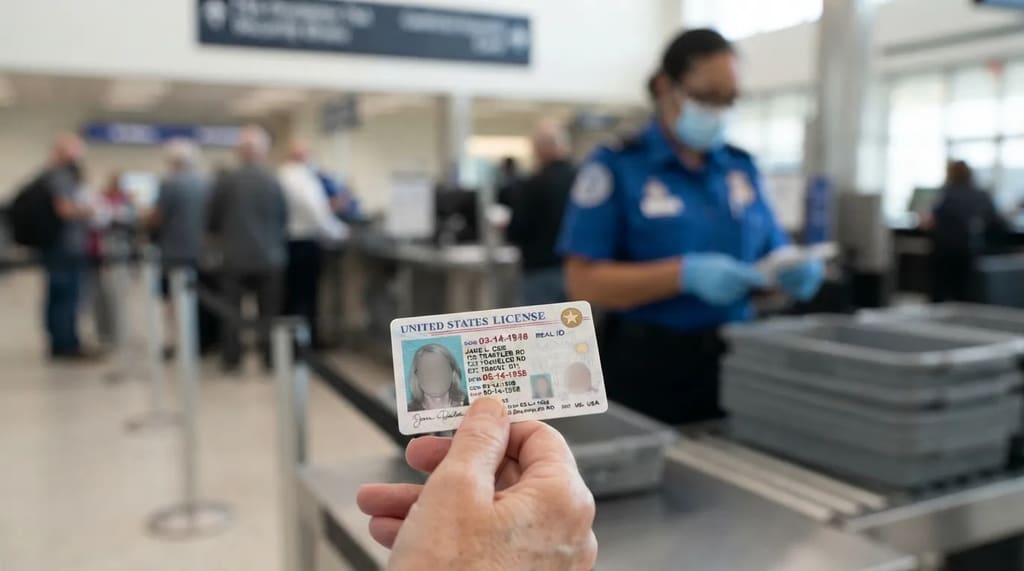
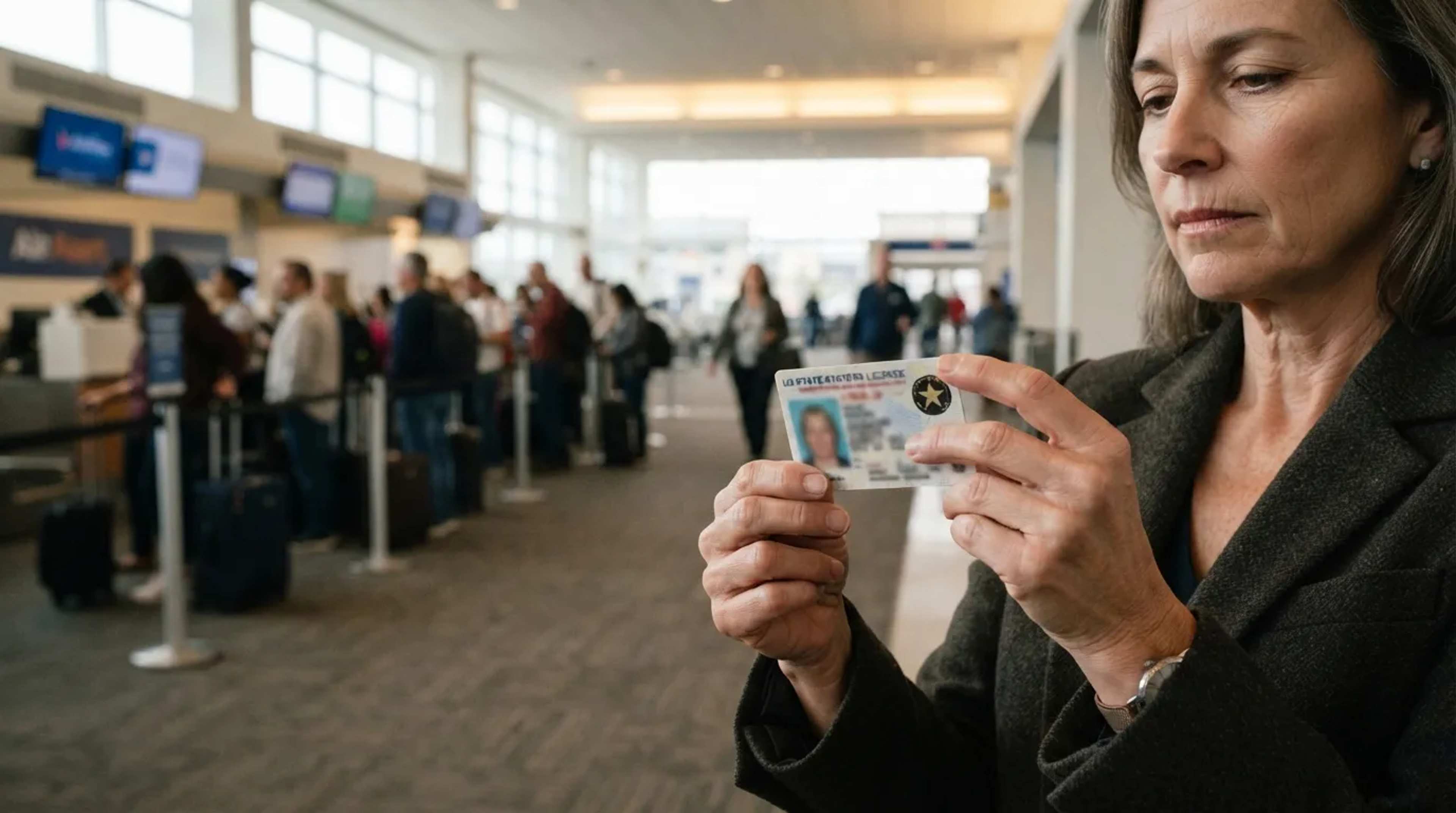
Before you worry about anything else on this list, check your photo ID, because REAL ID has been required since May 2025. A REAL ID license usually carries a small star in one corner, and your state’s motor vehicle office can tell you if yours qualifies.
If you arrive without one, there is a paid way through. Passengers without a REAL ID or another acceptable ID can use TSA ConfirmID by paying a $45 fee for a 10-day travel period.6
The details matter: the fee is non-refundable under any circumstance, and verification of identity is not guaranteed.7 Each adult 18 or older without an acceptable ID must complete the process separately, and travelers who use ConfirmID face additional ID verification, screening measures and potential delays.
That bill is the largest on this list, and it is more than half of what PreCheck costs for five years. $45, nonrefundable, no guarantee is a poor trade for a few seconds of checking.
A passport, a passport card or an enhanced driver’s license from certain states satisfies the requirement as well as a REAL ID license does. If yours lacks the star and you have no passport, book a DMV appointment first, because slots can fill up fast.
TSA ConfirmID is a fallback. The better plan is not to need it.
Start With the Wallet, Then the Phone Call

Looking at the list as a whole, the expensive trouble at an airport tends to begin days before the trip, when something small is left unchecked. The items that cost nothing, such as a call to TSA Cares, a conversation with the airline or a look at your license, are the ones that prevent the large problems.
The checkpoint itself rewards whatever you settled at home. A shorter packing list matters less than a settled one.
Choose the two or three steps above that fit your next trip and finish them a week early. What is the one thing you now pack, print or check the night before a flight that you did not do ten years ago?
- Afar 3-1-1 Liquids Rule: https://www.afar.com/magazine/the-tsas-3-1-1-rule-for-liquids-in-carry-on-luggage
- TSA Screening 75 and Older: https://www.tsa.gov/travel/tsa-cares/screening-passengers-75-and-older
- TSA Travel Tips Medication: https://www.tsa.gov/travel/travel-tips
- TSA Cares Assistance FAQ: https://www.tsa.gov/travel/frequently-asked-questions/i-need-special-assistance-during-screening-whom-can-i-contact
- TSA Cares Hours and Access: https://www.jfkairport.com/explore-jfk/accessibility-services
- TSA ConfirmID Rollout: https://www.tsa.gov/news/press/releases/2026/02/05/tsa-successfully-rolls-out-tsa-confirmid-0
- AAA ConfirmID Explainer: https://www.acg.aaa.com/connect/blogs/6c/travel/tsas-45-dollar-airport-fee-explained