
You probably think a housekeeper walks in and sees a mess. Most of them see something else: a forecast. Within seconds of opening the door, the smell, the bed, the bathroom counter and the floor tell them how long the room will take and what kind of day it’s going to be. Housekeepers’ accounts in travel coverage describe sizing up the job far more than judging the guest.
Some of what they register is predictable. But some of it involves tip money, hotel policy, and a flimsy paper sign on the doorknob that hotels treat as far more than a request for quiet. That sign comes last on this list, and it’s the one that surprises people most.
#23 – The Smell That Hits Before the Lights Do
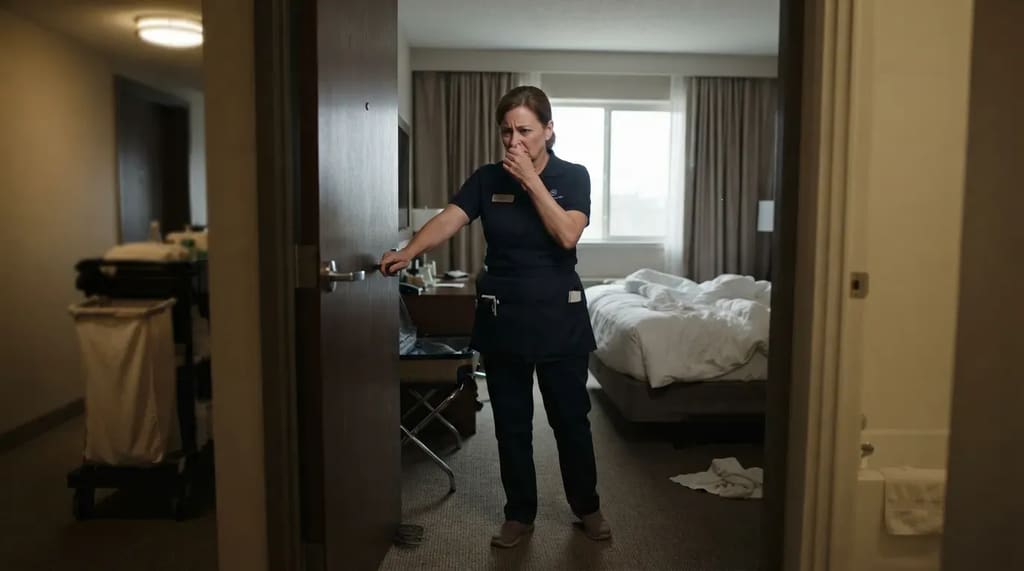
Takeout, damp towels, strong perfume and stale air tell a housekeeper what kind of room this is before anyone touches a switch. Odors settle into bedding, curtains and carpet faster than guests tend to expect. A stuffy room gets treated differently from the very first step.
Many housekeepers open the windows or adjust the ventilation first, since airing a room out makes every later task easier. It also helps the room be ready for the next arrival. Perfume fades with a little fresh air. One odor does not, and it gets reported to a manager.
#22 – The Nonsmoking Room That Gives Itself Away
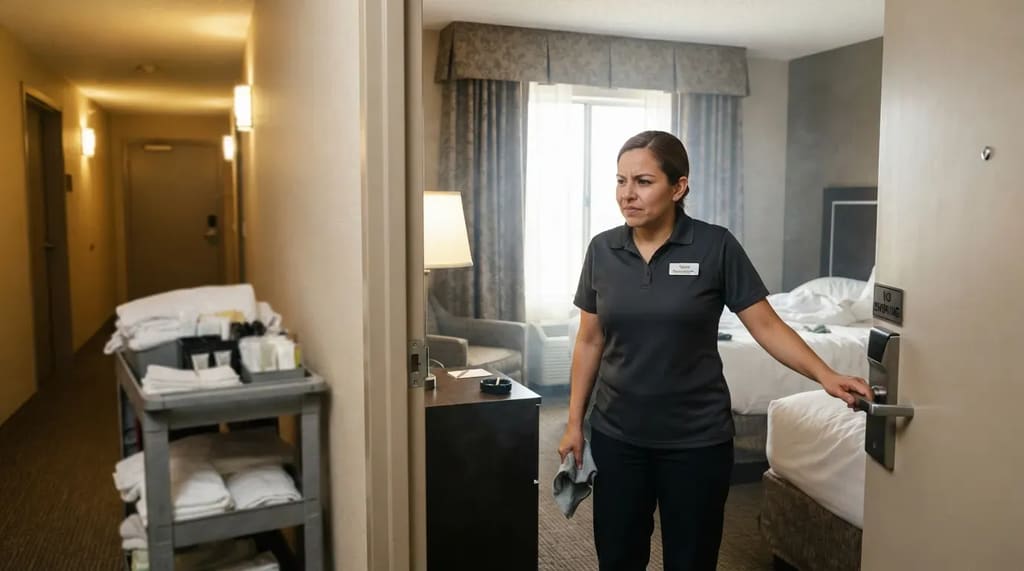
Even in a nonsmoking room, housekeepers can usually detect cigarette or vape residue the moment they step inside. Smoke clings to curtains, upholstery, bedding and walls. Most hotels are nonsmoking now, so a smoky room stands out right away.
Because smoke is difficult and costly to remove from a room meant to be smoke-free, housekeepers report what they find. Automatic smoke detectors may catch what a nose misses. Whether a fee follows depends on the hotel’s own policy, which is usually posted at check-in.
#21 – The Unflushed Toilet That Sets the Tone
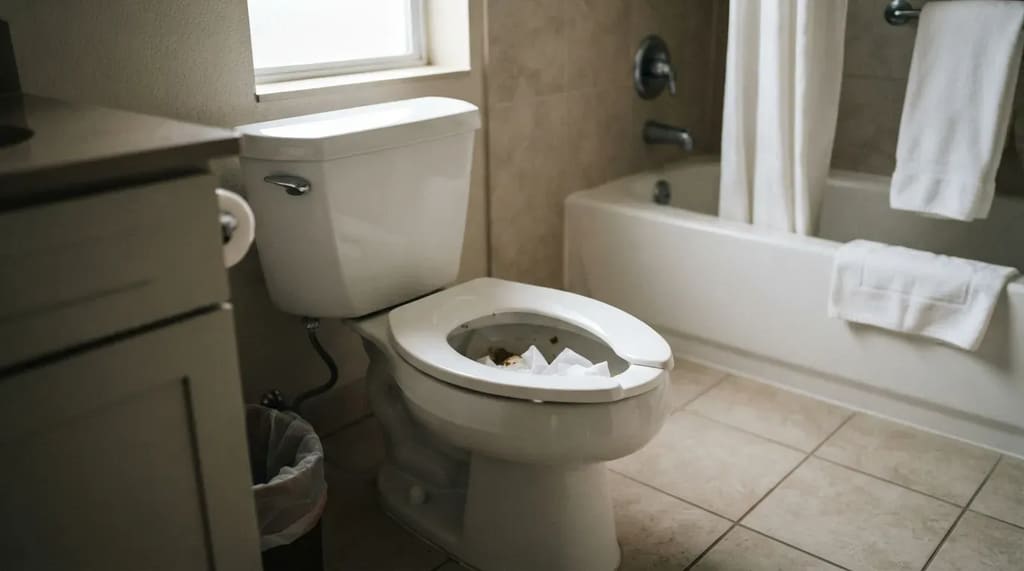
An unflushed toilet is one of the first things a housekeeper may notice after stepping into the bathroom. It sounds trivial, but the bathroom is the part of a room that takes the most work. It also shows the most about how a stay went.
Housekeepers aren’t expecting spotless. A flush before you leave costs you five seconds. A bathroom that starts in decent shape lets the housekeeper spend the time on the shower, the sink and the floor, where it counts.
#20 – The Bathroom Counter Covered Edge to Edge
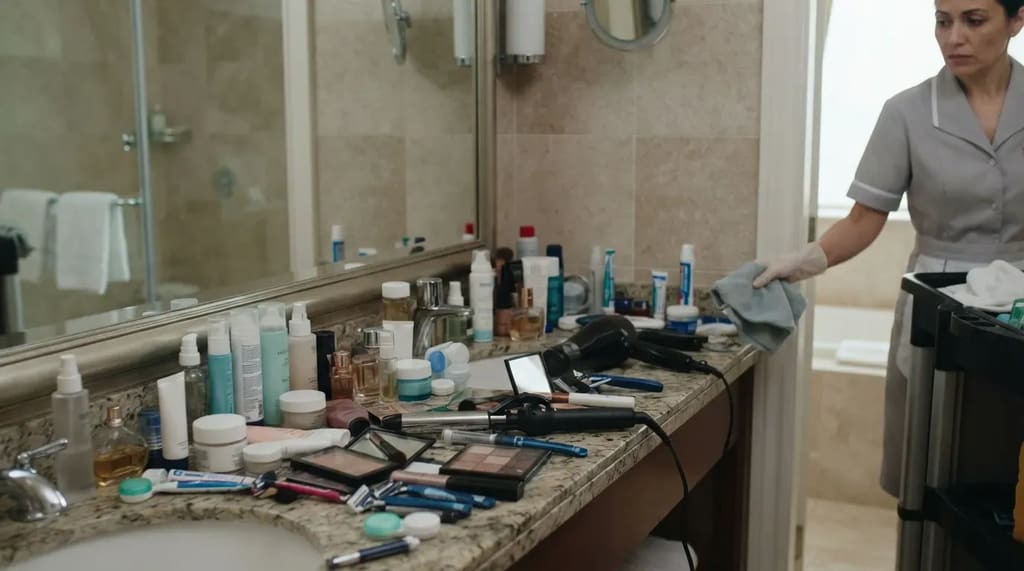
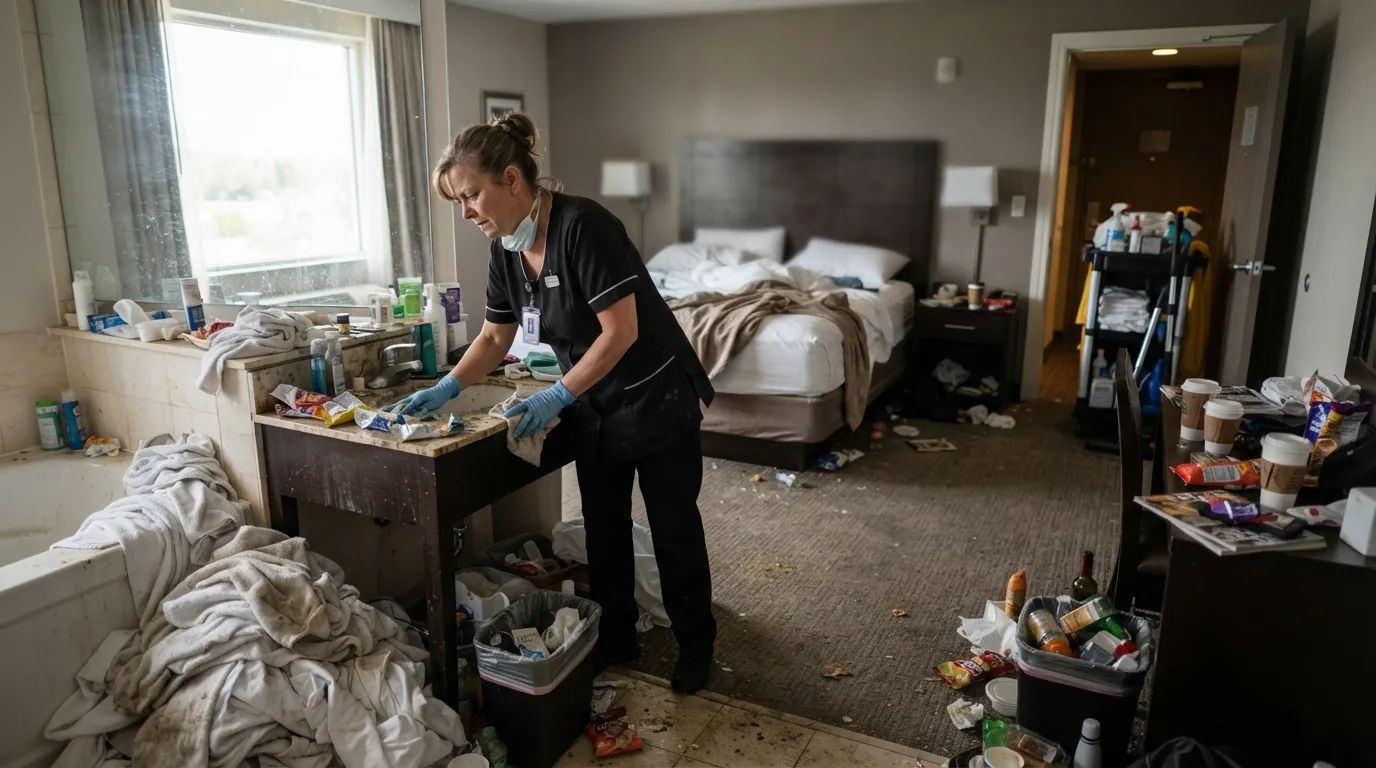
When every inch of the counter holds makeup, skincare, razors and hair products, a housekeeper has to clean carefully around all of it. Housekeepers are trained not to disturb guests’ belongings. That makes the job slower and more awkward, since a small bottle knocked over becomes the housekeeper’s problem.
A counter buried in loose toiletries is one of the fastest reads a housekeeper gets on a guest, because it says the room will take longer. The fix is small and costs nothing. And the counter is only half the story, because the floor can slow things down even more.
#19 – The Floor Nobody Can Vacuum
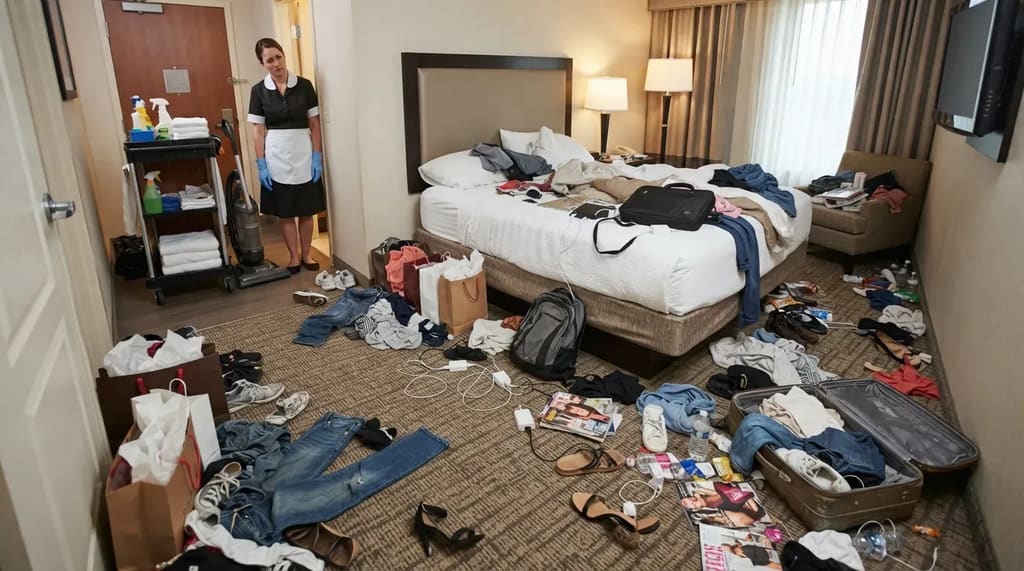
A suitcase beside the bed is ordinary. A room covered with clothes, shoes, chargers, shopping bags and other personal items is a different story. Housekeepers have to work around all of it without moving or damaging anything.
Every surface becomes a decision about what is safe to touch. Housekeepers aren’t expecting hospital-corner tidiness, but a clear path to the bed and the floor helps a great deal. Clutter can be stepped around. What’s hiding under the sheets is harder to ignore.
Quick Compare
- Easy to work around: a suitcase on the rack, shoes by the door, one bag on a chair.
- Slower: clothes, chargers and shopping bags spread across the floor and bed.
- Hardest: a pile where it’s unclear what’s trash and what’s yours.
#18 – The Stains That Show Up When the Sheets Come Off
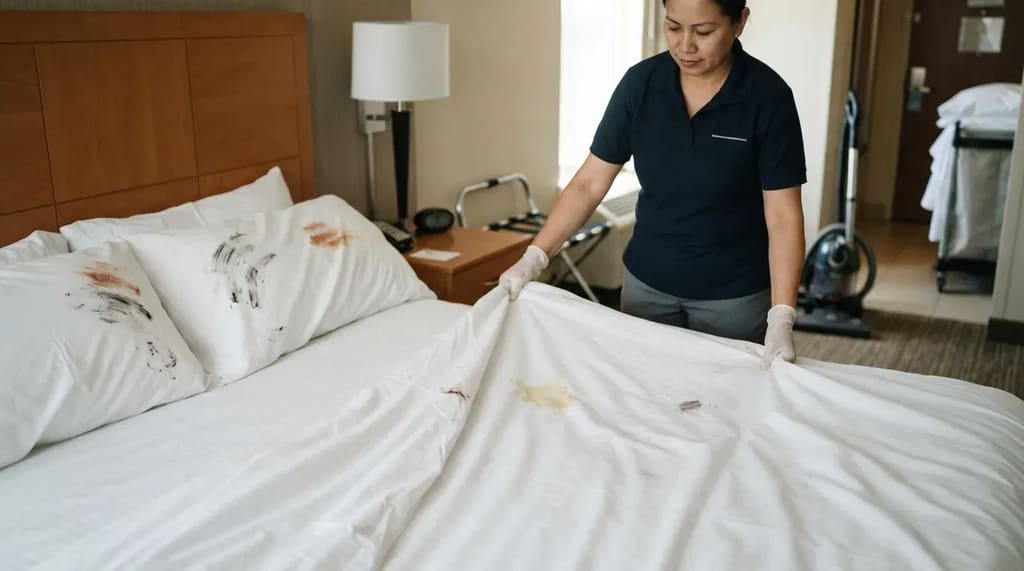
Once the bedding comes off, a housekeeper can quickly spot stains from makeup, sunscreen, drinks, food, self-tanner and other products. Hotel linens are mostly white, so they show every smear. A pillowcase used to wipe off mascara tells its own story.
Hotels expect some wear, and an occasional smudge is routine. The pattern is what gets noticed, such as the same product on every towel. A pack of makeup wipes in your toiletry bag keeps the linens clean and spares the laundry. The bed carries another message too, which is how hard the night was on it.
#17 – A Slept-In Bed Versus a Destroyed One
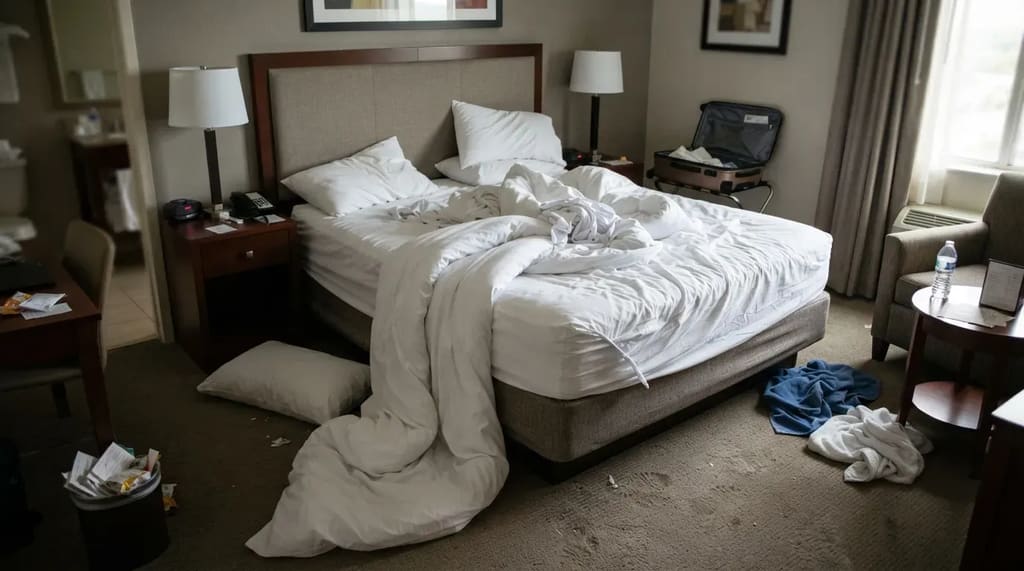
Housekeepers don’t expect guests to make the bed before leaving. What they do notice is whether the bedding looks slept in or completely torn apart. That tells them how much stripping and straightening comes before the real cleaning starts.
Remaking the bed on your last morning is mostly wasted effort. Hang the towels, put the trash in the bin, and leave the sheets as they are. Those two small things help a housekeeper more than neat corners ever will.
#16 – Towels on the Floor Say More Than Guests Mean To
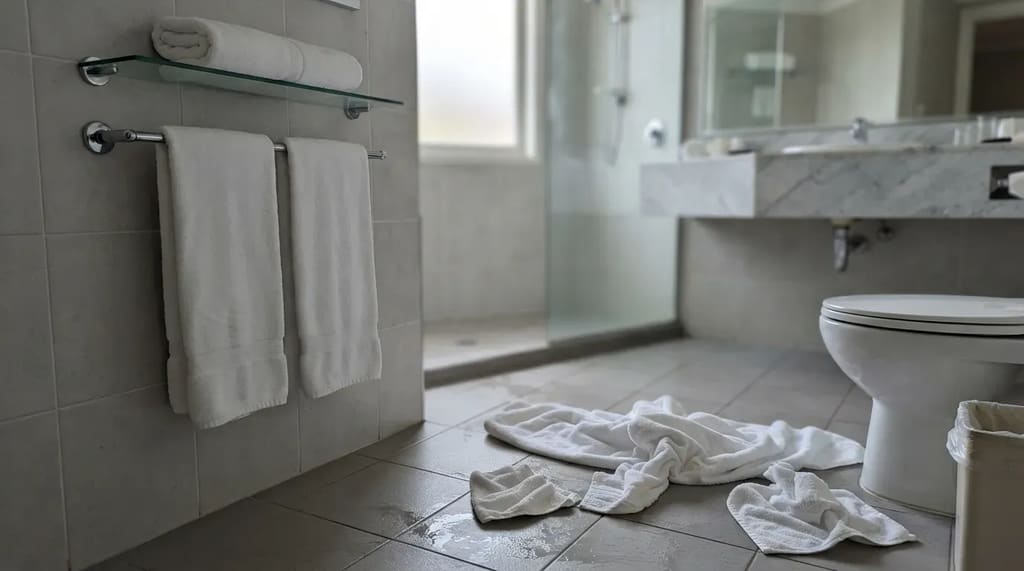
Housekeeping uses towel placement as a quiet communication system, and guests send a message whether they mean to or not. Towels hung up are generally read as “I’ll use these again.” Towels on the floor are generally read as “please replace.”
The signal only works if it matches what you want. Towels tossed on the floor to dry may be swapped out, while ones you meant to reuse are left alone. A towel is a mild message. A room service tray left to sit for days is not.
#15 – The Room Service Tray That Never Left
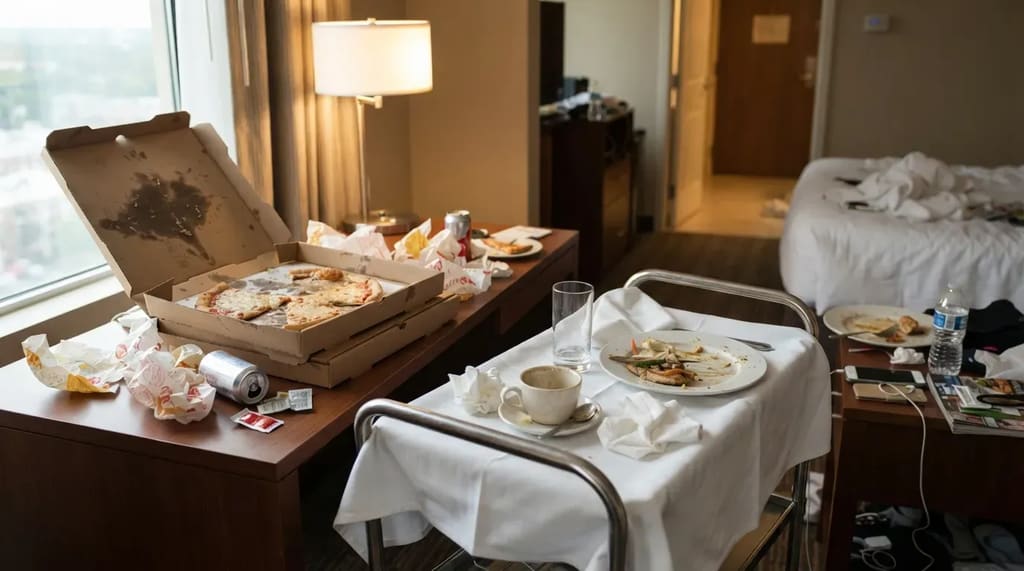
Room service and late-night takeout are part of the hotel experience, and housekeepers don’t mind guests ordering in. What they notice, and resent, is food left to sit. Pizza boxes stacked on the desk and half-eaten takeout on the nightstand attract pests, and the odors soak into soft furnishings fast.
Putting trays in the hallway spares the next person a genuinely unpleasant task. It also ties back to the smell at the door, because old takeout is one of the main sources of it. A tray can be explained by hunger. Extra towels and rearranged bedding can point to more guests than the booking lists.
#14 – The Extra Guests the Booking Never Mentioned
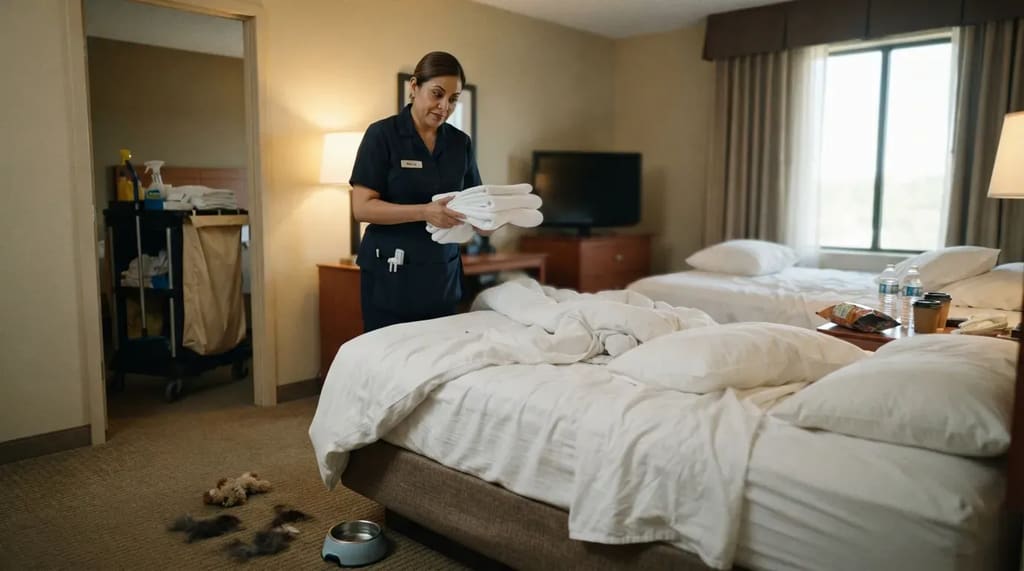
Housekeepers often notice signs that more people, or pets, stayed in a room than were registered. Extra used towels, rearranged bedding or evidence of a pet are easy to spot. They matter because hotels have policies on occupancy and pet fees.
This is a routine part of the job, meant to make sure a room’s use lines up with the booking. Housekeepers typically pass what they see to a supervisor and leave any decision to management.
#13 – The Room That Looks Untouched on Day Three
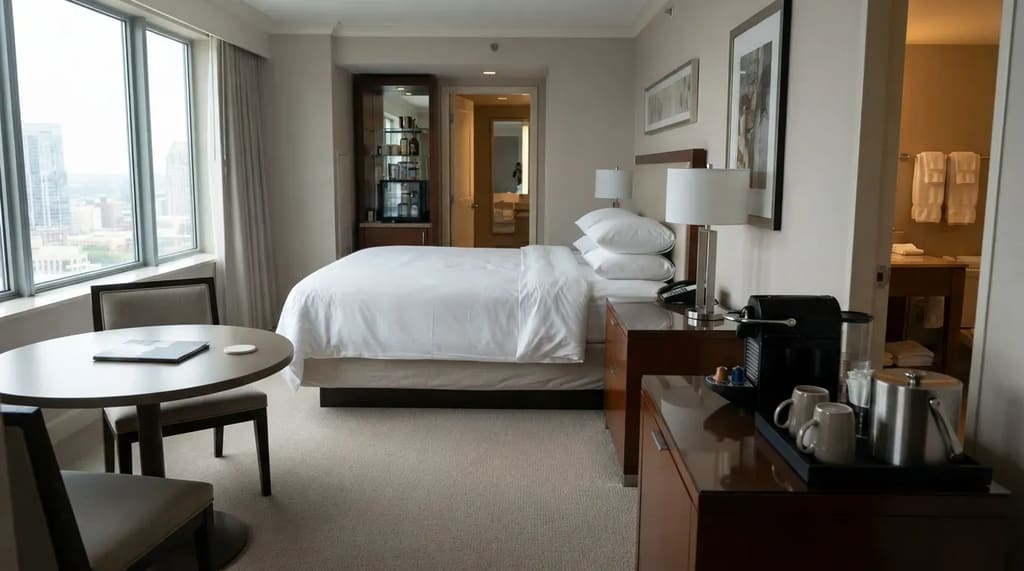
Sometimes a room is barely used. The coffee maker is unopened, the minibar is intact and the bed looks almost the way it did on arrival. A housekeeper reads that as a guest who is out all day or travels light.
It’s an easy room, though not a free one, since towels and sheets still need changing on schedule and the bathroom still needs cleaning. Plenty of guests like this setup, and that’s reasonable. Even a room that barely looks lived in can hold something forgotten in a drawer or a charger left in the wall.
At a Glance
- The clues: unopened coffee maker, untouched minibar, a bed that looks almost new.
- The read: a guest who is out all day or travels light.
- Still on the list: fresh towels, sheet changes on schedule and a clean bathroom.
- Easy to miss: a charger in the wall or something tucked in a drawer.
#12 – What Gets Left Behind in the Drawers
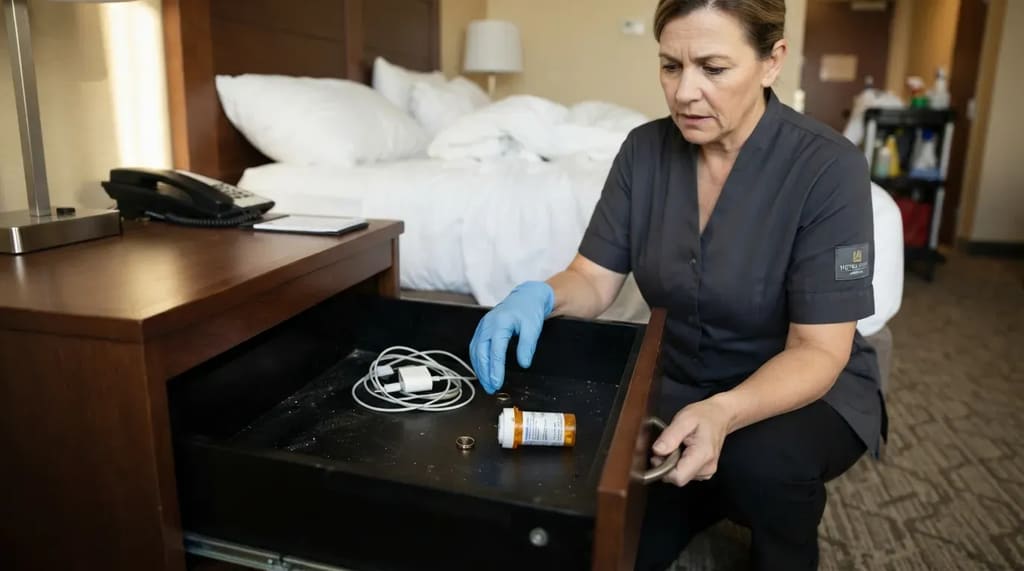
Wedding rings and prescription bottles are the finds that make hotel staff reach for the phone, because a guest will panic about them within hours. Chargers, glasses and clothing are the everyday finds. Guests who get things back fastest call the hotel quickly and describe the item well.
Housekeepers find these items because they see every inch of the room up close, including places you stopped looking on day one. A found ring is a phone call. A found envelope of cash is a different problem, and it explains why tip money needs a label.
#11 – The Loose Cash That Isn’t Clearly a Tip
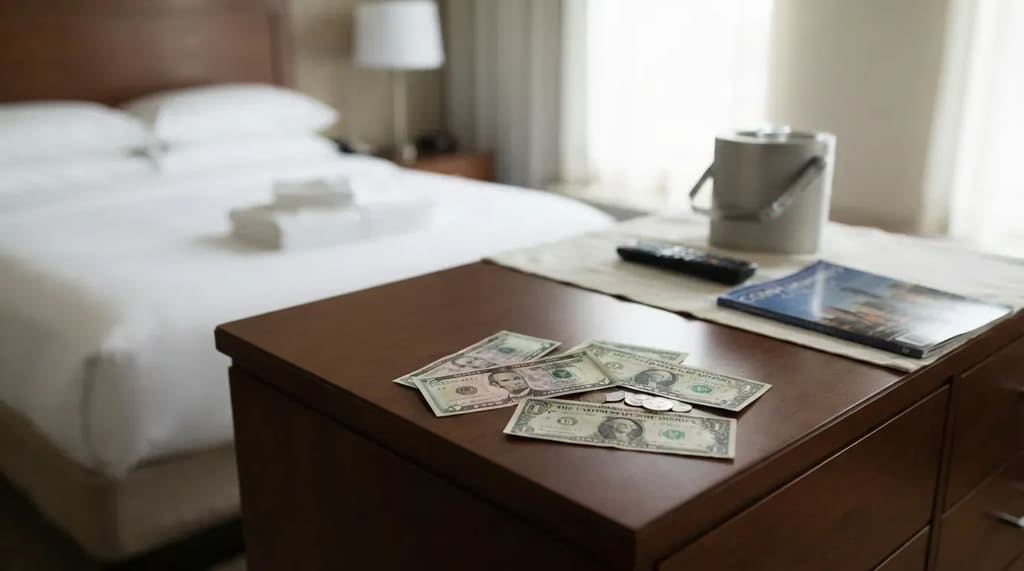
Cash left on a surface with no note puzzles a housekeeper, since it could be a tip or money someone forgot. Staff are wary of taking it, because a housekeeper can be accused of theft. A marked envelope or a note saying “housekeeping” or “thank you” settles it.
Leave it on the dresser or bathroom counter rather than the bed or nightstand, where it could look discarded. A short thank-you note helps too, and housekeepers notice the gesture along with the money.
#10 – The Daily Tip Versus the One at Checkout
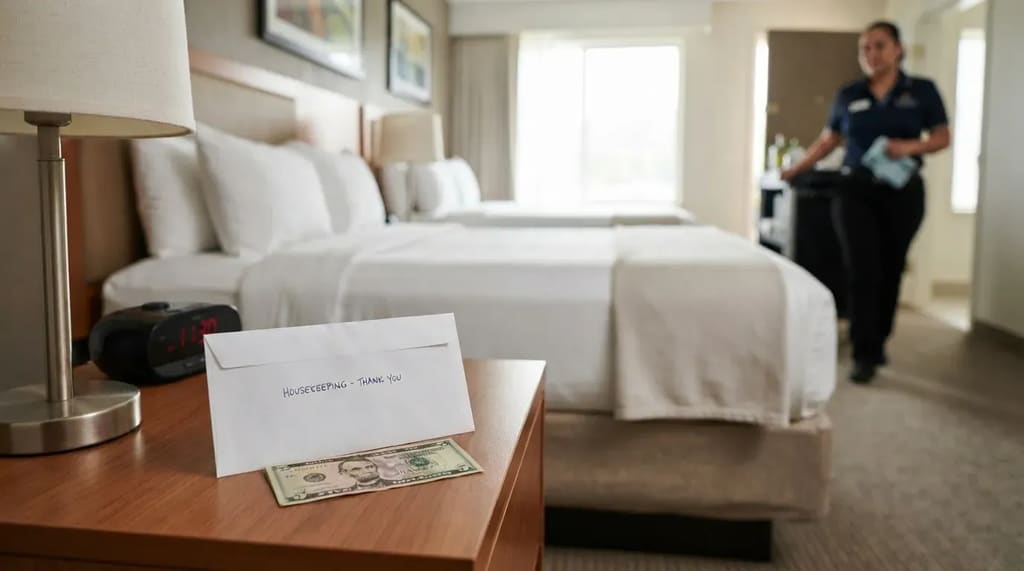
The American Hotel & Lodging Association suggests $1 to $5 per day for housekeeping, and some other guides put the range at $2 to $5, with the high end at upscale hotels.1 Leaving it daily makes sense because a different housekeeper may clean your room on different days.1
A lump sum at checkout may land with only one person, while day-by-day tipping reaches whoever did the work. On any stay longer than a night or two, the daily envelope is the smarter habit, and it costs the same. That covers a normal stay, though a stay with no cleaning raises a separate question.
#9 – The Tip That Still Matters When You Skipped the Cleaning
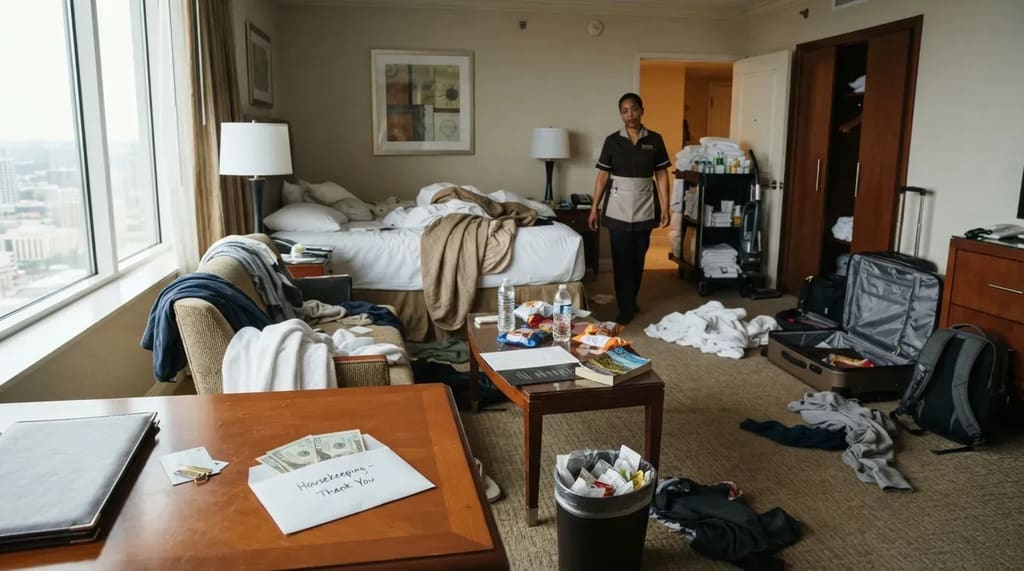
If you decline daily service, the housekeeper still faces your room on the last day, and it’s heavier than it would have been. Tipping guidance generally says to leave something anyway.2 The final clean falls on one person.
Some guides suggest a larger lump sum at the end when you opt out, to cover that heavier checkout clean. The logic holds. You saved the housekeeper the daily visits, not the work, and the work arrives all at once. A bigger room takes more effort, and a family or a group multiplies it.
#8 – Families and Groups Mean a Much Bigger Room
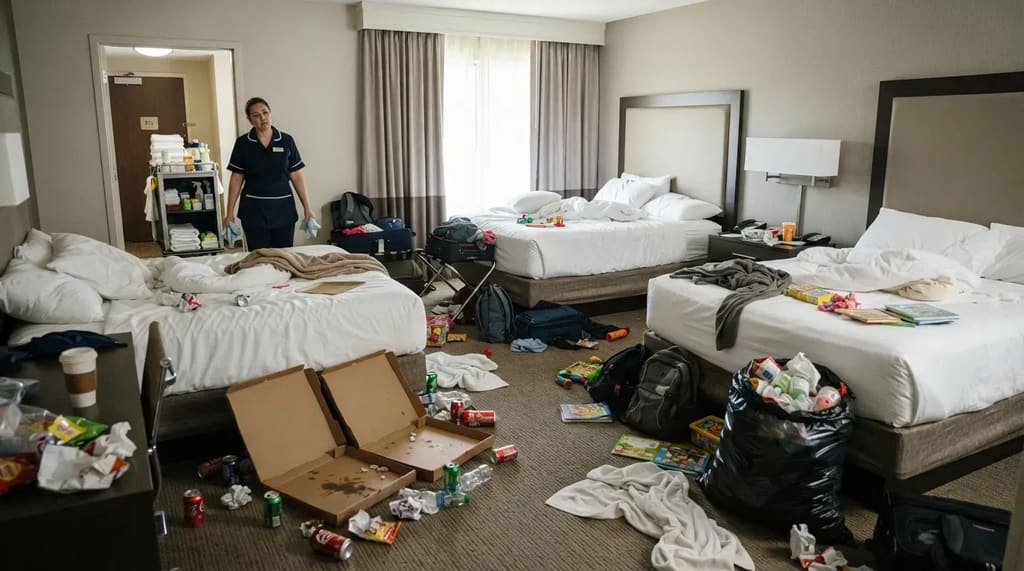
If you’re traveling with family or a group, the housekeeper has extra cleaning to do, and tipping guidance says to account for it. How long a room takes also depends on its size and amenities. Extra beds, extra towels and extra bags all add minutes.
Putting trash in the bin instead of scattering it is appreciated. Empty pizza boxes on the floor and soda cups strewn around are the kind of mess where tipping guides say to tip accordingly. A larger tip is a fairer reply to a larger mess than any apology note.
Worth Knowing
- Room size and amenities change how long a clean takes.
- Extra beds, towels and bags each add minutes to the job.
- Trash in the bin, not on the floor, is one of the easiest ways to help.
- Tipping guidance says a bigger group deserves a bigger tip.
#7 – The Damage Report That Starts at the Door
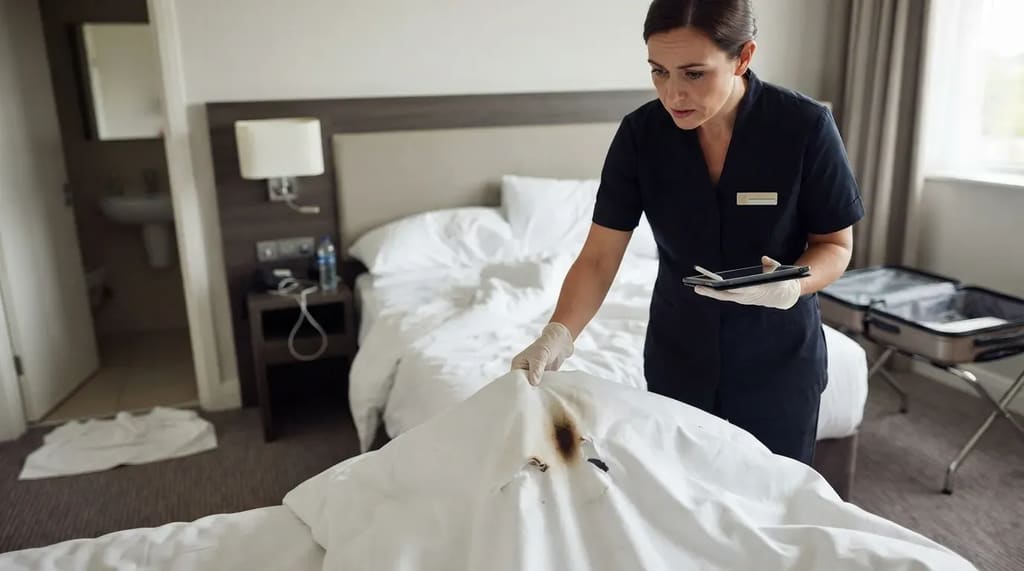
Turning a room after checkout includes a quick look at its condition. Burns on linens, a broken lamp or a missing item will be noticed because the housekeeper is the person closest to the room. Those findings go to a supervisor, since the hotel needs to know before the next guest arrives.
If you break something, mention it at the front desk when you check out. That lets the hotel note it once, in your words, instead of piecing it together later. Damage reports are about objects, but how a guest treats the person who cleans is something else a housekeeper registers.
#6 – How You Treat the Person at the Door
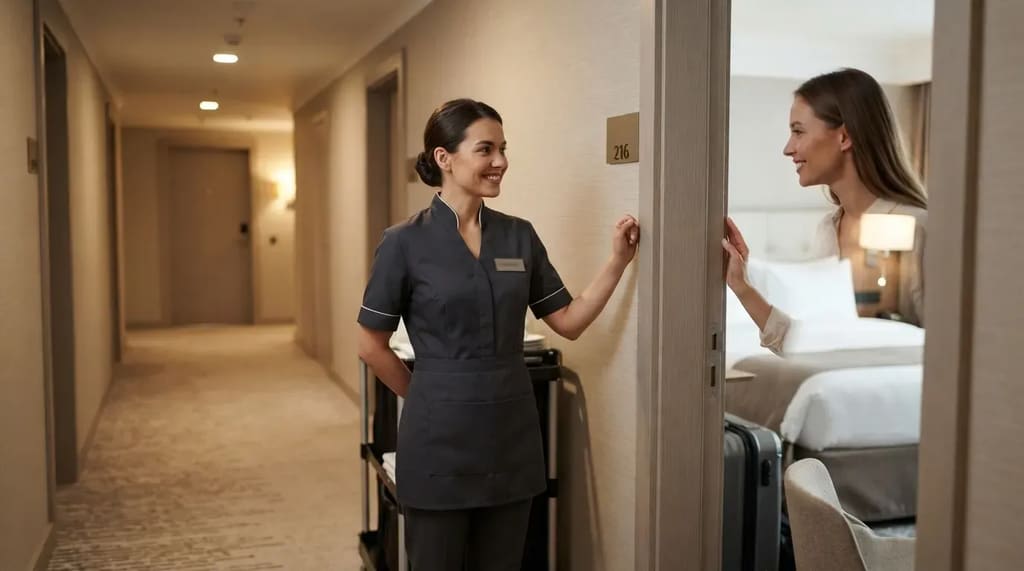
Housekeepers are expected to knock and announce themselves, and a guest who answers with a polite word makes that moment easier. Being treated as invisible is a complaint that turns up in housekeepers’ accounts. A hello in the hallway counts for more than it costs.
Many hotels encourage staff to greet guests by name, and guests who are considerate, tip fairly and keep basic order tend to be remembered. That goodwill travels. A returning guest who was courteous the first time is often treated like one.
#5 – The Sign That Goes Up the Second the Cart Appears
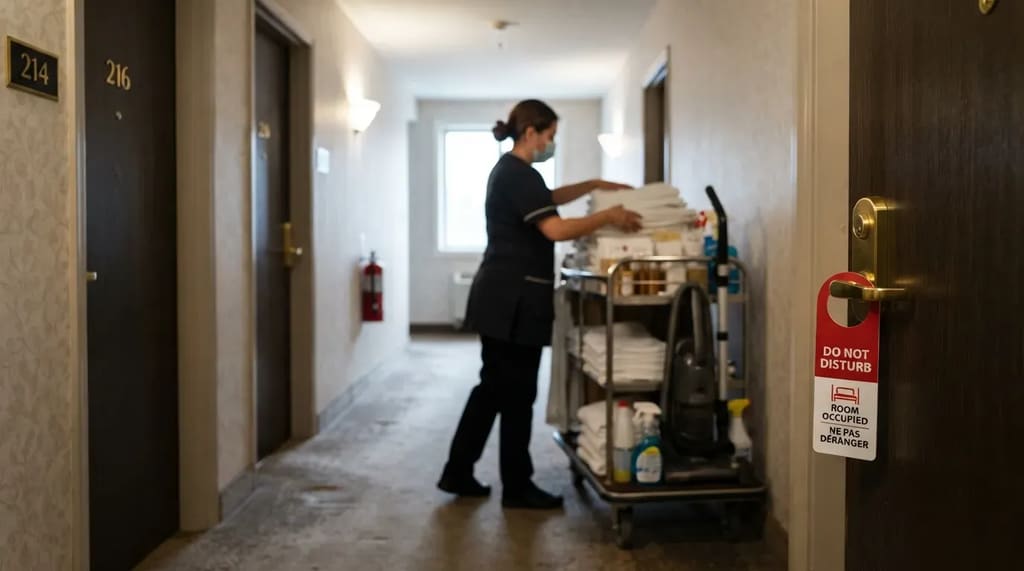
Some guests hang the Do Not Disturb sign as soon as they spot the cart in the hall. Later they take it down and complain that the room was never cleaned. Housekeepers notice this pattern, and it is one of their biggest frustrations.
Related Stories From Travelbinger

The sign is best for the morning you want to sleep in. If you want the room done later, a call to the front desk is cleaner than playing hide-and-seek with the cart. A sign for a morning is a minor annoyance, but when enough guests turn the service down, the cost lands somewhere other than the guest.
#4 – The Paychecks That Shrink When Guests Opt Out
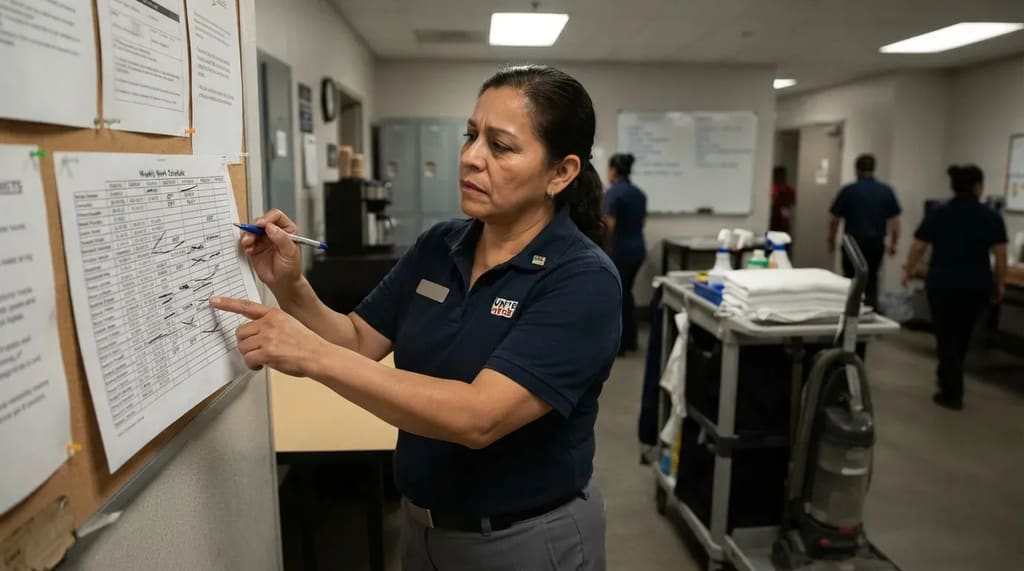
Hotels vary in how often they clean. Fodor’s reported that Hilton offers daily housekeeping at most of its brands and cleaning every other day at its focused-service brands, with more available on request.3 Policies differ by brand and property, so the front desk is the place to ask.
A housekeeper at a W Hotel told HuffPost that when enough guests decline service, the hotel tells her not to come in. She loses that day’s wages even though cleaning is already built into the room rate.4 Opting in at check-in keeps staffing in place even if you hang the sign later. Lost hours are one cost of skipped service, and a heavier room is the other.
#3 – The Room Skipped for Three Days Is Hard on the Body
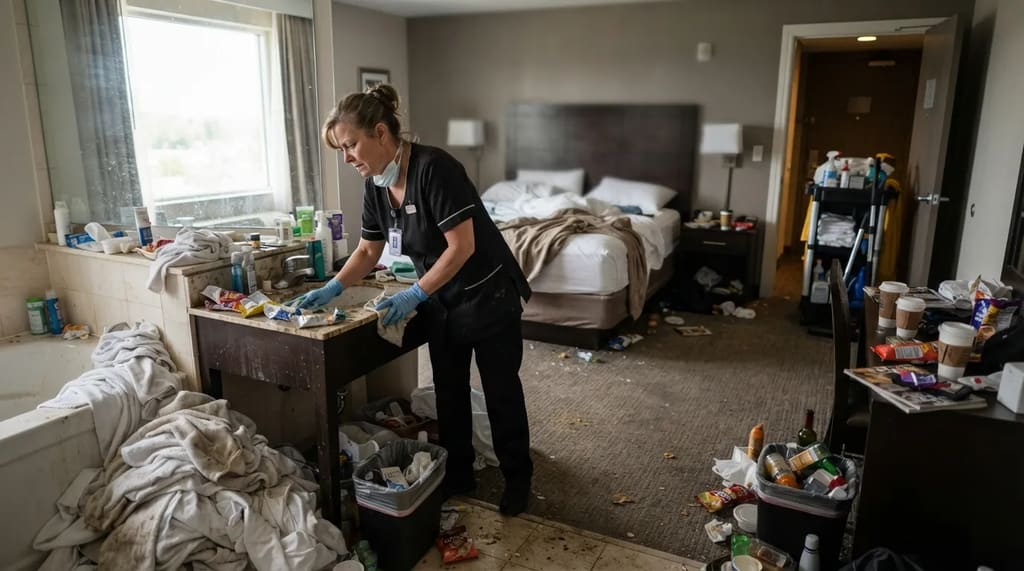
A room that goes two or three days without cleaning is much more work, because trash, towels and dirt pile up and everything takes longer. The housekeeper has to rush to catch up. UNITE HERE says housekeepers have reported pain, stress and injury from cleaning checkout rooms that were not serviced daily.5
On a stay of three nights or more, hanging the sign for the whole trip is a poor trade. If privacy is the goal, ask the front desk whether fresh towels and trash pickup are available without a full clean. Skipping a clean is one decision. A sign left up by accident is another, and it can hold up a whole room.
Fast Facts
- A room skipped for two or three days takes much more work to reset.
- Trash, towels and dirt pile up, so every task runs longer.
- UNITE HERE reports pain, stress and injury among housekeepers cleaning unserviced checkout rooms.5
- Some hotels may offer towels and trash pickup without a full clean, so it’s worth asking.
#2 – The Forgotten Sign on an Empty Room
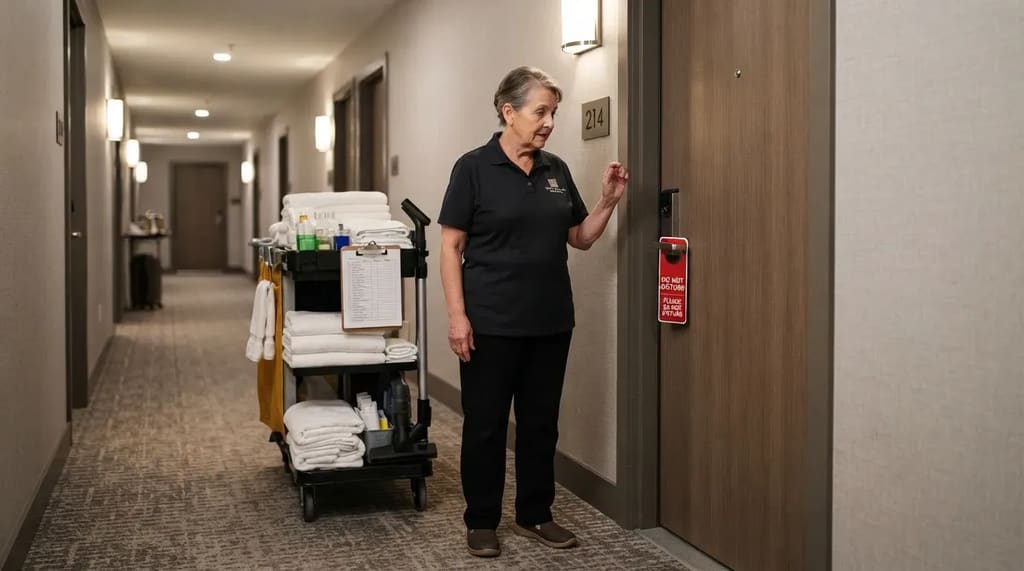
Guests rush out and forget the sign is still up. A sign on an empty room keeps the housekeeper from starting, so taking it down before you leave lets the cleaning begin right away. It takes two seconds.
Hotels generally respect the sign, with limits. Once checkout time passes on the departure date, hotels typically treat the guest’s privacy window as over and staff may enter. A forgotten sign won’t keep staff out for good, but it does hold up the room. A sign left up on an empty room is a delay. Left up with someone inside, it becomes a question about safety.
#1 – The Sign Up for Days and the Tray Nobody Touched
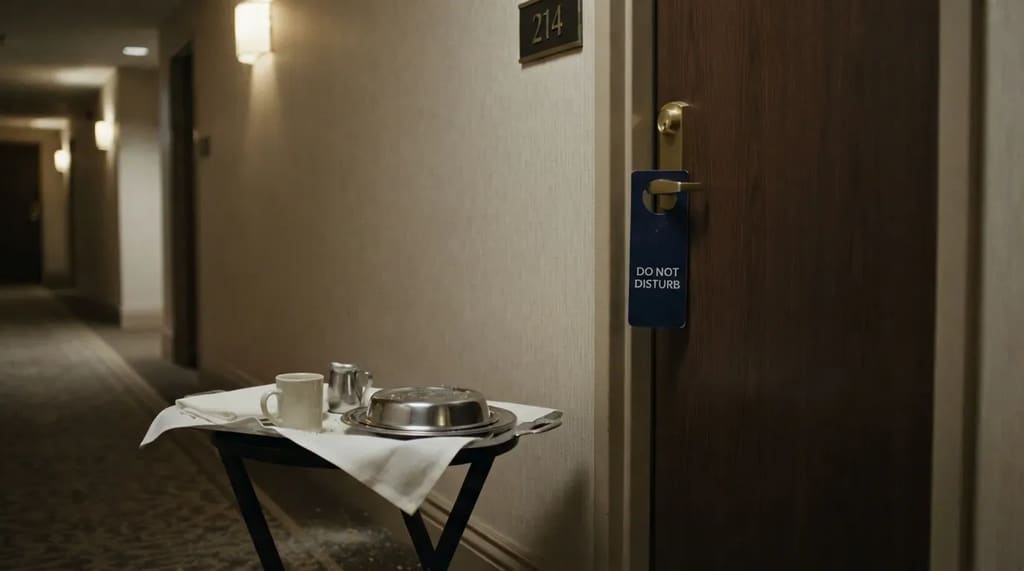
Housekeepers can’t see inside a room, so they notice what’s outside: an untouched tray, an unchanged sign, no sound for days. Hotels treat that as a question about a guest’s welfare rather than about tidiness. The usual response is calm and careful: knock, announce, then bring in a manager.
Hilton’s policy, as reported in 2017, says that if service is refused for 24 hours, a member of hotel management will check on the room.6 A call or a note under the door may come first, and if staff grow concerned, they may enter under the hotel’s own policy. A sign up for the full stay is rarely worth it, since you risk a surprise visit and leave behind a heavier room.
Most of what housekeepers notice comes down to two quiet questions: how much work will this room be for the next person, and is the guest inside all right? Seen that way, the cheap habits are the ones that count, like a flush, a hung towel, a labeled tip and a sign that comes down.
The doorknob sign looks like the smallest thing in the room. To the person pushing the cart, it may be the loudest.
- NerdWallet Housekeeping Tipping: https://www.nerdwallet.com/article/travel/how-much-do-you-tip-hotel-housekeeping
- HuffPost Tipping Housekeepers: https://www.huffpost.com/entry/what-people-get-wrong-about-tipping-hotel-housekeepers-goog_l_6852f88ce4b038d013e3647d
- Hilton Housekeeping Frequency: https://travel.yahoo.com/hotels/articles/hotel-housekeeping-change-know-next-000032451.html
- HuffPost Housekeeper Accounts: https://www.huffpost.com/entry/10-things-i-wont-do-at-hotels-after-working-as-a-hotel-housekeeper-goog_l_69d7d9b8e4b048dba44bd910
- UNITE HERE Hilton Alert: https://www.hotelnewsresource.com/article118785.html
- Hilton Do Not Disturb Policy: https://thepointsguy.com/news/hilton-disney-do-not-disturb-rules