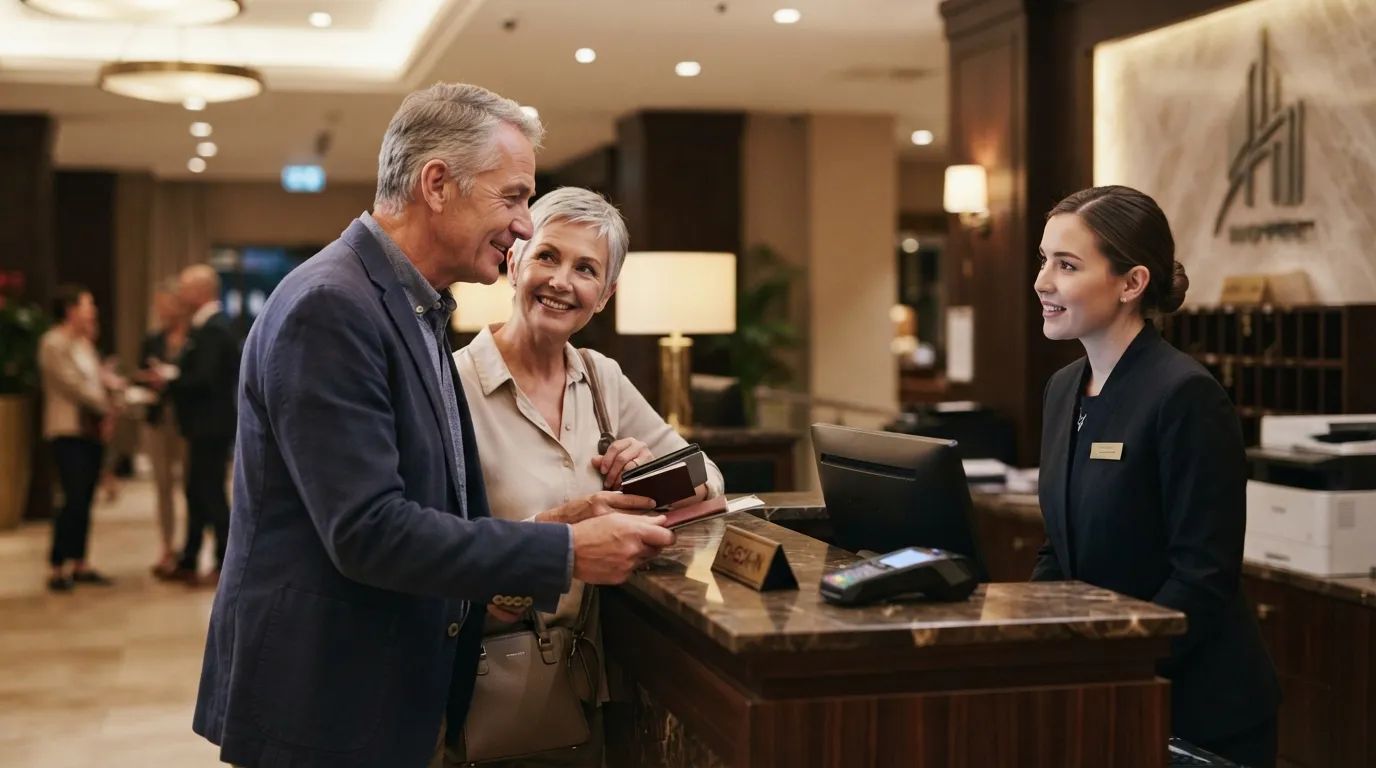
Most guests hand over an ID, take the key card and head upstairs with whatever room came with it. Behind that counter, though, sits more flexibility than the booking page ever admits, from rooms that dodge the loud corner to equipment nobody advertises.
Senior-rate cutoffs run from 60 to 65 depending on the chain, so the same traveler can qualify at one desk and not at the next. The senior rate looks like the cheapest item here, yet it is not always the lowest price on offer, and the last item shows how to find out. First, the easiest ask of all: pillows.
#15 – Extra Pillows or a Look at the Pillow Menu
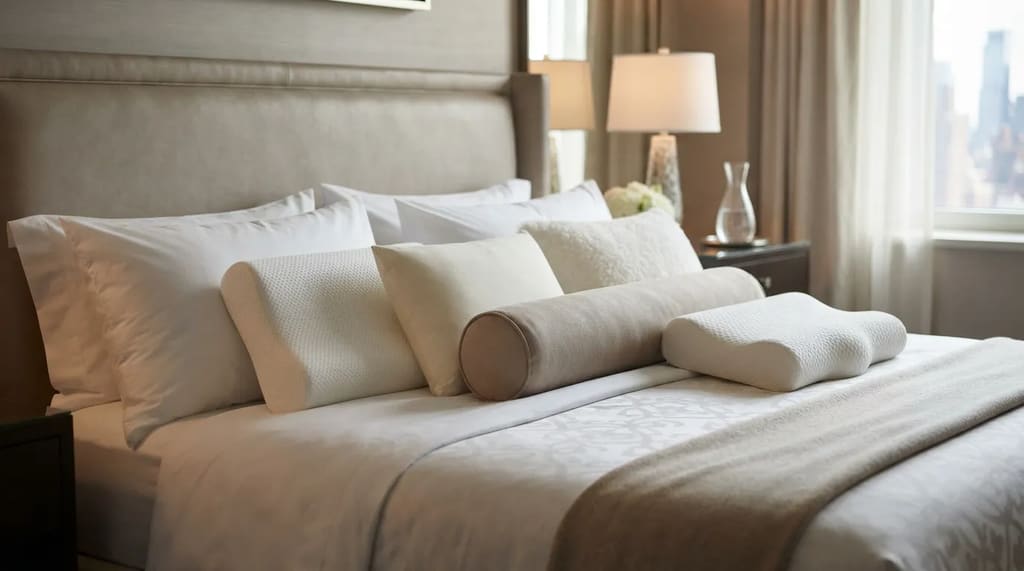
Some hotels offer pillows from ultra-soft to extra-firm, including memory foam, down, hypoallergenic and body pillows.1 A call to the front desk or housekeeping can get a different one delivered to your room.
Extra pillows and blankets are standard requests at most hotels, usually free of charge. If you have neck pain or allergies, ask at check-in so the swap happens before a night on the wrong pillow.
A pillow fixes one comfort, but the same storeroom also holds remedies for everything guests forget at home.
#14 – A Free Amenity Kit for Whatever You Forgot
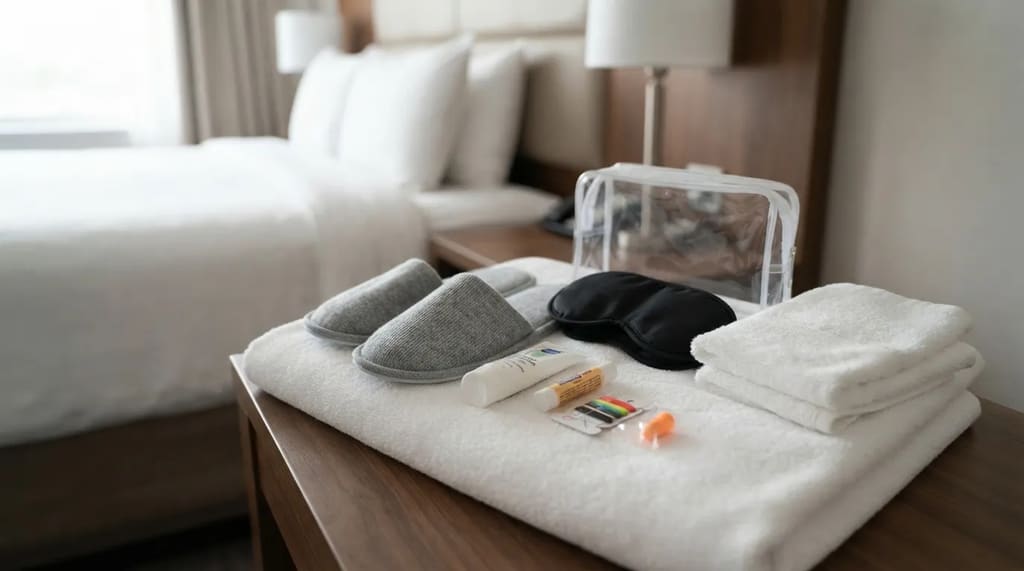
Front desks can often hand over earplugs, sleep masks, toothpaste, lip balm, lotion and even socks, usually free.2 Extra towels, irons and hair dryers are also standard on request.
Some properties keep sewing kits and similar items on hand at no extra cost.3 Policies differ, so ask the desk before you hunt for a store.
Fast Facts
- Usually free: earplugs, sleep masks, toothpaste, lip balm, lotion and socks
- Standard on request: extra towels, irons and hair dryers
- Some properties also stock sewing kits at no charge
- Policies differ, so a quick call beats a trip to the store
One thing the desk cannot replace is a missing prescription, so keep those in your carry-on rather than your checked bag.
#13 – A Room Away From the Elevator and Ice Machine
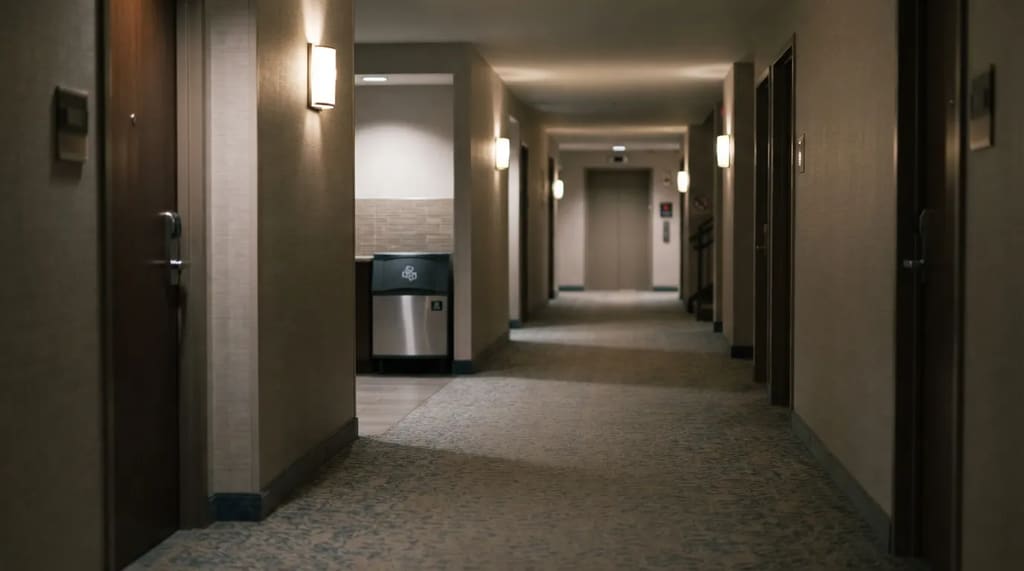
Noise complaints are among the most predictable hotel problems, and front desk staff usually know which rooms cause them. Think rooms near elevators, stairwells, ice machines and swimming pools.
Moving you costs the hotel nothing and can change the whole night, especially on busy weekends. It matters most if you are a light sleeper or have just crossed a time zone.
But a quiet room can still sit at the far end of a long corridor, which is a poor trade for anyone who walks slowly.
#12 – A Room Close to the Elevator
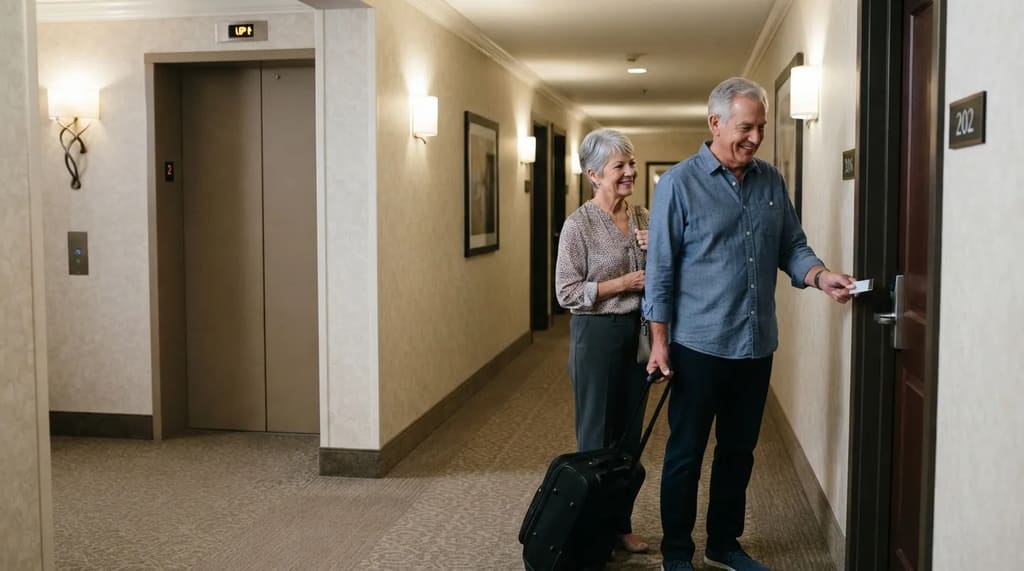
A hotel can have an elevator and still tuck your room at the far end of a long hallway. Room location is one of the easier things a front desk can adjust.
Travel writers split on this one, with some calling it the smartest request and others warning about hallway noise. If walking is the hard part of your day, ask for a room a few doors from the elevator rather than the one right beside it.
When you book, you can add “room near elevator preferred” to the special requests field. It works against the previous request, so pick the one that matters more.
Distance to the elevator is only part of the walk, because the floor you land on matters too.
#11 – A Lower Floor When Stairs Are the Obstacle
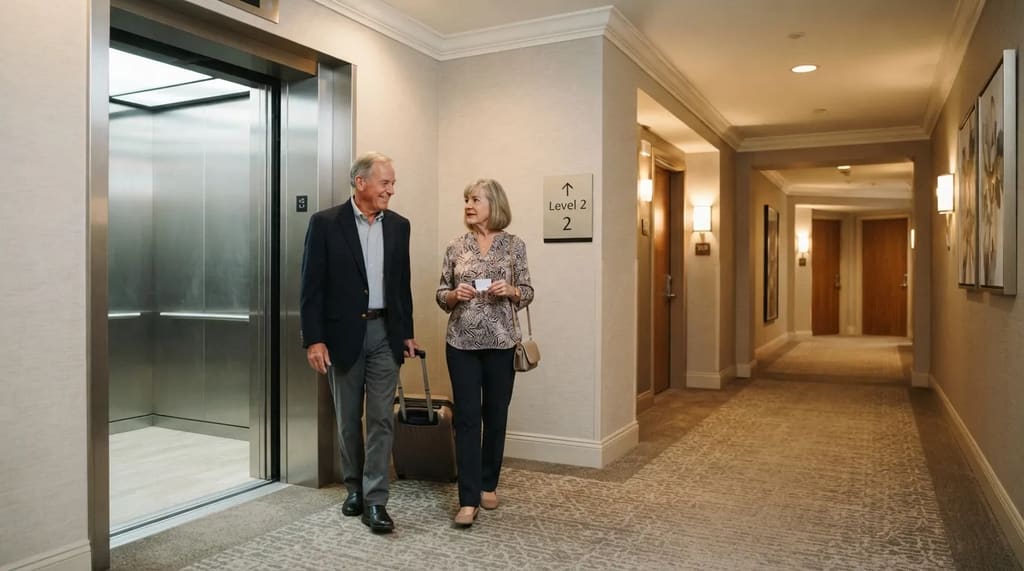
A second or third floor near the elevator balances access and security, though a first-floor room can help if stairs are a real barrier. A ground-floor room also removes the worry about what happens if the elevator is out of service.
Floor requests are usually free, but only if rooms are open. Ask when you book, not at a counter where a full hotel has nothing left to move you into.
Pair this with the elevator request and the desk has two clear instructions it can actually follow.
#10 – A Spare Refrigerator for Your Medication
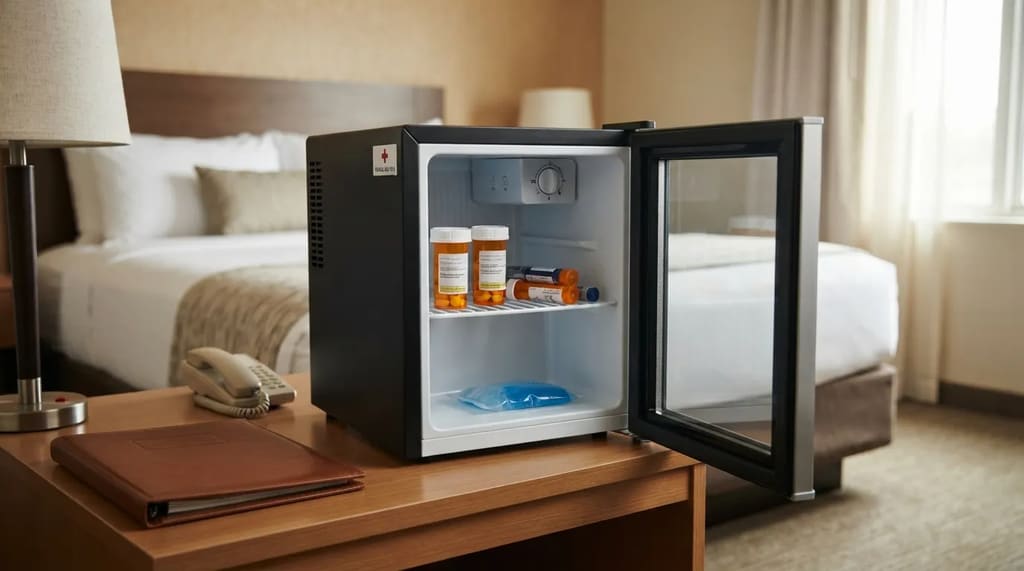
Not every room comes with a refrigerator, but many hotels keep extras in storage. If you need to chill medication, call the front desk and ask.
Some hotels put a refrigerator in every room, while others offer them only on request or in certain room categories. Asking for an empty one leaves space for your medicine instead of a stocked minibar.
Check your medicine’s storage instructions with your pharmacist before you travel, because a mini fridge may not hold the temperature your prescription needs.
A refrigerator is one of several small modifications a hotel can make, and the next two involve outlets and doors.
#9 – An Extension Cord and a Door Taken Off
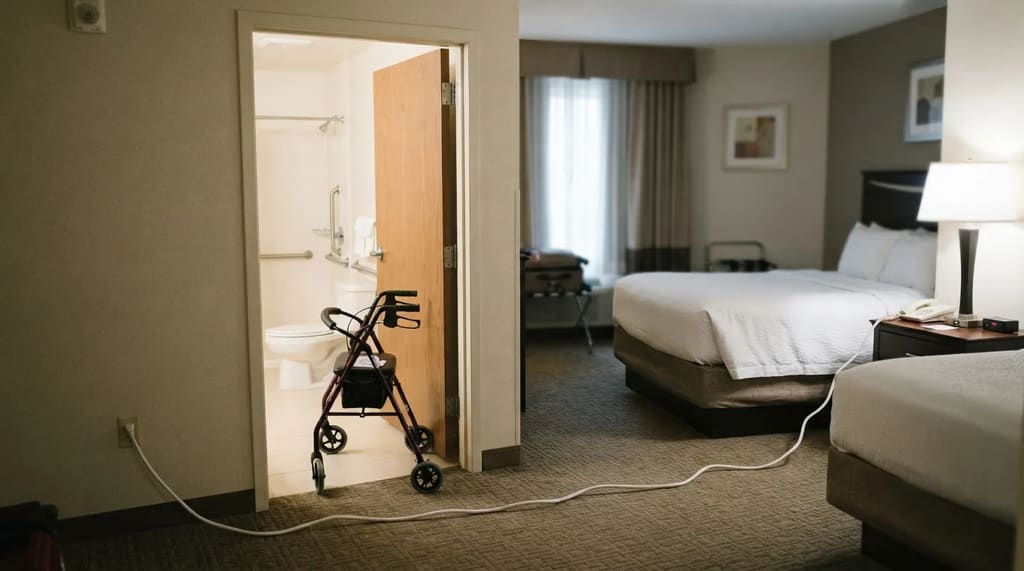
Guests with disabilities can ask for an extension cord for better access to electricity. They can also ask for an interior door, such as the bathroom door, to be removed if it blocks a wheelchair.
The same reasoning applies to a walker that will not clear a narrow doorway. Staff may not volunteer either fix, since neither appears on any amenity list.
Worth Knowing
- An extension cord can bring an outlet within easy reach
- A bathroom or other interior door can come off if it blocks a wheelchair
- A walker that will not fit through a doorway is the same kind of problem
- Ask for each fix by name, since none is on a standard amenity list
Those tweaks assume an ordinary room, which is a different matter from rooms built with accessibility in mind.
#8 – The Accessible Room, and Which Shower It Has
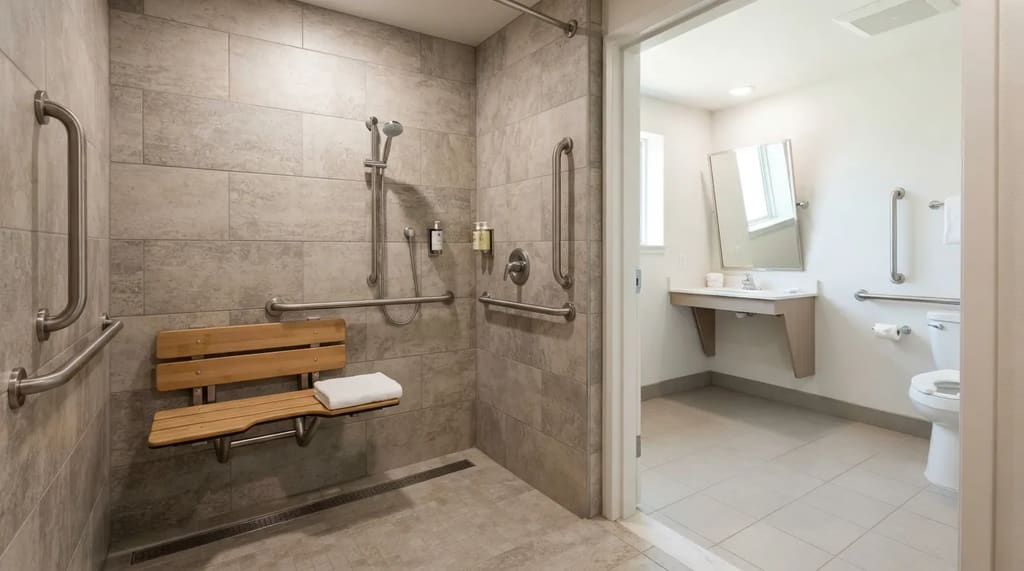
Not every hotel has every accessible feature in every room. The U.S. Access Board says a specified portion of accessible rooms in hotels with over 50 guest rooms must have a roll-in shower with a folding seat.4
Smaller hotels are not required to have one, so an accessible room there may mean a tub with grab bars. Guests must be able to reserve accessible rooms through the same systems as any other room, and the reservation system must describe the accessible features.
Find out before you book whether the shower is a roll-in or a tub with a seat. Call if the booking page does not say.
Mobility is only half of the accessible inventory, since the other half is built for guests with hearing loss.
#7 – A Room Equipped for Hearing Loss
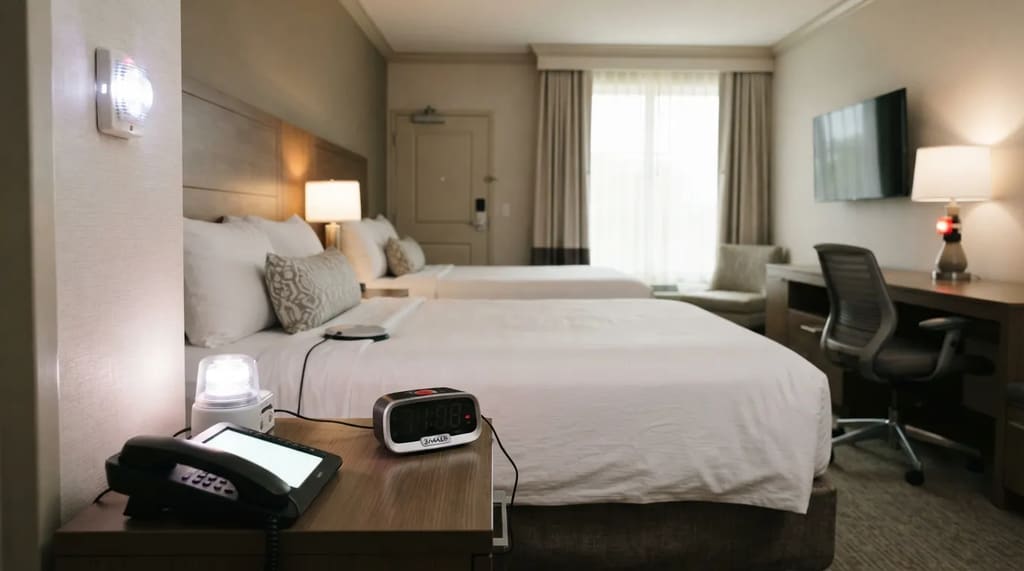
The ADA requires hotels to provide auxiliary aids and services for guests who are deaf or hard of hearing. Communication-accessible rooms have visual alarms, visual alerts for the doorbell and phone, and telephones with volume control.5
Hotels must provide devices that alert guests to phone calls, door knocks or a doorbell, often through strobes or portable kits.5 Vibrating alarm clocks and bed shakers are among the items that wake a guest who cannot hear a standard alarm.
Ask for the equipment when you book and again at check-in. Staff can hand over a kit without knowing how to install it, so ask that it be set up before you go upstairs.
Next comes a request that has nothing to do with disability and everything to do with timing.
#6 – Late Checkout, Asked for at Check-In
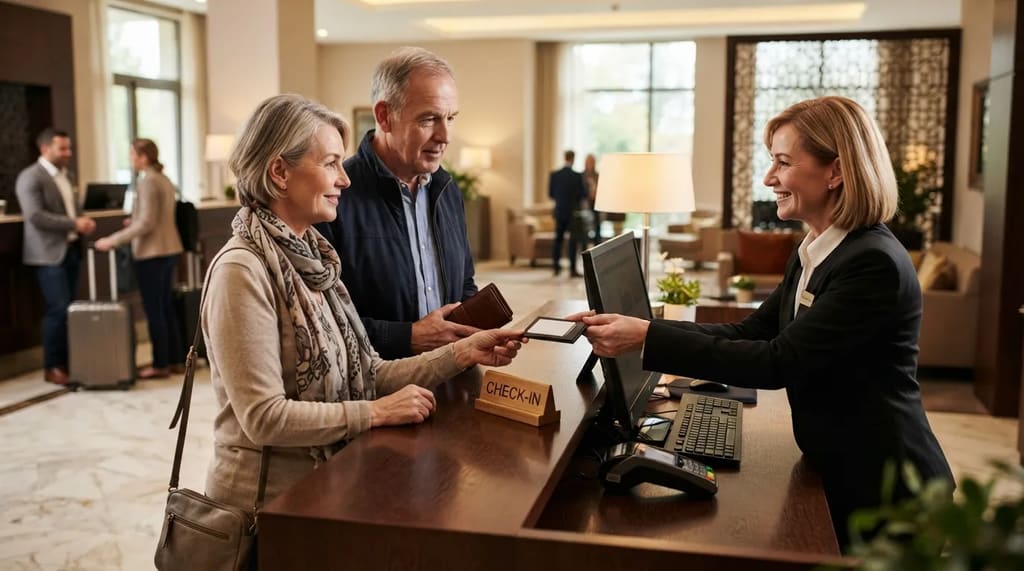
Early check-in and late checkout are subject to availability. Hotels note they cannot always guarantee either, particularly in busy seasons, but it is always worth asking.
Asking as soon as you check in beats waiting until the morning you leave. Early check-in is often free, while late checkout may cost a fee.
If the hotel cannot hold the room, it can often hold your bags instead.
#5 – Luggage Storage After Checkout
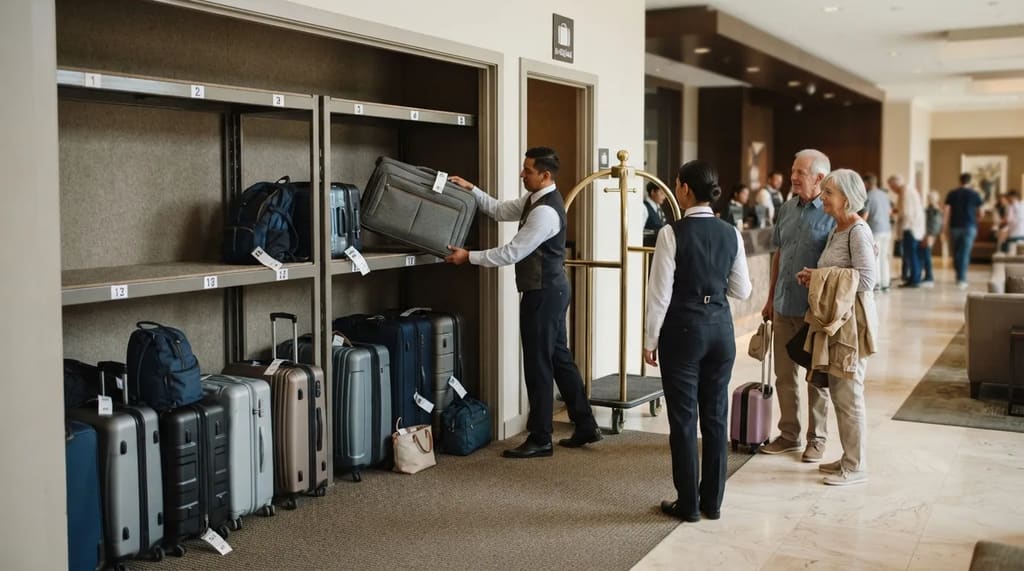
The bell desk or front desk usually handles storage, and it is often free, though policies vary. It is the fallback when a late checkout is refused or priced higher than you want to pay.
If your flight is late, confirm what time the storage room closes. Keep medications, documents and anything fragile with you rather than in the pile behind the desk.
Quick Compare
- Late checkout: keeps your room, depends on availability and may cost a fee
- Luggage storage: keeps only your bags, often free, with policies that vary
- Either way, ask early rather than on the morning you leave
Now for the request everyone assumes is the jackpot, and why it may be overrated.
#4 – A Polite Ask for an Upgrade
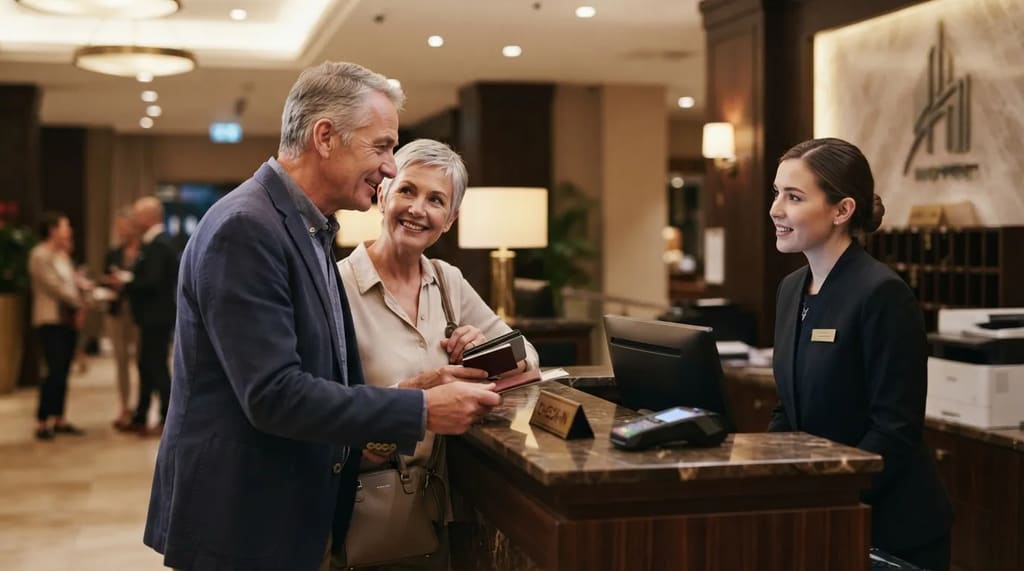
Front desk staff can sometimes layer a discount or an upgrade onto your stay if you ask politely and the hotel is not fully booked. One travel guide ties upgrade requests to arriving later in the evening.
Do not spend too much effort here. An upgrade is a favor that depends on the hotel’s occupancy that night, so the quiet room, the short walk to the elevator and the fridge matter more than a better view.
An upgrade is easier to get when the rate is already settled, which brings up the paperwork behind a discount.
#3 – A Direct Call to Confirm the Discount Applied
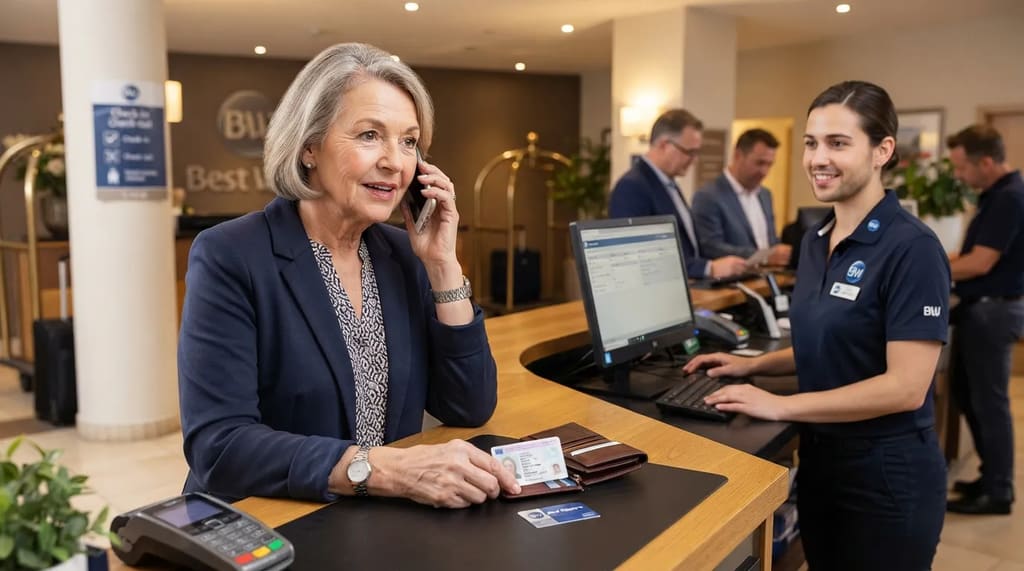
At Best Western, you ask for the senior discount when you book and bring valid ID to check-in, and reservations through third-party sites do not qualify.6 Even when you book through AARP’s travel portal, the hotel may still ask to verify your membership.
Related Stories From Travelbinger

Call the hotel after booking online, confirm the AARP rate was applied, and ask whether any additional discounts apply to your date. If the desk tries to charge the standard rate at check-in, ask to speak to the manager.
Once the discount is confirmed, the next question is how big it really is, and that depends on the chain.
#2 – The Senior Rate Versus the AARP Rate
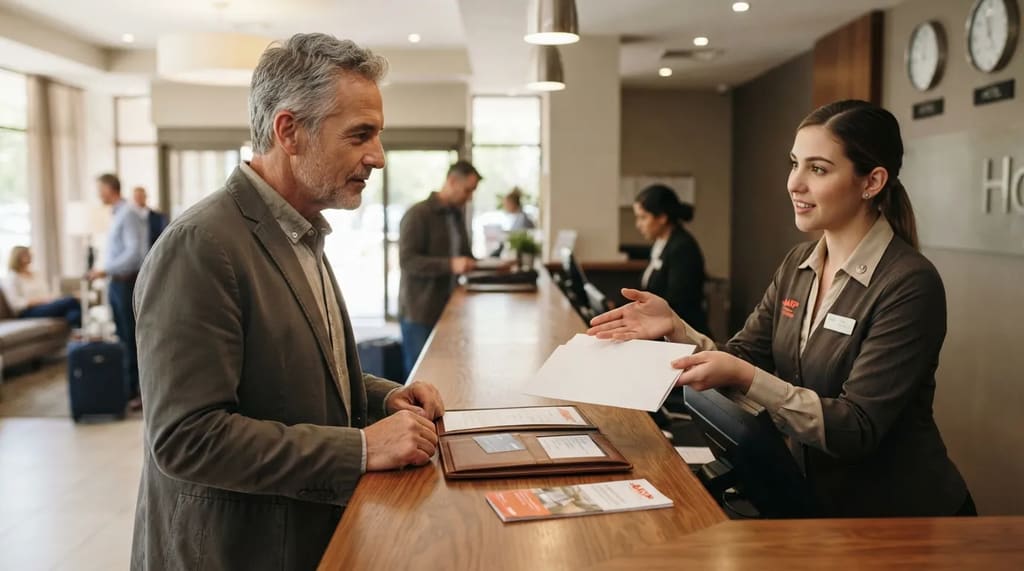
Senior discounts are not standardized across the industry, and the participating properties, ages and savings vary.6 None of the major chains require AARP membership for their senior rate, though several run a separate AARP rate alongside it.
AARP members can save up to 10 percent off the best available rate at thousands of participating hotels, including Days Inn, Ramada and Travelodge.7 8 Some AARP discounts require membership, while others are open to anyone 50 or older.
A percentage off only helps when it comes off a good starting price, and the desk is where you find out whether it does.
#1 – Asking Which Rate Is Lowest for Your Dates
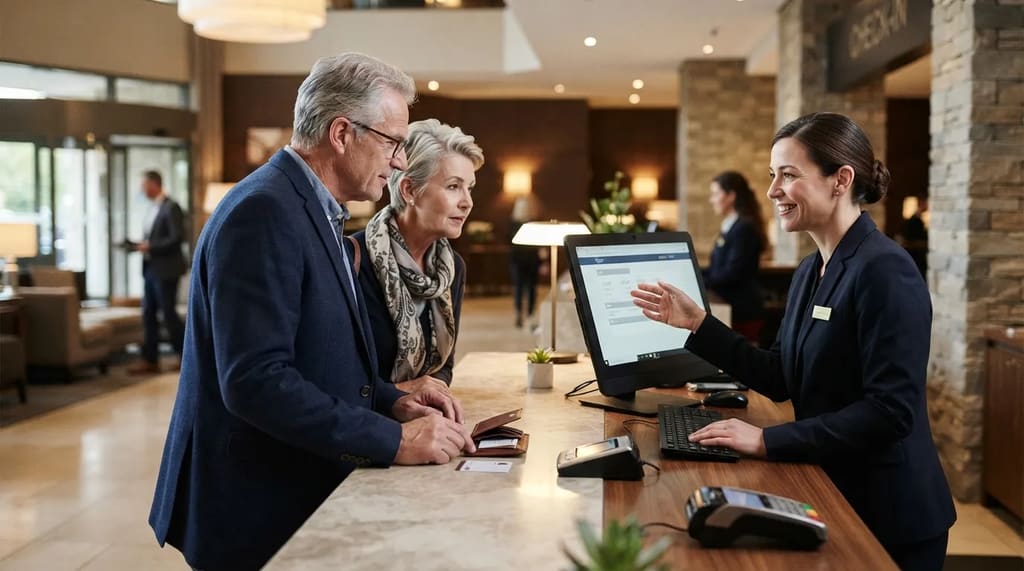
Always compare the senior price with other available rates, because a loyalty-member, AAA, AARP or promotional rate could still be cheaper. Sometimes the hotel’s own promotion or senior rate beats AARP, and sometimes AARP wins.
So the senior discount is a starting point, not the answer. Some chains limit senior rates to certain room categories or exclude them during peak travel periods.
Ask the desk, or call the hotel, to quote each of these for your dates:
- The senior rate for your age
- The AARP rate, if you are a member
- A AAA or other membership rate
- The best available or promotional rate
When you pick the senior option in a booking menu, also search for the best available rate, since it is often cheaper. One guide says front desk staff can adjust rates and sometimes beat the advertised senior discount when the hotel has availability.
That is why the most valuable sentence on this list is the last one you say on the call: “Is that the lowest rate you have for my dates?”
A front desk can only act on what it knows, so the quiet payoff is in being specific before you arrive. Put one clear priority in the special requests field and repeat it on the phone, whether that is a short walk to the elevator, a refrigerator for medicine, or a better quote.
Treat the first price you hear as an opening number, because at many desks it is only the beginning of the conversation.
- Front Desk Request Items: https://travel.yahoo.com/advice/travel-tips/articles/5-items-hotel-front-desk-131500254.html
- Daily Passport Hotel Amenities: https://dailypassport.com/secret-hotel-amenities-perks-to-ask-for/
- Travel+Leisure Hotel Amenities: https://www.aol.com/articles/hotel-amenities-most-travelers-forget-020000781.html
- Access Board Bathing Rooms: https://www.access-board.gov/files/ada/guides/bathrooms.pdf
- DOJ Deaf Guests Brief: https://archive.ada.gov/hotelcombr.htm
- Senior Hotel Discounts by Chain: https://seniorsite.org/resource/19-best-hotel-discounts-for-seniors-from-budget-to-luxury
- Scripps Hotel Senior Discounts: https://www.scrippsnews.com/hotel-senior-discounts
- AARP Hotel Benefits: https://www.aarp.org/membership/benefits/hotels/