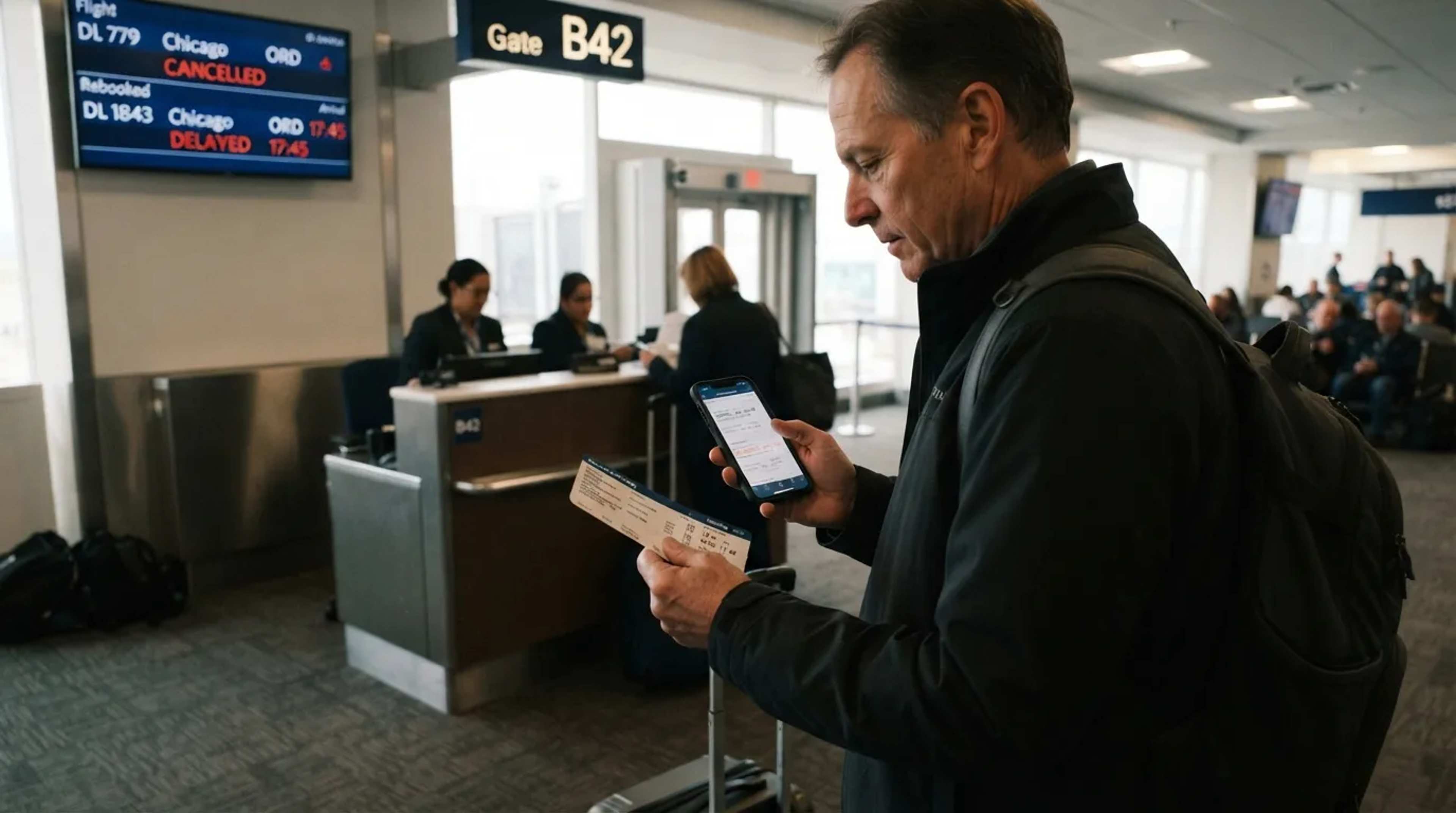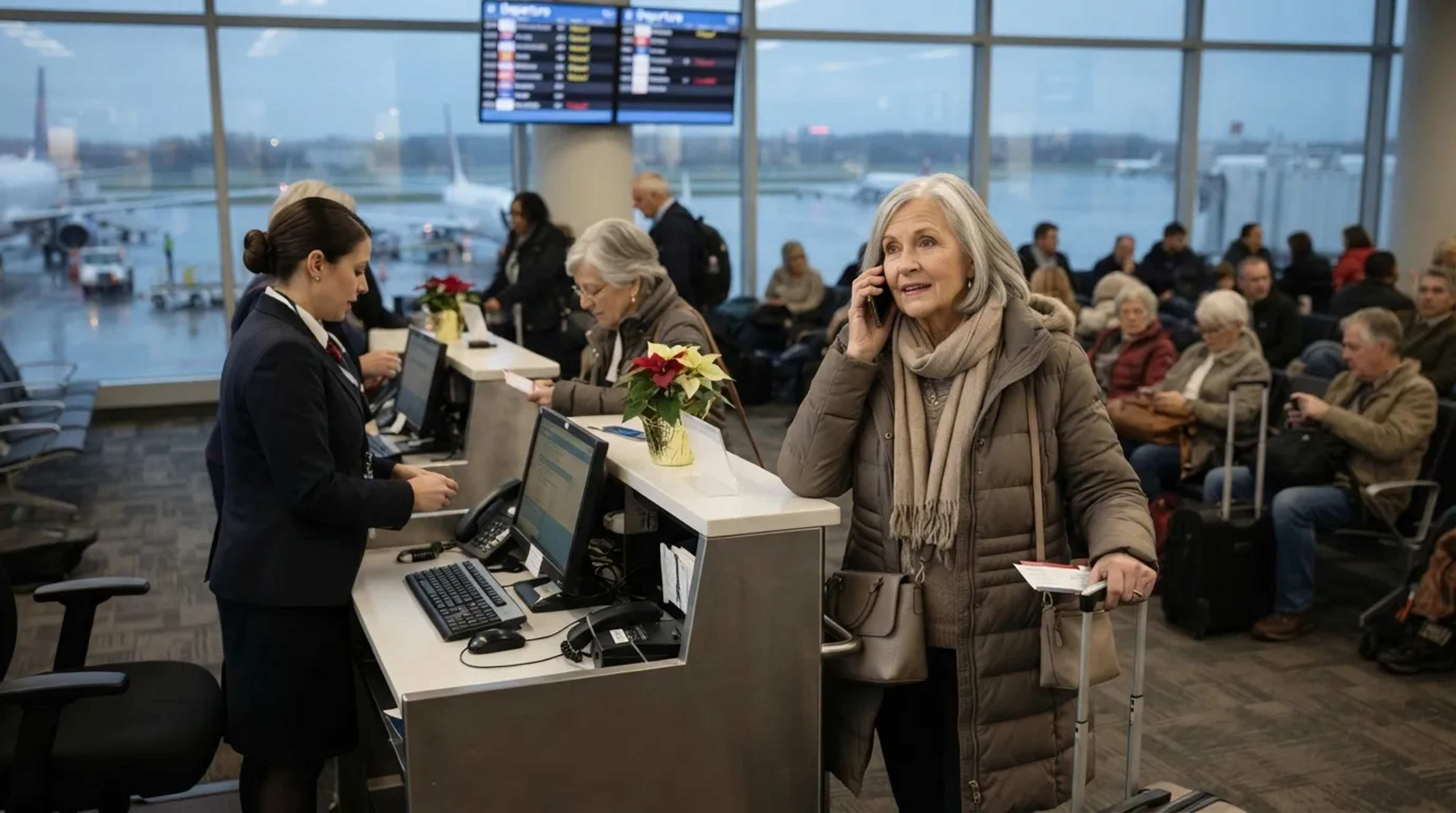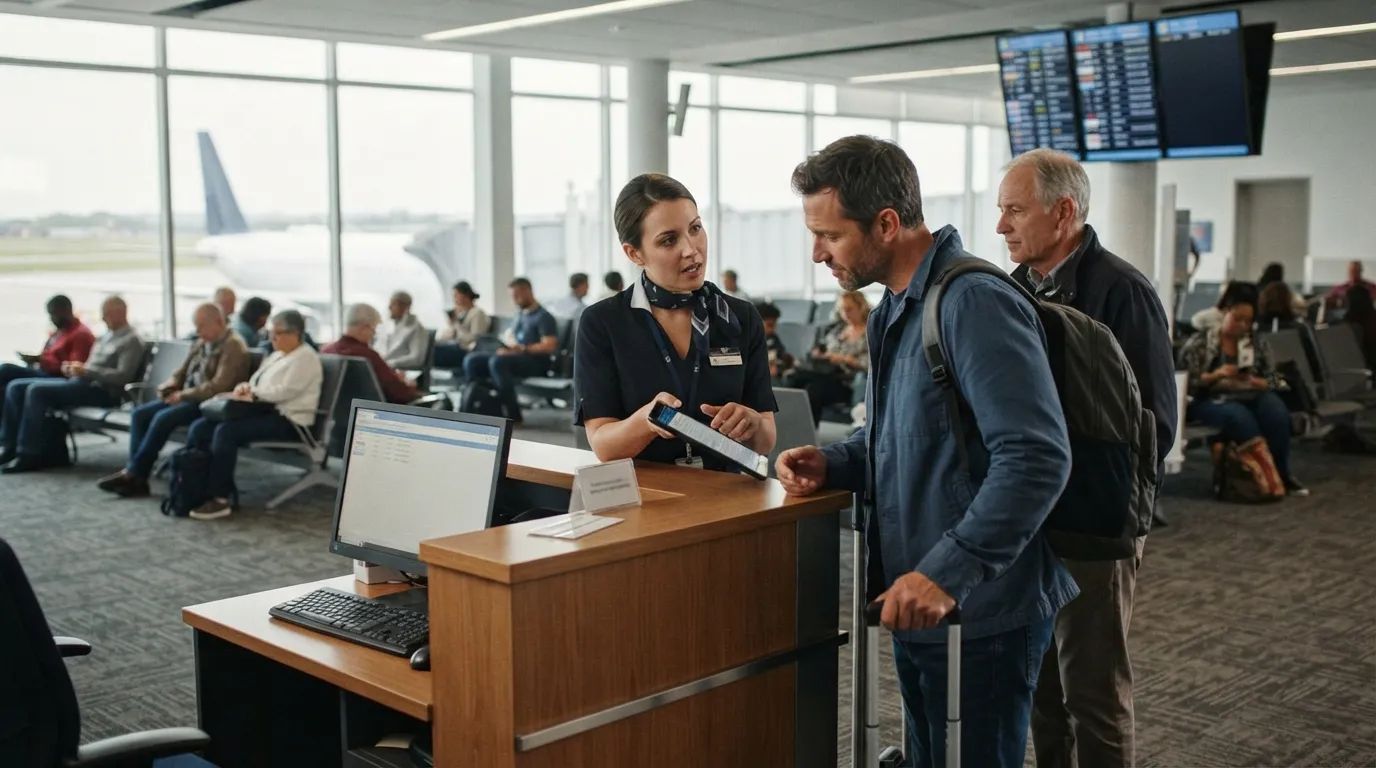
The boarding gate looks like the least powerful spot in the airport: one desk, one scanner, one agent with a line forming. Yet a surprising amount of the airline’s discretion sits behind that podium. Bag tags, a seat beside your child, a wheelchair waiting at the jet bridge and the terms of a bumped seat all get settled there, often only if someone speaks up.
Some of these are free favors. Others are federal rules that quietly depend on you saying the right words out loud. One of them, near the end, can turn a generous-sounding voucher into less money than a forced bump would have paid. First, the roller bag that will not fit overhead.
#15 – The Free Tag That Rescues Your Overstuffed Roller Bag
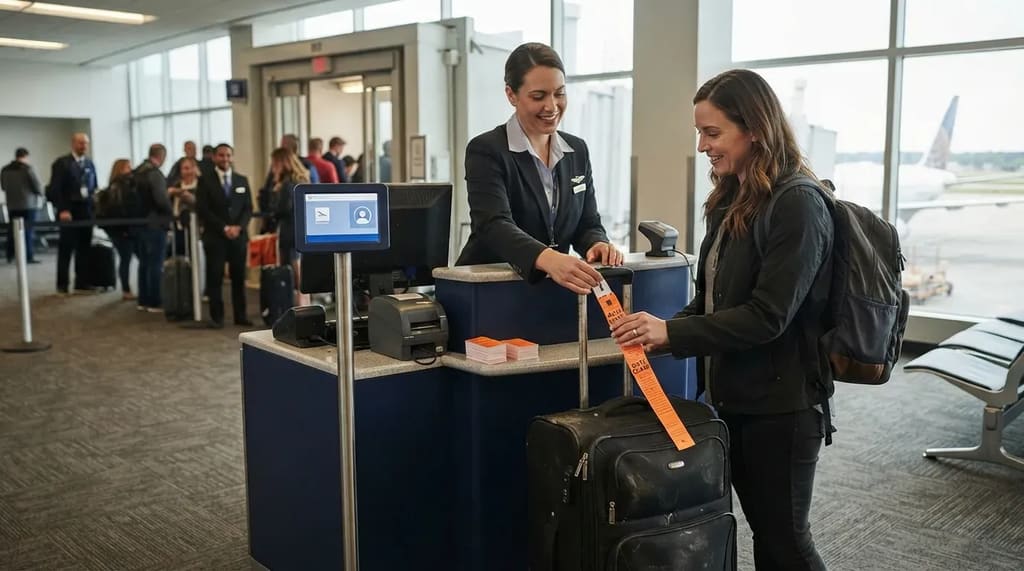
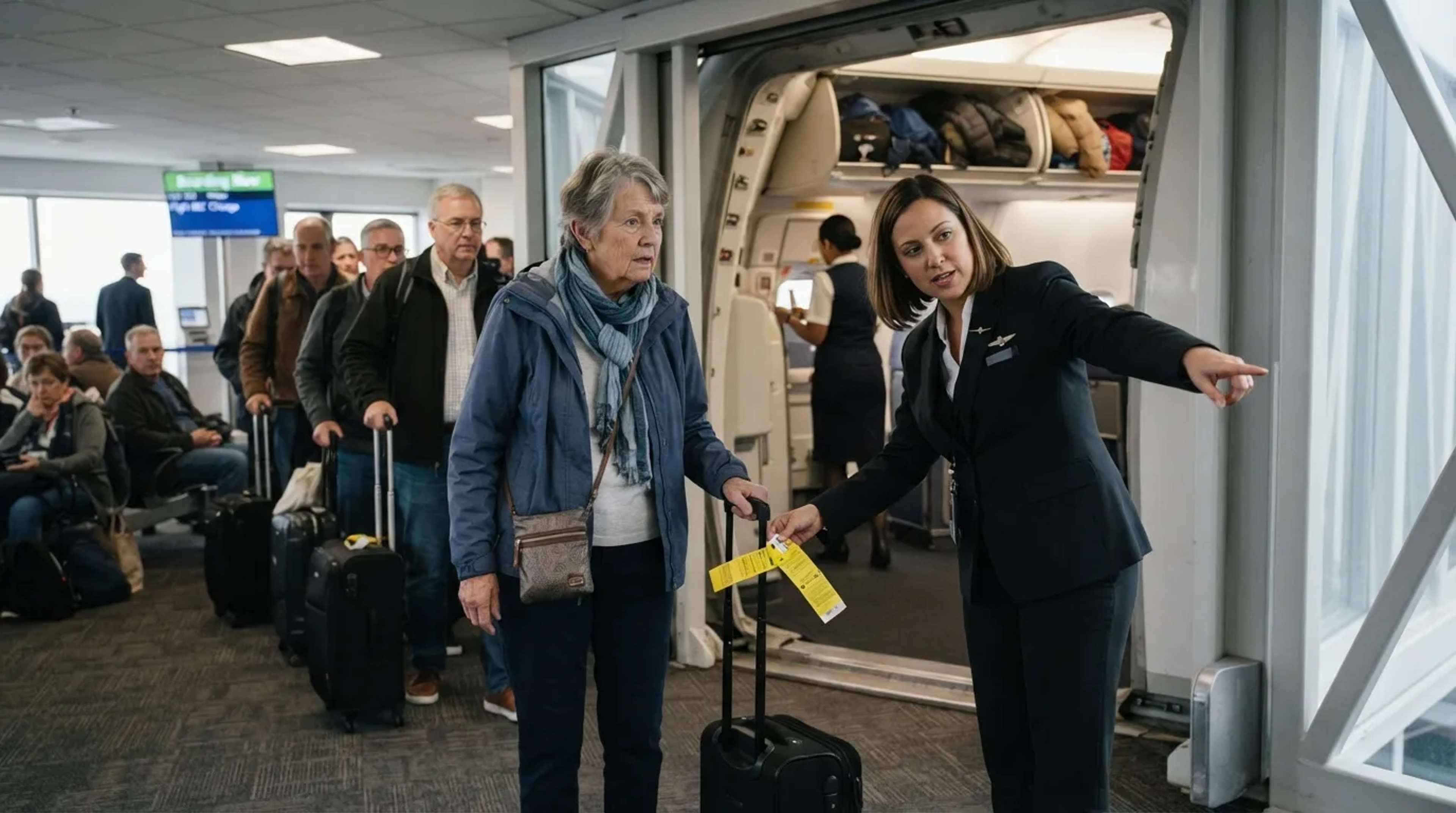
Gate checking means handing your bag to the agent at the podium instead of the counter. It is most common on small planes, where the cabin cannot hold everyone’s carry-ons. When the overhead bins are filling up, the agent can tag your bag on the spot, and it rides in the hold instead of fighting for space over your head. It is usually free.
Before you hand it over, empty it of anything you will need in flight, because the bag leaves your sight. Ask where it will come back to you, since that depends on the aircraft. If lifting a bag into a bin is a struggle anyway, I would take the tag over the fight for bin space. A stroller or car seat goes through the same podium with a different tag and rules of its own.
Fast Facts
- Cost: usually free at the gate.
- Best for: small planes and flights where the bins are filling up.
- Pull out first: medication, glasses, chargers, paperwork and anything breakable.
- Ask before you leave the podium: where the bag will be returned.
#14 – Strollers and Car Seats Ride Free With Their Own Tag
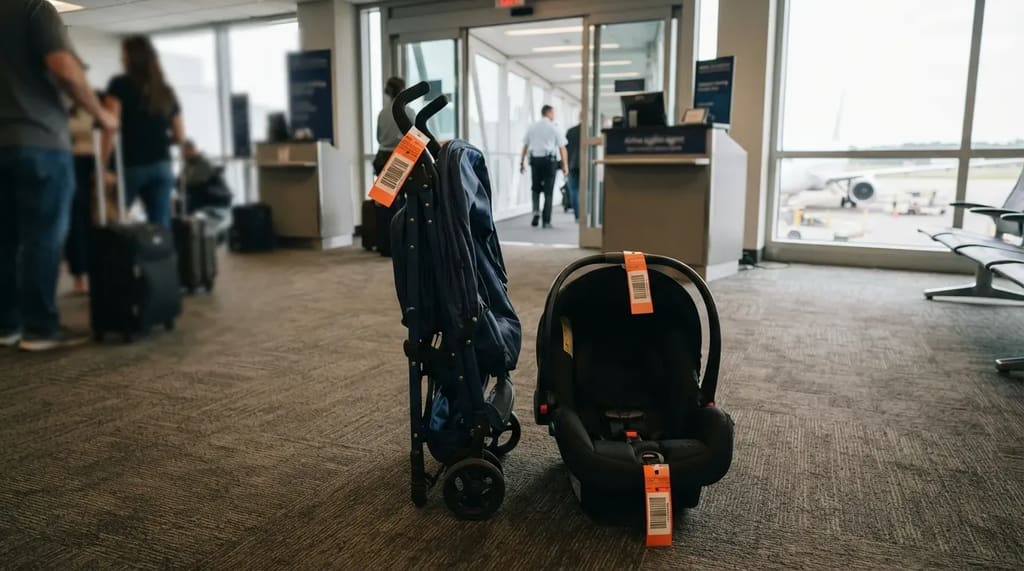
Delta, United and American charge nothing for one car seat and one stroller per child. Most airlines check these items for free, and they do not count toward your baggage allowance. At the gate, ask the agent for a gate check tag and put it on the stroller or car seat handle right away. Then ask where you will pick it up, because that spot is not always the arrival gate.
A car seat can go on board only if you have purchased a seat for your child or a free seat is available next to yours. If there is no empty seat beside you, a flight attendant will check the car seat to your final destination. Some parents keep strollers and car seats in padded gate check bags. A cheap bag is worth buying if the stroller cost real money, and not worth it for a basic umbrella stroller.
Where the child sits is a separate request the same podium can settle, and airlines differ on how firmly they promise it.
#13 – A Seat Beside Your Child, Promised by Some Airlines Only
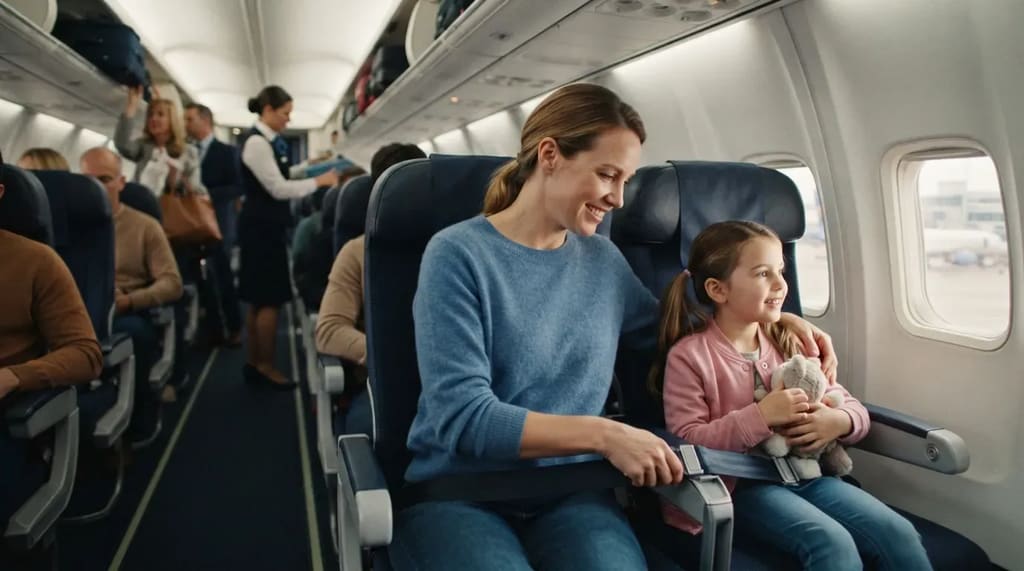
There is still no federal rule that guarantees free family seating. The Department of Transportation has proposed one that would require airlines to seat young children next to a parent at no extra cost, but it has not been finalized.1 The airlines that make the promise do it voluntarily, so the gate agent is working from company policy and not from federal law.
The DOT’s dashboard has listed carriers such as Alaska, Frontier and JetBlue as committing to seat a child 13 or younger next to an accompanying adult at no additional cost.1 American’s guarantee covers children under 15. Other airlines use best-effort language, which can leave a child nearby but not directly beside a parent. If your seats are split, say so at the gate before boarding starts.2
A seating promise covers children, but a traveler who cannot see a departure board or hear an announcement needs something else.
#12 – The Gate Announcement You Cannot Hear or See
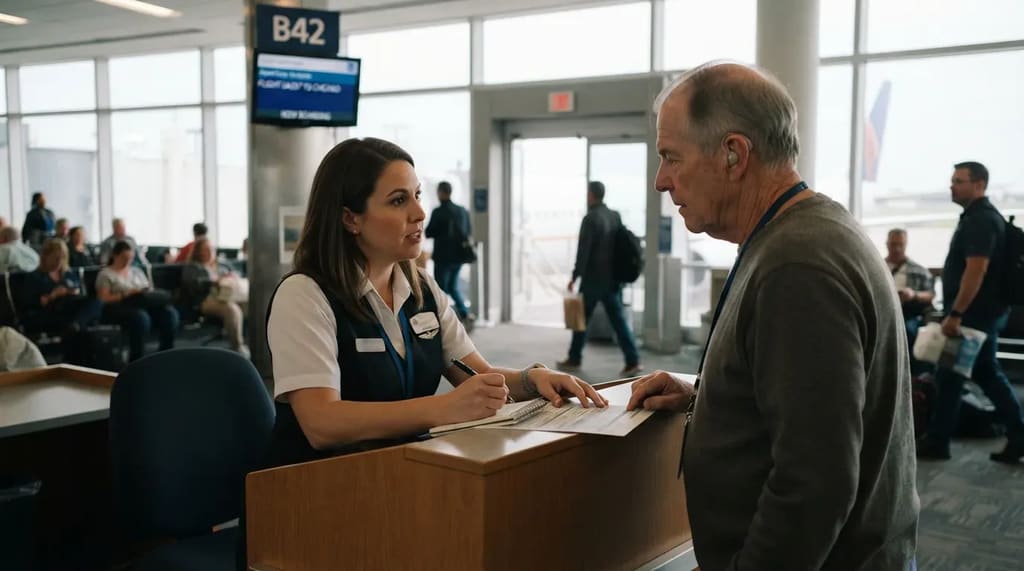
Passengers who identify as needing visual or hearing assistance must get prompt access to the same trip information as everyone else. That applies at the gate, the ticket area and the customer service desk. It includes the small updates that change a trip, such as a new boarding time or a different gate. The word that matters in the rule is “identify.”
Tell the agent when you arrive at the gate, then say how you want updates delivered: in person, written down, or in large print. An agent juggling a full flight will not guess that you missed the announcement. A quick sentence at the podium can keep you from watching a plane leave while you wait for news that was already spoken.
#11 – A Hand With Bags When Walking Is Hard
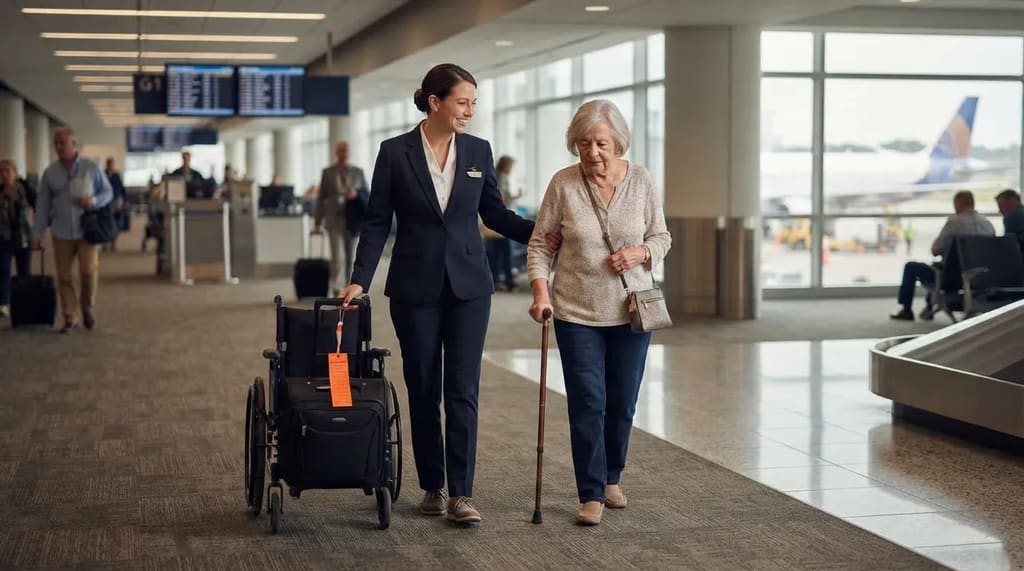
When an airline assists a passenger with a disability through the airport, it must also help with luggage the passenger cannot carry because of the disability. That includes gate-checked and carry-on bags. The help comes attached to wheelchair or guide assistance, so it belongs in the same request.
Paired with the gate tag from the overstuffed roller bag, it can leave your hands nearly empty. I would treat this as a service for real physical limits and not as a perk to try on a busy day. The agent is more likely to help promptly if the request is plain and specific.
#10 – Telling the Agent You Need a New Gate
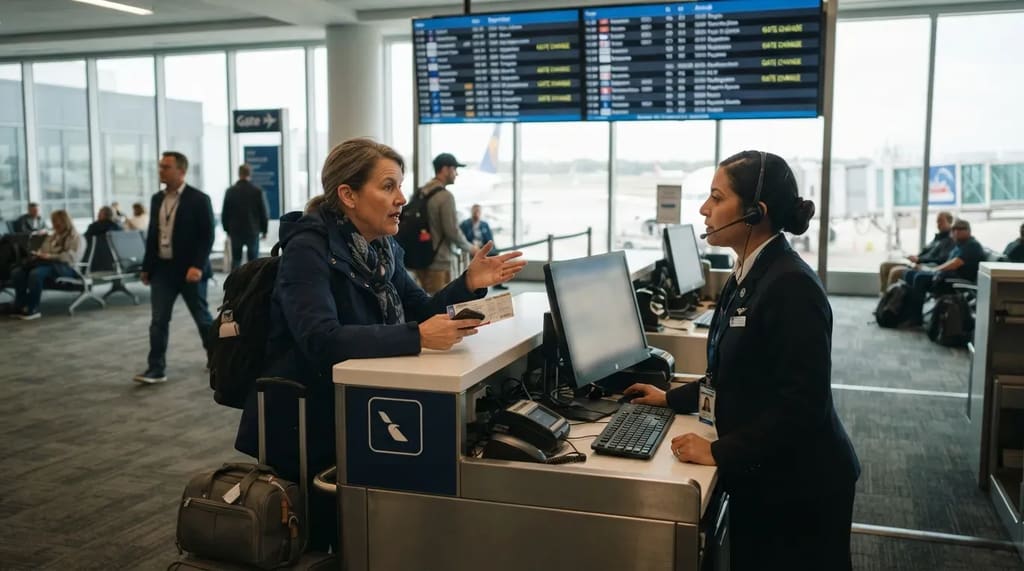
The DOT advises passengers to watch for gate and flight time changes and to tell airline personnel if they need to move to a different gate. Assistance is arranged around a place and a time. When the board changes, it is the passenger who is advised to speak up. A gate swap can mean a much longer walk, and for someone who cannot manage distance that is the entire problem.
When you reach the new gate, say again who you are and what you need. The agent there may not have your name on any list yet. Gate swaps get more serious when you have a tight layover, because then the help has to cover the walk between two planes.
#9 – Help Getting Between Two Gates on a Tight Connection
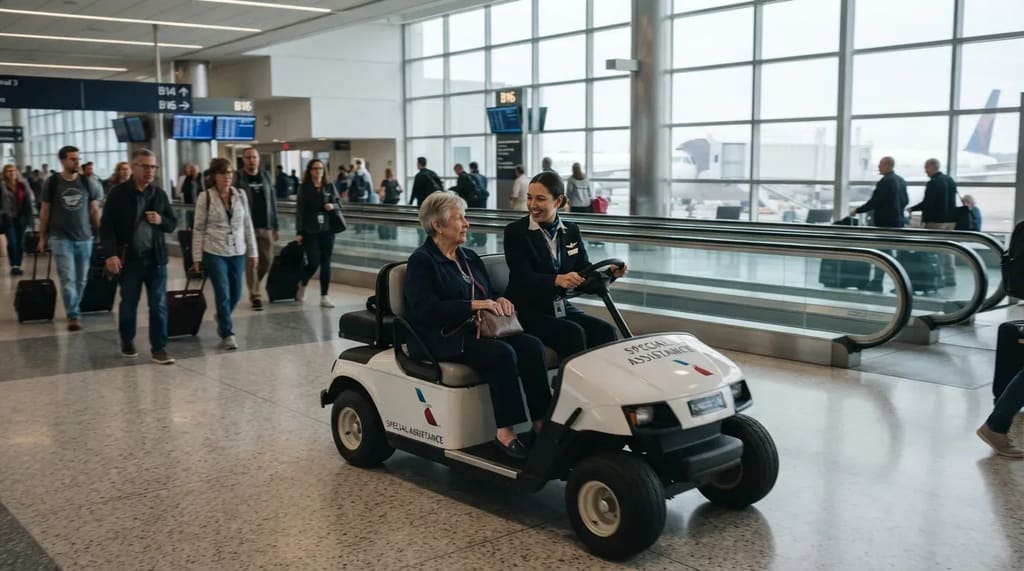
The DOT’s passenger bill of rights lists assistance with transportation between gates to make connections. It also says that passengers who request assistance in advance need to identify themselves to airline personnel once they arrive at the airport or the gate. A request on your booking is a start, and announcing yourself at the gate completes it, which is also why the gate-change advice above matters.
On a short layover, tell the agent at your first gate that you have a connection. Ask them to confirm that help is lined up when you land. Then you are not waiting at the arrival door for someone who was never told. Getting to the gate is one request, and the seat you sit in once boarding starts can be another.
#8 – Seat Accommodations Come in Three Flavors
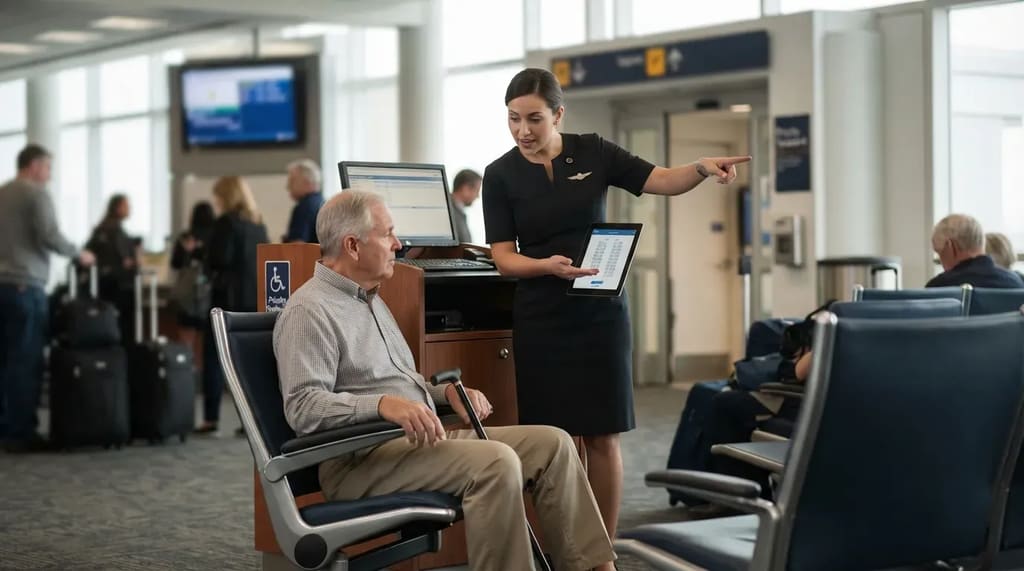
Airlines must provide seating accommodations to passengers with disabilities using the block method, the priority method, or preboarding. Under the block method, certain seats are held back until close to departure. Under the priority method, passengers who need them get first claim. Which method your airline uses varies, so ask the agent which one applies to your flight.
A typical case is a traveler who needs extra room for a leg that does not bend, or an aisle seat with a movable armrest. The agent at the podium usually has a better view of open seats than the website does on the day of travel. Asking there, before boarding, is often the difference between a workable seat and a painful one.
At a Glance
- Block method: certain seats are held back until close to departure.
- Priority method: passengers who need specific seats get first claim on them.
- Preboarding: you board early and get settled before the crowd arrives.
- Your move: ask the agent which method your airline uses on your flight.
#7 – Your Own Wheelchair Stays With You Until the Jet Bridge
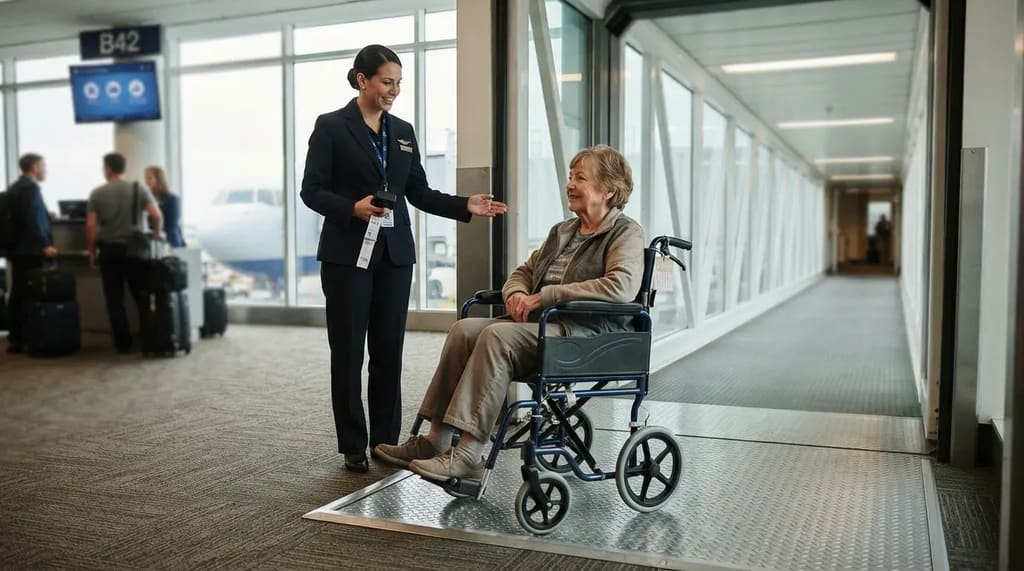
The DOT says you are entitled to stay in your own wheelchair until you get to the gate, where it will be taken from you. Airlines must provide for the checking and timely return of passengers’ wheelchairs at the boarding gate. Your wheelchair should be returned to you when you reach your destination.
The DOT’s 2024 rule on air travelers with disabilities tightened the standards around wheelchair handling and assistance. If staff say a chair has gone to the hold and cannot come back to you at the gate, that is worth questioning politely and firmly.
The chair stays with you to the gate, but an airline-provided ground chair comes with a clock.
#6 – The 30-Minute Limit on Waiting in a Ground Chair
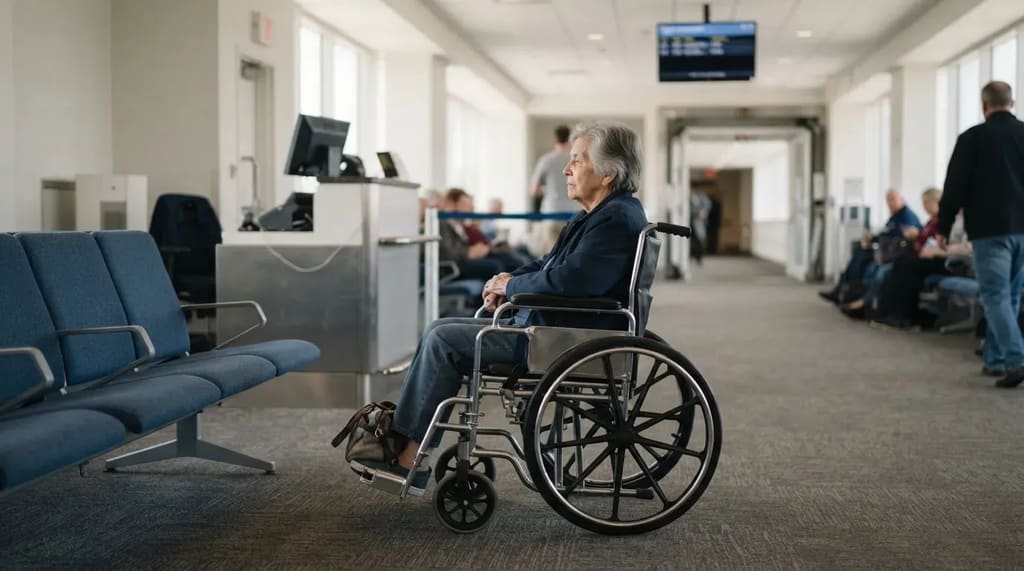
Carriers shall not leave a passenger with a disability unattended in a ground wheelchair, boarding wheelchair or similar device for more than 30 minutes, if the passenger is not independently mobile.3 That covers the airline’s chair and its staff. It does not apply to your own chair.
If you have been parked at a gate and no one has come back, go to the gate desk, or have a companion do it. The agent can call for the chair attendant. The 30-minute limit counts for little if no one tells the desk that time is running.
Worth Knowing
- The limit is 30 minutes of being left unattended.
- It applies to passengers who are not independently mobile.
- It covers airline-provided chairs, not your personal wheelchair.
- A companion can walk to the gate desk and raise the alarm for you.
The limit covers the person, but the chair that goes into the cargo hold has its own protections.
#5 – What You Are Owed If Your Wheelchair Comes Back Broken
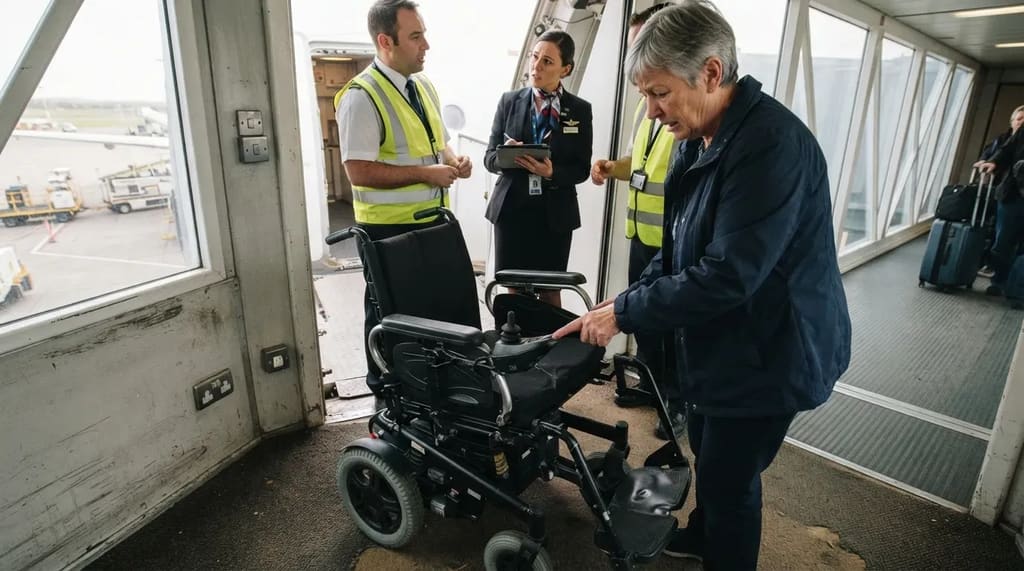
An airline must accept a battery-powered wheelchair if it fits in the cargo compartment.4 If the airline loses, damages or destroys a wheelchair or other assistive device, it must provide compensation up to the original purchase price. The 2024 rule also defines “safe” and “dignified” as they apply to airline assistance, which makes the standard harder to wave away.
Do the check at the gate where the chair is returned. Look it over before you leave the jet bridge, and tell airline staff about any damage right then. Waiting until you are at the car makes a claim harder to prove.
Compensation comes after a problem, and the request that heads off many problems is made before boarding begins.
#4 – Boarding Before First Class, Which Is a Rule and Not a Favor
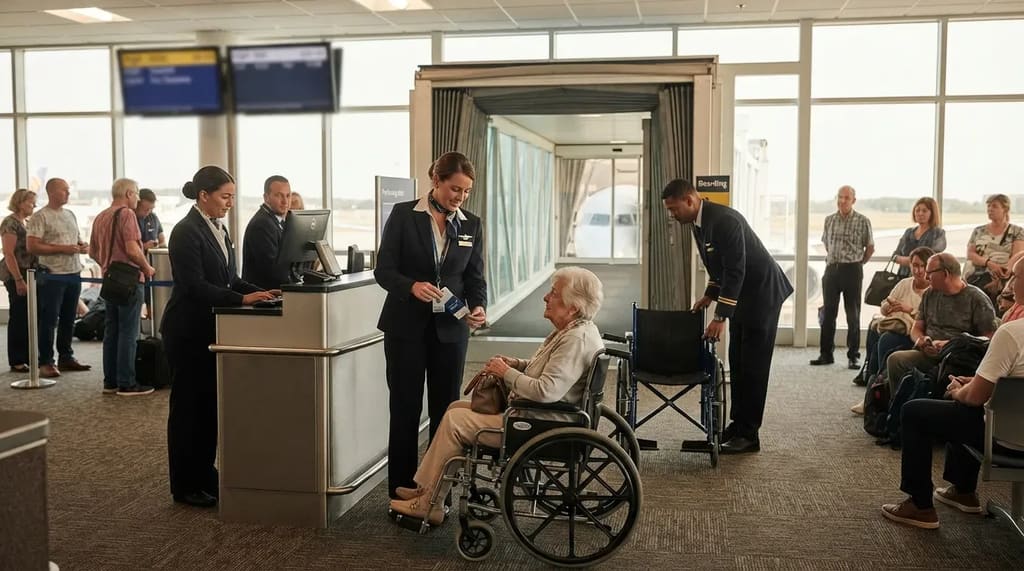
Carriers must offer preboarding to passengers with a disability who self-identify at the gate as needing extra time or assistance to board, stow equipment or be seated. The DOT’s enforcement office reads that to mean boarding before all other passengers, including first class, elite-level passengers, members of the military and passengers with small children.3 The airline must also have the right equipment and enough staff ready when preboarding begins.
The word that matters is the same one from the gate-change and connection items: you have to self-identify at the podium. Even if the reservation notes that you need assistance, the airline will not know you are the person unless you say so. I would ask for preboarding by name, because it is a right you do not need to apologize for using.
Boarding early is one use of the podium; giving up a seat on an oversold flight is another, and it starts with an announcement.
#3 – The Call for Volunteers and What Must Be Said With It
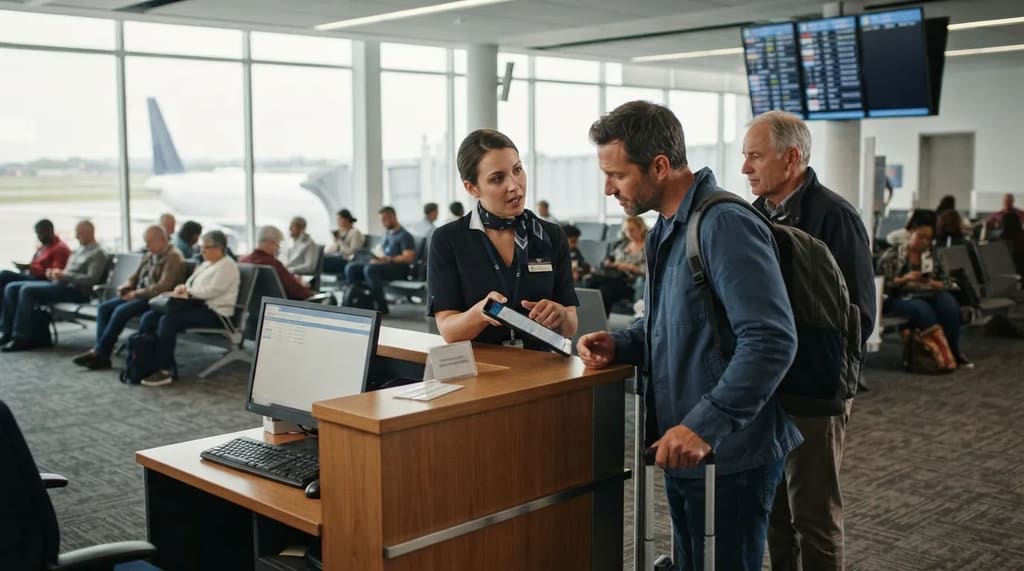
DOT rules require airlines to seek out people willing to give up their seats for compensation before bumping anyone involuntarily.5 Airline employees look for volunteers at the check-in or boarding area when a flight appears oversold.5 The agent is not doing you a favor by asking, because the airline is obliged to try this first.
Related Stories From Travelbinger

If you volunteer, the airline must tell you whether you might be involuntarily bumped and, if that happens, the amount of compensation due. That information is your reference point for bargaining. Airlines may offer free tickets or dollar-amount vouchers for future flights in place of a check. A voucher is the airline’s currency, and its value to you depends on whether you will fly that airline again.
If volunteers are still short, the airline has a harder choice, and that is where the federal formula takes over.
#2 – The Cash Formula If You Are Bumped Without Agreeing
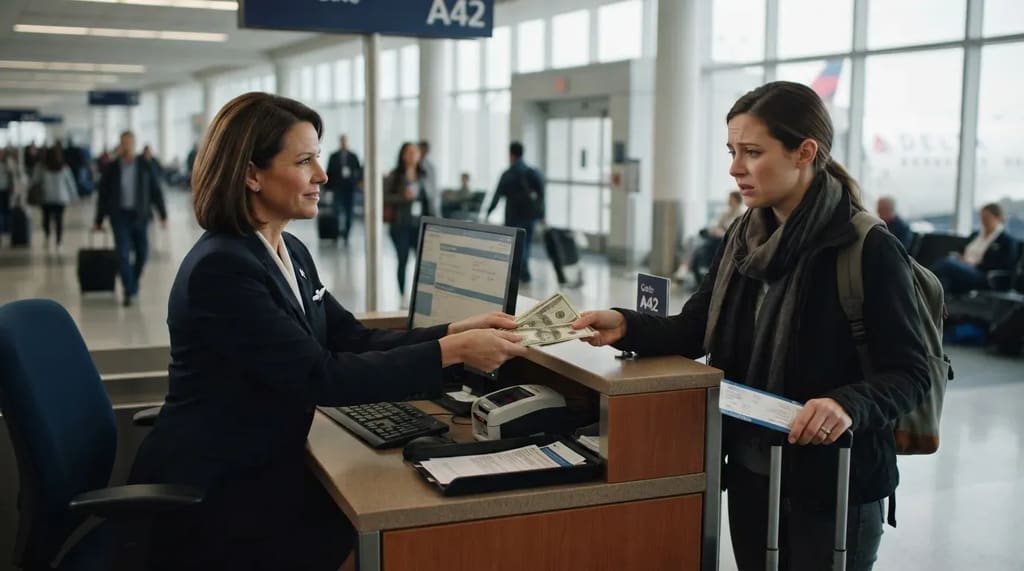
For an involuntary bump, you must have met the airline’s check-in deadline and reached the gate before the boarding deadline. A traveler who meets both and is still left behind is generally covered by the federal compensation rules. There is no compensation if the airline gets you to your destination within one hour of your original arrival. Beyond that, the caps cited in 2026 summaries are $1,075 and $2,150, so confirm the current figures on the DOT’s site for your case.
Ask the agent directly whether you are being involuntarily denied boarding, and ask for the required written statement of your rights. The compensation is payable by check or cash. Keep your original boarding pass in case the gate record gets muddled.
#1 – The Volunteer Deal Where You Name the Price
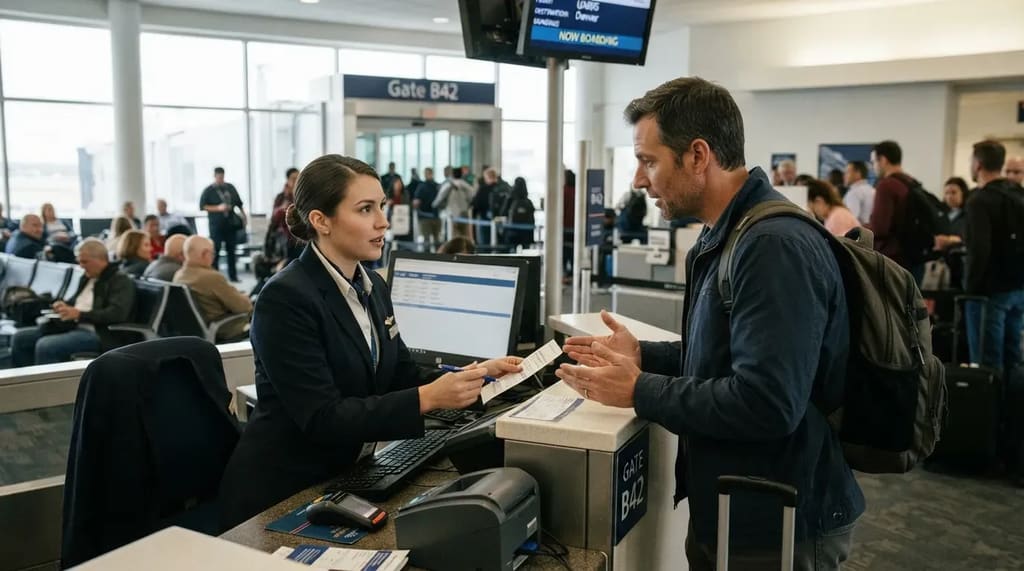
The counterintuitive part is that volunteering can pay less than being bumped. When you volunteer, there is no fixed legal amount.5 6 Whatever you and the gate agent agree on becomes the deal, and the agent can decline an offer you make.
That is the opposite of the involuntary bump, where the DOT’s formula sets what you are owed. If you accept a low voucher at the first offer, you may walk away with less than a forced bump would have paid in cash.
Quick Compare
- Volunteering: no fixed legal amount, so the price is whatever you negotiate.
- Being bumped without agreeing: a federal formula sets the payout, payable by check or cash.5
- Vouchers: allowed in the volunteer scenario, but only useful if you will fly that airline again.
You can decline the first offer and ask for more, and get the terms for rebooking time, meals and hotel in writing before you accept. A specific request gives the agent something concrete to answer. If you can propose a different route that gets you in at the same time or earlier, you can come out ahead.
I would not accept anything until I knew the formula number and could compare. Keep in mind the agent’s main job is to get the flight out on time, so be calm and quick.
Almost everything above depends on one habit: saying out loud, at the gate, what you need. A note on your booking is a starting point, and the person behind the desk is the one who can act on it.
Before your next flight, decide the one thing you would want from the gate if plans changed. Then say it at the podium before boarding starts. The desk can only arrange what it hears about.
- Federal Register Family Seating: https://www.federalregister.gov/documents/2024/08/09/2024-17323/family-seating-in-air-transportation
- DOT Family Seating Dashboard: https://www.transportation.gov/airconsumer/airline-family-seating-dashboard
- WheelchairTravel Air Carrier Access Summary: https://wheelchairtravel.org/air-travel-air-carrier-access-act-summary/
- DOT Disabilities Bill of Rights: https://www.transportation.gov/airconsumer/disabilitybillofrights
- DOT Fly Rights Overbooking: https://www.transportation.gov/airconsumer/fly-rights
- 14 CFR Part 250 Oversales: https://www.ecfr.gov/current/title-14/chapter-II/subchapter-A/part-250