The fare on your booking screen looks like the price of the trip. Aboard, it turns out to be closer to the price of getting through the gangway. A daily crew charge of roughly $17 to $20 per person is added to your onboard account automatically, so two people on a seven-night sailing owe $238 to $280 before anyone orders a drink.
And that’s the mildest surprise on the ship. Waiting behind it are a phone bill that can follow you far out to sea, a document check that can end a vacation at the pier, and a clock that doesn’t care what your phone says. Stay for #1, because it’s the slip that can cost you the rest of the trip, plus the price of catching up.
#16 – The Daily Crew Charge Is Already Counting
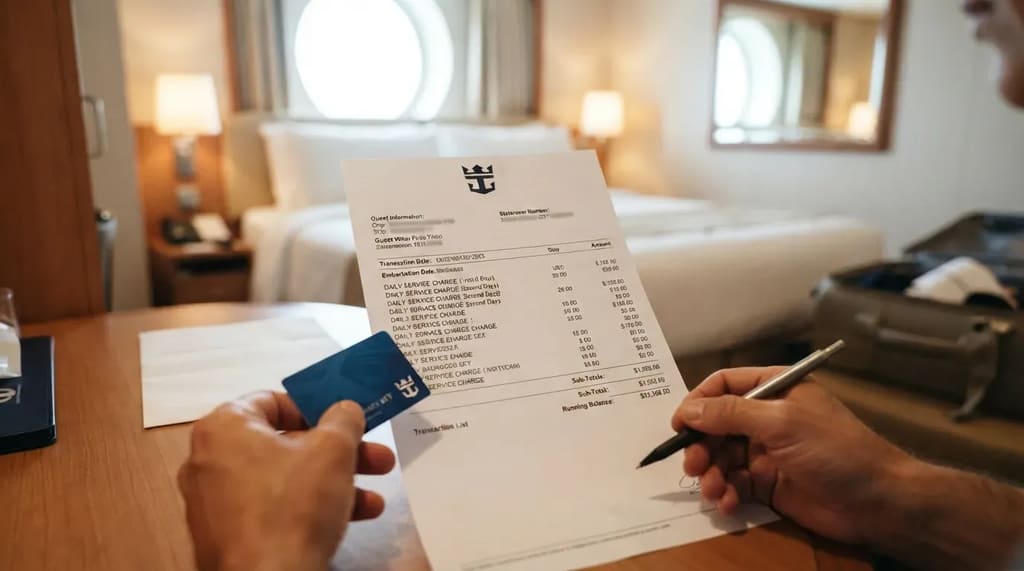
Your onboard account starts running before you’ve unpacked. The daily crew charge is added automatically, and several lines raised it in 2026. Carnival, for one, went to $17 per person in standard staterooms and $19 in suites on April 2.1 For two people over seven nights, that’s about $238 to $280 on top of the fare, depending on the line.
The money goes to the crew who clean your cabin and serve your meals. Extra cash for a standout steward or waiter is optional. Guest Services can adjust or remove the flat charge, but you’d save a few dollars while shorting the people it’s meant to pay. And the bar adds its own percentage, which covers far more than cocktails.
#15 – Every Drink Comes With a Second Charge
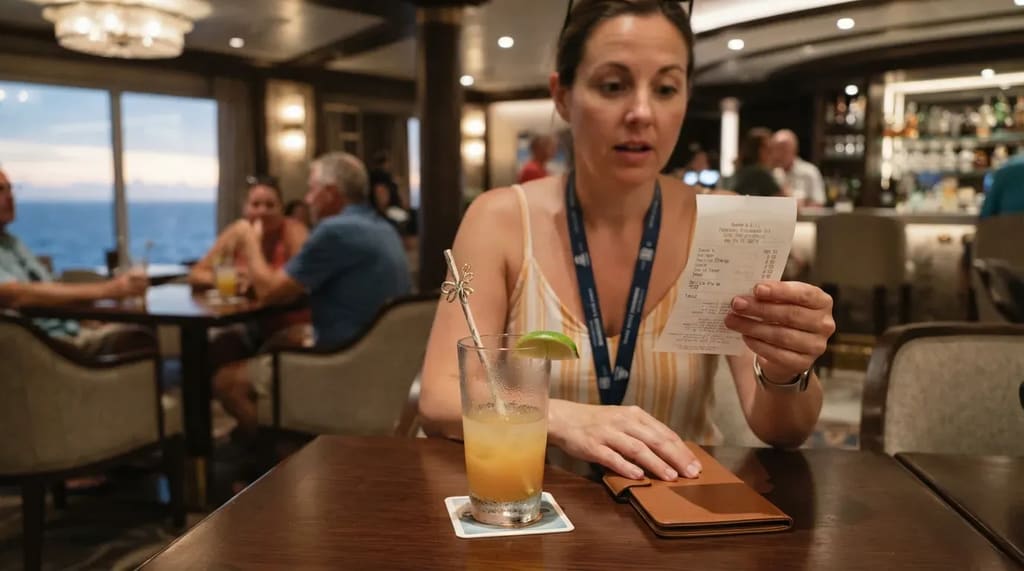
A $14 cocktail doesn’t cost $14 aboard. Lines typically add a service charge to drinks, spa treatments and specialty restaurants, and the going rate is 18 to 20 percent on top of the menu price. Carnival moved from 18 to 20 percent in 2026, so that cocktail now rings up at $16.80.1 2
This percentage is separate from the daily crew charge, so adjusting the flat amount at Guest Services doesn’t remove it. It also scales with your habits. A couple who skip the spa and eat in the main dining room barely notice it, while a couple who book the steakhouse twice pay it twice. Which raises an awkward question: does an all-you-can-drink package, with its own service charge, ever pay for itself?
#14 – The Drink Package Needs a Pencil
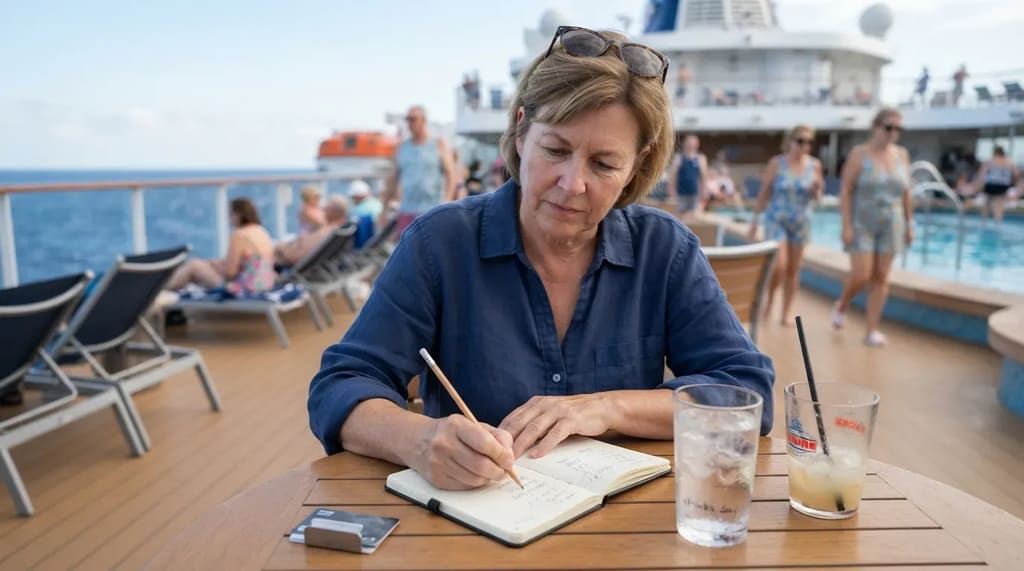
A soda package listed at $11.99 a day climbs past $14 once a 20 percent service charge is added.2 So the sticker price tells you very little. The number that matters is the package price plus the service charge, divided by the drinks you’d really order.
Quick Compare
- Sticker price: $11.99 per day
- With a 20 percent service charge: about $14.39 per day
- Two adults, seven nights: roughly $201 if both must buy it
Light drinkers usually lose on packages. Multiply the drinks you’d order on a normal day by the menu price plus the service charge, and if the package costs more than that total, skip it. Many lines also require every adult sharing a cabin to buy the same package, so you could end up paying for a partner who doesn’t drink. Read your line’s terms before you book.
#13 – Sea Days Turn the Whole Ship Into the Destination
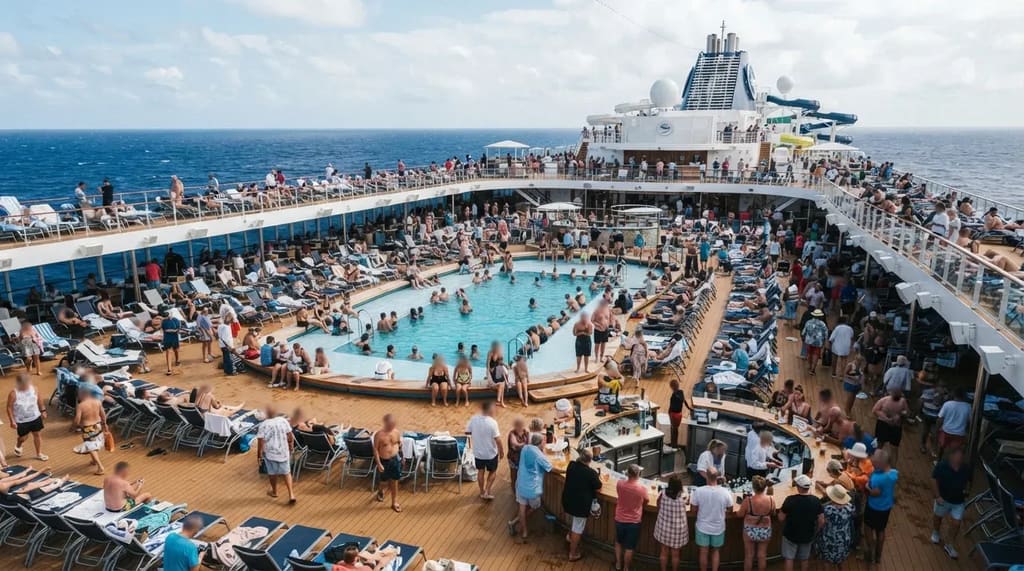
On a port day the ship docks and a good share of the passengers head ashore. On a sea day, everyone is aboard with full access to the amenities. That’s when the pool, the spa and the specialty restaurants fill up, and when a spontaneous booking is hardest to get.
The quiet hours tend to fall on port days, when many passengers are off the ship. If your itinerary lets you skip a tour, a port day is the easy time to claim a lounge chair or a spa slot. Booking spa visits and dinners ahead in the line’s planner is generally simpler than doing it on board and often cheaper, though prices move, so check back. Everything on a sea day, from show times to dinner hours, is posted on a single sheet delivered to your cabin.
#12 – The Nightly Newsletter Runs the Whole Ship
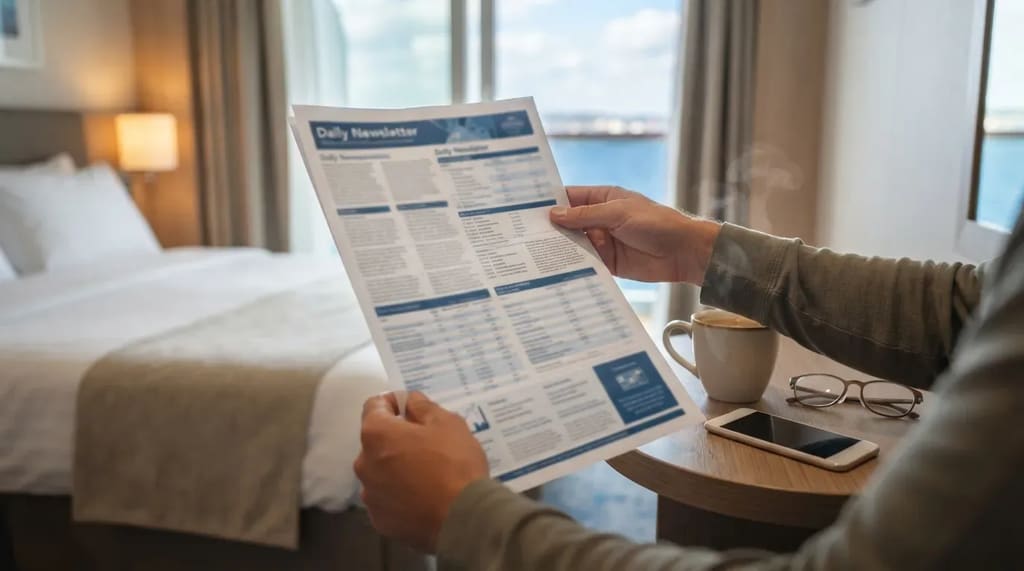
Someone aboard has already planned your tomorrow, and it’s printed on one sheet. The daily newsletter, delivered to your cabin or shown in the cruise line‘s app, lists show times, dining hours, activities and the all-aboard deadline in port. Dining, shows and that deadline all follow ship time.
The cruise director also announces the all-aboard time, and a sign posted at the exit repeats it. Still, the newsletter is the version you can check at 7 a.m. with coffee in hand. Read tomorrow’s page the night before, while you can still plan around it. Your phone, meanwhile, can run up charges the moment the coast drops out of sight.
#11 – Your Phone Can Bill You Far From Shore
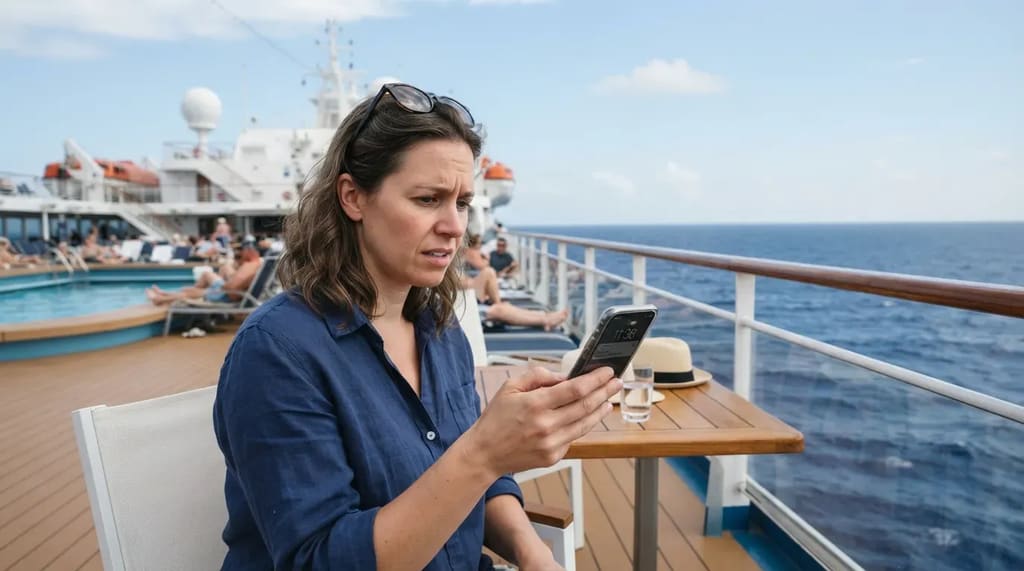
Far offshore, a phone searching for a signal can latch onto a cellular network the ship itself provides. Those connections can be billed as international roaming.3 Your carrier sets the rate, and you may not see the damage until the next statement, long after you’re home.
The safest habit is airplane mode first, then Wi-Fi switched back on.3 That lets you message over the ship’s internet package without touching the cellular network. Lines sell Wi-Fi in their planner before sailing, and prices are dynamic, so it pays to compare. A quick call to your carrier about cruise plans before you leave home costs nothing. Next comes the choice that decides how much of the ocean you feel all night, and the cabin map can mislead you.
#10 – Where Your Cabin Sits Changes How You Feel
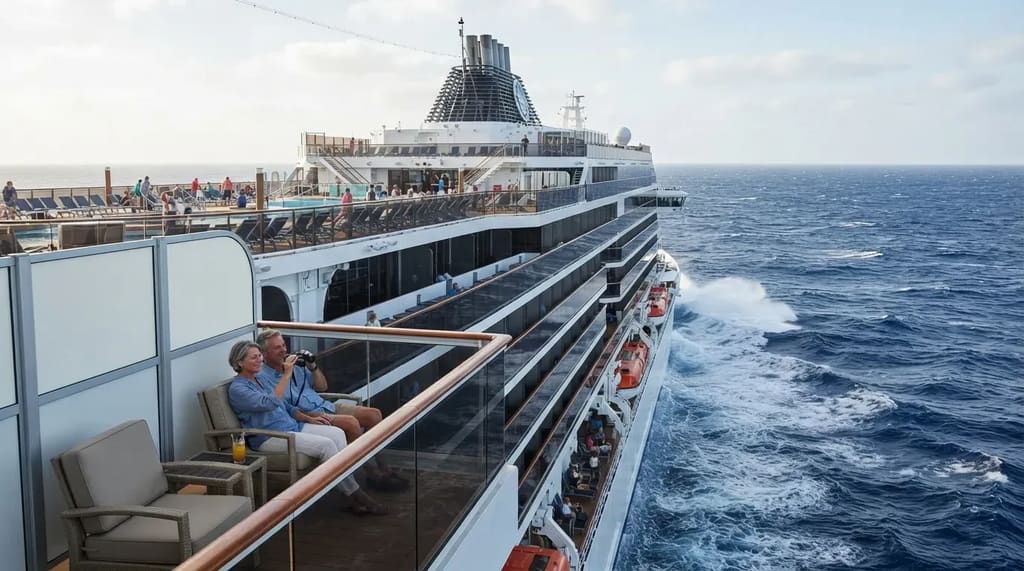
A balcony at the very front of a high deck is among the prettiest cabins on the deck plan and often the bumpiest. Ships pitch and roll around their middle, so motion grows toward the bow, the stern and the upper decks. Midship and lower decks move the least.
If you worry about seasickness, a midship cabin on a lower deck beats a bow balcony, and it’s often the cheaper booking as well. Check what sits above and below you on the deck plan too. A cabin under the pool deck or beside a nightclub brings noise the brochure never mentions. And once you’re settled in, there’s one appointment you can’t skip, held before the ship even leaves the dock.
#9 – The Mandatory Safety Drill Comes Before Sailing
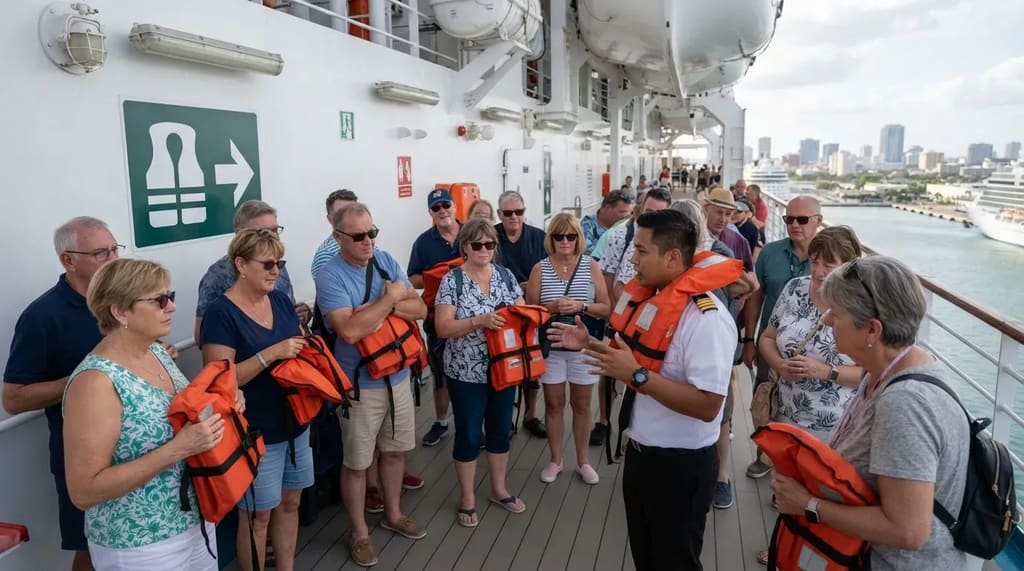
Early on your first day, an alarm sounds and the ship expects you at your assigned muster station. Lines typically hold this drill before leaving port, and attendance isn’t optional. Your station is generally listed on the back of your cabin door or in the app.
It’s a short exercise, and it’s the one time the crew walks every passenger through where to go, how to wear a life jacket and what the signals mean. You’ll be glad you’ve walked the route once in daylight with the crew beside you. Find your muster station before the drill begins, so you aren’t searching for it with a crowd. And reaching that drill at all depends on a deadline that falls earlier than the sailing time on your ticket.
#8 – The Boarding Cutoff Comes Before Sail-Away
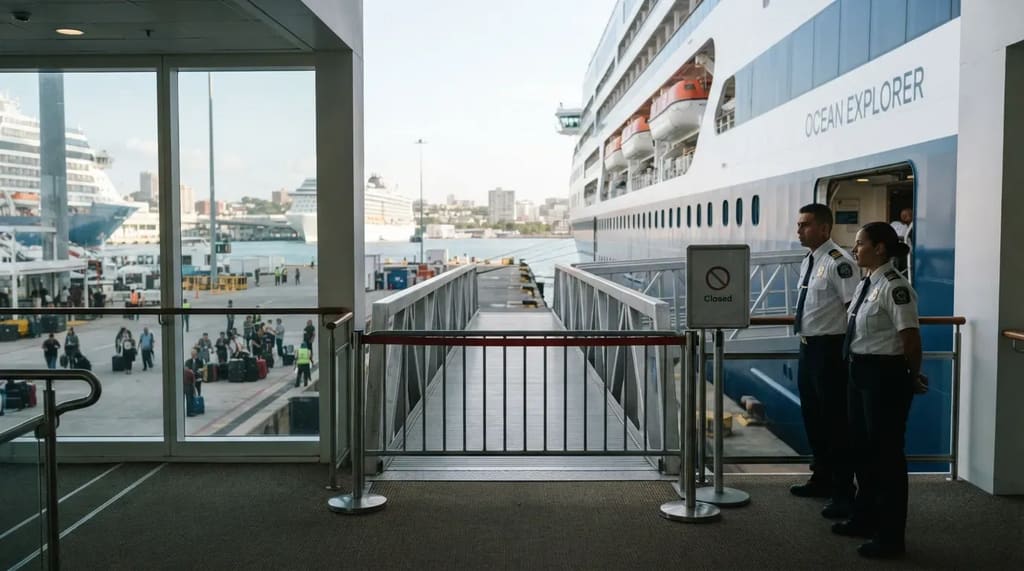
Cruise ships don’t work like airport gates. The cutoff for boarding falls well before the sail-away time, and a late arrival can’t talk its way up the gangway. Even a flight booked through the cruise line won’t hold the ship if it’s delayed and you aren’t at the pier on time.
At a Glance
- The deadline: boarding closes before the ship sails, not at departure
- Fly the same day: one delay can cost you the whole cruise
- Fly the day before: one hotel night buys you a cushion
- Arrive late anyway: rejoining at a later port is on your dime
If you’re legally allowed to join at a later port, you generally pay the cost of getting there. That’s why flying in the day before you sail is the cheapest insurance on this list. One hotel night turns a delayed flight from a lost cruise into an inconvenience. And once you reach the terminal, a paperwork check can end the trip before it starts, even with a driver’s license in your hand.
#7 – A REAL ID Doesn’t Prove Citizenship at the Pier
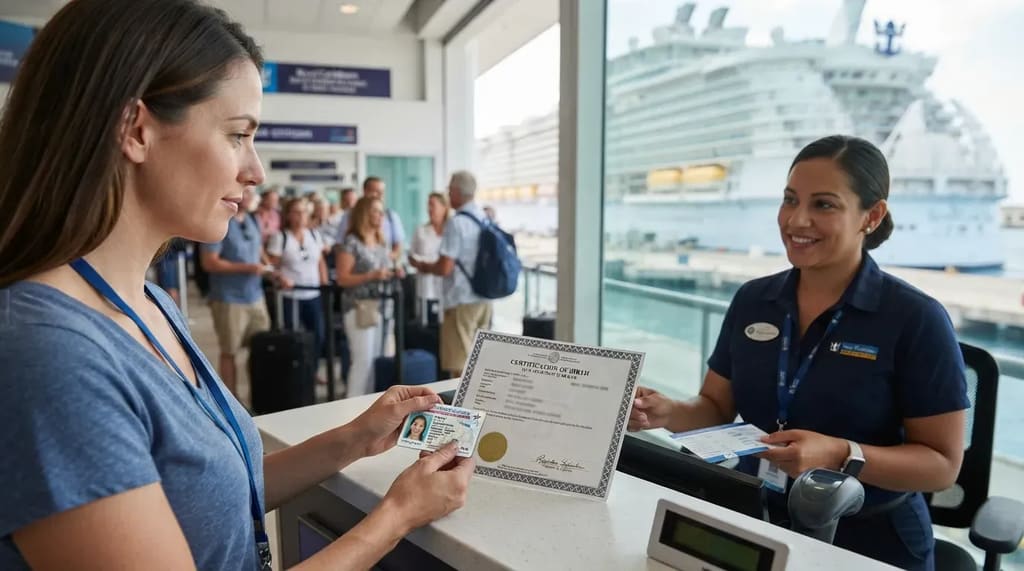
The star on your driver’s license won’t get you aboard by itself. On a closed-loop cruise, which starts and ends at the same U.S. port, U.S. citizens can sail without a passport using an original or certified birth certificate plus a government photo ID. A REAL ID confirms identity but not citizenship.4 An Enhanced Driver’s License proves both, and children under 16 typically need only the birth certificate.
Get the passport anyway. The birth-certificate rule covers your return by ship, not a flight home from a foreign port after an emergency or a missed sailing. Both the cruise lines and AAA describe a passport as the more flexible choice.4 Past the pier, meanwhile, the best shore tours may already be filling up, sometimes before the ship has even sailed.
#6 – Popular Shore Tours Fill Up Before You Sail

The top tour in your first port can be gone before the ship leaves the dock. Cruise lines let you book excursions weeks ahead in their planners, and booking before you sail is the step that protects your favorite port day. Prices are dynamic, so it’s worth checking back, and the ship’s own excursions can generally be canceled before a deadline if you find something better.
If a ship excursion costs more than an independent tour, you’re paying for something specific, and we’ll get to exactly what. Booking early also gives you time to plan around mobility, meal times and the all-aboard clock. And at some ports, getting ashore means climbing onto a small boat first.
#5 – Tender Ports Mean Small Boats and a Tight Clock
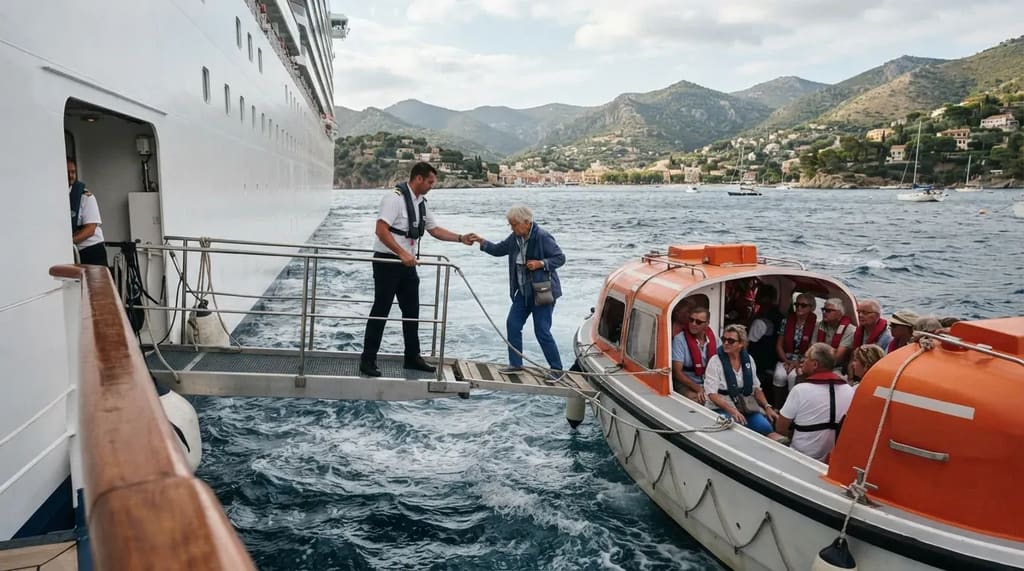
At some stops the ship anchors offshore because the harbor can’t take it. Small boats called tenders ferry passengers ashore, and those operations run on strict schedules. Stepping from a ship’s platform onto a moving boat is a very different experience from walking down a gangway.
Worth Knowing
- Why it happens: the harbor is too small or too shallow for the ship
- The ride: a short boat transfer replaces the gangway walk
- The wildcard: rough seas can change plans on the morning itself
- The fix: raise mobility questions with Guest Services before port day
If steps or boat transfers are hard for you, ask Guest Services about boarding arrangements before port day, not at the platform. Rough seas can also change plans on the morning itself. Ask about tender boarding the day before you need it.
#4 – Stomach Bugs Hit Ships More Than Brochures Admit
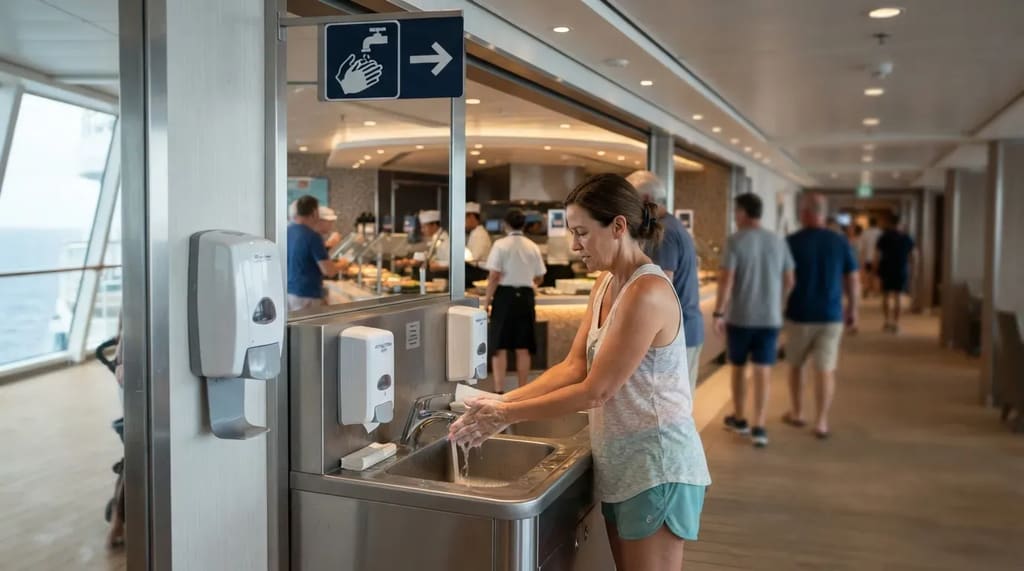
The CDC counted 16 outbreaks of stomach illness on cruise ships in 2024, affecting 1,894 passengers and 245 crew, the most people sickened in any year since 2012.5 Fourteen of the 16 were norovirus, which spreads easily in crowded, semi-enclosed places like ships.
Those hand-sanitizer stations at the buffet are overrated, because sanitizer doesn’t reliably stop norovirus. Wash with soap and water for at least 20 seconds before you eat, and if you do feel sick, report it to the ship’s medical center. But the clock on your wrist can wreck a trip faster than any bug, because the ship doesn’t always run on the port’s time.
Related Stories From Travelbinger



#3 – Ship Time and Local Time Can Disagree

An all-aboard of 4:00 p.m. on ship time can be 5:00 on the clocks in town, or the reverse. When the ship runs an hour behind the port, you gain an hour. When it runs ahead, the clock on your phone shows time you don’t have. Phones update to the local cellular zone, so they can disagree with the daily planner.
Dining, shows and the deadline in port all follow the ship’s clock. Set a phone alarm well before all-aboard, on ship time, and head back early. How you travel ashore decides who answers for a late return, and one choice comes with a promise the other lacks.
#2 – Independent Tours Come With No Safety Net

If your own tour runs late, the ship doesn’t have to wait. The usual exception is a ship-sponsored shore excursion. If the line’s own tour runs late, the ship waits or the line arranges transport to the next port, and Princess advertises exactly that as a guaranteed return. Only a ship-booked excursion carries a guaranteed return.
Independent tours often cost less, and many are excellent, but on a first cruise in an unfamiliar port the ship’s premium buys real protection. Prepaying an outside operator adds a second risk. If weather keeps the ship from docking, you can be out the money. And if the gangway goes up without you, the bill for catching up is yours alone.
#1 – Missing the Ship Costs More Than the Fare
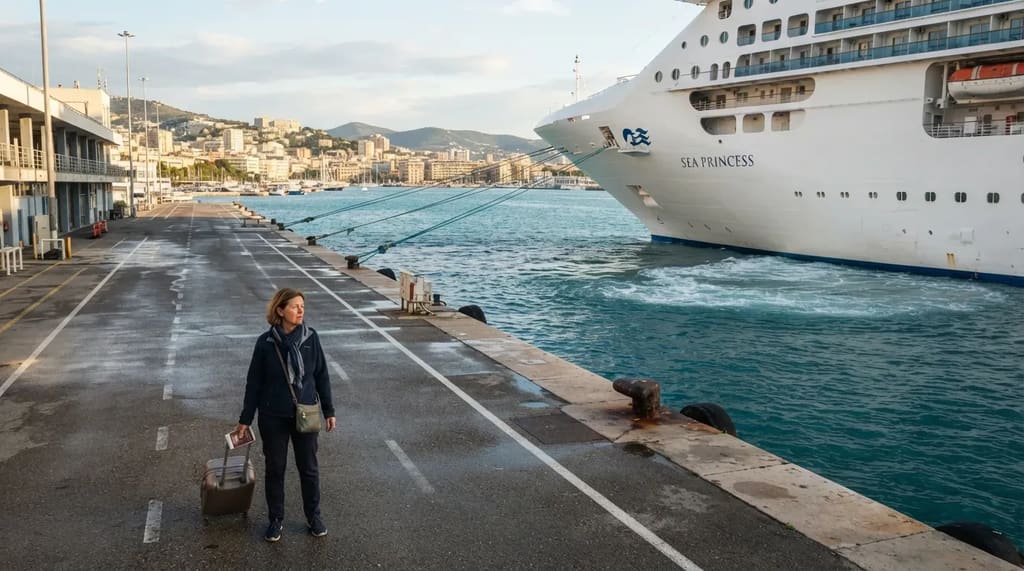
If the ship sails without you, you’re responsible for every cost of rejoining it at a later port or getting home, and you shouldn’t expect reimbursement for the days you missed. The crew can collect your medication and necessities from the cabin. You then head to the port agent, the cruise line’s liaison at every stop, whom terminal staff or security can point you to. You pay every cost of catching up, and no refund covers the missed days.6
Rejoining isn’t always possible. The Passenger Vessel Services Act can stop a line from letting you board at a U.S. port on some itineraries, so your only path may be home.6 7 That’s where the passport from #7 earns its price. Every item before this one comes down to the same fact: the ship runs on its own bill, its own paperwork and its own clock, and it doesn’t wait for yours.
Treat the fare as the price of the cabin, and the ship’s rules as the other half of what you’re buying. The charges, the drill, the deadlines and the documents aren’t traps. They’re the terms of a very large machine that has to leave on schedule. Learn them before you board and the week looks very different, mostly because nothing catches you off guard.
The ship was always going to leave on time. The only question is whether you’re on it.
- Cruise Hive Carnival Increases: https://www.cruisehive.com/carnival-gratuity-and-drink-package-price-increases-now-in-effect/203888
- Cruise Critic Carnival Rates: https://www.cruisecritic.com/news/carnival-increases-gratuities-drink-package-rates
- AT&T Cellular at Sea: https://www.att.com/wireless/what-is-cellular-at-sea/
- AAA Closed-Loop Cruises: https://cluballiance.aaa.com/the-extra-mile/advice/travel/closed-loop-cruise
- The Hill CDC Outbreaks: https://thehill.com/policy/5061889-cruise-ship-stomach-illnesses-12-year-high-cdc/
- Remitly Missed Ship Guide: https://www.remitly.com/blog/travel/what-to-do-if-cruise-ship-leaves-without-you/
- Points Guy Missed Cruise: https://thepointsguy.com/cruise/what-to-do-missed-cruise