
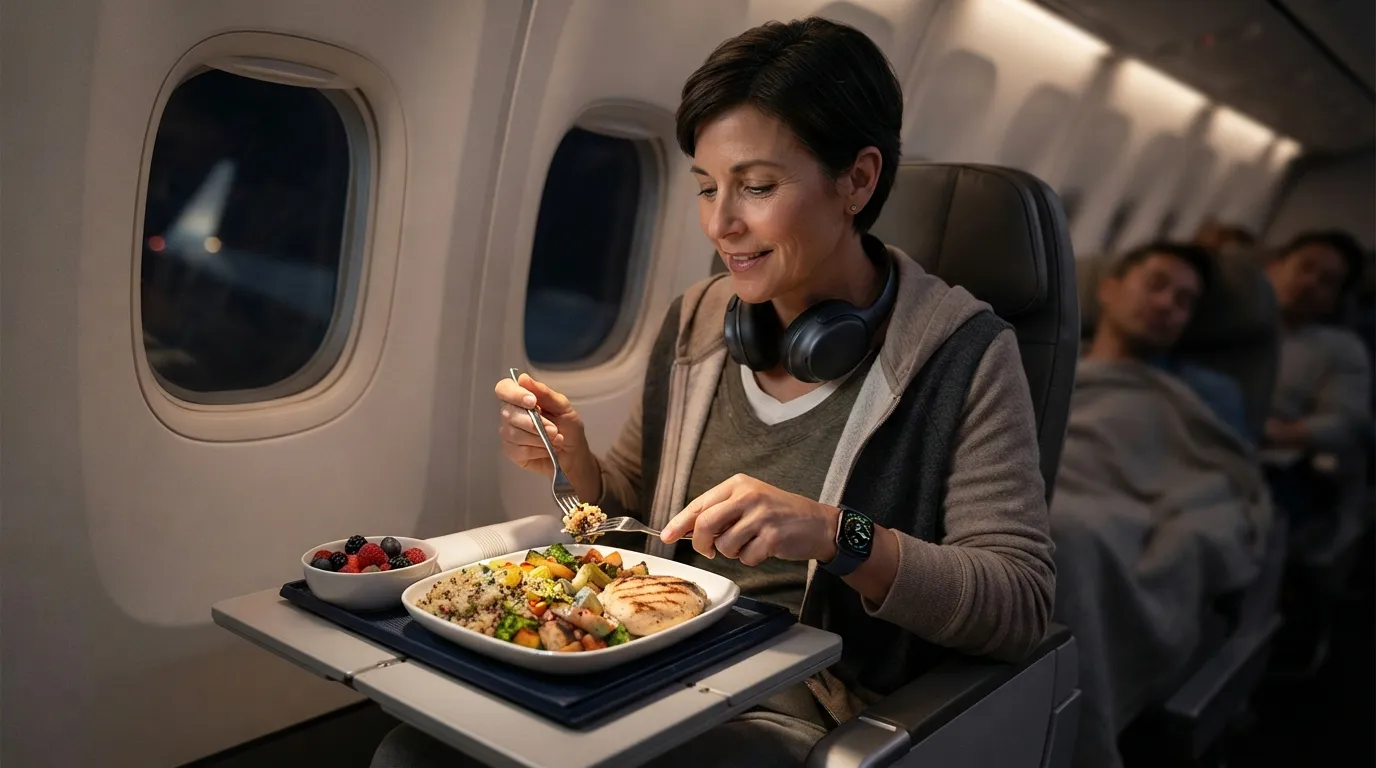
From the aisle, the first hour of a long-haul flight looks like nothing is happening. Bags thump overhead, seats fill up, and everyone waits for the meal cart.
Frequent flyers are quietly doing 18 small things in that window, and each one lines up with guidance from aviation and health agencies. Some are about safety, some are about your legs, and one involves a drink you’ve probably been told to enjoy. One habit ties the other 17 together, and it’s waiting at the end.
#1 – They Change the Clock Before Anything Else
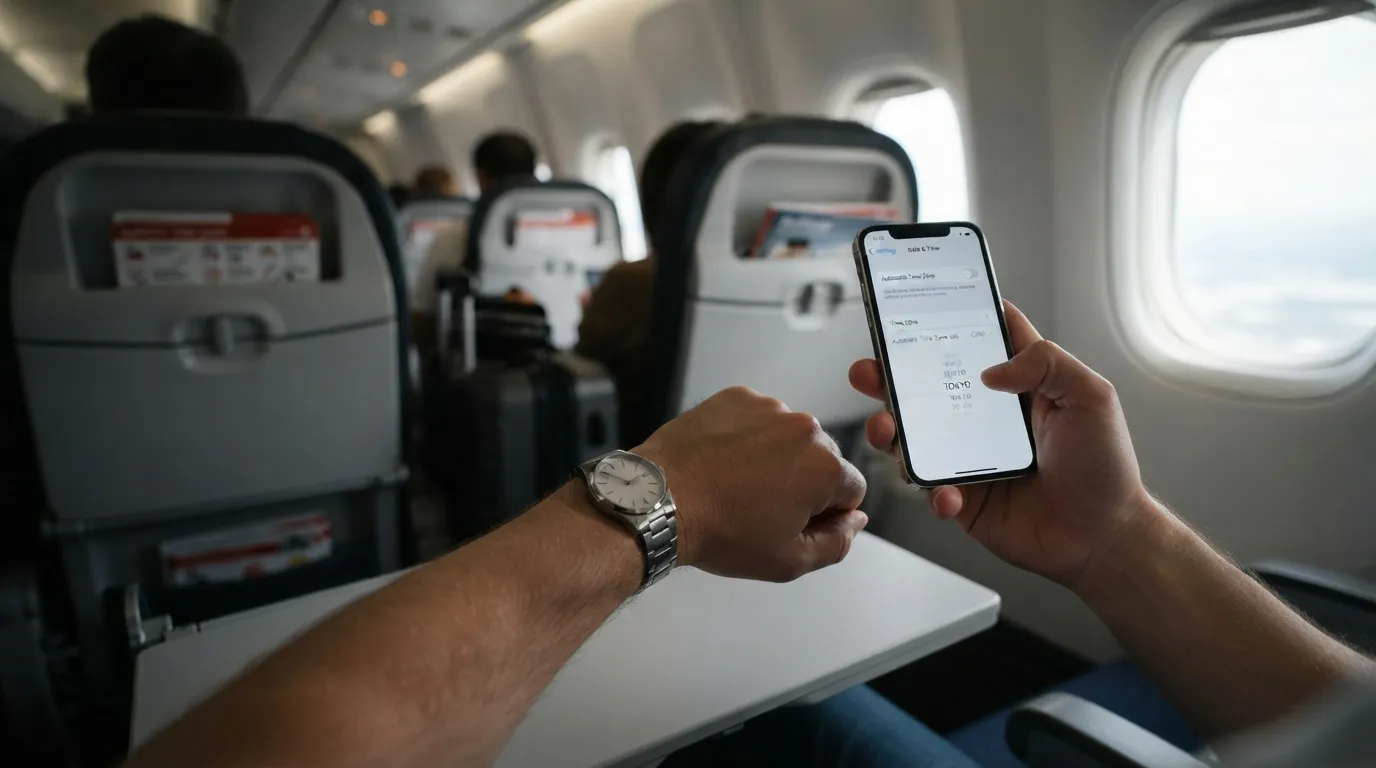
The first thing regulars touch isn’t the entertainment screen. It’s the time setting.
They set their watch and phone to the destination’s time zone as soon as they board. The goal is to start nudging the body clock toward local time before the plane lands.
Turning off automatic time and choosing the destination zone by hand puts the new hour in front of you all flight. That one setting becomes the reference for every later choice.
The next habit takes about ten seconds, and most passengers never try it.
#2 – They Count the Rows to the Exit
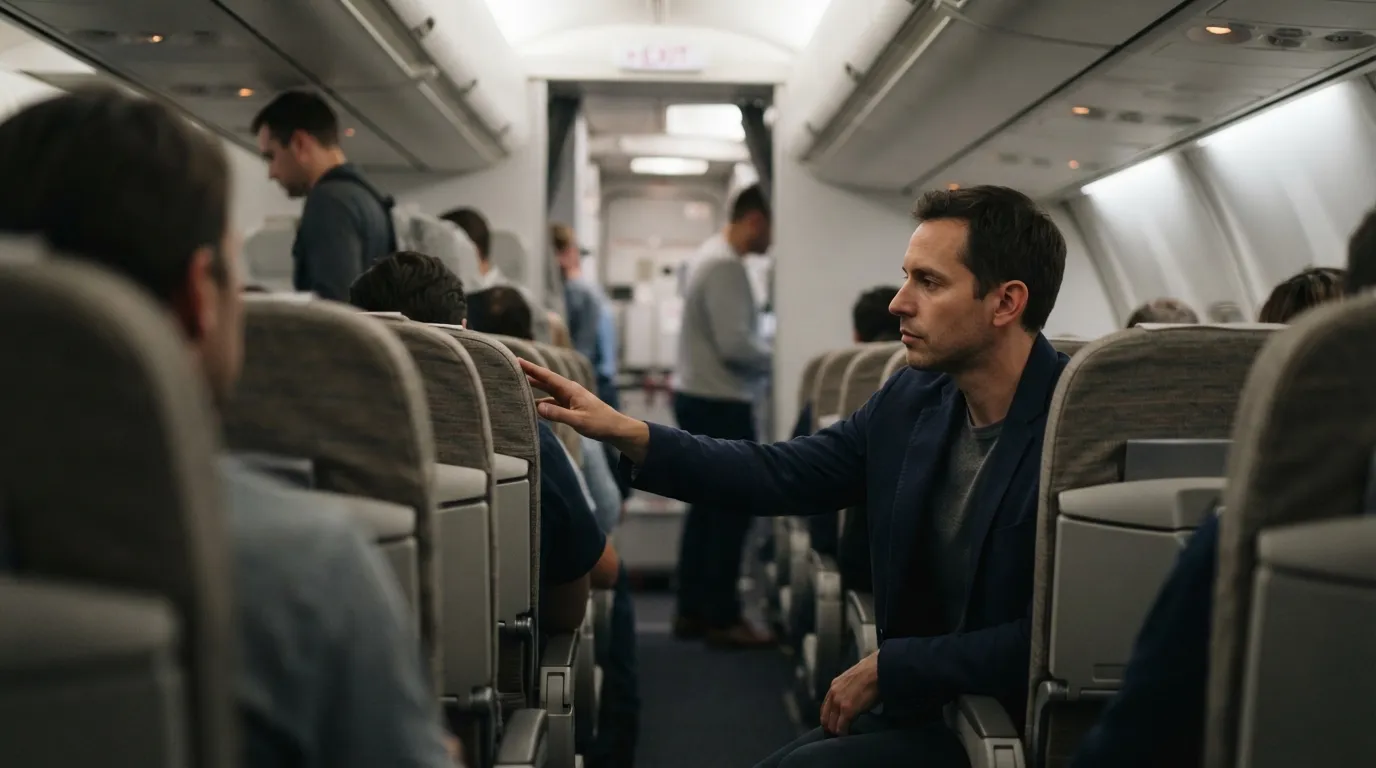
Before the seatbelt sign dings, regulars are quietly counting seats.
The FAA tells passengers to count the rows between their seat and the closest exits in front of and behind them. The nearest exit may be behind you.1
Some travelers add a physical step. They touch each seat back as they count, so they could find the way in dim light or heavy smoke.
Counting is step one. Step two involves a piece of paper in your seat pocket.
#3 – They Actually Read the Safety Card
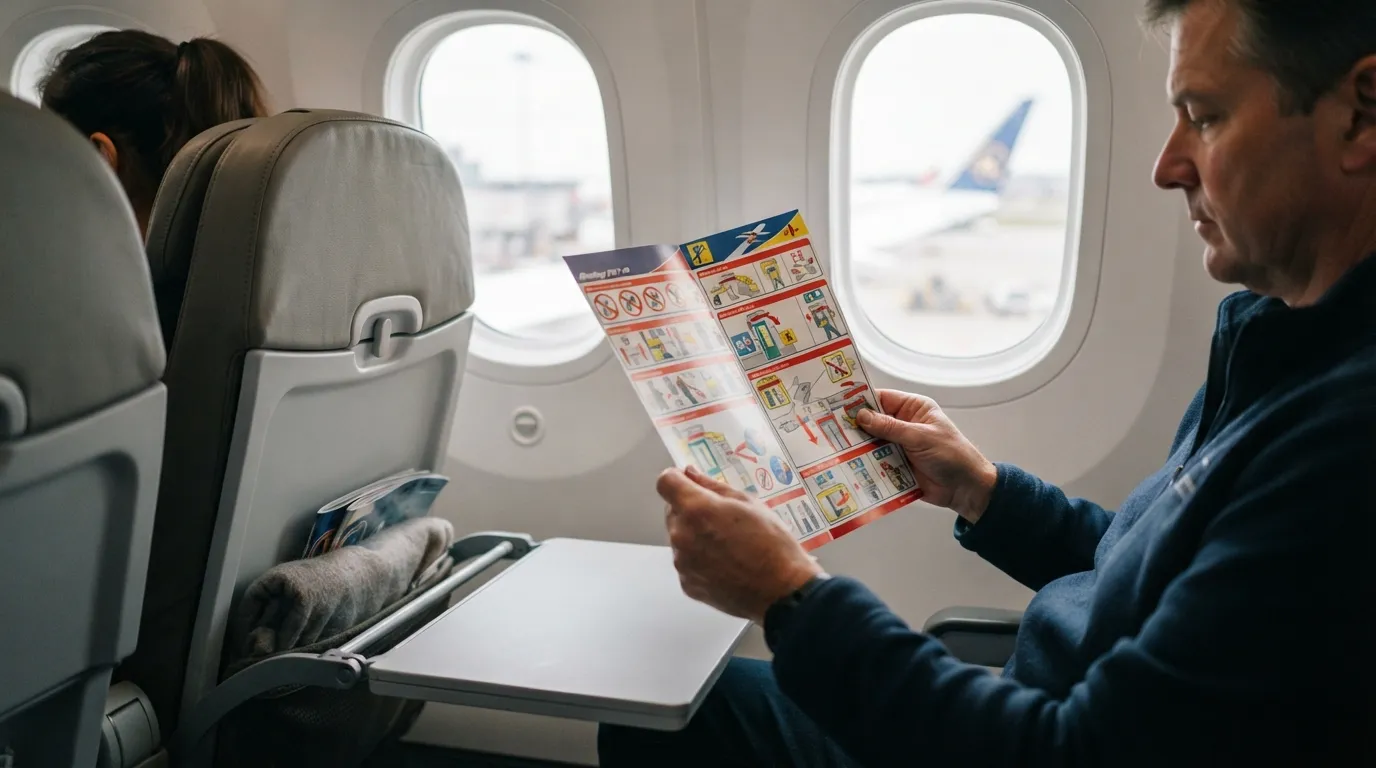
The card feels like a formality. Regulars read it anyway.
The FAA says the card contains aircraft-specific instructions and emergency information.1 Different plane, different details.
One pilot-focused guide suggests checking which direction the exit handle moves, even on an airline you fly often. It’s a small glance that most people skip.
Worth Knowing
- The card is written for your specific aircraft, so it can differ from your last flight.
- It’s already in the seat pocket, so the cost is a few seconds.
- Checking the exit handle’s direction is a habit even loyal airline fans can skip.
- Reading it fits easily into the quiet minutes before the briefing.
The card is only half the story, though. The live demonstration is where most people tune out.
#4 – They Watch the Demo Instead of Scrolling
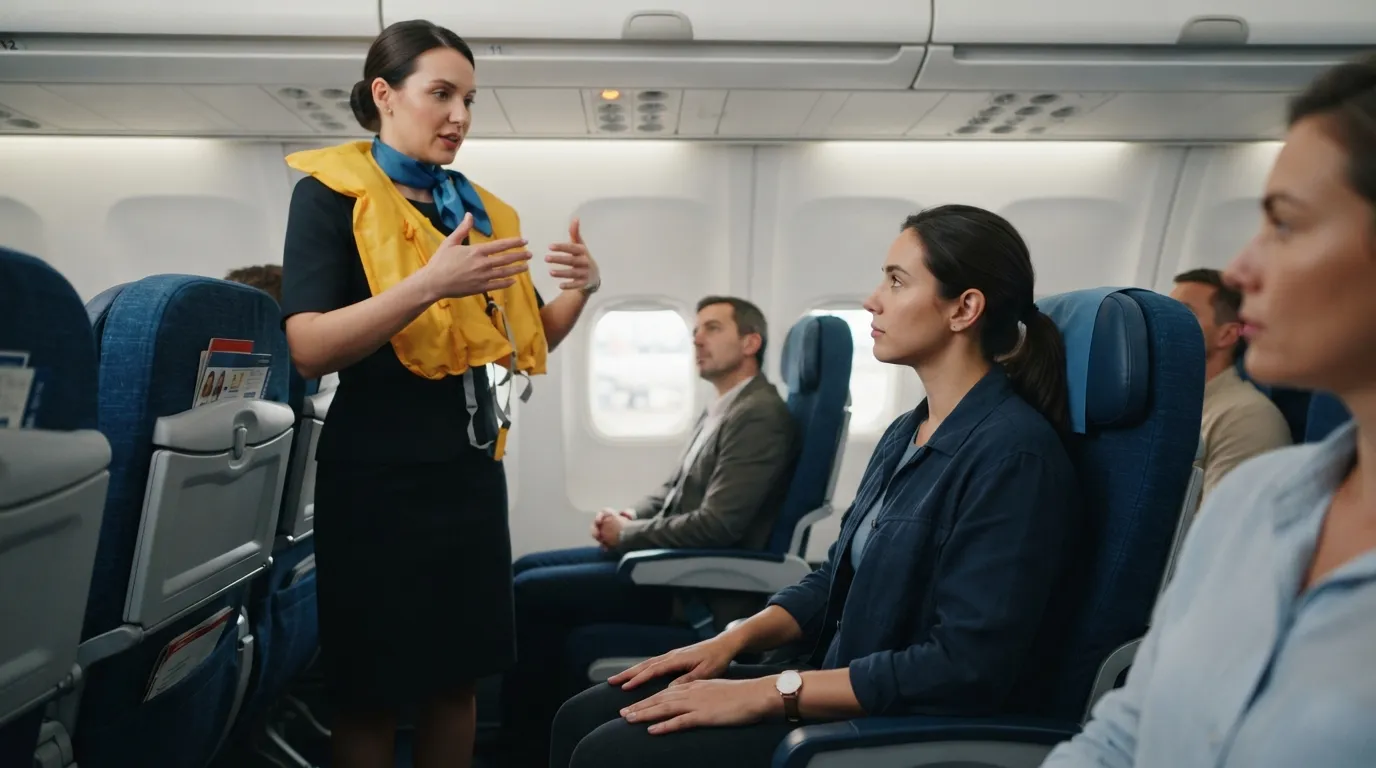
Plenty of frequent flyers call the safety demo pointless theater. Safety investigators disagree.
The FAA’s passenger guidance says to listen carefully to the safety briefing.2 The NTSB concluded that a large percentage of passengers continue to ignore preflight safety briefings.3
Regulars put the phone down for those few minutes. It’s the one moment when the crew tells you what to do if things go wrong.
Knowing the plan is one thing. Deciding what you’ll leave behind is another.
#5 – They Decide to Abandon the Bag
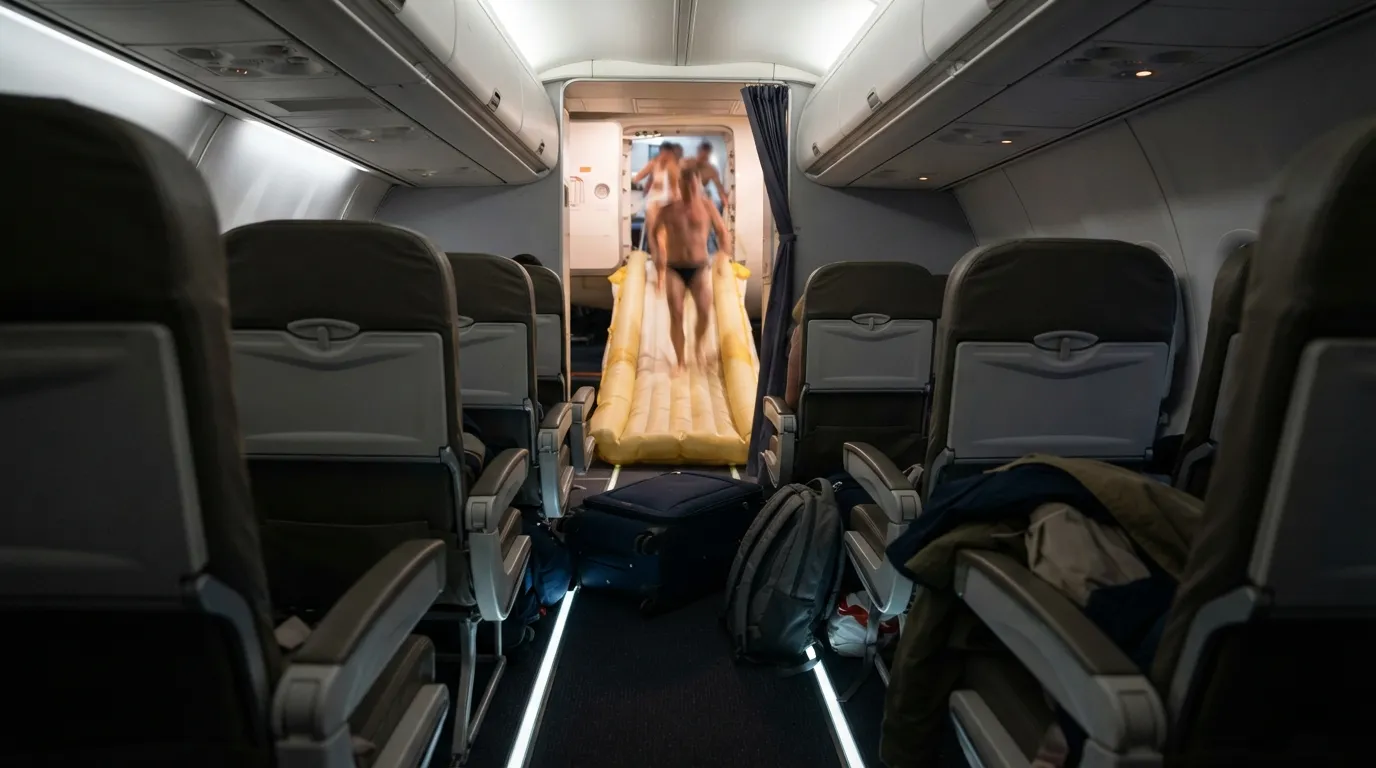
Regulars have already settled what they’d leave behind in an emergency.
The FAA says every second counts in an evacuation, and stopping for carry-ons can delay everyone. Bags can also block aisles, damage slides and raise the risk of injuries.
Since January 1, 2023, more than 40 injuries have been reported during aircraft emergency evacuations.
The next seat decision comes with real responsibility attached.
#6 – They Treat the Exit Row as a Job
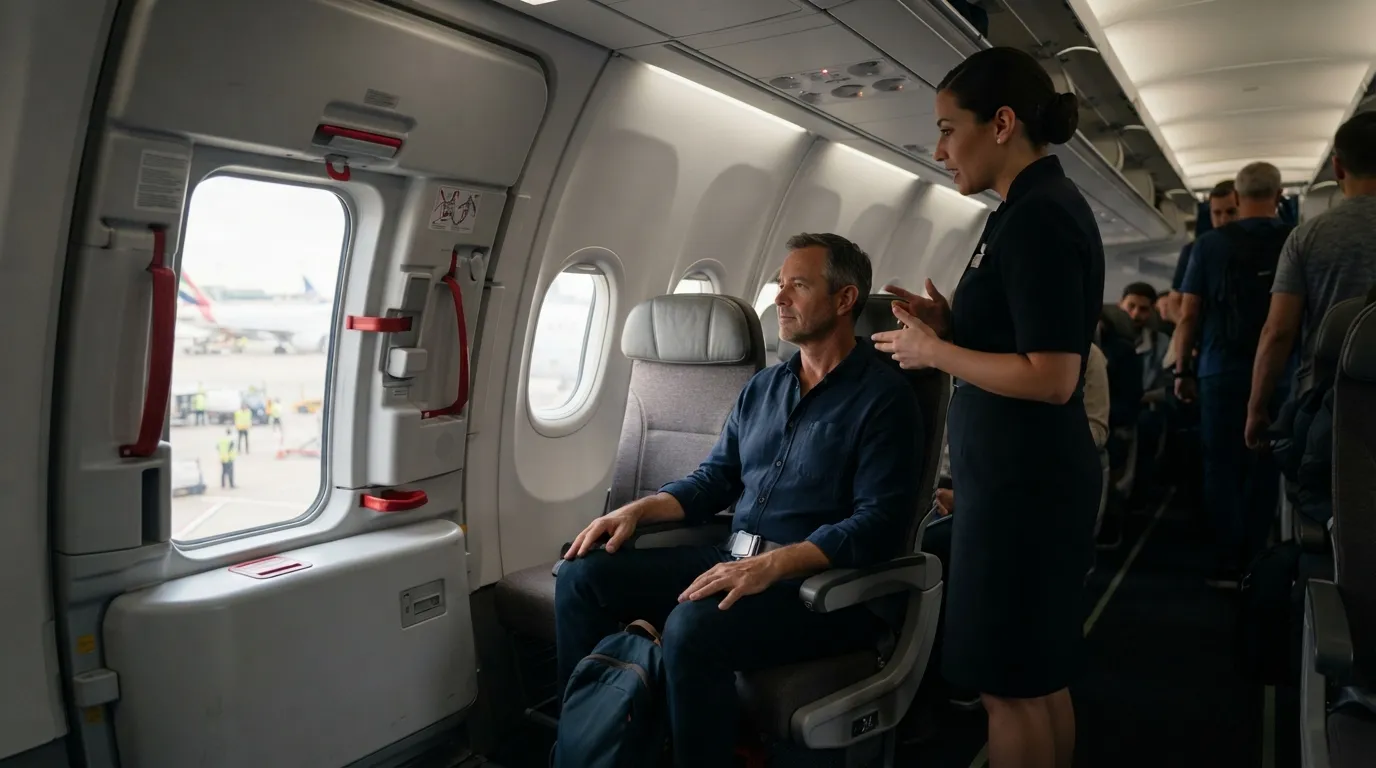
Many travelers rank the exit row as the best seat in economy. Experts see it differently.
An exit row is a safety role, not a legroom perk. You must understand the briefing, be able to open the exit door and help others during an evacuation.
The FAA says that if you aren’t physically capable and willing, you should ask for another seat.2 The airline can move you even after boarding.
Quick Compare
- What most people see: extra legroom.
- What the role involves: understanding the briefing, opening the exit and helping others.
- If you can’t or won’t: ask for a different seat.
Regulars who don’t want the job pick their seat with something else in mind.
#7 – They Quietly Favor the Aisle
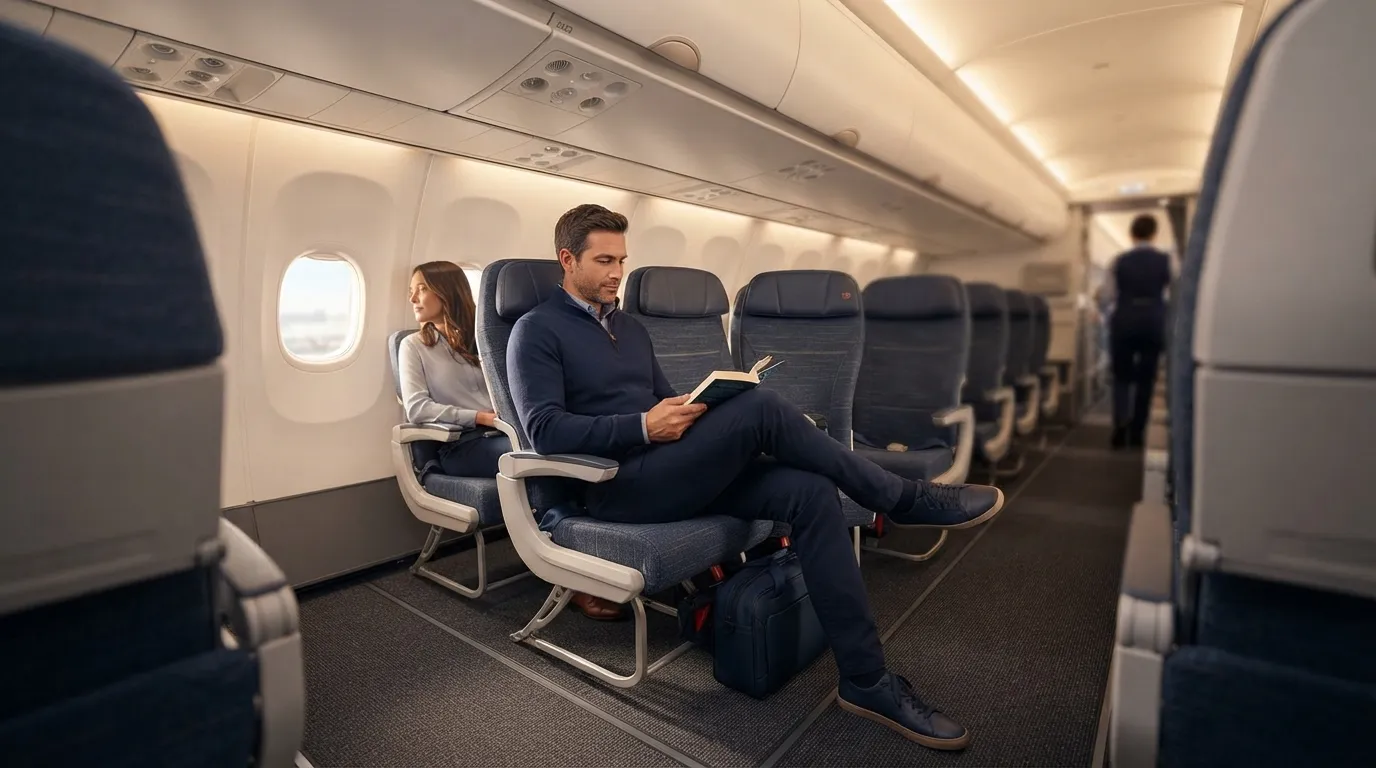
Most people chase the window view. Health guidance leans the other way.
UAB Medicine suggests choosing an aisle seat on long journeys so you can get up more easily. The CDC’s Yellow Book notes that window-seat passengers on long flights have a higher clot risk than aisle passengers.
The likely reason is behavioral. People move less when getting up means disturbing a neighbor.
Seat choice is only half of it. What you wear and how you sit matter too.
#8 – They Dress Loose and Uncross the Legs
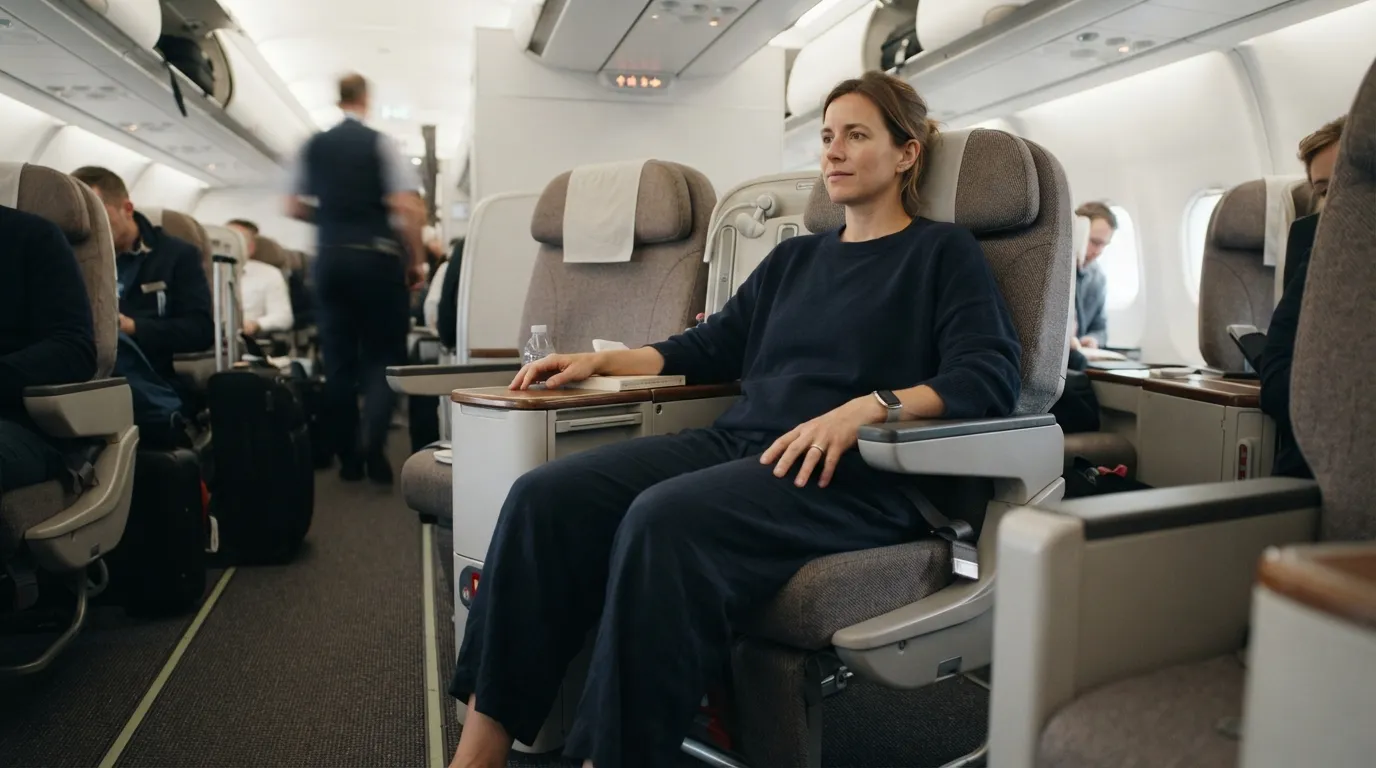
Regulars adjust their body before the plane leaves the gate.
Loose clothing helps, while crossing your legs for hours does not. Crossing them compresses the veins behind the knee.
The stakes rise with flight time. The CDC says anyone traveling more than four hours can be at risk for blood clots.
Long-haul flights clear that bar easily, so the habit pays off. And the next fix doesn’t even require standing up.
#9 – They Flex Their Ankles Early
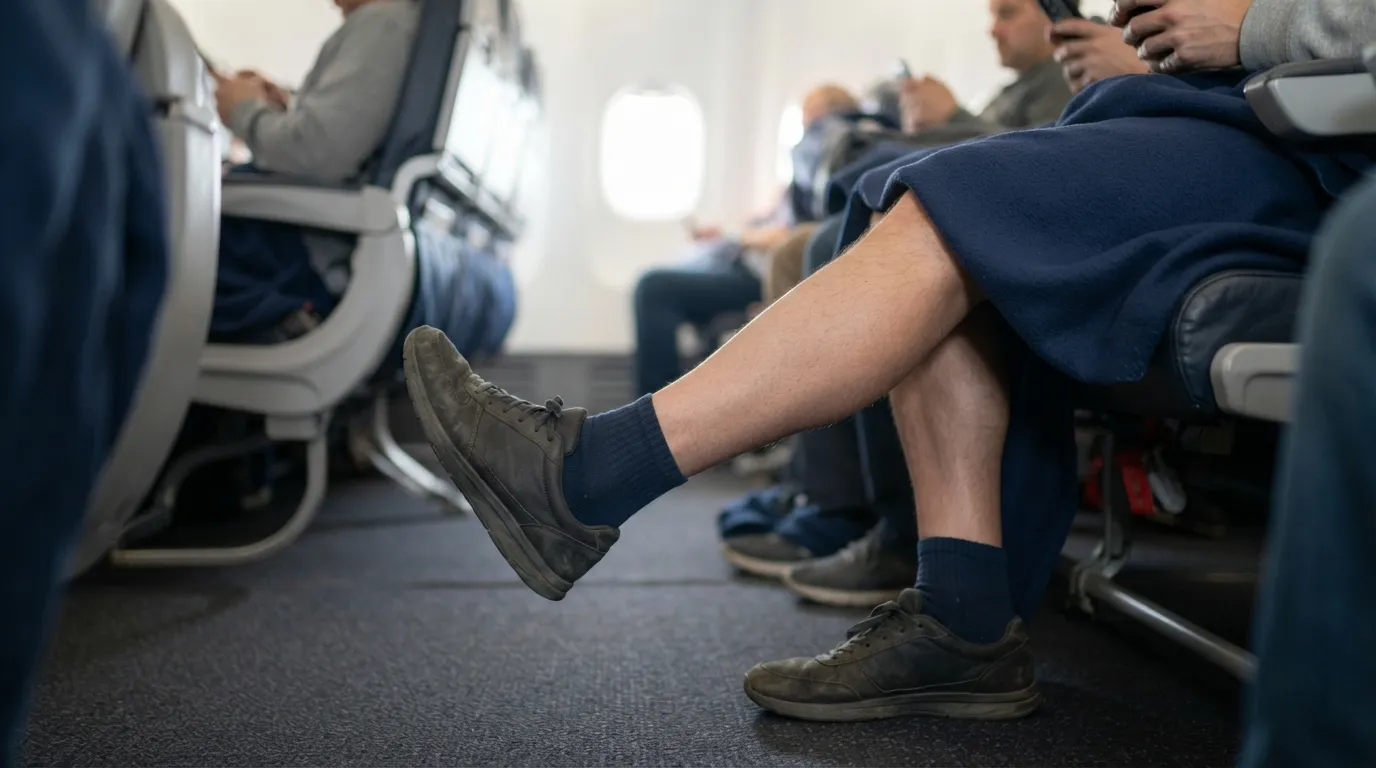
Regulars start moving their legs long before they stand.
The CDC says to move your legs frequently and exercise your calf muscles to improve blood flow. The basic moves are simple:
- Extend your legs straight out and flex your ankles, pulling your toes toward you.
- Pull a knee to your chest and hold it for 15 seconds, up to ten times.
Moving your legs in the seat, flexing your calves and rotating your ankles are worthwhile substitutes when getting up is difficult.
Seat exercises only go so far, though. Eventually regulars have to stand.
#10 – They Set a Walking Reminder
Regulars don’t wait until their legs complain.
The CDC advises moving your legs frequently and walking around every 1 to 2 hours. Another medical source says at least every 2 to 3 hours, and more often if possible.
The guidance itself isn’t unanimous on the interval. The common thread is not to sit for the whole flight.
Some travelers go a step further with their legs. But it isn’t for everyone.
#11 – They Know Who Compression Socks Are For
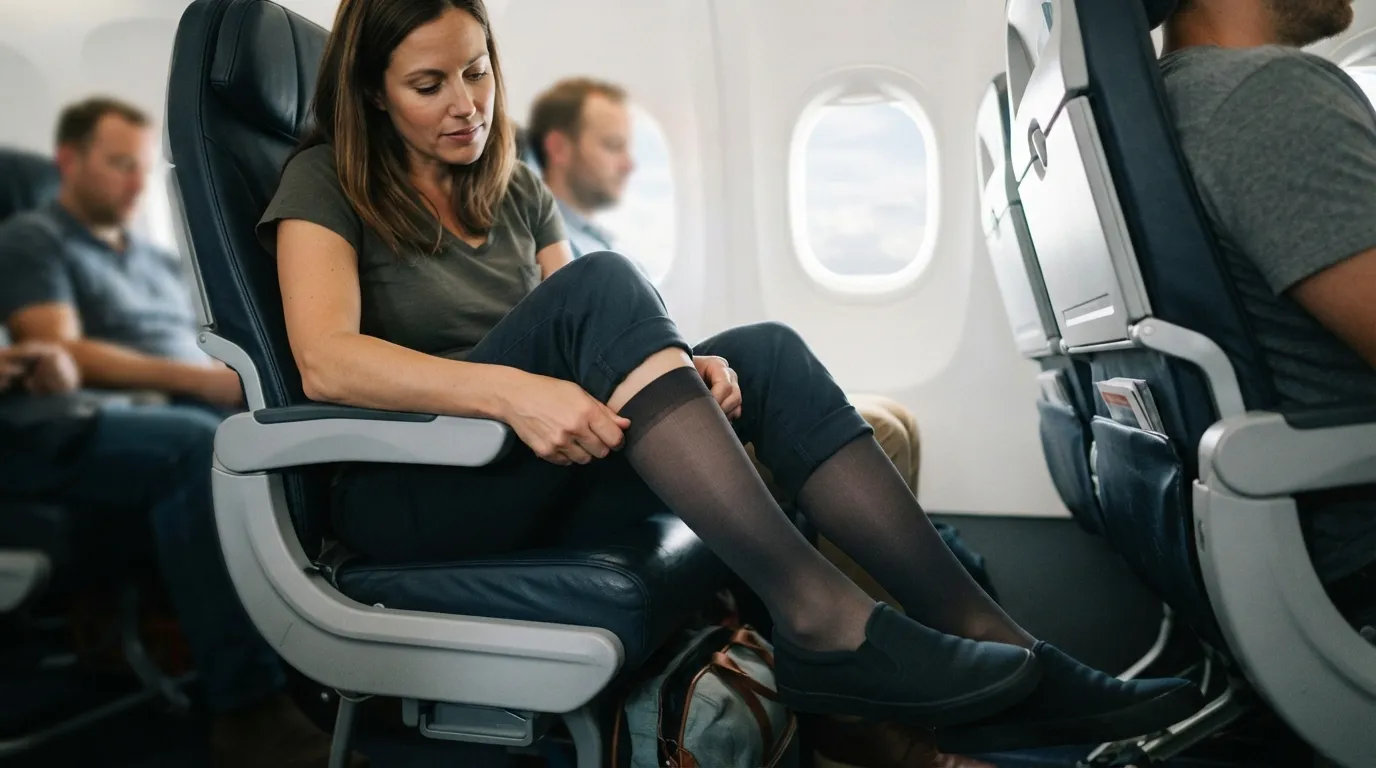
Regulars don’t treat compression socks as a magic fix. They treat them as a targeted tool.
The CDC’s Yellow Book says travelers at increased risk of clots may consider properly fitted, below-knee graduated compression stockings. According to the CDC, most travel-related clots happen in people who already have at least one risk factor.
The WHO has put the clot risk on travel longer than four hours at 1 in 6,000 for the general population.
At a Glance
- Who may consider them: travelers at increased risk of clots.
- What type: properly fitted, below-knee, graduated compression stockings.
- Symptoms to watch for: calf pain or cramps and leg swelling.
- Next step if you’re at risk: talk to your doctor about prevention.
The next topic splits the experts down the middle.
#12 – They Hedge on the Dry-Air Debate
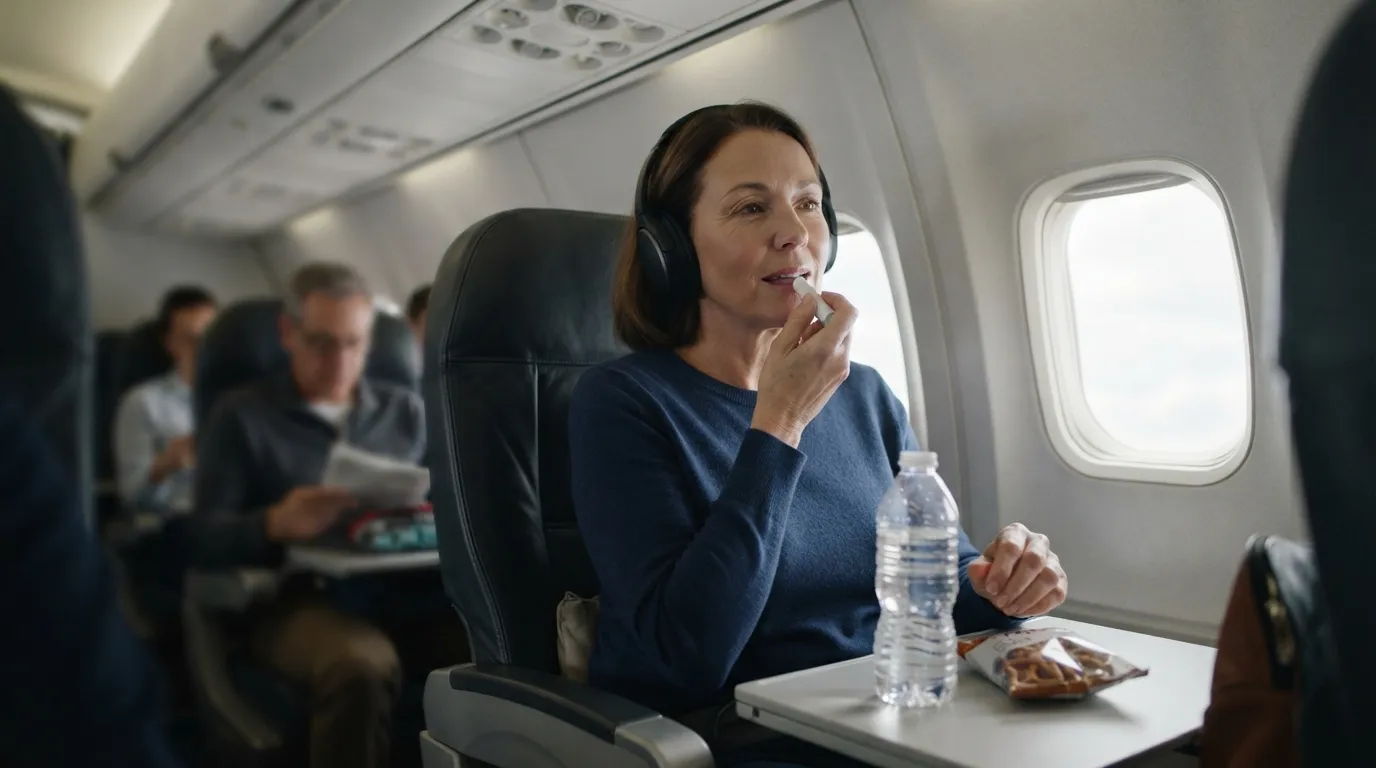
Everyone says cabin air dehydrates you. The truth is more complicated.
One study measured cabin humidity falling below 10 percent within about two hours of takeoff. But the UK Civil Aviation Authority says the widely held belief that low humidity causes dehydration is largely a myth.4
It notes that dry air does dry the lips and tongue, which creates a sensation of thirst.4 So regulars sip and use lip balm for comfort, without treating it as a clot cure.
The CDC also says there’s no evidence that drinking more water prevents travel-related clots. Now for the drink that does matter.
#13 – They Put Caffeine on the Destination Clock
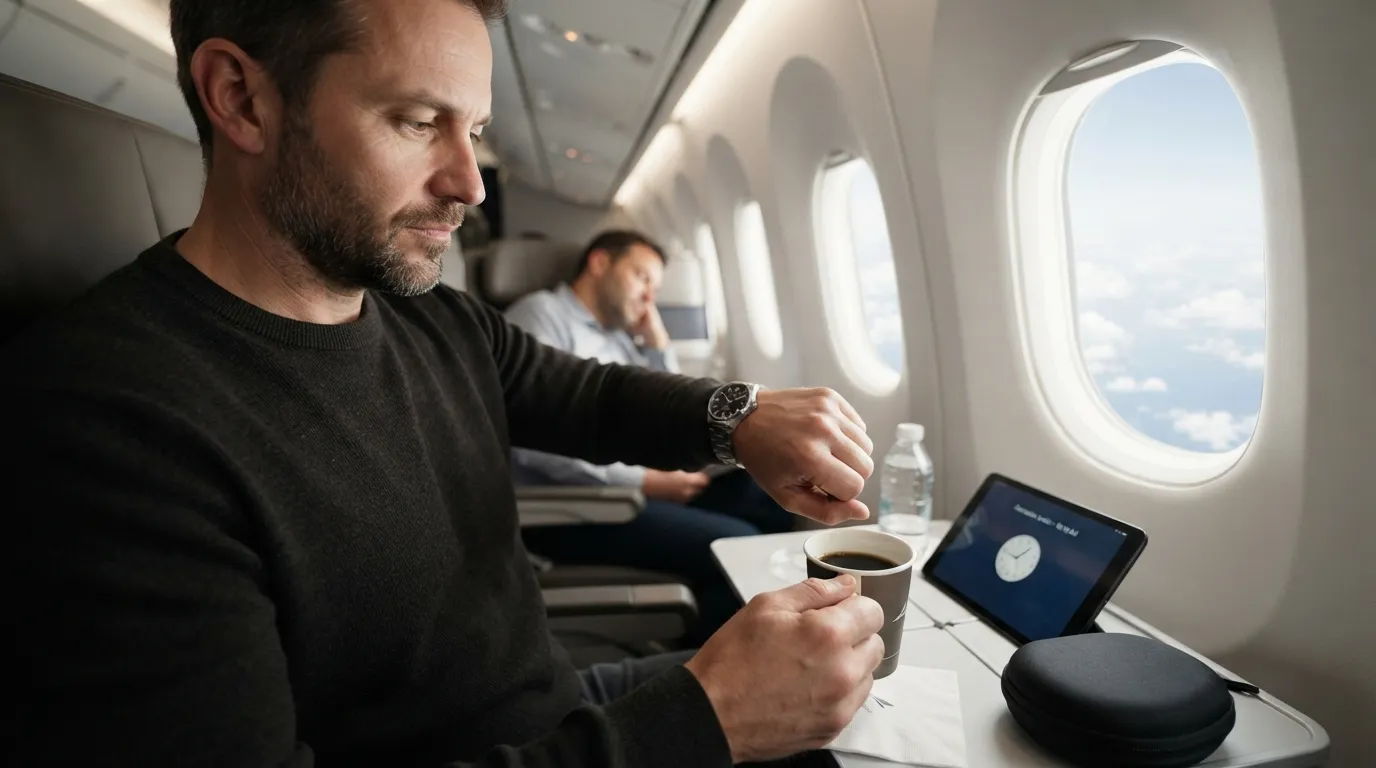
Regulars don’t skip coffee. They time it.
One jet-lag guide says to avoid caffeine after 2 PM destination time. If it’s destination night-time, skip it entirely so you can sleep on the plane.
Used on that schedule, caffeine props up daytime alertness without cutting into the first night’s sleep in the new time zone.
That brings us to a drink many travelers think of as part of the flight.
#14 – They Say No to the Nightcap and the Sleeping Pill

The free drink feels like a reward. Regulars see a trade-off.
Alcohol worsens sleep quality and dehydration, which is why jet-lag guides advise going easy. Limiting caffeine and alcohol during the flight is a standard in-flight recommendation.
The WHO has recommended that long-flight passengers resist taking sleeping pills to reduce the risk of potentially fatal blood clots.
Fast Facts
- Alcohol can worsen both sleep quality and dehydration.
- Limiting alcohol and caffeine is a standard in-flight recommendation.
- The WHO advises long-flight passengers to resist sleeping pills.
- The goal is better sleep timing, not no sleep at all.
Skipping the sedative doesn’t mean skipping sleep. It means being strategic about when you sleep.
#15 – They Sleep Only When It’s Night There
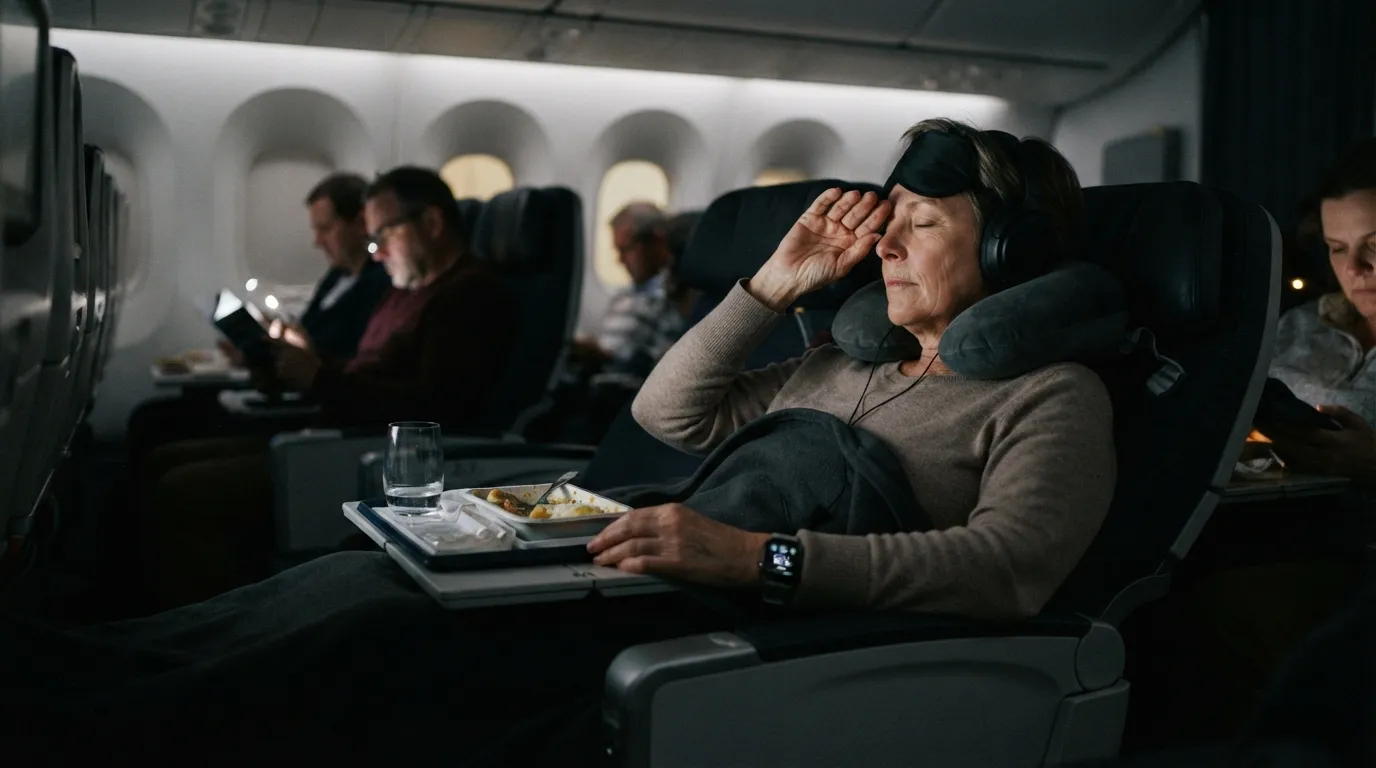
Sleeping at the wrong time can backfire, and most people don’t realize it.
If it’s night at your destination, try to sleep. If it’s daytime there, try to stay awake. Sleeping at the wrong hour mid-flight can undo the shift you worked to build before departure.
Related Stories From Weather Fox
If it’s local daytime, avoid sleeping through the entire journey. Even a partial sleep timed this way keeps the flight tied to the new schedule.
Sleep isn’t the only thing on the destination schedule. Food is, too.
#16 – They Eat by the New Clock
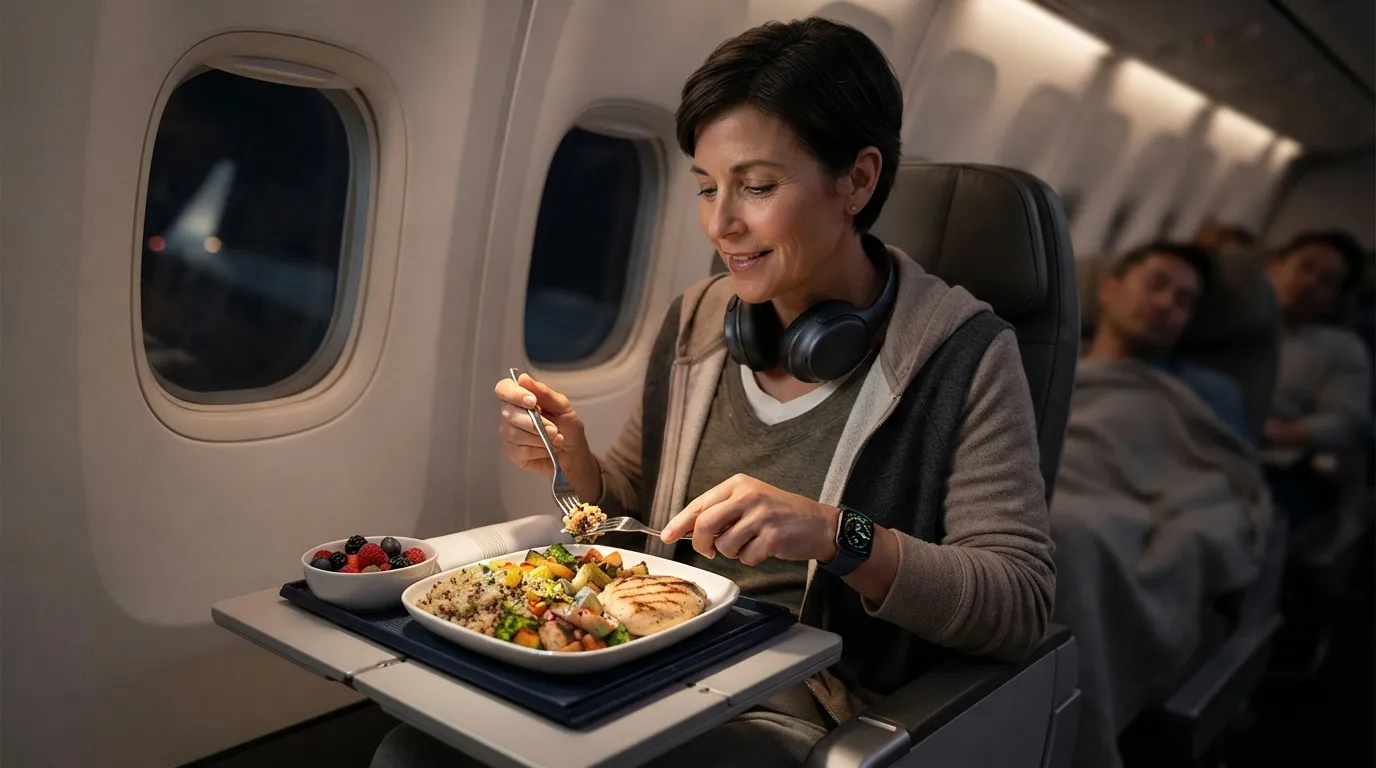
Regulars don’t eat when the tray arrives. They eat when it fits the plan.
One frequent-flyer writer advises eating and sleeping on your new local time. That means planning meals around the new time, too.
There’s an extra reason not to trust your cravings. Dry air and cabin pressure dull your sense of taste, particularly for salt and sweetness.
A meal that tastes bland at the wrong hour is an easy one to skip. The final comfort tweak involves light.
#17 – They Control the Light
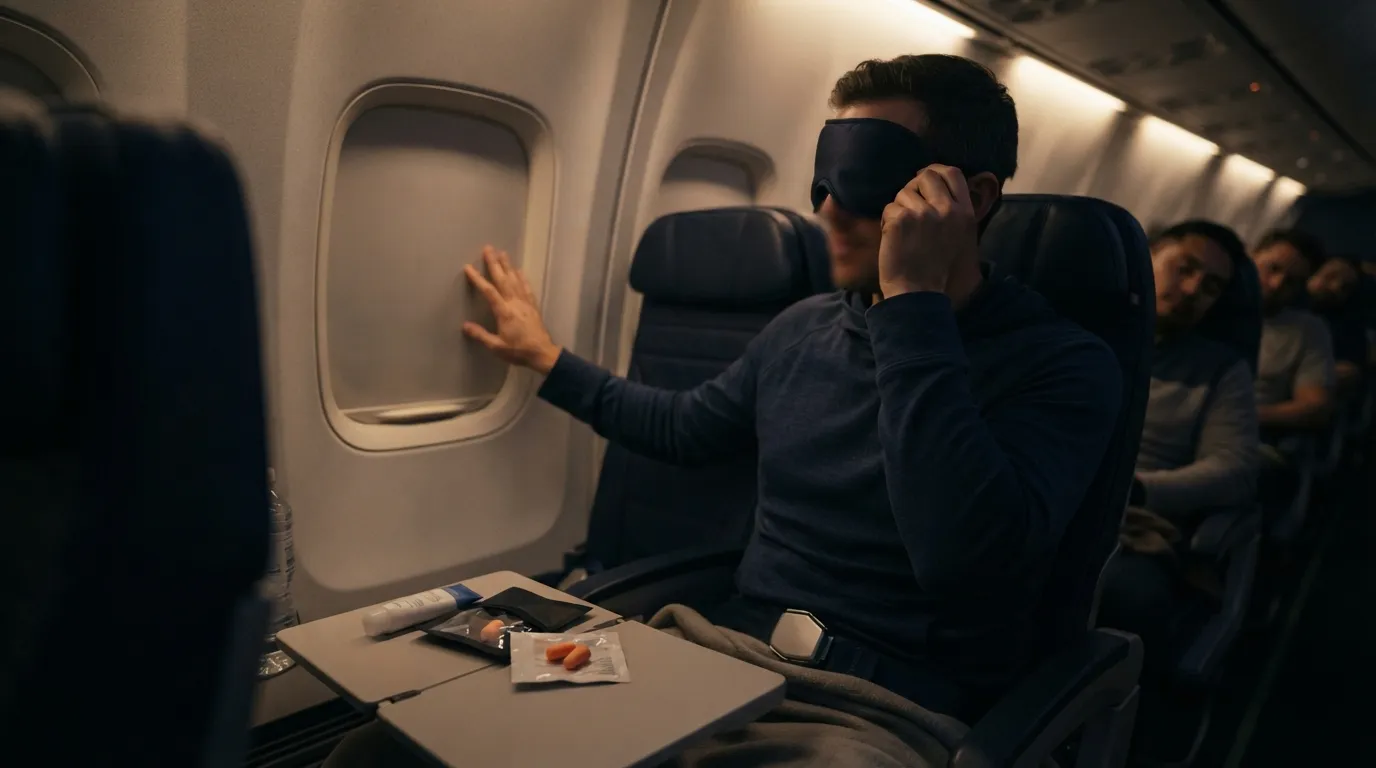
Experts say light, not water or walking, is the main lever for the body clock.5 6
It’s the one lever that actually moves the clock. Hydration, less alcohol and movement don’t shift your clock the way light does, but they reduce the misery.
Window-seat light exposure can help when it’s morning at your destination. When destination time says night, use an eye mask and avoid bright cabin light.6
Everything so far leads to one last habit. It has nothing to do with the cabin.
#18 – They Plan the First Day on the Ground
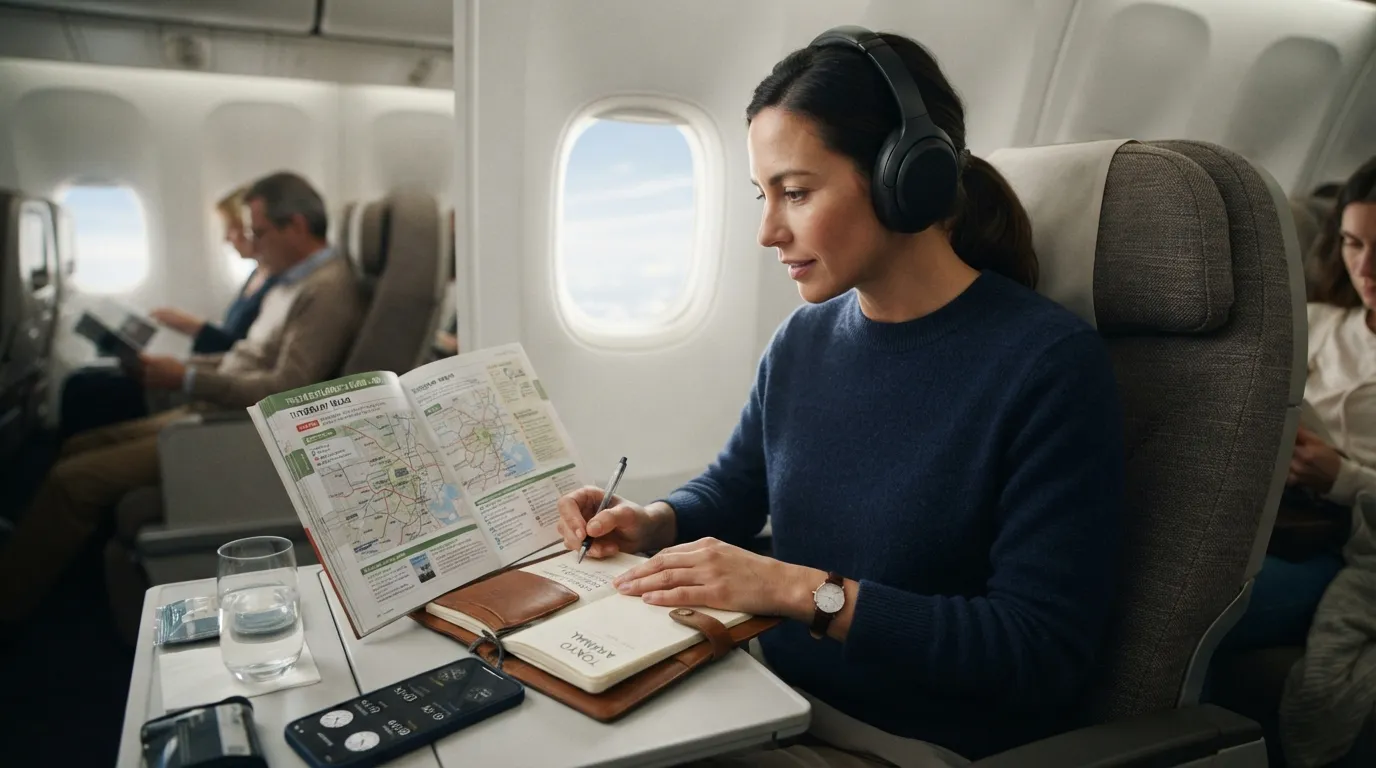
The best regulars are already thinking about landing.
Plan your sleep around when you want to sleep at your destination. Don’t sleep the last several hours of a flight if you need to sleep on arrival.
Then stay up until bedtime at your destination the day you arrive. Approaching a normal bedtime is usually better than collapsing into a long afternoon sleep that leaves you wide awake overnight.
Jet lag may take about one day for each time zone crossed, though direction, age, light exposure and stress can change that.
That’s the secret behind the other 17 habits. They all work toward the same moment, a night of sleep on local time.
So the first hour isn’t dead time after all. Regulars use it to set up the next twenty: they count the rows to the exit, read the card, plan to leave the bag, choose the aisle and put every clock on destination time.
And the dry-air dehydration claim is far less settled than most travelers think. Which habit surprised you most: the exit counting, the aisle seat or the clock change?
- FAA Passenger Evacuations: https://www.faa.gov/evacuations
- FAA Flying Safe: https://www.faa.gov/travelers/fly_safe
- NTSB Evacuation Safety Study: https://www.ntsb.gov/safety/safety-studies/Documents/SS0001.pdf
- CAA Physiology of Flight: https://www.caa.co.uk/air-passengers/about-your-trip/health-and-medical/guidance-for-health-professionals/physiology-of-flight/
- CDC Yellow Book Jet Lag: https://wwwnc.cdc.gov/travel/yellowbook/2020/travel-by-air-land-sea/jet-lag
- Mayo Clinic Jet Lag Treatment: https://www.mayoclinic.org/diseases-conditions/jet-lag/diagnosis-treatment/drc-20374031