One number shapes how you feel after a long flight, and it never appears on your boarding pass. Commercial cabins are pressurized to the equivalent of 8,000 feet or lower, and the 13 things below are the small habits that make that number easier or harder on an older body.
Thin air, hours of sitting and a bone-dry cabin all hit the same body at once, and research suggests older travelers feel it more. The strange story behind that 8,000-foot figure comes last, and it explains every item before it. First, though, there is the question of where your pills ride.
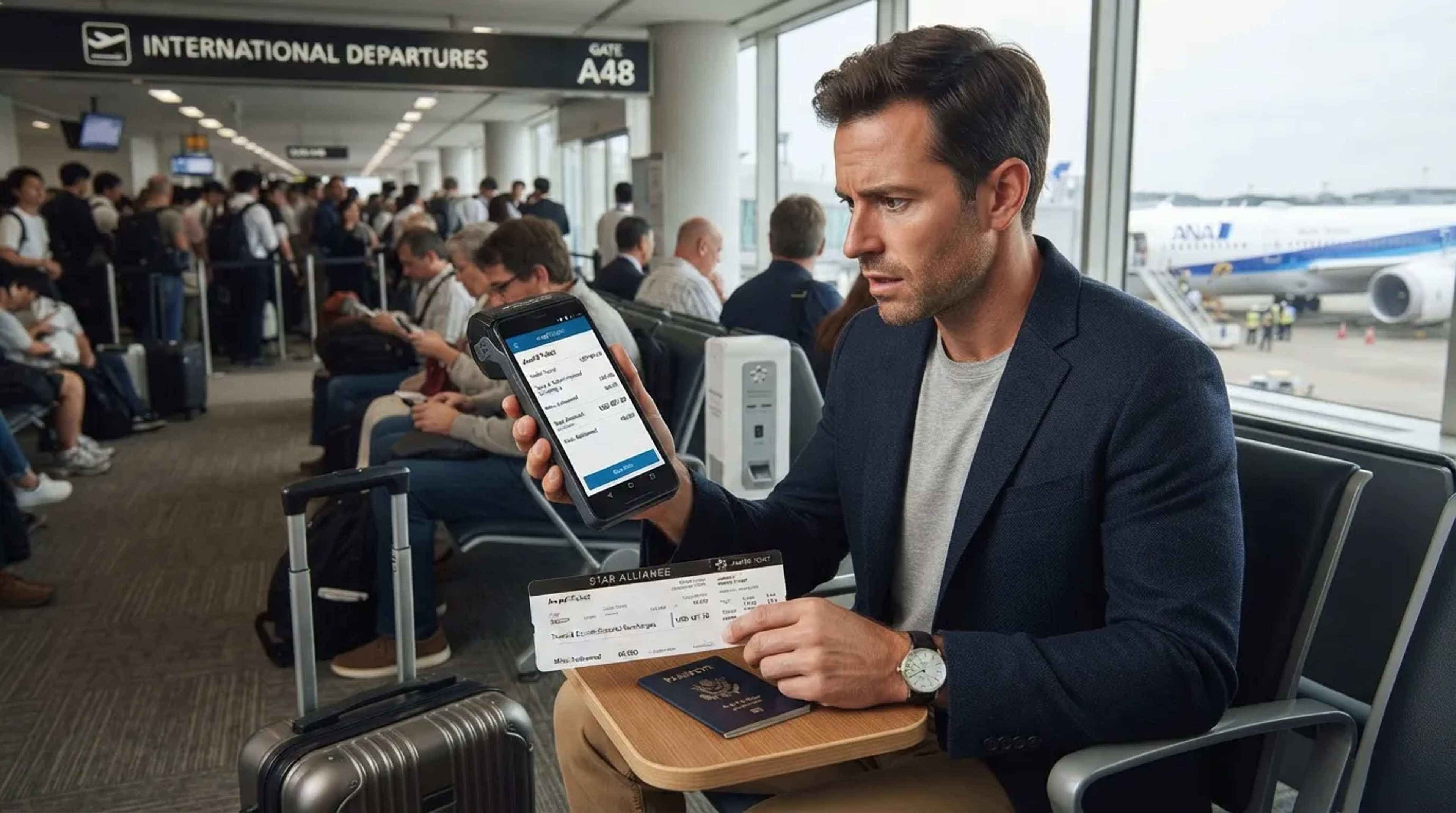
#13 – Prescription Pills Belong in the Carry-On
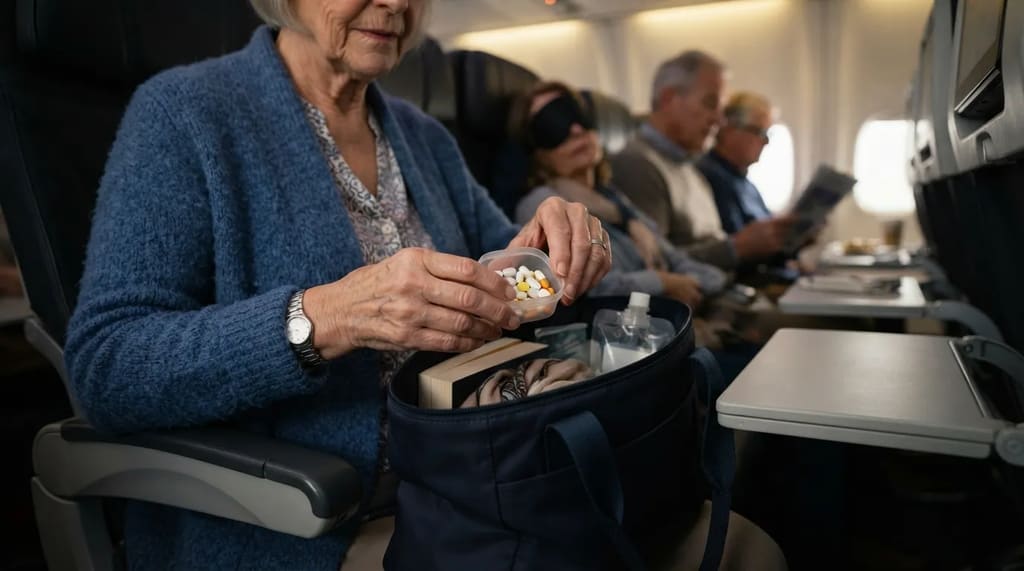
TSA allows prescription medication in both carry-on and checked bags, but it recommends the carry-on. If a checked suitcase is delayed or lost, your pills stay with you.
Injectable, refrigerated or hard-to-replace medicine should never go in checked luggage. TSA does not require prescription bottles, though some state labeling laws do.
Pills are allowed in unlimited amounts as long as they are screened. Clear labels can still head off delays and extra questions at the checkpoint.
Pills are the easy case, and liquids and injectables follow a different checkpoint rule.
#12 – Liquid Medicine and Injectables at the Checkpoint
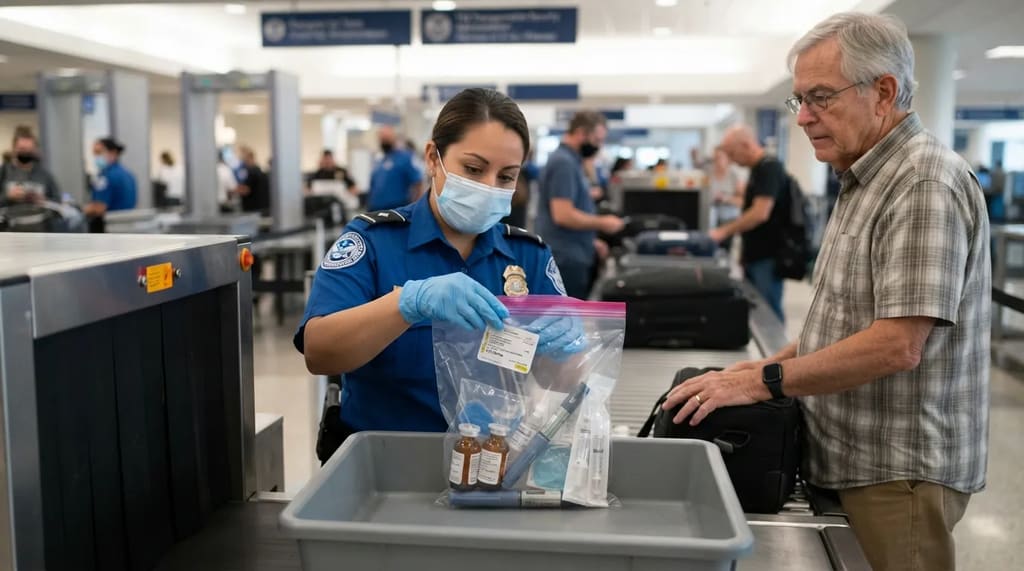
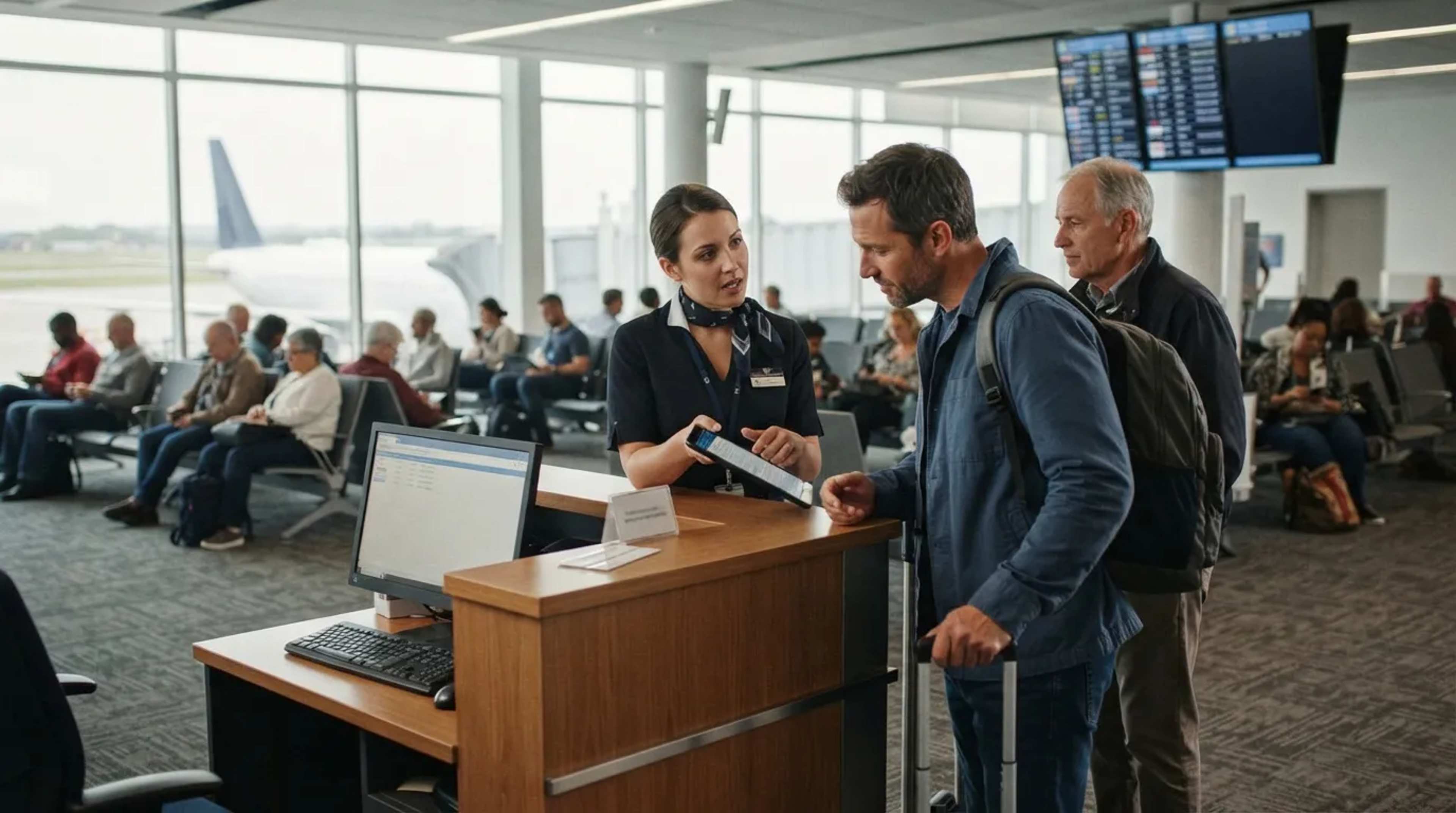
Medically necessary liquids, gels and injectables are exempt from the standard TSA liquid rules. Tell the officer you are carrying them before screening starts.
Syringes are allowed when they come with the injectable medication they are used for, so pack and declare the two together.1 For a pen-style injectable, keep the original pen in your carry-on with its dispensing label intact.
At a Glance
- Medically necessary liquids and gels skip the standard liquid limits.
- Say so before screening begins, not halfway through it.
- Gel packs that keep medicine cold are allowed, even if partly melted.
- Rules differ by country and airline, so check every airport on your route.
#11 – Taking Your Pills After the Clocks Change
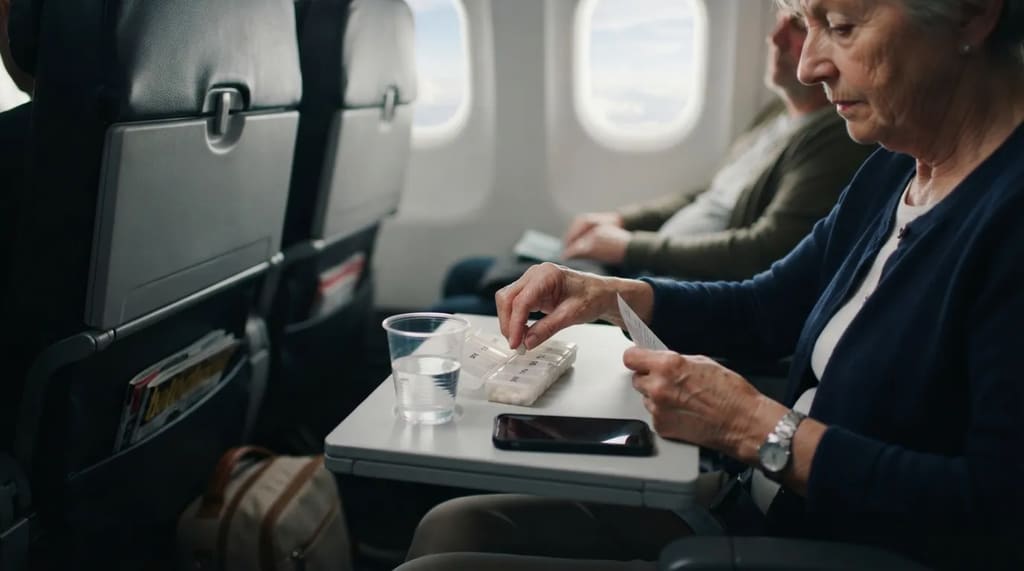
For most medications and short trips, the simplest plan is to stay on your home-time schedule. That works best when the doses are already in the carry-on, within reach.
Direction changes the math. Flying west stretches your day and lengthens the gap between doses, while flying east shortens it.
Time-critical drugs such as insulin and warfarin need a dosing plan confirmed with your clinician beforehand. A two-hour shift is a scheduling note, but a ten-hour shift is a clinical question.
A dose that needs water also meets a cabin that dries you out.
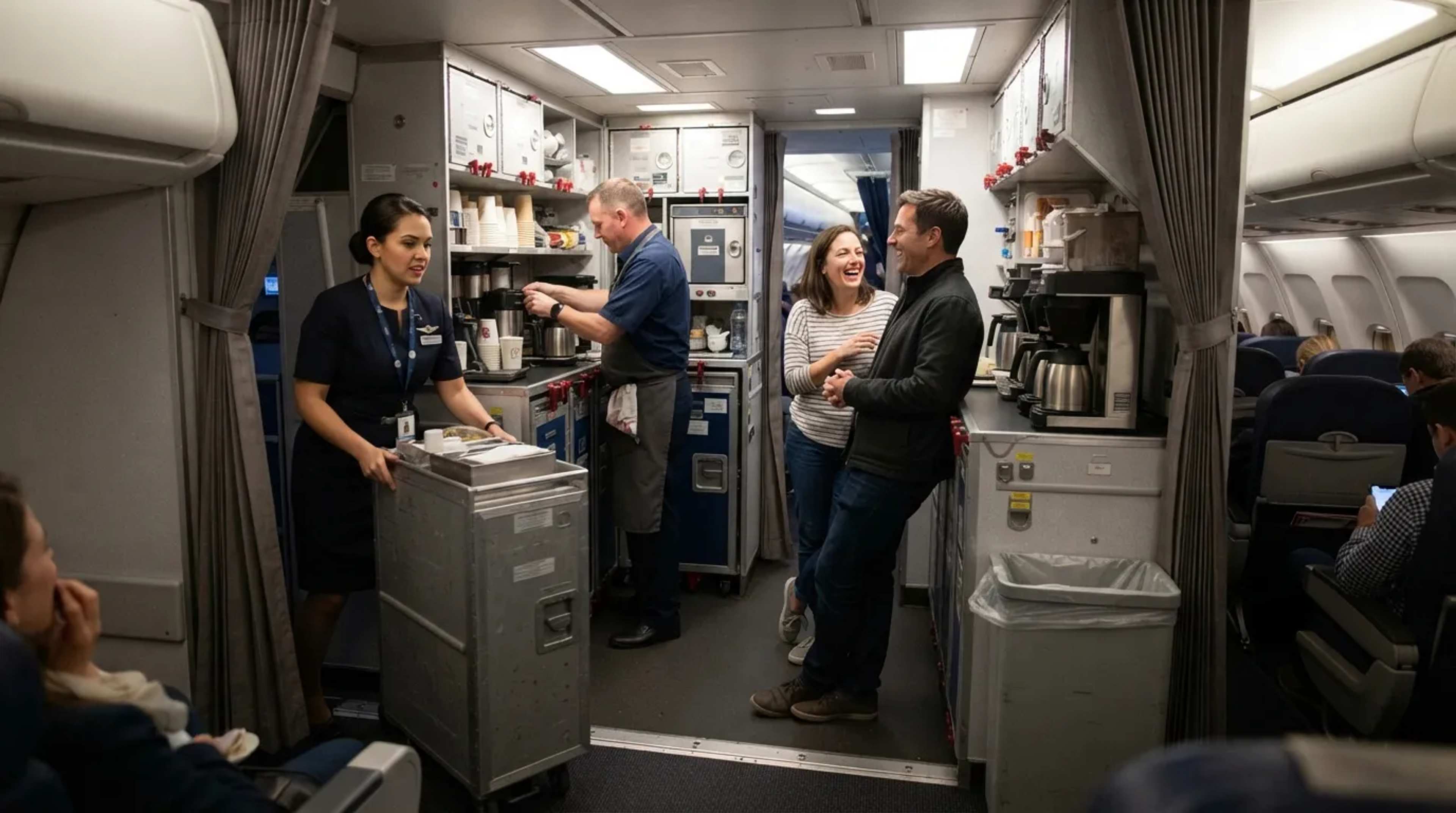
#10 – The Drink Cart in a Dry Cabin
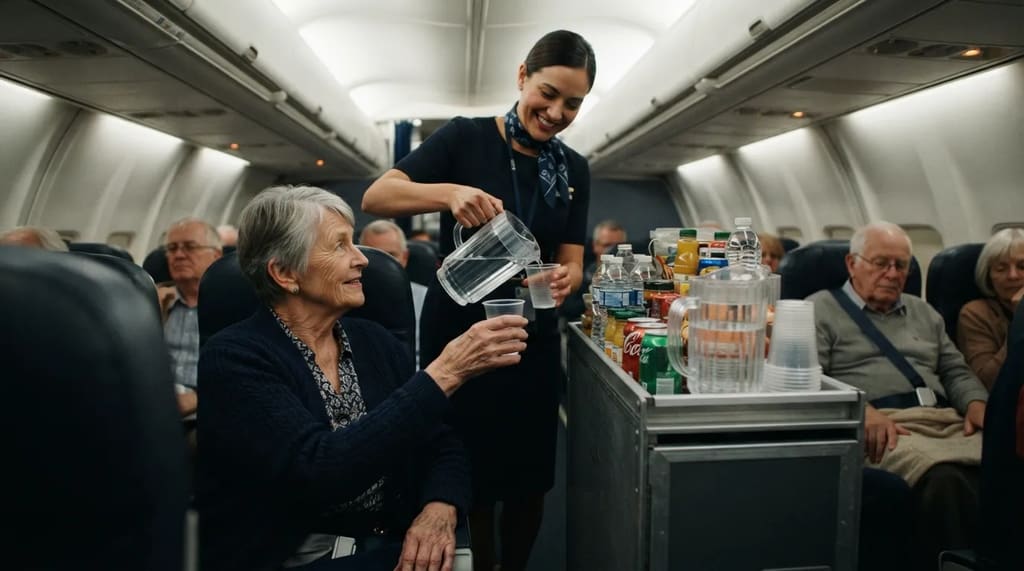
The CDC advises limiting alcohol and caffeine on long flights because both promote fluid loss. Flying dehydrates you, and some medications need water to be taken properly.
Hydration sits beside movement and, for some travelers, compression stockings among the usual clot-prevention measures. Water is doing more work than it seems to.
Ask for water each time the cart passes, and let that beat a second glass of wine. The bathroom trips it causes also get you out of your seat, which matters more than you would guess.
#9 – A Seat Belt Left Fastened With the Sign Off
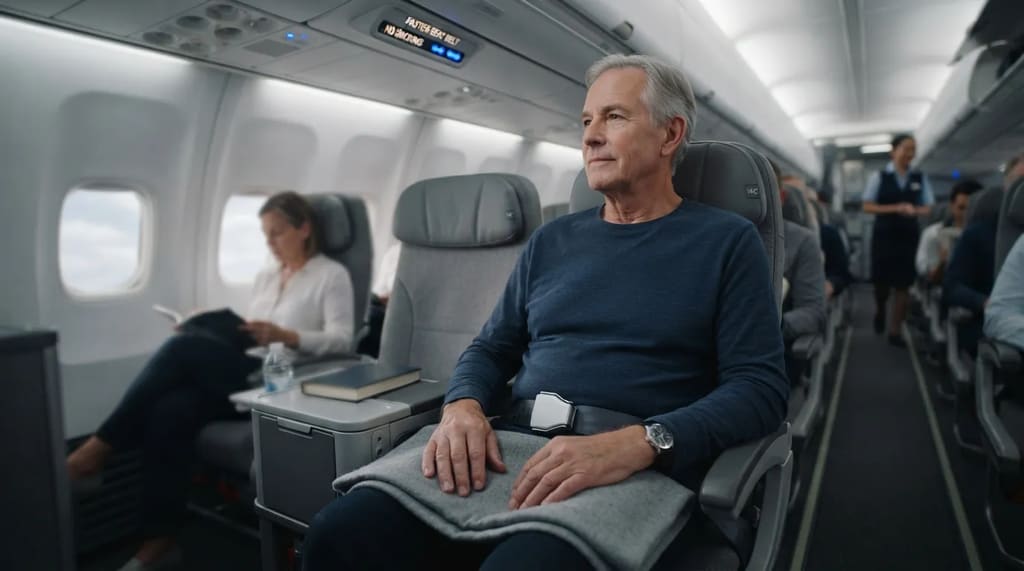
The FAA advises keeping your seat belt fastened whenever you are seated, even when the sign is off. Some turbulence cannot be seen coming.
FAA safety guidance points out that turbulence injuries mostly happen to people who are not buckled in. A flight attendant writing for CNN adds that even a loosely fastened belt can keep your head from hitting the overhead bins.
A belt protects you in the bumps, but it does nothing about hours of sitting still, and those have a threshold of their own.
#8 – What the Four-Hour Mark Really Measures
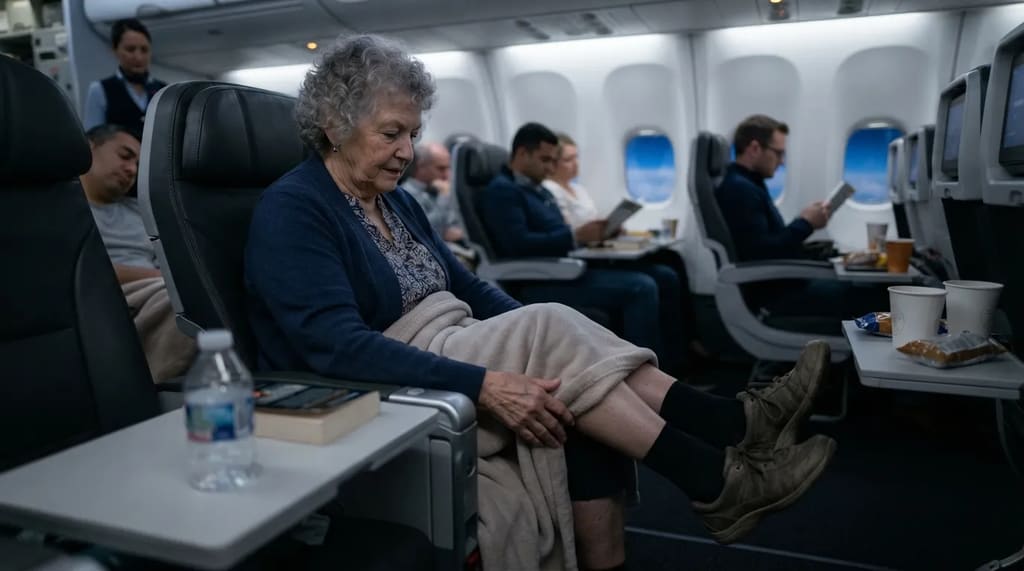
The CDC says anyone traveling more than four hours, by air, car, bus or train, can be at risk for blood clots. Older age is a listed risk factor, with risk increasing after 40.
The odds for any single trip are low. For flights over four hours, one study reported 1 in 4,656 person-flights and another reported 1 in 6,000.2
Those figures describe an average flyer, and frequent long-haul travelers tend to be healthier than the general population.2 If you carry other risk factors, your own odds may sit higher.
What you can do about it costs nothing and starts with where you sit.
#7 – The Aisle Seat and Calf Exercises
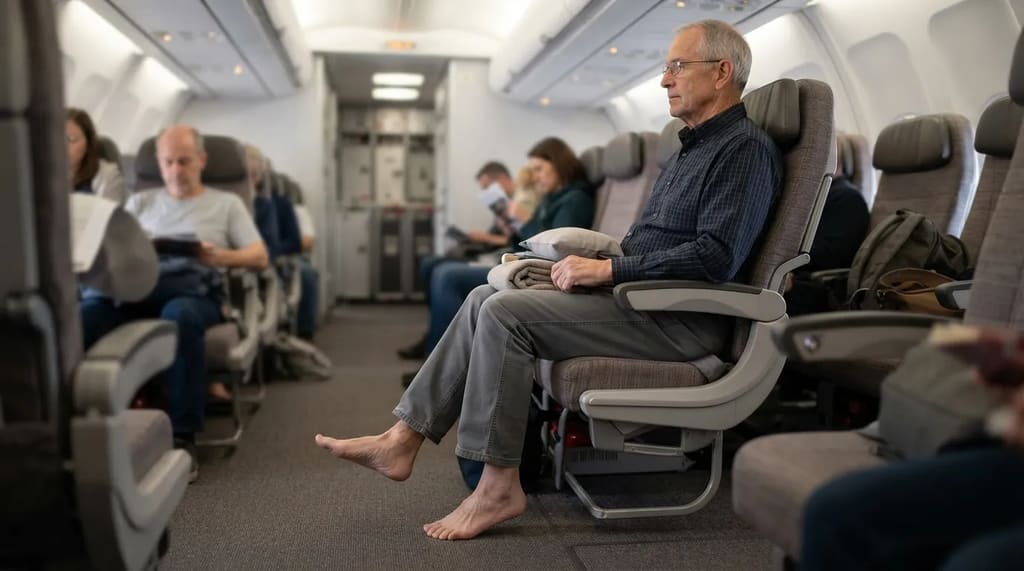
The CDC’s protective measures for long-distance travelers include calf exercises, frequent walking and an aisle seat when possible.3 Moving your legs improves blood flow.
If a seat fee buys the aisle on a flight past four hours, it is better spent than most upgrades.
Fast Facts
- CDC material gives the walking interval as every two to three hours, or every one to two. The shorter interval is the safer habit.
- Walk during smooth stretches, when the seat belt sign is off.
- Between walks, do calf raises and ankle circles from your seat.
- The aisle seat makes every one of those trips easier.
Walking still leaves hours when you cannot get up, and the pill many travelers reach for to cover them has no proof behind it.
#6 – Aspirin Before the Flight
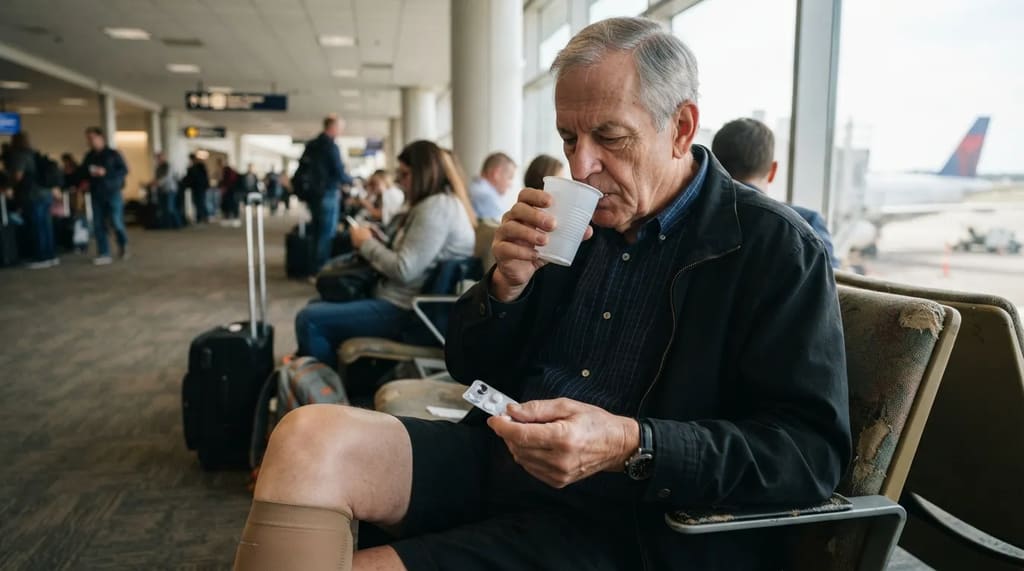
The CDC does not recommend taking aspirin solely to prevent travel-related blood clots. A tablet at the gate feels like a precaution, but the guidance does not back it.3
For high-risk travelers, the decision is made individually. Doctors weigh compression stockings, low-molecular-weight heparin or both for flights longer than six hours.2
Skip the gate-side aspirin. If you already take aspirin or a blood thinner for another reason, ask your doctor before changing anything.
#5 – Compression Stockings, Properly Fitted
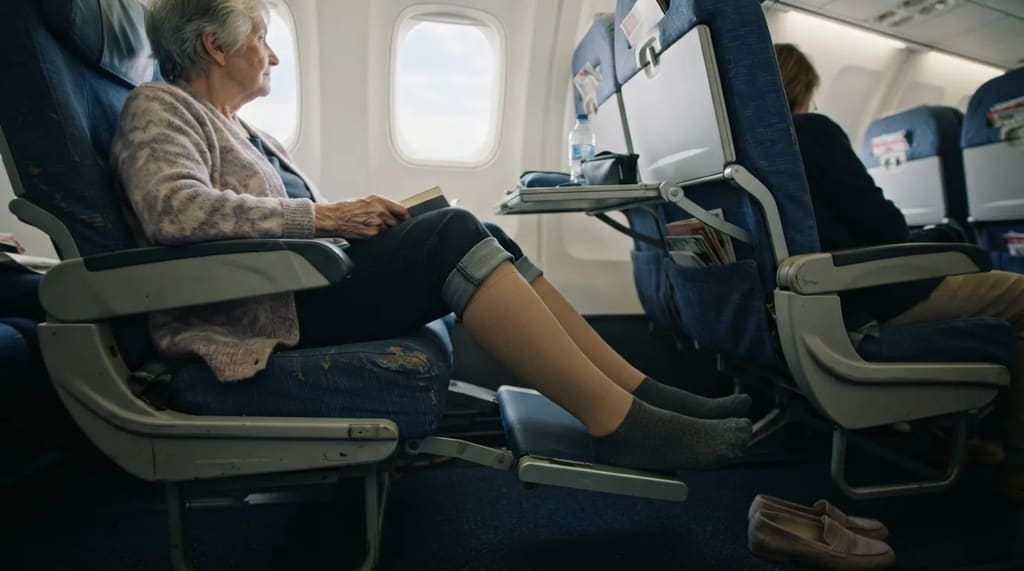
The CDC’s Yellow Book advises travelers at increased risk to consider properly fitted, below-knee graduated compression stockings. They appear to reduce symptomless clots and are generally well tolerated.2
Fit is the catch. Stockings that are too tight can cut into the skin on a long flight and potentially cause ulceration and increased DVT risk.
With a clot history, recent surgery or cancer treatment, they are worth buying and worth a proper fitting. Older age is itself a risk factor, so ask your doctor first.
Legs swell for ordinary reasons and for dangerous ones, and the two are hard to tell apart from a seat.
#4 – Clots That Give No Warning
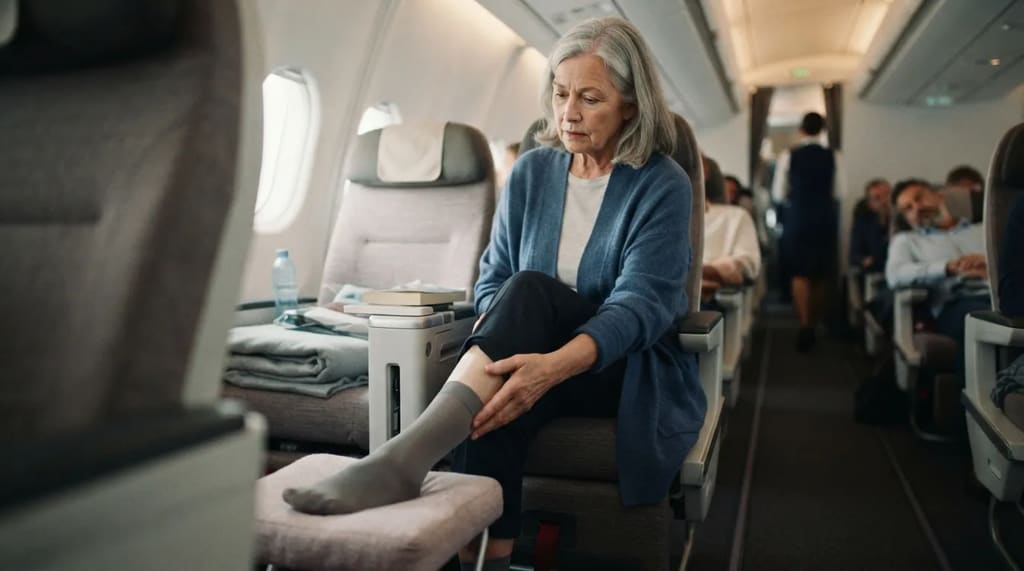
About half of people with DVT have no symptoms at all. The signs of DVT and pulmonary embolism are nonspecific.
Worth Knowing
- A clot in a deep leg vein can break loose and travel to the lungs.
- That is a pulmonary embolism, and it is potentially life-threatening.
- Warning signs include coughing up blood, very low blood pressure, lightheadedness or fainting.
- Because half of DVT cases are silent, a calm-looking leg proves nothing.
A leg that stays swollen or painful after landing, or sudden breathlessness, calls for a prompt call to a doctor. Ordinary swelling does not mean a clot, but you cannot judge that by looking.
Breathlessness has other possible causes on a plane, starting with the air itself.
#3 – Oxygen Arranged Before You Board
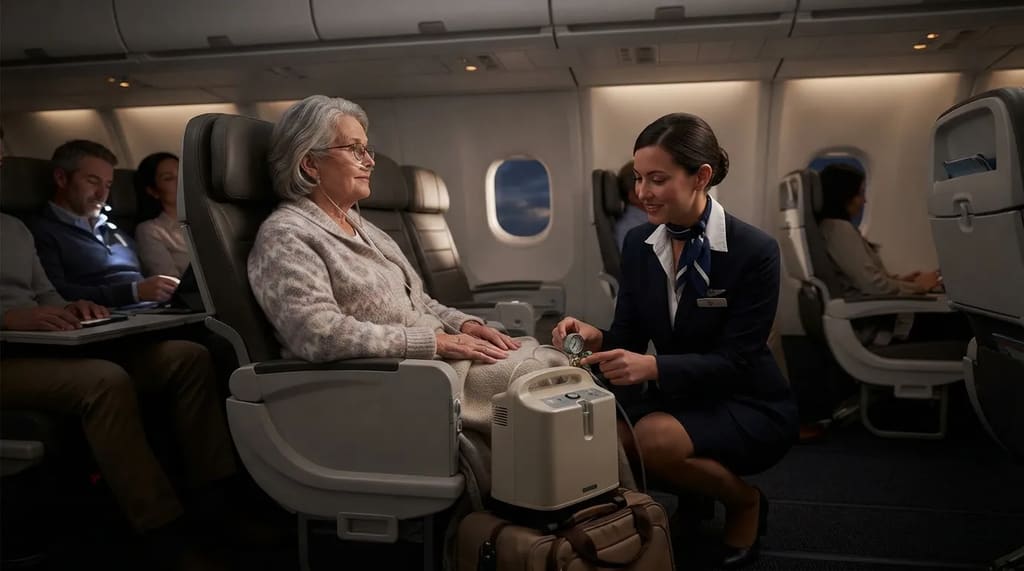
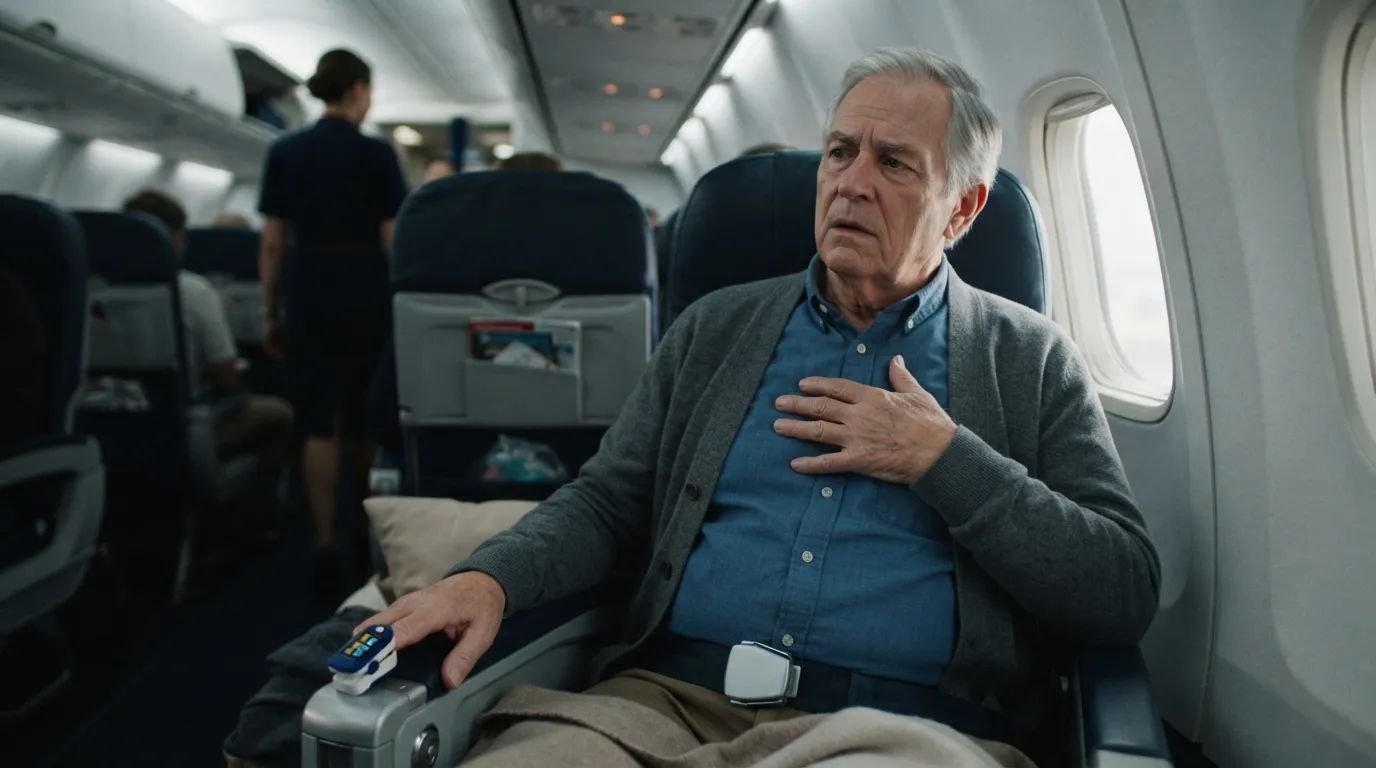
At a cabin pressure equal to 6,000 to 8,000 feet, the air may hold only 15 percent oxygen instead of the 21 percent at sea level. That can lower blood oxygen and worsen lung or heart conditions.
University of Arizona Center on Aging guidance says a patient with chronic lung disease should be recommended in-flight oxygen when saturation reads below 92 percent. It sets a more cautious range of 92 to 95 percent for patients who also have conditions such as cardiac disease.
Most airlines will provide supplementary oxygen if forewarned, so the arrangement happens by phone before the trip, not at the gate. A recent heart attack, unstable angina or poorly controlled heart failure calls for a doctor’s conversation before booking.
Even travelers who need no oxygen have a heart that works harder at cabin pressure than it does on the ground.
Related Stories From Travelbinger



#2 – The Heart Working Harder at Cabin Pressure
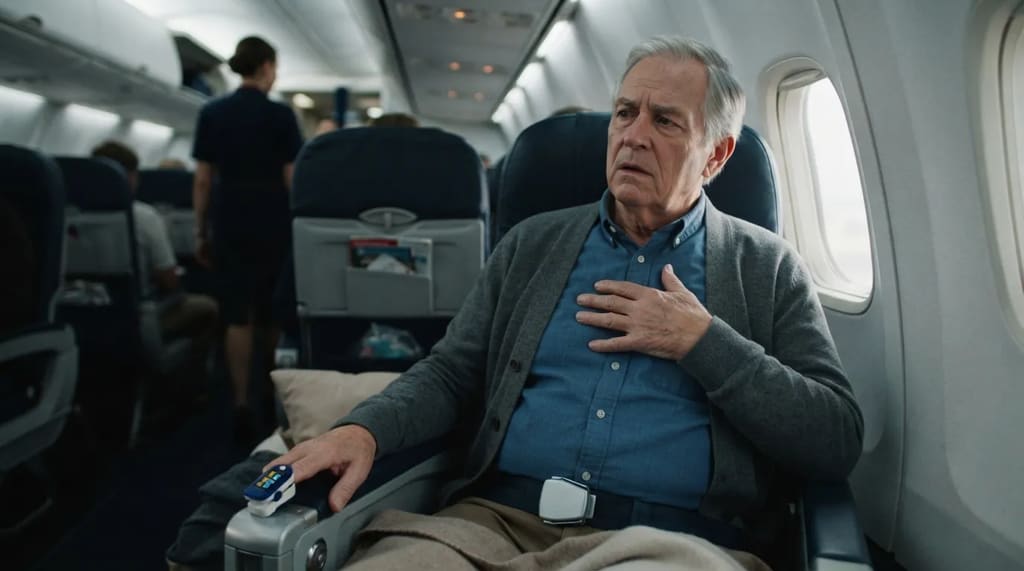
Harvard public health researchers ran chamber experiments simulating flight conditions. They found that older and vulnerable passengers experienced moderate hypoxia, with heart rates going up and heart-rate variability going down, both signs of cardiac stress.4 5
That held even at a simulated 7,000 feet, lower than the typical 8,000. The body responds to less oxygen the way you would expect, by pumping faster to make up the difference.
The picture is not alarming for everyone. Since flights are pressurized to 6,000 to 8,000 feet, older adults with stable cardiovascular disease should be able to fly without risk.
Here is the twist: that 8,000-foot cabin was set with a very different kind of passenger in mind.
#1 – The 8,000-Foot Cabin and the Pilots Behind It
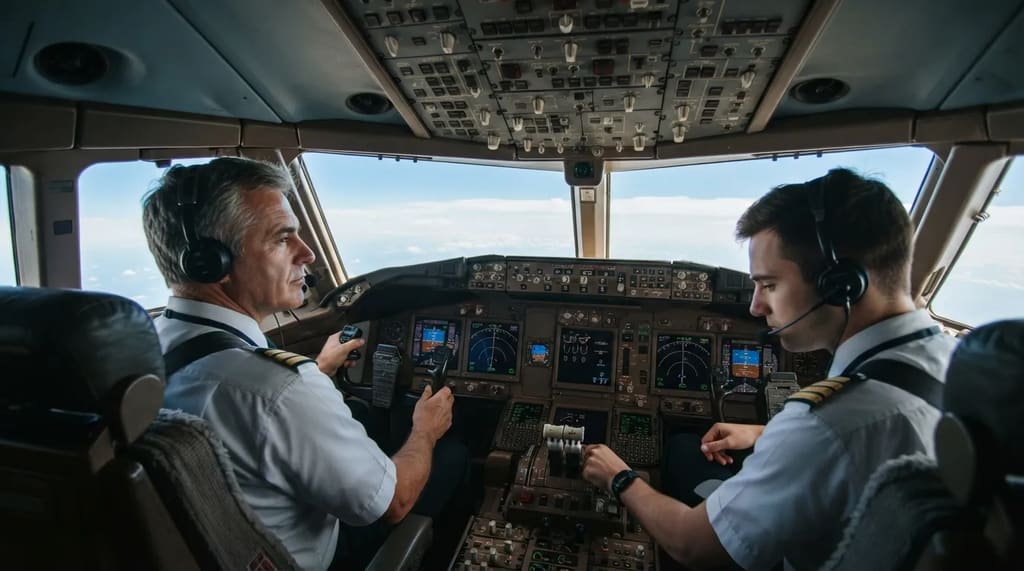
At 8,000 feet there is about 25 percent less oxygen than at sea level. Most passengers tolerate that, though people with heart or lung disease may feel symptoms from as low as 5,000 feet.
Harvard researchers point to where the limit came from. It is assumed safe largely on World War II-era research, when most of those flying were healthy young male fighter pilots.4
Eight thousand feet sat just below the 10,000-foot level at which cognitive changes from hypoxia were evident.4 The standard was built around that line, and not around a 72-year-old on a 12-hour flight.
Why It Stands Out
- The evidence base leans on World War II-era research.
- The test subjects were mostly healthy young male fighter pilots.
- The 8,000-foot cap sits just under the 10,000-foot line where hypoxia clouded thinking.
- Heart or lung disease can bring symptoms from as low as 5,000 feet.
A report to the FAA on the airliner cabin environment goes further. Even without overt disease, older passengers may be vulnerable aboard aircraft, and simulated 7,000-foot studies found that a significant portion may be at risk of hypoxia.6
That is the thread running through every item above. The walks, the water, the pill bag and the oxygen call are ways of covering, at your own seat, for a standard written for someone else.
You cannot change the cabin pressure, so preparation is the part you control. Settle water, pills, a seat and a walking schedule before you board, and let your own doctor decide which of these apply to your heart, lungs and medications.
What is the one thing you now do differently on flights longer than four hours, and what made you start?
- TSA Medical Items: https://www.tsa.gov/travel/security-screening/whatcanibring/medical?page=3
- CDC Yellow Book DVT/PE: https://www.cdc.gov/yellow-book/hcp/travel-air-sea/deep-vein-thrombosis-and-pulmonary-embolism.html
- CDC Yellow Book Air Travel: https://wwwnc.cdc.gov/travel/yellowbook/2024/air-land-sea/air-travel
- Harvard Chan Cabin Pressure Interview: https://hsph.harvard.edu/news/the-potentially-unfriendly-skies/
- Simulated Flight Heart Rate Study: https://www.frontiersin.org/journals/physiology/articles/10.3389/fphys.2019.01339/full
- FAA Airliner Cabin Report: https://www.faa.gov/sites/faa.gov/files/data_research/research/med_humanfacs/cer/AirlinerCabinEnvironmentReport.pdf