
The first evening aboard looks like pure vacation, but it’s packed with small slips that can cost you money, comfort and even a healthy first night. These 24 are the ones worth knowing before you board.
One of them is a first-day safety rule set by international convention and enforced by the Coast Guard and other port authorities. Skip it, and your name and room number are reported to the ship’s commanding officer, and it’s the one item here that can get you put off the ship at the next port. It’s saved for last, and several of the slips before it start before you ever reach the pier.
#24 – Booking a Same-Day Flight to the Port
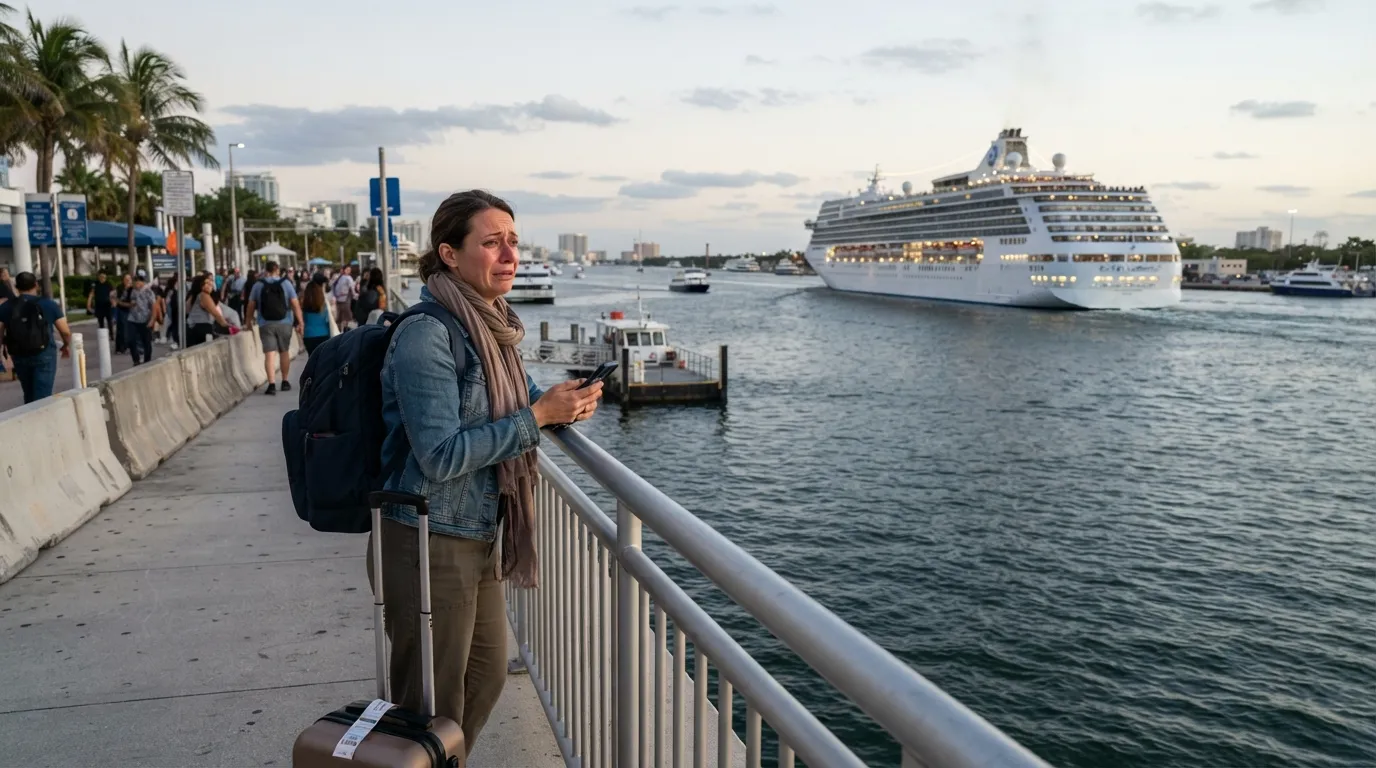
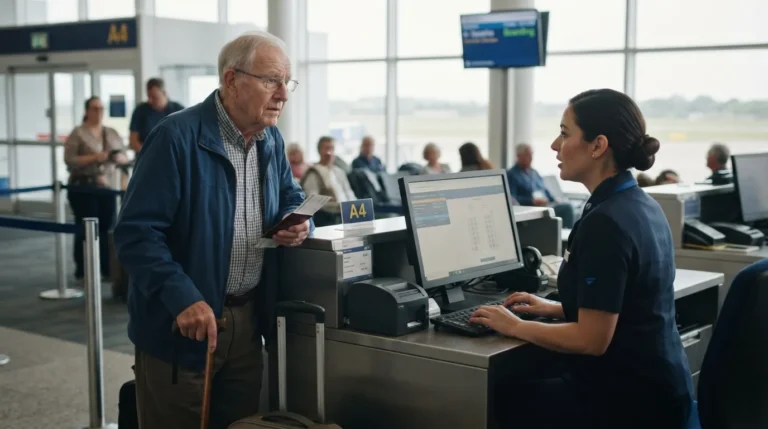
A delayed or canceled flight on sailing day can leave you watching the ship from the wrong side of the water. Flying in at least one day early removes that risk.1
Arrive the day before, and a delay costs you a hotel night instead of the whole cruise. Stay near the port or airport so embarkation day starts with you already in the right city.2
Landing in the right city settles the flight, but not what time to reach the pier. The early-bird instinct backfires there.
#23 – Showing Up the Minute the Terminal Opens
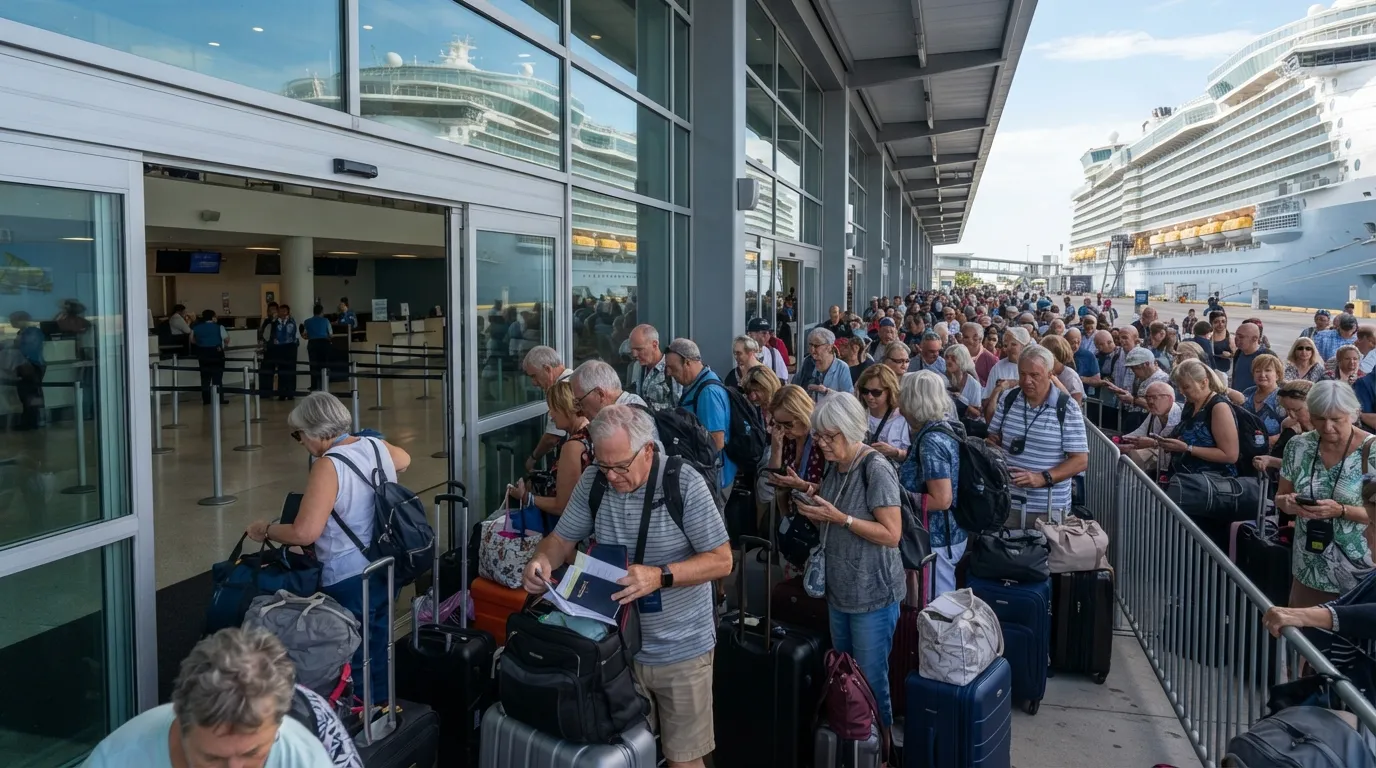
Terminals typically open between 10:30 and 11 a.m., so the instinct is to arrive as early as possible. If your cruise line assigned you a boarding window, stick to it.
Find your assigned boarding window in online check-in, and arrive inside it.
Once you’re through the door, the document you need at check-in is often sitting in the wrong bag.
#22 – Packing Your Passport in a Suitcase
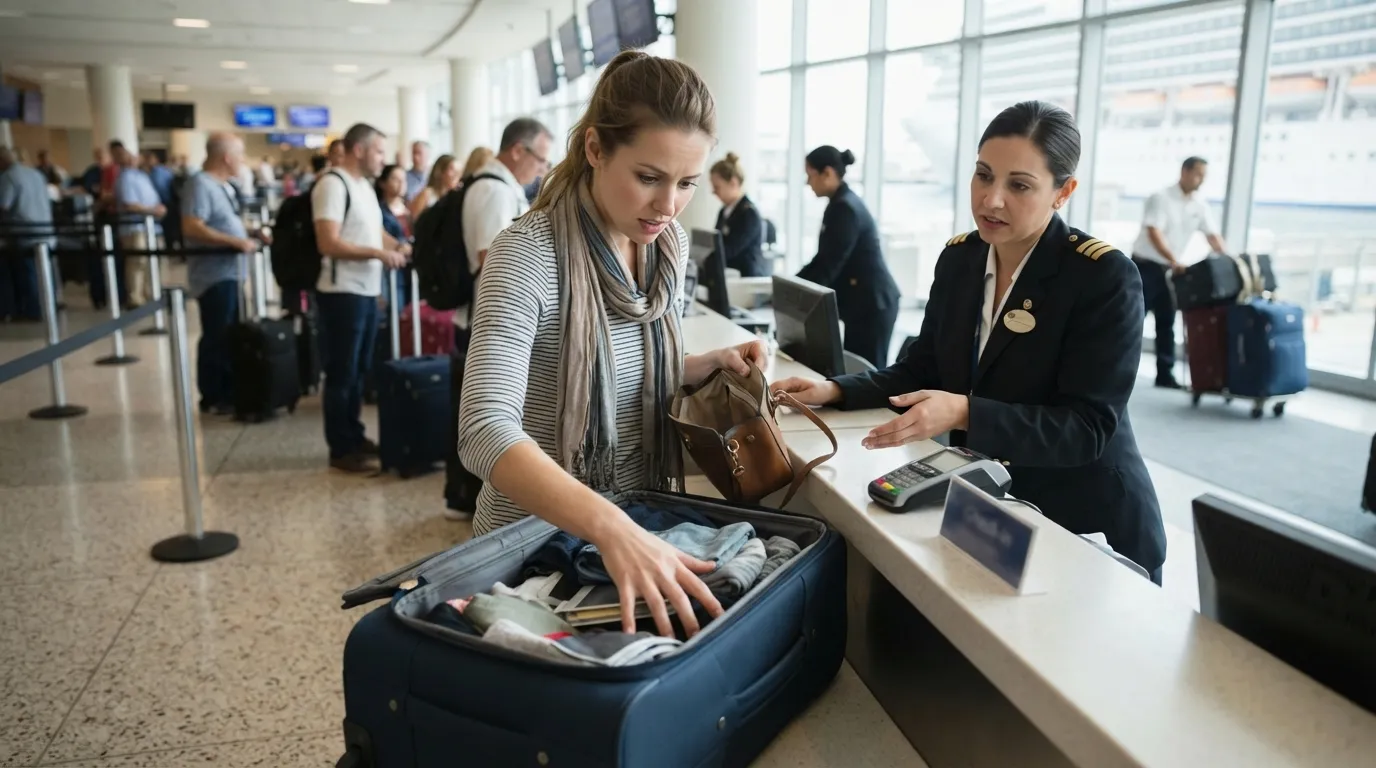
Your checked luggage goes to a porter at the pier, so anything still inside it can’t help you at the desk. Passport, ID and cruise documents belong in your carry-on, because missing paperwork can prevent boarding entirely.
Terminal Wi-Fi can be spotty, so don’t count on the cruise line’s app to load your boarding pass. Passport, ID and boarding documents ride in your hand, never in a suitcase.
Papers get you to the front of the line, but the bag in your hand can still be stopped at security.
#21 – Packing Things Security Will Take Away
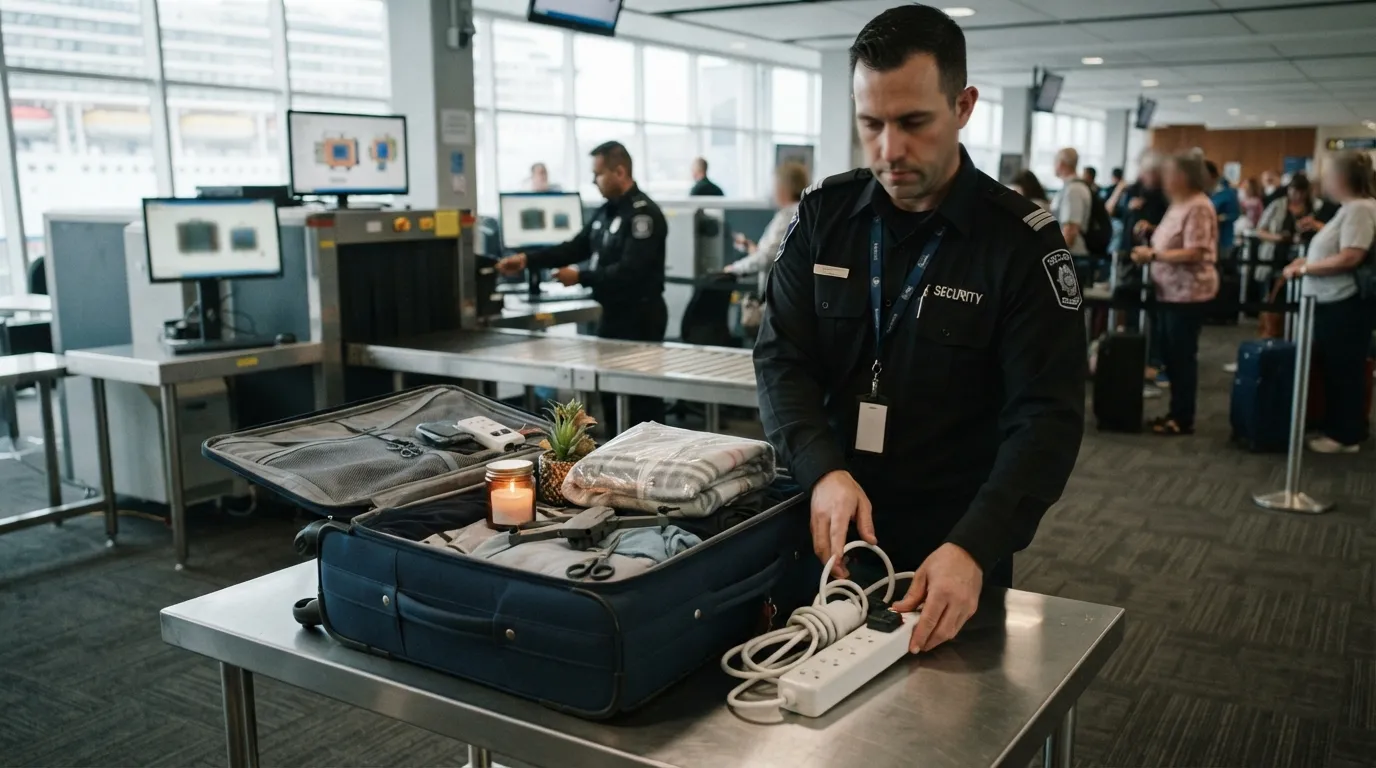
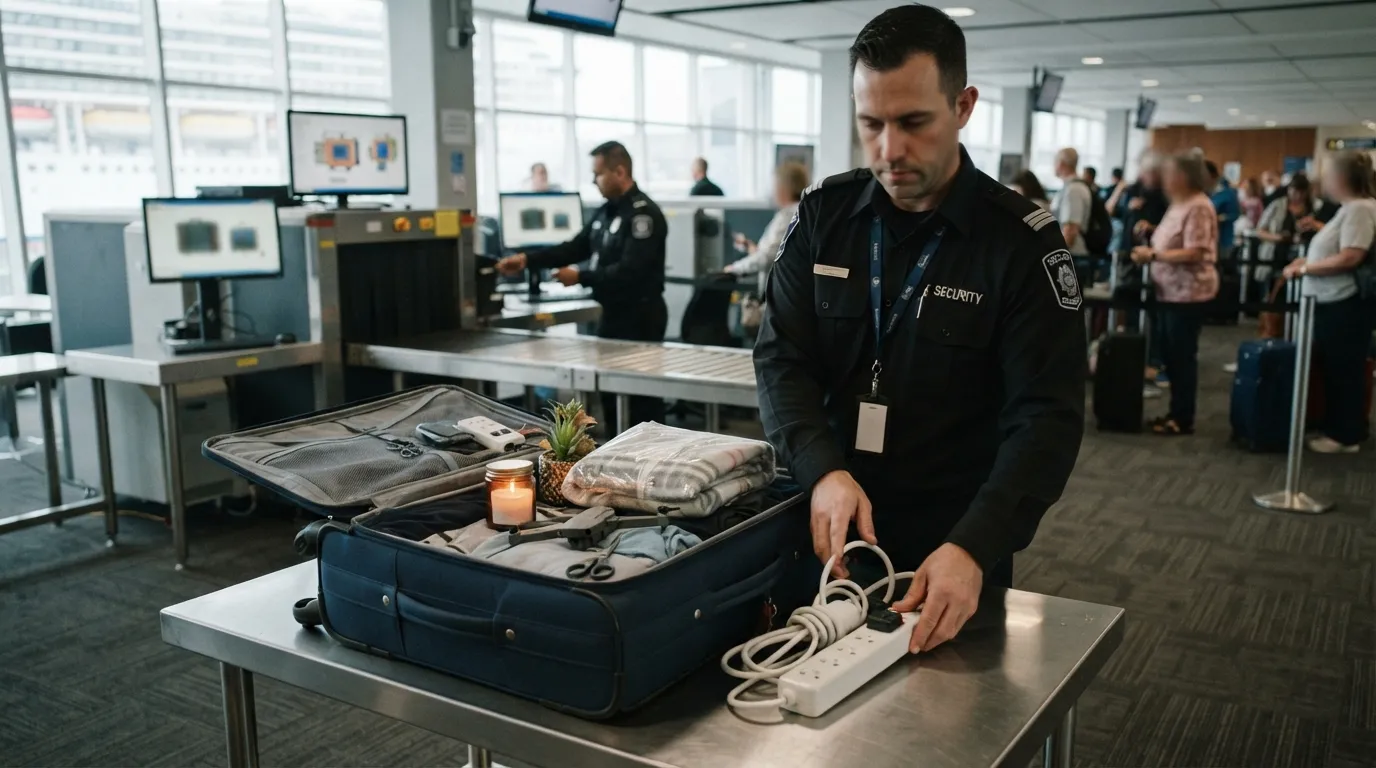
All checked bags and carry-ons are scanned, so a bottle slipped into a suitcase won’t go unnoticed. Rules vary by cruise line, so treat the list below as a starting point.
Worth Knowing
- Banned items commonly include candles, incense and electric blankets.
- Plants, drones and sharp objects often make the list too.
- Power strips deserve a second look: AAA suggests a ship-approved strip or a USB hub instead.
- Your own cruise line’s prohibited-items list has the final word.
Read your own cruise line’s prohibited-items list before you pack the first bag.
Even a clean bag can fail you in another way, because the suitcase you checked may not show up when you need it.
#20 – Leaving the Day Bag at Home
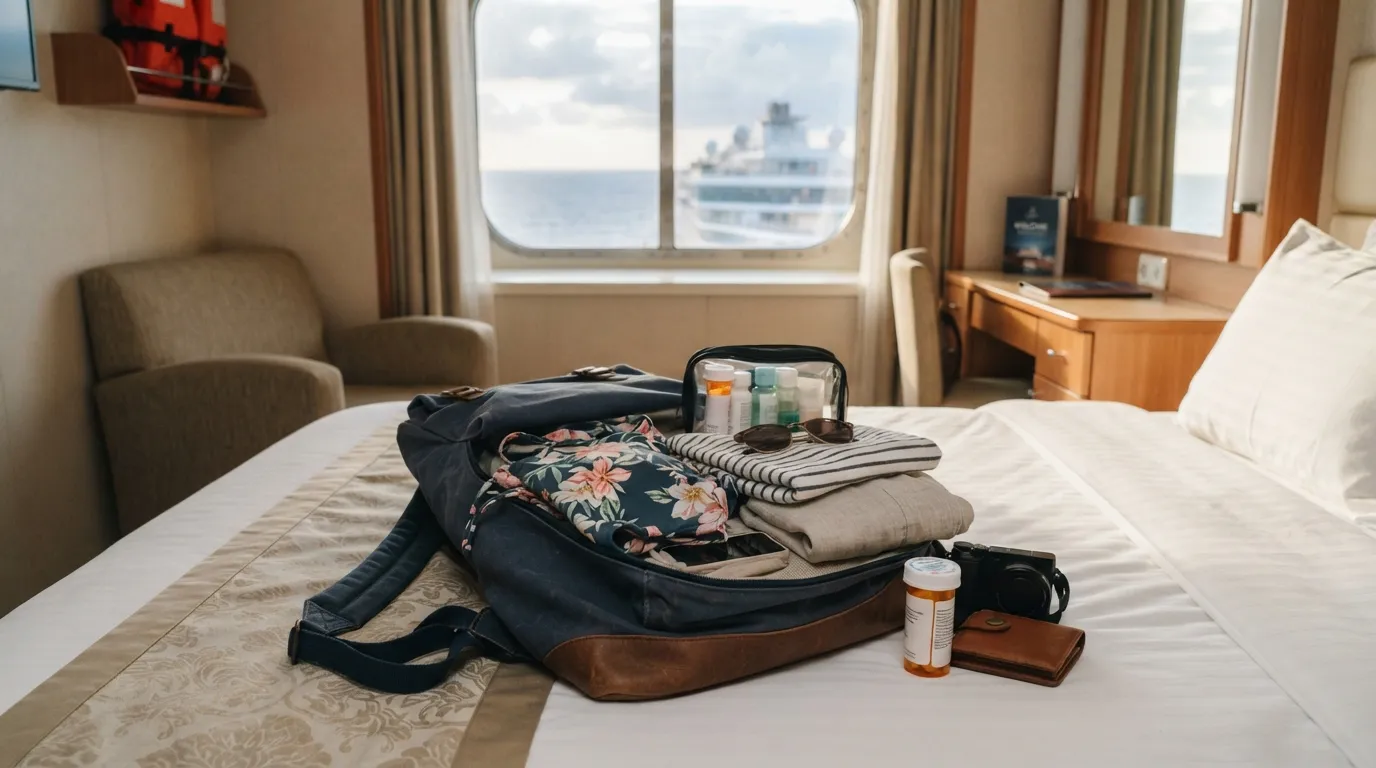
Luggage is delivered to cabins within a few hours after boarding. It usually arrives before dinner, but delays happen, and bags can come one at a time.
Your carry-on should hold a change of clothes, a bathing suit, medications, and any electronics or valuables you don’t want to check. Pack a full change of clothes and a swimsuit in the bag you carry aboard.
One item in that bag has a stricter reason to be there, because the ship can’t easily replace it.
#19 – Sending Your Pills Through With the Luggage
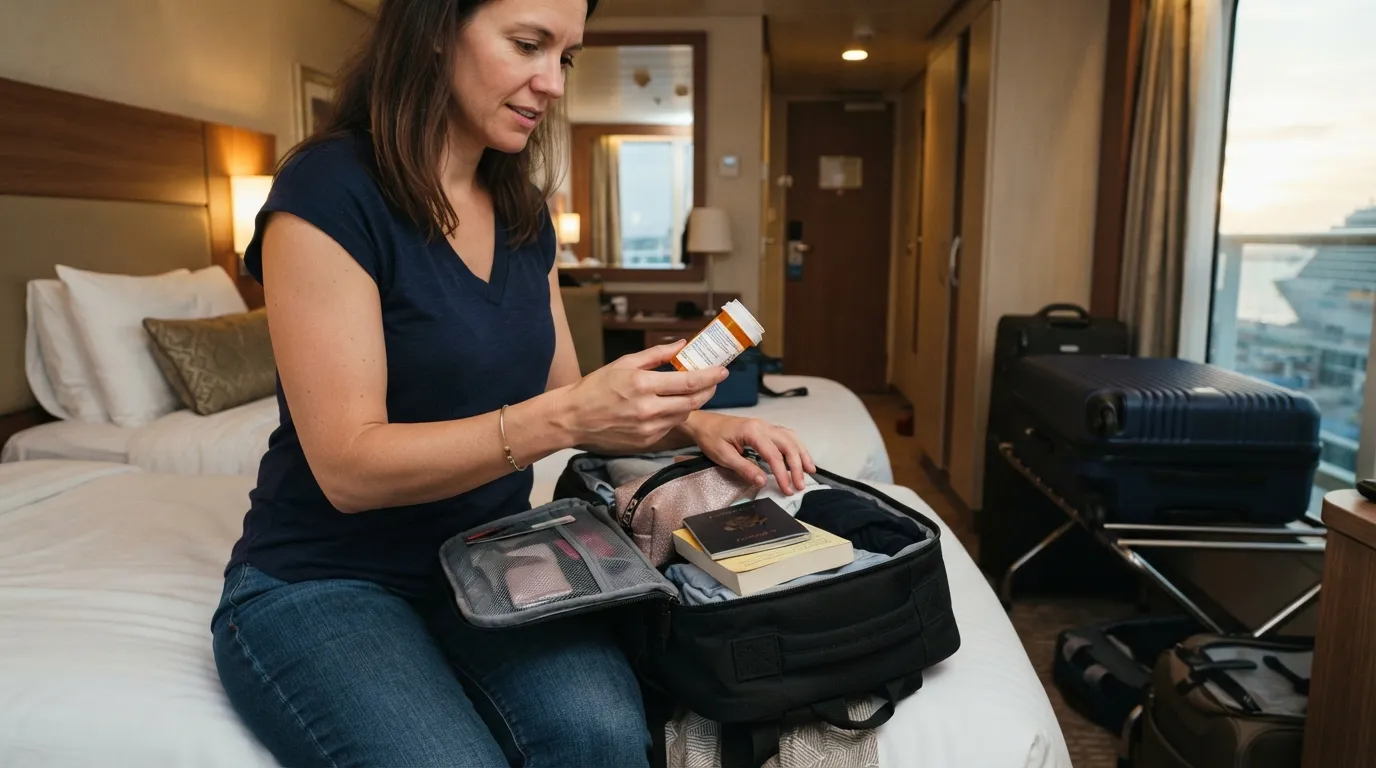
A swimsuit can be bought on board. A prescription is much harder to replace.
Ship medical centers aren’t full pharmacies, so late or lost luggage can leave them unable to restock your supply quickly. Every medication goes in the carry-on, with a copy of each prescription. If a dose falls due at dinner and your suitcase hasn’t arrived, you’ll be glad you did.
Your phone needs preparing next, and the best time to do it is before you leave the hotel.
#18 – Waiting to Download the Cruise App
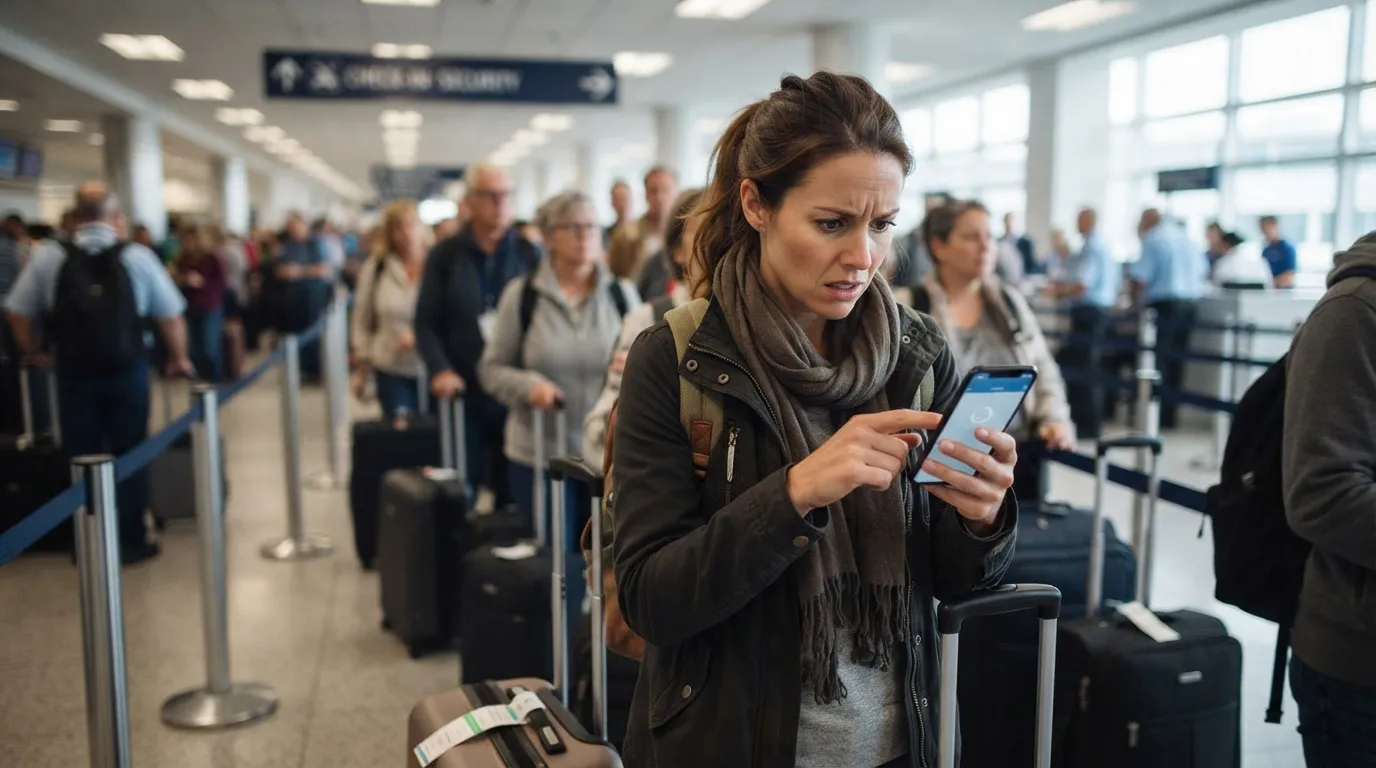
Download the app before you get on board, so you know it works and can preview the daily activities. That also gives you time to fix a login problem on a reliable connection.
On some lines, part of the safety drill is a video you watch on the cruise line app or the cabin TV. Download the app and log in before you reach the terminal.
With the app ready, you may march straight to your stateroom, and on many ships it isn’t open yet.
#17 – Marching to a Cabin That Isn’t Ready
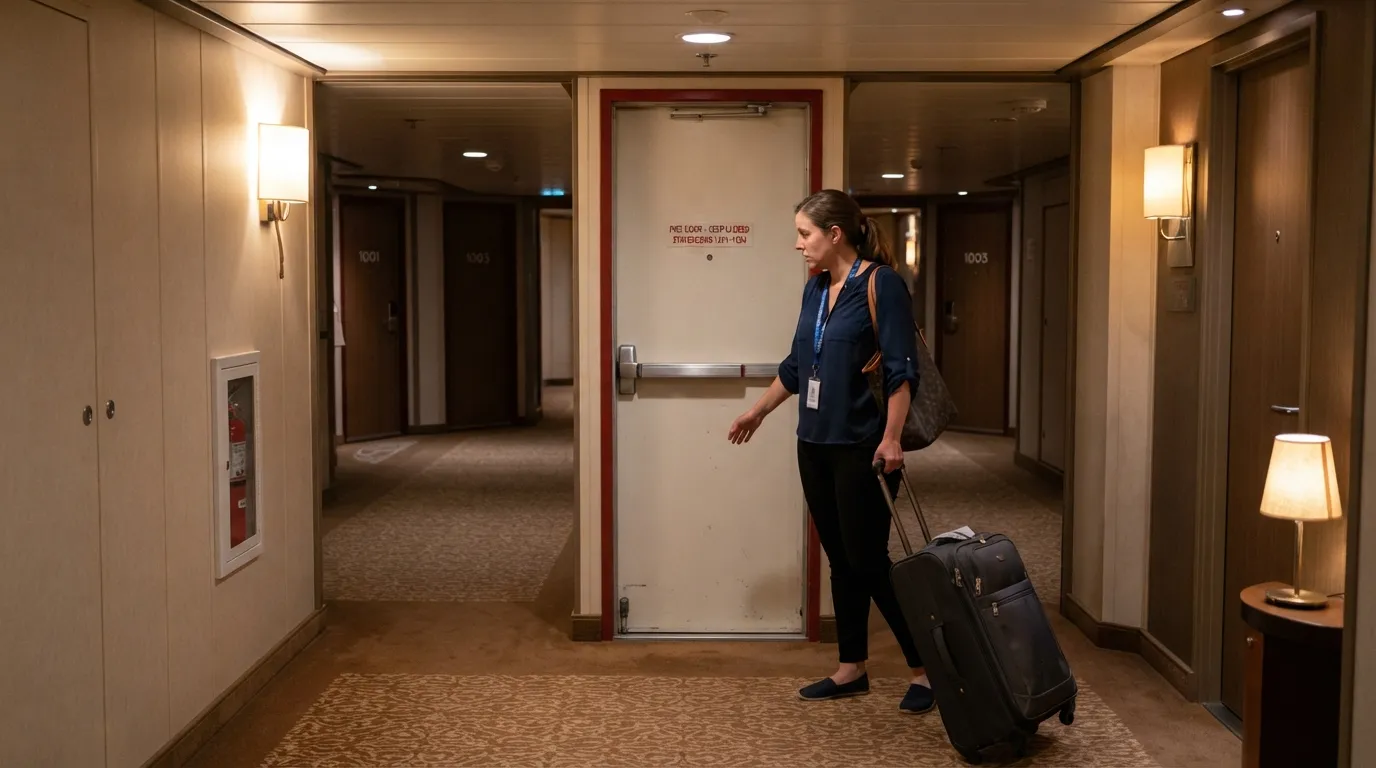
Your cabin may not be ready for the first hour of your cruise. Some ships block hallway access with fire doors until every room is serviced, though you may get in early if yours is already clean.
An announcement will often tell you when all cabins are ready. Until then, a closed hallway door is not a problem you can solve.
Leave a heavy bag with guest relations rather than hauling it around. The desk might hold it for you.
The better use of that wait is lunch, though the obvious place to eat is also the most crowded room on the ship.
#16 – Heading Straight for the Buffet
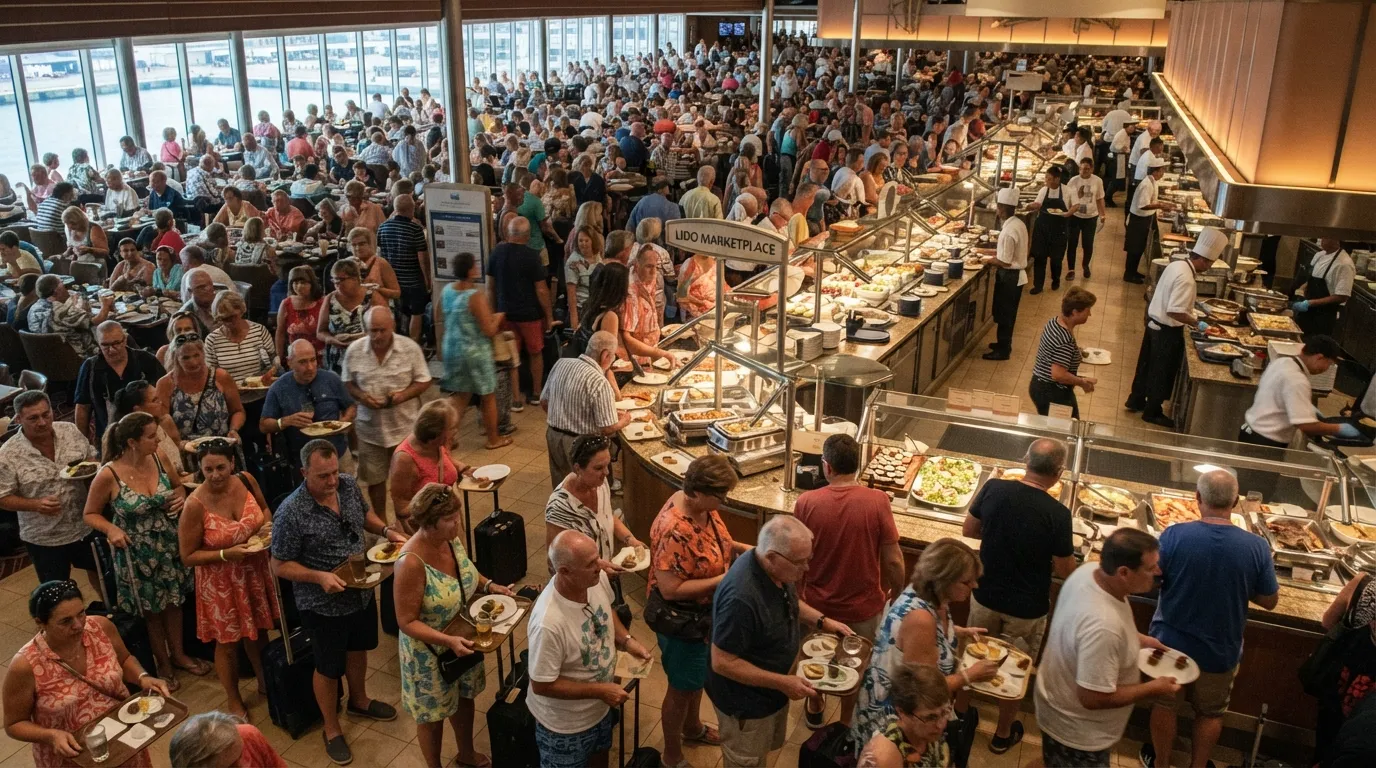
Buffets are among the most crowded places onboard on embarkation day, because everyone arrives hungry for lunch. Browse your options first and use the chance to explore other venues.1 2
Bookable restaurants that are open on embarkation day are an alternative. Look for a table-service venue open for lunch before you join any buffet line.
If you do use the buffet, wash your hands before eating, especially after handling serving utensils other guests have used. Save the rest of the buffet for day two, when the line is shorter.
Dinner brings the same choice again, and the default answer isn’t always the best one.
#15 – Eating Dinner in the Main Dining Room by Default
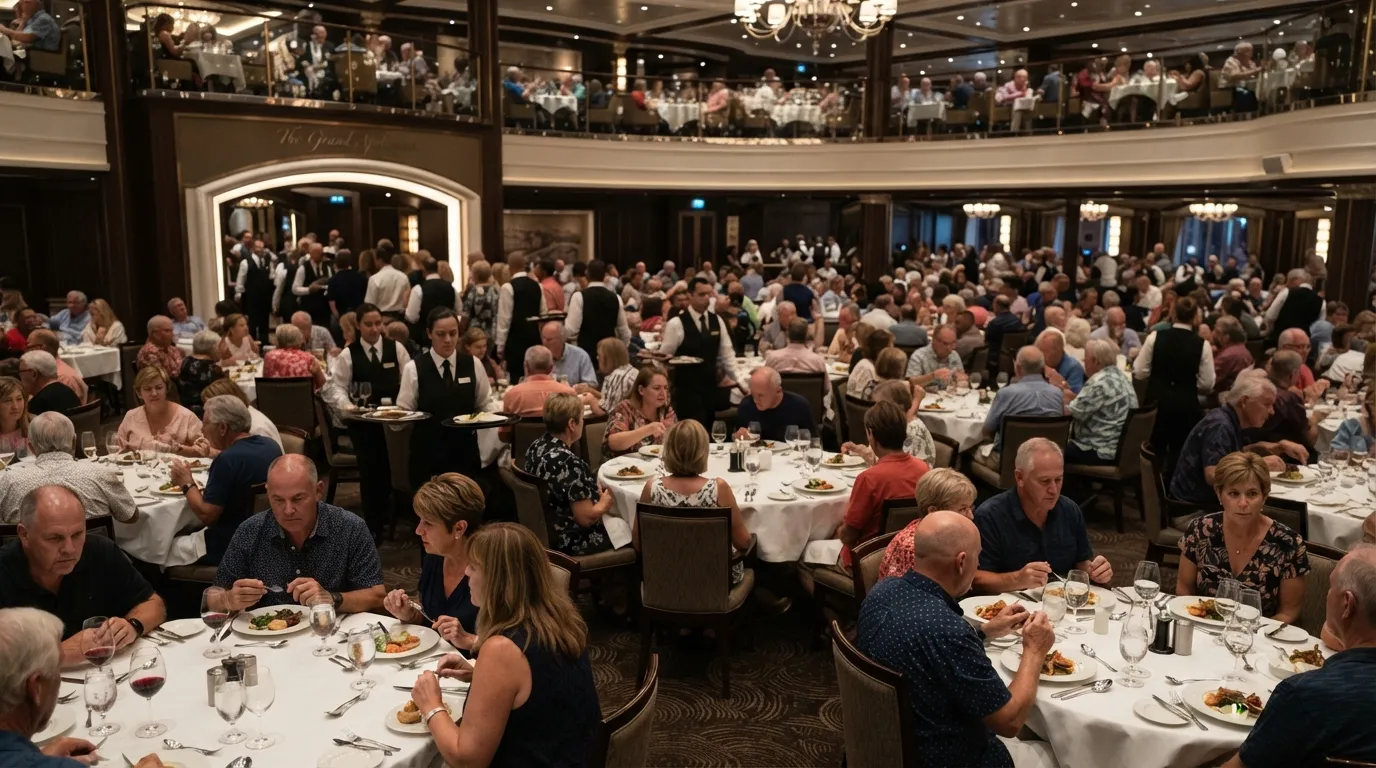
Avoid automatically eating dinner in the main dining room on the first night. It’s wise not to expect perfection from it on night one.
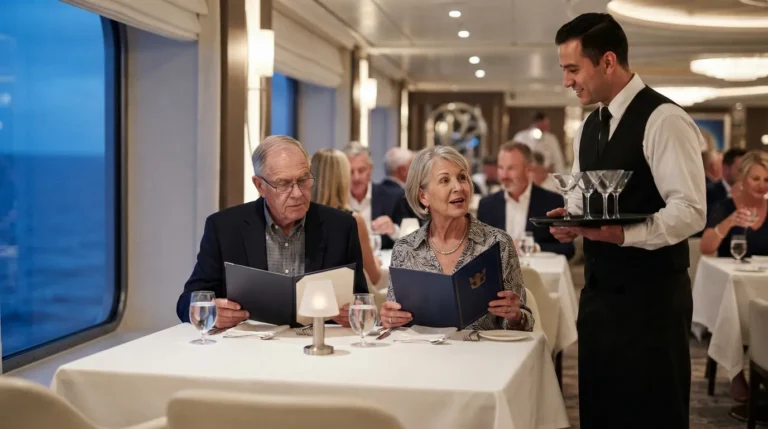
Embarkation night can be a good time for a specialty restaurant, since they’re often less crowded and some lines reduce the cover charge that evening. Ask whether your line discounts specialty dining on the first night. The discount is a line-by-line perk, so confirm it before you assume it.
Whichever table you pick, the best seats and times can disappear fast.
#14 – Skipping the First-Day Reservations
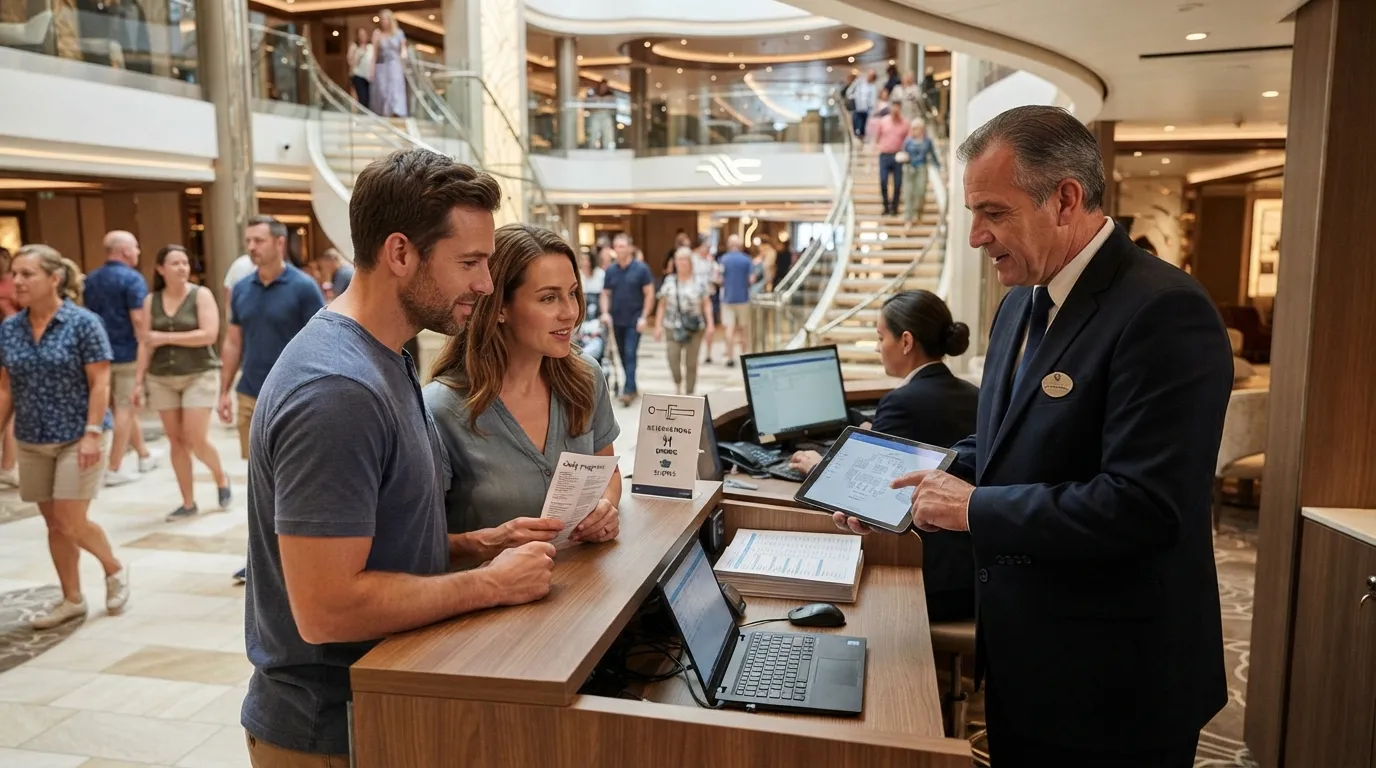
The maitre d’ is typically available on embarkation day to take questions and make changes, if possible. That makes the first afternoon the easiest time to ask for a different dining time or table.
At a Glance
- Ask the maitre d’ about a different dining time or table.
- Look for the dedicated reservations area, since many ships have one.
- Lock in specialty restaurants before the crowds do.
- Reserve ticketed shows while every slot is still open.
Book specialty dining and any ticketed shows before the first dinner.
If kids are sailing with you, one more sign-up works best on day one, and it doesn’t commit them to anything.
#13 – Putting Off the Kids’ Club Sign-Up
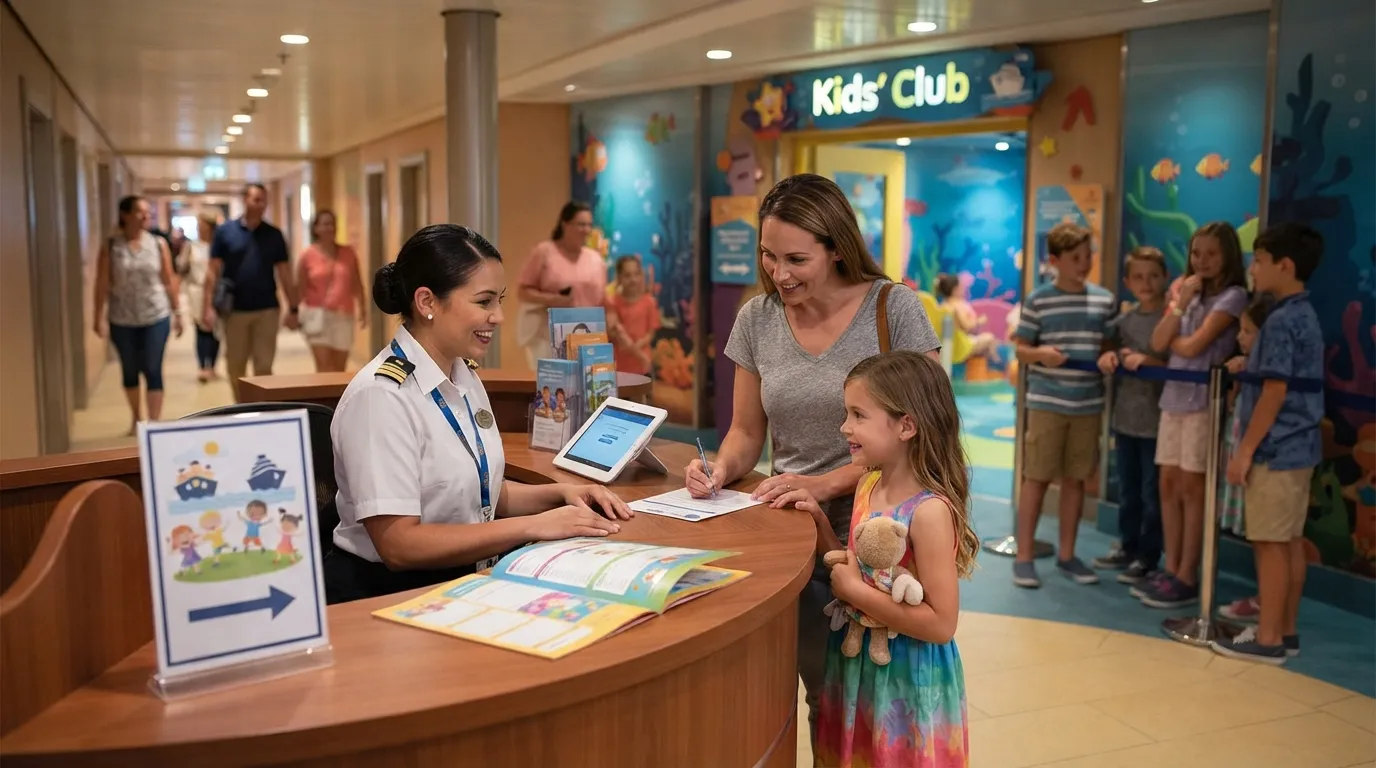
It’s better to sign up on day one even if you’re not sure your kids will want to go, because there’s no requirement to attend. Registration is a free option for any parent or grandparent in charge.
Guest services will have a huge line on embarkation day, so ask where else on your ship registration is handled before you queue. Registering on day one commits no child to attending.
Another person aboard deserves five minutes of your first afternoon, and that person will care for your cabin all week.
#12 – Not Meeting Your Cabin Steward
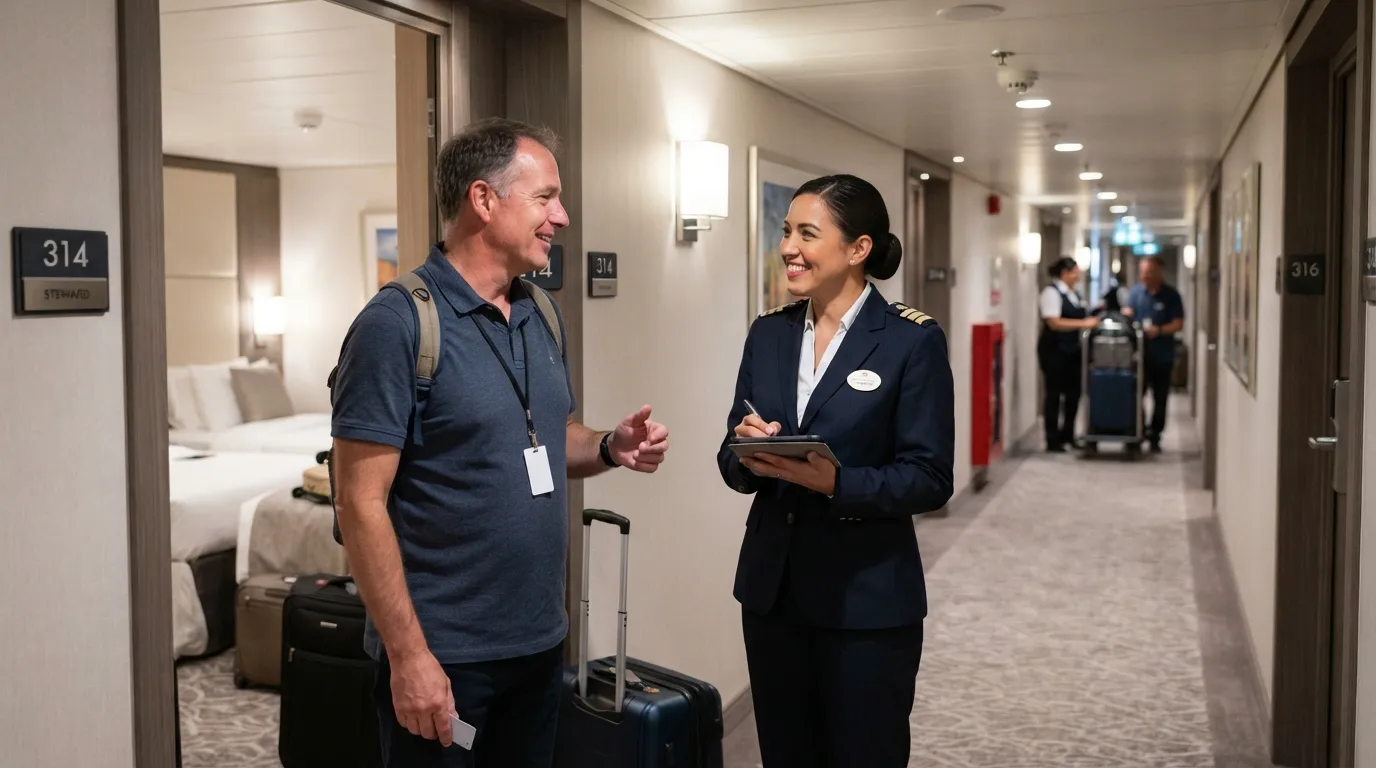
Take about five minutes on day one to find your cabin attendant and share any requests. Your steward looks after you for the whole cruise.1
Embarkation day is busy for cabin attendants, so keep it short and give them a little time to act.1 Spend five minutes on day one introducing yourself and stating your requests.
If a request is bigger than a pillow, you may end up at the busiest desk on the ship.
#11 – Joining the Guest Services Line Empty-Handed
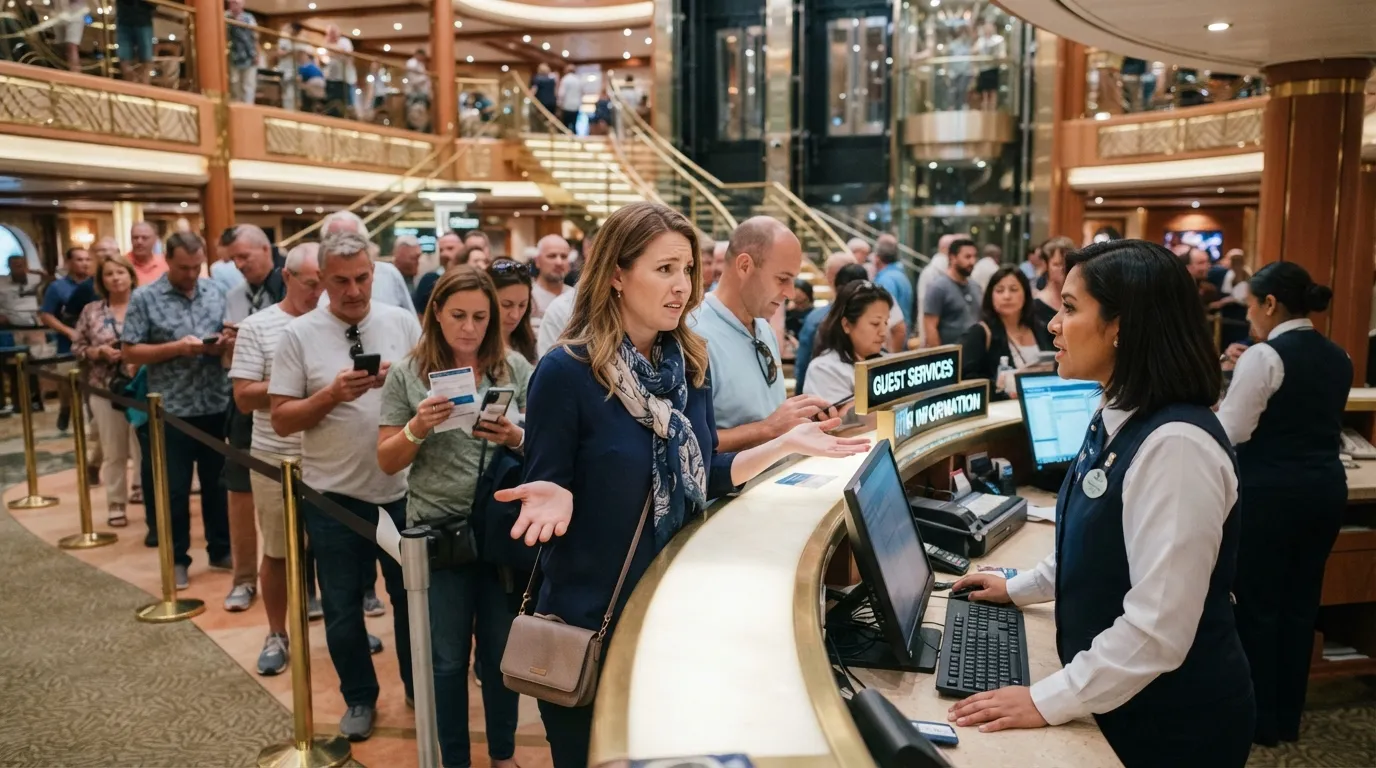
Guest services is busy on embarkation day, but proof of your pre-cruise purchases can often resolve an issue quickly. That means confirmation emails for excursions, packages or specialty meals, saved on your phone or printed.
Bring proof of every pre-cruise purchase to the desk.
Go on day one only for something with a day-one window, like a cabin problem. A routine question can wait until the line thins.
One purchase is worth leaving alone at that desk and at the bar, because the price you see on day one isn’t always the lowest.
#10 – Buying a Drink Package in the Rush
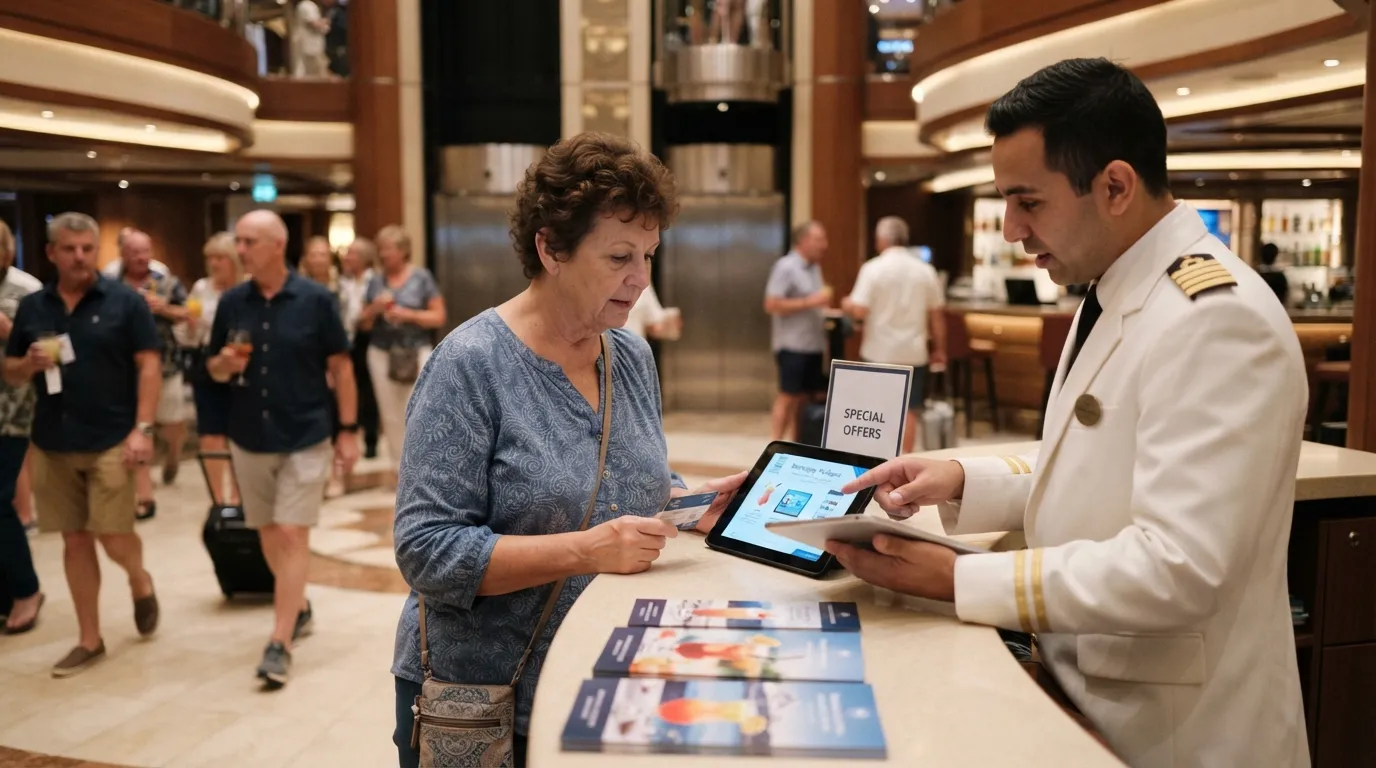
Embarkation-day promotions are rarely the best available price, and the same deals typically reappear on day two or three. Use the first day to see what’s included before committing to any upcharge package.
Wait a day or two before you buy any beverage package. A sales-desk deadline shouldn’t set your budget when the same offer tends to return.
And if you do buy a package, the first evening carries a risk that no discount covers.
#9 – Letting the First Drink Set the Pace

Embarkation day punishes bad pacing. Heat, travel fatigue and skipped meals make an early drink hit harder than you’d expect.
Going overboard on day one can ruin your first night and your first full day. Eat first, drink water, and keep the first cocktail slow.
If any of your prescriptions carries an alcohol warning, ask your doctor or pharmacist before you sail. A different kind of bill starts running the moment the ship leaves the dock, and it shows up on your phone.
#8 – Leaving Your Phone on Roaming
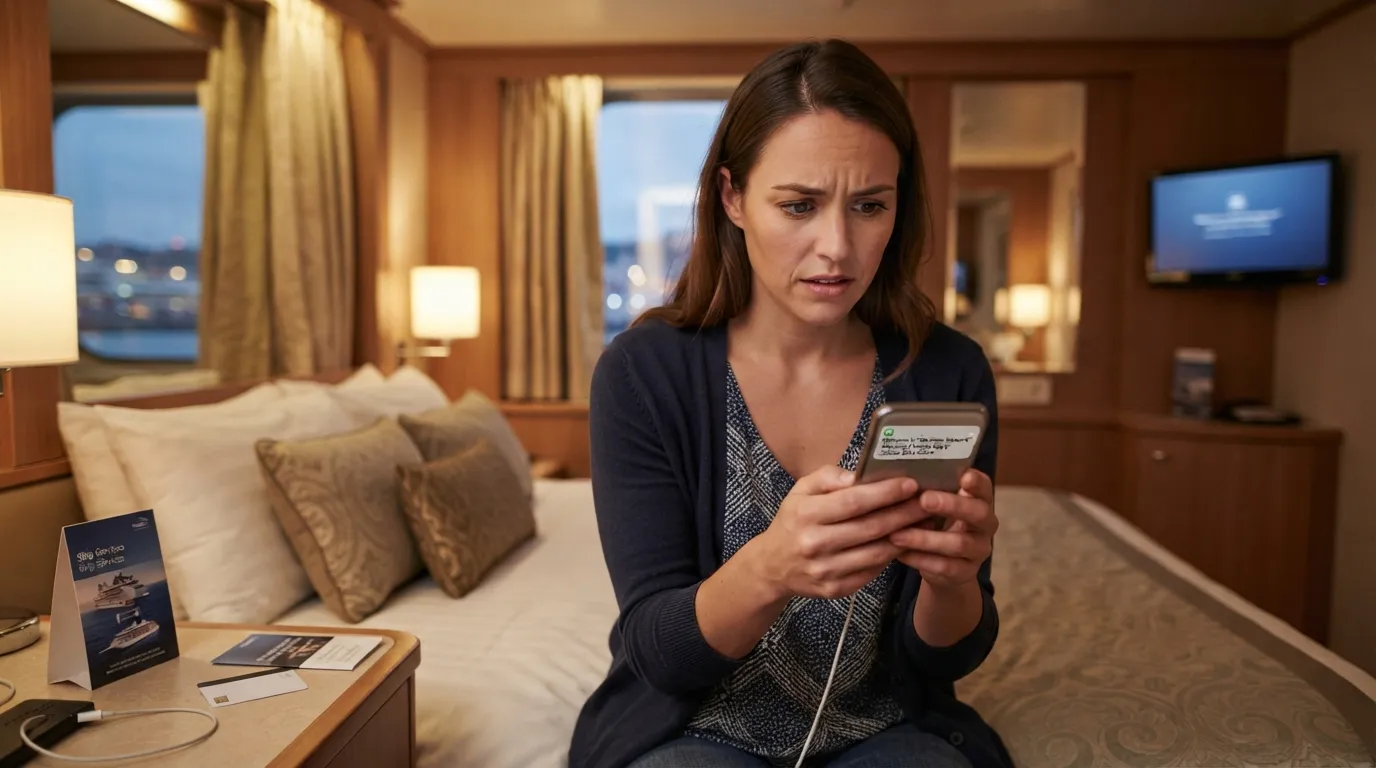
Even if you plan to use Wi-Fi or the cruise app, failing to activate airplane mode can result in enormous roaming charges. This is the first mistake on the list that can follow you home as a bill.2
Switch to airplane mode before the ship leaves the dock. You can then turn Wi-Fi back on if you’ve bought a ship Wi-Fi plan.
Phone settled, look at something with a shorter shelf life than any bill: the cabin itself.
#7 – Not Inspecting the Cabin While It’s Easy to Change
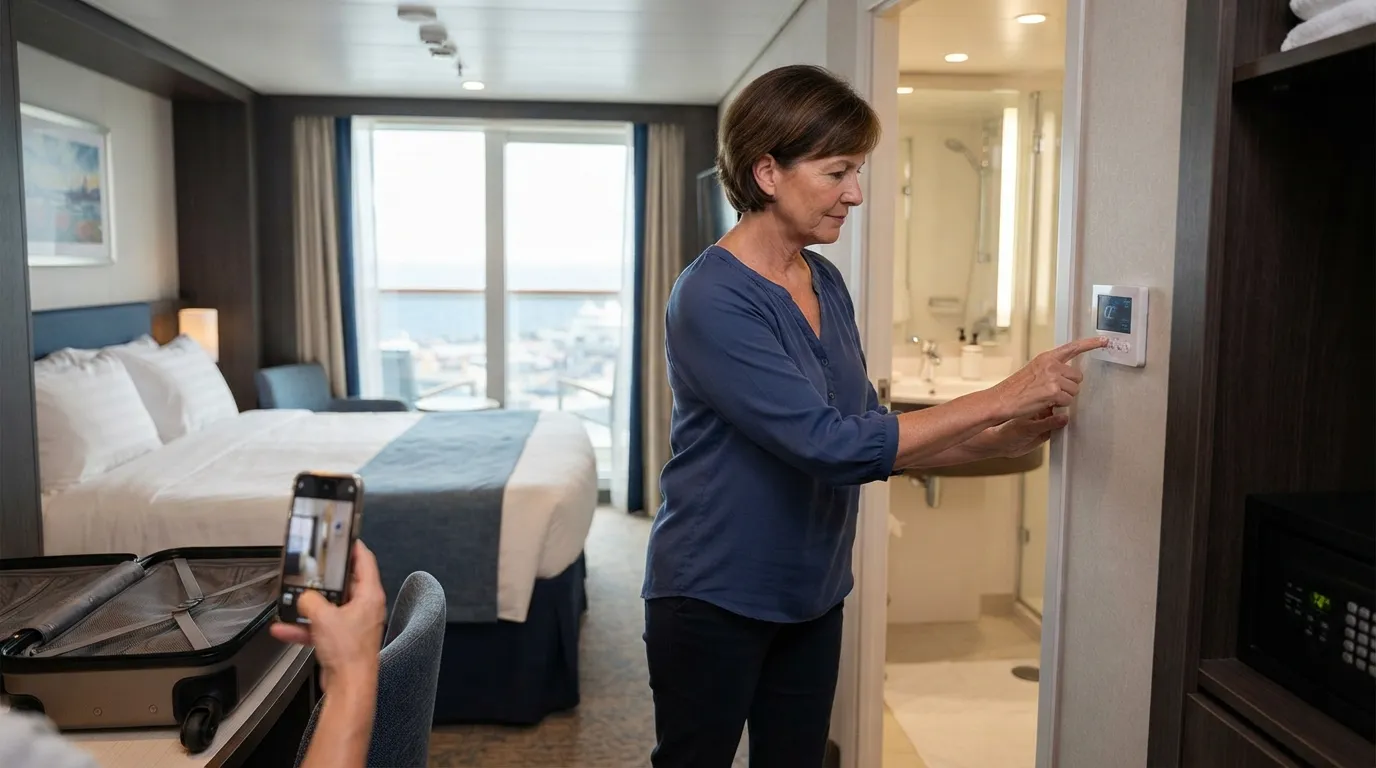
Day one is the only day when room changes are realistically possible. By day two the ship is fully occupied and your options narrow considerably.
Do a quick check as soon as your stateroom is ready. Test the thermostat, the safe, the beds and the bathroom.
Check the cabin the moment it opens, because day one is the window for changes.
Cabin sorted, you’ll feel the pull to keep going until bedtime, and that instinct causes its own trouble.
#6 – Treating Day One as an All-Day Sprint
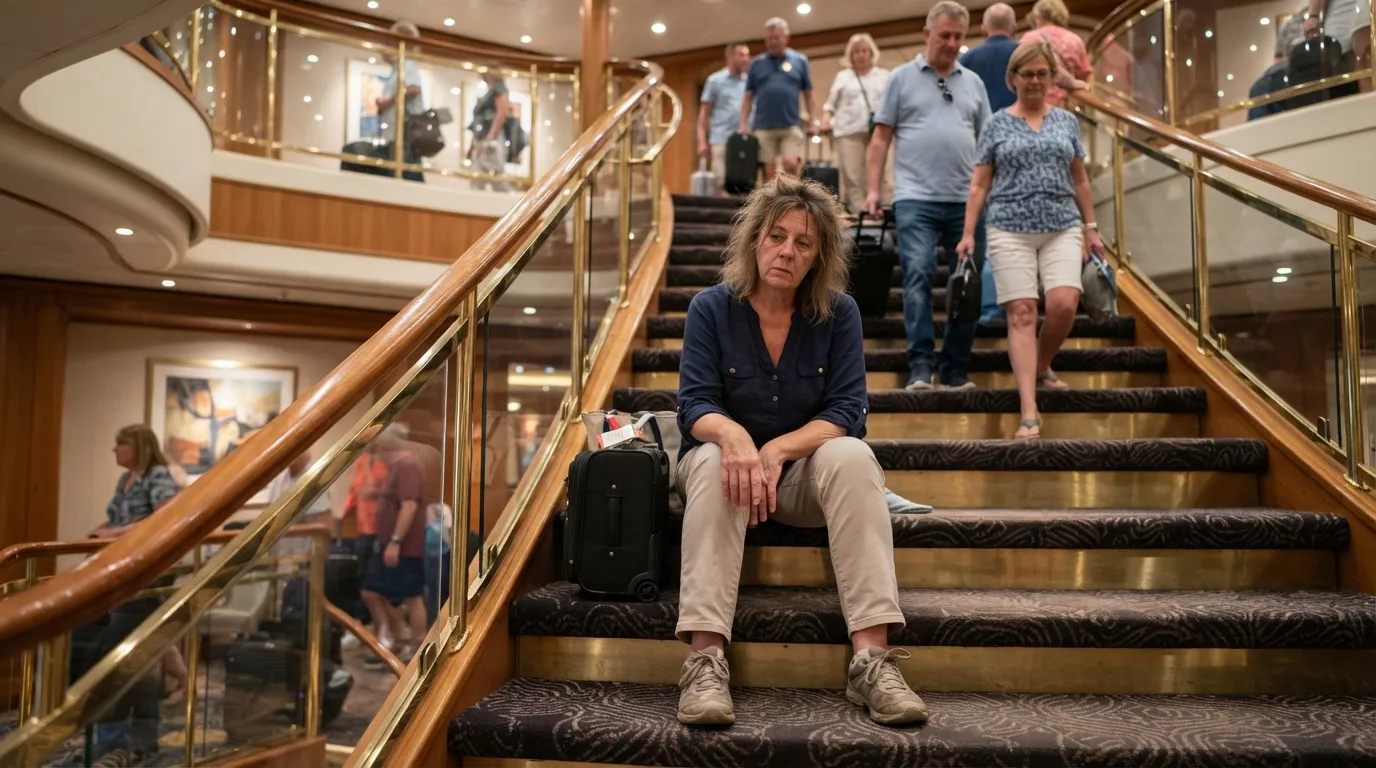
Treating the day as full vacation mode, instead of a travel-and-setup day, is one of the most common first-day mistakes. Embarkation day usually involves hours of walking and exploring.
Elevators are slow on embarkation day, so take the stairs when you can. If stairs are hard on your knees, build in extra minutes instead.
Treat day one as a setup day, and save your energy for the evening.
Related Stories From Weather Fox


Pacing protects your energy, but one health habit protects your stomach, and the product you probably packed for it falls short.
#5 – Trusting Hand Sanitizer Instead of Soap
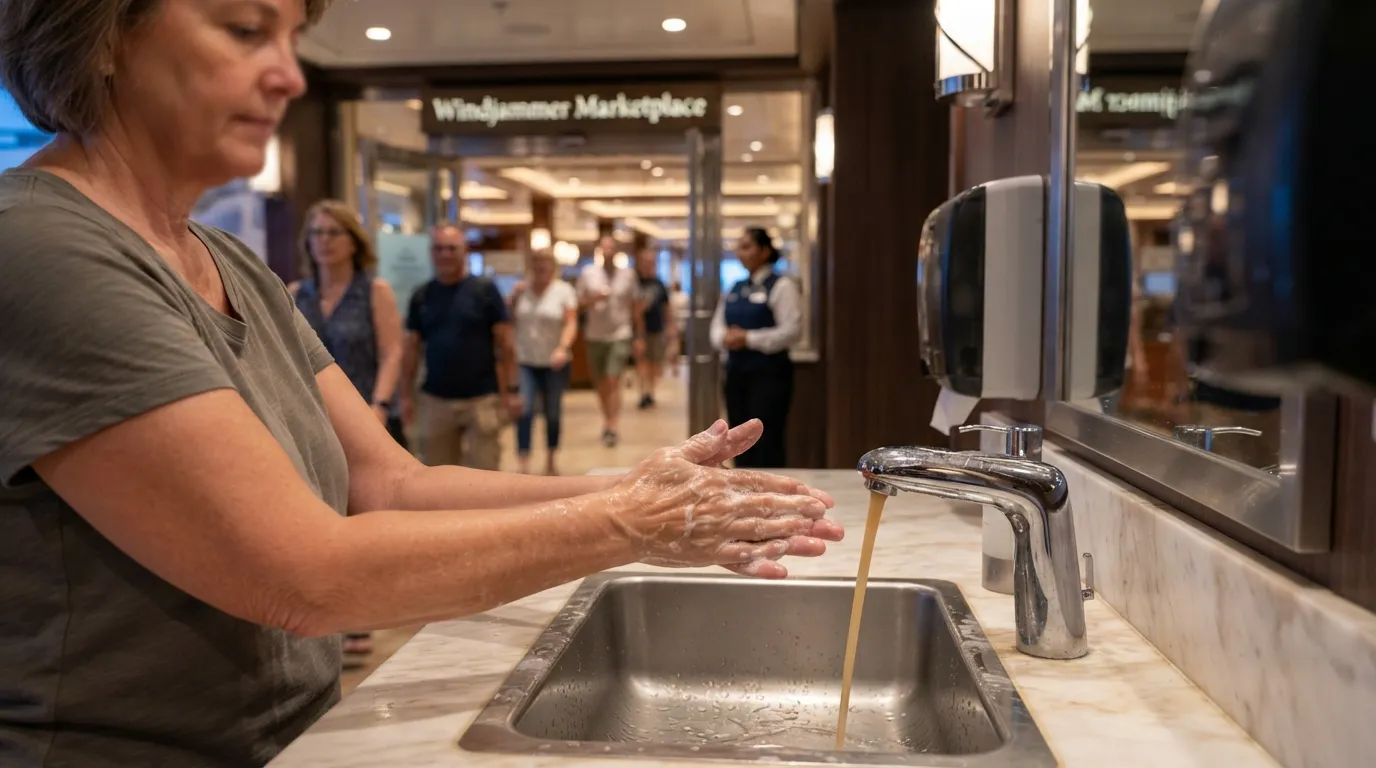
Alcohol-based sanitizer is less effective against norovirus, the stomach virus most associated with cruise outbreaks, than soap and water. The CDC says sanitizer can be used in addition to handwashing, but not as a substitute.
The CDC recommends washing with soap and water for at least 20 seconds, including before eating and after using the restroom. Wash with soap and water for at least 20 seconds before you eat.
Washing handles what you pick up aboard. The harder case is the illness that boards with a passenger who should have stayed home.
#4 – Boarding With a Stomach Bug
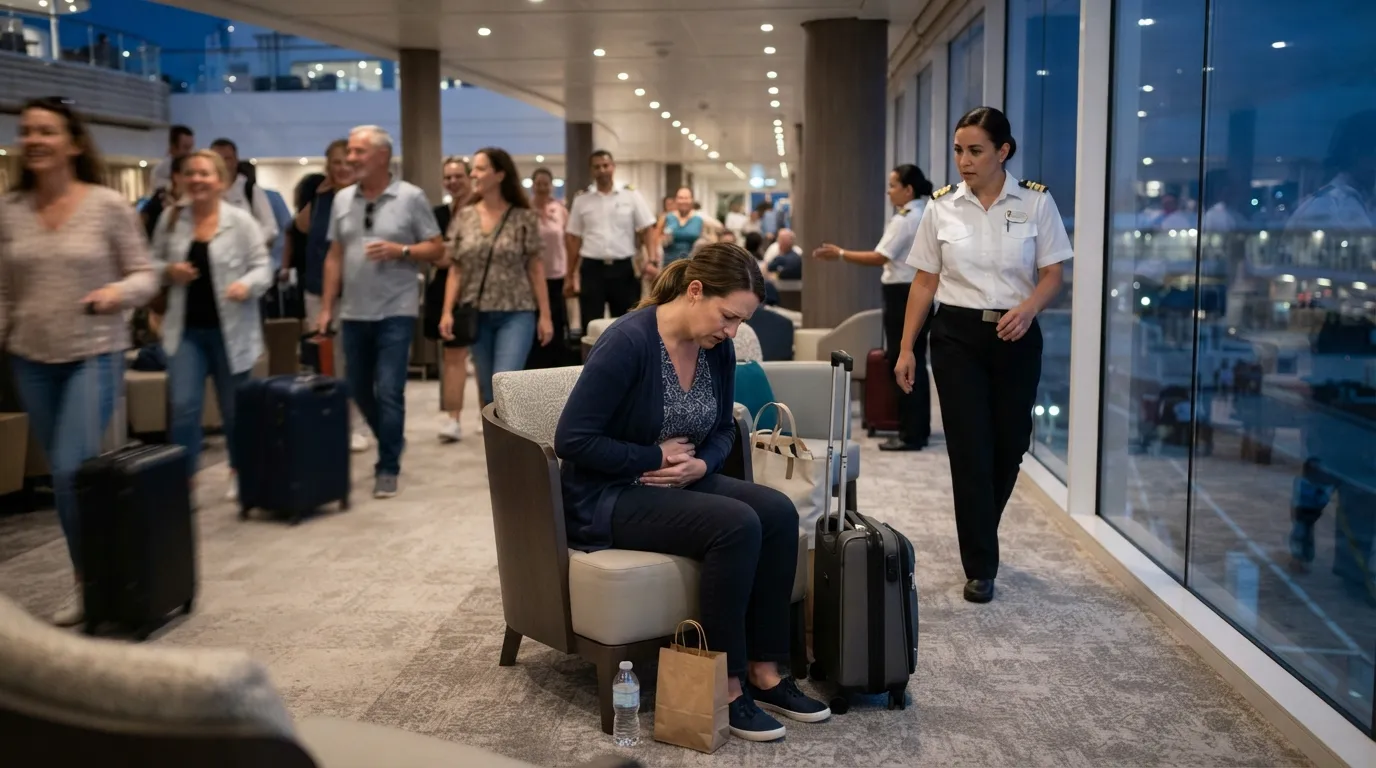
If you have vomiting or diarrhea before a cruise, don’t board. On cruise ships, norovirus typically spreads through contact with ill people or the surfaces they’ve touched.3
Passengers and crew share close, enclosed quarters, which is why one sick traveler matters. Vomiting or diarrhea before sailing means calling the cruise line, not boarding.
Fast Facts
- Norovirus symptoms include diarrhea, vomiting, nausea and stomach pain.
- Symptoms usually start 12 to 48 hours after exposure, per the CDC.3 4
- You can pass it on through contact with an ill person or a contaminated surface.
- Most people recover within one to three days, but they can be contagious beforehand.4
General guidance doesn’t cover your specific sailing, so check your line’s current health policy before you leave. Healthy and aboard, you face the first thing the ship asks of you, and for some passengers it needs a word with the crew beforehand.
#3 – Keeping a Mobility Limit to Yourself
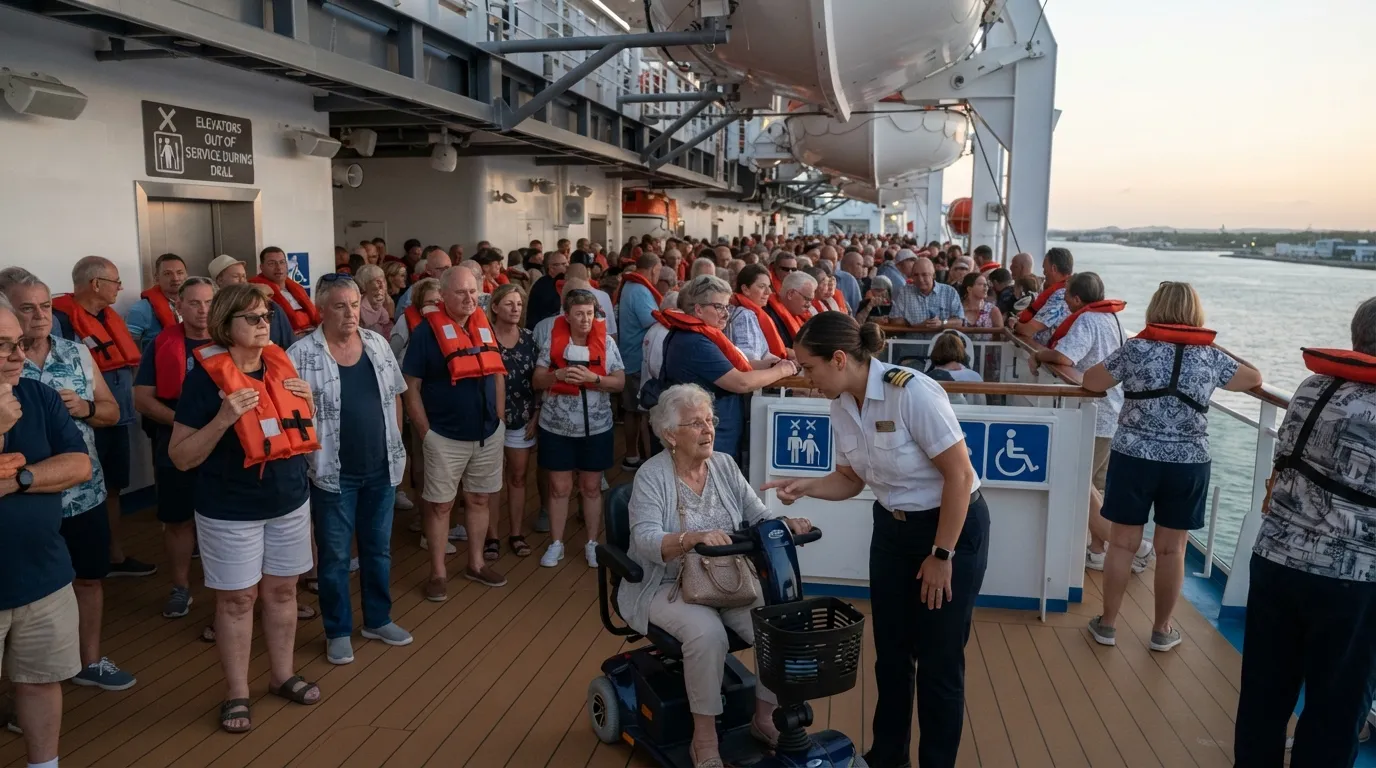
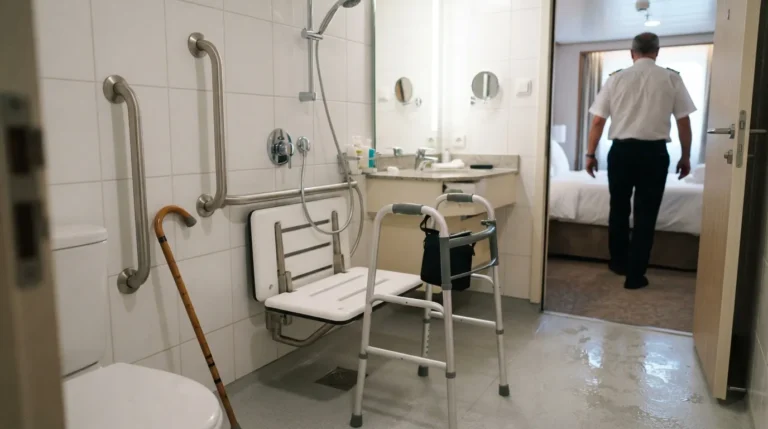
Elevators are restricted during drills, and assistance is provided to passengers with mobility needs. That only works if the crew knows about you in advance.
If a medical or other condition affects your ability to complete the drill, tell the crew, and they’ll arrange for you to take part in the best possible way. Tell a crew member about any limit before the drill starts, not during it.
Experience raises a different assumption: that a drill from another ship covers this one.
#2 – Assuming Your Last Cruise Covers This One

Everyone must attend the drill, even passengers who’ve sailed the same ship or cruise line before. Ships differ in layout, size and even how they handle emergencies.5
SOLAS requires cabin instructions that show your muster station, the actions to take in an emergency and how to put on a life jacket. Read the placard in your cabin and learn your muster station before the drill starts.
The last item is the one where staying away has a consequence, and it begins with a roll call.
#1 – Skipping the Muster Drill Entirely
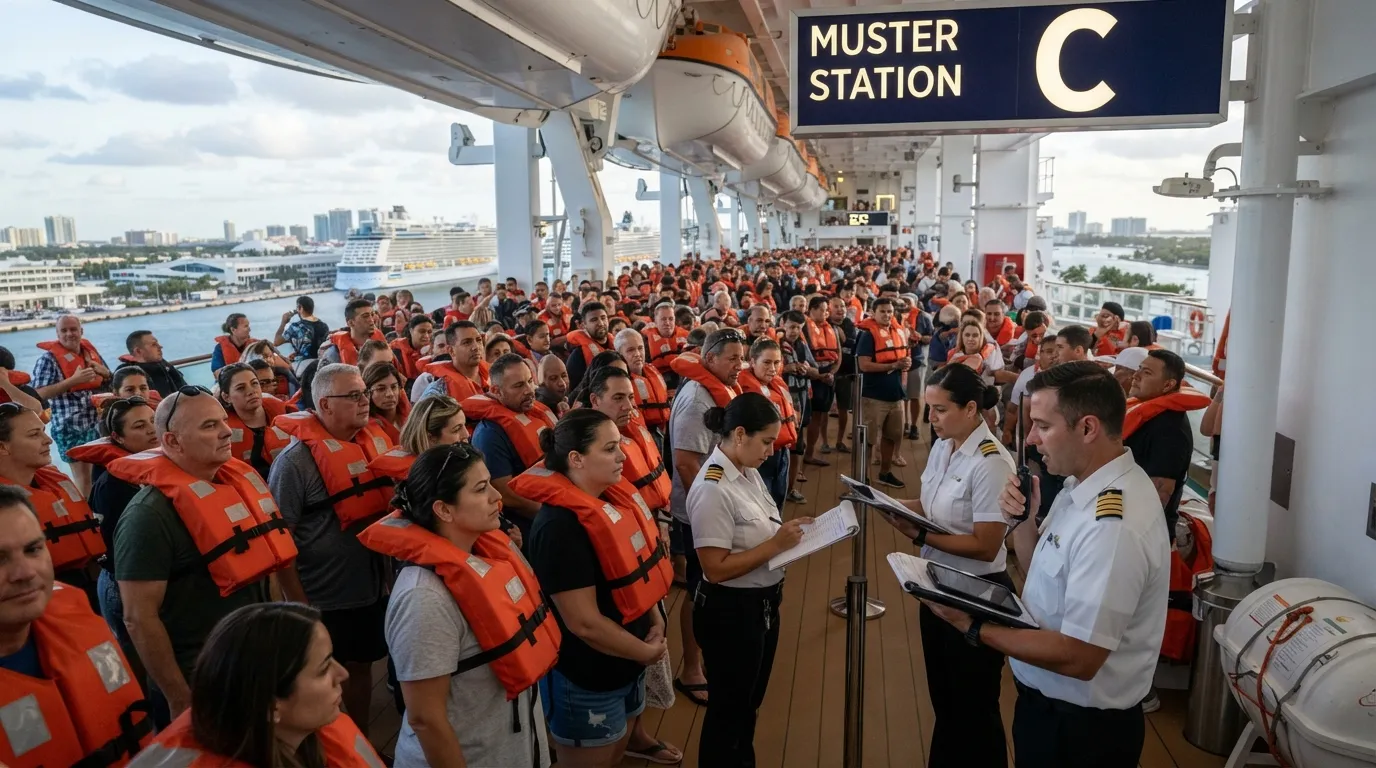
For voyages where passengers are aboard more than 24 hours, SOLAS requires newly embarked passengers to be mustered before or immediately upon departure. The Coast Guard and other port authorities enforce it, and Royal Caribbean, for one, holds the drill for all embarking passengers before the ship leaves port.6 7
At the muster station a crew member runs a roll call. If you don’t show, your name and room number are reported to the ship’s commanding officer.
Passengers who arrive after the drill are given individual or group safety briefings. Refuse the makeup drill and the ship may put you off at the next port.
The first evening is the one time the ship will still bend for you. Room changes are realistic that day, the maitre d’ is on hand for dining questions, and by day two your options shrink.
So give the first hour or two to the practical tasks, then let the rest of the night be the vacation. Which of these 24 tripped you up on a past cruise, and what do you now do in your first hour aboard?
- Time Out Embarkation Mistakes: https://www.timeout.com/usa/news/8-embarkation-day-mistakes-to-avoid-on-your-next-cruise-112524
- Cruise Critic Cruise Mistakes: https://www.cruisecritic.com/articles/11-cruise-mistakes-youre-still-making?recId=11ab103c53e94f154b2c91ebbb146085
- CDC Yellow Book Norovirus: https://www.cdc.gov/yellow-book/hcp/travel-associated-infections-diseases/norovirus.html
- Mayo Clinic Norovirus Overview: https://www.mayoclinic.org/diseases-conditions/norovirus/symptoms-causes/syc-20355296
- Cruise Critic Muster Drill: https://www.cruisecritic.com/articles/cruise-muster-station-and-muster-drill-what-are-they
- IMO SOLAS Passenger Drills: https://www.imo.org/en/MediaCentre/PressBriefings/Pages/45-SOLAS-eif-.aspx
- Skuld Passenger Ship Drills: https://www.skuld.com/topics/ship/safety/passenger-ship-safety-drills/