A seven-night cruise quietly adds about $126 per person in gratuities before you order a single meal. That is the mid-range figure, since daily gratuities run $16 to $20 per person on the major lines.
If you sail for the long, leisurely dinners, most of the snags below surface at the bill or the table. They almost never start there.
The cheapest fix on this list is one email, and its deadline falls weeks before you board. First, the charge already on your account.
#15 – The Daily Gratuity Already on Your Account
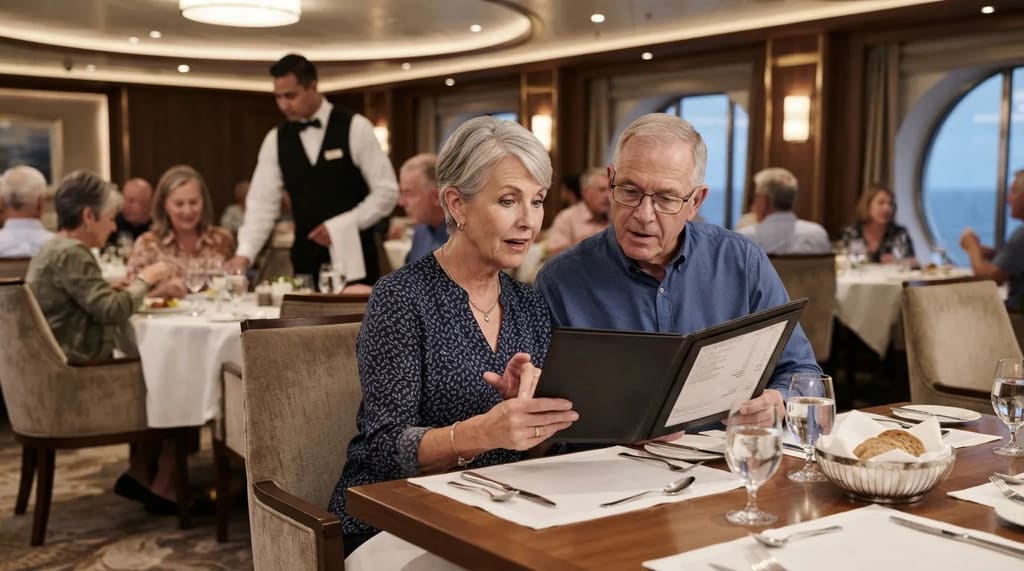
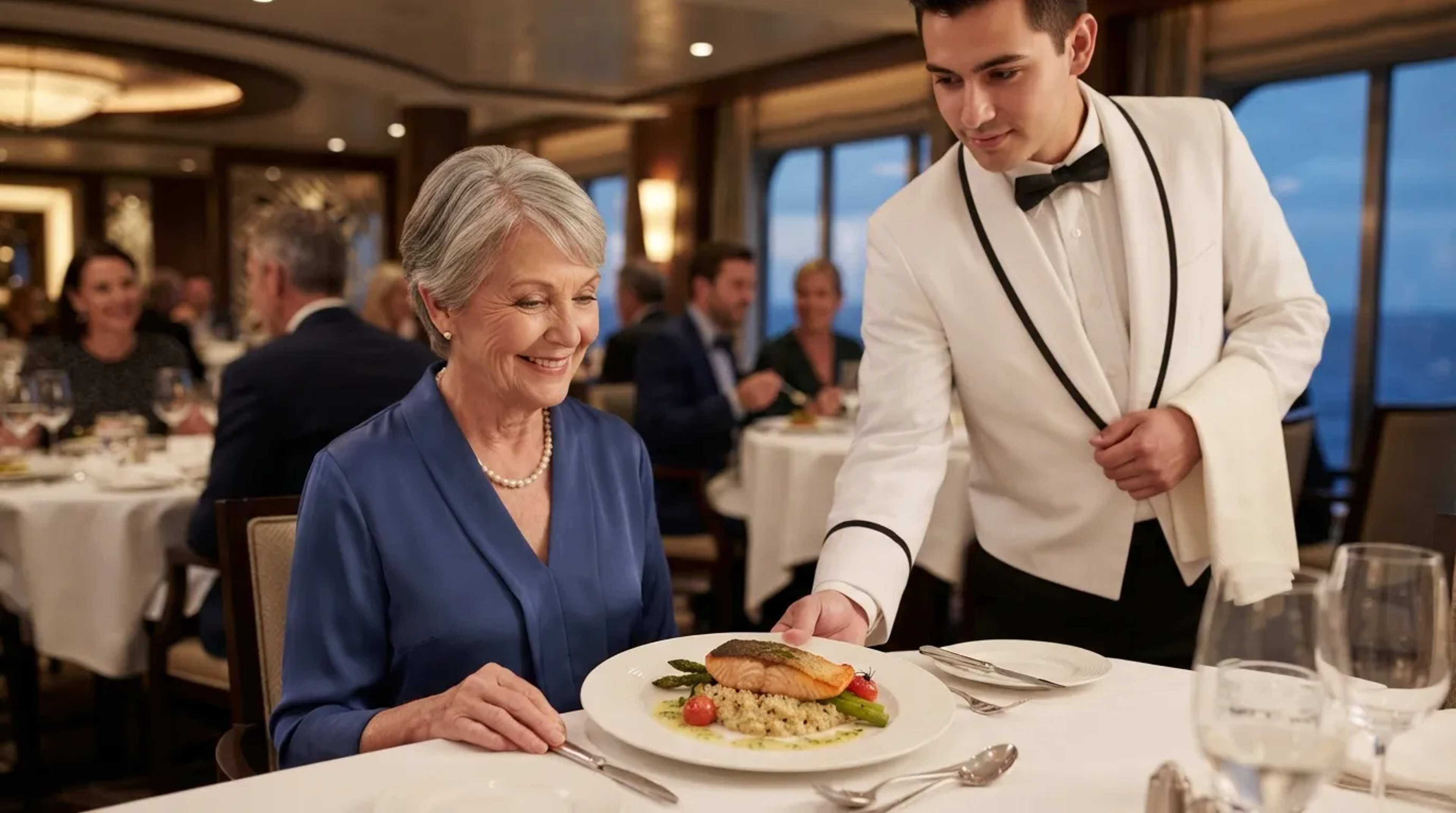
Cruise gratuities are a set daily service charge added automatically to every guest’s onboard account. For a standard cabin, that is about $17 on Carnival, $18.50 on Royal Caribbean and $20 on Norwegian, with suites costing more.1 2
Fast Facts
- Carnival: about $17 per person, per day
- Royal Caribbean: about $18.50 per person, per day
- Norwegian: about $20 per person, per day
- Suites pay more than standard cabins
The rate is per person, per day, so a couple on a seven-night cruise pays roughly $240 to $280 before a single drink.3 Several lines raised their rates in 2026, so the figure you remember from an earlier trip may be too low.2
The money is split among cabin stewards, dining staff and behind-the-scenes crew. Knowing the number before you sail lets you decide calmly how much more, if anything, to add.
That flat amount can be changed at the desk, though not every charge on the bill can.
#14 – The Percentage That Stays When You Adjust Gratuities
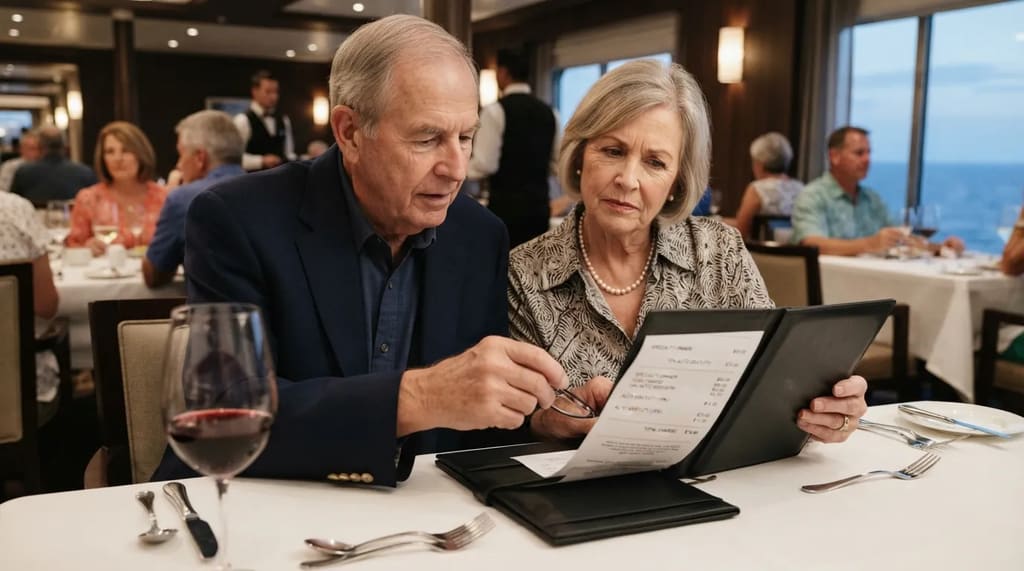
You can adjust or remove the flat daily charge at Guest Services before the last morning, but the percentage added to drinks, dining and spa stays.1 That 18 to 20 percent also applies to specialty dining charges, so a $60 dinner lands on your account closer to $71 or $72.
I would leave the flat charge alone unless service really fell short. Removing it hands you the job of tipping the cabin steward, the dining team and the crew you never see.
If you do remove it and tip directly, $5 to $7 per person per day is a fair range for standard service, by one 2026 guide’s reckoning.
Guest Services settles the money, yet the dress rule at a specialty restaurant is settled at its door.
#13 – Dress Codes at the Specialty Restaurant Door
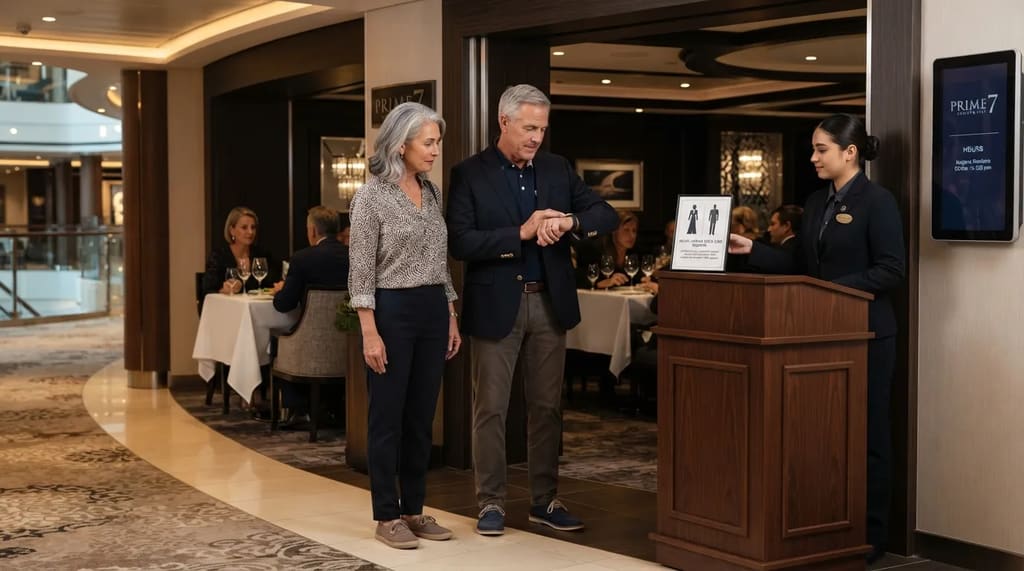
Many specialty restaurants on cruise ships have dress codes, and the rules differ from one line and one venue to the next. The place to learn yours is the restaurant’s page when you reserve, not the host stand when you arrive.
I would pack one dinner outfit that meets the strictest venue on your ship, so the question never comes up on the evening itself. It costs a little suitcase space, whereas guessing wrong can leave you changing clothes while the reservation time ticks past.
#12 – The Included Dining Room Is Not Second Best
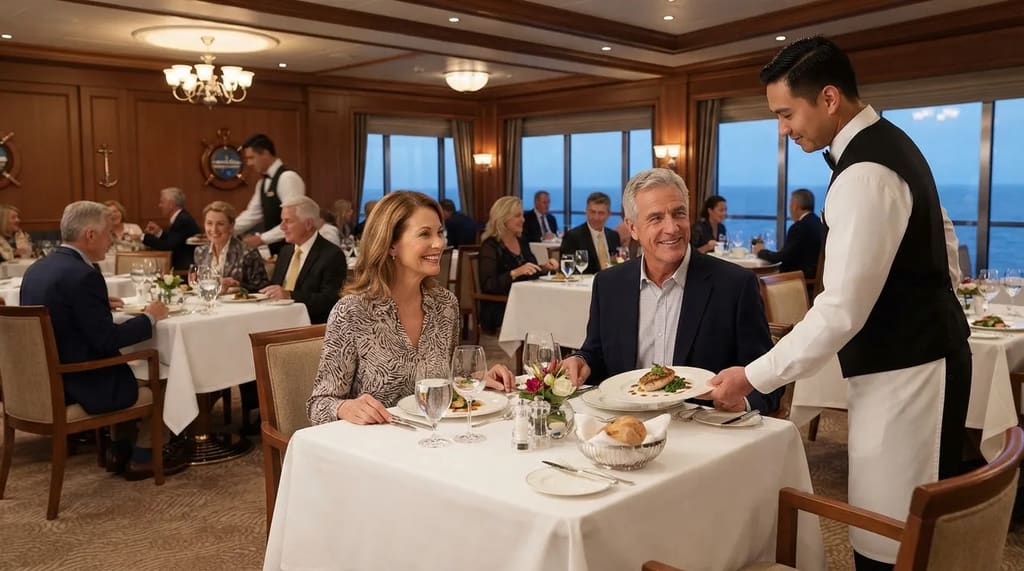
On Holland America, dinner in the main dining room is included in the fare with no reservation fee, and reservations are recommended only for a preferred time. Each specialty restaurant, by contrast, is reserved individually as its own add-on.4
Why It Stands Out
- Main dining on Holland America is included in the fare
- No reservation fee, only an optional preferred time
- Specialty venues are separate add-ons, booked one by one
- Each specialty check carries the automatic 18 to 20 percent
On lines where main dining is already strong, specialty restaurants work better as a change of pace than as a required upgrade. Two specialty dinners in a week give you the variety, and the automatic percentage on each check means every one of those nights costs more than its menu price.
How you buy those specialty nights matters nearly as much as how many you choose.
#11 – Specialty Dinners Cost Less in a Package
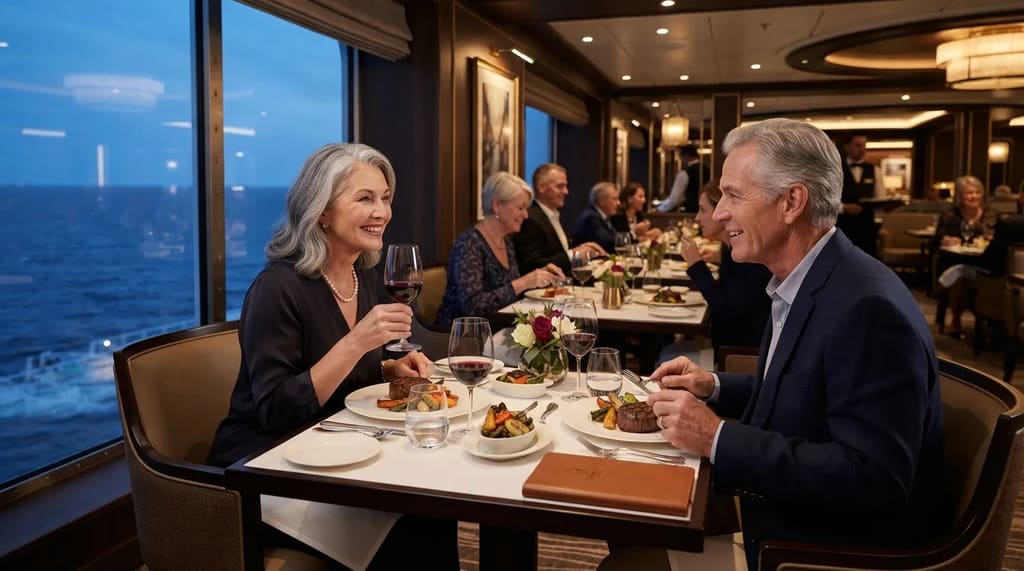
Many lines sell multi-restaurant packages that bring the per-meal cost down if you plan to eat in specialty venues more than once. Timing can matter too, since Holland America notes that early reservations sometimes carry preferred pricing, and that specialty prices may drop on the first night of a sailing.
That makes the buying date part of the math. Check the current charge in the app before you book so there are no surprises on your onboard account.
A package also saves money only on dinners you would have booked anyway, so count the evenings you really want before you buy.
A package pays off only if the tables are still available when you want them.
#10 – Specialty Tables Open Months Before You Sail
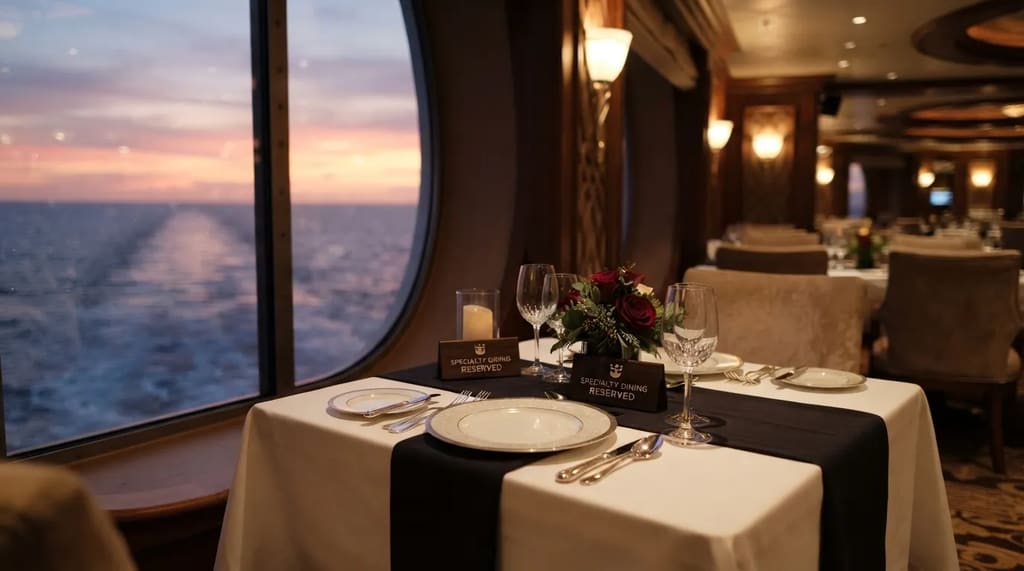
Holland America says the most popular time slots and venues fill quickly, especially on sea days, and that reservations typically open about six months before sailing. Frommer’s booking timeline for major lines shows windows opening anywhere from 60 days to a year ahead, depending on the line.
If you book your cruise close to sailing, or wait on the specialty dinners, you may be out of luck. You can still reserve once aboard, but availability is much more limited.
You do not need to book every dinner. Book the venue or time you must have and leave the rest loose.
Even a confirmed table can fall on the wrong evening, depending on what your day has held.
#9 – The Special Dinner After a Long Port Day
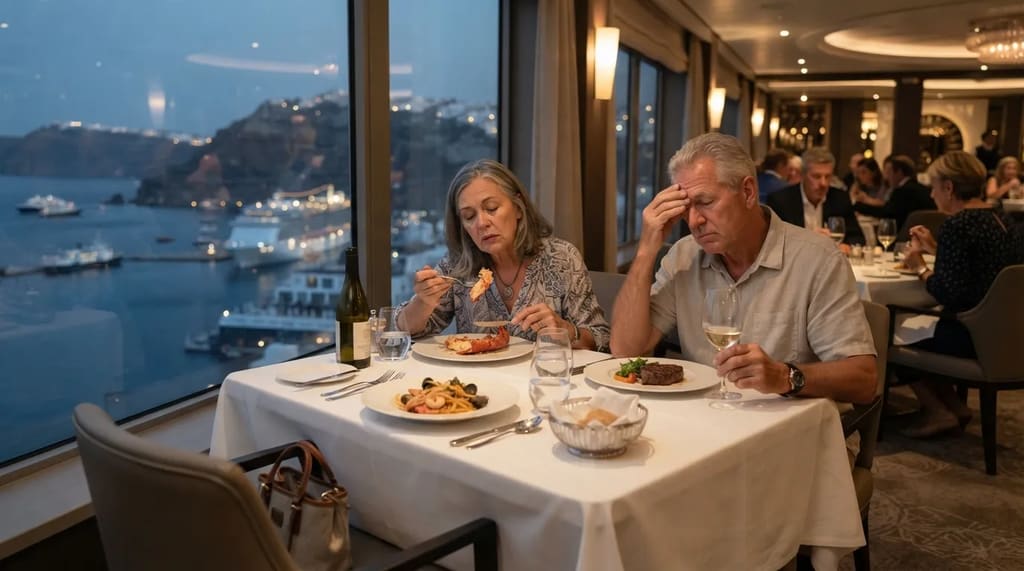
A reservation after a very active excursion, or on a day you get back close to dinner time, can turn a treat into a rush. Spreading specialty dinners across the cruise also spreads out the anticipation.
The complication is that sea days are the ones that fill first, so a quiet port evening can look like the easier booking. If your ship returns early enough for you to rest and change, take it.
If it does not, reserve the sea day early and treat it as the priority. Your itinerary decides this, so check the arrival and departure times before you pick a night.
#8 – Peak Dinner Hour With No Table Reserved
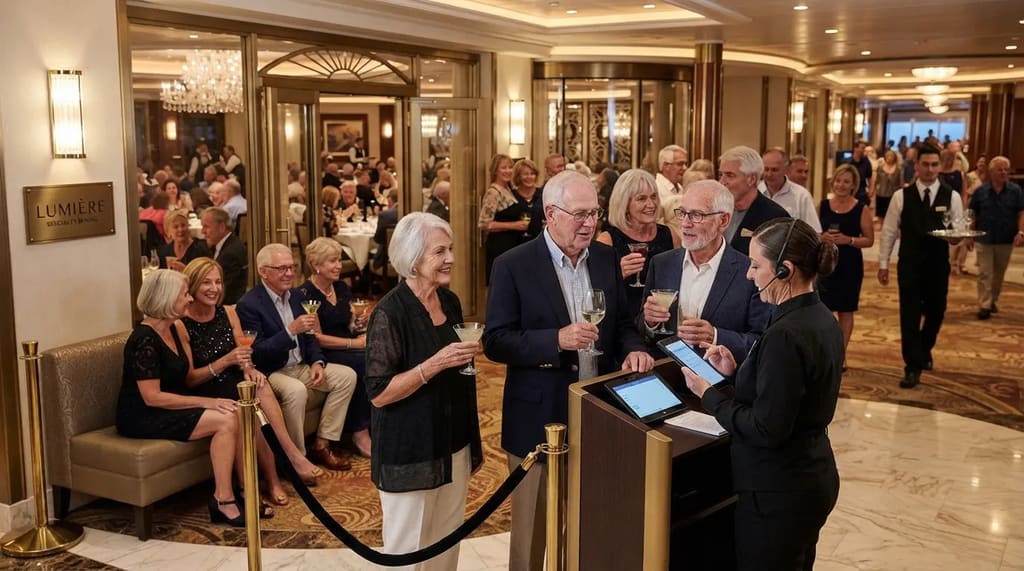
Many cruise lines now let you reserve the dining time you want each night, or put your party on a waitlist in the app. That means a drink or a seat nearby until a table is ready, rather than a crowd at the entrance.
For specialty restaurants, walk-ins are allowed if tables are available, but advance reservations are the safer route. On boarding day, check the app or dining desk for openings, visit the restaurant early and stay flexible on timing.
If your line offers anytime dining, securing at least some of those reservations ahead of time takes a minute and saves a wait.
Drinks are the other thing that gathers around dinner, and their price has more parts than any menu.
#7 – The Drink Package and Its Service Charge
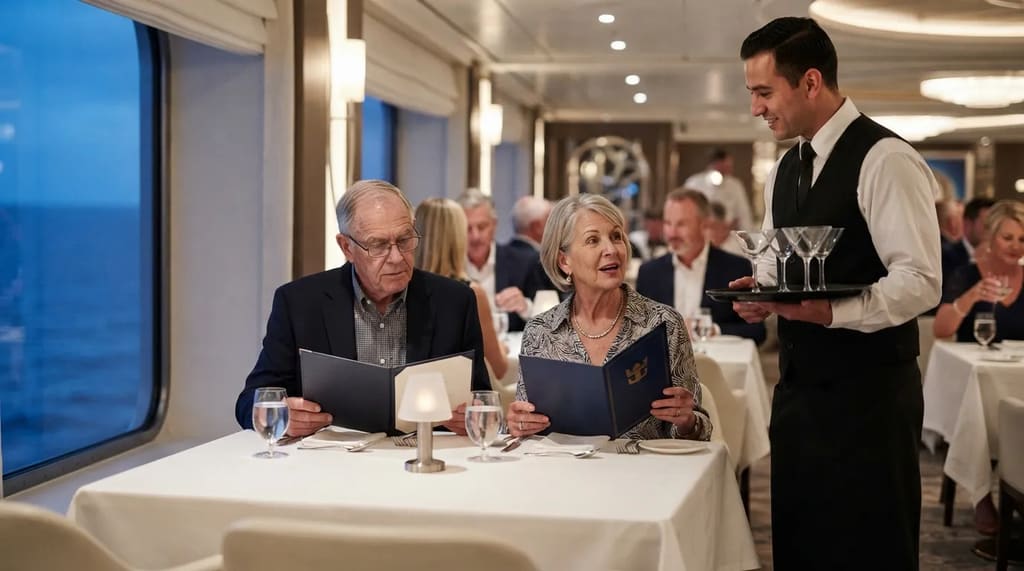
A 2026 cost breakdown from Lisa Travel Design puts packages at roughly $80 to $90 per person per day on the mainstream lines, with most lines adding an 18 to 20 percent service charge on top.5 Add the percentage first and the daily price is closer to $95 to $108, so the break-even point sits well above the sticker price.
At a Glance
- Sticker price: roughly $80 to $90 per person, per day
- Service charge: typically 18 to 20 percent on top
- Real daily cost: closer to $95 to $108
- Norwegian’s Free at Sea perk: $28.50 per person, per day, per published 2026 guides
“Free” drink perks can carry their own charge. Published 2026 guides put Norwegian’s mandatory service charge with its Free at Sea perk at $28.50 per person, per day, on top of the daily gratuity, so confirm the figure on your own booking.
My view: unless you expect to drink most of what the package covers every single day, paying by the glass, with its automatic percentage, is likely the cheaper path.
Beyond the bill, the serving spoon at the buffet carries a risk of its own.
#6 – The Sink at the Buffet Entrance
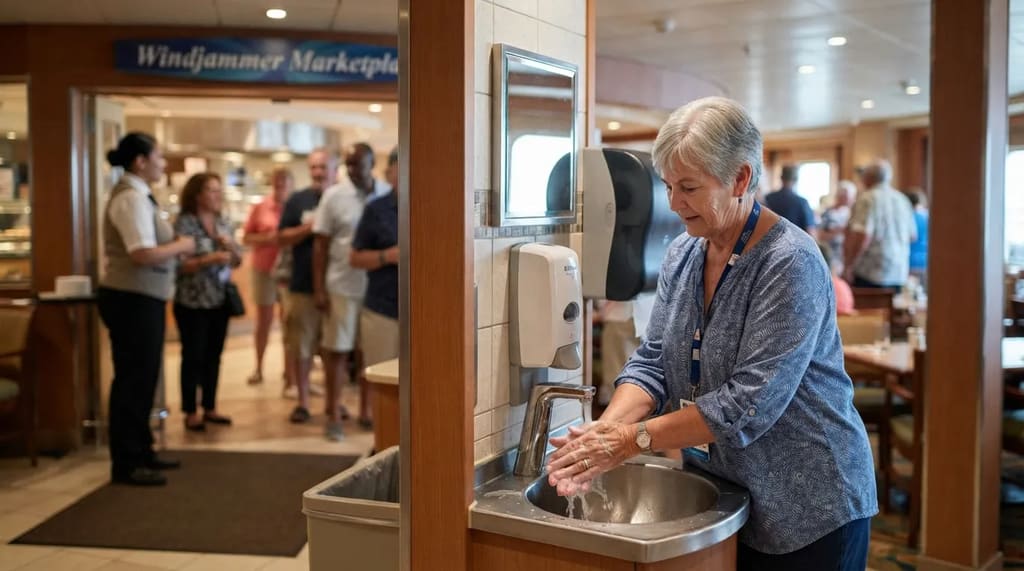
The CDC names handwashing with soap and water as the key step against norovirus. That means scrubbing for at least 20 seconds, with before eating and after using the toilet as the two moments it singles out.6
Cruise lines make this easy. Ships put hand-washing basins at the entrance of the buffet and anywhere else food is self-service.
The sink matters most after you touch a shared serving utensil. Wash up before you eat, and again before any finger foods.
Soap and water come first with the CDC, which leaves the gel dispensers on the wall as a weaker backup.
#5 – The Sanitizer Dispenser at the Buffet Door
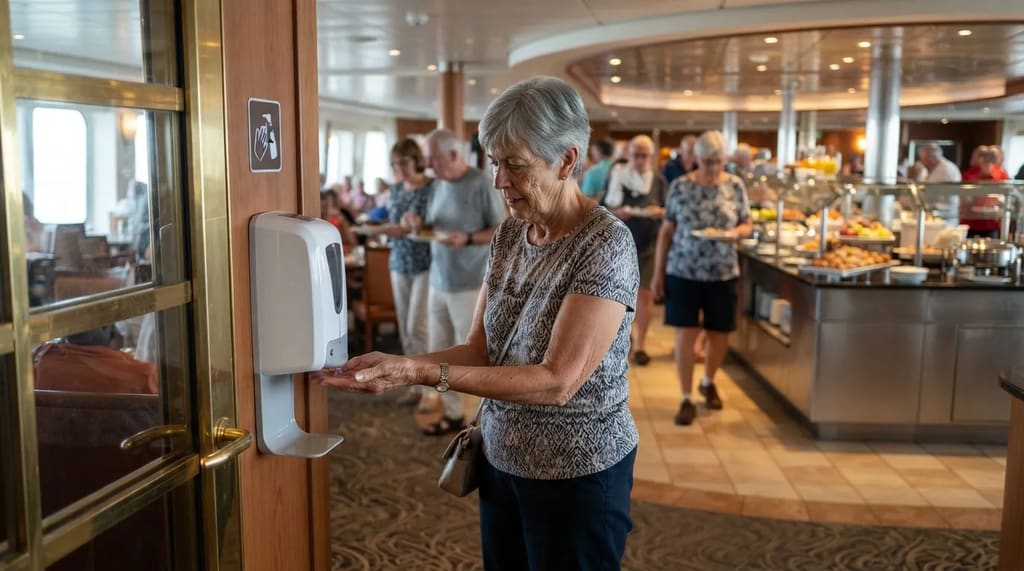
The CDC says alcohol-based hand sanitizers can be used in addition to handwashing, but they are not a substitute for it.6 It also notes that sanitizer may not work well when hands are visibly dirty or greasy, which describes a good many hands at a breakfast buffet.
Not every product sold as hand sanitizer meets the CDC’s 60 percent threshold, so check the label on the bottle you pack. I would carry gel for the moments when no sink is near and never count it as your mealtime hygiene.
Hygiene covers what is on the spoon, whereas an allergy depends on what the kitchen has been told.
#4 – The First-Night Talk With the Dining Staff
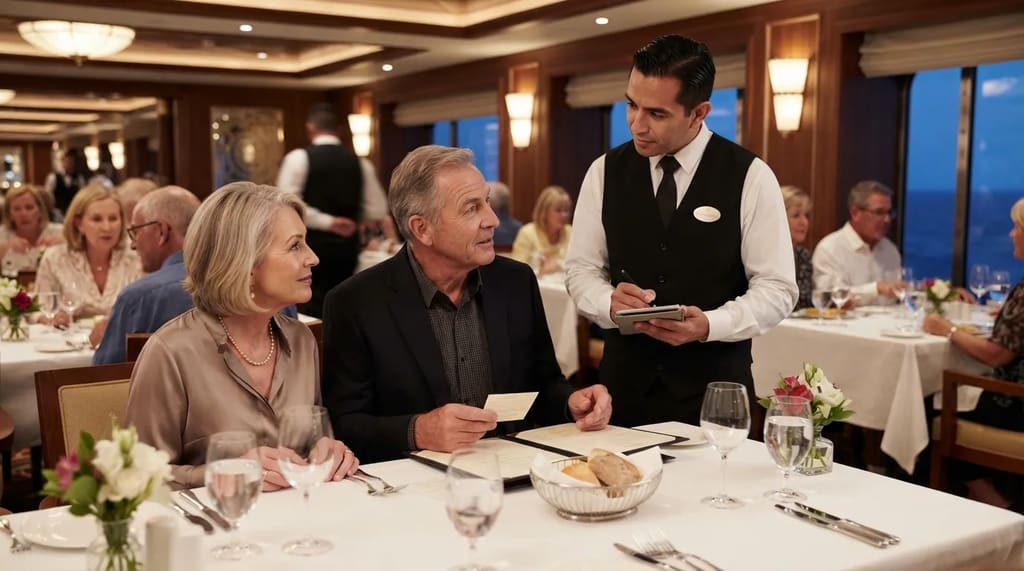
A note sent before sailing does not finish the job. Cruise lines advise that you confirm your dietary request with the head server on the first night, and remind your server at each meal.
An allergy recorded by the cruise line will not necessarily travel through every part of your trip as smoothly as your luggage tag. Servers and venues change from night to night, so the reminder is cheap protection.
In specialty restaurants, tell your server the moment you sit down.
#3 – One Diet, Several Different Restaurants
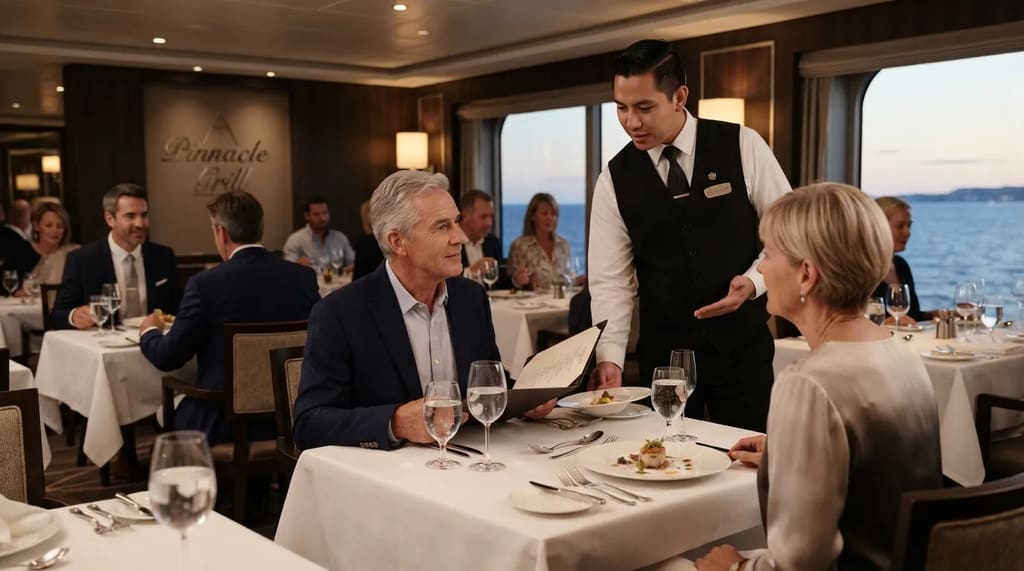
Cruise lines do not agree on where a special diet is easiest to handle. One 2022 allergy roundup says allergies are best accommodated in the main dining room, while Holland America says specialty restaurants often have more flexibility with advance notice.4
Quick Compare
- Main dining room: one 2022 roundup calls it the best place for allergies
- Specialty restaurants: Holland America cites more flexibility with advance notice
- Menu icons: some lines mark vegetarian or gluten-free dishes, but coverage is hit or miss
So ask your line which venues suit your needs before you reserve a specialty table. Do not wait to raise it at the table.
Related Stories From Travelbinger

Menu labeling will not settle it for you either. Some lines put icons next to vegetarian or gluten-free items, but it is hit or miss across the industry.
Whatever restaurant you choose, the lead time for these requests is set by the cruise line, and it differs from line to line.
#2 – A Dietary Deadline That Varies by Line
Norwegian asks for special dietary requests at least 45 days before sailing, and says requests inside 45 days cannot be guaranteed.7 MSC wants notice no later than 30 days, and P&O Cruises asks for at least 28 days.
Longer windows exist too: Cruise Critic advises notifying the line at booking and ideally 45 to 90 days out, with kosher meals needing 90 days. Travelers United cites 90 days for European or South American cruises.
The lead time exists because lines carry limited supplies, which are only loaded in certain ports, so special ingredients have to be ordered.
All of those deadlines assume the line has been told at all.
#1 – The Email to Send Right After Booking

Notify the cruise line during booking, and ideally 45 to 90 days before sailing. When you book on a cruise line’s website or fill in details afterward, you may find a place to submit special dietary needs.
Even a preference matters: if you are lactose-intolerant and prefer rice, oat or almond milk to soy milk, tell the line before you cruise. Some restrictions are handled automatically on larger ships, but a serious allergy should not rest on that.
Norwegian points guests to its Access Desk, with at least 45 days’ notice before sailing.7 If your allergy is severe, talk with your doctor about your plan before you go.
Looked at together, the costly dinner problems on a cruise rarely begin at the table. They begin weeks earlier, in a booking window, a notice period or a bill that went unread.
So treat dining as paperwork to finish while the cruise is still months away, and keep the ship itself for eating. A few minutes with the cruise line’s app and one email leave the dining room with less to improvise on the night.
Which dinner on your most recent cruise would have gone better if you had arranged it a month sooner?
Bonus: The Insider Trick Nobody Tells You
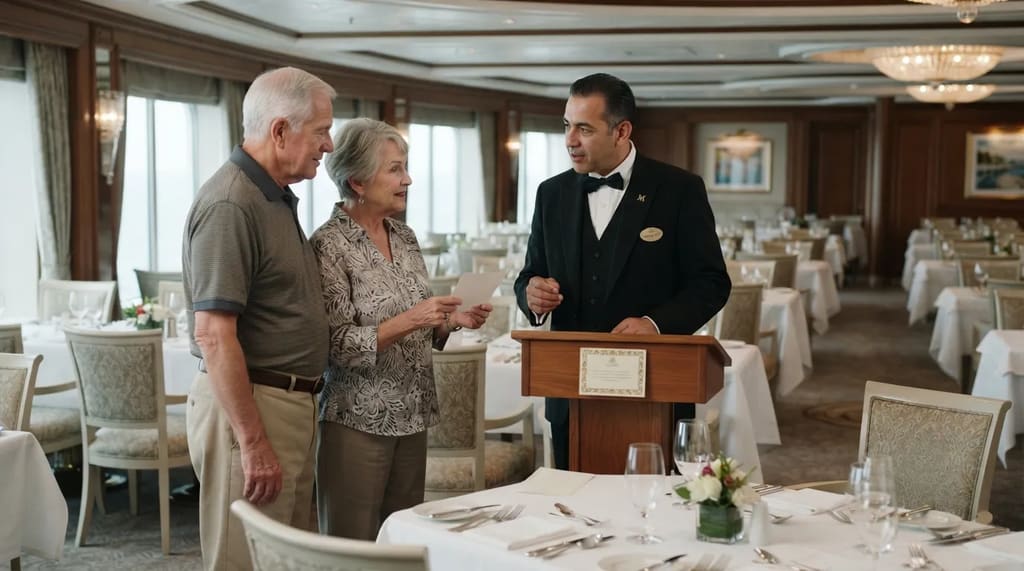
Do not wait for dinner to start your first conversation with the dining team. On embarkation day, walk into the main dining room before the evening rush and ask for the maitre d’ or head server.
- Ask about a fixed table and server team. On lines and sailings with set-time dining, you can often keep the same table and waiters all week. Staff who know you by night two are far more likely to remember your pace, your allergy and your coffee order.
- Hand over a written note. Put your dietary needs and your cabin number on a small card, and keep your cruise line’s confirmation email handy on your phone. It backs up what you said online, in case the request did not follow you from the booking system.
- Name your pace. Tell your server on the first night if you prefer a relaxed meal, or need to be out by showtime. It is easier to set that expectation once than to flag it at every course.
- Repeat it in a sentence on later nights. A quick reminder to each new server or venue takes ten seconds and is the cheapest protection you have.
If your line offers anytime dining instead, you can still make the same visit and ask whether you can request the same section on the nights you plan to eat in the main dining room.
- Cruise Critic Tipping Guide: https://www.cruisecritic.com/articles/tipping-on-a-cruise-your-complete-big-ship-tip-guide
- Cruise Gratuities Explained 2026: https://passportprotravel.com/cruise-gratuities-explained/
- Cruise Gratuities Comparison 2026: https://oceanscruise.com/blog/cruise-gratuities-comparison/
- Holland America Dining Comparison: https://www.hollandamerica.com/blog/cruise-planning/cruise-dining-room-vs-specialty-restaurants/
- Lisa Travel Design Cruise Costs: https://lisatraveldesign.com/travel-logs/what-a-cruise-costs
- CDC Norovirus Prevention: https://www.cdc.gov/norovirus/prevention/index.html
- NCL Dietary Requirements: https://www.ncl.com/cruise-preparation/accessibility/dietary-requirements